Santorini is an incredible abstract strategy game. Yes, it rehashes the old truism ‘easy to learn, hard to master’ as its tagline, and its artstyle is rife with chibi-style Greco-Roman mythical figures, but trust me, every part of this syncretic approach works. Abstracts have a habit of punching well above their weight, and this one will twist your brain in knots. On a 5×5 grid, players take turns moving figures and placing buildings, step by step, the iconic ivory-and-azur builds of the island Santorini. It is a skillful game with a rich, cutesy presentation.
The core ruleset is wicked simple, but also stays true to abstraction as a genre by offering a robust challenge. Santorini’s masterstroke is to offer an additional layer that gives each player a unique power which breaks the normal scheme of things. Gaia has extra pieces for example, and Artemis can move twice. The game is satisfying even in its powerless, vanilla form, so mixing in these variations makes for a truly infinite challenge. In this, it reminds me of Cosmic Encounter as much as Chess. Both are helter-skelter in its variety, regimental in core procedure. Each turn a piece must move (either adjacently or orthogonally) and then build nearby. A piece can move at most one step up but can ‘jump’ any steps down. The game ends when one player advances their piece to the third level from a lower level. It can also, more rarely, end because the other player cannot make a legal move with either of their pieces. That’s the gist of it, barring certain edge-cases and power interactions.
I had forgotten how rusty I’d become and upon firing up the app for the first time I proceeded to lose to the temptingly-named ‘novice’ AI. A few times. This game has teeth, folks, and its bots will trounce the unwary. Re-learning good play was like revisiting Chess, or perhaps Cinco Paus. Certain patterns and rules of thumb emerge. The center is vitally important, one generally seeks the upper ground to gain the upper hand, and initial placements are almost never around the periphery of the board. It’s difficult to generalize beyond this, but after just a few thoughtful short play sessions, Santorini creates something like a flow state: pure challenge, effortless concentration. Can’t say I’m a grandmaster or that these bouts of time spent were filled with earth-shattering insights, but I can vouch that the flow means it’s an inviting game to lose yourself in.
It’s also an inviting game to learn. The system and rules are so simple as to appear plain, indeed many people bounce off abstracts because they seem ‘dull’, but Santorini has plenty of spirit and style. It’s a good game for kids to pick up, because it has a low barrier to entry and some whimsy to its presentation. Said whimsy belies an absolutely ironclad, zero-variance mental slugfest. ‘For kids’ means the highest praise, cool enough to attract fickle attention but clever enough to hold up over ages. There’s a metagame and deeper level of nuance behind power matchups, but the standard ruleset is extremely refined and punishing. The game has opted for a series of short videos to illustrate bite-sized examples of the game. There’s a mother-lode one for how to play, and a bunch of spin-offs which each explain a specific character’s power. The game also has really clean-cut iconography, with suggestive visual icons for a power above the ruletext and an eminently readable board. The color saturation and architecturally distinct levels make parsing the field at a glance a breeze. So, yeah, it’s polished.
It also has a decent online multiplayer, though here some features are lacking. You find matches either through random pair-ups, or by invitation only with a code. There is an ELO-based ranking system but no official ranked mode. Last but not least, all online multiplayer uses a 45 second turn timer. Usually that’s enough to speed things along without undue pressure, but one would hope that exceptions for particularly vexing turns were possible.
The single player ‘Odyssey’ mode is very fun, structured as a series of God-specific challenges with optional trophies to unlock. Your playstyle and strategic headspace probably has favorite gods and least favorite foes, so if nothing else, Odyssey is a nice way to sample the field. It’s kinda like Splendor’s challenge mode, creating artificial constraints the player has to solve creatively. The game isn’t drowning in content but it is dripping with replayability. Do note that more than a few of the gods are premium DLC, and that their respective parts of ‘Odyssey’ are also locked.
Here at Pocket Tactics, we’re deeply fond of our board game adaptations. Usually they’re a long time coming, and when they arrive they breathe new life into an older, august title. Well, even among these, Santorini is special. For one, its history stretches back a little further than most. It had pretty much become an obscure collector’s item, praised but unknown, from its 2004 self-published version until its 2016 Kickstarter gave it a new art style and high production values, along with widespread, cost-efficient distribution. The game has always been very good, only lately to have been given the just distinction of becoming well-known. It’s even better than most other adaptations, partially because the game is simple, so plenty of attention has been given to bells-and-whistles. There are sophisticated animations, unique effects for each god power, and a full-throated soundtrack.
Santorini is a picturesque dream of an island, and the game with its namesake is as good as it gets. It marries perfectly two distinct brands of appeal, the wildly imaginative to the coldly analytical. Enough beauty and wit are in this one to keep Santorini on a gamer’s homepage and daily rotation for a good while. Great for abstract die-hards, excellent for those just getting their toes wet. The DLC pricing is a smidge high, and the lack of asynchronous multiplayer a little disheartening, but these are trifling drawbacks to a paragon of what abstract board games can be.
The cross platform open source Java based game framework libGDX just released version 1.9.10. If you are interested in learning libGDX we have a comprehensive tutorial series available here and a video series available here. While the tutorials are a few years old, libGDX is a mature framework that has stayed relatively stable over time, so they should still be perfectly valid. This release updates several of the dependencies to newer versions as well as an update to the Gradle build system.
Highlight details of the release include:
GWT update to 2.8.2
MobiVM release 2.3.7
Lwjgl 3.2.1
Lots of QOL and bug fixes for GWT backend
Better iOS backend customization
PixmapPacker features like NinePatch and whitespace stripping
InstancedRendering support via Mesh and InstanceBufferObjects
SCENE2D (Standard tweaks and improvements across the board)
The stern Russian man Vasily is an ex-security officer of the world?s largest weapons company. But when Vasily decides to leave this dirty business and escapes to an isolated monastery in the East, he becomes a wanted man. Well, they?ve asked for it?
You control Satsuki Kiryuin as the main
protagonist of this game, and proceed
along with the story while battling against
various characters. All scenarios are
completely new and fully
supervised under the watchful eyes of
the original scenario-writer,
Kazuki Nakashima. You will be experiencing
the story unfold from the perspective of
Satsuki Kiryuin, the rival of the original
series' protagonist Ryuko.
Posted by: xSicKxBot - 07-22-2019, 07:06 AM - Forum: Lounge
- No Replies
SDCC: Marvel Announces Black Widow Release Date, Casting
At the company's San Diego Comic-Con 2019 panel, Marvel announced new details for several of its upcoming MCU-based projects, including the upcoming Black Widow movie. The character's first standalone movie releases on May 1, 2020, and is being directed by Cate Shortland.
The panel also revealed that the movie will include Yelena Belova, another Marvel character to take on the Black Widow mantel after Scarlett Johansson's Natasha Romanoff, played by Florence Pugh (Midsommar). During the panel, Pugh described Yelena as a "sister figure" to Natasha. David Harbour (Stranger Things) will play Alexi, the agent who trains Yelena, and Rachel Weisz will play Melina Vostokoff, also known as the supervillain Iron Maiden. O-T Fagbenle will also appear in the movie as Mason, a character with ties to Natasha's past.
"I don't think I could have played this iteration of Natasha 10 years ago, and now I get to play her as a fully realized woman, with all of her many facets," Johansson said during the panel. "I'm excited for fans to see the flawed side of her and I'm really looking to wipe out some of that red in my ledger."
Marvel also showed the first trailer for Black Widow during the panel, which was set in Budapest--an infamous location repeatedly referenced by both Black Widow and her close friend, Clint Barton (Jeremy Renner), in the Avengers movies. The trailer featured what was apparently a friendly fight scene between Natasha and Yelena, as well as a battle between Natasha and a mask-wearing villain who could be Iron Maiden, or another potential Black Widow baddie, Taskmaster.
Penned by Jac Schaeffer, who's also writing the story behind the upcoming Disney+ series about Vision and Scarlet Witch, Black Widow is a prequel story for the titular character. Before she was a hero and a member of the Avengers, Natasha Romanova was an agent of SHIELD. And before that, she was a Russian spy. We've only seen glimpses of Natasha's past in the MCU, with her connection to fellow SHIELD agent Clint Barton teased in Avengers, her time in the Red Room revealed in Avengers Age of Ultron, and her parentage teased in Avengers Endgame.
Although Marvel has not confirmed it will use the comics as inspiration for Natasha's backstory, we can use Black Widow's comic book history to perhaps provide a baseline of what to expect from her movie. In the comics, Natalia Alianovna "Natasha Romanoff" Romanova is trained at a young age in assassination and espionage in a covert Russian training program known as the Red Room (also responsible for training the Winter Soldier). Biotechnologically and psycho-technologically enhanced to have a longer lifespan and greater physical abilities than a normal human and given new memories to make her a more efficient weapon, Natasha is one of the world's deadliest spies. The connection she establishes with SHIELD agent Clint Barton, however, inspires her to turn over a new leaf, defect to the US, and begin using her talents to better mankind instead of ruining it.
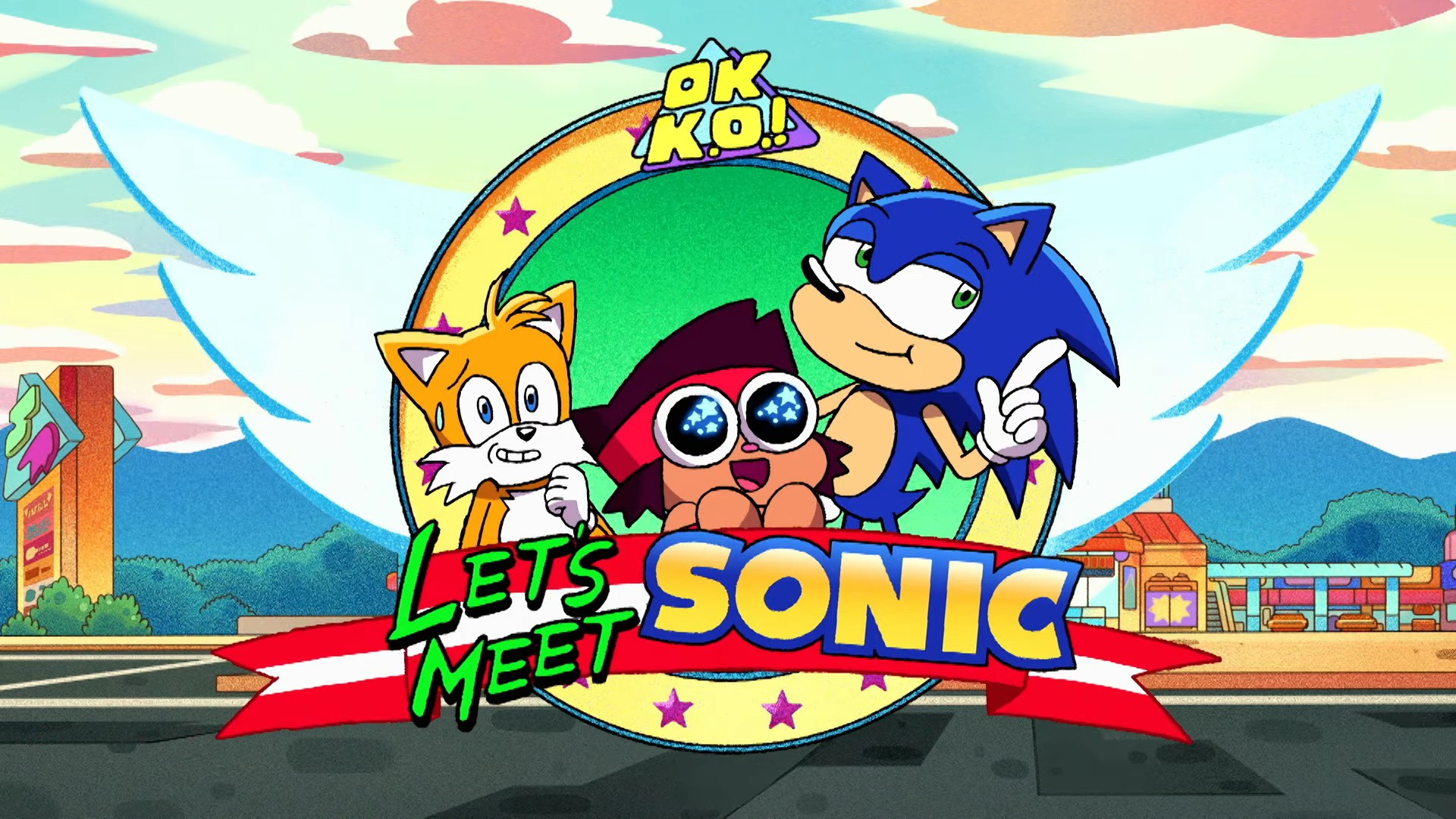
Sonic And Tails Crossover With Cartoon Network’s OK K.O.! Let’s Be Heroes
Sega is always happy to experiment with Sonic the Hedgehog, and early next month on 4th August, Sonic and Miles “Tails” Prower will be appearing in Cartoon Network’s animated series, OK K.O.! Let’s Be Heroes.
The news was revealed at the 2019 San Diego Comic-Con. Below is the official Twitter announcement:
As you can see in the video above, the brief clip is filled with plenty of Sonic references – ranging from iconic poses and hand gestures to music straight out of the video game series. The episode is titled “Let’s Meet Sonic,” and will see the blue hedgehog and two-tailed fox visit the plaza and team up with KO to save the day! This episode will also be available on the Cartoon Network app.
If you’re unfamiliar with OK K.O.! Let’s Be Heroes, it’s about an enthusiastic young boy who earns a job at a hero supply store and trains to become the greatest hero ever.
Will you be tuning in to see Sonic and Tails? Are you a regular viewer of this animated series? Leave a comment below.
Posted by: xSicKxBot - 07-22-2019, 02:34 AM - Forum: Lounge
- No Replies
Don’t Miss: Making Insomniac’s Spider-Man do what a spider can
This month, Insomniac Games and Sony released Marvel’s Spider-Man, a fluid, polished, and surprisingly grounded take on the web-slinging hero that’s drawn wide praise and sold millions of copies.
And while it’s easy to credit the wall-crawler’s worldwide fame as a big part of that success, the work Insomniac Games has done polishing every minute of Spider-Man’s adventure is worth remembering as well.
Recently, we were lucky enough to be joined by Insomniac Games game director Ryan Smith to talk about the development of Marvel’s Spider-Man, and learn more about the process in making Spidey feel like a genuine superhero.
Whether it’s the incredibly dynamic wall-crawling or building a New York in need of a champion, we wanted to know what Insomniac did to fuel their Spider-Man with great powers, and an even greater responsibility.
The swing is the thing
Smith’s perspective on Marvel’s Spider-Man starts from the fact that, no matter where the story goes or what villains Spidey squares off with, players will spend most of their time in this game doing one activity: swinging. Spider-Man’s unique traversal system has long been a draw in the various Spider-Man games made over the years, but for Smith and his colleagues, this pendulum-like movement would be the root of all their work.
Smith starts our conversation by explaining that the pendulum movement came first and foremost. As players hold down the right trigger, Spidey looks for an object nearby to shoot a web at, then swings down, then up to continue his forward movement. Right away, Smith says this flow creates visual and spatial differences that set the game apart from Insomniac’s last open-world title Sunset Overdrive.
“There’s also a difference in feel in terms of the speed that this character moves, the grand motions you make when you swing,” says Smith. “So you actually look at the city in a very different way: you’re looking at it a little further off in the distance.”
Insomniac Games’ Sunset Overdrive, released in 2014
“Sunset Overdrive, [the player sees] very rapid-fire changes. This one, we had a smoother motion that you’re looking at and you’re looking at bigger picture city changes.”
From there, the gameplay team needed to determine what would happen with each point in the parabolic arc where players could release the rope. “We looked at, on the swing, not just how does it feel to be on the line, but where are those right points to let yourself off the line and how can we make that a little bit of a game mechanic?” explains Smith.
This led to a decision to give players more decisions to make in traversal. Pressing jump at the end of a swing can launch them forward, but choosing to release earlier in the swing can send the player’s vector downward, changing direction toward street level.
Next, Smith pointed out the importance of “speed cues” in this crafting process. Examples include the motion blur from a straight dive down, or the slow-moving buildings in the distance while players zip through the foreground.
All the while, these movement systems (which include a handful of non-swinging moves like zip-lines and leaping systems), are fueled by hand-crafted interactions in the Insomniac Engine. To Smith, game physics are useful for collision tests, but when Spidey takes wing, it’s more important that “custom hero states” drive the swinging and moves.
An Empire State of Mind
The open world of Marvel’s Spider-Man might be better described as an open metropolis. It’s a scaled-down version of New York City that mushes together notable landmarks like Wall Street and Trinity Church (which is detailed so finely you can swing by the grave of Alexander Hamilton, as seen below). Unlike a lot of recent open-world adventures, Marvel’s Spider-Man doesn’t confine its hero to specific zones and then shuffle them along into new areas as the story progresses.
Instead, it keeps the city open, and uses a district system not only to organize its quests and activities, but also unique flavors of gameplay that keep the swinging from becoming stale.
“Also if things are always consistently—‘I can just press one button and just drive through the whole city,’ then that takes away some of that player engagement and that sense of flow and involvement,” Smith says. He compares three of the game’s districts and their architecture next. “The Financial District has really tall skyscrapers, Hell’s Kitchen is maybe a little bit lower…we looked at real spaces, actually Central Park is a great example.”
To build on Smith’s point, a quick spin through the city of Marvel’s Spider-Man shows the kind of detail he’s talking about. In the Financial District, it’s easier to get a higher altitude and make wide, sweeping swings between skyscrapers over the smaller buildings below. But when heading into Hell’s Kitchen, the player is now caught more in the local grid of the city. When making navigational changes, they either need to follow that grid’s path, or hoof it over the buildings and use more lateral traversal moves to move in the desired direction.
And when it comes to Central Park, it’s a wonder Spider-Man can even swing through there at all. But Smith says getting New York’s biggest natural landmark down was a big priority for Insomniac Games.
“You actually can swing through Central Park but we looked at those sections of the game that aren’t as natural as swinging off skyscrapers,” says Smith.” And we asked ourselves what feels right? Central Park, its central right? It defines the overall size of the island, it relates very directly to the whole shape and feel of it.”
“We did multiple tests with like a smaller Central Park, a bigger Central Park, and so we wanted to know both that if I’m swinging along side of it, what’s the right size, what’s the right distance where it feels like what’s the right size, what’s the right distance where it feels like ‘Wow, that is a Big Central Park, it feels right.’ But at the same time how can we find those opportunities in the middle to let you swing off the trees or the lamp posts that are in there?”
If this be Insomniac’s destiny
During our discussion with Smith, one surprising caveat to our conversation was how much of Spider-Man’s feel comes from all the games the company’s produced in the past, along with its proprietary Insomniac Engine.
Smith points to two specific titles whose DNA can be felt in Marvel’s Spider-Man in particular. The first is Sunset Overdrive, which is where Smith says the company learned about open-world traversal and shaping cities to improve gameplay. The second though, is the Ratchet and Clank series that Insomniac was previously most famous for.
In particular, Smith discussed how the myriad weapons and gadgets that players touted in Ratchet and Clank drove the gadgets and powers that players pick up during the course of Marvel’s Spider-Man. “That was something where we were able to leverage the experience we had building [Ratchet and Clank] weapons and awesome gadgets in previous games to integrate that into combat.”
“We knew that was a way that we could have players could express themselves and they’re gonna be still hopefully discovering different ways gadgets combined together and different strategies for taking guys down.”
Smith describes working with the company’s proprietary engine as “part of the Insomniac DNA,” and says using the engine helps his team set audacious goals for the game’s streaming budget and graphics. He adds that it also affords his team the ability to create custom workflows and tools that best fit their workflow.
“We were able to leverage the experience we had building [Ratchet and Clank] weapons and awesome gadgets in previous games to integrate that into combat.”
Unlike the development process for Sunset Overdrive, Smith says that Insomniac Games didn’t rely on internal game jams this time around to prototype dramatic new ideas. But he does say that a lot of the game’s niche features, like a photography mechanic and subway station-based fast travel system, came from a similar instinct of random team members pairing up to implement a unique design idea.
Per Smith, both systems solved problems that were occupying the design team at other levels. They knew even with a fun traversal system, players would still want to zip around the map, and even though exploring the city was meant to be fun, Smith and his colleagues wanted ways for exploration to feed back into the combat system.
Thanks to team members collaborating together though, both the subway system and the “landmark photo” mechanic were hashed out, letting Insomniac put a Spider-Man-flavored spin on traditional open-world systems.
“It takes a village,” Smith told us as we closed out a conversation. But if the success of Marvel’s Spider-Man is any indication, it’s helpful when that village has a history, elders, specialists, and a known tool as well.
We know you’re busy and might miss out on all the exciting things we’re talking about on Xbox Wire every week. If you’ve got a few minutes, we can help remedy that. We’ve pared down the past week’s news into one easy-to-digest article for all things Xbox! Or, if you’d rather watch than read, you can feast your eyes on our weekly video show above. Be sure to come back every Friday to find out what’s happening This Week on Xbox!
Read the Final Chapter of The Sinking City’s Hero Origin Story Hi everyone! Last week we shared part one of The Sinking City hero origin story and we heard you liked it. If you missed it, you can still read it here. In The Sinking City, you play as Charles Reed, a 1920s private investigator… Read more
Bask of the Glory of the ID@Xbox Platforming Paradise Sale Summer is here and it’s time to bust out the shades because the ID@Xbox team have taken 50 of our best and brightest platforming games and put them on sale. From now through July 15 you can save up to 75% on action packed… Read more
Free Play Days: Rocket League Start your engines, prepare your Rocket Boosts, and don’t forget to bring your friends. Rocket League, the hit sports/action hybrid and recipient of more than 150 Game of the Year nominations, will be available for free this weekend… Read more
Coming to You in Full Color and Cine-Sound: The Cuphead Show! Hi, everyone! Chad Moldenhauer from Studio MDHR coming to you with an announcement so surreal I can honestly say I never thought I’d be making it… Cuphead will be coming to life as an original Netflix series, “The Cuphead Show!”… Read more
All the Details for Gears of War at San Diego Comic-Con With Gears Pop! and Gears 5 releasing this year, join the developers and minds behind the Gears of War Universe as they discuss the past, present, and future of this storied franchise at San Diego Comic-Con on Thursday… Read more
Next Week on Xbox: New Games for July 16 to 19 Welcome to Next Week on Xbox, where we cover all the new games coming soon to Xbox One! Every week the team at Xbox aims to deliver quality gaming content for you to enjoy on your favorite gaming console. To find out what’s coming soon… Read more
Star Trek: Picard's First Trailer From Comic-Con 2019 Is Here
At San Diego Comic-Con, fans attending the Star Trek panel were treated to the first trailer for Star Trek Picard, the CBS All Access show that brings one of Starfleet's most respected officers to screen once again--and with a number of familiar faces in tow. Picard is set many years after The Next Generation and, in the time he's been away, much has happened. While the details remain vague (and will likely only be explored once the show premieres), the end result is that Picard has retired and now runs a vineyard.
The trailer opens in the vineyard, where Picard opens some doors and stares at his old belongings. It's noted that Data sacrificed his life for Picard. "I wanted to belong here, but it never felt like home," he says. A woman comes to Picard for help, and Picard discusses her with another officer. "If she's who I think she is, she's in serious danger," he explained.
Picard is then shown enlisting a crew to join him. He pours a drink out, and at this point it's revealed that Seven of Nine will return. "What the hell are you doing here, Picard?" she says, to which he replies, "Saving the galaxy."
The classic order of, "Engage," is said, and then Data is shown, taking part in a card game. "I don't want the game to end," Picard says, showing his sentimentality. "I can see that, Captain," Data offers in return.
Patrick Stewart, who plays the iconic character, also appeared during the panel and, as you can imagine, the crowd was very excited to see him. "We never know do we, when our best moment will be? And that is now," he said. There were a whole bunch of other characters confirmed for the show, including Riker. Check out the full breakdown of the Star Trek: Picard panel for more.
It was a pretty exciting hour for fans of the sci-fi series, as the Stak Trek panel also provided new insight into Star Trek Discovery Season 3, Lower Decks--the new animated series developed by Rick & Morty writer Mike McMahan--and Short Treks, the short film series.
For more on what's been happening at the show, check out our SDCC 2019 hub, where you'll find all the latest news. We've also put together a roundup of all the coolest trailers from SDCC, so it's the place to go if you want to catch up on what TVs and movies have in store for us.
Talking Point: What Are You Playing This Weekend? (July 20th)
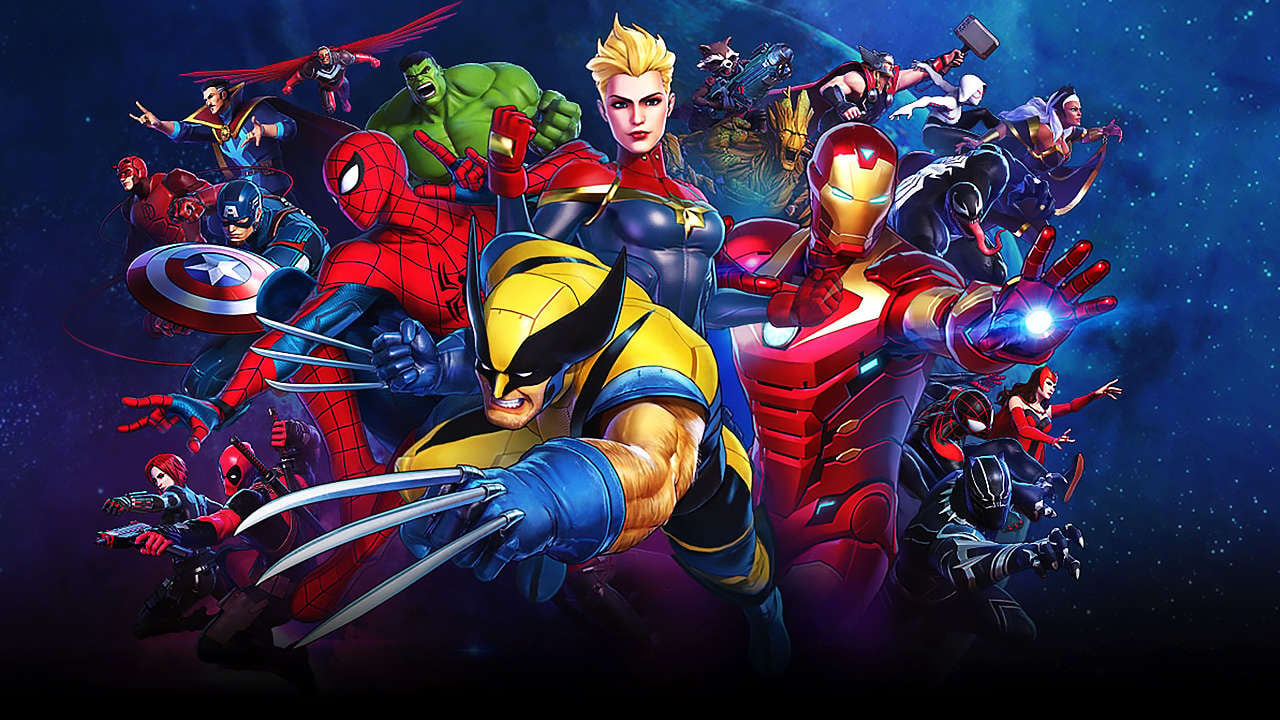
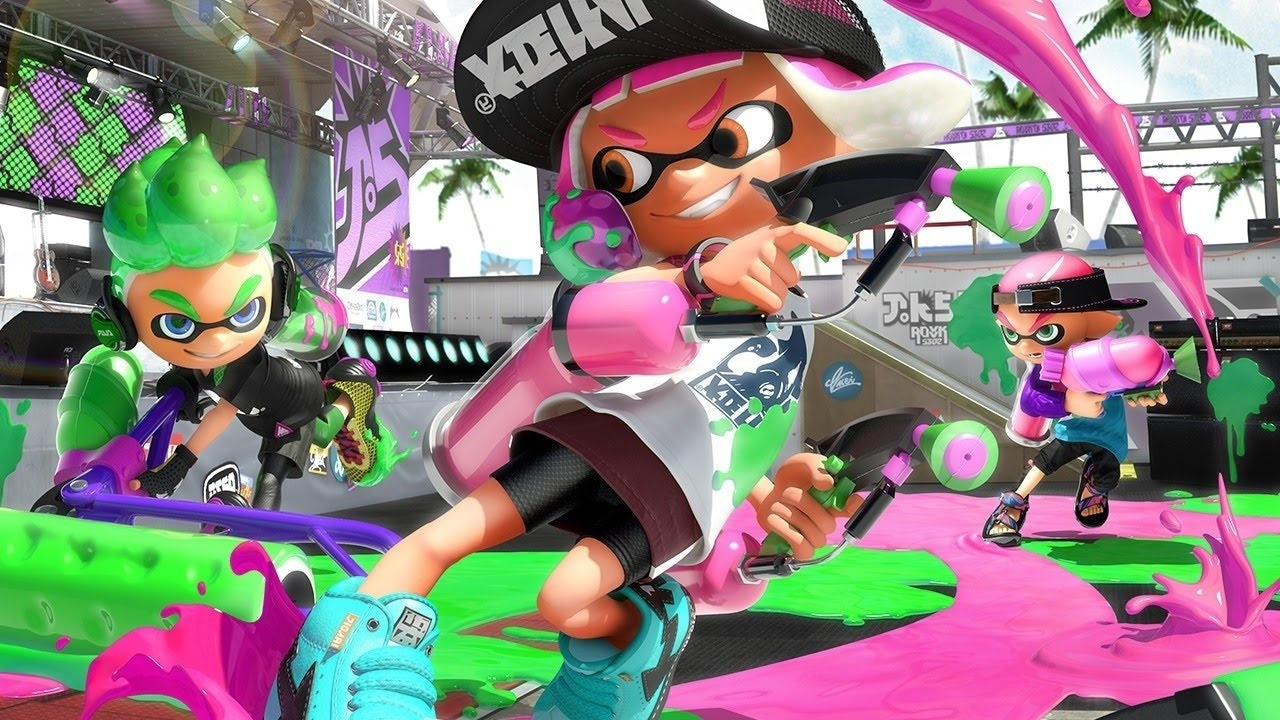
What a week it’s been! Nintendo revealed a Switch revision with improved battery life, locked in the release date for Luigi’s Mansion 3 and announced two new sets of Joy-Con. On the third-party front, we found out when Resident Evil 5 and 6 would arrive and Sega finally confirmed Super Monkey Ball: Banana Blitz HD.Brushing aside the week that was, it’s now time to focus on the final Splatoon 2 Splatfest, Marvel Ultimate Alliance 3 and the many other games we’ll be playing this weekend. We’re also joined by a special guest from a certain website you’ll likely be familiar with!
Austin Voigt, contributing writer
Well – my weekend plans will likely be the same as last weekend’s, but I’ll be replacing What Remains of Edith Finch (which I finished and wept over), with the final Splatfest (which I will also likely weep over). I also plan to acquire the full version of Dragon Quest Builders 2 and get lost in that – I checked out the demo last weekend and loved it, so you’ll find me splatting and building all weekend long.
Dom Reseigh-Lincoln, reviewer
This weekend, I’ll be a busy boy with three very different games occupying my free time. Firstly, I’ll be taking FIA European Truck Racing Championship for a spin to see if big rig racing can really work on Switch. Then I’ll be channeling my inner Ragnar Lothbrok as I brave the elements and attempt to survive (and thrive) in the survival RPG realm of Dead in Vinland: True Viking Edition.
Finally, I’ll be trying out a game that’s been on my to-do list for a while now: Mutant Year Zero: Road to Eden. I’ve never been the biggest fan of tactics-style games, but the art style and the fact you can play as a grizzled-looking mallard has me seriously intrigued. Look out for reviews of all three in the coming weeks, right here on Nintendo Life.
Liam Doolan, news reporter
My main gaming priority this weekend is to help Team Order win the Splatpocalypse event. Who knows what will happen to the world of Splatoon if we let Pearl and Team Chaos win? It’s just a pity my expensive Splatfest-themed t-shirt won’t arrive until well after this event has finished.
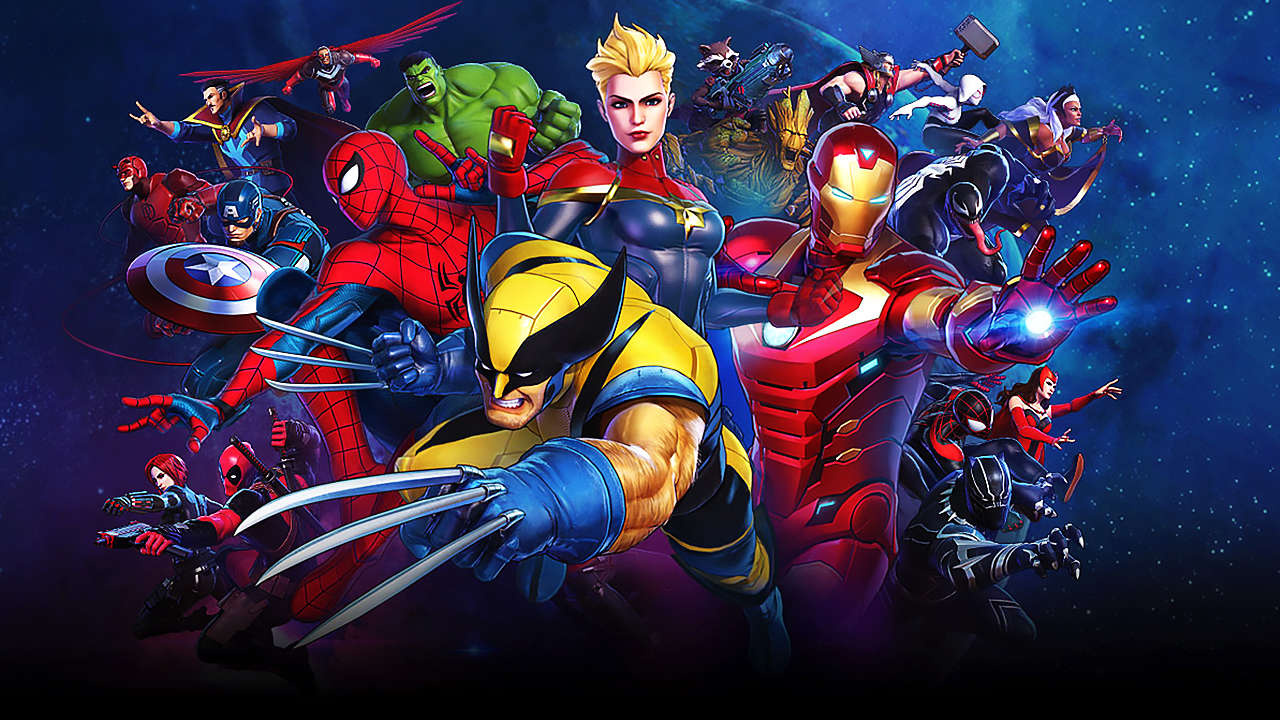
When I’m not fighting to the bitter end in Splatoon 2, I’ll be saving the galaxy or at least attempting to save whatever else needs saving in Marvel Ultimate Alliance 3: The Black Order. I’m still trying to work out my ultimate team. I’m thinking Wolverine, Spider-Man, The Hulk and Captain Marvel might be a good combination to start with. I should probably revisit Bloodstained: Ritual of the Night as well.
Gonçalo Lopes, contributing writer
The Summer of Switch relentlessly continues to bombard us with quality titles. I had a ton of music-related work due to the release of two individual projects, so I ended up not playing as much as I wanted during the week. I will make up for it this weekend with sessions of The Messenger, Blazing Chrome, Rise: Race The Future, Arcade Archives The Ninja Warriors (Zuntata turned up to 11, of course) and by participating in the Splatpocalypse.
Game of the Week naturally falls onto Marvel Ultimate Alliance 3: The Black Order. I have always enjoyed the series and no way I was not going to snap up the ultimate, Switch exclusive edition of the franchise. A true shame I have no local buddies to play it with…
Gavin Lane, staff writer
I’m currently on my holidays and the 4G/3G reception in this particular corner of rural Portugal means internet distraction is (thankfully) being kept to a minimum. Therefore, I should have plenty of time to finish GRIS, Abzu and one or two others queued up in my backlog. I’d love to get involved in a match or two of the final Splatfest, but that’s dependent on the hotel WiFi, so we’ll see. I sided with Team Order purely because it’s Marina’s team and as tentacle-haired ladies go, Marina’s particularly lovely. Stop judging me!
Robert Ramsey, Push Square deputy editor
Yes, you read that right — I’ll be sitting down to play some Nintendo Switch this weekend. Naturally, Super Smash Bros. Ultimate is on the docket — a family favourite and once things get heated, it’s incredibly difficult to put down. Mario Kart 8 Deluxe is also on the agenda, I think. I’ve loved me some Crash Team Racing Nitro-Fueled over the last few weeks, but there’s only one king of the kart racers, and it’s Mario.
Which games are you playing this weekend? (98 votes)






 In particular, Smith discussed how the myriad weapons and gadgets that players touted in Ratchet and Clank drove the gadgets and powers that players pick up during the course of Marvel’s Spider-Man. “That was something where we were able to leverage the experience we had building [Ratchet and Clank] weapons and awesome gadgets in previous games to integrate that into combat.”