TV’s Conan O’Brien has taken a rather amusing swipe at the whole episode by running a skit on his show which ‘introduces’ a new-look design with a rather large new feature – which isn’t addressed at any point during the piece.
However, fun is had by pointing out that, despite all of the injustice in the world, people actually took the time to complain about the look of a make-believe animal character from a ’90s video game. It’s a pretty funny piece, and well worth a watch.
We know you’re busy and might miss out on all the exciting things we’re talking about on Xbox Wire every week. If you’ve got a few minutes, we can help remedy that. We’ve pared down the past week’s news into one easy-to-digest article for all things Xbox! Or, if you’d rather watch than read, you can feast your eyes on our weekly video show above. Be sure to come back every Friday to find out what’s happening This Week on Xbox!
Storytelling in Space: A Q&A with Co-Director of The Outer Worlds The release of Obsidian Entertainment’s The Outer Worlds is upon us, and we’re already having a great time exploring the game’s vibrant universe while meeting (and occasionally fighting) some of its fiercest inhabitants. The game combines a darkly humorous narrative… Read more
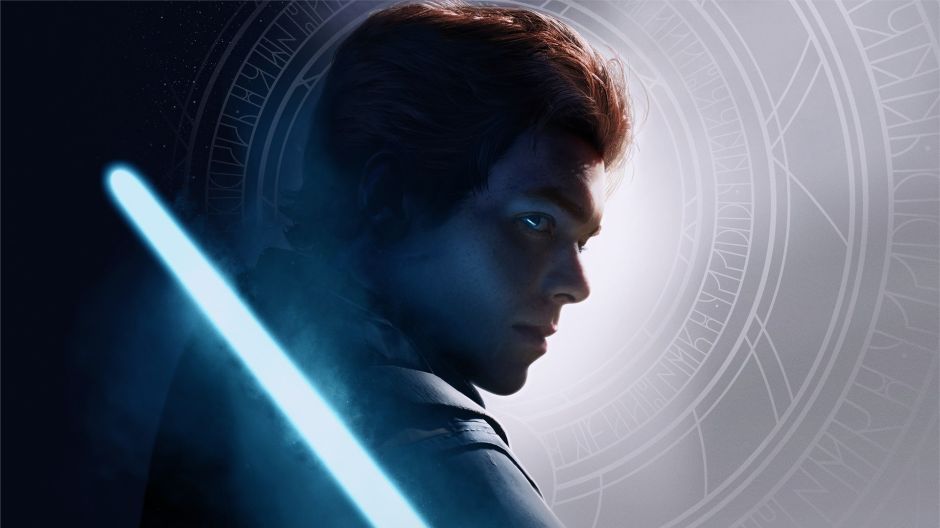
Respawn: Built to Make You Feel Like a Jedi Star Wars Jedi: Fallen Order is far and away one of our most anticipated titles to come out this holiday season. Having recently gone hands-on with the title, we came away incredibly impressed with its level of depth, colorful cast of characters, and its non-linear approach… Read more
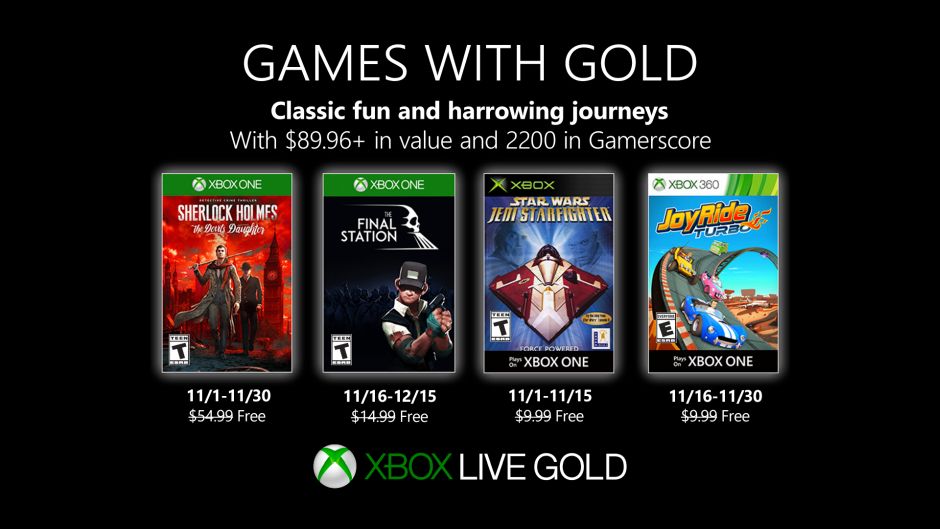
New Games with Gold for November 2019 In November on Xbox One, become the world’s greatest detective in Sherlock Holmes: The Devil’s Daughter and then take a ride across a dystopian world in The Final Station. On Xbox 360, and Xbox One via Backward Compatibility, the Force takes flight with Star Wars: Jedi Starfighter… Read more
Generation Zero Content Update: Rivals and Experimental Weapons Greetings from the Generation Zero team! Generation Zero is set in an alternative 1980s Sweden in the region of Östertörn and it’s about exploring atmospheric and mysterious environments while also engaging in first-person guerrilla action again hostile machine invaders… Read more
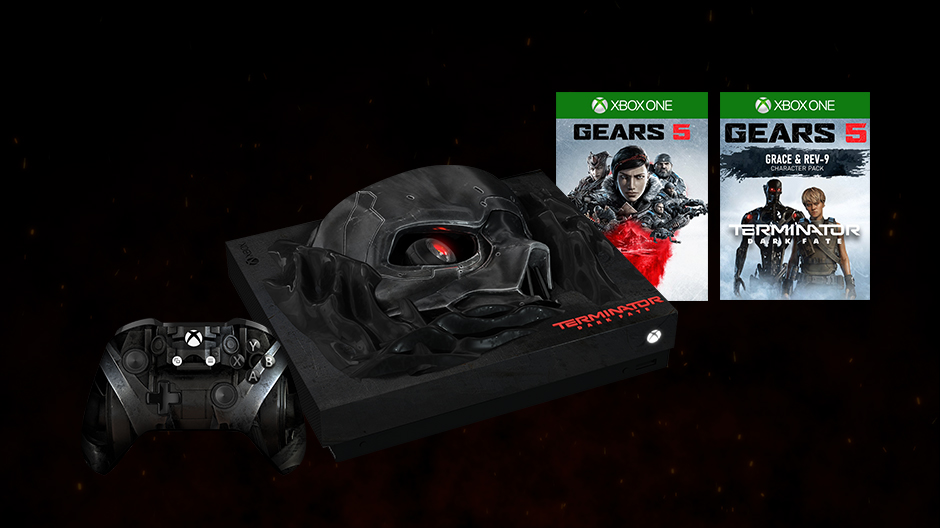
Come with Me If You Want to Win the New Terminator: Dark Fate Custom Xbox More than two decades have passed since Sarah Connor prevented Judgment Day, changed the future, and re-wrote the fate of the human race. However in “Terminator: Dark Fate,” a highly advanced and deadly new Terminator – a Rev-9 – travels back through time to hunt… Read more
This Year’s Spookiest Halloween Events on Xbox One Halloween is right around the corner, so you know what that means: Special Halloween events in your favorite video games! What, you thought we’d say candy? With the big day close at hand, a bunch of games have revealed their plans to celebrate the spookiest of holidays… Read more
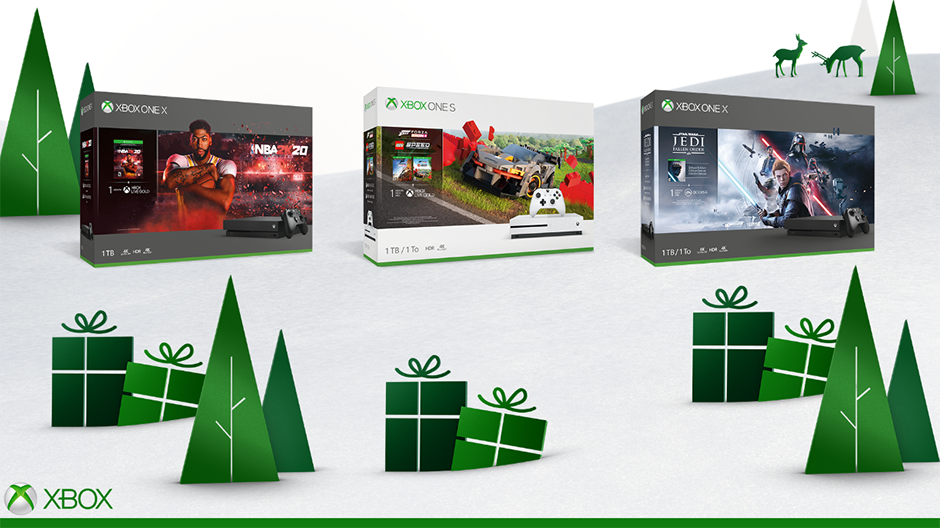
Xbox Has Something for Everyone on Your Holiday Gift List It’s hard to believe, but the holidays are quickly approaching, and if you’re in search of the perfect gift, look no further than our lineup of Xbox One bundles that pair consoles with the season’s hottest games, and new and customizable controllers. By gifting an Xbox One to friends… Read more
Next Week on Xbox: November 5 to 8 Welcome to Next Week on Xbox, where we cover all the new games coming soon to Xbox One! Every week the team at Xbox aims to deliver quality gaming content for you to enjoy on your favorite gaming console. To find out what’s coming soon to Xbox One, read on below… Read more
It’s shaping up to be an interesting talk, given that the Apex Legends team has to navigate the hurdles of supporting and updating a live game played by tens of millions of people around the world.
Alavi’s own background is equally interesting; a pre-med student who turned down medical school to turn his passion for modding into a full-fledged games career, he recently sat down to chat with us (via email) about his work and what you can look forward to from his talk.
Hey Mohammad, tell us a bit about who you are and your path through the game industry!
I was born in Iran and fled with my family during the revolution in the early ’80s. We were refugees seeking asylum when we immigrated to the US. While I would describe my childhood as happy, my formative years were certainly difficult living in southern Virginia with a name like Mohammad.
I grew up on a steady diet of Atari and Nintendo, and first started making games when I was introduced to Magic. I couldn’t afford the cards, so I just created my own version of the game with art and rules I drew on index cards. I eventually started making my first digital creations with the Duke Nukem 3D level editor.
I went off to college and studied pre-med, but making video game levels was always my hobby. With the advent of the internet and the explosion of Half-Life mods in the late ’90s my passion flourished, but I never considered it an obtainable career.
I got accepted to medical school in 2002, but instead of going I decided to take a risk and follow my dream instead. Two years later I got my first job working on Call of Duty 2, and the rest is history. I’ve essentially been working with the same core group of people for the past 15 years, helping create franchises like Modern Warfare, Titanfall, and Apex Legends.
How did your family feel about you going into games instead of medicine? Have you met many other folks in games who have a similar path?
I lied to my parents and told them I didn’t get into medical school. I knew there was no other way to convince them that I should make video games instead. They were extremely disappointed when I told them, but by the time I shipped the original Modern Warfare, they were very proud of me. Ultimately they just wanted me to be happy, successful, and self-sufficient. I’ve never met anyone who took quite the same path I did, but I’ve met many devs who started in very different careers.
Why did you decide to pitch this talk for GDC 2020?
Diversity in entertainment is something I’m passionate about, and I hope to inspire other devs to advocate for better representation.
The media I consume has greatly affected my outlook on societal norms. I’m grateful for the pioneers in entertainment who broke a lot of barriers to make various lifestyles, cultures, sexual orientations, etc more acceptable. As a society we’ve made great strides towards treating each other better, but we still have a long way to go. I feel if given a platform to promote diversity and representation, it’s almost my responsibility to do so.
Also, from a purely self-serving point of view – some of my favorite forms of technology and entertainment were created or crafted by those who would not have had the opportunity decades ago because of their name, the color of their skin, or their sexual orientation. Think of all the great talent we’ve already lost due to close-mindedness. It would be a shame to deprive ourselves of the next great visionary simply because we didn’t offer a society where they could flourish.
Any specific creators or pieces of media you want to shout out as being particularly influential for you?
James Cameron did an amazing job creating female action heroes in leading roles during an era dominated by machismo. When I found out the main character I was controlling in Crysis was an African-American I was surprised – it caused me to question my own assumptions on why I thought that was odd. I remember the first time I saw two gay men kiss on True Blood I was shocked – now seeing various forms of sexuality on TV is as familiar as breathing. I think the casting of trans actor Hunter Schafer and the writing of the trans character Jules on Euphoria is handled so incredibly well.
There are far too many influences to keep going and I’m sure there are more that subconsciously affected me that I don’t even realize, but the point is they all shaped what I considered socially acceptable.
What do you hope your fellow game makers will get out of your talk?
I feel we’re at a point where I at least don’t need to explain the “why” – why diversity and representation in media has great value. But the “how” is still a bit of an unknown.
I didn’t appreciate the constant struggle against established systems and ways of thinking that make it difficult to bring greater diversity to entertainment. There’s a reason underrepresented people stay underrepresented, and it wasn’t immediately obvious to me. I imagine it’s not immediately obvious to many people. I hope my talk sheds some light on what kind of obstacles creators will face and how to overcome them.
Next year GDC 2020 runs from Monday, March 16th through Friday, March 20th. This will be the 34th edition of GDC, and now that registration is officially open, you’ll want to take a look at the (ever-expanding) session schedule and your GDC pass options — register early to lock in the best price!
Posted by: xSicKxBot - 11-13-2019, 02:24 PM - Forum: Windows
- No Replies
The new Microsoft Project rolls out to customers worldwide
With Microsoft 365, the world’s productivity cloud, we’re using the power of the cloud to help people and organizations achieve more. Last year, we shared our new vision for work management designed specifically to help teams collaborate on projects more efficiently and achieve more together. Today, we’re announcing a major step toward achieving this vision with the general availability of the new Microsoft Project along with a new subscription plan!
Collaborating in teams and projects has become an integral part of our work experience. Businesses increasingly rely on project teams to advance strategic initiatives, drive change, and solve tough problems. But keeping projects on track isn’t easy, especially when teams are working on multiple workstreams to achieve aggressive goals on tight deadlines.
The new Project is designed to be both simple and powerful, so anyone can get started quickly and take control of any project right away.
A fresh new experience
Project offers a redesigned user experience that is simple and intuitive. Teams can quickly add new members and set up tasks, and then easily switch between grids, boards, or timeline (Gantt) charts to track progress. And because Project is part of the Microsoft 365 family, project teams can save time and do more with built-in connections to familiar apps like Microsoft Teams and Office.
Collaboration made easy
Designed to do much more than just track progress, Project works with Teams to support collaboration and make it easy to manage all aspects of a team project, including file sharing, chats, meetings, and much more. Team members in scattered locations can even edit tasks simultaneously, so they can get more done together, no matter where they are. To help teams stay on track, Project offers an automated scheduling engine based on effort, duration, and resources.
Project with Teams.
Coauthoring in Project.
Insights at your fingertips
The new Project provides greater visibility into your projects and powerful tools to help you anticipate future needs. Create stunning interactive dashboards in Power BI, so you can visualize every aspect of each project at a glance. Get the big picture view of all your projects across your organization with the visual, interactive Roadmap feature.
Project data in a Power BI dashboard.
Extensible platform
Built on the Microsoft Power Platform, Project enables you to quickly connect to the apps and services you already use, and to create custom desktop and mobile experiences to meet the specific needs of every project team. Easy to use tools make it simple to create automated workflow processes that streamlines compliance and increases efficiency. Do all this and more with the confidence that comes with knowing you are building on the powerful security and compliance capabilities of Azure—the world’s most trusted enterprise cloud.
Introducing a new Microsoft Project plan for all users
As part of this launch, we’re also excited to announce a new subscription plan: Project Plan 1.
Project Plan 1 is for teams that need the essential capabilities of managing task-oriented projects like assigning tasks and dependencies and scheduling and tracking project work using lists, boards, and timelines. At just $10 per user per month, this subscription is an ideal way to get started with Project.
Project Plan 1 joins our current subscription offerings, Project Online Professional and Project Online Premium, now renamed to Project Plan 3 and Project Plan 5 respectively. Customers using Project Online can continue to do so with confidence knowing that we’re committed to your success no matter which Project service you choose.
The rollout of the new Project began in mid-October. If you already have a Project subscription plan, you should receive a notification inviting you to try the new Project experience. If you don’t have a Project subscription yet, we invite you to either learn more or try out Project Plan 1 today!*
What’s next?
Looking forward, we will release more exciting capabilities in the new Project, including resource management, budget analysis, and time and expense tracking. These powerful features will enable you to streamline more complex initiatives and help your business maximize ROI.
As we continue to innovate with the new Project, we rely on customers, like you, to help shape the direction of future releases. You can reach us via the Feedback button in the new Project UserVoice or through your Microsoft representative, to share your feedback and ideas on how Project meets your needs today and into the future.
Q. How does new Project compare to Microsoft Planner?
A. Planner remains the starting point for individuals and teams to collaborate on tasks. Many teams find that they need more power—like tracking task dependencies and scheduling—and the new Project is the right step up for them. Planner and the new Project have a similar look and feel, so that teams can move between both tools easily.
Q. Can I continue to use Project desktop app?
A. Absolutely, you can continue to rely on the full power of the Project desktop app.
Q. Does Project Plan 3 and Project Plan 5 include Project Plan 1 capabilities?
A. Yes, both Project Plan 3 and Project Plan 5 will include the Project Plan 1 capabilities.
*Plan 1 is available for purchase starting October 29, 2019 in the U.S. and select international markets. It will be available for purchase starting mid-November in other international markets (except for France and South Korea).
Video: Here’s What Happens When You Battle Giovanni In Pokémon GO
If you’ve been playing Pokémon GO recently, you’ll be more than aware that the pesky Team GO Rocket has infiltrated the game. The man behind all of the chaos is, of course, the notorious Giovanni, and highly experienced players have now started to come up against him in battle.
Finding him is a challenge in itself – we have a full guide to Pokémon GO’s Looming in the Shadows special research tasks if you need it – and once you get there you’ll realise that you’re up against a rather formidable opponent. Sure, if you have a bag full of super-strong monsters you should get by without too many issues, but you’ll still need to concentrate to get the job done.
Anyway, without further ado, here’s a look at how the battle with Giovanni goes down. You can get a glimpse at the Pokémon he uses and even the reward that follows – a chance to capture a Shadow Articuno.
Developer Niantic has confirmed that new Giovanni questlines will appear every month, with a new medal also now showing up on players’ profiles to indicate how many times you’ve completed them. We’d guess that next month’s battle will reward you with a different Shadow Legendary, but we’ll have to wait and see.
Have you been enjoying the Team GO Rocket shenanigans in Pokémon GO? Have you faced Giovanni yet? Let us know with a comment below.
There is a new bundle of interest for game developers on Humble, this is the Humble Unreal Engine Game Development Bundle featuring GameDev.tv. It’s a collection of courses and assets (as well as the games QUBE 1 and 2) for use with the Unreal game engine. As always the bundle is split into different tiers, where you buy a higher dollar value tier, you get all of the tiers below it.
In this bundle the tiers are:
1$ Tier
Unreal Cinematics Training Course
Q.U.B.E
Star Sparrow Modular Spaceship
Another Stylized Material Collection 8
16$ Tier
Math For Games Training Course
Unreal C++ v4.1X Training Course
QUBE 2
Master Control Material
Rusty Barrels Volume 2
Another Easy Terrain Material
20$ Tier
Unreal Multiplayer Training Course
Unreal C++ 4.22 Training Course
Unreal Blueprint Training Course
Unreal VR Training Course
Steampunk/Victorian Environment with Vehicles
Gamemaster Audio – Prosound Mini Pack
Slum Village Environment
As with all Humble Bundles, you can decide how your money is allocated between the publisher, humble, charity or if you so choose (and thanks if you do!) to support GFS using this link. Learn more about this bundle in the video below.
It’s already past its one-year anniversary on PC and has been through significant changes but Gwent is finally here on iOS. It is such a timely and refreshing CCG and, sure, it’s a beloved IP and has an incredible amount of visual effects and polish. It’s pretty and feature-rich upon launch, what with resounding audio effects, detailed orchestral scoring and flashy premium card animations.
Gwent is a powerhouse because in its innermost guts, the game’s structure is radically different from the competition. It isn’t a battle per se but rather a power struggle between two players to keep a higher total across three rounds. Card advantage is incredibly important, and the drawing and hand management mechanics almost minimize the RNG of top-decking entirely. It has a massive cardpool with tantalizing synergies across the various factions. In this guide we’ll be covering basic play, deckbuilding strategies, its currency system, and lastly some best practices to outmanoeuvre the game’s monetisation scheme.
How do I play Gwent?
What are the microtransactions like?
What are my progression rewards?
How do the different factions work?
What is a Gwentsday?
How does the Arena work, and why should I bother?
What are the optional cosmetics like?
Tell me about seasonal play and limited formats.
How should I spend my time in-game to maximise my rewards?
What makes Gwent different from the competition?
What’s the big fuss about Thronebreaker and where is it?
GWENT Android version?
How do I play GWENT?
A match of Gwent is a best-of-three rounds. The active player plays one card from their hand per turn and resolves its effect, then passes play to their opponent. Most cards are units which add their power to its owner’s total. To win a round, simply have the greatest power total when your opponent passes. To enliven things, Gwent’s draw structure is rather unique: 10 cards for each player to start, then three additional draws at the start of the second and third rounds. There are mulligans for each round, so decks are very consistent.
What are GWENT’s micro-transactions like?
Relatively tasteful and par for the course. There are introductory specials which are the absolute best bang for your buck, but beside the cash shop Ore is used to craft ‘kegs’ which are card packs. Scraps are for creating specific cards and are gained normally but also by ‘milling’ or converting unwanted cards. Lastly, meteorites are purely cosmetic and makes a given card ‘premium’ by adding an animation to it. Because kegs made through in-game currency are locked to a specific set, your best bet to get specific cards through crafting. The meta has been pretty unpredictable so far in this past year, so don’t spend too quickly.
GWENT progression rewards
Each match won gives ore. Each level gives reward keys, which are used in the reward book to unlock skins and oodles of in-game currency. In the beginning, the game treats you to a sweet honeymoon phase, showering you with keys which jump-start whichever dream deck you aim for. The biggest one is hitting level 60, thereafter barrels will always contain an extra rare. This is just one of many ways Gwent rewards experience over expense. (Time over cash). It has a rush of freebies which should be spent advisedly.
GWENT Factions
Each faction has an exclusive pool of cards and leader abilities, as well as a few key mechanics that cement their unique identity. The Northern Realms are all about a generalist approach, with about equal options for buffing friendlies and debuffing the opposition, with some utility thrown in. The Scoia’Tael are the non-human sentients, representing the mystical races like elves and dwarves along with some more exotic denizens.
They have special bonuses for diverse unit sub-types and a heavy reliance on their unique Trap cards, setting up giant reactions to enemy moves. The Skellige are the ghoulish and morbid faction, with plenty of self-sacrifice and graveyard interactions. Death is just another resource to them, and their decks tend to be strongest at the finish line. Monsters are dynamic, swelling their ranks and devouring each other. They have the biggest creatures and the largest swarms.
What is a Gwentsday?
Every Wednesday is Gwentsday and has bonus experience for every match. The game is always doing timed promotions like this, either for different factions or else to promote a new set or season start. Basically just either follow them on social media or simply peruse the landing page in-game for a notice about any time-sensitive bonuses.
How does the Arena work, and why should I bother?
The arena is Gwent’s draft format wherein you build a deck by selecting cards one at a time from a batch of offerings. The resulting deck, which is assembled without respect to provision costs, is used until you lose three matches or win nine. At the end of the run, you get a payout depending on how well you did. The cost of entry is a little higher than the price of a keg, but a keg is also part of the guaranteed reward bundle for participating, so the Arena is worthwhile if you like the creativity and flexibility required by the draft format.
It takes a lot of experience and familiarity with the entire card pool to draft quickly and confidently.
GWENT deckbuilding tips
First, consider your starting faction and leader ability. These should be selected based on the cards already unlocked and personal playstyle preferences. Each deck must have at least twenty-five cards, twenty-three units and be under the provision limit. Stronger or more distinctive cards have higher provision costs, as displayed in the bottom right. The deck editor has robust filters for sorting which cards you want. Use the search function to hone in on specific keywords and synergies you want, and craft a few clutch additions, and you’ll have a custom deck in no time.
What are the optional cosmetics like?
There are leader skins, which alter your commander’s outfit and appearance. Premium card versions display a short looping animation, really makes the cards pop and come alive. Player avatar icons are unlocked either through the reward book or else exclusively through achievements. There are also avatar borders, card backs and battleground skins as well. Please note that most if not all of these are unlocked through consistent play and doled as rewards for highly specific achievements. Animated cards are premium and can be purchased at-will, but the more prestigious cosmetics simply depend on long-term investment, though a few glamorous ones are also sold directly for pure cash.
GWENT seasonal play and limited formats
Each month has its own special format with a unique twist on the default rules. The current season, for example, gives every unit Resilience and keeps it around from round-to-round unless destroyed. Simple to read and understand the change, but it has massive implications for deckbuilding. Each season has its own unique reward and title unlocks, so going deep into a given season is much better than splitting your time evenly throughout the year. The rule shifts in this optional formal create a side meta which is never the same twice.
How should I spend my time in-game to maximize my rewards?
Login and do your daily quests. Also, plot a direct course between your existing collection and the next card or two you want. This means researching deck archetypes and making a budget to streamline the path between your current setup and the next best thing. Have a decent deck for each of the factions, but be as specific and focused as possible.
For the most bang for your buck, simply imitate the leaders or a specific synergy. Invest in some high quality neutral cards, like the Witchers, who are all conditionally strong and can be slotted into a variety of decks.
GWENT vs. Hearthstone vs. everyone else
Theme, progression and gameplay. For any Reiner Knizia fans out there, Gwent owes a good bit of its heart to Blue Moon. Even though a single match of Gwent doesn’t take more turns than Hearthstone, it feels so much more tense because of the structure. Every single card matters immensely. Card advantage is king, and efficiency is the dominant paradigm. Deckbuilding is incredibly intense, and matches often come down to a single decision.
Progression is generous, with the game offering in-game currency for daily logins, for played matches, level-ups and achievements. It has more systems in place to unlock cards for free than almost any other game out there, except for perhaps Eternal. Lastly, for anyone with a bit of familiarity or fondness for the Witcher books or games, this game is full of flavor text and allusions. All of the major characters are cards and their characters have been well-translated into in game effects.
What’s the big fuss about Thronebreaker and where is it?
Thronebreaker is Gwent’s standalone single-player expansion. It has matches spanning a pretty long campaign with cel-shaded graphics and voice acting as well as an original storyline with some choose-your-own adventure flavor. It came out a little over a year ago and is a premium companion game to Gwent, though it serves as a robust introduction. It’s still worth recommending for PC users but has no sign of making the leap to mobile anytime soon.
GWENT Android version?
As of publication, it is slated for Q1 2020. The iOS version was a long time coming, with several updates and delays, but hopefully since one mobile version is done, the Android version will make its release window. The good news is that both account synchronisation and cross play are working smoothly, though a GoG account is required. Expect a limited beta and then release sooner rather than later.
Do you have any tips of your own, or further question about GWENT? Let us know in the comments!
FuRyu is set to publish a brand new Doraemon game in Japan next year called Doraemon: Nobita’s New Dinosaur, it has been revealed.
The game will release alongside a new animated film, similarly titled Doraemon the Movie: Nobita’s New Dinosaur, which is set to arrive in Japanese theatres on 6th March next year. It has been reported that the game is an action-adventure title and that it will be published by Bandai Namco.
Other details are rather scarce at the moment, although we do know that it’s planned to launch on 5th March 2020 in Japan. It follows the charmingDoraemon: Story of Seasons which arrived in the west just last month on Switch.
Are you a fan of the Doraemon series? Excited to see another title make its way to Switch? Let us know if you’ll be hoping for a western release in the comments below.
Apple predicted to launch 16-inch MacBook Pro this week
By Malcolm Owen Tuesday, November 12, 2019, 11:21 am PT (02:21 pm ET)
Apple is again predicted to launch the 16-inch MacBook Pro very soon, possibly Wednesday, with reports claiming the company has started to brief members of the media.
Rendering of Apple’s rumored 16-inch MacBook Pro.
The 16-inch MacBook Pro has been rumored to make an appearance soon for some time. As with other rumors for unreleased products, predictions about the device’s launch are starting to circulate once again, buttressed by reports of media briefings being held in New York City, and other locations.
According to a tweet from Bloomberg’s Mark Gurman on Monday, the release of the 16-inch MacBook Pro will take place “this week.” A later tweet suggested multiple people mentioned the existence of briefings on Tuesday, and the lifting of review embargoes on Wednesday, with people questioning when Apple will officially launch the model.
Meanwhile, a report from9to5Mac on Monday corroborated the claim of Apple’s closed-door media briefings on the 16-inch MacBook Pro, including providing hands-on demonstration time and presentations to members of the press.
While the reports of an imminent launch are seemingly promising, this is the latest in a number of rumored announcement timings for the model. Earlier rumors put the production of the 16-inch MacBook Pro in September and October, with insinuations a launch of the model would take place in the same months, but to no avail.
Given Apple’s history of not launching major hardware changes so close to the end of the year, so as to not interfere with holiday season sales, it seems extremely unusual for Apple to go through with the launch, if the rumors turn out to be right this time.
According to sources of IDC in a report for Forbes, production is underway with “early signs” from the supply chain for an announcement, but the timing “is still uncertain.” The firm also anticipated an announcement in October, but “it didn’t come to fruition.”
Current rumors propose the 16-inch MacBook Pro will use a refresh of Intel’s Coffee Lake-H mobile processor series, continuing from the line used in the 15-inch MacBook Pro. A new scissor-switch mechanism is believed to be in use for the keyboard.
The screen will feature a new “ultra-thin bezel design” to keep the physical dimensions of the notebook down despite the girthier display size. The resolution has also been tipped be in the ballpark of 3,072 by 1,920, up from the 2,880-by-1,800 used in the 15-inch model.
One image leak from the second beta of macOS 10.15.1 Catalina seemed to indicate the model will have a discrete Touch ID sensor next to the Touch Bar strip above the keyboard.
It is believed the model will also be equipped with a 96-watt USB-C power adapter, which would be a step up from the 87W version but remain the same size. The wattage is coincidentally the amount of power delivery offered by the Pro Display XDR via its Thunderbolt 3 port.
One analyst anticipates the 16-inch MacBook Pro will cost over $3,000 when it ships.