With iOS 13, Apple has made it easier than ever to pair your iPad or iPhone with a great game controller through Bluetooth. This, combined with the release of several heavy-hitting console and PC ports leads me to declare 2019 the Year of the Controller in iOS games.
So what’s it like going from playing exclusively via touch to playing like a True Gamer? Let’s take a look at some of the best games from 2019 to play with a bluetooth controller.
What are the best iPad games for controllers?
Dead Cells
Hyper Light Drifter
Rogue Legacy
Crypt of the Necrodancer: Amplified
Gris
Wonder Boy: The Dragon’s Trap
Journey
Best Controller for iPad
I picked up an Xbox One S controller, and although I am loathe to continue to contribute to Microsoft’s empire, it’s the best choice if you’re doing most of your gaming on PC in addition to your iDevice. The Xbox One S pad pairs as easy as any other Bluetooth device on the iThing and instantly with Windows PCs. What’s more, most games on both platforms will change their button prompts to match the Xbox controller’s layout, making it a cinch to pick up and play. If you already have a PS4, no need to run out and buy a new controller because those will work just fine too. For a dedicated iWhatever controller, most people like the SteelSeries Nimbus, but it’s not that much cheaper than the Xbox pad.
Pocket Tactics is an Amazon Affiliate.
Dead Cells
A platforming hybrid of Dark Souls and a procedurally-generated death labyrinth, the roguish Dead Cells requires both careful planning and lightning reflexes. If you’re leaning more towards the careful planning strategy, the touch controls are pretty good – a swipe-anywhere pad controls the game with virtual buttons and touchable menus. For twitch gaming, you need buttons. There’s just too many options in this game to remember where are the virtual buttons are by muscle memory. Then you’re dead, again.
Hyper Light Drifter
A stylish top down action game with a vast world, Hyper Light Drifter reminds me of a cyberpunk Zelda on acid. Beautifully animated and devilishly challenging, this game demands a lot from the player. The touch controls are okay — the game has fewer options than Dead Cells — but when the plasma bolts really start flying they’re not enough. With a joystick, Hyper Light Drifter‘s tight, lightning-fast movement shines. (For similar gameplay that works in one-handed portrait mode, Immortal Rogue is basically Hyper Light Drifter stripped down for mobile, and it’s pretty good!)
Rogue Legacy
The vintage NES-style platforming displayed in this game is best served by a classic d-pad rather than a joystick. I found the Xbox pad fairly comfortable but those with shorter thumbs may prefer a PS4-style controller with the d-pad placed at the top. Rogue Legacy was in the first wave of the platforming roguelike revolution on the PC, and it’s main innovation was adding random mutations to your hero, not all of which are helpful. Hypochondria, for instance, exaggerates the damage you take, while near-sightedness makes everything far away blurry.
Crypt of the Necrodancer: Amplified
Likewise, the grid-based movement in this rhythm-game/roguelike hybrid really benefits from a directional pad. This is one of the games that still worked pretty well with touch controls: basic swipes move your avatar and that’s it — combat and other interactions are handled automatically. Still, swipes aren’t the most precise motion to try to time to a beat. The game takes full advantage of its simplified control scheme to build interesting challenges that are all the more challenging for being executed on a beat. Your weapons hit automatically, but in unusual patterns; some enemies aren’t a threat on every other beat; you only have until the end of the song to finish the floor.
Gris
It takes something special for a narrative puzzle-platformer to stand out in this day and age, but Gris has that special sauce. A combination of a delicately-told story and beautiful music and animation makes Gris a journey worth taking, even though the puzzles and platforming isn’t the most challenging. It’s not a twitchy game, so the onscreen controls work okay, but it’s worth pulling out the gamepad just so you don’t have your fat thumbs covering up the gorgeous artwork.
Wonder Boy: The Dragon’s Trap
A really truly classic platform game, Wonder Boy is a remake of a 1989 Sega Master System title. The old-school platforming challenge has survived the adaptation intact, with awesome new animated art replacing the original pixel graphics. The touch controls are not great in this case, with buttons that are too big for a phone screen and too small for a tablet. You’re better off playing the game it was meant to be played thirty (!!) years ago: with some real buttons.
Journey
Another recent iOS port from a previous generation, this Playstation 3 hit is a great fit for iOS, even with touch controls. However, controller support was added after launch, and it makes a big difference in the Journey experience, especially for controlling the camera in the platforming sections of the game. If you liked Sky: Children of the Light by the same developer, you should definitely pick up this one too.
Best Apple Arcade Games to play with a Controller
If you’re an Apple Arcade subscriber, there’s several games there that do great with a gamepad:
Bradwell Conspiracy‘s first person puzzling benefits from joysticks
EarthNight is a very cool endless runner
Hot Lava is unplayable with touch controls
Sayonara Wild Hearts will hit the beat much more easily with buttons
Shantae is another great traditional platformer
Exit the Gungeon‘s bullet-hell arena is much more fun with your thumbs off the screen
Do you have any games you enjoy playing with a controller? Or a controller that you enjoy using with your tablet? Let us know in the comments!
It’s not too late to grab these last-minute gifts for the holidays
Those on the hunt for a fun last-minute gift can pick up one of these digital gift ideas just in time for Christmas.
Disney Plus
Star Wars and Disney fans can enjoy new and original content with a Disney Plus subscription, with more titles added weekly. Friends will delight in seeing baby Yoda in The Mandalorian, or re-watch favorites like Avengers: Endgame and the original Star Wars trilogy.
A useful gift that can save recipients money year-round thanks to exclusive deals and free shipping upgrades, an Amazon Prime membership is an excellent choice for everyone from co-workers to close relatives.
Along with exclusive access to Prime Day deals and the shipping upgrades referenced above, Prime members can access a variety of movies and shows through Prime Video, as well as unlimited access to 2 million songs through Amazon Music. Annual plans run $119, offering recipients benefits for an entire year.
Adobe Creative Cloud
With apps for photographers, videographers and business professionals alike, an Adobe Creative Cloud All Apps plan is great for a variety of content creators. Enjoy access to over 20 creative desktop and mobile apps with the All Apps plan, including Photoshop, Illustrator, Premiere Pro and InDesign.
Annual plans can be prepaid for the entire year or broken down into monthly payments, allowing for easy gift giving.
B&H SmartGift
B&H Photo offers a neat SmartGift feature that gives gift recipients the ability to review, customize or exchange the gift you choose.
Once the gift has been accepted, you’ll be prompted to pay for it and B&H will ship it out for a quick and easy way to get friends and family the items they really want. And with deals going on now on everything from iPads to Apple Watches, saving on the perfect gift is a snap. Just look for the SmartGift button on corresponding product pages to get started.
Amazon gift card
From household essentials to accessories for your home or office setup, Amazon has something for just about everyone. And an Amazon gift card is great to use after the holidays for cables, chargers and stands to enhance other gifts received for the holidays.
Available for email, text or print-at-home delivery, Amazon gift cards are available from $1 to $2,000.
Sling TV subscription
Gift recipients will love not having to pay for a TV subscription each month when given a Sling subscription. Select from Sling Blue, Orange, or Blue + Orange plans depending on the desired channels, with popular favorites, such as HGTV, Food Network and A&E available with any plan. Monthly rates start at $20, with the combo plan running $35 per month.
Sling works on a variety of platforms, from Apple TV to iOS.
Puzzle & Dragons GOLD Gets A New English-Dubbed Trailer
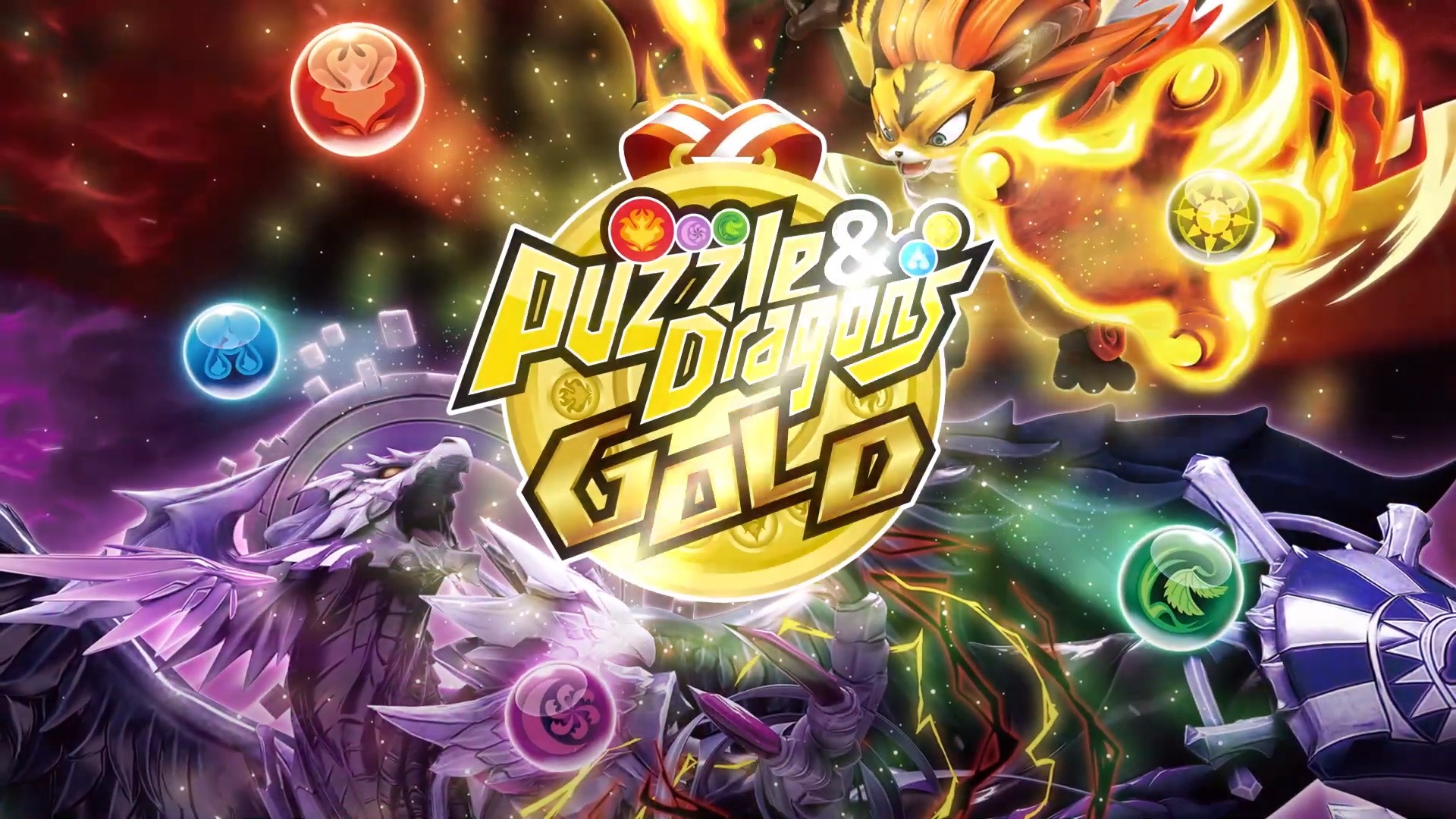
A few weeks ago, we found out the next entry in the popular Puzzle & Dragons series – Puzzle & Dragons GOLD – would be released in North America on 15th January for $14.99. Now, to help promote this upcoming Switch eShop title, GungHo has released a new English-dubbed trailer for the game, which you can view below.
If you’re not familiar with this series, it started out life on smartphones and made its way across to the 3DS in 2015. The North American release of the new entry lines up with the Japanese launch, but right now, there’s no word on a European release.
As shown in the trailer above, GOLD will feature intense puzzling action, the ability to challenge friends and rivals, a story mode, the ability to unlock and collect new monsters, and a practice mode. For more information, check out our previous post.
Have you played this series before? Are you planning to play the new game? Tell us below.
Posted by: xSicKxBot - 12-25-2019, 06:55 AM - Forum: Lounge
- No Replies
Netflix's The Witcher Season 1 Ending Explained
We weren't crazy about the confusing way Netflix's Witcher series was structured, but there was still plenty to enjoy in the adaptation of Andrzej Sapkowski's original short stories and books. Chief among those things: the characters themselves, not to mention the actors who played them.
But what happened to Geralt of Rivia (Henry Cavill), Yennefer (Anya Chalotra), Ciri (Freya Allan), and Jaskier (Joey Batey) in the end? We've seen all eight episodes of Netflix's The Witcher, so we can break it all down for you now--and attempt to explain some of the more confusing parts.
Geralt and Ciri
Geralt was told over and over during the series that he'd have to face his destiny eventually, and we found out in Episode 4 that that destiny has a name: Ciri, princess of the kingdom formerly known as Cintra.
However, Geralt took a roundabout path to reach the same conclusion. By the time he arrived in Cintra to whisk the girl away from the impending danger of the Nilfgaardian invasion, her grandmother Queen Calanthe had become determined not to let her go. Calanthe threw Geralt in a dungeon, where he remained until the battle, during which he managed to escape--but too late to save the princess.
Dejected, Geralt continued his journey, until a fateful encounter that, unbeknownst to him, would eventually lead to the person he'd been seeking all along.
You see, Ciri's storyline, despite being stretched out across the whole season, actually only took place over the course of about two weeks (or so showrunner Lauren Schmidt Hissrich told us). After escaping from Cintra, she spent some time as a refugee and encountered the Dryads in the forest known as Brokilon. Lured away by a doppler in Nilfgaardian employ that posed as her former mentor Mousesack, Ciri narrowly escaped, and eventually found herself being cared for by a kind woman.
Well, that woman turned out to be the wife of the man whose life Geralt saved on the road after failing to rescue Ciri during the battle. When Geralt falls ill from a monster bite, the man carts the witcher back to his farm, where he and Ciri are finally united.
This scene plays out slightly differently in the show than it did in the books, where Ciri and Geralt had previously spent extensive time together when she was younger, and thus already knew one another. Nevertheless, the end result was the same: Ciri is safe, and Geralt has embraced his destiny.
Yennefer and Jaskier
However, there are two other characters in The Witcher who Geralt definitely did not embrace: Yennefer and Jaskier.
Yennefer parted ways with Geralt on bad terms after a shouting match at the end of Episode 6. She met up with Istredd, who rejected her advances, and was approached instead by Vilgefortz, a mysterious mage who lured her back to the magic school at Aretuza. There, she took part in a conclave of sorcerers and sorceresses as they debated what to do about Nilfgaard's impending invasion.
She accompanied Tissaia, Vilgefortz, and other mages to Sodden Hill, where they made a desperate stand against the invading forces. The last we saw of Yennefer, she had unleashed an avalanche of fire onto the battlefield, but neither Tissaia nor Geralt could find any sign of her afterward (or maybe, the scenes of them calling her name through the smoke and ashes were just fever dreams--it's not actually clear).
For Jaskier's part, he and Geralt have their own falling out, also in Episode 6. After fighting with Yennefer, the emotionally raw witcher totally jumps down Jaskier's throat as the bard tries to lighten the mood. Geralt blames the events of the show--his "child surprise," the djinn that nearly killed Yennefer, and the current situation involving the dragons--on Jaskier, and begs the universe to be rid of the bard once and for all. Jaskier takes it in stride, but is clearly hurt--and that's the last we see of him in this season of the show.
What's next?
We already know that The Witcher Season 2 is happening. With the three disparate timelines now fully caught up to one another, we're cautiously optimistic.
And there's plenty left for the show to cover: Geralt and Ciri are united at last, but if the show continues following the books, Ciri is far from safe, and they have plenty of adventures left.
Yennefer and Geralt will have to make nice at some point, as will Jaskier and Geralt (although it will be a long time before Yennefer and Jaskier begin to see eye to eye).
And don't forget about the side characters who are still kicking around: Cahir and Fringilla may have lost the Battle of Sodden Hill, but a battle is not the war, and Nilfgaard isn't defeated. And it's unclear what happened to Triss--whether she made it through the battle is a mystery.
We're looking forward to finding out what happens next in The Witcher Season 2.
Video: See How Sonic Gets His Shoes In This Latest TV Spot From Paramount
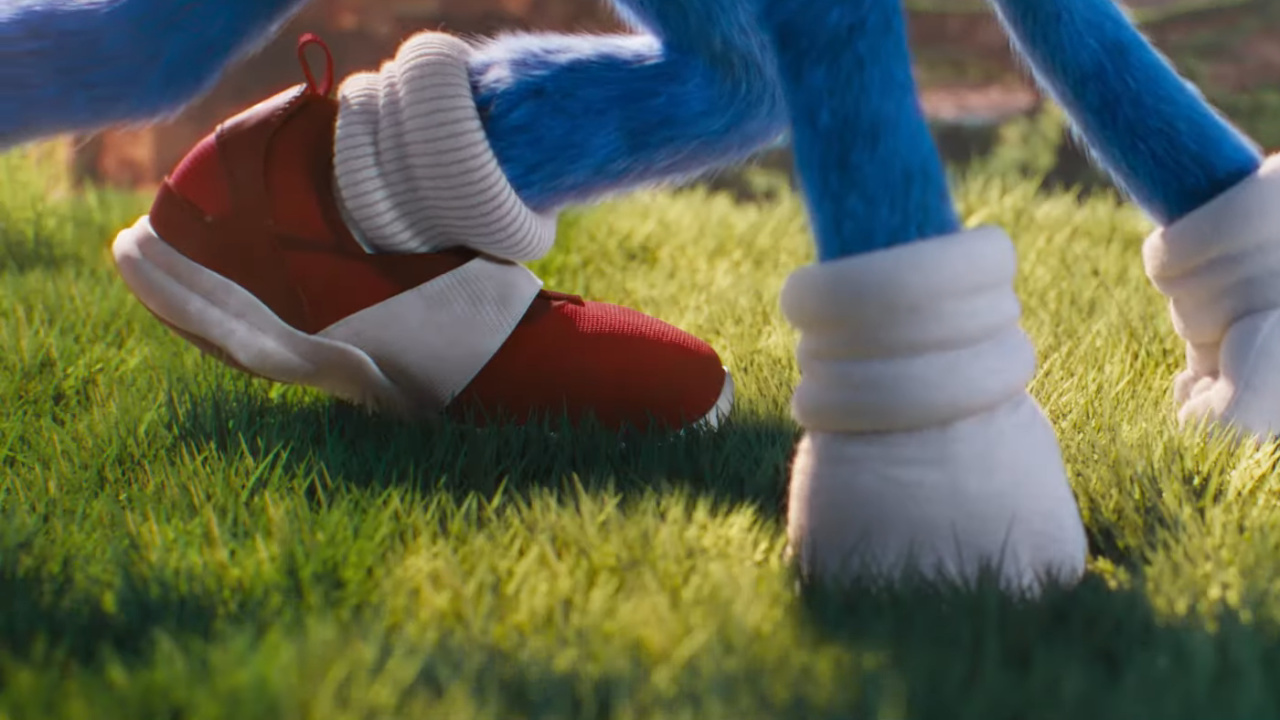
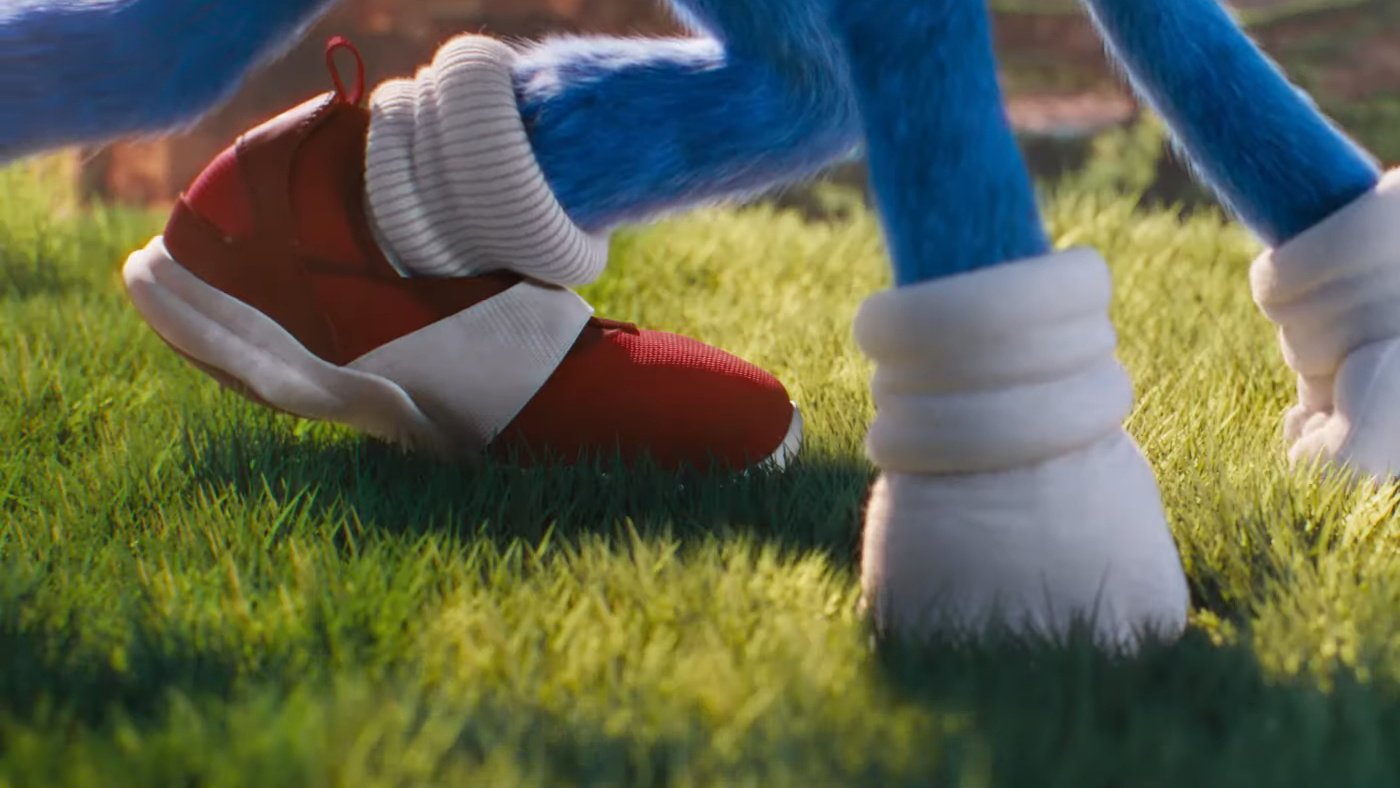
In case you missed the news, Sonic the Hedgehog will be running about in a pair of red and white Puma shoes in his live-action movie, due out on Valentine’s Day next year. Unlike the games, though, he might not be wearing his iconic kicks from the get-go.
You see, if a new television spot released by Paramount Pictures Australia is anything to go by, Sonic will receive his famous pair of runners at some point during the movie. So, in other words, don’t expect to see him speeding around in them from the beginning of it.
As James Marsden’s character explains in the clip above, Sonic struggles to “control” his speed and these shoes will help him channel it. It’s sort of similar to how the blue blur unlocks and receives shoe upgrades in some of his video games.
Will you be checking this movie out at your local cinema on release? Leave a comment below.
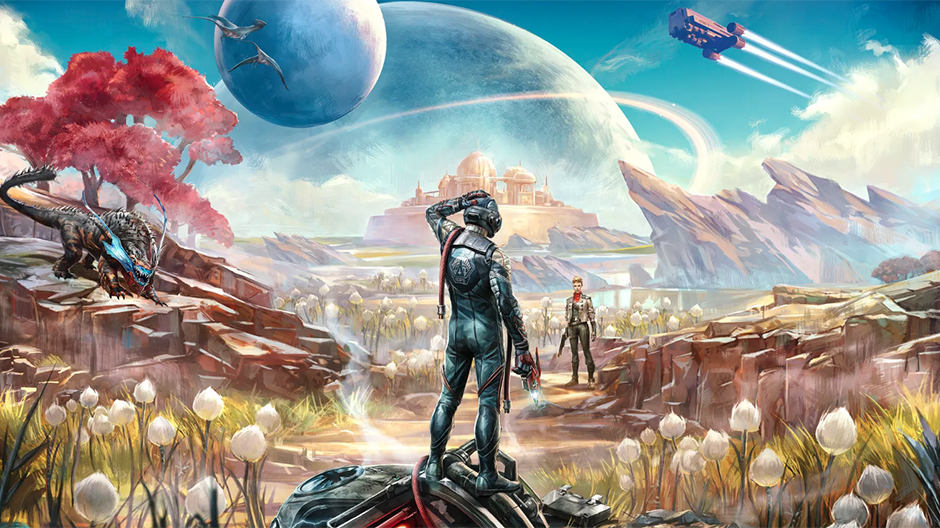
We want to take this opportunity to thank the incredible team behind The Outer Worlds. It is because of their hard work and dedication to this project that we received the Best Narrative, Best Performance – Ashly Burch, Best RPG, and Game of the Year nominations at The Game Awards.
To all of those who voted for us in The Game Awards, you are all fantastic and we are so grateful for your support. The reception to The Outer Worlds has been unbelievable to see, and even just being nominated means a lot. However, the journey isn’t over yet as we are excited to announce that we will be expanding the story through DLC next year! Details will be made available at a later date.
Now we would like to allow our game directors to share a message with you all:
We just wanted to personally thank our team for doing a wonderful job and our fans for their tremendous support.
And Tim would like to say what an honor it was to work with me. – Leonard
Whatever, Leonard. Now that we’ve finished, I expect that certain photographs will be destroyed, as per our agreement. – Tim
Best of 2019: Big game, small team, no crunch – Behind the success of Outward
The game industry has plenty of horror stories about crunch and poor work/life balance in general — so it’s good to hear a game dev talk about attaining success without sacrificing a studio’s collective health and well-being.
Guillaume Boucher-Vidal is CEO at Quebec-based Nine Dots, which recently released the ambitious open world RPG Outward. Games in this genre often require large teams working extra hours at some point in development. But Nine Dots was able to make Outward with 10-15 people, and according to Boucher-Vidal, zero crunch.
And by all indications, it’s a commercial success.
“The two main elements that made it possible to make a large game world might sound super obvious, butit’s pre-production and not crunching. Those are the main two important elements,” he said during a recent GDC Twitch stream.
Boucher-Vidal, who also served as creative lead on Outward, defines crunch as over 52 hours of work per week, per person, for an extended period of time over two weeks. By those standards, he said, Nine Dots has never crunched.
He said Nine Dots had a “very bottom-up approach” when making Outward, meaning that the team was able to scale and scope specific elements of the game while remaining productive and efficient, all depending on what’s working during development.
“For instance, at first we planned on doing less monsters but more regions,” he explained. “And as we advanced in development we realized that we were able to make a much higher number of enemies, but we had to slim down the number of environments. We could sort of shape the game according to our own abilities while we were developing. It was more effective, and it was also a matter of maintaining the velocity.”
In this case, environmental terrain was proving difficult to get right at a larger scale. Boucher-Vidal said the team restarted terrain for a specific region about four different times, trying to get it right. This was not an efficient way to develop, so instead of concentrating efforts on that time sink, the team scaled back environment, and scaled up enemies.
“I hear so many horror stories from other studios where they throw away maybe 70 percent of what they develop, and that’s definitely not something we want to do at Nine Dots,” he said. “We are a small team.”
Boucher-Vidal said Outward‘s completion provides something tangible to show the game industry to prove that it’s possible for small teams to make big, ambitious games without exploiting developers.
“I have something to prove. When you treat developers right, you actually achieve more and [spend] less.We’re trying to lead by example, something I feel the game industry is doing wrong,” Boucher-Vidal said bluntly.
“It’s been a subject matter that’s very active recently with the whole unionizing question, and the crunch debacles that keep sparking on social media at the moment,” he said. “This is something that I’ve been trying to be loud about over the past eight years, but I’ve been thinking like, ‘nobody’s going to listen to an old fool who’s shouting at the clouds.’ But if we make something that’s impossible to make, maybe they will listen to us.”
Boucher-Vidal admitted that development wasn’t “perfect” by any means, and there were plenty of problems the team had to overcome. But he said Outward‘s development lays the groundwork for future projects that will hopefully enjoy even more efficiency.
“Now that we know better, I feel like, with the same resources and the same time, we could actually achieve much more than what we did,” he said.
Boucher-Vidal’s thoughts on crunch don’t end there — perhaps more controversially, he thinks the concept of “finding the fun” contributes to the crunch problem. (“Find the fun” is a phrase oft-repeated by game designers, and attributed to Sid Meier of Civilization fame.)
“I think that part of the problem is that game designers are too lenient on themselves — you know that expression that I hate? ‘You got to find the fun.’ If you don’t know where the fun is, why are you a game designer?” he said.
“And that is extremely harsh for a lot of people, but if you can’t answer that question right, you’re not a good game designer and you’re actually wasting very precious development resources,” Boucher-Vidal opined. “I see the game design job as being closer to an architect or director, like you would see on movies where you actually have a plan laid out and try to execute it.”
“The closer you are to the final, the closer the final product is to the game design you had, the more it says on your ability to predict how things are going to work out,” he said.
Rather than looking for the fun during a prototyping phase, Boucher-Vidal rather asks what kind of experience does the team want to convey. Then, it’s up to players to decide whether or not that’s fun.
For Boucher-Vidal, the experience that Outward intended to convey from the start is making the game wholly-immersive, and making sure nothing in the game would break players’ suspension of disbelief. This can be seen in how spellcasting works, the game’s survival mechanics, and in the other ways that the game tries to earnestly simulate fantasy tropes.
“By understanding questions like ‘why are we making this game, why is it going to be different, what kind of experience will it be [providing]?’ we make all of our decisions according to that before even writing one single line of code. Every single line of code going forward will be directed with focus and there would be less waste. We would know where we’re going.”
“That’s one of the core aspects I feel game design is not really achieving so well — that [developers are] going to start making the game before knowing where the game is going to be. That’s extremely wasteful.”
And, to Boucher-Vidal, when time, money, or assets are put to waste, that’s demoralizing and “disrespectful” to team members during the course of development. “He won’t be as happy, and if he’s offered another job, he will leave,” he argued.
All that said, Boucher-Vidal isn’t anti-experimentation in game design, but it does have a time and a place. “Experimentation is good for when you’re in research and development but when you are in production and have a product in mind you just achieve it,” he said.
As someone who runs the company as CEO, but also served as creative lead on Outward, Boucher-Vidal simply thinks that designers should be creative, but also more business-minded. “This is something that I feel — so many game designers will hate me after [saying] this…the job of a game designer ultimately is to cut on expenses,” he said. “The more you justify your game design on paper the less random things you will have to make to make sure it sticks somewhere.”
Video: Crafting the unsettling sounds of Resident Evil 7: Biohazard
In this 2017 GDC session, Capcom’s Kenji Kojima, Akiyuki Morimoto and Ken Usami discuss their methods to create realistic high-quality sound during the production of Resident Evil 7.
These methods not only made sound implementation more efficient; they also helped increase the quality of sound. The speakers also dug deep into how they achieved a horrific soundscape, in part by using a technique called “music-concrete” to cover a wide variety of sound texture, tones, and noises — delivering an uncomfortable and disturbing atmosphere in the game.
In addition to this presentation, the GDC Vault and its accompanying YouTube channel offers numerous other free videos, audio recordings, and slides from many of the recent Game Developers Conference events, and the service offers even more members-only content for GDC Vault subscribers.
Those who purchased All Access passes to recent events like GDC or VRDC already have full access to GDC Vault, and interested parties can apply for the individual subscription via a GDC Vault subscription page. Group subscriptions are also available: game-related schools and development studios who sign up for GDC Vault Studio Subscriptions can receive access for their entire office or company by contacting staff via the GDC Vault group subscription page.
In an unexpected move today, THQ Nordic's parent company, Embracer Group, has purchased the Little Nightmares developer Tarsier Studios. The acquisition includes the studio, all 65 current employees, and intellectual property rights.
Embracer/THQ Nordic announced that it had bought Tarsier for an estimated $9.3 million in cash and $1.2 million in shares. Tarsier's buyout also includes "a conditional earn-out, payable over 10-years to certain sellers who will remain with Tarsier."
Tarsier was founded in 2004 and has developed several puzzle-platformers since then, including DLC for both LittleBigPlanet and LittleBigPlanet 2, LittleBigPlanet PS Vita, and Tearaway Unfolded. The studio is best known for the 2017 horror puzzle-platformer Little Nightmares, which received an 8/10 in our review. Tarsier is currently working on Little Nightmares II, expected to launch on Nintendo Switch, PC, PlayStation 4, and Xbox One sometime next year.
Tarsier said it's looking forward to the newly-established partnership with Embracer and that it can continue to develop its potential as a studio with Embracer's support. "It feels exciting to, after a 15-year long journey with Tarsier, partner up with Embracer to continue [to] develop the potential that our Studio has," said studio head Andreas Johnsson. "We look forward to the opportunity to continue making exceptionally great games together with Embracer Group."
Embracer shared a similar sentiment, saying it's impressed with Tarsier's output as a developer and plans to invest in the studio's projects. “Together with Tarsier, we want to invest in developing new projects, in the same manner they have done successfully in the past," said co-founder and group CEO Lars Wingefors. "We look forward to, together with management and all of Tarsier's employees, embrace the quality and creativity the Studio has, and take the Studio to the next level."
2019 was filled with a plethora of acquisitions, from Microsoft buying Rad developer Double Fine to Epic Games picking up Rocket League maker Psyonix. Alongside Tarsier Studios, THQ Nordic also bought Warhorse Studios earlier this year, the Czech team behind the 2018 action-RPG Kingdom Come: Deliverance.
Review: Space Pioneer – Solid Gameplay Let Down By Repetitive Design
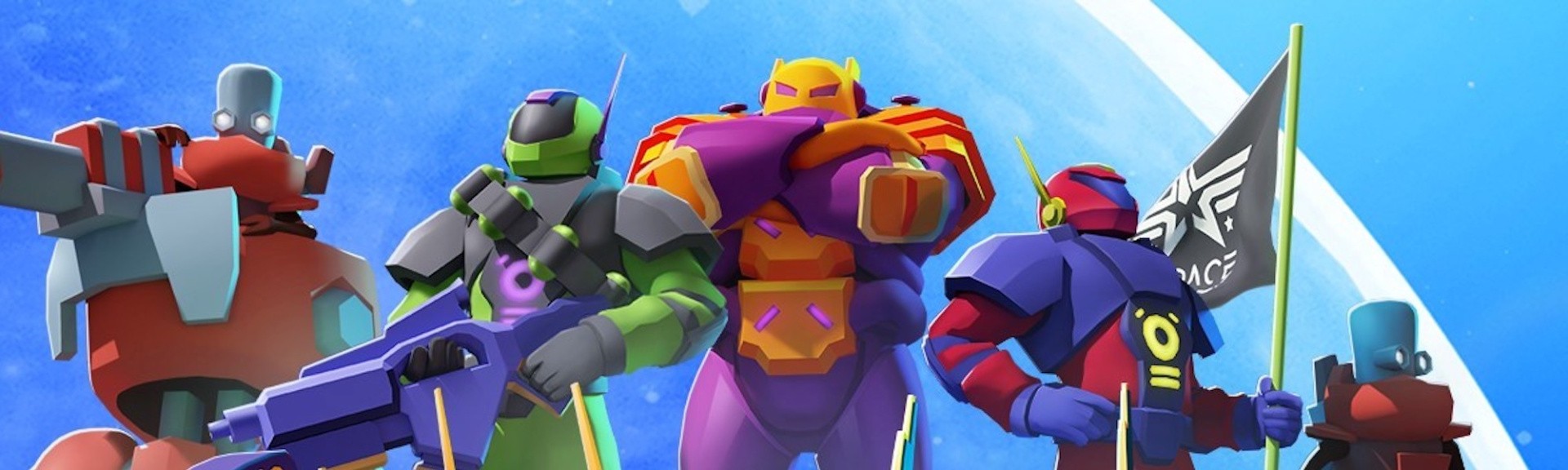
Just in its name, Space Pioneer immediately conjures up an undeniable sense of awe and spectacle. There’s a feeling that you’re going to be embarking on an epic journey of discovery as you take your first steps on one of many exotic planets. Space Pioneer certainly has a whole bunch of planets to explore, but the only feeling you’re going to be getting here is one of increasing boredom thanks to the game’s repetitive nature right off the bat.
Space Pioneer is a twin-stick shooter through and through. Each level effectively takes place on a different planet and sees you taking on wave after wave of various enemies whilst accomplishing several task objectives at the same time. These mostly comprise of collecting bombs, destroying nests, escorting travellers, and defeating boss creatures. The game features twelve chapters, with each chapter containing up to eight planets, the final of which housing a formidable boss to take down. You can tackle the game on your own or with up to three additional players, with the game featuring a rudimentary class system to accommodate this.
The core gameplay is pretty decent for the most part. The twin-stick shooting feels great – every weapon is effective in its own way, and they all feature a cool-down mechanic which eliminates the need to locate additional bullets. You’ll also have grenades and healing items at your disposal, both of which feature a longer cool-down that will often leave you open to attack if you’re not careful. Unfortunately, very early on in the game, you’ll start noticing the same enemy types, the same planet designs, and the same objective cropping up over and over again, and the solid gameplay simply cannot hold its own against the overwhelming feeling of repetition.
The progression system is surprisingly quite deep, but is also anchored by coin collecting and loot boxes. As you complete objectives within the game, you’ll be rewarded with a bunch of coins, and these can then be spent levelling up various stats like armour and weapon damage, along with perks such as ‘berserk’, which increases your attack damage when your health falls below a certain percentage. Loot boxes feature quite prominently but are only tied to optional objectives and trophies, so thankfully you won’t be gambling any of your hard-earned cash for these.
There’s a lot of potential within Space Pioneer that is unfortunately largely squandered by its repetitive nature. Once you’re done with one chapter, it really feels like you’ve seen it all, despite another eleven lying ahead of you. Its core gameplay really is a lot of fun, and our hope would be that if a sequel is developed, this is backed up by an engaging story and meaningful objectives.