Posted by: xSicKxBot - 03-05-2020, 09:46 AM - Forum: Python
- No Replies
Python vs Go – Which Language You Should Choose
Both Python and Go are still relevant today. Both languages are still widely used. However, many people have been switching from Python to the newer and faster language Golang, also known as Go. Go is a much newer language than Python, released by Google in 2009, and it has many advantages over many other programming languages. Golang is an excellent language, although not so one-sidedly better than Python that Python will go away any time soon.
Python, released back in 1991, still has its advantages. Despite how fast computer technology changes, programming languages do not become obsolete quickly. Many languages much older than Python are still in common use today. Since Go is already well established as a successful language, Go may also last for decades.
Go is Both Easy to Learn and Fast
Many programming languages are either fast and difficult (for example, C++) or easier to use but too slow for many types of applications (for example, Javascript). While an application coded in a slow language may still run very smoothly, there are limits on what one can do with a slow language. Golang manages to be both fast and easy.
Golang is as fast as languages such as C++, which is no small achievement. Compared to Go, Python is sluggish. It can take tens of times less processing power to run code in Golang than it takes to run programs in Python. Sometimes, this doesn’t matter – an application might take so little processing power to run that it executes fast even if written in a slow language. Programs coded in slow, high-level languages may work perfectly fine. For other types of applications, speed is vital. This difference gives Golang quite an advantage over Python, though there is no reason to use a fast language if the application does not require speed.
Since a large company like Google created Golang, one might expect it to be impressive, and it is. A programmer will not usually start with a more difficult language like C, C++, or assembler. Instead, they will begin with a programming language that is easier to learn and then learn a more difficult language at a later date. Golang is accessible to novices. One could argue that it is even easier than Python, perhaps even more accessible than Javascript.
Go Lets You Get the Job Done With Less Code
Not only is Go faster than Python, but a program written in Go will require fewer lines of code. Many Python programs re-written in Golang take only half or a third as many lines. The less code there is, the easier it is to debug. This element gives Golang another significant advantage. It is no wonder that the popularity of Golang has increased by so much over the last few years.
Python Includes More Libraries
One of the best things about Python is how easy it is to find code for whatever purpose you need. You will easily be able to find code to add to your program without having to create it yourself. Python comes with a very large number of code libraries created by its users since the language first appeared in 1991. For tasks that the libraries the language comes with cannot handle, there are also free third party libraries. The official libraries may not be good enough for all web development tasks, but you can rely on third-party libraries such as Django for web development. Go also has a great deal of free code for you to use and learn from, but it does not quite beat Python in this case. Go has plenty of useful libraries, but Python’s free libraries are even better.
With Python, there is plenty of help available if you want to learn to code an entire application with graphics and animation. You can easily download an open-source app and modify it to learn how to create commercial applications in Python. No other programming language gives its users as much free source code as Python.
Python is Easy
While Python does not manage to be both fast and easy, it is not both slow and challenging either. It is a relatively easy language, only arguably less accessible than Go is. Python’s free libraries and good commonly used tutorials make it easy to learn. The syntax is also easy to learn in Python. Most languages require you to use an unnecessarily large number of symbols. This requirement can frustrate a novice coder very much, as they will place a semicolon or some other symbol in the wrong place and break their program. Python minimizes the number of brackets, commas, and other symbols required.
Which Language Pays Better?
An expert in the Python language can make almost twice as much money as an expert in Go. While a Go developer in the United States earns only $64000 per year, a Python developer makes $120000. Higher pay is not an advantage of the language per se, but it is a significant reason to learn it. Python does not seem to be obsolete; new jobs for Python developers will continue to appear in the future. You probably want to go with Python if you are interested in learning to do one or the other professionally. Go might be a better language in most ways, but Python programming pays better. For someone hiring software developers, Go is, of course, the better programming language if developers cost much less.
Is Python More Object-Oriented?
Most programmers prefer object-oriented languages. Go is only, to a limited extent, object-oriented. Python is much better in this regard. Programming languages have been shifting more towards being object-oriented over the last few decades, and Go seems old fashioned if it is not fully object-oriented.
With an object-oriented language, code is divided into reusable chunks, instead of being a long sequence. Bugs are much easier to find in object-oriented languages, as an error is likely to break only one portion of the code and not the program as a whole. Data is kept separate from instructions. The C languages, javascript, and visual basic are all object-oriented. The lack of object-orientation does not mean that go is hard to learn, but some programmers may find more advanced projects more difficult due to the lack of it.
Different Languages for Different Purposes
Programmers use Python for web development. Go, on the other hand, is what you could call a system language. A system language is used for creating software that one must pay a monthly fee for, engines for video games, and operating systems. A system language is also for industrial machinery and robotics.
System languages are less likely to be for applications that focus on user interaction. Programmers do not create games, word processors, and media players in system languages. Python and Golang have different purposes. However, it is still possible for programmers to have to choose between one or the other for a specific project.
Python is probably better if you are looking for a general-purpose language. While only a small fraction of game development uses Python, it is nonetheless possible to create a commercial-grade game in Python.
Python is Still More Popular in 2020
Even though many people have switched from Python to Go over the last ten years, Python is still at the top. Python is the most popular programming language today, with Go only being the seventh most widely used [2]. While there is no way to know or even define what the most popular programming language is, Python comes out on top according to a variety of different metrics. C++, C#, and Java are the only languages that are near to Python in popularity.
Languages such as Scala and R have become more popular over the last few years and might be able to overtake Python in the future [3]. The PHP, R, Go, and Assembly languages are also among the most popular. However, Python has remained arguably the most popular programming language for a while and may continue to be the most popular for a while longer.
Here are some Google Trends searching for different keywords:
So no matter how you look—Python is not only the larger programming language, it’s also growing at a much faster pace.
Is Python or Go better for AI Programming?
Today, artificial intelligence is everywhere. The economy runs on it, as advertisers use it to make predictions about what consumers will buy. Artificial intelligence is vital to real estate developers and stock traders. AI also makes predictions for medical purposes. Both Go and Python are relevant to artificial intelligence. In fact, they are probably the two most popular languages for AI developers. The two languages’ usefulness for creating AI will help them continue to be popular in the future, as AI becomes increasingly relevant.
Python for AI Programming
Advantages: Availability of libraries
Python has been around since 1991, and since Python appeared, programmers have built vast numbers of free libraries. Many of these libraries are useful for AI programmers. Python libraries include code for datasets, for creating new algorithms, and for processing the most complex data. The TensorFlow library, the most popular library for AI programmers, is for the Python language.
Advantages: The python community matters
The size of the community that works on a language certainly matters. If a programming language is commonly used, then one can easily find people to work with as well as plentiful source code. Tools like Github make it easier to develop Python code than it ever was before.
Advantages: Python is easy to use
Not only is python code easy to write, but it is also easy to debug and edit. Python code is split into small, manageable chunks. This is less true for most other languages.
Since AI projects often involve large teams, it must be easy for one programmer to understand code written by another. With Python, there is little risk of a programmer not being able to understand the purpose of code they did not write themselves.
Disadvantages: Unsuitable for massive projects
While Python’s ease of use an object orientation can help a mid-sized project succeed, there are some problems with using Python for the most significant projects. If hundreds or even more programmers are involved, Python is not always the right way to go. Python does not use a static type system. The lack of static typing means that the code can be unsure of whether you are trying to put two words together or do a mathematical operation. Type errors happen more commonly in Python than in other languages. If programmers with plenty of experience in coding but relatively little experience in Python work on a Python project, they are annoyed by the syntax, which is in odd ways different from other languages.
Disadvantages: Too many versions of the language exist
Many different versions of Python are used. Python 3 did not fully replace Python 2, which is still commonly used today. This mix of versions results in all sorts of confusion and problems, especially if a large team is working on a project.
Part of the reason why programmers still use older versions of Python is that the libraries are for Python 2 and have not been updated to Python 3 yet. Some programmers also prefer the older version, if only because it is what they have the most experience with. Libraries built for different versions of the programming language are not compatible with each other.
Disadvantages: Cannot take full advantage of new technology
While Golang is for the age of multi-core CPUs, Python is not. Python cannot take advantage of the new technology nearly to the extent that Golang can. There are ways to tap into modern multi-core computing using Python, but even with newer versions of the language, these are workarounds.
Is Go Better for AI Programming?
Advantages: Go is very fast
While speed is not as crucial in AI programming as one might assume, speed is nonetheless relevant. Go is much faster than Python, mainly because it is a compiled language rather than an interpreted language.
With a compiled language, the program is first translated into bytecode that a computer can run directly, and then executed. Every line of text that a programmer writes in Golang is converted into binary before the machine runs it. With a compiled language, instructions are carried out very fast because the code does not have to be translated into binary while the program is running.
Many languages, including many older languages such as C++, are compiled. Many other languages, on the other hand, are interpreted. Python is an interpreted language that has to translate the code into binary and then execute it in real-time. Many programs, including many programs in artificial intelligence, do not require speed, so Python is still usable in AI programming. However, Go has quite an advantage here.
Advantages: Golang supports concurrency
Concurrency is the ability of a programming language to run multiple scripts at the same time. Concurrency is more important than it used to be, including when coding artificial intelligence projects. Python is not truly a concurrent language. At best, it is weakly concurrent.
Advantages: Go has many libraries for AI-related code
While Python is well known for how many free libraries it has, Golang’s libraries are rapidly growing. Many of these free libraries contain AI-related code written in Go. These libraries make it much faster and cheaper for programmers to develop new artificial intelligence projects.
Advantages: Go is better for massive projects
If hundreds of programmers are working on an AI project together, they are more likely to use Go than to use Python. Finding small bugs in massive programs can be a nightmare. Go is better for minimizing the number of errors. It is also easier to debug in Go than in Python.
Advantages: Go is vastly better for mathematical calculations
Go is a faster language in general, and this is particularly true if you are talking about mathematics. A Go program can do math 20 or 50 times faster than a Python program [4]. Many artificial intelligence projects require plenty of mathematical calculations.
Disadvantages: Golang’s libraries are less extensive
While there are many excellent libraries for the Go language, including for Artificial intelligence-related projects, the libraries are not yet as extensive as they are for Python. Python still has an advantage in terms of how much free high-quality code there is available.
Disadvantages: Coding AI in Golang is difficult
If you want to code AI in Golang, you need a team of experts. While Golang can be a fairly easy language to learn for many purposes, this is not the case if you are coding AI. Some features such as multithreading work against Golang when programmers are working on an AI project. Python AI projects can include programmers that do not have such specialized skills.
Overall, both languages are good for AI programming. They may be the two most popular languages for this purpose.
Why do Programmers Choose to Use the Go Language in 2020?
The syntax is familiar to many programmers
The syntax of Go makes it easy for programmers who know other languages to use. Anyone who knows how to program in a C language or in any other language that uses something similar to the C syntax can quickly learn Go. Go is particularly similar to C for more elementary tasks. It becomes more significantly different if more advanced tasks are attempted.
Go has an excellent team behind it
While Google does not back the Go language with the full weight of its resources, there is still an excellent team working on Go. Go is actively being improved by top-end software engineers all the time. Some of the best software engineers in the world are currently working on making the already popular Go language even better.
The number of commands in Go is not enormous
Someone who works with Go for years will pretty much know the whole language and no longer have to look anything up. Languages that contain an enormous number of commands are not likely to be fully learned, so even experienced programmers look up documentation. If programmers have to look everything up, things tend to slow down. When one is learning to code in Go and does not yet know it by heart, it is easy to find a complete list of commands for the language on the official website. The website organizes the commands in a way that makes it easy to find what you are looking for. Despite its power, the Go language is easy to learn, and to a lesser extent, may even be easy to master.
Go programs compile almost instantly
One advantage of using an interpreted language like Python instead of a compiled language like C is that the code can be tested right away without having to be compiled. If one makes a small change to a large program in a compiled language, they must compile it before they can test it. Having to wait for the program to compile before they can test a small change can be quite a hassle.
Thankfully, modern technology makes the compiling process much faster than it was decades ago, and the Go language is designed to compile faster than C does. Often, a Go program will compile effectively instantly. Therefore, programmers are not likely to use Python over Go because one does not have to compile it. The delay in compiling a program is less relevant than ever before.
The Go language has good auto-formatting tools
If every programmer is writing code with their own formatting style, it becomes a chore to read code you didn’t write yourself. With good auto-formatting tools, everyone can use the same style without having to agree on which type of formatting is the best. Auto-formatting can also save you time, as you can write code without worrying about the format and then have the computer automatically format it for you.
The Go language encourages programmers to use a similar style
With Python, there is far more risk of different programmers arguing over what the best programming practices for their language are. This is less of an issue with Go. Go is designed to encourage programmers to use a similar style.
More than one variable can be declared on each line
With most languages, you can only declare a single variable on each line and need separate lines to do math with your variables. With the Go language, one can set the value of X, set the value of Y, add a number to the value of Y, and then multiply X by Y to get Z on the same line of code. This feature reduces the number of lines and makes the code easier to read.
Why Do Programmers Use the Python Language in 2020?
Despite the speed and accessibility of the Go language, Python remains the most popular. As long as the program does not have to be very fast, Python is an excellent language. Speed is not always crucial; this is proven by the fact that the most popular programming language in the world is one of the slower programming languages.
Python has excellent tutorials
If one is new to programming, the early stages are going to be a challenge, and slowly working your way through a lengthy tutorial might be the right way to go. Python has plenty of accessible free tutorials, more than at least most other languages. The active Python community also helps new users get their questions answered as well as possible. Experienced programmers can also find more advanced tutorials. There are also complex program templates available for free.
Python has an excellent integrated development environment
The integrated development environment allows you to not only run but debug your code with a graphical interface. Python’s integrated development environment is particularly good, above the usual standard for programming languages.
The Python community is helpful to amateurs
The Python community on google groups, Reddit, and elsewhere will not have any problem answering the type of questions that new programmers are likely to ask. You will find a supportive and encouraging community if you work with Python.
Experienced programmers can also benefit from the Python community. It is easy to figure out how to build more advanced projects, including client-server architecture, and applications where graphics play an essential role. There will be open source examples for you to learn from, and people willing to help you build these projects. Widely available explanations of how to build a certain type of application tend to be better than their equivalents in Java and other languages.
Python is a general-purpose language
While Python is most strongly associated with web development, it is nonetheless a general-purpose language and not a web development language. Python is general-purpose to the extent that C++ is general-purpose. Python can be used to create anything, games included. Scientists, artificial intelligence researchers, and people building social networks all use Python.
There are always lots of jobs and always lots of workers
Since Python is more popular than at least most other languages, one can easily find high paying work if they know how to code in Python. Developers can also find skilled programmers to work on their projects with ease. There are neither too few nor too many people learning to write code in Python.
Python programmers may make more money than not only Go programmers but programmers in any other language. Python may be the only language where most coders earn six-figure salaries [5]. Those who know many other programming languages approach the six-figure mark, but only with Python do most programmers exceed it.
Python works equally well on many different operating systems
The python language work on Windows, on Mac OS, and on Linux equally well. This cross-platform compatibility helps it remain the world’s most popular language.
Modified versions of the python language exist
If you want a language similar to Python but with faster running speed or more support for concurrency, there is PyPy, which is an alternative implementation of the Python language. Instead of using an interpreter, as regular Python does, PyPy uses something closer to a compiler. PyPy is also much better for multitasking than standard Python is.
It’s easy to get into amateur game development with Python
Amateur game development with C++ can feel like a daunting task unless you already have a lot of programming experience. With Python, you can easily find free templates for games, which you can modify to create your own games. Amateur game design is the most fun way to learn a new programming language.
How Do Python and Go Compare?
Go
Python
Speed
Faster
Slower
Execution
Compiled
Interpreted
Programmers pay
Lower
Higher
Year released
2009
1991
Object-oriented
Not really
Yes
Concurrent
Yes
Not per default
Memory management
Yes
No
Popularity
Popular
Even more popular
Ease of use
Easy
Slightly less easy
Which Language Should I Use in 2020?
It depends on whether or not speed is key in the applications you are trying to develop. The single largest difference between the two languages is that Go is quite a lot faster than Python. If speed matters a lot, Python is not good enough for the task.
If, however, speed is not critical, then Python may be slightly better than Go in most ways. The free source code and application templates available to Python developers are fantastic. It will take a while before the Go libraries catch up to the quality of the Python libraries.
Python is more likely to be used in data science than Go is. If a scientist is interested in converting a great deal of raw data into useful statistics, they will use either Python or the R language [6]. Go is much less likely to be used to create programs that interpret raw data.
If you are unsure of which language to learn, Python pays considerably better. While a good Go programmer will earn a six-figure salary and a mediocre Python programmer will not, typical Python programmers may be better paid than those in any other language.
[www.indiegala.com] SAVE OVER $100 on a collection of five mentally tantalizing ero-games. Stay healthy!
A NEW very positive FREEbie
[freebies.indiegala.com] Hand-Drawn Art, Original Story & Soundtrack, Unique Kung-Fu Gameplay, Narrative Choices, Exquisite Voiceover and more! Check out all the ongoing freebies here.[freebies.indiegala.com] https://youtu.be/XfqkmKKULGo
Posted by: xSicKxBot - 03-05-2020, 05:33 AM - Forum: Windows
- No Replies
Kurt DelBene’s March 4 guidance to King County employees
Hi everyone,
I wanted to update you on the latest public guidance changes for King County, the region where the Redmond area campuses are located. The specific recommendations from King County may be found here. We are adjusting our guidance in response to these new recommendations.
These updates will go into effect at the end of day today, Pacific Standard Time, and will remain in effect through March 25th, but we will be continuously monitoring the situation and adjusting guidance as appropriate.
As always, for full list of our guidance to employees, please visit the Global Security website.
Puget Sound and Bay Area work from home updates:
Consistent with King County guidance, we are recommending all employees who are in a job that can be done from home should do so through March 25th. Taking these measures will ensure your safety and also make the workplace safer for those that need to be onsite. Please let your manager know that you will be working from home, so all our teams remain well coordinated.
If in your role it is essential to be in the office or other work environments (e.g., data center, retail, etc.), plan to continue to go to your location. We will continue to implement the CDC guidelines for cleaning and sanitizing the locations. If you are not sure whether you are in a role that requires you to be onsite, you should speak to your manager.
The exceptions to this new guidance are the following groups who are being advised by health authorities to avoid interaction in large groups or public settings:
If you are over 60
If you have an underlying health condition (heart disease, diabetes, etc.)
If you are immune system compromised
If you are pregnant
In these cases, you should work with your manager to determine leave options or other accommodations available to you.
If you are a caregiver of someone that is immune system compromised, please contact your health provider for input.
If you will be in the office or other work environments, we recommend limiting prolonged close interactions with people. Specific recommendations are below, but your manager can help implement plans that work well in your particular situation.
Limit prolonged interactions and try to stay more than 6 feet/1.8 meters away from others.
Keep in-person meetings as short as possible.
If you are in open office space and located 6 feet/1.8 meters away from others, you meet the current guidance for appropriate distance from others.
Most importantly do not come to work if you are sick. This will be clearly posted on all building entrances.
Updated Global Travel Guidance:
We recommend that people postpone travel to Puget Sound or Bay Area campuses unless essential for the continuity of Microsoft.
“Essential” is defined as work related to operations, sales, customer services (e.g., customer support and customer success).
You should discuss travel felt to be essential with your manager and get their approval.
You are not required to travel if you have concerns about doing so.
If your region was not mentioned in this email or my email yesterday, it is because there are no additional updates to the current guidelines, but we will continue to keep you informed. Please look for updates from Global Security if the situation changes in your area.
If you have any questions on how the above guidance applies to your particular circumstances, please discuss with your manager. You can also send questions to HR.
What to do if you’re feeling symptoms or believe you’ve been exposed:
In King County, if you believe you were exposed to a confirmed case of COVID-19, contact the novel coronavirus call center: 206-477-3977 or your health care provider. For other locations, please contact your local health department hotline.
If you believe you may have symptoms, please contact your health care provider immediately.
Note for all employees globally: If you are receiving testing or have a confirmed diagnosis of COVID-19, please confidentially inform HR – we will assist in informing your manager and taking measures that protect others.
As a reminder, we are following the below precautionary measures from the WHO:
Frequently clean hands by using alcohol-based hand rub or soap and water.
If you are sick (e.g., flu, cold), do not come to work.
When coughing and sneezing cover mouth and nose with flexed elbow or tissue – throw tissue away immediately and wash hands.
Avoid close contact with people who are unwell or showing symptoms of illness.
If you have fever, cough and difficulty breathing, seek medical care early and share previous travel history with your health care provider.
We will continue to assess the situation and update you as our recommendations change. I really appreciate your patience.
Manage tasks and projects on Fedora with Taskwarrior
There are a multitude of applications to manage your todo list. One of these apps is Taskwarrior, it allows you to manage your task in the terminal without a GUI. This article will show you how to get started using it.
What is Taskwarrior?
Taskwarrior is CLI task manager and organizer. It is flexible, fast, and unobtrusive. It does its job then gets out of your way.
Taskwarrior uses $HOME/.taskrc and $HOME/.task to store your settings and tasks respectively.
Getting started with Taskwarrior
It’s easy to use the Taskwarrior to add your daily missions. These are some simple commands. To add tasks:
$ task add buy milk Created task 1. $ task add buy eggs Created task 2. $ task add bake cake Created task 3.
To list your tasks, you can use the task command on its own for the simplest listing:
Taskwarrior (task) is designed to help prioritize your tasks. To do this, task has multiple implicit and explicit variables it can use to determine an “Urgency” value.
One could argue that paying your rent and installing Fedora have a higher priority than baking a cake. You can tell task about this by using the pri modifier.
$ task 4 mod pri:H Modifying task 4 'pay rent'. Modified 1 task.

$ task 5 mod pri:M Modifying task 5 'install fedora'. Modified 1 task.

$ task [task next] ID Age P Description Urg  4 4min H pay rent 6

 5 2min M install fedora 3.9 1 4min buy eggs 0 2 4min buy flour 0 3 4min bake cake 0 5 tasks
Rent is very important, it has a due date that we need to pay it by, such as within 3 days from the 1st of the month. You can tell task this by using the due modifier.
$ task 4 mod due:3rd Modifying task 4 'pay rent'. Modified 1 task.

$ task [task next] ID Age P Due Description Urg 4 12min H 2d pay rent 13.7 5 10min M install fedora 3.9 1 12min buy eggs 0 2 12min buy flour 0 3 12min bake cake 0 5 tasks

$ date Sat Feb 29 11:59:29 STD 2020
Because the 3rd of next month is nearby, the urgency value of rent has skyrocketed, and will continue to do so once we have reached and passed the due date.
However, not all tasks need to be done right away. Say for example you don’t want to worry about paying your rent until it is posted on the first of the month. You can tell taskwarrior about this using the wait modifier. (Hint: in the following example, som is short for “start of month,” one of the shortcuts taskwarrior understands.)
$ task 4 mod wait:som Modifying task 4 'pay rent'. Modified 1 task.

$ task [task next] ID Age P Description Urg 5 14min M install fedora 3.9 1 16min buy eggs 0 2 16min buy flour 0 3 16min bake cake 0 4 tasks
You will no longer be able to see the pay rent task until the start of the month. You can view waiting tasks by using task waiting:
$ task waiting ID Age P Wait Remaining Due Description 4 18min H 2020-03-01 11h 2020-03-03 pay rent 1 task
There are a few other modifiers you can define. Schedule and until will place a “start” date and remove a task after a date respectfully.
You may have tasks that require other tasks to be completed. To add a dependency for other tasks, use the dep modifier:
$ task [task next] ID Age P Description Urg 5 30min M install fedora 3.9 1 33min buy eggs 0 2 33min buy flour 0 3 33min bake cake 0 4 tasks

$ task 3 mod dep:1,2 Modifying task 3 'bake cake'. Modified 1 task. $ task [task next] ID Age Deps P Description Urg 1 33min buy eggs 8 2 33min buy flour 8 5 31min M install fedora 3.9 3 33min 1 2 bake cake -5 4 tasks
This will modify the priorities of any tasks that is blocking a task. Now buying eggs and flour is more urgent because it is preventing you from performing a task.
Annotations
You can add notes to a task using task <number> annotate:
$ task 3 anno No blueberries Annotating task 3 'bake cake'. Annotated 1 task. $ task [task next] ID Age Deps P Description Urg 1 1h buy eggs 8 2 1h buy flour 8 5 1h M install fedora 3.9 3 1h 1 2 bake cake -4.2 2020-02-29 No blueberries 4 tasks
Organizing tasks
Tasks can being assigned to projects and tags by using the project modifier and adding a tag using the + sign followed by the tag name, such as +problem.
Putting it all together
You can combine everything you learned to create a task in one line with all the required options.
$ task add Write Taskwarrior post \

pri:M due:1m wait:som until:due+2w sche:15th \

project:magazine +taskwarrior +community +linux Created task 6. The project 'magazine' has changed. Project 'magazine' is 0% complete (1 task remaining).

$ task 6 No command specified - assuming 'information'. Name Value ID 6 Description Write Taskwarrior post Status Waiting Project magazine Entered 2020-02-29 13:50:27 (6s) Waiting until 2020-03-01 00:00:00 Scheduled 2020-03-15 00:00:00 Due 2020-03-30 14:50:27 Until 2020-04-13 14:50:27 Last modified 2020-02-29 13:50:27 (6s) Tags taskwarrior community linux Virtual tags SCHEDULED TAGGED UDA UNBLOCKED UNTIL WAITING YEAR LATEST PROJECT PRIORITY UUID 27768737-f6a2-4515-af9d-4f58773c76a5 Urgency 5.3 Priority M
Installing Taskwarrior on Fedora
Taskwarrior is available in the default Fedora repository. To install it use this command with sudo:
$ sudo dnf install task
For rpm-ostree based distributions like Fedora Silverblue:
$ sudo rpm-ostree install task
Tips and tricks
Taskwarrior has a hook system, meaning that there are many tools you can plug in, such as bugwarrior!
Taskwarrior can connect to a taskserver for server/client setups. (This is left as an exercise for the reader for now.)
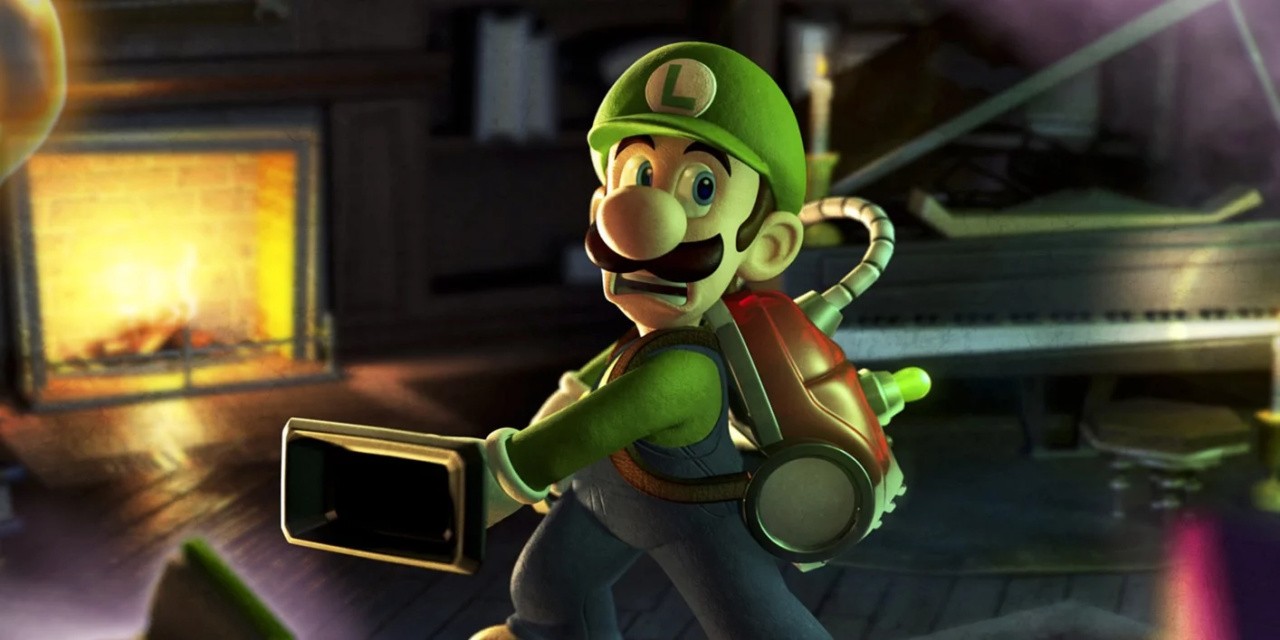
Alongside the release of Luigi’s Mansion 3 part one multiplayer DLC is version 1.3.0. It’s the biggest update released for the game since its arrival last
Not only does it add and unlock the new multiplayer content, but you also get a few additional features here and there. There’s been a number of fixes made to the main story mode, and last but not least are some more general fixes to improve the overall gameplay experience. View the full patch notes below:
Ver. 1.3.0 (Released March 4, 2020)
Added Features
Games in the ScreamPark can now be played with just one player (this is a practice mode without any opponents).
The following content was added to ScareScraper.
Added a 20-floor mode.
Five new types of rare ghosts will now appear.
Ghosts will now appear in Defeat the Crows! and Collect the Gold! missions.
Added a link to How to Play in the menu.
Added Albums, where players can listen to the game’s BGM.
To access Albums, go from Story ? Gallery ? Special Content.
Added Multiplayer Pack Features
Added three new games to ScreamPark.
The following content was added to ScareScraper.
Added three costumes.
Added three new floor themes and six kinds of themed ghosts that will appear when Luigi wears one of the new costumes.
Players who do not have the Multiplayer Pack can see these as well.
Story
Fixed an issue that prevented Luigi from moving near the door when capturing a Boo in the hallway of the Hotel Shops.
Fixed an issue that prevented Luigi from moving behind a bench in Studio 3 of Paranormal Productions.
Fixed an issue that prevented the game from progressing after touching the shark fin on the beach of The Spectral Catch.
ScareScraper
Added/adjusted the attack pattern of Boolossus.
Fixed an issue in Find the Toads! missions that prevented the Toads from moving and/or being able to enter the portals.
General
Fixed several issues to improve gameplay experience.
Have you downloaded Version 1.3.0 of Luigi’s Mansion 3 yet? Noticed anything else? Comment below.
Posted by: xSicKxBot - 03-05-2020, 05:33 AM - Forum: Lounge
- No Replies
Pokemon Go March 2020 Community Day Announced
Pokemon Go developer Niantic has a ton of events lined up this month for its hit mobile game, and now one more has been added to that list. The studio has announced the first details on March's Community Day, which will take place around the world next Sunday, March 15.
Unlike February's Community Day, which featured a Pokemon voted on by players, this month's event will feature another Pokemon selected by Niantic: the Psychic type Abra. Throughout the Community Day, Abra will appear more frequently in the wild than normal, and you'll have your first chance to catch a Shiny Abra.
On top of that, you'll be able to learn a special event-exclusive move if you can evolve the Psychic Pokemon all the way into its final form, Alakazam, by the end of the Community Day. Niantic has not yet announced what that attack will be, but we'll learn more closer to the event.
Posted by: xSicKxBot - 03-04-2020, 08:50 PM - Forum: Windows
- No Replies
PowerShell 7.0 now generally available
Today, we’re happy to announce the Generally Available (GA) release of PowerShell 7.0! Before anything else, we’d like to thank our many, many open-source contributors for making this release possible by submitting code, tests, documentation, and issue feedback. PowerShell 7 would not have been possible without your help.
What is PowerShell 7?
For those unfamiliar, PowerShell 7 is the latest major update to PowerShell, a cross-platform (Windows, Linux, and macOS) automation tool and configuration framework optimized for dealing with structured data (e.g. JSON, CSV, XML, etc.), REST APIs, and object models. PowerShell includes a command-line shell, object-oriented scripting language, and a set of tools for executing scripts/cmdlets and managing modules.
Three years ago, we announced PowerShell Core 6 as a completely new edition of PowerShell. Built on top of .NET Core, PowerShell Core introduced cross-platform support across Windows, macOS, and Linux, SSH-based PowerShell Remoting, massively improved support for REST and JSON, official Docker containers, and more. Additionally, it was the first release of PowerShell made under an open-source license (MIT), encouraging long-time PowerShell enthusiasts and complete newcomers alike to contribute directly to the source code, tests, and documentation.
After three successful releases of PowerShell Core, we couldn’t be more excited about PowerShell 7, the next chapter of PowerShell’s ongoing development. With PowerShell 7, in addition to the usual slew of new cmdlets/APIs and bug fixes, we’re introducing a number of new features, including:
Pipeline parallelization with ForEach-Object -Parallel
New operators:
Ternary operator: a ? b : c
Pipeline chain operators: || and &&
Null coalescing operators: ?? and ??=
A simplified and dynamic error view and Get-Error cmdlet for easier investigation of errors
A compatibility layer that enables users to import modules in an implicit Windows PowerShell session
Automatic new version notifications
The ability to invoke to invoke DSC resources directly from PowerShell 7 (experimental)
The shift from PowerShell Core 6.x to 7.0 also marks our move from .NET Core 2.x to 3.1. .NET Core 3.1 brings back a host of .NET Framework APIs (especially on Windows), enabling significantly more backwards compatibility with existing Windows PowerShell modules. This includes many modules on Windows that require GUI functionality like Out-GridView and Show-Command, as well as many role management modules that ship as part of Windows. For more info, check out our module compatibility table showing off how you can the latest, up-to-date modules that work with PowerShell 7.
If you weren’t able to use PowerShell Core 6.x in the past because of module compatibility issues, this might be the first time you get to take advantage of some of the awesome features we already delivered since we started the Core project!
Awesome! How do I get PowerShell 7?
First, check out our install docs for Windows, macOS, or Linux. Depending on the version of your OS and preferred package format, there may be multiple installation methods.
If you already know what you’re doing, and you’re just looking for a binary package (whether it’s an MSI, ZIP, RPM, or something else), hop on over to our latest release tag on GitHub.
Much like .NET decided to do with .NET 5, we feel that PowerShell 7 marks the completion of our journey to maximize backwards compatibility with Windows PowerShell. To that end, we consider PowerShell 7 and beyond to be the one, true PowerShell going forward.
PowerShell 7 will still be noted with the edition “Core” in order to differentiate 6.x/7.x from Windows PowerShell, but in general, you will see it denoted as “PowerShell 7” going forward.
Which Microsoft products already support PowerShell 7?
Any module that is already supported by PowerShell Core 6.x is also supported in PowerShell 7, including:
On Windows, we’ve also added a -UseWindowsPowerShell switch to Import-Module to ease the transition to PowerShell 7 for those using still incompatible modules. This switch creates a proxy module in PowerShell 7 that uses a local Windows PowerShell process to implicitly run any cmdlets contained in that module. For more information on this functionality, check out the Import-Module documentation.
For those modules still incompatible, we’re working with a number of teams to add native PowerShell 7 support, including Microsoft Graph, Office 365, and more.
How is PowerShell 7 officially supported by Microsoft?
As with PowerShell Core, PowerShell 7 is a supported product for a wide range of customers with existing Microsoft support agreements.
With PowerShell 7, we’re moving to a support lifecycle whereby we match the lifecycle of the underlying .NET runtime that we distribute as part of PowerShell. This means that PowerShell 7.0 is a long-term servicing (LTS) release that will be supported for approximately 3 years from December 3, 2019 (the release date of .NET Core 3.1).
We’re already hard at work on PowerShell 7.1, and you should expect its first preview soon, chock full of new features and bugfixes that didn’t quite make it into 7.0. Stay tuned for a more in-depth roadmap blog outlining our current investigations and desires for 7.1.
As noted above, we’re also moving to an annual release cadence in order to align better with .NET releases and their support lifecycle (with previews continuing to release roughly every month).
How can I give feedback on PowerShell 7?
For most issues directly related to PowerShell 7, start by filing an issue on the main PowerShell repository. For issues related to specific modules (e.g. PSReadline or PowerShellGet), make sure to file in the appropriate repository.
Thanks again!
Much appreciation to everyone involved in this release, from multi-time contributors all the way to those of you keeping up with our preview releases. We couldn’t have done it without you!
We know you’re busy and might miss out on all the exciting things we’re talking about on Xbox Wire every week. If you’ve got a few minutes, we can help remedy that. We’ve pared down the past week’s news into one easy-to-digest article for all things Xbox! Or, if you’d rather watch than read, you can feast your eyes on our weekly video show above. Be sure to come back every Friday to find out what’s happening This Week on Xbox!
The Inspiration Behind Thief Simulator, Available Now on Xbox One In contrast to reality, you can be whoever you want and do whatever you want in a video game — even in a case, when it’s not necessarily socially accepted or even legal to perform a given action. Keeping that thought deep in our minds, we wanted to make a game where… Read more
Gears of War Unveils New Action Figures at New York Toy Fair Building off the excitement around the first wave of Gears of War action figures last year, Storm Collectibles and The Coalition are thrilled to debut two new additions at this year’s New York Toy Fair with the new Disciple – Locust Drone and Warden action figures, available later this year… Read more
New Class Introduced in Warface on Xbox One: Enter the Robot SED We are super excited to announce the release of a very special update for Warfaceon Xbox One. We daresay that it is the most game changing of all our updates as it alters the key system the game had till now – we have added a new, fifth class. Say hello to SED… Read more
Next Week on Xbox: New Games for February 25 to February 28 Welcome to Next Week on Xbox, where we cover all the new games coming soon to Xbox One and Windows 10 PC! Every week the team at Xbox aims to deliver quality gaming content for you to enjoy on your favorite gaming console. To find out what’s coming soon to Xbox One and PC… Read more
I’ve been doing a research project about Iran’s video games history focusing on how it began, and how it evolved. Through the course of my research I discovered that there were almost no articles in English on the subject, and of the few that exit, none are historical or research-based.
That’s what inspired me to create this document, which should help shine some light on the history of video games in Iran. This is just a small subsection of the larger document I am preparing (in Persian). I thought it would be interesting to compare the history of games in Iran with the recent history of the country itself, pairing important events with events in the video game timeline.
My sources include Persian-language websites about games and technology, physical paper magazines such as Daneshmand, and I also interviewed people I know from the industry, both game journalists and developers. Sometimes I simply trusted my own memory.
The accompanying image should give you a larger context not only for the state of games in Iran, but what was going on in Iran at the time.
Daneshmand is a monthly magazine about science and technology. The first issue of Daneshmand was published in October 1963. Daneshmand is still running today, and is the oldest magazine about science and technology in Iran. For my research I used the magazine’s 50-year digital archive. Unfortunately, there’s no existing online archive for historians to browse, but there is a pack of 6 DVDs that includes every issue from the start of the magazine through 2013, which I used for my research.
Video Master by Woodrow International in Daneshmand.
Video Master.
Jun 1978, TV Game Released: In its 174th issue Daneshmand reported that another game console similar to the Magnavox Odyssey was released in Iran. The producer of this new console, TV Game, was General Electronic Kit, located in Tehran. The cost of a TV Game set was about 37 USD. Neither Video Master nor TV Game were manufactured in Iran, but they were both assembled there.
Oct 1976, Video Master Released: In its 157th issue Daneshmand magazine published a report showing that a game console similar to the Magnavox Odyssey had been released in Iran. This seems to be the first game console released in the country. The Video Master was imported by a company called Woodrow International, with locations in Tehran and Isfahan. Woodrow International doesn’t exist today.
TV Game set by General Electronic Kit.
A TV Game set similar to Video Master assembled by Shahab company. Shahab is still operating, and now makes TV sets.
Iran Revolution Succeeded, Iran Hostage Crisis Started, Cultural Revolution Started, Iran – Iraq War Duration: In these periods of time nothing much happened in the fields of entertainment, science and technology. During the Cultural Revolution, all universities closed down for 30 months. The Hostage Crisis caused the U.S. to break their relations with Iran, and all official imports were shut down as a result. The Iran Revolution rendered most entertainment and even some sports illegal. This includes card games, pinball machines, chess, billiards, golf, bowling, and any kind of gambling. Some ten years later they slowly became legal again, one by one (with the exception of gambling). When the war began, everything and everyone throughout the nation was called to arms to fight against the enemy. There was no fun to be had during the war until the Atari 2600 arrived.
1985, Atari 2600 Came to Iran: This was the first game console which was bootlegged to Iran after the Revolution, and the price was about 120,000 Rl, or more than 200 USD. Since this was was after the Revolution, most of the electronic companies of the past were shut down, and official imports from the United States were impossible (just as it is today). So for many years every video game and computer related product had to be smuggled in.
Nov 1988, First Video Game Reviews Published in Computer Magazines: In its 93rd issue, Elm Electronic va Computer (Electronic Science and Computer) magazine published a video game review. The review covers two Amiga games. This may be the first game review ever published in Iran, and is certainly the earliest that my colleagues and I could find. When the war ended a flood of entertainment came to Iran, including game consoles, PCs, toys, VHS players, movies, and so on. Almost everything related to entertainment was smuggled in to the country. This isn’t distant history either – most PC parts were bootlegged up until 2007, aside from some Korean monitors officially imported by LG and Samsung and, some printers like HP and Epson. So this review was likely of a bootleg copy.
Elam Electronic va Computer Magazine no. 93.
Jan 1989, Commodore 64, Spectrum, Amiga 500, PC, and other Devices Came to Iran: Right after the war ended, even more consoles and other computer devices came to Iran. I don’t have exact dates on this because of the complicated nature of post-war unformation, but I’m working on it. I can say this influx of platforms happened some time between 1988 and 1989.
1992, Micro Genius, a Clone of the Famicom, Came to Iran: As far as my research tells me, there was never an official Famicom in Iran’s market, but a huge number of clones came to the country during the 90s. The first and the most important was Micro Genius, made in Taiwan. After Micro Genius, some infamous clones like Dendy and Super Semtoni became available, both of which continued selling until 2005. During the Micro Genius era Nintendo games became popular in Iran. Mostly Contra, Mario, Duck Hunt, Double Dragon, Streets of Rage, Mega Man, and so on.
But the problem was the cartridges! They were expensive and rare to find. Because of this, people used to exchange their game cartridges to each other (this trend repeated itself with the release of the PlayStation 4). Gamers in Iran had to rely on the pack-in games from their Famiclones for the most part.
Dec 1996, Tank Hunter Released: In the mid-90s we see the first serious attempts at local game development. A game studio was established called Honafa. Honafa was the first game studio which developed a few games for governmental institutions including the Ministry of Islamic Culture and Iran Drug Control Headquarters.
Seyedof, the engine developer at Honafa told me: “Honafa was the first real Iranian game company in existence, and was active for more than 5 years, and developed several finished and polished games.”
Honafa had both a production and R&D team. The production team was busy developing their current projects, since the R&D team was doing research for game engine and 3D technology.
The Tank Hunter was their first release. It was an endless 2D game for MS-DOS in which a man with an RPG destroyed the enemy’s tanks. This game was dedicated to Iranian martyrs and the heroes of the Iran – Iraq war.
Tank Hunter by Honafa Studio.
Ali Baba Released:Ali Baba was released some time after Tank Hunter, and was developed by Ramin Zafar Azizi, who is not in video games anymore. Ali Baba was a 2D side scroll platformer like Prince of Persia, released for MS-DOS.
Ali Baba by Ramin ZafarAzizi.
May 1998, Devil’s Death Released: Another 90s game made by Honafa studio for Iran Drug Control Headquarters to promote their anti-drug messages. It was a top down shooter in which the player would destroy smugglers trucks.
In 2019, Ali Seyedof, the game engine developer of Honafa, left Iran for Europe.
Devil’s Death by Honafa Studio.
Apr 2001, Bazi Rayane Publishes its First Issue: Bazi Rayane was the first Iranian magazine completely dedicated to video games. It was first published in April 2001, using the license of another magazine called Tabarestan. After publishing 4 issues the Tabarestan license was seized by the government and Bazi Rayane stopped publishing for nearly 4 years. At the beginning of 2005 Bazi Rayane resumed publishing using the license from another magazine called Ettela, and continued till 2014. On August 2014 Bazi Rayane shut down forever due to economic problems.
You may be wondering about this license thing. In Iran all magazines and periodicals must acquire a license from the Ministry of Islamic Culture. If the Ministry doesn’t grant a license, it is possible to publish your periodical using another periodical’s license as a “special issue.” This is what Bazi Rayane was doing in order to get published. In later years Bazi Rayane was able to get its own license.
Sep 2005, Donyaye Bazi Founded: Donyaye Bazi published its first issue in September 2005 using its own license. In September of 2014, after publishing 176 issues it closed down forever due to economic problems.
Another magazine was Bazinama, which published its first issue some time in 2005. Bazinama still publishes today, but it abandoned the paper version in September 2019 and turned to digital.
Two issues of Bazinama Magazine and Donyaye Bazi Magazine.
4 Oct 2005, Quest of Persia: The End of Innocence Released:Quest of Persia: The End of Innocence was the first 3D game from Iran, developed by Puya Arts. The chief developer was Puya Dadgar. QoP: The End of Innocence also was the first game developed after a five year break in game development in the country, and was the first Iranian-developed game released since the 90s. In 2011 Puya Dadgar, the lead developer of this game, left Iran for the US.
Quest of Persia: The End of Innocence by Puya Arts.
2006, Tebyan Started Investing on Video Games: The Tebyan Cultural Institute existed under the control of Iran’s Islamic Development Organization, which was established in 2001. In 2006 Tebyan started developing some video games and during 8 years of activity developed about 25 of them, including Nejat e Bandar (Saving the Port), Moghavemat (Defense), Afsane ye Nowruz (Legend of Nowruz), Koohnavard (mountaineer). None of these games were particularly successful or popular.
Apr 2007, IRCG Stablished: The Iran Computer Games Foundation aka IRCG was actually approved a year before this, by the Supreme Council of the Cultural Revolution. But in 2007 the IRCG started actually operating, and in 2008 started funding some indie video games like Garshasp the Monster Slayer.
May 2007, first Digital Media Festival Launched: TheDigital Media Festival was the first festival hosting video games in Iran. One of the first games which participated in this festival was Quest of Persia: The End of Innocence.
Jun 2010, Asemandez Released: Asemandez was one of the first video games which IRCG funded. It was the first MMO browser-based strategic game developed in Iran. Later in 2019 the main developer of Asemandez left Iran for foreign countries.
Jul 2010, Everything Can Draw on TGS: Everything Can Draw was the first Iranian video game to appear at the Tokyo Game show. The developer Mahdi Bahrami later in 2017 made changes to the game and published it on Steam as Engare.
Engare by Mahdi Bahrami.
Sep 2010, Entegham Released: September 2010 saw the release of the first Iranian Full Motion Video game. Entegham (Revenge) was a first person shooter similar to Mad Dog McCree.
Entegham by Phenomenon Studio (later Blazingfallgames).
Oct 2010, Garshasp Released: In 2010 the most expensive Iranian video game of all time (up to that point) was developed by Fanafzar studio with investment from the IRCG. Garshasp 1 and 2’s combined budget was about 500,000 USD at that time (which is about 600,000 USD today). Garshasp 1 was the first locally developed video game which gained popularity in Iran, and gamers started actually playing it. Garshasp 2 was never released, because of a disagreement in contract and lack of budget.
Garshasp: The Monster Slayer by Fanafzar Studio.
Jan 2011, Mahdi Bahrami’s BO at the IGF: BO was the first Iranian game to get into the Independent Games Festival, developed by Mahdi Bahrami. BO was one of the Honorable mentions in IGF 2011. Later Bahrami sent two other games to IGF called Farsh and Engare. Both were nominated in some fields.
Farsh (Carpet) and Bo by Mahdi Bahrami.
Feb 2011, Cafebazaar Founded: In 2011 Cafebazaar, an online market for mobile apps and games started operation. Later it became the most important market for Android apps and games, with about 40 million users.
Aug 2011, National Institute Established: IRCG established the first video game school in Iran, called Iran National Institute of Game Development. One year later IRCG established the first video game incubator. Both the incubator and National Institute were shut down in 2019 due to economic problems.
2014, Golden Age of Mobile Games Started: In this year most of the game developers began making Android games and stopped PC game development. Tebyan stopped funding video games and the IRCG staff changed. New IRCG managers changed the way they were investing in video games. IRCG shut down the Tehran Game Expo which had been launched at 2011. In TGF 2014, a mobile game section was added for the first time. In the following years of Tehran Game Festival, there was less and less PC game participation, and mobile games overcame the market and game festivals. Rooster Wars and Fruit Craft were two first mobile games that got viral and popular.
May 2011, First Tehran Game Festival Launched: In this year IRCG launched the first video game festival in Iran, called Tehran Game Festival aka TGF. TGF continued working until 2018. Eight festivals were held but in 2019 IRCG shut down TGF due to economic problems.
Rooster Wars by Medrik Games and Fruit Craft by TOD.
Sep 2014, Parvaneh Released. Biggest Fail Ever: Parvaneh Legacy of the Light’s Guardians was a video game which had been developed with the budget of 700,000 USD (800,000 USD today) by Bearded Bird. Although Parvane broke the record of most expensive Iranian video game of all time, previously held by Garshasp, it was a huge failure. It didn’t sell at all and the developer shut down that year.
Parvaneh Legacy of the Light’s Guardians by Bearded Bird.
24 Sep 2014, Donyaye Bazi Discontinued: After publishing 174 issues, Donyaye Bazi magazine discontinued forever due to economic problems. Earlier this year Bazi Rayane magazine was also discontinued due to economic problems. The owner of Donyaye Bazi owner left Iran for the U.S. that year and later Bazi Rayane’s owner left Iran for Europe.
Aug 2015, Motori Published: When Motori (Android, free-to-play) developed by Glim Games was published on Cafebazaar on 2015 it quickly went viral. With 1.6 million local active users Motori broke all sales, download, and active user records within a few months. Iranian mobile game development entered a new era after Motori.
Motori by Glim Games.
Apr 2016, Clash of Clans Published by Cafebazaar: Clash of Clans was officially published in Iran by Cafebazaar and the market boomed. It was the first big western video game which was officially published in Iran. Clash Royale was later published by the same company.
16 Jul 2017, 1st TCG Launched: IRCG launched Tehran Game Convention. Thbis was the first international video game convention in partnership with Game Connection France. It continued the next year but was shut down in 2019 due to economic problems.
Apr 2019, IRCG Shut Down TGF, TGC, Game Incubator and National Institute: At the beginning of 2019 the IRCG manager announced that there won’t be any TGF and TGC this year. A few weeks later the National Institute of Game Development closed down after 7 years. The Video Game Development Incubator closed down also. All of this happened because of Iran’s economic depression and financial problems. The IRCG couldn’t afford the cost of continuing events and running sub institutes. Later this year IRCG reopened the National Institute by making a contract with Shahid Beheshti University in Tehran.
Sep 2, 2019, Children of Morta Released on Steam: On September 2nd the Polish publisher 11bit studio published Children of Morta, a game developed by Iranian developers in Fanafzar studio. It has been one of the more critically acclaimed Iranian-developed games, and sold well on Steam.
For a better understanding the economic depression and the effect of the current sanctions, please take a look at the USD to Rl exchange rate I prepared on the right part of the timeline.
Arash Hackimi is an Iranian video game journalist and game designer. Arash has been a lecturer in the Iran Game Development Institute, teaching History of Video Games, Video Games Genre, and Video Games Journalism. He started working as a journalist in 2005 as an editor in Donyaye Bazi monthly magazine.
Saeed Zafarany (editor) started his work as a video game journalist at the age of 15 when he joined the web site Donya-ye-Bazi as a translator in 2009. Soon after, he became deputy chief editor and administrator. In 2014, after nearly 5 years of service at Donya-ye-Bazi, he decided to found his own media platform, and is now Co-founder and Editor in Chief at Gamenews. Saeed also took the role of Editor in Chief at Bazinameh magazine in 2019.
Brandon Sheffield (editor) is creative director of Necrosoft Games and former EIC of Game Developer magazine. He met Arash at the Tehran Game Convention in 2018, one year before it was shut down.