| |
| Fanatical Build Your Own Zenva Courses And Wiley Linux Books Bundles |
|
Posted by: xSicKxBot - 03-20-2020, 12:10 PM - Forum: Game Development
- No Replies
|
 |
Fanatical Build Your Own Zenva Courses And Wiley Linux Books Bundles
Fanatical are running a pair of new deals of interest to game developers. The first one is a straight forward collection of ebooks from Wiley Press on the subject of Linux, both programming and operations. It is organized into tiers, where buying a higher value tier get’s you all of the books in the tiers below it.
The other deal being offered is a build your own bundle with a selection of Zenva courses, including:
- Bite-Sized HTML
- Bite-Sized CSS
- CSS Flexbox for Beginners
- The Complete Beginner’s JavaScript Course
- Discover Developer Tools for JavaScript Apps
- Bite-Sized Python
- C++ Programming for Beginners
- Machine Learning for Beginners with TensorFlow
- Web Scraping with Python and BeautifulSoup: https://academy.zenva.com/product/web-sc...tifulsoup/
- Godot Game Development for Beginners
- Beginning SQL – Store and Query Your Data
- The Complete Python Data Visualization Course
- Intro to Game Development with Unity
- Learn C++ by Making a Text-Based RPG
- Unity 2D Projects – Super Plumbers
- Build a First-Person Shooter with Godot
- Build a Micro Strategy Game
- Create a City Building Game with Unity
- Create a Road Crossing Game with Phaser 3
- Develop a Top-Down Action RPG with Phaser 3
- Build a Tower Defense Game with Phaser 3
- Intro to Augmented Reality
- AR Game Development – Space Shooter
- Build a Micro-VR Game:
- VR Projects – First-Person Shooter
In this bundle you can buy a single course for $1.50, 5 courses for $6, 10 course for $11 or all 25 of the courses for $25. Additionally Fanatical are still offering a collection of ebooks from Packt on topics including Unity, C++, Blender and Unreal which we discussed here. It is important to note the Humble are currently running a similar Zenva course bundle, so be careful that you don’t purchase the same course twice! All of the above links contain affiliate codes that help support GFS if you purchase using them (and thanks if you do!).
You can learn more about the Linux Wiley Book Bundle and the Build Your Own Zenva Course bundle in the video below.
GameDev News Book Sale
<!–
–>
https://www.sickgaming.net/blog/2020/03/...s-bundles/
|

|
|
| Fedora - Control the firewall at the command line |
|
Posted by: xSicKxBot - 03-20-2020, 12:09 PM - Forum: Linux, BSD & Unix
- No Replies
|
|
Control the firewall at the command line
A network firewall is more or less what it sounds like: a protective barrier that prevents unwanted network transmissions. They are most frequently used to prevent outsiders from contacting or using network services on a system. For instance, if you’re running a laptop at school or in a coffee shop, you probably don’t want strangers poking around on it.
Every Fedora system has a firewall built in. It’s part of the network functions in the Linux kernel inside. This article shows you how to change its settings using firewall-cmd.
Network basics
This article can’t teach you everything about computer networks. But a few basics suffice to get you started.
Any computer on a network has an IP address. Think of this just like a mailing address that allows correct routing of data. Each computer also has a set of ports, numbered 0-65535. These are not physical ports; instead, you can think of them as a set of connection points at the address.
In many cases, the port is a standard number or range depending on the application expected to answer. For instance, a web server typically reserves port 80 for non-secure HTTP communications, and/or 443 for secure HTTPS. The port numbers under 1024 are reserved for system and well-known purposes, ports 1024-49151 are registered, and ports 49152 and above are usually ephemeral (used only for a short time).
Each of the two most common protocols for Internet data transfer, TCP and UDP, have this set of ports. TCP is used when it’s important that all data be received and, if it arrives out of order, reassembled in the right order. UDP is used for more time-sensitive services that can withstand losing some data.
An application running on the system, such as a web server, reserves one or more ports (as seen above, 80 and 443 for example). Then during network communication, a host establishes a connection between a source address and port, and the destination address and port.
A network firewall can block or permit transmissions of network data based on rules like address, port, or other criteria. The firewall-cmd utility lets you interact with the rule set to view or change how the firewall works.
Firewall zones
To verify the firewall is running, use this command with sudo. (In fairness, you can run firewall-cmd without the sudo command in environments where PolicyKit is running.)
$ sudo firewall-cmd --state
running
The firewalld service supports any number of zones. Each zone can have its own settings and rules for protection. In addition, each network interface can be placed in any zone individually The default zone for an external facing interface (like the wifi or wired network card) on a Fedora Workstation is the FedoraWorkstation zone.
To see what zones are active, use the –get-active-zones flag. On this system, there are two network interfaces, a wired Ethernet card wlp2s0 and a virtualization (libvirt) bridge interface virbr0:
$ sudo firewall-cmd --get-active-zones

FedoraWorkstation interfaces: wlp2s0

libvirt interfaces: virbr0
To see the default zone, or all the defined zones:
$ sudo firewall-cmd --get-default-zone

FedoraWorkstation

$ sudo firewall-cmd --get-zones

FedoraServer FedoraWorkstation block dmz drop external home internal libvirt public trusted work
To see the services the firewall is allowing other systems to access in the default zone, use the –list-services flag. Here is an example from a customized system; you may see something different.
$ sudo firewall-cmd --list-services

dhcpv6-client mdns samba-client ssh
This system has four services exposed. Each of these has a well-known port number. The firewall recognizes them by name. For instance, the ssh service is associated with port 22.
To see other port settings for the firewall in the current zone, use the –list-ports flag. By the way, you can always declare the zone you want to check:
$ sudo firewall-cmd --list-ports --zone=FedoraWorkstation

1025-65535/udp 1025-65535/tcp
This shows that ports 1025 and above (both UDP and TCP) are open by default.
Changing zones, ports, and services
The above setting is a design decision.* It ensures novice users can use network facing applications they install. If you know what you’re doing and want a more protective default, you can move the interface to the FedoraServer zone, which prohibits any ports not explicitly allowed. (Warning: if you’re using the host via the network, you may break your connection — meaning you’ll have to go to that box physically to make further changes!)
$ sudo firewall-cmd --change-interface=<ifname> --zone=FedoraServer

success
* This article is not the place to discuss that decision, which went through many rounds of review and debate in the Fedora community. You are welcome to change settings as needed.
If you want to open a well-known port that belongs to a service, you can add that service to the default zone (or use –zone to adjust a different zone). You can add more than one at once. This example opens up the well-known ports for your web server for both HTTP and HTTPS traffic, on ports 80 and 443:
$ sudo firewall-cmd --add-service=http --add-service=https

success
Not all services are defined, but many are. To see the whole list, use the –get-services flag.
If you want to add specific ports, you can do that by number and protocol as well. (You can also combine –add-service and –add-port flags, as many as necessary.) This example opens up the UDP service for a network boot service:
$ sudo firewall-cmd --add-port=67/udp

success
Important: If you want your changes to be effective after you reboot your system or restart the firewalld service, you must add the –permanent flag to your commands. The examples here only change the firewall until one of those events next happens.
These are just some of the many functions of the firewall-cmd utility and the firewalld service. There is much more information on firewalld at the project’s home page that’s worth reading and trying out.
Photo by Jakob Braun on Unsplash.
https://www.sickgaming.net/blog/2020/03/...mand-line/
|
|
|
|
| News - This Week At Bungie – 3/19/2020 |
|
Posted by: xSicKxBot - 03-20-2020, 12:09 PM - Forum: Lounge
- No Replies
|
|
This Week At Bungie – 3/19/2020
 This week at Bungie, the Fourth Horseman rides again.
Some of you may have heard the legend of the Fourth Horseman – a weapon so powerful, Spider Tanks run from it in fear. Any enemy foolish enough to come within range… ripped apart within seconds by the arc pellets launched from its four barrels. At the invitation of Zavala, you can get your hands on this beautiful Shotgun in Destiny 2.
Let’s say you want to strike fear into the hearts of the Cabal, but feel this already ridiculous weapon needs a little something extra. Keep your eyes peeled for its catalyst by continuing to upgrade Rasputin through Seraph public events, or clear Legendary Lost Sectors of the darkness found within.
And so, we begin another TWAB. Your weekly dose of Bungie and Destiny 2 news. We’ve got some exciting news on a new Twitch extension, an update from the Bungie Foundation, and more. While there isn’t a cat picture hidden in this article, I still expect you to read every single word. No exceptions.
An Extension of Your Hand
With weekend-two of Trials of Osiris on rapid approach, we’re excited to announce our first Bungie-developed Twitch extension. Bridging the gap between streamer and viewer, you can now quickly glance at the current state of the streamer’s Perks, passage, weapons, armor, perks, mods, catalysts, and more.
We’re also launching the first Twitch Weekly Bounty. After each match, you’ll have time to react to a clutch play (or heartbreaking loss) with some Destiny-themed emotes and earn progress towards this unique Bounty. Upon completion, players will be rewarded with Glimmer, XP, and Trials Tokens within Destiny 2.
We’re also looking at expanding the extension to apply to more activities in Destiny 2. Which activities would you like to be supported in the future? What other bounties would you like to see? Sound off!
Lightmakers // Lightbreakers
With the return of Trials of Osiris, players have a fresh opportunity to put some new accomplishments on display. You may have seen a few Guardians in the wild flaunting stat trackers with their flawless passage count or the number of Guardians they’ve defeated.
By using specific emblems granted from the Flawless Chest, players can earn unique stats as they complete more passages within the activity. We also introduced a way for Guardians to identify themselves as Lightmakers or Lightbreakers.
Lightmakers: With the “Light for the Lost” Emblem equipped, help Guardians to their first ever flawless passage. You can be identified by white glows on your Flawless armor.
Lightbreakers: With the “Flawless Empyrean” Emblem equipped, reach seven wins on a passage, and then continue winning matches. You can be identified by red glows on your Flawless armor.
We’ve seen many of you taking on these roles in the wild already and are excited to see how high you climb in the stat charts. Please note: In order for the emblems to track their associated stats correctly, players must have the emblem equipped when completing their respective requirements. We’ll be highlighting some of the greatest Lightmakers and Lightbreakers among you in future articles, so get to it!
Smelting Iron
Once again, Lord Saladin calls upon Guardians to test the strength of their iron. While Power-enabled combat is no longer exclusive to Iron Banner, this is your 6v6 battleground. As announced earlier today, Artifact Power will be disabled in Iron Banner. Don’t worry though, you’ll still have the opportunity to put your pinnacle Power on display.
This Season, Saladin is also offering a pursuit weapon as reward for completing the “Smelting Light” quest. You’ll be challenged to capture zones and defeat opponents with a collection of weapons on your journey to earning the “Point of the Stag.”
The Iron Remembrance armor sets also make their return, upped to Armor 2.0 standards. You’ll have the opportunity to earn some innacle Power rewards by completing weekly bounties. Additionally, Iron Banner armor pieces have chances for higher stat rolls from bounties, vendor packages, and post-game drops.
Iron Banner begins at 10 AM PDT on March 24, running through 10 AM on March 31.
Bungie Foundation Update
Over the last few months, we’ve had a few initiatives from the Bungie Foundation to help those in need. This week, we’d like to share some insight on our efforts to help during the COVID-19 Pandemic, and provide an update on Guardians for Australia.
Foundation: With so much going on around the world right now, we know it can be anxiety-provoking, confusing, and stressful. Because of that, it is more important than ever to lift each other up and put the well-being of others, especially those who are in need, before ourselves. It has been encouraging to see communities join together in solidarity to keep themselves and others safe and healthy.
As a company located in the epicenter of the U.S. outbreak here in Washington State, we believe it is important to help our local community through this crisis. Bungie is grateful to partner with the Boys & Girls Club of Bellevue (BGCB), which is doing life-saving work for our local families. While all local schools remain closed through the end of April, the BGCB is committed to keeping as many of their facilities open as possible to care for children, so that parents who must continue to go work are able to do so. In addition, they are feeding and providing necessary supplies for families in crisis. Bungie is providing a $160,000 grant that will enable the BGCB to operate four sites across the Bellevue region through the end of April in order to care for our community’s most vulnerable low-income and homeless families. This care will allow more families to continue earning income and paying their rent, while keeping their families fed and healthy, and will help to minimize long-term repercussions from this crisis.
While many of us live in areas that have been encouraged to practice social distancing, there are always ways to help your fellow neighbor. Here are a few things to consider:
- Support your local small businesses. As an example, if your gym is closed, please consider retaining your membership so that they can afford to re-open their doors.
- Support family-owned restaurants by ordering take-out or. Search for local fundraisers like GoFundMe that are providing financial support to restaurant workers, artists, performers, and more that are without work during the shutdowns.
- Support your nonprofits. Many major fundraising activities have been cancelled or postponed. If you plan to donate to any organization this year, please consider doing it now rather than later. Many organizations depend on those fundraisers and are in a really tight spot without those funds.
- Support families in your community. Make a donation to your local food bank, United Way, or Boys & Girls Club. These organizations are able to leverage every dollar to deliver critical support to families in need.
- Donate blood. Since the outbreak, there has been a drastic drop in blood donations nationwide (approximately 86,000 fewer than is normal in this time period), at a time when our hospitals are at or nearing capacity. If you are healthy and showing no signs of fever or other symptoms, please contact your local Red Cross or other local agencies to make a donation.
Stay safe, stay positive, and love your neighbor. We’re all in this together.
The Bungie Foundation is also proud to announce its Guardians for Australia t-shirt campaign has raised $1 million USD (approximately 1.6 million AUD at the time of sending) to support those impacted by the Australian bushfires. Since launching on January 14, over 75,000 shirts were sold and are now on their way to supportive guardians worldwide.
We also want to take this opportunity to give a special thanks to our partners Sunrise Identity, PMC Fulfillment, Pacific Sportswear, and Brand Access for their support to maximize donations to the organizations.
The Guardians for Australia t-shirt incorporates iconic Australian flora and fauna, as well as a Guardian ship patrolling the landscape overhead. Funds raised will go towards the NSW Rural Fire Service and WIRES.
“We are blown away by the outpouring of love and generosity the Bungie community has shown for Australia following their devastating wildfire seasons. Because of our fans, the New South Wales Rural Fire Service will be better equipped to deal with future challenges and serve the community in times of need. WIRES will be able to rehabilitate their sick, injured and displaced wildlife while restoring their natural habitats. From the bottom of our hearts, thank you for continuing to demonstrate that the Bungie community is stronger together and truly makes our world a better and kinder place.”
– Christine Edwards, Senior Bungie Foundation Manager
The Guardians for Australia fundraiser follows previous efforts for the 2015 earthquake relief in Nepal and the 2017 relief effort for Hurricane Harvey. Bungie also ran Game2Give in 2018 to support the Bungie Foundation’s iPads for Kids Program and Children’s Miracle Network benefiting sick kids across the United States.
Get that door open, Zavala…
During last week, Destiny Player Support has been attacking bugs from all angles. Crashes, Gambit error codes, and more. It wouldn’t be a new Season without a few speedbumps, now would it?
This is their report.
A FLAWLESS SEASON
Since the launch of Season of the Worthy, we have received questions regarding the Flawless title for Trials of Osiris. The Flawless title can be earned in Season of the Worthy as well as future seasons. All triumphs must be completed within a single season; if a player has completed some triumphs but not all by the end of Season of the Worthy, they must earn those triumphs again in the next season.
KNOWN ISSUES
While we continue investigating various known issues, here is a list of the latest issues that were reported to us in our #Help Forum:
- Ornaments for Dunemarchers, Raiden Flux, and Crown of Tempests are not appearing on Year 1 versions of the armor.
- The Raiju’s Harness exotic chest piece allows for infinite Whirlwind Guard usage. We have disabled this exotic until a fix can be deployed at a later date.
- We are investigating an increase in ANTEATER, BEETLE and BEAVER error codes.
- Only the character who unlocked the EDZ Bunker can use the PDS upgrade to clear the Bunker – other characters will receive an error.
- The Warden servitor in Warden of Nothing is not counting as a Fallen boss for strike bounties.
- We’re investigating crashes issues occurring in Gambit for players on PS4 and Steam.
For a full list of emergent issues in Destiny 2, players can review our Known Issues article. Players who observe other issues should report them to our #Help forum.
Yeetus Deletus
Last week, we shared some lovely Trials clips from Destiny 1 tagged with #TrialsReturns. This week, we have the opportunity to showcase more Trials content, but this time from Destiny 2! Seems that Titans are good for more than just bodyshields. Don’t worry, there’s a Warlock clip in here too…
Movie of the Week: Flawless Thundercrash
Honorable Mention: Crispy Snipes
Honorable Mention: If Pigs Could Fly
Next week, we’ll get back in the flow of giving PvE some love. If you’d like a chance for the MotW emblem, throw your clip, monotone montage, mix tape, or video on the Creations Page. We’ve been working remotely for about two weeks now. It’s been a pretty weird time, not going to lie. While we’ve gotten things straight on the backend to continue our workflows (and kick off a new Season), there isn’t anything that can replace the face-to-face interactions we have –-at Bungie. I do feel lucky, though, as we have ample opportunity to mix things up online. Even if your area has gone on lockdown in the face of COVID-19, you can still find Guardians running around Mercury completing their weekly flashpoint, or grinding out some raids in preparation for Trials of Osiris. Share your favorite emotes with one another, or maybe even jump in a fireteam to strike up some friendly conversation. One thing that I’ve enjoyed most is the variety of songs players have suggested to keep motivated, or even as timers for washing their hands.
We’ll get through this together, as Guardians.
Much love,
Dmg04
https://www.sickgaming.net/blog/2020/03/...3-19-2020/
|
|
|
|
| News - Video: Check Out DOOM 64’s Brand New DOOM Eternal-Inspired Level |
|
Posted by: xSicKxBot - 03-20-2020, 12:08 PM - Forum: Nintendo Discussion
- No Replies
|
|
Video: Check Out DOOM 64’s Brand New DOOM Eternal-Inspired Level
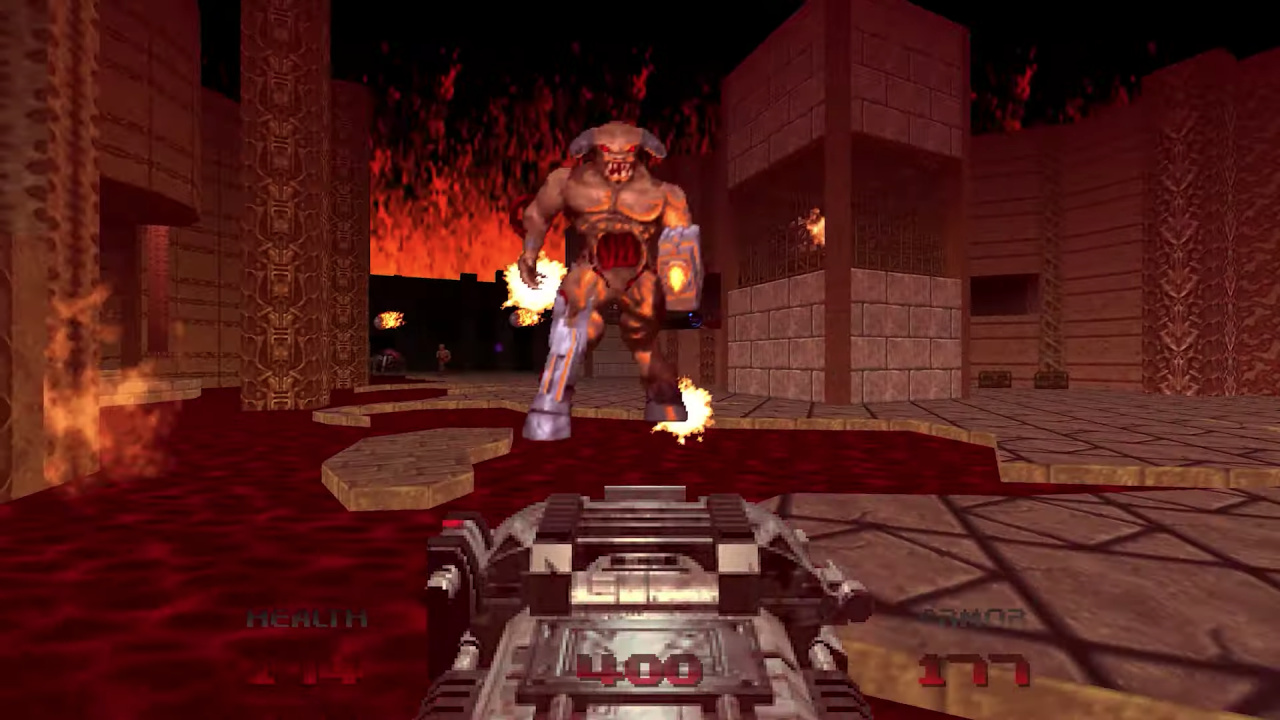
Although Switch owners won’t be able to tuck into the new and exciting DOOM Eternal tomorrow, they can enjoy the rerelease of DOOM 64. A special stage has been made for this new rerelease and we can now see it in action for the first time.
We first heard about this new level earlier in the month, when senior developer James Haley revealed that a new chapter would be playable in the game that ties into the new 2016 DOOM and DOOM Eternal. Back then, he said that “persistent players will have the opportunity to unlock a new chapter in the Doomguy’s saga, taking place shortly after [Doom 64’s] original campaign concludes”.
As it turns out, the tie-in content appears to revolve around the text shown upon completion of the level, which provides a little more lore relating to both the newer releases and DOOM 64 itself. Of course, the series’ most dedicated fans will get the most out of this little nod.
Will you be grabbing DOOM 64 tomorrow? Will it be your first playthrough, or are you returning to it for nostalgia’s sake? Tell us below.
https://www.sickgaming.net/blog/2020/03/...red-level/
|
|
|
|
| Xbox Wire - Changes to the Xbox Insider Hub |
|
Posted by: xSicKxBot - 03-20-2020, 12:08 PM - Forum: Xbox Discussion
- No Replies
|
|
Changes to the Xbox Insider Hub

XP, Leaderboards, and Performance
As we continue our march towards a new Xbox Insider Hub experience, we’re going to make changes that will affect what the current Xbox Insider Hub looks like and how it behaves. Like we mentioned in our previous post, some of those pieces are going to be much more visible than others. This includes a change you’ll see starting tomorrow.
We Value Your Participation
We know that Xbox Insiders value XP, and we do too! XP is a public reward to you for giving feedback to the feature teams and game developers for saying what you like and what can be improved. We’ve granted XP for completing Surveys, Quests, and for filing good bugs! Many of you even noticed when we humorously hinted that we were aware that some folks were bypassing our system just to get the XP reward.
Making this XP so public was driving an incentive that we did not intend. And this created an artificially wide gap between users with the most XP, versus those who are perfectly well-engaged but with a lower point total. Because Xbox Insiders are the highest—and longest—engaged members of the Xbox community, it became clear that a years-long member of the program had an insurmountable XP advantage compared to a more recent Xbox Insider.
The change we’re making today involves how we record XP and show Leaderboards. Most of these changes are happening under the hood in the services layer and are improvements to the overall performance of the app itself. However, these changes will disrupt the Leaderboards because of the way we make a service call for that data. As we’re shifting XP and future incentive systems in the Xbox Insider Hub, we felt this was the right time to retire the XP Leaderboard in the current version of the app.
XP is Not Going Away
You can still earn points through Quests, Surveys, and bug filing! There are many of you who earned your place on the global leaderboard’s top slots through frequent engagement, quality feedback, and have been with us for many years. To you, a very sincere thank you. There are also many newer Xbox Insiders who are active in the Xbox Insider Hub nearly every day and give high quality feedback. We thank you, as well. The impact you have on Xbox is just as important.
We want you to be a part of the journey towards the new Xbox Insider Hub. Stay up to date on other changes we’re making here on the Xbox Insider Blog, the r/XboxInsiders subreddit, and @XboxInsider on Twitter. We are very close to having a build ready to give to Xbox Insiders to try out and let us know what you think. Stay tuned!
https://www.sickgaming.net/blog/2020/03/...sider-hub/
|
|
|
|
| News - Get a job: AfterThought is hiring a Unreal Engine 4 Programmer |
|
Posted by: xSicKxBot - 03-20-2020, 12:08 PM - Forum: Lounge
- No Replies
|
|
Get a job: AfterThought is hiring a Unreal Engine 4 Programmer
 The Gamasutra Job Board is the most diverse, active and established board of its kind for the video game industry!
Here is just one of the many, many positions being advertised right now.
Location: Henderson, Nevada
With a strong knowledge and experience with C++ and Unreal Gameplay framework, you will work on new and pre-existing gameplay systems for a multiplayer environment. As well as work on UI logic using Unreal Motion Graphics and have an in-depth understanding of Unreal’s Replication System.
Additionally, you will write data-driven gameplay elements using DataTables and CurveTables and have experience or the capacity to learn and utilize the Gameplay Abilities System.
You have:
Extensive Knowledge of C++ and experience using Blueprints in Unreal Engine 4.
(Variables, Functions, Methods, Delegates, Classes, Arrays, Stack, Heap, Pointers, Virtual / Pure Virtual etc)
Experience working on Multiplayer games.
(Replication, Netcode, Remote Procedure Calls)
Familiarity with the Gameplay Abilities System
A stellar portfolio that demonstrates your work or a show of contributions to open source projects, or both. Be able to debug complex problems in multiplayer environments using unreal engine profiling and debugging tools. Have the ability to effortlessly work in a team environment, using Git with other programmers as well as adapting to existing project code style.
Backend experience a plus.
Interested? Apply now.
Whether you’re just starting out, looking for something new, or just seeing what’s out there, the Gamasutra Job Board is the place where game developers move ahead in their careers.
Gamasutra’s Job Board is the most diverse, most active, and most established board of its kind in the video game industry, serving companies of all sizes, from indie to triple-A.
Looking for a new job? Get started here. Are you a recruiter looking for talent? Post jobs here.
https://www.sickgaming.net/blog/2020/03/...rogrammer/
|
|
|
|
| News - Don’t Miss: Evolving the combat design of id Software’s Doom Eternal |
|
Posted by: xSicKxBot - 03-20-2020, 12:08 PM - Forum: Lounge
- No Replies
|
|
Don’t Miss: Evolving the combat design of id Software’s Doom Eternal
 When Doom was rebooted for modern audiences in 2016, its arrival was heralded as a high-water mark for single-player first-person shooter combat. Now id Software is looking to one-up its prior achievement with the upcoming Doom Eternal, whose creators insist needs to not just meet expectations set by the previous title, but exceed them, in order to be as satisfying an experience.
At a press event in LA last week, Doom Eternal game director Hugo Martin sat down with Gamasutra to discuss the game’s evolved design, and what changes were needed to make a satisfying sequel. According to him, much of Doom Eternal’s design evolved out of the circumstances created by the game’s new abilities like “dash” and a new flame belcher weapon.
For every tiny tweak to the player’s speed and resource management, a spiraling set of design changes ensued to ensure the quality of the experience. As Doom Eternal barrels toward its March 20 launch date, Martin was able to share details about some of the changes that set Doom Eternal apart from its predecessor.
What was it like, moving from creative director to director on this series?
It’s kind of the same thing, you know. My role hasn’t changed too much. Marty [Stratton, id executive producer] and I still work really closely together and stuff so it’s very similar. What’s been most exciting for everyone has been the chance to make another game together, having worked out what our process is. From the very beginning, we were able to hit the ground running as a team and that felt fantastic.
In other interviews, you mentioned that instead of having to onboard people and learn to work together, you all could start iterating fantasy because you could argue better with people you knew and trusted.
Yeah, and I think you see that in the first two to three levels of Doom Eternal–you are doing more, seeing more than you did in the entirety of Doom 2016. You go to more locations and see cooler stuff and do cooler things than you did throughout all of that game. We were able to do more work at a higher level at a faster pace because the teamwork and the synergy on the team is stellar.
You’ve talked about how things that worked in the first Doom weren’t working in [in Eternal] again, because players who experienced the first Doom were a souped-up racecar. Can you talk about the process of evolving things in Doom to make that racecar track bigger?
It was the player’s [new] abilities that we gave them, like “meathook” and “dash,” that made the racecar super fast. Immediately you notice that you were so quick that nothing could touch you. So you were never really under any kind of duress.
…In the early part of development, because of the abilities we gave the player and the imbalance that it created, there was nothing to master. It was basically a very simple, child-like puzzle, that really wasn’t engaging anybody at all and I don’t think anyone would have wanted to play more than two hours of it.
Even though the gore was beautiful and the levels–it wasn’t doing justice to the hard work that the art team was doing, because you just didn’t care to play it. Immediately the analogy is accurate. The race car is better, the track has to get better. It has to keep up with the race car. So that meant making the chess pieces–the AI–much more responsive at the expense of maybe even some visual flair. The in-tos of certain animations kind of getting sped up so much that you can barely see them, so maybe visually they don’t look as great, but they’re more responsive so they feel better.
We’re not trying to make a cinematic, immersive game. It’s important that things react when they should react, with the speed they need to react. Doom is such a fast game, that, for example, the Mancubus, his area-of-effect blast is almost instant.
I think the AI team did a fantastic job, Kurt Loudy and Jake Campbell and all those guys, the animations all just starting to get a little less expressive and more purposeful. Just take the windup of a fireball. Those needed to get about two times faster now. There was much less of a flourish, still a strong tell, because we need that, but it’s pretty damn fast.
The level design also had to get bigger, to make room for this faster racecar, otherwise, you’re banging up against the walls. If you had dash, and the abilities you have now, but you were playing inside the Foundry level from the last game, that would not be a good experience. You’d be banging against the walls and just feel like a cheetah at the zoo. You’re in this confined space, you need to be set free so you can run.
Finding the right size racetrack for the player [is important]. Too big, you actually feel slow. Too small, you’re frustrated. So [it was about] really nailing the feel of the spaces…all in response to what was going on with the player at the beginning of the project.
Something that works well in the game is not just the level design, but what kinds of spaces the player is moving through. What was your vision for “where you are” being as interesting as “what you’re fighting?”
A fair criticism of the last game was that it was just hallway-arena combat, and the most interesting part of the game was the arena combat. As a result, during the third act of the game, some people found it to be a bit repetitive. That’s a fair criticism. Also the locations were limited in the last game. Mars, Hell, Mars, Hell. A huge objective at the start of the project was to make sure we opened up the scope of the game. Simply put, I wanted to go cool places, shoot interesting things with cool guns.
And we’re just better at creating strong setpieces and creating a spectacle for the player to walk through. Walking along the spear of a giant mech, into the belly of a huge titan he’s just slain is far more interesting than walking down a hallway to the next arena.
What’s a guiding marker for your team to say ‘this is an interesting setpiece,’ instead of ‘this is just a hallway’ when making these spaces?
We have level outlines that we establish early on of what the player’s objectives would be. We take a lot of time working on those–myself and our mission design director Jerry Keehan, who’s awesome. And then the level designer on the particular level, whichever it may be. We try to establish early on from the very beginning that we have that spectacle built in, that we really make sure we’re taking in interesting locations. We saw that last time that hallways are not so great.

But they also are necessary because it can’t all be mechs and spears. That will get repetitive as well. Outlining things, and then every step along the way, through development, people are enhancing things, new ideas are coming in, and if your team has bought in on the vision, then everything just gets better. You don’t want the best version of an idea to be what was originally on the page, you really want the best version to be what ended up on screen.
And that means everybody has to be engaged and contributing and pushing toward the same goal. And that’s where having this be our second project together really comes into play. We are working really, really well together. Everybody enjoys working together, And that’s why I think you’re seeing what you’re seeing onscreen right now.
There’s a ton of work going on with accessibility design in the shooter space right now. What does designing accessibility mean in a game with a game like Doom Eternal that’s fixated on learning and mastery?
It’s just important to make it as accessible as it should be. We do everything we can to try to make Doom–we want it to be the martial arts analogy. You begin the game as a white belt, you can feel yourself getting stripes and leveling up. By the beginning of the third act you will be a black belt, and you will meet some other black belt-level AI. You’ll become Obi-Wan and you’ll meet your Darth Maul. But it’s not just for skilled players. So long as you’re on the right difficulty for your skill level, we’re going to try to make sure everybody becomes a black belt.
Just in the same way that you can make basketball accessible to everyone, but it’s played at various levels. We take time to put in the accessibility features that we feel are appropriate for the game and we’ve got people spending a good amount of time doing that. We have colorblind people and [people with other disabilities] at the studio testing those things. I want as many people as possible to enjoy the fun of Doom. It’s a power fantasy and I think it’s an accessible one. Doesn’t mean it has to be any less sophisticated.
How does it feel to be making this kind of game, working in this kind of design, alongside developers like From Software, who have maybe a higher difficulty than you do, challenging other design conventions that have defined triple-A games for a bit?
The trend was, “you can’t make a hard game.” It never really changed. What happened was looter-shooters, and the Diablo-style games that created this [trend]…they were really successful, and they don’t rely on player skill. You just have to understand what works for one game won’t work for another.
For example, no individual action that I do in Destiny is hard. It’s a trade-off not in skill but in time. In order to do high-end strike missions or do a raid, I have to level up my character, that means I have to put X amount of time into the game to get my level there.
And when you look at a game [like Doom Eternal] like that, you might say “you’re asking me to master all these things, and in another game, what if I can’t, I’m scared, this is just for skilled players, that means it’s a niche game.” That’s not really accurate at all. The thing is if you’re going to make that kind of game that leverages time over skill, that means that as the skill goes down required for the player to succeed, the content that you’re giving them has to go way up. I will put in the time so long as you’re giving me a new gun once every five minutes.
That’s huge, and the worst thing you could do. If you don’t understand that, you’re going make an easy game that doesn’t have a lot of content and that’s terrible. Destiny engages me with fantastic locations, I’m seeing things all the time, I’m also getting amazing guns every couple of minutes. That’s not Doom, that’s not how Doom is made.
All the while there was that brief conversation about how games needed to be easy. There was what I just said, and there was “really? Because Call of Duty is not an easy game, and they’re still cranking out massive sellers and have a huge audience.” I challenge anyone to turn on Fortnite, a huge game that’s played by children, and tell me if you think it’s easy. It’s not easy, you’ll get smashed.
Skill-based games have always had large audiences, and as long as you’re educating players effectively, you have difficulty settings if you can have them, there’ll be an audience for them. We’re not making a hard game. We’re just making a game that’s going to give you something to master, and frustration is a part of mastery. All games have frustration. All engaging experiences have some form of frustration that comes with them.
If I love basketball, there are certain rules. I have to hit a free-throw, rebound, I have to have a good jump shot. If someone blocks my jump shot, and then you ask me “are you frustrated?” I would say “yes,” and then you say “okay maybe we should make it so you can’t block people’s shots.” No, what I need to do is get a better jump shot. I thought I’d create space on my jump shot. That’s where the engagement comes in. At that moment, after my shot gets blocked, and now I’m going to engage because I’m going to work on my jump shot.
So the bet is, yes, you’re frustrated, but we’re pushing you into a style of play that we promise will be more engaging, because the better I get at basketball, the more engaging it becomes. And if I suck at basketball, it’s not that engaging, but I’m motivated to get better, because the better I get, the more fun it is. The better you get at Doom, the more fun it will be, and we have to do what we can as designers to make sure we corral the player and push them into that style of play because we bet you’re going to find it really engaging.
Last question, who’s your basketball team?
You know I don’t really watch a lot of basketball! [laughs] I know it from the ’90s! I’m so lame, I’ll say the Lakers.
For more insight into the making of Doom Eternal, check out Kris Graft’s discussion with Martin from E3 2019.
https://www.sickgaming.net/blog/2020/03/...m-eternal/
|
|
|
|
| News - Animal Crossing, Doom Eternal Deliveries From Amazon Could Be Delayed |
|
Posted by: xSicKxBot - 03-20-2020, 12:08 PM - Forum: Lounge
- No Replies
|
|
Animal Crossing, Doom Eternal Deliveries From Amazon Could Be Delayed
The ongoing COVID-19 (coronavirus) pandemic may cause some disruptions in Amazon's shipments of Animal Crossing: New Horizons and Doom Eternal, the retailer has confirmed. Customers who have pre-ordered either title through the online retailer have been receiving emails notifying them that there may be a delay in their delivery, as the company will "temporarily" be prioritizing shipping out household and medical items. "As COVID-19 has spread, we've recently seen an increase in people shopping online which has had an impact on how we serve our customers," Amazon said in a statement shared with GameSpot. "So in the short term, we are temporarily prioritizing household staples, medical supplies, and other high demand products coming into our fulfillment centers so we can more quickly receive, restock, and ship these products to customers. As a result, customers who ordered Animal Crossing: New Horizon or Doom Eternal may experience a delay in the delivery of their items. We are very sorry for the inconvenience this may cause our customers." Doom and Animal Crossing certainly aren't the only games that may be impacted by the COVID-19 outbreak. Square Enix recently shared a message informing fans that although Final Fantasy VII Remake is still scheduled to launch on April 10, the coronavirus outbreak may prevent some from being able to get the game on launch day. Continue Reading at GameSpot
https://www.gamespot.com/articles/animal...01-10abi2f
|
|
|
|
|

 Part of the White Day Sale
 in GalaCredit!