Posted on Leave a comment

GeekWire: ‘Special Olympics open in Seattle with celebration of inclusion; Microsoft CEO applauds athletes’ spirit’

Special Olympics
Microsoft CEO Satya Nadella addresses the crowd at the Opening Ceremony for the 2018 Special Olympics USA Games at Husky Stadium in Seattle on Sunday. (GeekWire Photo / Kevin Lisota)

The 2018 Special Olympics USA Games opened in Seattle on Sunday at the University of Washington’s Husky Stadium with a parade of athletes and musical performances and inspiring moments meant to showcase acceptance and inclusion.

Microsoft CEO Satya Nadella was among the dignitaries who took the stage to offer encouraging words to those in attendance. The Redmond, Wash.-based tech giant is the premier corporate partner for the Games.

Microsoft CEO Satya Nadella addresses the crowd at the Opening Ceremony for the 2018 Special Olympics USA Games at Husky Stadium in Seattle on Sunday. (GeekWire Photo / Kevin Lisota)

Here are Nadella’s comments in full:

“It’s such an honor to be here today. The energy, the enthusiasm in this stadium is palpable and it’s incredible. On behalf of everyone at Microsoft I want to extend the warmest of welcomes to all of you to Seattle.

“Your courage, your spirit and the pursuit of passion are truly inspiring. We can’t wait to watch all your hard work and training come together as you compete this week. But Special Olympics is about much more than just sports and competition. It’s a model for building a more inclusive world. A world where everyone is celebrated for their unique abilities. A world where everyone is invited to participate.

“Being right here in Husky Stadium, I’m reminded of one of my favorite books, ‘The Boys in the Boat.’ It’s based on an inspiring story about a University of Washington crew team that against all odds made it to the 1936 Olympic Games and took home the gold. It’s a reminder of the power of teamwork and perseverance, and there’s a passage that’s fitting for us all here today. There is a thing that sometimes happens in rowing, it’s called ‘the swing.’ It only happens when all the eight oarsmen are rowing in such perfect unison that no single action by any one of the team is out of sync with those of the others. An inclusive world — that’s what good swing looks like.

“Together you’re showing the world what is possible when we reflect the perspectives and the experiences to everyone. So enjoy the moment. You have achieved so much and you’re building such an amazing, inclusive world.”

An athlete is carried into Husky Stadium on his teammates’ shoulders as others high five members of the Blue Thunder drum line. (GeekWire Photo / Kevin Lisota)

More than 4,000 athletes and coaches from the across the United States are scheduled to compete in 14 team and individual sports across Seattle as the Games run through Friday. Tens of thousands of family members, volunteers and spectators have converged on the city.

‘Defining moment’ for Seattle as Microsoft, Amazon, others support Special Olympics USA Games

Sunday’s festivities, broadcast live on ESPN, were emceed by actor Taye Diggs and featured musical performances by DJ Marshmello, Charlie Puth, Allen Stone and Heart’s Ann Wilson, who sang the “National Anthem.” The Seattle Seahawks’ Blue Thunder drum line participated and the team’s recent draft pick, Shaquem Griffin, served as grand marshall for the parade of athletes into Husky Stadium.

Microsoft President Brad Smith was among a number of executives who would be competing in the first-ever ESPN / Special Olympics Unified Sports Challenge at the UW’s Husky Ballpark later on Sunday.

(GeekWire Photo / Kevin Lisota)

The execs, their employees, celebrities and Special Olympics athletes — on teams of five people — were competing in multiple Unified Sports challenges including Hot Shot Basketball, Penalty Shot Soccer, Electronic Dance Game, Bocce, Inflatable Dart Board, Football Accuracy Challenge, Giant Memory Game and Golf Putting.

DocuSign also participated with a team led by CEO Dan Springer and Starbucks’ team was led by Vivek Varma, EVP for public affairs. Seattle sports celebs competing included Gary Payton, Steve Largent, Walter Jones, Apolo Ohno, Jim Zorn, Kasey Keller and more.

Microsoft President Brad Smith speaks at Husky Stadium in his role as honorary chairman of the Games. (GeekWire Photo / Kevin Lisota)

Microsoft’s Smith also took the stage at Husky Stadium as honorary chairman of the Games to offer his own comments in support of the athletes. Here are those comments in full:

“All of us in Seattle have been working for the last 2 1/2 years to get ready. To get ready for today. To welcome all of you and your family and your friends. We are so happy that you are here.

“Every time a city has the opportunity to host an Olympic event or a World’s Fair, it’s an opportunity not only to be a great host, but to create a legacy. Fifty-five years ago, Seattle hosted the World’s Fair and it built a legacy, an icon — the Space Needle, a symbol that people associate around the world with this place. But this week we will build a bigger legacy still. It is in each and every one of you.

“Together we have an opportunity to build a legacy of understanding, of appreciation, of commitment. A commitment for each of us to bring out the best in ourselves, to bring out the best in everyone around us. That is what each and every one of you represent.

“When we think about what we will all do this week, whether we’re competing or spectating and cheering all of you on, this is a week when we can do even more than rise together. We can stand together, we can stick together and more than anything else we can build together. Let’s build a legacy, a legacy that lasts.”

Washington Gov. Jay Inslee greets the crowd in Seattle on Sunday. (GeekWire Photo / Kevin Lisota)
Special Olympics Chairman Tim Shriver cheers on the athletes alongside Frannie Ronan, an 8-year-old gymnast from Kirkland, Wash., and the youngest competitor in the Games. (GeekWire Photo / Kevin Lisota)

Washington Gov. Jay Inslee officially welcomed the Special Olympians to the state. In addressing the crowd, Inslee said everything needs to be done to fight back against the “dark forces” of fear that work against inclusion in society.

At the end of the Opening Ceremony, the Flame of Hope completed its journey to Seattle and into Husky Stadium. Jennifer Goodley, a 37-year-old powerlifter from Bremerton, Wash., took the final handoff and lit the official cauldron.

Special Olympics 2018 USA Games cauldron (GeekWire Photo / Kevin Lisota)

Griffin, the Seahawks’ inspiring rookie, who had a hand amputated as a young child, then declared the 2018 Special Olympics USA Games officially open.

DJ Marshmello performs as one of the musical acts for the Opening Ceremony of the Special Olympics. (GeekWire Photo / Kevin Lisota)

If you want to follow the Games more closely throughout the week, a new, free mobile app was launched over the weekend. The app, developed by AppInteract on Microsoft’s Azure platform, features sports schedules, details on athletes and teams, venue information, events and news. Download for iOS or Android.

ESPN will also provide in-depth coverage throughout the week on its app and on ESPN.com. And ESPN3 will carry live streaming coverage from swimming competition taking place at the Weyerhaeuser King County Aquatic Center.

Special Olympics USA Games choir (GeekWire Photo / Kevin Lisota)
Posted on Leave a comment

2 new Xbox One bundles: Check ’em out, ‘PlayerUnknown’s Battlegrounds’ and ‘Minecraft’ fans


Games play best on Xbox One, but for those of you that haven’t already made the jump, we have two new bundles joining the Xbox One family today: the Xbox One X PlayerUnknown’s Battlegrounds Bundle and the Xbox One S Minecraft Bundle. More details below:

Xbox One X PlayerUnknown’s Battlegrounds Bundle

With over 8 million players on Xbox One, PlayerUnknown’s Battlegrounds has been one of the most popular games on the platform since its release as a console launch exclusive in the Xbox Game Preview program. Today, you can join the Battle Royale phenomenon with the Xbox One X PlayerUnknown’s Battlegrounds Bundle, which comes with the following:

  • Xbox One X with a 1TB hard drive
  • Xbox Wireless Controller
  • Full-game download of PlayerUnknown’s Battlegrounds enhanced for Xbox One X
  • 1-month Xbox Game Pass trial
  • 1-month Xbox Live Gold trial

The Xbox One X PlayerUnknown’s Battlegrounds Bundle is available later this week for $499 USD at most major retailers worldwide.

Xbox One S Minecraft Bundle

If the Xbox One S is more your style, we’ve also got the Xbox One S Minecraft Bundle. Beat the summer heat with the cool new Update Aquatic and explore new ocean biomes, shipwrecks, ruins and more. Infinite worlds and ways to play can be found in this bundle, as well as the option to play with your friends on nearly any other platform thanks to Xbox Live! Join millions of players in the Minecraft community on Xbox, Windows, Nintendo Switch and mobile devices with this new bundle, which comes with the following:

⦁ Full-game download of Minecraft featuring the exciting Update Aquatic plus the Explorer’s Pack
⦁ Season one of Minecraft: Story Mode – The Complete Adventure
⦁ 1-month Xbox Game Pass trial
⦁ 14-day Xbox Live Gold trial

The Xbox One S Minecraft Bundle starts shipping today and will be available soon for $299 USD at select retailers in select regions. In the U.S., the bundle is exclusively available at Microsoft Store and Walmart.

Xbox One is the only console system that plays the best games of the past, present and future with more than 1,300 games available today – including over 200 exclusives and over 400 Xbox classics. If you’re on Xbox One S or Xbox One X, you can also enjoy the ultimate 4K entertainment experience with a built-in 4K UHD Blu-ray player, premium audio with Dolby Atmos support and the fastest, most reliable gaming network with Xbox Live.

Grab the bundle of your choice at the Microsoft Store.

Posted on Leave a comment

Meet Europe’s challengers for the $100,000 prize in Microsoft Imagine Cup 2018

From environmental sustainability, protecting human rights, empowering the disabled and disadvantaged, driving up literacy rates and much more, technological innovation has the power to make our world a better place.

That’s where initiatives like Microsoft’s Imagine Cup come in – helping to encourage the brightest and best students to develop world-changing technology projects by unlocking their creativity.

Founded in 2003, it’s now the world’s biggest student technology competition, with tens of thousands of students participating from around the world each year.

This year, the global final will take place in Seattle on 25 July, with the first prize of $100,000, mentorship opportunities and Azure credits all to play for.

The winners will be awarded $100,000, a mentoring session with Microsoft CEO Satya Nadella, a $120,000 Azure Grant and a trip to next year’s Build developer conference.

The Europeans are coming
Europe has long been a hotbed of computing talent. From “father of AI”, Alan Turing, to World Wide Web inventor Tim Berners-Lee, Nikola Tesla, the Lumière brothers and more, leading figures from the region have contributed to some of history’s most thrilling technology innovations. Now it’s time for the next generation to step out of the shadows.

So, who’s competing from Europe? Let’s take a look at the 14 teams travelling to Seattle and the projects they’ll be hoping to wow the judges with.

Team TBC (Belarus)
This project uses a neural network to determine psychogeometric characteristics of a person from photographs, which allows more effective communication according to their individual characteristics, with a focus on business and sales settings. The use-case is to help companies hire the right students by sophisticated data-driven algorithms based on psychology, face/gestures-recognition and company culture assessment. The algorithms can also be used to help out the service industry to better communicate with customers based on psycho-type and emotion detection in real time.

Read more

Theatrall (France)
Theatrall aims to make theaters accessible for everyone through simple software available on smartglasses, smartphones or tablets, which will display the production subtitles in the language chosen by the user. The goal is to make theatre experiences accessible for everyone, such as people with hearing impairments, non-native language speakers, or simply for those wishing for subtitles.

Read more


Soul Sailor (Germany)
Soul Sailor is a platform that provides psychological care for refugees and asylum seekers, including a chatbot to help individuals process their experiences while seeking refuge. Soul Sailor supports refugees dealing with mental illnesses such as PTSD or depression by providing psychological care and eliminating factors out of their surroundings which contribute to their issues. The platform is powered by an AI and data-driven digital companion called Mayu, who interacts with the user via speech and helps them express their experiences and worries. In addition, the system also allows fled relatives who have been separated to communicate with a novel event-based network solution.

Read more

NASC (Germany)
NASC is a web app that allows you to search for news articles on the web, attempts to evaluate sentiments in those articles and then visualizes the results. The goal is to encourage people interested in politics and other important topics and events to go beyond the first search result and to look at multiple articles that express different views about the same topic. To achieve this, NASC offers three different result views. The Map view helps portray geographical differences in the attitude towards a given issue. The Timeline view visualizes the development of the sentiment towards an issue over time, and the List view provides a familiar user interface similar to regular search engines and shows more details at first glance than the other, more specialized views.

Read more

Pavo (Germany)
Pavo Vision makes digital content accessible to visually impaired users, by utilizing advanced AI, Cloud Computing and the power of the community. Visual content in websites, documents, and other digital assets gets analyzed and equipped with a description of the visual for visually impaired users by the Pavo Vision System. Mistakes in the analysis can be reported by the Pavo community to train the system, making the models smarter over time. The Pavo Vision system is currently available as a browser plugin, with future support for Microsoft Teams planned.

Read more

StudySmarter (Germany)
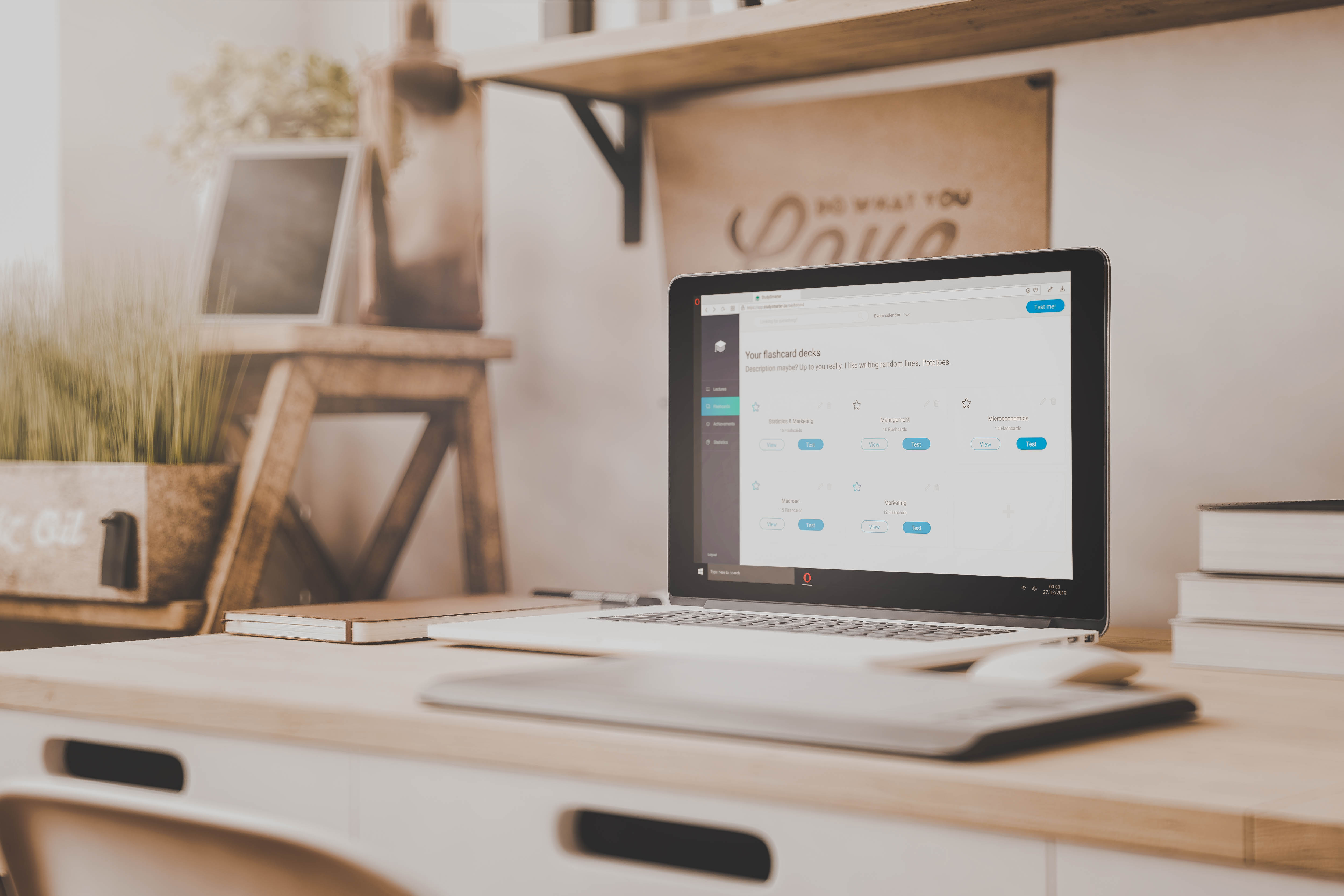
StudySmarter is an intelligent learning platform, designed to help students achieve their educational goals and graduate from university. The platform digitizes the entire learning process, making it more efficient, structured and engaging. Machine learning algorithms accompany the student through the entire learning experience by automating or creating learning materials such as summaries, mind maps or flashcards with just a few clicks. In addition, the student is automatically connected with fellow students.StudySmarter not only saves time learning, but also boosts motivation.

Read more

iCry2Talk (Greece)
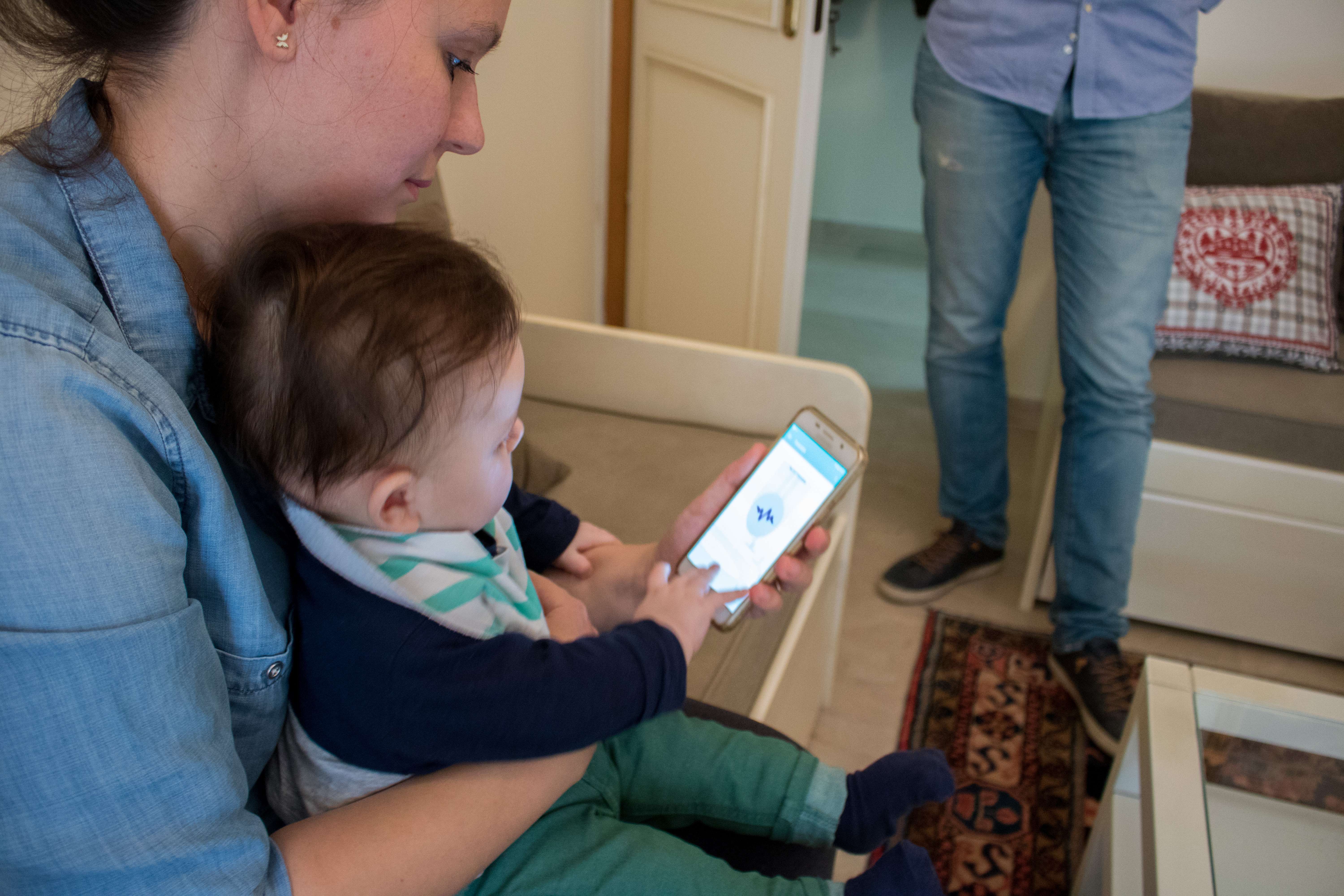
iCry2Talk proposes a low-cost and non-invasive intelligent interface between infants and parents. Baby’s cries are translated in real-time, being associated with specific physiological and psychological states. Results are depicted in text, image and voice messages. iCry2Talk believes that the efficient combination and analysis of different sources of information through advanced signal processing techniques and deep learning algorithms can provide meaningful and reliable feedback to parents.

Read more

Innobie (Hungary)
Innobie is a smartphone app to help students understand the curriculum they are reading in textbooks. The app projects a virtual augmented 3D image over 2D illustrations in books, and can help elementary students learn biology, chemistry, geography, history, and more. By allowing users to explore virtual objects from all angles, they can gain a deeper understanding for more complex subjects than a mere 2D image would be able to provide.

Read more

DeafKIT (Moldova)
DeafKIT is an automatic solution for sign-language translation based on neural networks. Translations are provided with video capturing to make communication easier and more effective, with up to 100% accuracy. The solution aims to be used on trading centres, social networks and more.

Read more

Wavy (Poland)
Wavy is an underwater locator for scuba divers which allows divers to track each other via a small device, which can prove to be vital during emergency situations. In addition to its safety benefits, the Diving Logbook feature tracks the route, depth and temperature of each dive. Diving bases can also measure the most popular routes to help recommend them to customers.

Read more

VisionX (Romania)
XVision is a system designed to automatically detect anomalies and diseases encountered anywhere in the human body with radiologist-level accuracy, just by analyzing common medical X-ray images with the help of the latest Azure AI technologies such as Machine Learning. The system will provide a crucial solution for people in areas of the world that lack access to radiology diagnostics while also acting as an assistant tool for the medical experts examining radiographs.

Read more

Coffee Break (Russia)
Coffee Break utilises spectrometry in an innovative way by labeling tradeable goods. this amazing tool in the business for labeling of tradable goods. The solution can be used in a variety of ways, such as counterfeit detection, by comparing goods to the known qualities of their genuine counterparts. The tool can also be used to track expensive items such as wine.

Read more

InterviewBot (UK)
InterviewBot is a web-based application tailored to aid students with video or physical interviews when applying for jobs by providing real-time feedback on interview-style questions. Companies can also use this tool to assess their candidates’ performance, while a written transcript allowing employers to dissect interviews in detail. It uses facial analysis and speech recognition to offer real-time feedback on facial expressions during practice interviews, informing users whether their style is positive, neutral, or negative.

Read more


Black Light (UK)
Black Light’s project, Firepoint, is a First-Person mixed reality simulator, built around helping firefighters explain and display what their daily work environment is like without putting anyone at risk. The simulator allows users to see through the eyes of a firefighter as they make their way through a multi-story training ground with a variety of different encounters to tackle. The goal is to use this tool to help firefighters in community outreach, recruitment, and training.

Read more

Tags: ,

Posted on Leave a comment

‘Chance at greatness’: Former Army paratrooper lands at Kronos after graduating from Microsoft Software & Systems Academy

To Ashish Singh, your network matters. More specifically, your support network.

For the paratrooper medic turned software engineer, that network has always helped him navigate life’s twists and turns. It’s what brought him from Nepal to America when he was 17 years old. It’s what led him to enlist in the U.S. Army. And it’s why he chose to work at Kronos Incorporated—a global leader in workforce management and human capital management software—after graduating from Microsoft Software & Systems Academy (MSSA). The rewards have been consistent, and hard-won.

A solid educational foundation eluded Ashish in childhood. “We could barely afford my school,” he says, “and because of political unrest, the school was shut down often.” His mother dreamed of sending Ashish, her only child, to study in America. Eventually, in January 2008, her dream was realized when Ashish and two of his friends were accepted at Ferris State University in Michigan. They arrived with almost nothing—save one another. Even now, Ashish mostly remembers feeling overwhelmed.

“My English was horrible. People would ask me to repeat myself about a thousand times a day,” he says.

Determined to make the most of his opportunity no matter the obstacles, Ashish began to study manufacturing engineering. But after a couple years—during which he pivoted his studies toward computer science and earned a scholarship to study computer engineering—Ashish couldn’t shake the feeling that there was more he wanted to do.

“I’d always wanted to do something great,” he says, “but throughout that time, I felt like I was studying for my family rather than for myself.”

Then, with just one semester remaining in his degree program, Ashish stumbled upon what seemed to him a chance at that greatness: The U.S. Military Accessions Vital to the National Interest (MAVNI) program.

Originally established to enlist foreign nationals in the U.S. military to bolster its foreign language capabilities and improve cultural diversity, the MAVNI program was temporary, Ashish knew; it had been suspended once before. So he chose not to risk waiting until after graduation to enlist. He even hoped to pursue computer engineering after enlisting.

But when a physical exam revealed that Ashish was colorblind and therefore disqualified from pursuing IT in the Army, he was unsure of what to do. He chatted with his bunkmates and discovered they were hoping to become paratroopers. Before long, Ashish was training with them to come to the rescue of their fellow soldiers around the world.

Ashish Singh and Army Sgt. Mario Da Silva in Capri, Italy.
Ashish and Army Sgt. Mario Da Silva exploring Capri while stationed in Italy.

Stationed in Italy, Ashish traveled and trained with allies throughout Europe. Alongside the intensity, Ashish found solidarity and a sense of pride. With support from family, friends, and fellow soldiers, he was doing his “something great.”

Then, after a bad jump on a training route over Germany resulted in a back injury, it came time for Ashish to consider his own health. He and his wife—whom he’d met and married in Latvia—relocated to Fort Bragg in North Carolina. But, despite limiting his physical activity, Ashish’s pain worsened. His wife encouraged him to consider other options, and so his thoughts returned to software engineering.

Through his network of friends and former classmates, Ashish learned about MSSA, a Microsoft Military Affairs program launched in 2013 to help U.S. service members and veterans transition from the military into technology careers. He applied and was accepted into the second MSSA cohort at Fort Bragg, which taught Cloud Application Development.

Now available at 14 military locations nationwide, MSSA can graduate up to 1,000 participants each year. Graduates are guaranteed interviews with Microsoft and/or some of the program’s 280 hiring partners. On average, graduates land IT jobs with annual salaries starting at $70,000.

Amid the demanding coursework, Ashish once again found value in the camaraderie of his cohort. “Even more than the course, we learned from each other,” he says. “We helped each other out, we created and implemented projects together, we attended meetups together.”

They even prepared for interviews together. Ashish applied and interviewed at several of the program’s hiring partners, but Kronos stood out from the start for its culture, which has earned it accolades around the world, including Fortune magazine’s “100 Best Companies to Work For,” Glassdoor’s “Best Places to Work,” and Forbes’ “America’s Best Employers.” When it came to deciding which job offer to accept, the community appeal won out.

“We recently asked our interns to count how many potlucks, cakes, dinners, and other activities we’ve had,” Ashish says. “They lost count.”

But even better, he says, is the support to grow professionally. As an MSSA hiring partner, Kronos is committed to helping participants like Ashish effectively transition into a rewarding career—offering support and guidance they might not receive elsewhere. The result is a close partnership that is helping to address the need for more skilled workers in technology while also equipping transitioning service people to thrive in a digital world.

Ashish touring Capri, Italy, with his friends.

“Veterans across all branches of the military have honed exceptional skills and abilities that are in high demand for technology companies—including paying careful attention to detail, executing in a high-stress environment, and collaborating to fulfill a mission,” said Kristen Brown, vice president of global talent acquisition at Kronos. “Yet translating what they’ve learned and what they’ve done into corporate speak doesn’t always come naturally in the transition to civilian life. Programs that help veterans develop business-world confidence and open the doors to corporate opportunities are invaluable.”

In his role as a front-end developer, Ashish is generally focused on application modules that impact user experience. But he’s taking advantage of the opportunity to grow in multiple ways. For example, given his background and broad interest in coding, his mentor also gives him opportunities to work on back-end scripting. And to cap it off, he finished his last semester of school, earning his computer science degree online in May 2018.

“With everything going on, I thought I would never graduate,” he says. “But nobody in my family has a degree, so I wanted to be the first one and make my mom proud.” He’s looking forward to walking in the graduation ceremony in December 2018.

“I’m going to walk, just for her,” he says.

Because in the end, it’s always been a team effort.

Posted on Leave a comment

Windows 10 Tip: Yikes, stop that sound! Mute-a-tab in Microsoft Edge

Does this sound familiar? You’ve got multiple tabs open in your browser and all of a sudden, music or voices blares from one of them. You scramble to find the audio icon on that tab, open the page and scroll down to stop the video that’s playing.

There’s a faster way to shut down that sound.

A new feature with the Windows 10 April 2018 Update can mute tabs in Microsoft Edge.

Here’s how to do it:

Cursor moves to a tab playing music, clicking on it to mute

To mute a tab in Microsoft Edge, click the audio icon

Simply click the audio icon or right-click the tab to choose Mute from the drop down menu.

If you like this, check out more Windows 10 Tips.

Posted on Leave a comment

GeekWire: ‘”Defining moment” for Seattle as Microsoft, Amazon, others support Special Olympics USA Games’

Michel Kozoris raises his arms after competing in the Special Olympics World Summer Games in 2011. (Photo via Special Olympics)

Seattle-area tech companies are making a statement about building an inclusive workforce as the city hosts one of the largest sporting events in the region’s history.

More than 3,000 athletes will arrive in the Emerald City next week for the 2018 Special Olympics USA Games and compete across 14 sports. The event, now in its 50th year, not only spotlights the talent of athletes with intellectual disabilities, but perhaps more importantly promotes inclusion beyond the playing field.

“In many ways, this can and should be a defining moment for the Seattle community,” Microsoft President Brad Smith said in an interview with GeekWire. “It’s a great opportunity to show the nation that we aspire to be a real city and region of inclusion.”

This group raised a Special Olympics flag atop the Space Needle in Seattle on Friday morning. From left to right: Beth Knox, CEO, Special Olympics USA Games; Allen Stone,singer/songwriter; Devon Adelman, Special Olympics athlete; Brad Smith, Microsoft President; and Taye Diggs, singer and author.

Microsoft is the presenting sponsor of the games. The Redmond, Wash.-based tech giant is a long-time supporter of the Special Olympics through donations of software, technical assistance and even cell phones over the years.

But the company is stepping up even more with the games in its backyard this year. It’s a reflection of Microsoft’s broader focus on accessibility — one that got away from the company until Satya Nadella took over as CEO in 2014, Smith said. “We lost our industry leadership position in terms of meeting the needs of people with disabilities,” he said.

That renewed commitment has helped spur a larger culture shift across the company, Smith said. He pointed to products like the new Xbox Adaptive Controller and the company’s $25 million AI for Accessibility Initiative as examples.

More than 2,000 employees will be volunteering at the games next week. Microsoft’s Xbox division is also hosting the first-ever video game tournament at the USA Games.

“If you think about our mission of empowering everyone, then fundamentally we have to do a good job of meeting the needs of the billion-plus people on the planet that have some kind of disability, temporary or permanent,” Smith added. He and Nadella will speak at the Opening Ceremony on Sunday at Husky Stadium with Washington Gov. Jay Inslee.

Devon Adelman, a Special Olympics USA Games athlete and ambassador, speaks at Microsoft’s Ability Summit in May. (Photo via Microsoft)

Microsoft, Amazon, Starbucks, and other companies are participating in the first-ever job fair at a Special Olympics USA Games this year called “Journey of Employment,” where athletes will gain career advice and meet with potential employers. It’s designed to raise awareness for a talent pool that organizers say is often overlooked.

“These partners are committed to creating inclusive work cultures and to helping improve the unemployment rate for people with disabilities,” said Special Olympics USA Games CEO Beth Knox.

The unemployment rate of people with disabilities was 9.2 percent in 2017, double that of the rate for those without disabilities, according to the Bureau of Labor Statistics. And even with government support, nearly 29 percent of disabled, working-age Americans live below the poverty level, according to U.S. Census data. That line is set at $12,082 for one person.

Artists known as “They Drift” created a mural that was placed on Amazon’s campus in Seattle as part of the “Choose to Include” campaign for the 2018 Special Olympics USA Games. (Photo via Amazon)

Amazon will also be heavily involved next week. The e-commerce giant is sponsoring the closing ceremony near its campus in South Lake Union and will have more than 400 employees volunteering throughout the games. It is also donating boxed lunches for athletes throughout the week via FareStart and launched a neighborhood restaurant campaign this month called “Choose to Include.”

Amazon says it is committed to inclusive hiring. It runs an Alternative Workforce Supplier Program that identifies people with disabilities for hire in the company’s fulfillment centers. The company also partners with Northwest Center, a Seattle-based nonprofit supporting mentally and physically disabled adults and children that provides employees to Amazon. Many of its products and software services offer accessibility features, too.

“At Amazon, diversity and inclusion are an inherent part of our culture,” said Beth Galetti, Amazon’s senior vice president of human resources. “The unique talents, experiences, and backgrounds of our employees are the driving force which enables us to build and innovate on behalf of millions of customers around the world.”

Amazon’s Spheres glow purple in Seattle this past March as the company joined others in marking 100 days until the Special Olympics USA Games begin in the city. (Amazon Photo / Jordan Stead)

Bellevue, Wash.-based wireless carrier T-Mobile and coffee giant Starbucks are getting involved as well. T-Mobile, which has more than 7,000 members in its Access for Disabilities Network, created a text-to-give program that enables donations for the games.

Starbucks has hundreds of employees who are volunteering at the event. For the past three years, Starbucks has received a 100 percent score on the Disability Equality Index survey sponsored by the American Association of People with Disabilities and the U.S. Business Leadership Network.

“Going forward, I would like in my lifetime to see where you hire somebody – a barista who has autism and it goes viral and it’s on the “Ellen” show – that that doesn’t get the attention anymore. That it just is commonplace,” Starbucks manager of Equal Opportunity Initiatives Marthalee Galeota said in 2016. “We have one world – one accessible world where disability is adaptability, it’s humanity, it’s innovation and it’s our global responsibility.”

Smith, Microsoft’s president, said the tech industry should consider how products take into account the needs of people with disabilities, while pursuing new breakthroughs that meet their needs in new ways.

He also said employers should involve people with disabilities in the creation of products. One phrase used in the community is “nothing should be created for us, without us.”

“The key to long-term product improvement for this important community is actually to do a much better job of bringing them into our workforce and making them a key part of our overall ecosystem,” Smith said.

You can get tickets to the USA Games or sign up to volunteer here.

[embedded content]
Posted on Leave a comment

New to Microsoft 365 in June—streamlining teamwork and security

This month, we introduced several new capabilities that improve user experience, streamline the management of common tasks, and enhance identity-driven security measures. We also want to hear your feedback, so that we can make sure these updates are relevant and useful to you.

Streamlining the way you work

Updates to the Office 365 user experience—We announced updates for Word, Excel, PowerPoint, OneNote, and Outlook that are designed to embrace the breadth and depth of Office 365 features, while simplifying the user interface and improving accessibility. These updates include a simplified ribbon to encourage focus and collaboration, modern colors and icons to improve rendering and accessibility, and AI-powered search to quickly surface relevant information. These changes will start to roll out to Microsoft 365 and Office 365 subscribers over the next few months.

Connect Office 365 Groups to SharePoint sites—Office 365 Groups can now connect to existing SharePoint sites, allowing newly created Office 365 groups to integrate with your existing SharePoint infrastructure. Connecting a group to a site provides a single starting point to find content, team news, and communications with modern pages, libraries, and lists—without losing any previous content or permissions.

A screenshot displays a SharePoint page. A dropdown from Settings in the upper right shows the user is about to connect a new Office 365 group.

Reduce distractions with Outlook for Android—We introduced “Do Not Disturb” in Outlook for Android to help you reduce distractions and get more done. Now, subscribers can set timed or scheduled periods when email and calendar notifications will be paused. For those with multiple Outlook accounts, Do Not Disturb settings can be customized for each email address—enabling granular control over how you spend your focus-hours.

An animated screenshot highlights the steps a user needs to take to set their Outlook to "Do not disturb." In this case the user has set it to Do not disturb for one hour.

Manage progress in Microsoft To-Do—This month, we introduced “Steps in Microsoft To-Do—a new feature that allows you to break down tasks into smaller, incremental steps—making large projects more manageable. Now, when a you create a To-Do item, you can add a range of detailed steps that are tracked through to completion. We also introduced the ability to share your To-Do lists, enabling you to work together on tasks and complete projects with colleagues and friends.

An animated screenshot highlights a user sending a 1:1 invitation link to a teammate.

Dictation in OneNote—Office 365 subscribers with Windows 10 can now take advantage of hands-free dictation using nine languages in OneNote. Dictation provides a simple, yet transformational, way to express ideas and capture notes using only your voice. You can also make edits using your keyboard without having to pause the recording. Simply click or tap the Dictate icon and start speaking.

Adobe PDF integration in Office 365—Last September, we expanded our strategic partnership with Adobe to focus on integrations between Adobe Sign and Office 365 products, like Microsoft Teams, SharePoint, and Outlook. This month, the Adobe Document Cloud team announced new capabilities for OneDrive and SharePoint that provide improved fidelity when working with PDF documents. Once integrated by your administrator, PDF services provide rich previews of PDF documents in OneDrive and your SharePoint sites, and allow you to combine several files into a single PDF in your document library.

A screenshot displays documents in SharePoint. A Word, Excel, and PowerPoint have been selected and are ready to combine.

Securing the modern workplace

We introduced several new important capabilities that strengthen your organization’s identity-driven security, and ensure important data is kept safe.

Secure your organization with baseline security policy in Azure Active Directory—We introduced the preview of a baseline security policy in Azure AD that enforces multi-factor authentication for privileged accounts. This new policy will apply to all organizations that have Azure Active Directory and help secure the most important accounts in your tenant. Customers can opt in to the baseline protection policy in preview, and at general availability will be opted in by default with the ability to opt out at any time.

Block legacy authentication using Azure Active Directory conditional access—This month, we introduced the preview of conditional access support for blocking legacy authentication, which enables organizations to stop users from authenticating to legacy apps. Identity attacks such as password spray almost exclusively target these older client apps. This feature improves the overall security of your IT environment by getting users to move to more modern clients that support modern authentication mechanisms.

Enhance data classification across your organization—The new Label Activity Explorer in Office 365 provides a quick overview of how the data in your organization has been labeled—allowing you to investigate risky or abnormal activity. To help you manage labeling across the lifecycle of your organization’s content, we enhanced the Data Governance dashboard with new features like the Data Governance toolbox, added links and tools for common data governance tasks, and provided a single resource for guidance.

A screenshot of the Security & Compliance Center in Office 365. The user is exploring the Label Activity Explorer in the Data governance dashboard.

Other updates

  • Microsoft Teams has reached FedRAMP Moderate Compliance and will start rolling out to U.S. Government Community Cloud (GCC) customers on July 17, 2018.
  • Visio Online is now available in Microsoft Teams. Coworkers can now collaborate on Visio Online diagrams from within their team or channel without toggling between apps.
  • SharePoint Swoop—our new enterprise reality show—features a team of MVP experts with just three days to help a Microsoft 365 customer modernize their intranet.
  • At Computex 2018, we outlined our vision for how partners can build intelligent edge devices and solutions.
Posted on Leave a comment

Digital civility highlighted at child online protection event

Last week, I organized a workshop on digital civility at the Marie Collins Foundation annual conference, “From Discovery to Recovery – Online Sexual Abuse of Children.” Microsoft is a sponsor of the foundation, a U.K.-based charity that directly supports children who have been sexually abused online, as well as their families.

Our session included representatives from UNICEF, The Diana Award (also representing NoBully.org), and the academic sector, in addition to Microsoft. The interactive session examined definitions and nomenclature surrounding digital civility, as well as examples from audience members of advice and guidance they’ve given to their own children and students about exercising decorum and engaging constructively online.

During the workshop, we asked participants a series of questions about the level of safety and respect on the internet; the most common and serious online risks; the chief differences between risk and harm; and as global practitioners and preventers of online harm to children (and indeed all individuals), where we should be putting our collective efforts. The responses were wide-ranging. For some, digital civility is about courtesy, respect and digital intelligence; compassion and empathy; and being mindful and aware of other people’s feelings, views and frames of reference. Others see a need to interact with a degree of politeness and to instill a “please-and-thank-you” culture into the digital realm. Still others saw civility as springing from deep-seated human values and morality and emphasized that teaching children enduring values in the real-world will see them carried through to online spaces.

Meanwhile, participants pointed to a redefining of what it means to have and to be a “friend” as a rather unwelcome by-product of life online. “Internet addiction,” a deterioration of communications skills, and an absence of parental responsibility for teaching young people good digital habits and practices were other concerns.

One leading online safety advocate said digital civility implied a rather “low bar” for positive digital interactions. Pointing to the all-too-familiar parental intervention of addressing squabbling siblings in the back seat of a car, he said the admonishment of telling them to “at least be civil to each other” was clearly a low hurdle.

Microsoft’s efforts to foster digital civility

At Microsoft, we view digital civility as leading with empathy, inclusion and kindness in all online interactions, and we aim to foster safer and healthier online behavior using our Digital Civility Challenge as a starting point. In our view, digital civility is in no way about limiting or stifling online discussion and debate. Rather, it’s about ensuring that robust exchanges and disagreement take place minus any name-calling, harassment or abuse.

We continue to champion digital civility and are in the process of fielding yet another round of research, this time in 22 countries. We’ve conducted similar studies released earlier this year and last year, both in conjunction with international Safer Internet Day in February. Our studies survey teens and adults in multiple geographies and ask about their exposure to some 20 online risks.

For the past two years, we also calculated our Digital Civility Index – a measure of the perceived level of civility in each country based on attitudes and perceptions of respondents from those countries. The current Digital Civility Index stands at 65 percent, unchanged from Year 1, despite the addition of nine countries and three risks to the Year 2 report. Accordingly, in Year 3, our research will drill down into the most common risks and concerns for respondents, namely unwanted contact – overwhelmingly the most common risk in the first two studies, as well as hoaxes, fraud and scams, which was the runner-up most common risk in Year 2, the first time it was included.

We will begin releasing Year 3 results in the autumn and make the full set of findings available on international Safer Internet Day 2019 in February.

Working together to grow a culture of digital civility      

Since its inception in 2016, we’ve regarded our focus on digital civility as a broad platform and concept for others to evangelize and embrace. Indeed, we’ve encouraged partners and collaborators among civil society organizations, academics, others in industry and governments to adopt the notion and to develop their own related initiatives, projects and programs. In its short existence, we’ve already seen follow-on research projects for other age groups and demographics, the creation of related indices and other efforts.

Our most significant development to date has been the formation and growth of our inaugural Council for Digital Good, a group of 15 teens from across the U.S., brought together to champion digital civility and safer and healthier online interactions.

For the past year, the teens have been learning about online safety issues, sharing their views and perspectives with Microsoft and our partners, and serving as youth ambassadors eager to grow a safer and more respectful online world. Everywhere I go – including last week’s conference – I highlight the informed views, unique perspectives and deep insights these teens continually impart. Next month, we will hold a more public event in Washington, D.C., featuring council members and some of the work they’ve been driving over the past several weeks. Summaries of the council’s earlier work can be found here and here.

Last week’s conference also featured government officials, law enforcement personnel, educators and other members of civil society, noting their efforts in working to prevent online child sexual exploitation and abuse and their commitment to child online protection generally.

For more about the Marie Collins Foundation, see the organization’s website. To learn about online safety and digital civility, visit our website and resources page, as well as our pages dedicated to digital civility. For more regular news and information, connect with us on Facebook and Twitter. And, consider taking our Digital Civility Challenge and tell us on social media that you’ve done so, using the hashtags #Challenge4Civility and #Im4Civility.

Tags:

Posted on Leave a comment

‘These are employees you want’: Special Olympics job fair is a win for athletes, region

“When our developers have that interaction with a person with a disability, it can be very eye opening for them to see that maybe they were not meeting the bar they thought they were,” says Chinyere Samuelson, a JPMorgan Chase accessibility lead. “But once they have that experience, it opens a door. Most developers are all about the challenge, and this allows them to start owning the responsibility for making something that is accessible to everyone.”

Photo of people standing in front of a T Mobile sign that says What Makes You Different Makes You Awesome
Puget Sound employers recruited new talent at Microsoft’s recent inclusive hiring job fair, including Accenture, Alaska Airlines, Amazon, AT&T, Department of Services for the Blind, EY, Facebook, The Lighthouse for the Blind, Inc., LinkedIn, Northwest Center, Skills Inc., Starbucks, T-Mobile, VR-Net and the Washington State Department of Corrections.

Bakhru says national events like the Special Olympics USA Games have the power to showcase all the things that people with disabilities can achieve. But their life skills extend far beyond the basketball court or gymnastics mat.

“People with disabilities can represent some of your best talent pool because they have skills that they’ve had to develop throughout their lives, like problem solving and leadership and time management,” says Bakhru. “There is a very high percentage of people with disabilities who are capable of working but are unemployed simply because of misperceptions or biases.”

Participants in the Special Olympics USA Games job fair are already working to improve employment outcomes for people with disabilities. Corporate partners across Puget Sound and nationally have already stepped up to the plate with robust inclusive hiring and supported employment programs, says Beth Knox, President and CEO of the 2018 Games.

“Being a part of the employment solution is a significant priority for all of us,” says Knox. “It’s part of the bigger cultural shift we’re focused on to ensure that people with intellectual disabilities are seen and valued as contributing members of our community. Employment plays a major role in that.”

Harper, in the governor’s office, loves working — citing the money she earns and the independence it affords to the people she gets to interact with every day. She recently asked to increase her hours from 15 to 19 hours a week, which the governor’s office was happy to accommodate.

“I love my job. I just love it. Meeting new people and interacting in different activities is really fun,” Harper says. “I was so excited and happy when I got the job in the governor’s office. It was my dream.”

Posted on Leave a comment

SHOWTIME, Amblin Television and 343 Industries bring Halo to television

It’s a big day for Halo – today, SHOWTIME president and CEO David Nevins announced the network has ordered a 10-episode season based on the legendary video game franchise!

In its adaptation for SHOWTIME, Halo (working title) will take place in the universe that first came to be in 2001, dramatizing an epic 26th-century conflict between humanity and an alien threat known as the Covenant. Kyle Killen (Awake) will serve as executive producer, writer and showrunner. Rupert Wyatt (Rise of the Planet of the Apes) will direct multiple episodes and also executive produce the hour-long series which enters production in early 2019.

Halo is our most ambitious series ever, and we expect audiences who have been anticipating it for years to be thoroughly rewarded,” said Nevins. “In the history of television, there simply has never been enough great science fiction. Kyle Killen’s scripts are thrilling, expansive and provocative, Rupert Wyatt is a wonderful, world-building director, and their vision of Halo will enthrall fans of the game while also drawing the uninitiated into a world of complex characters that populate this unique universe.”

“This is a truly exciting moment for the Halo franchise,” stated Kiki Wolfkill, head of Halo Transmedia at 343 Industries. “Together with our creative and production partners at SHOWTIME and Amblin Television, the Halo television series will represent new and exciting way for fans to enter and engage with the Halo universe. We can’t wait to share more on what’s ahead.”

Halo will be executive produced by Killen, Wyatt and Scott Pennington, along with Justin Falvey and Darryl Frank for Amblin Television. The series will be distributed globally by CBS Studios International.

For all things Halo and the recently announced Halo Infinite, be sure to check out Halo Waypoint and stay tuned to Xbox Wire.