Posted on Leave a comment

Microsoft’s Council for Digital Good calls on US policymakers to promote digital civility

In an open letter to U.S. law- and policy-makers, Microsoft’s Council for Digital Good is calling on government to address digital-world realities like cyberbullying and “sextortion” by modernizing laws and promoting in-school education to encourage positive online behaviors.

“As young people who have encountered some of these problems firsthand, our goal as the Council for Digital Good is to provide strategies, solutions and resources for other young people in these situations,” council members wrote. “For our sake and for that of future generations, it is imperative that we amplify discussions about making the internet a more productive, civil, and safe place.”

Council for Digital Good logo

The letter, shared last week at an event featuring the 15-member council at Microsoft’s Innovation and Policy Center in Washington, D.C., touts the benefits of awareness-raising of digital risks. The council also recommends that in-school online safety and behavioral education be supported and prioritized, and requests that laws be updated and brought into the digital age. The letter and its recommendations to policymakers is the culmination of the council’s work after 18 months of other assignments, activities, learning and fun. In addition to the council members and a parent or chaperone who accompanied each of them to the event, the young people also hosted leaders from other technology companies, non-governmental organizations and D.C.-area influentials.

Youth shine in the nation’s capital
The event, “Is there a place for civility in our digital future? Conversations with Microsoft’s Council for Digital Good,” featured two panel discussions, comprised of teens sharing their work and views, and two sets of three adult panelists, each responding and reacting to the young people’s presentations. The first panel focused on the state of online civility today and included Christina W., Jazmine H., Judah S. and Miosotis R. These four young people, ages 14 to 17, went above and beyond their regular council assignments, taking it upon themselves to speak in their schools and communities on or around international Safer Internet Day this past February. They then brought those learnings to this panel discussion.

From left, Judah S., Miosotis R., Christina W. and Jazmine H. following their panel discussion.

From left, Judah S., Miosotis R., Christina W. and Jazmine H. following their panel discussion.

Christina spoke of the rewarding experience it was to see parents interact with one another after hearing her guidance for staying safer online; Jazmine noted the importance of awareness-raising and education among all groups; and Judah highlighted the importance of respecting age requirements on social media. Miosotis talked about her peer-to-peer outreach in both Florida and Puerto Rico. The adult respondents from Google, Born This Way Foundation and Columbia University were impressed by the young people’s drive, determination and knowledge of the issues.

The second panel focused on building and growing a culture of digital civility. Indigo E., Jacob S. and Sierra W. presented the cohort’s written manifesto for life online first released in January, while Bronte J., Rees D. and William F., unveiled the open letter. Adult respondents from Snap, Inc., Tyler Clementi Foundation and UNICEF posed some provocative and important questions and offered instructive advice for reaching policymakers with their message.

Jacqueline Beauchere speaking

Jacqueline Beauchere summing up after a second panel with Council for Digital Good members and adult respondents.

Erin R., Robert B. and Isabella W. showcased their individual art projects, and Katherine C. and Champe S. shared highlights from their council experiences, and assisted me in opening and closing the event, respectively. These 11 council members range in age from 14 to 18.

“The CDG council members are impressive and inspiring,” said retired U.S. Ambassador Maura Harty, president and CEO of the International Center for Missing and Exploited Children, who attended the event. “Their kindness and maturity are matched by their desire for effectiveness. With their manifesto, they have provided a well-considered road map and a path to greater digital civility for all of us. Emphasizing awareness, skills, and yes, ethics and etiquette, they have modeled the behavior we all should emulate.”

Program highlights importance of the youth voice
We assembled this impressive group as part of a pilot program in the U.S., launched in January 2017. The council served as a sounding board for Microsoft’s youth-focused, online safety policy work. Prior to last week’s event, the council met for a two-day summit last August where they each drafted an individual manifesto for life online. They were then tasked with creating an artistic or visual representation of those written works. The written cohort manifesto and a creative cohort manifesto followed, all leading up to the crafting of the open letter and the youth assuming a more visible role as a full group.

As I’ve mentioned before, we thought the in-person portion of the program would conclude after the August summit. But after meeting these youth, we knew it would be a missed opportunity not to bring them together again and in a more public way. We wanted others to appreciate their passion and perspectives and to hear from them in their own words. Indeed, for us at Microsoft, the program underscores the importance of the youth voice and the need for young people to have a say in policy matters – be they governmental or corporate – that affect them. We shared a lot and we’ve learned even more from these youth. I’m planning a more reflective account of the full program soon.

Following the D.C. event, first lady Melania Trump met with the council members, and spent time with each teen personally to learn about their individual creative projects and to hear about the cohort’s 15 online safety tenets.

Afterward, we held a brief capstone event, where we honored each council member for his or her unique contributions to this pilot program. We are excited to learn that many council members want to stay involved in these issues and to remain in contact with us at Microsoft and many of our partner organizations.

As the youth concluded in their open letter: “Now is the time for action, and we need your help in the push for change in online culture. If we gain the ability to always harness the internet in a positive and productive way, we will be able to use our generation’s signature swiftness, effectiveness, and global platform to make a difference.”

Learn more
Read the council’s full open letter here; view all of their individual, creative projects at this link, and learn more about digital civility by visiting www.microsoft.com/digitalcivility. Look for our latest digital civility research releases leading up to Safer Internet Day 2019 in February and, until then, follow the Council for Digital Good on our Facebook page and via Twitter using #CouncilforDigitalGood. To learn more about online safety generally, visit our website and resources page; “like” us on Facebook and follow us on Twitter.


Tags: ,

Posted on Leave a comment

Learn the Q# programming language at your own pace with the new open source Microsoft Quantum Katas project

For those who want to explore quantum computing and learn the Q# programming language at their own pace, we have created the Quantum Katas – an open source project containing a series of programming exercises that provide immediate feedback as you progress.

Coding katas are great tools for learning a programming language. They rely on several simple learning principles: active learning, incremental complexity growth, and feedback.

The Microsoft Quantum Katas are a series of self-paced tutorials aimed at teaching elements of quantum computing and Q# programming at the same time. Each kata offers a sequence of tasks on a certain quantum computing topic, progressing from simple to challenging. Each task requires you to fill in some code; the first task might require just one line, and the last one might require a sizable fragment of code. A testing framework validates your solutions, providing real-time feedback.

Working with the Quantum Katas in Visual Studio

Programming competitions are another great way to test your quantum computing skills. Earlier this month, we ran the first Q# coding contest and the response was tremendous. More than 650 participants from all over the world joined the contest or the warmup round held the week prior. More than 350 contest participants solved at least one problem, while 100 participants solved all fifteen problems! The contest winner solved all problems in less than 2.5 hours. You can find problem sets for the warmup round and main contest by following the links below. The Quantum Katas include the problems offered in the contest, so you can try solving them at your own pace.

We hope you find the Quantum Katas project useful in learning Q# and quantum computing. As we work on expanding the set of topics covered in the katas, we look forward to your feedback and contributions!

Posted on Leave a comment

CTO Kevin Scott: The next wave of computing is the intelligent edge and intelligent cloud

YouTube Video

Take a look around your house, office or even the next store you visit, and you’ll start to notice that internet-connected devices are bringing us closer than ever before to a world of ubiquitous computing and ambient intelligence. As these Internet of Things (IoT) devices become increasingly commonplace, people will start to expect computing to be more integrated into their lives, to anticipate, understand and seamlessly meet their needs. They will expect software to respond to spoken natural language, gestures, body language and emotion, and for it to understand the physical world and the rich context surrounding each user as they navigate their personal life, their work and the world around them.

This trend has more promise than just bringing additional convenience, productivity and connections to our everyday lives. Smart sensors and devices are breathing new life into industrial equipment from factories to farms, helping us navigate and plan for more sustainable urban cities and bringing the power of the cloud to some of the world’s most remote destinations. With the power of artificial intelligence (AI) enabling these devices to intelligently respond to the world they are sensing, we will see new breakthroughs in critical areas that benefit humanity like healthcare, conservation, sustainability, accessibility, disaster recovery and more.

We call this next wave of computing the intelligent edge and intelligent cloud. When we take the power of the cloud down to the device – the edge – we provide the ability to respond, reason and act in real time and in areas with limited or no connectivity. As Satya shared at our Build developer conference, it’s still early days, but we’re starting to see how these new capabilities can be applied towards solving critical world challenges:

  • Increasing the world’s food supply: The world will need 70 percent more food according to the U.N., to feed a global population of 9.6 billion in 2050. Farmers like Sean Stratman in Carnation, Washington, are using the intelligent edge to do precision agriculture with real-time intelligence on soil, even in remote areas with unreliable connectivity. Using Microsoft’s FarmBeatssolution, which combines intelligence trained in the cloud to run on a drone, Sean created a heatmap of his land that served as a guide for him to plant the crops that will best perform in specific locations.
  • Ecological research and conservation: The intelligent edge creates opportunities to collect more accurate data in our research of natural disasters and threatened habitats. Smart sensors can collect data and act on events as they happen, providing researchers greater fidelity in their models and enabling them to take specific actions and make predictions that could improve conservation efforts. Disney Animal Kingdom is leveraging the intelligent edge to study the purple martin bird. They worked with Microsoft to develop hundreds of tiny “smart houses” in Disney’s Animal Kingdom to learn more about the species and help inspire a new generation of conservationists in the parks. The scientists have unprecedented insight now into the nesting behavior of the purple martins.
  • Reducing waste and improving safety in energy: The world depends on natural resources to produce energy for the world.  Because these resources are limited, it is also critical that energy companies leverage technology to increase efficiency. Schneider Electric is using the intelligent edge in oil fields to monitor and configure pump settings and operations remotely, only sending personnel onsite when necessary for repair or maintenance when, for example, intelligent pump monitoring indicates that something will go wrong. This contributes to overall worker safety and improved resource management.

We need to give all organizations and developers the tools to build these kinds of increasingly ambitious solutions that span the intelligent edge and intelligent cloud.  Moreover, these tools must give developers strong security foundations and help them to place security at the very core of their solutions. Devices on the edge handle some of our most sensitive business and personal data in our homes, workplaces, and sometimes in physically remote places.

To protect data wherever it lives, security needs to be baked in from the silicon to the cloud. This has been one of the central design principles of Microsoft’s intelligent edge products and services. Azure Sphere is our intelligent edge solution to power and protect connected microcontroller unit (MCU)-powered devices. There are 9 billion of these MCU-powered devices shipping every year, which power everything from household stoves and refrigerators to industrial equipment. With more processing power than traditional MCUs and a holistic security approach, we believe Azure Sphere will make our increasingly connected world safer. In addition, Azure IoT Edge enables you to run cloud intelligence directly on IoT devices and includes security from device provisioning and management to hardware and cloud services that run on top of the devices. Azure Stack, just one of our many tools to power hybrid scenarios, offers customers the flexibility to securely deploy in the cloud, on-premises or at the intelligent edge.

In the past three months, we introduced Azure Sphere at RSA; announced a powerful application developer experience with Visual Studio for Azure Sphere to accelerate innovation at the outer edge, as well as new IoT edge capabilities and partnerships at Build; and shipped Azure IoT Edge general availability last month. This is all part of our commitment to intelligent edge innovation and our broader $5 billion investment in IoT to empower our customers and partners. We have more exciting updates around the corner and look forward to seeing what our customers and partners build.

Tags: , , , , , ,

Posted on Leave a comment

Microsoft employees fire up ideas by the thousands at largest private hackathon on the planet

On July 23, Mendez Gandica’s team will join thousands of other Microsoft employees and interns all over the world as they gather to form the largest private global hackathon. They’ll work across organizations and technologies, and some will collaborate with students, teachers, and people who work at nonprofits to solve problems and advance ideas.

Mendez Gandica might not have had the same opportunity to jump-start a passion project like this five years ago, on her own time and resources. An outlet for innovation and making a difference on this grand scale wasn’t yet available to Microsoft employees everywhere.

In 2014, the company had just embarked on a culture change: a quest to become a place where employees take risks to change their world for the better. Launched that July, Microsoft’s Hackathon was one way to help make that culture change happen: one place for everyone to come together, experience creative and fast-paced collaboration, make a difference, and drive the culture forward.

A hackathon is a mishmash of two terms: “hacking” and “marathon.” Typically known as a coding competition that happens over a few days and involves sleep-deprived engineers, Microsoft’s Hackathon is different. All employees, not just coders or makers, bring their unique skill sets to a project. While the technical motivation is still a driver, many teams won’t write a single line of code at all. Plus, they get to work on the project as much as they want to beforehand. And many projects continue well after Hackathon tents come down.

“Hackathon is special because all employees worldwide can spend time contemplating and executing in a learn-fast environment,” said Mendez Gandica. “Hackers don’t have to be engineers. Any employee can contribute with their own unique set of skills.”

Fueled by bottomless caffeinated beverages, buffets of energizing grub (bacon cupcakes!), the excitement of a deadline, and their own driving curiosity, employees experience a whirlwind break from their typical work days to do Hackathon.

“In the early days, Hackathon was an experiment,” said Jeff Ramos, who leads Microsoft Garage, the team that runs Hackathon. “Frankly, we weren’t even sure if people would come. But we had 11,550 people that first year. So we were like, ‘whoa, we’re onto something here.’”

Posted on Leave a comment

GeekWire: ‘Teleporting holograms, a belt for fetal health, and more at Microsoft’s Imagine Cup student contest’

Team Pengram. From left to right: Bill Zhou, Will Huang, Vedant Saran. (Microsoft Photo)

Bill Zhou wanted to be able to help his mom fix the WiFi router when she called. The only problem? He was at school in Berkeley, Calif., and she was not.

“So I try to send her links online or send her videos or try to do a phone call with her, but it’s not really clear,” Zhou said. “And sometimes I wish I could just teleport my presence back home just for five minutes, show her what’s going on, and then teleport back to Berkeley to do whatever I’m doing.”

That personal desire was part of the inspiration for Pengram, an augmented reality tool for remotely assisting and collaborating on projects such as fixing equipment or assembling furniture. The Pengram team, made up of University of California, Berkeley graduate students Zhou, Vedant Saran, and Will Huang, will be one of 49 teams competing in the world finals of Microsoft’s Imagine Cup student competition starting Monday in the Seattle region. Imagine Cup brings together high school and college students who are “innovating and addressing some of humanity’s biggest problems.”

Pengram uses both augmented and virtual reality to “holographically teleport” an expert to assist on a task involving a physical object in another location. The expert, wearing a virtual reality device, can work in the virtual world on a virtual model of the object that needs fixing, such an engine. Whatever the expert does to that virtual engine will be reflected on the other person’s side, except in augmented reality, with an avatar representing the expert demonstrating on the physical object.

[embedded content]

“The operator will be able to see the expert as if he was actually there,” Zhou said.

Saran said the platform uses Microsoft Azure to deliver the content via the HoloLens device. Pengram allows users to watch experts in real-time or in previously recorded videos.

Though personal use was one part of the team’s vision for Pengram, inspiration also came from what the team noticed businesses needed. Companies worked with much more complicated machines, like wind turbines or locomotive engines. Zhou said that often, to repair the machines, they would have to fly out an expert because field technicians wouldn’t know how to fix them.

“So what they’re looking for is actually a remote assistance solution where the expert can teleport their presence to the field to assist their technicians anywhere in the world,” Zhou said.

Pengram has worked with companies like smartphone maker HTC to explore the possible uses for the platform. Zhou explained that any company could use Pengram’s capabilities in a unique way suited to their needs. HTC, which supports trade schools in China, finds pre-recorded assistance helpful in training students.

Flashes of Pengram’s capability can be seen in Microsoft’s own Holoportation project, which Microsoft revealed in 2016. Holoportation, like Pengram, uses the HoloLens as a tool to holographically transport 3D models into a physical space in real time, as if all participants were in the same space. In another demonstration, Microsoft showed how someone using a tablet in one location could annotate the real world for someone using a HoloLens in another, such as a plumber showing a homeowner how to fix a sink.

[embedded content]

The Pengram team, who have known each other for three years and met through the VR@Berkeley club when they were undergraduates, began the project at a Cal Hacks hackathon a year-and-a-half ago. Pengram won the Microsoft Imagine Cup U.S. Finals to advance to the world finals.

On the other side of the world in Pakistan, Iqra Irfan, Areeba Kamil, and Sami Ullah are developing a wearable belt that monitors fetal health. The team, named Fe Amaan, consists of three undergraduates in their last year at the National University of Sciences and Technology. They wanted to tackle Pakistan’s miscarriage and stillbirth problem, which they described as one of their home country’s biggest issues.

“One of the major issues we found in the healthcare facilities in our country is that there is not enough access to facilities for expecting women,” Kamil said. “And the women who have to suffer the most are women in rural areas, and then they become the target of stillbirths. Later on we also realized that this problem is not just confined to Pakistan, but it’s also a worldwide issue.”

Fe Amaan works as a remote fetal monitoring device, helping ease the consequences of a lack of access to medical facilities. The belt and corresponding Internet of Things sensor device, which sits on the mother’s abdomen, can monitor fetal movements and heart rate. It sends the data to a mobile app, which analyzes it and generate alerts if it detects any anomalies. The device uses Microsoft’s Azure cloud platform to host its applications and to predict the state of the fetus in advance, based on the data gathered.

The Fe Amaan team. From left to right: Areeba Kamil, Sami Ullah, and Iqra Irfan. (Microsoft Photo)

The hope is that precautionary measures can then be taken before it’s too late.

“We believe it’s the right of every woman to have good medical facilities and we want to make sure it’s our aim to eliminate the risk of having a stillbirth,” Irfan said.

The three have were friends prior to the project, and decided to work on Fe Amaan as part of their senior projects for university. Fe Amaan has gone through clinical trials, which the team cites as the most difficult part of the process. The team participated in the Pakistan national finals and won the Middle East and Africa finals to advance to the world finals.

The Microsoft Imagine Cup World Finals will take place in Seattle next week, from July 23 to 25. The annual student technology and innovation competition requires participants to submit their software, instructions, and give live presentations on the team, the project, the target market, and how the team plans to bring the project to market.

Forty-nine teams, including Pengram and Fe Amaan, will compete on the world stage after winning national and regional competitions throughout the year. The winning team will get $100,000 and a mentoring session with Microsoft CEO Satya Nadella.

This year’s Imagine Cup, the 16th annual competition, includes awards for projects in artificial intelligence, big data, and mixed reality. The judges include Microsoft executive vice president of business development Peggy Johnson, coding community Glitch CEO Anil Dash, and software package management company Bitnami co-founder and COO Erica Bresica. Snowboarder and Olympic gold medalist Chloe Kim will also be a special invited guest at the competition.

Posted on Leave a comment

Now underway, Microsoft Business Applications Summit showcases new AI in Office 365, LinkedIn and Azure

Today, we welcome more than 3,500 customers and partners to our inaugural Microsoft Business Applications Summit in Seattle. Over the next two days, this community will come together with the engineering teams that build Dynamics 365, Power BI, PowerApps, and Microsoft Flow to connect, share, learn, and be the first to know where we’re going and what’s coming next across the Business Applications landscape.

This event is all about making the community more successful: enabling our customers to be more agile in their adoption of transformational technology, to help them grow and drive better experiences for their customers and employees, ultimately unlocking insights and actions from their data, to discover new opportunities and stay competitive.

Earlier this year we committed to delivering major product releases twice a year, to offer predictability around new capabilities and a clear roadmap to enable adoption of new technology for our customers and partners. Today we’re making available the October 2018 release notes, which details hundreds of new capabilities and features across all our Dynamics 365 applications and the Power Platform.

Infusing intelligence and AI throughout our applications, enabling new modern experiences with mixed reality and deeper integration across Office 365, LinkedIn, and Azure are key focus areas for the October 2018 release. We’ll be showing these new capabilities throughout the event. Some of the highlights include,

  • Dynamics 365 AI for Sales, the first of a new class of AI applications that delivers unique out-of-the-box insights by unifying data and infusing it with advanced intelligence to guide decisions and empower organizations to take informed actions. For Sales, in particular, we’ll show how AI can help salespeople prioritize their time to focus on deals that matter most, provide answers to the most common questions regarding the performance of sales teams, offer a detailed analysis of the sales pipeline, and surface insights that enable smarter coaching of sales teams.
  • Enhanced Azure IoT Central integration with Dynamics 365 for Field Service will enable proactive and predictive service. Building on previous integration, we’ll now support bi-directional flows. For example, sending commands from Field Service through IoT central to the device. The power of IoT is also extended to the technician with embedded IoT Central visuals and measurements within the Field Service mobile app.
  • New enterprise credit management, revenue recognition and new dual accounting currency capabilities in Dynamics 365 for Finance and Operations to give businesses a real-time view of global financials. In addition, enhanced process-based integrations across Dynamics 365 for Finance and Operations with Dynamics 365 for Field Services, Project Service Automation, and Talent, will give customers end to end visibility across departments.
  • Continued integration across Office 365 and LinkedIn, there are dozens of new features coming with the October release. For example,
    • Integration between Microsoft Teams, giving sellers access to Dynamics 365 for Sales within Teams for enhanced collaboration, while also taking advantage of the built-in Teams bot capability to provide new intelligence and self-service capabilities.
    • Deeper LinkedIn integration with Dynamics 365 for Marketing that brings interactions information for smarter segmentation and lead scoring.
    • Integration with Skype and video streaming within the interview process using Dynamics 365 for Talent to keep your hiring team in the know about candidates while also delivering a providing them with the ability to utilize Skype, video streaming, and submit mobile feedback.
  • We continue to enhance and add even more new capabilities to Power BI to enable everyone in an organization to work from the same data platform and deliver intuitive tools so teams can leverage vast quantities of data quickly to reach new and compelling insights. New preview features for Power BI will begin appearing in the service this month (July).
  • Mixed Reality is another area of investment with promising new scenarios from helping a frontline worker resolve an issue hands-free, to a retail store manager designing the best layout to make their products more appealing to customers. Earlier this year, we demonstrated the mixed reality Remote Assist application that would help our customers collaborate remotely with heads-up, hands-free video calling, image sharing, and mixed-reality annotations. We will show this technology in action at Business Applications Summit and share more details in the coming months.

The impact technology can have on businesses is evident. The connections between customers, products, people with data and intelligence at the center are creating feedback loops that enable businesses to transform. Microsoft is uniquely positioned in the market to enable that feedback loop and help our customers unlock their next opportunity.

I invite you to watch this morning’s keynote and learn more about Dynamics 365 and the Power Platform. You’ll see how Microsoft is using Dynamics 365 to modernize our hiring processes as well as hear from some of our customers including Polaris, Macdonald Miller, and Auto Glass/ Belron that are on the cutting edge of technology and will share how they are transforming their businesses.

Posted on Leave a comment

Americans with Disabilities Act anniversary an opportunity to recognize workplace accessibility and inclusive design

By Jenny Lay-Flurrie, Chief Accessibility Officer

On July 26 we will celebrate the 28th anniversary of the Americans with Disabilities Act (ADA). The ADA stands as one of the most important pieces of civil rights legislation and prohibits discrimination while ensuring that people with disabilities have the same opportunities and rights as people without disabilities. It serves as a reminder of both where we have come from as well as the work left to be done.

Since its inception, the ADA has helped break down barriers for people with disabilities in built environments, provision of government services, communications, and employment. Despite a lot of great progress, after nearly 3 decades there is still much to be done, not only to level the playing field, but also to recognize (and seek out!) talented people with disabilities, skills and expertise that we need in our companies. The unemployment rate for people with disabilities hasn’t materially shifted in that time and remains nearly double that of people without disabilities. We are one of the many employers that has the power to influence that number. We take that responsibility seriously. Here are three things we are doing to drive it:

Breaking Down Barriers Through Technology
It’s never been more important to have a diverse and inclusive workforce including people with disabilities. Put simply, it helps us create better products that empower people with disabilities. When accessibility is done well, it becomes invaluable to daily life, the workplace, and play. It’s ubiquitous and easy to use. These values guide us, and I urge you to check out the following:

  • Accessibility built in by design. There is a wealth of goodness built into the core of our products – from Windows to Office and Xbox. Learning Tools, Dictate, Narrator, Translator, Color Blindness Filters, and more. We’ve created a simple one-stop-shop with our Accessibility Feature Sway which has every feature broken down by disability type and we update this and our new website www.microsoft.com/accessibility as new features become available. Do check it out and share!
  • If in doubt, ask. Remember we have a dedicated support team for people with disabilities using Microsoft products, or using accessibility features. The Disability Answer Desk is there 24×7, via chat, phone and in the USA, a dedicated ASL video line. Now in 11 markets and ready to help you get going with your technology
  • Your feedback is gold dust. We want to know what future you want, and technology you want to empower you. Tell us via our Accessibility UserVoice, Disability Answer Desk or tweet @MSFTEnable. Your feedback powers us.
  • The power of innovation. AI is opening doors for innovation for people with disabilities. Invaluable tools like Seeing AI, Microsoft Translator, and Helpicto are built leveraging our vision, knowledge and speech Cognitive Services APIs and so we were excited earlier this year to announce the AI for Accessibility program to open up these technologies to you to create. The application process is now open, and first batch of grant applications are in mid review. Literally can’t wait to see what you come up with!

Creating Forums for Inclusion
It isn’t enough to just talk about inclusion, we need to partner together to drive impact. There are many events we host and attend where this happens, but two have highlighted the appetite for more:

  • Microsoft Ability Summit. For the first time ever, we opened the doors to this internal event to the public and we were humbled by the results. Over the 8 years since we started the Ability Summit, attendance has grown from just 80 people in that first year, to 1,200 Microsoft employees, and 1,200 external guests over the two days. At the event, we demonstrated the latest in accessible technologies and attendees connected with the owners and drivers of those technologies. They also had the opportunity to engage with over 20 companies at an inclusive hiring job fair and heard from our very own CVP of Retail Stores, a panel of dignitaries and CEO Satya Nadella, who shared their thoughts on accessibility and disability. We were honored to include former Senator Tom Harkin who introduced the ADA into the Senate back in 1989 and underscored the need to break down barriers to get people with disabilities into the workforce. It’s our hope that by opening the event up more broadly we can share knowledge and accelerate the process for all organizations to build their programs, hire amazing talent, and reduce the unemployment rate.
A group of people sitting on stage

Creating a Region of Inclusion panel discussion at the 2018 Microsoft Ability Summit.

  • Disability:IN. Just last week in Las Vegas, 1,500 folks from over 160 corporate partners came together to discuss, share and take action on disability inclusion. Disability:IN (previously known as USBLN) is a corporate based NGO, Microsoft is a proud sponsor, and I’m a honoured to be chair of the board of directors. This organization has grown in numbers and strength in the past years and it speaks to the need, appetite and desire from so many companies to not only understand but drive the future of disability inclusion. During this event, over 130 rising leaders met with company leaders and many walked away with jobs and intern positions. We celebrated those that have achieved high scores on the Disability Employment Initiative (DEI), with many achieving 100% including ourselves. Also, technology was a HOT topic, and we dedicated one of the opening plenaries to showing and sharing the latest in accessible inclusive technology – and I had a blast showing Office 365, PowerPoint, Translator, PowerPoint Designer, Auto Alt-Text, Seeing AI and Xbox Adaptive Controller live on stage. It was clear from the room, amazing speakers and companies sharing their journeys, that this is a priority across corporate America, and how we partner together has never been more important.

[embedded content]

Supporting Inclusion in Action
Perhaps one of the best examples of making inclusion real is the Special Olympics. This year Microsoft was proud to be the Presenting Sponsor of the 2018 Special Olympics USA Games here in Seattle. With the theme “Rise with Us,” athletes challenged Seattle to make the 2018 games the most inclusive Special Olympics to date and honourary Chair Brad Smith, set the tone – asking Seattle to create a legacy of inclusion that lasts long after the games finish. As part of the event a job fair was held for athletes that included 16 companies including Microsoft. With 4,000 athletes and more than 12,000 volunteers (including 2,000+ Microsoft employees!) participating in the event, we are creating a legacy of inclusion in the region and a galvanizing force epitomized by local athlete Frannie Ronan – the youngest athlete in the games at just 8 years old who inspired us all at the opening ceremony and walked out with 2 silvers and 2 bronzes and a very big smile.

A big crowd of people in a field.

Opening ceremonies of the 2018 Special Olympics USA Games in Seattle

A woman and a child smiling

Jenny Lay-Flurrie with Frannie Ronan at the 2018 Special Olympics USA Games in Seattle

In addition to celebrating the ADA, we recognize individuals and organizations all over the world are developing disability rights policies and programs under the United Nation Convention on the Rights of People with Disabilities and helping their communities raise awareness of the importance of accessibility and need for an inclusive culture. To make real progress, it will take collaboration from across government, industry, employers and individuals with disabilities to realize the vision of the ADA and reduce the unemployment rate for people with disabilities everywhere.

In the meantime, do explore what technology can do for you through the power of accessibility, keep us grounded in what you want to see going forward, and get involved in forums and supporting these incredible organisations that are going to power the future of disability inclusion.

Posted on Leave a comment

Microsoft celebrates promotion of employee Doug Pierson to USMCR Brigadier General

Doug Pierson is officially a one-star general officer in the United States Marine Corps Reserve (USMCR). He’s also a full-time Microsoft employee.

It’s an impressive accomplishment, made even more remarkable by the fact that the Marine Corps allows for only up to 60 brigadier generals at any time.

At his promotion ceremony, on July 11, 2018, at Microsoft’s main Redmond campus, Pierson was joined by family, friends, and colleagues eager to celebrate his achievement.

“I was truly humbled by how excited everyone was to help out and be part of the event one way or another,” Pierson said. “The response and support was overwhelming.”

For Microsoft, Brig. Gen. Pierson exemplifies why the company is committed to supporting employees who serve in the Reserve and National Guard—a commitment for which we were honored to receive the 2016 Extraordinary Employer Support Award from the U.S. Department of Defense.

Color Guard
Color Guard provided by Combat Logistics Battalion-23 was in attendance at Pierson’s ceremony.

The award reflects how we view our military members: Their contributions are undeniably valuable in a workforce that thrives by being inclusive of all backgrounds and experiences. And because National Guard and Reserve members rarely have access to the same resources as active duty and veteran service members, our support is built to help them thrive both at work and in service.

Even logistically, staying committed to both roles can become grueling. In Pierson’s case, the balancing act often means flying across the country on a Friday to spend the weekend training with the USMCR, then arriving home before dawn on Monday.

“But having a loving family and committed teammates who champion what you’re doing makes it all worth it,” Pierson said. “It reenergizes your spirit.”

As an area IT manager at Microsoft, Brig. Gen. Pierson can attest to the importance of that spirit as well as the accompanying mindset. By regularly applying the skills and values he learned as a Marine—leadership, perseverance, collaboration, and determination, among others—to his Microsoft work, he has attained success across the board.

And as Brig. Gen. Pierson continues to bring his best to everything he sets out to do for his country, his family, and Microsoft, we are proud to support him—and all who still serve.

Posted on Leave a comment

6 great ways to score big during Ultimate Game Sale

Ultimate Game Sale* is back! Now is the perfect time to save big and upgrade your slowing gaming PC, stock up top-rated PC games, or pick up that new gaming keyboard and mouse at Microsoft Store. While Ultimate Game Sale is our biggest ever, you need to jump all over these deals now because the sale ends July 30.

1. Save up to 50 percent on more than 100 top-rated games for Windows

Save big on select Windows 10 games such as “State of Decay 2,” “Sea of Thieves,” “Middle Earth: Shadow of War,” “Forza Motorsport 7,” “Zoo Tycoon: Ultimate Animal Collection” and more. There’s more than 100 popular PC games on sale during Ultimate Game Sale and many support Xbox Play Anywhere, meaning one purchase gets you the game on Xbox One and Windows 10 with cross save capability (PC hardware requirements may vary for games on Windows 10).

2. Save up to 60 percent on select gaming PCs and accessories

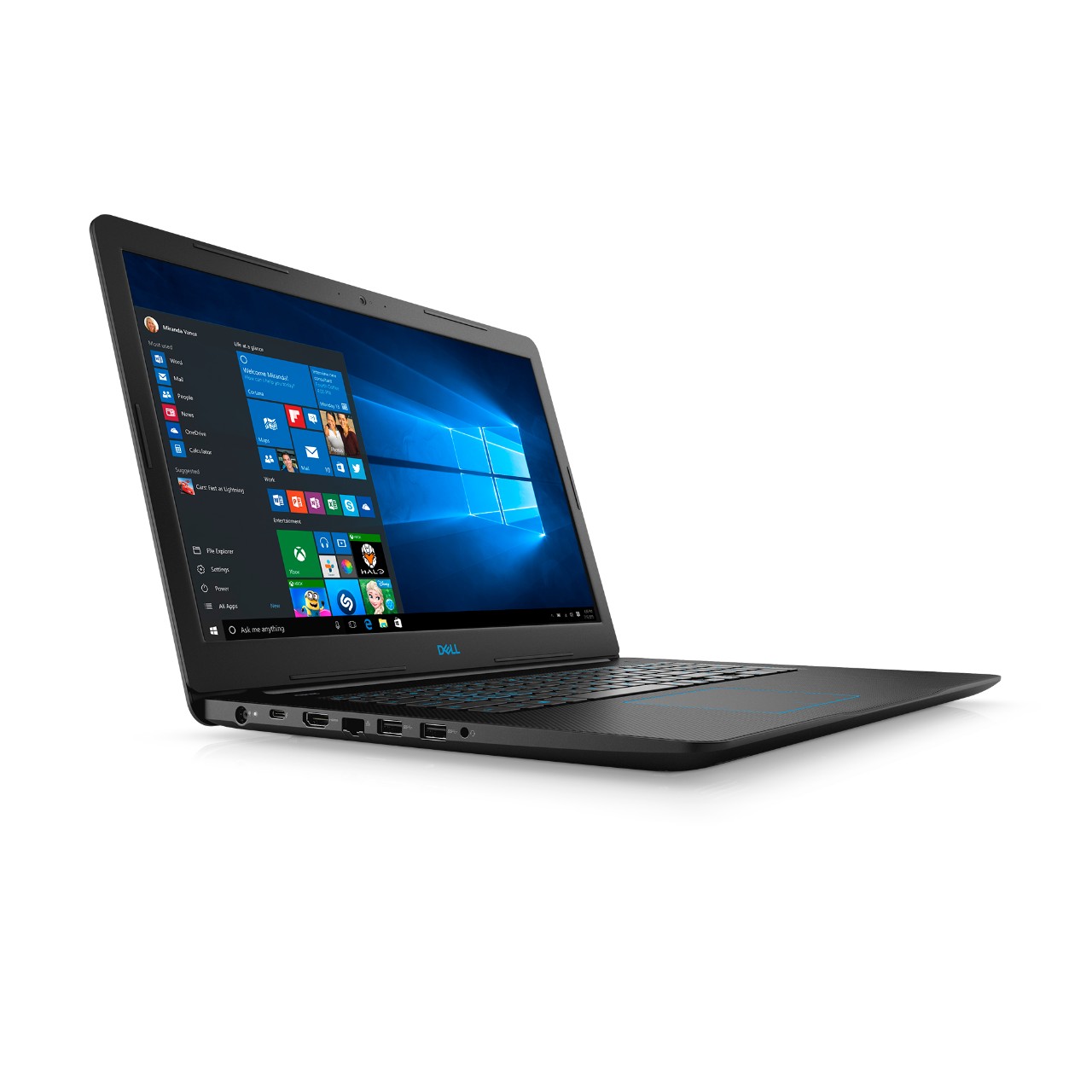
Screenshot of the Dell G3 15-inch gaming pc, with the lid open and screen facing to the right

Dell G3 15” Gaming PC

Discover great deals on more than 20 gaming PCs, keyboards, mice, headsets, and more including the following:

3. Save with great in-game deals on your favorite free-to-play games

Screenshots from three free-to-play games

Click on the image to see a video preview of these games

Looking to give your favorite game a boost or in need of a new game to keep you entertained this summer? With the return of the Ultimate Game Sale, you’ll find deals on select in-game content for your favorite free-to-play titles including “Cooking Fever,” “Nonstop Knight,” “Hill Climb Racing 2,” “Minecraft for Windows 10,” “Seekers Notes: Hidden Mysteries” and more.

4. Save up to $250 and take a giant leap into new worlds with select Windows Mixed Reality Headsets

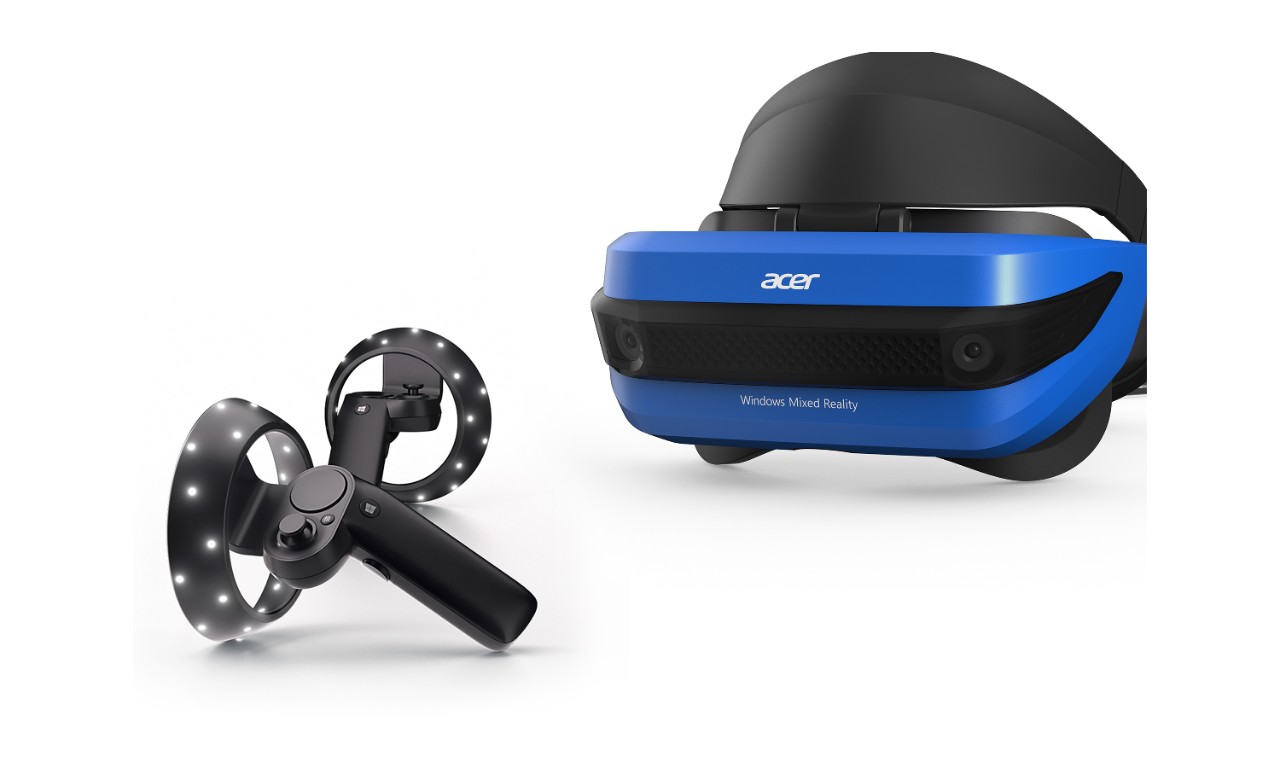
Acer Windows Mixed Reality Headset with Motion Controllers

Acer Windows Mixed Reality Headset with Motion Controllers

Ultimate Game Sale is a great time to save on select Windows Mixed Reality headsets with motion controllers from Acer and HP. Immerse yourself in a new reality that features a wide range of epic experiences. Select headsets with motion controllers start at $199 during the sale.

5. Save big on select Xbox games, consoles, accessories, and more

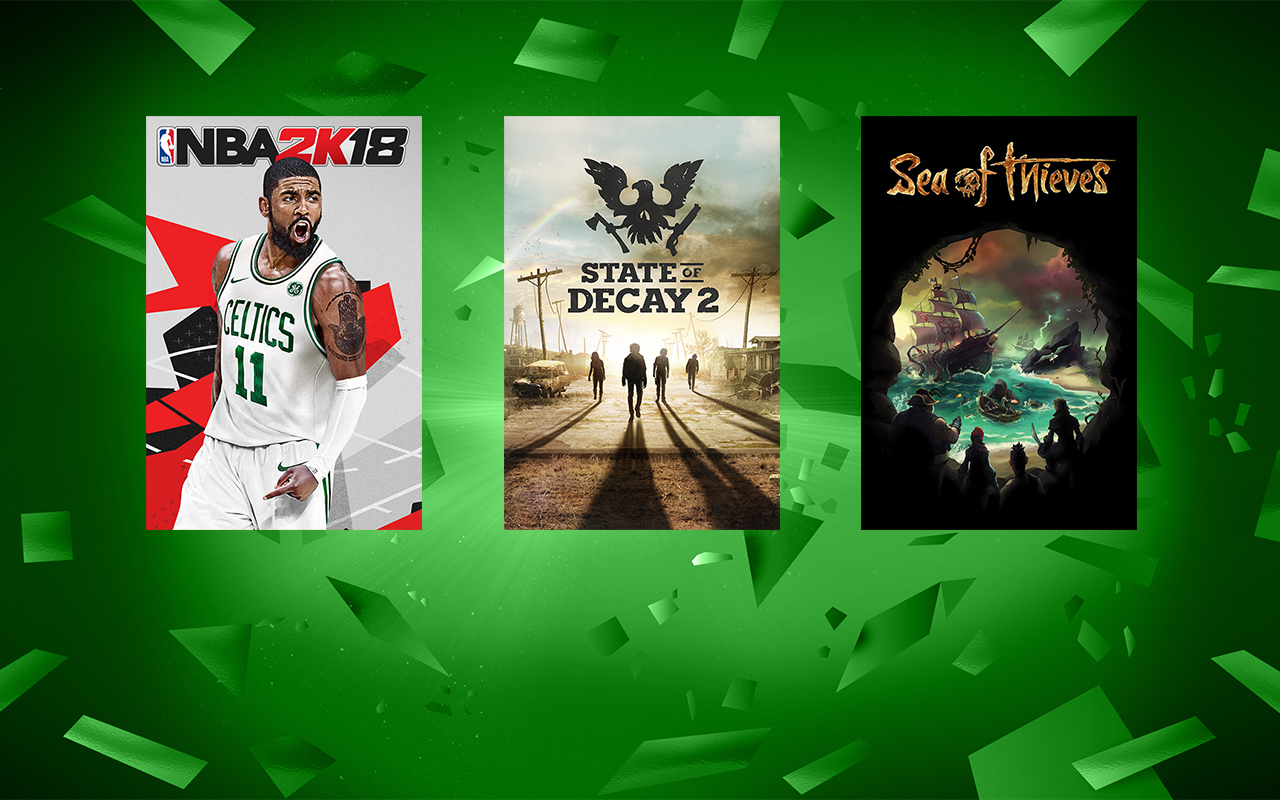
A trio of Xbox game covers: "NBA2K18," "State of Decay 2" and "Sea of Thieves"

If console gaming is more your speed, then Ultimate Game Sale is the perfect time to save up to 65 percent on more than 700 Xbox games including “Far Cry 5,” “PLAYERUNKNOWN’S BATTLEGROUNDS,” “Fortnite: Save the World Founders Pack” and more.

Not yet an Xbox Live Gold or Xbox Game Pass member? There’s also huge savings on Xbox Live Gold and Xbox Game Pass memberships during Ultimate Game Sale. Get 3 months of Xbox Live Gold for $10** or 3 months of Xbox Game Pass for $10**. Exclusions apply and promotional offers not valid for existing members.

6. Enter to win the Ultimate Doppelgamer Sweepstakes

A photo of a woman wearing a unicorn horn is next to a game avatar, with icons representing the prize of the Ultimate Doppelgamer Sweepstakes

Help us celebrate the return of Ultimate Game Sale with the Ultimate Doppelgamer Sweepstakes! Whether it’s an accidental resemblance or the result of hours of cosplay, we know there’s a game character you look like — your doppelgamer. Share that resemblance by uploading your pic on Instagram or Twitter (or both) with the tags #UltimateDoppelgamer and #Sweepstakes, between July 17-30 to be entered for a chance to win a trip to PAX West in Seattle****. Learn more and check out the full rules.

Ultimate Game Sale already is in full swing, so visit your local Microsoft Store or shop online to take advantage of these deals before the sale ends July 30.

*Offers shown are available 7/19/2018 to 7/30/2018 on select items in Microsoft Store while supplies last. Offers and content varies by market and may change at any time. Not valid on prior orders or purchases. May not be combinable with other offers. Other exclusions and limits may apply. Offers on gaming devices, accessories, and Windows Mixed Reality headsets are limited to the US, Puerto Rico, and Canada. 

 **After promotional period, Xbox Live Gold subscription continues to be charged at the then-current regular monthly price (subject to change) plus applicable taxes, unless cancelled. Credit card required. Promotional offer not valid for existing subscribers. 

***After promotional period, Xbox Game Pass subscription continues to be charged at the then-current regular monthly price (subject to change) plus applicable taxes, unless cancelled. Credit card required. Promotional offer not valid for existing subscribers. Subscription required to play games; catalog varies over time.

****No Purchase Necessary. Open only to legal residents of the 50 U.S. + DC 18+. Game ends 7/30/18. For details, see Official Rules.

Posted on Leave a comment

Visit Xbox at this week’s San Diego Comic-Con 2018

San Diego Comic-Con, the world’s largest comic and pop-culture festival, is coming soon and Xbox is bringing the fun with exclusive gear, panels, celebrity guests, and more! See below for details on everything Xbox at SDCC and join the fun from California or from the comfort of your own couch.

Xbox Booth (San Diego Comic-Con badge required)
Hall A, Booth #100

For the first time ever, Xbox will have exclusive gear available at SDCC! Stop by to pick up exclusive clothing and items from Xbox and your favorite games and then get them customized on the spot with your Gamertag. See some of the items available here.

Visit us on Thursday, July 19 and Saturday, July 21 for signing sessions with some of your favorite developers and designers, but get there early: only the first 100 people to receive passes will be eligible!

Signings (San Diego Comic-Con badge required):

  • Brendan Greene (“PlayerUnknown”), Creative Director, PUBG Corp – Thursday, July 19 from 3 p.m. to 4 p.m. PDT
  • Joe Neate, Executive Producer, and Mike Chapman, Design Director, Sea of Thieves – Saturday, July 21 from 3 p.m. to 4 p.m. PDT

Xbox Gear Comic-Con Sweepstakes

Can’t make it to the booth to pick up the exclusive gear? Retweet @Xbox to potentially win an Xbox Gear Comic-Con prize pack! Four winners will receive a collection of exclusive Xbox Gear, and one grand prize winner will receive the gear and an Xbox One X.

Follow @Xbox or @XboxCanada on Twitter and retweet the following tweet when it goes live at the start of San Diego Comic-Con: “RT and follow for a chance to win exclusive #XboxSDCC #XboxGear! NoPurchNec. Ends 7/22/18. #Sweepstakes Rules: bit.ly/2KV2DQ1.” You have until July 22 to enter. Click through for the Official Rules.

Sea of Thieves Panel (San Diego Comic-Con badge required)
Room 5AB, Saturday, July 21 from 1:30pm – 2:30pm PDT

Special guest and Sea of Thieves fan Freddie Prinze Jr. (“Star Wars Rebels,” “24,” “Scooby Doo,” “I Know What You Did Last Summer”) joins the Rare crew, Joe Neate, Mike Chapman, and Peter Hentze as they discuss the lore and expanded universe of Sea of Thieves. Attendees will also receive a limited-edition Sea of Thieves comic and time-limited exclusive in-game DLC!

Xbox Live Sessions

If you’re not in San Diego but still want to follow along with the fun, we’re hosting two action-packed Xbox Live Sessions that you won’t want to miss.

  • PUBG featuring Brendan “PlayerUnknown” Greene: On Thursday, July 19 at 5:00 p.m. PDT, PUBG Creative Director Brendan Greene (@PLAYERUNKNOWN) and Microsoft Executive Producer Nico Bihary (@nico_bihary) will join Rukari Austin (@rukizzelrukizzel) to get their loot on in PUBG’s Miramar map live from inside of a PUBG Bus created by West Coast Customs. That’s right – Xbox, PUBG Corp., and West Coast Customs have teamed up to create a one-of-a-kind, tricked out PUBG Bus which will be home to the livestream and available to see in-person at The Experience at Comic-Con.
  • Sea of Thieves with Freddie Prinze Jr.: On Saturday, July 21 at 5:00 p.m. PDT, Sea of Thieves fan Freddie Prinze Jr. (@RealFPJr) will sail the high seas with members of the Rare team and Major Nelson in an episode of Xbox Live Sessions that’s sure to test the sea legs of the seasoned actor. Fans at home can tune in and watch on http://mixer.com/Xbox  and http://twitch.tv/Xbox.

Xbox at “The Experience at Comic-Con”

SDCC map

SDCC map

Head over to Petco Park where you can play Xbox One games, earn free swag, and win awesome prizes! No Comic-Con badge required.

  • Visit the Samsung truck at The Experience at Comic-Con, located in the Lexus Lot at Petco Park. Climb aboard the truck to compete in Forza Motorsport 7 on Xbox One X via Samsung’s 2018 QLED TVs. More information can be found here.
  • Come visit the first stop of the Xbox One Summer of PUBG tour. Win prizes, check out the PUBG Bus, and stick around for the Xbox Live Sessions! More information can be found here

For all the SDCC details, visit the Xbox SDCC website. For more Xbox news, follow @Xbox on Twitter and stay tuned to Xbox Wire. See you at San Diego Comic-Con!