Posted on Leave a comment

Microtransactions now account for nearly half of Take-Two’s revenue

Take-Two Interactive gave financial results for its latest quarter to investors today, and despite reporting a loss the company seems optimistic enough about its future to raise its revenue projections for the fiscal year.

Notably, one of its top highlights for the quarter was a 66 percent year-over-year increase in net revenue from “recurrent consumer spending” — that is, purchases of DLC, in-game currency, and other microtransactions.

Such transactions accounted for nearly half (48 percent) of Take-Two’s net revenue for the quarter, led by microtransactions in games like NBA 2K17, Grand Theft Auto V and its online component Grand Theft Auto Online.

Grand Theft Auto Online delivered its best quarter yet, Net Bookings from Grand Theft Auto V grew year-over-year,” stated Take-Two chief Strauss Zelnick in the earnings release, which also noted that GTA V has “sold in” (that is, sold to retailers) over 85 million copies since its 2013 release.

In terms of numbers, Take-Two reported a (GAAP) loss of $2.7 million in net profits on $443.5 million in net revenues during the three months ending September 30th. That seems a bit less impressive than the same period last year, when the company reported profits of $36.4 million on $420.1 million in net revenues.

Nevertheless, Take-Two is raising its expectations for how much revenue it will pull in this fiscal year even as it lowers its predictions for how much profit it will generate on that revenue. The company now expects to earn a net income of $63 – $91 billion on net revenues of $1.74 – $1.84 billion durings its 2018 fiscal year, which ends next March.

Posted on Leave a comment

Video: Telling game stories with unsaid words and unreliable narrators

In writing for games, devs are often tempted to put everything onto the page, with all motivations clearly and explicitly stated for the player to understand.

At GDC 2016’s Narrative Summit, game and narrative designer Mata Haggis took the stage to walk devs through the value of leaving things unsaid when crafting stories for their games.

Citing everything from Shakespeare to Eternal Darkness to Mary Shelley’s Frankenstein, Haggis offered some interespecting perspective on how devs can effectively use unreliable narrators and words unspoken — without slipping into hackneyed tropes.

It was a fascinating talk, and well worth a watch if you missed it in person last year. Luckily, you can now watch Haggis’ talk for free via the official GDC YouTube channel!

In addition to this presentation, the GDC Vault and its accompanying YouTube channel offers numerous other free videos, audio recordings, and slides from many of the recent Game Developers Conference events, and the service offers even more members-only content for GDC Vault subscribers.

Those who purchased All Access passes to recent events like GDC or VRDC already have full access to GDC Vault, and interested parties can apply for the individual subscription via a GDC Vault subscription page. Group subscriptions are also available: game-related schools and development studios who sign up for GDC Vault Studio Subscriptions can receive access for their entire office or company by contacting staff via the GDC Vault group subscription page. Finally, current subscribers with access issues can contact GDC Vault technical support.

Gamasutra and GDC are sibling organizations under parent UBM Americas

Posted on Leave a comment

Get a job: Toys for Bob is hiring an Unreal Software Engineer

The Gamasutra Job Board is the most diverse, active and established board of its kind for the video game industry!

Here is just one of the many, many positions being advertised right now.

Location: Novato, California

Toys for Bob is looking for a qualified Generalist Software Engineer with Unreal Engine 4 experience to join our team in creating the next generation in our history of award-winning, best-selling games.

This individual will be responsible for providing guidance to other engineers and to content creators on best practices working with the Unreal Engine.  This role requires a strong focus on communication and collaboration with others.  As time progresses, you can expect your role to evolve from being support oriented into being more feature development oriented.

Your responsibilities will include:

  • Implementation of software in C++ and other languages.
  • User support for the Unreal tool suite.
  • Architect and design software systems through collaboration with engineers, designers and artists.
  • Participate in design and code reviews.
  • Support and educate other engineers on available Unreal features.
  • Follow and enforce group standards and best practices.
  • Continually expand knowledge of new game technologies and systems.

Essential experience to be considered for this role

  • Developed and shipped at least one Unreal Engine based game from start to finish.
  • Minimum 2 years’ experience working with Unreal Engine 4

Additional skills & experience we’re looking for

  • Bachelor’s degree in Computer Science or other relevant discipline or equivalent experience.
  • 5 years’ minimum software engineering experience
  • Strong C++ skills
  • Ability to analyze, improve and extend a large established code base
  • Excellent debugging skills within a networked environment
  • Actively voices ideas and opinions to the team in a constructive manner
  • Takes available opportunities to help and support team members
  • Communicates clearly and responsively project-wide
  • Coordinates work between multiple people, crossing discipline boundaries
  • Coaches less-experienced engineers to assist them in skill development
  • Empathizes with the users of their systems and workflows
  • Strong written communication skills
  • Ability to resolve conflicts in an effective manner

Toys For Bob is one of the longest-lived game studios in the world.  We founded the company in 1989 and have developed a wide variety of successful games on virtually every platform. Most recently we reinvented the world of toys and kids video games by creating the ‘Toys to Life’ genre with Skylanders: Spyro’s Adventure.  We are proud of our game’s innovation and success, but more so the passion and joy we see in the millions of Skylanders fans around the world.  Our studio is located in Novato, California, a quick 20-minute drive north from the Golden Gate Bridge.  We are a mix of game-industry veterans, energetic new developers, and everything in-between.  We work hard, yet maintain a fun and laid-back workplace complete with Tiki/Pirate Culture and a welcoming policy for friendly dogs.

Interested? Apply now.

Whether you’re just starting out, looking for something new, or just seeing what’s out there, the Gamasutra Job Board is the place where game developers move ahead in their careers.

Gamasutra’s Job Board is the most diverse, most active, and most established board of its kind in the video game industry, serving companies of all sizes, from indie to triple-A.

Looking for a new job? Get started here. Are you a recruiter looking for talent? Post jobs here.

Posted on Leave a comment

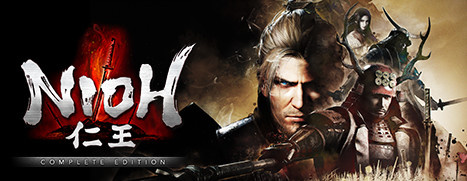
Now Available on Steam – Nioh: Complete Edition / 仁王 Complete Edition

Nioh: Complete Edition / 仁王 Complete Edition is Now Available on Steam!

Ready to die? Experience the newest brutal action game from Team NINJA and Koei Tecmo Games. In the age of samurai, a lone traveler lands on the shores of Japan. He must fight his way through the vicious warriors and supernatural Yokai that infest the land in order to find that which he seeks.

Posted on Leave a comment

Celebrate the launch of Sonic Forces with Sonic the Hedgehog My Nintendo rewards!

Celebrate the launch of Sonic Forces with Sonic the Hedgehog My Nintendo rewards!

Sonic Forces arrives on Nintendo Switch today. My Nintendo is celebrating the occasion with Sonic the Hedgehog rewards, including wallpapers, a Nintendo 3DS theme, and 50% discounts on some of Sonic’s greatest hits!  Redeem your points now and get set to go fast with Sonic on 11/7.


Games Rated:

Posted on Leave a comment

Nintendo spotlights Xenoblade Chronicles 2 before its launch on Dec. 1

Nintendo spotlights Xenoblade Chronicles 2 before its launch on Dec. 1

In just a few weeks, Nintendo Switch owners will leave the familiar behind and enter the fantastical world of Alrest – a world full of living lands known as Titans and the fabled paradise of Elysium. To get fans ready for the Dec. 1 launch of the Xenoblade Chronicles 2 game, Nintendo presented a deep dive into elements of the massive game, including the vast environments, battle system and characters. This special Nintendo Direct presentation also revealed upcoming paid DLC, a fun cross-promotion with The Legend of Zelda: Breath of the Wild, as well as free DLC available to download on launch day that will allow players to also play the game with Japanese audio and English subtitles.

“With Xenoblade Chronicles 2, we are giving fans yet another engaging adventure that can only be found on Nintendo Switch,” said Doug Bowser, Nintendo of America’s Senior Vice President of Sales and Marketing. “This sequel is perfect for playing at home or while traveling during the busy holiday season.”

To view the Nintendo Direct video in its entirety, visit http://xenobladechronicles2.nintendo.com/direct/.

Xenoblade Chronicles 2 is next in the series following the original acclaimed RPG that launched for Wii in 2012. This sequel features new characters and worlds, with an expanded battle system that will still feel familiar to fans of the first game. In Xenoblade Chronicles 2, Blades are artificial lifeforms that bond with Drivers to lend them their weapons and powers in battle. Main character Rex is a Driver and Pyra is a Blade. To help familiarize fans with main character Rex before the game launches, a new Side Quest will be available via a free update in The Legend of Zelda: Breath of the Wild game for both Nintendo Switch and Wii U systems, in which players will be able to obtain a Rex costume starting on Nov. 9.

In and out of battle, Blades have a wide array of support abilities. While adventuring, these abilities might increase the number of items that can be collected, open up new paths to explore or initiate other special effects. When players fight alongside their chosen Blade, they might trigger effects that protect the Driver, strengthen attacks and so forth. Abilities differ from Blade to Blade, so selecting different Blades adds to the strategy of battle.

Blades are just one form of life that players will encounter while journeying on the backs of the mighty Titans. In the vast world of Alrest, players will discover both peaceful and aggressive wildlife of all shapes and sizes wandering among giant plains, winding caverns, frozen kingdoms, scorched earth and sandy beaches. If players manage to defeat certain Unique Beasts, a tombstone will be left behind to commemorate the creature and allow players to relive those battles for additional rewards.

While traveling the massive world of Alrest, players will run into shining spots called Collection Points – which give players the opportunity to pick up valuable items or dive under the clouds to salvage hard-to-find treasures – or special landmarks that players can transport to at any time. Alrest is also teeming with bustling cities. From shopping districts to residential quarters, each Titan has its own unique layout and atmosphere.

Fans who want to expand their epic adventure can pre-purchase an Expansion Pass for the game in Nintendo eShop beginning today or pre-order it from select retailers shortly at a suggested retail price of $29.99. With this pass, players can enjoy DLC as it releases between the launch of the game and fall 2018, starting with quests and support items, and eventually including a challenge Battle Mode where they can face powerful enemies. This DLC will even include an additional adventure with a new side story set in the world of Elysium. Details about individual elements of the Expansion Pass will be released in the future.

Xenoblade Chronicles 2 will launch exclusively for the Nintendo Switch system on Dec. 1 at a suggested retail price of $59.99. The same day, the Xenoblade Chronicles 2 Edition Nintendo Switch Pro Controller will launch at a suggested retail price of $74.99. Launch day will also see the release of the Xenoblade Chronicles 2 Special Edition. This special version includes the game, a beautifully illustrated hardbound art book filled with 220 pages of concept designs and artwork of the characters, landscapes and objects from the game, a sound-selection CD of many of the game’s memorable music tracks, and a special metal case containing the Xenoblade Chronicles 2 game card at a suggested retail price of $99.99. Players who prefer the digital version can pre-purchase the game from Nintendo eShop now, either standalone or as a bundle with the Expansion Pass.

For more information about Xenoblade Chronicles 2, visit http://xenobladechronicles2.nintendo.com/.

Remember that Nintendo Switch features parental controls that let adults manage the content their children can access. For more information about other features, visit http://www.nintendo.com/switch/.

Game Rated:

Language
Suggestive Themes
Use of Alcohol and Tobacco
Violence

Posted on Leave a comment

Video: 30 things to avoid when pitching your game to a publisher

Pitching your game to a potential publisher is tricky business. 

At GDC 2017, experienced game dev (and PlayStation expat) Brian Upton sought to make the process a little easier by efficiently running down a list of common mistakes devs make when they meet with publishers.

Upton has heard hundreds of game pitches during his career, and in his talk he described thirty annoying or counterproductive things that you should avoid if you want to make a great impression. He also shared some insight into how publishers evaluate the games that are pitched to them, what they care about and what they don’t, and what you can do to present your own game in the best possible light. 

It was a quick and very informative talk, especially if you’re at all concerned about performing well at your next pitch meeting. Now, you can watch Upton’s talk for free via the official GDC YouTube channel!

In addition to this presentation, the GDC Vault and its accompanying YouTube channel offers numerous other free videos, audio recordings, and slides from many of the recent Game Developers Conference events, and the service offers even more members-only content for GDC Vault subscribers.

Those who purchased All Access passes to recent events like GDC or VRDC already have full access to GDC Vault, and interested parties can apply for the individual subscription via a GDC Vault subscription page. Group subscriptions are also available: game-related schools and development studios who sign up for GDC Vault Studio Subscriptions can receive access for their entire office or company by contacting staff via the GDC Vault group subscription page. Finally, current subscribers with access issues can contact GDC Vault technical support.

Gamasutra and GDC are sibling organizations under parent UBM Americas

Posted on Leave a comment

Don’t Miss: Designing morality in games

[Gamasutra interviews Bethesda’s Emil Pagliarulo and 2K Marin’s Jordan Thomas to discuss the importance of building challenging, satisfying ethical gameplay — both in games the duo created such as Oblivion, Fallout 3 and BioShock 2, and in the work of others.]

To a certain degree, all games are about choice. The player chooses how and when to react to a given situation, whether that situation is as simple as fight or flight or as complex as determining the future of an entire species. Given the role that choice holds in gameplay, it’s no surprise that morality systems have become more and more common as games have increased in complexity.

Oftentimes these morality systems offer up only basic black and white choices: should I help this character or harm them? Should I defeat the evil wizard or accept his offer of power? Various types of moral choice systems appear in complex RPGs like Mass Effect 2, adventure games like Heavy Rain, and even straightforward action titles like Dante’s Inferno.

Compelling moral choices can encourage players to experiment with different ethical stances over multiple playthroughs, while underdeveloped morality systems can seem like little more than an additional bullet point on the back of the box.

To examine how to make in-game moral choices that are both intellectually engaging and stimulating from a gameplay perspective, we spoke with key developers from two studios with very different specialties: Bethesda’s Emil Pagliarulo explained how he and the rest of the team approached morality in RPGS like The Elder Scrolls IV: Oblivion and Fallout 3, while 2K Marin’s Jordan Thomas discussed branching moral outcomes in the shooter BioShock 2.

The results of the conversations with the developers pointed to two aspects that need to be present in order to make in-game moral choices compelling: a virtual world that somehow connects with the player, and a set of choices that offer outcomes of significant moral weight.

The two required elements may seem obvious, but more often than not a game with a moral choice system is missing one or the other. Choosing to punish or absolve tormented souls in Dante’s Inferno carries no weight because it has no connection to the narrative — it’s all about maximizing what kind of experience points you want to earn. InFAMOUS features a likeable protagonist and a recognizable world, but the choice to give food to hungry citizens or keep it for yourself is no choice at all in a game that doesn’t require you to eat.

So how do developers tackle the issue? The first step is to create some element that players can create an emotional bond with. “It all comes back to the characters you’ve created,” says Bethesda’s Pagliarulo. “I think Heavy Rain has proven this better than any game in recent memory. In order for a developer to provide moral choices that matter, the player has to be convinced that those choices are going to have some kind of effect on the characters in the game, and the more believable those characters, the stronger the emotional impact.

“At the end of Heavy Rain, if there’s one thing you feel it’s that Ethan loves his son and is completely invested in finding him, and this really challenges the player’s willingness to go as far as it takes.

“As it turns out, when I played Heavy Rain, I wasn’t willing to do carry out one of the sequences, and I actually sat there yelling at my TV, saying, ‘No! I won’t do it! This isn’t my fault! I will not be made the bad guy! You stole my son — it’s your fault! Not mine!’ I was pissed off. Not at the developers, but at the Origami Killer. And you know what? The game didn’t exactly have a happy ending.”

Few games have managed to create the same kind of believable characters as Heavy Rain, but fortunately there are other ways to draw a player into a game. One of the strongest elements of the original BioShock was the city of Rapture, a game world that was so solidly drawn that it felt real. It had a history, a set of rules that it adhered to, and an internal ecosystem that made it feel like a real place.


BioShock 2

“A lot of people told us that in their version of the world, they decided not to kill Big Daddies,” says 2K Marin’s Thomas. “This is not an outcome we support with any special content. This is a simulated moral decision that they chose to make based on their own level of empathy for these enslaved former humans.”

The world of Rapture in both BioShock games is a place founded on debatable concepts, and both games use a clash of ideals as the basis for the narratives. Rapture is both physically and ethically murky, and as such clear-cut “good and evil” choices seem out of place. In Rapture, the choices should be every bit as unclear as the rest of the world, something which Thomas believes the original game failed to achieve:

“It chose a very binary set out outputs at the far end,” he says. “The players who enjoyed that were those who kind of were those who felt that they were embodying a moral extreme anyway — there was a sort of cogency between what they chose and the outcomes they received. The ones who were less satisfied felt that they were morally more grey, or granular, and as such neither of the endings of that game reflected them well.”

In other words, the players who felt as if they were playing a purely good or purely evil character were satisfied with the two possible outcomes, but those players (arguably the majority) who viewed the BioShock experience as more morally ambiguous were less than satisfied with the simple either/or choices.