Posted on Leave a comment

GDC Speaker Q& A: Reclaiming creativity in the face of hardship

Laralyn McWilliams is Chief Creative Officer at Skydance Interactive and will be at GDC 2018 to present the talk You’re Not Broken: Finding Your Creative Way Through Difficult Times.

Her Advocacy Track talk will discuss ways to recognize when your creativity is affected by stress, loss or other derailing emotions; methods for connection and communication with other creatives; emotional and practical tools to begin to reclaim your creativity. Here, McWilliams gives us information about herself and what she does.

Don’t miss out! The Game Developers Conference in San Francisco next March is going to be full of interesting and informative sessions like Laralyn’s. For more visit the show’s official website.

Tell us about yourself and what you do in the games industry.

I’m a game developer and designer, currently Chief Creative Officer at Skydance Interactive in Los Angeles. I started off in the days before anyone on a dev team had a job title (I was a combo of producer, artist and coder), then became a producer for years until suddenly “game designers” existed and I knew that’s where I belonged. I was occasionally in a producer role after that, but for the most part my career post-2000 has been as lead designer, creative director, or in company leadership. Along with my design work, diversity on our game development teams has always been important to me, and I’ve written about it several times on Gamasutra.

What inspired you to pursue your career?

I fell in love with attractions at Disneyland when I was a kid—I knew I wanted to create worlds. I got my first home computer when I was in high school in the early 1980’s (a TI-99/4A) and taught myself BASIC. When I first played Scott Adams’ Adventure game, though, my goals solidified: I wanted to create INTERACTIVE worlds. That wasn’t really possible as a profession in the early 1980’s though, and this was the height of the period when tech ads/culture started steering toward men.

It never occurred to me to study programming in college even though my freshman year I was an operator on the giant VAX computer system. It wasn’t until after college, working, law school, and a bit more working that I saw Myst and couldn’t take it anymore. I had to find a way to create worlds. I taught myself to make 3D graphics, taught myself better programming in the multimedia software I used for my day job, made a game demo, sold it to Micropose, partnered with a local game studio, and started my own company. This was around 1994.

Without spoiling it too much, tell us what you’ll be talking about at GDC.

We all deal with events in our lives that derail everything: events like divorce, death of a family member or friend, layoffs, bankruptcy, or a diagnosis of severe illness. When you’re going through these events, they rob you of your creativity—an essential part of every game developer’s job, regardless of discipline. They can also steal your focus, energy, and self-confidence. My talk provides tools to help you climb out of what feels like a pit of darkness, not from a psychological perspective (although that’s part of it) but from a professional and creative perspective. I really want my experiences dealing with three rounds of cancer to help other developers stay positive, engaged and creative.

What are some of the biggest challenges you face in your work?

There’s a reason co-op games are popular and also feel evergreen to play: people are fascinating, challenging, rewarding and unpredictable. Anyone in team/company management knows that understanding the people on your team and striving to improve both their work lives and their work product is a challenge, but one that’s incredibly fulfilling. We’re also working primarily in VR, and it’s always an exciting leap off the cliff when you’re taking on design for a truly new platform that provides new player experiences.

What are the most rewarding parts of your job?

It’s a tie between seeing a team working well together and enjoying the act of creation, and seeing players enjoy the game we worked so hard to build. That’s game development at its best, when you’ve been a part of a group that had a vision and realized it, and that vision can become a part of players’ lives. Ultimately there’s magic in helping to create memorable moments for our players.

The subject of your talk is incredibly relevant for anyone paying attention to the news in 2017. How do you encourage people who live and work online to feel justified for creating?

Creation is an act that helps both creator and audience. I believe in the fundamental power and value of pure entertainment–I don’t think entertainment is important only if it has a “message” or deeper meaning. Brightening players’ lives with entertainment is, in itself, meaningful. The process of creating even something that is “just” entertainment is therapeutic in many ways–it gives you something to focus on and escape from the woes of the world (whether those woes are personal, societal or political). Of course, all of the benefits for both creator and audience are enhanced when we put more of ourselves into what we create: our struggles, failures, triumphs, losses and learnings.

Two great examples are Crashlands, created while a developer was going through cancer treatments but not directly itself addressing cancer, and That Dragon Cancer, which clearly expresses the developer’s experiences. The bottom line: whether you express your struggles in it or not, the act of creation promotes healing.

What helped you maintain the drive to be creative as you were dealing with cancer?

That’s a key part of what I discuss in my talk. It’s really hard–and often impossible–to maintain the drive to create when you’re dealing with a life-changing event, whether that’s cancer or divorce or unemployment or the death of a loved one. I really struggled to even feel creative when I was going through chemo, much less actually BE effectively creative. And that’s OK. That’s why awareness and forgiveness are such an important part of my talk. You need to be cognizant that you’re in a situation where it’s hard to feel the mental focus and freedom creativity requires, and give yourself room to work more slowly and less effectively than you do when all’s well. I share some of the focusing and motivational tools I discovered as a part of the talk.

Do you have any advice for those aspiring to join your field someday?

Design is one of the toughest disciplines in terms of breaking in. The best advice I could give is to build stuff, constantly. Actually that’s the advice I give even to working designers. Be fascinated with tools and how other games are built. Get in there, whether it’s with the Elder Scrolls Construction Kit or Super Mario Maker or Unity or Unreal, and try to build something similar to what you’ve seen and liked. Then try to build something you’ve NEVER seen. Build stuff, break stuff, and learn stuff—that’s the core loop of being a game designer.

GDC 2018 will take place March 19-23rd at the Moscone Center in San Francisco. For more information, visit the show’s official website, or subscribe to regular updates via FacebookTwitter, or RSS.

This article originally appeared on gdconf.com. Gamasutra, VRDC, and GDC are sibling organizations under parent UBM Americas.

Posted on Leave a comment

Line Wobbler dev creates a playable Christmas tree in London

King’s Cross station in London is now home to a very interesting playable Christmas tree designed by Robin Baumgarten, creator of the one-dimensional dungeon crawler Line Wobbler.

Funded through Games London and Network Rail, the installation and its incorporation of a physical space is a unique way of showcasing alternative games which feature different input controls and a minimalist design. 

Standing at six meters high (nearly 20 feet), it contains 200 LED lights and has the trappings of a traditional dungeon crawler. Players navigate obstacles and fight enemies by bending the controller forward and back, while enemies are attacked by flinging the spring.

The installation is an adaption of Line Wobbler with some additional Christmas adaptations. “The game itself is running on a handful of Arduinos.” Baumgarten explains, and uses “around 100m of addressable LED strips.” 

The LED tree will remain in King’s Cross station until January 4th, 2018.

Posted on Leave a comment

Bayonetta 3, The Legend of Zelda DLC news revealed during The Game Awards

Bayonetta 3, The Legend of Zelda DLC news revealed during The Game Awards

Nintendo received a number of honors at The Game Awards in Los Angeles, winning the awards for Game of the Year for The Legend of Zelda: Breath of the Wild, Best Family Game for Super Mario Odyssey and Best Handheld Game for Metroid: Samus Returns. The Legend of Zelda: Breath of the Wild also won the awards for Best Game Direction and Best Action/Adventure Game.

But that’s not the only Nintendo news from the annual awards show. During the event, Nintendo revealed a trailer announcing that the Bayonetta 3 game is currently in development exclusively for the Nintendo Switch system. In addition, the critically acclaimed Bayonetta 2 game, originally a Wii U exclusive, will be launching for Nintendo Switch on Feb. 16. Players who purchase the game in stores at a suggested retail price of $59.99 will receive a free download code for the original Bayonetta game. Consumers looking to purchase the digital versions of the games for Nintendo Switch can do so via Nintendo eShop or Nintendo.com.* Bayonetta, Bayonetta 2 and Bayonetta 3 are developed by PlatinumGames.

Fans of The Legend of the Zelda: Breath of the Wild game got a new look at the game’s second DLC pack, The Champions’ Ballad, as well as the surprise news that it launched shortly after The Game Awards livestream. In this second of two DLC packs that are part of the game’s Expansion Pass, players are granted access to a large new adventure featuring a never-before-seen dungeon, new insights into the background of the game’s four Champions, as well as a new high-mobility means of transportation. Once players complete the adventure, they will have the opportunity to traverse the enormous world of Hyrule on top of a motorcycle called Master Cycle Zero. The DLC will also grant access to nine new armor items for players to find, as well as the Ancient Saddle and Bridle items. Players who purchase the Expansion Pass for $19.99 receive The Champions’ Ballad DLC Pack 2, as well as The Trial of the Sword DLC Pack 1, which launched earlier this year. For more information about what is included in the Expansion Pass, visit http://www.zelda.com/breath-of-the-wild/expansion-pass.

Players who have yet to experience the game can purchase The Legend of Zelda: Breath of the Wild – Explorer’s Edition, a limited bundle that includes the critically acclaimed Nintendo Switch game, a 100-page explorer’s guide and a two-sided map at a suggested retail price of $59.99.

In addition, some of the games that were nominated for awards this year are from franchises featured in the Cyber Deals sale currently featured in Nintendo eShop and at Nintendo.com. Fans can save on select games featuring Mario, Link and more fun characters at https://nintendo.com/tga.

The event also featured a live performance of the “Jump Up, Super Star!” song from the Super Mario Odyssey game, with vocals by the game’s original singer.

“We are absolutely humbled that voters chose Nintendo for these awards,” said Reggie Fils-Aime, Nintendo of America’s President and COO. “We plan to continue this strong momentum as we head into 2018.”

The Game Awards can be viewed in their entirety by visiting http://thegameawards.com/.

Games Rated:

Posted on Leave a comment

Video: Ride along as HBO looks back at the development of a Westworld VR installation

Virtual reality has the ability to provide experiences which would otherwise be unfathomable, and merging that technology with the futuristic landscape of WestWorld seems fitting. 

In this 2017 VRDC @ GDC session, HBO’s Colin Foran discusses the development of WestWorld: A Delos Experience, a room-scale VR installation which focuses on telling a rich story using new technologies.

Foran goes over the history of the VR installation, detailing early stages of development with examples of prototype iteration all the way to sharing lessons learned throughout the process such as “knowing when to develop an idea, or let it go.”.

Designers interested in learning how WestWorld: A Delos Experience was developed may appreciate the fact that you can now go back and watch the talk completely free via the official GDC Vault YouTube channel!

In addition to this presentation, the GDC Vault and YouTube channel offers numerous other free videos, audio recordings, and slides from many of the recent Game Developers Conference events, and the service offers even more members-only content for GDC Vault subscribers.

Those who purchased All Access passes to recent events like GDC, GDC Europe, and GDC Next already have full access to GDC Vault, and interested parties can apply for the individual subscription via a GDC Vault subscription page. Group subscriptions are also available: game-related schools and development studios who sign up for GDC Vault Studio Subscriptions can receive access for their entire office or company by contacting staff via the GDC Vault group subscription page. Finally, current subscribers with access issues can contact GDC Vault technical support.

Gamasutra and GDC are sibling organizations under parent UBM Americas

Posted on Leave a comment

Patreon’s service fees will soon be owed by the supporter, not the creator

The monthly crowdfunding service Patreon has announced that it is altering the way it collects service fees, a decision that has drawn some level of concern from game developers, artists, and other creators that rely on the platform for support. 

On paper, the change will mean that creators take home a bigger chunk of each Patreon pledge and that overall fees will decrease. Previously creators covered the fees which, according to Patreon, could fall anywhere between 2 to 10 percent of a pledge.

The upcoming change instead lowers those fees to a flat 2.9 percent plus $0.35 fee that is instead paid by the user making the pledge. While creators previously took home only 85-93 percent of any given pledge, the new system locks that income in at 95 percent by tacking the service fees on as an additional charge, not included in the pledge amount.

But since the new system places the fee on each individual supporter’s pledge, those contributing small $1-$5 pledges to creators see their monthly costs rise and many Patreon users are worried that some lower-tier pledges will vanish as a result. 

While creators will still lose 5 percent each pledge to Patreon, the upcoming change charges the ‘patrons’ contributing to a campaign a 2.9 percent plus $0.35 service fee for each individual pledge they make. So a user pledging a single dollar is now paying $1.38 per pledge while a user pledging $10 would instead pay $10.64. 

The biggest hit, however, comes to those supporters that currently pledge small dollar amounts to multiple creators monthly as someone pledging $1 to 10 different creators is now paying $13.79 a month versus the previous $10.

As Engadget points out, many Patreon creators say that those smaller and more affected pledges often account for a sizable chunk of their monthly earnings. As such, many are worried that their monthly income will dip significantly if those patrons aren’t able or willing to stomach the additional fees.

In the blog post detailing the change, Patreon expressed that the decision was ultimately made to help creators take home a more predictable paycheck each and every month.

“We want you to know that we approach every change with a creator-first mindset, aiming to help creators grow their businesses. In preparation for this change, we ran experiments and months and months of research to understand patrons’ potential reactions and we found that many patrons were happy knowing that this change will send more money to creators,” said the post. “While some patrons may leave in the short-term, we know this will help creators earn more money in the long term.”

Update: Patreon has updated their blog with a deeper explanation of its most recent change in service. “[We] spent nearly a year reviewing the numbers and running experiments to make sure the end result was creators either make more money, or keep their current earnings,” reads the updated post.

“We actually experimented with three different service fee structures, all of which were higher than the 2.9% + $0.35 we selected. As it turns out, patrons weren’t nearly as sensitive to the amount of the fee as we predicted, but we ultimately chose the lowest service fee that would offset the third party costs in all likely scenarios,” the post explains. 

“This was never (and still isn’t) about making more money for Patreon as a company. This is a strategic move to make our platform even better for creators and patrons in the future.”  

Posted on Leave a comment

Free Weekend – Tom Clancy’s The Division™

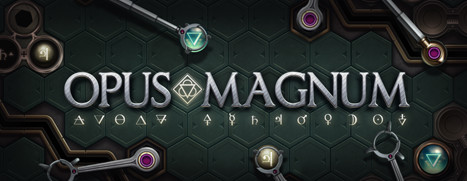
Opus Magnum is Now Available on Steam and is 10% off!*

Opus Magnum is the latest open-ended puzzle game from Zachtronics, the creators of SpaceChem, Infinifactory, and SHENZHEN I/O. Design and build machines that assemble potions, poisons, and more using the alchemical engineer’s most advanced tool: the transmutation engine!

*Offer ends December 14 at 10AM Pacific Time

Posted on Leave a comment

Now Available on Steam – Opus Magnum, 10% off!

Opus Magnum is Now Available on Steam and is 10% off!*

Opus Magnum is the latest open-ended puzzle game from Zachtronics, the creators of SpaceChem, Infinifactory, and SHENZHEN I/O. Design and build machines that assemble potions, poisons, and more using the alchemical engineer’s most advanced tool: the transmutation engine!

*Offer ends December 14 at 10AM Pacific Time

Posted on Leave a comment

Now Available on Steam Early Access – SUPERHOT: MIND CONTROL DELETE

SUPERHOT: MIND CONTROL DELETE is Now Available on Steam Early Access!

ONE OF US, ONE OF US. Still outnumbered, still outgunned. Enemies swirl around you in a storm of slow motion violence. Battle after battle, each fallen foe pushes you closer to the secrets hiding in the game. You feel an obsession set in. Good it’s just a game. Good you can just stop.