Posted on Leave a comment

Easy Anime Character Creation with VRoid Studio and Blender

Creating anime characters for game development has never been easier with tools like VRoid Studio and Blender. In this tutorial we showcase using VRoid Studio, a free tool for creating textured and animated anime avatars. If VRoid Studio sounds familiar, we featured this tool as recently as 2019.

In the video below we walk through the following processes:

  • Using VRoid Studio
  • Exporting VRM files
  • Importing VRM into Blender
  • Creating a simple animation
  • Exporting from Blender in GLB/GLTF format
  • Importing GLB formats into the Godot game engine
  • Exporting VRoid characters to Mixamo for animting

In addition to VRoid Studio you need the VRM importer for Blender. If you are using the Unity game engine, there is a Unity importer for VRM files available as well, although we wont be covering it in the video below.

One area of importance with any tool, especially free tools, are what the license terms are. You can see the list of appropriate uses here, which specifically includes “Selling video games and other products featuring characters created with VRoid Studio”. Once you have all the appropriate tools, check out the video below for step by step instruction son how to create an animated anime character for use in Godot using VRoid Studio and Blender.

[youtube https://www.youtube.com/watch?v=dAW6ovhENs8?feature=oembed&w=1500&h=844]
Posted on Leave a comment

Coin Master free spins – daily links

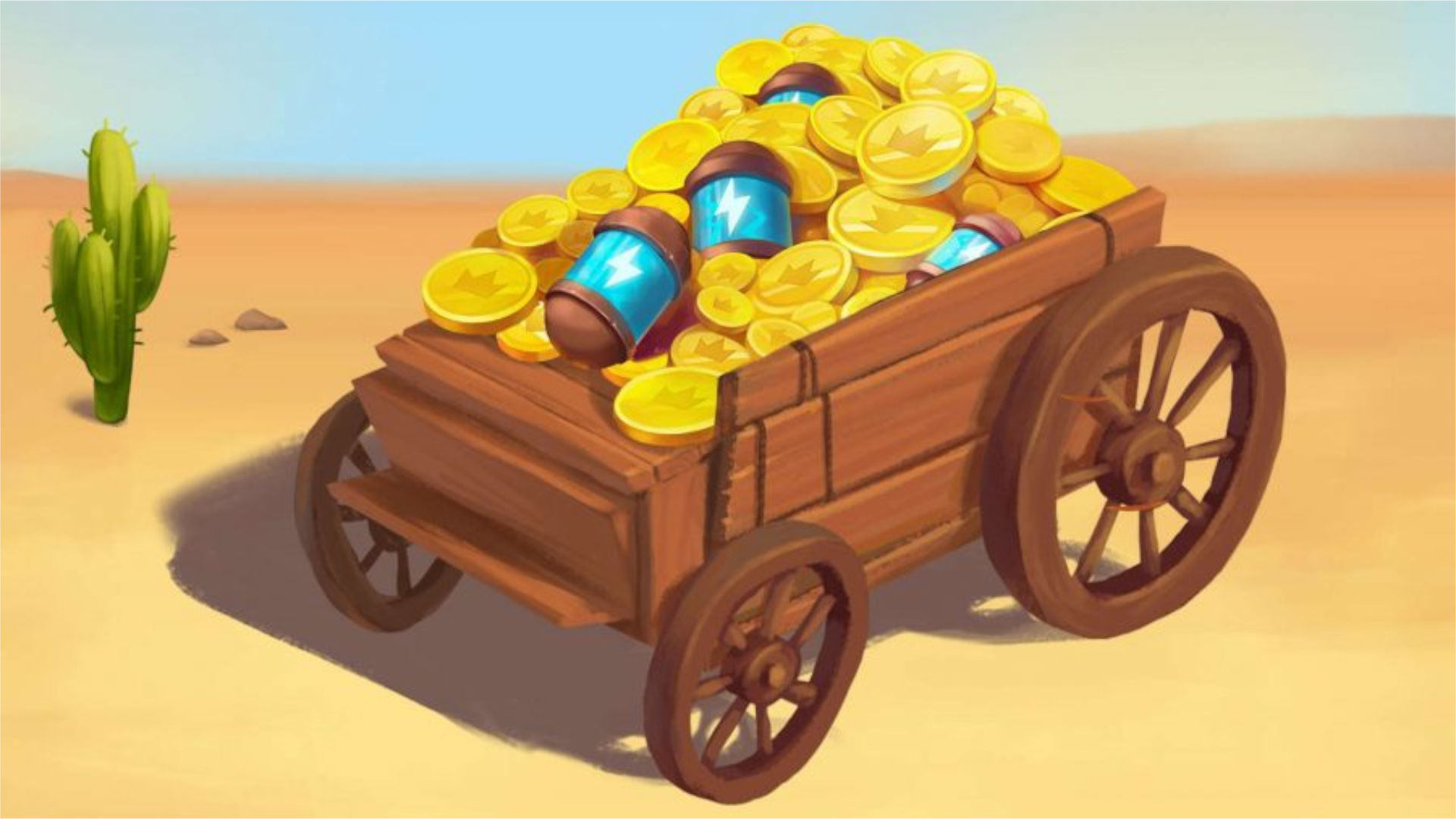
Wondering how to get Coin Master free spins? You’ve come to the right place. This is an addictive mobile game by design. It combines the thrill of playing slots with the social battling of Clash of Clans to create something that you just can’t put down; in a good way. The problem is, you so often have to put it down if you’re not willing to fork out the cash for regular spins. That’s understandable when as little as 30 spins will set you back £1.99 in the UK or $1.99 in the US.

Fortunately for you though, there are a wide number of means of getting Coin Master free spins, reducing the need for you to spend and increasing the speed at which you can progress throughout this addictive experience. Many of them are easy to pull off too, so you don’t have to worry about going through complicated maneuvres to carry on playing your favourite game.

In this guide, we’re going to provide you with all of the ways you can get your hands on a few free spins here and there. This will allow you to continue playing long after your daily free spins run out, and provide you with the means of getting extra, without the need to spend your hard-earned money on premium spins in the game’s store. We’d also recommend checking out our Coin Master free cards and Coin Master free coins guides to get even more rewards.

Coin master free spins – daily links:

Below are daily links that you can follow to get a bunch of free spins in Coin Master. We update these every day with new links so it’s worth bookmarking this page and checking back each day to get even more.

It’s worth noting that the links expire after three days, so those from the two prior are still good to go.

December 26

December 25

December 24

Coin Master free spins coins

How can I get free spins in Coin Master?

Here are a bunch of tips to help you get even more free spins in Coin Master.

Follow coin master on social media

Each day, Moon Active, Coin Master’s developer, provides a bunch of links that you can follow to get your hands on Coin Master free spins. If you keep on top of this, you can get a steady stream of free stuff for very little effort. You can follow Coin Master on Facebook or Twitter.

Sign up for email gifts

If you sign up for email gifts, you can get yourself a handful of Coin Master free spins every single day just be following a link on your phone. We haven’t encountered any spam from signing up so far either, so it’s a quick and easy method of getting yourself some tasty free spins.

Invite friends

Each time you invite a friend who successfully joins Coin Master through Facebook, you’ll get 40 Coin Master free spins, which is considerable. They don’t even have to actually play the game; they simply have to download it and login via their Facebook account to get you the free spins. Of course, it’s in both your interests to actually play it, which brings us nicely to our next point.

Coin Master free spins pets

Request spins as gifts

You can get up to 100 Coin Master free spins per day from friends, though to get to those heights you’ll need 100 active friends who are kind enough to send you a gift each day. Each gift consists of a single free spin.

Unless you’re incredibly popular, it’s highly unlikely that you’ll have 100 friends; let alone 100 that will actually deign to play a game with you. We recommend heading on over to the official Reddit community or Facebook communities to try and find people willing to play with you.

Watch video ads

You can get a limited number of Coin Master free spins per day by watching a video ad. Simply scroll to the slot machine and tap on the spin energy button on the bottom right. If it’s not there, you’ve run out of free spins you can get through this method for the day, but if it is, simply tap on it and you’ll watch an ad.

Spin

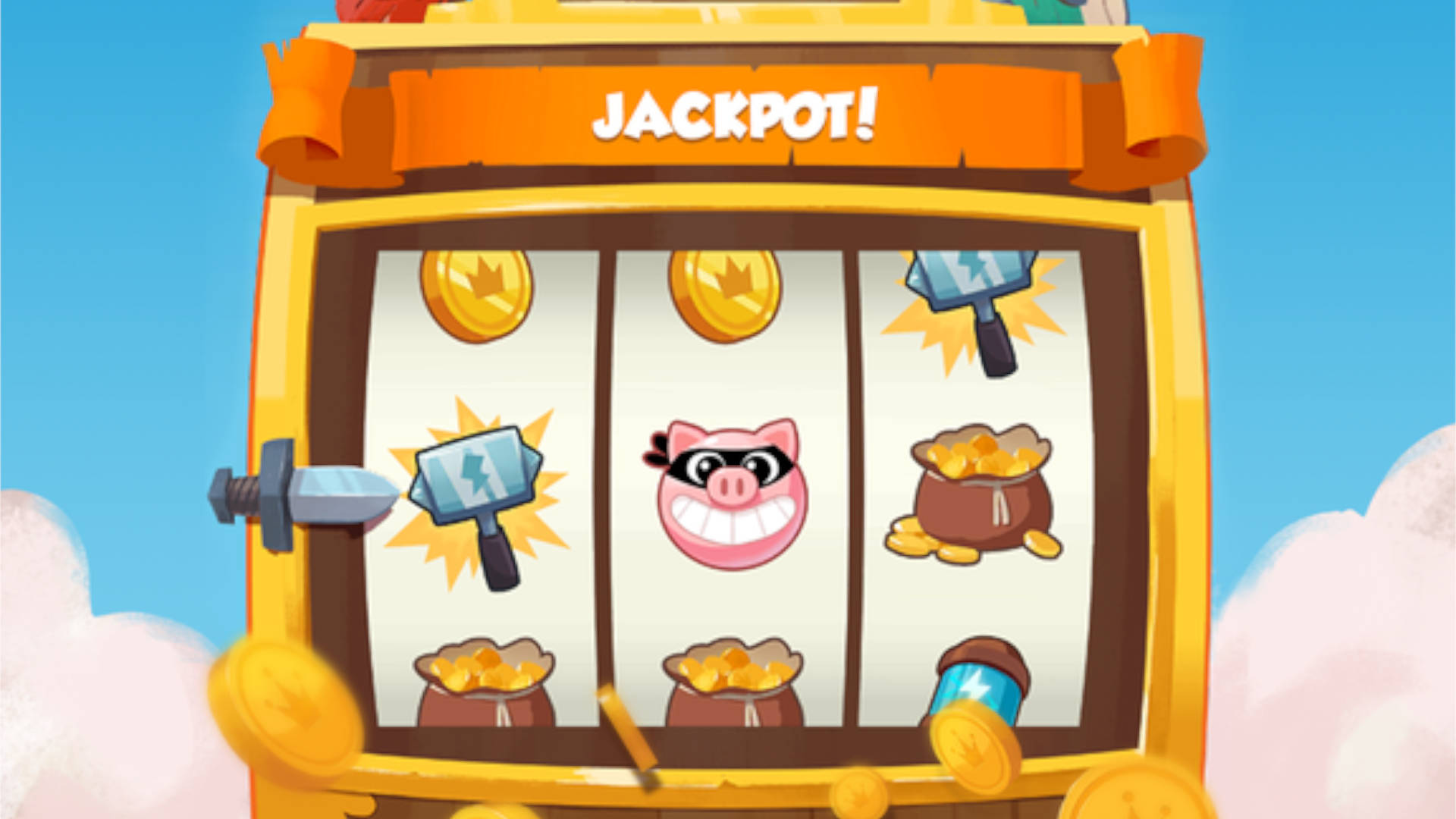
Ironically, you can actually get a ton of Coin Master free spins by, well, spinning. If you get three spin energy symbols in a row, you’ll get a bunch of free spins. Pick up a chain of them and you can spin for ages before you run out.

Level up your village

Each time you level up your village, you’ll get a bunch of Coin Master free spins. It’s not easy though, as it costs a considerable amount of gold to purchase new buildings and improve them, and you have to purchase every single one of them, including improvements, to level up. That’s going to cost a lot of spins, as it is.

Participate in events

There’s almost always at least one event happening in Coin Master, and it can absolutely shower you with free spins. While viewing the slot machine, look at the top right of the screen. Any virtual buttons that you can see beneath the menu (which is displayed as three lines) is an event. Tap on one and you’ll see what each event involves.

Take advantage of these events and you can get yourself a lot more Coin Master free spins than usual.

Wait

This is an obvious suggestion, but it’s actually worth taking into consideration. You get five free spins every single hour, and you can only hold a maximum of 50 spins at any one time. That means every ten hours you’ll hit the maximum number of spins, and any Coin Master free spins you would have earned after that will cease to exist.

So, we recommend setting a reminder to visit Coin Master every ten hours at least to spend your spins so you are always earning more. You’ll actually end up earning a huge number of extra spins if you’re dedicated, so it’s totally worth doing.

Coin Master free spins jackpot

Coin Master free spins FAQ:

Now, we’ll answer a bunch of questions you may have regarding getting Coin Master free spins.

Do Coin Master spins links expire?

Yes, the daily links that we include at the top of this page expire after three days, which is why we only include those from today and the two days prior.

Can I get Coin Master 50 spin rewards?

Coin Master 50 spin rewards most commonly appear during in-game events, like those that reward you for raiding or battling other players. There’s also a small chance to get this number from daily links, so bookmark this page and check back often.

How do I get Coin Master 60 spins?

Yes, though it doesn’t appear to happen often from daily links. We’d recommend playing often and participating in events, and following the social media channels to find out what’s happening soon.

How do I get Coin Master 70 spins?

We’ve never seen a Coin Master 70 spin reward appear as part of the daily links, but it has been known to appear as part of special events.

To get your hands on this rare reward, we would recommend playing on a daily basis and following the social media channels to get an indication of when the next big event will take place.

How do I get Coin Master 100 spins?

Yes, though not from the daily links. We’ve seen this number of free spins appear often during in-game events, most notably for those that reward you for raiding and participating in PvP battles.

Play often and follow the social media channels for events to keep an eye out for this.

How do I get Coin Master 400 spins?

Again, 400 spin rewards don’t seem to appear as part of the daily rewards cycle, but have been known to crop up during events. Follow the socials and play regularly to get the best chance at this reward.

Posted on Leave a comment

Raylib 3.5 Released

Eight months after the release of Raylib 3.0, Raylib 3.5 was just released. Raylib is an open source cross platform C/C++ game framework. Raylib runs on a ton of different platforms and has bindings available for more than 50 different programming languages. The Raylib 3.5 release brings the following new features.

  • NEW Platform supported: Raspberry Pi 4 native mode (no X11 windows) through DRM subsystem and GBM API. Actually this is a really interesting improvement because it opens the door to raylib to support other embedded platforms (Odroid, GameShell, NanoPi…). Also worth mentioning the un-official homebrew ports of raylib for PS4 and PSVita.
  • NEW configuration options exposed: For custom raylib builds, config.h now exposes more than 150 flags and defines to build raylib with only the desired features, for example, it allows to build a minimal raylib library in just some KB removing all external data filetypes supported, very useful to generate small executables or embedded devices.
  • NEW automatic GIF recording feature: Actually, automatic GIF recording (CTRL+F12) for any raylib application has been available for some versions but this feature was really slow and low-performant using an old gif library with many file-accesses. It has been replaced by a high-performant alternative (msf_gif.h) that operates directly on memory… and actually works very well! Try it out!
  • NEW RenderBatch system: rlgl module has been redesigned to support custom render batches to allow grouping draw calls as desired, previous implementation just had one default render batch. This feature has not been exposed to raylib API yet but it can be used by advance users dealing with rlgl directly. For example, multiple RenderBatch can be created for 2D sprites and 3D geometry independently.
  • NEW Framebuffer system: rlgl module now exposes an API for custom Framebuffer attachments (including cubemaps!). raylib RenderTexture is a basic use-case, just allowing color and depth textures, but this new API allows the creation of more advance Framebuffers with multiple attachments, like the G-BuffersGenTexture*() functions have been redesigned to use this new API.
  • Improved software rendering: raylib Image*() API is intended for software rendering, for those cases when no GPU or no Window is available. Those functions operate directly with multi-format pixel data on RAM and they have been completely redesigned to be way faster, specially for small resolutions and retro-gaming. Low-end embedded devices like microcontrollers with custom displays could benefit of this raylib functionality!
  • File loading from memory: Multiple functions have been redesigned to load data from memory buffers instead of directly accessing the files, now all raylib file loading/saving goes through a couple of functions that load data into memory. This feature allows custom virtual-file-systems and it gives more control to the user to access data already loaded in memory (i.e. images, fonts, sounds…).
  • NEW Window states management system: raylib core module has been redesigned to support Window state check and setup more easily and also before/after Window initializationSetConfigFlags() has been reviewed and SetWindowState() has been added to control Window minification, maximization, hidding, focusing, topmost and more.
  • NEW GitHub Actions CI/CD system: Previous CI implementation has been reviewed and improved a lot to support multiple build configurations (platforms, compilers, static/shared build) and also an automatic deploy system has been implemented to automatically attach the diferent generated artifacts to every new release. As the system seems to work very good, previous CI platforms (AppVeyor/TravisCI) have been removed.

Release notes are available here and a complete change log is available here. Binary versions of Raylib are available on Raylib.com while the source code is hosted under the ZLib license on GitHub. If you are interested in learning Raylib you can check out their community on Discord. You can also download Raylib via vcpkg on Visual Studio with step by step instructions available here. You can learn more about Raylib and the 3.5 release in the video below.

[youtube https://www.youtube.com/watch?v=RZJ-Z–6uxY?feature=oembed&w=1500&h=844]
Posted on Leave a comment

Pokémon Go’s difficult 2020 was full of ups and downs

This year, Pokémon Go’s players had a rather taxing time keeping up. In an age where going outside and interacting with others was not just frowned upon, but downright dangerous, there have been a lot of new events to tide players over, and some essential new features that had to be developed in a very short space of time.

Pokémon Go in 2020 began in much the same way the previous year ended. Shadow Pokémon boss fights, including battles against Giovanni with the legendary dogs, were still a relatively new idea, while events were skewed towards celebrating the dawn of a new year. It seems like a sick and twisted joke now, but yes, there was a time when we looked at 2020 with fresh optimism.

Events weren’t all that spectacular in the first few weeks, though a small wave of Unovan Pokémon were introduced as the months continued. However, soon the world was plunged into lockdown, looming real-life events were cancelled, and the style of in-game events taking place took a while to catch up with the new normal.

For some inexplicable reason, Niantic is still making Pokémon regional exclusive with few ways to make them more widely available. Sure, some people decided to take holidays abroad (why?), but most people were largely confined to their homes. The good news was that lockdown also coincided with the introduction of PVP battles and these have mostly been free to participate in. For a short time, accumulating winning streaks was how you could get legendary Pokémon such as Landorus, but thanks to rampant cheating it was not consistently robust enough for most players. Soon it became apparent that this was a temporary solution.

Pokemon Go's remote raids in 2020 allowed for players to connect with each other via invites. Here we see six phones connecting to a raid.

It wasn’t long before Remote Raid passes debuted, but it was a while before necessary improvements were made (namely to only use the pass when battles begin). The system is still not perfect though, as the countdown timer for raids is too short for most people to comfortably join, and it would be better to get an idea of how many trainers are looking at jumping into a raid.

On the whole though, Niantic did make one or two big mistakes, but it’s largely kept the ship running in the new normal.

What Remote Raid passes did allow for the first time was international raiding. The significance of this was not realised until just the Lake Trio event. Uxie, Mesprit, and Azelf returned to raids. This time around, thanks to Remote Raid passes, players from around the world could invite players to raids that would be impossible for them to participate in otherwise. The response on social media has been a flooded of people inviting others to raid exclusives with them.

There were costs to raids in the Covid era, namely EX Raids. These haven’t returned since the beginning of the pandemic. It’s not the biggest loss though, as there have been plenty of events for those wanting to catch legendary Pokémon. By far the biggest was Go Fest 2020, which was a worldwide event for the first time in history. There were a few teething problems and it was nowhere near as intimate as a real-life event would have been, but by and large it was a successful event (it brought us Rotom for the first time too, which was nice). We also saw the Today View, which shows off all of the current events and bonuses in the app, which is very handy for those wondering if an event was still on.

The announcement image for Pokémon Go Fest 2020. It includes Pikachu, Jigglypuff, Oddish, and Cherrim playing in a back garden.

There was also a time when getting Pokéballs was challenging for rural players, who were no longer commuting to work. Initially Niantic put out bundles costing one PokéCoin, but eventually free gift boxes were introduced to solve this problem. Changes to the buddy system also allow Pokémon to bring you items such as Gifts to send to friends, and Pokéballs to catch Pokémon. Increased Pokéballs from opening Gifts also encouraged friends to interact with each other, seemingly resolving an immediate problem.

It’s highly likely that the new seasonal approach will bring good things and stuff we’ll find frustrating.

What was less successful out of the gate was the debut of Mega Evolution. Lots of people complained about having very few ways to accumulate Mega Energy, a problem that persists in important ways even now. Since Mega Evolution is temporary, some felt its duration was too short, so Niantic extended the duration a bit. Another more recent controversy was with the much anticipated Pokémon Home integration, as it has its own annoyances with how infrequently you can transfer a shiny legendary Pokémon.

On the whole, Niantic did make one or two big mistakes, but it’s largely kept the ship running in the new normal. Looking to the future, it is somewhat brighter in Pokémon Go thanks to the upcoming ‘Go Beyond’ update. Events will soon be dictated by the seasons, meaning those in the southern hemisphere actually get relevant Pokémon for the weather they have. Increasing the cap to level 50 gives players new challenges, while the debut of Kalos Pokémon, like all new generations, is very exciting indeed.

YouTube Thumbnail

Niantic can do a bit more though, so we’re asking our Delibird to pass on the message to Niantic for our wishes for next year:

  • Kecleon’s introduction is long overdue. That should be fixed immediately! (If it’s not introduced in the Hoenn celebration week)
  • Global trade distance, while much better than it was initially, still needs to be extended beyond 50km
  • Extend the countdown timers for raids so that people have a chance to join them
  • Allow players to express interest in-app to join raids, so that those nervous about joining a raid can feel more comfortable participating in them. There are third-party apps that can do similar things
  • Redesign of the Friends list so that you can easily filter ones you don’t have contact with any longer (similarly to tags with Pokémon)
  • Make the monthly Community Day events last a weekend rather than one day. You could have a break in-between, but two days is better than one
  • More chances for regionals to appear outside their native region worldwide in events, especially elusive ones like Maractus, Relicanth, and Sigilyph
  • Events for international players to catch Pokémon like Kangaskhan and Heracross, which are regional Pokémon with Mega Evolutions
  • Reduce the number of costumed Pokémon that are introduced next year (except for Cowboy Hat Caterpie, because that one person replying to every official tweet has asked for it for so long)

Tough days are still ahead for all of us, and it’s important that Niantic realises the decisions it makes are key to the survival of Pokémon Go into the next year. It’s highly likely that the new seasonal approach will bring good things and stuff we’ll find frustrating.

As it approaches its fifth birthday, Pokémon Go’s position as the top grossing game on Google Play and third most grossing game on the iOS app store is something Niantic will want to celebrate, so here’s hoping for even bigger things next year.

Posted on Leave a comment

The biggest new Switch games coming in 2021

2020 has been another terrific year for Nintendo Switch fans, with tons of quality titles having hit the beloved handheld system over the last 12 months. However, next year is poised to be the Switch’s biggest since its 2017 launch, serving up no shortage of hotly anticipated games to play on the couch or while out and about.

What’s so impressive about the Switch is just how varied its catalogue of games has become. There’s genuinely something to suit all tastes, from quality indie titles to the biggest of AAA blockbusters. We’ve also continued to see a number of miracle ports launch on Switch, which will no doubt continue into next year, as well as the arrival of cloud gaming on Nintendo’s platform.

There’s so much to look forward to that it can be hard to separate the wheat from the chaff – which is exactly what we’ve done for you with this list. Now all you need to do is check back here to see what’s worth getting excited about. So, without further ado, here are the biggest new Switch games coming in 2021.

The biggest new Switch games coming in 2021

Persona 5 characters looking towards you

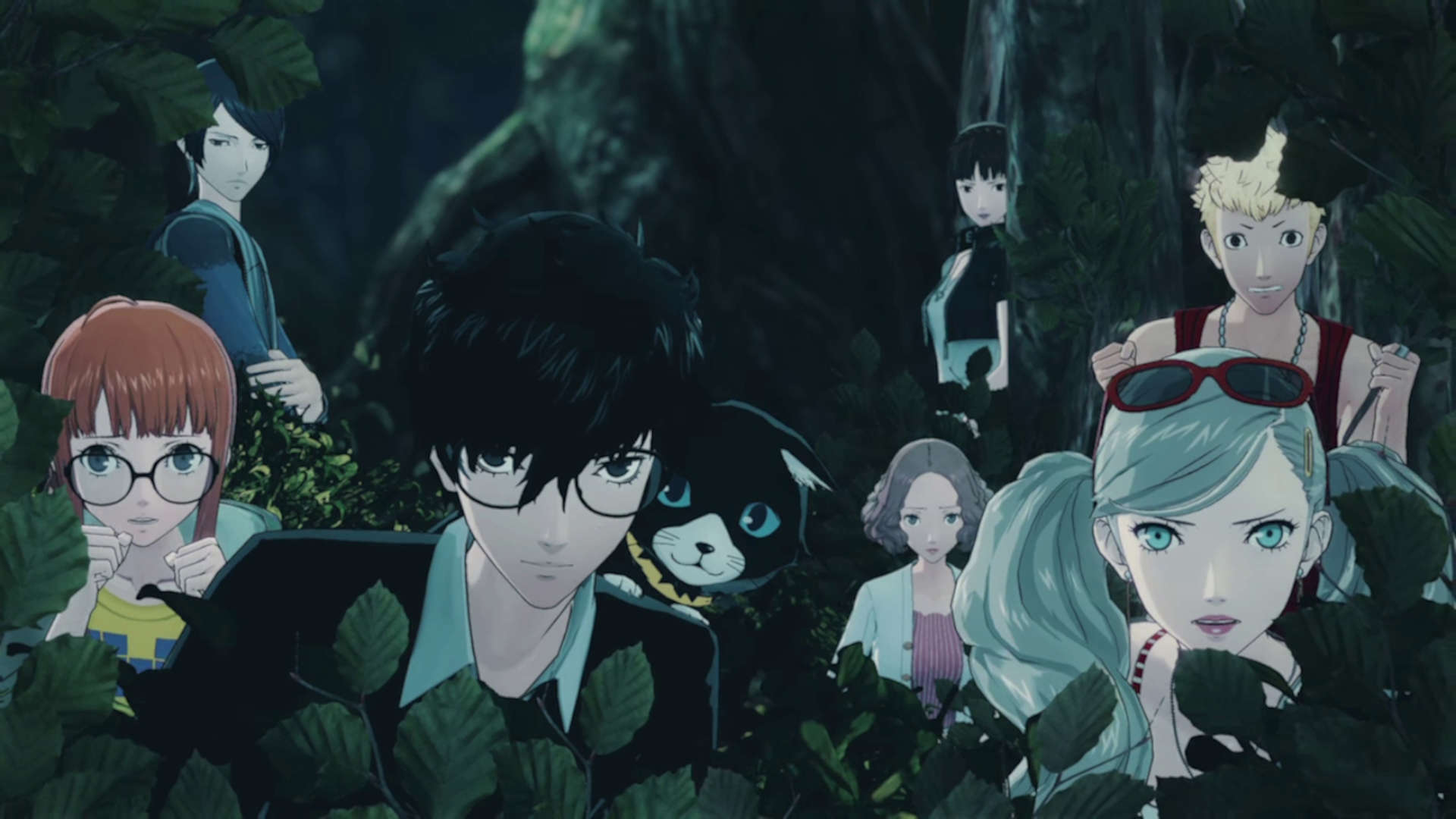
Persona 5 Strikers (Feb 23)

Persona 5 Strikers is a very different game than what fans have come to expect from the series. This Dynasty Warriors-esque musou game combines hack-and-slash combat with a dash of Persona’s signature social link system. Though the social system is now called ‘band’ and is much more focused on team upgrades than relationship building.

With the lack of Persona titles on the Nintendo Switch, Strikers is a welcome addition to the console, and we hope this is the beginning of many more Persona games, whether they’re remasters or new additions to the series, on Switch.

A Monster Hunter character and a dog

Monster Hunter Rise (Mar 26)

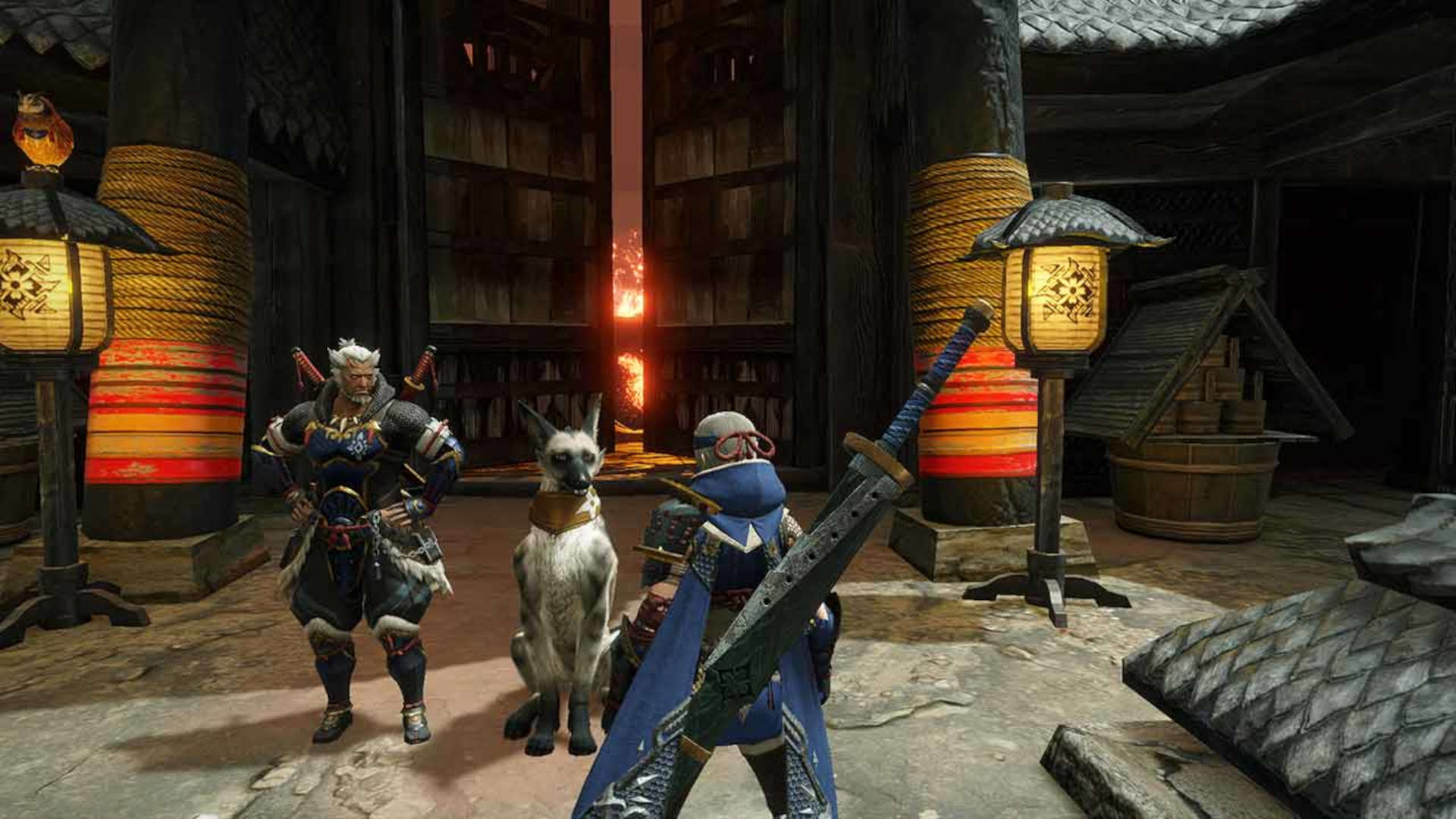
Fans of the series will be pleased to hear that Monster Hunter Rise is one of two Monster Hunter titles coming to the Switch in 2021. Rise is a role-playing action game that includes some beloved Monster Hunter mechanics with even more added goodies. It builds upon Monster Hunter: World in the best ways, with fresh, fast-paced combat and a much more focused story.

Related: here’s every Monster Hunter Rise weapon class

Along with the return of the adorable fan-favourite Palico cats, Monster Hunter Rise introduces some precious doggos called Palamutes, and these good boys alone are enough to entice new and old fans of the series alike. But if you need more convincing, take a look at our Monster Hunter Rise first impressions piece for more juicy details.

A Neo: The World Ends With You character running through the streets

Neo: The World Ends With You (summer 2021)

It’s been over ten years since cult classic The World Ends With You released on Nintendo DS. Much like the original, Neo: The World Ends With You takes place in an over-the-top rendition of Shibuya, Tokyo, but introduces a brand new cast of characters to the mix for players to get to know.

Not much is known about Neo: The World Ends With You as of right now, but the announcement trailer has shown that many of the action RPG elements fans of the series know and love feature, and also confirms the composer for the original game will return to make sure the tunes you hear while traversing Tokyo are reminiscent of the original.

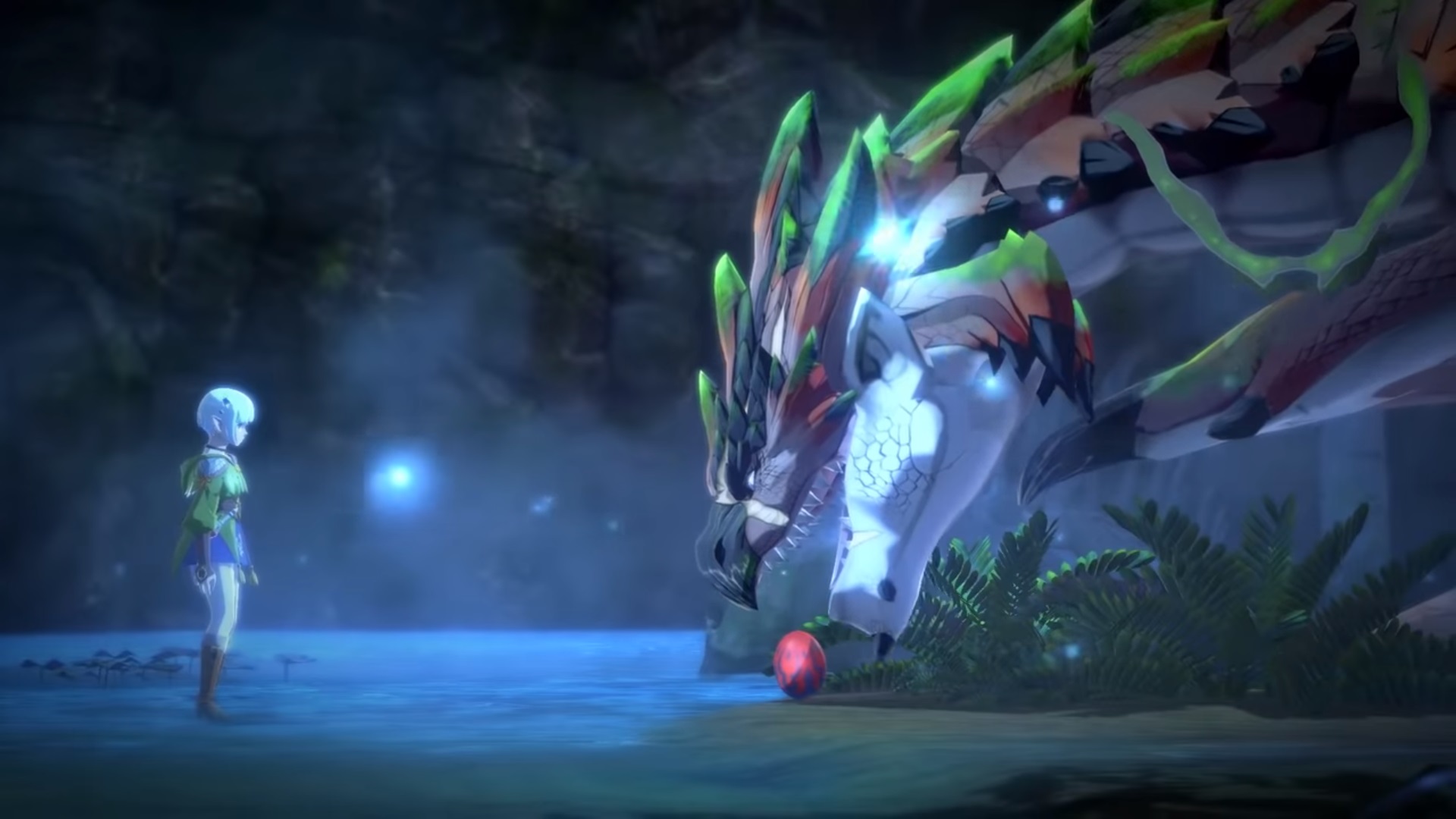
A girl and a monster conversing

Monster Hunter Stories 2 (summer 2021)

The original Monster Hunter Stories was a cutesy 3DS and mobile RPG that offered a more stripped-back and welcoming take on the Monster Hunter formula. This upcoming sequel looks to build upon that vision by serving up a charming cast of characters and a friendly, upbeat tone – all brought together with a gorgeous presentation on Nintendo Switch.

Its strong aesthetic and heavier focus on narrative should set Monster Hunter Stories 2 apart from the equally promising Monster Hunter Rise, and it’s currently set to follow in summer 2021.

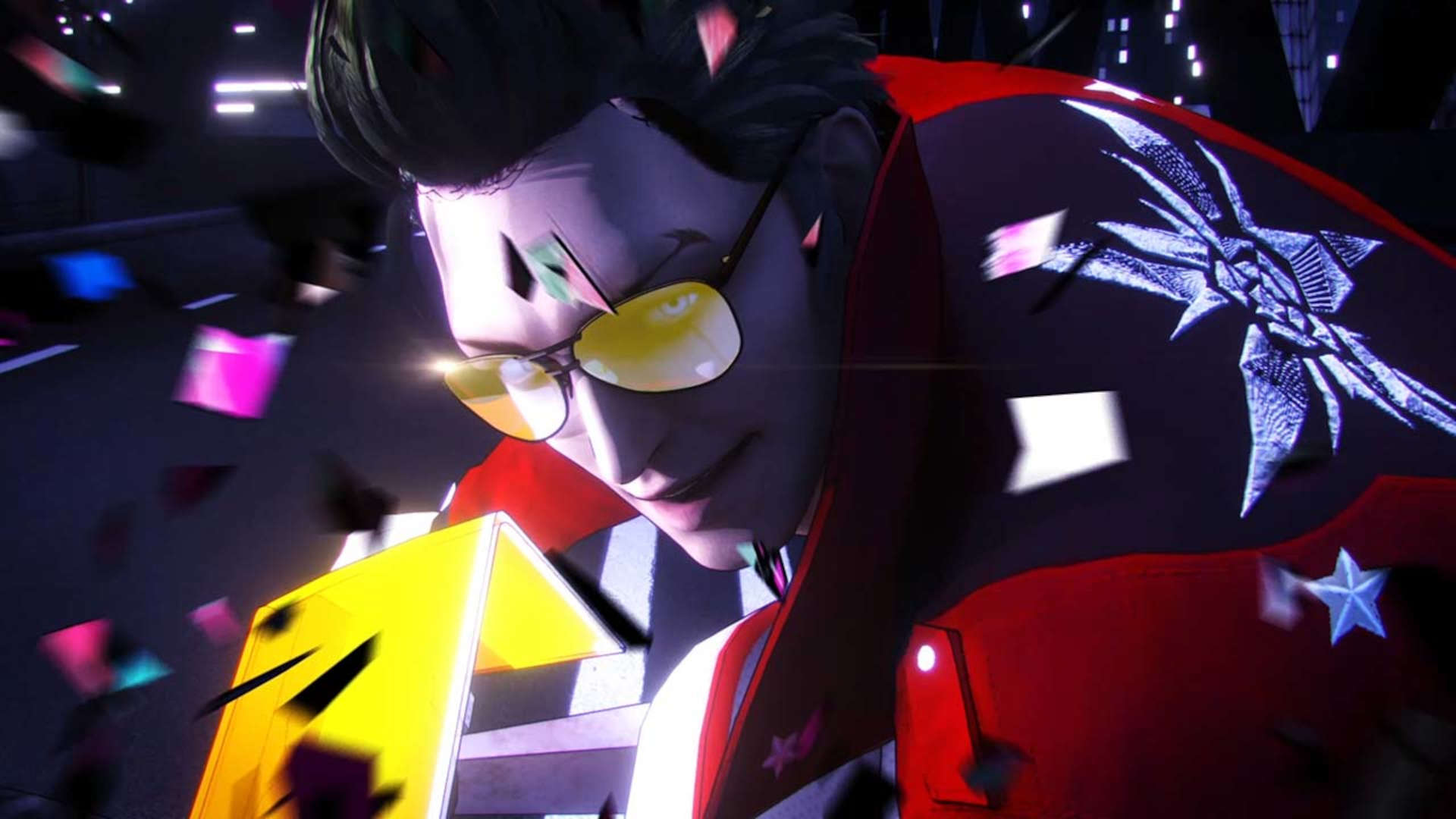
A No More Heroes character smiling

No More Heroes 3 (TBC)

There’s nothing else quite like No More Heroes, which is why it was cause for celebration when the first two games hit Switch earlier this year. These ultra-violent, tongue-in-cheek action titles cast you as assassin Travis Touchdown as he attempts to defeat his colourful rivals and cement himself as the best in the business.

Not a great deal of info is known about this hyped third entry, but it is currently expected to launch sometime in 2021. For Suda51 fans, this one can’t come soon enough.

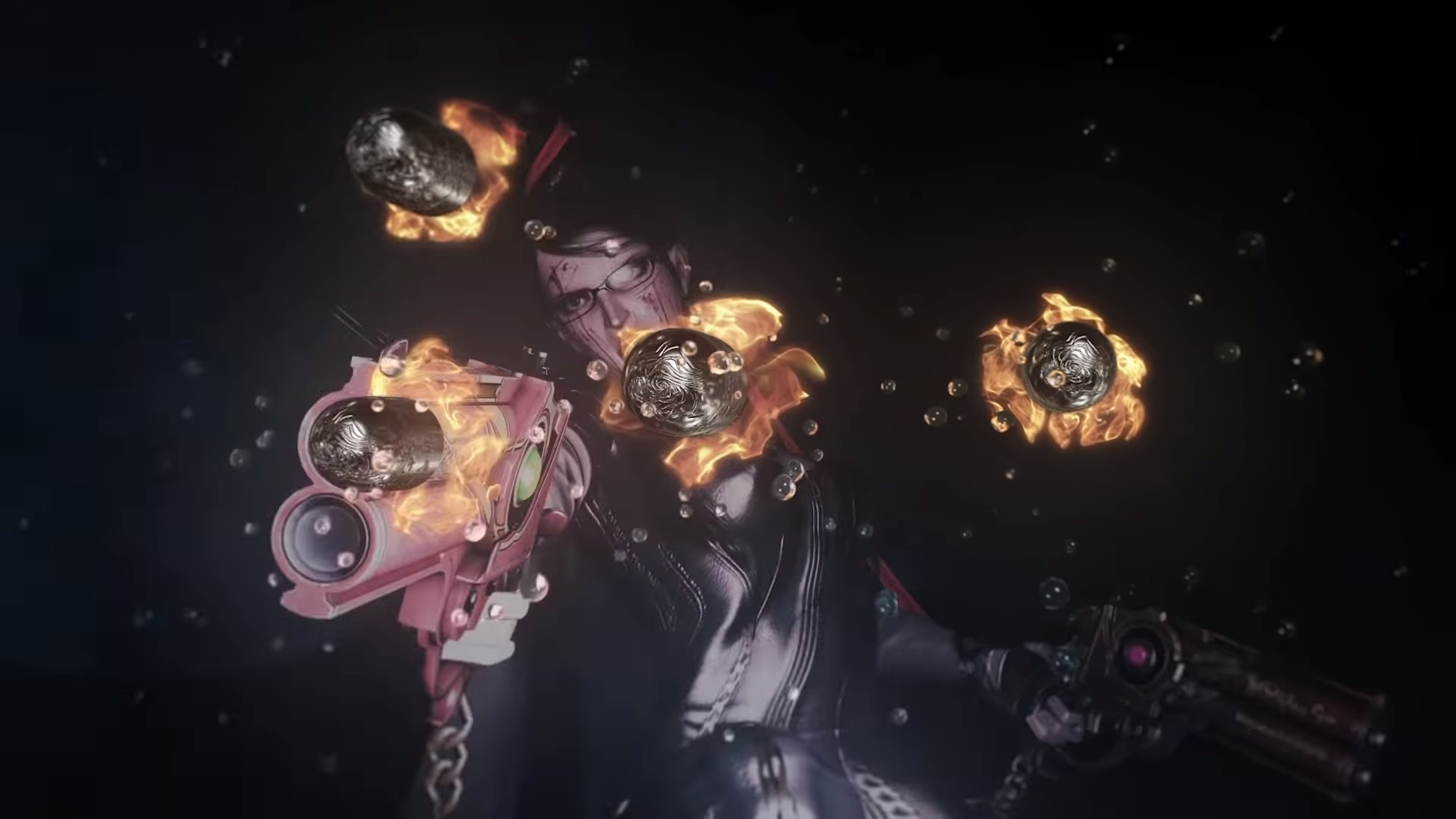
Bayonetta shooting towards the camera

Bayonetta 3 (TBC)

The Bayonetta series received a new lease of life when the first two games were remastered for Nintendo Switch. While Platinum’s cheeky, lightning-fast action titles are almost infinitely replayable, the wait for Bayonetta 3 has still felt like a long one – and that’s because it was first announced all the way back in 2017.

Little is currently known about Bayonetta 3, though series creator Hideki Kamiya insisted that development is “going fine” back in August. Despite the fact that we haven’t seen a lick of gameplay footage, the promise of another wild adventure with everyone’s favourite gun-toting, angel-slaying Umbra Witch is enough to set any action fan’s heart aflutter.

Agent 47 looking out over a balcony

Hitman 3 (TBC)

The Hitman series has a long and storied past with many highs and few lows. The most recent trilogy, however, has been nothing short of exceptional, with the upcoming Hitman 3 looking to end Agent 47’s World of Assassination arc on a high.

IO Interactive’s latest is a real looker, boasting sprawling locations, giant crowds, and a stunning attention to detail. In fact, it might be just a bit too much for the dear ol’ Switch to handle, which is why it’s being made available on Nintendo’s system as a cloud title.

Provided you have a decent internet connection, this means that Hitman 3 on Switch should require minimal concessions, meaning we’ll get to experience the game’s Dubai, Dartmoor, and more as they were intended to be seen.

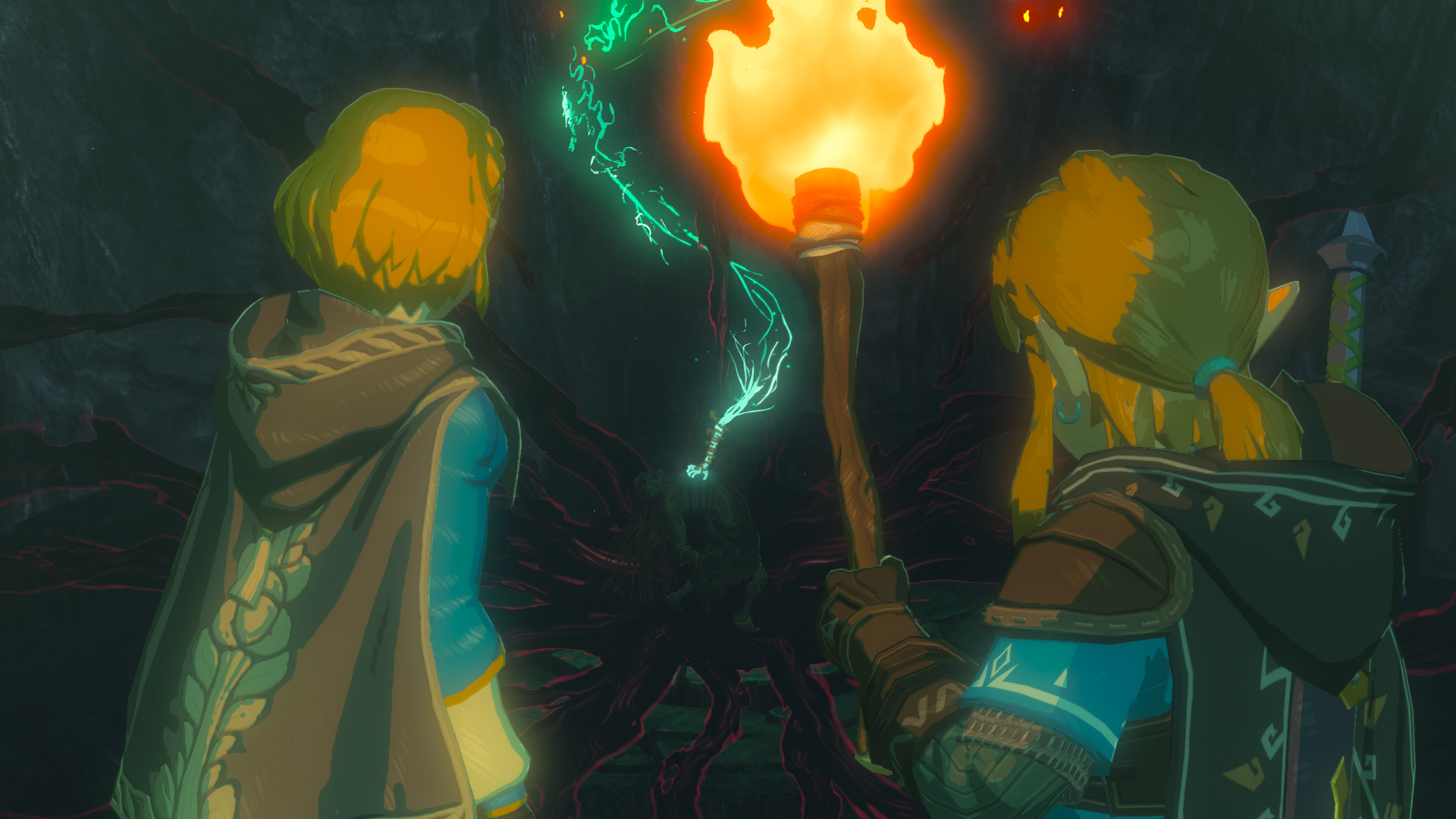
Link and Zelda walking through a cave

The Legend of Zelda: Breath of the Wild 2 (TBC)

The Legend of Zelda: Breath of the Wild remains the high bar by which all other open-world games are judged. Nintendo’s modern classic is packed full of novel ideas and creative systems that allow for endless experimentation. Several years after launch, its impact is still felt in recent releases, from Genshin Impact to Immortals Fenyx Rising.

Breath of the Wild 2 has therefore skyrocketed its way towards being one of the most hotly-anticipated games of all time. So far, all we’ve got to go on is an eerie teaser trailer that sees Link and Zelda venture deep below Hyrule Castle, where they seemingly uncover the reanimated corpse of Ganon. It sets a much darker tone than its predecessor, one that we can’t wait to see explored when BOTW 2 eventually rolls around.

Someone taking a picture of Blastoise

New Pokémon Snap (TBC)

The original Pokémon Snap came out on Nintendo 64 over 20 years ago, meaning New Pokémon Snap will be released to a brand new audience of Pokémon fans while still appealing to those who have stuck around since the original’s launch.

Pokémon Snap is an on-rails, first-person photography game that sees players drift around different locales in a minecart-like device to take pictures of adorable Pokémon. If New Pokémon Snap is anything like the original, a Pokémon professor will grade your photographs and provide you with fun bonuses to help you become even better.

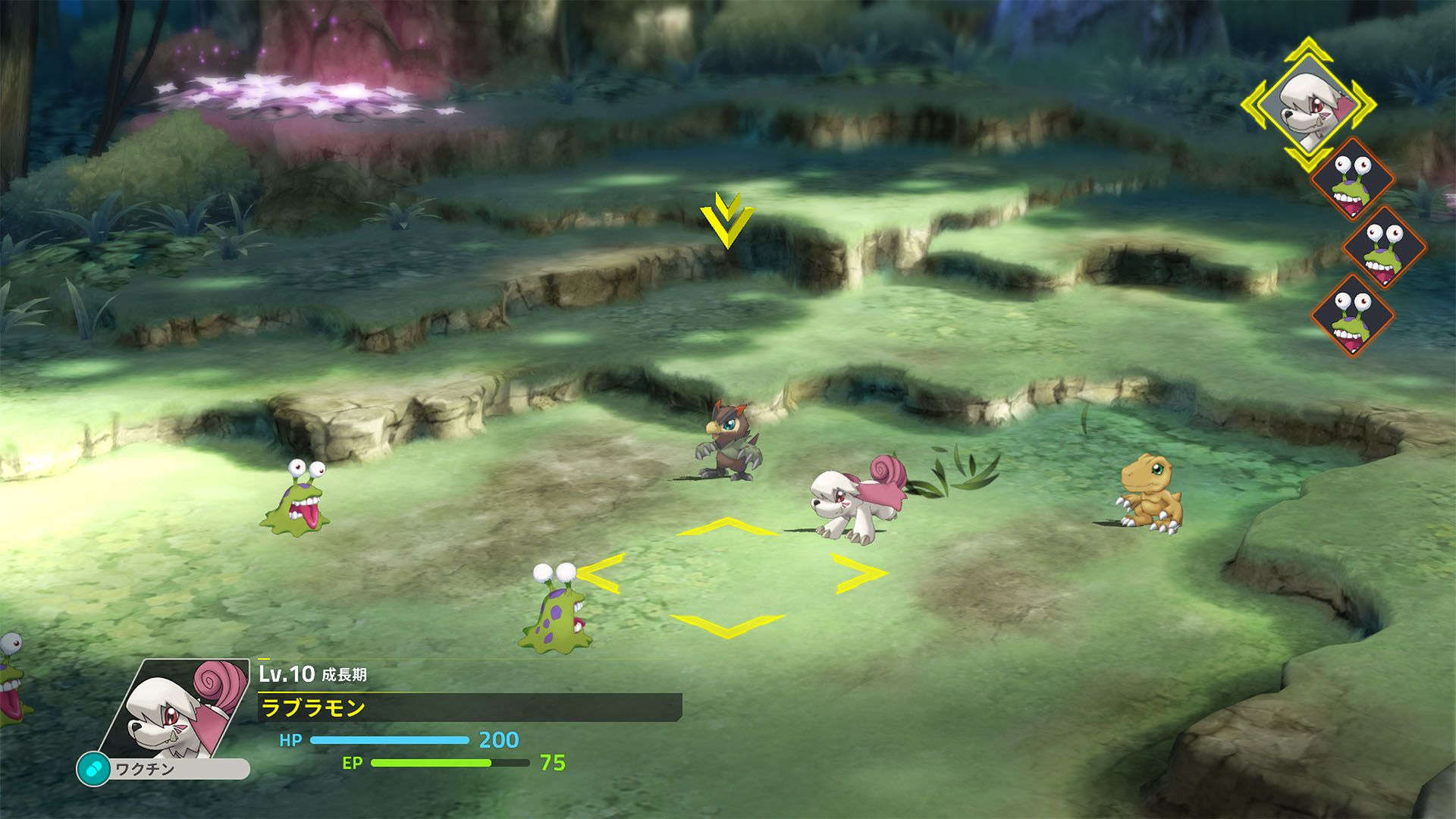
A battle in Digimon Survive

Digimon Survive (TBC)

Bandai Namco initially teased Digimon Survive back in 2018, and since then, fans have been patiently waiting for the survival strategy RPG to release. Well, 2021 is finally the year.

Digimon Survive sees a fresh set of characters being transported to a dark, strange new world, where they must fight their way home in some classic strategy RPG battles.

Survive is very different to most Digimon titles, offering a much darker storyline. Your choices made throughout the game will impact on how your partner Digimon digivolves, how the story progresses, and also lead to multiple endings, some of which will result in surprising deaths. Survive is a must-have title for fans who have grown up with Digimon and are looking for a more mature experience.

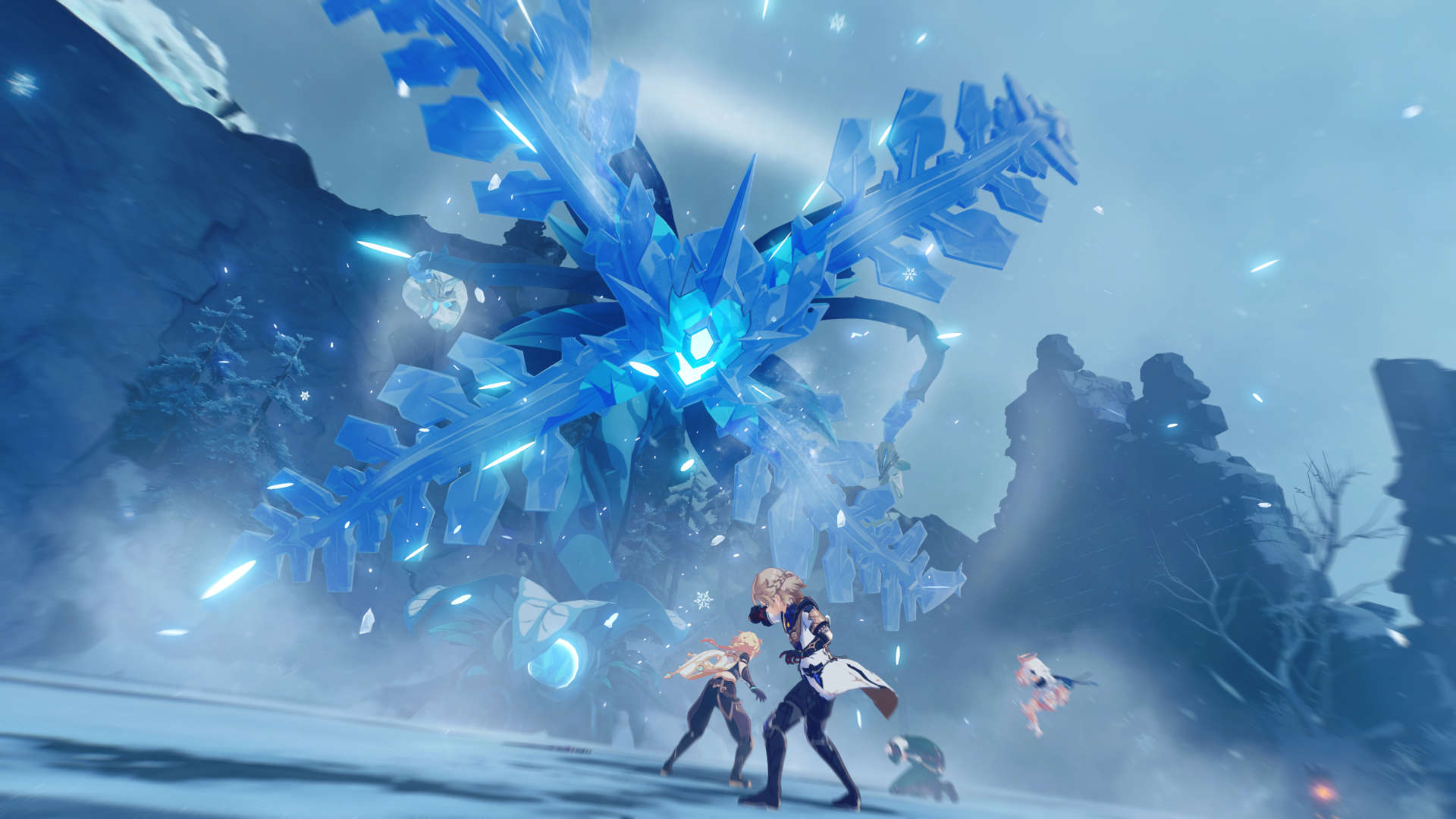
Genshin Impact characters being attacked in the snow

Genshin Impact (TBC)

Genshin Impact released to mobile, PC, and PS4 earlier this year and quickly become one of our games of the year. This free-to-play, open-world RPG has some gorgeous graphics, intense combat, and unintrusive gacha elements making it appeal to a huge audience.

Developer miHoYo revealed Genshin Impact will make its way to Switch sometime in 2021, but it’s still unclear exactly when it will drop.

Posted on Leave a comment

Waterways & Terrain Add-Ons For Godot

Today we are going hands on with two powerful Godot plugins, Waterways and Heightmap Terrain for Godot. Both are open source add-ons that work in Godot 3.2.x and both are hosted on GitHub. In the video below we showcase using easy add-on and show how they work well together.

Waterways

Formally known as WaterGenGodot on GitHub, Waterways enables you to quickly create rivers using spline controls. You have full control over the path the river follows, the look of the water and even have fine tuned control over the foam generated by collisions with other objects in the scene.

Heightmap Terrain

This add-on adds terrain creation tools to Godot. Either import and existing heightmap or create your own from scratch. You get full sculpting tools for raising and lower terrain, simulating erosion, etc. You also get tools for painting the texture layer on your newly created terrain. You also get the ability to export as a mesh or heightmap for use in other applications or engines.

Getting Started Tutorial

Installing the plugins is a straight forward exercise. Clone each project from GitHub to a directory of choice. You can get the git url on GitHub here:

Get GitHub URL for Godot Addon

Assuming you have a git client installed, from a command line run the command git clone then the copied url. For example:

git clone https://github.com/Arnklit/WaterGenGodot.git

Now in your Godot project (or create one if you dont have one already), create a folder called addons then copy the addons directory from the two just cloned projects. In your project you now simply need to enable each addon. In Godot go to Project->Project Settings menu. Now switch to the Plugins tab and make sure both are enabled:

Enabling Godot Waterways & Heightmap Terrain Plugins

Now you’re ready to go! Be sure to check the video below to see both Water Ways & Heightmap Terrain for Godot add-ons in action.

[youtube https://www.youtube.com/watch?v=jYVO0-_sXZs?feature=oembed&w=1500&h=844]
Posted on Leave a comment

In the quiet isolation of the pandemic, Cytus 2 gave me sound

With the recent exceptions of Thumper and Sayonara Wild Hearts, I’m not someone who plays a lot of rhythm games. This is partially because I have a love/hate relationship with them. As soon as I start playing I find myself falling down the rhythm game rabbit hole of addiction and trying to max out scores before I eventually manage to pull myself away. Because of this, I’ve never found a rhythm game that fits into my day-to-day life. That was until I found Cytus 2.

I discovered Rayark’s 2018 mobile rhythm game at the perfect time, really. Lockdown had just begun due to COVID-19 and I suddenly found myself in an especially quiet world. Just like everyone else, I was isolated in my home, with few people to talk to, no films to go and see, or live music to watch. For many people, I think, this year has felt like stasis – waiting for something to end, and for life to begin again.

But this is when Cytus 2 blasted its way into my consciousness, with its over-the-top characters, frantic rhythm play, and its very human stories told through sound.

Cytus 2 is set in future version of earth, where humans have reached a pinnacle of internet connectivity, allowing them to exist in both reality and cyTus: a virtual space. The main plot focuses around uncovering the identity of a mysterious DJ known as Aesir, who is responsible for wiping the memories of thousands during a music festival. But the plot becomes far more complex, and various side-stories reveal themselves as the game goes on.

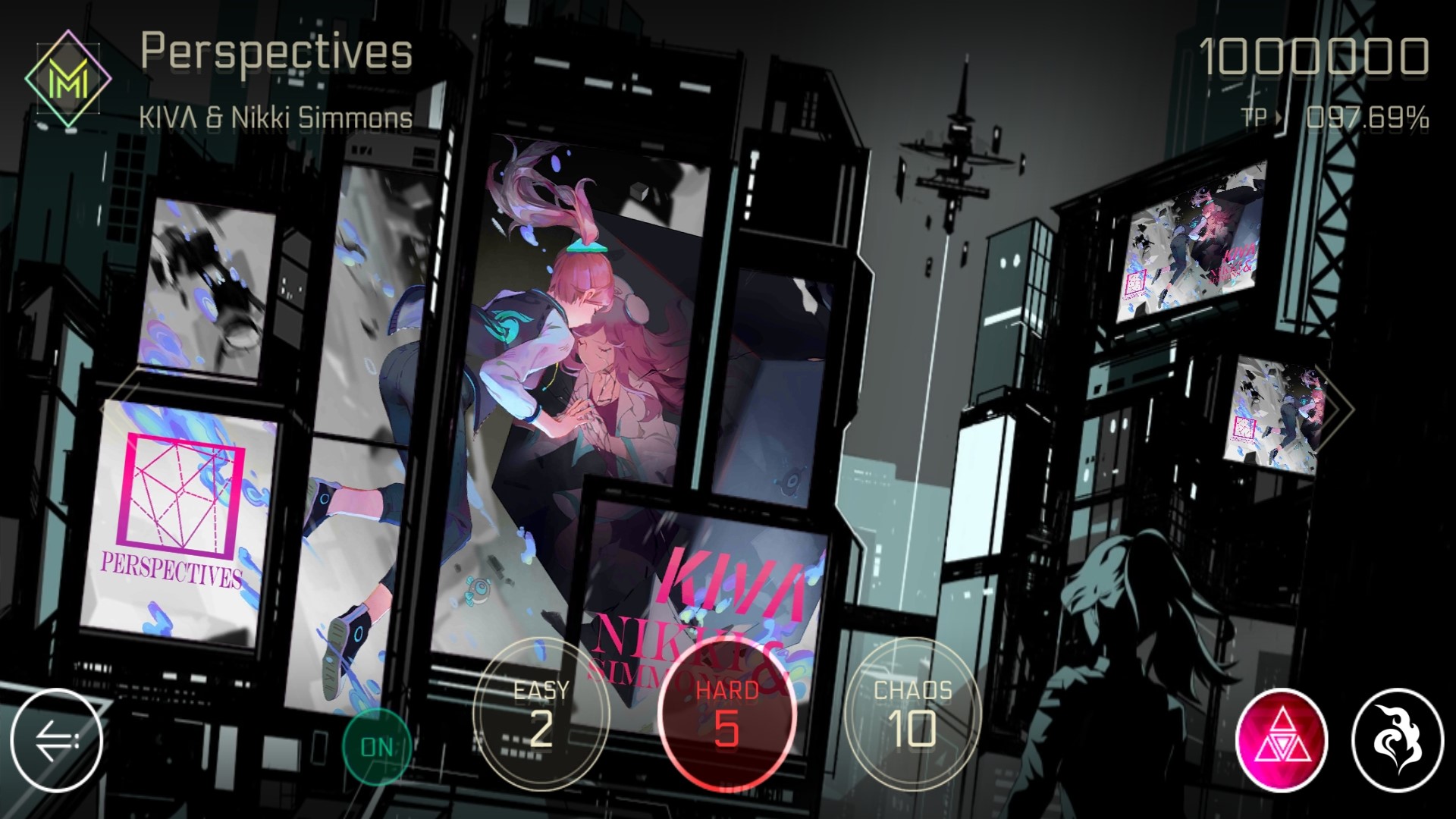
Cytus stood out to me partially because it was the first rhythm game I’d played on mobile, and I never realised how well suited this platform is for music play. You just take your phone out of your pocket, lay it on a table, and you have a platform to tap out a quick song or two. But what really stuck with me about Cytus 2 is the way it interweaves music, narrative, and character.

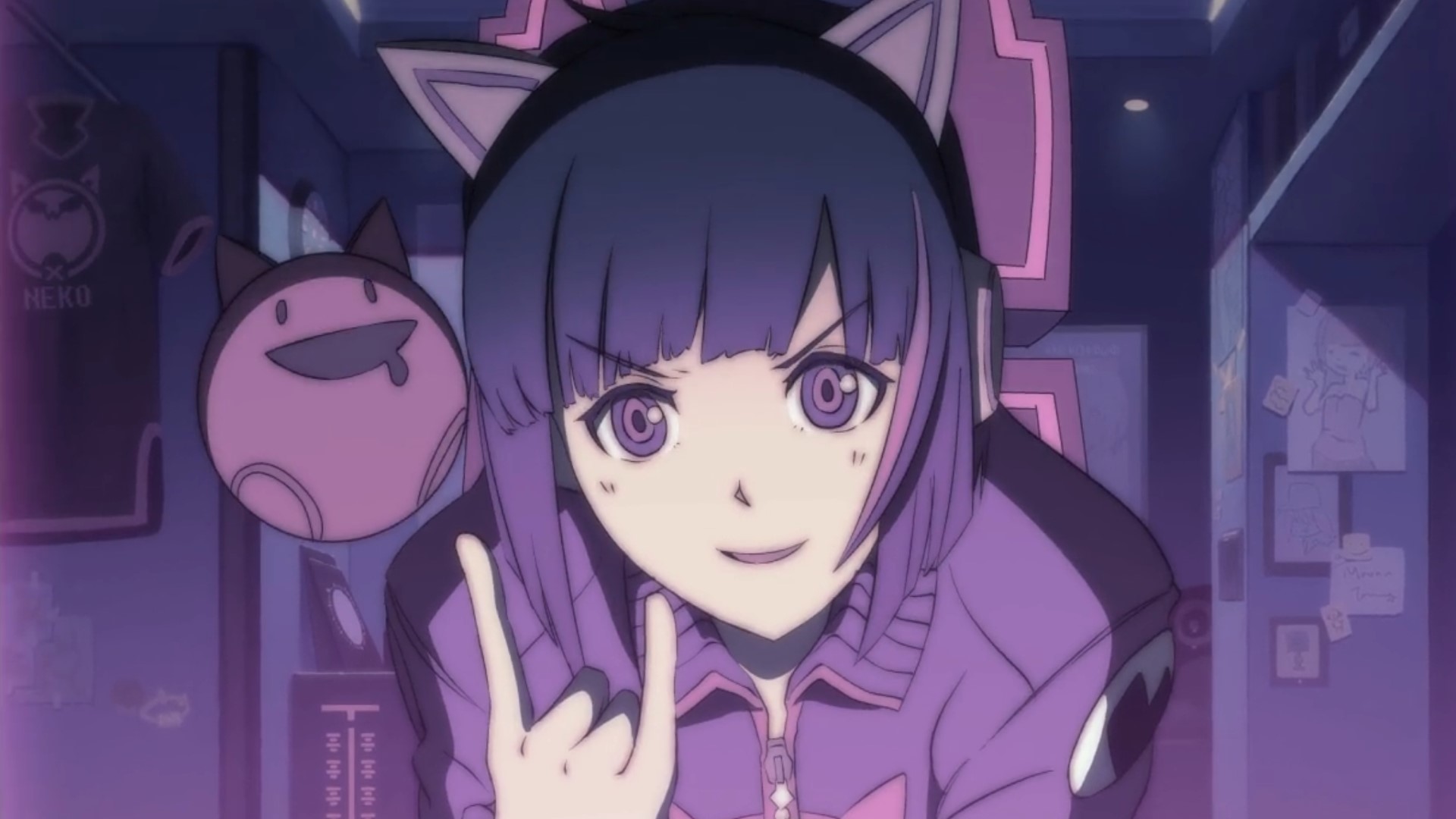
Neko doing a rock 'n roll hand sign

I’d never really considered that a rhythm game could be narrative in a non-linear sense. Look at Sayonara Wild Hearts and you see a game with a great story, but it’s fixed, only able to show you a single perspective running through the game. What Cytus 2 does instead is build a narrative through its many characters, each of whom have their own particular set of songs and musical style.

These characters are streamers, idols, bass players, bands, and classical musicians, and playing through their songs unlocks new information about each one. These details could be small scenes that you read, videos, or diary entries, but they each offer backstories for the characters, and help you begin to see how they fit in the grand scheme of things. These scenes also unlock new songs, which are themed specifically around these events. A character might find a stray cat and take it home, for example, and so the song you unlock is about that.

Aroma's character screen in Cytus 2

It’s an amazing narrative system that allows you to hop between characters, unlocking narrative as you go. Each character menu is also wonderful, and shows a little scene on repeat of them working at a computer, or lying on their bed, or looking out across the city. These menus really remind me of the lo-fi hip hop channels you find on YouTube, like ChilledCow, which play music as a character in the video just hangs out – it really fits with game’s art style and anime aesthetic.

But as time went on, I started to realise there was another reason I was playing Cytus 2 everyday. Though set in a post-apocalyptic future, at its heart, Cytus is about people trying to rationalize human struggles through sound. Whether it’s dealing with your parent’s expectations, a break up, or recovering from an accident, the struggles in Cytus still feel human in spite of its futuristic setting. What’s more, these characters create music because of what they’re going through, and being able to play those songs in the game makes you feel like you’re part of those stories, too.

Nora's character screen in Cytus 2

Cytus 2 is melodramatic at times, and I think that’s partly because its translation isn’t always consistent, which is perhaps understandable in a game with this much text. I also have some issues with its monetisation, where it’s cheap to buy, but extra characters cost a lot more. But I found I didn’t really care about these things in the end. During the quiet, static isolation of 2020’s pandemic, Cytus 2 gave me sound. It gave me dramatic stories of people trying their best to deal with the messiness of life. It reminded me that in spite of 2020, life will find a way to continue. And that’s valuable.

Posted on Leave a comment

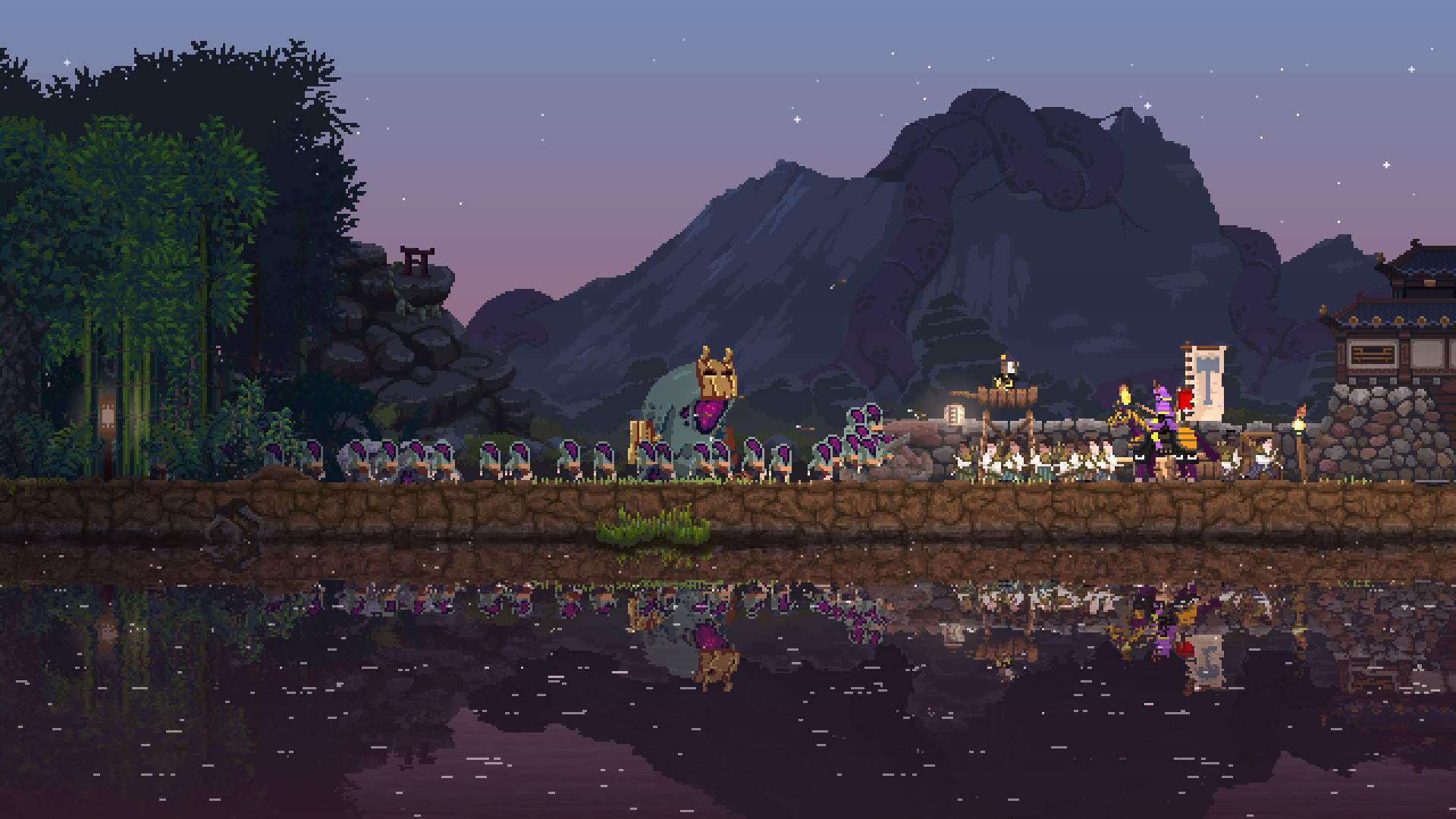
Kingdom Two Crowns is still a masterpiece of micro-strategy

It all starts with a crown. You inherit a run-down kingdom of overgrown forests and mysterious ruins. Your subjects are poverty-stricken, living in ramshackle hovels. But all it takes is a little gold to straighten these things out. A coin dropped here can train those poor subjects into builders and hunters. Another coin dropped over here can level the forests, expanding the frontier and making way for farmland. Even more coins can build walls, watchtowers, and hire soldiers. With a little gold, you can create yourself a true kingdom.

But as soon as you start building, the Greed appear, monsters who are only happy when they’ve taken everything you’ve built. Each night they attack, and so you must raise your walls higher, create ships and sail to new lands, hoping you can outrun them a little longer this time, that you can end the cycle, and keep hold of your crown.

It’s a simple setup: a king builds, and monsters destroy. But to call Kingdom Two Crowns a simple game would be a real understatement.

When I wrote my Kingdom Two Crowns review back in June, I’d honestly never played anything like it before. Micro-strategy was a new term to me, but I quickly came to realise how well suited this genre was for mobile. Kingdom Two Crowns takes a genre that is usually very complex – management sims – and boils it down to its most basic elements. You are a king, a gold-giver, and your coin pouch is how you interact with the world.

A single tap will drop a coin, transforming a citizen into a worker or ordering a tree chopped down. Three taps might build a watchtower, or dam a river. And ten taps might upgrade your town centre. How you use your coins, and what you choose to invest in is the true strategic element of Kingdom Two Crowns, as you balance civic development with defence. But your coin pouch can also overflow, meaning coins start to drop off your person.

Monsters attacking in Kingdom Two Crowns

The second element of Two Crowns play is your steed. As a monarch, you ride a horse above your citizens, which also allows you to escape from monsters, but just like they thought in the olden days, the world is flat, so the bigger your kingdom grows, the harder it is to oversee your borders and defences. If you grow too large you’ll be desperately riding from one side to another when night comes, trying to make sure the Greed haven’t breached your walls and overrun your defenders. Though this can be improved by finding steeds out in the wild, whether a giant stag, or a griffin, which can blow monsters away with a flap of its wings.

But one of the smartest parts of Kingdom Two Crowns is that you can’t fight the monsters. Just as in chess, your king has to mainly rely on others fighting for him. Coins and your steed are the only two ways you interact with the world in Kingdom Two Crowns, but in spite of that simple approach, the game has massive depth of discovery.

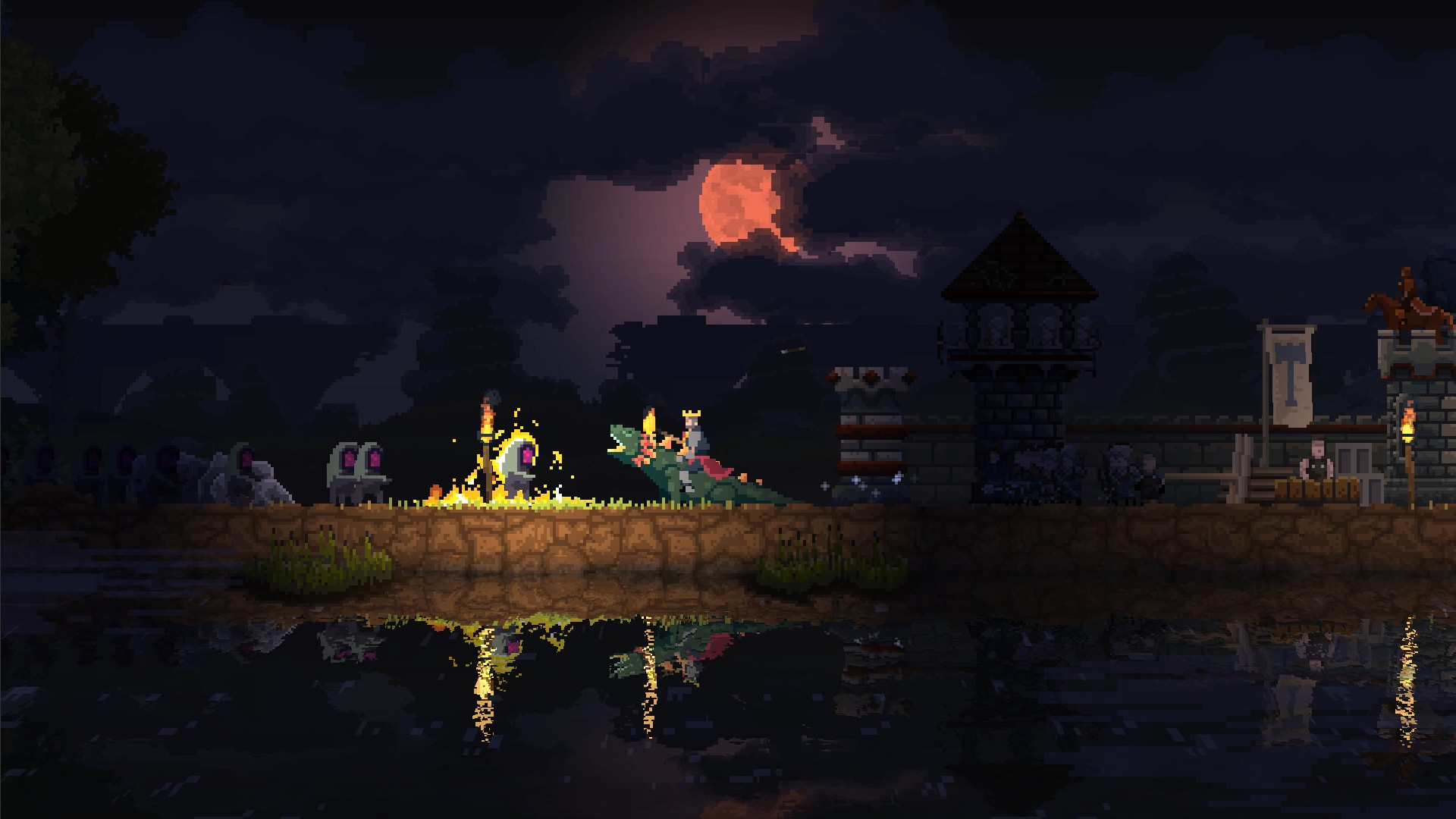
Dragon attack in Kingdom Two Crowns

There are whole building systems, upgrade trees, loads of different unit types to train, and secrets to discover in the wider world. And the best part of it all? Kingdom Two Crowns doesn’t tell you a damn thing. It just gives you a simple means with which to interact with the world and lets you learn for yourself through trying and failing. And you will fail. Your walls will topple, your soldiers will be defeated, and you’ll lose your crown again and again. But the next time, you’ll know how to better beat the Greed.

I think it’s this wonderful combination of simplicity and depth that makes Kingdom Two Crowns such a memorable micro-strategy game, and one of my favourites this year. And despite how stressful and addictive it is – second only to Don’t Starve, in my mind – it has moments of peace and tranquility. Riding through a beautiful forest on your horse as a gentle soundtrack plays, you could almost forget about the crown weighing heavy on your head.

Posted on Leave a comment

Dota 2 Update – December 22nd, 2020

– Diretide has ended. Diretide Point rewards will no longer be available.
– There will be opportunities to obtain The Hallowed Chest of the Diretide through playtime starting sometime in January.
– Fixed Orb of Venom slow stacking with Orb of Corrosion
– Fixed Cloak of Flames not doing less damage when carried by Illusions (now does 30)

Posted on Leave a comment

The best mobile roguelikes

They can often be a tricky genre to pin down, but, in spite of that, roguelikes have risen to massive popularity over the past few years. The best mobile roguelikes include turn-based gameplay, exploration or combat, as well as a harsh progression cycle, punishing you and almost invariably resetting your progress.

But the debate around what properly constitutes a roguelike is still going on because they aren’t a one-size-fits-all like many of the other genres we play. There will always be games which serve as exceptions to the rule. But in our opinion, when games are experimenting is when they are at their most fun.

One thing we can agree on for sure, though, is that the best mobile roguelikes can be recognised by the way they use constraint to create entertaining, thoughtful, and compact games that actually lend themselves wonderfully to the mobile platform. There are a ton of quality mobile roguelikes out there that you could be playing on-the-go, so lets take a look at this fantastic genre, with our list of the best mobile roguelikes.

Here are the best mobile roguelikes:

Dimension of Dreams

In the absence of a mobile version of Slay the Spire, plenty of roguelike/deck builder hybrids have stormed the App Store to try and capture that audience. Dimension of Dreams represents one of the better ones to come along recently. It’s a token premium game with in-app purchases, but we’ve found that everything is neatly balanced and scaled so that it doesn’t feel like a grind.

There are also plenty of different deck archetypes for you to play around and experiment with, so it’s a real shame it isn’t on Android yet. This, and some choice patches is all that’s stopping it from being the ultimate contender to Slay the Spire’s throne. For more games like Dimension of Dreams, see our list of games like Slay the Spire on mobile.

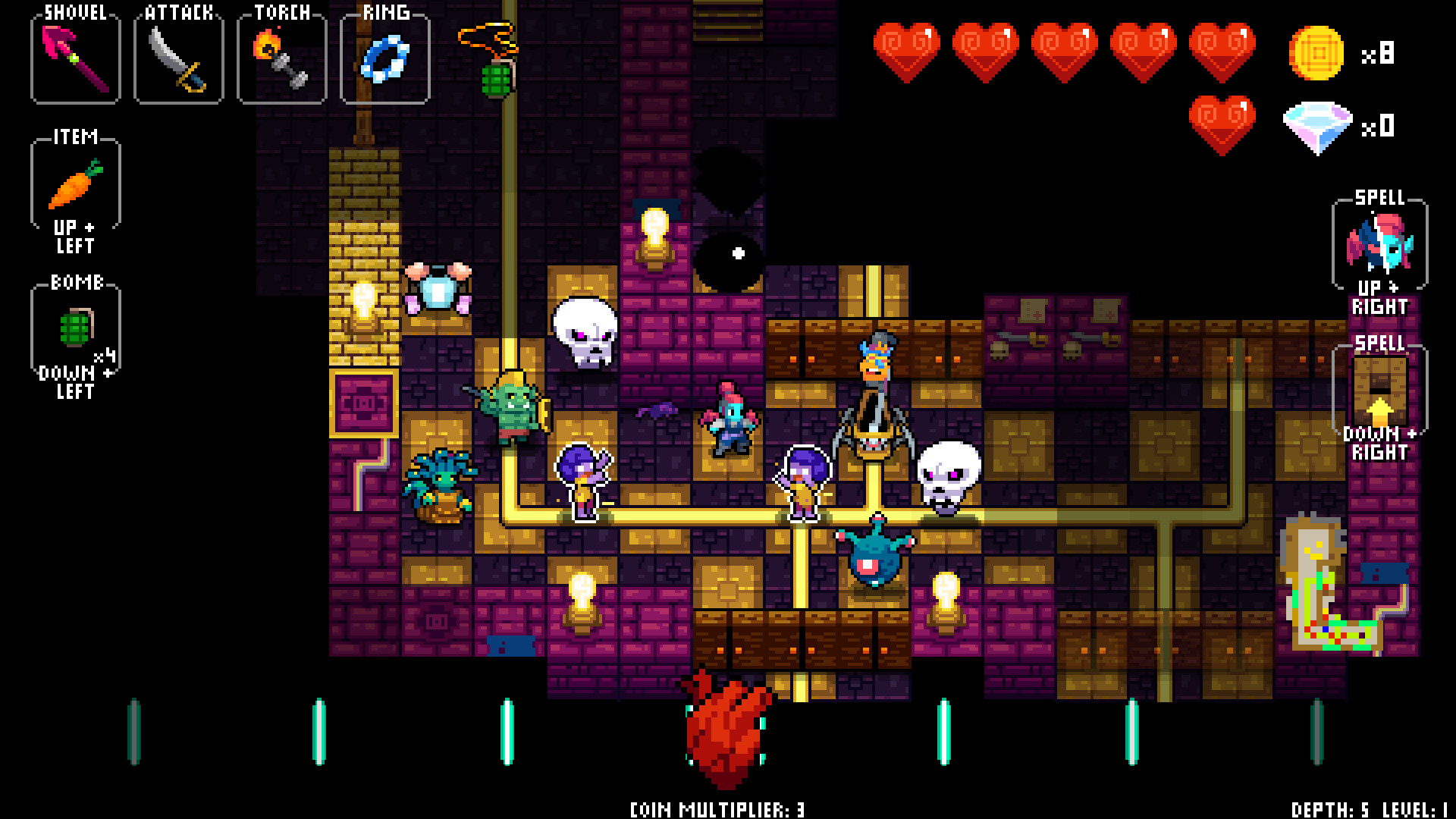
CRYPT OF THE Necrodancer: Amplified

Naturally, the only thing that could knock Crypt of the Necrodancer off its coveted top spot would be more Crypt of the Necrodancer. The Amplified version released in April 2019 contains both the original game as well as all DLC and add-on content from the PC version. There’s a new protagonist to take control of, Nocturna, along with new enemies, music, and new levels. This is easily the definitive version of one of the best roguelikes of this generation, and now there really is no excuse to not get involved if you haven’t already.

Immortal Rogue

It’s amazing what you can do when you take two seemingly by-the-numbers tropes and package them into something genuinely interesting. Your uber-powerful vampire may not seem that special as it terrorises society in a replayable game, but the fact that you’re doing it over countless generations is not something you see every day. In Immortal Rogueyour job is to wake up periodically and harvest human civilisation. Because reasons.

The game struggles at times from a narrative perspective, but the tactical choices you make as you slaughter your way through an age do have consequences on ages to come. Depending on who you kill, or don’t kill, enemies can appear radically different. This is an addictive, one-handed game that evokes the best of what the genre can offer.

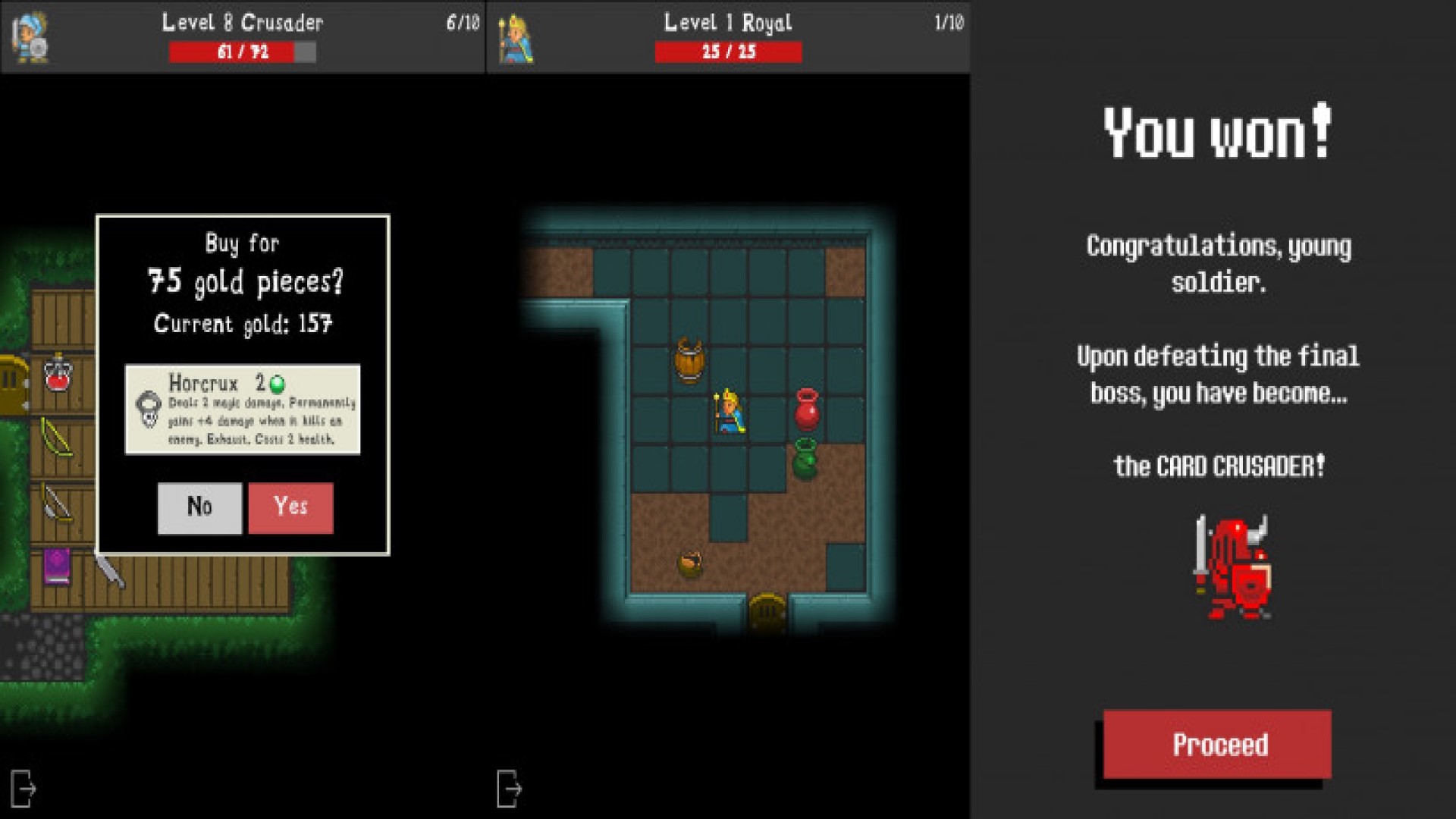
Card Crusade

Fair, balanced, and as advertised is our elevator pitch for Card Crusade. In a niche that includes Dream Quest, Slay the Spire, Meteorfall, and others, there’s little here we haven’t seen before, but it’s a stable and competent enough game to scratch that same satisfying itch for a short spell. Pick one of several classes and delve into the dungeon, discovering loot and spells along the way, aiding you in repeat playthroughs. It’s got its share of mediocrities, but also plenty of innovation as well.

Battles have an unusual tempo to them. Of course, it’s always best to clear the field as soon as possible, but the gameplay usually occurs in bursts of activity, with some turns devoted to healing and survival, while others see you playing an especially strong card to eliminate a key foe. Here Card Crusade breaks with longstanding roguelike tradition and does not offer full healing upon level-up or floor clear, which means damage suffered becomes persistent. This is one of the game’s smartest choices, adding a sense of pressure while simultaneously rewarding clean strategy and play. For more deck-based drama, browse our picks for the best mobile card games!

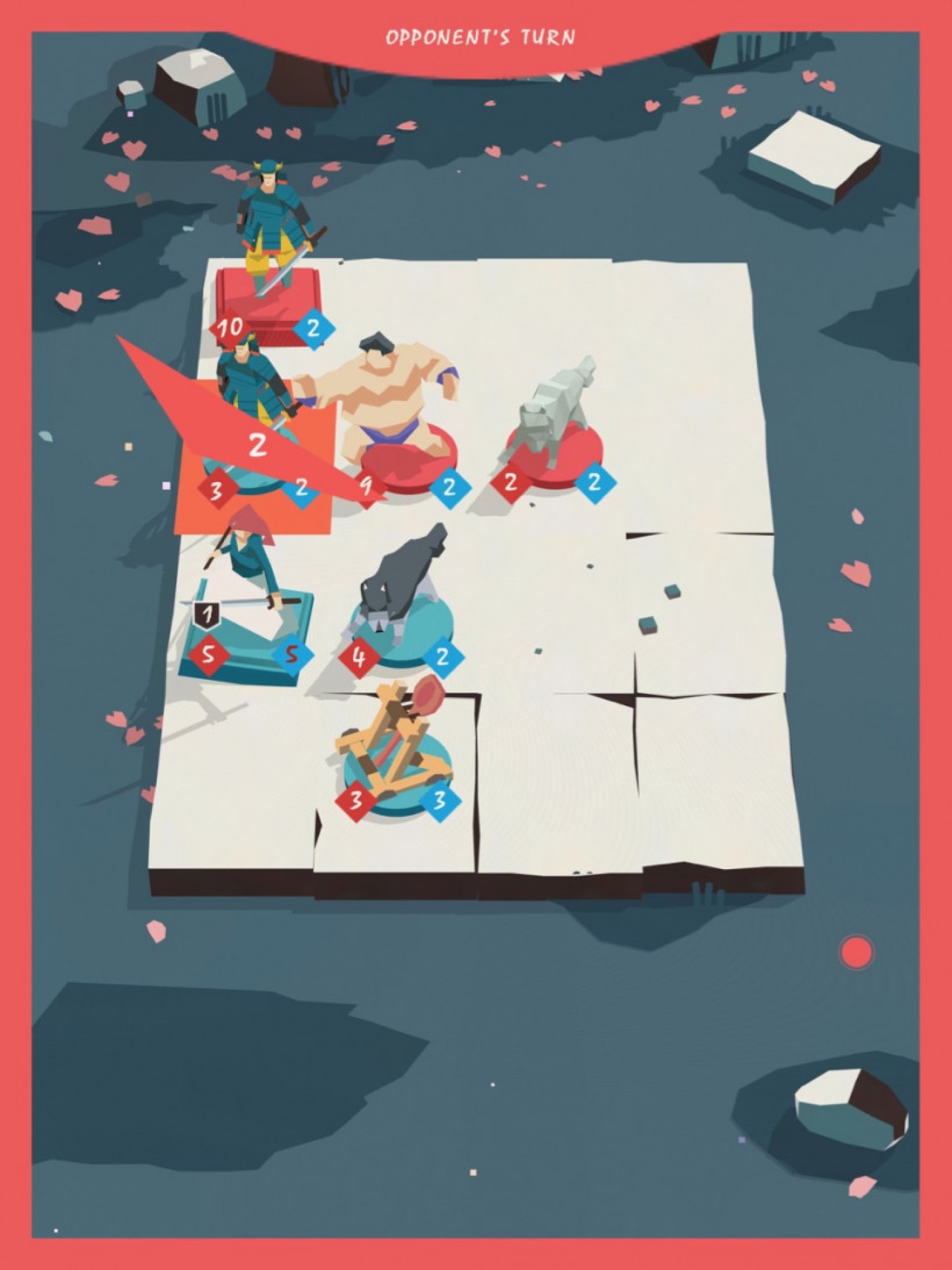
MIYAMOTO

Released towards the end of last year, MIYAMOTO is an interesting blend of turn-based strategy, card mechanics, and roguelike gameplay, where the primary fault is that it’s all-too-brief. Eight levels pit you against progressively tougher enemies, as you battle your way to defeat their leader. If either your leader or the enemy’s dies, it’s game-over. Beating levels nets you coins that you can use to invest in better leaders.

The card mechanics are perhaps a bit token; there’s no way to interact with your deck of troops, but every unit is varied and unique, and the small 4×4 arena makes for some really tight tactical engagements. It a fast-paced game, as you throw your units into battle as quickly as possible, filling as many spaces around your leader as possible, so you can place troops ever deeper into an opponent’s territory. If you’re looking for something short and sweet, MIYAMOTO is an excellent new addition to your roster.

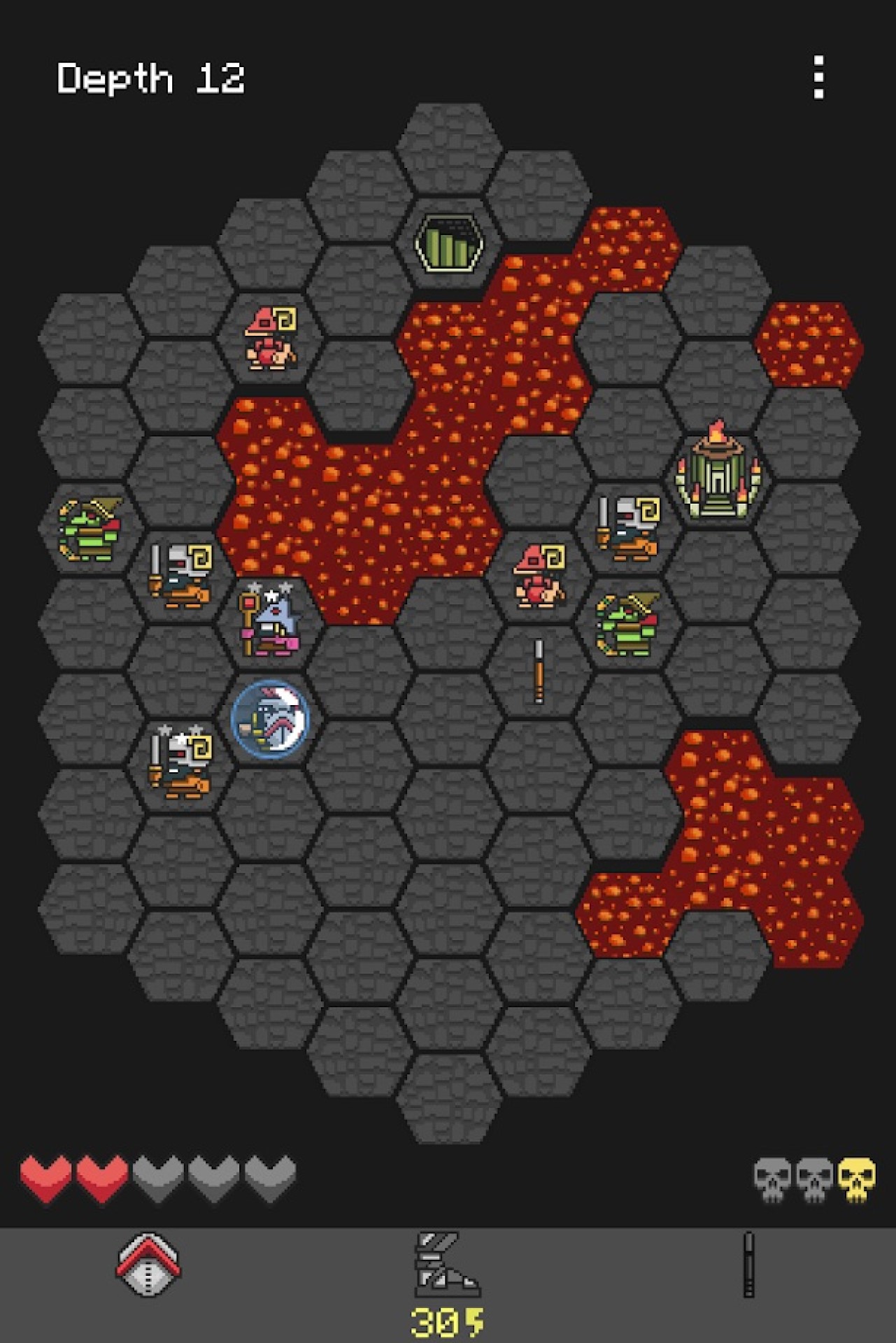
Hoplite

The hoplites of history aren’t usually considered lone wolves or heroes, but this is exactly the role that Hoplite casts you in: one nameless figure on a tight hexagon-based quest to retrieve the golden fleece. As you soldier across levels of escalating difficulty, you visit temples to get incremental bonuses. The movement and decision-making is performed with a series of swipes alongside the odd special ability. These abilities can be simple yet profound, a little deus ex machina bestowed each level, while the skill synergies are tantalizing enough to draw you in, yet fiendishly difficult to achieve, and will keep even veterans engaged.

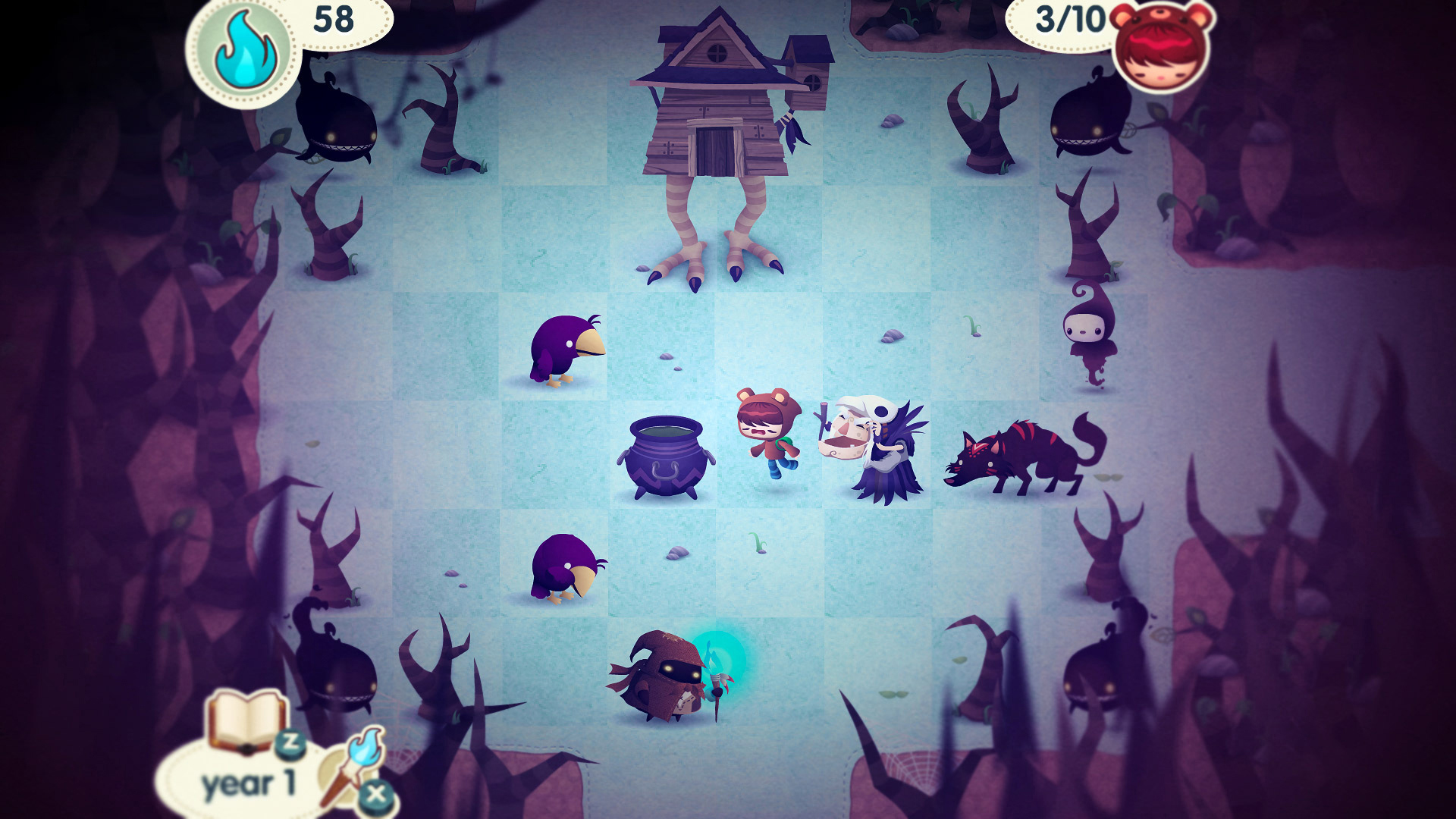
ROAD NOT TAKEN

The winter is harsh and full of children in Road Not Taken. You, a sackcloth-clad stranger, take your torch and use what precious energy you have to brave the elements, finding and rescuing each child. Along the way, you’ll have to fend off wolves and spiteful ghosts, scavenge for food, and find materials to make campfires. Each step drains energy; more so if you’re carrying items, so the whole game is turn-based, with a soft cap on the number of steps; as energy can be replenished by eating various foodstuffs.

The procedural generation behind each run really shows off the game’s handcrafted puzzle levels. This hybrid game wears many hats, though is primarily a puzzler with crafting elements and a dash of combat.

FTL: Faster Than Light

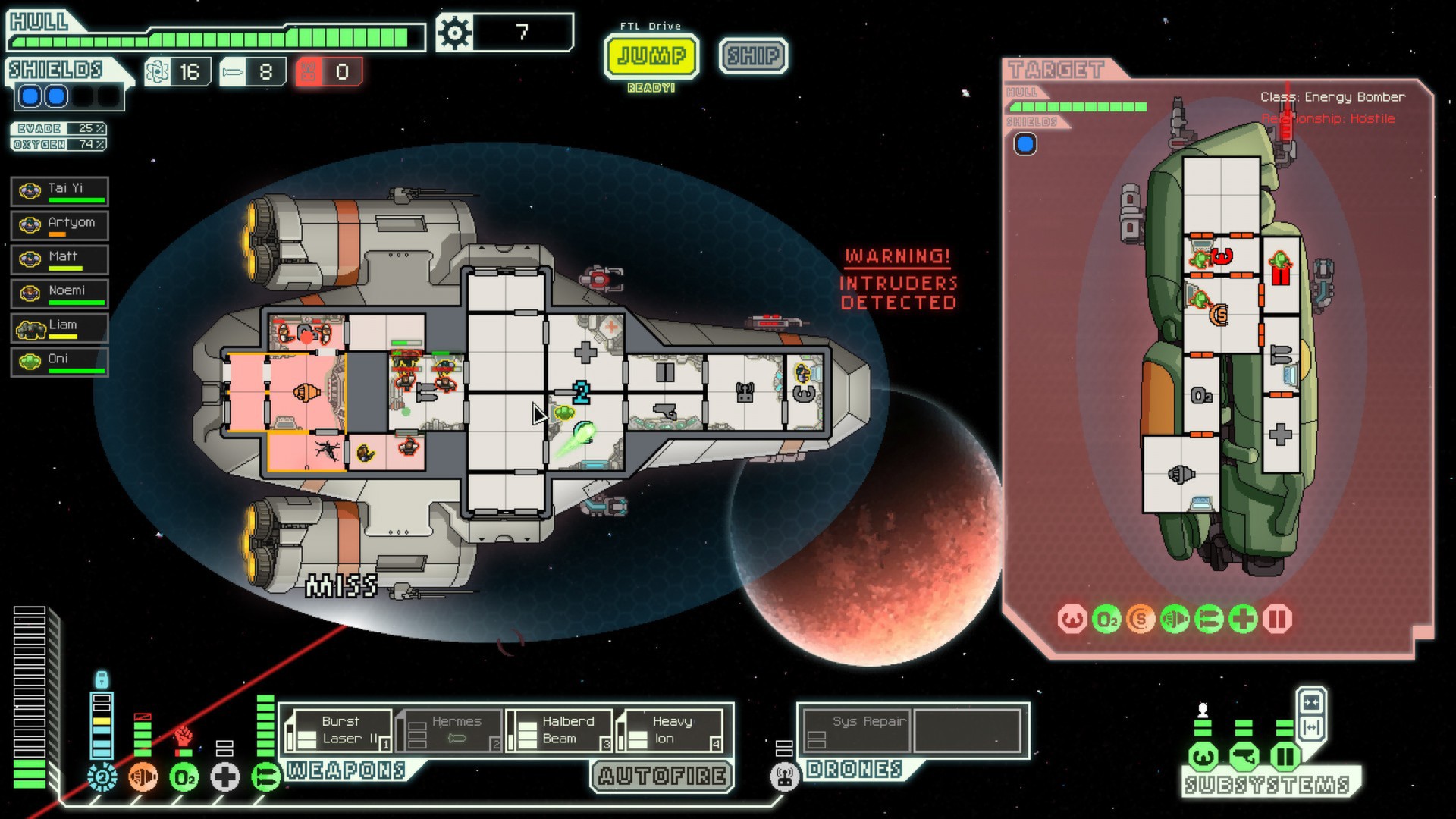
In a quest to save the galaxy, Faster Than Light sees you power up your ship, quest for a handy crew, a devastating array of weapons, and sometimes just a spot of fuel. Real-time with pause combat works around cooldowns, with each battle encounter ending once the enemy ship is destroyed or its crew incapacitated. Honestly, the ship is the real hero, suffering hull breaches and one HP scrapes while slowly building power till it can slay the beast. The chiptune beats and graphics are neither wholly retro, nor AAA trendy, but instead create their own cool aesthetic.

Dream Quest

Dream Quest is simple: proceed through three levels as a chosen class, and build a deck strong enough to escape the realm of dreams. But like its namesake, the twists and turns this progression takes are strange and wonderful. Roguelikes typically rely on random events and imperfect knowledge, yet Dream Quest transforms these uncertainties into a must-play challenge for strategy buffs.

The total card pool is modest and manageable, but in total produces a surprising variety of synergies and unique challenges. Inscrutable sphinxes, malicious mimes, and immortal hydras, all make an appearance as foes, offering show-stopping battles. Dream Quest’s endgame is also supremely satisfying.

Auro

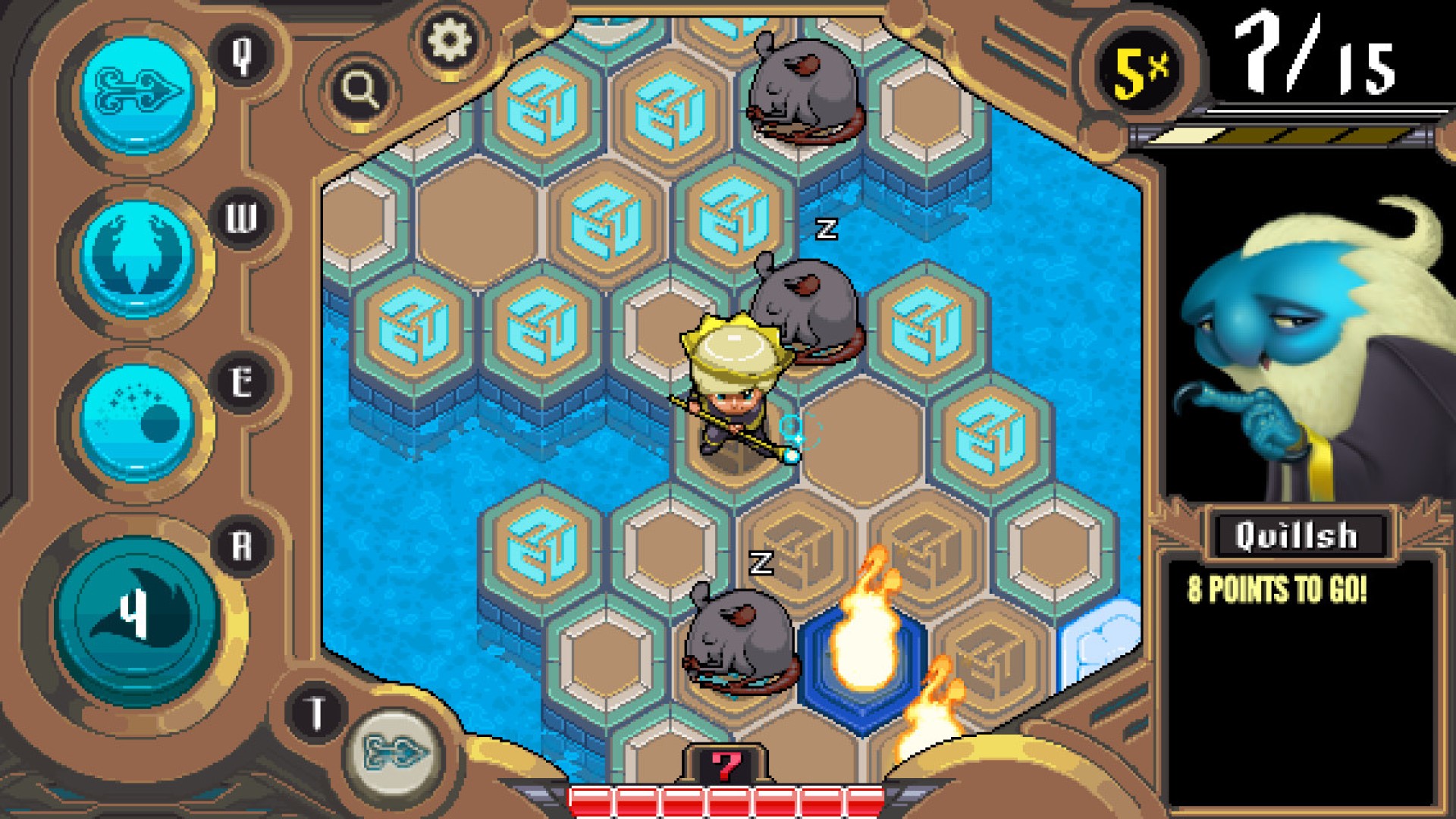
The result of Keith Burgen’s careful tinkering and experiments, Auro is a roguelike that hinges around bumping monsters and creating spell combos. The prince must save the kingdom, judiciously using his magic and skills across this hex-based battler. Speed, precision, and efficiency are paramount, and score-chasing is the measure of success. Not praised enough, and an android exclusive to boot.

Crowntakers

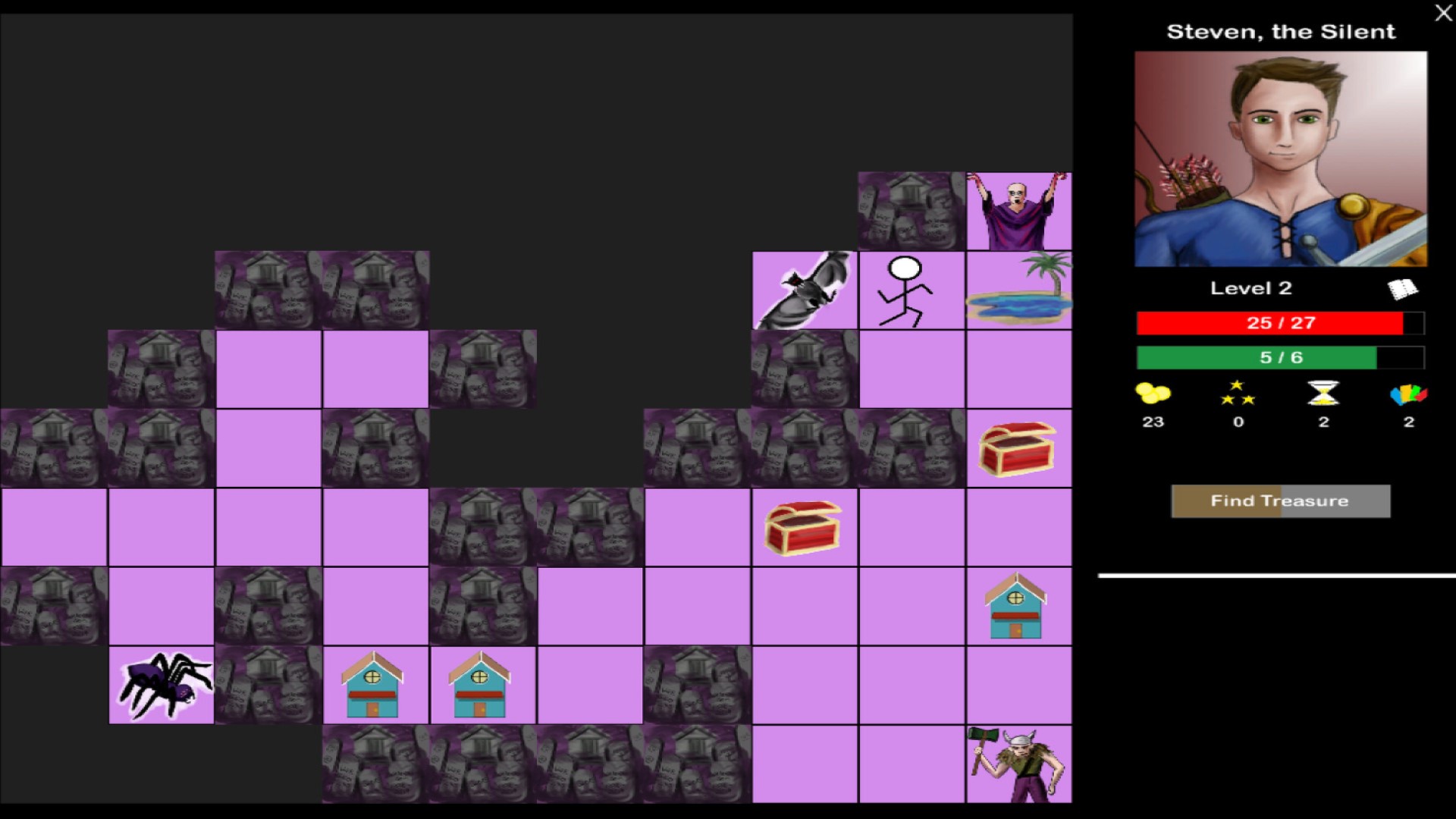
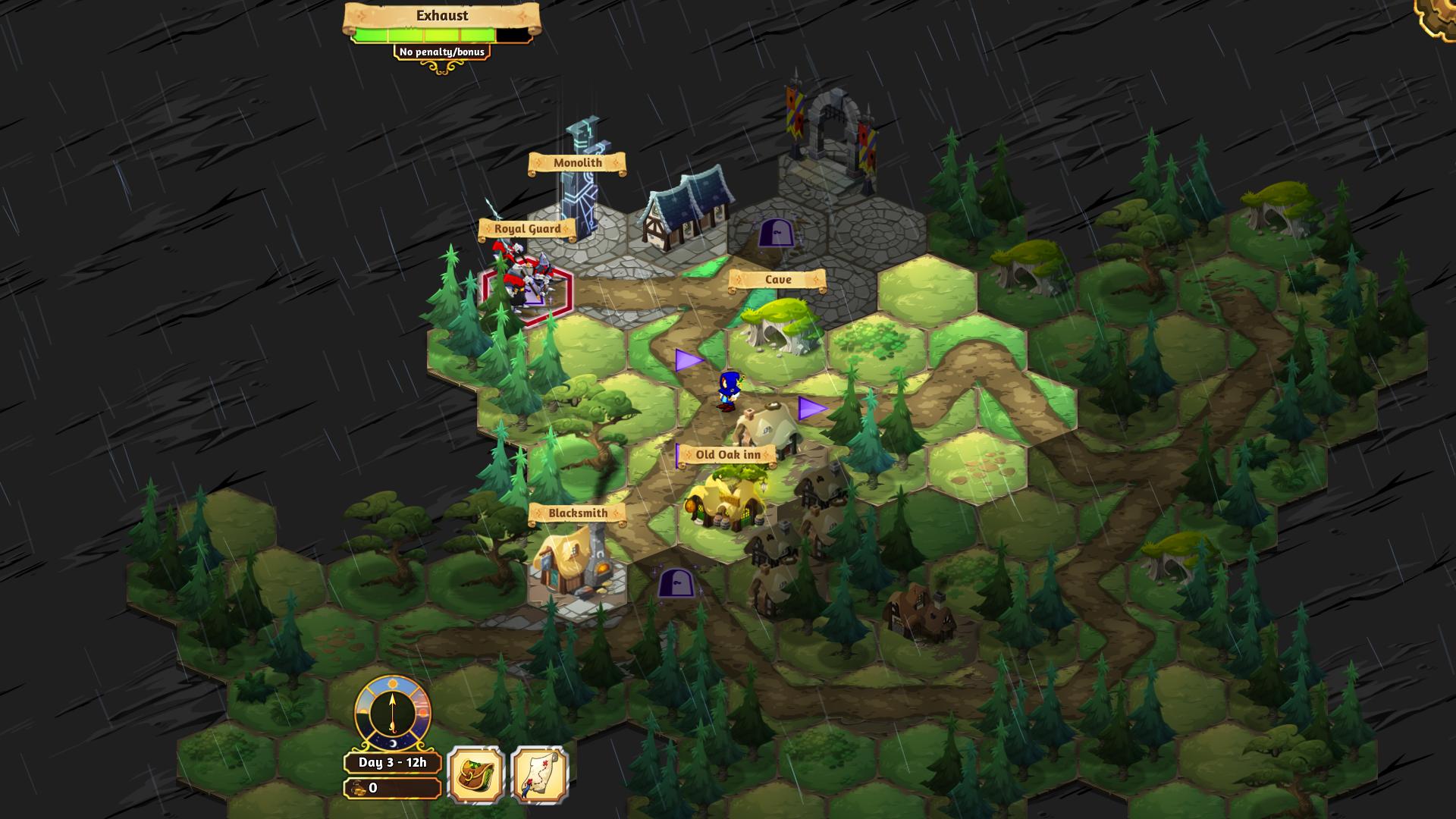
With a sense of scale, while balancing tactical combat with long-term investments, Crowntakers needn’t even be played as a roguelike at all. For one, its alternate play mode is a persistent RPG with unlockables. The emphasis on individual decisions in the game is paramount, from the exploration phase to the combat. But its limitations lie in how carelessly it hides information from the player, about enemy abilities, for example. In short, an excellent, refreshing roguelike RPG that, while outmatched by others, remains a distinct favorite. Check our list of the best mobile RPGs for more like Crowntakers.

Dead cells

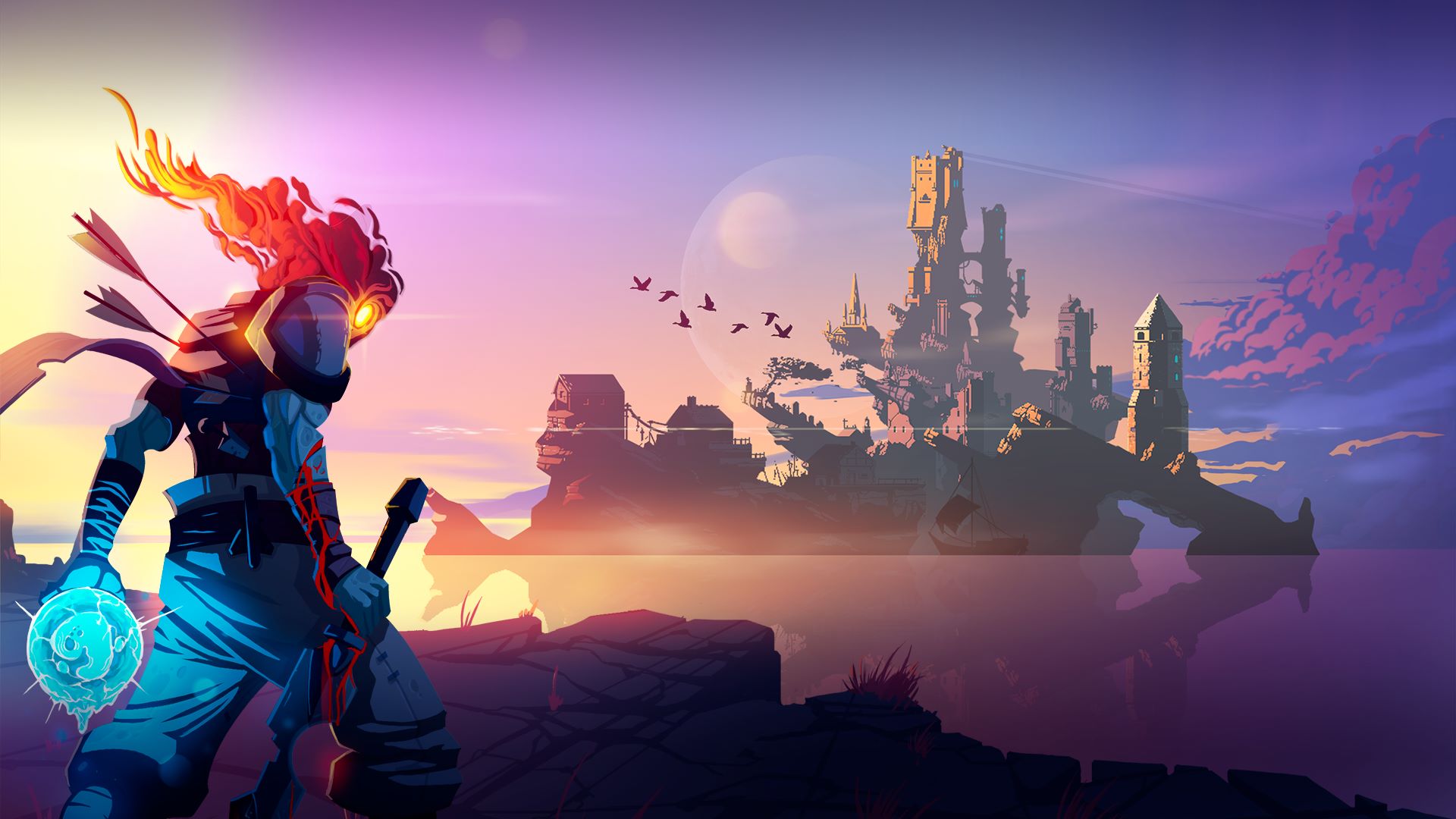
This hack ‘n slash dungeon running roguelike is one of the most popular in recent memory, and made a pretty big splash when it launched on PC back in 2017. Since then it has made its way to Android and iOS. In the game you play as a re-animated corpse of sorts, making its way through an ever-shifting castle trying out different combat combinations and synergies on the enemies and bosses who inhabit it.

Downwell gameplay

Downwell

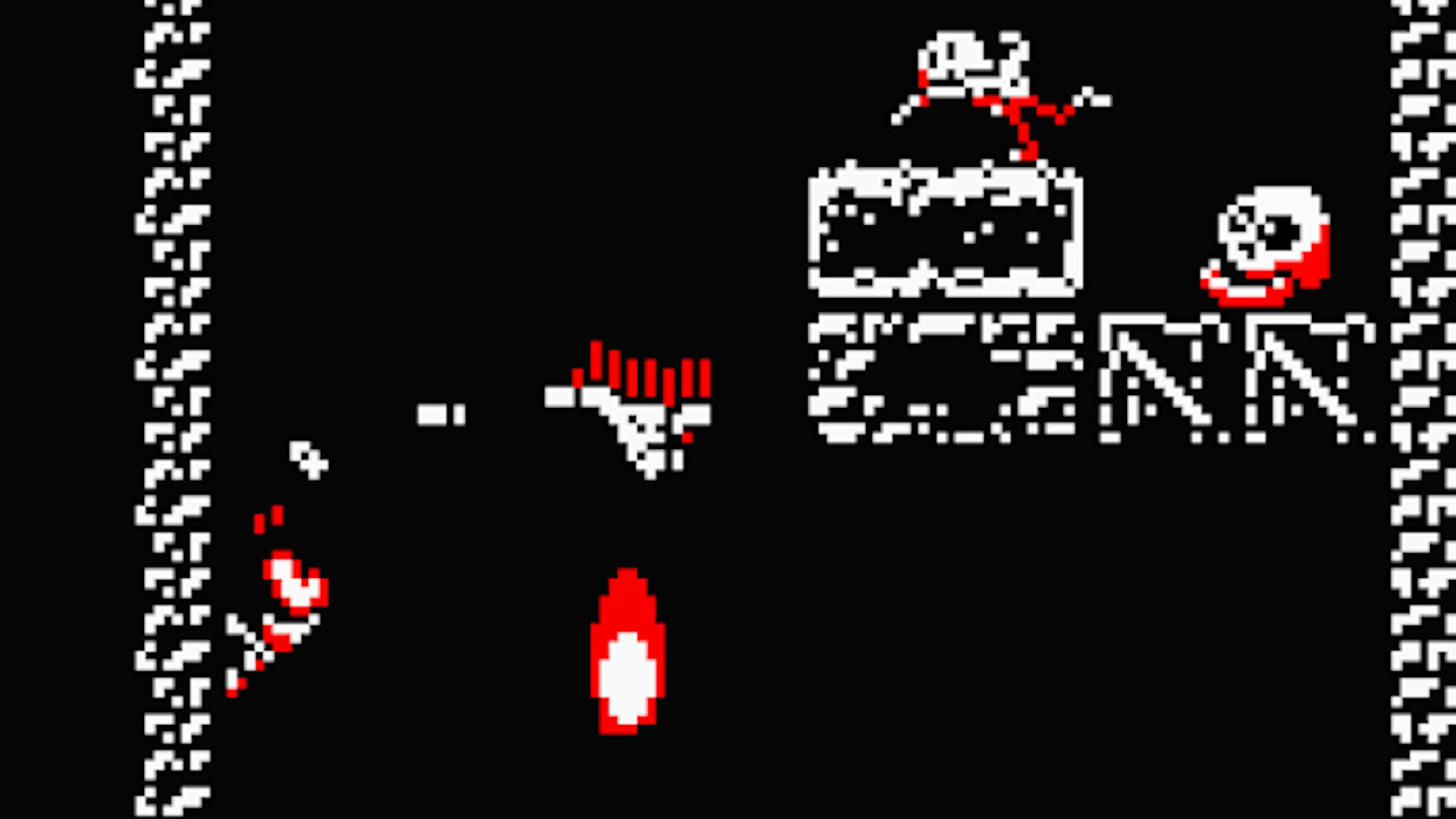
Despite its unassuming look, Downwell possesses the ability to thrill just as much as any other game on this list. It’s a propulsive, intensely challenging roguelike that sees you falling down a monster-infested well with a pair of ruddy gun-boots strapped to your feet. It’s just as awesome as it sounds, especially as you continue to bolster your abilities in the leadup to your epic battle against the game’s final boss.

That’s all the games we’ve got! If you want some more card-based roguelikes, be sure to browse our list of games like Slay the Spire on mobile. You can also actually get Slay the Spire on the App Store now. We hope you find something enjoyable to play!