Posted on Leave a comment

Inside Xbox returns: Tune in noon PT July 10 for breaking news, exclusive interviews

Inside Xbox returns to the spotlight live on Tuesday, July 10 at 3 p.m. ET/12:00 p.m. PT on Mixer, Twitch, YouTube, Facebook, and Twitter with interviews for Forza Horizon 4, We Happy Few, Earthfall, the latest news on Xbox Game Pass and a special story born from the Xbox Live Creators Program you won’t want to miss. Of course, we’ll also have a couple of secrets under wraps, and ready to reveal during the show as well.

Forza Horizon 4: Ralph Fulton from Playground Games will be on-hand to reveal more about Seasons in Forza Horizon 4, but better yet, Inside Xbox will transition to a special hour-plus long broadcast from Playground Games in the UK, where the team will reveal never-before-seen gameplay for the Summer Season in FH4.

We Happy Few: Our friends from Compulsion Games will also drop by with a fresh, in-depth look at the new Story mode they’ve brought to life in the tense, disturbing, and enthralling world of We Happy Few, including a first look at gameplay from a brand-new character’s perspective. Have you had your Joy today?

Earthfall: We’ll also be joined for by the team behind Earthfall, releasing July 13 in the Microsoft Store. We’ll have an exclusive, in-depth look at the action and strategy at the heart of this frantic four-player co-op FPS.

Xbox Live Creators Program: “How do I get into the games industry?” is a universal question always in need of a fresh answer. Inside Xbox traveled to Vancouver Canada to tell the story of one inspiring developer who combined their own hard work and ingenuity, with the access provided by the Xbox Live Creators Program to answer that question on their own terms.

Don’t forget to tune in for these stories and more on July 10 at 3 p.m. ET/12:00 p.m. PT on Mixer, Twitch, YouTube, Facebook, and Twitter. We’ll see you online!

Posted on Leave a comment

July Xbox Update begins rolling out

E3 may be in our rear view like a fall leaf in Forza Horizon 4, but we’ve been busy updating the Xbox experience and adding features that you’ve requested.  The July Xbox Update adds features that make finding content even easier and offers a host of improvements to Mixer. Here’s what’s new:

FastStart UI on Xbox One

FastStart UI on Xbox One

FastStart Enabled for Select Titles
Announced back at E3 2018, FastStart is a new innovation from our Xbox Platform team that allows you to jump into your games twice as fast and play after downloading just a fraction of it. FastStart works by identifying which files are needed to begin playing and prioritizes the download of those files first, enabling you to quickly jump into full-fidelity gameplay while the remainder of your title downloads in the background. Simply find the FastStart-enabled title you want to play in our catalog, hit ‘Download’ and your console will take care of the rest. It’s that simple. What’s more, it’s now enabled for select English language titles in our Xbox Game Pass catalog, and will expand to more games in more languages over time. You can learn more about FastStart here.

Group Your Games and Apps
With so much content available, fans have asked for more options to organize libraries of games and apps.  Today, we’re introducing a powerful new enhancement to Pins, which we call “Groups.” With Groups, you can create multiple collections of content made up of anything from within My Games & Apps. You can also assign custom names to each Group, organize and order them, and add individual Groups to Home. Groups will appear across My Games & Apps, Home and Guide, so you’ll be able to access your Groups at a moment’s notice. Best of all, Groups are tied to your Xbox Live account, so they will automatically sync across multiple Xbox One consoles. We’ve started you off with a Group that should look very familiar — your Pins!

Search Improvements on Xbox One

Search Improvements on Xbox One

More Search Options
Searching for content is now even easier!  Now pressing the Y button anywhere in the dashboard will bring up the search dialog, allowing you to easily launch your content, sift through Settings, or find products in the Store.  This process is found in many apps, but now you can do it anywhere within the dashboard.  Not seeing enough results for your search? Hit enter or click the “more results” button to view a full page for your search results.

Mixer Share Controller Improvements
We’ve made it easier to use Share Controller on the web. First, we’ve enabled full mouse and keyboard support for PC users, along with Share Controller Key Bindings.

Second, we’ve added multi-touch support for touch-enabled devices. This allows multiple controls to be used at the same time! For example, you can control the joystick and press A at the same time on your touch laptop.

And lastly, we’ve added a per-channel leaderboard that spotlights viewers who have contributed to a streamer’s channel the most during a Share Controller session.

Full Screen Broadcasting on Mixer
Mixer streamers can now go full screen with their webcam while broadcasting. You can switch to full screen webcam broadcasting at any time you want. While in this mode game audio is muted, making it perfect for talking to your audience while switching from game to game or setting up before you start playing. You can even do all IRL broadcasts!

For the best experience we recommend using one of these cameras:

  • Microsoft LifeCam Studio
  • Logitech HD Pro Webcam C922
  • Logitech Webcam C930e
  • Microsoft LifeCam HD-3000

Console broadcasting quality and stability improvements
We’ve made a number of changes and fixes to improve overall broadcast video quality.  You will now experience improved performance when broadcasting bandwidth-heavy multiplayer.

All of these updates are available because of the Xbox Insiders who have helped shape these features, so big thanks to all of you for your valuable input.  If you’d like to help create the future of Xbox and get access to early features, download the Xbox Insider Hub app on your Xbox One or Windows 10 PC.  You can also visit the Xbox Insider blog here for the latest release notes and to learn more. Happy gaming!

Posted on Leave a comment

Microsoft UK Chief Executive Cindy Rose: Taking Pride in being an ally for the LGBT community

By Cindy Rose, Chief Executive of Microsoft UK

This year’s London Pride Festival will be held on Saturday, July 7. I see this annual event as a great opportunity to celebrate the diversity and inclusion that makes the capital – and this country – such a great place to live and work.

Hundreds of Microsoft staff will take part in London Pride, with thousands more joining similar celebrations across the world, including Cambridge (August 11), Manchester (August 25) and Reading (September 1). These can be a beacon of hope, and I have loved reading about our employees in Scotland, North America, Brazil, Japan, Poland and elsewhere joining Pride events to embrace who they are as they do what they love.

This is why Pride and being an LGBT Ally is important for everyone at Microsoft.


Many of those taking part are members of GLEAM, Microsoft’s lesbian, gay, bisexual and transgender employee resource group, which has a strong following globally. Microsoft has a long history of diversity and inclusion that continues to this day, and I believe it is one of our strongest assets. In 1993, our company was one of the first in the world to offer employee benefits to same-sex domestic partners; while last year we hosted our first LGBT leadership conference, in Ireland, featuring leaders from more than 20 countries.

This year I want to do more for our LGBT staff, partners and customers. I am delighted to announce that Microsoft Rewards users can now turn the points they earn into cash and donate it to Stonewall, an LGBT equality charity based in the UK.

Stonewall has been supporting the LGBT community for 29 years, working to transform institutions and change hearts, minds and laws so people can feel free to be themselves. I am proud that Microsoft is helping people support this cause to change lives for the better.

Find out more about Microsoft Rewards

To get involved, sign up for a Microsoft Rewards account and earn points by using the Bing search engine, completing online quizzes and buying certain products via the Microsoft Store. You will then be able to give these points to Stonewall in the form of cash.

Microsoft and Stonewall share a mission: to empower individuals. Whether it’s empowering people to achieve more or make change happen, the goal is the same – to help everyone be the best they can be.

Tags: , , , , ,

Posted on Leave a comment

Proposal Manager for financial services helps increase win rates

The commercial and corporate lending environment is increasingly competitive and squeezing interest margins for banks and lenders. Bank lending teams must navigate a stream of documents—such as client financials, collateral assets, and regulatory attestations. They must follow protocols that thoroughly analyze the risk attached to a credit facility and income potential of business loans and capital investments. Since lending proposals contain sensitive client information, strict privacy, security, and compliance measures are required. In addition, financial services institutions are hampered by disjointed systems and manual processes that are costly and slow—often leading to inconsistent results, higher error rates, and increased costs.

To win business in this competitive market, lending teams need the right tools to deliver tailored proposals quickly and easily. Built on the Microsoft 365 platform, the Proposal Manager solution is designed specifically for corporate and commercial banks to:

  • Streamline, automate, and speed up the lending process.
  • Create more effective proposals.
  • Collaborate across the bank with strict confidentiality.

The solution was developed by the Microsoft Financial Services team and developers as part of their focus to build vertical-specific solutions. No other cloud productivity providers offer a true banking-specific, end-to-end proposal management solution—architected from the ground up using the Microsoft 365 productivity suite.

The solution is fully customizable and adaptable by your enterprise development team, so your lending team can:

  • Easily create professional, winning proposals—Save time, sharpen creativity, and present professional commitment letters to increase win rates and improve credit risk management.
  • Streamline proposal management—Simplify the commercial and corporate loan origination process with integrated, automated, and secure tools for document management while orchestrating team workflows and collaboration. Bank managers can facilitate iterative proposal negotiations while ensuring version consistency, empower relationship managers on the go, and help expedite credit committee approvals.
  • Improve collaboration and teamwork—Respond to proposals quickly and collaboratively with connected, company-wide communications and collaboration tools. Meet tight deadlines and keep the proposal process moving seamlessly by sharing and collaborating in real-time. Lead proposal reviews and whiteboarding sessions with enterprise-class email, voice, and video.

The numbers don’t lie. The impact a solution like this could have for your firm is significant. A recent Capgemini study found that back-office commercial bank employees spend about 80 percent of their time on repetitive and manual tasks. The same study also cites that automation will provide more than 25 percent in cost savings by automating data-intensive and repetitive tasks. Can you imagine what all your employees could achieve if their time were freed up to tackle other revenue-generating projects?

The Proposal Manager solution is now available to all Microsoft 365 E5 customers. It’s integrated across existing Microsoft 365 workloads to help you transform your proposal process into an agile, collaborative, secure, and client-centered process without requiring significant IT involvement for deployment.

Sales managers and other business leaders can download the Proposal Manager brochure and engage your IT support and development team to understand more about how the solution can help. IT developers can visit GitHub today to get started.

Posted on Leave a comment

Q&A: How genomic data can boost patient-centered care

Simon kos headshotGenomic data provides the foundation for the delivery of personalized medicine, although cost-effective and secure management of this data is challenging. BC Platforms, a Microsoft partner and world leader in genomic data management and analysis solutions, created GeneVision for Precision Medicine, Built on Microsoft Cloud technology. GeneVision is an end-to-end genomic data management and analysis solution empowering physicians with clear, actionable insights, facilitating evidence-based treatment decisions.

We interviewed Simon Kos, Chief Medical Officer and Senior Director of Worldwide Health at Microsoft, to learn more about how digital transformation is enabling the delivery of personalized medicine at scale.

David Turcotte: What led to your transition from a clinical provider to a leader within the healthcare technology industry?
Simon Kos:
It wasn’t intentional. In critical care medicine, having the right information on hand to make patient decisions, and being able to team effectively with other clinicians is essential. I felt that the technology we were using didn’t help, and I saw that as a risk to good quality care. This insight led to an interest, and the hobby eventually became a career as I got more exposure to all the incredible solutions out there that really do improve healthcare.

Given your unique perspective within the healthcare technology industry, how do you see digital transformation progressing in healthcare?

Digitization efforts have been underway for more than thirty years. As an industry, healthcare is moving slower than others. It’s heavily regulated, complex, and there is a large legacy of niche systems. However, the shift is occurring, and it needs to happen. We have a fundamental sustainability issue, with healthcare expenditure climbing around the world, and our model of healthcare needs to change emphasis from treating sick people in hospitals to preventing chronic disease in the community setting. Each day I see new clinical models that can only be achieved by leveraging technology, enabling us to treat patients more effectively at lower cost.

How are you and other healthcare leaders managing the shift from fee-for-service to a value-based care model?

My role in the shift to value-based care is building capability within the Microsoft Partner Network—which is over 12,000 companies in health worldwide—and bringing visibility to those that support value-based care. For healthcare leaders more directly involved in either the provision or reimbursement side, the challenge is more commercial. Delivering the same kind of care won’t be as profitable, but adapting business processes comes with its own set of risks. I think the stories of organizations that have successfully transitioned to value-based care, the processes they use, and the technology they leverage, will be important for those who desire more clarity before progressing with their own journeys

What role does precision medicine play in delivering value-based care?

Right now, precision medicine seems to be narrowly confined to genetic profiling in oncology to determine which chemotherapy agents to use. That’s important since these drugs are expensive, and with cancer it’s imperative to start on a therapy that will work as soon as possible. However, I think the promise of precision medicine is so much broader than this. In understanding an individual’s risk profile through multi-omic analysis (i.e. genomics), we can finally get ahead of disease before it manifests, empower people with more targeted education, screen more diligently, and when patients do get unwell, intervene more effectively. Shifting some of the care burden to the patient, preventing disease, intervening early, and getting therapy right the first time, will drive the return on investment that makes value-based care economically viable.

As genomics continues to become more democratized, how will we continue to see it affect precision medicine?

It’s already scaling out beyond oncology. I expect to see genomics have increasing impact in areas like autoimmune disease, rare disease, and chronic disease. In doing so, I think precision medicine will cease to be something that primary care and specialists refer a patient on to a clinical geneticist or oncologist, instead they will integrate it into their model of care. I also see a role for the patients themselves to get more directly involved. As we continue to understand more about the human genome, the value of having your genome sequenced will increase. I see a day when knowing your genome is as common as knowing your blood type.

What role can technology play in closing the gap between genomics researchers and providers?

I think technology can federate genomics research. Research collaboration would tremendously increase the data researchers have to work with, which will accelerate breakthroughs. The more we understand about the genome, the more relevant it becomes to all providers. I also think machine learning has a role to play. Project Hanover aims to take the grunt work out of aggregating research literature. Finally, I think genomics needs to make its way into the electronic medical records that providers use, ideally with the automated clinical decision support that help them use it effectively.

What challenges are healthcare leaders facing when implementing a long-term, scalable genomics strategy?

On the technical side, compute and storage of genomic information are key considerations. The cloud is quickly becoming the only viable way to solve for this. Using the cloud requires a well-considered security and privacy approach. On the research side, there’s still so much we have to learn about the genome. As we learn more it will open new avenues of care. Finally, on the business side, we have resourcing and reimbursement. The talent pool of genomics today is insufficient for a world where precision medicine is mainstream. These specialized resources are costly, and even with the cost of sequencing coming down, staffing a genomics business is expensive. And then there’s the reality of reimbursement – right now only certain conditions qualify for NGS. So, I think any genomics business needs to start with what will be reimbursed but be ready to expand as the landscape evolves.

How do genomic solutions like BC Platforms’ GeneVision for Precision Medicine have the potential to transform a provider’s approach to patient care?

Providers are busy, and more demands are being placed on them to see more patients, see them faster, but also to personalize their care and deliver excellent outcomes. BC Platforms’ GeneVision allows insights to be surfaced from the system level raw data and delivered to the clinician to assist them in meeting these demands. The clinical reports that can be leveraged through GeneVision enable providers to make critical decisions about therapies and treatment within the context of their existing workflows.

In addition to report generation, GeneVision optimizes usage of stored genomic data so that when it is produced, it can be repeatedly re-utilized by merging it with clinical data as many times as a patient enters the health care system. GeneVision makes this possible through BC Platforms’ unique architecture, the dynamic storage capabilities of Microsoft Azure cloud technology, and Microsoft Genomics services. Together, these capabilities make genomic solutions like GeneVision a key factor in delivering patient-centered care at scale.

What will it take for genomics to become a part of routine patient care?

The initial barrier was cost. I think we are past that, with NGS dipping below $1000 and continuing to fall. Research into the genome is the current challenge. Genomics will eventually touch all aspects of medicine, but given the previous cost constraints we are the most advanced in oncology today. A key benefit of GeneVision is that it supports both whole genome sequencing and genotyping, which is currently the more cost-effective method to generate and store genomic data.  Although the cost of whole genome sequencing is coming down, this flexibility is essential to enabling rapid proliferation of genomics applications in healthcare. The future challenge will be educating the clinical provider workforce and introducing new models of care that leverage genomics. I think the reimbursement restrictions will melt away organically, as it becomes clearly more effective to take a precision approach to patient care.

What future applications of genomics in healthcare are you most excited about?

I’m really excited about the evolution of CRISPR and gene editing. Finding that you have a genetic variant that increases your risk of certain diseases can be helpful of course—it allows you to be aware, to screen, and take preventative steps. The ability to go a step further though and remediate that variant I think is incredibly powerful. At the same time, gene editing opens all sorts of other ethical issues, and I don’t yet think we have a mature approach to considering how we tackle that challenge.


BC Platforms GeneVision for Precision Medicine, Built on Microsoft Cloud technology, is available now on AppSource. Learn how GeneVision equips physicians with the tools they need to improve and accelerate patient outcomes by trying the demo today.

Posted on Leave a comment

GeekWire: ‘Special Olympics open in Seattle with celebration of inclusion; Microsoft CEO applauds athletes’ spirit’

Special Olympics
Microsoft CEO Satya Nadella addresses the crowd at the Opening Ceremony for the 2018 Special Olympics USA Games at Husky Stadium in Seattle on Sunday. (GeekWire Photo / Kevin Lisota)

The 2018 Special Olympics USA Games opened in Seattle on Sunday at the University of Washington’s Husky Stadium with a parade of athletes and musical performances and inspiring moments meant to showcase acceptance and inclusion.

Microsoft CEO Satya Nadella was among the dignitaries who took the stage to offer encouraging words to those in attendance. The Redmond, Wash.-based tech giant is the premier corporate partner for the Games.

Microsoft CEO Satya Nadella addresses the crowd at the Opening Ceremony for the 2018 Special Olympics USA Games at Husky Stadium in Seattle on Sunday. (GeekWire Photo / Kevin Lisota)

Here are Nadella’s comments in full:

“It’s such an honor to be here today. The energy, the enthusiasm in this stadium is palpable and it’s incredible. On behalf of everyone at Microsoft I want to extend the warmest of welcomes to all of you to Seattle.

“Your courage, your spirit and the pursuit of passion are truly inspiring. We can’t wait to watch all your hard work and training come together as you compete this week. But Special Olympics is about much more than just sports and competition. It’s a model for building a more inclusive world. A world where everyone is celebrated for their unique abilities. A world where everyone is invited to participate.

“Being right here in Husky Stadium, I’m reminded of one of my favorite books, ‘The Boys in the Boat.’ It’s based on an inspiring story about a University of Washington crew team that against all odds made it to the 1936 Olympic Games and took home the gold. It’s a reminder of the power of teamwork and perseverance, and there’s a passage that’s fitting for us all here today. There is a thing that sometimes happens in rowing, it’s called ‘the swing.’ It only happens when all the eight oarsmen are rowing in such perfect unison that no single action by any one of the team is out of sync with those of the others. An inclusive world — that’s what good swing looks like.

“Together you’re showing the world what is possible when we reflect the perspectives and the experiences to everyone. So enjoy the moment. You have achieved so much and you’re building such an amazing, inclusive world.”

An athlete is carried into Husky Stadium on his teammates’ shoulders as others high five members of the Blue Thunder drum line. (GeekWire Photo / Kevin Lisota)

More than 4,000 athletes and coaches from the across the United States are scheduled to compete in 14 team and individual sports across Seattle as the Games run through Friday. Tens of thousands of family members, volunteers and spectators have converged on the city.

‘Defining moment’ for Seattle as Microsoft, Amazon, others support Special Olympics USA Games

Sunday’s festivities, broadcast live on ESPN, were emceed by actor Taye Diggs and featured musical performances by DJ Marshmello, Charlie Puth, Allen Stone and Heart’s Ann Wilson, who sang the “National Anthem.” The Seattle Seahawks’ Blue Thunder drum line participated and the team’s recent draft pick, Shaquem Griffin, served as grand marshall for the parade of athletes into Husky Stadium.

Microsoft President Brad Smith was among a number of executives who would be competing in the first-ever ESPN / Special Olympics Unified Sports Challenge at the UW’s Husky Ballpark later on Sunday.

(GeekWire Photo / Kevin Lisota)

The execs, their employees, celebrities and Special Olympics athletes — on teams of five people — were competing in multiple Unified Sports challenges including Hot Shot Basketball, Penalty Shot Soccer, Electronic Dance Game, Bocce, Inflatable Dart Board, Football Accuracy Challenge, Giant Memory Game and Golf Putting.

DocuSign also participated with a team led by CEO Dan Springer and Starbucks’ team was led by Vivek Varma, EVP for public affairs. Seattle sports celebs competing included Gary Payton, Steve Largent, Walter Jones, Apolo Ohno, Jim Zorn, Kasey Keller and more.

Microsoft President Brad Smith speaks at Husky Stadium in his role as honorary chairman of the Games. (GeekWire Photo / Kevin Lisota)

Microsoft’s Smith also took the stage at Husky Stadium as honorary chairman of the Games to offer his own comments in support of the athletes. Here are those comments in full:

“All of us in Seattle have been working for the last 2 1/2 years to get ready. To get ready for today. To welcome all of you and your family and your friends. We are so happy that you are here.

“Every time a city has the opportunity to host an Olympic event or a World’s Fair, it’s an opportunity not only to be a great host, but to create a legacy. Fifty-five years ago, Seattle hosted the World’s Fair and it built a legacy, an icon — the Space Needle, a symbol that people associate around the world with this place. But this week we will build a bigger legacy still. It is in each and every one of you.

“Together we have an opportunity to build a legacy of understanding, of appreciation, of commitment. A commitment for each of us to bring out the best in ourselves, to bring out the best in everyone around us. That is what each and every one of you represent.

“When we think about what we will all do this week, whether we’re competing or spectating and cheering all of you on, this is a week when we can do even more than rise together. We can stand together, we can stick together and more than anything else we can build together. Let’s build a legacy, a legacy that lasts.”

Washington Gov. Jay Inslee greets the crowd in Seattle on Sunday. (GeekWire Photo / Kevin Lisota)
Special Olympics Chairman Tim Shriver cheers on the athletes alongside Frannie Ronan, an 8-year-old gymnast from Kirkland, Wash., and the youngest competitor in the Games. (GeekWire Photo / Kevin Lisota)

Washington Gov. Jay Inslee officially welcomed the Special Olympians to the state. In addressing the crowd, Inslee said everything needs to be done to fight back against the “dark forces” of fear that work against inclusion in society.

At the end of the Opening Ceremony, the Flame of Hope completed its journey to Seattle and into Husky Stadium. Jennifer Goodley, a 37-year-old powerlifter from Bremerton, Wash., took the final handoff and lit the official cauldron.

Special Olympics 2018 USA Games cauldron (GeekWire Photo / Kevin Lisota)

Griffin, the Seahawks’ inspiring rookie, who had a hand amputated as a young child, then declared the 2018 Special Olympics USA Games officially open.

DJ Marshmello performs as one of the musical acts for the Opening Ceremony of the Special Olympics. (GeekWire Photo / Kevin Lisota)

If you want to follow the Games more closely throughout the week, a new, free mobile app was launched over the weekend. The app, developed by AppInteract on Microsoft’s Azure platform, features sports schedules, details on athletes and teams, venue information, events and news. Download for iOS or Android.

ESPN will also provide in-depth coverage throughout the week on its app and on ESPN.com. And ESPN3 will carry live streaming coverage from swimming competition taking place at the Weyerhaeuser King County Aquatic Center.

Special Olympics USA Games choir (GeekWire Photo / Kevin Lisota)
Posted on Leave a comment

2 new Xbox One bundles: Check ’em out, ‘PlayerUnknown’s Battlegrounds’ and ‘Minecraft’ fans


Games play best on Xbox One, but for those of you that haven’t already made the jump, we have two new bundles joining the Xbox One family today: the Xbox One X PlayerUnknown’s Battlegrounds Bundle and the Xbox One S Minecraft Bundle. More details below:

Xbox One X PlayerUnknown’s Battlegrounds Bundle

With over 8 million players on Xbox One, PlayerUnknown’s Battlegrounds has been one of the most popular games on the platform since its release as a console launch exclusive in the Xbox Game Preview program. Today, you can join the Battle Royale phenomenon with the Xbox One X PlayerUnknown’s Battlegrounds Bundle, which comes with the following:

  • Xbox One X with a 1TB hard drive
  • Xbox Wireless Controller
  • Full-game download of PlayerUnknown’s Battlegrounds enhanced for Xbox One X
  • 1-month Xbox Game Pass trial
  • 1-month Xbox Live Gold trial

The Xbox One X PlayerUnknown’s Battlegrounds Bundle is available later this week for $499 USD at most major retailers worldwide.

Xbox One S Minecraft Bundle

If the Xbox One S is more your style, we’ve also got the Xbox One S Minecraft Bundle. Beat the summer heat with the cool new Update Aquatic and explore new ocean biomes, shipwrecks, ruins and more. Infinite worlds and ways to play can be found in this bundle, as well as the option to play with your friends on nearly any other platform thanks to Xbox Live! Join millions of players in the Minecraft community on Xbox, Windows, Nintendo Switch and mobile devices with this new bundle, which comes with the following:

⦁ Full-game download of Minecraft featuring the exciting Update Aquatic plus the Explorer’s Pack
⦁ Season one of Minecraft: Story Mode – The Complete Adventure
⦁ 1-month Xbox Game Pass trial
⦁ 14-day Xbox Live Gold trial

The Xbox One S Minecraft Bundle starts shipping today and will be available soon for $299 USD at select retailers in select regions. In the U.S., the bundle is exclusively available at Microsoft Store and Walmart.

Xbox One is the only console system that plays the best games of the past, present and future with more than 1,300 games available today – including over 200 exclusives and over 400 Xbox classics. If you’re on Xbox One S or Xbox One X, you can also enjoy the ultimate 4K entertainment experience with a built-in 4K UHD Blu-ray player, premium audio with Dolby Atmos support and the fastest, most reliable gaming network with Xbox Live.

Grab the bundle of your choice at the Microsoft Store.

Posted on Leave a comment

Meet Europe’s challengers for the $100,000 prize in Microsoft Imagine Cup 2018

From environmental sustainability, protecting human rights, empowering the disabled and disadvantaged, driving up literacy rates and much more, technological innovation has the power to make our world a better place.

That’s where initiatives like Microsoft’s Imagine Cup come in – helping to encourage the brightest and best students to develop world-changing technology projects by unlocking their creativity.

Founded in 2003, it’s now the world’s biggest student technology competition, with tens of thousands of students participating from around the world each year.

This year, the global final will take place in Seattle on 25 July, with the first prize of $100,000, mentorship opportunities and Azure credits all to play for.

The winners will be awarded $100,000, a mentoring session with Microsoft CEO Satya Nadella, a $120,000 Azure Grant and a trip to next year’s Build developer conference.

The Europeans are coming
Europe has long been a hotbed of computing talent. From “father of AI”, Alan Turing, to World Wide Web inventor Tim Berners-Lee, Nikola Tesla, the Lumière brothers and more, leading figures from the region have contributed to some of history’s most thrilling technology innovations. Now it’s time for the next generation to step out of the shadows.

So, who’s competing from Europe? Let’s take a look at the 14 teams travelling to Seattle and the projects they’ll be hoping to wow the judges with.

Team TBC (Belarus)
This project uses a neural network to determine psychogeometric characteristics of a person from photographs, which allows more effective communication according to their individual characteristics, with a focus on business and sales settings. The use-case is to help companies hire the right students by sophisticated data-driven algorithms based on psychology, face/gestures-recognition and company culture assessment. The algorithms can also be used to help out the service industry to better communicate with customers based on psycho-type and emotion detection in real time.

Read more

Theatrall (France)
Theatrall aims to make theaters accessible for everyone through simple software available on smartglasses, smartphones or tablets, which will display the production subtitles in the language chosen by the user. The goal is to make theatre experiences accessible for everyone, such as people with hearing impairments, non-native language speakers, or simply for those wishing for subtitles.

Read more


Soul Sailor (Germany)
Soul Sailor is a platform that provides psychological care for refugees and asylum seekers, including a chatbot to help individuals process their experiences while seeking refuge. Soul Sailor supports refugees dealing with mental illnesses such as PTSD or depression by providing psychological care and eliminating factors out of their surroundings which contribute to their issues. The platform is powered by an AI and data-driven digital companion called Mayu, who interacts with the user via speech and helps them express their experiences and worries. In addition, the system also allows fled relatives who have been separated to communicate with a novel event-based network solution.

Read more

NASC (Germany)
NASC is a web app that allows you to search for news articles on the web, attempts to evaluate sentiments in those articles and then visualizes the results. The goal is to encourage people interested in politics and other important topics and events to go beyond the first search result and to look at multiple articles that express different views about the same topic. To achieve this, NASC offers three different result views. The Map view helps portray geographical differences in the attitude towards a given issue. The Timeline view visualizes the development of the sentiment towards an issue over time, and the List view provides a familiar user interface similar to regular search engines and shows more details at first glance than the other, more specialized views.

Read more

Pavo (Germany)
Pavo Vision makes digital content accessible to visually impaired users, by utilizing advanced AI, Cloud Computing and the power of the community. Visual content in websites, documents, and other digital assets gets analyzed and equipped with a description of the visual for visually impaired users by the Pavo Vision System. Mistakes in the analysis can be reported by the Pavo community to train the system, making the models smarter over time. The Pavo Vision system is currently available as a browser plugin, with future support for Microsoft Teams planned.

Read more

StudySmarter (Germany)
StudySmarter is an intelligent learning platform, designed to help students achieve their educational goals and graduate from university. The platform digitizes the entire learning process, making it more efficient, structured and engaging. Machine learning algorithms accompany the student through the entire learning experience by automating or creating learning materials such as summaries, mind maps or flashcards with just a few clicks. In addition, the student is automatically connected with fellow students.StudySmarter not only saves time learning, but also boosts motivation.

Read more

iCry2Talk (Greece)
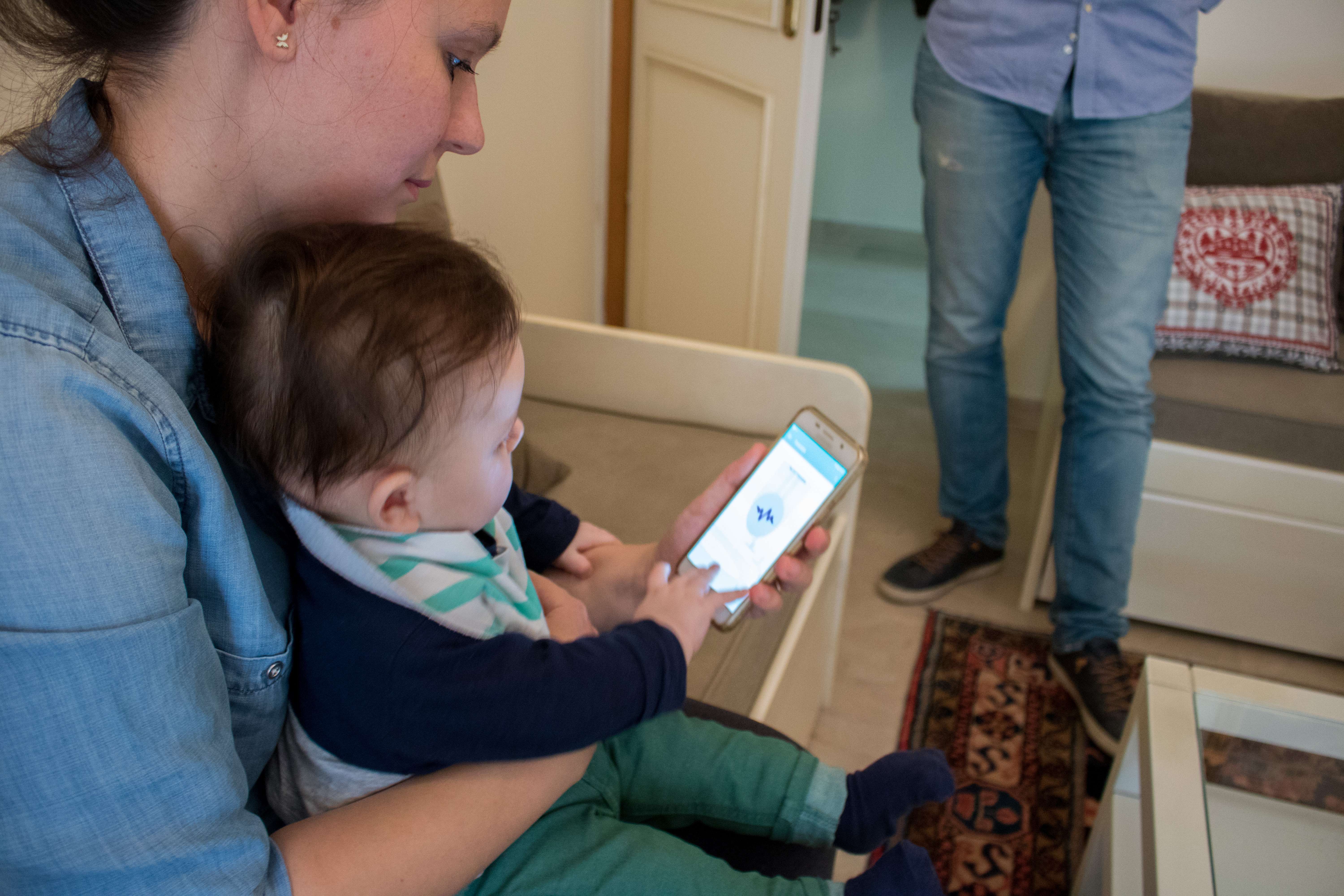
iCry2Talk proposes a low-cost and non-invasive intelligent interface between infants and parents. Baby’s cries are translated in real-time, being associated with specific physiological and psychological states. Results are depicted in text, image and voice messages. iCry2Talk believes that the efficient combination and analysis of different sources of information through advanced signal processing techniques and deep learning algorithms can provide meaningful and reliable feedback to parents.

Read more

Innobie (Hungary)
Innobie is a smartphone app to help students understand the curriculum they are reading in textbooks. The app projects a virtual augmented 3D image over 2D illustrations in books, and can help elementary students learn biology, chemistry, geography, history, and more. By allowing users to explore virtual objects from all angles, they can gain a deeper understanding for more complex subjects than a mere 2D image would be able to provide.

Read more

DeafKIT (Moldova)
DeafKIT is an automatic solution for sign-language translation based on neural networks. Translations are provided with video capturing to make communication easier and more effective, with up to 100% accuracy. The solution aims to be used on trading centres, social networks and more.

Read more

Wavy (Poland)
Wavy is an underwater locator for scuba divers which allows divers to track each other via a small device, which can prove to be vital during emergency situations. In addition to its safety benefits, the Diving Logbook feature tracks the route, depth and temperature of each dive. Diving bases can also measure the most popular routes to help recommend them to customers.

Read more

VisionX (Romania)
XVision is a system designed to automatically detect anomalies and diseases encountered anywhere in the human body with radiologist-level accuracy, just by analyzing common medical X-ray images with the help of the latest Azure AI technologies such as Machine Learning. The system will provide a crucial solution for people in areas of the world that lack access to radiology diagnostics while also acting as an assistant tool for the medical experts examining radiographs.

Read more

Coffee Break (Russia)
Coffee Break utilises spectrometry in an innovative way by labeling tradeable goods. this amazing tool in the business for labeling of tradable goods. The solution can be used in a variety of ways, such as counterfeit detection, by comparing goods to the known qualities of their genuine counterparts. The tool can also be used to track expensive items such as wine.

Read more

InterviewBot (UK)
InterviewBot is a web-based application tailored to aid students with video or physical interviews when applying for jobs by providing real-time feedback on interview-style questions. Companies can also use this tool to assess their candidates’ performance, while a written transcript allowing employers to dissect interviews in detail. It uses facial analysis and speech recognition to offer real-time feedback on facial expressions during practice interviews, informing users whether their style is positive, neutral, or negative.

Read more


Black Light (UK)
Black Light’s project, Firepoint, is a First-Person mixed reality simulator, built around helping firefighters explain and display what their daily work environment is like without putting anyone at risk. The simulator allows users to see through the eyes of a firefighter as they make their way through a multi-story training ground with a variety of different encounters to tackle. The goal is to use this tool to help firefighters in community outreach, recruitment, and training.

Read more

Tags: ,

Posted on Leave a comment

‘Chance at greatness’: Former Army paratrooper lands at Kronos after graduating from Microsoft Software & Systems Academy

To Ashish Singh, your network matters. More specifically, your support network.

For the paratrooper medic turned software engineer, that network has always helped him navigate life’s twists and turns. It’s what brought him from Nepal to America when he was 17 years old. It’s what led him to enlist in the U.S. Army. And it’s why he chose to work at Kronos Incorporated—a global leader in workforce management and human capital management software—after graduating from Microsoft Software & Systems Academy (MSSA). The rewards have been consistent, and hard-won.

A solid educational foundation eluded Ashish in childhood. “We could barely afford my school,” he says, “and because of political unrest, the school was shut down often.” His mother dreamed of sending Ashish, her only child, to study in America. Eventually, in January 2008, her dream was realized when Ashish and two of his friends were accepted at Ferris State University in Michigan. They arrived with almost nothing—save one another. Even now, Ashish mostly remembers feeling overwhelmed.

“My English was horrible. People would ask me to repeat myself about a thousand times a day,” he says.

Determined to make the most of his opportunity no matter the obstacles, Ashish began to study manufacturing engineering. But after a couple years—during which he pivoted his studies toward computer science and earned a scholarship to study computer engineering—Ashish couldn’t shake the feeling that there was more he wanted to do.

“I’d always wanted to do something great,” he says, “but throughout that time, I felt like I was studying for my family rather than for myself.”

Then, with just one semester remaining in his degree program, Ashish stumbled upon what seemed to him a chance at that greatness: The U.S. Military Accessions Vital to the National Interest (MAVNI) program.

Originally established to enlist foreign nationals in the U.S. military to bolster its foreign language capabilities and improve cultural diversity, the MAVNI program was temporary, Ashish knew; it had been suspended once before. So he chose not to risk waiting until after graduation to enlist. He even hoped to pursue computer engineering after enlisting.

But when a physical exam revealed that Ashish was colorblind and therefore disqualified from pursuing IT in the Army, he was unsure of what to do. He chatted with his bunkmates and discovered they were hoping to become paratroopers. Before long, Ashish was training with them to come to the rescue of their fellow soldiers around the world.

Ashish Singh and Army Sgt. Mario Da Silva in Capri, Italy.
Ashish and Army Sgt. Mario Da Silva exploring Capri while stationed in Italy.

Stationed in Italy, Ashish traveled and trained with allies throughout Europe. Alongside the intensity, Ashish found solidarity and a sense of pride. With support from family, friends, and fellow soldiers, he was doing his “something great.”

Then, after a bad jump on a training route over Germany resulted in a back injury, it came time for Ashish to consider his own health. He and his wife—whom he’d met and married in Latvia—relocated to Fort Bragg in North Carolina. But, despite limiting his physical activity, Ashish’s pain worsened. His wife encouraged him to consider other options, and so his thoughts returned to software engineering.

Through his network of friends and former classmates, Ashish learned about MSSA, a Microsoft Military Affairs program launched in 2013 to help U.S. service members and veterans transition from the military into technology careers. He applied and was accepted into the second MSSA cohort at Fort Bragg, which taught Cloud Application Development.

Now available at 14 military locations nationwide, MSSA can graduate up to 1,000 participants each year. Graduates are guaranteed interviews with Microsoft and/or some of the program’s 280 hiring partners. On average, graduates land IT jobs with annual salaries starting at $70,000.

Amid the demanding coursework, Ashish once again found value in the camaraderie of his cohort. “Even more than the course, we learned from each other,” he says. “We helped each other out, we created and implemented projects together, we attended meetups together.”

They even prepared for interviews together. Ashish applied and interviewed at several of the program’s hiring partners, but Kronos stood out from the start for its culture, which has earned it accolades around the world, including Fortune magazine’s “100 Best Companies to Work For,” Glassdoor’s “Best Places to Work,” and Forbes’ “America’s Best Employers.” When it came to deciding which job offer to accept, the community appeal won out.

“We recently asked our interns to count how many potlucks, cakes, dinners, and other activities we’ve had,” Ashish says. “They lost count.”

But even better, he says, is the support to grow professionally. As an MSSA hiring partner, Kronos is committed to helping participants like Ashish effectively transition into a rewarding career—offering support and guidance they might not receive elsewhere. The result is a close partnership that is helping to address the need for more skilled workers in technology while also equipping transitioning service people to thrive in a digital world.

Ashish touring Capri, Italy, with his friends.

“Veterans across all branches of the military have honed exceptional skills and abilities that are in high demand for technology companies—including paying careful attention to detail, executing in a high-stress environment, and collaborating to fulfill a mission,” said Kristen Brown, vice president of global talent acquisition at Kronos. “Yet translating what they’ve learned and what they’ve done into corporate speak doesn’t always come naturally in the transition to civilian life. Programs that help veterans develop business-world confidence and open the doors to corporate opportunities are invaluable.”

In his role as a front-end developer, Ashish is generally focused on application modules that impact user experience. But he’s taking advantage of the opportunity to grow in multiple ways. For example, given his background and broad interest in coding, his mentor also gives him opportunities to work on back-end scripting. And to cap it off, he finished his last semester of school, earning his computer science degree online in May 2018.

“With everything going on, I thought I would never graduate,” he says. “But nobody in my family has a degree, so I wanted to be the first one and make my mom proud.” He’s looking forward to walking in the graduation ceremony in December 2018.

“I’m going to walk, just for her,” he says.

Because in the end, it’s always been a team effort.

Posted on Leave a comment

Windows 10 Tip: Yikes, stop that sound! Mute-a-tab in Microsoft Edge

Does this sound familiar? You’ve got multiple tabs open in your browser and all of a sudden, music or voices blares from one of them. You scramble to find the audio icon on that tab, open the page and scroll down to stop the video that’s playing.

There’s a faster way to shut down that sound.

A new feature with the Windows 10 April 2018 Update can mute tabs in Microsoft Edge.

Here’s how to do it:

Cursor moves to a tab playing music, clicking on it to mute

To mute a tab in Microsoft Edge, click the audio icon

Simply click the audio icon or right-click the tab to choose Mute from the drop down menu.

If you like this, check out more Windows 10 Tips.