Posted on Leave a comment

Samsung confirms terrible earnings for the holiday quarter, and it will only get worse


Samsung is warning that it expects profits to be down more than Apple’s revision, because of the worsening Chinese economy inducing weak memory demand coupled with a bad smartphone market —and at least the next two quarters are likely going to be impacted as well.

Samsung Galaxy Note9

Profits are estimated to have come in at 10.8 trillion won, or about $9.67 billion, Samsung said. That’s below earlier expectations, and results for the past two quarters, though Samsung tends to stagger major product releases throughout the year, instead of favoring the September and December quarters like Apple.

Sales revenue is estimated at about 59 trillion won, or $52.4 billion, down almost 11 percent versus a year ago. Samsung said it was hurt by a drop in memory demand from data center customers and a simultaneous dip in memory prices caused by a lack of consumer and manufacturer demand.

Mark Newman, a managing director at investment firm Sanford C. Bernstein, explained the situation to CNBC.

“That’s following about 24 months of very, very aggressive growth,” he said. “So, suddenly, what’s happened is data center companies such as Amazon, Microsoft, Google…these companies suddenly have enough memory, and they stopped ordering.”

Samsung didn’t provide much color on the smartphone situation, but may say more when it releases finalized earnings later in January. Analysts have previously commented that the smartphone market is plateauing, and that within that sphere designs are becoming increasingly homogenous, such that people may have no particular loyalty.

The company has also likely been impacted by problems in the Chinese economy. While it controls less than 1 percent of the Chinese smartphone market versus Apple’s 9 percent, its memory and processors are used by many smartphone makers.

Samsung’s news follows shortly after Apple predicted its own revenue shortfall for the December quarter, with revenue estimated at $84 billion versus prior guidance between $89 billion and $93 billion. CEO Tim Cook primarily blamed Chinese iPhone sales, saying it accounted for “all of our revenue shortfall to our guidance and for much more than our entire year-over-year revenue decline.”

The company is now facing potential legal actions, and Cook promised his workforce that management will “learn” and “take action.”

Posted on Leave a comment

Editorial: Apple note sends media pundits into a fit of histrionic gibberish

After Apple restated its December quarter revenue guidance to account for weaker than expected iPhone demand in China, media across the spectrum has cranked their clickbait content generators up to 11 to take full advantage of AAPL panic season. Unfortunately, what almost all of them are writing is ignorant gibberish that has nothing to do with actual events.

One year after iPhone X was “too expensive and not innovative enough” yet became the wildly successful, top selling iPhone, Apple again faces the problem of media that refuses to believe in facts and accept any reality that diverges from its faulty, perpetually wrong assumptions

The broken record of clickbait content mills

Like recent batches of Romaine lettuce, the stomach-churning word-salad served up about Apple over the past couple days doesn’t appear to have anything to do with the issues the company actually, and specifically, detailed for its investors. In fact, virtually all of it appears to have been prewritten and simply queued up to have been printed whether or not Apple had issued any statement, or even if the company hadn’t faced any problems in China at all.

It’s like a sentient broken record that can’t stop playing itself. All the former business magazines that are now just branded blogs with contributor networks agree: Apple’s problem in China this quarter is really evidence that “its devices are now so expensive and the improvements to them so minimal that many users prefer to fix them and postpone buying a new one,” as virtually every one of these content mills plunked out as “news” this week.

Quick, somebody tell the editors digging through Getty Images looking for photos of shriveled up apples to illustrate this commentary that “nobody is buying iPhones because they are so expensive and not innovating” that Apple is selling well over 200 million iPhones every year at an average price of nearly $800. And this quarter, that’s driving an anticipated $84 billion in sales, even with critical Chinese sales skidding sideways.

Again, as a reminder, this will be Apple’s second-biggest quarter in history. Maybe you’ve heard us say this once before.

Content generators: your personal theories are bafflingly stupid. Virtually everyone on Earth paying for a decent smartphone is voluntarily paying Apple a premium. The only reason Apple isn’t dramatically expanding its iPhone sales every year is because there are only around a billion people on the planet who can currently afford to live an affluent “Designed in California” lifestyle.

Recode

On the right, Apple at $89-93 billion in quarerly revenues; on the left, Apple shriveling up with only $84 billion in quarterly revenues

A wholesale rejection of facts to cling to the commodity ideology

As a public company, Apple was legally required to reissue its guidance because of a material change. It clearly stated the primary cause of that material change: lower than expected iPhone sales in China–and it’s not a mystery why demand for a variety of goods is sliding sideways in China right now. It’s also affecting makers of things–like Ford–that are not premium-priced and don’t really involve “innovation,” so trying to reread Tim Cook’s comments on demand in China through the lens of mistaken assumptions is rather foolish.

Separately, Apple noted that “in some developed markets, iPhone upgrades also were not as strong as we thought they would be,” but only after clarifying that “Greater China and other emerging markets accounted for the vast majority of the year-over-year iPhone revenue decline.” [emphasis ours]

While Apple volunteered a lot of comments about how it wished it could be doing better, they weren’t all equally important factors. One of the comments made pertained to the generous subsidy Apple offered on battery upgrades through the end of December, giving existing customers the opportunity to replace their battery for $29 rather than $79. That clearly induced a lot of customers to take advantage of the deal, delaying an intent to upgrade to a brand new model.

Rather than taking Apple’s comment at face value, many pundits decided that this was exculpatory evidence for their cynical personal conspiracy theories that Apple had been working to degrade the use of older iPhones as part of a devious strategy to force new upgrades, making Apple no better than Google and every other Android maker that refuses to support their devices after the initial sale.

No Android licensees are offering highly subsidized batteries to extend the use of their years-old Android products, but facts have no power to overturn the desperately held beliefs of those who really want to believe them.

It appears that writers are largely just repeating their personal theories of what’s going on without any actual evidence to support them. Those theories are also completely disconnected from anything Apple reported and have no grounding in what’s observably happening. Take a look at these hot takes that are not even warm–nor capable of being taken seriously.

Apple and Samsung are the same: Vlad Savov, The Verge

Writers at the Verge have long worked to suggest that Apple is “virtually the same thing” as various Android licensees, equating it to the wildly dissimilar Samsung, branding Xiaomi the “Apple of China” and–well let’s not even mention what they wrote about Motorola a few years ago. Its latest piece, working to serve as “coverage” of the Apple guidance note, ignores everything Apple stated to reiterate a series of cliche talking points that are simply false.

“If there’s one thing we’ve learned from Samsung’s soft sales of the Galaxy S9 through 2018 and Apple’s dramatically reduced forecast of iPhone revenues for the end of that year, it’s that most people who want a great smartphone already have one,” wrote Vlad Savov. That’s something the Verge likes to repeat, but it’s simply false. Repeatedly saying something doesn’t make it true, even if it might sound convincing to people who aren’t aware of what’s actually happening. That’s also the opposite of journalism.

Samsung’s Galaxy S9 didn’t underperform because people “already have great smartphones.” Rather, the flagship didn’t reach expectations because–just like Google’s Pixel models–there’s simply very limited interest in Androidland for premium-priced handsets of any kind, largely because Android commodity can be attained for much less. The reality is that Samsung isn’t really selling any fewer phones these days. It’s just selling similar volumes of now mostly lower-end phones. Strike one on the facts, Savov.

Second, Apple’s revenue restatement has nothing to do with people “not buying a great smartphone.” iPhones make up a majority of Apple’s revenues. If iPhone sales were broadly crashing due to a lack of interest from a satiated audience, Apple wouldn’t be forecasting quarterly revenues just 5 to 9 percent less than its original guidance. Outside of China, there is not a material iPhone demand issue, even if there are the business challenges that have always existed for Apple–including a strong U.S. Dollar.

Apple has clarified that while new iPhone demand has been less than it expected in various markets, the “vast majority” of its change in revenue guidance was due to China and other emerging markets, not a global situation conveyed by the cliche truthiness that “people who want a great smartphone already have one.” Strike two on facts.

As “proof” that Apple was not really being honest about China in its statement to investors, Savov cited a fellow writer at the Verge who offered a personal anecdote about why he was not buying a new iPhone this year after years of annual upgrades. Of course, if his personal experience were representitive of iPhone buyers, Apple would have been selling a billion iPhones every year over the last five. These people aren’t deep thinkers.

The Verge

One Verge editor illustrated his piece with a Tweet from a fellow writer demonstrating a loose grasp of logic.

Apple and Samsung aren’t covered similarly by the media

Now consider the difference in media coverage between Apple and the largest Android licensee: Samsung didn’t warn its investors that its Galaxy S9 wasn’t selling well until after its mobile revenues crashed. When Samsung issued its original revenue guidance for its most recently reported Q3 in October, phone blogs reported, “things look pretty solid. According to the report, the company is back on track by smashing another profit record.”

However, while Samsung Electronics as a whole did meet its guidance with revenues that were up 5 percent year-over-year, Samsung’s Mobile IM phone segment actually crashed by 12 percent YoY in the last quarter, without any Applesque warning or explanation. In fact, that crash was not really a surprise because in the previous quarter Samsung’s Mobile IM reported even worse revenues that were down by 22 percent YoY!

There was no flurry of news reports belaboring the idea that Samsung Galaxy was on its last legs or that the company needed to make an emergency pivot into some new product category or was desperately in need of “innovation.” Samsung’s crashing phone revenues were covered up by its surging revenues elsewhere.

Somewhat ironically, this was due in large part to Samsung being the largest Apple supplier, albeit one that the “Apple Supplier” Watchers like to ignore because it’s doing quite well selling flexible OLED panels and other high-end components to Apple–which is making tons of money selling finished iPhones. That fact is a serious problem for the “iPhone-is-doomed, supplier data indicates” media narrative, so they just omit it. But it’s a fact, and “nobody is buying smartphones anymore” is simply not a fact.

OLED iPhone X

The 22 percent crash in Samsung’s phone renenues was obscured by healthy component sales to Apple

The crashing phone revenues at Samsung are not even comparable to Apple’s lowered guidance. Nobody ripped their garments apart when the world’s largest Android licensee posted a 22 percent and then a 12 percent drop in its actual smartphone-centric revenues with no guidance warnings at all. Additionally, Apple isn’t expecting to post a 5 to 9 percent drop in either iPhone or total revenues. It announced a 5-9 percent drop from its original guidance.

Apple now expects to report about $84 billion in revenues in Q1, compared to its record year-ago Q1 revenues of $88.3 billion. That’s a revenue decrease of less than 4.9 percent YoY, significantly less than half of the 12 percent crash Samsung Mobile IM suffered last quarter without anyone even noticing, let alone causing any faces to melt, and not even comparable to the 22 percent crash that the media shrugged off in October while only modestly acknowledging that the Galaxy S9 wasn’t exactly a hit.

Samsung IM Mobile’s percentages of revenue change are based on smaller numbers; Samsung ships many more phones than Apple while generating less than half the revenues, and its calendar Q2 and Q3 are much smaller than Apple’s fiscal Q1 ending in December. But Samsung’s roughly $5.5 billion hit in revenues in Q2 on its flagging flagships is far harder to recover from than the $5 to $9 billion guidance shortfall Apple outlined. Apple also has booming iPad, Mac, Watch and Services businesses that Samsung effectively lacks entirely, and even with significantly slower sales in China, Apple will still be bringing in $84 billion in revenue at the same profit margins it has been earning.

That means Apple was grazed by the bullet of weakening Chinese demand while Samsung has been taking a solid punch directly to the gut every quarter. So why are pundits freaking out about Apple’s relatively minor shift in expected guidance, while shrugging off Samsung’s even larger hits against a much smaller and far less profitable business—like in Q2, when Samsung IM earned $2.2 billion while Apple reported profits of $12.612 billion?

It’s because they are content clickbait generators charged with whipping up the web into a frenzy of social network interactions to support surveillance advertising, that aren’t really that interested in talking to their readers about what’s actually happening.

Apple and the planned anti-obsolescence of iPhones

So, everything The Verge opened with was straight up false. But it kept going, claiming falsely that Tim Cook’s letter to investors “can be summed up as ‘too many good phones already out there.'”

False again, that’s strike three. That’s the opposite of the statements Apple has been broadcasting for some time now. And it’s just not true at all, if you define truth as being supported by significant, observable facts.

Apple has devoted significant time at its last few media events from WWDC to Brooklyn outlining that its installed base of satisfied users is not the fearsome negative that analysts keep depicting it as. Instead, Apple views this as entirely desirable and actually works to make sure that existing iPhones remain usable and in operation for as long as possible. It’s been doing this via iOS upgrades that have long supported iPhones for four years or more in an industry that can’t manage to deliver Android updates for even 18 months.

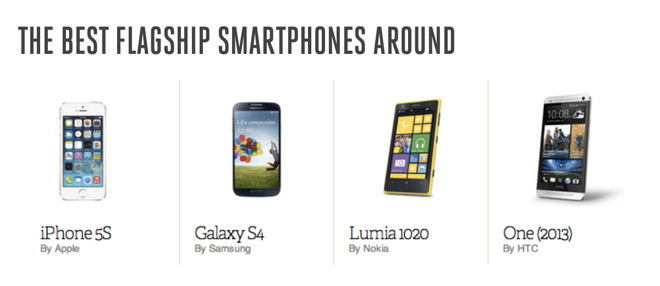
Five years ago, the Verge balked at the high price of iPhone 5s and offered recommendations for rival phones that aren’t even supported today

Apple’s articulation of its “planned anti-obsolescence” blew peoples’ minds because it’s completely opposed to the cynically-cliche idea that Apple is working to sabotage existing devices with fatty iOS releases and battery shenanigans that make older phones feel like they need to be replaced, just to sell more iPhones.

If that’s the case, why has Apple been supporting five-year-old iPhones with every iOS release? In fact, a major driver of iOS 12 involved work to make it more efficient on older iPhones.

Apple isn’t having problems selling new iPhones the way that GoPro ran into with its cameras–facing a relatively small addressable market that grew content with the one action camera they bought for quite a long time.

If Apple had the GoPro problem, it wouldn’t be able to be introducing ever more expensive new models! Apple has been selling over 200 million iPhones every year since 2015, even as its product portfolio has trended higher into more expensive models. That means Apple is regularly upgrading a large percentage of its installed base. It also refutes another tired media narrative that insists that Apple’s prices are too high. If that were the case, iPhone sales would be collapsing like Samsung’s and its Average Selling Price would be eroding along with Androids, not growing toward $800 in a sea of $250 Android commodity.

If buyers thought iPhones were priced too high, the ASP of iPhones would be trending downward. Apple sells a broad range of iPhone models at different price tiers. It is impossible to coherently argue that customers can’t afford $999 iPhones as the largest segment flocked to iPhone X. This season, the newest, premium priced lineup of iPhone XR, iPhone XS, and iPhone XS Max each found the largest segments of demand from users. That’s not the case for Samsung or other Android licensees, which only sell a tiny number of premium handsets while sitting on high volume sales of low-end devices.

For about a billion iOS users, the more than 200 million new iPhones Apple sells every year means that about a fifth of Apple’s installed base upgrades in a given year. Some upgrade every year, some wait three years or more or until some feature grabs them–or until they break their old one beyond repair. But the overall percentage remains at about a fifth.

That tells us that Apple doesn’t expect any large percentage of its brand new iPhone X users to rush out and buy an iPhone XS upgrade. Rather, it again expected to woo about a fifth of its entire installed base to get either a new iPhone XS; or the big new iPhone XS Max; or the new, affordable iPhone XR; or perhaps an older model that’s still a nice upgrade to users of an iPhone 6s or earlier.

And, it appears to have accomplished this, everywhere else in the world but China.

Every time Apple changes its lineup, it has to recalculate where it expects demand to lie and what consumers will find valuable at any given price point. This year that math was complicated by various factors. China’s lack of economic growth played a bigger role than anticipated. The fact that Apple is now saying its initial estimates from three months ago were only off by 6 to 9 percent indicate that the company has a pretty good grasp on what the market wants and will pay.

The fact that Apple is beating itself up and holding meetings to determine how to do better doesn’t mean the company is facing a fearsome doom; it means that it’s a relentless perfectionist. It’s like the professional ice skater that flips and twirls through a series of impossible tricks, only to be upset that she didn’t land one planned maneuver perfectly. As with unit sales reporting, observers would never notice anything is wrong if Apple didn’t transparently outline its invisible internal issues in SEC reports and notes to investors.

Note that in Androidland, no licensee has ever reported its units sold; there is no scrutiny of Samsung’s massive faceplants whether losing over $5 billion in lost Galaxy S9 sales this summer or burning up $5 billion in Note 7 fires earlier. The media only ever makes excuses for Samsung’s visibly sloppy ice performances, and most of the world’s Androids are now produced by Chinese production factories and don’t have to report revenues or any data about their financials.

Apple’s installed base vs market share

One of the favorite cheers of Android promoters is that these companies are generating market share on volumes of devices sold. Unfortunately, one quarter of “share” is a Pyrrhic victory for factories that produce large volumes at near zero profits. That’s because buyers are just as likely to buy their next Android from another commodity factory.

There is no loyalty in Androidland, no reason for Android licensees to even try to keep old phones working, no point to subsiding battery replacements, and no hope for any licensee to ever build an installed base of loyal buyers. It’s a vicious cycle of self-defeating greed and cheap efficiency that’s effectively cork-screwing a hole for itself into the ground.

For Apple, the more existing iPhones it can keep in active use, the larger the addressable market it can count on to buy upgrades each year. Counterintuitively, rather than making its older phones break early, Apple wants to keep them working, so that even refurbished trade-ins and hand-me-downs keep serving someone with a potential to upgrade to a new iPhone someday in the future.

Existing iPhone users are far less likely to leave iOS because Apple keeps working to make its platform an attractive place to stay. Unlike Android, Apple is cultivating a rich ecosystem, not just the barest compatibility API for running shared software across the device outputs of various Chinese factories.

The Verge entirely misses this. Instead, it kept hammering on the tired and incorrect idea that “nobody is buying smartphones anymore,” before inevitably turning its story–ostensibly about Apple and Samsung–into a native advertisement for a camera feature of Google’s Pixel: a phone that isn’t being purchased in any volume.

The Verge couldn’t resist turning its “nobody is buying Apple-Samsung anymore” story into a native ad for Google, ironically featuring a photo of the author using the Google Pixel that nobody is actually buying

But that trite word salad is not just ineffective advertising for Google, it’s obviously false–Samsung is still selling vast volumes of phones, it just isn’t making money or reaching premium buyers. At the same time, Apple is still selling peak volumes of iPhones while making almost all the money in the industry by effectively reaching premium buyers.

“Nobody is buying smartphones anymore” is the kind of nonsense that actively prevents readers from understanding what’s really happening. It’s not remotely true.

Mobile phone buyers are also not just waiting for a compelling technical “innovation” upgrade, another trite bit of cliche analysis The Verge repeated. A big percentage are breaking their phones, or losing them, or are simply upgrading to get the new color they want.

Tech reviewers think that they are representative of the public and that the mass market is keenly interested in chips and RAM or a photo feature Google is promoting. If that were the case, how has Apple been successfully selling a Product(Red) iPhone and iPod for all these years, and why isn’t Pixel finding buyers?

Have Android promoters never set foot in a store? Do they think nobody buys jeans anymore just because there isn’t any apparent technical innovation occurring in pants-making? Do they imagine that nobody buys TVs anymore because everyone must already have one by now? Do they wonder why people buy shirts that cost more than the component fabric that occurs on the garment’s bill of sale? What is it about Apple that turns the most mundane discussion of financials into an illogical tirade of hyperbolic derangement?

More Word Salad

M.G Seigler, writing for 500ish.com took a series of his tweet storm-hot takes on Apple’s Q1 and condensed them into a blog posting that effectively insists that the company desperately needs to show growth, and now that iPhones aren’t growing materially, it has to really get on the ball with Services.

Prescient! Except that iPhones haven’t really been growing since they first passed up 200 million per year back in 2015. This isn’t news. It isn’t insightful to look back on the last four years of iPhone sales and repeat cliche ideas like the “law of large numbers” to explain that there’s not another China on the brink of delivering a new American-sized batch of middle class consumers.

It’s also not brilliant to point to Apple’s Services strategy of the last few years and say “hey, Apple better actually do this thing it said it would. The thing it regularly indicates that it is successfully doing! Listen to me, I got so many answers.”

The technorati all talk about how Apple’s CEO isn’t very visionary and has an “innovation problem,” and then turn around and are starstruck by the sheer brilliance of these bloggers regurgitating the same Captain Obvious fluff, mixed up with their full-on delusion about “pricing too high,” as if Apple would be really set for success if it had instead engaged in a pricing war with Android licensees and established to consumers that iPhones are only worth at most $400.

Today Apple could lower prices if it needed to. In an alternative scenario where iPhone prices were already margin-bustlingly low, Apple would have no options. Good thing Apple doesn’t follow the advice of pundits and analysts who were screaming from the rooftops that the real solution to China was a $300 iPhone. We’d never have gotten iPhone X.

Is this the end of Apple or Apple punditry?

Kara Swisher, hot on the heels of announcing that “the innovation cycle has slowed down at Apple,” and asking “Where is their exciting new product and where are their exciting new entrepreneurs within that company?” turned around and wrote an entire piece for the New York Times that meanderingly accused Apple and the tech industry at large of suffering from an apparent lack of innovation.

It’s lazy to ask a question and then fail to offer any answers

“Apple has hung the moon for investors for so long now that the idea of the company struggling sent the entire global stock market into a paroxysm of fear and plunging indexes,” Swisher wrote. That’s colorful language, but what does it mean? Apple has been perpetually dying to analysts and investors since the 1990s. It has turned in quarter after quarter of insane performance for years, only to be rewarded with a staggeringly low stock valuation that assumed zero growth in the future. Even when hitting the trillion dollar market cap last fall, Apple’s shares were still priced in the toilet relative to the Price/Earnings of any of its peers.

Over the last decade of Apple’s indisputable iPhone super success cycle, the company’s stock has repeatedly crashed in half as investors and high-frequency trading bots were persuaded to sell shares for nothing on the news that Apple had run out of “innovation.” How can you write about Apple’s most recent stock panic without even the most basic awareness of 2008, 2013 and 2015?

“There is no question that Mr. Cook and his team have done a tremendous job taking advantage and managing this last cycle of innovation, but it’s apparent that it’s now winding down,” Swisher wrote, painting a picture of a world where there’s nothing left to invent or develop or design, and certainly nothing that could be commercially successful. What incredible logic: Apple has apparently hit so many home runs that it is clearly out of home run hitting potential.

Swisher sounds like she’s channeling John Dvorak, writing his famous 1984 screed that “the Macintosh uses an experimental pointing device called a ‘mouse.’ There is no evidence that people want to use these things.” It might be time to change the tune about Apple.

It wasn’t pundits who thought up the potential of iPhone, or the App Store, or iPads, or Machine Learning, or Augmented Reality, or any of the wildly innovative, technological underpinning features in silicon firmware, in software, in mass production assembly and in every other discipline that non-technical people simply take for granted. It was individuals at Apple who came up with this stuff while being ceaselessly derided for being “devoid of innovation,” as if that phrase is inherently clever to scribble out into words or call in to CNBC on a “why Apple is doomed” expert interview.

News flash: it’s not. It makes you sound like an idiot. It’s a catchphrase for incompetent nincompoops, which is why it’s also a favorite cliche among stuffed shirt analysts and pundits with nothing valuable to say.

Step back and watch the accolades among other Twitter accounts praising the attestation of Apple’s “innovation problem,” like a congregation of the faithful applauding each other’s beliefs because they all want to believe the same set of ideas. Amen! Makes no sense but let’s say it again, Apple isn’t innovative! Preach!

Few pundits have ever accurately seen anything coming apart from the PR they’re handed to propagate. Remember the platitudes for the prospects of Motorola and “innovations” like Google Glass?. Why should they be expected to be able to see what’s next today? And why is the common, unanimous opinion that nothing new is likely to ever happen in the future–and certainly not at Apple, with its big problem of “not being innovative”–why is that worth anything at all?

Bloomberg has audacity in calling Apple the liar

Bloomberg, after publishing a bombshell report that at this point appears to have been invented by an imaginative writer and presented as factual without credible sourcing–and then failing to substantiate the story or retract it–rushed in next to accuse Apple of lying about its prospects in China. Supposedly, Apple has done so with the goal of embarrassing itself with the need to restate its quarterly guidance. On the conspiracy-level meter, this one breaks the machine.

“Apple failed in the No. 1 mission of being a public company: being honest with investors about its business,” Shira Ovide crowed for Bloomberg, barely a year after the company published a flurry of other false coverage that clumsily misread data supposedly sourced from Apple’s supply chain to insist that iPhone X wasn’t selling well anywhere. You might say Bloomberg “failed in the No. 1 mission of being a media company.”

Must be fabulous to be able to scribble up any old irresponsible garbage without consequence, and still have other media wonks treat you with respect for simply continuing to publish your musings, as long as it remains bitterly critical of Apple. Say any baseless lie with overt arrogance and you can be anything you want to be in America.

Posted on Leave a comment

Apple elaborates on iPad Pro precision manufacturing process, reiterates 400 micron tolerance for bends


Apple has published a support document detailing the new iPad Pro’s enclosure manufacturing process, in an attempt to assure customers that the new device is durable and strong.

iPad Pro Bend

An 11-inch iPad Pro exhibits a bend out of the box. | Source: The Verge

In the support document published late on Friday, Apple talks about the new manufacturing process being used to fabricate the iPad Pro casing. Additionally, the company is doubling-down on its stated tolerance for the case, and what users should do if they think that any iPad Pro is bent beyond what Apple considers allowable.

To provide optimal cellular performance, small vertical bands or “splits” in the sides of the iPad allow parts of the enclosure to function as cellular antennas. For the first time ever on an iPad, these bands are manufactured using a process called co-molding. In this high-temperature process, plastic is injected into precisely milled channels in the aluminum enclosure where it bonds to micro-pores in the aluminum surface. After the plastic cools, the entire enclosure is finished with a precision CNC machining operation, yielding a seamless integration of plastic and aluminum into a single, strong enclosure.

In the note, Apple also points out that the “flatness specification” allows for nomore than 400 microns across the entire length of any given side. It also says that “the new straight edges and the presence of the antenna splits may make subtle deviations in flatness more visible only from certain viewing angles that are imperceptible during normal use.”

Reports of curved or bent iPad Pro models began circulating online shortly after the device debuted in November. Some impacted users have to AppleInsider that the bend slowly emerges after weeks of use, while others noticed an abnormal curvature out of the box. AppleInsider has continued to receive these reports, with users demonstrating bends greater than the thickness of a U.S. dime —about 1300 microns —from end-to-end. However, we cannot confirm the authenticity of the reports we have received, nor have we discovered one ourselves out-of-the-box with the problem.

On December 19, Apple confirmed that “some” 2018 iPad Pro models ship out to consumers with a slightly bent chassis. The company said then —and repeated on Friday —that the deformation does not degrade performance and is not considered a defect.

Apple noted in December that its latest iPad Pro is seeing a normal return rate, suggesting most users have not observed or are not bothered by the manufacturing side effect. Collated service data collected by AppleInsider has seen a very slight uptick of just under half of one percent of all service calls for any Apple product since the original report, which isn’t statistically significant. So, it isn’t clear how prevalent the issue is at this time.

Similar to what AppleInsider pointed out in December, Apple suggests that users who feel that the iPad Pro does not meet the 400 micron tolerance should contact Apple support, and take advantage of the company’s 14-day return policy. The company notes that “Apple also provides up to a one-year warranty on our products and will cover damage if it has occurred due to a defect in materials or workmanship.”

Posted on Leave a comment

Huawei punishes staff with pay cuts for marketing tweet sent via iPhone


Chinese smartphone giant Huawei has issued harsh punishments to two of its staff in the aftermath of New Year’s Day marketing tweet sent out with the label “via Twitter for iPhone.”

Huawei's deleted tweet

Both of the workers have been demoted one rank and had their monthly salaries cut by 5,000 yuan, or about $728, according to an internal memo seen by Reuters. One person, the company’s digital marketing director, will have his pay rank frozen for a year.

The memo indicated that an outsourced social media firm, Sapient, encountered “VPN problems” with a desktop it was using for publishing, so instead turned to an iPhone with a roaming SIM card to trigger the message at midnight on New Year’s. Twitter is normally blocked in China, so a VPN (virtual private network) is a commonplace tool for reaching it.

The post — which read “Happy #2019” — was almost immediately deleted, but not before screenshots made their way to social networks like Weibo, where they were roundly mocked.

Huawei has had similar embarassments in the past. A notable example was when Israeli actress Gal Gadot, serving as a paid ambassador, promoted the Mate 10 Pro on Twitter but used her iPhone to do it.

The illusion of brand unity has become important at smartphone makers around the world, especially given the intense competition between iPhone and Android as platforms. In reality workers will often have devices from rival companies, even at Apple, though corporate leaders sometimes take measures to deter this.

Huawei likely has little to worry about in the near future, as Chinese iPhone sales were poor enough in the December quarter to trigger this week’s guidance downgrade. That sent Apple shares plummeting, and prompted CEO Tim Cook to promise management would “take action” to put the company on the right course.

Posted on Leave a comment

Apple’s earnings warning indicates trouble in China, but everyone should calm down

By the looks of the headlines since Wednesday afternoon, you’d think that Apple Park is on fire, and the company is headed for a loss for the quarter. While the earnings miss discussion isn’t a net positive for the company, there are still a few things to keep in mind.

Tim Cook and Steve Jobs, in 2010

Tim Cook and Steve Jobs, in 2010

We got a lot of emails last night about what happened, and let me tell you —they are loaded with hot takes. Minus the trolls using an assortment of vile language and so forth, let’s talk about them, what’s going on, and what it means to the Apple user.

In case you were under a rock yesterday, Apple published a revenue revision, saying that Apple would hit $84 billion in revenue for the holiday quarter. As such, most of the headlines we’ve seen overnight are talking about Apple missing projections by $9 billion.

Sure, that’s not wrong, but it also isn’t precise. So, let’s get precise —that $84 billion that Apple CEO Tim Cook was talking about is short of Apple’s predicted range by between $5 billion and $9 billion.

And, despite the revision, it will still be Apple’s second biggest quarter in the history of the company, eclipsed only by the 2017 holiday season.

Apple's projected earnings for the holiday quarter of 2018

Apple’s projected earnings for holiday 2018 in context with the last five years

Let’s take a closer look.

Profit margin remains effectively unchanged

There’s been a lot of talk about how the holiday sales propped up Apple, or doomed it to a bad quarter. Given that Apple’s profit margin is unchanged from the last quarter, unchanged from what the company predicted in November for the quarter, and effectively the same as the holiday quarter from 2017, that doesn’t seem to be the case.

There has been a certain aggression to Apple’s sales since Steve Jobs handed the company to Tim Cook. There have always been ways to get Apple’s products at less than Apple’s retail.

Of course, we’d rather Apple had hit its targets, but let’s talk about the letter itself, and the knee-jerk reactions we’re seeing.

Key points from the letter

The biggest takeaway is business in China —which I very briefly mentioned in our forums last night. Cook had a lot to say on the matter, and the emphasis we’re putting on the full quote below is ours, not his.

Lower than anticipated iPhone revenue, primarily in Greater China, accounts for all of our revenue shortfall to our guidance and for much more than our entire year-over-year revenue decline. In fact, categories outside of iPhone (Services, Mac, iPad, Wearables/Home/Accessories) combined to grow almost 19 percent year-over-year.

While Greater China and other emerging markets accounted for the vast majority of the year-over-year iPhone revenue decline, in some developed markets, iPhone upgrades also were not as strong as we thought they would be. While macroeconomic challenges in some markets were a key contributor to this trend, we believe there are other factors broadly impacting our iPhone performance, including consumers adapting to a world with fewer carrier subsidies, US dollar strength-related price increases, and some customers taking advantage of significantly reduced pricing for iPhone battery replacements.

From this, there are two key takeaways. Weakness in China for the iPhone for any one of an assortment in reasons is the key driver, and given that both statements are true, Apple’s other products like the Mac and iPad more than made up the difference —and performed better than Apple had expected.

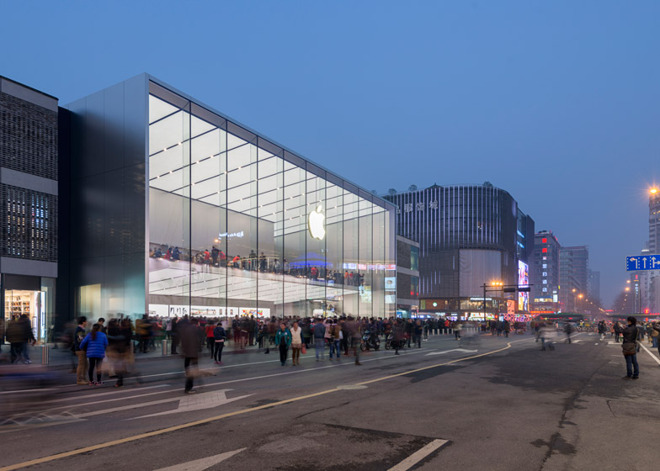
Apple Store in Hangzhou, china

Apple Store in Hangzhou, china

Indeed, revenue records, even with all the sales that have been decried by analysts, were set across the globe —just not in China.
We also expect to set all-time revenue records in several developed countries, including the United States, Canada, Germany, Italy, Spain, the Netherlands and Korea. And, while we saw challenges in some emerging markets, others set records, including Mexico, Poland, Malaysia and Vietnam.
Cook was specific about what products brought in these record-breaking revenue as well.

Also, as I mentioned earlier, revenue outside of our iPhone business grew by almost 19 percent year-over-year, including all-time record revenue from Services, Wearables and Mac.

Specifically, services generated over $10.8 billion in revenue during the quarter, hitting record revenue in “every geographic segment.” Wearables grew 50 percent year-over-year, and the Mac saw unspecified year-over year revenue growth, and the iPad Pro saw double-digit revenue growth.

A record for earnings per share, but this means little

Cook said in the letter that Apple was going to report an all-time record for earnings per share.

Earnings per share is a derived metric. It’s great that this is a record, but this was inevitable, given the ongoing stock buyback that the company has been proceeding with unabated.

“But the analysts were right!”

Well, considering that their job is telling investors what they think about a company’s prospects, it’s about time that they got something right. A blind squirrel eventually finds a nut. However, the irresponsible hot takes from most of them this morning are coming fast and furious.

There are calls for Tim Cook’s resignation, which are insane from a shareholder value perspective. There are second-guesses about everything. There is a lawsuit in the works claiming that Apple misled investors with last quarter’s claims about China, because sales were up last quarter, so how could they possibly be down this quarter. There is a lot of unnecessary panic about every single aspect of Apple’s business —including the parts like Services, the Mac, and wearables that Cook called out as record-breaking.

And, there is already a lot of useless hyperbole, like Wedbush’s Daniel Ives saying that Wednesday was “Apple’s darkest day in the iPhone era.” One analyst —and note that he’s repeatedly emailed us with the exact same claim —says that foot traffic in Apple stores is “pathetic.” That seems like a bad take given our own observations, and the aforementioned record revenue in the US, which the letter clearly spelled out. Idiotic comparisons to Nokia and Blackberry have already begun from other analysts.

None of this changes the fact that there will be an iPhone in 2019, and probably a refresh every year until we all die of old age and are forgotten.

Seriously, quit with the “Steve Jobs would never…” nonsense

This isn’t the first time that Apple has posted an earnings miss. In 2002, Steve Jobs announced one too. On June 18, 2002, Apple issued a two-paragraph warning that they were going to miss earnings. Apple predicted that it would generate about $1.6 billion. It corrected that figure to between $1.4 billion to $1.45 billion.

This is, literally, half of the warning that was issued then.

“Like others in our industry, we are experiencing a slowdown in sales this quarter. As a result, we’re going to miss our revenue projections by around 10%, resulting in slightly lower profits,” said Steve Jobs, Apple’s CEO. “We’ve got some amazing new products in development, so we’re excited about the year ahead. As one of the few companies currently making a profit in the PC business, we remain very optimistic about Apple’s prospects for long-term growth.”

We’re not going to delve into the history here. John Gruber at Daring Fireball discussed this at some length, and it is a good read.

But what does this mean for the users?

Of course, from this chair, we’d rather Apple have made the predicted revenue target. But, Wednesday’s letter to investors means just as much to users as every other earnings report has for the last 15 years. It means exactly nothing.

Why this happened means nothing to the user, at least outside of China. China consumers buying cheaper Chinese brands isn’t a big surprise —what was the surprise is by how much they did it.

Apple isn’t going to shut down the iCloud servers, isn’t going to sell itself to Dell or anybody else, and it isn’t going to focus on anything but the highest-end of the market. Your iPhone won’t magically stop working because of the only $84 billion in the quarter that the company is expecting to make, and the data that I am moving from one Thunderbolt array to another right now isn’t going to transfer slower. From a pricing perspective, we aren’t expecting any radical changes in the company’s sales structure for any of its hardware.

You’re going to hear a lot in the next few weeks before the earnings announcement. You’re going to hear a lot of talking heads suggest what Apple should do, you’re going to hear a lot of hardware suggestions that will save the company on the news, in our forums, on Reddit, on Twitter, and on your social media venue of choice. While that wish-fulfillment fantasy may make that person happy, none of the suggestions will be the savior of the company that the navel-gazer thinks it will be.

The only thing that changed for all of us between December 31 and January 1 is a numerical year increment —there was no seismic shift in attitudes or humanity as a whole over that one day. Likewise, the only thing that’s changed for Apple between Wednesday morning and Thursday is that Apple will report that it made more money in a quarter than it did from 2000 to 2005 in total, instead of 2000 to 2006.

It will evolve like it always has, and survive just fine.

Posted on Leave a comment

Wistron pouring $340M into facilities associated with India iPhone production


Apple production partner Wistron is increasing its investment in manufacturing for the Indian market, with the upped spending being made to expand the plants that manufacture iPhones for the local market to avoid international import issues.

The iPhone 6s, one of two iPhone models produced by Wistron in India

The iPhone 6s, one of two iPhone models produced by Wistron in India

A filing at the Taiwan Stock Exchange reveals Wistron has authorized its subsidiary in India to spend 30 billion rupees ($340.62 million), in order to expand and meet future demand for its services in the region. Currently the company has a paid-up capital of 1.8 billion rupees for its Indian operations, making the investment a considerable increase in resources.

The company advised it is expanding its investment to ramp up production capacity in its Narasapura plant, Digitimes reports, with the first phase of its expansion expected to complete in the first half of 2019.

Wistron’s operations in India notably includes assembly of the iPhone SE and iPhone 6S for the local market, with the investment thought to help reduce the impact on production caused by various factors.

For the Indian market, Apple still relies on imports to make up the bulk of purchases in the country not already covered by Wistron’s supply. Apple is likely to be hit by a proposed luxury goods tax, one that is designed to discourage imported goods, and one that could be mitigated by increasing production in the region.

A less pressing issue is the ongoing trade dispute between the United States and China, which may eventually force a price rise for the iPhone in the United States of about 10 percent. The issue is sufficient enough that reports have surfaced suggesting the supply chain may shift some elements outside of China in order to evade the extra levy.

The investment may not entirely center around the iPhone, as it is reported Wistron is also planing to move some of its PC, Internet of Things, medical, and cloud services businesses to India.

Wistron is not the only Apple partner apparently looking to increase its local production. In December, Foxconn was reportedly planning to invest $214 million on expanding its own plant in India, in order to accommodate iPhone production.

DigiTimes is generally poor at predicting Apple’s future product plans, but is an accurate manufacturer financial watchdog, in regards to capital expenditure.

Posted on Leave a comment

Apple breaks earnings records, disappoints analysts, and offers festive cheer — Apple’s November 2018 in review

Looking back at Apple’s November 2018, it looked like investors just weren’t getting as into the Christmas spirit as Apple is with its new holiday ads. And maybe Apple is looking for cheer in all the wrong places as Microsoft supplants it as the most valuable company in the world.

Apple's Share Your Gifts ad

Apple’s Share Your Gifts ad

Sometimes there’s just nothing a trillion-dollar company can do. By November, Apple had released three new phones, two new iPads, a desktop Mac, a laptop, a pencil and some keyboard cover thing, but still its stock price dropped. The value of Apple stock dropped enough that in fact it was no longer a trillion-dollar company.

It’ll be back and if Tim Cook were here now, he’d be saying that it’s never about the money anyway, so there. Still, it had to hurt when during November 2018, Apple lost the mantle of World’s Most Valuable Company —to Microsoft.

Satya Nadella (Source: Microsoft)

Satya Nadella (Source: Microsoft)

You knew about the trillion-dollar part but you’d be forgiven for having forgotten that Apple was the most valuable public company in the world because it’s actually been that for so long. Apple was top from August 2011 to November 2018.

It will be again and Microsoft will be again and all of these firms will dance around but on the one hand, Apple must be smarting. And on the other, this is November. There were releases from Apple but the firm had just been through two months of announcing products, now it had to get them into peoples’ hands.

In transit

While many of us watched our delivery tracking information, Apple may have spent some time building a new shelf for all the awards it got.

The company as a whole won the Eleanor Roosevelt Humanitarian Award for its work toward device accessibility.

Examples of Apple's work on accessibility

Examples of Apple’s work on accessibility

This is far from a new effort or direction for Apple and it’s also far from the first such award it’s received. In accepting the award, Apple’s Senior Director of Global Accessibility Policy and Initiatives Sarah Herrlinger said that accessibility had been central to the company “from the very beginning”.

“Our products should reduce barriers so you can do just that, regardless of ability. This work is never done,” she said. “But it’s exactly the kind of design and engineering challenge Apple was built for.”

Also this month, Apple as a whole earned the Thomson Reuters Foundation’s Stop Slavery Award and announced a new initiative to help victims of human trafficking to get jobs in the company.

Then the Steve Jobs Theater at Apple Park won the Structural Artistry award from the UK’s Institute of Structural Engineers. You’ve not heard of them and you’re wondering just how many things in the world are covered by awards ceremonies but then you see an image of Apple Park.

The Steve Jobs Theater at Apple Park

The Steve Jobs Theater at Apple Park

And you’re thinking yes, that’s structural artistry. Even if people walk into its walls. It’s a small price to pay for art.

The Steve Jobs Theater is “the largest structure in the world solely supported by glass”, said the UK organization, and it presented the award to architectural firm Eckersley O’Callaghan & Arup.

It won’t be the last award Apple Park gets. Also in November, Tim Cook was announced as being the first to win the Anti-Defamation League’s Courage Against Hate award.

Tim Cook

Tim Cook

“During a time where technology is being used to spread hate, Tim has been a trailblazer in combating it on Apple’s platforms,” said ADL CEO and National Director Jonathan Greenblatt. “He is a staunch advocate for the LGBTQ community and immigrants’ rights while denouncing racist vitriol like the events in Charlottesville and we are proud and excited to present Tim with this award.”

Cook would collect the award in December, when he would also deliver a keynote speech.

Tim Cook was continuing this new role of speaking out about social and political issues but he was continuing to do so with keynote speeches. He’s good at those.

Money calls

Cook is similarly good when he has to speak on Apple’s quarterly financial call, the legally-required announcement of earnings. They’re little more than an audiobook version of the earnings statements Apple has to release. Although they also then include optimistic questions from analysts thinking Apple might reveal future plans, and patient answers from Tim Cook saying that it won’t.

The earnings call in November did come at an interesting time, though, because this month Apple set records. “We’re thrilled to report another record-breaking quarter that caps a tremendous fiscal 2018, the year in which we shipped our 2 billionth iOS device, celebrated the 10th anniversary of the App Store and achieved the strongest revenue and earnings in Apple’s history,” said Tim Cook on the call.

So Apple is making money hand over fist and it’s releasing acclaimed products.

What could possibly go wrong?

Apple’s stock price immediately took a beating because you don’t want successful new products and high earnings. Or rather, investment analysts look at this and think no, it can’t continue.

“Calendar fourth-quarter guidance reflects our cautious view on weaker-than-expected sell-through and production reductions for the iPhone XS and iPhone XR,” wrote Rosenblatt Securities analyst Jun Zhang.

In other words, nobody’s buying the new iPhones. Allegedly.

Apple's new iPhone XS Max (left) and iPhone XS (right)

Apple’s new iPhone XS Max (left) and iPhone XS (right)

There were plenty of rumors that demand for the iPhone XR, in particular, had been poor.

Yet a lot of noise was being made over the fact that Apple had announced in this earnings call that it would no longer report specific iPhone sales figures. In future such calls, it would say how much money it made but not how many phones it sold.

This was greeted by furore by just about everyone and the conclusion was that Apple was hiding something. Sales must be going down and it’s only that the price of iPhones is going up that is saving Apple from being doomed.

Hang on, said AppleInsider, no other firm has ever reported its specific sales figures and nobody’s complaining about them.

Tim Cook at a Foxconn factory

Tim Cook at a Foxconn factory

Arguments

While some wrung their hands about Apple’s accounting practices and others saw how the move fitted into the company’s history, there were bigger disputes about the future.

It just didn’t always seem that way, or at least it didn’t appear to be that way for Apple. Now, for Qualcomm, it was bad news.

Amongst other things, Qualcomm makes modems for phones and Apple used their technology for many years. This month, US District Judge Lucy Koh issued a preliminary ruling against Qualcomm in a Federal Trade Commission’s antitrust lawsuit.

Qualcomm offices

Qualcomm offices

The bottom line was that the court says Qualcomm must license its modem technology to rivals such as Intel.

Just getting to this point, though, Qualcomm had been in a global legal war over patents and royalties and in part with Apple. By November, Apple was rolling up its sleeves, preparing to go to trial, and definitely not talking privately with Qualcomm at all.

Somebody should’ve told that to Qualcomm CEO Steve Mollenkopf as he claimed the opposite. “We do talk as companies,” he told CNBC. “We’re really on the doorstep of finding a resolution.”

There’s an irony in the head of a company that makes communication equipment not knowing he isn’t communicating. Yet if you spot that this was really just an olive branch of a quote, you should know that it came too late.

Tim Cook for President? Not so much.

For even before that CNBC interview aired, the New York Times had revealed that Qualcomm’s PR company had been targeting attack campaigns aimed at Apple.

Definers Public Affairs, the same firm that Facebook used to sling mud at critics after the Cambridge Analytica debacle, worked to affect perception of Apple.

Much of the work revolved around conservative-leaning news aggregator NTK Network and whether it was used to disseminate stories critical of Apple. According to NTK‘s editor in chief, Joe Pounder, this is nonsense. “What NTK writes and posts on is what NTK chooses to write and post on,” he said.

Perhaps we’re foolish to automatically assume this means editorial independence as he could just have meant that NTK chooses to publish whatever Definers PR tells it.

For their part, Definers boasted to potential clients that it effectively owned NTK. “Definers manages NTK Network, a news aggregation platform that targets Washington D.C. influencers,” wrote Definers’ Tim Miller. “Through NTK we can directly re-publish favorable news from other outlets, and work with like-minded individuals to help create an echo chamber effect.”

Whether they were planted stories or completely independent editorial, NTK reportedly ran at least 57 articles about Apple. The New York Times also cited emails that demonstrated “dozens” of articles were planted on conservative news sites.

We can report that Definers emailed us, too. Back in June 2017, AppleInsider was contacted by Miller who pitched an article suggesting there was coordination between Apple, Intel, Samsung —those famously friendly firms —and the US Federal Trade Commission.

Just about the only thing Miller’s email to us failed to mention was the small fact that Definers was working for Qualcomm. We passed.

There was one more piece of work by Definers that we’ve got to mention. Here’s a company that was working to discredit Apple and Tim Cook but it was allegedly behind a Tim Cook for President campaign.

Screengrab from

Screengrab from “Tim Cook for President” campaign website

Whether you think Cook would be good in the White House or not is one thing —and it isn’t what is believed to have mattered to Definers PR or Qualcomm. It’s the current occupant of the building who matters and at this point, Tim Cook and Donald Trump’s relationship was up and down.

Early in November, Apple had been one of more than 50 major US companies who drafted and signed a letter opposing the Trump administration’s plans to define gender.

Alongside Apple, the letter’s signatories include Google and Microsoft. Both of them were then invited to a technology roundtable event to be held in December at the White House but Tim Cook wasn’t. Oh, and Qualcomm’s Steve Mollenkopf was.

And while the administration has been imposing tariffs on all manner of industries, toward the end of the month it did specifically state that iPhones could come under question. Asked about the next round of tariffs and whether they would apply to duties paid on phones and computers imported into the country, President Trump said: “Maybe. Maybe. Depends on what the rate is. I mean, I can make it 10 percent, and people could stand that very easily.”

Speaking of politics

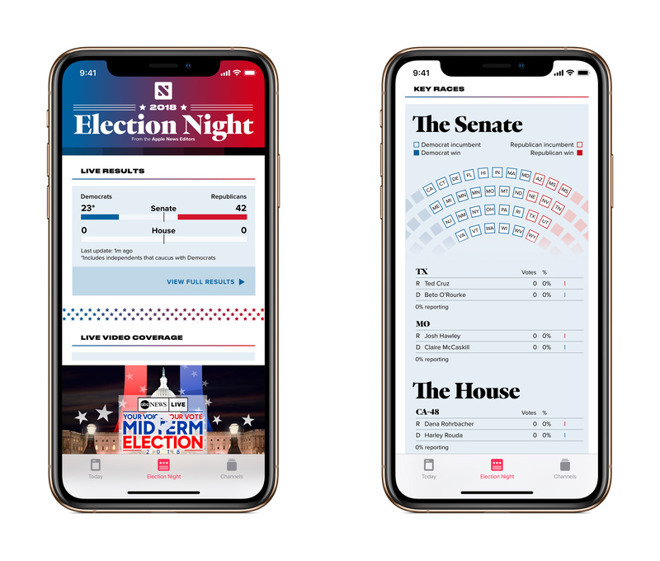
November saw the midterms in America and technology firms were among many working to get more people voting. All the major car-riding companies like Uber and Lyft offered free or discounted rides to voting stations —though specifically to, never back from there —and updated their apps to help with finding those stations.

On the day itself, Apple News revamped to bring midterms coverage front and centre on the app. In a link up with the Associated Press, Apple News provided real-time information on the balance of the Senate and the House.

Apple News revamped for the midterms

Apple News revamped for the midterms

As you know, the result was that Democrats gained control of the House of Representatives but it also saw Apple’s home state of California getting a new governor. AppleInsider looked at the effects both of these are likely to have on Apple.

Speaking of people

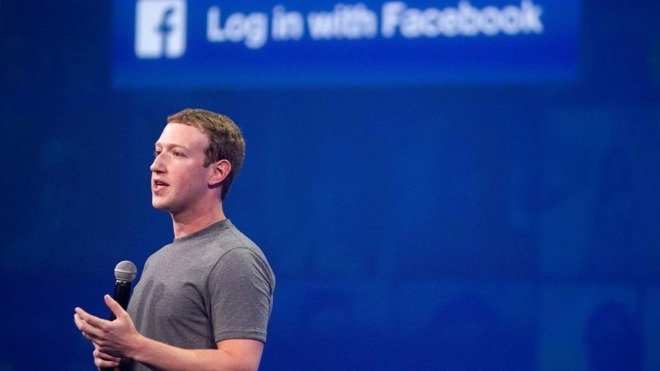
You didn’t have to be in office or a PR firm to make news this month. Though being Mark Zuckerberg helped as he allegedly ordered Facebook executives to all ditch iPhones because of Tim Cook’s criticism of Facebook. He did later deny being so petty and just laid it on that Android “is the most popular operating system in the world.”

Facebook's Mark Zuckerberg

Facebook’s Mark Zuckerberg

There was then the case of the Black Friday shopper who either misread the terms and conditions or just didn’t notice them and so filed a class action lawsuit against Apple for not doing what it didn’t say it would.

We’re not entirely sure how much it costs to sue Apple and, one imagines, face a judge telling you to read the small print. However, it’s likely to be more than the $200 gift card this shopper believes she is due.

Not how this iPad Pro shipped

Not how this iPad Pro shipped

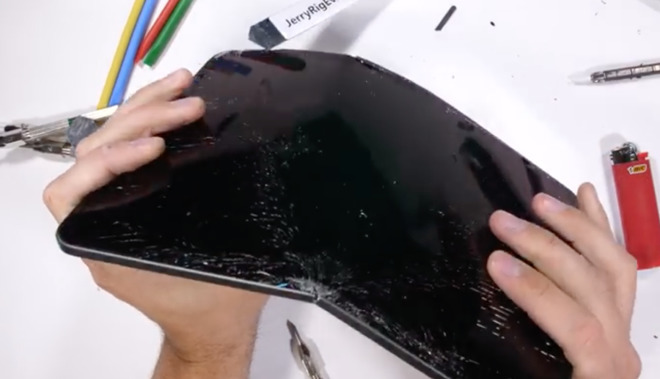
We’re also not completely on board with the idea of spending a lot of money to buy an iPad Pro and then deliberately bend it to the point of breaking. In hindsight, YouTuber JerryRigEverything could’ve just waited for Apple to bend some iPads but in November, he torture-tested one poor device himself for giggles.

AppleInsider also tested the new iPad Pro models in November, though our methodology was more about using them rather than holding up a lighter to see how long it takes a flame to burn through.

Everything tested

We also tested and reviewed and tried everything Apple released in its September and October events. The results were uniformly good but not uniformly great.

[youtube https://www.youtube.com/watch?v=_fuLSKBdv8k&w=560&h=315]

We were also highly critical of how Apple moved the Smart Connector on the new iPad Pros. That seemingly simple change belies a remarkably short-sighted approach that is going to mean the connector may never become as useful as Apple expected.

That said, we also found that the iPhone XR is far more than just the entry-level phone.

[youtube https://www.youtube.com/watch?v=IznHmFHgOaM&w=560&h=315]

Reflections on November

There were new releases from Apple in November and they did include hardware of a sort —the Apple Watch gained two new Hermes bands. And also somewhat more importantly there was new software too as watchOS 5.1.1 came out to fix issues with Apple Watches being bricked.

Otherwise Apple released plans for a new Entrepreneur Camp for women with app-driven businesses and it launched new adverts including a sweetly animated one for the holidays.

[youtube https://www.youtube.com/watch?v=3dJCroCMBPM&w=560&h=315]

It felt early to be looking to the end of the year but maybe Apple is just longing to put its feet up for a bit.

Keep up with AppleInsider by downloading the AppleInsider app for iOS, and follow us on YouTube, Twitter @appleinsider and Facebook for live, late-breaking coverage. You can also check out our official Instagram account for exclusive photos.

Posted on Leave a comment

Austria looking at raising taxes on Apple amidst European disagreement


Having failed to get all 28 European Union countries to back a plan to tax the likes of Apple and Amazon, the Austrian Chancellor has announced plans to follow France in implementing new national taxes on tech giants starting in 2020.

Apple's Kaerntner Strasse store in Austria

Apple’s Kaerntner Strasse store in Austria

Austria’s Federal Chancellor Sebastian Kurz has announced that his country will introduce a new national tax on the largest technology companies. Details are to be hammered out in January with the tax expected to start in 2020, but the move is in response to the European Union’s current failure to implement a bloc-wide digital tax on the so-called GAFA companies —Google, Apple, Facebook and Amazon.

Previously, Chancellor Kurz has said that Austria would introduce its own scheme if the European Union did. Now that Austria’s six-month presidency of the EU ends, he announced in a statement that the country intends to continue working for a pan-European system. However, he added that “in addition to the European plan, we will take a national step. We will introduce a digital tax in Austria.”

“The aim is clear,” he continued. “To tax companies that generate huge profits online, but pay hardly any tax on them, such a Facebook or Amazon.”

Currently the European Commission estimates that the largest firms pay an average of nine percent tax on their profits. In comparison, regional companies play 23 percent.

All member countries of the EU must agree before a bloc-wide tax can be implemented. At present, a company can choose which member country to register its taxes with and so all pick those with the lowest taxation rate, such as Ireland.

This benefits those countries who also argue that such taxes should not be implemented now when there are trade tensions between the EU and the USA.

Austria is not the first country to decide to implement new national taxes. The UK, which remains an EU member country until March 2019, has announced plans for a 2 percent tax that may be implemented from April 2020.

France, which led the proposals for an EU-wide system, is introducing its own separate tax levy from January 1, 2019.

Posted on Leave a comment

Comparing the 2.6GHz i7 versus the 2.9GHz i9 Vega 20 MacBook Pro

Four months ago, when Apple refreshed the 15.4-inch MacBook Pro with six-core CPU’s, graphics cards that come standard with 4GB of memory, and for the first time in a MacBook, the option of 32GB of system memory, we compared the performance of all three available CPUs and found the performance difference to be negligible.

[youtube https://www.youtube.com/watch?v=sFjRt1jW0XE&w=560&h=315]

The current design of the 15-inch MacBook Pros is incredibly thin and light for the performance that they pack. There are other Windows alternatives that are more powerful but they require a lot more than 87W of power, and as we saw with the Dell XPS 15 if you’re working without wall power, all that extra GPU performance and slightly better cooling are lost and then some — even with all the power saving profiles turned off.

2018 Vega 20 MacBook Pro

2018 Vega 20 MacBook Pro thin chassis

Although the MacBook Pros have consistent performance when unplugged, that thin design forces smaller cooling assemblies than some of its thicker competitors. Even though each CPU option in the 2018 15-inch MacBook Pro features six cores, the CPU clock speeds are nearly identical after the fans and temps stabilize during a heavy workload.

2.2GHz i7 / 555X / 16GBV 2.6GHz i7 / 560X / 16GB 2.9 GHz i9 / 560X / 32GB
Cinebench Score (5-run avg) 991 1001 1011
Cinebench Speed (5-run avg) 3.05GHz 3.1GHz 3.15GHz

In our Cinebench R15 CPU test, which is designed to allow the systems to heat up and eventually stabilize by running it back-to-back repeatedly, there was only a 100MHz clock speed difference between the base 2.2GHz CPU and the top spec 2.9GHz i9. Based on the results, our initial takeaway was that the i9 CPU option wasn’t worth it for vast majority of users.

Since then, Apple released new MacBook Pro models with Vega 16 and 20 GPUs. The pair are entirely new graphics chips which come equipped with fast HBM2 memory built right into the GPU package, with the entire package now cooled by the heat pipes, versus just the GPU in the previous model..

2018 i7 Vega 20 MacBook Pro

2018 i7 Vega 20 MacBook Pro

We have a full review of the Vega 20 equipped MacBook Pro that you can peruse if you want to see how it compares to the 555X and 560X models. Spoiler alert — the Vega 20 configuration is a screamer.

That leaves one question: If you’re ordering the faster and more efficient Vega 20 graphics, is it worth spending another $300 to jump from the 2.6GHz i7 to the 2.9GHz i9?

Starting off with the standard Geekbench 4 test, as we saw in the past, the i9 model showed noticeably higher single and multi-core scores. Geekbench tests a variety of tasks and the CPU usage is very low most of the time meaning the CPU can turbo boost higher resulting in the i9 scoring about 11 percent faster in single core and nine percent faster in multi-core.

2.6GHz i7 Vega 20 2.9GHz i9 Vega 20
Geekbench 4 Single Core 5105 5675
Geekbench 4 Multi-Core 23552 25650

Onto our five-run Cinebench CPU test, which pushes all cores to the max, we see a bigger difference than in our previous ones with the 560X graphics. Our i7 is slightly slower than our previous i7 with 560X (991 score versus 1001) whereas the new i9 paired with Vega 20 is noticeably faster (1011 versus 1068). It also finished at a higher 3.25GHz clock speed versus 3.1GHz.

It’s important to note that even though we’re seeing an eight percent difference and our i9 paired with Vega 20 is faster than it was paired with the 560X, chipset performance could vary machine to machine.

2.6GHz i7 Vega 20 2.9GHz i9 Vega 20
Cinebench CPU Score 991 1068
Cinebench Speed 3.1GHz 3.25GHz

Moving onto real-world tests, we saw no difference whatsoever in Adobe’s Lightroom. Our past tests concluded that the graphics were practically unused. The CPU’s all ran at the same clock speeds. What actually improved performance was having more RAM.

Now that we have i7 and i9 models, both with 32GB of RAM, we see that the performance is practically the same when exporting 99 RAW 42MP edited images to Jpeg. Develop module performance was identical, both being very responsive.

Lightroom 99 42MP RAW 5 minutes 58 seconds 5 minutes 50 seconds
CPU speed during rendering 3.0GHz 3.0GHz

We then turned to video editing in Final Cut Pro X, and started with the Bruce X benchmark. Both machines took 48 seconds to render this 5K project, which was to be expected since this is mainly GPU intensive.

Next, we stabilized a 20-second 4K H.264 clip. Both the i7 and i9 models paired with Vega 20 took just eight seconds to complete the task, which is very impressive but the performance is the same.

Exporting a five-minute 4K project, our i9 MacBook Pro took 3 minutes and 21 seconds and the i7 model was two seconds faster at 3 minutes and 19 seconds, within the margin of error.

Looking at a more power-demanding format, like 4K RAW from the Canon C200, both machines take much longer to complete the task. The i9 was 21 seconds faster, but given that this task takes about 14 minutes, that’s only about 2-percent faster. Both machines could play the edited footage back at 30 frames per second without issue.

On graded 4.5K .R3D RAW footage from RED Raven, the Mid-2018 i9 Macbook Pro with 560X graphics finished the render with the CPU performing at 2.4GHz, 500MHz under its base rated clock speed of 2.9GHz.

This RED RAW footage maxes out both the CPU and GPU, which results in a lot of heat output. The i9 had to throttle where the 2.6GHz i7 still manages to turbo boost up to 2.8GHz and was faster overall.

Thankfully, that same i9 paired with the more efficient Vega 20 now runs at a stable 2.9GHz and our i7 finished slightly faster than before at 2.85GHz. Running at almost the same speed, the render times were almost identical; less than a one-percent difference.

2018 Vega 20 MacBook Pro

2018 Vega 20 MacBook Pro

Wrapping up our results, even with the more efficient Vega 20 graphics, we don’t feel that the $300 2.9GHz i9 upgrade is worth the added cost if your workflows are long calculations.

However, if your workflow lends itself to quick processor loading and unloading, then it can make a difference, practically demonstrated by the improvements seen in Geekbench 4. This all comes down to thermal design choices that Apple made, possibly based on promises that Intel gave the company in 2015 when it started working on this case design.

As a result, when the i9 chip is placed in a thin and light notebook like the 2018 MacBook Pro, the thermal limitations inhibit the chip’s ability to turbo boost and maintain anything close to the maximum speed that the chip allows, and it ends up performing at very similar speeds to the less expensive i7.

Save $225 to $400 on every Vega MacBook Pro

For a limited time, Apple authorized reseller Adorama is taking $225 to $400 off every Mid 2018 15-inch MacBook Pro with Vega 16 or Vega 20 graphics for AI readers. These deals, which can be activated with coupon code APINSIDER using the pricing links below and in our Price Guide, deliver the lowest prices anywhere on the newly released configurations. What’s more, Adorama will not collect sales tax on your order if you live outside NY and NJ through December 31, 2018. For most customers, that incentive combined with our coupon will save you between $470 to $790 on these brawny new machines.

To snap up the discounts, you must shop through the pricing links below or in our Price Guide and enter coupon code APINSIDER during checkout. Need help? Send us a note at [email protected] and we will do our best to assist.

2018 15″ MacBook Pros with Vega 16 graphics

2018 15″ MacBook Pros with Vega 20 graphics

Posted on Leave a comment

Apple still considering North Carolina campus, report suggests


A firm tied to a known Apple lobbyist recently purchased a large parcel of land in North Carolina’s Research Triangle Park, suggesting the tech giant is still eyeing the area as the site of a new campus.

Triangle

Source: Flatiron Law Group

The 281-acre plot of land in Wake County, which Apple purportedly considered for a new campus earlier this year, was this week sold to a recently established LLC called Acute Investments, reports WRAL Tech Wire.

Scott Levitan, CEO of the Research Triangle Foundation, confirmed the sale concluded this week, but would not comment further on the deal.

Apple is not officially attached to the purchase, but R. Bruce Thompson, a lobbyist connected to the tech giant, was named in the public documents. Thompson is Apple’s local arbitrator when the company negotiates government incentives related to local job recruitment, the report said. The lobbyist’s current registration to conduct operations for Apple, under the authorization of law firm Parker Poe, Adams & Bernstein, expires at the end of 2018.

The sale reignites speculation that Apple is moving forward with plans to open a campus in North Carolina.

Reports earlier this year claimed Apple was on the verge of announcing a deal that would see the development of a major facility in the area known as the Triangle. At the time, sources familiar with then-ongoing negotiations estimated Apple’s campus would house between 5,000 to 10,000 workers.

The rumor mill ground to a halt this month, however, as Apple announced plans to invest $1 billion in a new Austin, Tex., campus as part of a wider U.S. infrastructure strategy.

A new campus was expected, but its location came as a surprise to many. In an interview discussing Apple’s campus buildout plans earlier this year, CEO Tim Cook said the company was not considering California or Texas as new base of operations.

Following Apple’s announcement, North Carolina Gov. Roy Cooper declined to comment on why his state failed to make the final cut, calling Apple an “open recruiting situation.”