Posted on Leave a comment

Apple TV+ to launch as for-pay subscription service, Cook suggests


Potentially ending months of speculation surrounding Apple’s planned pricing policy for Apple TV+, Apple CEO Tim Cook on Tuesday hinted that the upcoming original content service will be available on a subscription basis.

Oprah

Fielding questions on Apple’s recent push into services during an investor conference call, Cook likened Apple TV+ to an over-the-top product similar to those offered by major networks and content holders.

“The TV+ product plays in a market where there’s a huge move from the cable bundle to over-the-top,” Cook said. “We think that most users are going to get multiple over-the-top products and we’re going to do our best to convince them that the Apple TV+ product should be one of them.”

Unlike cable subscription schemes, over-the-top streaming services provide users a la carte access to TV and movie content. Typically, the offering is limited to an individual service, channel or group of channels owned by a content holder and is therefore cheaper than traditional cable tiers. Further, over-the-top systems are cost efficient in that viewers pay only for the content they want, rather than a bundle that includes channels that might go unwatched.

Apple unveiled Apple TV+ at a special event in March, but failed to disclose details on pricing.

As part of a “sneak peek” at programming set to debut on the service, Apple trotted out A-list Hollywood stars like Steven Spielberg, J.J. Abrams, Oprah Winfrey, Reese Witherspoon, Jennifer Aniston, Steve Carell and Jason Momoa to present first looks at their forthcoming projects.

Rumors claimed the TV+ would be a free, value-added service available to Apple device owners through the new TV app, with Apple generating revenue on its investment via subscriptions sold to third-party services. Previous reports said the company at one point mulled a bundle that would integrate TV+ with Apple News+ and Apple Music.

Judging by Cook’s statements today, it appears Apple TV+ will instead be listed as a for-pay subscription solution, putting it in competition with the likes of Netflix and Hulu.

Apple TV+ is slated to launch this fall.

Posted on Leave a comment

Apple’s millennial leap from fading Golden Age icon to flexible, flashy plastic fashion

Apple’s deft transition in the late 90s from an aging icon into a fresh, modern brand with the ability to capture the attention of buyers is now virtually ancient history. But it provides some perspective on Apple’s current position, which is frequently characterized as being one mistake away from doom. There are also lessons for Apple’s competitors.

iMac 1997

iMac ushered in Apple’s new era of plastic fashion

How Apple’s Golden Age lost its luster

Apple’s Golden Age of the late 80s and early 90s was a period marked with high priced, highly regarded professional products from the Mac SE/30 to the wicked fast Mac IIfx.

Yet by 1994 serious problems were brewing, most notably the rise of a “good enough” Windows alternative that Microsoft was offering to commodity PC makers. Apple couldn’t just rest on its Golden Age status because the profits that had once established it were now waning away.

1990s Macs

Apple’s Golden Age began to lose its luster as iconic product models expanded into mess of dull SKUs

Pundits of the day recommended that Apple license its software, make its own hardware cheaper, and maybe just sell itself to a larger company to stay afloat — IBM, Sun and Oracle were all once candidates. In hindsight, all of that advice turned out to be disastrous.

Early 90s initiatives to license Apple’s Mac software — as well as its new Newton platform — were largely a distraction that complicated the already problematic OS development plans of the company. Once it lined up cloners, it had to support their products as well as its own when charting the future of Mac OS.

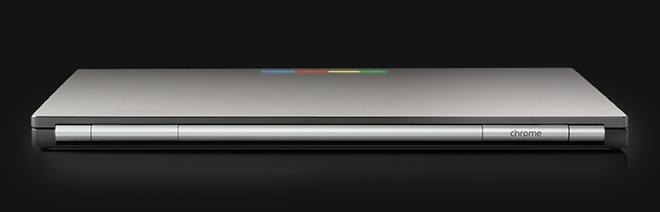
It might seem easy to draw correlations between Apple’s long ago expensive Macintoshes and today’s increasingly expensive iPhones, particularly if you equate Windows with Android as the outside competitor. However, Apple’s OS licensing programs of the mid 90s really had a lot more in common with Google’s Android and Chrome OS initiatives that occurred two decades later: both ended up being a lot of work with very little real payoff.

After setting up a series of Mac cloners, Apple found that none of its new partners were really creating any valuable new markets for Macs. Instead, they were mostly all just trying to sell small batches of the most lucrative models: fast premium Mac clones that cannibalized Apple’s profitability while forcing it to sell low profit models on the low end.

What had seemed like a simple and obvious solution turned out to be a really complex problem with unforeseen consequences. Neither licensing nor the new “low cost” Mac LC or Performa models did much of anything to expand Apple’s installed base of users. Being cheaper just watered down the attractiveness of Apple’s platform and reduced any differentiation from the “good enough” Windows PC alternatives, which were pioneering faster processors and new markets in areas like PC gaming.

By 1996, it was growing difficult for most consumers to see any reason to pay a premium for a Mac, particularly given that there was incrementally more exclusive Windows software appearing. Even Microsoft was producing a version of Office that was now better on Windows than its Mac version. And the key software that had been driving Mac sales, including PageMaker, QuarkXPress, illustrator, and other other creative tools, was increasingly available for Windows PCs as well.

Android’s fading glory today

Today, Apple no longer has these problems. It isn’t materially struggling to keep its iOS up to par with leading alternatives that attract more exclusive software. Instead, it’s Google that is struggling to match the advances of iOS, while Microsoft’s Windows Mobile has dropped out of the race entirely. Most commercially significant app developers are not working to support Android first as Google’s executives once predicted would happen. Instead, apps routinely launch on iOS and developers often only provide a “good enough” version tied to ads on Android, because buyers attracted to Android largely don’t want to pay anything for software.

And rather than Apple seeing its profits bleed away to cloners today, it’s Google that is struggling both to sell its own Pixel hardware and to promote partners’ “real” Android devices bundling its Google Play services in a world where most of Android’s growth is occurring in the “cloned” flavors of Android forks based in China that Google gets nothing from and has no control over.

Additionally, Google’s largest Android licensee is actively seeking ways to use its own Tizen platform instead, and the fastest-growing Android maker in China is also threatening to use its own Linux fork. Herding the cats of Android’s licensees are a bigger mess for Google than Apple’s once were for the classic Mac OS.

In mobile devices, Google is today’s Beleaguered Apple, suffering from not just a hardware cloner problem, but also from key software partners threatening to bail and go the commodity route the same way that Adobe once tried to abandon Apple for Windows out of commercial self-interest. Android really isn’t today’s Windows. iOS — and to an extent Android forks — are closer to playing the role of today’s Windows, while today’s “beleaguered Mac” is Google’s “pure” Android, which struggles to promote new APIs and attract the same kind of attention that iOS gets, while also a few steps behind the new iOS releases Apple cranks out every year in key features and in distribution.

It’s not clear how Google can turn things around and regain control over its increasingly factionalized cloners and the forked software platforms that call themselves Android, not to mention pull back the territory lost to Tizen and other proprietary OSs now powering TVs, wearables and other devices. Just like Apple’s 1990’s Performa, Googles’ cheap Nexus hardware also didn’t move the needle. And the market potential for Google’s higher end Pixel brand is eaten up by Android licensees’ own flagships desperately seeking profitable sales in the finite market for premium Androids.

Google’s various competing plans for its modern OS of the future, whether Chrome OS, some new version of Android, a hybrid, Fuchsia, or something else, have a lot in common with the constantly shifting OS strategies at the old mid-90s Apple. Perhaps there are lessons for Google in Apple’s late 90’s history of turning things around.

Steve Jobs big shift at Apple

After the third party advice recommending Mac software licensing and cheaper, commodity-like Mac hardware both failed to fix things for Apple, there was no obvious advice left to give, so the media began dumping on the company as a beleaguered failure with no way out.

Perhaps another company could pull simply buy it and turn it around? That too was bad but popular advice, as would later be clear from the results of some larger company buying out a struggling hardware maker like Be or Palm. Had IBM or Sun bought Apple, it most certainly would have just flubbed everything and turned Apple into another once-notable icon in the graveyard of tech history, the same way Google’s acquisition of Motorola resulted in simply destroying what was left of the once great brand and selling off the logo to Lenovo.

Instead, Apple was effectively taken over by Steve Jobs’ team at NeXT. Apple acquired the much smaller company in the final days of 1996 in a Hail Mary play that expected to use NeXT’s operating system software to replace the increasingly outdated underpinnings of the Mac. But in addition to acquiring software, Apple ended up getting a disciplined executive structure and a product visionary with the ambition to return Apple to its once-former glory.

Steve Jobs dramatically simplified Apple’s offerings in 1997

Rather than dialing Apple back to its late 80s Golden Age, Jobs turned Apple’s clock back even further to its early 80s “Insanely Great” era, one that could excite customers with new technology in a fresh package that stood out in a sea of boring sheet metal boxes. Instead of trying to convert Apple into a copy of Microsoft or Dell, Jobs aimed to return Apple back to what it was once really good at being: fashionable and premium.

Apple’s 2000s Era of Plastic Fashion

After Jobs had originally left Apple in 1986, he pursued the goal of building his future vision of desktop computing at NeXT, which shipped its first product in an attention-arresting black magnesium cube in 1988. A decade later after returning in 1997, Jobs turned to Apple’s existing design team to create something entirely fresh and new.

That team had already been experimenting with translucent plastics, most evident on the dark green Newton eBook 300. But to make a big splash, the new iMac would need to be more boldly styled.

After assuming control of the beleaguered Apple Computer in 1997 as its “interim CEO,” Jobs concentrated on Apple’s valuable technologies, capitalized on the strongest of its remaining business audiences (notably education and consumers buying products for themselves), and presided over the invention of a new style of technology. That helped to forge a new identity for the company, allowing it to more readily shed its problematic associations of being “cheaper but still expensive,” and selling relatively unexciting “beige box” computers.

Rather than releasing a techy PC box intended to be locked down by a central team of IT administrators while supporting every available legacy port, Apple positioned the 1998 iMac as a curvey, translucent, colorful appliance that regular people could plug in to begin using immediately. Apple cleverly made the new iMac’s appearance a prominent subject on its website. At a time when animated autoplay graphics on the web were novel, Apple’s main page displayed a bright Bondi blue iMac rotating into view to introduce itself.

iMac launched Apple’s new era of plastic fashion. The use of plastic as a material certainly wasn’t new to Apple. In fact, it was the early Apple of the late 1970s that popularized the use of ABS moulded plastic as the casing for its Apple II at a time when most home computers were formed from cheap, simple sheet metal. Designing and moulding a styled case took additional time and effort, but resulted in a more distinctive product. When the first Macintosh shipped in 1984, its all-in-one plastic enclosure was iconic and modern looking.

But more than a decade later, the use of common ABS plastics to form a computer case was not novel at all. And as Windows began offering a cheaper alternative to the Mac desktop, the appearance and styling of the PC box had largely fallen out of focus. After all, most PCs were just thrown under a desk anyway, so it was fine to have a cheap sheet metal box with just a styled plastic front, commonly with convenient legacy ports across the back and perhaps even more on the front. The only thing that mattered at the time was how fast a PC could run Windows.

A technical, fashionable break with legacy

Instead of trying to beat PC makers at their own game, Jobs’ Apple built something distinctive. iMac, powered by a PowerPC processor, wasn’t intended to run Windows at all. Instead, Apple focused on the tasks people wanted to accomplish, including email and web browsing, neither of which required Windows.

In another break with the status quo, iMac also had no legacy ports. It exclusively provided one expansion method: Intel’s USB, a new style of port designed to make it much easier to connect a number of both fast and slow peripherals without any manual configuration or settings.

The tradeoffs of abandoning legacy were howled about by the media trying to cater to populist outrage over users being forced to change rather than being coddled as customers who knew best. But users and the media were wrong about USB.

The original iMac only supported USB for peripheral expansion

In fact, Apple’s big exclusive bet on USB not only created a new era of simplified Mac connectivity—no more ADB keyboards, old serial peripherals, GeoPort, and SCSI complicating the market and making Mac versions of peripherals more expensive—but also trail blazed for USB at at time when many PCs had included the new ports but either didn’t support them or dangled them off the side while prioritizing the old PS/2, Centronics, RS-232 and other old connections that were slightly cheaper.

The success of the new iMac, its translucent plastic appearance and simplified USB allowed Apple to stand out in a crowded market, and capitalized on style over pure cheapness. The new iMac didn’t sit under your desk out of sight; it was a showpiece. Apple’s distinctive look was immediately copied by PC makers — some of whom Apple successfully stopped on trade dress grounds — but also by makers of USB peripheral makers seeking to sell them to both Macs and PCs.

That meant that even commodity PC boxes were commonly attached to bright, translucent plastic boxes serving as a USB hub, a mouse, a keyboard or other device, effectively seeding the notion that the look of the future in the late 90s had shifted from the opaque “boring beige” that had once looked modern in the early 80s, to a new material design language that showed off the latest technology in producing translucent injected mold casings with a more precision fit and a closer attention to detail and styling.

To PC nerds who only cared about processor speed, Apple’s new translucent plastic styling was often regarded as silly. But mainstream users, particularly those new to computing who just wanted to get online and didn’t want to dedicate their lives to maintaining a peak performance computing machine, the “there is no step three” iMac was both an easy decision and a fashionable one that felt fresh and modern.

The Dotcom Plastic Bubble

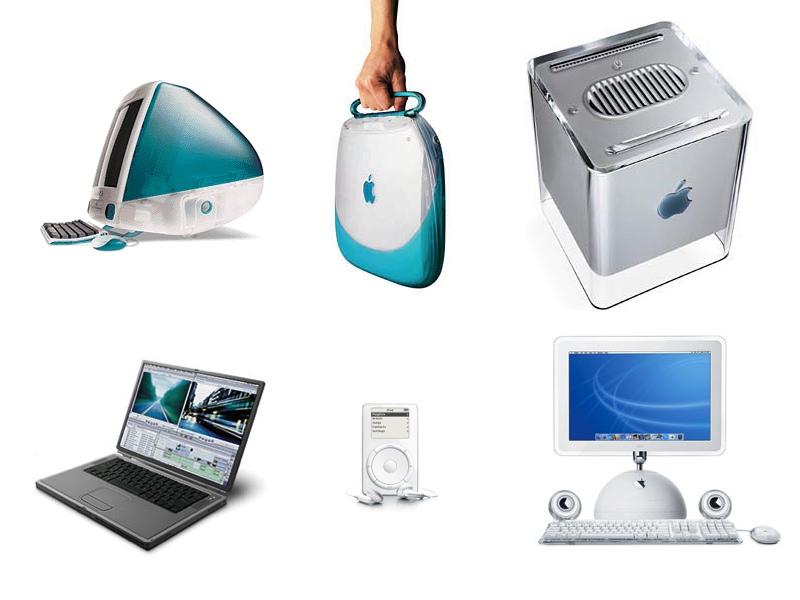
Apple rapidly spread the iMac’s distinctive styling across its product line, starting with its wildly colorful new iBook in 1998 and moving across the pro line of Power Mac G3s the next year. In 2000 Apple released the G4 Cube — a pure showpiece of plastic innovation that effectively eclipsed its value as a computer. Apple had retained an edge with creative users, so its injection of colorful, translucent plastics grew prominently visible in markets where it could grab attention and stand out as the modern, fresh look of the new Millennium.

Apple 2000s

Apple’s early 2000s product lineup was fresh and unique

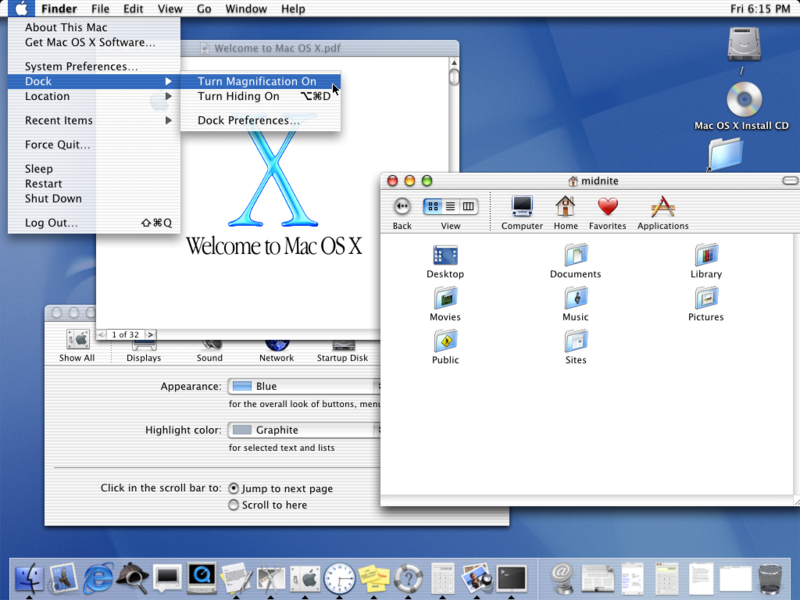
Beyond hardware, Apple’s fresh “plastic fashion” was also reflected in the company’s release of Mac OS X, which was given a new Aqua interface that not only looked new, but was grounded in entirely new Quartz technology. Rather than being just a bitmapped graphical display of simple 2D geometry that the original Mac had introduced in the 80s (and which Windows had copied verbatim), the new Mac OS X introduced a scalable, compositing graphics system that leveraged the 3D graphics power that video games had popularized.

This enabled Macs to present graphics elements with real translucency along with fluid, animated effects — most notably the Dock — that paired perfectly with the clear plastic hardware Apple was selling, differentiating Mac OS from Windows the same way that Apple had been contrasting flashy Mac hardware from basic PC boxes.

Mac OS X reflected Apple’s new translucent plastic hardware

Because Apple was launching a new platform, it had fewer legacy issues to manage than Microsoft’s Windows. Legacy complicated Microsoft’s ability to copy Apple’s modern vector graphics, delaying its own response with Windows Vista until the end of 2006. Apple enjoyed years of exclusivity of its own “plastic” innovations for a long enough period to strongly differentiate itself and its products from the status quo. By the time Vista did ship, it simply looked imitative rather than like a parallel development.

A flexible entry into mobility

In 2001, Apple also made a bold move into consumer electronics with iPod, using its advanced core technologies to enhance the simplicity and functionality of the device rather than exposing unlimited complications, settings, and configurations that would require a “Book for Dummies” just to use it.

In parallel, Apple was also capitalizing on mobility in personal computing, focusing more of its efforts into notebooks than desktop Macs because the market was clearly shifting toward mobility and away from the stationary 1990s home PC stuck under a desk.

Apple’s plastic mobility strategy was not just exceptionally successful, but it also leveraged cross-pollination between its mobile music devices and its advanced desktop operating system to deliver iPhone–the largest, most commercially successful product to ever be released.

iPhone similarly launched with a glossy, liquid look with even greater use of fluid animation in its graphical user interface, making it wildly fresh in a world where existing “smartphones” were mostly just basic button devices that reflected the simple user interface patterns of PC screens from the 1990s. And in its second and third versions, iPhone even shipped with a rounded plastic case that improved reception and lowered production costs, making it easier to produce in high volume. That was important because iPhones were helping to shift Apple from being the maker of a few million Macs into the producer of tens of millions of mobile computing devices.

A flexible demand for more space

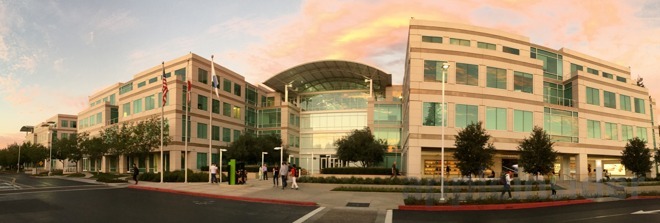
As the company’s fortunes–and need for expansion–grew dramatically over the early 2000s, Apple ran out of room at its original 1 Infinite Loop headquarters and expanded incrementally across a series of available office spaces.

1 Infinite Loop

Apple’s offices were too big in 1996 but too small in 2006

In 2006, just as it prepared to launch iPhone, Apple acquired a series of adjacent properties straddling the freeway just a few blocks east of 1 Infinite Loop, with the intent to build a major expansion of office space. Jobs explained the company’s voracious need for new space in a large, centralized building site at the time in saying, “we’ve rented every scrap of building we could find in Cupertino.”

As it drew up plans for a Campus 2, its own expansion was being matched by a decline at neighboring PC maker Hewlett Packard. Fortuitously, in 2010 HP decided to pull out of its Pruneridge Campus adjacent to the land that Apple had already pieced together, creating the opportunity for Apple to acquire HP’s old facility and build a very large new development across the combined area–an extremely rare opportunity to arise in the heart of Silicon Valley.

Real artists ship

While the company was working to expand its available space, it continued to keep its focus narrowed on the attainable. In stark contrast to the cloud of ideas billowing out of Apple in the 1990s, most of which were ultimately largely monetized by others, Jobs’ Apple of the early 2000s imposed a stark austerity in governing the company’s engineering goals.

Apple didn’t attempt to support or pursue any concept that users might think up—as Google more recently did with its Project ARA component smartphone or the idea of a round smartwatch.

Apple’s iPods didn’t try to master playback of every dreamed-up file format, no matter how noble the philosophy supporting a codec—another divergence from today’s Google. iPhone also didn’t attempt to open up its platform to every developer to empower them to do anything they might conceive—the basic premise of Android.

In part, that’s because much of what developers can think up is actually awful, as Facebook and other malware have since demonstrated. In an era of emerging social networks and surveillance advertising, Apple didn’t race to own and target its customers as a commodity it could resell. It remained focused upon designing high quality hardware powered by regularly enhanced software releases.

Apple’s restraint, its ability to say no, kept it focused on what it could do well and how it could improve on what it was already doing. That enabled the company to rapidly ditch its reputation for beleaguerment among consumers and third party developers. It would eventually even shift the less malleable mindset of the conservative enterprise, leveraging those same converted consumers via the Bring Your Own Device trend.

Ten years of no tablet

One notable example of Apple’s extreme restraint: despite its corporate experience in shipping the first mainstream tablet device with Newton MessagePads across the 90s, Apple spent the full decade of the 2000s actively resisting calls to ship another tablet. Internally, it instead worked in secret on lining up the necessary building blocks needed to successfully deliver such a product: a new Safari browser, new mobile hardware technologies, and an efficient new iOS foundation.

iPad 2001

Rather than dumping out an unfinished prototype for bragging rights, Apple patiently waited over a decade to refine its tablet strategy before shipping iPad

However, until it got to the point where it felt it could ship something that really made sense—iPad, in 2010—Apple focused on its conventional business notebooks and consumer laptops suitable for education. It even resisted the idea of shipping a mini tablet, instead branding its phoneless iPhone as “iPod touch,” and positioning it as a media device in the model of earlier iPods rather than a small general-purpose tablet computer, as other similar devices did at the time.

This allowed the company to perfect iOS and refine its slim, mobile device hardware for three full years without any direct comparisons to the bulky, “fully featured” tablet PC machines that repeatedly flopped in the market throughout the 2000s — despite their me-too claims of support for a stylus, handwritten recognition, and other ideas pioneered by Newton — as they attempted to deliver a 1990s desktop OS in an only incrementally newer form factor, or as a “hybrid” bridge anchored in the past.

After shifting Apple from its faded Golden Age to a new era of flexible, mobile, candy colored plastics, Apple just as rapidly started over with a new design language that would last through the next decade, one that would also be reflected across its hardware, software and even its new campus and other construction projects, as the next segment will examine.

Posted on Leave a comment

Editorial: Will Apple’s 1990’s ‘Golden Age’ collapse repeat itself?

Once, long ago, Apple Computer, Inc. commissioned a new headquarters in Northern California just as it began losing its position as a leader in personal computing tech in the early ’90s. Could history repeat itself in our modern era?

1 Infinite Loop (top) was the first of Apple’s three largest California campuses

History repeats, always with a twist

As Apple more recently embarked upon its massive second modern expansion at Apple Park, pundits crafted a narrative claiming the company was fated to suffer from an ‘arrogant construction hubris’ and ultimately fail.

There’s certainly no sign of that supposed “Curse of the Edifice Complex” today, a few years later as Apple expands even further beyond Apple Park with surrounding buildings–including its monumentally lavish Visitors Center in Cupertino–and the nearby third facility known as Wolfe Campus.

The tech media’s future outlook for Apple appears to have always been pretty wrong. The same kind of handwringing that hung over Apple Park during its construction did not occur over thirty years ago when the company was completing its first major campus back in 1993, just prior to a period of actual uncertainty and upheaval that really did result in a dour Beleaguerment Era for the Mac maker.

To better understand some of the reasons why pundit advice and prognostication are so frequently misguided, take a look at the Old Apple during its first major campus project–in the context of what was happening at the company in contrast to what outsiders imagined was occurring based on a superficial understanding of the market–and consider what’s different this time around.

Apple’s 1990s “Golden Age” campus

Apple’s first major campus project in Northern California, known as 1 Infinite Loop, had just finishing completion in 1993 at the tail end of what at the time had been commonly called Apple’s Golden Age: the pinnacle of its then highly-regarded Macintosh business that was just approaching its ten year anniversary–not unlike today’s iPhone.

The Macintosh-centric Apple had pioneered the development of advanced concepts including QuickTime digital video editing, voice synthesis and recognition, ultra-fast desktop computer hardware, new hyperlinked worlds with explorable nodes of virtual reality, and the promise of a new generation of mobile Newton personal digital assistant tablets.

Across the ’80s, Apple had achieved a pattern of distantly outperforming the collective mainstream of commodity copycat cloners in the industry by seeking to achieve something much greater than just incremental hardware advancement. While almost entirely forgotten after its fall in the mid-’90s, Apple was commonly described at the time as having entered a Golden Age, a period of time where everything it delivered was impressive and exciting and desirable.

The new headquarters of 1 Infinite Loop reflected that Golden Age optimism while figuratively planting a nostalgic homage to representations of how it got there in its campus Sculpture Garden, a feature depicting cartoonish, low-resolution Mac icons sprouting from the lawn. The Apple of the early 90s could easily be mistaken for today’s Google.

Apple’s Golden Age meltdown

Anyone who lived through the 1990s, however, will no doubt recall a different descriptive phrase attached to the company. By the mid- to late-’90s it was virtually impossible to read anything about “Apple Computer, Inc.” without a specific introductory adjective that was, at the same time, wistful, disparaging, infantilizing and dismissive. The company was, and always was, referred to as the beleaguered Apple Computer.

Despite suffering the consequences of both internal issues of its own making and outside problems beyond its control, Apple wasn’t so much branded as being incompetent or victimized as it was just Beleaguered, as if it were inherently fated to always be chained to a hopeless dream and unachievable utopia that the company could envision and articulate but not instantiate in a viable, sustainable, commercially significant form.

But Apple’s problems weren’t really a romantic curse. There were solid, rational reasons why the company began drifting sideways, even if much of the media lacked any understanding of this–or even knew that things were headed in a bad direction at all.

Across the ’90s, Apple had defined airy visions of the future. Those included its Knowledge Navigator demonstration of a voice-based assistant concept and the nearly magical Newton Message Pad tablet, both championed by Apple’s late-80s CEO John Sculley.

The company actually defined the outer realms of possibility in computers by developing software powerful enough to anticipate the needs of non-technical artists with its intuitive Mac user interface. It then promised to allow them to author multimedia with QuickTime, the first non-linear digital video editing platform for personal computers. That futurist technology appeared for Macs at a time when commodity PCs were still struggling to play back simple audio.

QuickTime

Apple developed non-linear video editing for Macs before PCs could reliably play back audio

Apple promised to usher in the same kind of future-forward upgrades for advanced page layout and printing with QuickDraw GX; for 3D graphics with QuickDraw 3D; for sophisticated local document search with V-Twin; for advanced OS and User Interface development with Copland and Gershwin; for non-proprietary files with the document-based OpenDoc, and for tools to create and explore virtual reality worlds with QuickTime VR.

The company also delivered major hardware-based Mac upgrades enabling advanced AudioVisual capabilities using Digital Signal Processors from AT&T and later RISC-based PowerPC chips in its partnerships with IBM and Motorola. This allowed Apple’s computers to digitally ingest, edit and output video from a camcorder and to play or record CD quality audio right out of the box long before PCs could do either.

However, as the ’90s dragged on Apple’s consistent inability to actually deliver upon what it was promising at a price mainstream users would pay set it up for real-world failure. At the same time, the Mac maker began running into intense competition from generic DOS PCs.

Apple had been struggling with its own development plans for Copland, its modern new Mac operating system. It was still fighting to finish its Newton OS tablet software. And it had grown increasingly distracted with a series of other moonshots and side projects–including the Mac-based Pippin games console–that various teams of engineers were inventing within their personal fiefdoms inside Apple’s Advanced Technology Group and other think-tank silos funded by the revenues from the Mac’s Golden Age.

Newton and Pippin, harbingers of today’s side-project moonshots

Apple wasn’t just fudging things internally. It had also embarked upon three large-scale, ultimately ill-fated joint efforts with Motorola and IBM to design PowerPC chips, to develop a new next-generation cross-platform OS known as Taligent, and to build multimedia tools development tools at Kaleida Labs.

It had also launched a separate new mobile processor architecture for its Newton Message Pad, known as ARM, with partners Acorn and VLSI. There was a lot going on outside of Apple’s core Mac business, but none of it was making enough money to sustain itself.

Across the company’s first five years at 1 Infinite Loop, Apple appeared to be caught in the vortex of a swirling drain, losing its customers and market share to cheaper commodity PC makers while being forced to frantically delay and ultimately cancel failed initiatives such as QuickDraw GX and OpenDoc after they had wasted the time and resources of its third-party developers.

After a period of constant beleaguerment that seemed to last for a generation (but really only stretched from 1994 to 1998, shorter than either Microsoft’s Windows-Zune mobile meltdown a decade later, or Google’s increasingly bleak implosion of hardware attempts from Motorola to Nest to Nexus and Pixel today, two decades later), Apple began to emerge anew under the returned leadership of Steve Jobs, who slashed away failed experiments and underperforming business segments to focus on ones that customers would want and could afford and which could sustain Apple itself.

Could an Apple again fumble its Golden Age?

Today’s Apple under Tim Cook is wildly different from the Apple of the early ’90s. In part, that’s because much of the executive team —including Cook–experienced first hand the results of the lack of curation and focus that nearly doomed Apple in the mid-’90s as they began working to salvage the company under Jobs in the late ’90s. Jobs recruited Cook to Apple in 1998, at a time when many still dismissed the company as an unredeemable failure.

Other companies, including Microsoft, had only watched from afar as the Old Apple began rolling on its side. That allowed Microsoft’s executives to blissfully preside over a series of ill-considered and poorly planned and managed projects like the Zune music player, the KIN initiative aimed at building a new kind of phone from scratch targeting the youth demographic, and the ambitious but poorly conceived and implemented Surface RT project to make PCs lighter, thinner and more mobile using ARM chips that couldn’t run existing Windows software.

Microsoft’s Newton

Beyond those internal failings–which included Microsoft’s own Copland-like struggles with Vista, Windows 8, Windows Mobile and Windows 10–the company also engaged in dramatically bad partnerships and acquisitions. It spent $15 billion buying Nokia and aQuantive, with nothing remaining to show for either one apart from layoffs and losses.

Everyone one of those missteps was worse than Apple’s fall in the mid-’90s. Microsoft had enjoyed a much more resplendent Golden Age than the Old Apple had, but then lost its key market position and relevance as the world shifted to mobile devices. For Microsoft, there was no return of its founder Bill Gates to put the company’s old business back together again.

Following Microsoft, another Golden Age meltdown in tech

Microsoft wasn’t the only company to fail to learn anything from Apple’s mid-’90s brush with death: Google today has similarly spent billions on far-off ideas that failed to materialize as real businesses. Like Microsoft, Google also spent $15 billion to acquire two massive businesses, Motorola and Nest, then failed to do anything very productive with them as it fired thousands of workers and eventually sold off much of the remaining assets to China at a massive discount.

Google similarly had grandiose ideas about the future of computing but failed to deliver much more than a copy of Apple’s original work. Many of the novel parts of Android were removed and replaced with ideas taken from iOS. Chrome OS was initially envisioned as a PC web-based netbook but is now trying to morph into an iPad-like touchscreen tablet.

Even Google’s far off future “Fuchsia” OS strategy is abstractly named after a color, which not so subtly calls to mind the Blue and Pink cards Apple used while trying to lay out some deliverables for its Copland releases. Google has now been struggling to find a significant customer for Chrome OS a decade after it was outlined as a strategy in 2009. That’s reminiscent of Apple’s nebulous Newton strategy under early ’90s CEO John Sculley and Microsoft’s Tablet PC initiatives under Gates in the 2000s.

Rather than describing the failure of Chrome OS to find any traction anywhere apart from the very small, very unprofitable K-12 as being a Newton or Tablet PC type failure, today’s tech journalists have portraying Google’s struggling netbook as a problem for Apple, even though shipments of Chromebooks have had a minor impact on Apple’s U.S. sales in K12 and no real impact at all on iPads among consumers, the enterprise, and in massive new emerging markets including China.

In parallel, Google’s self-branded hardware efforts have been a mess despite double-digit billions in acquisitions and investment. Google’s Nexus offered low-priced devices that sold in disappointing quantities, much like Apple’s own ill-fated attempt at low-end Performa Macs from 1992-1997. Google’s subsequent Pixel products offered premium-priced devices that sold in disappointing quantities, much like Apple’s Newton and fancy vanity projects like the company’s Twentieth Anniversary Mac.

Google’s Newton

Google is also today pursuing a dual OS strategy involving two entirely different architectures (JavaVM-based Android and its web-based ChromeOS), not dissimilar to Apple’s Mac-Newton rift, or the problems Microsoft slogged through with DOS/Win95 vs NT, and again with the kernel disparity of Windows for PCs and Windows Mobile.

Three samples of failure exposed to varying amounts of criticism

For Apple, Microsoft and Google, launching a series of wild, unrestrained moonshots while having multiple, competing platforms all vying for attention in the same space while not actually selling much of anything turned out to be a really bad strategy with terrible results. But our science experiment subjects here also show the effects of outside stimulus.

The tech media initially cheered all on three because they didn’t seem to realize that making news is not the same as making money. Once reporters discovered that a decade of moonshots and wild, unrestrained spending without sustainable sales was actually a big problem, they turned on Apple and reviled it.

There has been less criticism of Microsoft despite its massive loss of control over the future of technology, and very little of Google at all. A lack of criticism results in a lack of course-correction. Relentless criticism of Apple has greatly improved the trajectory of the company, as demonstrated by its fixes for iCloud, Maps, and the App Store in response to media castigation. Apple has also materially changed the direction of Siri.

Tepid assurances by the media that Microsoft could reassume its monopoly control over mobile devices and take back tablets by simply copying elements of Apple’s strategy cooed the company to sleep. Today Microsoft has zero phone business and its tablet and PC sales are a low-profit busywork distraction that haven’t grown across many years of trying, not unlike Performa Macs of the 90s or Google’s more recent Nexus and Pixels.

Apple’s non-golden age

Today, Apple is focused on fewer products that sell in massive quantities at sustainable profits. The company’s software updates have achievable, short-term goals, rather than charting out far out future dreams or trying to deliver grandiose notions such as a voice-first ambient computing or an advertising-based social surveillance network that people may not even want once they see what it really means.

Apple’s modern developer APIs are generally stable enough to rely upon, rather than being promises that don’t ever fully materialize that are then thrown out once the focus changes. Yet Apple isn’t praised as sitting on a Golden Age today. It’s generally ridiculed by the media for not pursuing ambitiously entertaining public stories and moonshot ideas.

Apple Carrousel du Louvre

Apple today is defined by solid products customers can buy, not grandiouse vaporware the media can write about

Rather than declaring Apple’s wildly successful recent history as a Golden Age, pundits have been giving their lethal applause to Microsoft and Google. But those fun moonshots to nowhere–including blood sugar monitoring contacts that don’t actually exist, its Andy Rubin robot initiatives that had little real commercial value, its stabs at social networking that nobody cared about and its radical efforts to shift society and industry–from Wallet to Glass to Project ARA to Tango–have been an unbroken series of expensive projects that never went anywhere.

Across the 2000s and early 2010s, Apple far exceeded the accomplishments of its previous Golden Age of the late 80s and early 90s. And did so while being severely constrained operationally in its corporate office space.

The new Millennium Apple, under Jobs, focused on a flexible, new eye-catching material he made more valuable than gold as he and his hand-selected team turned Apple around, as the next segment will examine tomorrow.

Posted on Leave a comment

Apple Card vs Amazon Prime Rewards Visa: which credit card offers the most cash back and best perks?

Apple is being praised for disrupting the credit card industry with its forthcoming Apple Card, but Amazon is already offering a lot of the same benefits —and you even get a metal credit card from them, too. AppleInsider breaks the two down.

Apple Card is Apple’s foray into personal finance, that has no fees and which pays you money every time you use it. You can use it online the instant you’re approved, and the physical card you get sent is shiny metal. Maybe the fees and cash side are more important than the metal card, but they’re all reasons to like Apple Card —which means you should also like Amazon’s equivalents.

We still have a while to wait before Apple Card is released, but you’ve long been able to get not just one but two different credit cards from Amazon that appear to do the same thing. In practice, there are subtle though significant differences, but Amazon’s credit card is a serious contender.

It’s sufficiently serious that maybe you shouldn’t wait for Apple. And, maybe, you should have applied for Amazon’s credit card years ago.

Two cards, both alike

We’re going to compare the best of Amazon’s two offerings, which is the Amazon Prime Rewards Visa Signature Card. There is, though, also the Amazon Rewards Visa Signature Card and if you just had to squint to see the difference in the name, the differences in what it does are much simpler.

The card we’re going to call Amazon Prime Rewards from now on, offers you more money back on each purchase than the non-Prime one. It also requires you to be a member of Amazon Prime, where you don’t for the non-Prime card.

Prime target

That requirement for you to have a membership with Amazon Prime is the first difference between this and Apple Card. It also makes a joke of how the Amazon Prime Rewards card insists that it doesn’t charge an annual fee.

Strictly speaking, Chase Bank, which provides the service, doesn’t ask you for an annual fee, but since you can’t have a card without paying Amazon your $119 per year, you are being charged one.

It’s just that it may very well be worth it. Amazon Prime offers other benefits, ranging from free or expedited shipping on items you buy, to a video streaming service. If you like the shows on that service or if you buy enough items from Amazon, that Prime membership could be a bargain.

Amazon would like you to see it as a steal, too, because if you qualify for its card, the company immediately gives you a $70 credit. If Amazon Prime is worth it at $119, it’s got to be fantastic value at the equivalent of $49.

Except this credit is a signup bonus, you only get it at the start. For next year and every year after, you’ll be paying the full $119 every time.

[youtube https://www.youtube.com/watch?v=HAZiE9NtRfs&w=560&h=315]

In comparison, Apple Card doesn’t give you any bonus on signing up, but it also never charges you an annual fee just for having it.

That said, an Apple Card is a bit useless to you without at least an iPhone. So you could argue that the up-front cost of Apple Card is a lot more than Amazon’s.

Cash back

Both Apple Card and Amazon Prime Rewards offer you money back whenever you buy something through it. Any amount of cash back is good, but Apple’s offering ranges from a mere 1% to 3% depending on where you are buying whatever it is.

In practice, you’re most likely to get 2% because that’s the amount when you buy anything, from anywhere, using Apple Pay. If you buy it from Apple, that’s when you get the 3% return.

Amazon has the same 1% when you buy just about anything, anywhere, using it. Then it offers 2% across common outlets such as drug stores and gas stations. If you are buying anything on Amazon or through its subsidiary Whole Foods Market (not including international stores), then you get 5%.

The headlines of what Amazon's Prime Rewards card offers are compelling


The headlines of what Amazon’s Prime Rewards card offers are compelling

You don’t have to count on your fingers to know that Amazon’s top 5% is more than Apple’s top 3%, but seeing the difference in cold cash is much more vivid.

Say you bought a 40mm Apple Watch Series 4 with cellular connection. If you get it from Apple, that retails for $499 and with the cash back, it’s ultimately costing you just $484.03.

That’s not bad at all, and now there’s no way you’d buy a $10,000 iMac Pro any other way.

Except that on Amazon, that same Apple Watch Series 4 is currently selling for $449.99 with coupon. That’s already a savings, but throw in that you’re going to get a 5% bonus, and now you’re saving $22.50. You’re spending a total of $436.49, or forty-seven bucks less for the same Watch.

When you see it

Amazon’s clearly the better offer for cash back, but there is the question of when you actually get the money and that’s more complicated. The short version is that with Amazon, you’ll see your cash in your account at the end of the month. With Apple, you see it every day.

Only, when you go to buy something on Amazon and you’re using its card, you will be offered a discount right away. At checkout time, you can choose to reduce the price by using this cashback figure. All credit card experts say no, though, don’t do it. Pay the full price and let your cashback accrue through the month.

Amazon's card is metal. And of course it's got reviews.


Amazon’s card is metal. And of course it’s got reviews.

There’s also the fact that Amazon does this through a points system where about 1 cent equals 1 point. It doesn’t appear to change, so it isn’t that you have to figure out in your head what the points mean, but Apple’s got this right. With Apple, there’s no messing around with points, there is just the cash in dollars and cents.

Simplicity really counts

Apple can’t touch Amazon for that cashback amount, not when it’s 5% and when it applies to everything you buy through the service. Yet it can compare on simplicity and giving you control of your finances. If that sounds like a small thing, still it’s really what will make Apple Card disrupt the industry.

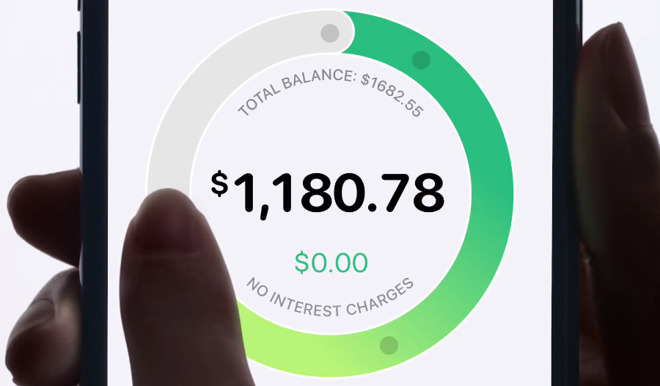
With Apple Card, you’ll see every transaction in all the detail you need, without any delay. With Apple Card you can see the difference to you in dollars if you pay off the entire balance each month or you don’t.

It's much clearer with Apple Card how much interest you'll pay

It’s much clearer with Apple Card how much interest you’ll pay

There are other differences between the services —ranging from details about late fees and when interest is charged on which amount —but they don’t change the headlines.

Apple Card is good card with pretty good cashback rewards and exceptional tools for managing your money. Amazon Prime Rewards currently comes with significantly better cash rewards and if you’re already a Prime member, no downsides.

There is one big question over the Purchase APR of these two cards. Apple has been criticised for saying it offers great, low rates when its card’s APR will be from 13.24% to 24.24%, depending on your credit worthiness. However, Amazon’s ranges from 16.49% to 24.49%.

The very best way to use a credit card, regardless of who it’s from, is to pay off your entire balance every month. If you do that, if you are on top of your spending, and if you buy a lot through Amazon, then Amazon’s card is the better value.

Keep up with AppleInsider by downloading the AppleInsider app for iOS, and follow us on YouTube, Twitter @appleinsider and Facebook for live, late-breaking coverage. You can also check out our official Instagram account for exclusive photos.

Posted on Leave a comment

iPhone XR sequel might gain twin-lens rear camera in 2019


Rumors suggest Apple’s iPhone XR follow-up will upgrade to a dual-lens rear camera in 2019, potentially delivering the company’s advanced photographic technology to an entry-level smartphone model for the first time.

iPhone XS

As with the iPhone X and XS, one lens would be wide-angle and the other telephoto, Mac Otakara said on Friday, citing information from Chinese suppliers. The current XR has a single wide-angle lens, identical to recent base level iPhone offerings.

Traditionally Apple has used telephoto lenses for two purposes, the first being 2x optical zoom instead of digital enlargement. The second, though, is Portrait Mode photos accomplished in the iOS Camera app — the telephoto becomes the primary lens, while the wide-angle captures depth data used to isolate the subject and simulate DSLR-style bokeh.

The XR employs specialized algorithms to achieve a similar Portrait effect, but the resulting image is zoomed-out and not necessarily as accurate as its XS counterpart.

Multiple reports have pointed to flagship 5.8- and 6.5-inch “XI” and “XI Max” OLED iPhones coming with a triple-lens camera, the third lens possibly being a super-wide unit. Mac Otakara added that two out of three lenses/sensors may be used as common parts to keep costs down.

Separate design changes may include iPad-style mute switches and the use of 3D-molded rear glass, even covering the phones’ larger camera bumps. That same all-glass design is expected with the dual-camera XR successor, which could rely on a familiar 6.1-inch LCD screen, the report said.

It is also possible that the new phones will include USB-C to Lightning cables and 18-watt USB-C power adapters, but keep Lightning as their wired data type.

Posted on Leave a comment

3D printed ‘2019 iPhone’ lineup compared to iPhone XS, XS Max and XR


Supposed replicas of Apple’s next-generation iPhone lineup are beginning to circulate in Asia ahead of an expected release this fall, offering an opportunity to compare the mockups’ physical dimensions with existing models.

2019 iPhone Mockup

In a report on Thursday, Japanese Apple blog Mac Otakara compares and contrasts a set of 3D printed “iPhone XI” mockups obtained from an Alibaba marketplace source with Apple’s existing iPhone XR and XS models. Specifically, the samples depict 6.1- and 6.5-inch OLED-toting handsets rumored to arrive in September as refreshes to the iPhone XR and XS Max.

The dummies were created using supposedly leaked CAD files, though the origin of the data remains undisclosed. Earlier today, graphical mockups of a 5.8-inch OLED model, thought to replace the iPhone XS, hit the web and were based on “final CAD renders of the device.”

Whether the two CAD leaks are related is unknown.

Mac Otakara notes the 6.1-inch version measures in at 143.9mm tall, 71.3mm wide and 7.9 mm thick, which is approximately 0.3mm taller, 0.4mm wider and 0.2mm thicker than the 5.8-inch iPhone XS. That extra space could allow for the inclusion of a larger 6.1-inch display, as claimed in the report, but Apple would likely need to slim down bezel size to make the screen fit. How the supposed change impacts screen ratio is unclear.

Compared to the current iPhone XR, which boasts a 6.1-inch LCD, the 6.1-inch mockup is 6.1mm shorter, 4.3mm more narrow and 0.4mm slimmer.

As for the 6.5-inch version, the mockup comes in at 157.6mm tall, 77.6mm wide and 8.1mm thick, roughly 0.1mm taller, 0.2mm wider and 0.4mm thinner than the 6.5-inch iPhone XS Max.

Both mockups incorporate a large square camera “bump” that features three lenses in a triangular layout alongside a single TrueTone flash module.

[youtube https://www.youtube.com/watch?v=w1witX6DzJQ&w=560&h=315]

The publication conducted a similar comparison of mockups from Alibaba last year, a test that yielded largely accurate results and foreshadowed what would become iPhone XR, XS and XS Max.

Apple is expected to refresh its iPhone lineup later this year with so-called “iPhone XI” models. According to analyst Ming-Chi Kuo, the smartphones will include camera improvements like a super-wide rear-facing lenser and an improved 12 megapixel front-facing camera. As for displays, Kuo believes Apple to carry over OLED technology for the 5.8- and 6.5-inch versions, while others, namely Mac Otakara, predict a move to OLED for the 6.1-inch model.

Posted on Leave a comment

Expecting to pay up to $5B for Cambridge Analytica, Facebook sets aside $3B for FTC fines


Facebook is preparing to pay a record-setting fine to the U.S. Federal Trade Commission for privacy violations following the Cambridge Analytica fiasco, as the social network is earmarking $3 billion to go towards its expenses and a potential $5 billion fine, depending on how it negotiates with the regulator.

The FTC has been in negotiations with Facebook for a few months, with both sides keen to work out some kind of settlement over the matter to avoid heading towards a protracted and expensive courtroom tussle. While the value of the fine remains unknown, it has the potential to be the highest the FTC will ever level against a tech firm, far above the 2012 fine paid by current record holder Google of $22.5 million.

In its first-quarter earnings report, Facebook advises it estimated “a probable loss and recorded an accrual of $3.0 billion in connection with the inquiry of the FTC into our platform and user data practices.” While it has set aside $3 billion, it is prepared to pay more, estimating the loss could be in the range of $3 billion to $5 billion.

“The matter remains unresolved, and there can be no assurance as to the timing or the terms of any final outcome,” the filing advises. The amount could even end up being smaller than $3 billion, as Facebook could in theory agree to changes in how it operates its business and increased security in exchange for a smaller fine.

While substantial, the quarterly results also reveal the estimated fine may not affect Facebook’s finances that much, now that it has set aside cash. The $3 billion is approximately 6% of its on-hand cash and marketable securities, with the company reporting $2.4 billion in profit on $15.1 billion in sales, up 26 percent year-on-year.

The Cambridge Analytica data collection lasted for over two years. Over that time, Facebook generated approximately $19 billion in profit alone.

The FTC started its investigation into Facebook in March 2018, after the discovery of the Cambridge Analytica scandal, where Facebook user data and that of their connected friends were compiled and used to build voter profiles for some 71 million Americans, even those not opting in to the data collection, which may have been used by participants in the 2016 US Presidential Election.

Posted on Leave a comment

Foxconn and Wisconsin renegotiate factory agreement, future of project uncertain

According to a letter Wisconsin Governor Tony Evers sent to Foxconn executive Louis Woo, the state is renegotiating a deal that promised the Taiwan-based company incentives in return for building a massive manufacturing and R&D facility in the region.

Foxconn Wisconsin

President Donald Trump attends Foxconn’s groundbreaking ceremony in Wisconsin in 2018.

The renegotiation process commenced after Foxconn proposed changes to the project’s original plans, reports CNBC.

Evers in his letter said Woo, a special assistant to Foxconn Chairman Terry Gou who is leading the Wisconsin operation, spoke to him and other government officials about potential modifications to the contract in March. Those proposals arrived following rumors that the deal stalled.

“To my knowledge, this was the first time either Foxconn or the State of Wisconsin has mentioned amending or changing the agreement approved on 2017,” Evers wrote.

In response to Woo’s unspecified recommendations, Evers said the state is identifying areas that “will enable greater flexibility and transparency as the project continues to evolve,” the report said.

It is unclear what amendments have been made to the original deal as part of the renegotiation process, but the initial agreement called for Foxconn to receive some $4.5 billion in tax incentives to undertake the $10 billion project. In addition to substantial capital investments in Wisconsin infrastructure, Foxconn promised the creation of some 13,000 jobs.

Foxconn has made little progress over the past two years. Gou, joined by President Donald Trump, broke ground at the Mount Pleasant site last June, but has since missed investment and hiring targets.

The company first envisioned a large-format LCD plant, but later shifted focus to research and development after acknowledging it would be unable to compete in the U.S. TV market. Apple was at one point rumored to benefit from the development, with speculation suggesting Foxconn planned to pivot to small-format panels like those used in smartphones and tablets.

An investigation in April found Foxconn’s project amounts to unused office space, empty buildings and facilities still under construction. Other associated Wisconsin locations housed tenants unrelated to the program.

Last week, Evers called for a renegotiation of the contract, suggesting the company would not be able to meet its end of the arrangement.

“Clearly the deal that was struck is no longer in play and so we will be working with individuals at Foxconn and of course with [the Wisconsin Economic Development Corp.] to figure out how a new set of parameters should be negotiated,” Evers said in a statement.

For its part, Foxconn said it remains committed to the project, adding that construction at the main Racine, Wis., complex will begin in earnest this summer.

“Foxconn’s commitment to job creation in Wisconsin remains long term and will span over the length of the Wisconsin Economic Development Corporation contract and beyond,” the company said in a statement late last week.

Posted on Leave a comment

Sprint, AT&T reach settlement in lawsuit over rebranding 4G as ‘5G E’


A settlement has emerged in Sprint’s lawsuit against AT&T, which accused the rival carrier of “blatantly misleading consumers” with its use of the term “5G E” to market high-speed 4G connections.

AT&T 5G E on iPhone

“We have amicably settled this matter,” an AT&T spokesperson explained to the Dallas Business Journal. The exact terms of the agreement haven’t been made public.

AT&T will, however, get to keep using “5G E,” according to other Journal sources. If true, that would suggest Sprint was compensated or simply decided to drop legal action.

AT&T first began using “5G E” around early January, for instance showing the label on connected iPhones. That drew an outcry not just from Sprint but T-Mobile and Verizon, all of which have held off on the 5G label outside of authentic networks.

U.S. 5G is still in its earliest phases. Verizon has marginal coverage in Chicago and Minneapolis, and while AT&T did launch real 5G in December, that’s only in the form of a portable hotspot — phone support is still in progress.

iPhones aren’t expected to include 5G modems until 2020. That may be a result the now-ended Apple v. Qualcomm battle, as well as slow development by Intel. Indeed Intel dropped out of the 5G race shortly after the Qualcomm settlement.

Posted on Leave a comment

Amazon issues even steeper markdowns on Apple’s 11-inch iPad Pro, delivering record low prices


The Apple authorized reseller has dropped 2018 iPad Pro prices by an additional $25 to $50, with popular 11-inch iPad Pro models starting at an all-time low of $649.99 (and total discounts of up to $200 off).

Each iPad Pro deal rings in as the lowest price available, according to our iPad Price Guide, with free shipping for added value. Supplies may be limited during the holiday sale, and Amazon’s Apple deals have been known to sell out quickly. For a complete rundown of the latest discounts across Apple’s entire hardware line, be sure to visit our Apple Price Guide, which is updated throughout the day.

11-inch iPad Pros (Late 2018)

12.9-inch iPad Pros (Late 2018)

Must-have Apple Pencil (2nd Gen)

Additional Apple Deals

AppleInsider and Apple authorized resellers are also running a handful of additional exclusive promotions this month on Apple hardware that will not only deliver the lowest prices on many of the items, but also throw in discounts on AppleCare, software and accessories. These deals are as follows: