Expand Your Collection with New Special Edition Xbox Wireless Controllers
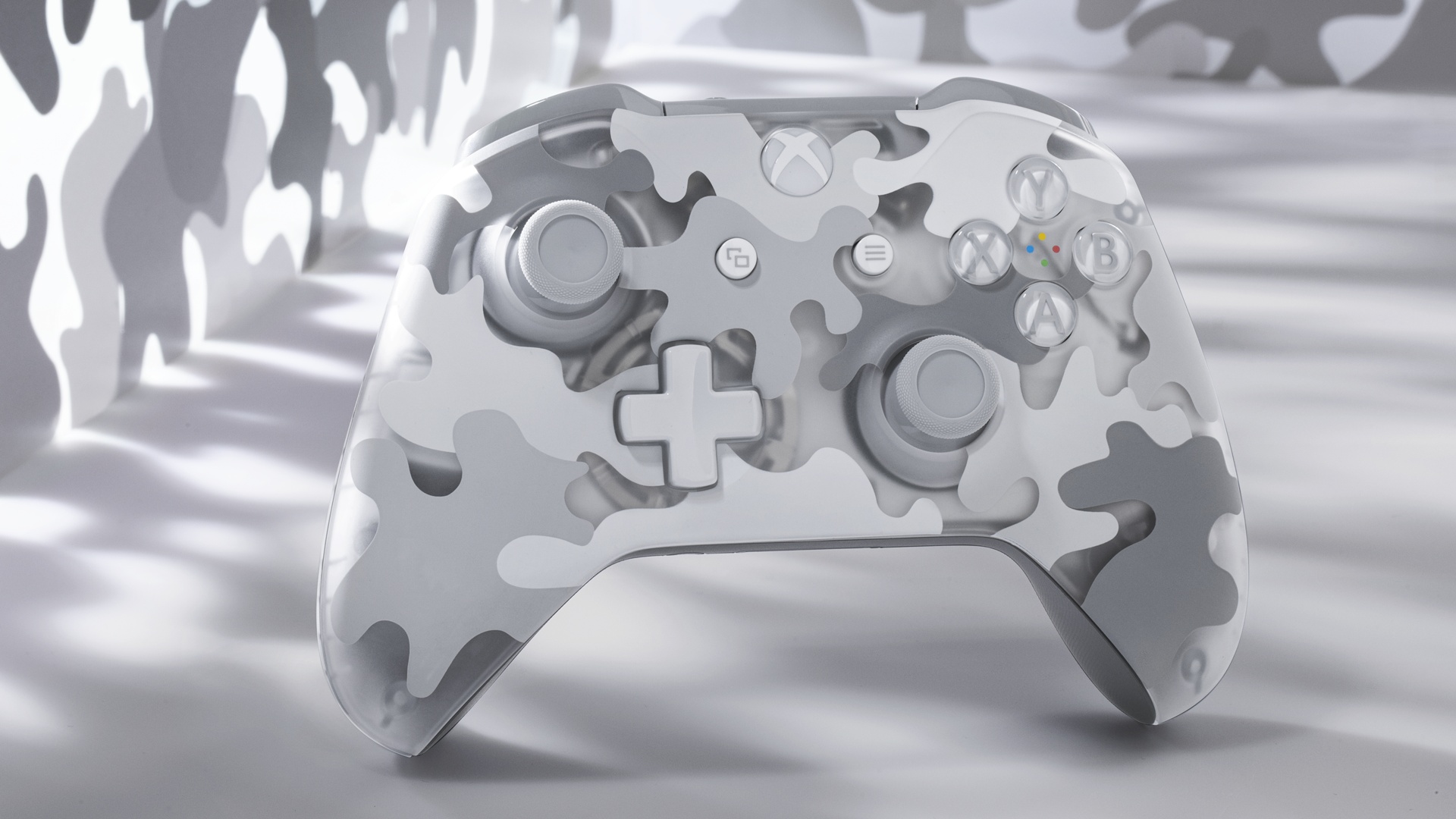
For many of our Xbox fans, collecting new Xbox Wireless Controllers and expressing yourselves with unique gaming gear is a way of life. We share the same passion and are excited to announce two new Special Edition Xbox Wireless controllers to add to your collection: the Xbox Wireless Controller – Phantom Magenta Special Edition and the Xbox Wireless Controller – Arctic Camo Special Edition.
The Xbox Wireless Controller – Phantom Magenta Special Edition is the third controller in our Phantom Series. The design is rooted in sci-fi, influenced by the type of aesthetics found in “Ex-Machina” and “Ghost in Shell,”and blended with mysterious luxury to create totally unique designs. Highlighted by an ultra-saturated magenta color effect transitioning to translucent, the Xbox Wireless Controller – Phantom Magenta Special Edition joins the Phantom Series in a bold way. You can add Phantom Magenta Special Edition to your collection for $69.99 beginning March 17 or pre-order yours today at Microsoft Stores, online and in-person, and select online retailers worldwide.
The Xbox Wireless Controller – Arctic Camo Special Edition is the second in our Camo series, the Xbox take on a very classic and iconic look. Specifically, the Xbox Wireless Controller – Arctic Camo Special Edition puts a technical twist on the popular Winter Camo white and grey color scheme. By using frosted transparent resin in the camo pattern, the controller camouflages itself from the inside-out. The diamond-texture on its triggers helps maintain a level of extra technical precision in this series. The Arctic Camo Special Edition will be available in May (for USA, exclusively at Microsoft Stores and Walmart). If you want to lock yours down before then, you can pre-order yours today, worldwide, at Microsoft Stores and select online retailers.
Designs so stunning deserve to be showcased, and what better way than to combine form and function with Controller Gear’s Phantom Magenta and Arctic Camo Xbox Pro Charging stands. Designed for Xbox, Controller Gear’s Xbox Pro Charging Stands are built with the same high-quality material as Xbox Wireless controllers, so it’s always an exact match, and the magnetic contact system ensures a perfect fit and secure charge every time. Each Xbox Pro Charging Stand comes with a premium charging stand, battery cover, rechargeable battery, and 6-foot power cord. The Phantom Magenta and Artic Camo Xbox Pro Charging Stands will be available in North America for $49.99. You can pick up the Phantom Magenta Xbox Pro Charging Stand beginning March 17 at your local Microsoft Store, in person and online, and at select online retailers. The Arctic Camo Xbox Pro Charging Stand will be available April 27 at select online retailers.
Like all Xbox Wireless Controllers, both the Xbox Wireless Controller – Phantom Magenta Special Edition and the Xbox Wireless Controller – Arctic Camo Special Edition are compatible with the Xbox One family of devices. These new controllers will also work with Xbox Series X, Window 10, and mobile devices (when using your Xbox controller with a mobile device, your performance may vary depending on the device and the mobile operating system version). You can also take advantage of the custom button-mapping feature through the Xbox Accessories app. In select markets, these controllers come with 14-day trials for Xbox Live Gold and Xbox Game Pass.
Insomniac Games is looking for Mid to Senior Engine Programmers to join our Core team and focus on our internal game development tool suite. If you have experience and interest in working with build systems, creative asset editors, internal UX and usability strategies, or modern procedural content techniques, we’d love to hear from you. Along with your resume, please include a cover letter or other brief description of why you’re interested in the position
Insomniac’s Core team is responsible for our industry-leading technical foundation for triple-A game development. We develop tools and technology to build and power titles like Marvel’s Spider-Man, Stormland, and Ratchet & Clank. As a principle, we strive to be open and generous in sharing our advancements with the game development community through conference presentations, public posting, and self-run conferences.
Responsibilities and Expectations:
Demonstrate exceptional communication abilities, both written and verbal, for purposes of collaboration, education, and mentorship
Design and develop new engine technology for the production of current and future games
Design and implement efficient low-level systems to support higher-level programmers & pipelines
Maintain and support our existing game engine technology while in use by production teams
Rethink, refactor, and rewrite existing systems as necessary
Contribute innovative and original ideas towards all aspects of game production and development
Work proactively with your lead to identify technical risks and generate solutions
Work independently to complete assigned projects with limited supervision
Provide technical leadership and tutelage in areas of specialization
Advise and mentor programmers both within and external to your area of expertise
Keep current with the technological developments and advancements in the game industry
Analyze code for performance and optimization opportunities
Document functionality and implementation details for production and other engineers
Other duties may be assigned
Desired Qualifications:
Master’s degree or equivalent, or more than 7 years related experience and/or training, or an equivalent combination of education and experience
Fluency in C++, and experience with C and assembly programming
Strong grasp of mathematical concepts and analysis techniques as they apply to game engine programming
If this is an opportunity that you would like to pursue, please apply directly on our website. Please note that we have multiple positions open for this role. Thank you!
Whether you’re just starting out, looking for something new, or just seeing what’s out there, the Gamasutra Job Board is the place where game developers move ahead in their careers.
Gamasutra’s Job Board is the most diverse, most active, and most established board of its kind in the video game industry, serving companies of all sizes, from indie to triple-A.
[www.indiegala.com] Join our Crypto Sale, and get an EXTRA 30% OFF on all bundles and 15% OFF on all store deals when paying with a supported cryptocurrency!
The 2D Adventure-Horror Game Whispering Willows Is Getting A Physical Release
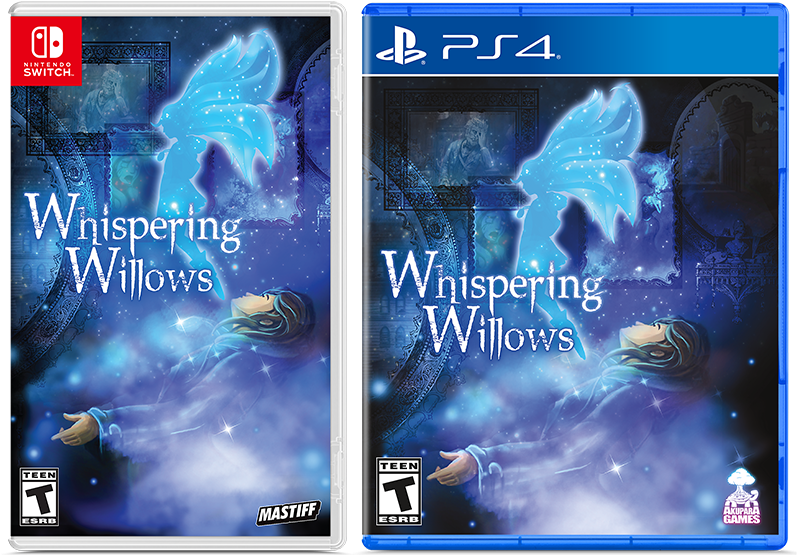
The new online video game retailer Physicality Games has announced it’ll be teaming up with Akupara Games and Mastiff to release a physical version of the 2018 2D adventure-horror title Whispering Willows for the Nintendo Switch and PlayStation 4.
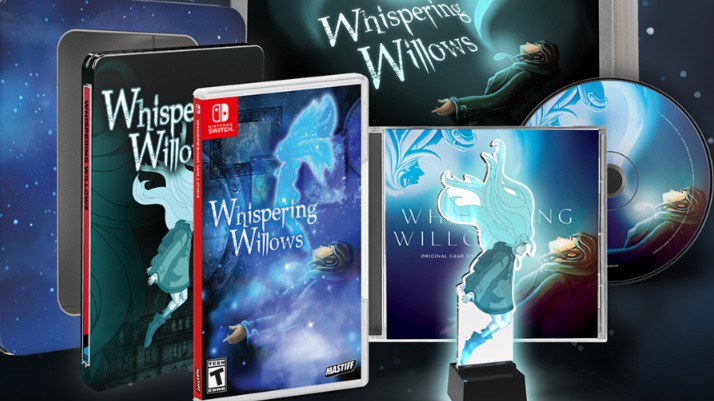
The hard copy of the game will be available exclusively from Physicality Games when its website goes live later this month. There’ll be the choice of either a standard or deluxe edition. The standard edition comes with a physical copy of the game housed inside a special collector’s tin featuring a transparent display window.
The deluxe edition comes with a physical copy of the game, themed steelbook, original soundtrack CD, 63-page artwork, a 5″ Light-Up display stand featuring Elena’s spirit form and it’s all housed inside a transparent collector’s tin.
All collector’s tins from Physicality Games are sequentially numbered and feature themed artwork. Here’s a bit about the game:
Embark on a journey among the spirits of the dead to help Elena find her missing father. Unravel the secrets that lie hidden within the decaying walls of Willows Mansion.Help Elena use her power of astral projection to enter a ghostly-realm where she communicates with the souls of the deceased, discovers mysterious objects, solves haunting puzzles and gains access to secret pathways within the dark realm.
Will you be adding this to your collection? Leave a comment down below.
Review: Overpass – A Slow-And-Steady Racer That Strays Off The Beaten Track
The active ingredient of pretty much every racing game that you care to mention, from Out Run to Mario Kart 8 Deluxe, is speed. Overpass might require you to get to the finishing line in the shortest time possible, but it’s almost wholly lacking in that S-factor.
It sounds perverse, but in order to make suitably rapid progress here you need to slow things to a crawl. If you’ve ever played a Trials game, you’ll know that putting the pedal to the metal can be a sure fire way to winding up head-down in a ditch. If anything, Overpass is even more exacting. In this fully-3D racer, going above walking speed into a tricky section is asking for major suspension damage. That’s because you’re not racing your buggy or ATV around a series of smooth racing tracks, but rather a bunch of obstacle courses loosely sectioned off by flimsy yellow tape.
There are rocks, logs, boulders, and stacked-up tractor tires to negotiate – all whilst keeping within those track boundaries. You’ll drive up giant see-saws, and down into the kind of ravines that would signify a major wrong turn in your average rally game.
You’re armed against this unique onslaught of physical obstructions with a handful of specialised tools. Your ride is set to four-wheel-drive as standard, but a press of the up arrow will switch to DIF mode, which grants you an insane amount of grip and drive at the expense of steering range. You can also flick to two-wheel drive should the conditions require it.
As we’ve already alluded to, it’s possible to damage the components of your vehicle, hindering performance and handling. It’s a concern that goes well beyond the current race, too. In the game’s single player campaign mode, any damage sustained carries on through subsequent trials, requiring you to spend valuable money that would otherwise be spent upgrading or replacing your ride on repairing it instead.
Overpass demands as much from you as it does its machinery. You can’t enter any of its races casually, whether in the single player campaign or multiplayer (online or split-screen). First, you need to carefully scan the horizon to establish the correct approach angle and speed for the next micro-challenge. The wrong sort of momentum heading into a steep climb can mean a humiliating backtrack, or even complete stasis. Then you need to execute your plan to perfection. Too many revs and you’ll spin your wheels. Place your wheel a foot to the right of where it needs to be, and you might just ground your vehicle.
Extra nuance is introduced with the ATV races. Here you’re also responsible for the orientation of the rider, using the right stick to lean into turns and climbs. In the right hands it will give you added weight over the key wheels, and more stability when driving at acute angles. In less capable hands, it’s a serious liability.
Given these nuances, the Switch’s lack of analogue triggers stands out as a negative. When maintaining the right level of throttle is so much more important than in other racing games, feathering a crude binary input method doesn’t feel ideal. Indeed, we never quite felt like we had the full connection to our vehicle that we needed to succeed.
The physics are generally solid but occasionally wonky, sometimes flicking you into unnatural positions. It would be fine for a regular racer, but at the more deliberate pace of this one, with this much focus on precision and second-to-second modifications, the flaws stand out rather more.
The graphics are generally a little muddy, and that’s not a pun on the off-road setting of the game. It’s worth noting that this Switch version appears to be a downscaled port from more capable platforms, and the resulting simplified lighting and textures don’t always combine to give you the best visual feedback as to the kind of surface you’re driving on. It’s all sharp enough in both docked and handheld modes, although there’s a general lack of personality and verve to the art style.
On a technical front, we experienced some extremely long load times, even when restarting a race. This wasn’t true across the board, but it was annoying when it happened on the more sprawling races. It’s worth issuing a quick note on the audio, too: the persistent whine of a revving ATV as you wheel spin up a steep incline really drills into your head and cuts through walls. We found ourselves muting the audio at various moments, lest we receive an angry knock from our neighbours.
There’s a stubborn, hard-headed, extremely technical edge to Overpass that will make it tough to love for many. If GRID Autosport is about as ‘serious’ a racing game as you can manage, then you’ll more than likely find this game’s lack of pandering and polish to be downright exasperating. Add in a handful of technical limitations, and only a certain type of bloody-minded racing game aficionado will likely be willing to persist with it. If you fall within that small minority of gamers, however, then the rewards that Overpass can bring will be uncommonly rich.
Conclusion
Overpass is an awkward, ornery racing game that stubbornly refuses to indulge your need for speed and instant gratification. It makes you work for every shaved second and clean section, with a unique brand of technical off-road obstacle negotiation that will have casual racing game players tearing their hair out – and a fair few hardened fanatics to boot. Given the lack of analogue triggers on the Joy-Con and even with this hardcore focus in mind, Overpass is simply too rough around the edges to win anything more than a heavily qualified recommendation. But a very specific sort of glutton for automotive punishment will lap it up.
How Bloodshot's Director Changed The Script To Focus On The Sci-Fi
Bloodshot is one of those weird early '90s comic book properties with a dedicated niche fanbase, but little mainstream name recognition. Nevertheless, when director Dave Wilson first took a look at the script, he thought Valiant Comics would balk at the changes he had in mind. Luckily for him, he was wrong.
"I thought I was going to be told, 'We don't want to change it. We like what we've got,'" Wilson told GameSpot during a recent interview. "And they very much embraced my concept for it."
That concept came from Wilson's love of a very specific subgenre of sci-fi. "I love comic books, but science fiction is my love, and there's a subset of science fiction I like to call science fact, which is very sort of [Jurassic Park author] Michael Crichton, and my favorite author, this guy called Daniel Suarez," Wilson explained.
A profound understanding of Python lists is fundamental to your Python education. Today, I wondered: what’s the difference between two of the most-frequently used list methods: append() vs. extend()?
I shot a small video explaining the difference and which method is faster—you can play it as you read over this tutorial:
Here’s the short answer — append() vs extend():
The method list.append(x) adds element x to the end of the list.
The method list.extend(iter) adds all elements in iter to the end of the list.
The difference between append() and extend() is that the former adds only one element and the latter adds a collection of elements to the list.
You can see this in the following example:
>>> l = []

>>> l.append(1)

>>> l.append(2)

>>> l

[1, 2]

>>> l.extend([3, 4, 5])

>>> l

[1, 2, 3, 4, 5]
Then, you use the extend method to add the three elements 3, 4, and 5 in a single call of the extend() method.
Which Method is Faster — extend() or append()?
To answer this question, I’ve written a short script that tests the runtime performance of creating large lists of increasing sizes using the extend() and the append() methods.
My thesis is that the extend() method should be faster for larger list sizes because Python can append elements to a list in a batch rather than by calling the same method again and again.
I used my notebook with an Intel® Core™ i7-8565U 1.8GHz processor (with Turbo Boost up to 4.6 GHz) and 8 GB of RAM.
Then, I created 100 lists with both methods, extend() and append(), with sizes ranging from 10,000 elements to 1,000,000 elements. As elements, I simply incremented integer numbers by one starting from 0.
Here’s the code I used to measure and plot the results: which method is faster—append() or extend()?
import time def list_by_append(n): '''Creates a list & appends n elements''' lst = [] for i in range(n): lst.append(n) return lst def list_by_extend(n): '''Creates a list & extends it with n elements''' lst = [] lst.extend(range(n)) return lst # Compare runtime of both methods

list_sizes = [i * 10000 for i in range(100)]

append_runtimes = []

extend_runtimes = [] for size in list_sizes: # Get time stamps time_0 = time.time() list_by_append(size) time_1 = time.time() list_by_extend(size) time_2 = time.time() # Calculate runtimes append_runtimes.append((size, time_1 - time_0)) extend_runtimes.append((size, time_2 - time_1)) # Plot everything

import matplotlib.pyplot as plt

import numpy as np append_runtimes = np.array(append_runtimes)

extend_runtimes = np.array(extend_runtimes) print(append_runtimes)

print(extend_runtimes) plt.plot(append_runtimes[:,0], append_runtimes[:,1], label='append()')

plt.plot(extend_runtimes[:,0], extend_runtimes[:,1], label='extend()') plt.xlabel('list size')

plt.ylabel('runtime (seconds)') plt.legend()

plt.savefig('append_vs_extend.jpg')

plt.show()
The code consists of three high-level parts:
In the first part, you define two functions list_by_append(n) and list_by_extend(n) that take as input argument an integer list size n and create lists of successively increasing integer elements using the append() and extend() methods, respectively.
In the second part, you compare the runtime of both functions using 100 different values for the list size n.
In the third part of, you plot everything using the Python matplotlib library.
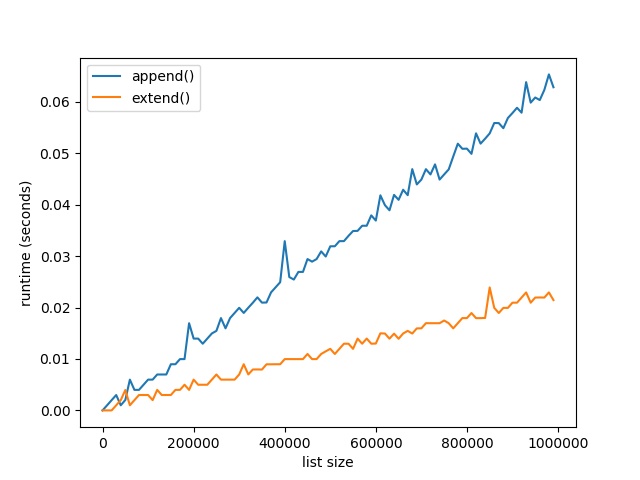
Here’s the resulting plot that compares the runtime of the two methods append() vs extend(). On the x axis, you can see the list size from 0 to 1,000,000 elements. On the y axis, you can see the runtime in seconds needed to execute the respective functions.
The resulting plot shows that both methods are extremely fast for a few tens of thousands of elements. In fact, they are so fast that the time() function of the time module cannot capture the elapsed time.
But as you increase the size of the lists to hundreds of thousands of elements, the extend() method starts to win:
For large lists with one million elements, the runtime of the extend() method is 60% faster than the runtime of the append() method.
The reason is the already mentioned batching of individual append operations.
However, the effect only plays out for very large lists. For small lists, you can choose either method. Well, for clarity of your code, it would still make sense to prefer extend() over append() if you need to add a bunch of elements rather than only a single element.
Your Coding Skills – What’s the Next Level?
If you love coding and you want to do this full-time from the comfort of your own home, you’re in luck:
I’ve created a free webinar that shows you how I started as a Python freelancer after my computer science studies working from home (and seeing my kids grow up) while earning a full-time income working only part-time hours.
With the massive recent releases of Blender 2.8x it is time to start looking towards the future and that is exactly what the Blender Foundation have been done. With a pair of posts to their developer blog addressing the upcoming future of Blender.
First is the announcement of LTS versions and with Blender 3, adopting a more standard numbering convention:
The first proposal is to do one Long Term Support (LTS) release every year. This release would be supported for two years with important bug fixes and updates for new hardware, while strictly maintaining compatibility.
A good reason to do an LTS now is the focus on fixes and patches of the past months. The next release (2.83) although big, will be relatively less experimental, thus a good candidate to keep supporting for a while.
LTS versions also will help to ensure that a project that started with an LTS version can be completed with the same version in a reasonable amount of time. Nice for studios with large projects, but also for add-on maintenance.
As well as details on the new versioning:
Along with this, I also propose to accelerate a bit our release numbers this decade.
This summer we’ll do Blender 2.90 (new particle nodes), and in summer 2021 the Blender 3.0 series begins! By then we will implement a more conventional release numbering.
I suggest to do minor releases (3.0, 3.1, 3.2, … 3.7) for two-year periods, and then move to a new major release. Blender 4.0 could be there in 2023 already!
Additionally there was some discussion on the “biggest projects” over the next year, the type of features you can expect to see in the next few releases of Blender. There was also some tentative discussions on upcoming User Interface changes from their User Interface Workshop.
Finally there is some unfortunate news about Blender founder Ton Roosendaal who is taking a bit of a break due to help issues:
Last week Monday night I was hospitalized with an acute immune system failure. It was critical and severe but quickly fixed up and diagnosed to be excellently treatable with common medicines. Because of my weak immune system I’m confined to a special over pressured area in the hospital, to prevent germs or viruses from reaching me. Basically it’s the safest place in Amsterdam now!
Last week I migrated all Blender Foundation/Institute operational tasks to Francesco Siddi. He will take over ongoing projects and communication for me until I’m back in April. I would appreciate it if everyone would respect my rest for this month. I can’t handle thousands of good health mails or personal messages now! Social media will do fine ? I know you care!
Wishing you a quick recovery Ton! To learn more about all of the above be sure to check out the video below.
Like most games made by Nintendo, the story of Animal Crossing – Nintendo’s charming social life-sim series – begins in Japan, with a man named Katsuya Eguchi. After he nabbed a job at Nintendo in 1986 he was forced to move away from his hometown of Chiba and relocate to Kyoto, the city where Nintendo was (and still is) based. Eguchi worked on several projects hither and thither, notably as a level designer for Super Mario Bros. 3, but the move to Kyoto stuck with him even after he had settled in, and it was a primary influence upon the creation of Animal Crossing.
Eguchi elaborated on the main themes of the original game in an interview with Edge Magazine:
Animal Crossing features three themes: family, friendship, and community, but the reason I wanted to investigate them was a result of being so lonely when I arrived in Kyoto […] when I moved there I left my family and friends behind. In doing so, I realised that being close to them – being able to spend time with them, talk to them, play with them – was such a great, important thing. I wondered for a long time if there would be a way to recreate that feeling, and that was the impetus behind the original Animal Crossing.
Joining forces with the ever-excellent Takashi Tezuka, Eguchi began the series with Dōbutsu no Mori, a Japan-exclusive game for the N64 which roughly translates to ‘Animal Forest’ in English. The game was originally planned to be released for the 64DD, an add-on which sat under the N64 and took advantage of rewritable, whizzy, spinny discs that could hold a lot more data than a cartridge. Unfortunately, the expansion was a commercial disaster and after countless delays and other problems, Nintendo decided to slap it in a cartridge instead.
There was an issue with this however, as the game relies heavily on a real-time clock, which the 64DD offered but the N64 lacked. Therefore, Nintendo did the only sensible thing and stuck a clock inside the game cartridge. Whilst it worked for the most part, relying on such a solution meant that should the battery run out there’d be no way for the game to track the time when you weren’t playing, which is a significant issue given that that was one of the biggest features.
From N64 to GameCube
This initial release on N64 launched in Japan on the 14th April 2001, but it wasn’t long until a new and improved version called Dōbutsu no Mori+ released for GameCube in December of the same year. The fact that the GameCube actually had a clock in it made fabricating discs easier (and cheaper) than producing more cartridges for the ageing, older Nintendo 64, even if the upgraded game still looked very much like an N64 title.
The GameCube version also came with a selection of new stuff as well, much of which has remained throughout the entire series, including Tortimer, Kapp’n, the Able Sisters, and the Museum. Suffice it to say if you bought the N64 original and then saw this less than 9 months later, you’d probably feel a bit miffed. Still, it’s hard to stay mad while playing Animal Crossing.
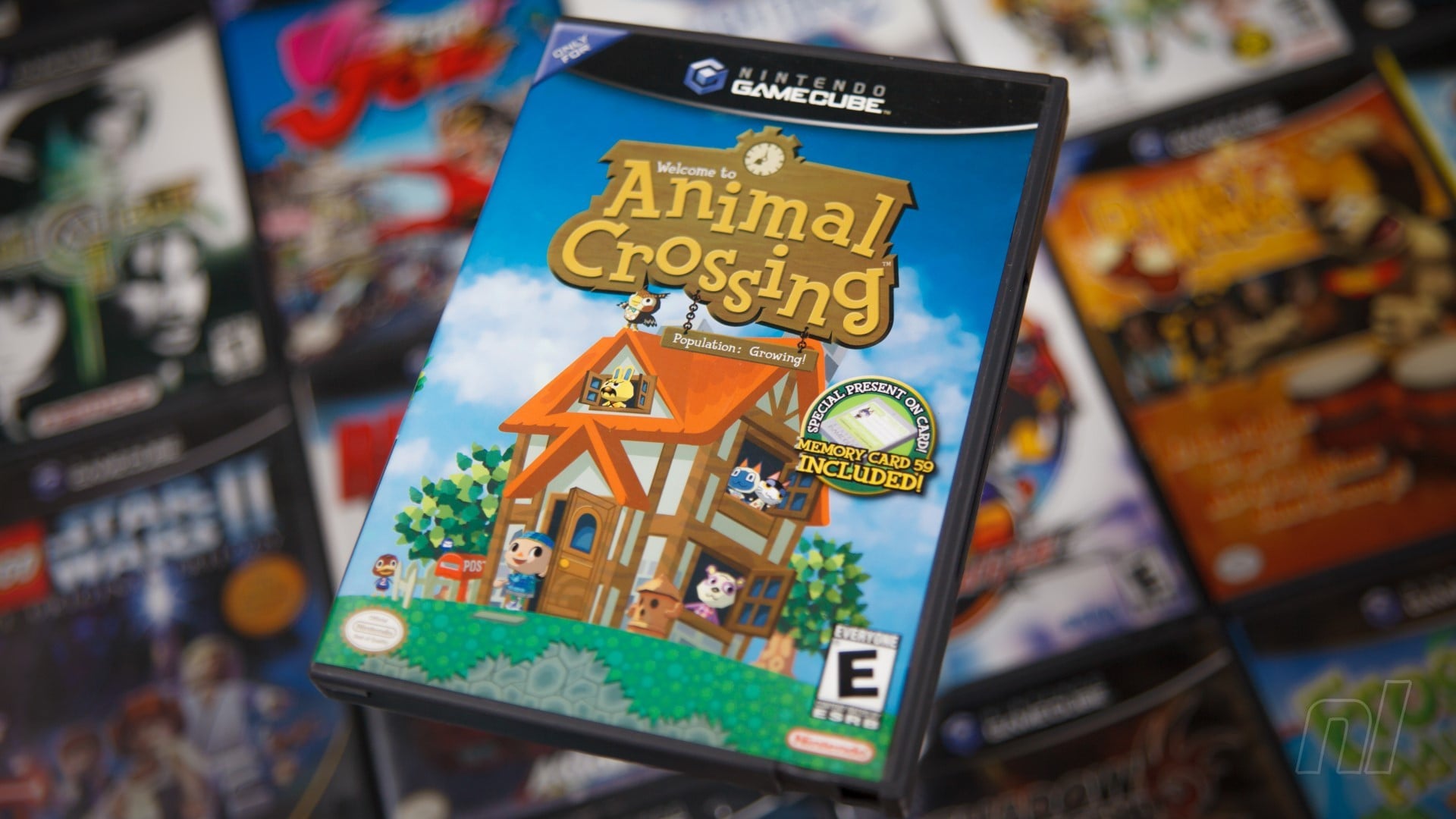
The success of the game caught the interest of some other Nintendo employees outside Japan, and despite the mountains of dialogue and text that had to be localised, Nintendo of America set about making what most of you reading will recognise as Animal Crossing for the GameCube, with its classic tagline ‘Population: Growing!’ that still gets ignored to this day. Not only did they translate everything, but they also decided to add in other things such as new holidays. The original game was very Japan-centric when it came to annual festivals, but adding in things like Toy Day (Christmas) and Halloween (Halloween) helped to make the game more recognisable and relatable to a western audience.
Animal Crossing launched in North America less than a year following its Japanese counterpart on the 16th September 2002, although Europeans had to wait a further two years to get their first taste of animal-forest life. The game was well received, but more interestingly the Japanese portion of Nintendo were so impressed with Nintendo of America’s additions that they decided to take all the new content from the western release (plus a bit extra) and release yet another version of the game called Dōbutsu no Mori e+ a year before the European release. The game was even released on the iQue Player in China in 2006, so perhaps Europeans should count themselves they didn’t have to wait until after that launch to play.
The game was a hit, and dominance over the debt simulator genre had been established, so it was time for a proper sequel.
Ooo, baby baby it’s a Wild World
Even though the game had started small and local, Animal Crossing’s success was global, so when it came time to make a sequel Eguchi made sure to change things around for as broad a demographic as possible. Everything from fish, to bugs, to fossils, to holidays were re-designed with an international, multicultural market in mind. The platform choice was a bold move as well, as even though the GameCube had sold a respectable number of units, this new game would be shrunk down onto the tiny Nintendo DS instead.
Despite its size, the DS packed quite a punch features-wise including in-built features that the GameCube didn’t possess, like a microphone that you could use to scream at other villagers to find out where they were. Parents loved that. Animal Crossing: Wild World also had the major advantage of not having to rely on being plugged into the wall at all times, meaning you could take your village with you wherever you went. The DS also technically had Wi-Fi capabilities, so you could visit other people’s villages locally or non-locally using the patented Friend Code system and even send them charming or rude messages.
The game was a smash hit, and thanks to the overwhelming success of the DS in all its ‘third pillar’ glory, superseded the original release financially, and critically. Taking the winning formula and improving on almost every aspect in a handy portable package was a no-brainer to consumers, and the series’ relaxing gameplay appealed to the same broad demographic of players attracted to the Nintendo DS by games like Brain Training and Nintendogs; players who might never have sat down to play something on GameCube but were willing to try something new on DS.
There were a few issues however. With the introduction of the new whizz-bang internet Nintendo had the ability to distribute letters containing gifts to people fancy enough to have a connection, and they did so. One gift called ‘Red Tulips’ came with a blank letter and after placing the mysterious object in your home, not only would it be invisible, but the game still thought there was something there, so you couldn’t move through it. Whatever was there couldn’t be touched or moved, so you weren’t able to pick it back up either, meaning you now had an invisible blockade in your home. Nintendo’s response was swift, and its solution to the problem simple: don’t open the letter and just throw the item away. Genius.
Wild World was a marvel back in the day, a handheld jewel that married the charm of the series with the convenience of portability. The Wii U Virtual Console version neutered that convenience somewhat, but this entry sucked hundreds of wonderful hours from us back on DS.
Nuts to parochial backwaters: Let’s go to the city!
Portable play is all well and good, but what if you had a real hankering for that classic big screen experience on your 12-inch CRT with only one working speaker? With the 2006 launch of the Wii came a two year wait before the series returned to home consoles with Animal Crossing: Let’s Go To The City!. Or at least that’s what it was called in Europe. In North America it went by Animal Crossing: City Folk because Nintendo of America refuse to publish any game with more than five words in the title. To be honest, we endorse such practices and wish they were still employed; it would avoid multi-syllable embarrassments like Cadence of Hyrule: Crypt of the Necrodancer Featuring The Legend of Zelda or that Dragon Quest XI: The Longest Title In The History Of The World…Ever! – Definitive Edition.
If the name didn’t give it away at all, Let’s Go To The City allows you to venture outside the peaceful tranquillity of your town and, yes, go to a city. That was about the only major difference between this and Wild World, though, and the game was criticised for being too similar to its predecessor. Part of that may be because it’s based on exactly the same game engine as the DS version. You could have more villagers, your own home rather than sharing one with anyone else who had a character in the game, but much of City Folk was subject to only very minor changes.
One area touted as an improvement over Wild World was the Wii Speak peripheral released alongside this new Wii game. This was essentially a big microphone that you could place near your TV and talk to people as though they were in the room with you. That was Nintendo’s plan at least. In reality it was a largely disappointing, low-quality microphone that forced you to shout at your TV rather than just whisper delicately into a headset (not that people don’t shout into headsets). The Wii Speak only ever supported 13 games, and it’s not hard to see why.
But what about the headlining trip to the city? That must be exciting, right? Well, you could buy clothes, change your hairstyle or fashion yourself a Mii mask, talk to special characters… the city area basically freed up your town to be more focused on your villagers rather than cluttering it all up with shops. As an idea it works well enough, but it also feels strangely disconnected to your actual town, and left it feeling somewhat empty at times. It’s certainly not the bustling MMO metropolis you might have hoped for.
Consequently, Animal Crossing: Let’s Go To The City ends up as one of the lesser games in the series as it didn’t really push any boundaries beyond what had already been done before. That’s not to say Nintendo didn’t put work into the Wii entry (according to the game’s Iwata Asks interview it features the equivalent of 4000 pages-worth of text), but in a series of slow and steady iteration, City Folk was the slowest and steadiest of Animal Crossings. If it was your only Animal Crossing game at the time you would probably have been more than happy with what you had, though. Still, it wouldn’t be long before you could start over again.
Turning over a New Leaf
Whether or not Let’s Go to the City’s lukewarm reception was a reason or not, the next game in the series returned to a handheld, specifically the Nintendo 3DS. Animal Crossing: New Leaf took even more inspiration from around the world and squeezed it all onto a diminutive cartridge once again. The autostereoscopic 3D display of the console meant the designers had to take extra care to make sure the new perspectives didn’t reveal any behind-the-scenes graphical nastiness that we were never meant to see. The game launched in 2012 in Japan and the following year everywhere else due to another monumental localisation job.
This time around you’re not just some schmuck selling seashells and fallen fruit in an already flooded market, but instead upon arrival at your new town you’re greeted as the new mayor of this rural backwater, with the power to mould and shape the town (and its inhabitants) according to your whims. Being the mayor means you have the ability to change more of your town than ever before, and even dictate people’s bedtimes to suit your own unhealthy schedule. Despite this being such an integral part of what made New Leaf New Leaf, this idea was only decided on a year after the game had started development, as revealed in an Iwata Asks interview on the subject. In fact, it was an impending presentation to a couple of Nintendo honchos that birthed the idea of giving the player more control this time around:
Kyogoku: … we were preparing to make a presentation to Shigeru Miyamoto-san and Takashi Tezuka-san, and we started to wonder how we could possibly sum up the idea behind the new Animal Crossing in a single key word or concept.
Iwata: And this ended up being: “The player is the mayor.”
Kyogoku: Yes. The player becomes the mayor, so he or she can put up bridges and install various items and objects. This makes the whole feature similar to public works projects in the real world.
And with Tortimer booted from office the next chapter of Animal Crossing had its Unique Selling Point.
The game was very well received, and in 2016 – a full three years after its initial release – an updated version called Animal Crossing: New Leaf – Welcome amiibo landed on store shelves. As the new title suggested, this was a revised version of the game that boasted new amiibo functionality and extra modes including an expanded camp site, but those with the base game were able to simply update their original copy to include all the new features for free thanks to the mysterious magic of the internet. Shortly before this updated version released, though, we saw the very first spin-off in the series.