Ninjala Shares More Details On Season 2, Crow Tengu DLC And In-Game Event
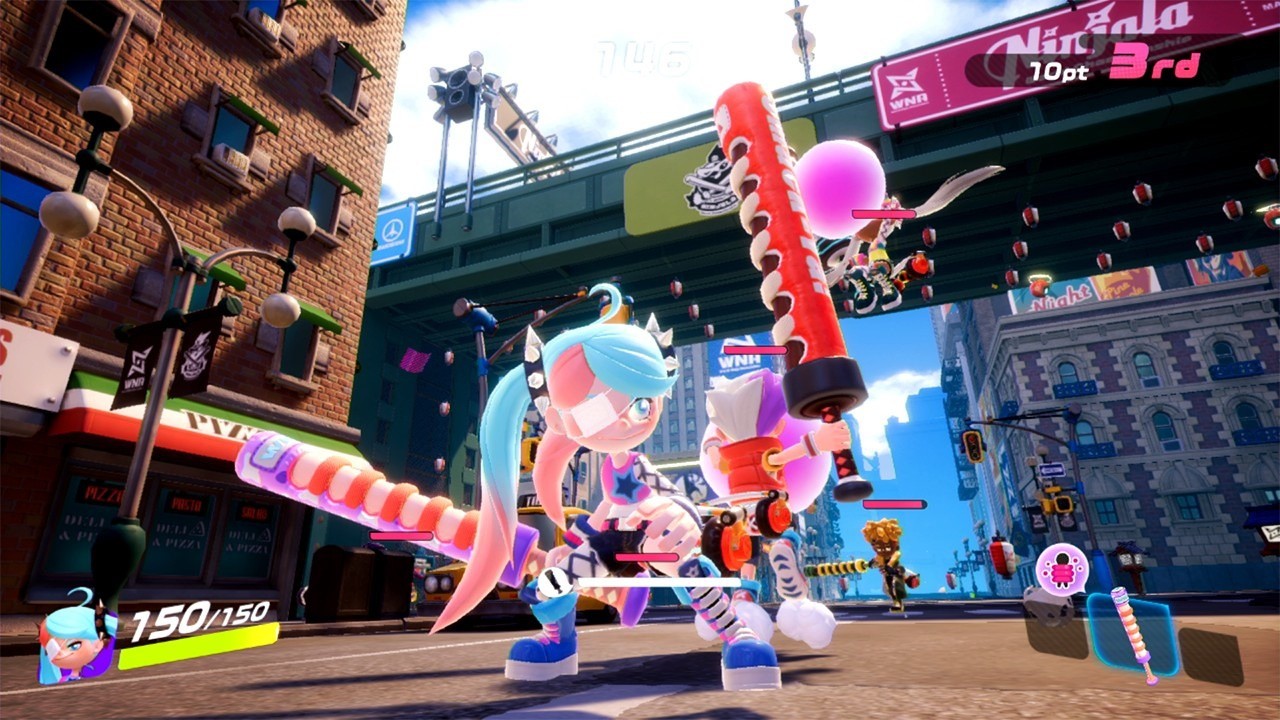
A brand new episode of the Ninjala Dev Diary series has been released, sharing more in-depth news surrounding the game’s upcoming content.
We have a full rundown of all the news for you below. Dedicated players will likely already know about the Crow Tengu DLC which actually launched yesterday, but the video also explores an in-game festival where players can receive rewards, and offers more info on the upcoming Season 2.
Crow Tengu DLC Bundle – released July 21
Ninjala has released its first DLC bundle themed after the mythical Japanese demon, the crow tengu
Players who purchase the pack will get a special costume, emote, and sticker themed after the crow tengu – a crow possessed by the spirit of a fallen samurai – along with 2,000 Jala to spend on in-game items
The Crow Tengu DLC Bundle launched on July 21 for a suggested retail price of $29.99 USD
IPPON MATSURI (Festival) – July 21 – 26
Players will receive rewards based on the total amount of IPPONs scored by all players during the event. The rewards will increase throughout the event based on the collective number of IPPONs achieved. If the total number of IPPONs achieved during the event reaches 10 million, all users will receive a total of 30 Gold Medals
There will also be special bonuses to the rewards players receive at match end, such as higher rates for Ninja-Gums, Assist Codes, and Medals
To celebrate the event, a Twitter campaign will also be held where 100 users who follow and retweet Tweets tagged with #IPPON_MATSURI from the official @PlayNinjala and @Ninjala_JP Twitter accounts will be randomly selected to receive 1,000 Jala
Season 2 – launching August 26 (Free to all players)
Season 2 will introduce a new weapon class – the Board. Players will have access to four variations of this weapon – the Festival Board, the Home Run Surfer board, the Camu Camu Plate, and the Ninja Caliber board. Each weapon will come with new Gum Ninjutsu, abilities, and specials
A new stage – Shinobi City. This is a Japanese-themed stage that explores the hometown of the shinobis, hot springs, and all! Players can use this stage to their advantage by using the hot springs to recover their health and increase their Shinobi Gauge
Have you been enjoying Ninjala since it launched last month? How have you been doing now that you’ve had a few weeks’ practice? Let us know in the comments below.
Contra-Inspired RPG Shooter Bite The Bullet Fires Onto Switch Next Month
Mega Cat Studios and publisher Graffiti Games have given us a release date for their upcoming RPG shooter, Bite the Bullet. You’ll be able to sink your teeth into this one on 13th August.
In case you’ve missed our previous coverage on this one, we really mean it when we talk about sinking your teeth in. The game’s actually being marketed as a ‘run and gun and eat’ title, where players have to eat enemies, bullets and more to power-up their character, weapons and abilities. A press release describes it as “Contra meets professional eating”, and we can’t really argue with that.
Key Features Include – Devour enemies to powerup Chewy/Chewella, weapons, and abilities. – Chow down on everything – enemies, walls, even bullets. – Play solo or with a friend in local co-op. – Four character classes (Carnivore, Herbivore, Omnivore, and Robovore – which means eating metal) that have their own unique abilities and perks. – Gorge on 50 levels. – Character customizations with a deep, branching skill tree. – Loot powerful weapons with fun modifiers such as Spicy Critter Cannons. – Craft exotic new weapons by wolfing down special types of characters and enemies. – Eat enemies to energize skills and special attacks. – Use a highly advanced shield for protection from oncoming fire or knock enemies away. – Earn action hero bandanas by fully completing each world. – Chew carefully – every enemy has its own nutritional information, and a body type will change based on the types of enemies consumed. – Transform into the powerful Zombro form and smash enemies into bite-sized bits.
As mentioned above, you’ll be able to download this one from 13th August, and it’ll be priced at $14.99. If you haven’t already, make sure to check out the new trailer above.
Posted by: xSicKxBot - 07-23-2020, 06:55 AM - Forum: Lounge
- No Replies
Logitech And Herman Miller Reveal A Ridiculously Expensive Gaming Chair
Logitech has revealed its collaboration with Herman Miller, the makers of luxury and ergonomically engineered office chairs. The result is a gaming chair that looks nothing like you would expect it to, and costs far more than you might want to spend.
The Herman Miller X Logitech G Embody Gaming Chair is (aside from being a mouthful) almost unchanged from the original design Herman Miller has been selling for a while now. It features a range of comfort adjustments, including a back support segmented into 150 individual pieces that can be adjusted to perfectly match the curvature of your spine. There's also a finely tuned recline support as well as a seat adjustment that lets you get the perfect angle between your knees or thighs and your lower leg.
Gaming-specific features are almost non-existent, aside from the all black finish and a very Logitech-looking blue hue to the back support that you can see on the rear of the chair. The one notable addition is the inclusion of a copper-infused material on the back cushioning, which is meant to help distribute heat and keep you cool while using the chair for hours on end. This is, for all intents and purposes, the same chair Herman Miller has been selling to offices for years, just marketed to Logitech's gaming audience.
The NumPy argpatition function performs an indirect partition along the given axis using the algorithm specified by the kind keyword. It returns an array of indices of the same shape as a that index data along the given axis in partitioned order.
Arguments
Type
Description
c
array_like or poly1d object
The input polynomials to be multiplied
kth
integer or sequence of integers
Element index to partition by. The k-th element will be in its final sorted position and all smaller elements will be moved before it and all larger elements behind it. The order all elements in the partitions is undefined. If provided with a sequence of k-th it will partition all of them into their sorted position at once.
axis
integer or None
(Optional.) Axis along which to sort. The default is -1 (the last axis). If None, the flattened array is used.
kind
{'introselect'}
(Optional.) Selection algorithm. Default is 'introselect'.
(Optional.) When a is an array with fields defined, this argument specifies which fields to compare first, second, etc. A single field can be specified as a string, and not all fields need be specified, but unspecified fields will still be used, in the order in which they come up in the dtype, to break ties.
The following table shows the return value of the function:
Type
Description
Return Value
index_array : ndarray, int
Array of indices that partition a along the specified axis. If a is one-dimensional, a[index_array] yields a partitioned a. More generally, np.take_along_axis(a, index_array, axis=a) always yields the partitioned a, irrespective of dimensionality.
Related: See partition for notes on the different selection algorithms.
Let’s dive into some examples to show how the function is used in practice:
Any master coder has a “hands-on” mentality with a bias towards action. Try it yourself—play with the function in the following interactive code shell:
Exercise: Change the parameters of your polynomials and print them without the comparisons. Do you understand where they come from?
Image Editor: Move Scale Skew Rotate and Spin with CSS Transform
Last modified on July 22nd, 2020.
Are you interested in creating an image editor tool? If so, this article will help you to get started with it.
An image editor will have a range of tools. It can be very basic with only tools like resize, rotate and crop. Or it can be super extensive like a Photoshop.
Rotate is a basic and essential tool that is part of any image editor. Let us start with something easy and basic like rotate then add some more essential tools.
I will be using CSS transform property as the core and add JavaScript to enrich the tool.
This can become a basic starter toolkit that can be expanded to a full fledged image editor in the future.
Do not underestimate the power of CSS. Gone or those days, where CSS just applies decoration on top of HTML and beautifies the document. CSS3 and beyond, with the combined support of HTML5, advancements in the browser support has change CSS to a powerful UI tool.
It complements well with the JavaScript. When we combine it together, we can create wonders. The divide between thin-client and thick-client has vanished. The CSS is a very good beginner’s tool to start with simple image editor features.
When you work on image editing capabilities with CSS, you must consider browser compatibility. Some browsers will not render as you code. So, we have to be carefully choosing the properties.
I have used CSS keyframesrules to set the core properties.
In this article, you can find the example code of the below items with a demo.
Rotation and spin
Skew
Scale
Translation
A quick glance on CSS transform and image editing
CSS transform property can be used to do basic image editing. It supports functions like rotation, skew, scale and translate.
The key functions are rotate(), skew(), scale(), translate().
The transform functions have classification based on the axis of animation. For example rotateX(), rotateY() and more. This can be used for image animation.
We can apply the transform functions in a combination way for a single UI element’s selector. When we use many transform function, the animation effects happen in a right to left order.
Examples and demo on image editing
Scaling an image
The scaling is a transform function that allows us to scale up or down the element’s dimension. The scaling transform output varies based on the function used and its parameters.
The scale() function can have single or dual parameters. With a single parameter, it applies uniform scaling in both x, y-axis. When we supply separate values for the x, y-axis, then the scaling range will vary.
With three params the scale3d() function allows scaling in x,y,z axis.
We can also apply scaling with respect to single axis by using scaleX(), scaleY() or scaleZ().
The above demo has a slider to scale up and down an image.
Below code has the UI elements to apply scaling transform on an image element. It has a pallet with an image element and animation tools.
Like other transform functionality, the translate() function performs 2D, 3D translation.
The translate() function with one or two params results in 2D translation. The two params are to move the image in the x, y-axis of a 2D plane. With single param, the translate() will happen in a horizontal direction.
The translateX() and translateY() are for implementing translation in a particular direction.
The translate3d() with x, y, z factors allows creating 3D animation.
In this demo, there are two sliders in horizontal and vertical directions. On dragging the handle of these sliders, it moves the image on the 2D plane shown above.
This HTML shows the template elements to set the image-translate demo.
This script sets the horizontal and vertical translation slider properties. The horizontal slider has the range between o -160. And, the vertical translation ranges between 0 to 50.
image-translate/assets/js/translate.js
$(document).ready(function() { var translateX; var handle = $("#translate-x"); $("#slider").slider({ range : "min", min : 0, max : 160, create : function() { handle.text($(this).slider("value") + " px"); }, slide : function(event, ui) { translateX = ui.value; handle.text(translateX + " px"); translate(translateX); } }); var translateY; var vhandle = $("#translate-y"); $("#v-slider").slider({ range : "min", min : 0, max : 50, orientation : "vertical", create : function() { vhandle.text($(this).slider("value") + " px"); }, slide : function(event, ui) { translateY = ui.value; vhandle.text(translateY + " px"); translatey(translateY); } }); }); function translate(translateX) { $('#image').css('transform', 'translateX(' + translateX + 'px)');

} function translatey(translateY) { $('#image').css('transform', 'translateY(' + translateY + 'px)');

}
Tools for rotating an image
Ah yes, we have reached the rotate tool. This is a core feature in any image editor. Rotation spins the image or other UI elements based on the angle specified.
With a negative degree, the animation will happen in counter-clockwise rotation.
Like scale and translate, rotate function also has classification based on the axis. Those are,
rotate(angle)
rotate3d(x, y, z, angle)
rotateX(angle)
rotateY(angle)
rotateZ(angle)
The rotate3d() function needs the angle and the x, y, z co-ordinates of the rotation axis.
A spin will make the image rotate from 0 to 360 degrees. You can stop spinning or refresh the image orientation back to its original.
When you click the rotation tool, a jQuery script rotates the image based on the specified angle.
It changes the images’ transform property using jQuery $.css() function.
The rotation slider ranges from 0 to 360 degrees. I have added the rotation script below. It shows how to turn on a jQuery UI slider to rotate an image element.
By changing each point of the element in a fixed direction will skew the element. This change will tilt or skews the elements layout based on the specified angle.
The skew transform functions skewX(), skewY(), skewZ() tilting element boxes along with the X, Y, Z axis.
$(document).ready(function() { var skewAngle; var handle = $("#skew-angle"); $("#slider").slider({ range : "min", min : 0, max : 40, create : function() { handle.text($(this).slider("value") + " deg"); }, slide : function(event, ui) { skewAngle = ui.value; handle.text(skewAngle + " deg"); skew(skewAngle); } }); });

function skew(skewAngle) { $('#image').css('transform', 'skew(' + skewAngle + 'deg)'); }
Conditions and exceptions on applying transform property
The CSS transform property will not work with some UI elements.
For example, table column element <col>, table column group element <col-group>, and more. Those are non-transformable elements.
What are transformable elements?
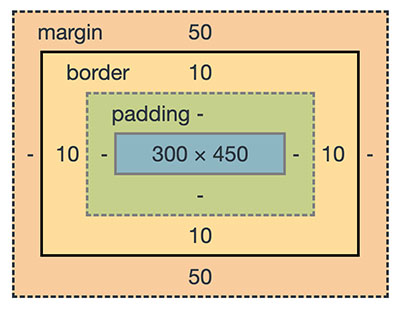
Most of the UI elements enclosed with the CSS box model are transformable. The following image shows the HTML element layout enclosed by a CSS box model.
Also, renderable graphical elements, clipPath elements are also known as a transformable element.
Importance of respecting system preferences
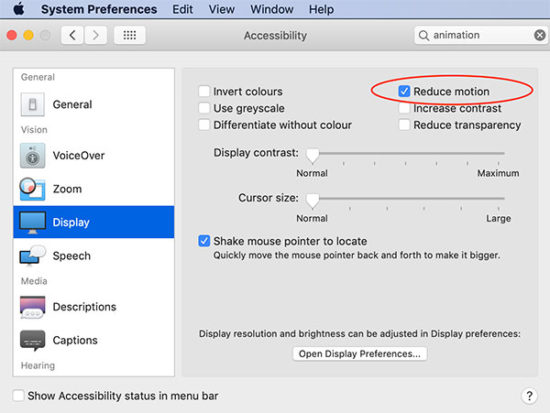
The system preferences will affect the motion of elements. If your system preferences is set to reduce animation is on, it will omit the animation effect of the above demo.
To respect this settings we have to add a CSS media rule to set the prefers-reduced-motion. The possible values are no-preferences and reduce.
This media rule with reduce option provides a CSS block to suppress animation.
In the above examples, I have used the media rule to respect the user’s system preferences. You can test this with the demo by enabling the reduced-motion.
Conclusion
We have seen the CSS transform based image editing. This is just a beginning only. This can serve as a bootstrap for building a full fledged image editor.
With CSS transform, we have added JavaScript and enriched the tool. We have also added various motion effects.
I have added most of the template files and the jQuery scripts above. But you can find the complete bundle with the downloadable source code here below.
Spicy Girls Bundle, Death Stranding's out, Surviving Mars Jack
Spicy Girls Bundle | 9 Steam Games | 93% OFF
[www.indiegala.com] Spice things up with these adult games featuring nature's finest. Make sure you do not miss special 24h launch price. You can also save an extra 30% when paying with crypto.
[www.indiegala.com] Colonize Mars and discover her secrets, with minimal casualties at a historical price. You can also save an extra 15% when paying with crypto.
Posted by: xSicKxBot - 07-23-2020, 05:20 AM - Forum: Lounge
- No Replies
Putting the Epic in Epicurean: Inside the Official Destiny Cookbook
Have you ever wondered what Dark Motes taste like? How about
Vanilla Blades? What might a meal inspired by Izanagi’s Burden be like? Or cookies
based on Gjallarhorn? Would they be sweet? Bitter? Perhaps even… exotic?
The recent release of the Destiny: The Official Cookbook is
Bungie’s attempt at answering these kinds of pressing questions. Whether you’re
a budding gourmet or someone whose idea of a meal is putting in an order with
your delivery service of choice, there’s something here for every level of culinary
skill. The book, which was released this week and is available on the Bungie
Store now, features dozens of recipes inspired by the worlds, characters and,
yes, sometimes, even the weapons of Destiny 2. From Radiolarian Pudding to
Infinite Forest Cake; Traveler Donut Holes to spicy ramen (naturally!), there’s
lots of culinary treats to prepare and enjoy, and no shortage of goodies for
Destiny lore connoisseurs along the way.
Recently we spoke with some of the people who have been
instrumental in bringing the Official Cookbook to life, discussing what it’s been
like combining the worlds of epic sci-fi action and epicurean delight.
“There’s nothing more wholesome than preparing a meal,” said
Bungie’s Lorraine McLees, art lead in Consumer Products. “It’s something we can
all relate to.”
Lorraine has been with Bungie for more than 20 years and her
list of artistic contributions to the worlds of Bungie is formidable. (The Halo
logo? Yeah, that’s her work). Considering her long history with the company,
Lorraine remembers the days when members of the Bungie team would spend
holidays together instead of traveling to visit family. “We used to host
Thanksgiving. We had big gatherings; there were probably like 60 of us.”
Those makeshift family holiday dinners were the origins of
the Destiny cookbook concept, she said. “We collected a whole bunch of recipes
from everybody. I gave them [recipes] that I cooked for folks, even bringing it
to the office and cooking.”
Though that original concept of a home-sourced version of a
Destiny cookbook never really took off, the inspiration stuck around. At one
point the team considered sharing a small collection of Festival of the
Lost-related recipes but that project eventually fizzled too. It was only
relatively recently that the idea of a traditional Destiny cookbook took its first
steps towards publication, thanks in no small part to the plethora of
appearances that food and drink make in Destiny 2 lore.
Lorraine remembers seeing a similar gaming-related cookbook
(the World of Warcraft cookbook) and immediately seeing the possibilities in
the Destiny universe. After all, you don’t need to dive too deep into the lore
to see references to food and drink. “We have spicy ramen; we talk about a
bunch of different foods,” Lorraine said. “Devrim Kay talks about making tea.
There’s something about making food and how it makes [the world of Destiny]
into something you can relate to.”
So with full confidence that the world of Destiny held
plenty of possibilities for fueling a full-fledged collection of recipes, it
was perfect timing when one of Bungie’s longtime officially licensed partners,
Insight Editions, came up with a pitch for an actual cookbook. Even better,
they already had the right person on board to make the dream of a Destiny cookbook
a reality.
CULINARY CREATOR
Victoria Rosenthal isn’t just a fan of videogames, she’s an
author and amateur chef who loves to showcase her various cooking skills and
gaming-inspired recipes on her website and Twitch
channel. As the author of the Fallout:
The Vault Dweller’s Official Cookbook, Victoria has mastered the art of
marrying delicious-yet-approachable recipes with content that is built from the
rich narratives of games, making her an obvious choice to take up the mantle
for hungry Guardians everywhere.
Though her cooking credentials were well in-hand, the
challenge for Victoria was in finding the right menu of recipes. Thankfully
both she and her husband are Destiny fans, and they immediately tackled the problem
by diving deep into the narrative, poring through game entries, Web lore, the
Destiny Grimoire books, and more to find succulent clues.
“We started doing big dives into the lore,” Victoria said,
“There’s lots of little mentions of food. Obviously spicy ramen is a very
obvious one but if [Cayde-6’s aviary chum] Colonel [is] sticking around, she
has to be providing eggs. There has to be more recipes there! And then [Bungie]
came out with The Dawning and I was like, ‘Oh perfect! Thank goodness, the
dessert section is covered!’”
The central narrative of the Destiny cookbook
centers around Eva Levante, who acts as host, guide, and curator for the reader
through the various locations and recipes that the book introduces. Along the
way, readers will enjoy entries from important Destiny 2 characters like Ana
Bray, Amanda Holliday, Zavala, and more.
The recipes themselves are organized
thematically or by location; for example, treats like Chocolate Ship Cookies
and Burnt-Edge Transit are found in the “The Dawning” section, while hearty dishes
such as schnitzel, German potato salad, and French Onion soup are tucked in the
“EDZ: Trostland” chapter. There’s an assortment of urban fare in the “City
Life” section, such as Gyoza, Bulgogi Burritos, as well as “Exotic” foods such
as the aforementioned Izanagi’s Burden, and even an Ace of Spades recipe (only this
time, the results don’t become a Banshee-44-approved hand cannon).
International variety is a core component
of the recipe lineup, and it’s a notion that is supported by a deep cut lore entry
from the first Destiny Collector’s Edition: The City Library. As Lorraine
explains, “It’s kind of like the Library of Alexandria, where all the books
that ever existed would be copied and brought to the city. All of the
literature that exists in our solar system.”
“There would have been specific sets of
foods from the 1,000 nations that flocked to or sheltered under Traveler.
[Those people] would have brought their recipes as well. There’s thousands of
them and Eva would have had selected a few that were easy to make, with
ingredients that were easy to find.”
“[Victoria] actually surprised us with
the manuscript with some of the things she suggested putting in there,” said
Lorraine. “We asked her to cite a lot of sources and she did. She’s already
done her homework and had found these angles for how to approach the fiction.”
It shouldn’t come as a surprise to hear
that Victoria is a Destiny 2 player herself (a Warlock main, for the record).
And, in addition to collecting and providing the recipes, and writing all the
character entries, Victoria also took all of the photographs that
grace the cookbook’s pages. An avid photographer, she said this project pushed
her skills in new directions, whether it was setting up attractive shots
of large meals (a tricky proposition when compared to more traditional
Instagram-like shots of single servings), to making sure the photos themselves
felt like they were pulled from the world of Destiny 2.
Sometimes that meant working with some
fantastic props. “We got a Sunshot [replica] to visit us at home. The moment I
opened the box I was like, ‘Oh my gosh, this gun is huge.’ We took it out and
tried to take pictures with my corgi Kanji but he was spooked by that thing.
That was one of those moments where you’re like, ‘This is really cool.’”
Whether you’re an old hand around the
kitchen or you don’t know your balloon whisk from a basting spoon, there’s
something for you to try in the book. Victoria suggests starting with something
like buttermilk biscuits, or the banh mi burger; the former is one of her
guilty pleasures, the latter, a friendly introduction to Vietnamese cuisine.
“It’s in burger form so instead of beef patty, it’s a pork patty, there’s pâté
in there; there’s pickled vegetables and cilantro. You get the taste of bahn mi
but it’s a burger, something that’s a little more approachable.”
Research, writing, photography,
check-ins, more research, more writing. There’s a lot that goes into the making
of something like Destiny: The Official Cookbook. Alongside all that hard work,
however, there’s some fun, too: namely trying out the recipes. “Everything gets
eaten (beforehand),” Victoria said. “I typically [have] a crew of people I’ll
have come in for the weekend. [I’ll say] ‘Hey I’m making this set of meals,
please come eat some food because I have a lot.”
And hopefully lots of leftovers.
Destiny: The Official Cookbook is
available for purchase now on the Bungie Store (U.S., E.U.)
If you’ve been to London, you’ve been on camera; England’s capital is the most surveilled city in Europe. Regardless of your viewpoint on public surveillance, there’s no debating that London provides a compelling digital playground for Watch Dogs‘ signature brand of techno-stealth gameplay. Following the tales of San Francisco’s Marcus Holloway in Watch Dogs 2 and Chicago’s Aiden Pearce in the original, it’s Watch Dogs: Legion‘s London, and its nearly limitless cast of playable characters, who define an entire city’s struggle to shake off its newly oppressive, corrupt regime.
In a recent hands-on playthrough, I experienced several hours of Watch Dogs: Legion. Without spoiling too much, the game’s tense opening sets up returning digital resistance group Dedsec’s UK presence, and how they’re blamed for a major incident causing panic in the streets of London. It also sets up the ability for much more direct combat and gunplay than previous Watch Dogs entries, including some really cool contextual melee takedowns.
But that doesn’t mean Watch Dogs is turning into a full-blown shooter. How you play is a combination of player choice and… choice of player. Yes, you can recruit and play as nearly anyone in the city; during my playthrough I ran missions as a construction worker, a foul-mouthed football hooligan, even a bespoke-suited, rocket car-driving spy who’d look at home at MI5. Each character possesses its own weapon/ability wheel mapping to the resources at their disposal.
As I progressed through missions large and small, I found the most success when I played to my character’s strengths. The spy slid in and out of restricted zones coolly, and had no problem permanently dispatching a hapless guard with a silenced round. When I tackled an infiltration mission with the football hooligan, I figured why not, let’s go in guns blazing. And it worked! It was just… loud. Even the yob’s “stealth takedown” is a headbutt.
While I appreciated the flexibility and the ability to be lethal and direct when it felt convenient, I had the most fun using smartphone spy tricks I honed in the first Watch Dogs and Watch Dogs 2: surveilling the scene via hacked security cams and drones, setting traps for patrolling guards to blunder into, then sneaking up and knocking out a few on my own. New to Watch Dogs: Legion, I found great value in a deployable spider bot, which allowed me to remotely sneak into facilities and scramble around server rooms to secure data while my actual character sat safely out of harm’s way.
A fun “do it your way” highlight for me – in one mission I found a tech point that I just couldn’t reach – so on a lark I summoned a large construction drone, jumped on it, and ghost rode my way up to cash in the cache. In a game about hacking, feeling like I hacked my way to solution felt very empowering.
Maybe it’s because we’re living in a time where travel is so out of reach, but more than anything, I enjoyed playing in a city that was so recognizable. Watch Dogs: Legion‘s London contains real neighborhoods such as Camden, Islington, and Southwark, places you may recognize such as Piccadilly Circus, Trafalgar Square, and of course Big Ben and Parliament. Tube stops serve as fast travel points, which I found to be a nice touch. And yes, you can boost an iconic double-decker TfL bus.
All too quickly, my playthrough came to an end, though I could’ve just cruised around London for hours, seeing the sights and recruiting a diverse cast of characters (with some very enjoyable accents) to Dedsec. There are so many ways to loosen the grip of London’s tormentors, and so many different styles to do it with, Watch Dogs: Legion finds a way to be your cup of tea.
Watch Dogs: Legion is coming to Xbox One on October 29, and players who purchase the game on Xbox One can also upgrade to the Optimized for Xbox Series X version – which takes full advantage of the next-gen console’s ray-tracing capabilities – once available at no extra cost through the magic of Smart Delivery.
Watch Dogs: Legion
Ubisoft
☆☆☆☆☆
★★★★★
Xbox One X Enhanced
Watch Dogs Legion leverages the Smart Delivery technology – buy the game once and play it on either Xbox One or Xbox Series X when both the console and that version of Watch Dogs Legion are available Build a resistance made from anyone in the world to take back a near-future London that is facing its downfall. Pre-order now and get the Golden King pack featuring a mask, car skin, and 2 weapon skins! Recipient of over 65 E3 awards and nominations. Recruit and play as anyone from London. Everyone you see has a unique backstory, personality, and skill set for unique situations. Hack armed drones, deploy spider-bots, and take down enemies using an Augmented Reality Cloak. Explore a massive urban open world featuring London’s many iconic landmarks and fun side activities. Team up with your friends as you complete co-op missions and unique game modes. Upgrade to the Gold Edition or Ultimate Edition for access to the season pass and more!
Yacht Club Games is working on a new 3D project and is building out our 3D team (and custom engine) to complement our existing 2D team. We are on the lookout to hire a capable mid to senior level gameplay programmer with a desire to build great gameplay experiences in a small, team-centered environment!
Responsibilities
Work collaboratively with designers, artists, musicians, programmers to implement and improve upon game designs with efficacy and efficiency
Write and extend tools and gameplay systems
Optimize runtime performance and team productivity
Qualifications
Deep interest in playing and making games
Self-motivated and curious with a willingness to continue learning
In-depth knowledge and understanding of game design
Proficient in C and C++ programming languages for creating 2D and 3D games
Strong 3D math skills (linear algebra, vector math)
Applied problem solving abilities – in particular related to game design and developing gameplay systems
Good oral and written communication skills; ability to work and contribute in a collaborative environment
Bonus
Experience with multi-threading
Experience with low level debugging and optimization
Experience writing multi-platform code
Experience with GPU programming (graphics shaders, compute)
Experience with network programming
Experience with UI programming
Experience with build systems
Experience playing products from Yacht Club Games
Benefits & Perks
Working in a collaborative environment where you are a core part of the team and are welcome to contribute to any aspect of the company that interests you!
Creating fun and challenging games that tug at heartstrings and delight with charm
Robust medical and dental insurance for you and your dependents
Generous Profit Sharing and Bonus plans
401(k) Retirement Savings Plan with 4% company match
Unlimited discretionary vacation and sick days that we want you to use!
Working in our beautiful office located in Los Angeles!
Yacht Club Games is an Equal Opportunity Workplace
The team at Yacht Club Games is committed to diversity and inclusion and we wholeheartedly encourage candidates of diverse backgrounds and voices to apply for this position!
Whether you’re just starting out, looking for something new, or just seeing what’s out there, the Gamasutra Job Board is the place where game developers move ahead in their careers.
Gamasutra’s Job Board is the most diverse, most active, and most established board of its kind in the video game industry, serving companies of all sizes, from indie to triple-A.
Posted by: xSicKxBot - 07-23-2020, 12:15 AM - Forum: Windows
- No Replies
Microsoft cloud strength drives fourth quarter results
REDMOND, Wash. — July 22, 2020 — Microsoft Corp. today announced the following results for the quarter ended June 30, 2020, as compared to the corresponding period of last fiscal year:
Revenue was $38.0 billion and increased 13%
Operating income was $13.4 billion and increased 8%
Net income was $11.2 billion and decreased 15% GAAP (up 5% non-GAAP)
Diluted earnings per share was $1.46 and decreased 15% GAAP (up 7% non-GAAP)
“The last five months have made it clear that tech intensity is the key to business resilience. Organizations that build their own digital capability will recover faster and emerge from this crisis stronger,” said Satya Nadella, chief executive officer of Microsoft. “We are the only company with an integrated, modern technology stack – powered by cloud and AI and underpinned by security and compliance – to help every organization transform and reimagine how they meet customer needs.”
“Our commercial cloud surpassed $50 billion in annual revenue for the first time this year. And this quarter our Commercial bookings were better than expected, growing 12% year-over-year,” said Amy Hood, executive vice president and chief financial officer of Microsoft. “As we drive growth across the company, we remain committed to investing in long-term strategic opportunities.”
The following table reconciles our financial results reported in accordance with generally accepted accounting principles (GAAP) to non-GAAP financial results. Additional information regarding our non-GAAP definition is provided below. All growth comparisons relate to the corresponding period in the last fiscal year.
Three Months Ended June 30,
($ in millions, except per share amounts)
Revenue
Operating Income
Net Income
Diluted Earnings per Share
2019 As Reported (GAAP)
$33,717
$12,405
$13,187_
$1.71_
Net Tax Impact of Transfer of Intangible Properties
GAAP results include a $450 million charge for the closure of the Microsoft Store physical locations in the fourth quarter of fiscal year 2020. GAAP results also include a net income tax benefit of $2.6 billion for the fourth quarter of fiscal year 2019, which is excluded from our non-GAAP results and explained in the non-GAAP definition section below.
COVID-19 Impact
In the fourth quarter of fiscal year 2020, similar business trends to the previous quarter continued.
In the Productivity and Business Processes and Intelligent Cloud segments, cloud usage and demand increased as customers continued to work and learn from home. Transactional license purchasing continued to slow, particularly in small and medium businesses, and LinkedIn was negatively impacted by the weak job market and reductions in advertising spend.
In the More Personal Computing segment, Windows OEM, Surface, and Gaming benefited from increased demand to support work-, play-, and learn-from-home scenarios, while Search was negatively impacted by reductions in advertising spend.
Business Highlights
Revenue in Productivity and Business Processes was $11.8 billion and increased 6% (up 8% in constant currency), with the following business highlights:
Office Commercial products and cloud services revenue increased 5% (up 7% in constant currency) driven by Office 365 Commercial revenue growth of 19% (up 22% in constant currency)
Office Consumer products and cloud services revenue increased 6% (up 7% in constant currency) and Office 365 Consumer subscribers increased to 42.7 million
LinkedIn revenue increased 10% (up 11% in constant currency)
Dynamics products and cloud services revenue increased 13% (up 15% in constant currency) driven by Dynamics 365 revenue growth of 38% (up 40% in constant currency)
Revenue in Intelligent Cloud was $13.4 billion and increased 17% (up 19% in constant currency), with the following business highlights:
Server products and cloud services revenue increased 19% (up 21% in constant currency) driven by Azure revenue growth of 47% (up 50% in constant currency)
Enterprise Services revenue was relatively unchanged (up 2% in constant currency)
Revenue in More Personal Computing was $12.9 billion and increased 14% (up 16% in constant currency), with the following business highlights:
Windows OEM revenue increased 7%
Windows Commercial products and cloud services revenue increased 9% (up 11% in constant currency)
Xbox content and services revenue increased 65% (up 68% in constant currency)
Surface revenue increased 28% (up 30% in constant currency)
Operating expenses were $12.3 billion and increased 13%, including the $450 million charge for the closure of the Microsoft Store physical locations.
Microsoft returned $8.9 billion to shareholders in the form of share repurchases and dividends in the fourth quarter of fiscal year 2020, an increase of 16% compared to the fourth quarter of fiscal year 2019.
Fiscal Year 2020 Results
Microsoft Corp. today announced the following results for the fiscal year ended June 30, 2020, as compared to the corresponding period of last fiscal year:
Revenue was $143.0 billion and increased 14%
Operating income was $53.0 billion and increased 23%
Net income was $44.3 billion and increased 13% GAAP and 20% non-GAAP
Diluted earnings per share was $5.76 and increased 14% GAAP and 21% non-GAAP
The following table reconciles our financial results reported in accordance with GAAP to non-GAAP financial results. Additional information regarding our non-GAAP definition is provided below. All growth comparisons relate to the corresponding period in the last fiscal year.
Twelve Months Ended June 30,
($ in millions, except per share amounts)
Revenue
Operating Income
Net Income
Diluted Earnings per Share
2019 As Reported (GAAP)
$125,843
$42,959
$39,240_
$5.06_
Net Tax Impact of Transfer of Intangible Properties
GAAP results include a net income tax benefit of $2.6 billion and a net income tax charge of $157 million for the twelve months ended June 30, 2019. These net tax impacts are excluded from our non-GAAP results and explained in the Non-GAAP Definition section below.
Business Outlook
Microsoft will provide forward-looking guidance in connection with this quarterly earnings announcement on its earnings conference call and webcast.
Responding to COVID-19
At Microsoft, our focus remains on ensuring the safety of our employees, striving to protect the health and well-being of the communities in which we operate, and providing technology and resources to our customers and partners to help them do their best work while remote. Additional information about Microsoft’s COVID-19 response can be found here.
Quarterly Highlights, Product Releases, and Enhancements
Every quarter Microsoft delivers hundreds of products, either as new releases, services, or enhancements to current products and services. These releases are a result of significant research and development investments, made over multiple years, designed to help customers be more productive and secure and to deliver differentiated value across the cloud and the edge.
Here are the major product releases and other highlights for the quarter, organized by product categories, to help illustrate how we are accelerating innovation across our businesses while expanding our market opportunities.
Environmental, Social, and Governance (ESG)
To better execute on Microsoft’s mission, we focus our Environmental, Social, and Governance (ESG) efforts where we can have the most positive impact. To learn more about our latest initiatives and priorities, please visit our investor relations ESG website.
Webcast Details
Satya Nadella, chief executive officer, Amy Hood, executive vice president and chief financial officer, Frank Brod, chief accounting officer, Keith Dolliver, deputy general counsel, and Michael Spencer, general manager of investor relations, will host a conference call and webcast at 2:30 p.m. Pacific time (5:30 p.m. Eastern time) today to discuss details of the company’s performance for the quarter and certain forward-looking information. The session may be accessed at http://www.microsoft.com/en-us/investor. The webcast will be available for replay through the close of business on July 22, 2021.
Non-GAAP Definition
Transfer of Intangible Properties. In the fourth quarter of fiscal year 2019, in response to the TCJA and recently issued regulations, Microsoft transferred certain intangible properties held by its foreign subsidiaries to the United States and Ireland. The transfers of intangible properties resulted in a net $2.6 billion tax benefit recorded in the fourth quarter of fiscal year 2019, as the value of future tax deductions exceeded the current tax liability from foreign jurisdictions and United States Global Intangible Low-Taxed Income (GILTI) tax.
The TCJA Impact. Microsoft recorded a net charge of $157 million during the twelve months ended June 30, 2019 related to the TCJA.
Microsoft has provided non-GAAP financial measures related to the transfer of intangible properties and the TCJA to aid investors in better understanding our performance. Microsoft believes these non-GAAP measures assist investors by providing additional insight into its operational performance and help clarify trends affecting its business. For comparability of reporting, management considers non-GAAP measures in conjunction with GAAP financial results in evaluating business performance. The non-GAAP financial measures presented in this release should not be considered as a substitute for, or superior to, the measures of financial performance prepared in accordance with GAAP.
Constant Currency
Microsoft presents constant currency information to provide a framework for assessing how our underlying businesses performed excluding the effect of foreign currency rate fluctuations. To present this information, current and comparative prior period results for entities reporting in currencies other than United States dollars are converted into United States dollars using the average exchange rates from the comparative period rather than the actual exchange rates in effect during the respective periods. All growth comparisons relate to the corresponding period in the last fiscal year. Microsoft has provided this non-GAAP financial information to aid investors in better understanding our performance. The non-GAAP financial measures presented in this release should not be considered as a substitute for, or superior to, the measures of financial performance prepared in accordance with GAAP.
Microsoft (Nasdaq “MSFT” @microsoft) enables digital transformation for the era of an intelligent cloud and an intelligent edge. Its mission is to empower every person and every organization on the planet to achieve more.
Forward-Looking Statements
Statements in this release that are “forward-looking statements” are based on current expectations and assumptions that are subject to risks and uncertainties. Actual results could differ materially because of factors such as:
intense competition in all of our markets that may lead to lower revenue or operating margins;
increasing focus on cloud-based services presenting execution and competitive risks;
significant investments in products and services that may not achieve expected returns;
acquisitions, joint ventures, and strategic alliances that may have an adverse effect on our business;
impairment of goodwill or amortizable intangible assets causing a significant charge to earnings;
cyberattacks and security vulnerabilities that could lead to reduced revenue, increased costs, liability claims, or harm to our reputation or competitive position;
disclosure and misuse of personal data that could cause liability and harm to our reputation;
the possibility that we may not be able to protect information stored in our products and services from use by others;
abuse of our advertising or social platforms that may harm our reputation or user engagement;
the development of the internet of things presenting security, privacy, and execution risks;
issues about the use of artificial intelligence in our offerings that may result in competitive harm, legal liability, or reputational harm;
excessive outages, data losses, and disruptions of our online services if we fail to maintain an adequate operations infrastructure;
quality or supply problems;
the possibility that we may fail to protect our source code;
legal changes, our evolving business model, piracy, and other factors may decrease the value of our intellectual property;
claims that Microsoft has infringed the intellectual property rights of others;
claims against us that may result in adverse outcomes in legal disputes;
government litigation and regulatory activity relating to competition rules that may limit how we design and market our products;
potential liability under trade protection, anti-corruption, and other laws resulting from our global operations;
laws and regulations relating to the handling of personal data that may impede the adoption of our services or result in increased costs, legal claims, fines, or reputational damage;
additional tax liabilities;
damage to our reputation or our brands that may harm our business and operating results;
exposure to increased economic and operational uncertainties from operating a global business, including the effects of foreign currency exchange;
uncertainties relating to our business with government customers;
adverse economic or market conditions that may harm our business;
catastrophic events or geo-political conditions, such as the COVID-19 pandemic, that may disrupt our business; and
the dependence of our business on our ability to attract and retain talented employees.
For more information about risks and uncertainties associated with Microsoft’s business, please refer to the “Management’s Discussion and Analysis of Financial Condition and Results of Operations” and “Risk Factors” sections of Microsoft’s SEC filings, including, but not limited to, its annual report on Form 10-K and quarterly reports on Form 10-Q, copies of which may be obtained by contacting Microsoft’s Investor Relations department at (800) 285-7772 or at Microsoft’s Investor Relations website at http://www.microsoft.com/en-us/investor.
All information in this release is as of June 30, 2020. The company undertakes no duty to update any forward-looking statement to conform the statement to actual results or changes in the company’s expectations.
For more information, press only:
Microsoft Media Relations, WE Communications for Microsoft, (425) 638-7777, rrt@we-worldwide.com
For more information, financial analysts and investors only:
Michael Spencer, General Manager, Investor Relations, (425) 706-4400
Note to editors: For more information, news and perspectives from Microsoft, please visit the Microsoft News Center at http://www.microsoft.com/news. Web links, telephone numbers, and titles were correct at time of publication, but may since have changed. Shareholder and financial information, as well as today’s 2:30 p.m. Pacific time conference call with investors and analysts, is available at http://www.microsoft.com/en-us/investor.