Welcome, Guest
You have to register before you can post on our site.

Username
  

Password


Search Forums

(Advanced Search)

Forum Statistics
» Members: 20,946
» Latest member: blackopsdlc
» Forum threads: 22,178
» Forum posts: 23,144

Full Statistics

Online Users
There are currently 1402 online users.
» 0 Member(s) | 1398 Guest(s)
Applebot, Baidu, Bing, Google

Latest Threads
Does Marvel Rivals featur...
Forum: PC Discussion
Last Post: xSicKxBot

» Replies: 0
» Views: 4
[WoW Retail News] More Pv...
Forum: World of Warcraft
Last Post: xSicKxBot

» Replies: 0
» Views: 12
FIFA Street 4 100% Save F...
Forum: Xbox Mods
Last Post: xSicKxBot

» Replies: 0
» Views: 17
100% resident evil 5 game...
Forum: Xbox Mods
Last Post: xSicKxBot

» Replies: 0
» Views: 20
[WoW Retail News] Don't F...
Forum: World of Warcraft
Last Post: xSicKxBot

» Replies: 0
» Views: 18
How to get Skibidi Toilet...
Forum: PC Discussion
Last Post: xSicKxBot

» Replies: 0
» Views: 15
Pirate Launcher (Download...
Forum: PC Mods
Last Post: xSicKxBot

» Replies: 0
» Views: 17
[PS.Blog] PlayStation Plu...
Forum: Sony Discussion
Last Post: xSicKxBot

» Replies: 0
» Views: 15
[Dev News] htn_planner – ...
Forum: Game Development
Last Post: xSicKxBot

» Replies: 0
» Views: 23
360 Content Manager 3.0 (...
Forum: Xbox Mods
Last Post: xSicKxBot

» Replies: 0
» Views: 29

 
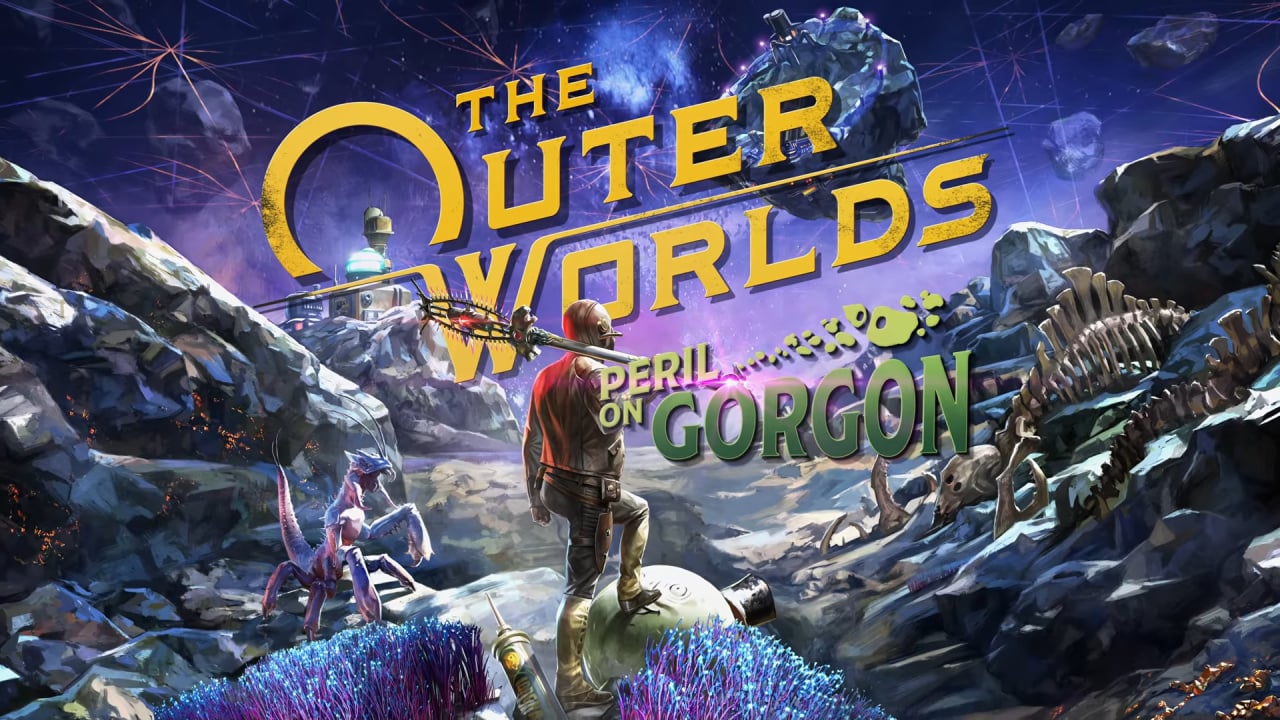
  News - Video: Another Look At The First DLC Expansion Coming To The Outer Worlds
Posted by: xSicKxBot - 09-01-2020, 08:00 AM - Forum: Nintendo Discussion - No Replies

Video: Another Look At The First DLC Expansion Coming To The Outer Worlds


At day four of Gamescom 2020, The Outer Worlds: Peril on Gorgon DLC director Carrie Patel shared pre-release footage of a side quest in this part of the game. Take a look above.

The Outer Worlds’ first expansion will be made available on Xbox One, PlayStation 4 and PC on 9th September, and as previously confirmed by Private Division, is also on the way to the Nintendo Switch – but doesn’t have a release date yet.

Here’s a more recent reminder of this, along with another tweet that the publisher is still hard at work on a patch for the Nintendo version of the game:


Would you be interested in trying out this DLC in the Switch version of The Outer Worlds? Leave a comment down below.


https://www.sickgaming.net/blog/2020/08/...er-worlds/

Print this item

  News - Fresh Prince Reunion Coming This Thanksgiving
Posted by: xSicKxBot - 09-01-2020, 08:00 AM - Forum: Lounge - No Replies

Fresh Prince Reunion Coming This Thanksgiving

Will Smith and his The Fresh Prince of Bel-Air co-stars will be reuniting in mid-September to record an unscripted look back at the cultural impact the series has had since its debut. The special is set to tape on September 10, which would place the upcoming production as taking place literally 30 years after Fresh Prince first premiered on NBC in 1990.

The reunion special will air on HBO Max, and according to a release, will debut "around Thanksgiving." Returning cast members include Will Smith, Tatyana Ali, Karyn Parsons, Joseph Marcell, Daphne Maxwell Reid, DJ Jazzy Jeff, and Alfonso Riberio. Noticeably absent from the list is James Avery--who played family patriarch Philip Banks--who died in 2013. HBO Max is reportedly teasing additional "special surprise guests."

Marcus Raboy (music videos for Ice Cube, Naughty By Nature, and countless artists since 1991) is attached to direct the special, with showrunner Rikki Hughes executive producing alongside Miguel Melendez, Lukas Kaiser, and Brad Haugen for Westbrook Media.

Continue Reading at GameSpot

https://www.gamespot.com/articles/fresh-...01-10abi2f

Print this item

  (Indie Deal) Dead Rising 4 & Assassin's Creed Franchise Sale
Posted by: xSicKxBot - 08-31-2020, 11:53 PM - Forum: Deals or Specials - No Replies

Dead Rising 4 & Assassin's Creed Franchise Sale

Dead Rising 4 at a historical 78% OFF
[www.indiegala.com]
Dead Rising 4 delivers a heart-pounding experience featuring the return of Frank West.
https://youtu.be/AaLnFrlB44Q
Assassin's Creed Franchise Sale, EMEA ONLY
[www.indiegala.com]
[www.indiegala.com]
Stay Inside, Stay Safe and Enjoy Good Games.
Check out IndieGala on Twitter, YouTube & Facebook[www.facebook.com]


https://steamcommunity.com/groups/indieg...7757367181

Print this item

  Xbox Wire - Xbox Insider Release Notes – Alpha (2008.200821-0000)
Posted by: xSicKxBot - 08-31-2020, 11:51 PM - Forum: Xbox Discussion - No Replies

Xbox Insider Release Notes – Alpha (2008.200821-0000)

Hey Xbox Insiders! We have a new Xbox One update preview coming to the Alpha ring. It’s important we note that some updates made in these preview OS builds include background improvements that ensure a quality and stable build for Xbox One.

We continue to post these release notes, even when the noticeable changes to the UI are minimal, so you’re aware when updates are coming to your device. Details can be found below!

Xbox Insider Release Notes

System Update Details:


  • OS version released: RS_XBOX_RELEASE_2008\19041.4160.200821-0000
  • Available: 2 p.m. PT – August 21, 2020
  • Mandatory: 3 a.m. PT – August 22, 2020

Fixes Implemented


Thanks to the hard work of Xbox engineers, we are happy to announce the following fixes have been implemented for this build:

My Games & Apps

  • Fixes to titles not launching such as No Man’s Sky and Grounded.

System

  • Various system performance and stability fixes.
  • Various updates to properly reflect local languages across the console
    • Note: Users participating in Preview may see “odd” text across the console, for more information go here.

Known Issues


We understand some issues have been listed in previous Xbox Insider Release Notes. These items aren’t being ignored, but it will take Xbox engineers more time to find a solution.

We’re still tracking these known issues:


Audio

  • Users who have Dolby Atmos enabled and console display settings set to 120hz with 36 bits per pixel (12-bit) are experiencing loss of Dolby Atmos audio in some situations.
    • Workaround: Disable 120hz or set Video Fidelity to 30 bits per pixel (10-bit) or lower.
  • Some users have reported that Dolby Atmos for Headphones audio setting changes when the console is rebooted/updated.
    • Note: If you attempt to set the audio to Dolby Atmos for Headphones and see a message advising you to launch the Dolby Access App, please file feedback before launching the app.

Game DVR

  • Some users have reported that clips are being recorded without audio. We are aware and investigating.
    • Note: When reporting the issue, please be sure to include details about what resolution, length, and game you were trying to record.

Guide

  • Some users have reported that the audio mixer cannot be used to adjust chat/game audio levels.

My Games & Apps

  • Users have reported seeing black tiles instead of game artwork when browsing their collection.
    • Note: We are still investigating the issue, please report the issue again from the console if you have done so with a prior update and are still seeing this behavior.
  • Some titles in collection may appear with a “trial” tag incorrectly in collection.

New Store Experience

  • Some titles may display a “Not currently available” message on the product page and will be unavailable to purchase
    • Note: Users can use the Microsoft Store on the web or Windows to complete purchases for these items.
  • Users will not be able to use the “gifting” option for both Xbox 360 and original Xbox titles at this time.
  • Users will not be able to use the “Build a bundle” functionality at this time
    • Workaround: Create the bundle via the Microsoft Store on the web or Windows.
  • Xbox Design Lab customization is not currently supported.
    • Workaround: Use the Microsoft Store on the web or Windows to purchase.

Profile Color

  • Sometimes users may encounter the incorrect Profile color when powering on the console.

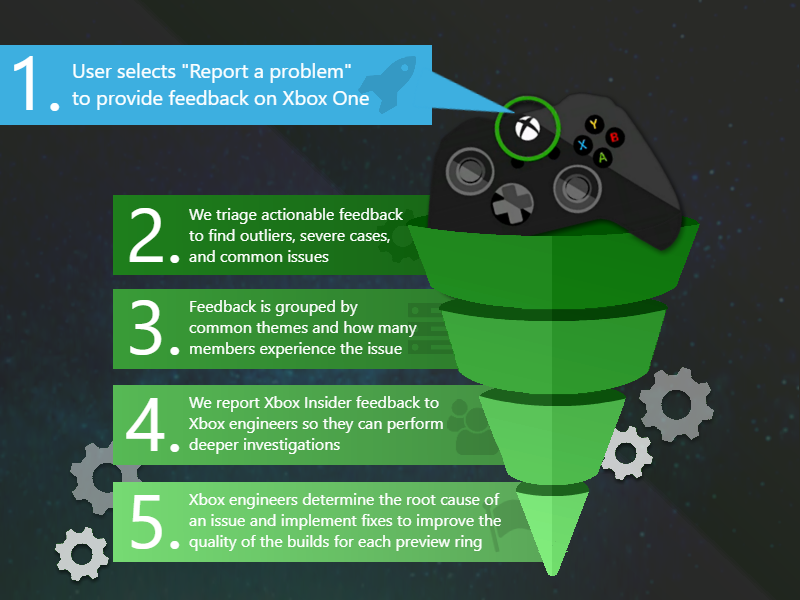
Make sure to use Report a problem to keep us informed of your issue. We may not be able to respond to everyone, but the data we’ll gather is crucial to finding a resolution.

What Happens to Your Feedback

How to Get Xbox Insider Support


If you’re an Xbox Insider looking for support, please reach out to the community subreddit. Official Xbox staff, moderators, and fellow Xbox Insiders are there to help with your concerns.

When posting to the subreddit, please look through most recent posts to see if your issue has already been posted or addressed. We always recommend adding to threads with the same issue before posting a brand new one. This helps us support you the best we can! Don’t forget to use “Report a problem” before posting—the information shared in both places helps us understand your issue better.

Thank you to every Xbox Insider in the subreddit today. We love that it has become such a friendly and community-driven hub of conversation and support.

For more information regarding the Xbox Insider Program follow us on Twitter. Keep an eye on future Xbox Insider Release Notes for more information regarding your Xbox One Update Preview ring!


https://www.sickgaming.net/blog/2020/08/...0821-0000/

Print this item

  News - Blog: The hidden art of pacing – Part 1
Posted by: xSicKxBot - 08-31-2020, 11:51 PM - Forum: Lounge - No Replies

Blog: The hidden art of pacing – Part 1

The following blog post, unless otherwise noted, was written by a member of Gamasutra’s community.
The thoughts and opinions expressed are those of the writer and not Gamasutra or its parent company.


“Putting into play” originates from the site Narrative Construction, whose goal is to offer a hands-on approach to the design of an engaging and dynamic game system from a narrative and cognitive perspective. The series illuminates how our thinking, learning, and emotions interplay when the designer proceeds from scratch to reach the desired goal of a meaningful and motivating experience. 

Before shifting to interactive media, I wrote story arcs for films and television series. The technique of scriptwriting was to follow your gut, establish a conflict, take it to a climax, and end it with a twist. The receiver’s engagement was built into the dramatic story structure, which meant that focus was laid on the character’s motivations, relations, and behavior. As long as the audience stayed seated and the ratings were good, work continued as usual.

Since my gut was what motivated me to realize new experiences and feelings through a tool, I didn’t look at the change of media as anything other than a natural act of using a new tool. However, when asked to write a canonic story for a game plot like a film, I felt my gut protesting.

Why change tools if it wouldn’t give me a chance to explore new possibilities?

The problem with the gut is that it doesn’t come with an answer. It can just leave you there with an awkward feeling that things don’t make sense. The good thing about the gut is that it’s loyal as hell. It can just turn itself into a mood and linger in your memory as a reminder until your brain works out the answer. The effectiveness of your gut can be improved if you get into the practice of backing it up with a drive state of curiosity, which helps to make sure you don’t miss anything that can be useful to the creative process (see Part 6, Putting into play).

Over the years of game development, it has been tangible to those working with narratives that something doesn’t make sense by how the narrative is conceived as a canonic story from other media. For example, you would never hear someone asking you to construct your story like a video game because video games are considered to be what stories aren’t – interactive. And if you get to work with game productions as a writer or narrative designer, it is not given you will be able to work with the development of the parts that are considered to be gameplay related, such as the mechanics and systems.

The game and a narrative designer Chris Bateman says in an article about the understanding of the narrative craft in the game industry:

“Narrative design is “one of the toughest crafts in the whole of video games — made even tougher by the fact that most developers don’t even think that it’s part of their process.”

How come the narrative isn’t a part of the process yet? Haven’t we got over the linearity versus the interactivity debates? Or has arguing about story versus game exhausted us enough to accept it as a fact?

But what if the narrative is more than the parts, the story, and the medium?

Fitting the narrative within games


Since the narrative is fundamental to the cognitive process, being intrinsically connected to our learning and understanding, which permeate the entire process by how you are giving meaning to the parts that are to be presented before the receiver’s senses. Today, it would seem that the game industry has created its own narrative about the narrative.

Ever since the game industry built up speed to its production of story-driven games, intense work has been in progress to make the narrative fit within games. We have now become so used to the narrative being adapted to games that the craft of adaptation has earned its own terms: firstly, converting, which means redesigning the existing storyline of a film or book to fit a video game. One example is the James Cameron moving picture Avatar currently being converted into a game. Secondly, the term merging refers to the craft of making a dramatic story structure fit with the gameplay.

The craft of fitting the story to games has even earned its own genre – the so-called narrative- or story-driven games. The genre is so established that if you claim there are other ways to understand the narrative, people tend to say “I like stories in video games”, as though you were about to remove the fish from the chips.

Since the narrative has turned into something you like or not, it has also become an element you choose to have in your game or not. Associating the narrative with large-scale AAA productions, making a narrative-driven game is even considered an economic risk. This conception of the narrative also rubs off on writers and narrative designers as being something you may either need or not as opposed to programmers, graphic artists, level- and game designers who are necessary.

By looking at the narrative as being a choice, it isn’t strange that the narrative is sometimes considered as being a part of the process and sometimes not.

Bateman suggests that instead of thinking of the story as “the other side of the coin in games,” one should “think of story as one more game system.”. To bridge the gap he proposes an exchange of techniques and experience between conventional writing and game design.

Since I am at the final sprint of Putting into play, which treats the narrative construction of meaning and how emotions assist the design of an engaging and dynamic game system, I intend to take Bateman’s call and add my part to uniting the systems (and minds). As I have one foot in conventional writing, and the other on in game design, I will take you on a trip to find the hidden art of pacing, which means we will trace back to where the core of engagement and motivation resides.

As in previous sections, I will provide a cognitive and narrative approach to the design of an engaging and dynamic game system from a hands-on perspective on the organization, arrangement, and direction of the thoughts and feelings towards the goal of what the receiver should experience or feel.

Tracing the hidden pacing of engagement 


The first time I came in contact with pacing was at a meeting to discuss a playwright at the dramatic department of Stockholm City Theater. Instead of speaking in standard terms about scenes and characters, they turned the playwright into a music piece. The characters’ interactions by how they talked, moved, and behaved were translated into terms of volume and tempo. Using rhythm, they defined the timing of when elements occurred and how long they lasted, and how far from each other they were as to appear again.

First, I was confused and wondered when they should get to the point. Afterward, I was amazed by how it made perfect sense of how words and music/sound connected.

It was not until I started working with game design that I got the opportunity to experience the art of pacing as a feeling of rhythm again. Then it was from the perspective of how you provide and withhold meanings to engage and motivate the receiver’s thinking. It was also then the gap between conventional writing, and game design became visible by how the story structure worked as a method to access the pacing of actions from the receiver’s perspective.

By breaking down the story structure and pacing out the content across sequences so as to meet the receiver’s building of experiences and engagement, you combine the contrasts of tempo (fast/slow) and intensity (strong/soft). In relation to actions, intense combats are followed by peaceful puzzles or an exploration of the world while gathering objects. It was also here, in the craft of pacing out the content through missions, levels, environments, and worlds, you could find the systems of quests, dialogue-trees branched storylines and cinematic that writers and narrative designers are usually in charge of.

Since pacing is at the heart of conventional writing and game design, which rhythm and tempo accommodate the core to the engaging and motivating forces, I will start by bringing on the dramatic story structure to see where the core resides that connect structures and crafts.


Since the whole idea with the art of pacing is to trigger the engaging and motivating forces, which “tricks” by how you entice curiosity shouldn’t be noticed by the receiver. The problem, though, is if the core to the pacing is hidden to the constructor.

The dramatic story structure (also known as the three-act structure) is very good at appearing as if it shows where the hidden engine to the pacing resides by how the acts, turning-points, and conflicts capture an overarching rhythm. At first sight, the structure seems to correspond very well to the idea of how the feeling of being aroused goes up and then down. The structure also hints at converting the rising and falling actions into components that could fit the interactivity of a game.

But as the story structure leads to focus on the development of the characters’ motivations, relations, and behaviors while a gameplay’s structuring concentrates on the receiver’s actions. When taking a closer look at the dramatic story structure as to ask whose actions are actually rising and falling, the structure veils some essential parts that concern the engaging and motivating forces to be from the receiver’s perspective and position. These forces contain the receiver’s feelings, experiences, and expectations brought by the overall rhythm, which captures the core of a mood that follows the receiver after the movie or game ends. This core of the mood works as a drive, which desires encourage us to relive the experience and feelings, which can be noticed when we express appreciation to a specific genre or style (but it can also generate the opposite, which we will get to when looking into balance and control).

When making use of a story structure in the writing and designing of engaging and motivating experiences, you need to look beyond standard features of the dramatic story structures to access the motivating forces that form the core to the mood. The reason is you want to release the thinking and emotions from being framed by the end-state of a structure. As we go, you will see how the liberation fits very well by how the style of the game´s mechanics and systems work.

An example of a core to a mood that is based on the players´desires from earlier games can be found embedded in the mechanic of The Last Guardian (see Part 1, Putting into play, with interviews with Fumito Ueda). The forces constituting the core of a mood were collected from the relation between the player and the girl in Ico, and the bond between the player and the horse in Shadow of the Colossus that were transferred to the boy (the player) and the creature Trico in The Last Guardian.


                           Shadow of the Colossus, Team Ico, Sony Interactive Entertainment

Narrative systems


To discern the core of mood which captures the forces of the engaging and motivating drive, I will get underneath the story structure and remove the standards of start, end, acts, turning points, and conflicts and replace them with an engagement and duration-axis.


To explain how the engagement and duration-axis work, I will introduce the narrative systems behind the act of stripping the story structure in the first place.

The narrative systems are not the story but the systems that assist the structuring of patterns, which are based on the narrative principles of logic, time, and space (which I will return to later as they can explain what causes gaps).

The narrative keys of perspective, position, and goal presented in the previous section (see Part 6, Putting into play) represent the three narrative systems that constitute the cognitive process behind the creation of meaning. The systems that originate from David Bordwell’s studies (Bordwell, 1985), also constitute the base to the method Narrative bridging (Boman, Gyllenbäck, 2010), which I am using in various forms depicting the hands-on approach to the design process (can be recognized from its color scheme).

  • The narrative system of syuzhet translated as plot (which term I will use) defines the constructor’s perspective and position in the arrangement of causal, spatial, and temporal networks. The numbers of techniques on plotting are many, and my intention is to give you the base. The plot is not the story but the patterning of a story, or the patterning of gameplay (which I will get to later). The numbers of patterns that can be plotted are infinite. An example of one pattern is the canonical story format (exposition, complication, outcome). The pattern is a result of a long Western tradition of analyzing the assumptions of a canonic story. The canonical story format works as a template of developing story structures and where the three-acts story structure is just one variation of the template.
  • The plot system can’t exist without the other system of style that mobilizes components and techniques provided by the medium and vice versa.
  • The plot and style systems prepare for a third system: fabula, which represents the receiver’s perspective in the interpretation of the plot and style.

The reason why it may seem unclear from which perspective the rising, falling action, and the climax of the dramatic structure are taking place is that the structure doesn’t define the systems of style or fabula. This is also why I have toned down the rising and falling actions, and the climax, for the time being as they will make sense when we get to the gameplay structures.

The narrative keys assist the change of perspective/position, and the goal captures how the plot and style convey the desired goal/outcome of what the receiver should feel or experience from what is presented before his or her sense (see Putting into play, Part 4 and Part 6).

Since each narrative system contains two perspectives –  the constructor’s and the receiver’s – as we go, it will be easier to understand how the unfolding of plot and style affects the experience of the receiver if you have picked the “right system”. To “pick the right system” I will let the team that was introduced earlier (see Part 6) illustrate the two main perspectives and positions.

The team constructors represent the style and plot and the team interpreters represent the receiver’s interpretation of the plot and style.


The way our mind processes information creates a common denominator and bond between the teams (see Part 6). From the perspective of the constructor, to access the core of mood where the experiences and expectations reside, your approach to the development of an engaging and motivating experience should always be to consider the possibility offered by the receiver’s (interpreter´s) ability to think, learn and create meaning.


Thus, the meaning created by you as a constructor will be converted into experiences and expectations by the receiver (interpreter).

              
The core cognitive activities mentioned above have been presented throughout this series and are based on the 7-grade model of causal cognition (Gärdenfors, Lombard, 2017). Here, the model helps to illuminate the process of how our thinking leads to the drive-state whereby we pick up meanings from what is presented before our senses and store the feelings of these experiences in memory.

These elements compose the dynamic forces behind the narrative vehicle of meaning making (see Part 4, Putting into play), which provides a possibility to engage and motivate the receiver (the interpreter) along the duration axis.

In order to meet the receiver’s (interpreter´s) capacity to process causal, spatial and temporal links in the creation of meaning, I will replace the turning-points and conflicts with the minimum of data needed to trigger an emotional effect to the engagement and duration-axis – which is cause and effect.


How to play on the causal keys of plot


Since it is an established fact to writers and designers that the pacing of engagement of cause and effect is similar to the craft of composing sound and music. This can be noticed by the shared vocabulary of musical terms such as rhythm, tempo (beats per minute), tone, and theme.

If you imagine the green dotted lines of cause and effect above as piano keys or audio tools. When striking the causal elements within a duration of time, you give tone and mood to the experiences and expectations. Tone and mood are what we commonly call themes that capture experiences and feelings.

What fascinated me the most when experiencing my playwright as a music piece was how the style of the theater wasn’t mentioned. The explanation for this can be found in the culture to not precede the director’s and actor’s artistic work to interpret and design (gestalt). It also gives us a hint of why writers are expected by routine to keep a low profile so as to allow for the next level of artists to step forward and finalize the concept. However, the experience gave me insight into how the plot constitutes a system that, independently from style, creates a causal rhythm, which can be applied and moved between media.

I would like to share this insight as it gives you the basic techniques to the pacing and balancing of the plot by how the rhythm and tempo form a dynamic pattern. To avoid being too abstract when showing you an example of how they utilized music terms at the theater,

– I will “play” a theme on the keys of cause and effect that generates the excitement of a classical story structure, which means the cause and effect will be presented within the frame of a start and an end.

– I will define the goal by setting the duration within the time frame of a movie. By doing this, I also describe the style of the medium that mobilizes the theme.

To express strength, rhythm, and tempo, I will start using the musical terms that apply to the dynamic elements of loudness and intensity (strength), i.e., volume:

– Forte, is loud/strong

– Piano is soft

To give you a sense of how the plot works independently from media, I will start with a music piece before moving to the plot pattern of a classical story structure.

In the illustration below, the musical terms are depicted by the first punch on the keys of cause and effect that creates a forte (1), which is followed by a piano (2).


If you haven’t heard about the music piece called Carmina Burana, I am pretty sure you have heard a choir singing: “O Fortuna” (if unsure, check this link on Youtube).

The song starts with a punch of a kettle-drum and a choir singing out loud: “O Fortuna.” (1). By moving on forward on the duration-axis the forte changes into a piano (2). Then the dynamics gradually build up an overall rhythm along the duration-axis towards the climax (3 and 4) and return to the same strength as at the beginning (5) keeping the forte until the end (6).

The same pattern that is reflected in the description of the song can be seen in the pacing of cause and effect in a movie with a theme intended to create the kind of excitement we know from a classical story structure.

Based on the same diagram as above, the forte is illustrated by a global conflict (1). Next after the forte, the daily life of activities and internal conflicts in a village is presented with a piano (2). Next, the engagement of the villagers builds up the cause and effect that raise their awareness about the global conflict (3). When the villagers realize the inevitable by how cause and effect unfold, they will put aside their problems (4) – at least that is what characters usually think – to battle the global conflict (5). But the villagers will also have to fight their internal disputes at the end (the so-called resolution) (6).

The contrast between forte and piano in music constitutes a sudden dynamic change that even has its own musical term: fortepiano (fp). In your crafting of engagement, it is the contrasts and nuances of the components causal relation that create the dynamics. This explains how the plot conveys contrasts between the forte from the global conflict (1) and the piano from the daily life in the village (2), in which dynamic forces increase engagement when they change along the duration axis.

If you would like to guess which classical story I’ve depicted, now it’s the time.

The diagram, which shows the composition of Carmina Burana and the plotting of cause and effect of a classical story structure, gives us the pattern of the movie: The Lord of the Rings

To compare the feelings brought by the plot pattern, you can check the song while bringing memories of mood from the movie. As I didn’t mention the tempo you can notice how the forte (1) has a slow tempo and the piano (2) is conveyed with a rapid tempo.

As you can see, the dynamic changes of contrasts and cause and effect conveyed by the plot are united in either medium through pacing. The variations of dynamics in a pattern can be noticed in the canonical story format by how cause and effect are conveyed by style. For example, in the book, the introduction is more “piano” than “forte,” as Tolkien begins by presenting the hobbits’ life, only to let the global conflict gradually sneak upon them.

How plot and style coexist


The engagement and duration-axis make it easier to discern the dynamics between cause and effect by recognizing how plot and style coexist. It also gives us a hint about how writers and designers are narratively connected through the pacing of rhythm and tempo.

To identify the possibilities offered by plot and style, I will demonstrate how the systems connect by engaging the team constructors in the making of a sound effect.


Based on the principles behind the dynamic contrasts of cause and effect, the constructors will make sound effects of a fortepiano (fp) that is added to the first sequence of the plot (1).


The dynamic changes from volume (fortepiano) the sound effect of an explosion (7) followed by silence (8) is well known from films and games. The dynamics of cause and effect of the sound effect also reveals the third system, fabula, by assuming that the hearing senses will pick up the cues of causal and temporal links – illustrated by the engagement and duration-axis.

As you can see, it is tricky to depict a sound effect without referring to the intention of what the receiver should experience or feel, which shows how plot and style correlate with the systems of fabula. But if we hold on to the interplay between plot and style, you can see how the contrasts and nuances of the components’ causal relation create dynamics. A loud sound may have a slow tempo, and vice versa, a soft sound may have a higher speed.

The rhythm, tempo, and volume flow through every single element from the pacing and balancing of plot and style, which causal network brings the harmony of cohesiveness to the experiences and feelings. Dynamics of causal contrasts can transmit to the stature, movements, and behaviors of objects and characters. An example of a dynamic causal effect can be from a slow movement of an object as the old wooden carriage at the start of The Elder Scrolls V which takes people (including the player) to their execution. Conveyed by animation, sound, and mechanics, the style dynamically mobilizes the plot pattern from pacing tempo and strength.

An example where one might not even see how the pacing of dynamics convey style is in the characterization of the tall human Gandalf and the little hobbits in The Lord of the Rings by how causal network between the stature, behavior, and movements gradually deepen the engagement over time.


The causal contrasts between the size and power of Gandalf and the little hobbits play a significant role in the building of rhythm that conveys a mood. By showing a tall human Gandalf who possesses power (7) in relation to the global conflict (1), and then moving on the duration axis to the village (2) and the small hobbits (8), the beat of the meeting between Gandalf and the hobbits (9) reassembles a causal dynamic effect of a fortepiano.

The pace of engagement is gradually built up by conveying the dynamic effect from the fortepiano (1, 2, 7, and 8) to flow through the tempo of movements and behaviors of the characters. The tempo from Gandalf’s big and slow steps and the hobbits’ rapid steps to keep up with Gandalf, and Gandalf’s awareness about the global conflict (1) and the hobbits unawareness, convey a dynamic depth to the behavior through the pacing of plot and style.

The causal contrasts play a crucial part in the pacing and balancing of engaging and dynamic experiences. How the contrast of tall/little, big/small, and rapid/slow strike a chord within the receiver is due to the causal elements that trigger the core cognitive activity of comparing. Once you get someone to compare, the behavior and movements of the receiver´s meaning making will become a part of the overall rhythm. This rhythm constitutes the core of the dynamic flow, which plot pattern you can move from one medium to another.

For example, the same causal contrasts which flow through the stature, behavior, and movements of the hobbits and Gandalf can also be found in the relationship between the little boy and the huge creature Trico in Fumito Ueda’s video game The Last Guardian (see also Part 1 and Part 4).


                         The Last Guardian, by gen Design, Sony Interactive Entertainment

How the dynamics between the boy and Trico in The Last Guardian constitute the core of the game’s overall rhythm is something I will return to in the next parts when adding the last narrative system regarding the receiver’s interpretation of the plot and style.

By uncovering the coexistence of the narrative systems of plot and style, you can recognize how conventional writing is more than the craft of creating a story according to a particular structure. Without referring to a medium or pattern, the technique is based on the pacing and balancing of causal, spatial, and temporal links that trigger the receiver’s engagement and motivation and enhance emotions.

If you have balanced the narrative systems of the plot and style well in regard to what the receiver should experience or feel, you will arrive at a more persistent state of a mood. By arriving at this point, you know the experiences you have built have engaged the motivating engine of learning that will turn the meanings into expectations and desires. The result from your building constitutes the core of a mood that stays in the receiver’s memory. When continuing tracing back to the heart of where the engaging and motivating forces reside, it is the mood we are aiming at as it captures the emotional desire to understand and learn.

With the help of the last narrative system which concerns the receiver´s meaning making, we will look into story and gameplay structures in the next part to discern how the motivation comes into play in the balancing, pacing, and controlling of engaging and dynamic forces in video games. And, of course, you will see more from the hobbits as to understand how the rhythm and mood make us bond with those furry footed Middle Earthier and how the dynamic forces can be applied to the pacing and balancing of The Last Guardian.

Until next time, stay curious and safe.

Katarina

Illustrations by Linnea Österberg

References:


Boman, M., Gyllenbäck, K.,  (2010). Narrative bridging. Design Computing and Cognition ’10. Edited by John S Gero. SpringerLink. pp 525-544

Bordwell David (1985). Narration in the fiction film. Methuen.

Gärdenfors, P., Lombard, M., (2017). Tracking the evolution of causal cognition in humans. In the Journal of Anthropological Sciences 95. p.219-234

Glossary to music terms

Return to:

Part 1 Putting into play – A model of causal cognition on game design
Part 2, Putting into play – On narrative from a cognitive perspective I
Part 3, Putting into play – On narrative from a cognitive perspective II
Part 4, Putting into play – How to trigger the narrative vehicle
Part 5, Putting into play – On organizing thoughts and feelings
Part 6, Putting into play – On organizing engaging and dynamic forces

Or visit Narrative Construction:

Part 1 Putting into play – A model of causal cognition on game design.
Part 2, Putting into play – On narrative from a cognitive perspective I
Part 3, Putting into play – On narrative from a cognitive perspective II
Part 4, Putting into play – How to trigger the narrative vehicle
Part 5, Putting into play – On organizing thoughts and feelings
Part 6, Putting into play – On organizing engaging and dynamic forces

A short guide to the 7-grade model of reasoning

An introduction to Narrative bridging



https://www.sickgaming.net/blog/2020/08/...ng-part-1/

Print this item

  News - AI analysis: How traffic works in Cities: Skylines
Posted by: xSicKxBot - 08-31-2020, 11:51 PM - Forum: Lounge - No Replies

AI analysis: How traffic works in Cities: Skylines

The following blog post, unless otherwise noted, was written by a member of Gamasutra’s community.
The thoughts and opinions expressed are those of the writer and not Gamasutra or its parent company.


[embedded content]‘AI and Games’ is a crowdfunded YouTube series that explores research and applications of artificial intelligence in video games.  You can support this work by visiting my Patreon page.


Quite often artificial intelligence is in control of so many elements of our favourite video games, but we seldom take notice and take it for granted. An AI tool or system can be running in plain sight, providing a critical element of the game that players are largely unaware of until it starts to go wrong. Let’s take a look at a fantastic example of this found in the popular city-building simulator Cities: Skylines. In this article, we’ll take a look at the traffic and navigation systems that run in every city, how citizens go about their day-to-day routine and how developers Colossal Order sought to address the traffic jams that can easily emerge.

About the Problem


Released in 2015 and published by Paradox Interactive, Cities: Skylines is an open-ended city-building simulator where players are responsible for many aspects of modern urban planning. This includes establishing city zoning, utilities such as water and electricity, establishing zones for residential, commercial and industrial growth, public services such as schools, fire services and law enforcement, all the taxation that is required to pay for it all and – critically for this episode – road placement and establishing transportation services within the region. Colossal Order, having achieved success with the Cities in Motion series had sought to expand into a full city building title, a sentiment that at that time Paradox Interactive did not share. However, 2013 saw a gap emerge in the market courtesy of the latest entry in the beloved SimCity franchise from Electronic Arts. The game came under intense criticism at release with players posting screenshots and videos of cities not behaving as expected. And while the issues raised were numerous, there are two critical points we are exploring in this piece.

Sim City had issues with pathfinding and citizen behaviour.

First, the traffic simulation in SimCity was highly problematic. Traffic would often bottleneck, creating massive jams that seemingly never resolved themselves. Meanwhile, should the play attempt to rework junctions to enable better traffic flow or add public transportation this often proved to be more a hindrance than a help. Secondly, the citizens in SimCity did not behave as expected. While it was anticipated that the sims would live their pre-determined lives – working jobs and living happily in their homes – in reality, they lacked any individuality. Sims would leave the house in the morning, find the nearest job available in the city and then after the working day, they didn’t necessarily go back to the house they left that morning. Instead, they simply go to the nearest vacant property. While this is undesirable it seems slightly innocuous, until you realise how big an impact this had on the already troubled traffic systems as well as the actual behaviour and economy of the cities themselves.

While SimCity sought to address this through numerous patches, it never really coalesced at a solution that players were happy with. However, Cities: Skylines when released satisfied many of the features that players sought from its competitor. And as we’ll see in a moment, it not only tracks the passage of every vehicle through your city’s road system, but your citizens will go about their daily business as one would expect. That said, it still suffers from traffic congestion issues.

Now before we get into the intricacies of this problem and how it is tackled in Cities: Skylines, it’s important to acknowledge that this isn’t just an issue that plagues video games, but the real world too. Traffic management systems in the real world are highly complex and incredibly expensive to research and develop. These systems have to manage signalling, traffic flow and congestion, tracking and responding to accidents and other incidents on the road such as spillages, damage to the road or faults emerging in signalling systems and CCTV cameras that used to provide oversight. There are efforts to employ artificial intelligence to handle the complexities of real-world traffic management, but it is far from a solved problem at this time. Hence, it’s understandable that as city-building simulation games seek to become more and more realistic, the challenges that developers face will rise accordingly.


How Citizens Work


First let’s talk about the citizens, how do they work and what impact are they going to have on the traffic network. Each citizen in Cities: Skylines has information that is used as part of the city simulation. This includes:

  • Their name.
  • What level of education they have.
  • Their residential address.
  • Their place of employment or education if they have one.
  • Their overall level of happiness.
  • Current activity, including any destinations they are currently headed towards if they’re travelling around the map.
  • Their health.
  • Their wealth.
  • References to familial relationships and what other citizens are related to them.

Each of these features impacts the game in different ways. Levels of education influences what types of jobs they take on, the performance of these businesses and the value of residential areas. Meanwhile, happiness is shown to the player and gives a barometer for how well you’re performing, given there may be services these citizens require, such as healthcare or utilities that they feel is lacking or the job opportunities in the region aren’t up to scratch. But perhaps what’s most influential on citizens behaviour moving around the map is their age. While a citizen does have a numeric age, this isn’t exposed to players by default, but the key part is that they live their lives in five stages:

  • Children, where they start going to nearby schools if there is capacity.
  • Teens, who go to high schools if there is space.
  • Young Adults, who either attend university or get a job if they can.
  • Adults, who not only move out of their current home and into a new one if they can, but will also settle down and start their own families.
  • Seniors, where citizens retire and no longer go to work but still use city services and commercial businesses.

This has a huge impact on the transportation network, given kids are going to school, adults are either at university or in a job and pensioners are still active in their senior years. Some of these citizens will be in their own car while others use public transport. And this is a very difficult balancing act, given not only will your city grow if you’re doing your job right, but citizens age at an incredibly fast rate, with their average life expectancy of around six in-game years.

How Are Roads Built?


So given we have so many citizens moving around, how does the road system work? Under the hood, roads are modelled as a collection of nodes. Two nodes connected to one another is a segment, providing both start and endpoints. Your average road in Cities Skylines is actually multiple segments glued together, given a segment has a maximum size. Each node in a segment is known as a control point, this provides start and positions for roads, as well as the intersection with other roads creating junctions. Each segment of road stores information about itself, including what type of road it is, how many lanes it has and what types of lanes these are. This all become useful when a citizen wants to travel between locations.

Now this information extends to sidewalks too, which operate on a slightly different system, given they can be elevated or tunnelled to go over or under traffic and crosswalks are established when building them alongside roads to enable pedestrians to cross. All of this information comes into play when a citizen makes the decision to travel to a destination.


Building a City in Motion


Having citizens move around in Cities: Skylines is – by the developers own admission – the single greatest challenge faced during development, resonating with the issues that plagued Sim City. Given it is arguably the one system that any player who spends more than 10 minutes in the game will come to interact with, hence ensuring a basic level of functionality and avoiding some of the more gnarly edge cases was paramount. To that end, not only did Colossal Order rework this system several times over, but as we’ll see in a moment, some elements that players might want to see were actually removed because it only made the problem worse

When a citizen decides they want to travel, they use all of the available information about the cities transport infrastructure: including the roads, sidewalks, crossings, public transportation routes and available vehicles and will find the fastest possible route to their destination. Hence the node system within the roads and sidewalks is searched through to find a valid path. This actually factors in numerous elements based on the citizen involved and the local geography. If a citizen owns a car, they will attempt to drive it. If they don’t have a car, they’ll not only check for a valid path on sidewalks but also factor in whether there is any public transportation that can speed up that process. In some cases, there are strict rules on how this can operate: specific buildings such as hospitals and fire departments will enforce the use of ambulances and fire trucks respectively rather than a firefighter taking a bus with a bucket of water as your home turns to ash. Meanwhile, pedestrians cannot walk on highways and hence if they don’t have public transportation options and sufficient sidewalks to get them to their destinations, they’ll resign themselves to defeat. Colossal Order has never outright stated what they’re searching algorithm is. However, given the rich data laced throughout the road network, it would not be surprising to find a modified version of A* or Dijkstra’s that achieves the desired effect.

The resulting system is actually quite remarkable that a character can make this level of nuanced decision making, especially at this scale. Given a pedestrian can easily walk and take multiple forms of public transportation in order to get to their destination. The destination they want to visit can vary and while they will prioritise going to the primary destination for their life stage – such as school, college or work – they will also go to commercial units such as shops and restaurants, as well as clinics and hospitals.


When a citizen takes a car, it utilises not just the road network topology, but the additional constraints of the road type themselves against the vehicle. This includes the dedicated cycling or bus lanes, as well as the speed limits, the number of lanes and the current congestion level. Provided the system can generate a path through the road network, then the vehicle will begin to drive it. It can also still use the public transportation system. Hence it is possible for a citizen to drive to a metro station and then use that for the remainder of the journey.

In essence, that’s how Cities: Skylines works, but there are several edge cases revolving around traffic, the number of citizens in the city and much more. And we’re going to get into that now, but before I do there are two really important caveats. Firstly, not all citizens are rendered in the city at any point in time. There is a hard limit on how many citizens and vehicles can be simulated on the streets of your city at any given time. Now you might think this is just a rendering issue: in that the game is still simulating all citizens under the hood and you just don’t see it. No, no, no; Cities Skylines outright caps how many citizens can be travelling within the city at any given time. There is a separate system that monitors whether there are available slots for travelling citizens and then allows them to travel once there is space. While the movement of citizens is important for maintaining the economy and their own personal health and education, you the player are not penalised for a citizen being unable to travel due to this simulation cap. The system that oversees this ensures that players are not punished because a citizen is – due to computing limitations – unable to travel to their desired destination. The second caveat is that the traffic you see on the streets is a separate simulation system from the citizen management. When you watch traffic, it’s a collection of thousands of small physics objects that read information from the road network to figure out how to move through it.

So for the remainder of this episode, let’s look at two things: first how the traffic simulation systems work, and secondly, what happens when traffic jams start to occur in the game world.

Watching Traffic


Traffic is handled in a separate simulation system that is actively calculating how to follow the chosen path, the velocity that the vehicle should be going at and preventing collisions. While traffic looks like this smooth and constantly updating process, it’s only rendered that way. The traffic simulation is updated 4 times a second, and the rendering system takes two of these simulation updates to derive movement of the objects on the screen.

When traffic is simulated a vehicle knows the path that it’s been told to go on and they know where on a given road they can drive – hence they won’t drive the wrong way down a one way. Paths through the roads are calculated on a spline using the nodes of each road segment. This allows for tight curves and intersections to be handled as gracefully as possible.


These simulation steps allow for vehicles to calculate whether collisions are going to occur at intersections or from traffic slowing down. Vehicles do recognise traffic lights and will slow down and stop if the lights dictate they can’t travel into the intersection. Meanwhile, to minimise crashes, vehicles check ahead of themselves during the simulation for whether a collision between two vehicles is imminent. This annotates a segment of the road as liable to cause a crash, at which point the distance to the segment is used to decide which vehicle goes first and they move through it on a first-come-first-served basis, each adapting speed accordingly.

But of course despite all of this effort, there are still issues with traffic jams. In part this is to be expected if the player does not build the network sufficiently, but there are other issues that impact the system. So let’s wrap up by talking about what the simulation does and does not do in order to keep it manageable.

First of all, unless something happens that causes a given path to no longer be valid or has been extensively modified, a citizen or vehicle will not change their pre-calculated route. You may think there would be some opportunistic behaviour going on where a character may re-evaluate their options on the fly, but nope, only in the event something happens, that negates the original path. While in some larger segments of the road with multiple lanes that could spread traffic out, you’ll notice they don’t change lane again after moving into the one they originally decided upon – even if that would make sense to do so. Having vehicles change lanes midway through a segment of road was actually something that Colossal Order experimented with, only to later remove because during internal testing, it actually made everything worse.

When traffic builds up, you may see cars sitting idle at junctions and not moving forward, despite having room to do so and that’s often because their paths have determined further issues up ahead and as a result they opt to simply stand idle.

Last but not least, Cities Skylines has a fallback option for when traffic jams are overwhelming. If a vehicle has found itself in gridlock and unable to move, it will actually teleport back to its origin. And the previously mentioned worker system may well stop that citizen from trying to travel again and avoid punishing the player any further. This was a decision made by Colossal Order in order to make the transportation challenge more manageable, given even relatively small cities begin to be impacted by this issue. This decision has actually proven to be contentious among some players, who prefer the challenge it presents and use mods that actively remove the teleport feature.


Closing


Building a city simulation game is incredibly demanding, especially as the granularity and fidelity of the simulation increases. Cities: Skylines is an incredible effort from a team that – at launch – was comprised of only 14 people. But it shows the core tenets of their design from previous games could steer them through to making a game that is now the leading game of its kind on the market. With an entire generation of city planners still working away for hours on end perfecting those road networks, Colossal Order knows this is a problem they need to tackle again in future releases. The issue of the traffic is an ongoing one within the Cities: Skylines community – with some PC players using mods to teleportation or outright replace the pathfinding systems used in the game. Meanwhile, others are happy to leave it as it is and embrace the chaos.

References


https://www.sickgaming.net/blog/2020/08/...-skylines/

Print this item

  News - Call Of Duty Cheat Seller Removes Cheats Following Legal Action
Posted by: xSicKxBot - 08-31-2020, 11:51 PM - Forum: Lounge - No Replies

Call Of Duty Cheat Seller Removes Cheats Following Legal Action

When it comes to popular competitive games, most of us have had to deal with a cheater or two in our time. If you're an Call of Duty: Warzone fan, however, it's now just a little bit harder to find the fun-ruining cheats that will make you reviled in every game you step into. A site that sells cheats and hacks has removed those for the Call of Duty series following a lawsuit from Activision.

The administrators of the site released a statement on their Discord to elucidate the changes: "As some of you may know, Activision Publishing, Inc has filed a lawsuit against CxCheats and has made it clear to us that our services violate their Terms of Use," a portion of it reads. "As a result of our lawsuit with Activision, we have agreed to cease development and support for all Call Of Duty related products or services sold through the site. These products will not be returning to CxCheats in any form."

Though CxCheats appears to be down at the moment, Eurogamer found that the site is still selling cheats for non-COD games, such as PUBG and Apex Legends. Activision has dropped the hammer on Call of Duty cheaters before, banning more than 70,000 players back in April and promising more ban-waves to come in recent months. The cheating problem has become so rife in Warzone that some console players have taken to disabling cross-play in order to avoid PC players, since it's much easier to use these tools on a PC than a console. Recently, a Call of Duty streamer accidentally revealed their cheat tools while bragging about his skills at the game, which led a swift ban.

Continue Reading at GameSpot

https://www.gamespot.com/articles/call-o...01-10abi2f

Print this item

  News - A Year Later, Control's Greatest Secret Is Finally Uncovered
Posted by: xSicKxBot - 08-31-2020, 02:10 PM - Forum: Lounge - No Replies

A Year Later, Control's Greatest Secret Is Finally Uncovered

Note: This post contains some story spoilers for Easter eggs in Control and story points of its latest DLC expansion, AWE. If you want to uncover it all on your own, you might want to come back after you've completed Control and the AWE DLC.

When Control was released, it was fascinatingly weird and full of mystery. As we tried to fight the extra-dimensional Hiss, we learned about the strange entities in charge of the Federal Bureau of Control, discovered supernaturally Altered Items, and uncovered story tidbits linking Control to a Remedy cult classic, 2010's Alan Wake.

But the game's biggest and most confusing secret was hidden away in its best sequence, the Ashtray Maze. Listen carefully to the song that plays there, and you could hear a secret message that seemed to hint at hidden content buried somewhere inside Control. Even though the message was uncovered right away after the game's release, players couldn't figure out what it meant or what it was trying to convey.

Continue Reading at GameSpot

https://www.gamespot.com/articles/a-year...01-10abi2f

Print this item

  [Tut] Top 20 Laws for Freelance Web Developers
Posted by: xSicKxBot - 08-31-2020, 10:43 AM - Forum: PHP Development - No Replies

Top 20 Laws for Freelance Web Developers

Last modified on August 30th, 2020.

I got an email from a freelance developer friend. I have a list of associates with whom I collaborate (I get their help) when I am overloaded. The email had two inevitable questions,

  1. How do you ensure that you get the full payment?
  2. How did you create such a testimonial page? Is it fake?

My testimonials


First let me write a short note on my testimonials page. You can easily identify that all the testimonials listed are true.

  • Live link to client’s website.
  • Logo, company name, address, client’s name, designation.

All the above are public information and can be verified within minutes. There are more that twenty five testimonials listed and cannot be faked.

Project success


Okay let us get back to the two questions. With a decade of freelancing experience, I have come up with twenty laws for freelance web developers. If you follow that, a project will be a success.

When I say “project success” it means, client is happy. Everything else is a derivative of that. You get full payment, a good testimonial, repeat order, possible new reference and all the good things will happen as a by product.

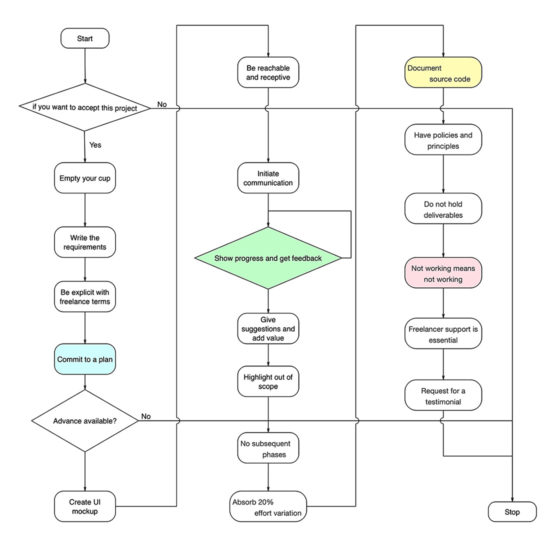
The Laws


  1. All projects are not doable
  2. Empty your cup
  3. Write the requirements
  4. Be explicit with freelance terms
  5. Commit to milestones, dates and a plan
  6. Never work without an advance payment
  7. Create UI mockups
  8. Be reachable and receptive
  9. Initiate communication
  10. Show the progress and get feedback
  11. Give suggestions and add value
  12. When it is out of scope, call it out
  13. Do not discuss subsequent phases in between
  14. Absorb up to 20% variation in effort
  15. Document the source code
  16. Do not be ad-hoc, have policies and principles
  17. Holding a deliverable is not a solution
  18. When client says ‘not working’, it’s not working!
  19. Freelancer’s support is essential
  20. Request for a testimonial

freelance web developer laws

1. All projects are not doable


Do not accept everything that comes your way. Play to your strength. You may have to spend time without projects, even then you should be ready to say no.

There are various reasons to not accept a project.

  • As a web developer we have numerous tech stack options, plugins, extensions. You may not have knowledge or experience with the tech stack the client wishes. A freelance project is not a platform for you to experiment and learn.
  • A client does not know what he needs.
  • You do not have the required domain expertise.
  • You do not know how to achieve what he asks for.
  • You are already occupied. Trying to accept projects in parallel will not allow you to focus.
  • Do not accept if you have to work for free or under-billed. Always conduct yourself as a professional business.
  • When you do not have access to the actual person giving the order. You can be sub-contracted, but you should have access to the person who gives the requirements. When there are multiple middle men passing requirements to you, things will get lost in the transfer. Unless you directly talk to the person who drives the requirements, you will not get a good hang of it.

Unless you are able to estimate the work and arrive at a detailed work break down structure, do not accept it.

Sometimes a long-term client may bring a project on an alien territory to you. He may try to persuade you, because he is comfortable working with you. If you accept and fail, you will loose. Better explain him why you do not want to take the project and it will add to your respect.

2. Empty your cup


Every project is a new beginning. As you keep on delivering project, there is a possibility to become complacent. That will lead you to underestimate a project.

Start as if it is your first freelance web project. Learning is critical a freelance web developer. Most of the times, you will be sitting alone coding from your attic.

There is no team to discuss, share and learn. It is all dependent on your thought process. If you start fresh, you will be receptive (law no. 12).

3. Write the requirements


Spend more time on requirements phase. As a freelance web developer you will not be billing the time spent on proposal process. Requirements analysis and elaboration is the most critical phase in a software development life cycle. Even critical than the design phase.

Unless you know what you are building where you will be headed. As a web developer, you will be dealing with intangible things. So it is important to get the detailed requirements upfront.

If you are working based on fixed rate, then waterfall method of development is best suited. You need to fix every inch of the requirement before start.

If you are working based on time and material (hour based billing), then agile iterative development methodology is fine. It is suitable for projects, where the requirement has to evolve over a period as you build.

In both the cases, write the requirements. Ask the client to write a document and email to you. You analyze and elaborate it. Write it as a document and circulate back for feedback. Iterate the process and arrive at a final document. have the conversation recorded via email as it will help you later to recollect.

Telephonic conversations has to be converted to a document. At the end of the phase, there should be a requirements document as detailed as possible.

4. Be explicit with freelance terms


Do not assume things. In particular when it comes to money, do not assume. There are numerous ways the freelance developer world works.

Explain the terms is detail and get the acknowledgement. Do not shy away from it. Discuss the percentage breakup, schedule, milestone, billing rate, fixed or hourly etc and the mode of payment.

Understand the emphasize is on money. It will also help to plan his budget allocation and be prepared for payment. Never ask for ad-hoc payments. Stick to the agreed schedule and payment mode.

5. Commit to milestones, dates and a plan


Before the project is agreed, the plan should be in place. It should have detailed work break down structure with milestones. The plan should be approved.

You should initiate this process even if the client does not insists on a plan. You should voluntarily commit to it. If you do not do so, it will allow for micro management and ad-hoc reporting.

Client will be guessing the progress and will be on his toes. It will subject you to pressure. Working without a shared plan will never be an advantage for you.

6. Never work without an advance payment


This is not to be on the safer side. This is for a commitment. This is a business. The client has to get involved from day one. He needs to invest on it. You will be investing your time and building the product and for his part he needs to invest the money. It is mutual.

Beginner freelancers fear for everything. If I ask for advance and the client says no to the project, I will loose an opportunity. Working without a commitment is even worser.

Next, how much to ask is the question. In the freelance web developer world, it is customary to ask for 50% advance payment for smaller (less than 1000 USD) projects. For projects larger than that, the payment can be in three or four parts. Can be even tied to milestones (law no. 5). But whatsoever, there should be an advance to start the project.

7. Create UI mockups


A freelance web developer will always have an urge to commit a project, take advance and jump coding immediately. All these needs to happen immediately. There will be fear of losing the order. But you have to resist that urge.

The more the time you spend on requirements, it will save you later. Remember money is not the only objective. You should retain him for a repeat order, you need to get a testimonial from him, you need to get order references from him.

If all these have to happen, then do not rush into the project. The success is more essential than getting the final payment. Success encompasses more things than the final payment.

Client’s happiness directly relates to the success. A freelance web developer needs to step into his shoes. Should make all the effort to understand his objective.

A web developer’s key tool to obtain that objective is UI mockup. You need to invest on a fancy tool, monthly subscription etc. My go to tool is the good old pen and paper, sometimes color pencils will add jazz.

Just draw, write to create a rough sketch of how you envision the application. Take a snapshot and share with the client. Get his concurrence. Do not over work it. Remember you will be doing this in the proposal stage and the time spent is not billed. All you need to do is covey your idea of the understanding to the client.

A freelance web developer’s success depends on the strong grip on the project. The first step towards that is the UI mockups.

8. Be reachable and receptive


Establish a proper communication channel with the client. Along with the quote, share the ways using which the client can reach you. Give multiple possible channels,

  1. Email
  2. Project collaboration tools
  3. IM
  4. Telephone

A freelance web developer is like a juggler. If you loose balance at any point, the whole act will come down. For you to maintain the balance, the client should be comfortable.

Be easily reachable. Clearly convey the client that you prefer email as the communication mode. Attend to emails at least twice a day. Communication channel preference should be in the above order for comfortable execution.

IM and telephone should be the last choice in the list. It never helps. As a freelance web developer, I work with global clients. Imagine a client calling you at midnight and asking for a modification.

When the client writes, it will give clarity to his thoughts. So written communication should be encouraged. You should show that you are listening. In an email, never put any points under the carpet. Whether you agree or not, respond to everything.

If you are not able to reply immediately, just acknowledge and get back with details later. Your immediate response says that you are receptive.

9. Initiate communication


Do not be casual and wait for client to talk to you. Every mail, ping, call should emanate from the freelance developer and not the client. This will give a comfort to the client. This will assure the client that you are taking care of the project and it is in trusted hands.

Initiating the conversation for a doubt from your side is usual. Every freelance developer does it. But the emphasise is on initiation to inform that the milestone is getting delayed, or you are not able to achieve a feature that you agreed. It might be a bad news, but have the courage to initiate communication.

10. Show the progress and get feedback


As a freelance web developer you might follow multiple different models for development. In agile development methodology, it is imperative the way it works is by iteration and sprints. You show the progress, get feedback, iterate and keep developing.

A freelance developer has a mindset to get into a cocoon. Nature of the work style drives into it. You keep on developing yourself, there is no team, no one around you to ensure that you are on the right track. Here comes the client. Whatever model you choose, establish a schedule.

Do not be ad-hoc to show the progress. Before you write the first line of code, in fact at the proposal itself lay out a plan. What are all the dates you are going to show the progress should be transparently conveyed to the client. It will drive your progress. More than that, it will avoid rework.

Whenever you get feedback, give priority for the feedback. Not the regular planned tasks. Adjust the plan and covey the client. Always feedback goes first, it should not be accumulated.

11. Give suggestions and add value


A freelance web developer is an expert. The client does it for the first or second time. But you are doing it for the hundredth time. It should reflect in the work.

You are not a data entry operator, you are a developer. Lot more is expected from you. You should contribute in all aspects from design to implementation to training.

The client will have a narrowed down objective. He just focuses on only one thing, just the UI. You know the engine better. What component to use, how to modularize, how to make things interact, there are numerous aspects.

Sometimes enthusiastic clients take things outside the track and it might derail the stability of the software. That’s where you step-in. Say no, be steadfast and more important you have to explain and make the client understand. After all he is the one investing.

There might be some intricate things, as an experienced person only you will know. Explain it to the client, add value to his investment. Those will not go free and you will be rewarded.

12. When it is out of scope, call it out


As per law 10, you are supposed to get feedback in regular interval. This opens up other possibility, scope creep. Every feedback has to be organized into bullet points.

Feedbacks should be encouraged to be communicated in written form. If it comes in paragraphs break it down to points. That will reveal hidden gems. Client may not be doing it intentionally. He wants to get a product of his dream.

So he will be thinking about only what he wants. A freelance developer is doing business. Profitability is important. By informing the client that this is out of scope you are also helping him. Scope creep, will take you down. If you go down, the project goes down and so the client.

Explain it, give reference from the requirements document. Do not say no! A scope creep is an opportunity for a freelance web developer. Do not take it negatively and jump on the client. Explain him politely and increase the scope of the project and so the bill.

13. Do not discuss subsequent phases in between


If an out of scope item is minor that can be informed to the client, reestimate the project, schedule and cost. Sometimes, the out scope item can be a module. If in proportion it is 50% of the current size or more than that, then it should be carved out as a separate phase.

Do not mix it with the current scope of work. Tell the client that you will definitely work on it. But will be taken as next phase. Let us document it and move forward with the current scope of items. Let us finish the planned work and then take this as a next project.

Re estimate and re scheduling can be done once or twice. If you keep on repeating it, then the client will get a feeling that things are dragged. It will feel like when this thing will end. So it is all in perception.

14. Absorb up to 20% variation in effort


If you are billing by hourly (time and material), then this is not an issue. To be safe on this, people advice to always go for hourly billing and avoid fixed rate. Not necessarily.

If you are good in your territory, then fixed rate is fine. Client’s prefer that. If you are skilled enough to arrive at a good estimate, then why not? Go for fixed billing.

Freelance web development is a haunting story, most of the time. Despite you follow all these laws, expect unexpected turns. A freelance web developer has to swim in uncharted territories at times.

This may result in effort variation, remember plus or minus both. Sometimes you loose and sometimes you win. In any case, up to 20% variation is fine.

In situations beyond that, explain the client. Attribute proper reasons, give reference and evidences. It is your responsibility as a freelance developer to convince. Web development keeps on changing. A freelance developer needs to keep up the pace. Otherwise you will be in this situation quite often.

15. Document the source code


Developer’s responsibility is to ensure that the project is a success. In the success durability is also a critical element. A freelance developer is not expected to launch and run away (see law 19).

A web application should have a life of minimum five years. Without any maintenance project should run. But when there is a necessity, it should be doable easily. Either you or some other freelance developer might work on it in the future.

The comments you are going to add now will be of great help later. Freelance web development should not be seen as a one time job. If you do not add code comments, the same project may be freelanced to you later and the web application will come back and haunt you.

There are so many literature around the web explaining the goodness of source code comments.

16. Do not be ad-hoc, have policies and principles


As a freelance web developer, you need to draw your own rules. How do you arrive that? Is there any web developer template available? There is none. If you find something, do not follow it blindly.

Every freelance developer is a unique breed. Every web development project has unique challenges. You handle it in your own style. You have to arrive at your own rules.

But you cannot live without rules. For example, let us take non disclosure agreement (NDA). There are numerous template NDA littered all over the web. As a freelance developer you will come across many. Over a period build document for your own. Incorporate the best and keep updating it.

Hourly billing, fixed rate, what is your style. If fixed rate, do not keep it volatile. Which UI web component you will use? Which web responsive framework will you use? Right from money to tech stack, a freelance developer should have written everything. This is what you will follow, this what you will use.

What is your free support duration? These are all questions that are thrown at a freelance developer quite often. You should have readymade fixed answers for these. You should have freelance policy document.

17. Holding a deliverable is not a solution


The rope is holding you back. Did you see the movie “The Dark Knight Rises”? The scene where the batman tries to get out of the well (prison pit). It neatly sums up what fear does to you.

You are not exchanging illegal things. Holding a deliverable makes the client feel untrusted. Business requires trust from both the sides. If you have followed all the laws till now, the client will be more than happy to pay you.

You need not hold the deliverable and ask for money. It feels like threatening. You are a web developer. If you are confident that you have done a good job, do not tie the deliverable to the payment. They should be independent of each other.

No client will burn the bridge. If you do a good job and you make the client feel it, then he will pay you. Sometimes even more than what you agreed for. I have got paid extra many times.

The client will need you in the future in two cases. He may require you for maintenance or enhancement for the application you have built. He may also require you for new projects. So he will not attempt to run away.

To get the full payment, to get a testimonial, or for any similar objective, do not hold the deliverable. Your fear will make things worse. Be good and focus on client’s objective, then you will get everything.

18. When client says ‘not working’, it’s not working!


You have delivered the project and the job is over. But, the client says it is not working. Never ever reply saying, “it is working for me!”. When he says, he means it.

If it is a web application, ask for access. First have intention to identify what is happening. Then think about how to help solve the issue.

How you respond to the call is important. Instead of saying working for me think about understanding the issue. Nobody cares about whether it works for you or in your environment. It needs to work in the production and work for the investor. Only then the developer job is complete.

19. Freelancer’s support is essential


Freelancer should always provide a support period. The terms may vary, but you should always provide support.

The terms of support should be discussed and conveyed at the proposal stage itself. For example, a freelancer can give six months of free support. Then what comes under free needs to be described.

Support is essential for the durability of the web application. For maintenance and enhancements will always be there. The client will bank on you as a first choice. You should be available for that.

Repeat work has higher priority than new job. Free support has higher priority than repeat work. That’s how it goes in the freelance world. That’s how you ensure project success.

20. Request for a testimonial


“The crying baby gets the milk”, you should ask for it and there is nothing wrong in it. There are two main purposes to ask for a testimonial.

  1. To use it in your showcase
  2. To ensure that whether you have done a good job.

A freelancer’s worth is determined by the testimonials he has. It is your pride. It is far better and more important than a portfolio.

The words in the testimonial will teach you your strengths and weaknesses. Sometimes the client will not give you one. Don’t pester. Instead ask for what help should be done to make the project success.

Go the extra mile and make it a success. Then ensure that you get a testimonial.

↑ Back to Top


https://www.sickgaming.net/blog/2020/08/...evelopers/

Print this item

  (Indie Deal) Bundles Round-up, Gal*Gun 2, Cat Quest, Gun Gun Pixies Deals
Posted by: xSicKxBot - 08-31-2020, 10:42 AM - Forum: Deals or Specials - No Replies

Bundles Round-up, Gal*Gun 2, Cat Quest, Gun Gun Pixies Deals

Bundles Round-up

Pqube Sale + nDreams Sale
https://youtu.be/4PElvbns1sA
https://youtu.be/3VSkcKwgggM
Stay Inside, Stay Safe and Enjoy Good Games.
Check out IndieGala on Twitter, YouTube & Facebook[www.facebook.com]


https://steamcommunity.com/groups/indieg...7754256093

Print this item