Welcome, Guest
You have to register before you can post on our site.

Username
  

Password


Search Forums

(Advanced Search)

Forum Statistics
» Members: 20,946
» Latest member: blackopsdlc
» Forum threads: 22,174
» Forum posts: 23,140

Full Statistics

Online Users
There are currently 1323 online users.
» 0 Member(s) | 1318 Guest(s)
Applebot, Baidu, Facebook, Google, Yandex

Latest Threads
[WoW Retail News] More Pv...
Forum: World of Warcraft
Last Post: xSicKxBot

» Replies: 0
» Views: 9
FIFA Street 4 100% Save F...
Forum: Xbox Mods
Last Post: xSicKxBot

» Replies: 0
» Views: 16
100% resident evil 5 game...
Forum: Xbox Mods
Last Post: xSicKxBot

» Replies: 0
» Views: 19
[WoW Retail News] Don't F...
Forum: World of Warcraft
Last Post: xSicKxBot

» Replies: 0
» Views: 18
How to get Skibidi Toilet...
Forum: PC Discussion
Last Post: xSicKxBot

» Replies: 0
» Views: 14
Pirate Launcher (Download...
Forum: PC Mods
Last Post: xSicKxBot

» Replies: 0
» Views: 17
[PS.Blog] PlayStation Plu...
Forum: Sony Discussion
Last Post: xSicKxBot

» Replies: 0
» Views: 15
[Dev News] htn_planner – ...
Forum: Game Development
Last Post: xSicKxBot

» Replies: 0
» Views: 23
360 Content Manager 3.0 (...
Forum: Xbox Mods
Last Post: xSicKxBot

» Replies: 0
» Views: 29
[Py Blog] PEP 827: Type M...
Forum: Python
Last Post: xSicKxBot

» Replies: 0
» Views: 20

 
  News - Don’t Miss: Mario maestro Koji Kondo on composing the classics
Posted by: xSicKxBot - 09-06-2020, 12:01 PM - Forum: Lounge - No Replies

Don’t Miss: Mario maestro Koji Kondo on composing the classics

Koji Kondo became an immutable part of the fabric of the game industry itself when Super Mario Bros. was released in 1985. His tunes, which served as the unforgettable accompaniment to one of the most important games in history, are still cherished today.

Kondo continued to be the sole composer for the Mario games through 1996’s Super Mario 64, as well as the mainline Zelda franchise through Ocarina of Time.

Gamasutra got a rare chance to interview the composer prior to his appearance this past weekend at The Game Awards, where he played classic Mario themes on piano and appeared alongside the band Imagine Dragons.

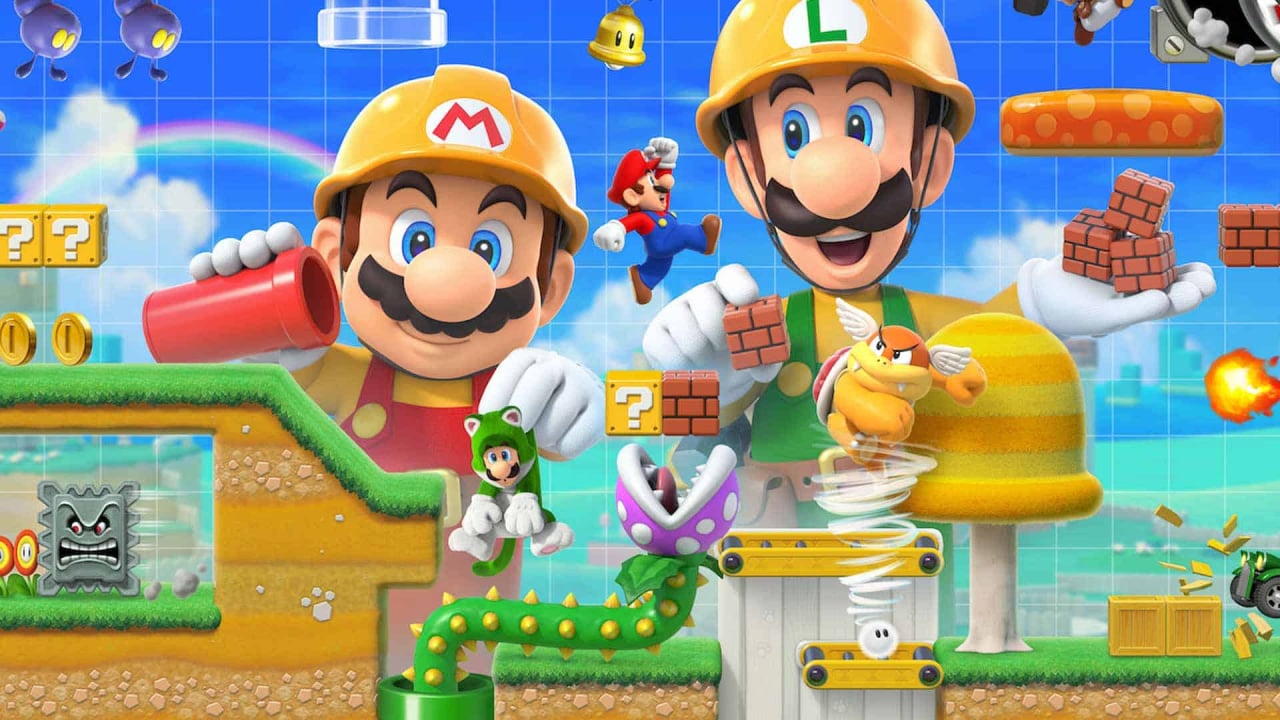
In this rare (and remarkably humble) interview, he looks back on his oeuvre (he’s currently hard at work on 2015’s 30th anniversary franchise title Mario Maker for the Wii U) and shares his advice to other game composers.

You’re supervising the music for Mario Maker. That means you’re looking back at your career, essentially. What does it mean to be looking back at your older work, and how does it feel?

Koji Kondo: Well, on Mario Maker I’m actually the sound director and the main composer, so I’m having a really, really good time looking back at the themes from the older games and working with those, and creating some new revisions and new remakes for this title.

When you look back at your old work, how do you see it now, after all these years?

KK: I look back, and I really think that each song has its own specific set of memories for me. While I’m working on music that is based on some of those original songs, I kind of hearken back to the days when I was working on that, and revisit the things that I wanted to do at the time I was creating each piece of music.

We had a limited sound palette at that time — the tools that we had definitely had a limited selection of sounds and notes that we could work with. There were maybe some things that we couldn’t express to the full degree that we wanted to. I think we left some stuff on the table.

It’s really nice, using the new tools incorporated in the Wii U and our new hardware to recreate and rearrange some of that stuff. It’s just a heck of a lot of fun. I get to both remember the time that I was creating that music originally, but again, then work with the new tools to flesh it out in some ways, and reimagine it. It’s a lot of fun for me.

[embedded content]
The underground music, first heard in level 1-2.

Can you think of any specific memories that you have encountered about those classic games while working on this project?

KK: Yeah. I think each one has its own memories, as I mentioned before, but maybe one that I can recall off the top of my head is the underground music that I created for the original NES. It was really concentrated on the space between the notes, and using a few notes to create that feeling of being underground — that sort of creepy atmosphere is something I really focused on. Trying to create a sparse sound environment that would enhance what we see on the game screen. And I think it’s nice to now use the tools that I have to edit that, and hopefully enhance that even further.

The tools you had at the time were so limited that creating a sparse piece of music was to your advantage. Now you can flesh it out. You talked about the sparseness as being a positive, but now you’re not restricted. How do you approach that?

KK: I think if we look back at the NES version of the music, from the imagining of what sort of music I wanted to create to the act of creation, there wasn’t a large time gap between those, because of what we were working with — whereas now, we’re able to create sound in such detail.

The tools that we have allow us to recreate — say, for example, the bassline, the bass part. We really can and need to make it sound like an actual bass, not a computer sound, but an actual bass. But we’re using a computer to do it.

With all of those small details, we’re not making the music any more complex; we’re not using the tools just because they’re there to make the music too overpowering, or whatnot, but we do have a lot of detail that we can flesh out using today’s tools. So it takes quite a bit more time, actually, to create the music than it did back in the day, so to speak.

When you go back to the old music, do you find yourself using ideas that you had at the time that you couldn’t implement for technical reasons, or when you approach them now do you have new ideas that are spurred by this new opportunity?

KK: I think, actually, it’s both. There are some where we’ll take the same themes and I want to try it, maybe, in a different genre, or try it with different instrumentation. Because now I have a different palette to work from, so I’ll take some of those themes and rework them using new instrumentation.

There are obviously some that are obviously just completely original ideas, but there are others that are taking that original music, the same feeling I had when writing those, then using the technology I have today to make variations on that theme. Some are completely brand new and original, and some are reimaginings of those themes, but just using today’s technology.

For this question, you don’t have to stick to Mario. What soundtrack stands out as your favorite that you’ve worked on, and why?

KK: Tough question! I guess I’m going to have to go back to the original Super Mario Bros. theme. It’s just very gratifying for me to see the enduring popularity of the song and that it’s a worldwide phenomenon, it looks like.

If I go onto YouTube I can see so many different people using such different instrumentation to create different versions of this song. I’m just seeing that these people would think of this music as something that they wanted to put their own spin on, and go to all the trouble to reimagine it with their own instrumentation or whatnot, is very gratifying for me. So I think that’s the one I’d have to single out.

[embedded content]
Kondo performing the theme on piano at The Game Awards.

It’s such a catchy song, and it’s not easy to write catchy music. I was wondering if you could tell me a bit about writing that music.

KK: I have to say that when I was, of course, working on the music, I wasn’t thinking to myself, “Now, I’ve got to create something that will be very popular with people.” I was really just trying to do create something that I thought would enhance the gameplay.

And the fact that the song is now, some 30 years later, has taken this lasting popularity with people around the world is very pleasing to me and not something that I ever thought. I’ve been very happy to see that’s the way it’s turned out.

From them until now, how collaborative is the music creation process with the game design process at Nintendo? How closely do you work with Mr. Miyamoto or other game designers and creators to match the soundtrack to the games?

KK: As far as my relationship with Mr. Miyamoto, he has final approval on everything, including the music. He works with the game director and the leads of the separate parts, and is in close communication with them. That’s the relationship we have with him. He helps them out and gives them advice, and talks to them about what they’re doing.

We really have a large stable of directors, and each one has his or her own personality. So we have some directors who are, “Here’s the game we’re working on,” and they’ll give us some working prototype or some working version of the game for us to play through and look at, and we’ll, on our own, create music that we think is appropriate for that game.

And we have some directors who are more hands-on in the creation of music, who will come to us and say, “Hey, I’m looking for music that will perform this function” — the genre, or the tempo, or whatever they had in mind. They’ll come to us and say, “This is what I’m looking for,” being a little more specific with their instructions.

This is a very broad question — but what’s the most important thing in your mind when composing music for a game? What’s paramount?

KK: That the game is fun to play — that the music enhances the fun factor in the game. It makes the game more fun.

It’s not that simple, right? You talked about the second level music in Super Mario Bros., which is more tense. So is it about underpinning the emotions of the gameplay?

KK: It enhances whatever is inherent in the gameplay. If I put in something that was super upbeat and peppy in the underground, it would ruin the game by not matching what is going on. So that’s not what our goal is, of course.

There’s something about the old music, which is that it was so limited that it forced you to write these amazing melodies. So in a way, was there an advantage to doing it in the old days?

KK: I don’t think so. I don’t feel like my approach has changed at all. I think maybe one thing that makes people feel like maybe some of the older music is catchier or more memorable, is that an older game really has less music, so you’d hear that music more often, I think — or variations on it. That music was played more, so it was in your mind more. It was in your ears more, for sure, when you were playing. Perhaps it just became easier to remember.

I think now, with the increased toolset that we have and the more expansive sound landscapes that we’re able to create, and there’s so much more music in games — maybe that will keep one refrain or melody line from standing out as much as it used to.

As far as myself, my approach to creation of game music hasn’t changed at all, that fundamental goal of making that supports and enhances gameplay hasn’t changed.

[embedded content]
The Super Mario Bros. 3 soundtrack, with distinctive drum sound.

One thing that really stands out to me when I think about Super Mario Bros. 3 and the music of that game is the drums — it has a really specific drum sound. Adding that one thing to the soundtrack defined the sound of the game. Do you agree? I guess at that time, maybe getting one new sound was a victory.

KK: I think, really, for Super Mario Bros. 3, I’d just been researching and researching the abilities of the NES hardware, and at the time that Super Mario Bros. 3 was under development, we were able to increase the size of the game ROM itself. We were able to add percussion as a result of that.

While the sound quality I don’t feel was all that great, we had the three notes from the NES that we were able to use, plus the noise [channel] — which we used for the hi-hat sound. [Kondo mimics the hi-hat drums from the NES.] We were able to add percussion on top of that.

I think relative to what we’d been hearing before, it sounded much fuller, much richer. I don’t know that there was any specific, “this drum is the thing” — it was, “Hey, now we can have percussion. Let’s add percussion!”

It’s not just that; I felt that it worked well with the music. I’m happy that it’s something that makes it distinctive for you. That’s the background story of the drums.

It just sticks with me all these years later. I’ve had conversations about the drums in Super Mario Bros. 3 even as recently as this year. It doesn’t just stick with me; it sticks with people.

KK: Thank you! I’m glad that it’s something that is a good memory for you.

When I was preparing for this interview I was thinking about a bunch of different soundtracks that you’ve worked on, and the one that really sticks out to me is Yoshi’s Island for the SNES. It has really its own mood and its own style. I was wondering if you had any thoughts on what went into that.

KK: In regards to Yoshi’s Island, while obviously it’s a Mario-related game, it’s not Mario, and so I really wanted to have a different feeling to the music. And as I was thinking about the game, I know that it’s this tropical island, and it’s hot, and again, it’s not Mario, so I really started wanting to incorporate an African vibe, so I did a lot of studying of African music and how African music was composed, and looked into a lot of different African instruments, and that was the basis for the music of Yoshi’s Island.

[embedded content]
A track from the Yoshi’s Island soundtrack.

It’s got an interesting atmosphere because it’s a bit relaxed and even at times a bit melancholy, especially for a platformer. That’s what stands out to me.

KK: [laughs] That’s the first time that anyone’s ever said that.

Really? It’s no so strong that it’s really different, but there’s something about it. Maybe “nostalgic” is the word?

KK: Maybe because Baby Mario gets kidnapped? I don’t know!

I think I’ll leave that alone.

KK: Okay. No worries. [laughs]

Do you have any advice that you give to people at Nintendo about how to create music for games?

KK: I think that maybe one conversation that we would have is something along the lines of that game music is different from other genres that you would maybe purchase on a CD to listen to and enjoy yourself, from different genres of popular music, in that game music needs to be interactive.

It needs to change with the gameplay. It needs to enhance what the player’s experiencing on-screen and really just make the game more than it is without the music. It needs to be an addition to what they’re seeing.

What mindset do you use when you approach it, then? How do you insure that the music is additive, rather than music that just happens to be playing?

KK: One thing that I think is different in the approach is that you have to consider that game music is something that you’re going to hear again and again, over a long period of time, throughout the entire time you’re playing the game. That’s something that’s different from pop music or something you’d hear in a movie — because you are in control of what’s going on on-screen.

You’re cueing up the music again and again to replay things, so the music has to be something that’s not going to get on your nerves. You’re not going to get tired of hearing something, but it’s also not just going to make you irritated. You’re not going to get sick of the music because you happen to play a stage over and over, or anything like that.

It really needs to have a catchy melody, it needs to have a lot of variety, and it needs to really enhance and match what’s going on on-screen. That’s one way I think the thinking process is different from what you had mentioned — something that’s just background music.

You mentioned how great it is that we have all these new tools, but if you look at what a lot of independent developers are doing these days, a lot of them are making NES-style games, complete with limitations on the music. I was wondering if you had any advice for people who wanted to make old-style music.

KK: [laughs] Go ahead. You can do whatever it is you want to do — do what you like. That’s great. The important thing is just to use whatever is at your disposal to create new ideas and come up with stuff that’s fresh and new. That’s just the important thing. Rather than trying to recreate something, or go over the same old ground, create new things. That’s the advice I would give.



https://www.sickgaming.net/blog/2020/09/...-classics/

Print this item

  News - The Batman Hasn't Resumed Production, Despite Reports To the Contrary
Posted by: xSicKxBot - 09-06-2020, 12:01 PM - Forum: Lounge - No Replies

The Batman Hasn't Resumed Production, Despite Reports To the Contrary

Update: Variety now reports that The Batman has not actually resumed production. "Studio insiders" have denied the Daily Mail report, saying the movie is not yet being filmed again. Construction work is continuing, but Variety says that shooting likely won't continue until the two-week quarantine period has ended. The original story follows.

Production on The Batman has reportedly already resumed after yesterday's report that Robert Pattinson has tested positive for COVID-19. According to the Daily Mail, while Pattinson is self-isolating for at least 14 days, director Matt Reeves "is trying to film as much as he can at the Warner Bros. Studio in Leavesden, Hertfordshire, without his leading man." All crew who did not have direct contact with Pattinson will reportedly return to work as well.

"The behavior of U.K. cast and crew have been exemplary," Lyndsay Duthie, CEO of the Production Guild of Great Britain, told Variety. "Wanting to return to work, everyone has embraced the comprehensive measures required of them and as a result many productions have been back on set and filming safely for weeks already. Where we have seen productions abroad where a cast or crew member has tested positive, precautions have been taken as required to enable them to start filming again as soon as they had the all clear."

Continue Reading at GameSpot

https://www.gamespot.com/articles/the-ba...01-10abi2f

Print this item

  Mobile - The Garena Free Fire and Money Heist crossover Plan Bermuda is now live
Posted by: xSicKxBot - 09-06-2020, 05:20 AM - Forum: New Game Releases - No Replies

The Garena Free Fire and Money Heist crossover Plan Bermuda is now live

The latest heist in Garena Free Fire is now live in-game. Plan Bermuda is an unlikely crossover between Free Fire and Netflix’s Money Heist, also known as La Casa de Papel. Plan Bermuda introduces a full in-game takeover, a new four-on-four game mode, and a fresh collection of classic outfits inspired by the Money Heist TV show.

As part of the Plan Bermuda update, a new game arrives in Garena Free Fire. Money Heist mode drops on September 19, and sees opposing teams race to collect the most cash before time runs out. The mode is best described as a domination-style game, where you have to gain control of a money printer and defend it to secure the cash. Whichever team reaches the allotted amount of cash inside the time limit wins.

Some other in-game activities arrive on September 6, but the Money Printing event won’t be available until September 12. This event focuses around printing money for prizes, and you can speed up the printing by completing daily events, recruiting friends, and adding Printer Fuel Tokens. The ultimate goal is to earn one million dollars before the event ends on September 22.

If you want to know more, you can watch a trailer for the event below:

[embedded content]

Plan Bermuda will also feature some new cosmetics, such as Money Heist themes, Plan Bermuda parachutes, and Shinobi, Kunoichi, and Street outfits

“Creating memorable experiences for our Free Fire community is key,” says Harold Teo, producer at Garena, regarding the partnership. “There are few better ways to do so than by teaming up with one of the most popular Netflix series, Money Heist.”

If you want to play the event for yourself, you can find Garena Free Fire on Google Play and the App Store. For more similar recommendations, see our list of the best mobile multiplayer games!


https://www.sickgaming.net/blog/2020/09/...-now-live/

Print this item

  News - Stardew Valley Creator Uploads New Screenshot Of Update 1.5
Posted by: xSicKxBot - 09-06-2020, 05:19 AM - Forum: Nintendo Discussion - No Replies

Stardew Valley Creator Uploads New Screenshot Of Update 1.5


Stardew Valley 1.5 Update@ConcernedApe

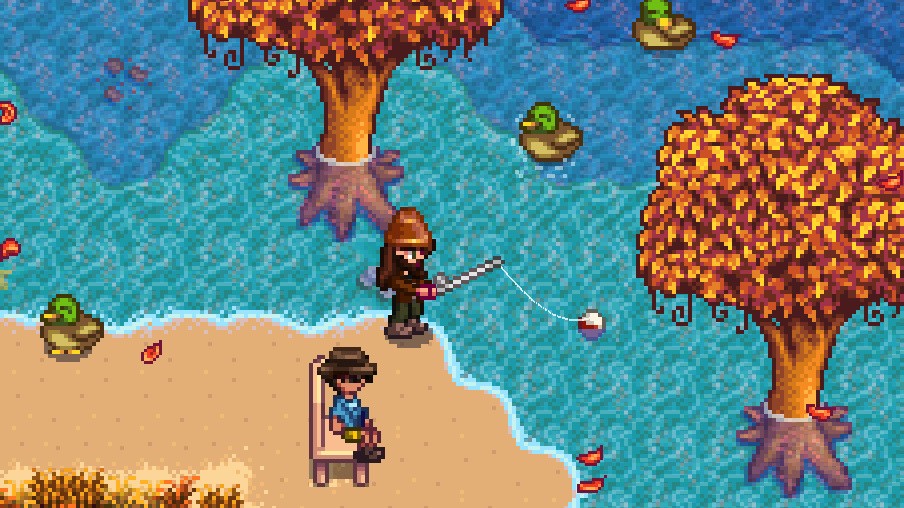
The next update coming to Stardew Valley will bump the game up to version 1.5. The creator, ConcernedApe, has been teasing it for months on end and has now shared another glimpse of what it will look like when it does arrive.

It shows two individuals near water. One is fishing and the other is sitting down on a chair. There are also some ducks and trees submerged under the water. Here’s a look:


Some fans suspect this might be a new area or zone in the game. In his previous Twitter update, ConcernedApe revealed how players would be able to move their beds, and before this, he teased new end-game content and shared an image of a new door behind Willy’s counter.

Are you looking forward to the next Stardew Valley update? What do you make of the latest screen? Share your thoughts below.


https://www.sickgaming.net/blog/2020/09/...pdate-1-5/

Print this item

  News - DC FanDome Gets Ready For Round Two With New Trailer
Posted by: xSicKxBot - 09-06-2020, 05:19 AM - Forum: Lounge - No Replies

DC FanDome Gets Ready For Round Two With New Trailer

On August 22, DC FanDome launched, the best virtual convention to date. During the show, we saw the first footage for The Batman, a new trailer for Wonder Woman 1984, and got to see the cast of Suicide Squad. However, that was just the first part of the show. On September 12, there will be a second DC FanDome event, and the trailer for it just arrived.

Revolving around the worlds of movies, television, comics, and general fandom, the September 12 event will consist of more than 300 panels and more than 100 hours of content from all these realms. All of it will be available to watch for free on the DC FanDome site.

Currently, you can make your own schedule on the website, planning on what you want to watch. However, the big difference between the two events is that the Explore the Multiverse event is all on demand. This means you won't have to wait all day for your favorite panel to start playing. You can pick and choose right away what you want to watch.

Continue Reading at GameSpot

https://www.gamespot.com/articles/dc-fan...01-10abi2f

Print this item

  News - Deals: Don’t Miss These Amazing Labor Day Nintendo Switch Game Bargains
Posted by: xSicKxBot - 09-05-2020, 08:28 PM - Forum: Nintendo Discussion - No Replies

Deals: Don’t Miss These Amazing Labor Day Nintendo Switch Game Bargains

@auck @Kalmaro
Yoshi’s Crafted World is cozy and engaging, but personally I feel like it’s more AA level gaming, and not quite worth the full $60. The sale price seems worth it depending on your priorities.

It’s definitely more of a breezy experience, and not as polished or snappy as Odyssey. However, Yoshi is very cute and the overall experience is meant to charm rather than engross, similar to the selling points of Origami King.

IMO, the biggest flaw of Crafted World is Unreal Engine itself: performance can be lacking, especially in the hub world, which just feels sluggish.


https://www.sickgaming.net/blog/2020/09/...-bargains/

Print this item

  News - Review: Super Mario All-Stars – All That Glitters Isn’t Necessarily Gold
Posted by: xSicKxBot - 09-05-2020, 08:28 PM - Forum: Nintendo Discussion - No Replies

Review: Super Mario All-Stars – All That Glitters Isn’t Necessarily Gold


Now that SNES games are available on Nintendo Switch Online, we’ve decided to revisit each of them in a fresh review. Enjoy!


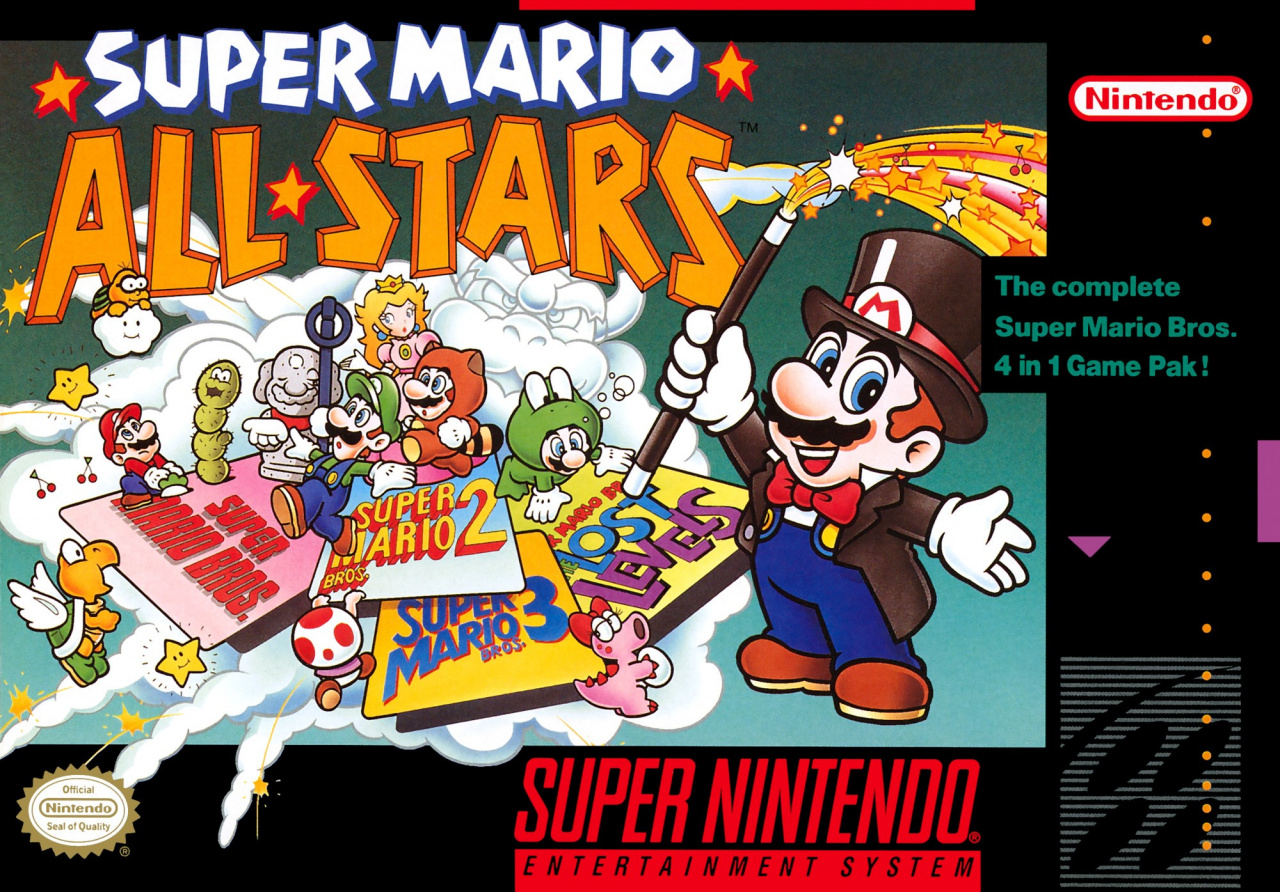
On its mid-1993 bow, Super Mario All-Stars was greeted with the sort of rapturous praise usually reserved for pontiffs, or a new Daft Punk album. This was a compilation of a generosity never-before-seen goodies, packing in the stone-cold classic NES titles Super Mario Bros., Super Mario Bros. 2 and Super Mario Bros. 3. Not only that, but each game had been remade; brand new and totally redrawn graphics taking advantage of the rich colour palette of the Super Nintendo, a save feature for each game and – best of all – the first western release of the Japanese Super Mario Bros. 2, presented here as Super Mario Bros.: The Lost Levels.


To play these games back then, it was either via the NES and original copies, or All-Stars. That made it an invaluable and unprecedented package. Now, though, the original NES titles – including Lost Levels – aren’t just widely available at an affordable price; they’re right there on the Switch’s NES Online app. So, the question arises – why play All-Stars on the SNES app when the originals are very much accessible?

We’re going to assume you’re familiar with the NES Mario titles – after all, you are a Nintendo fan – and we wouldn’t want to waste space explaining the basic mechanics of such widely-played classics. The best approach is to take a look at each game on Super Mario All-Stars individually and assess any meaningful differences, advantages and disadvantages.

Naturally, this begins with Super Mario Bros., where the Mario legend really started and recreated in 16-bit colour here. Unfortunately, it’s not an auspicious start. Due to a single error in the code, Mario doesn’t properly rebound off bricks when he leaps up to break them. This may sound very minor, and in some ways it is, but Super Mario Bros. is a game based around momentum and has very few mechanics. Changing one of them wholesale like this has a drastic effect on the feel of the game, as Mario seems to sink into the smashed bricks, usually resulting in a complete loss of speed. Is this picky? We honestly don’t think so. The visual update, which perfectly pleasant, isn’t enough to compensate for a fundamentally incorrect version of a platforming classic.


Thankfully, Super Mario Bros. 2 fares much better, with a graphical overhaul that doesn’t compromise its feel. The original NES version was the series odd-one-out already (it’s a reskinned version of the Japanese Famicom title Yume Koujou Doki Doki Panic, and not really a true Mario game at all), so a little aesthetic dissonance doesn’t jar with the player as much as it does in the other games. It’s worth pointing out that calling it the odd-one-out doesn’t actually reflect a distaste for it; in fact, Super Mario Bros. 2 is an excellent game with a sense of adventure and exploration to it that still sets it apart from every other Mario title. The All-Stars incarnation of this classic platformer improves its visuals, retains its gameplay and doesn’t compromise any aspect of what makes it so much fun. As a result, we consider it the strongest achievement of Super Mario All-Stars, and the best way to play Super Mario Bros. 2.

Still one of the very greatest platform games of all time, Super Mario Bros. 3 is by-and-large extremely enjoyable as a part of All-Stars, with the gameplay present and correct. The new graphics, however, are a bit of a mixed bag. Some areas look downright beautiful – richly redrawn and shaded. We feel, however, that some of the aesthetic decisions remove some of the joyously strange, abstract choices from the game; the cave levels, previously taking place in bizarre, twinkling void-like darkness, are now dull, relatively realistic brown rock. Additionally, the final few stages have been similarly changed from their oppressive jet-black finality to more standard, cosier backgrounds. This doesn’t ruin the game by any stretch of the imagination, and some of the modifications are actually pretty good (the airship stages now take place on a stormy night, with periodic cracks of atmospheric lighting) but overall it’s a little less interesting and a little more homogenous than the NES original. Nonetheless, this is a fine way to play what this writer considers the best Super Mario game of all time.


Which brings us to Super Mario Bros.: The Lost Levels, the Famicom Disk System sequel to the original Super Mario Bros. And it’s a bit of a doozy, with an amped-up difficulty level that surely inspired the fandom’s “kaizo” Mario hacks with their psychotically tricky stage design. Thankfully, Lost Levels isn’t on that level of cruelty, but it can be an absolute pig in places.

What doesn’t help is that this SNES version is a little bit botched, making certain stages harder than they were in the original – most notably any that involve mandatory enemy bounces. Still, the Switch version lets you save anywhere and rewind at will, which also lets you negate the mean-spirited reverse warp zones you may run into. Sadly, the same issue present in Super Mario Bros.’ All-Stars incarnation remains; breaking bricks simply feels wrong.

This is a little less of an issue here as speed is so rarely of the essence in Lost Levels; it’s so demanding that a slow and steady pace really is the order of the day. The graphics are acceptable, again, but we’d still recommend playing the Famicom version on the NES app over this; the ability to save your game natively as part of Super Mario All-Stars was useful on the original cartridge, but with access to save states it becomes far less crucial to anyone but purists who want to tackle the game as it was originally presented. More power to them, as Lost Levels/Super Mario Bros. 2 is a brilliantly-designed expert take on a landmark Nintendo title.


Conclusion


Super Mario All-Stars is quite obviously an extremely impressive package and the presentation still offers something of a nostalgic thrill – that opening sequence with the Mario cast chatting it up in silhouette is up there with the Super Street Fighter 2 intro for classic SNES attract modes – but, ultimately, we believe that it only offers the best experience possible with one of its four included games. It’s a very, very cool thing to have as part of the SNES Online service and an important watershed for retro compilations that’s a treat to revisit – but only really out of curiosity. Great stuff, but we say stick with the NES originals. The major problem with Super Mario All-Stars on Switch in 2020 is that it’s on Switch in 2020; the benefits it conferred over the original 8-bit games back in ’93 are rendered somewhat moot by the user-friendly functionality of the NES app that’s already available.


https://www.sickgaming.net/blog/2020/09/...rily-gold/

Print this item

  News - ABC's Chadwick Boseman Tribute Is Now On Disney+
Posted by: xSicKxBot - 09-05-2020, 08:28 PM - Forum: Lounge - No Replies

ABC's Chadwick Boseman Tribute Is Now On Disney+

The official Marvel Twitter account announced Friday morning that the previously aired ABC 2020 Special, Chadwick Boseman: A Tribute To A King, is now available to stream on Disney+.

It can be found under the "extras" section when you select Black Panther. The 40-minute special, hosted by Robin Roberts, celebrates Chadwick Boseman's life, career, and legacy as well as the massive cultural imprint he made in and out of the role of T'Challa.

The special also features tributes from celebrities, political figures, and some fans from around the world. His Avengers and Black Panther co-stars share some special words about his courage and commitment to the craft, and the kindness he showed in the world. His death shocked the world last week as it came to light that the 43-year-old actor had been battling colon cancer for more than four years.

Continue Reading at GameSpot

https://www.gamespot.com/articles/abcs-c...01-10abi2f

Print this item

  [Tut] Python One Line Function Definition
Posted by: xSicKxBot - 09-05-2020, 07:35 PM - Forum: Python - No Replies

Python One Line Function Definition

A lambda function allows you to define a function in a single line. It starts with the keyword lambda, followed by a comma-separated list of zero or more arguments, followed by the colon and the return expression. For example, lambda x, y: x+y calculates the sum of the two argument values x+y in one line of Python code.

Problem: How to define a function in a single line of Python code?

Example: Say, you’ve got the following function in three lines. How to compress them into a single line of Python code?

def say_hi(*friends): for friend in friends: print('hi', friend) friends = ['Alice', 'Bob', 'Ann']
say_hi(*friends)

The code defines a function say_hi that takes an iterable as input—the names of your friends—and prints 'hi x' for each element x in your iterable.

The output is:

'''
hi Alice
hi Bob
hi Ann '''

Let’s dive into the different methods to accomplish this! First, here’s a quick interactive overview to test the waters:

Exercise: Run the code—is the output the same for all four methods?

Next, you’ll learn about each method in greater detail!

Method 1: Lambda Function


You can use a simple lambda function to accomplish this.

A lambda function is an anonymous function in Python. It starts with the keyword lambda, followed by a comma-separated list of zero or more arguments, followed by the colon and the return expression. For example, lambda x, y, z: x+y+z would calculate the sum of the three argument values x+y+z.

friends = ['Alice', 'Bob', 'Ann'] # Method 1: Lambda Function
hi = lambda lst: [print('hi', x) for x in lst]

In the example, you want to print a string for each element in an iterable—but the lambda function only returns an object. Thus, we return a dummy object: a list of None objects. The only purpose of creating this list is to execute the print() function repeatedly, for each element in the friends list.

You obtain the following output:

hi(friends) '''
hi Alice
hi Bob
hi Ann '''

Method 2: Function Definition


A similar idea is employed in this one-liner example—but instead of using a lambda function, we define a regular function and simply skip the newline. This is possible if the function body has only one expression:

friends = ['Alice', 'Bob', 'Ann'] # Method 2: Function Definition
def hi(lst): [print('hi', x) for x in lst]

The output is the same as before:

hi(friends) '''
hi Alice
hi Bob
hi Ann '''

This approach is more Pythonic than the first one because there’s no throw-away return value and it’s more concise.

Method 3: exec()


The third method uses the exec() function. This is the brute-force approach to one-linerize any multi-liner!

To make a Python one-liner out of any multi-line Python script, replace the new lines with a new line character '\n' and pass the result into the exec(...) function. You can run this script from the outside (command line, shell, terminal) by using the command python -c "exec(...)".

We can apply this technique to the first example code snippet (the multi-line function definition) and rename the variables to make it more concise:

friends = ['Alice', 'Bob', 'Ann'] # Method 3: exec()
exec("def hi(*lst):\n for x in lst:\n print('hi', x)\nhi(*friends)")

If you run the code, you’ll see the same output as before:

hi(friends) '''
hi Alice
hi Bob
hi Ann '''

This is very hard to read—our brain cannot grasp the whitespaces and newline characters easily. But I still wanted to include this method here because it shows how you or anyone else can compress complicated algorithms in a single line of Python code!

Watch the video if you want to learn more details about this technique:


Python One-Liners Book


Python programmers will improve their computer science skills with these useful one-liners.

Python One-Liners

Python One-Liners will teach you how to read and write “one-liners”: concise statements of useful functionality packed into a single line of code. You’ll learn how to systematically unpack and understand any line of Python code, and write eloquent, powerfully compressed Python like an expert.

The book’s five chapters cover tips and tricks, regular expressions, machine learning, core data science topics, and useful algorithms. Detailed explanations of one-liners introduce key computer science concepts and boost your coding and analytical skills. You’ll learn about advanced Python features such as list comprehension, slicing, lambda functions, regular expressions, map and reduce functions, and slice assignments. You’ll also learn how to:

•  Leverage data structures to solve real-world problems, like using Boolean indexing to find cities with above-average pollution
•  Use NumPy basics such as array, shape, axis, type, broadcasting, advanced indexing, slicing, sorting, searching, aggregating, and statistics
•  Calculate basic statistics of multidimensional data arrays and the K-Means algorithms for unsupervised learning
•  Create more advanced regular expressions using grouping and named groups, negative lookaheads, escaped characters, whitespaces, character sets (and negative characters sets), and greedy/nongreedy operators
•  Understand a wide range of computer science topics, including anagrams, palindromes, supersets, permutations, factorials, prime numbers, Fibonacci numbers, obfuscation, searching, and algorithmic sorting

By the end of the book, you’ll know how to write Python at its most refined, and create concise, beautiful pieces of “Python art” in merely a single line.

Get your Python One-Liners Now!!


https://www.sickgaming.net/blog/2020/09/...efinition/

Print this item

  (Indie Deal) ?Waifu Memories Bundle, Control on Steam and NEW releases
Posted by: xSicKxBot - 09-05-2020, 07:35 PM - Forum: Deals or Specials - No Replies

?Waifu Memories Bundle, Control on Steam and NEW releases

Waifu Memories Bundle | 12 Adult Steam Games | 85% OFF
[www.indiegala.com]
(Adult 18+) Time to make some new hot memories with a dozen waifu filled Steam titles, some having Steam Trading Cards and others having an "Administrator Mode". "Harden" your decision fast, for the 24h price won't last!

https://youtu.be/ZVfoOdLE418
Project CARS 3[www.indiegala.com] | 16%
Project CARS 3 Deluxe[www.indiegala.com] | 14%
https://youtu.be/szFdBPo19Fg
Captain Tsubasa: Rise of New Champions[www.indiegala.com] | 21%
Captain Tsubasa: Rise of New Champions - Deluxe Month One Edition[www.indiegala.com] | 21%
https://youtu.be/pSbdyn7XFzQ
[www.indiegala.com]
Stay Inside, Stay Safe and Enjoy Good Games.
Check out IndieGala on Twitter, YouTube & Facebook[www.facebook.com]


https://steamcommunity.com/groups/indieg...1177012940

Print this item