Hello World! A Python One-Liner to Get Started with Python Quickly
The “hello world program” is used in programming languages to set up a minimal programming environment and execute the first trivial program in it. It helps you get your environment going and take your first steps towards a more complicated program. This short tutorial will show you the fastest possible way to write your first hello world program — as a Python one-liner!
Before I show you how to install Python on your computer, follow the following steps to run your first Python "hello world" program in your browser!
Run Your Hello World One-Liner in Your Browser Shell
Step 1: Here’s an interactive browser-based shell:
The shell runs any Python program in your browser.
Step 2: Type the print function in your browser shell with opening and closing parentheses that are initially empty:
print()
The print() function takes a string and prints it to your shell. This way, you can generate outputs in your program. Think about it: a Python program is only a means to an end. It transform an input to an output. One way of creating an output is to print program values to the shell. In our hello world one-liner, the output is the textual data (=string) 'hello world'.
Step 3: Pass the 'hello world' string into the print() function between the parentheses.
print('hello world')
Congratulations, your first hello world one-liner is ready! Now, there’s only one thing left:
Step 4: Run the hello world one-liner program by hitting the “Run” symbol .
Can you see the output generated by your program? When running your program in the interactive shell, the result should be the following output:
hello world
Make sure that you see this output in your shell before you move on!
Install Python on Your Computer
Now, you know how to run your first program. If you want to start your first serious project though, you’ll need Python on your local machine.
Follow these seven steps to install Python on your computer (Windows):
Click link “Download Windows x86-64 executable installer” under “Stable Releases” header.
A popup opens. Click “Save File”.
Wait until the download completes and double click on the installer file to run it.
Another popup appears. Select “Add Python to Path” and click “Install Now”.
Wait until the installation completes “Setup was successful”.
You can now use Python on your Windows computer: use the Windows Search for “IDLE” and open the standard Python editor to start coding.
The steps are almost identical for MacOS and Linux, you can figure them out easily. In this video, I’ll guide you through the process in a step-by-step manner:
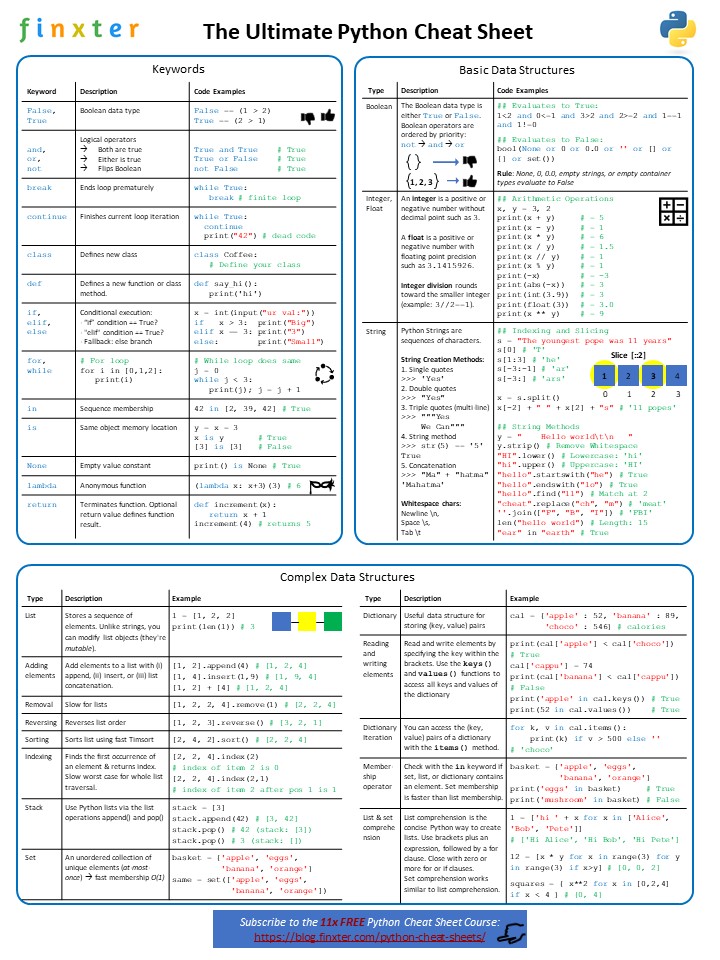
An excellent way to start learning Python is through Python cheat sheets. They focus on the relevant parts and introduce the most important concepts in the shortest possible time. Here’s such a Python cheat sheet for you:
You can download this and more cheat sheets in my interactive Python email course (that’s also 100% free). Check it out for continuous improvement in Python by reading a series of course email lessons I’ll send you into your INBOX. Free Python cheat sheets are included!
Bootstrap Contact Form with JavaScript Validation and PHP
Last modified on September 7th, 2020.
Bootstrap is the most popular solution to design an optimum, intuitive, mobile-ready UI components. It is easy to integrate the Bootstrap library for the application interface.
Often, many of my readers ask for a Bootstrap contact form code. So I thought of creating a basic example for a Bootstrap enabled PHP contact form.
Bootstrap provides in-built features to take care of UI responsiveness, form validation, and more. I used its SVG icon library to display the contact form fields with suitable icons.
A Bootstrap contact form looks enriched. UI attracts people and enables them to use it with ease. Also, the developers’ effort is reduced by using the Bootstrap framework.
A contact form collects a different type of user details like name, message and more. There are various popular templates for contact forms.
I have created various PHP contact form examples. And those form templates uses my own custom CSS.
Though it is straight forward to go with custom CSS, designing with Bootstrap gives irrefutable offer.
Bootstrap provides full-fledged styles to create various types of form layout. It includes more of element-specific, attribute-specific forms styles.
With a Bootstrap contact form, the responsiveness, the cross-browser compatibilities are an easy deal.
If you already use the Bootstrap framework, then also it would be natural not to choose the custom CSS UI option.
For a simple example to prepend icons to form inputs without Bootstrap needs a bunch of CSS and media queries. But, with Bootstrap it has input-group selector to achieve this.
In case if you want to render a thin, primitive contact form, then custom CSS is preferable.
Most of the contact forms have the name, email, subject, message fields. Some times it varies based on the applications’ purpose.
For example, site-admin may merge the user feedbacks and inquiries entry points. In such cases, the contact form may have a radio option group to choose between feedback and inquiry.
In a way, contact forms become complex in positioning fields, giving fluidity and more aspects.
Bootstrap supports a variety of layout options to create even a more complex form. Based on the complexity of the contact form layout, the Bootstrap is even dependable.
About this example
This example uses rebooted form styles with classes to create a Bootstrap contact form. It makes this form UI responsive and consistent in all browsers and viewports.
It includes a default contact form having vertically stacked form controls. Each form-control has a prepended icon suitable to the contact input. I downloaded the Bootstrap SVG icon library to have such icons.
The form validation with a plain JavaScript simplifies the effort of loading any external libraries.
In PHP, it handles the posted data for sending them via a contact email. Also, it stores the data into a database table if any. It is optional and can disable in code.
This code uses a simple PHP mail() function for sending the emails. In a previous example, I have added how to send email using Gmail SMTP. Replace the simple mail() function with the one using PhpMailer via Gmail SMTP.
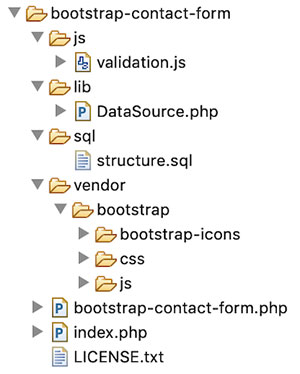
File Structure
The contact form code is a small integrative component of an application. This example contains a very minimal code of having a Bootstrap contact form.
The vendor directory includes the Bootstrap CSS and icon library.
The bootstrap-contact-form.phpfile contains the contact form HTML template. The landing page renders the contact form by including this template.
This section shows the Bootstrap contact form HTML code. This HTML shows a default vertically stacked contact form fields.
The Bootstrap form grid styles and CSS provides options to display a horizontal form.
In the below HTML, each form element is in a form-group container. It groups the form element label, form controls, validation and help-text properly.
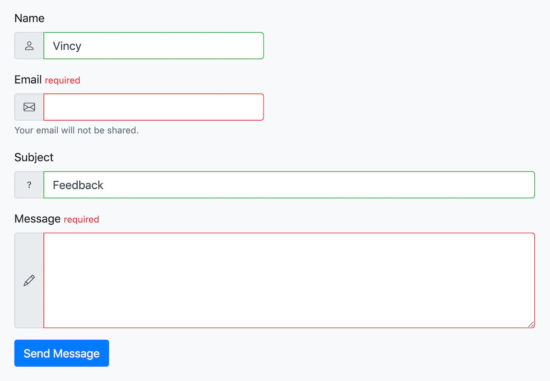
The Email field has a help text that displays a note spaced as text-muted.
The input-group specific styles help to display icon-prepended form controls. These icons are from the Bootstrap SVG icon library.
The above HTML template imports the Bootstrap CSS from the vendor location.
After submitting the contact details, users will receive an acknowledgment message. The bootstrap success alert box displays a positive response on successful mail sending.
All the fields are mandatory in this Bootstrap contact form example.
The js/validation.js file has the validation script. On the window load event, this script sets the submit event listener to check the form validity.
Once it found invalid form fields, it will prevent the form to submit. Added to that it will add Bootstrap custom validation styles to highlight the invalid fields.
It adds the .was-validated class to the parent form element. It highlights the form fields with respect to the:valid and :invalid pseudo-classes.
Apart from the red-bordered invalid field highlighting, the script displays a text-based error message. The setValidationResponse() checks the form data and insert the error message into the target.
This custom function invokes markAsValid() and markAsInvalid() to show the error messages. These functions set the element’s display property and the innerText.
js/validation.js
(function() { 'use strict'; window.addEventListener('load', function() { var form = document.getElementById('frmContact'); form.addEventListener('submit', function(event) { if (form.checkValidity() === false) { event.preventDefault(); event.stopPropagation(); setValidationResponse(); } form.classList.add('was-validated'); }, false); }, false);

})(); function setValidationResponse() { var emailRegex = /^([a-zA-Z0-9_.+-])+\@(([a-zA-Z0-9-])+\.)+([a-zA-Z0-9]{2,4})+$/; var userName = document.getElementById("userName").value; var userEmail = document.getElementById("userEmail").value; var subject = document.getElementById("subject").value; var content = document.getElementById("message").value; if (userName == "") { markAsInvalid("userName", "required"); } else { markAsValid("userName"); } if (userEmail == "") { markAsInvalid("userEmail", "required"); } else if(!emailRegex.test(userEmail)) { markAsInvalid("userEmail", "invalid"); } else { markAsValid("userEmail"); } if (subject == "") { markAsInvalid("subject", "required"); } else { markAsValid("subject"); } if (content == "") { markAsInvalid("content", "required"); } else { markAsValid("content"); }

} function markAsValid(id) { document.getElementById(id+"-info").style.display = "none";

} function markAsInvalid(id, feedback) { document.getElementById(id+"-info").style.display = "inline"; document.getElementById(id+"-info").innerText = feedback;

}
This section is something common in all of my contact forms example. But, this is important for which we have started.
In this example, it has support to store the contact form data into a database. But, it is optional and configurable in the coding.
The PHP code has a variable $isDatabase which may have a boolean true to enable the database.
structure.sql
--

-- Database: `bootstrap_contact_form`

-- -- -------------------------------------------------------- --

-- Table structure for table `tbl_contact`

-- CREATE TABLE `tbl_contact` ( `id` int(11) NOT NULL, `user_name` varchar(255) NOT NULL, `user_email` varchar(255) NOT NULL, `subject` varchar(255) NOT NULL, `message` varchar(255) NOT NULL

) ENGINE=InnoDB DEFAULT CHARSET=latin1; --

-- Indexes for dumped tables

-- --

-- Indexes for table `tbl_contact`

--

ALTER TABLE `tbl_contact` ADD PRIMARY KEY (`id`); --

-- AUTO_INCREMENT for dumped tables

-- --

-- AUTO_INCREMENT for table `tbl_contact`

--

ALTER TABLE `tbl_contact` MODIFY `id` int(11) NOT NULL AUTO_INCREMENT, AUTO_INCREMENT=1;
The below code shows the backend logic created in PHP for handling the posted data. This code has the default PHP mail() function to send the contact details.
index.php
<?php

use Phppot\DataSource; if (! empty($_POST["send"])) { $name = $_POST["userName"]; $email = $_POST["userEmail"]; $subject = $_POST["subject"]; $message = $_POST["message"]; $isDatabase = false; if ($isDatabase) { require_once __DIR__ . "/lib/DataSource.php"; $ds = new DataSource(); $query = "INSERT INTO tbl_contact (user_name, user_email, subject, message) VALUES (?, ?, ?, ?)"; $paramType = "ssss"; $paramArray = array( $name, $email, $subject, $message ); $ds->insert($query, $paramType, $paramArray); } $toEmail = "phppot@example.com"; $mailHeaders = 'From: webmaster@example.com' . "\r\n" . 'Reply-To: ' . $name . '<' . $email . ">\r\n" . 'X-Mailer: PHP/' . phpversion(); $mailHeaders = "From: " . $name . "<" . $email . ">\r\n"; // if lines are larger than 70 chars, then should be wrapped $message = wordwrap($message, 70, "\r\n"); // your PHP setup should have configuration to send mail $isValidMail = mail($toEmail, $subject, $message, $mailHeaders); if ($isValidMail) { $displayMessage = "Message sent. Thank you."; }

}

require_once __DIR__ . "/bootstrap-contact-form.php";
After setting $isDatabase to true, configure the database details in this class to connect the database for the contact form action.
Feature: Nintendo Life eShop Selects – August 2020
With August now but a distant memory thanks to the deluge of Super Mario announcements last week, it’s time to take a look back some of the great games that launched on Switch over the previous month in the latest edition of Nintendo Life eShop Selects.
These awards aim to celebrate the best of Nintendo’s digital store, giving some love and attention to the games that could so easily be missed in the Switch’s ever-growing library.
So, let’s get started. Here are the best Switch eShop games of August 2020!
Honourable Mentions:
While these titles didn’t quite make our top three this month, they’re still certainly worth checking out.
Publisher: PQube / Developer: Stone Lantern Games
Release Date: 18th Aug 2020 (USA) / 18th Aug 2020 (UK/EU)
In third place this month is Evergate, a beautiful puzzle-platformer that dropped without warning on the eShop following the Indie World Showcase and took us totally by surprise with its “delightfully clever level design, pixel-perfect platforming, a beautiful art style and sumptuous orchestral score”.
We very much enjoyed its balance of satisfying, challenging puzzle-platforming and touching story in our review, so if you’re looking for something that looks, sounds and feels brilliant, Evergate fits the bill.
We spoke to the developers behind the game at the start of the month, so check out our interview with Stone Lantern to find out about its journey to Switch.
Publisher: Thunder Lotus Games / Developer: Thunder Lotus Games
Release Date: 18th Aug 2020 (USA) / 18th Aug 2020 (UK/EU)
Coming in second this month (just!) is Spiritfarer, another gorgeous indie offering. This one has you ferrying souls to the afterlife and hearing stories along the way while engaging in some light platforming.
In our review we highlighted the beautiful animation, charismatic writing and the way it takes “a resolutely positive look at the heavy, heavy subject” as particular standouts, but there’s much to like about Spiritfarer, and it’s sure to stick in your memory for a long time if you give it a chance.
Publisher: Whippoorwill / Developer: Adam Robinson-Yu
Release Date: 18th Aug 2020 (USA) / 18th Aug 2020 (UK/EU)
And in first place, it’s the game which flew in and stole our hearts away from an impressive bunch of indie suitors this month. A Short Hike is just the brand of restorative experience we needed, and a real breath of fresh air. We called it a “landmark game for the ages” in our review, commenting on its impressive level of polish and refinement, its perfect controls and delightful visuals as particular highlights.
We awarded it a rare Nintendo Life 10/10, so if there’s only one game you pick up from the fine selection of August 2020’s indie offerings (and we’d urge you to pick up more than one if at all possible!), we’d add A Short Hike to your list. Lovely!
How we decide our eShop Selects top three: As we reach the end of every month, the Nintendo Life staff vote on their favourite titles from a list of games selected by the editorial team. To qualify for this list, these games must have been released primarily as a digital Nintendo Switch eShop title in that particular month, and must have been reviewed on Nintendo Life; we select the qualifying games based on their review scores.
Staff are then asked to vote for three games that they think deserve to sit right at the very top of that list; first choice gets 3 points, second choice gets 2 points, and third choice gets 1 point. These votes are then tallied to create a top three list, with the overall winner taking that month’s top prize.
Shenmue Is Getting Turned Into Anime Series, Inclusion Of Forklifts Unclear
Hand-to-hand combat and plenty of forklift action are coming to Crunchyroll. The cult-favorite Shenmue game series is getting turned into an anime series with original creator Yu Suzuki serving as executive producer.
Announced during the Virtual Crunchyroll Expo on September 5, the Shenmue anime series is a collaboration with Adult Swim and will be directed by One-Punch Man's Chikara Sakurai. The 13-episode series doesn't have a release date yet, but Shenmue fans are used to waiting a long time.
After the original two games released on Dreamcast, it took another 18 years to get Shenmue 3. That likely only happened because of a Kickstarter campaign that still stands as the biggest ever for a video game, attracting more than $6 million in donations. The game took nearly two years longer to develop than was initially planned and didn’t perform particularly well outside of its Kickstarter campaign sales.
It’s hard to believe, but we’ve entered the month of September. This year has felt like one of the longest, yet shortest I’ve ever experienced. Things have felt somewhat challenging, but numerous voices in our community inspire us to take on the day with a positive attitude. This week, we’d like to focus our spotlight on someone who’s dedicated to bringing smiles to the community and helping us all find our footing on the way to new goals.
Meet: King Allan
Hello, and welcome to Community Focus! Tell us a bit about yourself, and how you came to the Destiny community.
King Allan: My name is Allan. I’m 28 years old and from India. I came to know about Destiny while wandering through a gaming hub and catching a glimpse of someone on the character creation screen. My love for the game began there and it brought me into the Destiny community.
Humble beginnings, as many Guardians have. Something that stuck out when first catching your stream was your support of various players and content creators in the community. We noticed you’re on a “stream team” for Gladd. What’s that all about?
King Allan: I’m grateful to be a part of the team. It was Gladd’s faith in me that pushed me to think that this was a possibility. The team was created to support people who were pushing for partnership on Twitch. This helped me meet a lot of people and form new friendships along the way. I’m also a part of “Team Ahamkara” which is run by TheBonj. They treat each other like family and have been very welcoming from the get go. I can’t wait to see where the stream teams take me and I’m excited for the journey ahead.
As people grow within the community, what do you think is the most important thing to keep in mind when streaming or meeting new players?
King Allan: Don’t forget where you came from. Surround yourself with positive, uplifting and motivational people. Never be silenced and never silence others. The most important thing is that you’re AUTHENTIC and KIND to everyone regardless of your differences in opinions.
As long as people feel like they can approach me at any time and look at me as a friend, then I’m on the right path. This is my general outlook on life and streaming.
Since I started streaming my vision to build a community of people who treat each other right hasn’t changed but my goals have consistently changed because of the overwhelming support that’s been shown to me. I would love to have a platform where I can shine a light on like-minded people, but that takes time and I’m in no rush as I love the journey more than the destination.
That is one of the best ways to think about it really. The things you learn and people you meet while achieving dreams are what count! Let’s shift focus a bit. When hopping on Destiny, what do you normally find yourself doing? Hopping in Crucible, guiding players to the Lighthouse, anything else?
King Allan: I love PvP and PvE. I help with any endgame PvE activities that people need help with, but I do enjoy clicking heads in PvP. I just want to get lost in the game and have a good time. It doesn’t matter what we’re doing as long as the company is good. However if it’s patrols, I’m switching to solitaire and playing alone.
When it comes to loadouts, what are your favorite weapons, Exotics, and subclasses?
King Allan: I’m a Titan main who loves Hunters. … The other class doesn’t count. My loadouts are weird and people who watch me find it entertaining. When I do PvP, you can always find me running with a Revoker and Mindbenders at the same time. This confuses people and I love it. My favorite Exotic has always been Riskrunner and I feel like it doesn’t get the credit it deserves. The real question here is, “What’s the best exotic in D1 and why is it Twilight Garrison?” Please bring it back, thanks. My Favorite subclasses are Code of the Juggernaut (PvP) and Code of the Commander (PvE). However, Behemoth definitely has piqued my interest and you may see me crashing like an avalanche soon.
After playing Warlock in Grandmasters for the last few weeks, I have to call out their utility in tough situations. May be worth giving them another chance! So, if someone wanted to catch your streams or subscribe to your voice, where should they go?
Any other words of wisdom for the community before we wrap things up?
King Allan: “Use your smile to change the world, Don’t let the world change your smile.” This is one of my favourite couplets and it speaks volumes. Just smile through everything and you’ll see that the world around you changes.
Many thanks for stopping by. Voices like yours keep our heads above water during trying times. We’ll catch you again out there in the wild.
If you have any recommendations for a future Community Focus, feel free to send them our way! Bungie.net, Twitter, or wherever you find us on social media. Tell us who inspires you, and we’ll pass them the mic.
Drake Hollow is Available Now on Xbox One and Xbox Game Pass
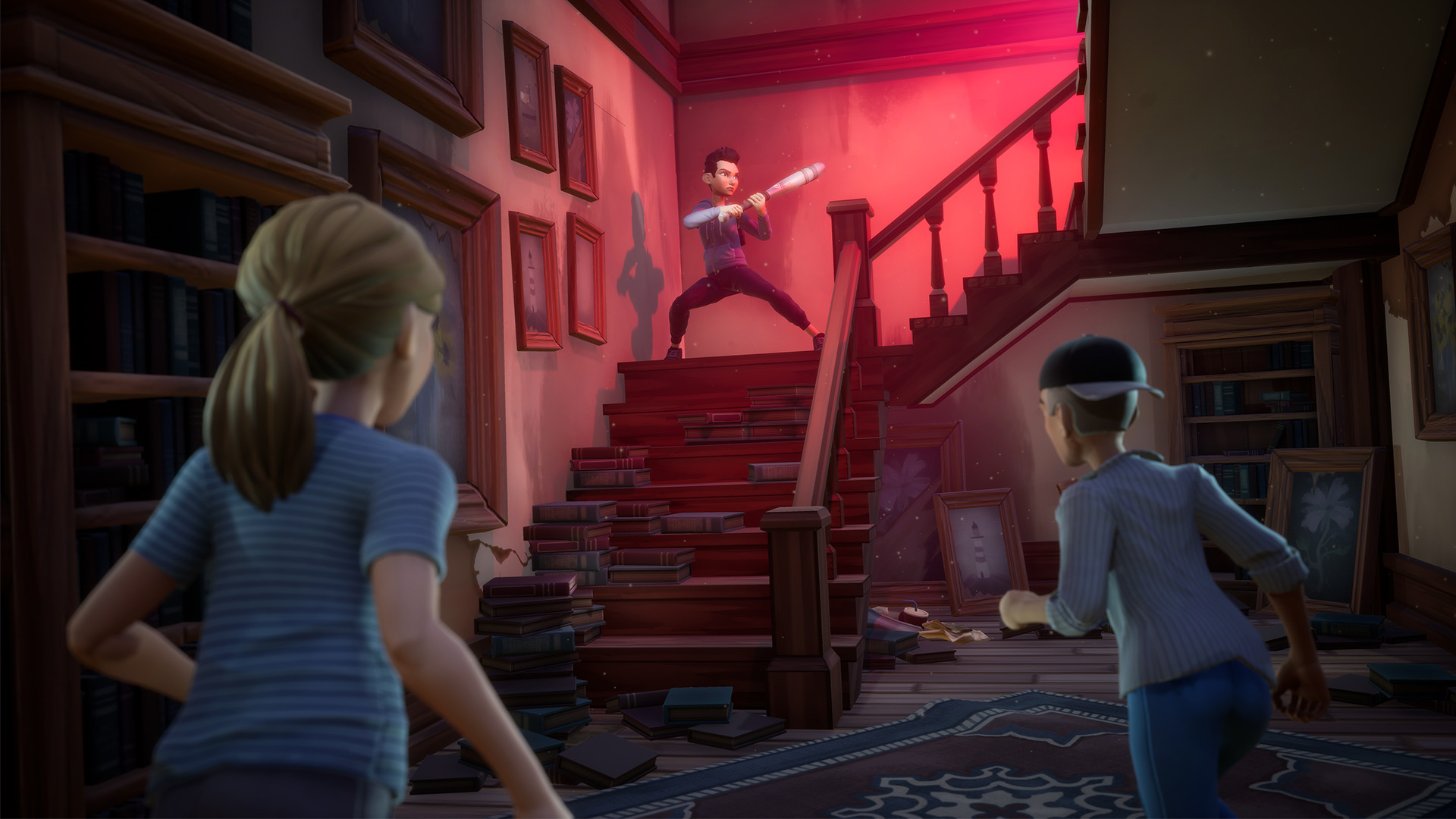
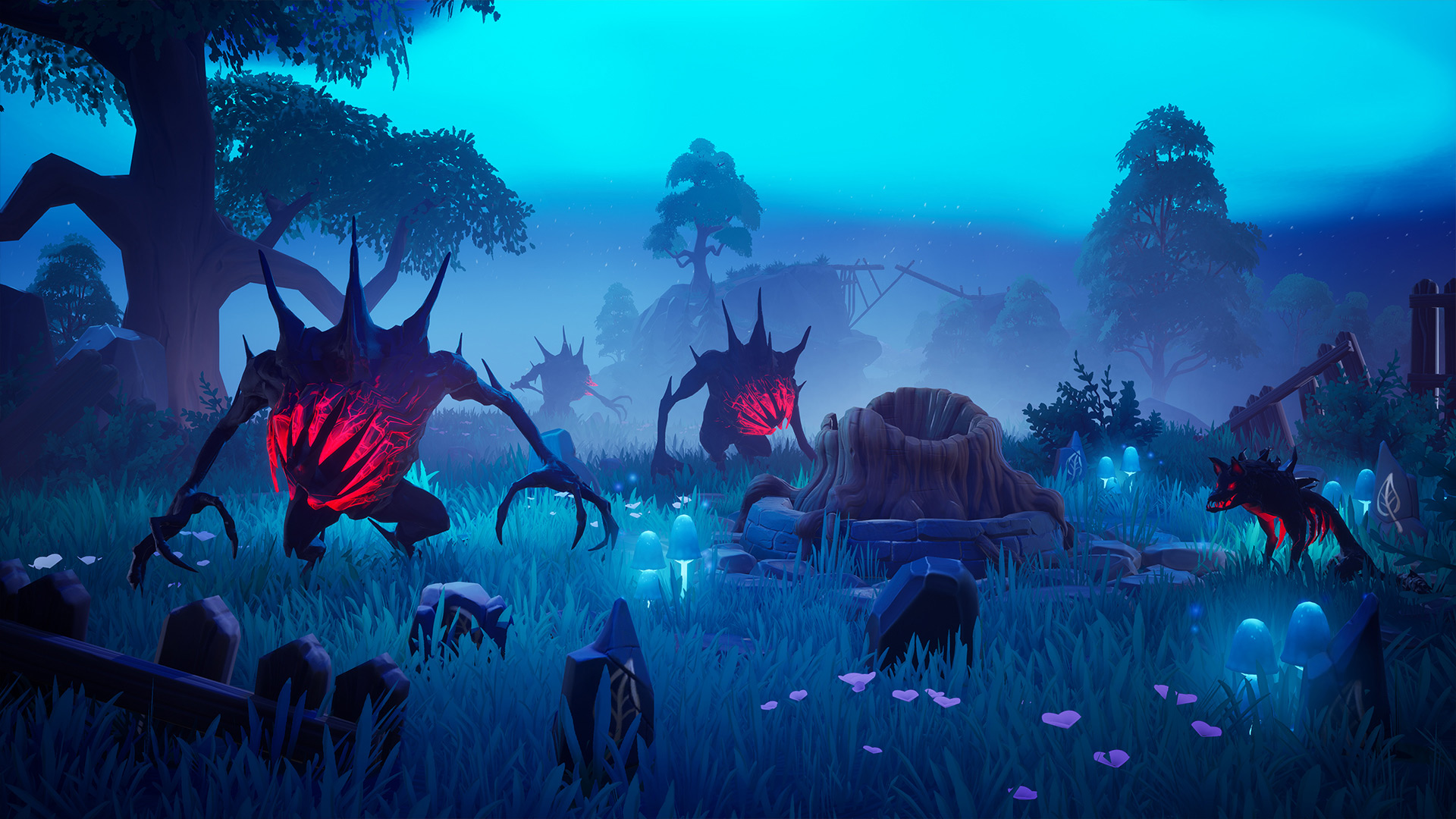
I’m happy to share the news on behalf of our studio, The Molasses Flood,that our latest game, Drake Hollow, is finally here. Starting today, you can travel to The Hollow and begin your adventure on Xbox One. This is our newest title, following our studio’s debut release of The Flame in the Flood. And while we’re continually committed to our mission of consistently creating enthralling experiences with tons of heart, you’ll see Drake Hollow heads in a different direction from our first title, with plenty of mysteries up its sleeves.
Drake Hollow is an action village-building game you can play either solo or with friends, and it all takes place in the world of The Hollow – a blighted, mirror of our own world. You’ll quickly realize why you find yourself there (you’ll have to play to find out…), and that the local vegetable folk, the Drakes, need your help. Think of them as lovable, plant goblins. Protect the Drakes while exploring a poisonous, aether-swept landscape of islands for supplies to craft, build and defend your camp. Defending is key. Hordes of feral beasts – real nasties – are out to attack your village of Drakes, and also you. Utilize a unique spread of weapons from tennis rackets, to weed sprayers, to a good ol’ chair leg.
Be prepared for surprise attacks and ambushes while out exploring for essentials. And keep your eyes peeled for other hidden surprises… who knows what, or who, you’ll run into. Mysteries and rewards (as well as all that danger we just talked about) await those curious enough to search every nook and cranny of The Hollow. Your Drakes are hungry, thirsty, and need a place to sleep. They can also – quite literally – die of boredom. Explore the wilderness, set up valuable supply networks to send essentials back to camp (or rail grind on, whatever you’re into), all while keeping your Drakes entertained and happy – think bouncing yoga balls and puppet shows. Continue the fight and eventually, you’ll unravel the peculiar and ancient connection between what lies in The Hollow and our own world back home.
We can’t wait for you to dive in, and hope you enjoy your time in The Hollow.
The Molasses Flood’s Drake Hollow is now available on Xbox One for digital purchase or through Xbox Game Pass. Coming soon to Windows 10 and Steam.
The following blog post, unless otherwise noted, was written by a member of Gamasutras community. The thoughts and opinions expressed are those of the writer and not Gamasutra or its parent company.
One thing I always love to see in an RTS is when its game maps, or at least portions of them, are able to evolve over time in reaction to the actions players take. To a lesser extent, I also enjoy seeing maps which change over time without player input, to force players to adapt to changing situations and threat profiles, but I feel that has less of a solid case in competitive games.
In many RTS games, especially many of the the classic franchises, game maps are largely static. They may become denuded of resources (like trees) over time, which opens up new movement options to target enemy holdings, but in most cases this is not a major tactical consideration across most competitive matches in those games.
There are tactics and strategy games, however, where the map itself is able to be modified by players in a variety of ways: opening up new attack paths or closing them off, changing which areas of the map players care about and want to contest, or removing options from players in specific geographic areas.
A screenshot from the Steam version of Z which shows what cliffs look like. The blue tank at the top of the image is shooting cliffs to destroy them so that it can pass through.
The oldest game where I remember seeing what I’m calling a ‘dynamic map’ is Z, the retro tactical robot game by Bitmap Brothers. In that game, there are cliffs which block traversal by units (see screenshot above). Infantry can take down the cliffs by throwing grenades at them, which of course depletes the limited supply of those valuable pick-ups. Tanks can also fire on cliffs to destroy them. The presence of destructible cliffs might not have had an outsized impact on the game’s design, but it certainly did on my imagination as a kid.
Some Additional Examples Relic’s RTS games are more recent examples of games with dynamic map elements. In Dawn of War 2 and Company of Heroes 2, some higher tier units are capable of crushing terrain and cover underfoot or under tread, and some weapons hit hard enough to create craters that can themselves provide cover. Additionally, in these games, when vehicles die they remain behind on the map and can be used as cover or destroyed entirely. Over time in these games, the map devolves into something else, devoid of cover for infantry, covered in craters and the smoking wrecks of tanks and halftracks.
Large units, like the Carnifex, are able to crush map elements by walking through them
While not seen ranked multiplayer any more, Company of Heroes 2 also launched with weather effects on the game map, where at irregular intervals blizzards would occur, freezing water, creating snow drifts which would slow down infantry, and creating hostile environments where infantry would die without access to a heat source. Some weapons, such as flamethrowers, could melt the snow. This wasn’t so much driven by player action, but did force interesting reactions from players in terms of preparing for the blizzards and how the game worked during and even after them. Clearly it wasn’t a widely popular system, since it ended up being removed from the multiplayer experience.
Additionally in Company of Heroes 2, explosives and some weapons are able to destroy ice under troops and tanks, instantly killing them by submerging them in the frigid water underneath. This occasionally has a dramatic effect in winter maps, in addition to changing how units are forced to move while on ice (to avoid holes in the ice). I believe during blizzards, ice could re-freeze as well, creating a cadence of changes as ice was destroyed and re-frozen.
Tanks breaking through the ice in Company of Heroes 2 is one of my favorite examples of dynamic map interactions
Supreme Commander has a slightly different take on this: In SupCom, when units die, they leave behind a wreck that can be salvaged for resources, seeding the sites of battles with valuable income for whomever reclaims it. This doesn’t change the map itself as much, but does change how players interact with the map and which parts of it might be the most valuable to hold or contest.
Company of Heroes games, and now Iron Harvest, have a similar idea in that when units die they drop either the weapon they’re crewing, or a weapon they’re carrying that then any other infantry squad can appropriate. This allows for both tactical flexibility (since players are able to gain squad types on the fly) and a transfer of resources from one player to the other, since the weapons all cost resources and a player can gain a tool paid for by their opponent at no cost. Actually, C&C 3 does this as well with some vehicles dropping wrecks that can be re-crewed by engineers for quick access to a new unit.
Company of Heroes 2 goes farther with this than any other game I can think of (including C&C3) with de-crewed tanks having the ability to be captured by other players. Since tanks are so powerful and expensive, scoring one off of an opponent is a major gain. I consider these dropped weapons and crew weapons and tanks to be ‘dynamic map elements’ in exactly the same way that I consider dead units in Supreme Commander to be such: they’re free resources that occur in locations on the map that are the result of combat between players, that can advantage either player/team and cause those areas of the map to become temporarily tactically or strategically important, to say nothing of dead vehicles becoming cover for infantry in these games.
I actually really like Supreme Commander’s approach, and have implemented a similar system in my personal game project: SCRAP mod. In SCRAP, when units die, they decay into resources after spending 3 minutes as a burning wreck, giving players time to jockey for control of those resources before actually being able to mine them.
When units like the Aeon Illuminate’s Czar die, they create obstacles to unit movement that are also valuable sources of income for either player, creating an area of high value on the map that didn’t previously exist
Even StarCraft 2 and Grey Goo have dipped their toe a bit into maps that can evolve over time with the addition of rocks that block certain map access points; and, in StarCraft 2’s case, pillars which can be destroyed to block off access to areas of the map with debris that can itself be destroyed to open up the path again.
Going into Detail about ‘Terrain’ In most cases, implementations of dynamic map elements are mainly focused on how units traverse the game space. Destructible bridges are a good example of this – in several of the Command and Conquer games, Engineers are capable of re-building bridges by entering a designated structure at either end of the bridge.
Also in most cases, the majority of actions players can take is to remove said dynamic map elements from the game. There’s a lot of crushing and burning and demolishing that goes on, and not a lot of growing or shoring up.
Builder units in Earth 2150 can modify map terrain to make bridges, walls, ditches, and more.
I need to be careful here: I’m specifically using the term “dynamic map elements” instead of “dynamic terrain” because in almost no case is the actual terrain of the map able to be modified. If there’s an impassable cliff, it remains a cliff for the duration of a match. By contrast, a ‘dynamic map element’ is in some ways similar to a player-produced structure: it’s something that cannot move, that can be destroyed, but in the case of a dynamic map element it also serves some tactical purpose in the game but can be utilized by either/any player. Alternately, such ‘map elements’ might be an indirect (to me, it’s important that the reaction be indirect!) result of player action: a dead vehicle turning into a wreck, or a heavy attack leaving a crater, that sort of thing.
Why is it important to me that dynamic map elements be created as the result of indirect action? That’s a really good question. I think, ultimately, it’s because at that point both/all players must react to the changing battlefield as opposed to having the players prepare a changing battlefield to force their opponent to react in order to deal with. I wrote a while ago about categories of action in strategy gaming, and I feel that strategy games have tended to have a sufficient amount of preparatory actions in them (e.g. actions that players build up over time in order to give themselves an eventual leg up in the game) and game maps in particular remain pretty static over the course of any competitive multiplayer match, unless dynamic map elements are present. Adding reactive elements to the map, to me, is a positive thing. Gotta keep players on their toes.
Some games, such as Earth 2150 and, more recently, Zero-K, do allow for a more free-form modification of terrain itself: making mountains, bridging chasms, digging ditches, that sort of thing.
In Zero-K, terrain manipulation can be a pretty big deal
While really fascinating, I’m not fully convinced that competitive strategy games are always made better by providing players with unlimited freedom to modify the terrain of a map. In Earth 2150, for instance, I rarely if ever made use of the terrain modification tools for any reason.
Of course, Earth 2150 is admittedly an example of ‘kitchen sink’ design: players design their own units, the game has a ‘picture in picture’ mode where the player can watch multiple areas of the map simultaneously, there’s a system for digging and moving units around in underground tunnels on a separate layer of the map… the list goes on. Zero-K is probably the RTS that I can think of which takes terrain modification most seriously. There are tactical and strategic elements to the game’s terrain management system that interest me, even if I haven’t played much of the game yet.
I tend to be more in favor (personally) of game systems that are clearly defined and constrained, while still allowing for deep and complex interactions between units. I tend to be a bit wary of more freeform systems, including ‘design your own units’ type systems in games. I find that it’s often easy to find ‘optimal’ builds in those systems that actually have a smaller number of viable builds/strategies than games with pre-defined systems and also that they’re also ultimately too much complexity buying too little depth, with the added risk of that complexity actually damaging emergent gameplay where it’s trying to foster it instead.
I would like to be 1000% clear here: I’m not saying that I’m against full terrain manipulation in RTS games. I’m just saying that I’m skeptical of it and have yet to be convinced either way. I may report back once I get more hours into Zero-K as to the results of that experience.
While admittedly more binary, I tend to prefer things like how bridges work in (most) C&C games. They can be destroyed by units (killing anything on the collapsing bridge) and rebuilt by an Engineer going into the bridge’s associated control tower. This gives both player a lot of say over when, and how, bridges exist on a game map. Something like bridges or destructible buildings/other terrain objects (like cover in DOW2) to me feels a lot more interactive and straightforward to grok to me than something more nebulous like more general terrain manipulation.
I’m a pretty big proponent of clarity in terms of game systems (you might find this hard to believe if you’ve played my personal mod project, but I digress). And, to me, concrete objects on the map like buildings, rock to hide troops behind, trenches… these are things that a player can understand and interpret clearly. The lip of a crater will protect your troops from incoming fire; holing up in a building will do the same. Setting the building alight to prevent the enemy from using it or to destroy a bunch of enemies holed up inside, well… that’s a pretty clear interaction too.
Wrapping it Up There’s definitely cases that can be made both in favor of, and in opposition to, both what I’m calling “dynamic map elements,” “dynamic terrain,” and traditional static RTS maps. Competitive purists: those that mostly play Age of Empires 2 or StarCraft 2, tend to appreciate the relatively limited rough edges that maps provide that get in the way of the expression of their skill and competitive drive. There’s not much in a Brood War map that’s going to mess with a player’s expectations of how different encounters are going to go, for instance, or the parts of the map that are going to matter over the course of a match.
In Command and Conquer Remastered, however, the presence of Tiberium on the map can have some impact (this is more true in Tiberian Sun, where Tiberium regenerates faster and can be more lethal). In the older games, players don’t have much option to control where Tiberium is, but as the maps clear out of Tiberium, they become much safer for infantry to traverse, which can have some impact on the progress of an individual match.
So, to me, the biggest con for dynamic map elements is that they might not fit into the game based on the overall design goals. Though again: even StarCraft 2 has managed to find limited expressions of this sort of thing in the form of destructible debris.
Ultimately, I think it’s a great thing to have dynamic elements on the game map, whether it’s as simple as rocks that block paths, which can be destroyed to open them up, or whether it’s more complex like defensive tools that can serve either player, and be destroyed by abilities (like grenades). When the map responds to player action, it creates emergent depth in the game by giving the players new areas of the map to fight over (whether it’s for resources, or for actual weapons of war to steal from their opponent), or creating new ways to react on certain areas of the map by removing or adding defensive options, or new approaches to dealing with their opponents.
On average, I feel like it would be good for maps in RTS games to feel more like a living place and less like a static game board. They should evolve based on player actions, with crashing helicopters digging up turf, buildings burning down, walls crumbling as shots or vehicles pass through them. I ultimately like this for mechanical/systems reasons, but I imagine it would also be cool visually.
What do you think about the topic of dynamic map elements? Should maps be more static, like in StarCraft, or should they evolve more like in Relic’s RTS? Is more freeform terrain manipulation like Zero-K or Earth 2150 better, or going too far?
3D Realms Announces Spiritual Successor To Hexen 2, Arriving On Switch In 2021
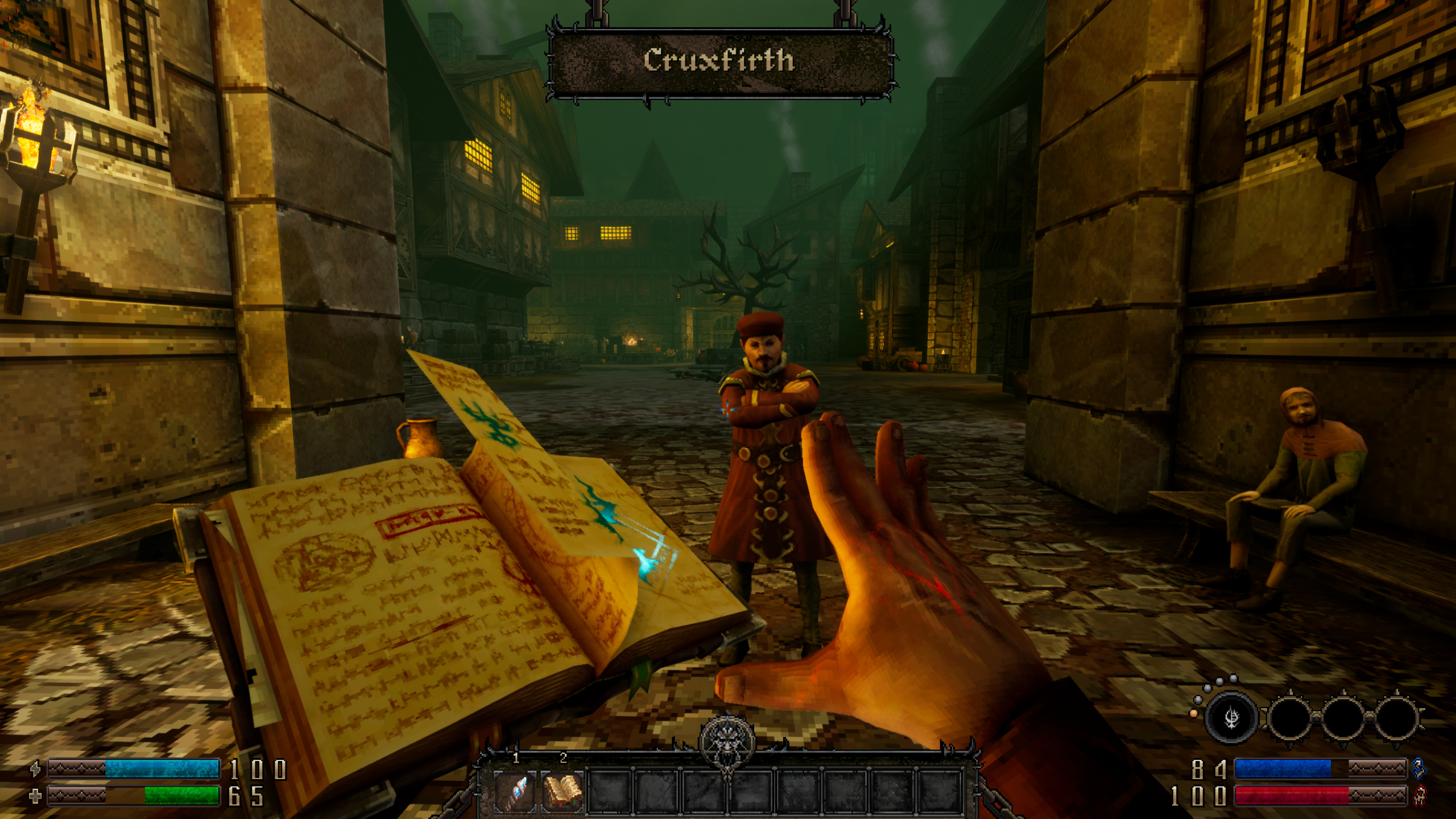
Remember the 1997 FPS Hexen II? Well, here’s it’s spiritual successor, GRAVEN – coming to Switch next year.
The game premiered this weekend at Realms Deep 2020 – 3D Realms’ digital weekend celebrating all-things FPS. It combines the Hexen series’ dark-fantasy gameplay with action-adventure.
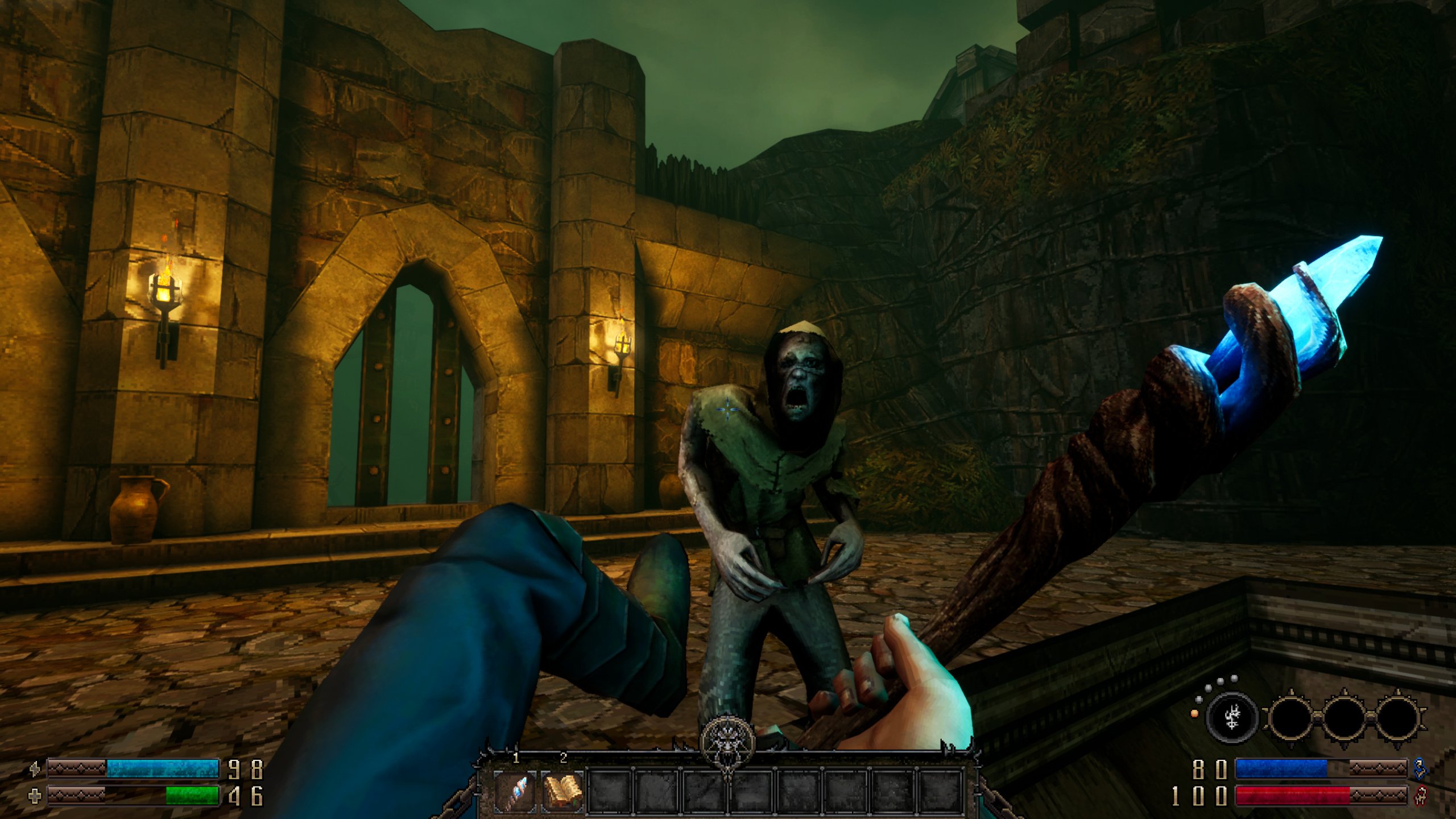
You’ll take up the mantle of a disgraced Priest in a medieval world where all sorts of monstrosities roam free, as you root out the heretics corrupting the brotherhood and help commoners with their woes.
There are more than 30 upgradable weapons and spells, three expansive open-ended regions and you can even team up with a friend in split-screen co-op, or form a party of four online.
Here’s the full press release along with some screenshots and an extended look:
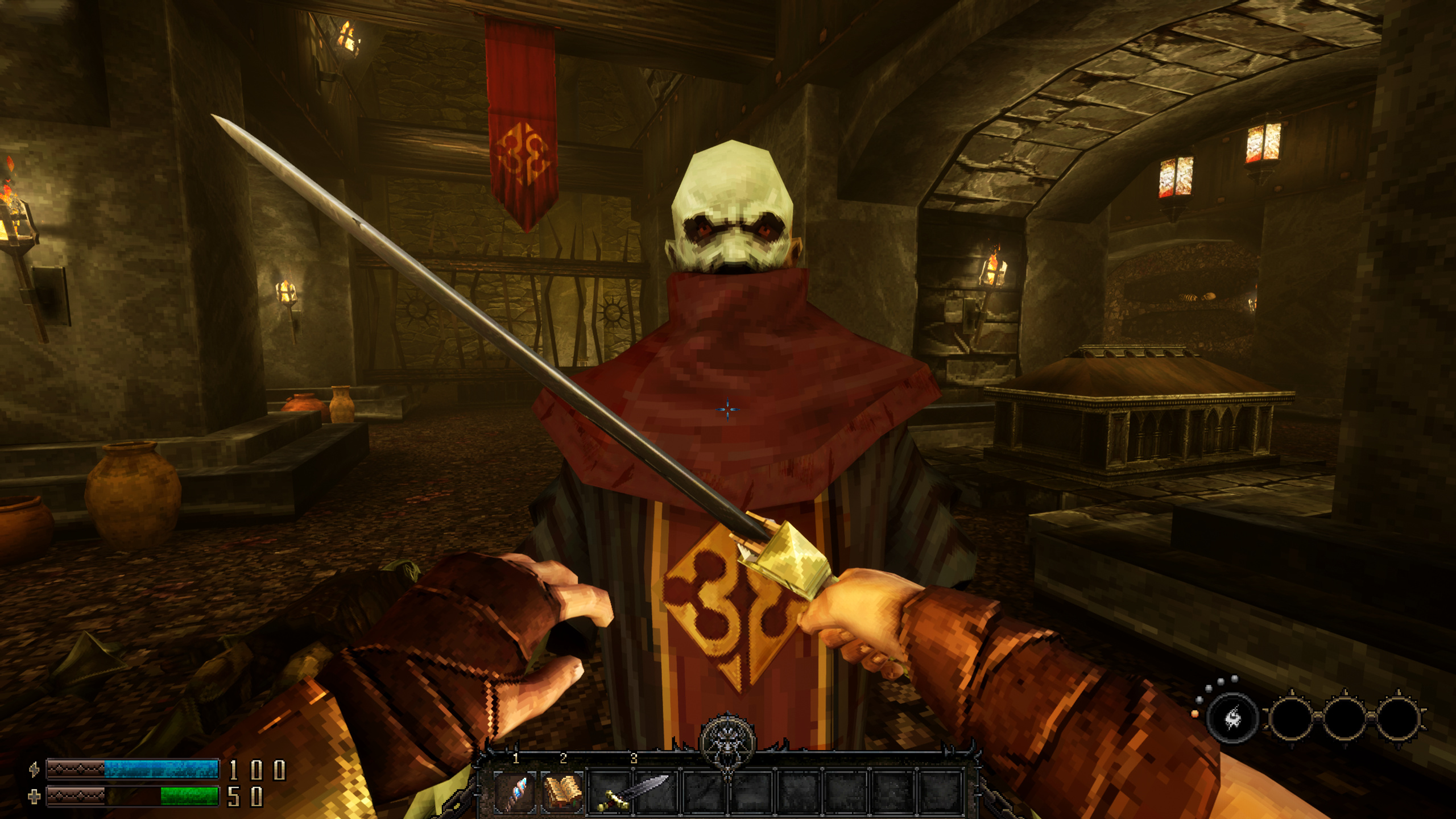
GRAVEN delves into a gruesome medieval world of deities and monstrosities as a disgraced Priest of the Orthogonal Order. When a heretical member of the Order sacrifices the Priest’s adoptive daughter, the Priest lethally retaliates in a bout of righteous fury. Tried and found guilty by his brothers and now exiled to the burning sands, he closes his eyes for one last prayer, for peace. The Creator speaks to him directly: “You will have to earn your peace.”
Heed the Creator by hunting down the foul heretical sects responsible for conjuring plagues and twisting the natural order of the seasons. Blending action, exploration, and puzzle-solving, GRAVEN takes cues from classic shooters, immersive sims, and action RPGs alike. Journey across three expansive, open-ended regions, and scour the lands to purge evil.
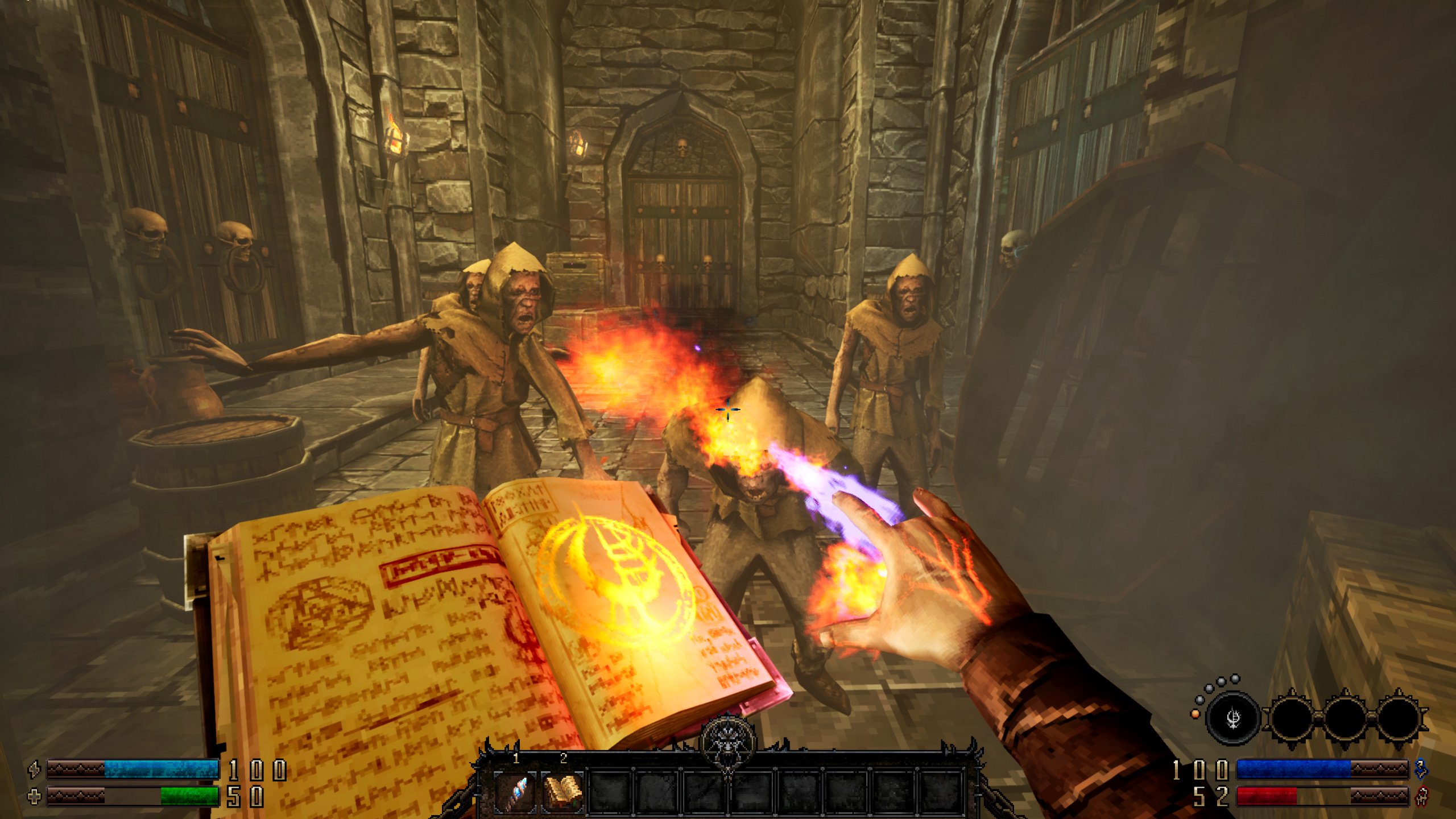
Carefully observe a reactive world to find the way: with a journal, the player drives the exploration instead of following waypoints. Listen to townsfolks’ woes and slay the monsters responsible for their torment. Banish over thirty distinct enemies from plagued madmen to swamp beasts with powerful sorceries such as wild blasts of lightning and scorching rays of flame. Solve environmental puzzles with those same powers, altering the world with spells.
Wield destructive conventional weaponry, including magic staves and wrist-mounted crossbows. Find hidden gold to upgrade weapons and spells at blacksmiths and alchemists. Return to previously-plundered areas with new abilities to uncover secrets and entirely new areas. With more than 30 weapons and spells, GRAVEN encourages experimentation. Play solo, with one friend in split-screen co-op, or even in a party of four online for complete arcane chaos.
Does this look like your kind of game? Tell us in the comments below.



 .
. 



















 I’m a pretty big proponent of clarity in terms of game systems (you might find this hard to believe if you’ve played my personal mod project, but I digress). And, to me, concrete objects on the map like buildings, rock to hide troops behind, trenches… these are things that a player can understand and interpret clearly. The lip of a crater will protect your troops from incoming fire; holing up in a building will do the same. Setting the building alight to prevent the enemy from using it or to destroy a bunch of enemies holed up inside, well… that’s a pretty clear interaction too.