The Longest Five Minutes has one of the most interesting concepts we’ve seen from an RPG in some time. Starting immediately at the final boss battle, the game’s almost cringefully named protagonist ‘Flash Back’ has no memory of why he is suddenly fighting the Demon King, or even who any of his friends and allies are. During this battle Flash Back has lots of – well, flash backs – which play out as small chapters leading you up to this final moment.
Essentially, this boss battle is made up entirely of dialogue; there’s a timer in the corner indicating how long the fight has been going on in the present, and you’ll occasionally make key decisions that affect how your memories will play back to you. Certain moments in the battle or specific words that are said will trigger one of these memories, sending you back in time to play through a chapter of RPG action. You’ll be going back and forth from the present to past, learning all about how and why your heroes are in this fight to the death.
The RPG side of the game is actually very light. Each chapter has you playing through random parts of the story, not necessarily in the order in which they happened, and this creates a strange situation where you don’t really need to focus on the usual aspects of games of the genre. There is very little need to spend too much attention on levelling up your party or collecting every last item as you’ll soon be playing an entirely new chapter where your characters might be much more advanced, or weaker, than they are currently.
Instead, each chapter is all about ticking off objectives – usually one that is essential, and two that are optional, to progress the story. Objectives usually task you with the sort of things you might expect such as fulfilling side quests for NPCs, travelling to new destinations via the world map, and combat. Most chapters will lead up to a dungeon that plays out over several floors; you’ll need to make your way to the end, taking on enemies that spawn and fight in a very similar way to games in the Pokémon series, until you reach, and essentially defeat, the dungeon’s boss.
Just like before, the combat within these dungeons (which can also sometimes take place when travelling between key locations) is a very watered down affair when compared to your usual RPG. You play with a typical party of four that each have their own specialist areas such as physical combat, magical combat, and healing, but for the first half of the game you’ll get by without using the majority of these skills at all. You’ll likely be able to clear most battles by simply using each member’s most standard attack, and there is a mechanic available that lets you heal your entire party whenever you like outside of battle for a very small mana cost.
Things do start to get a little tougher towards the end, but if you experiment with your party’s different abilities, you’ll likely be absolutely fine. This easier approach might sound slightly disappointing on paper but it actually suits the style of the game really well; this isn’t your typical, hardcore, life-consuming RPG, but instead is perhaps best appreciated when played in short bursts and looked at as a story-telling adventure with some easily accessible RPG-style gameplay at its centre.
There are actually only a couple of places in which the game falls a little short. Firstly, the narrative can sometimes take strange and unnecessary directions; the more you engage in conversation with the locals, the more you’ll get from the game (and add on to the already 10+ hour campaign), but having an entire chapter that revolves around men ‘peeping’ on women in baths seems completely out of place.
Secondly, the lack of challenge from the game’s combat system effectively makes your in-game currency, and the weapon shops, resting inns, and supply stores, almost entirely useless. We never once bought any additional equipment for battle during our entire run-through – you’d only end up losing your items when you get sent off to the next chapter anyway.
Back to more positive aspects of the game, though, it is also worth mentioning the inclusion of the three optional mini-games. Often used to fill an objective task in various chapters, these mini-games offer a very welcome break from the dramatic storyline and are actually great fun in their own right. A particular highlight was Haunted Run, a simple auto-runner that has you jumping over ghosts and collecting coins. These games offer more of a challenge than the main quest and you are free to play them for as long as you like while in a relevant chapter.
All in all, this is a game that puts a heavy focus on its storytelling and, if you allow yourself to completely dive in to this and fully explore the world around you, you’ll likely enjoy the adventure. There are plot twists with multiple potential story arcs, a lovable cast of characters (apart from possibly Regent who we could happily fire from a cannon), and the whole aesthetic of the game is to die for. The visuals suit the vibe perfectly with artwork that will drench you in nostalgic wonder, and there are two or three musical themes playing throughout that are so beautiful we almost ended up sharing poetic love songs around the office.
Conclusion
The Longest Five Minutes uses a truly gripping concept, throwing the classic RPG formula on its head by having you put the pieces of an already existing story together as you go. While the combat and general gameplay are almost too easy-going, the story, characters, and overall aesthetic had us always wanting more, never wanting to put the game down. The asking price is perhaps a little steep for the amount of content available, and the strange take on a usually well-understood genre may throw some players off, but there is an indescribable charm that is worth exploring here.
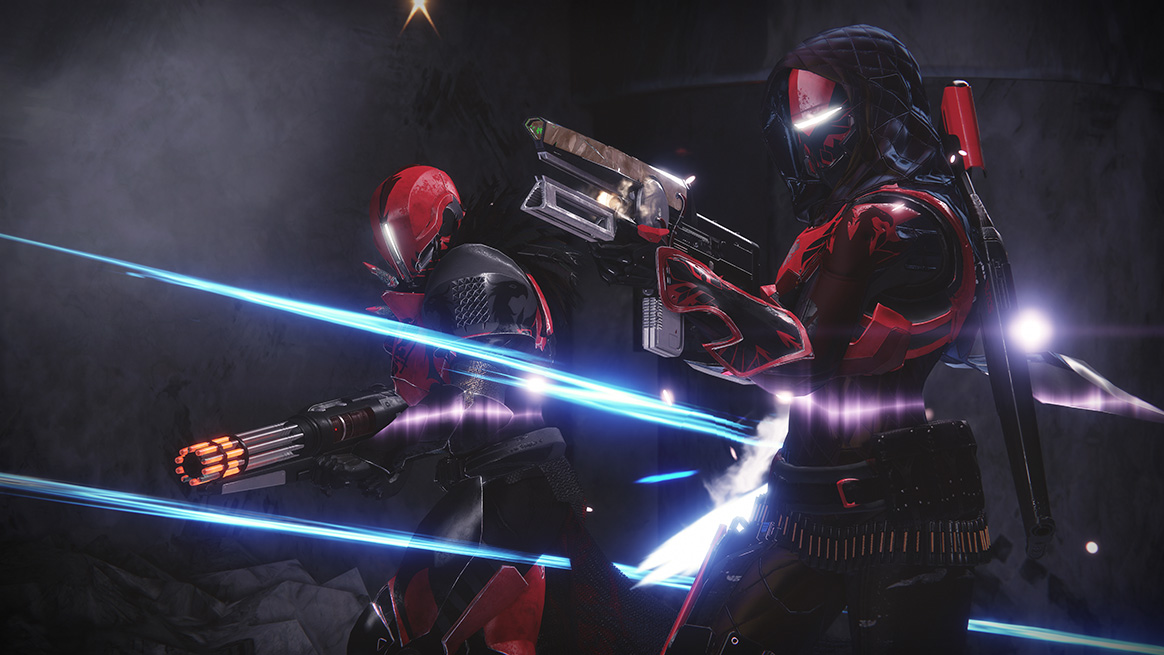
Crimson Days begins in Destiny 2 on Tuesday, February 13. At the heart of the weeklong event is a 2v2 Crucible playlist intended to get your blood pumping as you and a friend test your bonds to the breaking point. This celebration of teamwork will last one week!
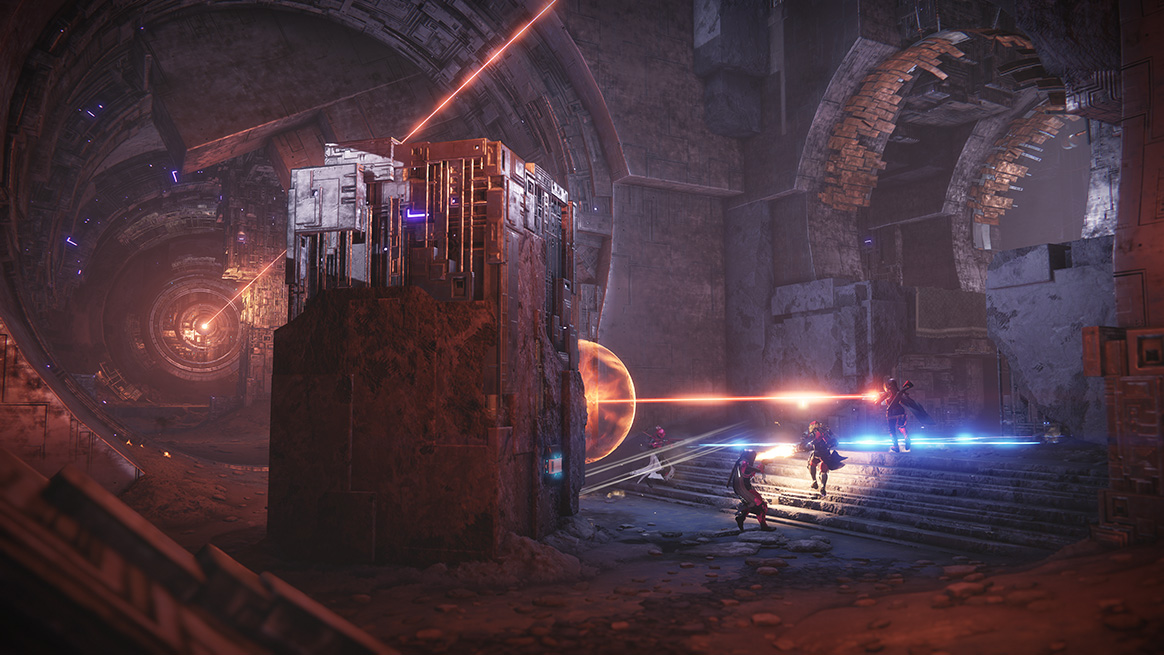
The combat scenario is 2v2 Clash with a round-based twist. We will also be debuting The Burnout, a new take on The Burning Shrine set in a future timeline where the Vex have succeeded in altering our reality.
The sun is darkened and the only Light to be found comes from you and your partner fighting as one. Stay in close proximity to your partner and your abilities recharge at a faster rate. Stray too far, and your enemies will be given a waypoint leading to your location. If you can’t find a partner, don’t worry. We’ll play matchmaker and find one for you.
The Rewards
The best way to earn rewards during Crimson Days is to compete in the Crimson Days Crucible playlist, and we’ve tuned the experience to focus on rewarding single-character play. Most rewards are found within a new Crimson Engram, with all contents on a “knock-out” list, preventing you from receiving duplicate items until you’ve earned all of the new gear.
No matter which activity you play in Destiny 2 during Crimson Days, every player will receive both an Illuminated Engram and a Crimson Engram when they level up. Crimson Engrams are only earnable through gameplay, and are not capped or limited during the event. To qualify, you need only to reach the level cap for your Guardian (that’s 25 if you’ve acquired Expansion 1; 20 if you haven’t).
There are also five new rewards found exclusively for players who complete the following:
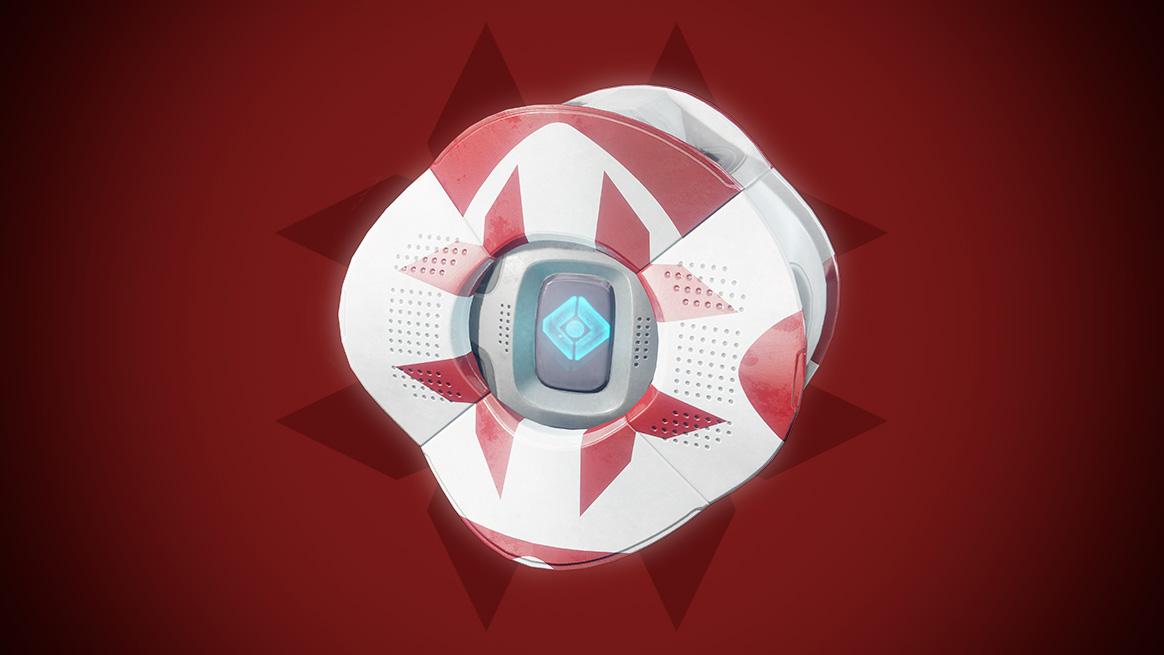
Complete the milestone “Welcome to Crimson Days” by finishing five Crimson Days matches and visiting Lord Shaxx in the Tower to earn the Fire of the Crimson Days Emblem and the Tirastrella Ghost Shell.
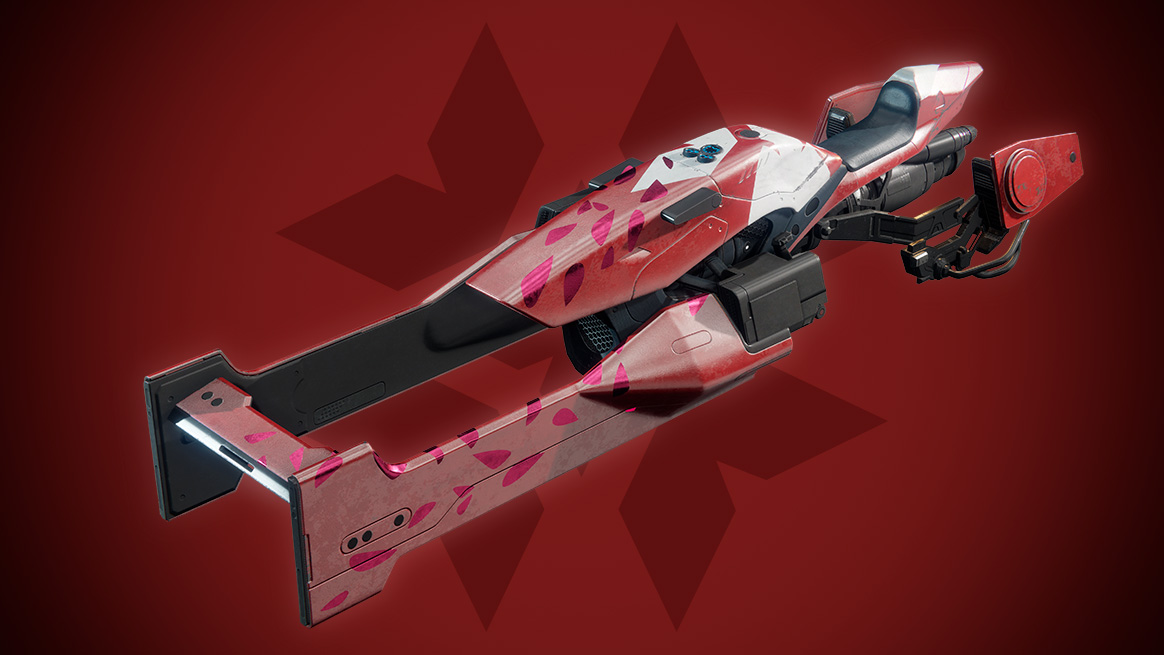
Complete matches in the Crimson Days Crucible playlist for a chance to earn the Undeterred Exotic Sparrow.
Complete either the Leviathan Raid or the Raid Lair: Eater of Worlds to claim the Dieselpunk Exotic Ornament for Wardcliff Coil from the final chest.
Complete the Nightfall Strike during the Crimson Days event to earn the Flaunting Dance Emote.
Tirastrella Ghost Shell
Undeterred Exotic Sparrow
Dieselpunk Exotic Ornament
Flaunting Dance Emote
Crimson Engrams will only be earnable through gameplay, but if you’re looking to directly purchase a specific item, Tess will also offer a selection of the Crimson Engram contents in exchange for the Bright Dust you are holding. Gear purchased with Bright Dust will also count towards the “knock-out” list mechanic described above, preventing duplicate items unless you have already earned all the rewards.
Every reward item obtained from a Crimson Engram can also be dismantled for Bright Dust, including event-specific shaders.
Crimson Days will begin next Tuesday, February 13, and conclude on the weekly reset at 9 AM PST on Tuesday, February 20. If you’ve yet to find a dance partner, now is the time. We’ll see you in the arena.
Help Britannia defeat the Romans in Wulverblade ? a hardcore side-scrolling beat ?em up inspired by classics such as Golden Axe, Sengoku, and Knights of the Round.
Strikers Edge is a medieval dodgeball with weapons, ancient warriors, and special powers. Challenge your opponents in online and local multiplayer, ascend to the top of the ladder and become the best striker.
In a bizarre universe in which the oppressed are on the verge of oblivion, Dandara has awoken to reshape the world. The world of Salt hangs on the brink of collapse. The citizens, once free spirits, now stand oppressed and isolated. But not all is lost, for out of this aether of fear arises a heroine, a ray of hope. Her name is Dandara.
Civilization VI is a game about building an empire to stand the test of time, and the Rise and Fall expansion brings new choices, strategies, and challenges for players as they guide a civilization through the ages. Can you inspire the Loyalty of people around the world, or will you lose cities to your rivals? Will you establish a Golden Age for your civilization, or be mired in a Dark Age? In Civilization VI: Rise and Fall, you truly become a leader for the ages. Successful leadership of a civilization can send it into a prosperous Golden Age, but falling behind can usher in a Dark Age. Respond well to the challenges of a Dark Age, and your civilization can rise again into renewal with a Heroic Age.
Traverse a haunting world set in 1939 Germany in search of a mysterious girl with rabbit ears. Utilize a little bunny in creative ways to solve puzzles. Levitate sheep, use them as torches or wolf bait and make your way through a land that seems to not fancy you being alive.
Experienced video game historian Norman Caruso has published a new video to his Gaming Historian YouTube channel which breaks down the story of Tetris.
The video covers the history of its creator Alexey Pajitnov and contextualizing the political and social climate in which the game’s was developed under.
What follows is an interesting look into how Tetris eventually came to America, and how it was marketed and published for a Western audience.
In 1984 the Communist Soviet Union struggles with a stagnant economy, the decision to boycott the Summer Olympics, and rising tensions with America from the Cold War.
While the two nations were divided, Russian programmer Alexey Pajitnov works diligently on what will later be Tetris.
Originally developed during his spare time at work, Pajitnov creates a prototype of the game using an IBM PC and sennds free copies to friends and colleagues.
From there, it spread across the Soviet Union and eventually made its way to the United States. But how was it discovered?
Night in the Woods’ co-creator explains improv game design
Night in the Woods, 2017’s cult classic cat-punk adventure, landed on Nintendo Switch not with a bang, but with the sounds of a sweet jam band on an autumn night. Nevertheless, we at Gamasutra were interested in digging into the creative process behind this evocative title, so today on the Gamasutra Twitch channel, we were lucky enough to be joined by co-creator Scott Benson for a conversation about the game’s design and development.
Since we didn’t get to chat with Benson last year (he told us he needed to take a long nap after the game shipped), we were excited to discuss the personal touches and weird inspirations that make Night in the Woods so unique. In particular, we had a lot of fun talking about ‘improv’ game design, where pre-planned, thought out moments would be tossed aside in favor of spur-of-the-moment ideas that came to the game’s development team.
You can watch the full conversation up above, but in case you’re off doing crimes, you can read a few key takeaways for other developers down below.
Improv game design
There’s a lot of great moments in Night in the Woods that, according to Benson, didn’t come out of some pre-planned meeting about making the most creative game ever. A lot of design choices, like the game’s weird interactive moments with Mae’s paw, came from spur-of-the moment inspiration whose only “test” was making sure someone else on the team thought it was cool.
In particular, Benson pointed out that those weird grabbing bits with Mae’s paw were inspired by he and fellow Night in the Woods developer Bethany Hockenberry (Benson’s wife) being so amused by the fake animal limbs used in commercials, which is why they’re so stick-like in the actual game. It’s a way to make content and systems for your game that relies more on instinct than data (and leads to a lot of cut content, says Benson), but it’s one that can create rewarding moments for your players in the long run.
Storytelling on the Switch
While Benson himself didn’t do much technical work on the new Nintendo Switch port, he talked about the response he’s seen from players and his thoughts about portable storytelling. What he thinks is notable about the Switch’s potential for narrative games is that it opens doors to players who play games for narrative design, but struggled with the time commitment they often asked for. Since the Switch’s portability allows for playtime on the bus, plane, or train, or just lets them make progress while someone else in the family uses the TV.
Crunch sucks and it’s bad for your health
To get more real (and a bit sad) for a moment, it’s important to call out Benson’s reflection on the amount of hours he and his colleagues put into Night in the Woods, and how that severely impacted his own health. After pulling many 16-hour days to make the game, he says his doctor advised him that if he were to do that again, he might not be able to recover.
Benson’s still proud of the game he helped make, but for the next game he and his colleagues work on, he says he wants to do a better job managing his time and his health. So if you yourself are marching down the indie path in hopes of making a cult-classic game, be advised of the health risks and do your best to not bring them on yourself.