Taken a Live Photo on your iPhone or iPad and want to share it around on social media as a GIF, potentially creating a meme in the process? AppleInsider shows how to convert the clip into one of the most commonly used animated image formats found online.
Introduced in 2015 in iOS 9, Live Photos is a feature of the iOS camera that records the period of time surrounding the moment when the user takes a photograph. Along with the still image, Live Photos can also play the 1.5 seconds before and after the shot as a 15fps video, telling viewers the story about the shot.
Shortly after its creation, various apps and services started to support the image type, enabling them to be shared with other users. There are also options in the Photos app to share the Live Photo with others on social networks and messaging apps, and for most people, that’s more than enough for their needs.
In cases where an app or service simply won’t accept a Live Photo as an image or animation, or if you want to slightly change how it appears, the best option is to create an animated GIF.
Creating the Image
Load up the Photos app and select the Albums tab. In that section, select the Live Photos folder, then tap the specific Live Photo you want to use to bring it fullscreen.
Swipe upwards in the middle of the screen to bring up extra information about the shot. The main element we are interested in is the animation effects selection.
There are four options here, with Live effectively leaving the image as it is, playing just once. Another is Long Exposure, which combines all the frames of the Live Photo into a single image, which can create some artistic effects. Ignore both of these options.
For this, we are interested in the Loop and Bounce options. Loop continuously plays the animation, while Bounce will constantly play the clip forwards then backwards. Select one of these two options.
Navigate back to the Albums tab and select a folder called Animated, which contains any and all animated GIF-style content created on the iPad. If the folder didn’t exist previously, Photos will automatically create it.
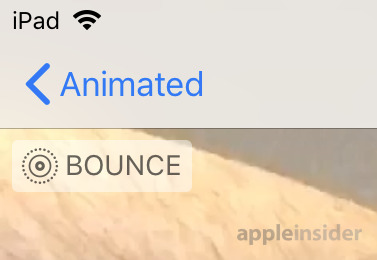
Opening the animation in the folder will display the created GIF file. Photos will also display in the top-left corner what kind of animation option was selected for the image.
At this point, the image can be shared via the normal sharing options, or you could email it to yourself as a GIF file.
Further Notes
While this may be seen as a waste of time creating a GIF rather than directly sharing, creating the animation before sharing can help prevent some issues. Not all apps will accept a Live Photo directly as an animation
For example, adding a Live Photo as an attachment in Gmail will result in a JPEG file instead of a GIF, while sending the version from the Animation folder returns the intended GIF.
There is also the added benefit of being able to control how it will be displayed on other platforms, as there’s no guarantee that it will automatically loop on your chosen service.
Users wanting more control over how GIFs appear, or to create GIFs from video clips, can find a wealth of apps in the App Store for the task.
Fortnite Battle Royale: Tips & Tricks for Competing on Mobile
By Collin MacGregor28 Jun 2018
Battle royale sensation Fortnite has parachuted onto mobile in all its glory. While it’s still only on iOS for the moment (Android version when?) the fact that this is the same game, pretty much feature-for-feature, on a phone is mind-boggling.
Whether you’re a victory royale veteran, or someone discovering Fortnite Battle Royale for the first time, playing on mobile is quite the unique experience. The smaller screen, reduced visuals and bespoke touch controls totally change the way you must play what is essentially a third-person shooter, and one that can get pretty intense.
If only someone could provide you with some essential Fortnite tips & tricks to help you to stay competitive on your mobile…
Controls refresher
Limit your long-distance fighting
This partly comes down to the current Fortnite meta across all platforms, but even more so on mobile you shouldn’t really look to be fighting at range. Even on PC/console it isn’t ideal with the power of shotguns, poor accuracy of auto rifles, and the ease of movement.
Playing on another platform you probably have at least 18 inches of screen to look at, with all those high-quality pixels allowing you to spot every bit of movement. On mobile that real-estate could shrink to something like 4 inches with an iPhone SE. That movement becomes much more difficult to spot, meaning keeping track of opponents at a distance is near impossible. The touch controls also make it much harder to hit long distance shots without a scope.
This doesn’t mean you should avoid them like the plague. Instead, prioritise SMGs, LMGs, explosives, and shotguns over precision death dealers – especially when you are just landing. If you do want to use a rifle, make sure to crouch and use the aim zoom to improve your accuracy. Additionally, don’t bother with tactics such as shotgun weapon swapping until you get comfortable with the controls. The icons are quite small and it’s easy to mistap on the wrong gun.
Be Aggressive
If you want to survive longer than a minute, you’ll need to start getting into firefights with other players. Typically, Fortnite’s building and plethora of ranged weapons allows users to stay back and pick off foes. However, since aiming on a mobile device is tricky the best option is force enemies to fight on your terms. Get in players faces when the bullets start flying and make them panic as you shoot them.
Moving is not nearly as fluid, so you can fluster you foes by destroying their cover and pressuring them with a hail of bullets. Weapons like C4, minigun, LMG, and even basic grenades are fantastic for forcing opponents out of position. Try to use the environment to break line of sight with your foes, especially if you can get the drop on them. Since rotating the camera can be a bit awkward, it’s not as common for someone to check behind them. Use this to your advantage and strike when they don’t have time to react.
Don’t be afraid to build
Building is key to success in Fortnite allowing you to travel across terrain quickly, get the drop on opponents and keep you safe when caught out. The touch controls on the mobile version are a little trickier than other versions since you have to move your hand away moving and/or shooting to select your building type, once you get some practise it becomes easier.
We have seen so many people on iOS only servers not build anything when they really should, and it almost always results in an early death. Assembling cover can be tricky at first, so accept that you may die in the early hours while learning the new control scheme. If you’re coming over from PC or console don’t expect to quickly assemble the elaborate structures. Swapping between materials and parts takes more time, so focus on constructing simple pieces of cover.
The basic three walls and a single ramp will offer decent protection and simultaneously give you a height advantage. Traps are also quite potent since navigating your character can be a bit awkward and it’s easy to accidentally stumble into one. Always practice your building because it can and will make the difference between a victory or the defeat screen.
Moving Will Be Awkward At First
As mentioned above, real estate on your screen is at a premium on mobile, as those big ol’ thumbs will take up a lot of room. The positioning of your digits usually means you won’t miss too much, but there is always a chance some loot or even an enemy, manages to go undetected thanks to being covered up. There’s also a chance that you’ll accidentally tap the jump or crouch button. Because of this, it’s absolutely vital that you keep your right thumb in the lower corner of the screen. You can still tap the screen and quickly access your weapons without the risk of hitting another icon.
Remember, double tapping the virtual joystick used to move around will keep your character running forward until you take back control. This frees up screen space to use for scouting the area, and you can still move around by changing your camera angle to turn. Of course, once a fight breaks out you’ll need to take back control right away: strafing, jumping and climbing all needs extra precision that simple running doesn’t.
There may be visual clues, but still play with sound where possible
The most obvious new addition to the mobile version is visual indicators for footsteps, gunshots and chests, as well a direction indicator. It’s a wonderfully clear and obvious addition to the UI, and boy is it useful. Being able to know exactly the direction footsteps are coming from allows you to instantly target whoever is around the corner. It also allows you to plant those traps in places you know they will be.
That doesn’t mean sound isn’t useful though. It can help identify what specific weapon or weapon class is being shot, and other subtler clues that a simple UI tweak can’t provide. Obviously don’t be that person with sound coming out of the speakers in public, but in private/with headphones having sound will give an edge.
Do you have any tips or tricks of your own you want to share? Post them in the comments below!
Pokemon Quest Out For Free On Mobile (Android / iOS)
Pokemon Quest, the free-to-play RPG that was surprise-released for Nintendo Switch last month, is now available on mobile as well. You can find it for the low cost of zero dollars on the iOS and Android stores. It does include in-app purchases, and data doesn't transfer between these and the Switch version.
The light Pokemon game has you build a team of three monsters to fight other Pokemon and gather loot. Then you can use your loot to attract more Pokemon, and swap them out for members of your team, and on and on. It only features first-generation Pokemon for the time being, but they're given a fresh makeover with a blocky art style.
This being a free-to-play game, though, there are various in-app purchases. The packages on Switch ranged from around $3 to almost $20.
Posted by: xSicKxBot - 06-28-2018, 11:38 AM - Forum: Lounge
- No Replies
Get expert insight into how to build VR/AR training tools at XRDC
This October XRDC is coming to San Francisco, and it promises to be the premier conference for AR, VR, and MR innovation!
As part of XRDC’s Education & Training track of talks, Boeing lead technical integrator Eric Spalding will be presenting a fascinating session all about “VR/AR Challenges for Training Environments” that promises to dig deep into Spalding’s work leading an R&D team researching AR and VR training in aerospace industries.
According to Spalding, AR and VR technologies could be extraordinarily disruptive to how training is performed. For the first time, students can be immersed in an environment that is easily deployable at low cost and without the dangers of real hardware.
However, for broad adoption, there are challenges to overcome that entertainment applications can more easily avoid, such as density of environments and interaction haptics.
With that in mind, Spalding’s XRDC presentation will provide an overview of various challenges facing AR/VR adoption in the training space and challenges attendees to develop solutions that could increase the overall AR/VR market. It promises to be fascinating if you’re at all interested (or invested) in the AR/VR/MR space, so don’t miss it!
XRDC is happening October 29th and 30th in San Francisco at the Westin St. Francis Hotel. Now that registration is open, you’ll want to look over XRDC passes and prices and register early to get the best deal!
For more information about XRDC, which is produced by organizers of the Game Developers Conference, check out the official XRDC website. You can also subscribe to regular XRDC updates via email, Twitter and Facebook.
Gamasutra, XRDC, and GDC are sibling organizations under parent UBM Americas
Posted by: xSicKxBot - 06-28-2018, 11:38 AM - Forum: Lounge
- No Replies
Blog: How can you understand players better?
The following blog post, unless otherwise noted, was written by a member of Gamasutra’s community. The thoughts and opinions expressed are those of the writer and not Gamasutra or its parent company.
Gaming communities are full of surprises. Pleasant ones, mostly.
Speaking to your players is always rewarding — rewarding both to your project (in terms of brand trust and product insights you get from communication with actual people) and to yourself as a person. 2 years of community management for War Robots taught me thousands of things I never realized before.
For example, think about this: do people raging on game X’s forum actually hate the said game? Or it is, in fact, completely opposite? Let this question breathe for a bit — we’ll get back to it in a minute.
Nothing changes the fact, that speaking to people on the internet can be rather strenuous at times. And it will eat you alive if you don’t approach it properly.
When you take a quick glance at the community page of any established game, the first thing you’ll likely see is people being very upset over something. New community managers are often hit by that really hard (well, I certainly was). The knee-jerk response to that is to try fixing the situation as promptly as possible. Asking development team to implement features X and Z people are asking of right now sounds like the best bet. It clearly seems like project’s life and death depends on those… Or does it?
That’s how I thought at first, and soon I had to face reality.
Reality is always the same: let these Xs and Zs go live today, and tomorrow something entirely new will take their place. Fulfilling everyone’s expectations is impossible, as there are literally thousands of contradicting “wants” and “needs” flying around.
So what a person handling dev-to-player communications (let’s call this person a community manager, CM for simplicity) should do to remain sane and helpful to all parties?
One way to handle this is to restrict CMs working field to simply showing care. On social media or forums, steered by strict guidelines with inflexible directions like ‘in case of [this] say [that]“. Is it a good idea? Depending on what you’re looking for. This approach basically turns CMs into another line of customer support service, surely simplifying things a great deal… but also making developer-player interactions boring and mechanistic, throwing away all chances of something special emerging.
We aren’t huge fans that approach. Here in War Robots team community managers are all on their own. We, too, are decision makers, working both in players’ and product’s interests. We know many things others don’t. We have key product metrics on our hands while providing tons of data by ourselves.
For all of it to work, we have to stick to certain principles. In this article, I’ll attempt to outline a general framework that will help you not only finding common ground with a multi-million player base but actually turning your back-and-forth communication into a healthy process from which everyone can benefit.
Negativity is hard to avoid. Even the abstract Best Game Ever would have to face hateful speech in social media over, supposedly, pettiest things. And the further the project goes, the more you’ll have to withstand.
After years working with different communities, I didn’t find anything better than to change the way I look at the hate itself. Let’s get back to the question from the beginning. Do haters actually hate?
There’s one paradoxical, yet game-changing insight:
Those berating you, care about your game more than anyone else.
They care so much, they just cannot contain themselves — and they aren’t to blame. Try putting yourself in their shoes. Would you be happy if the game where you spent your best years was going in a direction you don’t agree with? I definitely wouldn’t.
Let’s use a trite-yet-illustrative human relationships parallel. People change, and whether or not you and your partner will accept each other exactly as you became — on that depends if you will stay together. The difference is, with human-human relationships you can break up if things don’t work out. It will be painful, it will be hard, but nobody will die (most likely). But if you break up with your community, your game is usually doomed as there is no one else to bother.
Good news? You will never please every single side of your multifaceted player base anyway. So just accept this and go with the flow.
Resiliency is the trait you have to develop as a CM. Take into account what I said above: people on the internet are unhappy, but only because they love your game, not because they want to make your life at work miserable.
Sometimes this will make them say horrible things. False things. You might want to call them out for that. To prove them wrong, to make them feel bad for what they’re saying, to literally demolish them…
Hush now, hold your horses. Before acting, take a moment and observe the situation through player’s eyes.
One general rule that will make a difference: never argue. You’ve been told this many times perhaps, but I’ll still emphasize it. Passive aggressiveness doesn’t cut it either — you won’t make the situation better if you try to fight back in any form. Even if you win, if you prove someone wrong — it won’t make anyone feel better.
Instead, listen. Ask questions. Understand what is the actual driver of people’s unhappiness.
When we are upset, we all struggle to find out what makes us feel this way. By getting to the core of the issue you can find that precious tiny straw in players rationale, pulling which will help you steer the conversation onto the constructive course.
Most importantly: when talking to players, ask for feels and causes, not the solutions. The solution is up for developers and designers to figure out, as only they have the whole picture on their hands. Your job is to expand this picture with your insights into players’ minds. The Mom’s Test (http://momtestbook.com) by Rob Fitzpatrick is probably the best book on that matter: clear, concise and helps to ask the right questions. I strongly suggest you read it.
Empathy helps you to address the right things at the right time. But it works even better if it is supported by data.
Data allows us to translate everything from the language of a player to the language of a product. We don’t just come to the producer all like “uhh some people don’t like it so you have to change it”. Such claims only worth something when we can support them with a clear idea of who these people are.
How many of them there is — five or five thousands?
How long ago they started playing — a month or maybe three years ago?
How active are they? Are they casually running a couple matches per week or diving deep for many hours daily?
…and so on. It is a huge mistake to believe that all players are the same — which, however, is widely spread. There’s nothing easier than to catch false positives from some small yet vocal group.
To illustrate that I often refer to the game called Wildstar. This game has an incredibly captivating concept: an MMORPG for hardcore players remembering the old World of Warcraft days. Believing that this is the huge market to cater to, its developers spent nine years making it. Nine freaking years!
Did it pay off? Hardly. Wildstar is still around and is pretty good… however it never got as big as it could’ve been (which is unfortunate). As it turned out, nostalgic players ready to grind away weeks straight just to get an access to the raid dungeon weren’t the biggest part of WoW community. They were the loudest.
And now, how do you pinpoint the difference between “loud” and “numerous”? You know the answer. Data.
We use stats provided by social platforms augmenting them by third-party services when native analytics are not enough. Social media mining tools free our hands when it comes to collecting general sentiment on new features and the situation as a whole.
Your community can provide with much more numbers you might initially think. Places like FeverBee blog might be a good place to start digging for inspiration.
The bigger your community grows, the more you want to zoom out and observe it from the level of pure stats. But you should never stop approaching people personally: every show of humanity can go a long way.
With that in mind metrics must support your actions, not command them. You are working with people, and there’s a lot of weird stuff happening behind the scenes that you cannot explain just by looking at graphs.
Personal contacts with our players helped us catch and fix any issues before they started to show up on any metrics — like drastic metagame shifts or potentially game-breaking exploits. But these contacts aren’t just about building the intelligence network. It might be convenient to think about them this way, but there’s another huge reason to keep up with your pilots/summoners/tenno (however you prefer to call your lads and gents).
Here is that reason: you should always realize that your players are people. It sounds obvious, but when you’re operating the game with millions of monthly players it is easy to start seeing them merely as numbers in your dashboards. When quantity takes over, you might become completely desensitized to people’s feelings, and once it happens nothing I said above matters anymore.
Seeing players in person gives you a so much needed reboot and sets you back on track.
This April we invited a bunch of players to our office. It was a much less ambitious event than the one from two years ago (back them we invited top clan leaders to join the first ever official tournament), but scaling it down allowed us to keep things as informal as possible. High profile War Robots youtuber Adrian Chong came to us with a long lecture on the state of the game from player’s perspective, but that was the only “official” part of that event. After that, we were just hanging out and chatting. About everything. Literally.
And heck, that was incredible — insightful and… sobering in a way. Bringing players to our place allowed us to remind the development team that War Robots pilots are much more than suppliers of feedback and requests — but real genuine people for whom our game plays a huge role in their lives and whatever we do affects them a lot more than it might seem from our side.
There are players who want to dig into inner workings. The most hardcore followers. They save entire worlds by bringing closed projects back to life (like it happened with Star Wars Galaxies or Asheron’s Call), help funding passion projects of immense scale on Kickstarter and so on. But they definitely aren’t the most people you meet on your Facebook or Reddit page. Most people prefer having a much simpler time in their virtual worlds. And that’s okay!
But that is also why I am strongly convinced that there’s no need to ever draw players’ attention on video games being a business. People have enough “business” in their lives already — why should we also bother them with ours?
It is always better to underpromise than underdeliver. If there’s even the slightest chance something won’t go according to plan, don’t make the announcement.
But if something goes wrong, resort to one simple trick.
Honesty is your trump card. If you screwed up, admit it. Own it. Players’ trust is the most important asset of yours — if your audience trusts you, they will forgive many things. They know nobody is perfect.
It’s okay sometimes to say that “we did that to drive sales” when you push another monetized feature. People might get emotional at times, but they aren’t dumb. They will understand. But only if there’s a real trust between you and them.
Getting the trust back is much harder than building it from scratch. Figure out what kind of relationships you want to have with your players — and start cultivating them right away. Set the boundaries, the amount of attention you’re going to commit, then stick to the plan. Firmly. Every time you deviate, you lose your trust points.
***
Working with the community can go a long way. Remember though: if you are speaking to the community, you aren’t here to turn every dream real. First and foremost, you are here to understand what the dream actually is.
It is also up to you to keep providing everyone with great entertainment while protecting them from the nitty-gritty of making this entertainment tick. Find stories to tell. Build engaging activities. Or just give people ideas on how to deal with things they don’t like so they don’t hinder their enjoyment.
Whatever you do, just keep the communication going.
Help the game experience to extend to the outside world. This is something that is absolutely in your power. Bring people together. Help them create. If you manage to do it, it will bring absolutely beautiful results, transcending all the business-related discourse and turning your game into something truly magical.
A Rundown of Windows 10 Gaming Hardware Announced at E3 2018
At this year’s E3, PC hardware partners Lenovo and Dell both announced new gaming devices powered by Windows 10 that join the PC gaming mix, all ready to go with built-in Mixerstreaming for low-latency, interactive moments for viewers and streamers to engage with other gamers. Remember, a mobile gaming PC can be a great companion for staying in touch with your save games when on the move; with Xbox Play Anywhere, you can buy a game once and play it on both your Xbox One and any of these Windows 10 PCs – picking up your saved games right where you left off, whether switching from console to PC or the other way around!
First up, a rundown of Lenovo hardware:
Lenovo Legion Y530 Laptop
Between 24.2mm to 25.2mm thin and 2.3 kg light, up to the latest generation Intel processors, NVIDIA GPUs, DDR4 memory and more, the Lenovo Legion Y530 Laptop is thermally optimized to run cooler and quieter while balancing between performance and portability.
The 15″ FHD display with optional 144 Hz and 300 nits of brightness, as well as a full-sized white backlit keyboard offering under 1ms input response time, make the Lenovo Legion Y530 Laptop primed for gaming virtually anywhere life takes you.
Lenovo Legion Y730 Laptop
Weighing 2.9kg and between 21.95mm to 24.05mm thin, the larger 17-inch Lenovo Legion Y730 Laptop features the latest in gaming technology from Intel and NVIDIA wrapped in expertly crafted all-aluminum materials, plus more than 16 million color combinations and lighting effects visible from its CORSAIR iCUE RGB backlit keyboard for the ultimate customizable gaming experience.
It arrives in both a 17″ FHD display as well as a 15” FHD display option, with optional 144 Hz and 300 nits of brightness.
Lenovo Legion T530
Meet the Lenovo Legion T530, a 28-liter gaming tower redesigned from the ground up to deliver a bold new look that houses up to the latest Intel gaming processors, discrete graphics, DDR4 memory, PCIe SSD storage and dual-channel cooling, all with a red system lighting.
In addition to up to 8th Generation Intel Core i7 processors, up to NVIDIA GeForce GTX 1060 GPUs, up to 32GB DDR4 memory and up to PCIe SSD storage, the Lenovo Legion T530 was engineered to eliminate heat via its innovative dual-channel thermal system and features a tool-free upgrade system with an integrated top carry handle for convenient portability.
Lenovo Legion T730
This 28-liter desktop tower gives you both style and power thanks to a customizable internal and external RGB system lighting, a transparent side panel, optional liquid cooling, up to 8th Generation Intel Core processors, NVIDIA GeForce GPUs, optional Corsair Vengeance DDR4 memory, and more to completely immerse you in your favorite titles and overclock for the win.
Lenovo Legion C730
This 19-liter gaming PC has all the hardware you need for a breathtakingly immersive gaming experience. Up to the latest Intel processing, NVIDIA GPUs, and optional overclocked CORSAIR DDR4 memory, all housed in a chassis featuring a dual-channel thermal system with optional RGB system lighting and transparent top panel, come together to deliver a truly evolved design that looks amazing in virtually any room.
The Lenovo Legion C730 was engineered to eliminate heat via its dual-channel thermal system and the full internal RGB system lighting delivers more than 16.8 million color combinations and effects.
Lenovo Legion C530
The 19-liter Lenovo Legion C530 offers you tower-level gaming in a more portable design. It arrives with up to 8th Generation Intel Core processors, NVIDIA GeForce GPUs, DDR4 memory, up to PCIe SSD storage, and more. The C530 was designed for effortless upgrading of your system’s hardware via a one-press accessibility system and integrated top carry handle – all engineered to eliminate heat via its dual-channel thermal system.
Visit the Lenovo Newsroom to learn more about all of the PC gaming hardware introduced this week at E3. Additionally, Dell shared a handful of gaming hardware and other announcements that PC gamers everywhere can get excited about. Here’s a breakdown of Dell PC gaming news from E3 2018:
Enhance game performance with 7.1 Virtual Surround Sound, wider frequency response and acoustic signature, augmented by high-fidelity 40mm Neodymium drivers to deliver deep rich bass and an expansive soundscape.
Designed for clear natural voice quality, in solo and multiplayer situations, the headset lets players position the mic nearer their mouth to cut background noise, with a Game/Chat volume mixer and built-in voice notifications for battery life and wireless connectivity.
Durable yet lightweight, the headset is distinguished by a wide flexible headband engineered for snug fit and extreme comfort, with all controls within the reach of one finger.
Rotatable, sports-fabric earcups keep players cool and focused, especially for marathon gaming. Alienware fans will appreciate the iconic design elements, including animated LED head & tron lights and click-and-play customizable AlienFX™ per-game light settings.
Alienware Elite Gaming Mouse (available July)
Alienware gets the importance an input device can have on your gaming performance. And to support, their new iconic Alienware design with premium materials puts more control in gamers’ hands to play longer with advanced ergonomic engineering with two redesigned interchangeable right wings and 3-position palm rest for virtually any grip. With four configurable 5-gram weight adjustments, gamers have ultimate control over cursor precision and movement speed, enhanced by five configurable levels for on-the-fly DPI switching based on the need for speed or precision.
Better efficiency also comes from 9 to 11 programmable buttons with 512k onboard memory for in-game customization, ideal for tailored configurations and more detailed setups. Further personalizing the immersive experience with AlienFX™ lighting, which supports over 130 games with unique themes to personalize a dynamic look to reflect the gamers’ style. Available in the U.S. in July.
Inspiron Gaming Desktop with AMD
With an emphasis on strong performance and future-proof expandability at an accessible price, the new Inspiron Gaming Desktop (5676) handles the latest gaming titles with ease.
Plenty of muscle and split-second responsiveness derive from the latest AMD Ryzen Pinnacle Ridge processors (up to 8 core, 16-thread), the highest multiprocessing, multitasking performance gamers can get on a mainstream desktop PC, featuring Sense MiX FR technology to optimize power consumption, task routing and clock speeds, whether for PC gaming, virtual reality or content creation.
Other benefits include a USB Type-C 3.1 port, up to six USB 3.0 ports, optional dual-drive, high-capacity hard drive, responsive SSD and up to five bays for future storage upgrades. Polar Blue LED lighting and a striking chassis design infuses the Inspiron Gaming Desktop with visual excitement. Available initially in Australia, New Zealand, China and South Korea mid-June.
Looking for more PC gaming hardware recently announced? Visit the Windows Blog for even more recent PC gaming hardware reveals by Acer, HP, Razer and MSI.
PlayerUnknown’s Battlegrounds Creator Drops Lawsuit Against Fortnite
About a month ago PUBG Corp – the company behind the incredibly successful “Battle Royale” title PlayerUnknown’s Battlegrounds – issued a copyright violation lawsuit against Epic Games, makers of Fortnite.
In case you’ve been living under a rock for the past year, Fortnite is currently one of the biggest games in the world, though its critics point out that PUBG arrived at the Battle Royale concept first, and that Epic simply tacked a similar mode onto Fortnite’s flagging “Save the World” campaign.
PUBG Corp has been eyeing up legal action since the start of the year, and had planned to take Epic Games to court in South Korea following claims that Fortnite had ripped off PUBG. Strangely, PUBG Corp has now dropped all legal action and has even sent a letter to Epic Games confirming that no challenge will be made in court.
It’s not known what triggered this turnaround, or if an agreement was reached behind the scenes. It could well be that PUBG Corp realised that it didn’t really have much of a claim in the first place, as the Battle Royale concept existed long before PUBG appeared. Whatever the reason, it seems that any legal threat hanging over Epic Games is now gone, and it can go back to enjoying the fact that it has one of the most bankable properties in the world of gaming right now.
Review: Johnny Turbo’s Arcade: Wizard Fire (Switch eShop)
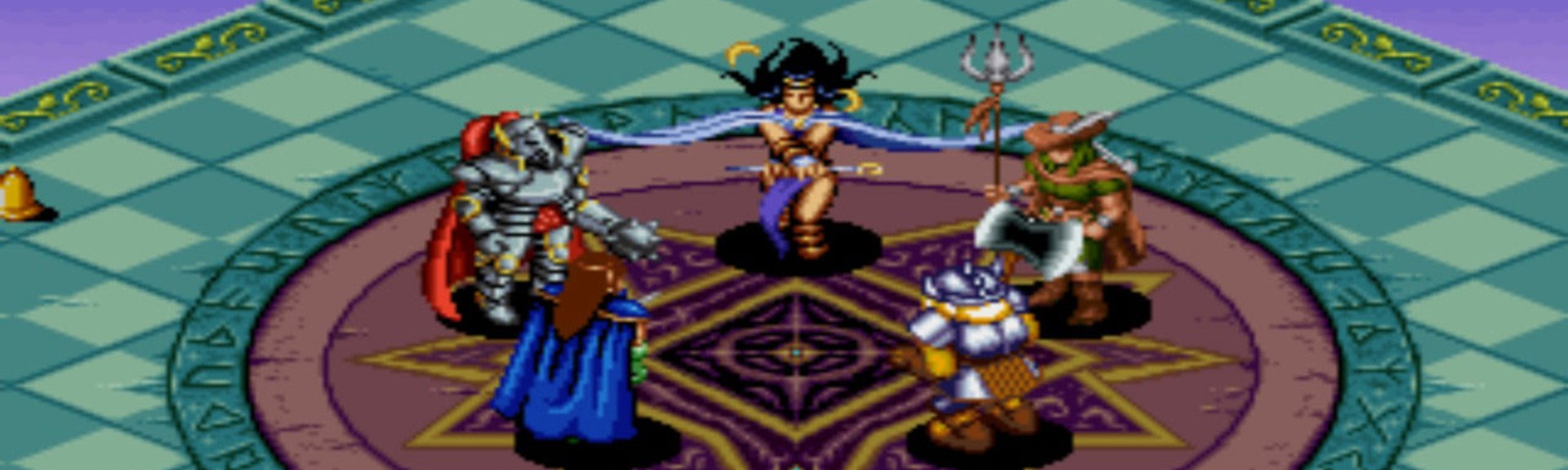
Two years after Gate of Doom, Data East once again ventured dangerously close to a Dungeons & Dragons intellectual property infringement lawsuit. Wizard Fire (know as Dark Seal II in Japan) upped its game in the graphics department thanks to new hardware, but was it a better experience than its prequel? Let us crawl into this dungeon.
The first noticeable difference is in the playable roster. Carl F Greystone the Knight, Freya Edirne the Wizard and Hark Riger the Bard make a glorious return but the stealthy Kirikaze the Ninja is nowhere to be found. Since he was the odd one out that didn’t really fit the whole AD&D vibe, he’s instead been replaced with Eminna Jozestore the Elf and Jade Greataxe the Dwarf (who, unsurprisingly, fights with axes).
The two-button control scheme is back, with ‘A’ used to attack and ‘B’ to cast whatever magic transformation is displayed in your magic book. While most of these are rather handy and come with extra firepower, it pays to avoid transforming yourself into a harmless pig. Characters have slightly different play styles this time with Carl and Freya able to build up power before unleashing stronger attacks, while Hark and Eminna can unleash a flurry of rapid-fire attacks by mashing the ‘A’ button. Despite the different classes they all pretty much play the same which is not a real deal breaker for an arcade game.
Your characters move in eight directions on an isometric playfield. From the earlier ruined village all the way to the final stage, colour and detail are far more abundant than in the previous adventure. Presentation has been beefed up since the first game with cutscenes delivering the plot between levels, now voice-acted with hilarious Shatner-style overacting responsible for such hilarious snippets such as the memorable line uses for this review’s very own tagline. Music and sounds effects are a bit on the loud and distorted variety, something that would indeed feel right at home in an arcade.
Despite sometimes being an incredibly frustrating coin muncher (especially on some of the bosses) and a confusing one when your characters get hit by curses such as poison and confusion (which will invert your controls for a set period of time), it still manages to be a compelling experience if you have a friend to play along with. But don’t expect to do a run without losing a single life; much like most arcade games, the developer really stacked the odds against you with this one.
Unlike the game’s improvements over the prequel, Flying Tiger Entertainment’s emulation wrapper remains static from the very first release of Johnny Turbo. There is still no access to DIP switch options and despite some graphics filtering, you can never disable bilinear filtering which will always upset pixel purists. There is an option to stretch the screen to 16:9, but since the original game was designed in 4:3 you will never want to use that. A real shame since we know improvements on this would elevate the whole experience.
Conclusion
Wizard Fire might not have set the world ablaze but is still a more than adequate sequel to a more than adequate dungeon crawler. Even today the sprite work is fantastic and it most certainly worth a few runs to try out all the characters. But don’t expect long-term replay value, it is, after all, a coin muncher first and foremost. A solid, if unspectacular, option for those looking to expand their range of arcade titles on their Switch library.
The Steam Intergalactic Summer Sale is here! For the next fourteen days, take advantage of huge savings throughout our store on over ten thousand games. You can also help unlock free games by playing our Summer Saliens Game.
Today’s Featured Deals include:
Player Unknown’s Battlegrounds 33% off Fallout Franchise up to 50% off Dead Cells 40% off Grim Dawn 70% off Everspace 67% off Tyranny 66% off Nino Kuni II 40% off Dark and Light 50% off and many more
Along with the sale is the Summer Saliens Game. Team up with other Saliens to fight The Duldrumz on different planets and free the abducted games. Gain XP as you battle, level up, unlock new abilities, and win cosmetic items to deck out your Salien. Plus, get Summer Sale Trading Cards just for playing.
Choose to battle on a planet that piques your interest and you’ll automatically be entered for a chance to win one of its rewards when it’s conquered. The longer your Salien spends on a planet the higher your chances of winning! The groups with the most tiles when a planet is taken will get to plant their flag as conquerors, undoubtedly gaining Saliverse-wide fame in the process.
The Steam Intergalactic Summer Sale will run from now until 10 AM Pacific, July 5th. Complete information can be found HERE.
Posted by: xSicKxBot - 06-28-2018, 11:38 AM - Forum: Lounge
- No Replies
Community Focus: Charlemagne Bot
The Destiny 2 community is vast and talented. Everywhere you look, someone is doing something amazing in the spirit of entertaining, helping, or providing valuable service to others. We like to shine our spotlight on individuals and groups who are doing interesting things to support the community and get to know them better. Our community focus this week is the creators of a popular Discord bot that goes by the name of Charlemagne. They are Waterpolotrev67 and Tor_Kallon, but together they go by the name of “Root Team.”
Would you like to know more?
Tell us a little bit about yourself and your role in the Destiny Community.
Root Team: We have both been playing Destiny since the alpha back in 2014. Between the two of us, we have spent over 8,000 hours playing D1 and D2. We have spent over 1,500 hours raiding, and we founded a small clan of close friends we made playing Destiny. This game is a hobby and a passion for us. Charlemagne was born out of that passion.
Wow! That’s a lot of time and a lot of passion. Where can we find you and this bot of yours?
Tell us about your Charlemagne bot. What does it do? Will it take over the world?
Root Team: Charlemagne is the Warmind of Discord. She provides clans with the tools they need to become legend. This includes:
Over 270 leaderboards per clan
Dozens of commands that return Destiny and Destiny 2 statistics
A fully automated LFG system for event planning whether scheduled or immediate
Real-time Destiny news and notifications—nothing is faster than Charlemagne
Clan management tools to keep your clan active and engaged in Destiny
It’s disconcerting you didn’t answer the second part of the question, but let’s move on. Are you planning on adding any other features to the bot?
Root Team: We are constantly expanding her feature base every day. She started with just three commands, and today she has over 250 commands and subcommands. Building and expanding Charlemagne has been as much a passion for us as mastering a new raid in Destiny.
Our biggest focus for the future is commands and features that will help promote playing with clanmates and make it easier to find groups of people to play the endgame with. We have made great friends playing Destiny, and we want Charlemagne to help build communities and help forge friendships between Guardians with similar attitudes toward the game.
We’ve given everyone a first glimpse of Forsaken. From what we’ve shown, what are you looking forward to most?
Root Team: We are both huge fans of Destiny as a hobby, and the endgame grind in particular. To that end, the Dreaming City sounds awesome. We hope you don’t reveal much about it, but the sheer possibilities implied by an “endgame destination” that has myriad secrets and is changed by the raiders who venture there has us excited. Beyond excited, really.
We also really hope that aspects of the Dreaming City are exposed in the API so we can allow Charlemagne to track, share, and connect elements of that into clan Discords to keep the excitement up when people can’t play, but can log into Discord.
When you first tackle all the mysteries we’re secreting away in Forsaken, what will be you preferred subclass and weapon?
Waterpolotrev67: Nightstalker all the way. My favorite weapon hands down is the No Land Beyond—can we have it in D2? As for current D2, my first Masterwork weapon, the Maxim XI, is my current sniper of choice. Nothing beats crispy headshots.
Tor_Kallon: I started Destiny as a Titan, but have since seen the error of my ways and now main Warlock. Warlocks are incredibly flexible, but nothing is as fun as a Devour-lock. That said, I’m really looking forward to the new solar Warlock Super in Forsaken. I always loved the support role played by a Defender Titan in D1, and that new subclass path looks even better.
We’ll ask around about NLB, but we still have an emotional scar from the time Xûr sold it five times in two months. Anything else you would like to add?
Root Team: Whether you are a small group of friends playing Destiny 2 together or a clan of over 1,000 Guardians, Charlemagne helps make the game more fun. She keeps you posted on the latest news about the game and lets you see where you stand against your friends and clanmates. She helps you plan raids and Trials runs with your clanmates. She continues to evolve and has new functionality added every week. We hope you enjoy her as much as we have enjoyed the process of creating her and making her available to other people as passionate about Destiny as we are.
If you want more information about Charlemagne and what this helpful robot can do for you and your clan, visit https://warmind.io. We would like to thank the creators of Charlemagne for stopping by to tell us more about their creation. We’re always searching for members of the community to celebrate. If you have someone in mind, let us know by suggesting them on our Community forum using the #CommunityFocus tag.