Yo-Kai Watch 4 Receives New Screens And Details Surrounding Its Battle System
@Bomberman64 How it has been driving away new players from the new Pokémon games? Or any other game?
I have played Xenoblade Cronicles 2, but never 1 or X. I have played EverQuest 2, but never 1. I have played Warcraft 3, but never 1 and 2. I have played Rune Factory 4 on the 3DS, but never 1,2 and 3. I have played Elder Srolls Oblivion and Skyrim, but never the earlier ones. I can go on and on and on…..
Unless it’s a deep story driven RPG like Mass Effect, where you wouldn’t be able to make sense out of the story if you would have jumped right into ME3 without playing the first two….. Yo-kai Watch isn’t anything like that, nor many other games in my above list.
If you have a 3DS, you can dive right into Yo-kai Watch 3, don’t miss out and have a blast in the best iteration yet! Though I would say Yo-kai Watch 2 – Phsyic Specters is really good too, just for it’s wonderful story. I actually like the story in 2 better than 3.
Posted by: xSicKxBot - 12-18-2018, 02:28 AM - Forum: Lounge
- No Replies
Pokemon Go Dev Niantic Could Be Worth $3.9 Billion After New Funding - Report
Pokemon Go developer Niantic Labs began its life as a Google subsidiary, but the company spun out in 2015, and reached a new stratosphere of success with the launch of Pokemon Go in July 2016. The San Francisco-based developer is growing still, with a new report claiming the company is working to secure a $200 million round of funding.
According to The Wall Street Journal's sources, the further $200 million would raise the company's total valuation to $3.9 billion. The latest round of funding is expected to be led by venture capital firm IVP, with more money coming from Samsung and aXiomatic Gaming.
There is no word on what the rumoured round of $200 million in funding would go toward at Niantic, but the studio has a new Harry Potter game in the works, in addition to ongoing support for Pokemon Go. The WSJ report says Niantic could be working on games for "other franchises," but none were named.
Niantic's new Harry Potter game, Wizards Unite, was initially expected to launch in 2018 but it was later delayed to 2019. Not much is known about the game, but it's said to use a similar augmented reality set-up that Niantic struck gold with for Pokemon Go.
Pokemon Go is free, and it makes money through in-game microtransactions. While the game might not be as popular as it once was, it still makes a lot of money. In November, the game pulled in $80 million worldwide from its microtransactions on iOS and Android, according to a report from SensorTower.
In other news, Pokemon Go's latest winter event kicks off this week. Among other things, it lets you earn bonuses, hatch Eggs more easily, and encounter Pokemon from the Sinnoh region. You can learn more about the event in our coverage here.
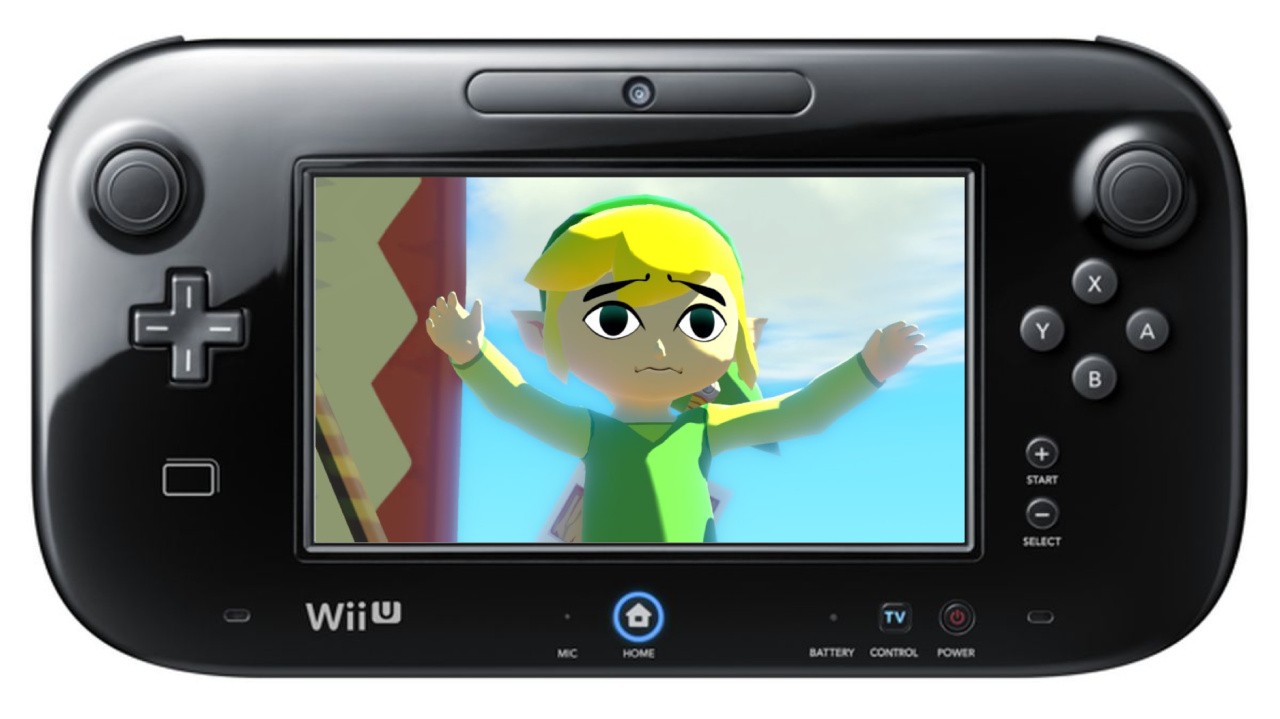
Random: New York Times Crossword Puzzle Forgets That The Wii U Was A Thing
Before this slightly baffling era where twenty to thirty new games appear every single week on the ever-blooming Switch, Nintendo’s home console operations revolved around none other than the Wii U. A console let down by a lack of third-party support and unclear marketing, and ultimately not generating nearly enough sales, the Wii U has – still undeservedly in our eyes – been quickly forgotten about in the gaming world.
As if to perfectly prove that point, a recent crossword available via The New York Times entirely ignored the poor Wii U when it should have been thrust back into the spotlight. Shared by Reddit user UhhMaybeThisWillWork, the crossword asks for the “predecessor of Nintendo Switch”, allowing users to input just three letters for the answer. That’s right, even the New York Times is ignoring the Wii U’s existence, skipping that generation entirely and believing the Wii to have been Nintendo’s most recent console.
While we’re only having a bit of fun here, the situation does highlight just how poorly the Wii U was understood or known about among consumers. The person or team behind the creation of this crossword puzzle clearly didn’t realise the product existed, presumably after a quick bit of research to double check their answers, too. We’ll always stand by our belief that the Wii U had a cracking first-party lineup of games in the end, but it clearly wasn’t appreciated by many.
Do you have any fond memories of the Wii U era? Shall we start a ‘positive Wii U thoughts’ thread in the comment section to make the poor thing feel better? Feel free to join in below.
Posted by: xSicKxBot - 12-18-2018, 02:28 AM - Forum: Windows
- No Replies
WIRED: Undersea servers stay cool while processing oceans of data
Most electronics suffer a debilitating aquaphobia. At the littlest spillage—heaven forbid Dorothy’s bucket—of water, our wicked widgets shriek and melt.
Microsoft, it would seem, missed the memo. Last June, the company installed a smallish data center on a patch of seabed just off the coast of Scotland’s Orkney Islands; around it, approximately 933,333 bucketfuls of brine circulate every hour. As David Wolpert, who studies the thermodynamics of computing systems, wrote in a recent blog post for Scientific American, “Many people have impugned the rationality.”
Related Stories
The idea to submerge 864 servers in saltwater was, in fact, quite rational, the result of a five-year research project led by future-proofing engineers. Errant liquid might fritz your phone, but the slyer, far deadlier killer of technology is the opposing elemental force, fire. Nearly every system failure in the history of computers has been caused by overheating. As diodes and transistors work harder and get hotter, their susceptibility to degradation intensifies exponentially. Localized, it’s the warm iPhone on your cheek or a wheezing laptop giving you upper-leg sweats. At scale, it’s Outlook rendered inoperable by remote server meltdown for 16 excruciating hours—which happened in 2013.
Servers underlie the networked world, constantly refreshing the cloud with droplets of data, and they’re as valuable as they are vulnerable. Housed by the hundreds, and often the thousands, in millions of data centers across the United States, they cost billions every year to build and protect. The most significant number, however, might be a single-digit one: Running these machines, and therefore cooling them, blows through an estimated 5 percent of total energy use in the country. Without that power, the cloud burns up and you can’t even fact-check these stats on Google (an operation that costs some server, somewhere, a kilojoule of energy).
Alyssa Foote
Savings of even a few degrees Celsius can significantly extend the lifespan of electronic components; Microsoft reports that, on the ocean floor 117 feet down, its racks stay 10 degrees cooler than their land-based counterparts. Half a year after deployment, “the equipment is happy,” says Ben Cutler, the project’s manager. (The only exceptions are some of the facility’s outward-facing cameras, lately blinded by algal muck.)
Another Microsoft employee refers to the effort as “kind of a far-out idea.” But the truth is, most hyperscalers investing in superpowered cloud server farms, from Amazon to Alibaba, see in nature a reliable defense against ever more sophisticated, heat-spewing circuits. Google’s first data center, built in 2006, sits on the temperate banks of Oregon’s Columbia River. In 2013, Facebook opened a warehouse in northern Sweden, where winters average –20 degrees Celsius. The data company Green Mountain buried its massive DC1-Stavenger center inside a Norwegian mountain; pristine, near-freezing water from a fjord, guided by gravity, flows through the cooling system. What Tim Cook has been calling the “data-industrial complex” will rely, if it’s to sustainably expand to the farthest reaches, on a nonindustrial means of survival.
Alyssa Foote
Underwater centers may represent the next phase, a reverse evolution from land to sea. It’s never been hard, after all, to waterproof large equipment—think of submarines, which get more watertight as they dive deeper and pressure increases. That’s really all Microsoft is doing, swapping out the payloads of people for packets of data and hooking up the trucklong pod to umbilical wiring.
Nonetheless, Cutler says, the concept “catches people’s imagination.” He receives enthusiastic emails about his sunken center all the time, including one from a man who builds residential swimming pools. “He was like, you guys could provide the heating for the pools I install!” Cutler says. When pressed on the feasibility of the business model, Cutler adds: “We have not studied this.”
Alyssa Foote
Others have. IBM maintains a data center outside of Zurich that really does heat a public swimming pool in town, and the Dutch startup Nerdalize will erect a mini green data center in your home with promises of a warm shower and toasty living room. Hyperlocal servers, part of a move toward so-called edge computing, not only provide recyclable energy but also bring the network closer to you, making your connection speeds faster. Microsoft envisions sea-based facilities like the one in Scotland serving population-dense coastal cities all over the world.
“I’m not a philosopher, I’m an engineer,” Cutler says, declining to offer any quasipoetic contemplations on the imminent fusion of nature and machine. Still,
he does note the weather on the morning his team hauled the servers out to sea. It was foggy, after a week of clear skies and bright sun—as though the literal cloud, reifying the digital, were peering into the shimmering, unknown depths.
From the creators of The Witcher 3: Wild Hunt comes a brand new tale set in the brutal and twisted universe of witcher Geralt of Rivia. The world stands on the verge of chaos, as the tensions between the power-hungry Nilfgaardian Empire and proud Northern Realms grow. Facing an imminent invasion, Meve ? war-veteran Queen of Lyria and Rivia ? is forced to once again enter the warpath, and set out on a dark journey of destruction and revenge.
Virtually immerse yourself in the untamed world of Borderlands. Step into the boots of a treasure-seeking Vault Hunter armed with 87 bazillion guns on a quest to line your pockets with loot.
(Presented by Oculus) In the final episode of the Change the Game VR Charity Challenge, Magnus Beasticus and Lemming go toe to toe in Creed: Rise to Glory to win $100K for charity. Visit vrcharitychallenge.com for more info!
Over the next few days, we will reveal what we believe are the 10 best games of 2018, organized by release date. Then on December 19, we will reveal which of the nominees gets to take home the coveted title of GameSpot's Game of the Year. So be sure to come back then for the big announcement, and in the meantime, follow along with all of our other end-of-the-year coverage collected in our Best of 2018 hub.
Marvel's Spider-Man is special, if for no other reason than that it's the closest a video game has come to capturing what it feels like to be everyone's favorite friendly neighborhood wall-crawler. It's exhilarating to step off a skyscraper and hear the orchestral score begin to swell, only to crescendo and level out as you start swinging towards your next objective; there's never a moment in the game's 20-hour run-time where you don't want to be flying through the air. You're constantly unlocking or discovering tricks that Spidey is known for pulling off in the comics--like firing out a web from both shooters to slingshot yourself through a hanging pipe--that make traveling from point A to point B the most thrilling part of the game.
The game knows what it's good at too, and wastes no time throwing you straight into its traversal system after a brief opening cutscene leaves you hovering over a city street. Pulling the right trigger on your controller fires out a web from Spidey's shooters with a satisfying thwip, and web-zipping, vaulting, cornering, and wall-running add stylish flair to your journeys across New York. All of the web-slinging mechanics are very easy to grasp, and it won't be long before you're careening over traffic and leaping off buildings with all the natural grace of the Spider-Man from the comics.
This same level of accessibility extends to the game's acrobatic combat, which utilizes a collection of dodges, punches, kicks, and throws to create an enjoyable zen-like flow of counters and strikes. Unlocking new skills and gadgets, such as web throws and electric webbing, allows Spider-Man to be more versatile. Spidey can be stealthy too, and it's fun to quickly zip through the rafters of a building or between the shadows of a warehouse while taking out enemies with trip mines and impact webbing. And regardless of whether you sneak or swing into a situation, Spider-Man is always ready with a collection of clever quips to liven things up.
All of this isn't to say that the game is solely good for being a Spider-Man simulator. Far from it. There's a well-written story in this game too, and it delivers a compelling retelling of the origin of one of Spider-Man's lesser-known enemies, Mister Negative, before transitioning into its own take on the formation of the more notorious Sinister Six. Side missions flesh out other characters from Spider-Man's rogues gallery as well, from familiar faces like Tombstone to relatively unknown ones like Screwball.
Much like the comics, Marvel's Spider-Man is as much a story about Spidey's villains as it is about the wall-crawler. Some people might recognize the names of several of Peter Parker's acquaintances, from his boss at work to his ally on the police force, as supervillains and murderous vigilantes from the comics. One of the game's greatest strengths is how it lays the groundwork for these characters without actually giving away if those you begin to care about are doomed to their fate, because the story leaves you guessing right up until the end whether they're going to follow their comic book origins or not.
An unforeseen, but no less welcome, surprise is the amount of agency the game gives to several of the women in Peter's life, something that's not really been done in other Spider-Man games. Aunt May runs a business that a male antagonist dumps into her lap, while Mary Jane gets her own campaign missions where we see her ingenuity at work. Unfortunately, in the main storyline, Silver Sable is just annoyingly evil, Black Cat is heard but never seen, and Yuri Watanabe is mostly dependent on Spider-Man's help. However, the latter two are fleshed out and have more prominent roles in The Heist and Turf Wars post-launch expansions.
The cookie-cutter nature of Marvel's Spider-Man's crime activities that randomly pop up around the map can get tiresome--especially since you need to tackle dozens of them in order to fully complete the game. But even these side missions fulfill an important purpose, as their inclusion allows you to immerse yourself in Peter's life.
The game makes you feel bad for not being there for the citizens of New York, as they'll rage against you or express their feelings of betrayal on J. Jonah Jameson's podcast if you fail to stop crimes. Their words push you to try and be greater--even if it's 2AM and you should really be going to bed because you have work in the morning. But it's that nagging feeling that you should be trying to do more, even if it's stopping a store robbery for nearly the dozenth time, that defines Peter's life. The inclusion of these activities captures an important part of the fantasy of being Spider-Man, a role which frankly shouldn't be fun all the time, and the entire experience of playing the game is made better as a result.
Marvel's Spider-Man isn't just one of our favorite PS4 games of 2018, it's one of the best titles to come out this year. Between the traversal mechanics, acrobatic combat, and story about a young man trying to shoulder a city's worth of responsibility, Insomniac's newest game captures the essence of what it's like to be Spider-Man.