Posted by: xSicKxBot - 01-15-2019, 09:32 AM - Forum: Lounge
- No Replies
Fortnite Was Nintendo Switch's Most-Played Game Last Year In Europe
Nintendo has revealed the most-played Nintendo Switch games of 2018 in Europe, and the title at the top of the list probably will not surprise you.
The news feed on the console in Europe reveals the most-played Switch game of the past year was Epic's free-to-play battle royale game, Fortnite. Rounding out the top five were all Nintendo-made games: The Legend of Zelda: Breath of the Wild, Super Mario Odyssey, Splatoon 2, and Mario Kart 8 Deluxe. The only reason Super Smash Bros. Ultimate isn't near the top is probably because it only just launched in December. Nintendo didn't share any numbers about specific play-time hours, so we don't know the gaps between the different games.
Still, it's not all that surprising that Fortnite is No. 1 given the game's immense global popularity. As mentioned, this chart is only for Europe. It doesn't appear that Nintendo published similar most-played lists in the US or other parts of the world.
NintendoEverything first reported this news. The top 20 most-played games for Nintendo Switch in Europe can be seen at the bottom of this post.
NPD analyst Mat Piscatella responded to the news, saying he expects Fortnite's massive success to have an impact on the wider industry in 2019. Specifically, he said the way in which the game's massive success propelled gains for hardware and microtransaction spending in 2018 may be hard to replicate, especially in the first half of 2019.
Nintendo announces Fortnite as the most played game on Switch in 2018. One of 2019's biggest market challenges will be meeting the comparable $ volumes set by Fortnite and its impact across all platforms in HW, MTX and ACC last year, particularly in 1H. Won't be easy.
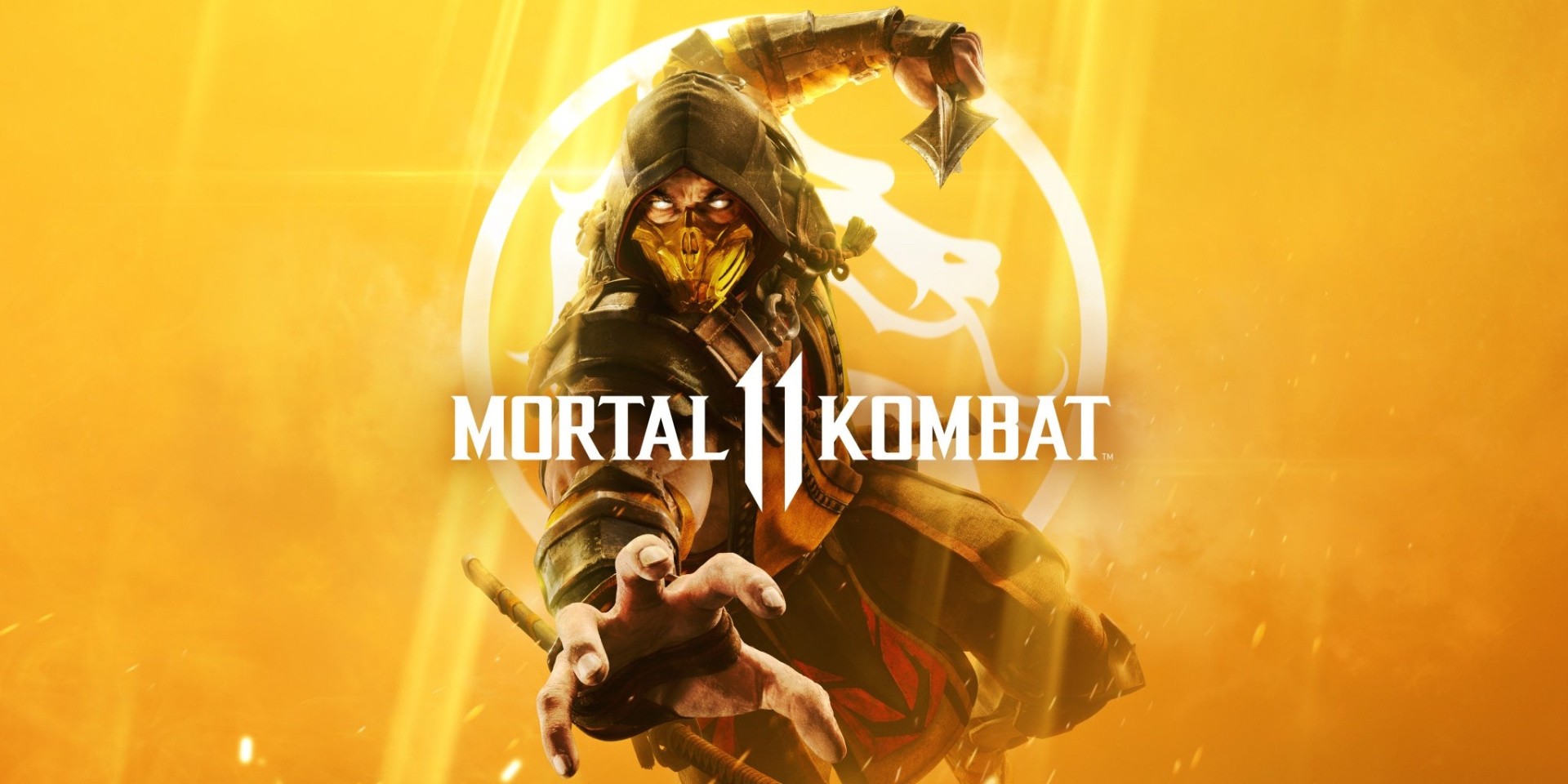
Mortal Kombat 11 On Switch Appears To Have Been Delayed Until May In Europe
Despite initially receiving an official worldwide release date of 23rd April, it would appear that Mortal Kombat 11 has been delayed until 10th May in Europe.
Several European retailers have simultaneously updated their product listings for the Switch version of the game, changing the expected release date from 23rd April to the new May date mentioned above. Only the Switch edition of the game has seen any change, and the North American release appears to be going ahead as planned in April.
Retailers include Amazon, which has changed the date on its UK and French stores, for example, and even the official Warner Bros. store (the company responsible for publishing the game). We haven’t received any official word from Warner Bros. on the delay, and we’ll make sure to update you if anything comes to light, but this certainly suggests that the game has definitely been pushed back.
Are you sad to see this one get a small delay? Are you thinking of picking this one up when it does launch on Switch? Let us know in the comments below.
Posted by: xSicKxBot - 01-15-2019, 03:04 AM - Forum: Lounge
- No Replies
A Reboot Of The Very Scary Final Destination Series Is In The Works
The Final Destination horror movie franchise is getting a reboot. According to The Hollywood Reporter, film company New Line has started working on a new Final Destination movie, with Saw writers Patrick Melton and Marcus Dunstan attached to write the story.
The new movie is described by THR as a "re-imagining" of the Final Destination series, but plot details are under wraps for now.
The first Final Destination premiered in 2000, starring Devon Sawa and Ali Larter. It was a huge hit, making $112 million globally against a budget of only $23 million. Unsurprisingly, New Line went on to make four sequels, which together have made nearly $700 million worldwide.
In the first Final Destination, a group of teenagers are about to get on an airplane, when one of their friends has a vision that the plane goes down and they all die. They get off the plane, only to watch it go up in flames after take off. Because they were supposed to die, the force of Death goes after them, killing them off one by one in horrific, gruesome fashion.
This same setup is used in the four sequels, though the circumstances are changed. It is a highly repeatable formula, which must have made studio executives happy. Presumably the new movie will be similar in structure and tone, but nothing has been announced as of yet.
There is no word yet on when the new Final Destination movie might come to theatres. We also don't know who will star in it or who may direct. Keep checking back with GameSpot for the latest.
The most recent entry, Final Destination 5, was released in 2014.
Melton and Dunstan were announced as the writers of a God of War movie for Sony, but that was back in 2012, and things could have changed since then.
Posted by: xSicKxBot - 01-15-2019, 03:04 AM - Forum: Windows
- No Replies
Presenting the 2019 Microsoft Showcase Schools
At Microsoft, we believe in the potential of every student. We believe educators deserve more time to teach. And, we believe that with the right tools, everything is possible. The schools nominated into our Showcase School program exemplify these beliefs in action by implementing innovative practices into their leadership, teaching, and learning practices into the development of their environments, and their technology choices. The result demonstrated at each one of these schools is increased student outcomes.
The diverse practices among schools stem from the unique cultures, local educational requirements, down to the needs of individual students. The common element in each of our Showcase Schools is passionate educators working for the common good. Their contributions go beyond the school into their communities and beyond. We see educators who use Minecraft in the classroom to empower students to solve real-world problems. Some use Skype to offer their students an understanding of world events and cultures. These schools lead by example and we are proud that their leaders select Microsoft solutions to better enable increased student outcomes and greater educational transformation success school-wide.
Take a tour of Showcase School Strumienie Szkola Podstawowa in Poland:
Twice a year, we pause to recognize some of the world’s most innovative School Leaders whose work drives increased student outcomes and educator/leader development on the ground, in each of these diverse schools, and globally. It is with awe and inspiration that this year we welcome to the 2018-2019 Showcase School program, 366 Showcase Schools and their School Leaders, who call 65 countries across the world home.
Showcase Schools’ thoughtful leaders empower educators and students to re-imagine and re-design leading, teaching, and learning in their schools and in their regions. These leaders also come together as a group to tackle challenges, celebrate successes, and share their learnings in a vibrant online community available exclusively to Showcase School Leaders in Microsoft Teams. They are committed to developing their own strengths as leader-learners and work together to learn about global trends in education and test new solutions locally, adjusting to meet the specific needs of their own communities.
Each year, Microsoft Showcase School Leaders and the Microsoft Innovative Educator Experts in their schools share best practices both online, through Microsoft Educator Community and Skype in the Classroom, as well as in-person at local events hosted by each Showcase School and global events, such as BETT, UK.
In addition to reaching out to their local communities and reaching within to empower educator and student outcomes in their own schools, Showcase Schools also:
• Provide Microsoft engineers with valuable insights and ideas, to evolve technology and improve teaching and learning practices based on classroom experience; • Gain access to professional and career development opportunities and certifications; • Host regional events showcasing their use of Microsoft solutions
The impact of Showcase School excellence is felt globally, as these schools support their local communities by providing the opportunity to experience tomorrow’s transformation, today.
Thank you, Showcase School Leaders, for all the work your educator teams and you do to transform education one school at a time.
Welcome to the Microsoft Showcase School community.
Marvel's The Punisher Season 2 Review: Taking A Bullet
Following cancellations throughout 2018, there are two Netflix/Marvel shows from the Defenders universe still standing: The Punisher and Jessica Jones. These also happen to be the two shows with upcoming seasons still outstanding, with Punisher Season 2 dropping on January 18.
Clearly, Netflix is waiting to actually release these final seasons before cancelling them too, judging by the fact that Luke Cage, Iron Fist, and Daredevil were all canned after their seasons aired last year. If I'm wrong, great! These shows haven't exactly been consistent in quality, but overall I've enjoyed becoming immersed in the world of Netflix's Defenders. On the other hand, if I'm right--well, at least for now we can enjoy the carnage that is The Punisher Season 2.
The Punisher Season 2 is very much more of the same, as far as Frank Castle's bloody hijinks go. Season 1, which released in 2017, left Frank in the wind, having maimed but not murdered his rival Billy Russo, and been cut loose by the powers that be. When we catch up with the Punisher in Season 2, he's sort of just drifting, staying in motels and hanging out in bars. It's very un-Punisher like; he even meets a nice lady, although predictably, that doesn't last long. You see, the Punisher's gotta Punish. It's what he does.
Frank's little fantasy drifter life as Pete Castiglione doesn't last long, as trouble quickly finds him in the form of damsel-in-distress Amy (Giorgia Whigham), a young girl being hunted by a small army of douchebags. The story of why plays out over the course of the season, and it proves to be somewhat relevant to the times in which we live, though probably not too relevant that it will ruffle any particular feathers.
Needless to say, Frank tangles himself up in the whole mess through a misguided but lovable desire to protect the innocent by executing as many of the guilty as possible. He faces off this season with two main villains: John Pilgrim (the very creepy Josh Stewart), a religious fundamentalist who paradoxically loves murder almost as much as Frank does, and the escaped Billy Russo, whose face isn't nearly as disfigured as everyone makes it out to be, which is a shame, because that would have been cool. Like last season, Homeland Security Agent Dinah Madani (Amber Rose Revah) and Castle's former squadmate Curtis Hoyle (Jason R. Moore) play prominent roles, and some other characters from the all-but-dead Defenders universe even crop up, which was clearly planned before the whole thing got cancelled.
On what could be its last time around the Netflix merry-go-round, Punisher Season 2 presents a mess of morals, motivations, and messages. Its portrayal of veterans as mainly degenerate dickheads looking for any excuse to do violent crimes remains problematic. Billy has selective amnesia, and remembers being best friends with Frank, but not why Frank now wants to kill him, which is just boring and never really pays off in the way you want it to. Frank, meanwhile, is still undoubtedly a psychopath, but the show seems hesitant to call a spade by its name, and Madani spends half the season trying to convince other characters (Royce Johnson's no-BS Detective Sergeant Mahoney, and Floriana Lima's imitation Harley Quinn, Dr. Krista Dumont) that he's really a good guy deep down. That may be the case, but it's easy to see the other side of it too.
That's really what makes The Punisher fun to watch: Castle is a deceptively complex character. Even though he's on the right side of these various conflicts, you kind of want someone to check Frank Castle's unstoppable macho killing spree. And yet, that would mean stopping Jon Bernthal too, which would be a shame, because he remains an absolute joy to watch. He's the manliest man on the planet; his endless grunting and hollering causes lesser beings to crumple in fear (also, he punches them really hard). Castle takes more bullets, slashes, and various hard knocks than any real human could possibly withstand, but the show never stretches disbelief too far, because Bernthal really seems that tough. The whole thing wouldn't work without him.
The Punisher Season 2 rests comfortably in that middle ground Netflix's Marvel superhero shows have too often occupied: It's pretty good, not mindblowing like the best of them, and nowhere near the dizzying lows they've hit over the years. It's entertaining more often than not, and mostly well made. If they'd all been like this and public opinion hadn't turned against the Defenders, maybe the whole thing would have played out differently. Maybe it still will--who knows! For now, stream The Punisher Season 2 on Netflix next Friday, January 18, and enjoy the carnage while you can.
Key Resources for Effective, Professional Open Source Management
At organizations everywhere, managing the use of open source software well requires the participation of business executives, the legal team, software architecture, software development and maintenance staff and product managers. One of the most significant challenges is integrating all of these functions with their very different points of view into a coherent and efficient set of practices.
More than ever, it makes sense to investigate the many free and inexpensive resources for open source management that are available, and observe the practices of professional open source offices that have been launched within companies ranging from Microsoft to Oath to Red Hat.
Fundamentals
The Linux Foundation’s Fundamentals of Professional Open Source Management (LFC210) course is a good place to start. The course is explicitly designed to help individuals in disparate organizational roles understand the best practices for success.
The course is organized around the key phases of developing a professional open source management program:
Open Source Software and Open Source Management Basics
Open Source Management Strategy
Open Source Policy
Open Source Processes
Open Source Management Program Implementation
Best Practices
The Linux Foundation also offers a free ebook on open source management: Enterprise Open Source: A Practical Introduction. The 45-page ebook can teach you how to accelerate your company’s open source efforts, based on the experience of hundreds of companies spanning more than two decades of professional enterprise open source management. The ebook covers:
Why use open source
Various open source business models
How to develop your own open source strategy
Important open source workflow practices
Tools and integration
Official open source programs play an increasingly significant role in how DevOps and open source best practices are adopted by organizations, according to a survey conducted by The New Stack and The Linux Foundation (via the TODO Group). More than half of respondents to the survey (53 percent) across many industries said their organization has an open source software program or has plans to establish one.
“More than anything, open source programs are responsible for fostering open source culture,” the survey’s authors have reported. “By creating an open source culture, companies with open source programs see the benefits we’ve previously reported, including increased speed and agility in the development cycle, better license compliance and more awareness of which open source projects a company’s products depend on.”
Free Guides
How can your organization professionally create and manage a successful open source program, with proper policies and a strong organizational structure? The Linux Foundation offers a complete guide to the process, available here for free. The guide covers an array of topics for open source offices including: roles and responsibilities, corporate structures, elements of an open source management program, how to choose and hire an open source program manager, and more.
The free guide also features contributions from open source leaders. “The open source program office is an essential part of any modern company with a reasonably ambitious plan to influence various sectors of software ecosystems,” notes John Mark Walker, Founder of the Open Source Entrepreneur Network (OSEN) in the guide. “If a company wants to increase its influence, clarify its open source messaging, maximize the clout of its projects, or increase the efficiency of its product development, a multifaceted approach to open source programs is essential.”
Interested in even more on professional open source management? Don’t miss The Linux Foundation’s other free guides, which delve into tools for open source management, how to measure the success of an open source program, and much more.
Stretch your muscles and head out on the ultimate marathon of Japan in a silly party racer! Hurdle barrels, outrun Shiba Inu, and dive out of the paths of bicycles, all while throwing fruit at your opponents and dashing across planks precariously balanced over waterfalls in an unreal marathon across the whole of Japan.
Legendary Eleven is an ?epic arcade football game inspired by the golden age of football spanning the 70's to the 90's. A fresh approach to the beautiful game, with fluid gameplay and unique mechanics like morale, Super Shots or stickers to boost your stats. Choose from 36 teams full of glorious haircuts, moustaches and legends in short shorts. Lead them to glory and win the World Cup.