Review: Fate/Extella Link – One Of The Best Musou Games On Nintendo Switch
Musou fans have been a bit spoiled this generation, with many great releases in this niche genre coming out for the Switch, some of which are from the Big N itself. One of the more middling Musou games from the early days in the Switch’s life was Fate/Extella: The Umbral Star, which married that tried-and-true hack ‘n’ slash gameplay with the long-running, convoluted anime franchise, and though it had its issues, that release proved to be an interesting and promising experiment that we hoped would get a follow up. Now, XSEED has opted to take another crack at the concept with Fate/Extella Link, a sequel which still carries some of the issues of its predecessor, but proves to be the better game on the whole.
The story of Fate/Extella: Link picks up right where its predecessor, Fate/Extella: The Umbral Star, left off, following the Servants’ search for Altera after she’s kidnapped by a mysterious new foe who’s begun to ‘Oraclize’ other Servants in a mad campaign for assimilating SE.RA.PH itself. As one may expect, the narrative often leans hard into anime tropes and plotlines, packing the story full of larger-than-life characters and ridiculous story beats that are played with almost comical seriousness; none of these elements coalesce into a particularly memorable or compelling story, but you’re sure to have a great time along the way as you chuckle at the jokes and revel in the overall campiness of it all.
Even so, while the underlying narrative proves to be relatively simple and easy to follow, much of it is bogged down by mountains of lore and references that newcomers will be largely ill-equipped to deal with. A conveniently included glossary helps to assuage this somewhat, but make no mistake, this is undeniably a game designed to be played by fans of the series (or at least the last Extella game), and those of you that are coming into this one with little to no knowledge of the series are in for a rough first few hours as you come to grips with the many esoteric terms, names, and concepts that come at you thick and fast.
Of course, this being a Musou game, the story is merely there to provide sufficient context for why you spend hours beating the tar out of literally thousands of nearly helpless enemies on a battlefield, and luckily Fate/Extella Link has found a way to make this activity quite enjoyable. Each level sees you taking control of a Servant whose job is usually to defeat a boss character and secure a battlefield, divided up into ‘Sectors’ that are either controlled by your team or the enemy. As you jump between sectors, clearing out the local opposition and wresting control of the battlefield back piece by piece, various sub-objectives arise that will demand your immediate attention in some capacity, such as when the ‘Master’ is under attack by an enemy unit or when a series of especially powerful enemies need to be cleared out before they can escape and summon reinforcements.
What’s striking about all this is just how dynamic and kinetic these battles often feel; there’s always something happening on the other side of the map that you should probably get involved in, and every minor victory you claim is merely the gateway to another, bigger fight before the level is finally over. This sense of momentum and movement goes a long way towards making each level feel like an actual battle is taking place, where the outcomes of countless isolated squabbles and scuffles add up to cause the tide to shift back and forth and back again constantly as the fight wears on.
Every character has unique skills (more on that later), but ultimately shares the same basic moveset for cutting through the endless hordes, and this moveset is ultimately built around the concept of momentum. Your character can pull off flashy, deadly combos through a combination of light and heavy attacks, and every one of the thousands of enemies you defeat contributes a little bit to your ‘Moon Drive’ gauge. Once full, a tap of the ‘A’ button causes your character’s attack and defence to rise dramatically as the gauge slowly empties, and you can choose to either benefit from this buff in battle prowess in full or to empty the gauge early by executing a powerful, screen-clearing attack by tapping the ‘A’ button once again. All kills executed in your Moon Drive also cause your ‘Noble Phantasm’ gauge to gradually fill, and once that’s ready to go, your character can execute a special attack that’s powerful enough to warrant its own (skippable) cutscene as they positively scorch the earth with a ridiculous and over the top attack that’s as bombastic as it is devastating.
Through all of this, you can also pepper in ‘Active Skills’ to keep combos going and put boss characters on the ropes by doing things like area of effect attacks and buffing certain stats temporarily; up to four of these skills can be equipped at once and though they each are limited by slight cooldowns, knowing when to use them can have an enormous impact on the outcome of your battles. If there’s one thing that Fate/Extella Link absolutely nails, it’s creating a sensation of your character becoming an unstoppable force of nature that no being can possibly hope to overcome; some may no doubt find such a portrayal to be boring due to the lack of tension, but there’s something oddly refreshing about assuming the role of a character whose enemies don’t possess any meaningful chance of winning.
When not in combat, you can power up your Servants in the flying castle that acts as your home base, and this is where players are introduced to the myriad customization systems that power progression. Every time your character levels up in battle, they unlock either a new Active Skill or power up an old one, and here you can pick which four skills you want to take with you into battle. You can also equip Install Skills you’ve picked up from felled enemies, which act as passive buffs to things like attack speed, drop rates, and elemental resistances, and Mystic Codes, which act as a sort of ‘armour’ you can wear that grants minor support abilities like healing to your Servant. On top of this, you can also set which side missions you’d like to attempt in the coming mission; clearing minor achievements like “clear 3 sectors while at over 50% HP” will boost your bond level with the Servant that offered that side mission and unlock more Install Skill nodes for them.
What’s nice about all these separate, interlocking progression systems is that you can truly spec out a character to be exactly the kind of unit you want them to be, while also giving you the satisfaction of knowing that you’re always moving forward in some fashion and that much of that forward motion applies to all characters. Plus, there’s plenty of nice quality of life features to cut back on the grind somewhat, such as how you can spend currency to level up weak units to your current strongest unit’s level, or how duplicate Install Skills are automatically merged with existing ones to power them up slightly. We were pleased by the depth present in the progression of Fate/Extella Link, as it offers up a bit more complexity than one would expect to find in a typical button mashing Musou game by adding in more RPG elements.
Though it should only take you about fifteen hours to clear the story and see its different endings, there’s plenty of replayability to be found in Fate/Extella Link. For one thing, every level grades you based on how quickly land effectively you routed the enemy, and new Mystic Codes are awarded depending on the kind of rating you got; if you’d like to get that coveted 100% on your profile, you’ve got to figure out which characters and builds will allow you to play through certain levels nearly flawlessly. On top of that, clearing stages unlocks special ‘EX’ levels in a side mode that remixes objectives and bosses to provide a different challenge, while also baiting you with the promise of gaining special new costumes for Servants. There’s also a fascinating new multiplayer mode that offers up the opportunity to play in relatively equal 4v4 ‘King of the Hill’ matches either locally or online, though there’s a baffling omission of true local multiplayer; if you want to play with somebody in the same room, they need to have their own Switch and copy of the game.
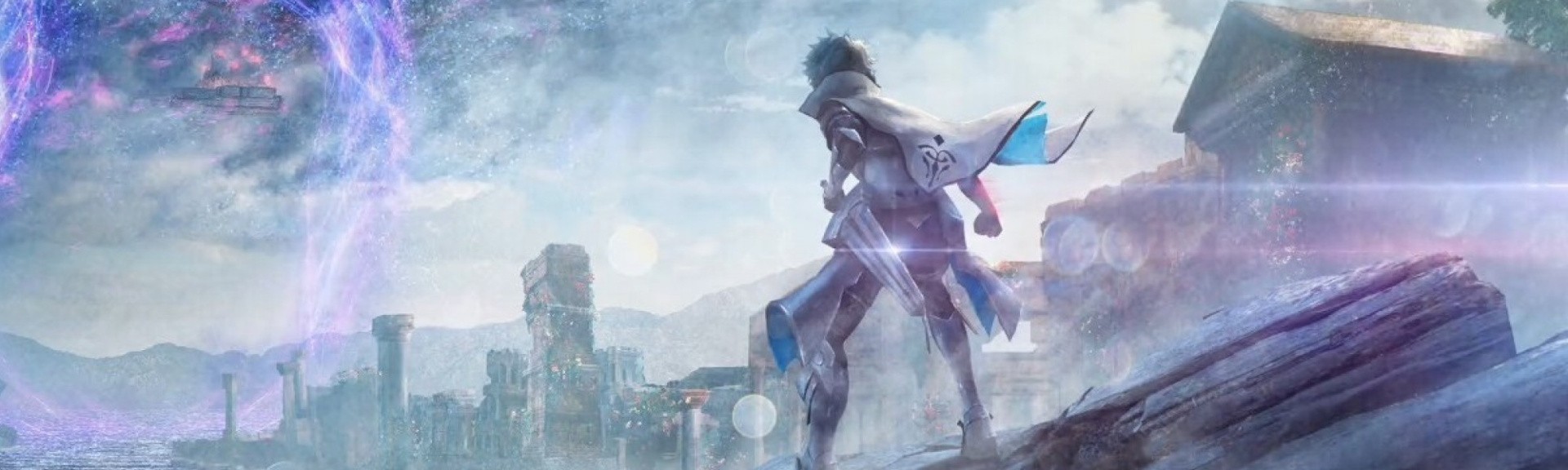
From a presentation perspective, Fate/Extella Link manages to completely nail the visual style that it goes for, offering up a smooth and inventive visual feast that looks great whether on the Switch screen or the TV. Though the framerate never rises above 30FPS, the anime art style is taken to its full potential with a diverse and imaginative line up of detailed battlefields that prove to be as weird as they are artistically impressive. One battle may see you fighting your way through a traditional Japanese temple, complete with cherry blossom trees, while another sees you fighting through a dark cyberpunk cityscape; it’s next to impossible to guess what kind of battlefield your Servants will fight on next and that visual diversity is greatly appreciated.
Plus, there’s quite a bit of flashiness in the moment to moment details, such as the effect that generates every time you jump between sectors, and this goes a long way towards making Fate/Extella Link’s graphics feel well-realized and pleasing to the eyes. All of this is then matched by a high-energy soundtrack that matches the ridiculous action and anime roots quite well; though not particularly memorable by any means, this is a soundtrack that does a great job of setting the tone.
Conclusion
The nature of the genre makes it pretty tough to do a Musou game wrong, but it’s also rather difficult to do one that’s truly right, providing an experience that’s capable of rising above the repetition and relatively easy difficulty. Fate/Extella Link manages to do just that, including all of the trappings of a Musou outing while sprinkling in a handful of fun, engaging, or creative changes to the overarching design and style to escalate this release a bit above the competition (and certainly above its predecessor). If you’ve never much been a fan of mindless hack ‘n’ slash games, we’d say this is a great way to test whether this genre is for you, and if you consider yourself to be a Musou nut, this is one of the best distillations of the concept we’ve yet seen. Either way, Fate/Extella Link is well worth your time; we’d recommend you add it to your Switch collection at some point.
Death Squared Dev SMG Studio Teases A New Surprise-Launch For Switch
Moving Out – SMG Studios
Could SMG’s ‘Moving Out’ be landing on Switch tomorrow?
We’ve been wearing our investigatory caps and uncovered what appears to be a tease for a very imminent surprise game launch on Switch; if we had to, we’d take a guess that it’s coming tomorrow.
As regular visitors are likely already aware, we’ll be treated to a brand new Nindies Showcase presentation tomorrow (you can watch it live with us right here from 9am PT / 12pm ET / 4pm GMT / 5pm CET). It goes without saying that the show will feature a number of indie games coming to Switch, potentially providing us with release dates, some surprises, and maybe even the odd ‘out on Switch right now’ moment.
It just so happens that, only four days ago, SMG Studios tweeted the following message. Maybe putting on our special investigatory headwear was a little over the top – you can probably assume where we’re heading with this already.
That’s right, this could absolutely mean that SMG is about to drop a brand new game on Switch tomorrow. We can’t know for sure, of course, but it certainly looks that way.
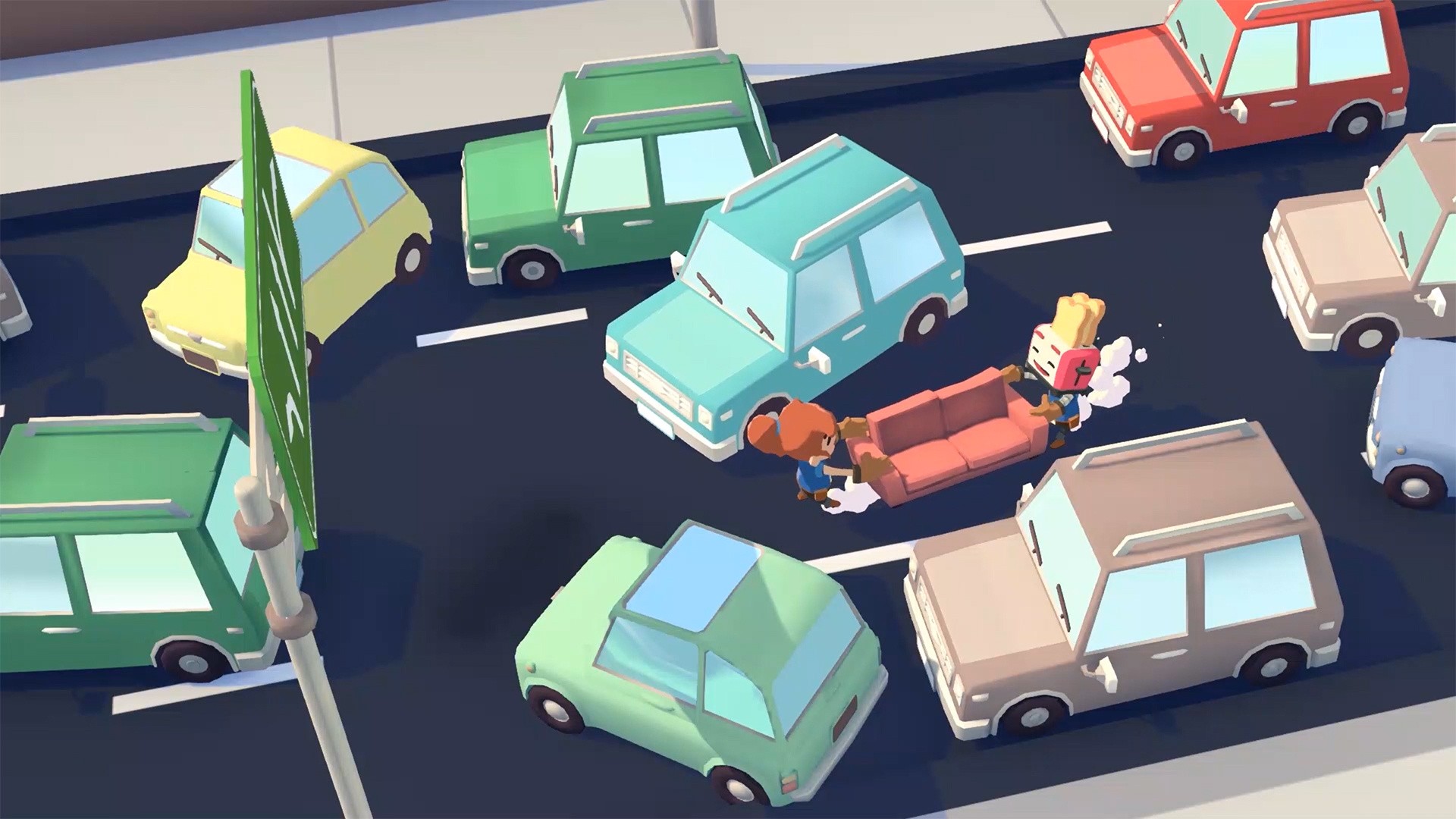
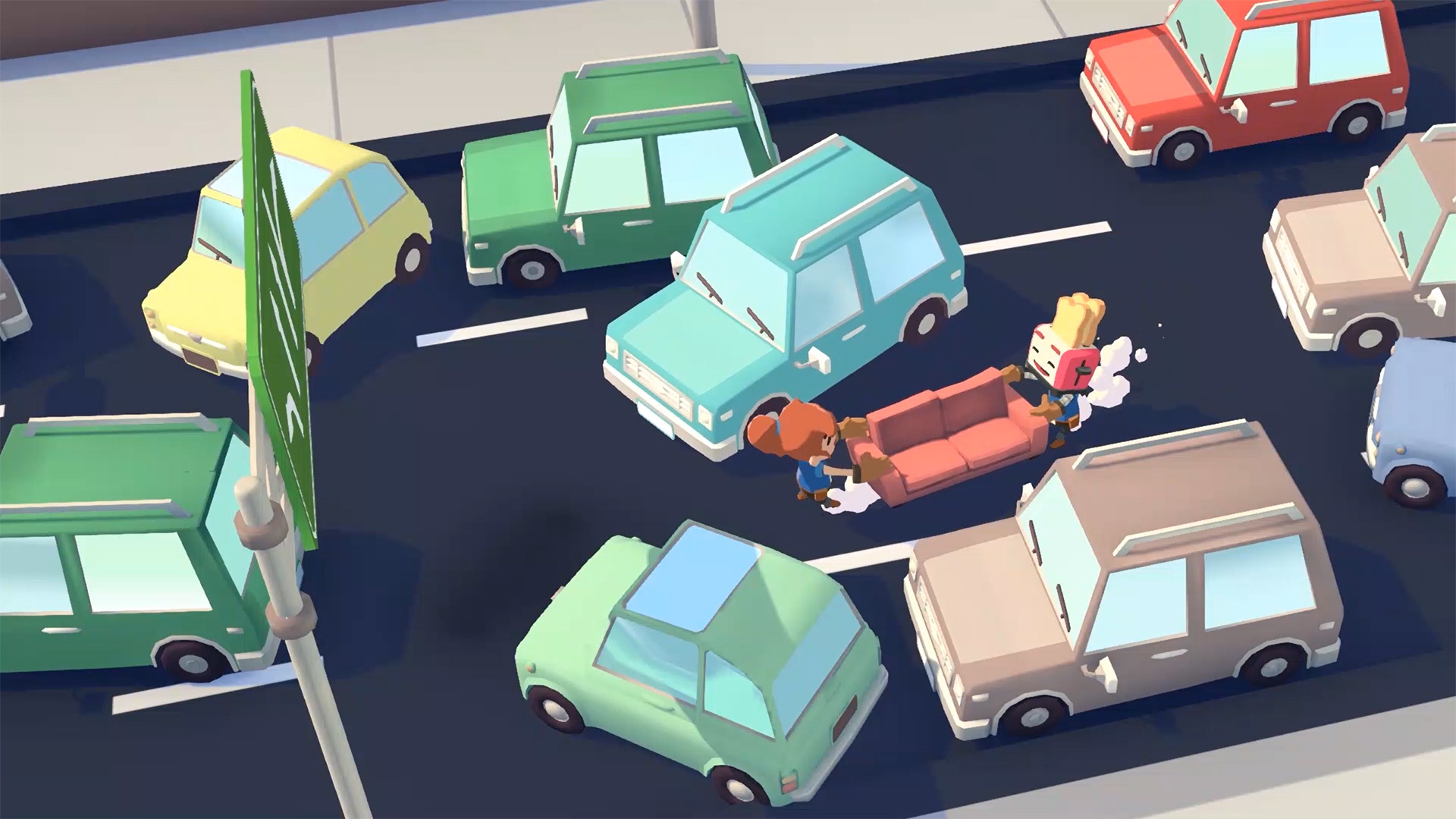
So what could it be? Well, SMG has already released Death Squared and Super One More Jump on Switch, but it has plenty of other titles up its sleeve, too. Joining Super One More Jump are mobile titles One More Bounce, One More Line and One More Dash – all of which could make the leap – and other games like Risk (based on the board game), Moving Out (a moving house sim currently on Steam), or mobile game Fast & Furious Takedown could potentially go down well, too.
Having said all this, it could even be something entirely new – we’ll have to tune in tomorrow to find out.
Do you think the tease is referencing the show tomorrow? What would you like to see from SMG Studios? Share your thoughts with us below.
Posted by: xSicKxBot - 03-20-2019, 07:59 AM - Forum: Lounge
- No Replies
Anthem Launch "Rougher Than Expected," BioWare Still Committed
Anthem's launch had its share of issues, from crash bugs to weapon balance bugs and more. Now BioWare general manager Casey Hudson has conceded to the launch issues while also recommitting to long-term support.
In a post-launch update on the BioWare Blog, Hudson says it was a "rougher launch than expected," and says that the studio was "ready for the possibility that unexpected issues might arise." In a broader sense, he said that the degree of the problems didn't become apparent until the scale of players had increased, and that the studio shares in the community's disappointment at these issues.
"It makes me sad to hear about any issues that would hold someone back from fully enjoying the game," Hudson said. "I take that very personally, and it’s been our top priority to get improvements out to you in the fastest, safest way."
He then transitioned to plans for the future, explaining that improvements are coming to endgame loot, game flow, and stability. This is in addition to adding more world events and story content, as outlined in its roadmap.
"But we understand there is skepticism out there," he continued. "We hear the criticisms and doubts. But we’ll keep going anyway, working hard every day on Anthem – an ever-changing world, constantly improving and growing, and supported well into the future by our team of passionate developers."
Hands On: Getting Our Hands Dirty With My Time At Portia On Switch
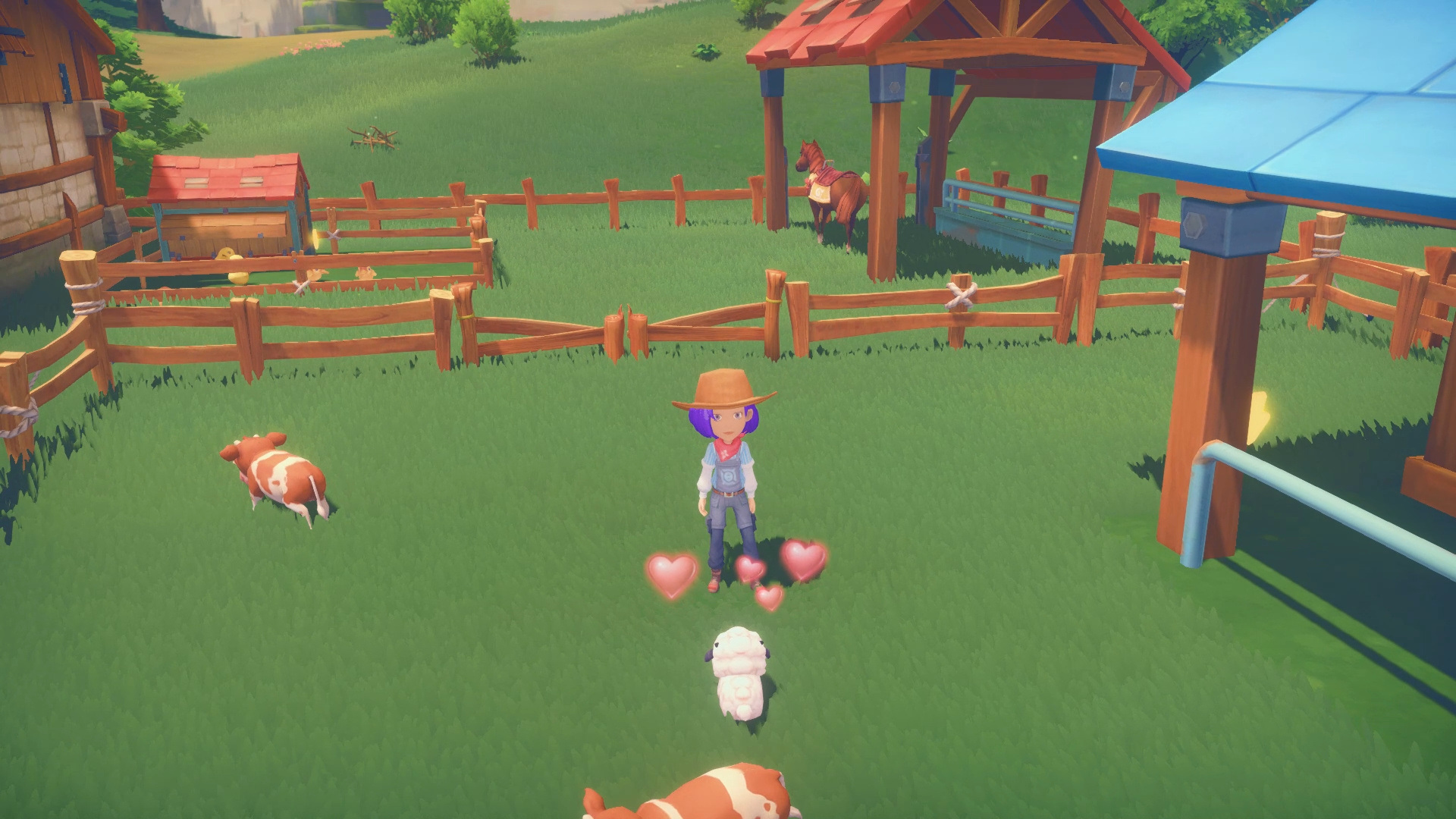
Team17 has revealed that its RPG/crafting sim My Time at Portia is building up to a 16th April release on Nintendo Switch. Being the lucky so-and-sos that we are, we were recently invited to the studio’s headquarters in sunny Wakefield, UK to spend some quality time with the game, giving us the chance to see what all the fuss is about for ourselves.
If you haven’t heard of this one before, or if you need a quick refresher, let us quickly fill you in on what it’s all about. Things kick off in the enchanting town of Portia, where you’re ready to start a new life and restore your Pa’s neglected workshop to its former glory. With just a workbench and a workshop handbook in your arsenal, your job is to gather, mine, and craft your way to making the workshop the best in all of Portia, farming, cooking, fishing, and even finding romance along the way.
The game’s inspired by the likes of Animal Crossing, Harvest Moon and Dark Cloud 2, and we couldn’t help but be reminded of Stardew Valley throughout our entire hour and a half play session, too. If you’ve played any of these before, you’re going to immediately feel at home in Portia; everything from your item inventory, your home and its upgrades, the community board full of side quests, and the quirky villagers roaming around town make this feel exactly how fans of the genre would expect.
Within the opening hour, we’d managed to learn the ropes of crafting, met some of the villagers, took on our first side quest, accidentally angered a stray cat by feeding it a berry it didn’t like, and came across a joyous pack of wild llamas that seem to just bounce around outside your home. The game’s inner workings are clearly very tight and sophisticated, but the pure playfulness presented on the outside is fun, charming, and not afraid to be a little bit silly.
To provide us with a sense of what to expect later in the game, Team17 soon plonked us into someone’s save file which boasted a 255-hour playtime (incidentally, we were told to expect around 60-100 hours worth of content from just the main story and a selection of side quests). The changes were pretty breathtaking; gone was the bare little village from the game’s opening, and in its place was a huge, sprawling map full of new areas, a desert, other islands, a museum, new villagers, and so much more. Just like the most addictive games of its genre, My Time at Portia feels like one of those games you’ll be sinking all of your time into.
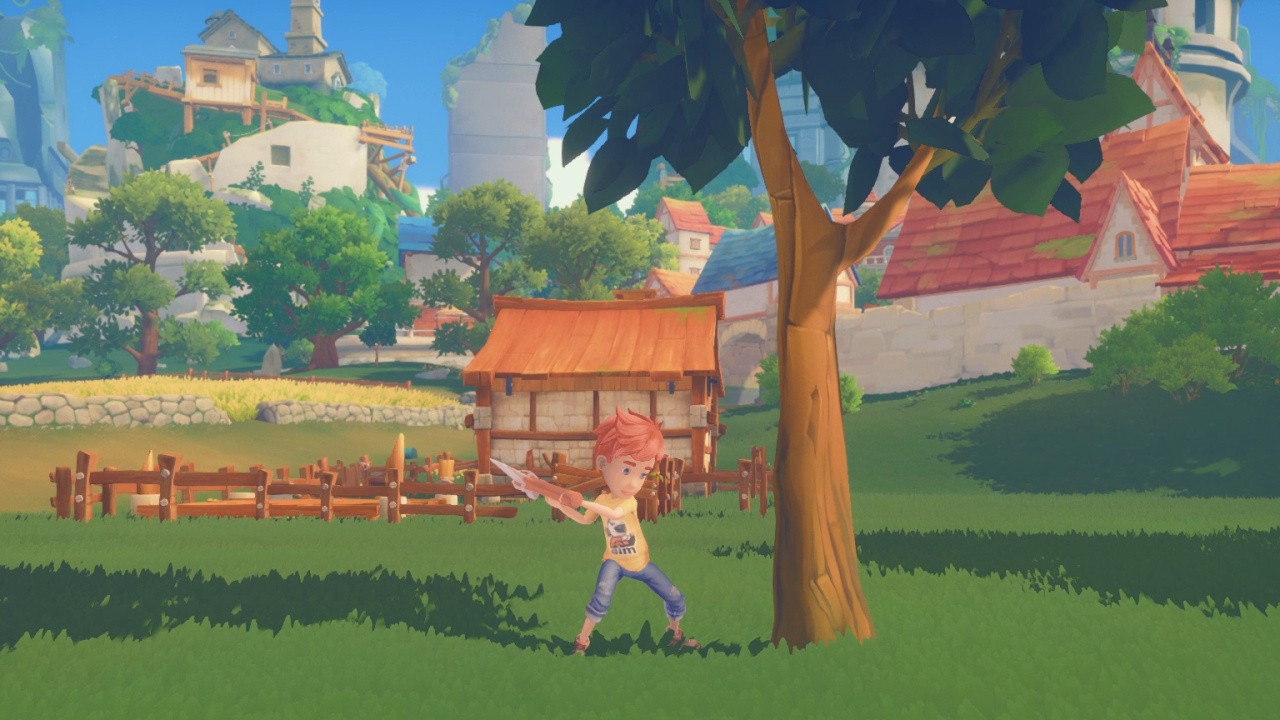
Of course, the game is already available on Steam as we speak, so some of you may well be more interested in how it performs on Switch if you’re thinking of buying for a second time. We experienced a handful of lengthy loading screens and the occasional frame stutter, but the presentation is otherwise as lovely as you’d hope for. You can likely tell from the images on this page that Portia benefits from a colourful, cartoony vibe, with everything from your fully customisable protagonist to the biggest, baddest dungeon bosses bursting with a cute layer of character.
All in all, then, My Time at Portia is definitely one to keep an eye on. If you’re not a fan of this type of game, we doubt the final product will change your mind (everything on offer seems to have been executed very well indeed, but we wouldn’t call what we’ve seen revolutionary), but this could well be a brilliant addition to the gaming libraries of those that are. Our short amount of time hinted at a deeper plot, full of post-apocalyptic undertones and mysterious, hidden relics from the past, and we’re looking forward to investigating further and making the town as perfect as can be.
My Time at Portia launches on Nintendo Switch on 16th April, with pre-orders (which include a Housewarming Gift Set) available from today. Are you looking forward to playing it later this year? Let us know your thoughts in the comments.
Random: Nintendo Gets Crafty With Its Yoshi’s Crafted World Promo Materials
Yoshi’s Crafted World is just ten days away from release, with a worldwide launch planned for 29th March. We’re eagerly awaiting the day we can finally get stuck into everything it has to offer, but until then, we might just find ourselves watching this little video over and over again.
Shared by Twitter user @supino403, this tweet shows off a charming little advertisement for the game in Japan. Rather than sticking to the usual fliers or posters you might spot in your local gaming store, it appears that Nintendo has opted to go for a clever, folded paper system, replicating the mechanics found within the game. Awh.
We can’t help but feel like this would be a perfect design for a small instruction manual included with the physical version of the game. We know it’ll never happen, but imagine having all of the controls and a little bit of background info presented to you on one of these to get you in the mood for the game. Oh manuals, how we miss you.
It’s hard to openly encourage people to take an idea and re-purpose it. There’s a dangerous grey area where developers don’t do quite enough reinterpretation. You end up with something that’s akin to cloning. There are famous cases of this, especially on mobile marketplaces. Pirates Outlaws clearly has Slay the Spire in mind, and even though it doesn’t copy much more than the basic premise, it could have definitely learned more from that superior game.
As a pirate captain, your goal is to sail the dangerous seas, stopping at islands, coves, and settlements on the way to fight rivals or spend your loot. Each of these locations is a hub for either a fight against creatures of buccaneers, an event to dig for treasure or explore mysterious forest, or a shop to buy relics and heal up. Every stage has a final island, with a boss just waiting to steal everything you just earned.
There are lots of ways to potentially die on your way to that island. It’s a real grind to get there, and it may take a few runs before you even get to the first boss for the first time. But after battling your way up, killing enemies and gaining more abilities and items to get stronger, that first time you do it can feel super rewarding.
But it will be the last time you feel such accomplishment.
Partially because of the combat. It features the deck building methods of Slay the Spire, but it lacks the same sort of depth. The hand size is capped at five cards, and as that isn’t a problem in and of itself, I always felt like I was a draw away from the play I actually wanted. You have to toss your entire hand every turn, so there is no holding on to a card to wait for a potential combo in future turns. Anything you do has to be drawn into. You have a starting deck of around 10 cards, so you draw through it quickly. But since you can’t edit the deck at will, you really have to just deal with your probabilities until you hit a couple of islands and win some more cards. It’s hard to develop any real strategy until mid-way through a stage.
Card interactions aren’t as robust as Pirates Outlaws’ inspiration either. Knowing how to juggle your limited ammo (see: mana) while attempting to make interesting plays can be thought provoking. Most of the time, it’s just doing some quick math and figuring out how to do more damage than you take. When the odd brilliant play comes along, you feel like Jack Sparrow, outwitting his enemies with guile and gusto.
I often found myself just having to accept taking errant damage from early enemies while feeling like I had no agency in the matter. Part of that is just the nature of card games, of course. But the starting deck for the starting class, the Gunner, seems to lack much room for error. There are other classes, but you’ll play dozens of games as the Gunner before you can ever play them. Unless you’re willing to pay for it.
At the end of each run, on top of the experience you gain towards new cards, you get gold and repute. Both of these currencies can be spent on new chapters to play in, card packs to add to your collection, or heroes. But you don’t get nearly enough on runs to ever reasonably unlock even the cheapest secondary hero. It takes several runs to get comfortable with getting past the first stage consistently, but you’ll only bag just under 100 gold after beating the first boss. You’ll need to do that over ten times to unlock the Swordsman.
These other characters are diverse enough in passive skills, decks, and other metrics that being able to pick and choose between them at will would really help diversify what often feels like limited tactical gameplay. The struggle it takes to stack the necessary amount of gold to buy them – and in some cases, the repute to use them – is such that it discourages the want to stick with the game for the sake of experimentation.
Or you can drop a real world dollar or two for an instant infusion of in-game gold and buy it outright. It’s hard to not feel just a little insulted by how blatantly this game is compelling you to participate in its IAP scheme. All that said, the game is only a one US dollar, and the biggest gold pack will set you back five. You’d have to buy two of them in order to have enough gold to have access to every hero you can spend it on and still won’t be able to unlock them all, as one can only be purchased with real money (another five dollars). You have to love the grind to get a lot out of Pirates Outlaws, because I don’t see any reason to pay $16 dollars for this game when the one it’s riffing on is just a few dollars more on Steam.
It’s a crying shame too, because it looks great. The animations and card effects are weak, but the bold colors of the environments and characters pop. The enemy designs are evocative and interesting, even if they are also just sort of static. The menus are well laid out and easy to read. The cheese in the trap at least looks delicious.
But I can only recommend Pirates Outlaws if you really want to pour a lot of time into it. It’s wickedly unbalanced both in combat and economically, and only the strong willed can survive to see it plunder. The learning curve is relatively low, but moments of true progress seem to only come so few and far between. Caving in and spending more money on the game just to speed up that process is just salty icing on a sour cake.
Today at GDC 2019, Allegorthmic, recently acquired by Adobe, announced the open beta of Substance Alchemist to existing Substance customers. Alchemist is a tool for authoring and managing materials and is part of the Substance subscription.
Details from the press release:
SAN FRANCISCO, Calif. – March 19, 2019 – Today at Game Developers Conference (GDC) 2019, the Substance team announces the start of the Project Substance Alchemist open beta. Effective immediately, all current Substance subscribers have exclusive and unrestricted access to the latest Substance material tool, uniting the Substance ecosystem like never before. Artists now have a playground for creating and augmenting entire libraries of materials with ease.
Project Substance Alchemist advances the art of making and managing 3D materials through instinctive simplicity. Creators can rely on a powerful, streamlined workflow and an intuitive user interface. It’s simple, fast and it uses some of the most advanced technology around. By hiding its complexity through easy-to-use tools like parametric sliders and filters, Project Substance Alchemist brings efficiency to artists and designers, without giving up any of the power that helps them thrive.
Starting today, artists are able to leverage the power of a tool that can quickly be adapted to meet their needs. Users can access materials in several ways, including downloading materials directly from Substance Source, find materials offered up by the Substance community or even upload real-world photographs. From there, they can quickly elaborate their own libraries of materials. For instance, a cobblestoned street can be honed to an artist’s exact specifications within Project Substance Alchemist, whether they desire a brand-new look with polished surfaces, or a broken down feel with moss and damaged tiles.
Project Substance Alchemist puts powerful tools into the hands of artists who work with scans, with quick and reliable tiling, as well as an AI-powered delighter. Trained with thousands of images, the delighter can instantly balance the shadows and light tied to photos and scans, so that lighting remains even and consistent. Designers who need to iterate rapidly on a material can also enjoy a vast array of variations with the instant creation of material collections based on a single image or a moodboard. Project Substance Alchemist can analyze the artist’s material and automatically generate suggestions on colors and textures, ensuring compatibility and additional creation options.
Although it is designed as a standalone tool, Project Substance Alchemist is deeply tied to the existing Substance ecosystem. Artists can search through their Substance Source downloads, import materials and filters made in Substance Designer or swap creations through the Substance Share artist exchange. Imported materials can then be added to the artist’s personal library for later use, or applied to an asset in Substance Painter. Thanks to the standardization of the Substance format, materials created in Substance Alchemist can be exported and used in every major 3D tool, including Unreal Engine, Unity, 3ds Max, Maya and many others.
Based on years of industry-leading research, and built with the help and feedback of the Substance community, Project Substance Alchemist will continue to develop in order to adapt to the evolving needs of artists and designers. The open beta is available now. For a video walkthrough, click here.
Pricing/Availability
Project Substance Alchemist is available at no cost to current Substance subscribers. Subscriptions come in Indie or Pro plans, priced at $19.90/month and $99.90/month respectively. Enterprise and education pricing is available upon request. Students and teachers can request a license at no cost.
In addition to the release of Alchemist, Allegorithmic also did a blog post on the status of their acquisition by Adobe and the effects it will have on future licensing terms. The key details are as follows:
Since the acquisition, we’ve heard lots of questions from our community about licensing and pricing. Our goal with licensing and pricing has always been to be fair to everyone and we’re continuing that philosophy. We’re planning to introduce new offerings late this year, but until then, our licensing and pricing structure will not change.
These future offerings will be primarily subscription-based, but we will continue to offer indie perpetual licenses. We believe that when the content and services offered in a subscription package evolve and improve at a steady pace, the subscription model is the best way for us to innovate fast, continuously improve your tools, and bring you more value.
I know perpetual licensing is important, especially in the indie space, so this should be taken as good news. That said, it’s Adobe calling the shots now so who knows what will ultimately happen.
The Oculus Quest itself is still due out for a vague sometime-in-2019 release, but nabbing Beat Saber as one of the self-contained VR headset’s launch titles is a significant push to bolster the platform’s offerings ahead of that eventual launch.
Oculus has already said that it’s aiming for a ‘quality-first’ approach for games that show up on the Quest’s game store, and the Beat Saber announcement certainly falls in line with that. It’s a push detailed in a recent blog post on the company’s site, and one that ultimately aims to focus on apps that take advantage of some of the Quest’s flagship features like its inside-out 6DOF tracking, and one that’s led to a stricter application process for devs looking to land a game on the platform.
Posted by: xSicKxBot - 03-20-2019, 01:42 AM - Forum: Lounge
- No Replies
Unity and Nvidia partner to launch real-time raytracing tech
Newsbrief: Unity and Nvidia have joined forces to launch real-time raytracing tech through Nvidia’s RTX platform.
For Unity’s part, this means that the company’s High Definition Render Pipeline will offer devs a way to implement real-time raytracing in their Unity-based projects and drastically improve the lighting effects in those games.
The tech is launching into as early-access, production-focused version today with a full preview launch due out later this year. The partnership, meanwhile, aims to open up the ability to render photorealistic image and lighting quality in real time to a larger pool of developers.
On Nvidia’s side, the partnership could give its RTX tech a potentially-need boost. The company cut its financial forecasts earlier this year after sales of the RTX GPU line were below expectations, a shortcoming that could be attributed to the fact that not many yet-released PC games have implemented the raytracing tech RTX offers up.
Starting at 2:00 p.m. PST today, members of the Xbox One Preview Alpha and Preview Beta Rings will begin receiving the latest 1904 Xbox One system update (19H1_RELEASE_XBOX_DEV_1904\18352.2003.190306-1930). Read on for more about the new features, fixes and known issues in the latest 1904 system update.
DETAILS: OS version released: 19H1_RELEASE_XBOX_DEV_1904\18352.2003.190306-1930 Available: 2:00PM PST 3/9/19 Mandatory Date/Time: 3:00 AM PST 3/10/19
New Features:
A complete feature list for 1904 is published here.
Fixes:
Sign-on
We have resolved a sign in issues with UI and Images with consoles that had more than 10 profiles installed that made it difficult for users to sign in.
We have fixed the issue in which some users found that they were unable to add an account to the console.
System
Various localization fixes.
Known Issues:
Audio
We are aware of issues of No Audio heard from Non-Spatial Audio games when using Dolby Atmos for Home Theater with the LG SJ9 soundbar.
We are tracking the issue in which users with Dolby Atmos setups may have no sound or low sound (with snap, crackle and pop!) when coming out of Instant On. Workaround : Reboot your Audio Video Receiver (AVR) to reenable the audio stream correctly as one option. Also try changing your console Audio settings back to Dolby Digital to restore sound then reboot your AVR to confirm sounds then change the console back to Dolby Atmos in Audio settings.
Disney Adventures
We are tracking an issue that this title is crashing on launch.
EA Access App
We are tracking the following two issues with the EA Access app and the 1904 recovery:
Users are unable to purchase an EA Access subscription from inside the EA Access app. When you select the icon to renew nothing happens. Workaround: Purchase the renewal from www.xbox.com or from the Microsoft Store app.
Users are unable to get a game trial from inside the EA Access App. When you select the Game trial icon nothing happens. Workaround : Search for the trial in the Microsoft Store and install the trail from the game Product Display Page (PDP).
Game Pass Mobile App
Issue/Impact – After pushing a remote installation of a game from the
Game Pass mobile app, customers will not see progress of the installation on in the mobile app and may not receive install notifications. The game will still successfully install if there is sufficient available space on the console.
Affected audience – must be in 1904 preview, must be a GP subscriber, must be using the GP mobile app, must be pushing game installations from the app.
Workarounds – None. A fix is coming in the next version of the mobile app in March. Customers interested in getting early access to the fix can download the Game Pass Beta app.
Groups
New Groups or existing groups will not show up in the Guide until you’ve visited My Games & Apps once after updating the console.
Home
We are aware that the clock/time is missing from home and the dashboard.
We are tracking that notifications are not displaying on the console (such as achievement toasts).
Plex App
Sometimes users may encounter an issue when playing 4K content that the streaming will fail with the Plex App.
Profile Color
Sometimes users may encounter the incorrect Profile color when powering on the console.
Virtual Keyboard
On Screen Keyboard in Hebrew – We are aware that the onscreen keyboard in Hebrew the period or semi-colon no longer works. Workaround: A physical usb keyboard works.
On Screen Keyboard covers group chat window – We are aware that the onscreen keyboard in group chat covers that text entry window. Workaround: Touch typing is a skill.