Welcome back to our mini-series on square brackets. In the previous article, we looked at various ways square brackets are used at the command line, including globbing. If you’ve not read that article, you might want to start there.
Square brackets can also be used as a command. Yep, for example, in:
[ "a" = "a" ]
which is, by the way, a valid command that you can execute, [ ... ] is a command. Notice that there are spaces between the opening bracket [ and the parameters "a" = "a", and then between the parameters and the closing bracket ]. That is precisely because the brackets here act as a command, and you are separating the command from its parameters.
You would read the above line as “test whether the string “a” is the same as string “a”“. If the premise is true, the [ ... ] command finishes with an exit status of 0. If not, the exit status is 1. We talked about exit statuses in a previous article, and there you saw that you could access the value by checking the $? variable.
Try it out:
[ "a" = "a" ]

echo $?
And now try:
[ "a" = "b" ]

echo $?
In the first case, you will get a 0 (the premise is true), and running the second will give you a 1 (the premise is false). Remember that, in Bash, an exit status from a command that is 0 means it exited normally with no errors, and that makes it true. If there were any errors, the exit value would be a non-zero value (false). The [ ... ] command follows the same rules so that it is consistent with the rest of the other commands.
The [ ... ] command comes in handy in if ... then constructs and also in loops that require a certain condition to be met (or not) before exiting, like the while and until loops.
The logical operators for testing stuff are pretty straightforward:
[ STRING1 = STRING2 ] => checks to see if the strings are equal

[ STRING1 != STRING2 ] => checks to see if the strings are not equal [ INTEGER1 -eq INTEGER2 ] => checks to see if INTEGER1 is equal to INTEGER2 [ INTEGER1 -ge INTEGER2 ] => checks to see if INTEGER1 is greater than or equal to INTEGER2

[ INTEGER1 -gt INTEGER2 ] => checks to see if INTEGER1 is greater than INTEGER2

[ INTEGER1 -le INTEGER2 ] => checks to see if INTEGER1 is less than or equal to INTEGER2

[ INTEGER1 -lt INTEGER2 ] => checks to see if INTEGER1 is less than INTEGER2

[ INTEGER1 -ne INTEGER2 ] => checks to see if INTEGER1 is not equal to INTEGER2

etc...
You can also test for some very shell-specific things. The -f option, for example, tests whether a file exists or not:
for i in {000..099}; \ do \ if [ -f file$i ]; \ then \ echo file$i exists; \ else \ touch file$i; \ echo I made file$i; \ fi; \

done
If you run this in your test directory, line 3 will test to whether a file is in your long list of files. If it does exist, it will just print a message; but if it doesn’t exist, it will create it, to make sure the whole set is complete.
You could write the loop more compactly like this:
for i in {000..099};\

do\ if [ ! -f file$i ];\ then\ touch file$i;\ echo I made file$i;\ fi;\

done
The ! modifier in the condition inverts the premise, thus line 3 would translate to “if the file file$i does not exist“.
Try it: delete some random files from the bunch you have in your test directory. Then run the loop shown above and watch how it rebuilds the list.
There are plenty of other tests you can try, including -d tests to see if the name belongs to a directory and -h tests to see if it is a symbolic link. You can also test whether a files belongs to a certain group of users (-G), whether one file is older than another (-ot), or even whether a file contains something or is, on the other hand, empty.
Try the following for example. Add some content to some of your files:
echo "Hello World" >> file023

echo "This is a message" >> file065

echo "To humanity" >> file010
and then run this:
for i in {000..099};\

do\ if [ ! -s file$i ];\ then\ rm file$i;\ echo I removed file$i;\ fi;\

done
And you’ll remove all the files that are empty, leaving only the ones you added content to.
To find out more, check the manual page for the test command (a synonym for [ ... ]) with man test.
You may also see double brackets ([[ ... ]]) sometimes used in a similar way to single brackets. The reason for this is because double brackets give you a wider range of comparison operators. You can use ==, for example, to compare a string to a pattern instead of just another string; or < and > to test whether a string would come before or after another in a dictionary.
Why Suda51 Returns To Fire Pro Wrestling, Which Launched His Career
It's been about 25 years since Goichi "Suda51" Suda had a hand in a Fire Pro Wrestling game, but he's coming back to lend his storytelling chops to the retro-style wrestling series--it's where he got his start, after all.
Suda's made a name for himself and the team at Grasshopper Manufacture with bizarre concepts for unconventional narratives that have turned into cult hits, such as Killer7, Shadows Of The Damned, and the No More Heroes franchise. If you've been paying attention to games he's worked on, you've seen the love of professional wrestling throughout his body of work; Travis Touchdown suplexes enemies to finish them off and Mask de Smith's whole persona was based on a luchador-masked wrestler with the proper moveset to fit. All that can be traced back to Fire Pro Wrestling.
Back in 1994, Super Fire Pro Wrestling Special hit the Super Famicom in Japan, and in addition to its intricate gameplay, it had a surprisingly involved and twisted narrative called Champion Road. As director and writer, Suda hit us with an unexpectedly dark scenario that involved a series of devastating character deaths blending into the story's wrestling events (it also featured a Ric Flair stand-in named "Dick Slender"). It concluded with the main character eventually becoming champion. However, the final scene cut to a frame of his house and an audible gunshot, implying that he had committed suicide. It's a grim premise to begin with and a difficult one to build from, but that's what Suda is doing. And this time around, it seems to be more hopeful than what he wrote over two decades ago.
This new scenario--that's coming as DLC for last year's Fire Pro Wrestling World--was born out of the idea: what if the main character from the original story had a kid? It's sort of a sequel, essentially Champion Road 2 in spirit, starring the son who is now 24 years old and in a tag-team called The Vanishing. When I had a chance to talk with Suda briefly about it, he said, "I'd been kind of mulling it over for a while and it's been 25 years since the last scenario, and now it's kind of the right time. I decided, okay, I'm going through with it. That's how this character came about."
The teaser image for the Fire Pro Wrestling World DLC, a story scenario starring the tag-team The Vanishing.
A lot has changed in the years since. With the original story being brutally dark and utterly ridiculous, and Suda's body of work built from unconventional, experimental types of games, there are so many directions this could go. What kind of tone should we expect from a new Fire Pro story? How does Suda feel about the original story; did it go too far, or did he wish he'd done it differently, in retrospect?
"The original scenario was pretty traumatic: the main character rises up to the top and then ends up dying, you know?" Suda said. "When thinking about what to do with this one, I do have a general idea of where to go and what to do with it. But put simply, it's sort of a story of his growth and development. As I started writing it, the character started coming to life on his own. And to be honest, at this point, I'm not sure where this character is going to go. I don't know how it's going to end until I actually finish it!
What I want to portray is sort of the inner-mind of a pro wrestler. When he's fighting, what is he feeling? What is he thinking? What kind of stuff is he struggling with? It will be a bit more serious and a lot more introspective. - Suda51
"I hit the original Champion Road with my unbridled passion for the sport and the result was intense and over-the-top in a way only pro wrestling can be. Reading it now, the prose is pretty rough, so I’d like to rewrite it given the chance."
Suda's latest game, Travis Strikes Again, channeled a lot of what made No More Heroes stand out with fourth-wall breaking and self-references, some very on-the-nose, but thematically fitting. They almost gave a sense that he was trying to talk the player through the game. But it seems that the new Fire Pro scenario is aiming to be a bit more measured for now.
"With [No More Heroes'] Travis, he's always kind of been like that," Suda said. "He's got a really deep connection with video games, so I felt that he was that sort of character that would talk directly to the players. For this game [Fire Pro], I mean obviously it's a pro wrestling game, and thematically it is a bit different. And rather than have, for example, the wrestlers speak directly to the player or laying out the central themes, what I want to portray is sort of the inner-mind of a pro wrestler. When he's fighting, what is he feeling? What is he thinking? What kind of stuff is he struggling with? It will be a bit more serious and a lot more introspective."
With Suda in full control over the scenario writing, it'll be nice to see him have a hand in gameplay elements for The Vanishing tag-team, especially having directed Fire Pro in the past. But that aspect may have to be left to Spike Chunsoft's development team.
"Since I haven't finished writing the first scenario yet, I'm not sure if stuff like that might pop up, but basically I'm thinking of just leaving the gameplay stuff all up to the studio," Suda explained. "There are a few things, these wrestlers are going to have their own unique special moves and stuff. For things like that I'm going to put in requests like, 'okay I want them to have these moves that work this way.' But apart from that, I'm planning on pretty much just leaving it up to the studio."
Suda helped promote Fire Pro Wrestling World before it launched in 2017, but now he's actively developing the DLC.
For those not familiar with Fire Pro Wrestling, its had a storied history that began in 1989 as a PC Engine game by a now-defunct studio called Human Entertainment. Former members of Human eventually formed Grasshopper Manufacture which Suda heads up as CEO. As for Fire Pro Wrestling, Spike Chunsoft picked up the reins in 2000, and in total there have been more than 20 releases within the franchise--most of which are only available in Japan, where pro wrestling had breakout success, coinciding with the popularity of the games.
"Human had actually been putting out the game since before I joined the company, but originally it started out as a straight up wrestling simulator," Suda said. "And so I decided that, kind of like the scenario I wrote for [Super Fire Pro Wrestling Special (1994)], I wanted to do something similar where it wasn't just a simulator but really giving it proper themes and giving it a sense of story. The originals came out, and they were the sort of games where you don't really have to be into pro wrestling to get into it. There were a lot of gamers that didn't know anything about it who tried the game and were like, 'oh, this is actually pretty cool, I kind of like pro wrestling now,' and that was a pretty big thing in Japan at the time.
"With this latest one, I feel like it's the same type of game, where you don't need to know anything about pro wrestling, you don't have to really be into it; just try playing it as a game. People who just chekc it out just as a game will hopefully get into pro wrestling through this! The scenario that I'm writing up again is a proper story, so it's not just about men as wrestlers. It's got this realness as well, and I'm hoping it will help people get more into the game and then, by extension, pro wrestling."
If you dig the games that Suda and company have made over the years, you may owe it to New Japan Pro Wrestling (NJPW), but he called back to how he used to despise the sport. It wasn't until the break out of a particular persona in the NJPW scene--who's based on an old Shonen Jump manga series--sparked something in Suda and sort of set things in motion.
"I actually used to hate pro wrestling," Suda admitted. "I thought it was really gritty, people always bleeding all over the place and stuff. But the moment I saw Tiger Mask debut on NJPW, I was like 'wow, this is something different.' It was pretty much that moment I got really into it, just from seeing that guy. If Tiger Mask hadn't made his debut, I probably wouldn't even be into pro wrestling."
And if it wasn't for the break out of Tiger Mask, he probably wouldn't have worked on Fire Pro all those years ago.
Editor's Note: Translation for the interview with Goichi Suda was done by Spike Chunsoft.
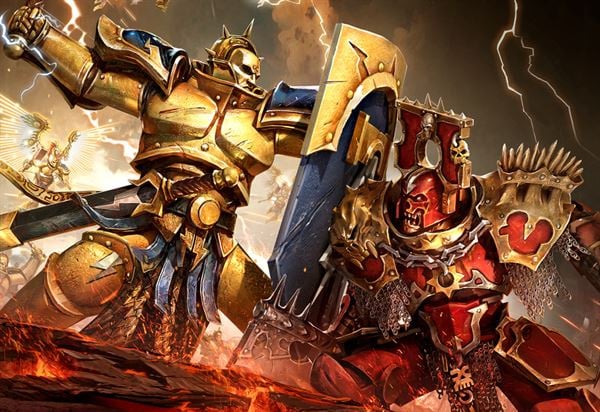
Warhammer Age Of Sigmar: Champions Secures An April Release On Switch
Warhammer Age of Sigmar: Champions has now received a solid release date for Nintendo Switch. Get ready to bring the fires of war to a hybrid console near you on 16th April.
The game is described as “a modern take on collectable card games”, featuring cross-play between digital and physical versions and allowing players to scan physical cards into their collection to claim and take them onto the battlefield. We first heard about this one coming to Switch in January, when we were also treated to a cinematic trailer.
Now, though, we have that all-important release date, and PlayFusion CEO Mark Gehard has shared the following in a press release:
“The response for the physical and digital game has already been incredible, and we just can’t wait to watch that grow to new heights.With the upcoming release of our Set 3 cards in Savagery, and a whole heap of new features like Arena of Echoes and Realm Trials, there’s always going to be something new to try. And now, there will be a much bigger community to try with”
Launching alongside the new Switch version is a brand new single-player adventure called Realm Trials, which is said to feature “dozens of hours of content” where players will fight legendary battles to conquer the Mortal Realms. The new mode, ‘Arena of Echoes’, will also give players “a whole new way to battle”.
Are you excited for this one? Will you be checking it out later this month? Tell us below.
ARMS Meets Rocket League In Upcoming Switch Game Super Buckyball Tournament
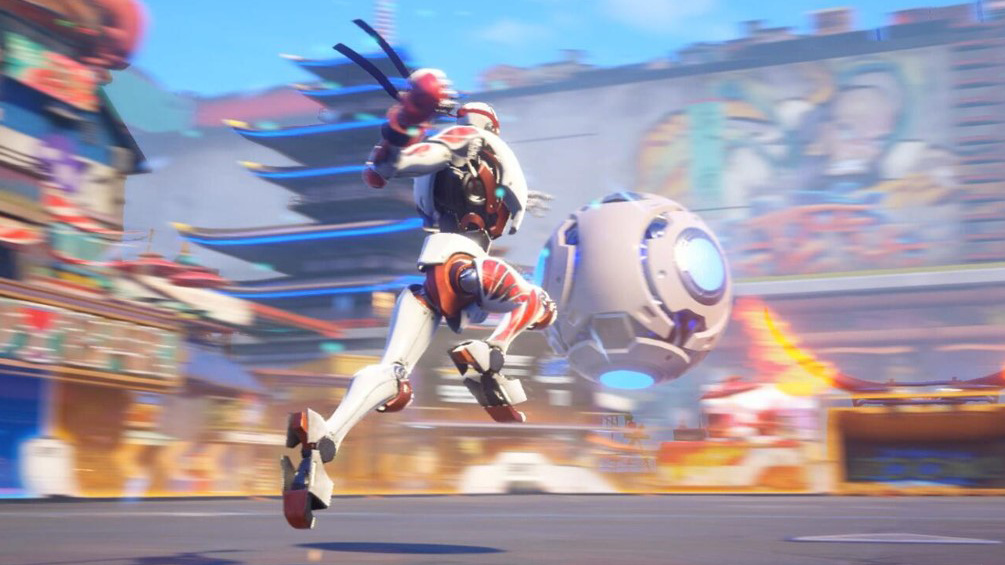
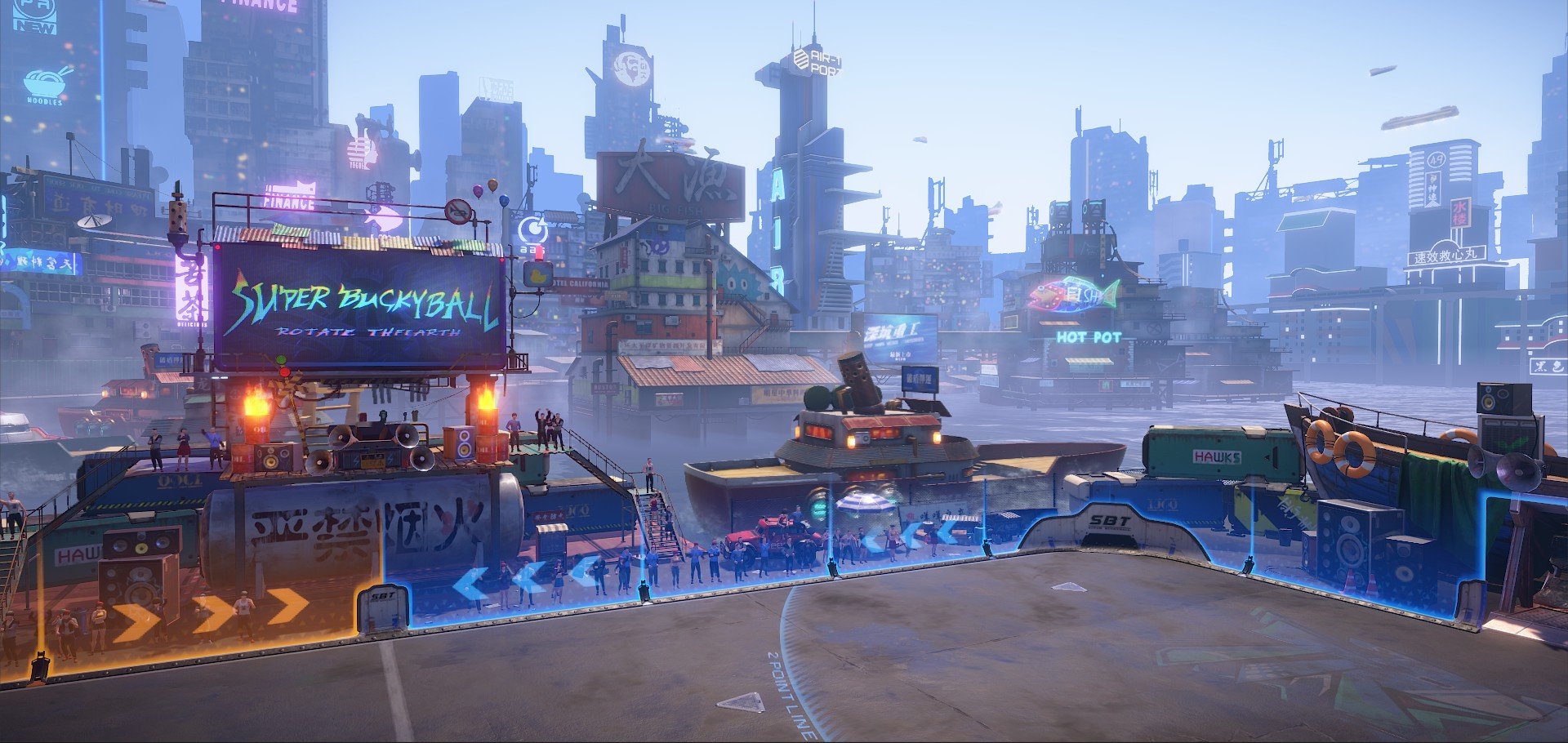
Pathea Games, the studio behind My Time at Portia, has today revealed its next project. The game’s called Super Buckyball Tournament and – on the surface, at least – the whole thing looks incredibly familiar.
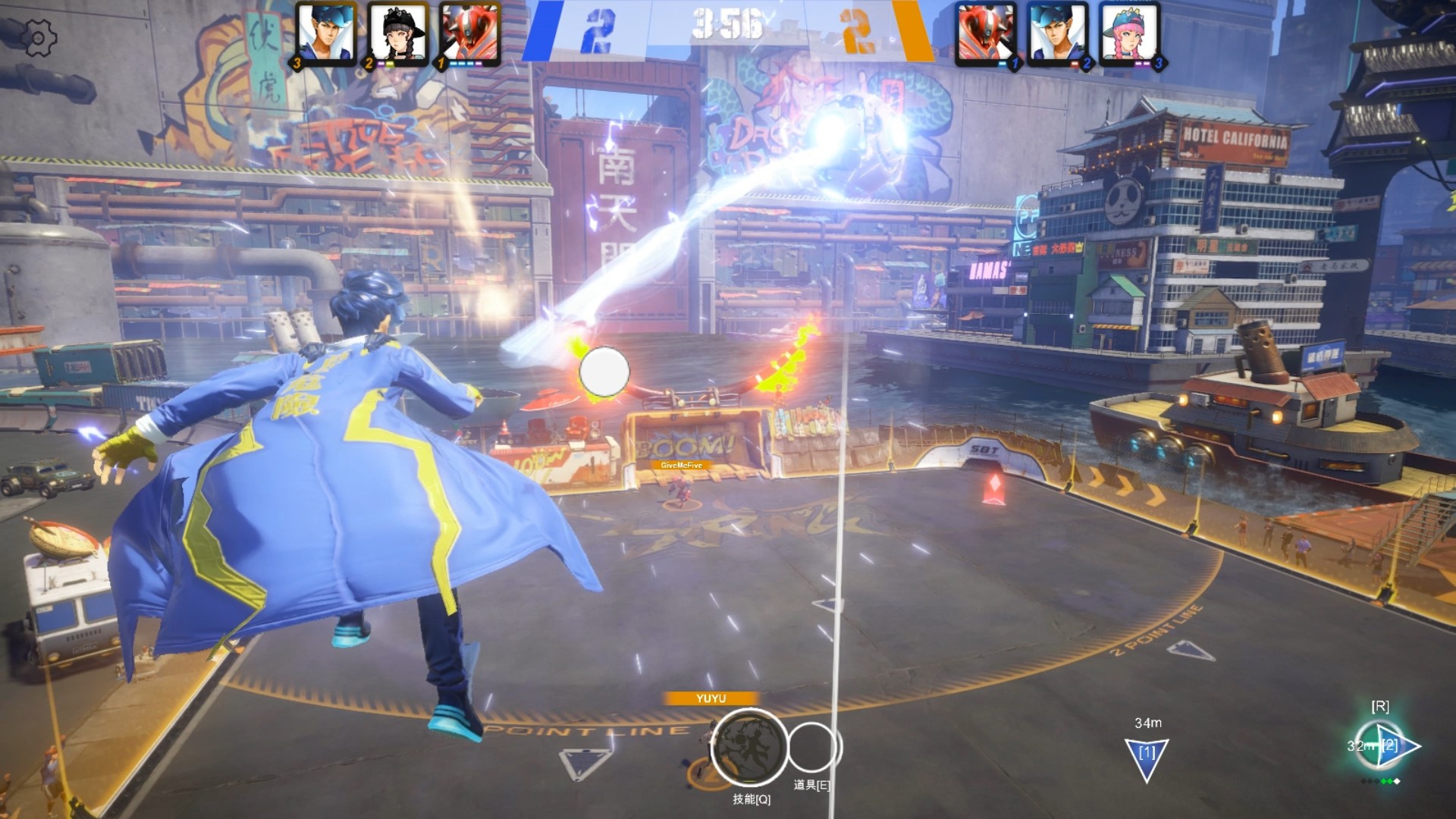
The game is a third-person, online multiplayer, action sports soccer game, setting itself apart from traditional sports titles by offering “full physics-based ball movement and passing”. Players will have to work with each other to create opportunities to score and then prevent the opposition from scoring.
If you’ve watched the trailer above, you’ll see that the familiarities with Rocket League are obvious, right down to the blue and orange colouring. According to a press release sent out today, however, it’s also inspired by the likes of ARMS and Super Mario Kart.
“Inspired by the likes of “Arms”, “Super Mario Kart” and “Rocket League”, the player will experience exciting and intense competition in Super Buckyball Tournament. There are eight unique heroes to choose from, and each hero has a unique power to pass, score, or attack the opposing team’s players. Items will also randomly spawn during a game to give the player an extra boost during play. These include shields, homing missiles, bombs, and more! The game simulates real-time physics and collisions. Teams with good teamwork will have an advantage!”
Pathea Games says that the game will hit Early Access on Steam in late 2019, before receiving full support for PS4, Xbox One, and Switch when the game is fully released.
What do you think? An interesting concept? Share your thoughts with us below.
Posted by: xSicKxBot - 04-04-2019, 10:30 AM - Forum: Windows
- No Replies
Microsoft Graph Security Hackathon winners announced
Bringing together information from multiple disconnected security systems to solve today’s security challenges is complex. We recently asked Microsoft Graph Security Hackathon participants to come up with innovative solutions using the Microsoft Graph Security API, and they did not disappoint.
We were excited to get a diverse set of submissions that covered real world security use cases, including security operations, user risk management, alerts enrichment, incident response, and analytics. It was truly inspiring to see the effort and creativity that teams and individuals put into their applications.
With that, please join us in congratulating the winners of the Microsoft Graph Security Hackathon.
First place: Microsoft User Security Evaluation Reporter
The Microsoft User Security Evaluation Reporter (MS-USER), from Darren Robinson, helps service desks and cybersecurity leads get instant visibility into their organization’s user security posture. Leveraging the Graph Security API and Microsoft Secure Score, the MS-USER app pulls together user and event information and includes recommended actions for remediating risks. The application also checks against the Have I Been Pwned database to give administrators and service desk personnel additional context on a user’s password security. This solution makes it easy to reach out to users and give them simple, actionable advice to improve their security, and as a result, the security of the rest of the organization. Darren will be joining us at our session at the Microsoft Build conference in Seattle, Washington, May 6-8, 2019. Definitely take a moment to check out his app today at devpost.com/software/microsoft-user-security-evaluation-reporter.
Runner up: Microsoft Graph Security—Security Alerts Enrichment
The Security Alerts Enrichments solution, submitted by Josh Rickard, is based on the Swimlane platform and ties together alerts with threat indicators and actions. The team created two applications that use Graph Security alerts to automate the creation of a threat intelligence feed, which can then be used to automate remediation of threats in the customer’s on-premises firewall appliance, which in this case is the Palo Alto Panorama Firewall. The second application ties in five different threat intelligence sources for enrichment. This is a great example of the power of a Security Orchestration Automation and Response (SOAR) solution. We encourage you to check it out at devpost.com/software/microsoft-graph-security-security-alerts-enrichment.
Popular choice: OneGraph
The OneGraph application, from Abhishek Joshi, enables organizations to quickly investigate, analyze, and respond to security threats. The application allows users can get a quick view of all their alerts and statuses, and easily drill down into things like specific threats, users affected, and alerts from specific providers. We really liked the tie-in with Microsoft Planner that allows for alerts to get assigned to specific people or groups. The integration with Microsoft Teams was a great use case that enables quick response. We hope you take a moment to look at this app at devpost.com/software/onegraph.
Again, congratulations to the winners and a huge thank you to all participants in the hackathon. We also wanted to take a moment to thank our all-star panel of judges for taking time out of their busy schedules to review and provide feedback on all the submissions. Many thanks for the support to Ann Johnson, Rich Howard, Scott Hanselman, Mark Russinovich, Troy Hunt, and Olli Vanhoja.
Finally, if any of this has inspired to you develop your own security app or solution, here are some resources to get you started:
Posted by: xSicKxBot - 04-04-2019, 04:22 AM - Forum: Lounge
- No Replies
DC's Joker, Birds of Prey, Wonder Woman 1984 Footage Revealed At CinemaCon
As its title suggests, CinemaCon is the annual convention for the National Association of Theatre Owners, and in recent years has become a vital part of early movie publicity. Unlike San Diego Comic-Con, it isn't a public event, but studios clearly realise that screening early footage for the industry and media can be a major help in building buzz for new films.
Warner had a major presence at this year's CinemaCon, which is currently underway in Las Vegas. The studio previewed three of its highly anticipated upcoming DC movies, namely Joker, Birds of Prey, and Wonder Woman 1984.
According to The Hollywood Reporter, the first Joker trailer was introduced by director Todd Phillips, who explained that rumors about the film's tone and plot "[haven't] been accurate." Phillips then described the movie as a "tragedy." As for the trailer, THR states that it includes footage of Joaquin Phoenix's lead character being attacked before trying on various costumes to find his iconic Joker look. [UPDATE: the Joker trailer is now online.]
Unlike Joker, early footage of Birds of Prey was officially released in January, but CinemaCon attendees got see more of the movie, which arrives in February 2020 and sees Margot Robbie reprise her Suicide Squad role as Harley Quinn. Slashfilm described the new footage as "bright, bold, and bursting with neon colors," and it included a shot of Harley Quinn roller skating behind a moving vehicle. In addition, the Birds of Prey presentation revealed that Harley isn't actually a full-time member of the titular female superhero team.
As for Wonder Woman 1984, although the movie isn't due for release until July 2020, it was shot before both Joker and Birds of Prey. According to Variety, there were several scenes shown, including footage of Diana (Gal Gadot) and Steve Trevor (Chris Pine) walking through Washington DC, Diana getting involved in some action in an '80s shopping mall, and Kristen Wiig's villainous Cheetah.
Pokémon Center Launches Discreet Line Of Detective Pikachu Merchandise
The Detective Pikachu movie is just over a month away from battling its way on to our screens and The Pokémon Company is gearing up for its release with some fancy new merch.
In a nice touch, the entire range is smart and discreet, so if you don’t fancy walking around town with a giant, bright yellow Pikachu face plastered over your chest, these options could well be for you. There are t-shirts, hoodies, hats, mugs, and more available. We particularly like the Cycling Road sign.
If you’re interested in picking anything up, or if you want to check out the full range, make sure to head over to the Pokémon Center website here.
Silverblue is an operating system for your desktop built on Fedora. It’s excellent for daily use, development, and container-based workflows. It offers numerous advantages such as being able to roll back in case of any problems. If you want to test Fedora 30 on your Silverblue system, this article tells you how. It not only shows you what to do, but also how to revert back if anything unforeseen happens.
Switching to Fedora 30 branch
Switching to Fedora 30 on Silverblue is easy. First, check if the 30 branch is available, which should be true now:
ostree remote refs fedora-workstation
You should see the following in the output:
fedora-workstation:fedora/30/x86_64/silverblue
Next, import the GPG key for the Fedora 30 branch. Without this step, you won’t be able to rebase.
rpm-ostree rebase fedora-workstation:fedora/30/x86_64/silverblue
Finally, the last thing to do is restart your computer and boot to Fedora 30.
How to revert things back
Remember that Fedora 30’s still in beta testing phase, so there could still be some issues. If anything bad happens — for instance, if you can’t boot to Fedora 30 at all — it’s easy to go back. Just pick the previous entry in GRUB, and your system will start in its previous state before switching to Fedora 30. To make this change permanent, use the following command:
rpm-ostree rollback
That’s it. Now you know how to rebase to Fedora 30 and back. So why not test it today?
Posted by: xSicKxBot - 04-04-2019, 04:22 AM - Forum: Windows
- No Replies
Sharing our learnings on World Autism Awareness Day
By Neil Barnett, Director of Inclusive Hiring and Accessibility at Microsoft
Autism @ Work Playbook, a guide for HR professionals and organizations to create employment opportunities for individuals on the autism spectrum.
Being inclusive is not something we simply do, but rather it stands for who we are. The value proposition for diversity and inclusion within Microsoft is increasingly clear — a diverse and inclusive workforce will yield better products and solutions for our customers, and better experiences for our employees. We all need to do our part to encourage new and different perspectives, solutions, and innovative ideas to surface from all our employees.
Four years ago, on World Autism Awareness Day, we announced Microsoft’s Autism Hiring Program. Given that 80% of individuals on the autism spectrum are unemployed or underemployed, we knew there was an untapped pool of talented people who have the skills aligned to the work we are doing every day at Microsoft. Over the years, we have learned a lot about inclusive hiring and actively share our learnings with other employers interested in evolving their hiring programs.
As an outcome of working with organizations across industries, we are proud to be a founding member of the Autism @ Work Employer Roundtable. About 18 months ago, Disability:IN brought together a group of employers to create the Roundtable, where the main goal is to expand employment opportunities for individuals on the autism spectrum. Today, the Roundtable consists of 16 organizations who all have robust autism hiring programs. As part of the Roundtable, we regularly receive questions about how to get started. In response, we came together and collaborated with the University Washington Information School to publish the “Autism @ Work Playbook,” a resource for employers who are interested in beginning or expanding their inclusive hiring journey. The playbook covers topics from building your business case, recruiting and sourcing talent, going through the interview process, to training, on-boarding, and career development. This is a great resource for every organization, so please take a moment to read and share the playbook.
Throughout the year, Roundtable members along with 250 other employers, academics, service providers, and government agencies, get together at events across the U.S. to share best practices and talk about how we can work together to make an impact on changing the unemployment rate for individuals on the autism spectrum. This year we are happy to announce there will be two upcoming summits sponsored by the Autism @ Work Employer Roundtable to bring this group together. The Autism at Work Summit in May will be hosted by Microsoft at our Redmond campus followed by another summit hosted by SAP in the Fall.
Over the years, we have continued to learn, evolve, and grow our own Autism Hiring Program. We changed our approach from a traditional interview to a cohort model where candidates come to our campus for a week-long experience to demonstrate their skills, gain feedback, and meet with hiring managers. Based on interest in the program from across the company, we have also seen an expansion of the types of roles where candidates are being hired. For example, we have grown from hiring mainly technical roles, like software engineers or data scientists, to more non-technical roles like customer support. In addition, we have recently expanded the program outside of Redmond, WA, with new pilot programs at our campuses in Fargo, ND and Vancouver, BC. These are important regions for Microsoft – we have a large campus in Fargo and it’s one of our TechSpark regions, and an ongoing vision for greater cross-border collaboration throughout the Cascadia Innovation Corridor in Vancouver. We look forward to seeing the program grow in these regions and continue to expand.
Our approach to inclusive hiring is not limited to just one event, program, or initiative. We host various career fairs throughout the year, and on April 23, we will host our next Virtual Career Fair in partnership with 14 other leading companies including, Fidelity, Deloitte, Travelers, Ford and more. If you know someone that is looking for a new opportunity, please make sure to share the event, which provides opportunities to connect with recruiters, learn about open positions and submit resumes. We also fund an annual scholarship for high school students interested in technology and offer broad inclusive hiring efforts and events. If we bring organizations together to focus on inclusive hiring, we can accelerate progress towards breaking down barriers and changing the unemployment rate for individuals on the autism spectrum.
We look forward to continuing to partner with others in the near future to truly make a difference in the employment landscape, educational, and working opportunities for all individuals on the spectrum. If you or someone you know is interested in a career at Microsoft, please send resumes to msautism@microsoft.com and learn more about our inclusive hiring efforts at www.microsoft.com/inclusivehiring. We look forward to hearing from you!
Autism at Work Virtual Career Fair featuring companies, Cintas, Deloitte, EY, Fidelity, Ford, IBM, JP Morgan Chase &Co., Merck, Microsoft, PwC, SAP, Travelers, Ultra Testing, and Willis Towers Watson.
Then & Now: BGG’s All-time Top Ten Board Games on iOS & Android
By Admin03 Apr 2019
A reader asked that we take a look at this article and give it a refresh, given how much has changed in digital board games over the past five years. PT regular Michael Coffer kindly went through Owen’s original words and found out what became of the BGG’s Top Ten list as of January 2014. We’ve also provided us with a new list based on the current top ten.
We’ve tried to leave Owen’s words intact, but I’ve made edits where needed and posted updates to each entry to reflect the current situation.
Original Story (Jan 17th, 2014)
We’re in the middle of a board game renaissance. Sales of board games are hot and getting hotter — industry observers called the summer of 2013 “the best summer ever” for the market.
Part of that success is wrapped up in the rise of iOS as a platform for digital board game conversions. I don’t know which one is the chicken and which one is the egg here, but clearly there’s some very influential people who think that digital board games have a very bright future, as evidenced by Silicon Valley-sized investments raised by digital board game purveyors like Playdek. Clearly, we’re going to see a lot more board games on iOS in the next couple of years.
It’s easy to see the appeal for board game publishers. When you decide to port a board game to iOS, much of the hard work in designing the game itself is already done, and you benefit from an existing fanbase for your product who will help spread the word about it — marketing is the toughest part of making a successful iOS game, as a lot of devs can tell you firsthand.
Board Game Geek is the Hitchhiker’s Guide to the Galaxy-meets-IMDb of the tabletop gaming world. BGG maintains a database of over 68,000 boardgames, all ranked by the site’s half-million-strong membership. That’s a pretty authoritative list right there.
Which of the board games in BGG’s top 10 can you already play on iOS? And which ones will you be able to play soon? I did a little asking around.
#10 – Le Havre
Status: Available on iOS, iOS again & Android
2008 board game Le Havre is a quintessential “Euro” board game: light on the theme, but deeply strategic. Players collect resources and compete to develop the titular French port city without overextending themselves.
Update: Le Havre is in the rather unique situation of not only sporting more than one version, but more than one version on the same App Store. Due to the recent expansion of Asmodee Digital’s library of mobile board games, they’ve ended up either releasing or acquiring apps for games that have had version made in the past.
Mage Knight is a big huge genre-mashing game of significant complexity: it marries together lots of mechanics that usually carry whole games by themselves. The one time I tried to play Mage Knight at a board game night, we ran out of beer while we were still learning the game. In other words: an ideal game for a digital conversion, as the iPad can do a lot of the rules interpretation and computational heavy lifting for you.
WizKids, the publishing house who hold the rights to Mage Knight, just launched their very first iPad game: Quarriors, which Dave reviewed for us in December. I asked them about their plans for a digital Mage Knight, and they told me that they were planning on following up Quarriors with another iOS game, they just hadn’t decided which one yet.
Update: It seems nothing became of that plan, because nothing’s turned up in the five years since. However, we did get news back in January that Dire Wolf Digital have recently acquired the rights a whole range of digital board game apps, which includes a partnership with WizKids that starts with Mage Knight.
#8 – Power Grid
Status: No Idea
This network-building game (not hugely dissimilar from the popular and easy to learn Ticket to Ride) is a license that Le Havre makers Codito tried to acquire back in 2012 but were rebuffed when publisher 2-F Spiele told them that a digital version was already in the works.
I wasn’t able to dig up anything more recent. Maybe an iPad Power Grid’s release is imminent. Maybe it’s stuck in development hell.
Update: Development hell is most likely – it hasn’t appeared in the years since, and we can’t find any recent information about it.
#7 – Eclipse
Status: No longer available
This science fiction empire-building game was released for iOS last spring to considerable acclaim — here’s Kelsey’s review of it. Polish iOS board game specialists Big Daddy’s Creations don’t shy away from complex games (their previous release was intricate abstract wargame Neuroshima Hex), and they’re still releasing updates for this one.
Update: Despite critical acclaim and a release on Steam and Google Play in 2016 (the Steam version doesn’t have good user reviews), the developer seems to have gone bust and shut down. Due to the lack of post-release support, you can’t currently buy this on any platform (although if you already own it, you can download and play still). The current rumour is that the license holders are looking to make a new app based on the 2nd Edition of the game with a new studio.
#6 – Terra Mystica
Status: Available on iOS & Android
Fantasy empire-builder Terra Mystica is much beloved for its dynamic play and asymmetrical sides, but it’s another complex game that would be orders of magnitude easier to play on an iPad or PC.
Sadly, there doesn’t appear to be a digital edition of Terra Mystica in the works, and some off-the-record conversations I had suggested that complex IP rights arrangements with Terra Mystica‘s publishers in different regions might make an iOS edition difficult to work out.
This William Gibson-inflected cyberpunk card game designed by Magic: The Gathering creator Richard Garfield has been hugely popular since its release in 2012 and publishers Fantasy Flight Games have fed thirst for the game with a steady drip of expansions.
Fantasy Flight are famously quiet on the PR front and wouldn’t comment, but an industry source told me that Android is in the works. Fantasy Flight have been hiring digital artists lately, and since they’re not producing the recently-announced Witcher digital board game in-house, those new bodies have to be working on something. My bet is this.
Update: Except it wasn’t. An official mobile app of the game never materialised, although you can play it via a web browser thanks to jinteki.net. The physical game was also retired last year after a six-year run, meaning that no new card sets or official tournaments will be happening. So far, FFG seems to have turned a blind-eye towards the browser game so that’s your only means of getting that digital fix.
#4 – Puerto Rico
Status: Available for iOS
The oldest iPad app on this list, Puerto Rico HD has been up on the App Store since 2011 and German board game publisher Ravensburger (who had Codito build the app on their behalf) have updated the game every year to keep it current with new versions of iOS.
Like Codito’s Le Havre above, this game is none-too-friendly UI-wise.
Update: Nothing much more to add here – there was never an Android version, although the successor game San Juan also got a mobile release on both iOS & Android.
#3 – Agricola
Status: Available for iOS (& Android, sort of)
The second appearance on Board Game Geek‘s top 10 for German game designer Uwe Rosenberg (who also designed Le Havre), Agricola is one of the most remarkable digital board games we’ve ever seen. Players run a medieval European farmstead and attempt to increase the size of their farms while managing to keep their growing families fed.
While it’s true to the rules that made the tabletop game such a huge hit, Playdek’s realisation of the game for iOS brings it to life in a way that only video games can, transforming the game board into a living, breathing farm village. We liked this one so much that we named it the Board Game of the Year and our Runner-up Game of the Year for 2013.
Update: Playdek’s version of the game never made it to Android, and the developer later sold the rights to the game to Asmodee Digital. DIGIDICED created a separate game in 2016 that is the digital adaptation of the two-player variant, Agricola: All Creatures Big & Small. They also sold the rights to Asmodee, and that game is available on iOS & Android. I know.
#2 -Through the Ages
Status: Available on iOS & Android
This Civilization-style empire builder is one of our most anticipated games of 2014, though it’s far from a sure thing that the game will come out this year. The iOS conversion was originally in the hands of Le Havre makers Codito, though the board game’s publisher Czech Games Edition parted ways with them in 2012.
Czech Games Edition head (and TtA designer) Vlaada Chvatil told me this week that work is progressing on Through the Ages for iOS, but that his company’s current focus was the digital edition of Galaxy Trucker. Chvatil said that they were re-doing much of the art that had been made for Through the Ages, suggesting that maybe this one’s going to be on our 2015 most anticipated list, too.
Update: Vlaada Chvatil got in touch to say that he wouldn’t rule out TtA for a 2014 release.
Actual Update: Through the Ages wouldn’t actually turn up until September 2017, although it was well worth the wait. Available on both platforms, it’s also on our list of the best mobile board games. In a rare turn of events, Michael actually enjoys playing the digital game more than the table-top version.
#1 – Twilight Struggle
Status: Available in all its glory for iOS & Android
Twilight Struggle is a game that I’ve been getting into myself over the past year. It’s an extraordinarily cerebral head-to-head contest between players taking the roles of the US and the USSR during the Cold War, waging an indirect campaign against one another as you vie for influence with client states and spread your ideology.
First released in 2005 (and designed by XCOM: Enemy Within designer Ananda Gupta), Twilight Struggle has been in the works for PC for years now and release is perennially six months away. Publisher GMT told me that there’s “no concrete plans” for an iPad edition, as all of their efforts are currently focused on the PC version.
Update: The PC & iOS versions of Twilight Struggle would eventually be released by Playdek in 2016, and it was glorious. An Android release followed shortly afterwards, and there was much rejoicing.
Board Game Geek’s Top Ten Board Games March 2019
Now that we’ve resolved 2014’a list, let’s have a quick peak at the list as it stands today, and see where we’re at in terms of digital adaptations for mobile.
10. Twilight Imperium (Fourth Edition)
No, and not in the pipeline, as far as we know. Stretching back aeons (okay, 1997,) this scifi game featuring seventeen playable races in its present incarnation (4th ed.) is epic in duration and execution. Its ambitious design has stood the test of time, offering a related tabletop version of the intricacies of 4X genre, what with the conflict of warfare being counterbalanced by technology, economy and general politicking and ‘diplomacy,’ which is as genteel a front for betrayal and vendetta as any.
9. Great Western Trail
Pfister’s proven himself a designers-to-watch since Mombasa, and his Great Western Trail does not disappoint. Long past are the days when victory point games were inevitably about homeland and empire, now it’s more en vogue to have peripatetic ‘journey’ themed games (Voyages of Marco Polo, the Century series of games). The Great Western Trail tasks players with a herd and a dream and sees them wrassle with dust and disaster. It’s fresh but already feels like a staple of many a game night.
The thirst for an app is ‘being shared with the team’ but no concrete plans have been announced or rumoured so far. 2016 is relatively young in board-game years, and unless you happened to be an Asmodee property, the turnaround for digital editions is years, not months, so don’t hold your breath, this one is likely but only in the far-flung future.
8. Scythe
In Scythe, mechs of fearsome size harvest and gather or wage war across Europe. This Eurogame strikes a tight balance between territorial conflict and engine-building and is well-beloved for its starting factions and their distinct identities and powers.
Asmodee Digital are publishing the Digital Edition, and it’s being developed by newcomers Knights of Unity. The game has been in beta Early Access on Steam for some time now but has yet to make the leap to iOS or a full PC release, though both are planned and likely to hit sometime this year. There have stretches of silence and delays up to this point, though, so until a hard date is available odds are 50-50 it’ll be delayed again.
7. Gaia Project
Definitely maybe, especially since its spiritual precursor, Terra Mystica, already has one. If Terra Mystica were reimagined from the ground up and shot into space, it would look something like the Gaia Project, which is a little more sandbox-y and a little less blueprint-y. Still every bit as cutthroat but, going with that space theme, a more capacious and innovative design.
6. Star Wars: Rebellion
No and probably not happening, for a few reasons. Like Twilight Struggle, this game simulates a struggle between two factions for ultimate control and is heavy on bluffing and deception. No reason an AI couldn’t reasonably emulate these qualities, however FFG, generally speaking, doesn’t make digital versions of games to play solo. They haven’t digitised games featuring duels between two players and have given no indications to start. Oh, and Rebellion is a premium product of a premium I.P. so it’s exclusivity on that front means a digital version might cheapen the game’s status, from a business standpoint.
(While not on iOS, you should all check out the late-90’s grand strategy game of the same name, which is available on Steam. The board game is pretty much a replica in physical form-ED)
5. Twilight Struggle
Present and accounted for, see above.
4. Terraforming Mars
Coming soon™ since 2018. We’re closer to the finish now that the PC version is out, but this is one of those recent hits which rapidly had its app ambitions announced too long ago, and now everyone is collectively stuck tapping their watch, waiting.
3. Through the Ages
Present and accounted for, see above.
2. Pandemic Legacy: Season 1
Unlikely, given that Legacy games stake their niche on physical alterations and a permanent end-state, concepts which don’t exactly translate well to a digital app. The original game, Pandemic, already has a digital version that’s quite good, so we imagine that’ll be enough for most people.
1. Gloomhaven
If any game needed a digital conversion, it’d be this behemoth of an Adventure/RPG. It’d certainly be a load off everyone’s minds (and backs, for the game weighs 10 kg). Last we heard, Asmodee Digital were making a digital version but they’ve only said it’s coming to Steam so far, so its unknown if it’ll ever come to mobile.
We hope you enjoyed this trip down memory lane – let us know if there are any other older articles you want us to take another look at and update!