Posted by: xSicKxBot - 04-05-2019, 06:26 AM - Forum: Lounge
- No Replies
Captain Marvel Crosses $1 Billion At The Box Office
Captain Marvel has crossed a massive box office milestone. The Brie Larson-starring superhero movie has now made more than $1 billion at the global box office since it premiered in March.
It's made $358 million in North America and $645 million from international markets for a total of around $1.03 billion worldwide. It is the first female-led superhero movie to make $1 billion. DC's Wonder Woman starring Gal Gadot made $821 million at the global box office.
It becomes the seventh MCU movie to make more than $1 billion at the global box office, and the 18th Disney movie ever to cross $1 billion, according to Variety.
The other MCU films that have made more than $1 billion include Avengers: Infinity War, The Avengers, Avengers: Age of Ultron, Black Panther, Iron Man 3, and Captain America: Civil War. The 21 MCU movies to date have collectively made more than $18.5 billion.
Face off in extreme battles, immersing yourself in this visceral, jetpack-fueled VR arcade shooter. Danger is everywhere as you fly through the arenas, so stay sharp as you dodge and weave through the VR battlefields.
Lock, Load, & Face the Madness! Get ready for the mind-blowing insanity, as one of four trigger-happy mercenaries, taking out everything that stands in your way. With its addictive action, frantic first person shooter combat, massive arsenal of weaponry, RPG elements and four-player co-op, Borderlands is the breakthrough experience that challenges all the conventions of modern shooters. Borderlands places you in the role of a mercenary on the lawless and desolate planet of Pandora, hell bent on finding a legendary stockpile of powerful alien technology known as The Vault.
Posted by: xSicKxBot - 04-05-2019, 12:59 AM - Forum: Lounge
- No Replies
China’s frozen game approval process continues long thaw
China’s long slog through foreign and domestic game approvals continues, as the number of games approved for release in the country since its content crackdown nears 1,000.
China, a major market for mobile and online games, began tight gatekeeping of video game releases in the country starting last year, as the new State Administration of Press and Publication sought to weed out games that didn’t abide by the government’s values, or games deemed addictive to minors.
The slow process of getting games licensed and released in China is cause for concern for domestic developers, but even more so for foreign game companies that would like to capitalize on the explosive Chinese game market.
Since the freeze on game approvals lifted in December last year, 959 games have been approved for release. A report from Niko Partners states that backlogged domestic games get priority over foreign-made games.
While 30 foreign games were released in the last month, there had been no foreign-produced games released in the prior 12 months due to the freeze. All games require a Chinese publisher.
Niko said Q1 2019 saw 795 titles approved (foreign and domestic) in total versus 1,931 approved a year prior. The large difference is mainly due to China blocking release of poker and mah-jong games, amid the government’s concern over real-world money being used in this genre, Niko said.
The sluggish approval process has caused a slowdown in the Chinese games market, but Niko said it expects growth to pick up as the approval process gains momentum.
Larger Chinese publishers are only recently seeing major game releases, such as Perfect World Entertainment’s Perfect World Mobile, which quickly topped China’s top-grossing charts following its release in March.
Still, foreign games with huge Chinese market potential have yet to see release, including Epic Games’ Fortnite.
However, domestic game company Netease has been able to fill the Fortnite-sized hole in the Chinese market with the new and completely and totally original battle royale game, FortCraft.
Some Secrets to Success in Sekiro: Shadows Die Twice
Well, they’ve done it again. With Sekiro: Shadows Die Twice, FromSoftware has succeeded in creating a game that pairs highly technical risk/reward combat and ultra-tough foes to craft a game that is at times very challenging, but always extremely rewarding. Much like their previous games in the Dark Souls series, Sekiro can be a tough nut to crack for new players, and even Dark Souls veterans like myself will be forced to unlearn almost all of the strategies that made them successful in those titles. After 20 some-odd hours and a dozen mini-bosses and bosses under my belt, I feel like I’m still learning the ropes. In an effort to help ease you into this wholly unique gaming experience, I thought it would be helpful to share some tips I’ve picked up during my time with Sekiro.
Scout Your Surroundings
While Sekiro is more of a straightforward action game than the Dark Souls series, it’s also got some heavy stealth elements baked in. Like most stealth games, it pays to take some time to scan the area you’re approaching to figure out enemy patrol routes and ensure there are no surprises waiting for you. Once you get the lay of the land, you can go in and figure out the best route for taking out maximum enemies while reducing your risk as much as possible. Even in areas with seven or eight enemies, you can plot out a route that allows you to stealth attack many of them.
Always Rely on Stealth
As I mentioned above, it pays to scout out areas in order to find the best approach. More often than not the best approach is a stealthy approach, as you’re limited to a set number of hits from your healing gourd and (more importantly) lives. The vast majority of the time, there’s a stealthy option available to you. When I’m not sure how to approach a situation, I look to use my grappling hook to gain a height advantage. In addition to offering more options for dropping down and insta-killing your foes, it also provides a better look at the battlefield than you’ll get on the ground. The stealthy approach is always the best play for bosses, too. Since they all require two assassinations to take down, it pays to perform an instant one right off the bat.
Whittle Away That Vitality
Much of Sekiro’s combat mechanic revolves around poise, as maxing out your enemy’s poise meter gives you the opening you need to perform an assassination (that is, when the red dot appears). However, there are times when trying to keep the pressure up and working their poise is just too tough. In these cases, your best bet is to steer clear of the boss, instead working to get off one or two quick hits before dodging away. This will gradually whittle down their vitality, which in turn will keep their poise from regenerating. And eventually, if you take their Vitality down far enough it, opens them up for an instant kill. This is especially true for bosses!
Don’t Be Afraid to Run Away
As the saying goes, sometimes the best offense is a good defense. Or, in Sekiro’s case, the best offense is straight up running away from a fight. You see, when you leave an area, enemies will stop chasing you and reset to their original positions. This means that sometimes your best bet is to go in, take out one or maybe two enemies, and hightail it out of there before going back to rinse and repeat once your foes have calmed down. This is especially true for boss battle areas, as it will allow you to take out all of the lesser enemies before facing off against the boss. At times, it also pays to run away if you hit the next XP level, so you can upgrade your skills instead of running the risk of losing half when you die.
Embrace the Grind
In many ways, Sekiro is a lot like the Dark Souls games. One way in which they are distinctly different, however, is the way you use the experience you earn. In Dark Souls, experience you gained could be put into different categories like Strength or Vitality that helped you create a build that fit your style of play. In Sekiro, those experience points are instead spent on a variety of skills, from different types of combat attacks to different prosthetic-based moves to latent abilities that will make your battles easier. In both types of games, the best way to earn experience and improve your character is to occasionally grind the same area over and over again to load up on experience points. There’s nothing wrong with spending an hour taking out an easy group of five or six enemies, running back to the Sculptor’s Idol, resting, and then doing the same thing again. Trust me, that time investment will pay off in a big way as you progress through the game.
Sometimes Blocking is Best
Early on in Sekiro, as you’re learning the basic combat, you’ll be taught how to time your blocks to deflect your enemy’s attacks and give you a wide opening for an easy (and powerful) counterattack. While this is all well and good, it can at times be too tempting to go for these grandiose deflections when your best bet is just to hold down the block button and let your enemy flail away at you. I found that constant blocking worked particularly well against a lot of the bosses, as it gives you a chance to learn their moveset with minimal risk. In fact, sometimes you’ll just want to withstand a barrage of attacks and let your enemy tire himself out so you can slash away for a few seconds to take down their health.
When in Doubt, Take a Break
While it probably sounds counterintuitive, sometimes the best way to beat a boss in Sekiro is to put down the controller and walk away for a bit. Studies have shown that our mammalian brains are able to solve puzzles and complex tasks after having some time to think about them. Speaking from experience, there is nothing more satisfying then banging your head against a boss wall, then taking an extended break and coming back to beat it on the first or second try. Sometimes your brain just needs a little time to work things out, particularly some of the complex combat patterns that the bosses offer. You know how you have “A ha!” moments when you stop thinking about a topic and focus on some other task for a bit? It’s a lot like that.
This Is Snooker Will Leave Switch Players Spoilt For Choice This Year
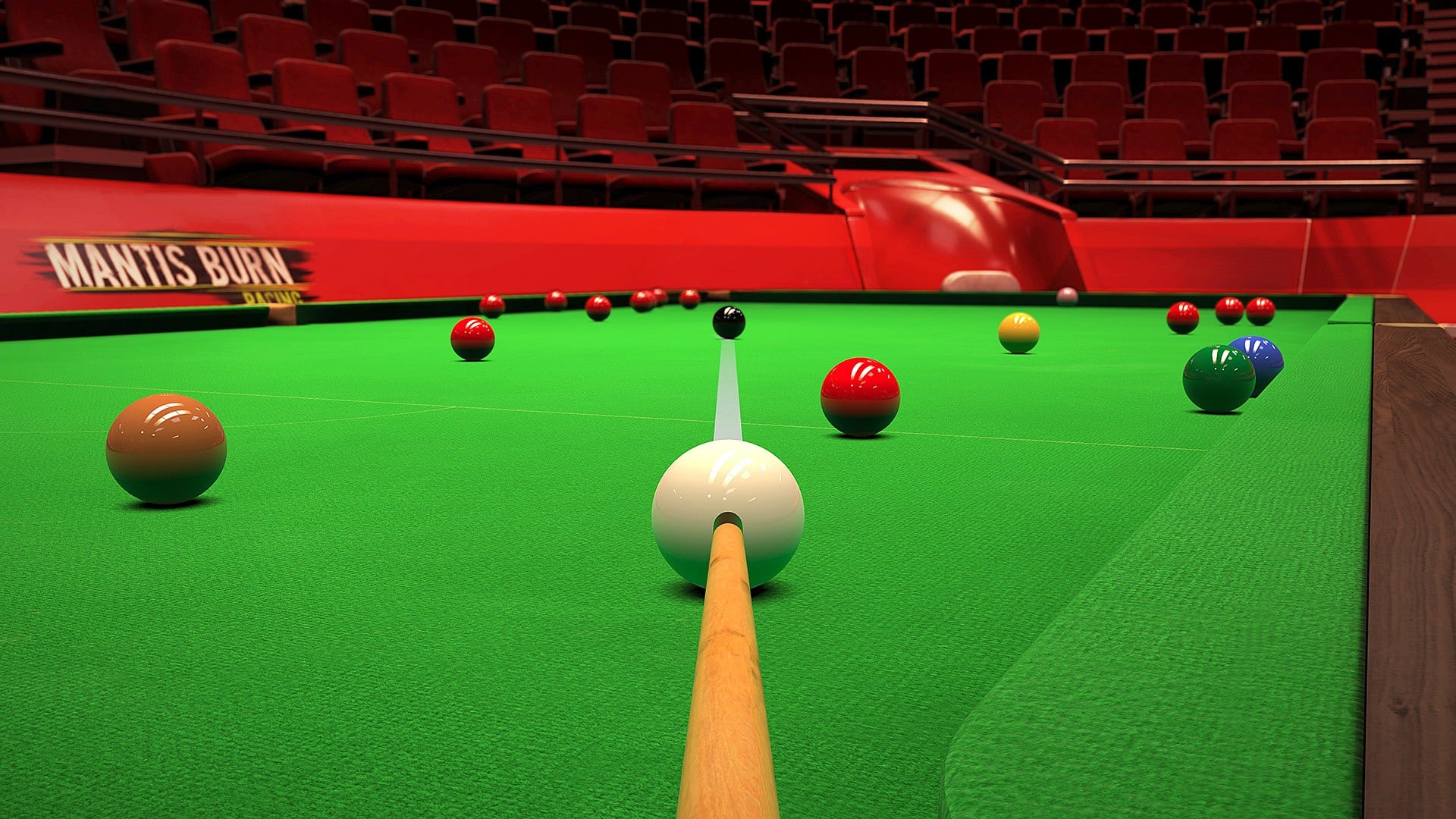
VooFoo Studios and publisher Double Eleven have today revealed This Is Snooker, a simulation of the sport headed to Nintendo Switch and other platforms “soon”.
You can see the very first trailer for the game up above, starring snooker’s very own Stephen Hendry. The seven-time world champion features in the game as both an AI opponent and an expert mentor, giving players tips in a series of videos designed to help improve your real-life and in-game snooker skills. The game also features a series of arcade scenarios that challenge you to recreate defining moments from his career.
Of course, the game’s announcement comes just weeks after Ripstone Games revealed a release window for its upcoming Snooker game, Snooker 19. Set to launch this spring, this will no doubt be a fierce rival for This Is Snooker and effectively leaves players a little spoilt for choice. You can learn more about Snooker 19 to compare here.
Which one will be the better offering? Will they both be worth our time in equal measure? Looks like it’s a pretty good time to be a snooker-loving Switch owner.
Homo Machina, Type:Rider And Vandals Arrive On Switch This Month
The above trailer has been released for three previously unannounced games coming to Switch on 25h April. Vandals and Type:Rider come from developer Cosmografik while Homo Machina is by Darjeeling.
Coming from first-time Switch publisher ARTE, a cultural organisation that co-produces various artistic interactive works (Bury Me, My Love being another example), the three separate releases have appeared previously on other platforms. Here’s a description of each game from the official blurb:
Vandals is a turn-based puzzle game that lets players explore street art, create their own artwork, and evade the authorities. Along the way, players will discover the evolution of street art through the works of 40 real-life, iconic street artists, and learn how they have influenced urban culture in the iconic street art cities Paris, New York, Berlin, Tokyo, and Sao Paulo. The Switch version will introduce an exciting new feature, the ability to spray paint using the Joy-Cons.
Type:Rider is an adventure puzzle game that allows players to discover the history and secrets of fonts and characters. Players must guide two dots through the ages of typographic styles and techniques from the rock paintings of prehistoric times to the fonts we use today. Type:Rider takes players through different levels, collecting letters of the alphabet and solving riddles in a captivating musical and visual environment.
Homo Machina invites players to see inside the human body, as viewed through the unique aesthetic lens of the work of Fritz Kahn. Gameplay is straightforward and intuitive, the player instructing the on-screen staff to oversee the human body’s many and varied functions – from eating and breathing to controlling emotions and monitoring the nervous system. The game illustrates, with charismatic artwork and animation, poetic narration and uplifting music, the beauty of Kahn’s enduring imagery.
Type: Rider and Homo Machina will be priced at €3.49 / £3.19 / $2.99 each, with Vandals at the slightly higher €4.49 / £4.09 / $3.99.
Do any of these arty puzzlers take your fancy? Let us know with a comment in the usual place.
Following the March release of iOS 12.2, Apple on Thursday stopped signing code for iOS 12.1.4, ensuring iPhone, iPad and iPod touch owners are running the latest, most secure version of the operating system.
In line with prior code signing stoppages, the end of iOS 12.1.4 signing arrives ten days after Apple issued iOS 12.2 late last month.
The latest iOS version delivers support for Apple News+, HomeKit TV compatibility, new Animoji characters and user interface updates for Wallet, Control Center and the lock screen.
With the change, iOS 12.1.4 can no longer be downloaded from Apple servers, meaning users are restricted to iOS 12.2 or higher.
Apple typically stops signing legacy code shortly after a new version of iOS is released in a bid to keep users safe from new threats. The practice also ensures devices are running the most up-to-date software.
Apple’s latest iOS 12.2 addresses a whopping 43 security issues involving WebKit, Contacts, FaceTime, GeoServices, Mail, Messages, Safari, the system kernel and other critical software.
Today marked the release of Microsoft’s seminal IDE Visual Studio 2019. It is available for download right now at https://visualstudio.microsoft.com/downloads/. The community edition of Visual Studio 2019 is completely free to use so long as your company makes less than $1M USD annually or has > 250 PCs. Free trials for the Professional and Enterprise versions are also available. For more details on the differences between versions, be sure to check here.
There are several new improvements and features available in Visual Studio 2019 including improved performance and start up times, a new AI driven code tool called IntelliCode, .NET core 3.0 support, C# data breakpoints, tighter integration with GitHub and Azure, multiple improvements to mobile development using Xamarin, a new remote coding interface called Live Code and much more. You can read the complete Visual Studio 2019 release notes here.
Visual Studio 2019 for Mac also received a new release, including intellisense support taken directly from Visual Studio. You can read the full release notes here and download here. (be sure to click the MacOS tab if required).
You can watch a condensed to under 10 minute version of the keynote in the video below. In addition to the keynote, Microsoft have a series of training materials and more in-depth sessions available at https://visualstudio.microsoft.com/vs2019-launch/.