Posted by: xSicKxBot - 05-17-2019, 06:21 AM - Forum: Lounge
- No Replies
Devil May Cry 5 Director Would Like DmC 2, But Only From Ninja Theory
While it was controversial with series fans from the moment it was announced, DmC: Devil May Cry was largely well-received by critics. Positive review scores aren't the only beacon of good fortune for the divisive entry in the hack 'n' slash franchise, however, as Hideaki Itsuno, the director of multiple Devil May Cry titles, would love a sequel.
According to a report from USGamer, Itsuno--who's worked also worked on multiple other Capcom games including Power Stone, Capcom Vs. SNK 2, and Dragon's Dogma--would have no problem with a DmC 2. But there's a catch: for Itsuno, British developer Ninja Theory has to be on the project again. Otherwise, as Capcom producer Matt Walker added, "It wouldn't be DmC without Ninja Theory."
"On the dev side we certainly wanted to and thought we would work with Ninja Theory again to create a sequel to DmC, but that unfortunately didn't get off the ground," said Itsuno, who expressed interest in a sequel.
Walker agreed with the sentiment, saying, "We'd still love to see a sequel, but we think it absolutely has to be made by Ninja Theory--so much of the amazing style and substance in that game was only possible because they have such a knack for what's cool."
Apart from DmC, Ninja Theory is most known for developing action games such as Enslaved: Odyssey to the West, Heavenly Sword, and the critically-acclaimed Hellblade: Senua's Sacrifice (which recently made the jump to Nintendo Switch). Ninja Theory was acquired by Microsoft and folded into the company's Xbox Game Studios in 2018, meaning if a DmC sequel were to happen, it'd require Microsoft's blessing to be multiplatform or end up an Xbox and PC exclusive.
In our DmC: Definitive Edition review, we said that the "numerous tweaks and upgrades of DmC: Devil May Cry Definitive Edition have made a game that isn't just a better version of DmC, but a bonafide hack 'n' slash classic."
While a DmC 2 may not be in the works any time soon, fans of the action franchise recently got Devil May Cry 5 to tide them over, which we awarded a 9/10.
Linux Containers have become a popular topic, making sure that a container image is not bigger than it should be is considered as a good practice. This article give some tips on how to create smaller Fedora container images.
microdnf
Fedora’s DNF is written in Python and and it’s designed to be extensible as it has wide range of plugins. But Fedora has an alternative base container image which uses an smaller package manager called microdnf written in C. To use this minimal image in a Dockerfile the FROM line should look like this:
FROM registry.fedoraproject.org/fedora-minimal:30
This is an important saving if your image does not need typical DNF dependencies like Python. For example, if you are making a NodeJS image.
Install and Clean up in one layer
To save space it’s important to remove repos meta data using dnf clean all or its microdnf equivalent microdnf clean all. But you should not do this in two steps because that would actually store those files in a container image layer then mark them for deletion in another layer. To do it properly you should do the installation and cleanup in one step like this
FROM registry.fedoraproject.org/fedora-minimal:30
RUN microdnf install nodejs && microdnf clean all
Modularity with microdnf
Modularity is a way to offer you different versions of a stack to choose from. For example you might want non-LTS NodeJS version 11 for a project and old LTS NodeJS version 8 for another and latest LTS NodeJS version 10 for another. You can specify which stream using colon
# dnf module list
# dnf module install nodejs:8
The dnf module install command implies two commands one that enables the stream and one that install nodejs from it.
# dnf module enable nodejs:8
# dnf install nodejs
Although microdnf does not offer any command related to modularity, it is possible to enable a module with a configuation file, and libdnf (which microdnf uses) seems to support modularity streams. The file looks like this
A full Dockerfile using modularity with microdnf looks like this:
FROM registry.fedoraproject.org/fedora-minimal:30
RUN \
 echo -e "[nodejs]\nname=nodejs\nstream=8\nprofiles=\nstate=enabled\n" > /etc/dnf/modules.d/nodejs.module && \
 microdnf install nodejs zopfli findutils busybox && \
 microdnf clean all
Multi-staged builds
In many cases you might have tons of build-time dependencies that are not needed to run the software for example building a Go binary, which statically link dependencies. Multi-stage build are an efficient way to separate the application build and the application runtime.
For example the Dockerfile below builds confd a Go application.
# building container
FROM registry.fedoraproject.org/fedora-minimal AS build
RUN mkdir /go && microdnf install golang && microdnf clean all
WORKDIR /go
RUN export GOPATH=/go; CGO_ENABLED=0 go get github.com/kelseyhightower/confd

FROM registry.fedoraproject.org/fedora-minimal
WORKDIR /
COPY --from=build /go/bin/confd /usr/local/bin
CMD ["confd"]
The multi-stage build is done by adding AS after the FROM instruction and by having another FROM from a base container image then using COPY –from= instruction to copy content from the build container to the second container.
This Dockerfile can then be built and run using podman
Announced back in December of 2018, Online Services is a collection of free and cross platform game engine agnostic services for multiplayer games, as battle tested in Fortnite. Services such as achievements, player inventory, matchmaking and voice communications will be made available completely free. The roll-out is over time, with the ticketing and game analytics services currently being live, with the remaining coming at some point in the future.
As a result of our current prioritizations, several roadmap items are being delayed. Most notably, we are rescheduling the release of the Player Reports and Player Data Storage services. To provide more detail, we are moving the roadmap to a Trello board, which you can bookmark and revisit at your convenience.
It’s not all bad news though, there is one major new change that should be happily received.
We’re also working to open up the identity and social services we built for Fortnite to support cross-play in partner games without requiring the use of Epic accounts or other Epic dependencies.
This should make the use of Epic’s Online Services a great deal more appealling to many developers… once they finally arrive. If you are interested in signing for the SDK click here. To learn more, watch the video embedded below.
Posted by: xSicKxBot - 05-17-2019, 12:18 AM - Forum: Lounge
- No Replies
Free Xbox One Game: The Golf Club 2019 Is Free Right Now With Xbox Live Gold
The Golf Club 2019, which is the third entry in the series and the first with the official PGA Tour license, is free on Xbox Live right now. It's free on Xbox One for Xbox Live Gold members through the Games with Gold program. The game is available for subscribers at no extra cost until June 15, and as long as you're Gold subscription remains active, you can keep playing.
The game was released in 2018 and has been marked down to $30 USD, but free is an even better deal if you're a Gold member and you like golf. The previous release, The Golf Club 2, is included with Xbox Game Pass.
GameSpot's review of The Golf Club 2019 scored it an 8/10. Other reviews were mostly positive as well, but you should know that this is a challenging golf sim, not an arcade game.
The Golf Club 2019 features the PGA Tour license which brings a number of real-world Tour courses to the game, including TPC Boston, while the game has a course-editor, too. There are no player likenesses, however, so you can't tee it up as Tiger Woods.
The game goes free on Xbox Live at a time when golf is surging into a new level of prominence and attention, as the PGA Championship--one of golf's four Majors--takes place in New York starting Thursday.
It’s Official, The New Game Style In Super Mario Maker 2 Is Based On 3D World
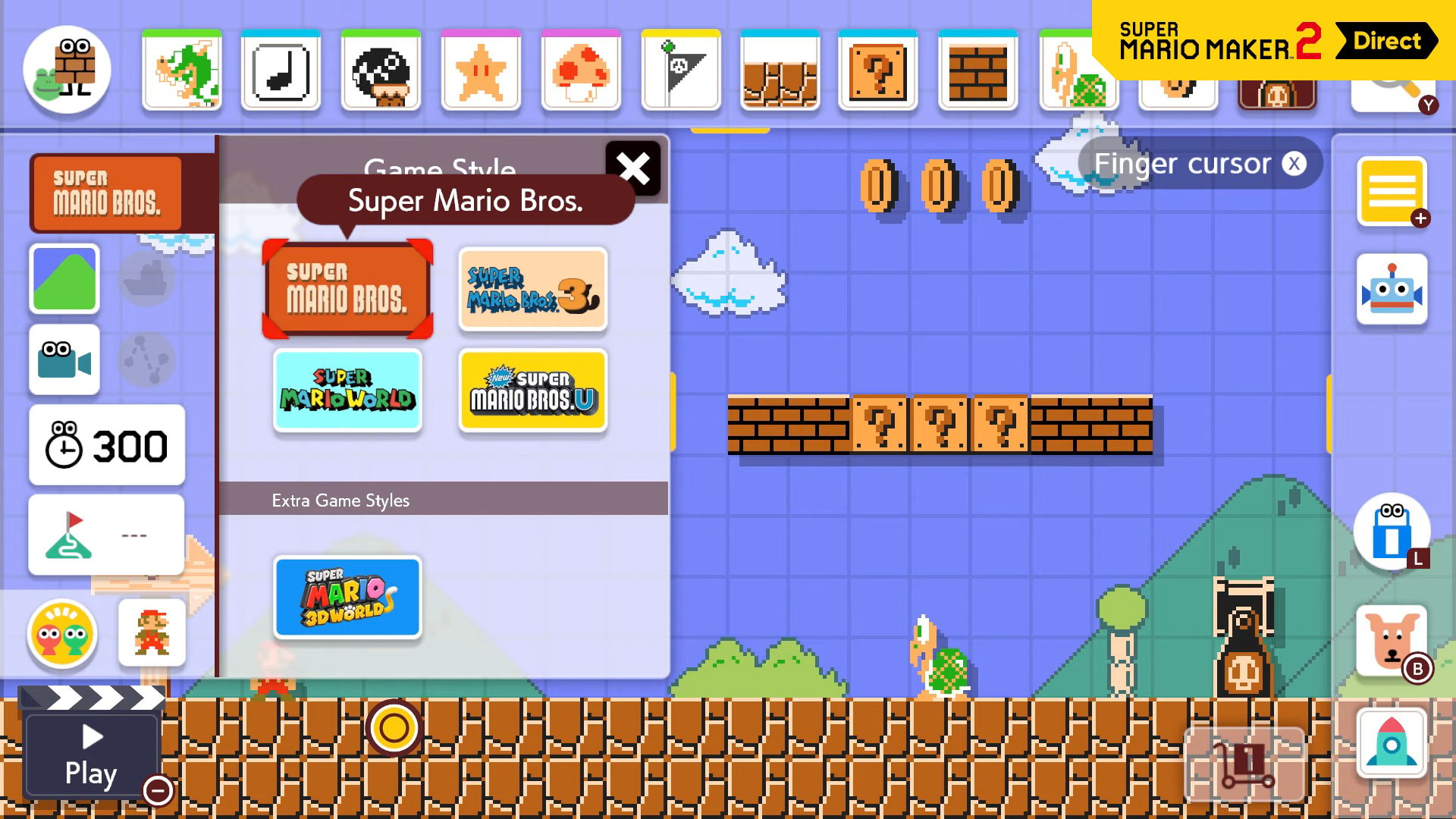
When early images and advertisements for Super Mario Maker 2 began surfacing online, it became clear a new game theme had been added. Nintendo’s latest presentation for the upcoming release has now confirmed it’s based on the Wii U release, Super Mario 3D World. If you already spotted Cat Mario and clear pipes in promotional material, this news shouldn’t come as a surprise.
So, what exactly does this new game style include? Well, it’s got a lot of unique content, which essentially means your existing design is cleared when you swap over to this theme. Here’s a bit more about what to expect, courtesy of the PR:
Cat Mario – Cat Mario can climb walls, scratch, slide and pounce on enemies. Players can even use Cat Mario to climb up the Goal Pole! Clear Pipe – Clear Pipes can be placed in any shape the player wants, but they have to be careful, as enemies can also slide through them. Koopa Troopa Car – Hop in this sweet ride and zoom through the course. Players just have to make sure not to crash! Track Block – The Track Block will follow any path the player draws. The blue one starts moving when the player steps on it. Piranha Creeper – The Piranha Creeper follows the path that the player draws, extending its dangerous spiky stem around the course. Who’s Who in Super Mario 3D World?: A cast of other familiar faces will also make appearances in Super Mario Maker 2, so players are in for a treat!
Will Nintendo Add More Game Styles To Super Mario Maker 2?
If you managed to catch the Super Mario Maker 2 Direct earlier on, you likely saw the segment where the new game style based on Super Mario 3D World was revealed.
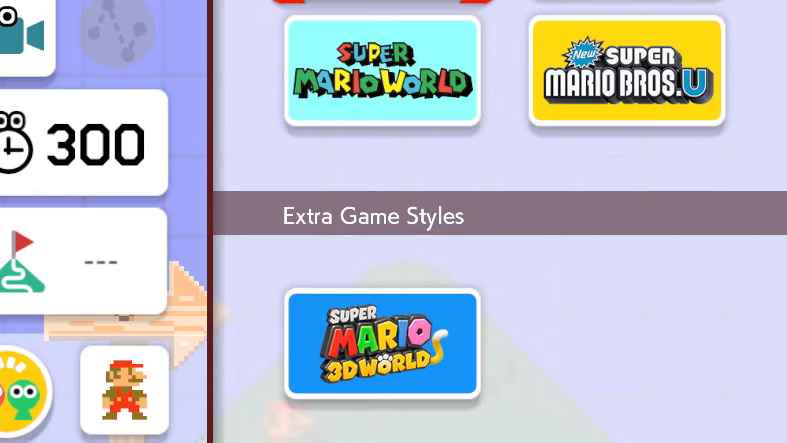
If you pause around the 9-minute mark of the video, you’ll notice there’s a vacant space next to the new theme on display. Noticeably, the title in this menu is labeled “Extra Game Styles” suggesting there’ll eventually be multiple other game themes to select from.
At this stage, there’s no guarantee, but if more styles are on the way, we can’t help but wonder what these designs would be based on and if Nintendo would release them as free updates or paid downloadable content.
What do you think about this? Would you like to see more styles added to the game? Tell us below.
Posted by: xSicKxBot - 05-17-2019, 12:18 AM - Forum: Windows
- No Replies
Building the inclusive workplace we imagine, together
Today marks Global Accessibility Awareness Day, one of the days we get to celebrate the progress our customers and partners have made to make their workplaces more inclusive, and then look ahead to what more we can do as a community to empower everyone in the workplace.
We celebrate because our customers are empowering their employees both with the accessible technology built into Microsoft 365, and with the inclusive cultural practices that make people love coming to work. We are comparing notes and learning from them as we also build that same inclusive culture at Microsoft.
Here in the U.K., we recently celebrated a milestone—a point on our journey—with recognition from the U.K. Government as a Disability Confident Leader. This status is awarded to organizations that commit to diversity and inclusion and encourage suppliers and vendors to do the same. Our team has worked tirelessly to put processes in place that can both create and sustain a diverse and inclusive culture; attracting and recruiting people with disabilities via our global Inclusive Hiring Program; training managers to understand the needs of those with visible and non-visible disabilities; assessing people for roles more flexibly so those with disabilities have the best opportunity to show their skills; adjusting workplaces to include sign language interpreters, and ensuring all staff have access to disability equality awareness training.
Looking ahead
We also look ahead to our big vision—an accessible and inclusive workplace for everyone—and what more we can do as a company and as a community to make it a reality. Today we’re excited to announce that live captions and subtitles in PowerPoint are rolling out now, and will soon be generally available to Microsoft 365 and Office 365 subscribers worldwide for Windows, Mac, and the web. We also look forward to the coming release of other new inclusive technologies built into Microsoft 365, like live captions and subtitles in Teams Meetings.
Present inclusively with live captions and subtitles in PowerPoint—We know how powerful a great presentation can be—whether it inspires us or aligns us to a common goal. Now, with support for 12 spoken languages and 60+ on-screen captions or subtitle languages, people who are deaf or hard of hearing can be included in these important team building moments. Additionally, with an increasingly global and remote set of collaborators, those who speak a different language from the presenter, or are listening in from a loud environment, can also more easily be included.
Transform the meeting experience for people with disabilities—We also know the critical role meetings play in how we work, and recently announced that live captions and subtitles will also be available in Teams Meetings. These capabilities are coming soon as a preview in English and complement the captioning and transcription features already generally available for recorded Teams meetings and live events in Stream, Teams, and Yammer. Whether in a 1-1 with your manager, or a company-wide all hands, everyone should feel included when the team gets together to meet, including people who are deaf or hard of hearing.
We constantly release new features and improvements to make our products not just compliant with the latest standards, but empowering for all users, both with and without disability. We encourage you to read all about these features in the Microsoft Accessibility Features Sway.
Building the inclusive workplace together
Many of our customers are committed to making this vision of an inclusive workplace a reality and are partnering with us to make it happen. Last month the Federal Government of Canada chose Microsoft as a partner in their effort to create a more modern and accessible Public Service. The Honourable Carla Qualtrough, Minister of Public Services and Procurement and Accessibility, said, “Equipping our public servants with accessible, reliable, and innovative technologies will unleash the potential of our world-class public service and result in better service delivery for all Canadians.” Here at Microsoft we agree—only when we represent the diversity we see in the world internally can we build the most innovative technology and serve our customers as they ought to be served.
We also see Rogers Communications, a leading Canadian communications and media company, shares our vision of a more inclusive workplace. Rogers is doing everything from transforming their physical workplace to be more collaborative and inclusive, to using the accessible technologies built into the Microsoft 365 applications their employees can use every day. Best of all, we’re helping and learning from each other along the way—our teams work regularly with Rogers to understand how our technology can better support their commitment to building an inclusive workplace, and Rogers’ Persons with Disability Diversity group works with us to learn how we embed Inclusive Design principles into our products and our culture. Read the full blog, published today, to learn more about how Rogers is building an accessible and inclusive culture to benefit employees, customers, and the broader community.
Join us!
We have so much more to do—as an organization, an employer, a leader, and a follower—in this journey towards an accessible and inclusive workplace, and we hope you’ll join us. Visit the Microsoft Accessibility site to learn more about our approach. Share your learnings with #LearningTogether and #GAAD and continue the conversation with @MSFTEnable on Twitter.
Apple on Thursday pushed out a redesign for its Investor Relations webpage that provides easy access to current and historical financial data, and integrates a live feed from the company’s Newsroom.
Sharing a general design theme with Apple’s product pages, the updated Investor Relations mini-site is dominated by a “News and Results” header, below which are — as described — the company’s most recent quarterly results and press releases. The banner was titled “Apple Investor News” in prior iterations of the site.
A section titled “Investor Updates” includes links to information covering the just ended fiscal quarter, specifically Apple’s official press release and Form 10-Q Securities and Exchange Commission filing. Previously, the same links were presented at the top of Apple’s Investor Relations webpage, but lacked the Investor Updates designation.
A second section presents a feed from Apple’s Newsroom, which collects the company’s latest press releases, photo galleries and corporate statements. More recently, editorial “features” penned by members of Apple’s PR team provide insight into corporate initiatives and new products. For example, a feature in April highlighted Apple’s efforts to mangrove forests, while a similarly labeled release in March promoted AirPods with the help of choreographer Hope Boykin.
Financial Data — previously a separate page accessed through a tab at the top of the Investor Relations homepage — is now included at the bottom of the front page. Past quarterly press releases, financial statements, data summaries and SEC filings are arranged by fiscal year, while a separate section breaks out annual 10-K filings dating back to 2015. Miscellaneous reports are also displayed and currently include a reclassification of net sales for fiscal 2018, capital return history, dividend history and an annual green bond impact report.
Also new is a revamped SEC Filings subsection, accessed through a dedicated tab on the Investor Relations homepage. Here, users can now subscribe to receive email alerts for Apple’s latest SEC filings, insider transactions and quarter and annual reports.
An Apple Values tab redirects visitors to the company’s various corporate initiatives: Accessibility, Education, Environment, Inclusion and Diversity, Privacy, and Supplier Responsibility. The mini-site’s Stock Price, Leadership and Governance, FAQ and Contact pages also feature minor graphical tweaks.
Total War: THREE KINGDOMS is the first in the award-winning series to recreate epic conflict across ancient China. Combining a gripping turn-based campaign of empire-building & conquest with stunning real-time battles, THREE KINGDOMS redefines the series in an age of heroes & legends.
After Skipping Steam, The Division 2 Sees Uplay Sales Grow 10X Over Original
The Division 2 changed things up in terms of its release this year when it bypassed PC giant Steam in favor of launching on Ubisoft's own Uplay store and the Epic Games Store. Ubisoft has now spoken about that transition and how it impacted sales overall.
Sales of The Division 2's PC edition were "in line" with those of The Division 1, chief financial boss Frederick Dugue said on an earnings call. The Uplay edition, meanwhile, enjoyed a ten-fold increase in sales compared to the original game; this uptick was no doubt driven by the game not being available on Steam.
This probably makes the PC edition of The Division 2 even more profitable, as Ubisoft owns the Uplay store and doesn't have to pay a merchant fee. The Epic Games Store, meanwhile, pays publishers 88 percent of revenue, compared to 70 percent on Steam.
PC overall is doing very well for Ubisoft lately. The company announced today that PC game sales are up 79 percent and currently represent 27 percent of Ubisoft's overall revenue. This compares to 18 percent of total revenue for the prior year. Uplay specifically saw its sales rise by 150 percent for the latest reporting period, due in part to the launch of The Division 2 on Uplay instead of Steam.