Gravit Designer 2019-2 has just been released. Gravit Designer is a vector based graphics application, available both on the web as well as downloadable for Windows, Mac, Linux and Chrome. It is available in both free and pro editions. The 2019-2 release brings several new features, including translations for a dozen popular languages, which should be autodetected in the web based version based off your browser settings. The release also includes improved PDF support, Unsplash photo integration and more.
Hallo, Bonjour, もしもし and Merhaba: As already teased (by accident) in the last release, Gravit Designer now comes with these twelve additional languages, available from Help → Language: German, Spanish, French, Italian, Polish, Russian, Chinese simplified, Chinese traditional, Czech, Dutch, Japanese, and Turkish. This makes a total of 14 languages in your favorite design tool.
On top of that, the correct language is automatically detected from the browser language, so you should see the correct translation by default.
Unsplash photo integration: To give you even more options to work on your projects without needing to leave Gravit Designer, you can now add photos directly from the Unsplash photos category in the Libraries. Either click on a photo to insert it or drag it to the canvas.
When having a shape selected on the canvas while clicking on a photo, it gets added as a texture fill.
Additionally, when holding Alt it gets masked to the selected shape.
Of course you can also search for photos and for some inspiration the dropdown list lets you choose from a range of categories.
Improvements
To simplify adding images to your designs, JPEGs and PNGs can now be opened directly from File → Open file… without needing to use File → Import → Place.
Generally improved PDF import.
Multiple improvements to duplicating pages in Multipage Mode:
Duplicating with Ctrl/Cmd + D places the page after the last page, not in between other pages.
Duplicating with Alt-dragging or moving it places the page exactly where dragging stops.
A subsequent number now gets added to the name of the duplicated page (MyPage → MyPage 1). If duplicating a page that already has a number in the name, “.1” is added (MyPage 1 → MyPage 1.1).
The bounding box of subsequent pages is now correctly respected.
Hovering over pages now shows a selection box to clarify what will be selected when clicking (unrelated to duplicating).
The interface font of Gravit Designer no includes Cyrillic characters.
Bugfixes
Fixed some last bugs for printing.
Window functions (Minimize, Restore Down and Close) work correctly again in the Windows desktop version.
Pages that have a Master Page assigned show the content outside of the page’s boundaries correctly.
Solved a problem that JPEGs were exported with wrong header information.
Solved some drawing issues with the Freehand and Freehand Shaping tool.
Fixed that some categories in the Libraries show a large gap before the actual assets start.
Resending the email confirmation works correctly again. DEV-2571
The Preserve editing capabilities for SVG files option for SVGs in the Export dialog doesn’t hang the Export dialog anymore.
Fixed that certain files show an incorrect warning for missing fonts.
You can learn more about this release and see Gravit Designer in action in the video below. You can run Gravit Designer directly in your browser right here.
Posted by: xSicKxBot - 06-17-2019, 04:04 AM - Forum: Lounge
- No Replies
Brenda and John Romero’s Empire of Sin is an emergent narrative gangster flick
The latest game form industry veterans Brenda and John Romero got a surprise reveal this week during Nintendo’s E3 Direct. Titled Empire of Sin, the (slightly censored) trailer showed off a turn-based mafia strategy game that was also being demoed behind closed doors at Paradox’s booth.
Curious about what’s got the Romeros (and their teammates) diving into the world of 1920s prohibition, we dropped by for a quick look at Empire of Sin and a brief chat with John Romero. As he explains it, Empire of Sin started off as Brenda’s passion project, combining her history of strategy game design with a love for the same historical era that inspired Scarface, The Godfather, and other classic gangster films.
What wasn’t apparent in the publicly released trailer was that Empire of Sin isn’t just an organized crime simulator, it’s also building emergent narrative beats based on the traits and relationships assigned to the player character and a band of recruitable NPCs.
As John explained it, “Adding all of the character traits and relationships adds a whole layer that most games don’t have. The fact that it changes over time makes it more emergent. They’re not static—you can’t just say ‘this character is always like this, and they’re like that forever, and I know how these chess pieces work together.’ The chess pieces change over time.”
This means the company is attempting to play in a space where simple gameplay decisions can feed into this trait evolution and vice-versa. Romero and his team showed off one specific example that began with ordering a character to execute a downed (but still alive) enemy. According to Romero, repeatedly ordering one character to move in for these close-up executions might give them a specific bloodthirsty trait, and even put them on the path to being a serial killer.
As that character progressed down that path, other characters would begin to fear working alongside them, influencing who the player sends on specific missions in specific contexts. This system also deals with which NPCs are in love with each other, which ones are enemies, which ones are alcoholics, and beyond.
Watching Empire of Sin at work, it was notable to see a smaller-scale version of systems also being pitched upstairs in games like Watch Dogs: Legion, Dying Light 2, and other games. Romero Games is obviously a much smaller company compared to Ubisoft or Techland, so we asked John what his thoughts were on creating these kinds of emergent systems at a smaller company.
“You have to just have a certain number of relationships, that’s why you don’t have a million of them,” he said “It’s a number [the player] can keep in their head and think about. So there’s emergence, but it’s not off the scale where you can’t understand anymore how the game works.”
If you’re curious about other games from Brenda Romero that inspired Empire of Sin, be sure to check out her 2016 GDC Europe talk.
Posted by: xSicKxBot - 06-17-2019, 04:04 AM - Forum: Lounge
- No Replies
Video: 9 takeaways of Duelyst’s journey from tabletop to digital game
In this 2017 GDC session, Counterplay Games’ Eric Lang and Keith Lee look back at the development of Duelyst, a collectible card game and turn-based strategy hybrid.
What’s especially interesting about Duelyst’s development is that it was initially prototyped as a board game and, over time, transformed into a competitive digital collectible tactics game.
Together the pair of speakers delved into the critical challenges the team faced during the development process, and offered up nine impactful learnings that might help you hone your next competitive game.
In addition to this presentation, the GDC Vault and its accompanying YouTube channel offers numerous other free videos, audio recordings, and slides from many of the recent Game Developers Conference events, and the service offers even more members-only content for GDC Vault subscribers.
Those who purchased All Access passes to recent events like GDC or VRDC already have full access to GDC Vault, and interested parties can apply for the individual subscription via a GDC Vault subscription page. Group subscriptions are also available: game-related schools and development studios who sign up for GDC Vault Studio Subscriptions can receive access for their entire office or company by contacting staff via the GDC Vault group subscription page. Finally, current subscribers with access issues can contac
June 8th : New Preview Alpha & Beta Rings 1906 Update (1906.190607-1330)
Starting at 3:00 p.m. PST today, members of the Xbox One Preview Alpha & Beta Rings will begin receiving the latest 1906 Xbox One system update (Build: 19H1_RELEASE_XBOX_DEV_1906\18362.4050.190607-1330).
DETAILS:
OS version released: 19H1_RELEASE_XBOX_DEV_1906\18362.4050.190607-1330
Available: 3:00PM PDT 6/8/19
Mandatory Date/Time: 3:00 AM PDT 6/9/19
Fixes:
My Games and Apps
We have fixed the issue in which My Games and Apps is blank after launching it from Home and/or hitting refresh from the guide.
Known Issues:
Audio
Headsets are not being assigned to the users profiles and not working correctly.
Profile Color
Sometimes users may encounter the incorrect Profile color when powering on the console.
Posted by: xSicKxBot - 06-17-2019, 01:56 AM - Forum: Lounge
- No Replies
Xbox's Matt Booty On Studio Acquisitions And Making Game Pass Valuable
One of Microsoft's major reveals at its E3 2019 press conference was the announcement that it had acquired Double Fine Productions, the development studio founded by Tim Schafer. Double Fine joins Ninja Theory, Obsidian, Playground Games, Compulsion Games, and a few others on the list of acquisitions.
It begs the question: Why is Microsoft spending so much money on bolstering its roster of developers? The obvious answer is that it wants more exclusives to make Xbox platforms more attractive to customers, but, actually, there's more to the strategy than meets the eye. Following the Xbox press conference, we caught up with Matt Booty, head of studios at Xbox, to discuss this and more.
How much are you aware of the audience you're trying to engage when you come onto the stage and you talk about Microsoft's portfolio of studios and games? Obviously you want to hype up or appeal to the core gamers but, when you've got a new platform, you also need to flex for the mainstream press, right?
So in the last 20 years, the number of people playing games has tripled. So I remember in the 90's doing talks and saying, oh some games will be as big as music. And then, someday games will be as big as movies. And we've completely eclipsed both of those. And so now it's just crazy to see just how many people are playing games. And with our goal of reaching all two billion people that are playing games on the planet today, your point about reaching to a broader range of gamers you know really thinking about a whole bunch of games that people want to play with the community and friends that they want.
We've all got different groups of people that we play games with and then anywhere they are. It's so important to us. Because games have become just a part of society now. I mean Phil had those words, Phil talks about how it can become kind of a unifying force for the world. But it's only possible because games have just become part of the fabric of life.
Really we start planning for this show pretty early in the year and there's a lot of work by the teams that go into getting us here. And I can say that almost all the decisions that we make and everything that we end up putting on stage has more to do with the players and the fans than anything else. It's great if we just wind back a year or so. Last year I was talking about how [Xbox boss Phil Spencer] became part of our CEO's leadership team and the importance of gaming inside Microsoft. But given that, it's not like somebody comes in and says, "Make sure you hit these key points." And we have an amazing amount of support and with that support comes latitude to really talk about the games that we think are important to the players and share the things that are important.
So between last E3 and this E3 you've been on kind of like studio acquisition run. What's the thinking behind that? Why are you guys out there looking to acquire studios?
Yeah, so you heard a lot about what we're doing today in the briefing if we just kind of recap it. We start with games, sixty games. We have 14 first party games, 30 of those will be available in game pass and then we've talked about streaming and so we've hit that point, being home streaming, the cloud streaming. Then we showed a new console and there's a lot of stuff that we covered.
Game Pass is the center of gravity for everything for us. The fans and the players inside Game Pass want content, they want games. So my job, really my goal, is to make sure that we're providing a steady stream of great new games into Game Pass. Right? So that if you become a Game Pass subscriber, you know that on a regular beat you're going to be getting great new games.
And with the development time for games, I think it's a lot longer to make a game than it does even a full season of some TV shows, right? We need lead time. So it turns out that if we're going to keep that cadence going we just need a lot of people creating content. And that's really what's been driving it for us.
Game Pass is still fairly new and the industry as a whole is still used to selling boxes. When you acquire a studio or when you speak to a development team how do you tell them what they're going to create this game, spend years on it, and you're basically going to give it away for free. Or we're going to give it away for a subscription fee, which feels nominal compared to the time and effort that goes in. How do you convince them that there's still value in that?
It's a great question from the developer point of view. I love you're looking at that way. Let's go to something like, so you are the director of Game of Thrones and you've been making Game of Thrones and people watch through and HBO subscription and you aren't talking about ticket sales. You're not talking about movie theater opening box office, but clearly Game of Thrones has had a huge impact on pop culture, right?
We can talk about Stranger Things going into Netflix. Same thing. For us, Game Pass in that conversation becomes much more about discovery and it becomes about how you can open up your game to a broader audience. It becomes about really delivering players to the game that those developers have made and a much broader audience.
You know that is part of the equation that we acquire the studio and hopefully by doing that we remove some of the financial pressure on the studio. Tim Schafer, right after the briefing posted a video and he talks about how when he comes up with a game idea now, he doesn't have to go and spend all his time shopping it around to all the publishers looking for somebody to fund that.
So hopefully we can take all the time that the developers used to spend having to do that and put that back into creativity. And if that's what Game Pass enables then I think that's great from a creative standpoint. We know for example that game pass can bring a lot of new people. We can tell just by looking at some of the information that we get that a lot of the people that are playing State of Decay 2 have really were never on Xbox before. So the fact that they can get in easily through Game Pass and ended up playing … I just love that.
So I think it is certainly the case over the last 20-30 years you know as long as I've been in games. Everything used to be based on units right? How many units is that? And then we kind of got into this world where things like Metacritic and review scores started to matter. And I think now, it's really just, it's more about audience, it's about audience reach and how can you connect with the most number of people that are going to play your game? I think Game Pass is a fantastic place for putting your name in front of your players.
I guess there's certain types of games where Game Pass is very obviously beneficial. Do you generally lean towards certain types of games that fit the bill for the service? You take a look at Bleeding Edge for example and something like Game Pass is perfect for it because it gets people to it and then they're engaged in a service based model with the game.
One of the more satisfying things about Game Pass that we've seen is that games like Forza Horizon 4, that are in Game Pass and could be a traditional game with a pretty traditional structure, is doing fantastic in game pass in terms of people playing it and enjoying it. All the way through to Minecraft, which is also doing well. Same with Sea of Thieves. We've got State of Decay in there. So those games are all getting a lot of usage inside Game Pass which is great.
For that reason we don't really prescribe what kind of game somebody should make. What we try to do is try to give them information, here's what we see in game pass, here's what we see doing well, here's kind of the way we think about it. And then we let the studios go after that. Again, I think for them, they're North Star more comes down to how I connect with players. How do get this in front of a bigger audience?
So when you're making a studio acquisition, what exactly is it that you're looking for? Because you've made, recently, between Obsidian, Ninja Theory, and Double Fine. These are beloved studios that make fantastic games but seem like they've had a bit of tumultuous period of late. From an outsider's perspective, it may seem these acquisitions are a bit of a rescue effort.
When we look at a studio, it's what I said on stage today, we really look at people, teams, and ideas. And in terms of people, we are attracted to and tend to have relationships with studios who share our vision of where gaming can go.
So they see gaming as something growing in global popularity, they understand that gaming can be a unifying force that bring people together, and they are very player and fan driven. So when you think about just even when Ninja Theory, Obsidian, Double Fine they are all very very connected to their fans. So in terms of the people. In teams it is important to us, and one of the things that I really value is that studio like Ninja Theory, a studio like Double Fine, it's not that they just had one hit game, they have really stuck with it through success and through adversity.
I think that says a lot about the character of the studio and also is a great indicator that they know how to run a studio. That they know how, they've got cohesiveness that they know how to stay together. It's a really different challenge and a different approach when you've got a game that maybe didn't do so well but yet you manage to keep your studio together and kind of dive in and get back at it.
So to me that just talks a lot about character. And you look at Ninja Theory it's been around for 10-15 years you look at Double Fine for 20 years I mean Obsidian goes all the way back to the Interplay days. So these are studios that kind of been through it all and that idea is if you kind of connect the dots on the studios we've got and you'll see that we really are attracted to studios that have had multiple ideas. Because did somebody come up with a good idea? Or did they just get lucky?
When I look at what Tim Schafer's done with, excuse me, Double Fine, it's clear that he knows how to create process to generate new ideas. So he's not sort of the one song wonder kind of thing. Same thing with Ninja Theory, look at the consistent games that they've put out.
So that's really how we think about these studios. People, great people, share our vision, teams that have stuck together through highs and lows and then they've made more than one game. They've had many ideas.
Now to your question about their financial situation. I think that is a reflection of some economic things that have happened in the games industry where we're seeing that there's a ton of activity and fantastic help at the level of our ID@Xbox program where you've got smaller teams making smaller games and I love that our ID program is a place where that stuff can come in and then we are very fortunate to have big franchises like Halo, Gears, Minecraft. There's this place in the middle that it turns out it's really hard to run a studio that's got 60-100 people. Now what you end up doing is having to put together a lot of different publishing deals, maybe having to take on work that isn't about games.
You end up kind of having to really think about dovetailing and overlapping the resources in the studio, all of which, really at the end of the day, takes up time. So our approach is, hey if we can come in with a Tim Schafer, Nina Kristensen Ninja Theory, and if we can say, however much time you were spending meeting with publishers at GDC, however much time you were spending on other projects to help pay the bills we can make all that go away. And you can take all that energy and put it back into the games and the creativity.
And I think we can unlock some things, right? So just like Undead Labs that we acquired last year, State of Decay 2, great games but you know that game started out for probably closer to the AA, indie, side of things and it's fantastic to think about Undead Labs being part of Xbox games studio. Because I think that we can give them the resources we can give them access to the other studios and we can help them take that next leap forward to what needs to happen to make their next game really big. That's really... we were just this morning having some conversations with some of the folks at Ninja Theory you know. How's it going? Go over and visit there this summer and we hear quite a bit about how we've managed to unlock the ability to hire key people. We've managed to bring a sense of security so some more senior people are willing to go work there. We've given them just resources to go take that next step. Now whatever that next step is, I think the production value on Hellblade was amazing.
I mean that game was basically a AAA production value in a AA scoped game. But if you think about what can Ninja Theory do with more resources that's amazing to think about.
This is a weird perspective to come at it from but how much of giving these developers unlimited resource, so to speak, changes the way they make games and the games they make? Hellblade is what is because of the restraints that were placed on Ninja Theory. It is a reflection of the limitations they had. How do you approach changing the ethos of the developer and the creators energy by bringing almost anything they want to the table? Does it change?
We are really taking the approach wherever possible to leave them the way they were. And to really get in and do as little to that studio as possible post acquisition. And part of that does come down to sort of how they were operating and how they were working right?
It is a little bit of a balance because I do want everybody in those studios to feel secure and I think that we can look at what we've done with Mojang as a proof point. We will come up this fall on the five year anniversary of the acquisition of Mojang and that studio is going as strong as ever. You saw Minecraft Dungeons that are in pre stage, we just announce Minecraft Earth a couple weeks ago. And the Minecraft team on stage at Apple WWDC. I think that that really is where some of my job and some of the studio head leadership job comes into, is how do we balance giving them the resource, now I can go get those four technical animators I wanted. Or you know now we can go do this crazy mo-cap session we wanted to do. Balance the new resources with... You know we don't want to lose that creative edge.
I think that's a good question and it gets to the heart of what the job of the studio heads is, what my job is. I don't think it would be accurate to say that they've just got a blank check but your point is really well made. I think that really what I'm banking on to make sure that that doesn't happen is that there's so much stored creative energy that it's going to be a while before that starts to slow down.
So one of the interesting things about these acquisitions is a rather gracious approach from Microsoft to allow these developers to still publish games multi-platform and fulfill existing arrangements.
I really, I mean it starts and ends with the players. I would just feel horrible if I got excited and even in the case of something like Psychonauts 2 was a Kickstarter backer for game and then I found out that I wake up one morning and suddenly it's not playable on the thing I thought it was going to be playable on. We took that principle of player first in what we did with Minecraft. Minecraft ships on 21 platforms. Now that isn't to say we haven't done a lot of things just taking advantage of Xbox and taking advantage of things that only exits at Microsoft like HoloLens in the work that we've done there.
But it really just comes down to the players and player choice. Whenever one of these happens it's like one of the first discussions that we have with somebody is yeah of course, if you've already got your PlayStation version in the way, we're going to let you keep making that. Or your kick starter fans expect this thing to show up on the Switch then we're going to go ahead and do that.
How much does that factor into future games? Once Obsidian's existing agreements, same for Double Fine, are taken care of, is it like, "Okay this is a Microsoft game studio now and you're going to be making exclusively Microsoft games." If a developer comes to you and says, "Hey, I've got this idea for a game, I want it to be multi-platform." Is that something you'd consider?
I think we would first of all look at everything on a case by case basis. It is, to be clear, the goal with these studios is to provide content for game pass and to provide support for all the new things that we talked about today. Everything from Mixer to Xbox live gold to Xbox... we've got the Game Pass Ultimate with streaming and everything. Our job as first-party is really to be there first with all of that. At the same time we have a great relationship with Nintendo, a great relationship with Sony, and if it made sense I don't want to rule that out but to be clear, our main mission is going to support game pass.
Is there a studio out there that you would love to acquire and which one would it be?
[Laughs] I can't answer that. When I talked about like people, teams, that idea is that so much of this does come down to relationships that we've built and people that we've worked with and I don't want to say that means it's somebody we've had to have worked with before in the past or something. And I'll also say that there's not some kind of, there's not like a list on my wall and I'm kind of checking them off one by one.
That's kind of disappointing. I wanted a dartboard situation.
[Laughs] I'm not just throwing darts. It really more because a lot of work and effort goes into getting to meet the studios, meeting the employees, spending time with the employees. We have a whole team of people that make sure that they've got everything they need. Somebody like [Ninja Theory founder Tameem Antoniades] building this studio ... Like that's kind of a big deal to then turn around and sell it.
To me it's really more about let's focus on what needs to happen on that person to person relationship and let's focus on you know what we need to do to get everybody in the studio comfortable and to me that's a lot more important than thinking about what the next one might be.
How much of a focus are you mandating these studios place on content for current systems versus content for Scarlett going forward? Is it, like, "Ok, start developing things for the next hardware and finish up what you're doing here?"
So we really in that case again it's just about player choice. We want to make sure that we are hitting a broad audience and we want our fans to be able to play up and down four generations of consoles. So we want to have Xbox one support. But the advantage of being first party is that we have direct access to team working on project Scarlett. You know I sit in meetings, I'm part of those meetings. You know we can... One of the first things we did when we started working with Double Fine is send team down to Double Fine to go disclose them on everything we're doing with project Scarlett.
So they've got a front row seat to what that's going to be and how it's going to work and how that's going to come together. So we absolutely want to take advantage of that so I think it's about supporting the family of Xbox devices while making sure that things play best on Scarlett.
Random: Astral Chain Is Filled With Hidden Toilets And “Lots Of Cats”
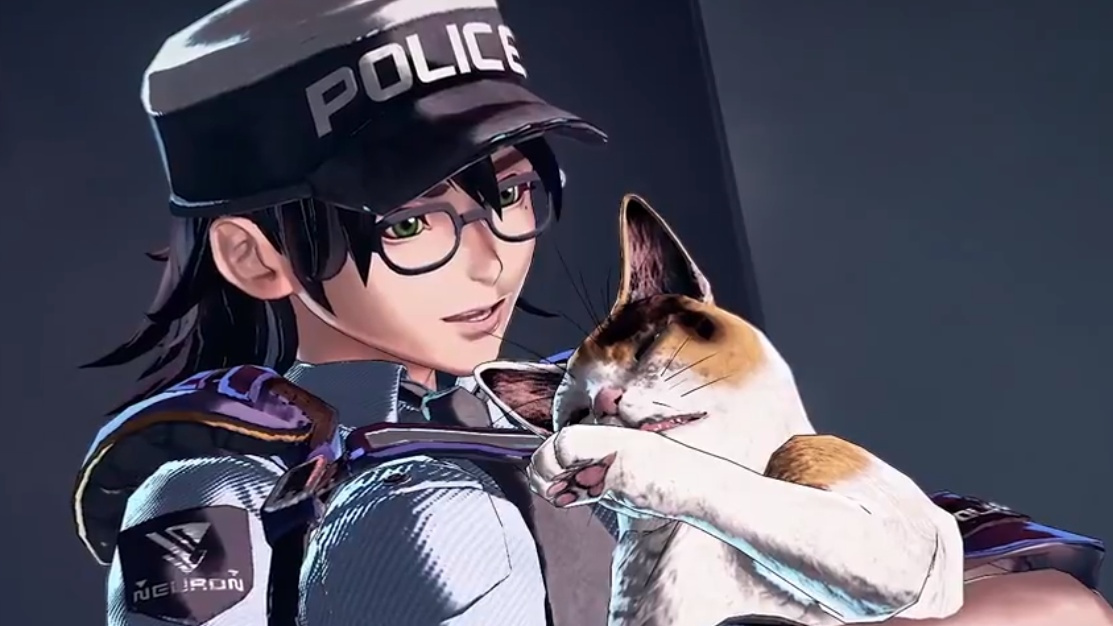
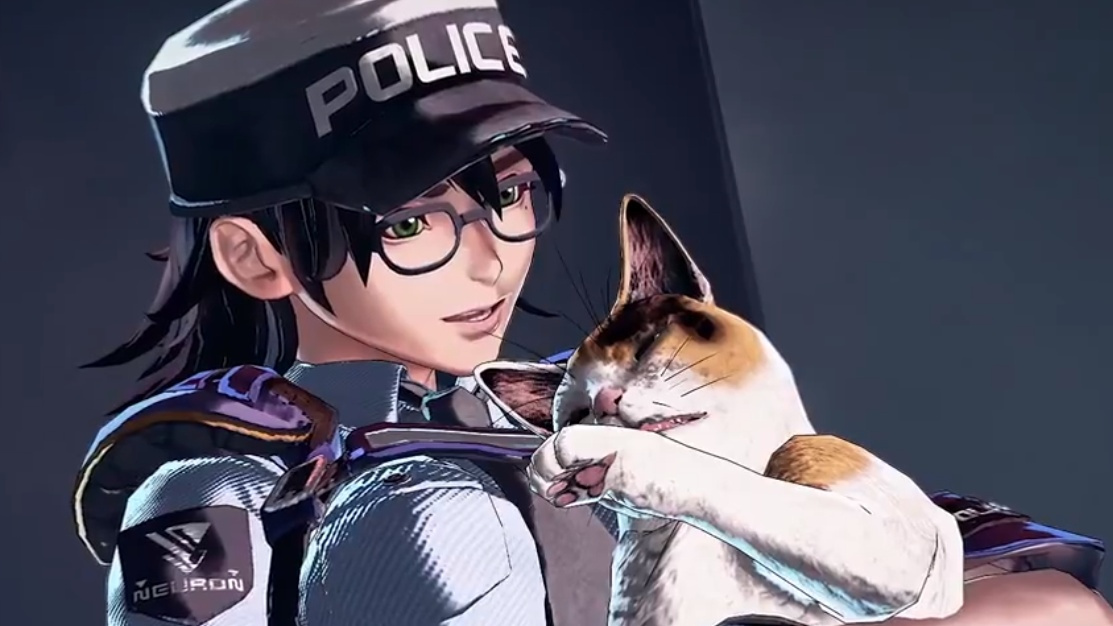
While the majority of PlatinumGames fans are eagerly anticipating the release of Bayonetta 3 on the Switch, the next title the Japanese company is actually releasing on Nintendo’s hybrid platform is the synergetic action game Astral Chain. It’s being directed by Takahisa Taura, who was the lead designer on NieR: Automata.
During the Nintendo Treehouse: Live at E3 2019 earlier this week, Taura provided a little extra insight about the company’s next release, where you take on the role of a rookie officer who is part of an elite police task force known as Neuron. At one point during the gameplay demo, though, a toilet was found, so he decided to add some context to a joke made by the Treehouse staff:
“So the toilet that you just saw is hidden in every stage, there’s a different a toilet, they’re a hidden element and if you find them all then something good will happen.”
So, just to make that clear – toilets are a “hidden element” in Astral Chain and you can even use them.
If searching for toilets isn’t your kind of thing, then perhaps you would prefer to seek out cats. We’re not joking about this, either. In a video posted over on Nintendo’s of America’s Twitter account, Taura briefly touched on all the cats in the game:
“Lots of cats appear. Various kinds of cats appear and you can find them in all kinds of places. And so searching for them is fun.”
If at this point you’re trying to make sense of what the hell Astral Chain is actually about, here’s the rundown from the official Nintendo PR:
In this new synergetic action game from PlatinumGames, humanity’s last chance against an interdimensional invasion is a sentient weapon called the Legion. As a rookie officer in an elite police task force, players will work together with their Legion to solve cases and save humankind. Players can change Legions on the fly to vary their style and unleash stylish combos. As they save the world from extradimensional invaders called chimeras, they’ll also interact with citizens, question suspects and team up with members of their task force to solve cases.
Taura briefly explained the premise himself during the Treehouse:
“The game is set essentially in the near future on earth and all the land of the earth is under attack from another dimension, where’s it’s being polluted by this mysterious matter.”
As the director puts it, clearing up the “red matter” in the game is actually as addictive as collecting coins in Super Mario:
“You can use your Legion to steer it around and clear up the red matter that’s scattered around, and that becomes kind of like using Mario to collect coins”
So, what do you think about Astral Chain now that you know you can search for cats and toilets? Is this a title you were already looking forward to playing? Share your thoughts below.
Nintendo Shares Colourful Graphic Outlining Upcoming Switch Releases
Sweet Christmas, my poor wallet.
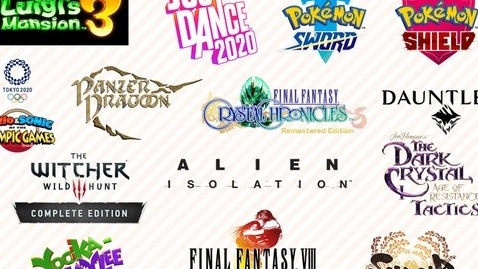
There is at least a dozen games I plan on buying (and that’s not counting games that weren’t shown at E3 IE Town, and whatever else might be announced before years end). I plan on picking up the following games at some point or another…
Super Mario Maker 2, Marvel Ultimate Alliance 3, Fire Emblem: Three Houses, Spyro Reignited Trilogy, The Legend of Zelda: Link’s Awakening, Pokemon S/S, Mario & Sonic Olympic Games, Luigi’s Mansion 3, Yooka-Laylee: The Impossible Lair, New Super Luckys Tale, Animal Crossing: New Horizons, and Minecraft Dungeons
^^ Just crazy, but they all look like they could be fun games.
Random: Have We Been Missing A Zelda Easter Egg In Mario 64 All These Years?
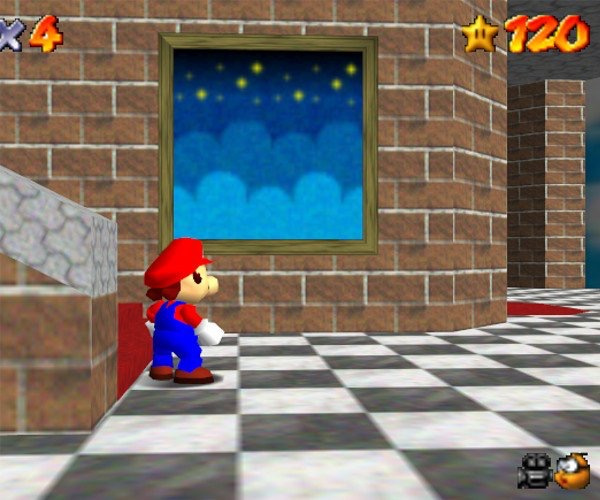
Easter eggs in video games aren’t a new thing, but it’s rare to spot one decades after the event – but that’s what Twitter user Hitei he’s found in Super Mario 64.
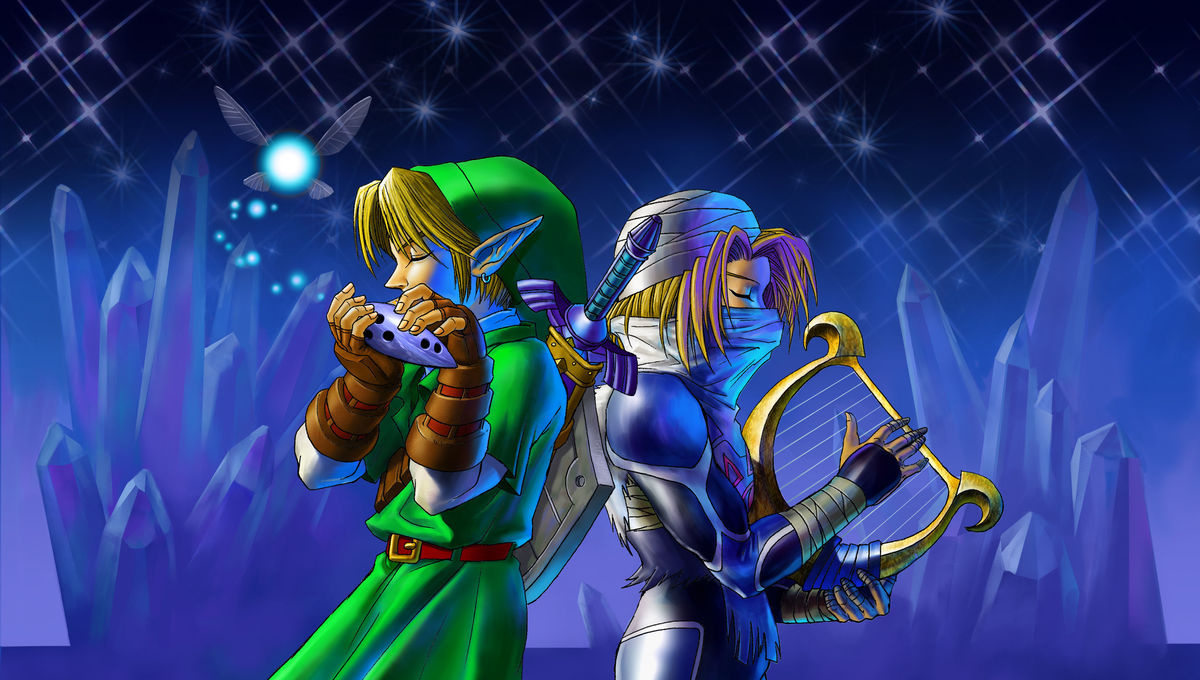
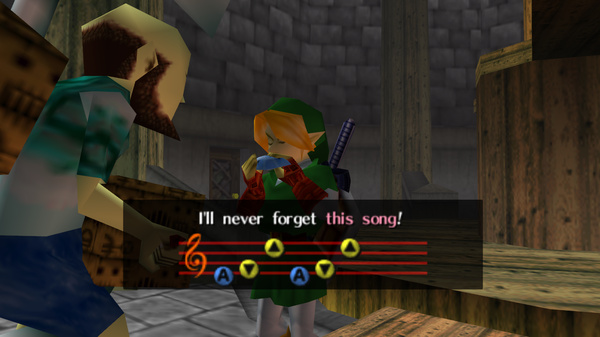
There’s a picture in Peach’s castle which we’ll all have dashed past many, many times over the years, and Hitei thinks this image has been hiding a reference to The Legend of Zelda: Ocarina of Time. Look at the image below and compare the stars at the top to the sequence of button presses needed to play the iconic Song of Storms in Ocarina of Time.
Now, this might seem like a bit of a stretch, especially when you consider that Super Mario 64 was a launch title for the N64 and Zelda didn’t come out until a while later, but we know that both were in development at the same time, as Zelda was shown off (in a rather different form) before the console hit the market.
Therefore, it’s not beyond the realms of possibility that the designers could have snuck in a reference to the song, as the music element of the game could have been locked down early in production. Alternatively, the reverse could be true, and the pattern for the song could be taken from the painting in Super Mario 64.
Of course, there’s also the chance that it could just be a massive coincidence, especially when you look at the small gap between the two sets of stars and the relatively basic nature of the pattern itself. We’ll let you decide, but if this does turn out to be a direct reference, then it’s surely a case of god-tier Easter egg placement by Nintendo.
Do you think this is a deliberate Easter egg? (642 votes)
Feature: The Making Of The PC Engine, The 8-Bit Wonder That Took On Nintendo
This piece was originally published in 2012. With the news that Konami is producing a PC Engine Mini, we thought you might like a fresh look. Enjoy!
Western gamers tend to consider Nintendo and Sega as the two major players in the 16-bit war. On European and American soil this was certainly the case – the Super Nintendo and Mega Drive (Genesis to North American players) battled it out for supremacy, selling millions of units and making their creators household names in the process. The story was ever so slightly different in Japan, however. Nintendo remained amazingly successful but it was NEC’s PC Engine that emerged as their main rival, leaving the unfortunate Sega to make do with a disappointing third. Remarkably, this popular Japanese console struggled in the US and bypassed Europe altogether. Unravelling the complex lineage of this intriguing system isn’t straightforward thanks to numerous hardware amendments, name changes and add-on enhancements – not to mention the involvement of three different parent companies – but by thunder, we’re going to try.
This highly promising union would result in one of the most successful and influential Japanese consoles of all time
Back in the late ‘80s many companies – both inside and outside the video game industry – observed the runaway success of Nintendo’s NES/Famicom with mounting envy. One such corporation was Japanese electronics giant Nippon Electric Company, more commonly known as ‘NEC’. Established at the turn of the 20th century to produce telephone components, NEC had gone on to become one of the world’s leading computer manufacturers. A new conquest was beckoning in the form of the lucrative console market and while NEC undoubtedly had the financial clout to enter this arena, it lacked vital industry experience. Approaches were made to several leading video game studios for support and it was soon discovered that Hudson Soft – the first developer to obtain a license to develop for the Nintendo Famicom – also happened to be tentatively exploring the possibilities of producing its own system.
Founded by brothers Yuji and Hiroshi Kudo in 1973, Hudson didn’t start out in the field of interactive entertainment. “They originally began by selling telecommunication devices and some art photographs,” comments John Greiner, former President of Hudson Entertainment in the US and now the head man at MonkeyPaw Games. “Within two years they began selling computer related products and soon afterwards, the company started to make games. In fact, they were the first to publish a PC game in Japan.” Hudson had created the high-powered ‘LSI’ chipset but didn’t possess the necessary cash to enter the console race alone. “They realized they needed a partner to manufacture and market to a large base,” explains Greiner. “Fortuitous timing landed NEC as a company that was interested in entering the console market.” This highly promising union would result in one of the most successful and influential Japanese consoles of all time.
Small is Beautiful
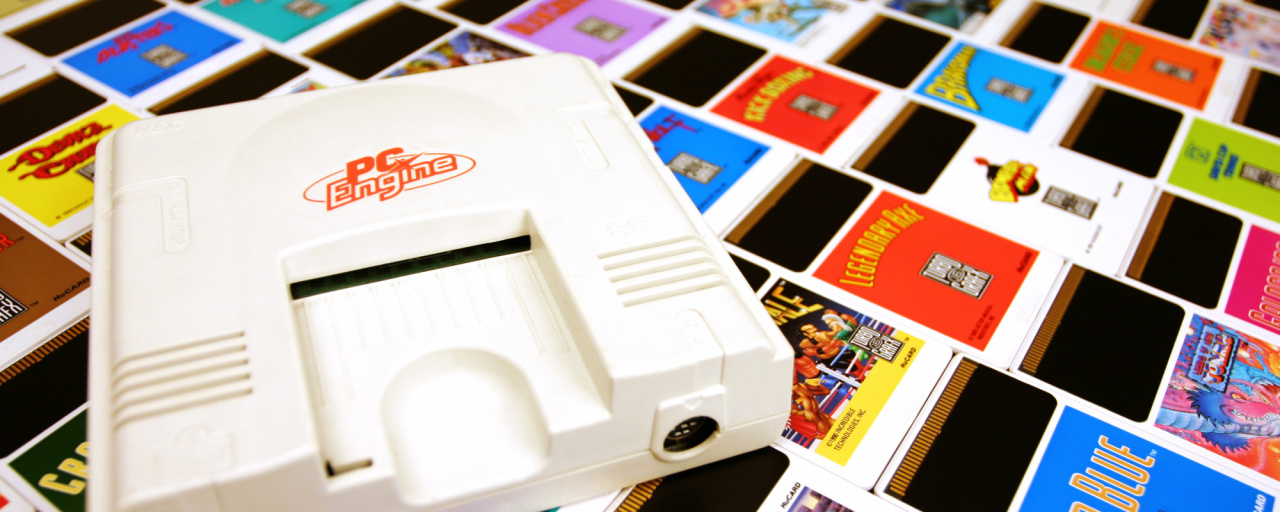
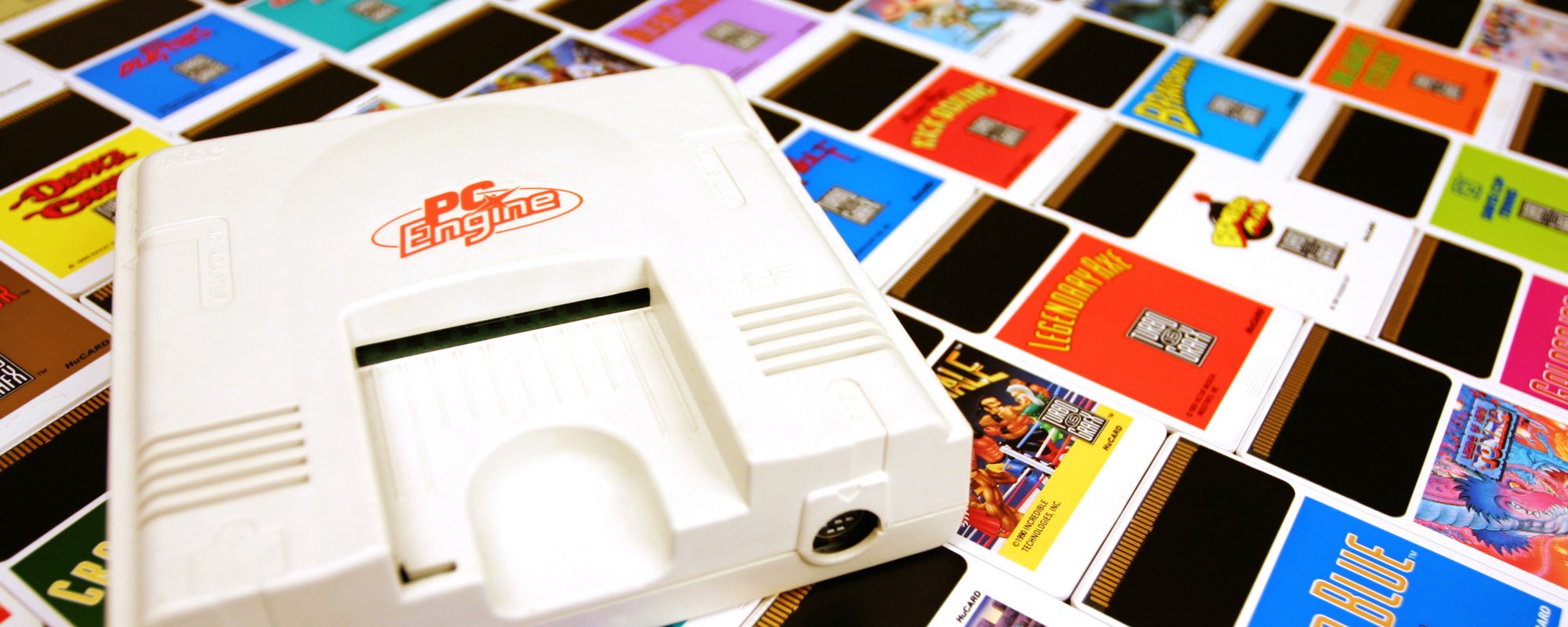
In terms of pure aesthetics, the PC Engine must surely rank as one of the most iconic designs in the history of electronic entertainment. The original white system was petite and attractive, making rival consoles look positively ugly in comparison. “Hudson and NEC wanted to create a system that was appealing in design,” Greiner says. “The previous generation of consoles felt more like toys, so they wanted to create a system that was sleek yet powerful.” With dimensions of 135 x 130 x 35mm, it remains the smallest home console ever made. This appeal was further augmented by the unique delivery system for software, as Greiner recalls: “The PC Engine used a unique chip-on-board media instead of cartridges. These credit card sized ‘HuCards’, or ‘Turbochips’ as they were called in America, were marvels in design. They were extremely durable, portable and cool.”
The slender size of the machine belied the impressive technical specifications contained within. The custom-built dual 16-bit graphics processors (HuC6260 and HuC6270A) allowed the PC Engine to display stunning arcade-quality visuals. Remarkably, the unique HuC6280A CPU that powered this minuscule wonder was 8-bit – a fact that would provoke many playground arguments about whether or not the machine should be classed in the same league as ‘true’ 16-but consoles like the SNES and Mega Drive.
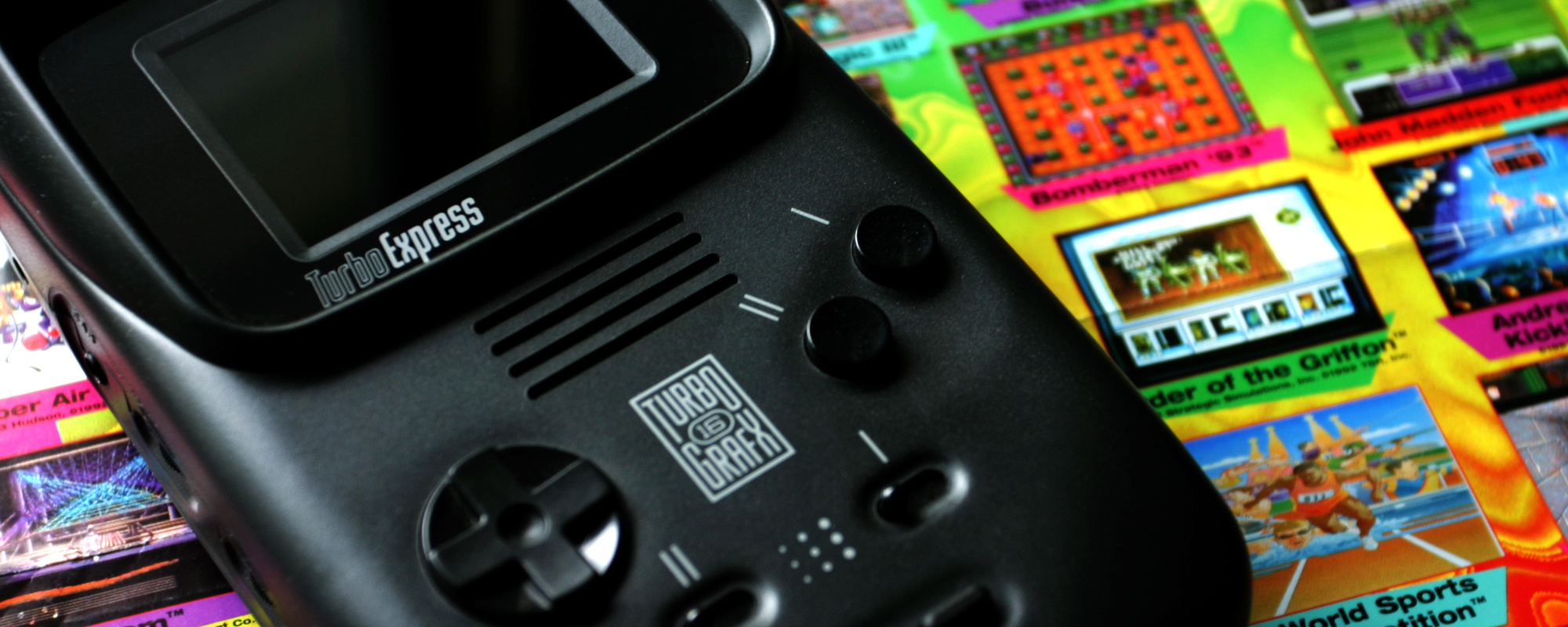
The PC Engine was released as a portable system, too
NEC launched the PC Engine in Japan on October 30th 1987 and by the end of the subsequent year, it was the best selling console in the country, dethroning the Famicom in spectacular fashion. One of the key reasons for this triumph was impressive third-party support, which previous consoles like Sega’s Mark III (known as the Master System in the West) had struggled with, largely thanks to Nintendo’s stranglehold over software developers. Striking technical specifications combined with the rampant enthusiasm shown by NEC and Hudson – two highly respected companies in Japan – encouraged many developers to support the console. Namco, Irem, Masaya, Konami and Human all flocked to the PC Engine banner, bringing some of their most treasured franchises with them. Amazingly, permission was also secured to port several highly esteemed Sega coin-ops, including Afterburner 2, Power Drift, Space Harrier, Outrun, Wonderboy III and Fantasy Zone. These were proficiently reprogrammed by internal studio NEC Avenue (later known as ‘NEC Interchannel’, and more recently ‘Interchannel-Holon’, as the company is no longer affiliated with NEC) and ironically they frequently outclassed Sega’s own efforts on the Mega Drive.
NEC and Hudson were driven by what a CD could bring to gaming: amazing sounds, robust animation, and seemingly unlimited storage space
With a successful launch out of the way, NEC soon set about creating what would be the first of many hardware updates – the ‘CD-ROM2’ add-on. “At the time, publishers were constrained by the cost and memory of carts,” Greiner remembers. Released in 1988, it came with a fetching briefcase-style set-up and remains one of the most desirable pieces of PC Engine paraphernalia. Early CD software was hampered by lack of RAM but this was thankfully rectified via a series of ‘System Card’ updates (which came in HuCard form and granted more usable memory). This, in turn, gave birth to the renowned ‘Super CD’ criterion, which allowed programmers to be more flamboyant and really put that additional CD storage space to meaningful use. “NEC and Hudson were driven by what a CD could bring to gaming: amazing sounds, robust animation, and seemingly unlimited storage space,” confirms Greiner.
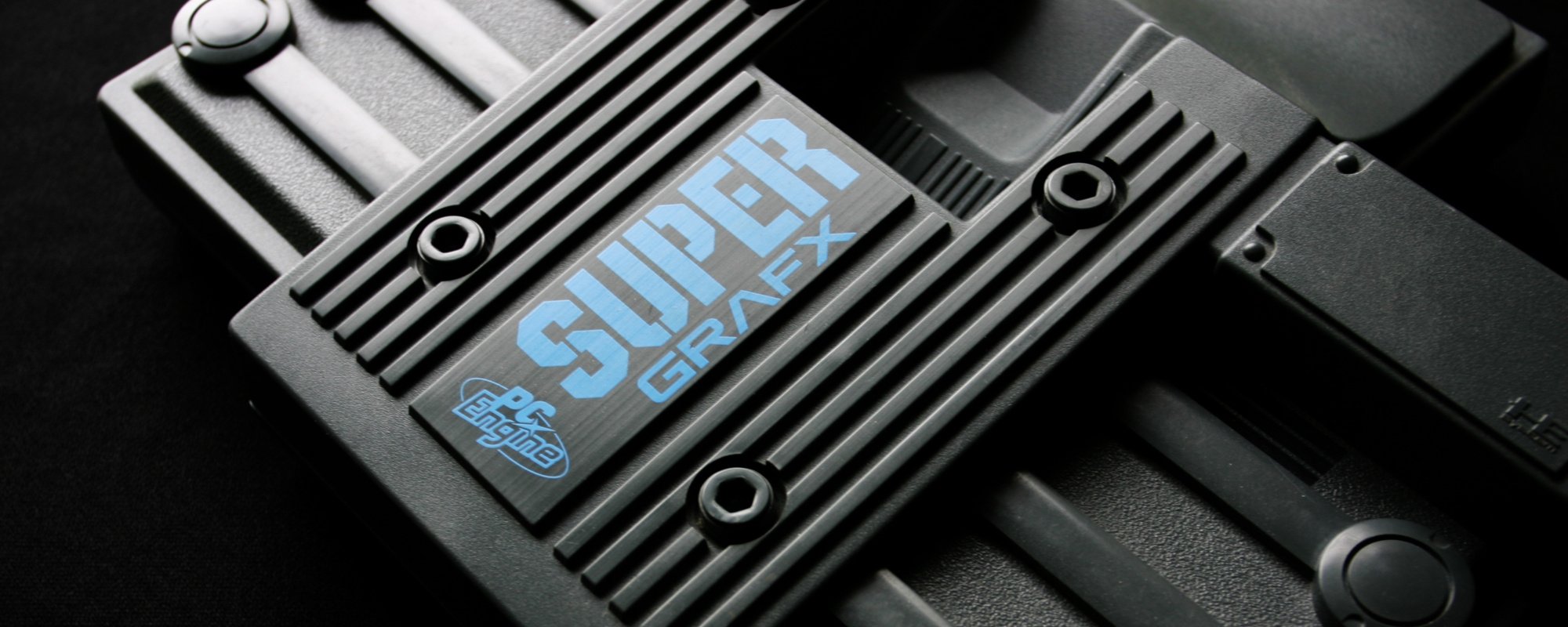
Commitment to largely unproven CD-ROM technology showed that NEC intended to remain on the cutting edge, but in 1989 this burning desire to innovate resulted in a near-fatal error of judgement. Despite the runaway success of the PC Engine, Nintendo’s Famicom remained the console to beat and when solid information regarding the specifications of its successor began to surface in the Japanese press, NEC panicked. They rashly decided to launch a new console and the SuperGrafx was born. Essentially a PC Engine with additional graphics chips and four times as much RAM, this bulky machine was handicapped by the fact that it utilized the same 8-bit CPU as its older stablemate. Coordinating the extra chips created a massive drain on processing power and developers struggled to achieve satisfying results.
The SuperGrafx was a commercial disaster for NEC and Hudson
Incredibly, only five dedicated games ever saw the light of day (a ‘hybrid’ version of Darius Plus was also released that would also play on a standard PC Engine). Thanks to an impressive conversion of Capcom’s Daimakaimura (Ghouls ‘n’ Ghosts) and excellent overall compatibility (it is able to play HuCard games and can be connected to the CD-ROM drive, making it the only machine in the PC Engine dynasty with the potential to play all available software), the SuperGrafx remains a highly sought-after collector’s item, regardless of its abject commercial failure.
Go West
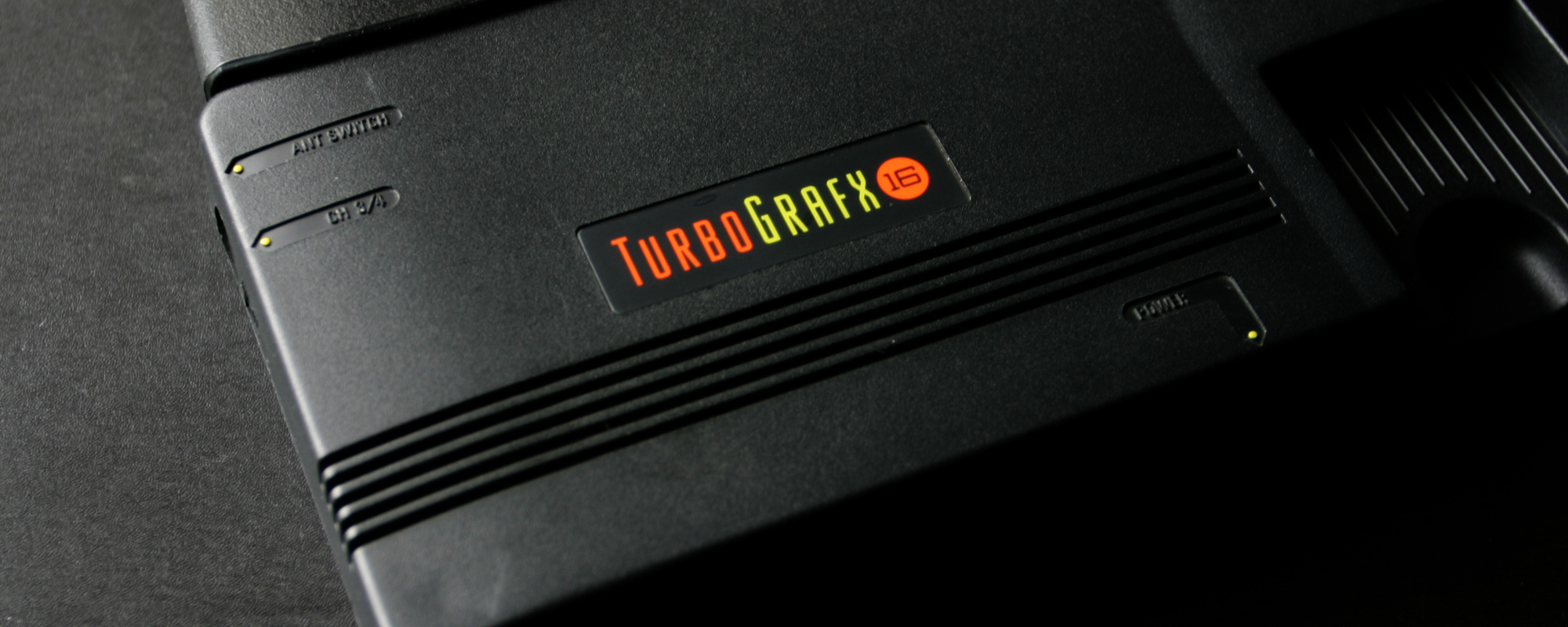
In spite of this slight hiccup, success was virtually assured on home soil. With proven technology and a library of excellent games, it made perfect sense to unleash the console Stateside, as Greiner recalls: “The US market was stirred into a fevered state by fans wanting a true gaming upgrade from the 8-bit era.” NEC’s American arm rechristened it ‘TurboGrafx-16’ and the external casing of diminutive console was retooled in order to make it look more substantial and imposing. Nevertheless, the fortunes of the TurboGrafx-16 stood in stark contrast to that of its Japanese sibling. “The success of the PC Engine was undeniable in Japan, where at one point it captured nearly a third of the market,” states Greiner. “In the US however, it was a different story.” Sega released the Mega Drive (Genesis) in North America at almost exactly the same time and began relentlessly and ruthlessly marketing their new console. “Sega were hard-hitting, gaining an irreverent edge which best suited the US demographics,” explains Greiner. The early promotions were extraordinarily successful and the selection of available software – which not only included some of Sega’s key arcade titles but was also more tailored to a Western audience – gave it the edge. NEC’s machine was lumbered with a very ‘Eastern’ assortment of games and Hudson struggled to craft titles that would appeal to US players. “It was a tremendous challenge launching so many games in such a short time frame,” remembers Greiner. “That is why you initially saw so many games that were ported from Japan and from genres that were most popular in that country, like shooters.”
Marketing and understanding the US gamer mentality was always a challenge for NEC
Nintendo’s dominance over third-party developers became apparent once again with American software companies being just as fearful of Nintendo’s wrath as their Japanese counterparts. “Unfortunately, while Hudson created many great games for the system initially, it still wasn’t enough. Many of the big name brands from other publishers simply couldn’t be published,” states Greiner. In a similar situation to that witnessed in Japan, Nintendo stipulated that if a third party game was produced for the NES, it couldn’t be released on a rival console. “That became a challenge that was not easily overcome,” Greiner reflects, mournfully. Nintendo’s bullying tactics were later found to be illegitimate but by then it was too late. To make matters worse, NEC vastly over-produced their hardware. “They listened closely to retailers, who were very aggressive in their belief that 16-bit gaming was going to be a big success,” explains Greiner. “NEC therefore over-ordered units and this proved fatal in the long run as they committed tremendous financial resources to create the hardware, which ultimately handcuffed them in marketing spend. Sega were able to successfully steal market share away with a ‘bad-ass’ image and an unfettered marketing bankroll.” The seemingly unbridled success experienced in Japan had sadly eluded NEC in America. “Arguably, the TurboGrafx-16 had better games, but a number of missteps took place when it came to hardware styling, box art, pack-in and release schedule,” comments Greiner. “Marketing and understanding the US gamer mentality was always a challenge for NEC.”
The PC Engine was re-branded as the TurboGrafx-16 in the US
Around this time there were faint rumblings of a European release. Early in 1990 it was revealed that a UK company called ‘Mention’ were intending to sell specially modified machines that would circumvent the various problems UK importers were experiencing. Known as the ‘PC Engine Plus’, this slightly altered system did not have the official blessing of NEC and unsurprisingly never took off. Despite several magazines reporting that NEC themselves were ‘literally months away’ from officially launching the console in the UK for ‘under £100’, it never happened. “Europe was neglected as this was NEC’s first foray into the console market,” comments Greiner. “However, there was considerable grey market penetration as Europeans also wanted to participate in the new gaming revolution”.
The Dynamic Duo
Back in Japan, the amazing success of the freshly-released Super Famicom provoked NEC to consolidate the existing PC Engine hardware in the form of the ‘Duo’ system. As you might expect from the snappy moniker, this was a PC Engine and CD-ROM drive combined. The need for (easily misplaced) System Cards was also negated as the Duo had the necessary RAM built in. Launched in 1991, the machine arguably represented the zenith of the PC Engine brand. A US release followed via the newly founded Hudson/NEC venture ‘Turbo Technologies Incorporated’ (TTI for short), but the re-branded TurboDuo suffered the same ignominious fate as the TurboGrafx-16 before it – despite having some excellent software, it failed to gain a significant market share and faded quickly. Incredibly, it’s since been confirmed by a former TTI employee that the company was offered exclusive home console rights to Midway’s arcade hit Mortal Kombat, but the head office in Japan decreed that fighting games were oversubscribed in the US and neglected the offer.
The success of the Japanese Duo allowed NEC to further strengthen their position, applying intense pressure on Nintendo with a series of excellent titles whilst keeping poor old Sega firmly in third place. Classic games like Dracula X: Rondo of Blood, Gate of Thunder, Star Parodier and Ys proved that even in the relative infancy of the CD-ROM age, the extra space afforded by the format could be put to sterling use. Fortunately, the humble HuCard was not forgotten and a noteworthy conversion of Capcom’s Street Fighter II: Champion Edition pushed the maximum capacity of the credit card-sized format up to a muscular 20 megabits.
NEC and Hudson backed the wrong horse with the 32-bit PC-FX, believing that FMV was the future of gaming
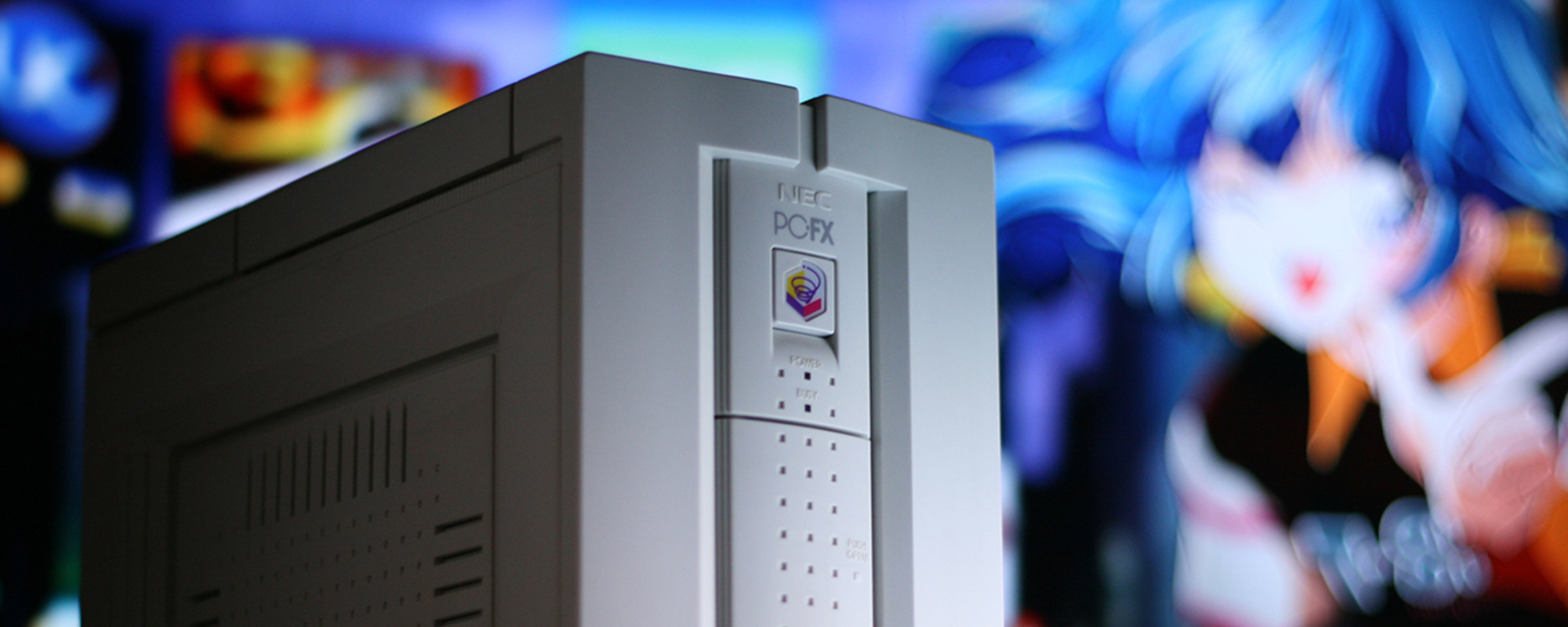
1994 saw the introduction of the Japanese-only ‘Arcade Card’, which increased the PC Engine’s power to previously unimaginable levels. Slick coin-op conversions of Fatal Fury Special, World Heroes 2 and Art of Fighting soon appeared and while these incredibly faithful ports won the console a whole new group of admirers, they came too late to make a truly telling impact. The 16-bit party, which the 8-bit PC Engine had skilfully managed to gatecrash, was beginning to wind down and a new wave of powerful 32-bit behemoths loomed ominously on the horizon. Sales started to dwindle, forcing NEC and Hudson to develop a successor – the ill-fated 32-bit PC-FX. Built around the rather misguided belief that FMV-style games represented the future of the console industry, it unsurprisingly flopped at retail.
After nearly a decade of unwavering commitment to one another, NEC and Hudson finally parted company in the middle of the nineties. The former went on to supply the graphical muscle behind Sega’s Dreamcast while the latter continued to produce games for a wide range of consoles, before eventually being purchased by Konami in 2011. A year later – following the closure of the US-based Hudson Entertainment – the Hudson Soft name ceased to exist as the company was absorbed entirely into Konami.
That’s not the end of the PC Engine story, however; at E3 this year, it was confirmed that Konami is bringing the brand back from the dead. An entirely new generation of players will get to see what the fuss is all about, and that makes us very happy indeed.
This feature was originally printed in its entirety in Retro Gamer magazine, and is reproduced here with kind permission. Special thanks to Aaron Nanto for providing exclusive hardware photos.
You normally wouldn’t expect a live stream the week after E3, but that’s exactly what Spike Chunsoft has planned. The Japanese developer will be sharing some “exciting news” via Twitch.tv on 19th June.
The company has previously worked on the Pokémon Mystery Dungeon series, is known for the Danganronpa series and will be publishing the Switch retail version of The Witcher 3: Wild Hunt – Complete Edition in Japan. It also published Crypt of the NecroDancer in Japan and most recently helped out with the spiritual follow-up, Cadence of Hyrule.
As you can probably imagine, its rich history has resulted in plenty of wild speculation on social media – with many fans of the company hoping to hear a Mystery Dungeon or Danganronpa announcement for Switch, and even some much crazier requests for a Mystery Dungeon crossover with Crypt of the NecroDancer.
Do you think we could hear a possible announcement tied to the Switch? Share your thoughts below.