The Harry Potter Wizards Unite ‘Brilliant’ Event is now Live
By Andrew Smith04 Jul 2019
The new Harry Potter: Wizards Unite mobile game has taken iOS and Android devices by storm since its release in June. The new game from Pokemon Go developers, Niantic, is allowing players to bring their favorite Harry Potter characters into the real world to help round up some of the series most beloved characters, known as Foundables.
If you’ve been playing recently, you may have seen references to something called the ‘Brilliant Event’ – it has caused some confusion among players, but it’s the first Harry Potter: Wizards Unite special event and it’s live right now! We have put together a handy guide explaining the Harry Potter: Wizards Unite Brilliant Event details. Let’s get started!
Harry Potter: Wizards Unite Brilliant Event | Restricted Books, Rewards, and more
The new Wizards Unite Brilliant Event kicked off last night across the world. It is a time for players to find limited time Foundables from the Forbidden Forest and other Hogwarts locations that they wouldn’t normally be able to find, and comes with a new registry page in the ‘Events’ area (bottom row, far right tab), as well as new assignments/challenges.
Click on the calendar in the game; Once you’ve done that, on the bottom of your screen you will see a tab marked “Special.” Touching that show the specific challenges for the Brilliant Event, which come in four stages – once you’ve done all the challenges for one stage, the page then refreshes with a new set of challenges.
It will be running until July 10th, so players will have around a week to rescue six new and different Foundables (the fragments required ranged from one to twelve). The new registry page acts like any other registry page, although we’ve noted that levelling up rewards higher numbers of Scrolls than is typical. Another bonus of doing events is that it is currently the only way to get ‘Restricted Section Books‘, which you will need for some of the more advanced lessons in your Profession skill-tree. Other Event rewards include Family XP, and ‘Fantastic Flora & Fauna’ Runestones.
So far, doing the challenges has netted us Restricted Section Books, both for completing specific challenges but also as a ‘bonus’ for completing the first stage of challenges.
If you can’t check it out right now, the event description reads, “The Forbidden Forest has been thrown out of sorts by the Calamity. Lend Hagrid a helping hand by returning the forest’s missing flora and fauna to its proper place.” So, grab your wand and get ready to conjure up some spells to help gather up the missing Foundables!
It is important to note that this is not the only Brilliant Event that will be coming to Harry Potter: Wizards Unite. The term ‘Brilliant Event’ is merely a synonym for any in-game event. While we don’t know the specifics, there will be more Brilliant Events coming to the game in the coming weeks and months.
Posted by: xSicKxBot - 07-04-2019, 08:09 AM - Forum: Lounge
- No Replies
Spider-Man: Far From Home Has Biggest Tuesday Opening In Cinema History
Spider-Man: Far From Home released on Tuesday in the US and Canada, a date that Sony chose to have the superhero movie release just ahead of the 4th of July holiday.
The superhero movie is doing exceptionally well, as estimates for its Tuesday, July 2, opening see it making between $40 million and $48 million, according to The Hollywood Reporter.
That would be a new record for biggest Tuesday ever domestically, beating out The Amazing Spider-Man which made $35 million back on Tuesday, July 3, 2012.
For the six-day period covering Tuesday-Sunday, Far From Home is tracking to make $150 million or more in the US and Canada. The movie has some extra push behind it, as it connects directly to the box office smash Avengers: Endgame, while it also represents the final movie in the MCU Phase 3.
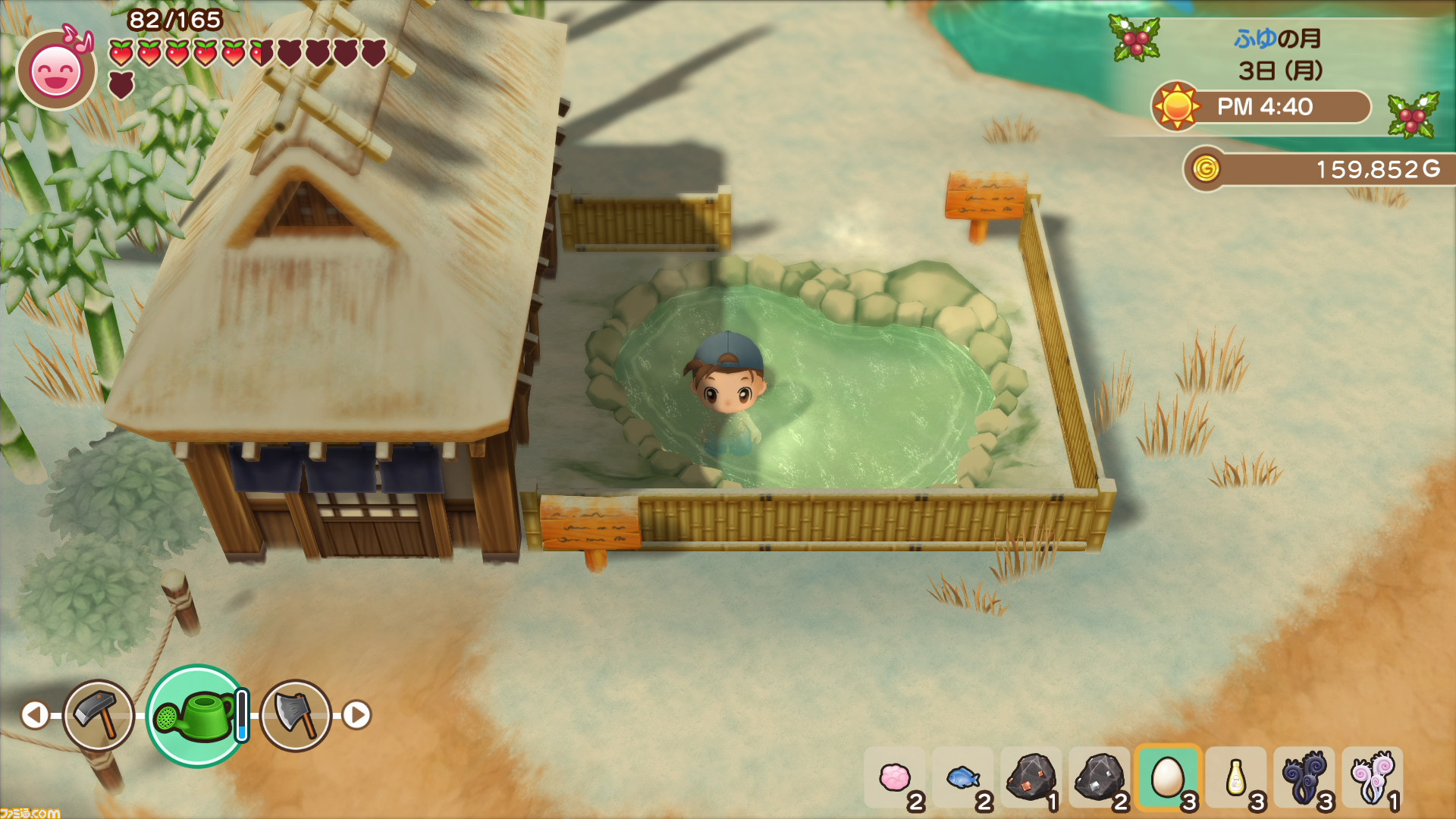
Very little has been revealed for the new game – such as how, and if, it’ll expand upon or reimagine the original – but we do know that it appears to blend content from both Friends of Mineral Town and More Friends of Mineral Town, a separate version of the game which features a female protagonist.
The first few screenshots have been revealed via Famitsu.
The game is set to launch on 17th October in Japan; no western release has been confirmed so far.
Did you play this one on Game Boy Advance? Excited for the remake, assuming it does get a western release? Let us know in the comments below.
Smash Bros. Ultimate ‘Everyone Is Here’ Mural Artist Explains How It Was Made
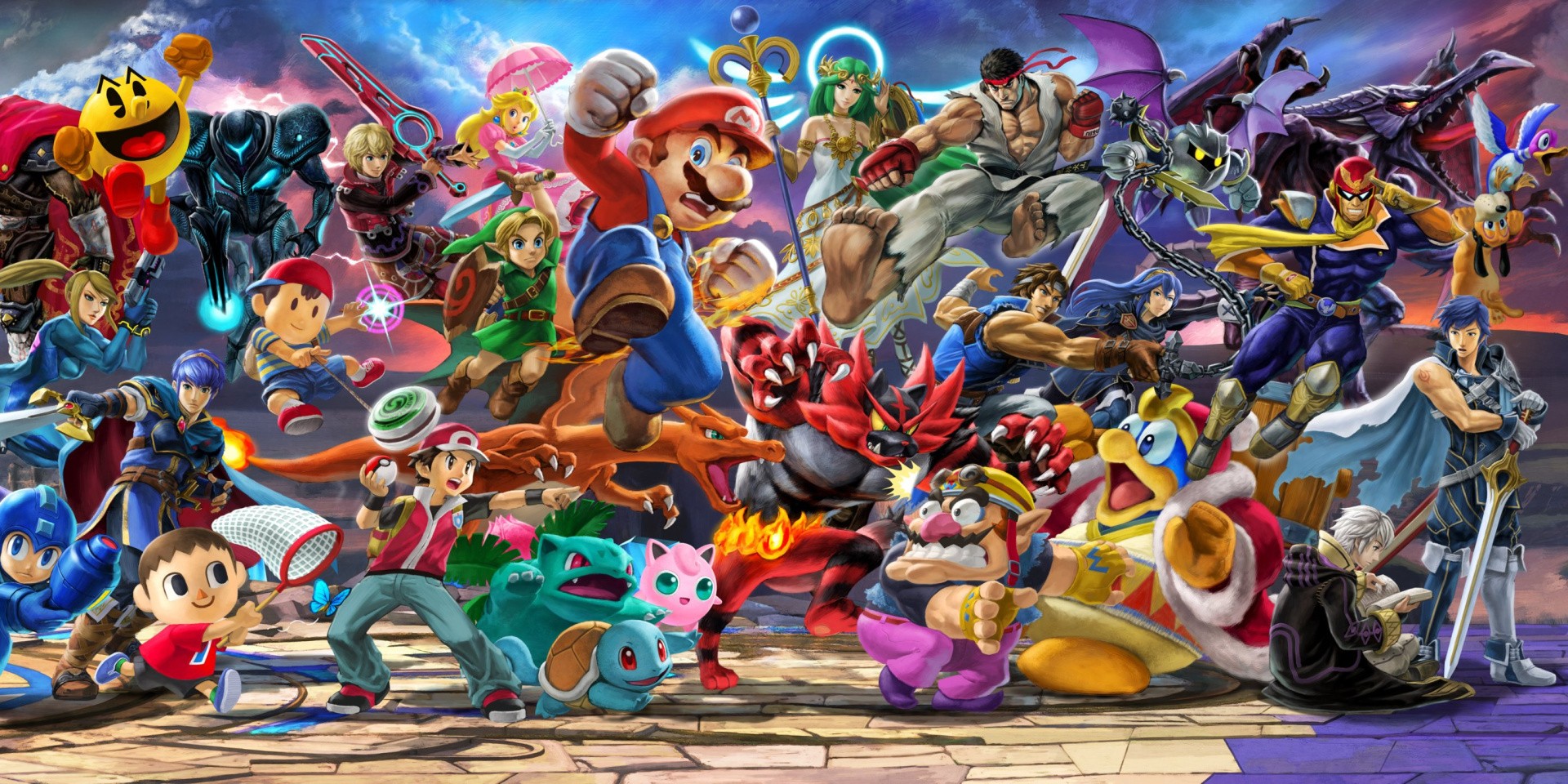
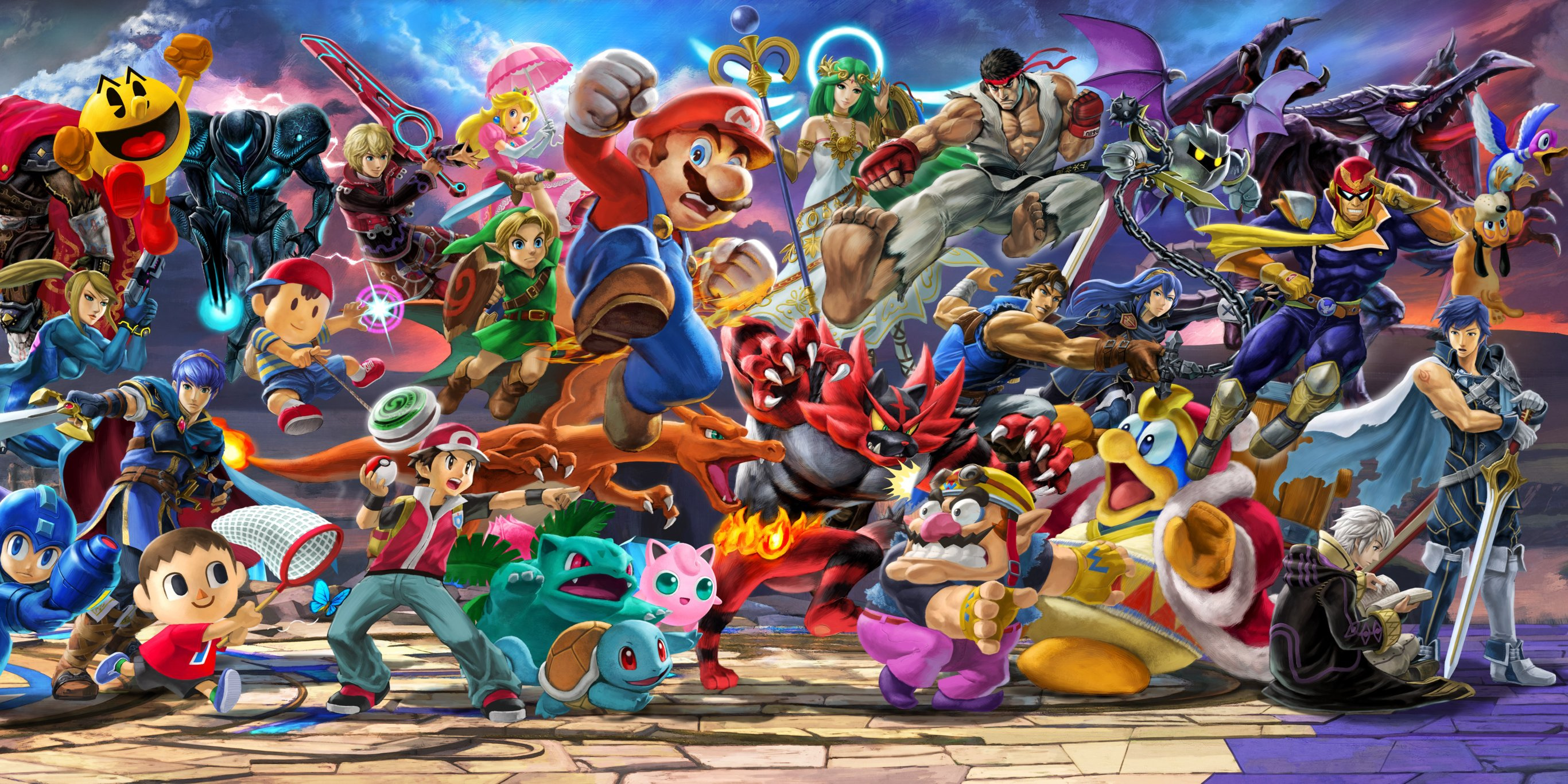
The Super Smash Bros. Ultimate mural featuring all of the game’s playable characters will likely stick in our minds as one of the best pieces of gaming artwork of all time. Used in Nintendo Directs (who could forget the moments when new characters would appear alongside old favourites?) and to promote the game at events like E3, it really was something to behold.
In an interview with Nintendo Dream, the artist behind the mural, Yusuke Nakano, has explained how it all came together. Nakano has a frankly incredible credit list to his name, including countless Zelda and Mario titles, so it’s hardly surprising to hear that he got the job on this particular project. The translations provided below come via Siliconera:
Yusuke Nakano: “The idea came from Sakurai-san of creating a giant mural that could show off how impactful the game was at E3 and other promotional events. It was decided that it would feature hand-drawn art with realistic proportions, and I would be the main person working on it as it would be the quickest.
Regarding the artstyle, I first showed off Breath of the Wild’s Link, and Mario in an oil painting style and showed it to Sakurai-san. He liked it and gave the go-ahead, and it was a smooth start. Out of all the characters, the first two I illustrated were those two.”
He goes on to note that when thinking about the piece’s compositional balance and each character’s pose, he’d check in with the original creators for each character, and also gives a little insight into how new additions were placed alongside the already-existing fighters.
“First, with the 66 Fighters revealed at E3, I considered ‘what pose they would make’ and ‘how they would be placed’ on the long canvas, by drawing rough linework and piecing it together like a puzzle. The Fighters in Smash Bros. are all main characters, so I didn’t place them focused around the center, but averaged them out around the artwork. The theme was that no matter which part you cropped, there would be sights to behold.
Furthermore, by averaging out their positions, it had the advantage of being easier to add in the additional characters. Regarding the additional characters, I already had an idea of where to place them, but they were mostly placed through trial and error.”
We don’t know about you, but we could happily sit and look at that mural all day long. Amazing stuff.
Google, Facebook under investigation in UK for abusing market power
Silicon Valley monoliths Google and Facebook are once again facing government scrutiny over potential abuses of market power, with the UK’s Competition and Markets Authority taking aim at the companies in a wide-reaching probe into online advertising platforms.
Source: Wikipedia
Announced on Wednesday, the CMA’s investigation, officially called a market study (PDF link), will concentrate specifically on Google and Facebook, both of which hold “leading positions” in the online advertising business, reports The Guardian.
The scope of the probe will assess market power of online platforms in consumer-facing markets, consumer control over data collection practices and competition in the supply of digital advertising in the UK, according to a synopsis.
“The market study will help us further lift the lid on how major online platforms work, especially how they collect and use personal data, how they monetize their content through digital advertising, and what this means for competition,” CMA chief executive Andrea Coscelli said. “The findings from this work will be used to influence the direction of policy and regulation in the digital sector.”
The CMA believes that the probe’s concerns “might lead to direct consumer harm if firms are able to exploit consumers’ attention and data to earn excessive returns in digital advertising.” A more competitive market could yield circumstances in which consumers are paid for access to, or are granted better control over, their data.
CMA is operating on a call from Chancellor of the Exchequer Philip Hammond to investigate the digital advertising market.
Hammond’s assignment is a response to recommendations outlined in an independent report prepared for the UK Treasury by Jason Furman, former Chairman of the Council of Economic Advisers under President Barack Obama. In his report, Furman found the market is “dominated by two players and suffers from a lack of transparency.”
The CMA is slated to file an interim report, which will include a determination as to whether a market investigation reference is needed, on Jan. 2, 2020. A final report is due on Jul. 2, 2020.
Google and Facebook are poster boys for unscrupulous consumer data collection tactics and have been the target of multiple international investigations.
Most recently, Google in March was fined $1.7 billion by the European Commission for favoring its AdSense platform in search engine adversing, adding to a previous $5 billion fine related to Android app restrictions.
Facebook is still embroiled in the aftermath of the Cambridge Analytica scandal, which saw the data of millions of users fall into the hands of the now-defunct consulting firm. The Federal Trade Commission opened an investigation into Facebook’s privacy practices in March 2018, and the social network was bracing for an up to $5 billion fine for potential violations as recently as April.
In a Unity blog post today, Unity announced that Enlighten support was being removed from the Unity game engine. Enlighten is the lightmapping and global illumination solution used in Unity since Unity 5 was released. Enlighten was original developed by Geomerics, which was acquired by ARM technologies in 2013, then the technology was sold to Silicon Studio in 2017.
Due to Geomerics shutting down Enlighten as a product, Unity is required to remove Enlighten.
Unity will continue support for Enlighten in the built-in renderer as it currently exists today (as-is, with no new platform support). The 2020 LTS will be the last version to contain Enlighten functionality for the built-in renderer, and it is fully removed in 2021.1.
Projects authored with HDRP Preview Enlighten functionality will continue to be supported as it currently exists today (as-is, with no new platform support) in 2019 LTS, with full removal of Enlighten functionality from HDRP in 2020.1.
They are working on a solution:
We are also fully committed to delivering a real-time GI replacement solution in 2021.1. The Unity team has a solid plan to solve this complex problem the right way, with great artists workflow and optimal runtime performance for 2021.1.
Additionally, in the linked forum discussion are some good details on the limitations of the current Enlighten solution that will be addressed in their new in-house solution:
Enlighten has had a good run for the money, some of the best looking titles have shipped using it. However, some of the underlying principles means that it is not a good fit moving forward. Enlighten is largely surface based, requires a global pre-computation phase and is limited to diffuse transport with no real support for physically based non-opaque materials. Some of the drivers moving forward are:
Fast iteration: Time-to-first-pixel needs to be fast, cannot have a lengthy pre-compute step.
Easy authoring: We need to remove the dependency on authoring suitable UVs and other surface based authoring.
Dynamic worlds: In addition to dynamic materials and lighting setup, we have to support dynamic geometry (eg. for procedural games).
Unified lighting: The lighting container needs to be decoupled from surfaces. This allows all scene elements to use the same lighting including volumetrics and participating media.
Large worlds: Due to the sheer size of levels today we need an easy way to to do localized light transport where what is lit and what is affecting that lighting is decoupled.
Source access: We need to have full access to all source in-house. So that we can independently drive development forward, fix bugs and support future platforms. This is arguably the most important point.
For these reasons we have decided that the best course of action is to no longer pursue software we have limited control over and move on. That said the feature set that is available now will be supported until 2023 (via 2020 LTS), and we are happy to support you in the transition.
I’m still not entirely certain what they mean by Geomerics shutting down however, as it’s resources were sold way back in 2017 and everything seems to be business as usual.
A retro FPS for the ages! Once branded a HERETIC. Now YOU have been chosen as our champion! Reclaim our sacred weapons. Take back our ancient lands. If you can stand... AMID EVIL.
Posted by: xSicKxBot - 07-04-2019, 01:09 AM - Forum: Lounge
- No Replies
Spider-Man: Far From Home: Does The MCU Have A Multiverse Or Not?
The Spider-Man: Far From Home promotional campaign teased one major post-Endgame revelation: the fact that the MCU may be part of a "multiverse" in which the Earth we've watched this past decade was actually only Earth-616, one of thousands of Earths all occurring in the same place at the same time in different dimensions. However, this information came to us care of Mysterio--a villain in the comics--making it a little harder to trust or take at face value. After all, who was to say Mysterio wasn't doing what villains do best and lying?
Well, now that Far From Home is actually in theaters, we thankfully have an answer--and it's unsurprisingly a little complicated. So, does the MCU have a multiverse?
This is your final spoiler warning.
The short answer is: no. Mysterio was actually totally full of it and really was the bad guy all along. He lied about being from a different Earth, he lied about the Elementals--he lied about it all, just to get himself in the public eye as a hero. The basis for his plan was, partly, the absurdity of the concept--proof, in his eyes, that "people will believe anything these days." And who could blame them, after the Snap and Sokovia and the Battle of New York? Reality in the MCU has never been more precarious or up for debate.
But the long answer is a bit less cut and dry. Director Jon Watts told GameSpot he's open to the possibility somewhere down the road. "What's exciting about making movies at Marvel is that you feel like anything is on the table. So who knows?" He laughed, "Mysterio may be bullshitting about it in this movie, but I don't know that that means that it's not true in the larger universe."
After all, we can tell from the scene between Peter, Mysterio, and Nick Fury where the concept of a multiverse is first introduced that it definitely is something floating around the scientific zeitgeist in the MCU. Peter knows immediately what Fury and Mysterio are talking about, where it fits into the conversation, and what it could potentially mean in the realm of quantum physics. It's clearly not a totally unheard of idea. And, with both time travel and splintered timelines definitively in the mix after Endgame, actually going for a multiverse may be the quickest and easiest way to buff out some of the larger blemishes in the MCU at this point.
But the introduction of the multiverse would come with complications, especially now. Bringing up a multiverse only to have it disproven creates an interesting conundrum in which the general population of the world will have to first be convinced that they were lied to, and then later be convinced that no, wait, actually it was the truth all along--or, at least, part of it was the truth. Not exactly the cleanest or easiest narrative to sell, especially when distrust and confusion are at an all-time high.
It will be interesting to see just how this particular debacle pans out, especially given the mystery surrounding Phase 4--does the MCU have the bandwidth to incorporate an actual multiverse somewhere down the line? Or should it remain a giant scam perpetrated by a fraud making a selfish grab at superheroic fame? One thing is certain: No matter how it shakes out, we can't wait to see where things go.
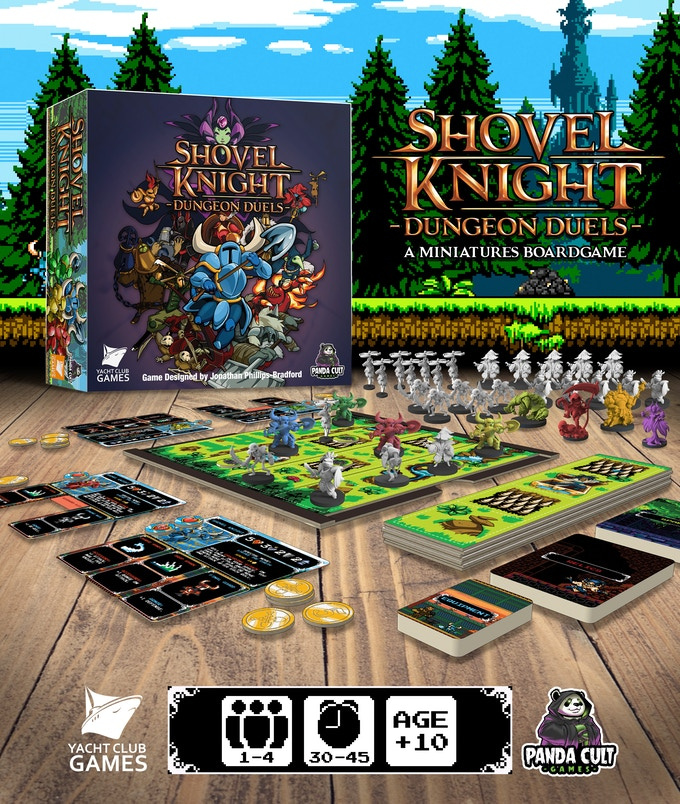
Shovel Knight Digs Up His Own Competitive Board Game On Kickstarter
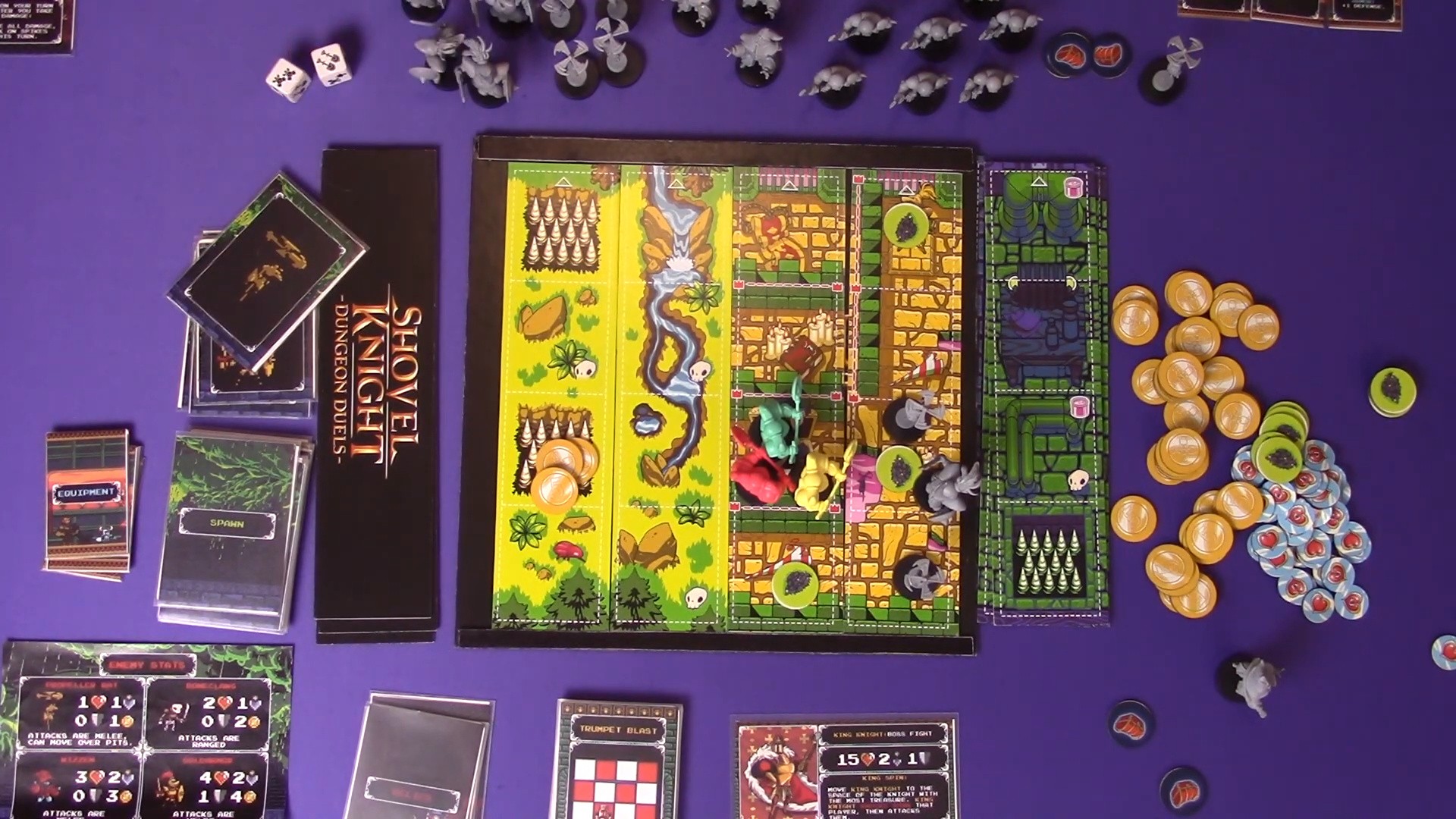
Shovel Knight started out life as a Kickstarter project, so it’s rather fitting his very own board game will be funded the same way. Yes, that’s right; Shovel Knight is being transformed into a competitive side-scrolling miniatures board game for one to four players. The name of this game is Shovel Knight: Dungeon Duels.
Players take on the role of different coloured knights to “shovel out justice in spades” against the evil Order of No Quarter, while trying to hoard as much treasure as possible.
“The core aspect of the game is all about trying to gather the most gold, whether it’s from defeating enemies, digging up treasure mounds, damaging bosses, or even taking them from a rival Shovel Knight. We also have our own unique elements, like side scrolling tiles, jumping over spiked pits, equipping unique armor and accessories, and fighting against the dastardly Order of No Quarter!”
The Yacht Club-based board game is being designed by Panda Cult Games and at the time of writing has raised just over US$20,000, and requires a total amount of $80,000 – with 25 days to go. If you pledge $70 or more, you’ll get a copy of Dungeon Duels, one Shield Knight model and a hero card.
If you would like to find out how exactly to play the game, you can download a PDF version of the rule book or view the hour-long video demonstration below:
For more information, be sure to check out the Kickstarter page and the Panda Cult Games website.
Is this the Shovel Knight game you’ve been seeking? Tell us down in the comments.
Why Evangelion Fans Are Mad At Netflix--And Why They Should Take A Step Back
It should be a time of celebration for anime fans: Neon Genesis Evangelion, Hideaki Anno's seminal anime series, is finally streaming worldwide, as Netflix secured the rights to the classic anime. But the fans who should be cheering are not happy.
Evangelion originally aired in Japan in 1995, and it quickly earned a reputation as a controversial, psychologically and philosophically complex series that deconstructed the mecha anime genre. Unfortunately, the series has rarely been widely available, as its English-language licensee, ADV Films, went out of business in the 2000s. The only way you could legally get the series in physical format was by spending over $30 on the VHS release that only had two episodes per tape, or by spending over $100 on the DVD collection in 2005--and aftermarket prices for those versions have skyrocketed since then.
But many of Eva's most dedicated fans quickly voiced their concerns with the version of the show that was released on Netflix. Fans flocked to Twitter and Reddit to describe the changes made to the show. It all started with Netflix removing the covers of the song "Fly Me to the Moon" at the end of each episode, a change which The Wrap says is due to licensing fees. But that was just the beginning. We listed the biggest changes to Evangelion on Netflix, which includes the lack of translation of some on-screen text, a completely new and more literal script that takes away from the nuance of the original text, a new voice cast, the omission of swearing in the new translation, and the omission of a key piece of gay subtext.
This resulted in many people recommending newcomers to skip the Netflix version altogether and instead seek out the long-available bootlegs in order to watch the show as they experienced it back in the day. This raises some interesting questions: Sure, some of the changes are significant, but is preserving the nostalgia for the original anime really more important than it being easily available for everyone? Are fans overreacting?
I spent most of the weekend Eva hit Netflix debating whether my first experience with the classic anime should be with the apparently inferior version on Netflix, or the various lower quality but higher integrity bootlegs. The question instantly brought to mind memories of another big sci-fi franchise that was only available in low-quality VHS tapes before going through several controversial changes once it was made widely available for the second time. That's right, I'm talking about the Star Wars original trilogy Special Editions.
The mere mention of the phrase "Special Editions" is one of the scariest and most controversial things in all of Star Wars. You can ask any fan of the franchise and they'll all have an opinion of the 1997 theatrical re-release of the original trilogy. Sent to theaters with great fanfare, the remastered and altered versions of the original trilogy are nowadays remembered with a predominantly negative connotation. George Lucas decided to update his iconic trilogy of films with updated effects, sounds, and scenes, few of which landed with hardcore fans. There's a reason those t-shirts with the phrase "Han Shot First" are sold everywhere.
Like Evangelion, the changes to the Star Wars trilogy ranged from big ones like Greedo shooting first, the addition of "Jedi Rocks," and the loss of "Yub Nub," to kind of random changes like adding a ring of fire to the Death Star explosion and adding a bunch of new aliens on Mos Eisley. People hate the Special Editions so much that fans have taken it upon themselves to reproduce the original appearance of the movies with fan restorations.
Sure, many of those changes were unnecessary beyond George Lucas wanting to show off his new special effects technology that wasn't available in the '70s, but look at the state of Star Wars fandom before the Special Editions. They're one major reason why Star Wars is still around.
Before the Special Editions were released in early 1997, Star Wars was no longer a pop culture giant. Those who grew up watching the original trilogy had already moved on to new and shinier franchises like Terminator. Though there was Mel Brook's Spaceballs, Timothy Zahn's Thrawn trilogy, and the Dark Horse comics, the beloved galaxy far, far away hadn't been relevant since 1983's release of Return of the Jedi. Those who didn't get to watch the trilogy in theaters had it worse, as they could only watch the films in cropped pan-and-scan VHS copies.
Then came the Special Editions. Say what you will about the changes made and how much you hated watching CGI Jabba meet Han in Episode IV, but the Special Editions put the original trilogy back in the public spotlight. The Special Editions also came out at a changing time for the moviegoing experience, as theater chains were expanding and the multiplex started to become the norm, with stadium seating preparing audiences to experience Star Wars in a new way years before DVDs became a thing. You may hate the changes, but those who hadn't seen the movies before didn't even notice them, and the re-release turned an entire new generation into fans. Star Wars was nowhere, and suddenly it was everywhere again.
With Evangelion now available worldwide on arguably the most popular streaming platform, it will only help turn more people into fans. Maybe they'll finish the series and then seek out the original dub and listen to "Fly Me to the Moon" on repeat, or maybe they won't--but that doesn't take away from the fact that the Netflix release is doing more right than wrong.
Preserving art is an important task. I'm not saying you should feel happy that they changed the lines you spent years memorizing. All I'm saying is that glorifying the version of a piece of pop culture you saw when you were younger, and getting in the way of a new generation experiencing that same piece of pop culture now, is not a battle worth fighting.
The changes made to Eva won't stop brand new fans from enjoying the show, just like the Special Editions didn't destroy Star Wars, but instead set the table for a world of prequels, sequels, and spin-offs. Netflix didn't ruin Neon Genesis Evangelion, but it introduced millions of viewers to the magic of Cruel Angel's Thesis and "Get in the Robot, Shinji."