Red Hat has released a minor beta update to RHEL 8 to improve manageability and add new security enhancements and new drivers to the operating system. RHEL 8 was announced in May this year as a successor to RHEL 7. One of the highlights of RHEL 8 was an image builder, which helps users to create custom system images in a variety of formats. With RHEL 8.1 Beta, Image Builder is extended to support more configuration options for adding users and SSH keys. New image formats have also been added to support cloud platforms such as Google Cloud Platform and Alibaba Cloud. With these additions, RHEL 8.1 Beta now supports every major cloud infrastructure platform including AWS, Microsoft Azure, OpenStack and VMWare. Source: TFiR, Red Hat
Jackie Chan And Arnold Schwarzenegger's Fantasy Movie Gets Release Date
Prolific action stars Jackie Chan and Arnold Schwarzenegger will stand side-by-side on the big screen. Though the two are attached, this isn't a Rush Hour-Terminator crossover. Instead, The Mystery of the Dragon Seal: Journey to China is a fantasy movie that finally, after a few hiccups, has a release date--but only in China and Russia for now.
The Hollywood Reporter confirms the movie is headed to both China and Russia on August 16. While it wrapped up production in 2017 and sat in postproduction hell for a couple of years, Journey to China will finally make its way to theatres. Unfortunately, there's no confirmation on when or if the fantasy movie will debut in other regions.
According to the THR story, Journey to China will feature "wizards, princesses, martial arts masters, and 'the king of all dragons,'" with Chan and Schwarzenegger playing a master wizard and an imposing sea captain, respectively. The movie also stars Charles Dance (Ghostbusters), Christopher Fairbank (Guardians of the Galaxy Vol. 1), Igor Jijikine (Forbidden Empire), and Martin Klebba (Jurassic World). Blade Runner star Rutger Hauer, who recently passed away, also appears in the movie.
Directed by Russian filmmaker Oleg Stepchenko, Journey to China is a sequel to his 2014 movie Forbidden Empire, a loose adaptation of a horror novella by a Russian writer named Nikolai Gogol. Journey to China sees British actor Jason Flemyng (X-Men: First Class) tasked with mapping the Russian Far East. Flemyng, who starred in Forbidden Empire, reprises his role as an 18th-century English explorer who travels east and encounters a plethora of dark mysteries along the way.
Video: WRC 8’s Redesigned Career Mode Detailed In Brand New Trailer
Bigben and developer KT Racing have released a brand new video to show off WRC 8‘s redesigned career mode and we’ve lovingly shared it for you above. ‘Cause we’re nice like that.
A press release supporting the trailer states that the career mode “is traditionally the most popular and most played”, and after discussions with the community, the dev team has aimed to offer gameplay that matches fans’ expectations.
It allows players to become a driver for a WRC team for the first time, having you progress from season to season to compete in the WRC category and ultimately become world champion. It is said that players must excel in the following three major areas:
– Planning the calendar to decide which events to do in between rallies: training, manufacturer challenges, rest, classic events, etc. – Managing a whole crew comprising six different and interconnected job roles. Players must consider each of their unique characteristics and use them strategically in each rally. – Upgrading the crew through R&D and a skill tree, which evolves depending on player choices. Every decision has an impact on progression and on the morale of the crew (performance, reliability, etc.).
The game is still scheduled to launch on Nintendo Switch in September this year, bringing new off-road physics for all surfaces, extreme and dynamic weather conditions, 52 teams, 14 countries, over 100 special stages, weekly challenges, and an eSports mode.
Liking the look of this one? Why not drift your way into our comment section and let us know your thoughts?
Posted by: xSicKxBot - 07-25-2019, 09:21 PM - Forum: Windows
- No Replies
The stories behind Microsoft’s affordable housing initiative
The Puget Sound region has been home to Microsoft for more than 30 years. As the company has grown, the area has changed. New industries have brought more jobs, fresh opportunities and greater prosperity.
But new housing has not kept up with job growth, and the Greater Seattle area has become the sixth most expensive place to live in the United States.
That means many of the workers who make a community function – such as nurses, police officers, teachers and firefighters – can no longer afford to live in the cities or suburbs where they work.
The problem is particularly acute in the suburban cities around Seattle. Low- and middle-income workers often face long commutes.
Microsoft is committed to helping kick-start solutions to this crisis, and is investing $500 million to advance affordable housing solutions. Microsoft is also advocating for changes in public policy at city and state levels to address the long-term factors affecting housing affordability.
This commitment is about more than housing. It is about the people who make our communities places we all want to live in.
For more on Microsoft’s initiatives in the Puget Sound region follow @MSFTIssues on Twitter.
Configuring a Server-side Blazor app with Azure App Configuration
July 1st, 2019
With .NET Core 3.0 Preview 6, we added authentication & authorization support to server-side Blazor apps. It only takes a matter of seconds to wire up an app to Azure Active Directory with support for single or multiple organizations. Once the project is created, it contains all the configuration elements in its appsettings.json to function. This is great, but in a team environment – or in a distributed topology – configuration files lead to all sorts of problems. In this post, we’ll take a look at how we can extract those configuration values out of JSON files and into an Azure App Configuration instance, where they can be used by other teammates or apps.
Setting up Multi-org Authentication
In the .NET Core 3.0 Preview 6 blog post we explored how to use the Individual User Accounts option in the authentication dialog to set up a Blazor app with ASP.NET Identity, so we won’t go into too much detail. Essentially, you click the Change link during project creation.
In this example I’ll be using an Azure Active Directory application to allow anyone with a Microsoft account to log into the app, so I’ll select Work or School Accounts and then select Cloud – Multiple Organizations in the Change Authentication dialog.
Once the project is created, my AzureAD configuration node contains the 3 key pieces of information my app’s code will need to authenticate against Azure Active Directory; my tenant URL, the client ID for the AAD app Visual Studio created for me during the project’s creation, and the callback URI so users can get back to my app once they’ve authenticated.
Whilst this is conveniently placed here in my appsettings.json file, it’d be more convenient if I didn’t need any local configuration files. Having a centralized configuration-management solution would be easier to manage, as well as give me the ability to keep my config out of source control, should there come a point when things like connection strings need to be shared amongst developers.
Azure App Configuration
Azure App Configuration is a cloud-based solution for managing all of your configuration values. Once I have an Azure App Configuration instance set up in my subscription, adding the configuration settings is simple. By default, they’re hidden from view, but I can click Show Values or select an individual setting for editing or viewing.
Convenient .NET Core IConfiguration Integration
The Azure App Configuration team has shipped a NuGet package containing extensions to ASP.NET and .NET Core that enable developers the ability of using the service, but without needing to change all your code that already makes use of IConfiguration. To start with, install the Microsoft.Extensions.Configuration.AzureAppConfigurationNuGet package.
You’ll need to copy the connection string from the Azure Portal to enable connectivity between your app and Azure App Configuration.
Once that value has been copied, you can use it with either dotnet user-secrets to configure your app, or using a debug-time environment variable. Though it seems like we’ve created yet one more configuration value to track, think about it this way: this is the only value you’ll have to set using an environment variable; all your other configuration can be set via Azure App Configuration in the portal.
Using the Azure App Configuration Provider for .NET Core
Once the NuGet package is installed, the code to instruct my .NET Core code to use Azure App Configuration whenever it reads any configuration values from IConfiguration is simple. In Program.cs I’ll call the ConfigureAppConfiguration middleware method, then use the AddAzureAppConfiguration extension method to get the connection string from my ASPNETCORE_AzureAppConfigConnectionString environment variable. If the environment variable isn’t set, the call will noop and the other configuration providers will do the work.
This is great, because I won’t even need to change existing – or in this case, template-generated code – I just tell my app to use Azure App Configuration and I’m off to the races. The full update to Program.cs is shown below.
// using Microsoft.Extensions.Configuration.AzureAppConfiguration; public static IHostBuilder CreateHostBuilder(string[] args) => Host.CreateDefaultBuilder(args) .ConfigureAppConfiguration((hostingContext, config) => { config.AddAzureAppConfiguration(options => { var azureAppConfigConnectionString = hostingContext.Configuration["AzureAppConfigConnectionString"]; options.Connect(azureAppConfigConnectionString); }); }) .ConfigureWebHostDefaults(webBuilder => { webBuilder.UseStartup<Startup>(); });
When I run the app, it first reaches out to Azure App Configuration to get all the settings it needs to run and then works as if it were configured locally using appsettings.json. As long as my teammates or other services needing these values have the connection string to the Azure App Configuration instance holding the settings for the app, they’re good.
Now, I can remove the configuration values entirely from the appsettings.json file. If I want to control the logging behavior using Azure App Configuration, I could move these left-over settings out, too. Even though I’ll be using Azure App Configuration as, the other providers are still there.
Dynamic Re-loading
Log levels are a good example of how the Azure App Configuration service can enable dynamic reloading of configuration settings you might need to tweak frequently. By moving my logging configuration into Azure App Configuration, I can change the log level right in the portal. In Program.cs, I can use the Watch method to specify which configuration settings I’ll want to reload when they change.
The default load-time is 30 seconds, but now, should I need to turn up the volume on my logs to get a better view of what’s happening in my site, I don’t need to re-deploy or even stop my site. Simply changing the values in the portal will be enough – 30 seconds later the values will be re-loaded from Azure App Configuration and my logging will be more verbose.
Configuration Source Ordering
The JsonConfigurationSource configuration sources – those which load settings from appsettings.json and appsettings.{Environment}.json – are loaded during the call to CreateDefaultBuilder. So, by the time I call AddAzureAppConfiguration to load in the AzureAppConfigurationSource, the JSON file providers are already in the configuration sources list.
The importance of ordering is evident here; should I want to override the configuration values coming from Azure App Configuration with my local appsettings.json or appsettings.Development.json files, I’d need to re-order the providers in the call to ConfigureAppConfiguration. Otherwise, the JSON file values will be loaded first, then the last source (the one that will “win”) will be the Azure App Configuration source.
Try it Out
Any multi-node or microservice-based application topology benefits from centralized configuration, and teams benefit from it by not having to keep track of so many configuration settings, environment variables, and so on. Take a look over the Azure App Configuration documentation. You’ll see that there are a multitude of other features, like Feature Flags and dark deployment support. Then, create an instance and try wiring your existing ASP.NET Code up to read configuration values from the cloud.
Santorini is an incredible abstract strategy game. Yes, it rehashes the old truism ‘easy to learn, hard to master’ as its tagline, and its artstyle is rife with chibi-style Greco-Roman mythical figures, but trust me, every part of this syncretic approach works. Abstracts have a habit of punching well above their weight, and this one will twist your brain in knots. On a 5×5 grid, players take turns moving figures and placing buildings, step by step, the iconic ivory-and-azur builds of the island Santorini. It is a skillful game with a rich, cutesy presentation.
The core ruleset is wicked simple, but also stays true to abstraction as a genre by offering a robust challenge. Santorini’s masterstroke is to offer an additional layer that gives each player a unique power which breaks the normal scheme of things. Gaia has extra pieces for example, and Artemis can move twice. The game is satisfying even in its powerless, vanilla form, so mixing in these variations makes for a truly infinite challenge. In this, it reminds me of Cosmic Encounter as much as Chess. Both are helter-skelter in its variety, regimental in core procedure. Each turn a piece must move (either adjacently or orthogonally) and then build nearby. A piece can move at most one step up but can ‘jump’ any steps down. The game ends when one player advances their piece to the third level from a lower level. It can also, more rarely, end because the other player cannot make a legal move with either of their pieces. That’s the gist of it, barring certain edge-cases and power interactions.
I had forgotten how rusty I’d become and upon firing up the app for the first time I proceeded to lose to the temptingly-named ‘novice’ AI. A few times. This game has teeth, folks, and its bots will trounce the unwary. Re-learning good play was like revisiting Chess, or perhaps Cinco Paus. Certain patterns and rules of thumb emerge. The center is vitally important, one generally seeks the upper ground to gain the upper hand, and initial placements are almost never around the periphery of the board. It’s difficult to generalize beyond this, but after just a few thoughtful short play sessions, Santorini creates something like a flow state: pure challenge, effortless concentration. Can’t say I’m a grandmaster or that these bouts of time spent were filled with earth-shattering insights, but I can vouch that the flow means it’s an inviting game to lose yourself in.
It’s also an inviting game to learn. The system and rules are so simple as to appear plain, indeed many people bounce off abstracts because they seem ‘dull’, but Santorini has plenty of spirit and style. It’s a good game for kids to pick up, because it has a low barrier to entry and some whimsy to its presentation. Said whimsy belies an absolutely ironclad, zero-variance mental slugfest. ‘For kids’ means the highest praise, cool enough to attract fickle attention but clever enough to hold up over ages. There’s a metagame and deeper level of nuance behind power matchups, but the standard ruleset is extremely refined and punishing. The game has opted for a series of short videos to illustrate bite-sized examples of the game. There’s a mother-lode one for how to play, and a bunch of spin-offs which each explain a specific character’s power. The game also has really clean-cut iconography, with suggestive visual icons for a power above the ruletext and an eminently readable board. The color saturation and architecturally distinct levels make parsing the field at a glance a breeze. So, yeah, it’s polished.
It also has a decent online multiplayer, though here some features are lacking. You find matches either through random pair-ups, or by invitation only with a code. There is an ELO-based ranking system but no official ranked mode. Last but not least, all online multiplayer uses a 45 second turn timer. Usually that’s enough to speed things along without undue pressure, but one would hope that exceptions for particularly vexing turns were possible.
The single player ‘Odyssey’ mode is very fun, structured as a series of God-specific challenges with optional trophies to unlock. Your playstyle and strategic headspace probably has favorite gods and least favorite foes, so if nothing else, Odyssey is a nice way to sample the field. It’s kinda like Splendor’s challenge mode, creating artificial constraints the player has to solve creatively. The game isn’t drowning in content but it is dripping with replayability. Do note that more than a few of the gods are premium DLC, and that their respective parts of ‘Odyssey’ are also locked.
Here at Pocket Tactics, we’re deeply fond of our board game adaptations. Usually they’re a long time coming, and when they arrive they breathe new life into an older, august title. Well, even among these, Santorini is special. For one, its history stretches back a little further than most. It had pretty much become an obscure collector’s item, praised but unknown, from its 2004 self-published version until its 2016 Kickstarter gave it a new art style and high production values, along with widespread, cost-efficient distribution. The game has always been very good, only lately to have been given the just distinction of becoming well-known. It’s even better than most other adaptations, partially because the game is simple, so plenty of attention has been given to bells-and-whistles. There are sophisticated animations, unique effects for each god power, and a full-throated soundtrack.
Santorini is a picturesque dream of an island, and the game with its namesake is as good as it gets. It marries perfectly two distinct brands of appeal, the wildly imaginative to the coldly analytical. Enough beauty and wit are in this one to keep Santorini on a gamer’s homepage and daily rotation for a good while. Great for abstract die-hards, excellent for those just getting their toes wet. The DLC pricing is a smidge high, and the lack of asynchronous multiplayer a little disheartening, but these are trifling drawbacks to a paragon of what abstract board games can be.
Wolfenstein.: Youngblood is a brand-new co-op experience from MachineGames, the award-winning studio that developed the critically acclaimed Wolfenstein. II: The New Colossus. Set in 1980, 19 years after BJ Blazkowicz ignited the second American Revolution, Wolfenstein.: Youngblood introduces the next Blazkowicz generation to the fight against the Nazis. Play as one of BJ's twin daughters, Jess and Soph, as you search for your missing father in Nazi-occupied Paris.
Linus Torvalds has announced the release of Linux 5.3-rc1. He wrote in the mailing list, “This is a pretty big release, judging by the commit count. Not the biggest ever (that honor still goes to 4.9-rc1, which was exceptionally big), and we’ve had a couple of comparable ones (4.12, 4.15 and 4.19 were also big merge windows), but it’s definitely up there. Source: LKML
GOG Galaxy 2.0 Solves One Of PC Gaming’s Biggest Problems
PC gamers are beginning to lose their patience with juggling multiple clients when they just want to find and launch their games. Trying to figure out which EA games were shifted from Steam to Origin, tackling Uplay, and remembering which games are now Epic Store exclusives has been a cause of frustration for PC players, but there may be a solution. Enter GOG Galaxy 2.0, which promises to unify all of your PC games in one very pretty client.
I began using GOG Galaxy when The Witcher 3: Wild Hunt first came out and while I loved the DRM-free capabilities, the platform itself was buggy and generally not a great user experience. But GOG Galaxy 2.0 looks to be a vastly improved edition, and as the beta isn't open to everybody yet, you can get an inside look in our feature video above.
The first thing which is really apparent is that GOG Galaxy 2.0 is gorgeous. The visual and functional overhaul is impressive and heavily customisable. Importing your games creates an insightful and intuitive overview of your collective PC gaming library, and your PlayStation and Xbox libraries for that matter. Currently it's not possible to import any Nintendo games, but for games on every other platform you're able to view your achievements, hours played, and friend's stats. You can also explore your entire gaming library using filters and search parameters.
The closed beta doesn't contain every planned feature and as it's receiving constant updates, there are certain things that don't work as intended. There are general bugs, some missing trophies and progress, and Galaxy can occasionally lose its connection to certain clients--but these problems don't outweigh the advantages of the platform, especially how it enables the integration of all your clients into one. This requires some setup as you need to log into each of your clients to connect them to Galaxy, but if you don't consider Captcha software to be your arch nemesis like I do, it's pretty painless.
Finishing the process rewards you with a comprehensive gold mine of your own data and a client that will never have you scratching your head trying to remember what platform Mass Effect 2 is on ever again. Once you link your platforms your library auto-populates with art, playtime stats, and achievements. There are gaps where art is missing, but icon and background art can be imported straight from your computer.
You can boot games from GOG Galaxy 2.0 but you do still need to wait for the original client to get running in the background. My wait times varied by platform, with Steam proving to be the fastest and least intrusive third-party platform to integrate. Some clients like Origin and Uplay still insist on popping up on your desktop when you try to launch a game from either platform, but a feature is in the works which will automatically close clients when exiting an associated game. Galaxy does let you install games straight from the launcher, but of course if you want to buy the latest Epic Store exclusive, for instance, you'll still need to take yourself over to its specific store to buy it.
The only time you'll really run into a problem is if you haven't enabled your clients and games to auto-update. I don't auto-update my platforms or games because I still remember getting yelled at for using up all our family's data when I was a teenager living at home so booting a game like The Division 2 can mean waiting for Uplay to update and run and then waiting for the game itself to update and run. Bonus points if Galaxy also required an update at launch. Fortunately, sifting through the piles of data in GOG Galaxy 2.0 to find out which game I've logged the most time in--145 hours in Divinity: Original Sin II apparently--is a perfectly good time waster while waiting on those progress bars. Generally, you'll want to make sure you are auto-updating so you don't run into this problem, in which case you should sail right into the game with far less waiting around. I did most of my gaming offline and away from distribution platforms until the 2000s so while GOG can't paint me a perfect data-riffic picture of all the weekends I spent playing Heroes of Might & Magic III or Age of Empires II from dawn until dusk, there is still plenty of stats to check out.
It's worth noting that GOG Galaxy 2.0 isn't the first all-in-one launcher. Playnite is an open source library manager that imports games from all of your platforms into one and while by all accounts it does the trick, GOG Galaxy 2.0 has some special additions under its pretty hood. Galaxy includes a bookmark function that lets you pin games, genres, or custom tagged groups to your sidebar. Custom tags can be created instantly and you can group together whatever strange amalgamation of games you choose. There are also plenty of UI options like filtering by platform, operating system, tags, or whether or not the game is installed. The platform is also open-source allowing for community-made plug-ins which should enable clever users to expand the breadth of what GOG Galaxy 2.0 is capable of.
Overall the process is as streamlined and well-executed as you'd expect from a beta. You can hide games in your library, which I did for trials, and if you own a game on multiple platforms it'll combine the stats under one page for you. As a space to hold your half a dozen gaming libraries it's entirely sufficient and missing trophies or sluggish boot times from certain platforms don't take away from how much easier it makes modern PC gaming. Galaxy is also intending to integrate your friends from other platforms into the client which CD Project says could extend to sending a message to a friend on PS4 who receives it instantly, but this functionality is yet to be implemented.
A handful of years ago I couldn't imagine GOG Galaxy working for me as a replacement for Steam, despite how much I loved the DRM-free and offline play options, but Galaxy 2.0 is a vastly different beast. It may not have the library to replace your existing platforms, but the relative ease with which it unifies all your clients means that, at least for me, playing my PC games through GOG Galaxy 2.0 from now on is looking to be a no brainer.
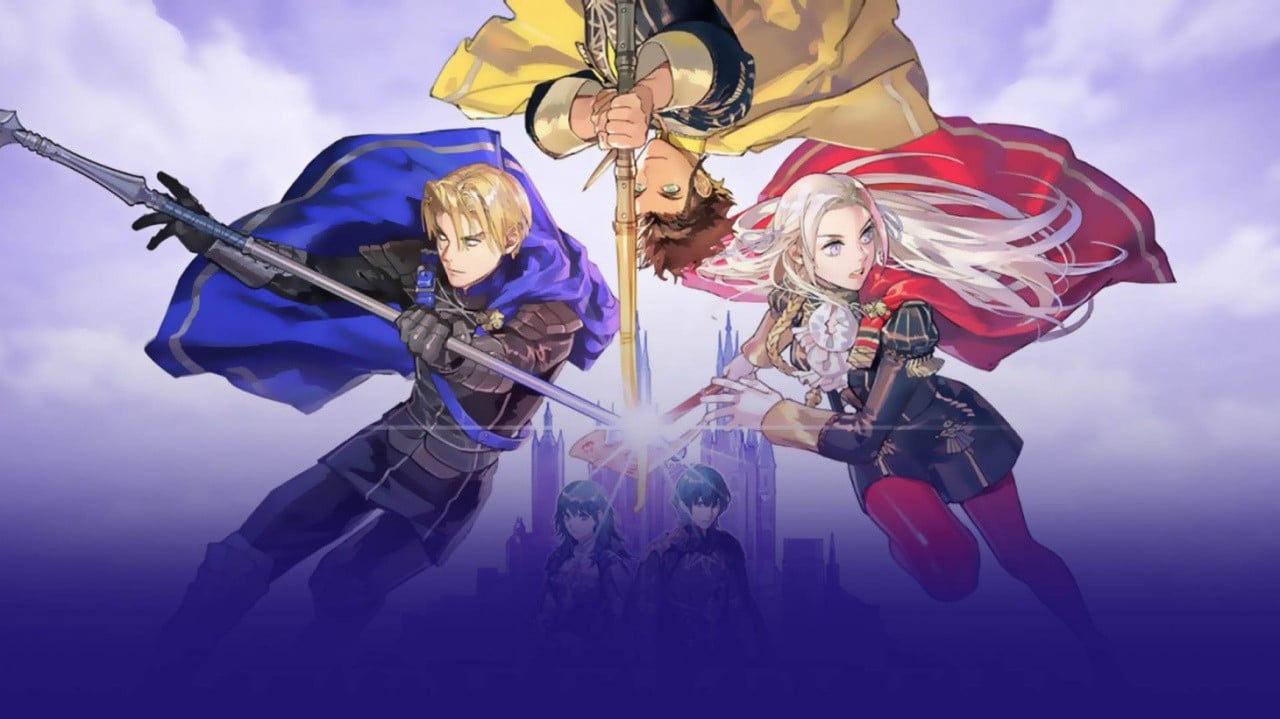
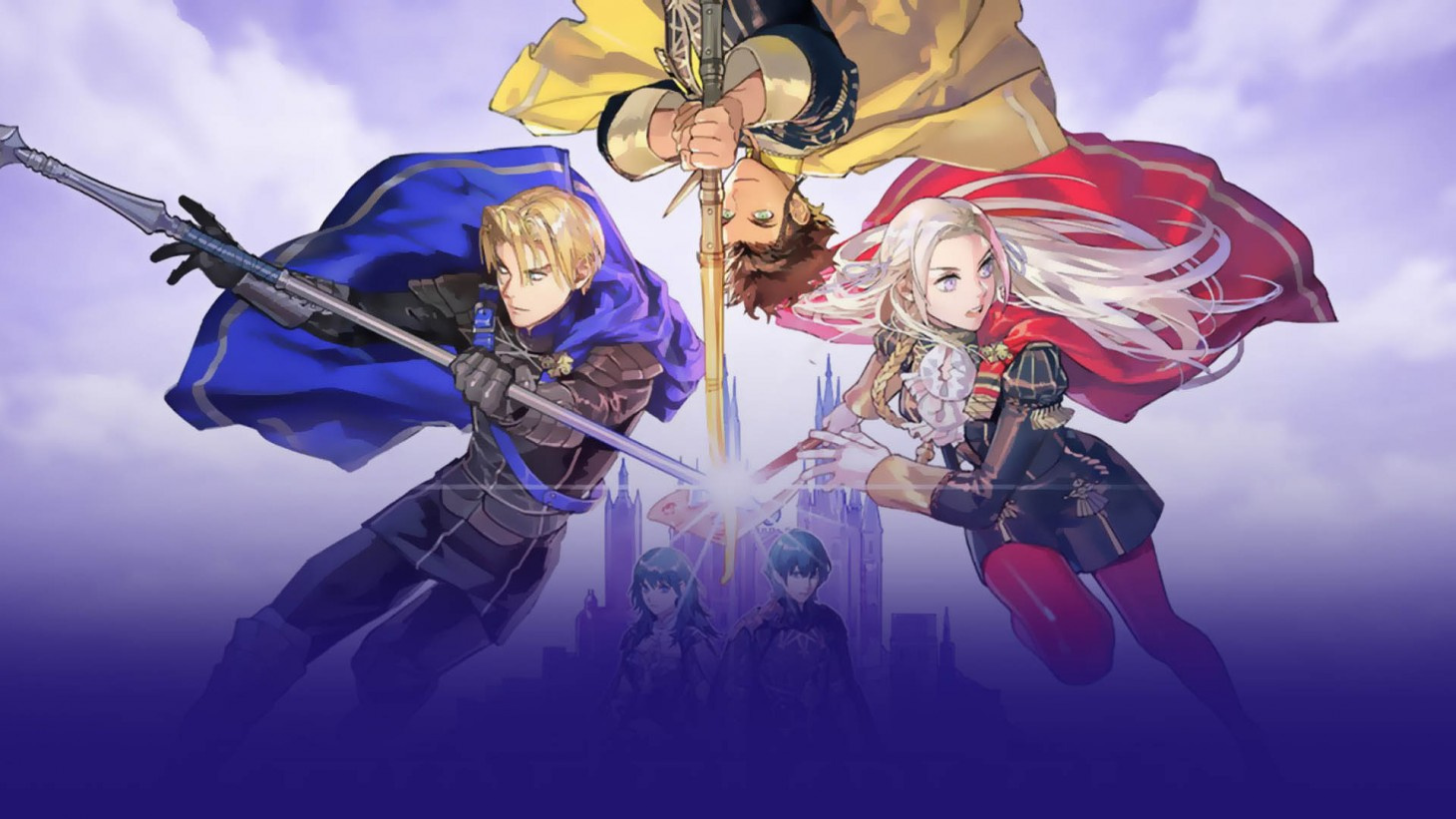
Fire Emblem: Three Houses Will Get A Super-Hard Mode In Free Update
Fire Emblem: Three Houses launches tomorrow – yes tomorrow! – and Nintendo has shared details on some post-launch content sure to excite diehard fans of the series.
As well as the ‘Normal’ and ‘Hard’ difficulty options which will be present in the game the moment you boot it up, an “even harder mode” will be added as a free software update later this year. The news comes from Nintendo’s official Twitter account:
If you’re as excited for the game’s release as we are, make sure to keep an eye on the site for our official review later today. While you wait for that to drop, feel free to also check out our early impressions from our time with the game’s early stages.
Are you picking up a copy tomorrow? Excited for this super-hard mode? Tell us below.