Review: Lethal League Blaze – Jet Set Radio Meets Tennis Meets Street Fighter
Breaking into the beat ’em up genre is a tough ask for any fledgeling title. With gargantuan franchises such as Mortal Kombat, Street Fighter and Smash Bros. making up a sizeable part of the Switch’s fighting roster, newcomers need to either nail basic fighting gameplay with pinpoint precision or introduce a fresh spin on the genre in order to stand out from the crowd. Thankfully, Lethal League Blaze does more than enough to avoid getting lost in the eShop ether.
Originally released on PC back in 2018, Lethal League Blaze is a continuation of what developer Team Reptile kicked off in 2014 with Lethal League. It’s a bonkers mix of dodgeball and tennis that comes together to form a fresh take on the beat ’em up genre, backed up by a superb soundtrack featuring none other than Hideki Naganuma, famous for his work on the Jet Set Radio series. The aim of the game is to whack an anti-gravity projectile (which, for the sake of simplicity, we’ll refer to as a ball from now on) towards your competitors within a confined arena, chipping away at their health until you’re the last character standing.
It’s such a simple premise, but Team Reptile has done a remarkable job in crafting the gameplay to make it accessible for newcomers whilst ensuring veterans have plenty of scope to improve and hone their skills. You’ll have a choice of more than 10 characters, each of whom displays truly unique characteristics: Candyman looks like a walking emoji and sports a rather fetching cane, Dice has a love of ping pong and wields a suitably apt paddle, and Latch is a crocodile with a huge tail and stylish headphones. You’ll soon gravitate towards your favourite after a few sessions, but the game remains fair by limiting each character to only one special ability.
All of the characters have the same basic move sets. You can give the ball a good old whack with a press of Y, aiming more or less in any direction with the control stick. If the ball happens to fly around without hitting anybody, you can give it an additional hit (provided you get on the right position) to increase the ball’s velocity – eventually, you’ll have it flying around the stage at impossibly fast speeds, making it incredibly difficult to counter against. Additionally, should your opponents successfully deflect the ball, this will create a volley – much like in tennis – that will increase with speed the longer it goes on.
But it’s not all about just hitting a ball back and forth until you successfully deal some damage; there are additional moves you can use to potentially give you an edge. You can bunt the ball with A, stopping it in its tracks to allow you a brief moment to gather yourself and prepare your next move before continuing. You can also grab and throw the ball, giving it an immediate burst of speed, or you can leap up and perform a smash strike, which really helps to increase its velocity quickly. Of course, the faster the ball travels around the screen, the more damage you’ll ultimately deal to your opponent if they fail to defend themselves.
Finally, each character is granted a special ability that you can access by building up a meter from multiple successive hits. These can prove to be extremely helpful if you’re in a bit of a bind, but crucially never feel powerful enough to immediately hand you the match. Mostly, it allows you to manipulate the ball in ways that you otherwise wouldn’t be able to do. For example, Dice can put topspin on the ball to make it curve around and hit your opponent, and Latch can actually gobble up the ball and spit it out at an opportune time (when you’re right in front of your opponent, basically).
A multiplayer game at heart, Lethal League Blaze can be played by up to four competitors either locally or online. We’re big fans of playing locally, and with it being such a rarity with games these days, it’s really great to see it given some love here. Online matchmaking is currently limited to include only 4 players, so those who prefer good old 1v1 matches will need to wait for a post-launch patch (which we’ve been told will hopefully arrive in August) before this becomes an option.
If multiplayer isn’t your thing, there’s enough here to keep you occupied in single player for a little while. The game’s story mode features numerous fights preceded by a brief, text-based cutscene to set the stage. This isn’t anything special, but it’s nice to see that the unique characters actually have a bit of personality as well. In addition to the normal 1v1 or 4v4 fights, the story mode also throws in a few surprises and flips the rules slightly for some of the matches. For example, you’ll come across a match that requires you to hit a target behind your opponent, and vice versa, rather than aiming for the character directly. In addition to story mode, there’s a classic arcade mode that will pit you against increasingly difficult foes in a 1v1 setup.
In terms of performance, the game is mostly locked at 30fps at launch. If this sounds a bit disappointing, we’ve been assured that the upcoming post-launch patch will increase the framerate dramatically. That said, we found the performance never falters and remains solid whether you’re playing against one opponent or three, and we suspect that once you get into a few matches, you won’t be particularly fussed about this at all.
Conclusion
If you’re not a fan of multiplayer games, then once you’ve beaten Lethal League Blaze’s story mode and arcade mode, there’s little to entice you back into the fray. Nevertheless, the gameplay itself is remarkably versatile, allowing newcomers to get stuck right in whilst more seasoned players can tinker with the game’s many intricacies. Throw in an amazing soundtrack and some fantastic cel-shaded visuals, and you’ve got a competitive game that’s engaging in terms of both its presentation and its instantly accessible gameplay.
Posted by: xSicKxBot - 07-27-2019, 04:12 PM - Forum: Windows
- No Replies
Azure publishes guidance for secure cloud adoption by governments
Governments around the world are in the process of a digital transformation, actively investigating solutions and selecting architectures that will help them transition many of their workloads to the cloud. There are many drivers behind the digital transformation, including the need to engage citizens, empower employees, transform government services, and optimize government operations. Governments across the world are also looking to improve their cybersecurity posture to secure their assets and counter the evolving threat landscape.
To help governments worldwide get answers to common cloud security related questions, Microsoft published a white paper, titled Azure for Secure Worldwide Public Sector Cloud Adoption. This paper addresses common security and isolation concerns pertinent to worldwide public sector customers. It also explores technologies available in Azure to help safeguard unclassified, confidential, and sensitive workloads in the public multi-tenant cloud in combination with Azure Stack and Azure Data Box Edge deployed on-premises and at the edge for fully disconnected scenarios involving highly sensitive data. The paper addresses common customer concerns, including:
Data residency and data sovereignty
Government access to customer data, including CLOUD Act related questions
Data encryption, including customer control of encryption keys
Access to customer data by Microsoft personnel
Threat detection and prevention
Private and hybrid cloud options
Cloud compliance and certifications
Conceptual architecture for classified workloads
For governments and the public sector industry worldwide, Microsoft provides Azure – a public multi-tenant cloud services platform that government agencies can use to deploy a variety of solutions. A multi-tenant cloud platform implies that multiple customer applications and data are stored on the same physical hardware. Azure uses logical isolation to segregate each customer’s applications and data from those of others. This approach provides the scale and economic benefits of multi-tenant cloud services while rigorously helping prevent customers from accessing one another’s data or applications.
A hyperscale public cloud provides resiliency in times of natural disaster or other disturbances. The cloud provides capacity for failover redundancy and empowers sovereign nations with flexibility regarding global resiliency planning. A hyperscale public cloud also offers a feature-rich environment incorporating the latest cloud innovations such as artificial intelligence, machine learning, Internet of Things (IoT) services, intelligent edge, and more. This rich feature set helps government customers increase efficiency and unlock insights into their operations and performance.
Using Azure’s public cloud capabilities, customers benefit from rapid feature growth, resiliency, and the cost-effective operation of the hyperscale cloud while still obtaining the levels of isolation, security, and confidence required to handle workloads across a broad spectrum of data classifications, including unclassified and classified data. Leveraging Azure isolation technologies, as well as intelligent edge capabilities (such as Azure Stack and Azure Data Box Edge), customers can process confidential and sensitive data in secure isolated infrastructure within Azure’s multi-tenant regions or highly sensitive data at the edge under the customer’s full operational control.
I’ve been cooling it on the Auto Chess testing lately because one of my personal favourite board games is getting its digital release next week, and I’ve been taking the Android version out for a spin.
Raiders of the North Sea is essentially a worker placement game, but it has a cool twist on the usual gameplay and has some pretty amazing artwork. Also: Vikings. The app seems very slick so far, so I’m looking forward to getting our full review out. I’m not sure we’ll make it in time for launch, but it’ll definitely be ASAP.
We’ve been wondering when Aspyr would be getting around to porting the Civ 6 expansions to mobile. Rise & Fall released to the PC audience last February, so it’s been well over a year and we’ve had a second PC expansion (Gathering Storm) in the time since then. Rise & Fall isn’t the most impactful expansion, but it definitely elevates the base game out of the mundane and so in many ways is a bit of an essential purchase if you’re a Civ 6 fan. Along with new leaders and civs, new mechanics emerge in the form of Emergencies, Golden/Dark Ages and Governors. You can head on over to our sister website for a full overview of the expansion.
It’s a shame it’s so expensive ($29.99!), although as part of the release all of the existing IAPs have been made cheaper. You can now pick up the base game for $10, for example. Gathering Storm is supposedly on track for release alter this year as well, and together they make the base Civ 6 experience a better challenger against Civ 5’s comfortable domination of the franchise.
I mention this one because I’ve played the PC version and it is quite fun, if you’re looking for a cheap and cheerful party game. You control stick men on 2D battlefields and you have to jump around, try to pick up weapons and be the last stick standing. The physics are hilarious and the action surprisingly tense. It’s only for three players and one disadvantage of the mobile version is that you can only play online (versus all crowding around a single PC, for example), which is a shame.
The mobile version has gone free-to-play with a single $1 IAP for something called ‘Diamond’, but I imagine this is more of a token gesture to monetise the mobile game, rather than true ‘freemium’ design although you never know with NetEase involved.
Pokémon GO’s time as the most popular Pokémon game on mobile might be coming to an end, as more games are about to land on our phones. Free-to-Play Pokémon Rumble Rush released this week, but you can also pre-register for Pokémon Masters, a 3v3 battler where three trainers each take a Pokémon each (known as a ‘sync pair’) into a head-to-head battle with another team. Pre-registration is available on both app stores, and there’s an overview video you can watch that goes over the basics:
This digital party game has been on our radar for a while, but we weren’t sure when the mobile version was planning to release – turns out it’s next week! This is a co-operation game where one person has ‘the bomb’, while everyone else has the manual that can disarm the bomb. The carrier will need to be able to describe what they can see, while the rest of the team will need to be able to succinctly advise the carrier how to disarm the bomb based on what they’re told. What could go wrong?
What’s good about this one is that only one person needs to ‘own’ the app as only the carrier will need, while everyone else can consult the bomb manual directly from the official website. It’s coming to both app stores and will cost $9.99.
Updates
Not many updates making a splash this week – Star Traders: Frontiers has been updated again, naturally, and the various Auto Chess games have all had extra tweaks and updates, depending on your poison.
In other news, Night of the Full Moon was updated to Version 2.0 this week. This is a larger update than most, and ]comes with it the inclusion of a new DLC – The Red Hood. NotFM is a pretty solid CCG/RPG hybrid which, while it didn’t blow us away when we first looked at it in 2017, has continued to go from strength to strength in the years since. It’s got plenty of DLC now to pick up if you’re interested, and the price for entry is currently ‘free’ on both iOS and Android.
Sales
In addition to the Civ 6 and Night of the Full Moon promotions mentioned above, there are a couple of sales that might be of interest this week:
Tides of Time (iOS | Android), which is a fun and quick 2 player card drafting game, is currently $0.99 – it’s first price-drop since launch.
Tactical RPG Avadon 3: The Warborn is down to half price again this week, only the second time this year.
Seen anything else you like? Played any of the above? Let us know in the comments!
Today, the Khronos group announced that Autodesk has joined the consortium, specifically the 3D Formats Working Group and the 3D Commerce Exploratory Group. The Khronos Group is the regulatory body guiding such efforts as OpenGL, Vulkan, OpenCL and of course glTF. This is a long winded way of saying that Autodesk, makers of popular 3D applications such as 3DSMax and Maya as well as industry standard AutoCAD, are moving to support the open standard glTF.
Big news! 3D software developer, Autodesk has joined the Khronos Group. Autodesk is an industry-leading provider of 3D design, engineering and entertainment software, that joined the 3D Formats Working Group to support the Khronos glTF file format and the 3D Commerce Exploratory Group, a group of companies exploring standards and guidelines for the production and distribution of real-time 3D representations of products. glTF is an open standard for efficient and reliable encapsulation and transmission of 3D assets and scenes, including PBR materials and animations.
“Autodesk is committed to accelerating the adoption of open standards as industry-wide collaboration is critical to improving our customers’ workflows and advancing computer graphics technology,” said Henrik Edstrom, senior software architect, Graphics Technology at Autodesk. “As the need for interoperability and consistency between applications and across platforms becomes increasingly important, we see great value in open data formats like glTF. There is also more demand for richer experiences on web, mobile, and XR platforms, and new opportunities in areas such as general compute and real-time ray tracing. We’re excited to be part of the Khronos group and the evolution of computer graphics.”
Further support for the open and real-time friendly glTF format is a step forward in interoperability between game engines and DCC tools and away from proprietary and complicated formats such as Autodesk’s own Filmbox (FBX) format, or that of prior overly complicated open standards such as COLLADA (DAE).
Interestingly, there was no mention of MAX, Maya or games in general in the entire article, arguably the biggest sector impacted by this announcement.
IBM’s Center for Open-Source Data and AI Technologies (CODAIT) recently unveiled a pair of carefully curated databases designed to provide machine learning developers models and datasets for AI projects. MAX, or Model Assets Exchange, is an online open-source repository for trainable/deployable AI models. You don’t necessarily have to be an AI expert to use the database – there’s even a tutorial that’ll walk you through developing an AI that can write captions – but some of the models available will probably only appeal to enterprise developers. (Source: The Next Web)
Posted by: xSicKxBot - 07-27-2019, 10:01 AM - Forum: Lounge
- No Replies
Zombieland 2 Trailer Sends The Gang To Washington, DC To Clean House
It's been a decade since the first Zombieland movie premiered and in October, fans will be able to get a second helping when Zombieland: Double Tap hits theaters--with the four principal stars returning. The first trailer for the sequel has arrived, catching viewers up on what Columbus (Jesse Eisenberg), Wichita (Emma Stone), Tallahassee (Woody Harrelson), and Little Rock (Abigail Breslin) have been up to in the last year. It's about what you'd expect.
In the first look at the movie, the gang arrives in Washington to take up residence in the White House for Christmas, with Tallahassee joking he could have been a good president. It's also hinted that this is the first time the group has been on the road in some time, though it's unclear where they were settled before. For those who haven't seen the movie in some time, we last saw this quartet in California, after they escaped a theme park overrun by zombies.
The trailer also introduces a few new characters. Madison (Zoey Deutsch) enters the picture and seems very ill-equipped to survive a zombie apocalypse, unlike gun-toting Nevada (Rosario Dawson), while Little Rock runs off with Berkeley (Avon Jogia), a new boy she met. Then there are the doppelgangers. It's unclear just how big a role they'll play in the movie, but the trailer briefly shows characters very similar to Tallahassee and Columbus, played respectively by Luke Wilson and Thomas Middleditch.
Based on this small look, Double Tap looks to be even more of the same mix of humor and horror as the first film, as this wildly dysfunctional family simply tries to survive together. Zombieland: Double Tap hits theaters on October 18, just in time for Halloween.
Posted by: xSicKxBot - 07-27-2019, 10:01 AM - Forum: Lounge
- No Replies
Understanding the success of Fortnite: A UX and psychology perspective
The following blog post, unless otherwise noted, was written by a member of Gamasutras community. The thoughts and opinions expressed are those of the writer and not Gamasutra or its parent company.
Fortnite is one of the most successful video games in history, and this success fascinates and confuses many people who have made efforts to account for how a game could have become such a phenomenon so quickly. As the former Director of User Experience (UX) at Epic Games, where I worked on Fortnite from 2013 to late 2017, I would like to share the different steps that were taken by the Fortnite team to build what would later become the phenomenon we now know, through the lens of UX. My background in psychology, my occupation as a UX strategist, and my personal work on the game likely bias my perspective since we are all susceptible to unconscious biases. However, this analysis, unlike those that have been proposed thus far, is a firsthand account that was presented in several Game Developers Conference (GDC) talks that I gave before Fortnite was released, and in my book The Gamer’s Brain: How Neuroscience and UX Can Impact Video Game Design (2017).
The Fortnite team had a precise vision and collaborated very closely with the UX team to deliver a game that would be true to this vision and that would appeal to many different types of players. My contention is that the success of Fortnite is linked to their efforts in adopting a UX mindset. My goal here is to explain how to develop such a game UX mindset and build a UX strategy to help game developers around the world find success more quickly with the games they are crafting. This is especially crucial for independent developers who have fewer resources yet still compete with the thousands of games released every year.
I will detail here the three most important steps to develop a game UX mindset, which were taken during the development of Fortnite:
Understanding the player’s brain
Following a game UX framework (guidelines to usability and engage-ability)
Applying the scientific method & establishing a UX pipeline
Simplified diagram showing how the brain learns
UNDERSTANDING THE GAMER’S BRAIN
This success story narrated through the lens of UX starts by understanding how the brain operates. Discovering and experiencing a video game, like anything else, happens in people’s minds. Thus, to anticipate how players will experience a game, it is critical to know the main capabilities and limitations of our brains. The study of mental processes (such as attention or memory) is called cognitive science. The diagram above shows a simplified version of what is going on in our brains when we learn or process information.
This process starts with the perception of an input (for example, a tutorial text) and as we process the information conveyed by our many senses (we have way more than five), our memory is likely to change. When we learn something, new synapses — the connections between neurons — are created or are strengthened. Everything you do in life — reading a book, watching a movie, chatting with friends, reading this article, etc. — is going to “rewire” your brain, because our brains are not hardwired in the first place. The brain is malleable, and thanks to this plasticity, we are capable of adapting to our ever-changing environment. Between the perception of a stimulus and the modification of our memory, a lot of things happen. Notably, the quality of learning will be affected by many factors, such as our attention, motivation, and emotion.
How much people pay attention when they process information is a critical factor to the quality of learning or retaining that information. The more you pay attention, the better you will process and retain what is going on around you. For each of these mental processes — perception, memory, and attention — I will explain our main limitations, and how we accounted for these limitations during the development of Fortnite. Keep in mind that the brain is extremely complex. We do not have independent linear channels that process our surroundings as shown in the diagram. It’s not even a process. We use a lot of terms from computers to explain how the brain works because computers offer a compelling metaphor, but the brain does not work like a computer. It is much more complex, and scientists are only just starting to understand how it works. I’m going to briefly explain the main limitations for these mental processes, but you can read more about this in this transcript of my GDC 2015 talk.
Perception
Perception is a construct of the mind, and one that is subjective. Take a look at the picture below. What do you perceive here? Color stripes? Maybe people? How about Street Fighter characters? Depending on your knowledge about this game, and even your personal connection to it, you are not going to perceive this input in the same way. And if you are colorblind, like about 8% of the male population, you rightfully feel excluded from my example (please accept my apologies!). No matter what we are designing, we need to make our product or system accessible for everyone; this is why, for example, we should never convey information exclusively through color.
Street Fighter II characters as minimalized by artist Ashley Browning
Perception is subjective. It depends on our DNA, our prior knowledge, our expectations, our culture, the context, and many other factors. This situation is problematic when we make a video game, because the game represents a series of stimuli that we want players to perceive the way we intended. If perception is subjective, how can we be sure that all the visual and audio cues in a game will be perceived as intended? To put it simply, we cannot. This is why it is very important to run UX tests, whereby we invite people from our target audience to test the game in development. Many types of tests exist, but to determine if our audience perceived the main elements of Fortnite as intended we mainly used surveys. For example, in 2013, we invited a few people to play through a prototype of the game, and then we asked them to tell us what they believed the icons were communicating. The original symbol that was chosen to represent traps in the game was not perceived as such by all players who tested the game then. Some players thought it looked like ammunition, or trees. Thus, the icon was perceived differently by the person who designed it and by the target audience who interacted with it, as I explained in my GDC Europe 2014 talk. As traps were a key feature in Fortnite, it was important to tweak this icon so that no player would be confused by this stimulus. After the UX test, we decided to change the trap icon to look like a bear trap. There are no bear traps in Fortnite, but in our continued testing, all the players we invited to test the game understood the new symbol. This situation underscores that people will have multiple perceptions for any given reality. This situation necessitates testing the main elements in a game, whether they are UI elements, character design, sound design, visual effects, or environment design.
Trap icon iteration (GDC Europe 2014)
Memory
Memory is another important component to account for. We are able to memorize a lot of information, and sometimes for a very long time. However, we also forget many things. In the late 18th century, the German psychologist Herman Ebbinghaus uncovered the exponential nature of forgetting. He established the now famous “forgetting curve“. To come up with this curve, he taught himself a list of syllables that didn’t have any meaning (to avoid any familiarity effect) and he varied the time in which he had to recall them all. The figure below illustrates what he found: once he knew the list of syllables by heart, if he recalled them immediately after he had 100% success rate.
The Forgetting Curve (Herman Ebbinghaus, 1885)
After only 19 minutes, his success rate dropped down to about 60%, and after one day it dropped down to nearly 30%. This means that when you learn something that is not meaningful, and with no method of any kind, you are likely to lose about 70% of the content learned from one day to the next. This is pretty inconvenient, especially for video games since they are usually experienced over several days, sometimes weeks, or even months or years. Given that the human memory is limited, and that we are bound to forget many things, how can we ensure that returning players are not going to forget key information over time? Game developers apply many tactics to avoid this caveat, from repeating information to displaying contextual tutorial tips. However, the most efficient methodology to avoid the impact of the forgetting curve is to reduce the memory load in the first place. The more information is always available to players, the less there is to learn and remember, which underscores the importance of having a good heads-up display (HUD).
The HUD prevents players from remembering elements, such as what gun or abilities they have equipped, how much ammunition they have, or what their next objective is. In Fortnite, a lot of information is always displayed, such as what key to press to search an item. Players do not have to remember this information; it always pops up in the UI for them. Another example is the option for players to pin a recipe they are interested in crafting in their HUD. They do not have to remember what ingredients they need to harvest; they can simply concentrate on their objectives. Our memory is fallible. It can sometimes be very frustrating to come back to a game and not remember the controls, objectives, or how certain systems work. Alleviating players’ memory load is thus important to ensure that they won’t quit a game because they don’t remember some critical information to have fun.
The HUD helps reduce the memory load
Attention
Finally, let’s talk about attention. Although we believe that we are good in analyzing our surroundings, we actually have pretty limited attentional resources. We are not able to carefully scan what’s going on around us. Rather, our attention works like a spotlight: we direct our attention to something in particular while we filter out other stimuli. Just like when you’re in a loud bar and you concentrate on only listening to what your friends are saying. This means that we cannot efficiently multitask, despite most of us believing that we can. When we try to multitask, we are missing a lot of information and we make mistakes, even though we might not realize it.
Watch this video for example:
Did you notice something surprising in the video? Most people don’t. This is what we call “inattentional blindness” in psychology and it’s a very powerful phenomenon: when we are focused on a task, we fail to notice stimuli that are not related to the task (even when a very surprising event happens!). Many games challenge players’ attention, which is fine once players master the game. However, asking players to multitask as they are discovering and learning about a game can lead them to miss out on important information. This is why it’s critical, for example, to avoid tutorial text about how to regenerate health as players are combating zombies. At best, players are going to be annoyed by the distraction; at worst, they won’t be able to realize that some information has popped up, let alone process and remember it. Since our attentional resources are scarce, game developers need to mind the cognitive load they put on players at any time, and more specifically when players are learning about something new, as this requires even more attention.
The myth of multitasking (GDC 2015)
In summary, when we learn and process information our perception is subjective, our attention is scarce, and our memory is fallible. This is why having a UX mindset, which places the end users at the center of the development process, is key to offering the intended experience.
The main limitations of the human brain
A GAME UX FRAMEWORK
User experience is a term coined by Don Norman (former Vice President at Apple, author of the renown The Design of Everyday Things, 2013) in the 1990s to account for the whole experience the user is having with a product, system, or service: from the first time they hear about it, to when they buy or download it, when they interact with it, and what they later remember about it. Here we are going to focus exclusively on when players interact with the game. In an effort to anticipate all the frustrations that players can have with the game that aren’t by design, while offering the most engaging and fun experience, we use two main UX pillars in games: “usability”, and what I call “engage-ability”.
Game UX = Usability + Engage-ability
Usability
Usability is about the ability of the game to be used, which entails taking into account human limitations in terms of perception, attention, and memory. Usability is a well-known UX pillar and very precise guidelines have been established throughout the years in industrial design and digital product design. The most renowned list of usability heuristics (i.e. rules of thumb) was put together by Jakob Nielsen. In my game UX framework, I’ve adapted these heuristics to be more relevant and, well, usable to game developers who use their own vernacular. These game usability heuristics are as follows:
Signs and feedback
Clarity
Form follows function
Consistency
Minimum workload
Error prevention and recovery
Flexibility and accessibility
If you’re interested in diving deeper in these heuristics, I invite you to read the transcript of my GDC Europe 2014 talk. The goal of these heuristics is to ensure that the game is going to be as intuitive and easy to use as possible. We work to remove all the frustrations players might have that are not by design, such as difficulty navigating menus, unintuitive icons, or confusing systems. All the stimuli in the game (aka “signs and feedback”) need to be clear, consistent, and perceived as intended. We aim to minimize the cognitive load (i.e. memory and attention load) as well as the physical load (e.g. how many clicks to accomplish an action). We also try to ensure that players are not going to experience frustrating errors, or that they can easily recover from them when these errors are not where we want to challenge players. For instance in Fortnite, we want to challenge players in developing a strategy to survive while managing combat, harvesting, crafting, and building. We do not want, however, to challenge them in figuring out how to equip an item or to craft a weapon. Lastly, we try to offer various options — such as remapping of controls, subtitles, or colorblind mode — so that everyone can play. Throughout the development of Fortnite, we conducted countless UX tests to improve and polish the usability of the game.
Engage-ability
Offering good usability is critical for any product, including games, yet a game can be easy to use (i.e. the interface is intuitive and players can easily understand their goals and accomplish actions) yet boring. Unlike tools (such as a web browser or a software we use for work), video games are not a means to an end. We typically interact with games solely for the pleasure of playing them. Thus, if a game is not engaging, we are more likely to stop playing it, even if it’s easy to use. Don Norman speaks of “emotional design” to highlight the importance of any product to be more than just about functionality. But for games this emotional design is not merely important; it’s critical. Game developers often talk about fun or immersion. I prefer to use the term engagement and to refer to the ability of the game to be engaging, as it’s a more concrete concept to break down. Engage-ability is a fuzzier concept than usability; since we can never fully predict or understand why people do the things they do. Therefore, there aren’t any solid guidelines to achieve engage-ability yet. Throughout my work at Ubisoft, LucasArts, and Epic Games, there were three pillars I considered in order to improve the engage-ability of a game:
Motivation
Emotion
Gameflow
If you are looking for more detailed information on these engage-ability pillars you can check out my GDC 2017 talk.
1. Motivation
We do not accomplish any action unless we are motivated to do so. Thus, motivation is at the core of engage-ability. However, countless theories of human motivation exist, and we currently do not have any motivational theory that can account of all of human behaviors. Among the most important types of motivation, we can focus on two that are the most applicable to games: extrinsic and intrinsic motivation.
Extrinsic motivation is when you do something in order to get something else. It’s when, for example, you wait in the queue to get into a ride at the fair. Waiting in line is a means to an end. Video games often master extrinsic motivation: players need to accomplish quests, actions, or harvest many resources in order to be rewarded. Precise goals and clear rewards associated to these goals are very important to keep players engaged, such as what reward(s) can be redeemed after completing a challenge, or what abilities can be unlocked in a skill tree. But this is not enough.
Motivation in Fortnite (GDC 2017)
Game developers also need to account for intrinsic motivation, which is our motivation to do certain things just for the pleasure of doing them, not to get something else. The most reliable theory of intrinsic motivation we currently have is the self-determination theory, or SDT for short. This theory explains that we are more likely to be intrinsically motivated to do an activity when this activity satisfies our need for competence, autonomy, and relatedness.
Competence is mainly about having a sense of progression, whether this progression is skill-based (e.g. getting increasingly skilled at building fast) or not (e.g. leveling up and buying new skills that make us artificially more powerful within the game). If we do not feel that we are progressing when we engage with an activity, such as learning how to play guitar or trying to lose weight, we are very likely to abandon. This is why progression bars are so compelling. It’s not only because of the promise of getting a reward once we reach a new level, it’s also because we can see ourselves progressing towards a goal, and getting increasingly competent.
Autonomy is mainly about self-expression. Being able to choose your skins, your dance moves, or how you can overcome obstacles allows you to feel more autonomous. This is why sandbox games (e.g. Minecraft or Grand Theft Auto V), and games offering a lot of cosmetic options (when these options are meaningful to players) are often engaging.
Lastly, relatedness is about having meaningful relationships with other people in a game. Humans are a very social species, and multiplayer games often offer compelling relatedness. This can be either through competition, or cooperation. Although cooperation is often more engaging, which is why most competitive games offer cooperative options (e.g. playing in a squad, or playing in a team against another team).
2. Emotion
Emotion in games is mainly about what we call “game feel” and about offering new content. Game feel refers to how good it feels to interact with a game. It’s about its camera, controls, and characters (often called “the 3Cs”). It’s about the sense of presence, provided by an AI (artificial intelligence) that reacts adequately to what players are doing, a meaningful story, or great music, among many other things. Lastly, it’s about the physical reality of the game; how believable it is (rather than its photo-realism). I won’t get into any detail here, but emotion is also about the surprises and novelties that are offered to players. We need something new every now and then otherwise we get bored. This is why online games constantly need updates, new campaigns, modes, skins, or seasons.
3. Gameflow
Gameflow comes from the concept of “flow” in psychology, investigated by psychologist Mihaly Csikszentmihalyi. As he was trying to find out the secret to happiness, he noticed that those who were happier in life experienced the state of flow more often. You’re in a state of flow when you are deeply concentrated in doing an activity that is both worthwhile to you and challenging. You can experience this state at work, when being creative (e.g. if you like to draw, knit, or play music), and when you play certain video games. Jenova Chen is the game designer who has extensively explored gameflow, through games like Flow, Flower, or Journey. One of the main components of gameflow is challenge. A game needs to have the right level of difficulty so that the game is never too easy (otherwise we get bored), or too hard (otherwise we get too stressed out). That’s the main difference between the UX of a game and the UX of other products: in games you need to challenge the user. Game developers are carefully implementing frictions that are by design: players are going to encounter obstacles they will need to overcome. This is why multiplayer games need to perfect their matchmaking so that players at the same level of expertise and skills are matched together. Neither being destroyed in no time, or winning too easily is fun.
Gameflow is also about pacing, the rhythm of stress and pressure. A game needs some intense moments, and more relaxing ones. Many action games have “waves of enemies” for example, and in battle royale games players have relatively calmer moments to prepare, alternated with moments when encounters are forced as the map is shrinking. Last but not least, onboarding is paramount to gameflow. In order to enter a state of flow while playing a game, you need to understand what it is all about and how to succeed (or at least how to get better at playing). This is why onboarding players properly, through elegant tutorials that feel part of the game, will greatly impact the feeling of immersion. Onboarding is about making sure players are going to be competent in playing the game. Sure, they will make mistakes and probably die a few times, but if the game allows them to understand what happened and how to get better, they will be able to progress. Having a sense of progression is one of the main pillars of intrinsic motivation, as explained earlier. To learn more about onboarding, you can take a look at the transcript of my GDC 2016 talk dedicated to this topic.
Evolution of the building tutorial (GDC 2015)
These usability and engage-ability pillars constitute a game UX framework that is very useful and practical to follow when developing a game. It can be used as a checklist to identify the most critical issues to fix, as well as the missing features or elements in the game to reach its full potential. There is no known recipe for successful games, but this framework offers ingredients that we know are critical to craft usable and engaging games. Game makers can use these ingredients to make their own successful recipe, depending on the kind of experience they want to offer and on the audience they are targeting.
A game UX framework
SCIENTIFIC METHOD & UX PIPELINE
Knowing the main human brain limitations and following a UX framework is a great start, but it’s also critical to apply the scientific method and establish a UX pipeline in order to find and prioritize the biggest UX issues to fix. Solving problems is relatively easy. Finding and solving the right problems is what is difficult. And since humans are biased, relying on the gut feeling of different members of the game team (or even sometimes executives), all having their own subjective perception, scarce attention, and fallible memory, can lead to costly setbacks. This is why is it important to rely on UX research to identify and prioritize issues. UX researchers use the scientific method to pose hypotheses with the game team, design experimental protocols accordingly, and then gather and analyze data while removing as many human biases as possible. Once the most important issues have been identified, the team then needs to figure out why they are happening.
Design vs. Perception (GDC 2017)
For example, in the early days of Fortnite, during the closed Alpha online tests, some players were complaining that the game was too “grindy”. They felt that it took too long to harvest the ingredients they needed to craft more advanced items as they were leveling up. Where was this coming from? Did the game have a design issue? The system designers verified their math and concluded that the harvesting and crafting systems were correctly balanced. So why were players complaining? This issue kicked off a long investigation to find out why this was happening. If it was not originating from the design, then the hypothesis was that it could originate from players’ (subjective) perception. Many elements were thus investigated. One of them was the UI (user interface) for a feature called the “weak point system”. In Fortnite, when players harvest an object in the world (say, a pile of rock) a weak point appears, encouraging players to aim at it. As they scavenge the object, if players aim at its weak point they destroy it much faster. The problem was that in our early UX tests, we were observing players completely ignoring these weak points. This issue could be seen as trivial, but it potentially had a relatively huge impact in ripple effects, as the whole harvesting system was based off players using the weak points. Therefore, if they were not using it they were taking much longer than designed to harvest anything, which could in turn obviously impact their perception of the harvesting speed. This is why the team iterated a lot on this tiny UI element. First, it was made bigger and more obvious, as initially players were not even realizing that it was there. Once it was standing out more, players were spotting it but then thought it was a cue indicating to them which item they were currently targeting. In the end, designers removed the weak point from the initial experience in the “Save the World” mode (the player-versus-environment mode), so that players would have to unlock it in the skill tree. It thus became a meaningful reward with more fanfare, which overall did the trick. A majority of players were finally hitting the weak points after this change. At least in “Save the World” mode…
Iteration of the weak point (GDC 2017)
This iterative process was made possible also because the Fortnite team established a strong UX pipeline, which my former colleague Heather Chandler (former Senior Producer on Fortnite) and I explained in a GDC talk in 2016. We applied a scientific method to avoid falling prey to our biases as game developers and to objectively find what problems we needed to solve in priority during development, through careful UX testing and continuous online tests. UX research was entirely part of the production pipeline, and the team was tasked into fixing bugs related to UX research feedback. Having a strong UX focus means that it needs to be a priority for the team.
The UX pipeline on Fortnite (GDC 2016)
CONCLUSION: DEVELOPING A UX STRATEGY
Understanding the basics of how the brain works, following a UX framework, applying the scientific method, and establishing a UX pipeline allow game developers to reach their goals faster and more efficiently.
If you analyze a game like Fortnite through this UX lens, you can identify all the efforts that were made to make the game usable, to avoid as much confusion as possible, and to remove as many frustrations that were not by design. I explain a few examples in this video made with Ars Technica. In terms of engage-ability and motivation more specifically, Fortnite is a game where you always progress towards specific goals in the player-versus-environment mode (“Save the World”). In the “Battle Royale” mode in which players compete against each other, those who lose can quickly start again and hopefully get better the next round. The cosmetics options and dance moves offer good autonomy, as well as the “Creative Mode” in which players can build whatever they want. Relatedness is very strong in Fortnite: it’s a game where players can compete, cooperate, or just hang out. It has become more than a game; it’s a social platform where players chat, dance, are creative, or even watch a concert together. Also, well-known influencers and stars streamed the game early on, which made the game a must-try (although this is not something that can be anticipated during the development — luck also has a role). Regarding emotion, Fortnite has a very polished game feel: it is quite satisfying to interact with the environment. The world is goofy and encourages experimentation, as explained by Darren Sugg, Creative Director of Fortnite, in this Game UX Summit Europe keynote. The game also offers many surprises and mysteries. For instance, there is often something mysterious before a new season, which is raising players’ curiosity. Lastly, the gameflow of the game is polished, more specifically in “Save the World” mode where the onboarding has been carefully planned (see the transcript of my GDC 2015 talk and GDC 2016 talk explaining our onboarding plan and process).
Despite some lingering misconceptions about user experience and psychology, increasingly more studios are now trying to adopt a UX strategy, because of the objective guidance it offers. Making games is hard, and competition is fierce. UX offers a set of tools to reach our objectives faster and more efficiently. Building the user experience strategy for a project or a studio is more than merely applying certain tools and methodology; it’s a philosophy. All in all, it is about being in the mindset of placing the players (and not the business) first.
You only have 21 days until this living city dies. The clock is ticking. You can’t be everywhere at once. Decide what to explore, who to meet and see every decision shape the curious stories and terrible secrets of this branching narrative game.
July 18th : New Preview Alpha Ring 1908 Update (1908.190716-1920)
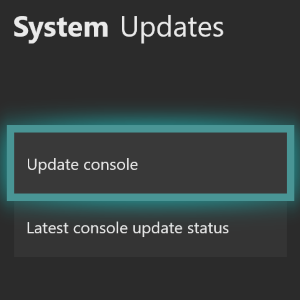
Starting at 2:00 p.m. PST today, members of the Xbox One Preview Alpha Ring will begin receiving the latest 1908 Xbox One system update (Build: 19H1_RELEASE_XBOX_DEV_1908\18362.6039.190716-1920).
DETAILS:
OS version released: 19H1_RELEASE_XBOX_DEV_1908\18362.6039.190716-1920
Available: 2:00PM PDT 7/19/19
Mandatory Date/Time: 3:00 AM PDT 7/20/19
Fixes:
Controllers
A new version of controller firmware has been released for certain controller models. Users should be prompted to update the controller automatically when it is connected to the console. You can also go to Settings>Kinect & devices>Devices & Accessories with the controller connected, then select the ellipsis button to see if a firmware update is available.
System
Various stability fixes to the system.
Known Issues:
Audio
Users who have Dolby Atmos enabled and console display settings set to 120hz with 36 bits per pixel (12-bit) are experiencing loss of Dolby Atmos audio in some situations.
Workaround: Disable 120hz or set Video Fidelity to 30 bits per pixel (10-bit) or lower.
Profile Color
Sometimes users may encounter the incorrect Profile color when powering on the console.