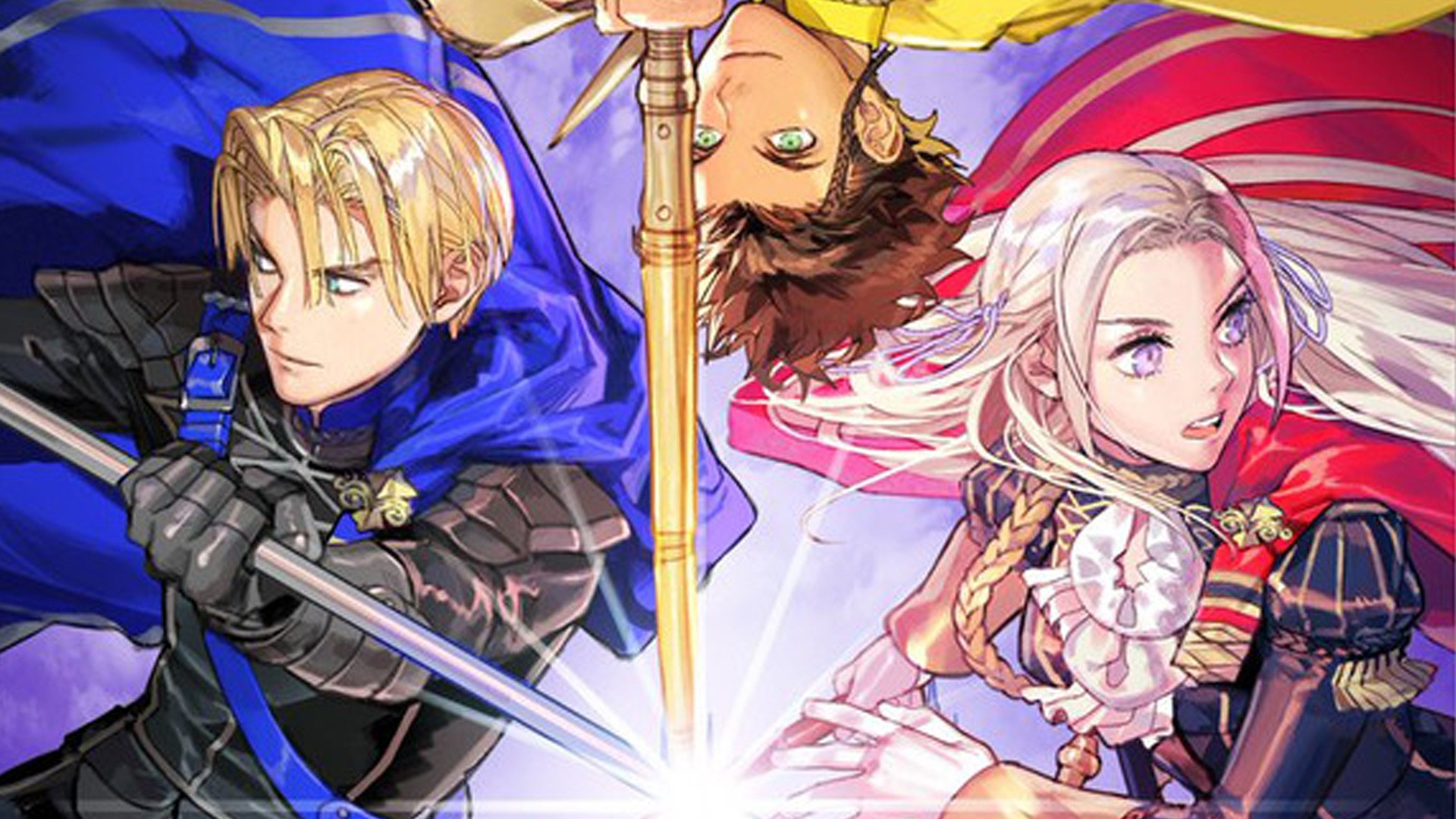
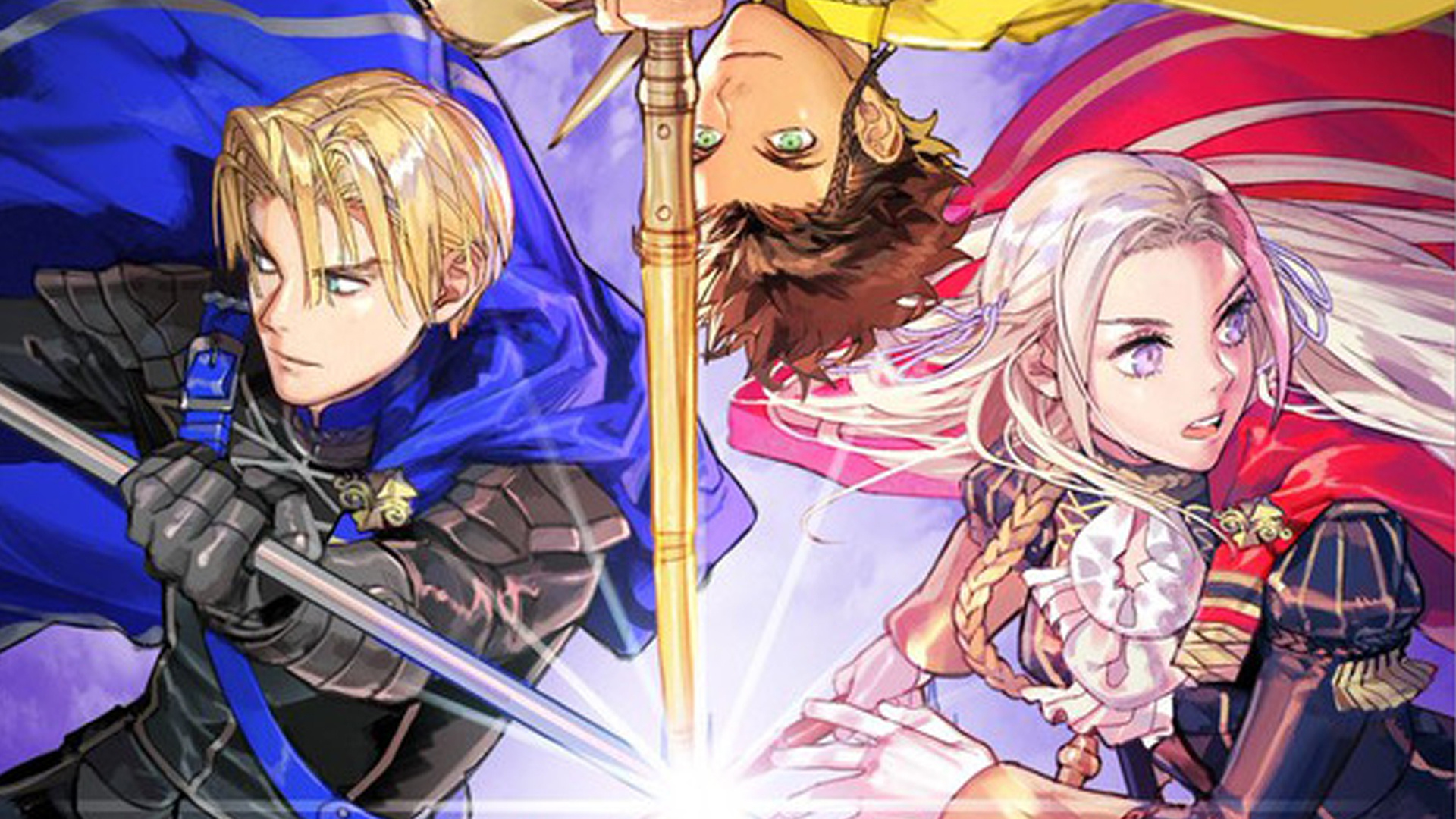
Take part in the next saga of FINAL FANTASY. XIV Online with the next legendary expansion pack?SHADOWBRINGERS.
New jobs: Gunbreaker and Dancer
New races: Viera and Hrothgar
Level cap increased: 70 to 80
New cities: The Crystarium and Eulmore
Journey through expansive new areas, such as the Rak?tika Greatwood, Amh Araeng, Il Mheg and Lakeland.
New trails, including harrowing encounters with Titania and Innocence.
New beast tribes: pixies, Nu Mou, and dwarves
New 8-player raid: Eden
An exciting new series of alliance raids YoRHa:Dark Apocalypse
The Restoration of the Holy See of Ishgard - In the aftermath of the Dragonsong War, Disciples of the Hand and Land work together to rebuild Ishgard
The yellow jersey is yours! The official route of the 21 stages of the 2019 Tour de France has been reproduced down to the last detail, and will take you from Belgium to the Champs-Elysees. You can also play online for the first time in the history of the series, challenging up to three other players in shorter, more intense races.
LF Networking (LFN) has announced the availability of ONAP Dublin, the latest release of the open-source platform for real-time, policy-driven orchestration and automation of physical and virtual network functions. Dublin brings an uptick in commercial activity, including new deployment plans from major operators (including Deutsche Telekom, KDDI, Swisscom, Telecom Italia, and Telstra) and ONAP-based products and solutions from more than a dozen leading vendors. The foundation also announced the addition of six new members including, Aarna Networks, Loodse, the LIONS Center at Pennsylvania State University, Matrixx Software, VoerEir AB, and XCloud Networks.
Dr. Mario World Releases Early, Out Now On iOS And Android
Dr. Mario World, the latest mobile spin-off game of a popular Nintendo property, is now available to download on iOS and Android platforms. The game was slated for release for July 10 but dropped a little early. As with other Nintendo mobile games, it's free-to-play with in-app purchases. You can download it through the links below.
In the case of Dr. Mario World, the available purchases are bundles of Diamonds ranging from $2 to $70. Diamonds can refresh your energy meter or be used to purchase items like extra capsules. Another currency, Coins, is earned through in-game progress and can be used to summon additional doctors.
Our hands-on with Dr. Mario World showed promise as an appealing spin on the Dr. Mario formula and a good fit for mobile platforms. The one sticking point will be how aggressively gated the microtransactions actually are, and that won't become entirely clear until the game is put through its paces by a wider audience over a longer time.
"Dr. Mario World's success ultimately hinges on how intrusive these free-to-play elements are in the full game, but from what we've sampled of it, the title seems like a promising mobile take on the series embellished by some smart new gameplay elements," Kevin Knezevic wrote. "It also appears there will be a lot of content right out of the gate; Nintendo says there will be more than 200 stages at launch, with more on the way in the future. The company will also introduce new doctors and assistants to the game post-release."
NPD Reveals The Best-Selling Third-Party Nintendo Games In The United States
Last week, NPD Video Game Industry Analyst Mat Piscatella shared the top ten best-selling games on the Nintendo Switch in North America. Apart from Ubisoft’s title Mario + Rabbids Kingdom Battle, there were no other third-party games featured.
To make up for this, he’s now revealed North America’s top ten best-selling third-party games of all-time on Nintendo platforms. It’s mostly dominated by music and rhythm games, but the Mario & Sonic series is also featured a few times over. Unfortunately, no figures were attached.
1. Guitar Hero World Tour – Activision 2. Guitar Hero III: Legends of Rock – Activision 3. Just Dance 2 – Ubisoft 3. Just Dance 3 – Ubisoft 4. Mario & Sonic at the Olympic Games – SEGA 6. LEGO Star Wars: The Complete Saga – Warner Bros. Interactive 7. Rock Band – MTV/EA 8. Just Dance 4 – Ubisoft 9. Mario & Sonic at the Olympic Winter Games – SEGA 10. Rock Band 2 – MTV/EA
Refocusing on Nintendo exclusives, we have a list of the best-selling portable games of all-time within the United States. It’s dominated by Mario and Pokémon:
1. New Super Mario Bros. DS 2. Mario Kart DS 3. Mario Kart 7 4. Super Mario 64 DS 5. Pokémon Blue 6. Super Smash Bros. for 3DS 7. Pokémon Yellow 8. Pokémon Red 9. Super Mario 3D Land 10. Mario Party
Are these the games you expected to see? Which ones do you own? Tell us below.
Random: This New Indie-Developed Turok Looks Nothing Like The Previous Entries
The Turok franchise may be experiencing a resurgence of sorts – with Universal Studios Interactive Entertainment revealing a new entry that has absolutely no resemblance to existing releases, in terms of its art style or design.
The game is called Turok: Escape from the Lost Valley and has been developed by the indie team at Pillow Pig Games. Instead of being a first-person shooter, this one has an isometric viewpoint and is wrapped up in a cute and friendly art style. According to Destructoid, it’s also more likely to be an adaptation of the comic book series.
In Turok: Escape from Lost Valley, you wake from a long sleep as Turok and adventure alongside Andar through the dangerous world of the Lost Valley as you seek to find a path home. Encounter iconic creatures from the Turok comic series with a cute but dangerous twist. Master the art of the knife and the bow as you encounter adorable but deadly enemies, discover a path through unique environments, and choose the best weapon for the enemy in front of you. Live the adventure! Confront your foes, assist primordial natives, and keep Andar and yourself alive as you Escape from Lost Valley!
Although there’s been no mention of a console release just yet, we thought this would be interesting news to share after the re-release of Turok on the Switch and recent launch of the indie-made Zelda title, Cadence of Hyrule.
Are you as blown away by this as we are? Would you like to see this game announced for the Switch? Tell us down in the comments.
The following blog post, unless otherwise noted, was written by a member of Gamasutras community. The thoughts and opinions expressed are those of the writer and not Gamasutra or its parent company.
What follows is a very brief summary of an analysis performed by a group of designers at Project Horseshoe in the fall of 2017, including Jake Forbes, Daniel Cook, Chelsea Howe, Squirrel Eisorloh, Dan Hurd, Anthony Ordon, Joshua Diaz, and Tanya X. Short (the editor of this summary and the one to be blamed for any mistakes, omissions, or misrepresentations). To read the full paper, visit the Project Horseshoe website.
Popular games such as Animal Crossing or Stardew Valley offer coziness as a core gameplay value proposition to players, while the more stressful core gameplay of Dark Souls or The Legend of Zelda: Breath of the Wild may provide breaks of coziness in select spaces and times to deepen and salve an otherwise stressful player experience with respite between adventures.
Coziness refers to how a game evokes the fantasy of safety, abundance, and softness:
Safety: risk and danger (physical, emotional, social) are minimized.
Abundance: lower-level needs are met and nothing is lacking or pressing.
Softness: stimuli are gentle and comforting, reducing stress.
Each of these aspects of coziness reinforce each other, such that a game (or section of a game) centering safety, abundance, and softness will often also encourage intimacy of space and emotion, with a slower pace, implying authenticity, sincerity, and humanity.
Maslow’s hierarchy of needs as it relates to coziness
Aspects which may negate coziness include extrinsic rewards, dangers or threats, responsibility, distractions, intense stimulus, vast distances, non-consensual social situations, confinement, deception, and opulence. These same negating elements can be used to enhance coziness if they are safely outside the player’s defined cozy space (spatial, emotional, etc) by providing contrast and juxtaposition. For example, cold rain against a window emphasizes the warmth of a reading nook without threatening to disrupt it. If that same cold rain was blowing through a broken window, the scene would no longer be cozy.
Harvest Moon was a popular cozy title that offered a mundane, ritual refuge in pastoral life, with clearly demarcated seasons to signify both economic and community activities.
Many things which might be considered cozy (such as cuteness, romance, wealth, childhood, or even the home) are often cozy-adjacent upon further inspection. When creating cozy games, inspect every aspect for potential risk-taking, stress, responsibility, stimulus, and feelings of inadequacy or fear.
As you approach cozy design, remember that coziness is an adjective; coziness is an aesthetic goal, a flavor that can be applied to any type of game. Some mechanics are emotionally more in tune with coziness, but any game can be made more cozy. This also means that there is no single defining genre that is “coziness”.
In this analysis, we discovered patterns of coziness throughout games, including aesthetics, mechanics, narratives, and dynamics. Finally, we found patterns in our own work habits and approaches that allowed coziness during the process of game development.
Cozy aesthetics are audio/visual sensory cues that are often familiar to the player that evoke images or memories of safety, softness, and contentedness. They commonly contrast a shared refuge from a less pleasant external environment, and can be applied as a moment to reset or reframe the player’s mindset.
Common cozy aesthetic patterns include:
Abundances of plenty and generousness, including plenty of food, drink, joy, and warmth, especially in spaces like taverns, kitchens, cafes, and bedrooms.
Smooth transitions and gradients can add gentleness to cozy areas, though clear thresholds may also preserve the comfort of a distinctly cozy area, such as coming in from a snowstorm into a log cabin, or ducking into a cave behind a waterfall.
Protection and support signalled, such by as a relaxed guardian animal or character, communicates to the player that they are free to pursue their higher-order needs.
Focus and elimination of interruptions or pressures can create a familiar, comfortable, intimate space.
Mundanity and familiarity will always be cozier than something alien or exotic, as its safety and abundance is clearer.
Refuge & Escape: if there is an “outside”, this place is a clear shelter
Human-centric: rooms and objects are scaled for human comfort and belonging
Welcome: the player is explicitly welcomed and given freedom and safety to express themselves however they wish, without responsibility or pressure to perform
Ritual: repeated, meaningful actions create familiarity and contentedness
Seasons: the familiarity and ritual history of seasons is often correlated with community and abundance, particularly in autumn and winter.
Cozy visuals may include warmer, low-contrast colors and lighting, natural and familiar building materials, enclosed intimate spaces, and occasional windows into the external, non-cozy space taken refuge from.
Yoshi’s Woolly World makes the entire world feel touchable, soft, and lovingly crafted.
Cozy audio would ideally always be diagetic, allowing the player to connect concretely and intimately with the sources of the sound (whether a character or object). Ambient or human-created music and audial reminders of safety, abundance, and reinforce comfort.
Cozy locations and items are centered on leisure, practicality, ritual, history, and familiarity. Cozy content allows for privacy and creative expression, so that players can be companionable or in solitude as preferred. As familiarity and physical comfort are core to coziness, domestic places and objects or hobby/crafts can be cozy. Examples given of cozy locations include:
“3rd spaces” separate from work or home such as bars, cafes, libraries, cabins, and gardens
Transition spaces without danger or obligation, such as trains, car backseats, or slow-moving spacecrafts
Places supporting low-intensity companionship, with calm pets or passive people-watching
Coziness is opt-in, depending on player agency, requires intrinsic satisfaction from the activity, not satisfaction contributing to some other purpose, such as progression, status, power, etc. Extrinsic rewards may undermine the coziness and make the activity/mechanic feel compulsory or optimal.
Furthermore, a mechanic will be engaged with in a cozy manner only if it is safe, known, and relaxing — it will not stress the player with undue costs, difficulty, or danger. This tends to create tasks that can become rituals or hobbies, such as:
Tidying or organization
Searching for or collecting beautiful items
Fishing
Reading
Sewing
Brewing and drinking tea or coffee
Warning: unfortunately, it is easy for cozy mechanics to devolve as players acclimate to the systems and seek to min/max them. Cozy mechanics may even be weaponized by cruel designers, such that the intimacy and vulnerability of a cozy moment is identified as a weak point to monetize. To preserve coziness even in a monetized environment, the best practice is to service existing player needs and avoid introducing artificial scarcity or anxiety-inducing social comparison.
Halo 2 re-imagined the matchmaking lobby as a virtual sofa. At the time, staying with the same group from match to match was a big innovation. A very cozy move for a decidedly un-cozy game.
Cozy interactions online can be difficult, as the internet is arguably inherently dehumanizing. Tips for cozy social mechanics include:
Reduce the number of strangers, which inherently signify risk and lack of trust
Promote persistent identities to encourage pro-social behaviour
Deepen communication channels to allow additional signals of sincerity and meaning
Promote social norms of trust and successful reciprocation loops
Comfortable spaces with politeness and consent
Capability for forgiveness and repair when interpersonal mistakes are made
Codes of conduct help players agree to ideals of behaviour
Feedback systems immediately targeting a behaviour can help players reform
Gameplay scenarios can reinforce desired norms (such as generosity), even without a strong extrinsic reward
Escalating layers of opt-in social interactions, allowing players to gradually expose themselves to risk of unpleasantness and threat
Allow players to linger in rooms or areas after its purpose has been completed
Design for group activities that encourage proximity without high-intensity distraction, such as fishing, gathering, or crafting
Allow for personal sourcing, creation, and/or delivery of gifts
Create non-threatening ways for players to ask each other for feedback or give apologies.
In a game’s narrative, coziness may manifest as low-pressure, low-intensity, an ensemble cast, non-violence, intimacy, practicality, and episodic encounters. The most cozy moments within a narrative are often respites that involve a place called home, safety before or within a storm/conflict, or as denouement post-climax. This is a common grounding moment in classic adventures, in which adventurers bond with food and drink over a campfire, before or after a big battle.
Cozy narratives and themes center around homes and family, or practicality, such as homecoming in Night in the Woods, or the pastoral escape of Stardew Valley.
Cozy characters are often nurturers, providing affection, shelter, food, companionship, and acceptance, or simply reassuring the player that they are loved. Note that these labors should be non-transactional; in this fantasy, characters help each other because it is nice and gifts expect no reciprocation, without obligation or neediness.
Undertale uses warm tones, focused interiors, and the presence of a relaxed guardian character to indicate safety and coziness.
Final Fantasy XV’s companions are confident in what they bring to the team and look out for each other, and often express affection.
Gestures of trust, like sharing a secret or inviting the player into a private space, helps the player feel welcome and appreciated. Characters who can be recipients of the player’s generosity, kindness, and nurturing, without punishment or expectation, such as low-maintenance pets, can be exceedingly cozy. These characters provide a potentially appealing target for the natural “tend and befriend” response.
Perhaps surprisingly, curmudgeons and pariahs have their place in a cozy game as an opportunity for player empathy, and adds authenticity to a community that might otherwise seem fake or oppressive. From cranky villagers in Animal Crossing to Oscar the Grouch, grumpy characters can be charming as opt-in engagements and reminders that life goes on in a community independent of the player.
How does your studio or your team allow for coziness? Emotional safety allows for honest communication and collaboration. Abundance leads to a willingness to experiment without fear of loss. You may also find key personnel are easier to retain when they’ve experienced a place they are able to feel safe and cozy.
The ideally cozy workspace would have:
Opportunities to escape and change environments
Food and coffee provided
Familiarity and trust in colleagues
Natural materials and lighting
Access to the music or audio of choice
Flexible hours or working from home support
Refuge from external forces, pressures, or threats
Separation of the role of manager and mentor, to allow for trusted confidantes
Opportunities for work cliques to mingle and spend repeated time together
Clear, gentle, considerate, and timely feedback when opted in
Don’t go overboard trying to make everything cozy! You cannot force intimacy, and cozy spaces or times may be used as an escape from difficult topics or unpleasant interactions, leading to awkward conformity.
In most employment scenarios, the power differential guarantees that all parties cannot engage in true coziness — one person has the ability to severely affect the career of the other, and therefore, trust should not be expected or used to manipulate.
An Invitation to Cozy Design
The following is an Invitation to radically cozy game-making, which you may send (edited at will) to your colleagues:
Dear designer whom I care for,
I wish for you that game-making be a refuge from the storm. I take joy from the games you make, and I hope you feel fulfilled when you make them. As a colleague, I want you to feel safe to express your inner self, to take creative risks in your craft. As a friend, I wish that you can escape the ever-present hurry and pressure of our industry and world, into a restful, healthy practice.
If you feel comfortable, I invite you to make a game that reflects those moments in your life that were meaningful, where you were content and cared for. I invite you to make a game that offers moments for players to reflect and be at ease. You don’t have to show it to me; you don’t have to share it with anyone. But I would like to be a companion in the journey towards cozier games, and I think others would, too, if you would have us.
It’s difficult and slow and I’m probably asking a lot from you. But if you try and fall short of your expectations, please know that I will still support and celebrate you. I care about you, and your work is but a small part of what makes you wonderful.
Developers and G2A clash over the impact of grey market keys on indies
What started out as a tweet from No More Robots founder (and former Gamasutra editor) Mike Rose has since spiraled into a Change.org petition for the key reseller G2A to remove indie games from its platform, and a lengthy back-and-forth between the company and game makers about its effect on indies altogether.
This latest discussion follows in the footsteps of several before it about G2A and the ease of which key resellers are able to flip illegitimately obtained game keys for a profit, despite G2A’s previous efforts to clean up its image.
At the kickoff of this chapter, Rose tweeted about sponsored ads for the No More Robots-published game Descenders displaying a resold key on G2A ahead of any store listings where the game’s publisher and developer Rage Squid would see a portion of that purchase. He offered the suggestion that people should pirate a game rather than make purchase it from G2A, somethingseveraldevelopers have said about their own games in years past.
“Devs don’t see a penny either way, so we’d much rather G2A didn’t see money either,” tweeted Rose.
The replies to that original set of tweets are in the hundreds by this point, and include both developers echoing Rose’s concerns and G2A users speaking in support of the storefront and its typically lower prices. After some initial back-and-forth on Twitter, G2A published its own lengthy blog post to address both Rose’s concerns directly, and the common belief that the storefront benefits from illegitimately obtained keys, often at the detriment of game developers’ bottom line.
In short, G2A asserts that it works with developers to remove keys that devs believe shouldn’t be on its marketplace, and says that it offers a program called G2A Direct that allows devs to get a cut of third-party sales made on its platform. Beyond that, it says that only 8 percent of the games sold on G2A are indie titles to begin with.
A portion of the post covers the common belief that G2A facilitates the resale of keys obtained through credit card fraud. That method sees individual key resellers using stolen credit card information to purchase games, reselling the keys, and then leaving developers on the hook for refunds once the fraud is discovered and a chargeback is ordered.
As an example of that, a 2016 interview with an allegedly prolific game fraudster called out G2A as one of the “great sites to sell fraudulent keys,” though G2A notes in its more recent blog post that it has reported individuals to the authorities for describing how keys were fraudulently purchased and resold on the platform in the past.
According to data from G2A’s support department, only 1 percent of all transactions made on its storefront are “problematic in any way,” and only 2 percent of those (.02 percent overall) are potentially chargeback situations.
G2A’s post also offers “developer[s] willing to cooperate” with an audit 10 times the money they’ve lost on chargebacks due to games sold on G2A.
As a rebuttal to that post, Rose tweeted a small thread about the post’s specific claims and kicked off the aforementioned Change.org position since, in G2A’s own words, only 8 percent of its sales are reliant on indie games to begin with.
“They say I have a ‘pretty good at handling the keys they don’t want available on the free market’. Yes I do! And that’s because G2A exists. I’ve had to stop giving out keys so freely to potential press [and] influencers because G2A doesn’t care about policing their site,” tweeted Rose. “Because of this ‘pretty good handling’, it means that we’re far less inclined to get involved with things like, for example, a Humble Bundle, as we know all the keys will appear on G2A afterwards, and tank our Steam sales from that point onwards. *This* is the issue with G2A.”
That full G2A blog post can be read here, while more from Rose’s thread addressing it can be in full here, in addition to the snippet just below.
You can see that one guy selling 102 Steam keys on February 14, 2018. At that point the game was only available on Steam, and was 10% in the launch sale. I remember seeing these keys on G2A for around $13 at the time
So how did this one person get 100 keys he could sell for $13?
June 30th : New Preview Beta & Delta Ring 1907 Update (1907.190628-1920)
Starting at 6:00 p.m. PST today, members of the Xbox One Preview Beta & Delta Ring will begin receiving the latest 1907 Xbox One system update (Build: 19H1_RELEASE_XBOX_DEV_1907\18362.5047.190628-1920).
DETAILS:
OS version released: 19H1_RELEASE_XBOX_DEV_1907\18362.5047.190628-1920
Available: 2:00PM PDT 6/30/19
Mandatory Date/Time: 3:00 AM PDT 7/1/19
Fixes:
Home
Fixed an issue where the background artwork for a game would not be displayed on the Home screen.
System
Stability fixes to the system.
Known Issues:
Profile Color
Sometimes users may encounter the incorrect Profile color when powering on the console.
Week 9's challenges are now live in Fortnite, giving you another chance to level your Battle Pass up and unlock more Season 9 rewards. Each task you clear will reward you with Battle Stars, but if you manage to finish all seven from a given week, you'll also complete one of this season's Utopia challenges, which will unlock a special loading screen that leads you to a free item hidden somewhere around the game's map.
Every odd-numbered Utopia challenge you complete will give you a chance to find a hidden Battle Star, which will level your Battle Pass up by one full tier when collected. Sure enough, that's the reward that awaits if you complete nine weeks' worth of Season 9 challenges. But first, you'll need to find it. Fortunately, this week's Battle Star is fairly easy to locate.
Once you've completed enough challenges, you'll unlock the loading screen pictured below. This one shows off Brite Bomber, wearing her beachwear from the ongoing 14 Days of Summer event, in a skate park. Look closely at the bottom right of the image, however, and you'll see a drawing of a Battle Star scrawled onto the ramp. That's the clue that'll lead you to the item.
The Battle Star is depicted above a car that's surrounded by velvet ropes, and there happens to be just such a car inside Mega Mall, so that's where you'll need to go to collect it. Make your way to the area and the car will be easy to spot; walk in through the main entrance, then go into the room to the left of the fountain. Once you find the car, the Battle Star will appear above it when you approach, just as pictured. Collect it and finish the match to level your Battle Pass up. If you need more help finding it, we've marked the Battle Star's location on the map below; you can also watch us collect it in the video at the top of this guide.
Battle Stars aren't the only bonus you can collect for completing Utopia challenges. Each even-numbered one you clear will lead you to a free Fortbyte. Those can be picked up by anyone who has a Season 9 Battle Pass, whether or not you've actually completed their corresponding mission. However, you'll only be able to find these free Battle Stars if you've finished the requisite challenges; they won't appear in the game otherwise, so you can't simply go to the right location and expect to find them if you haven't done the necessary work.