The more independent Apple makes the Apple Watch, with apps and more storage for music or podcasts, the more you need to think about backing up your data.
Apple has brought the App Store to the Apple Watch.
The odds are that you have never knowingly backed up your Apple Watch. It’s not something you’ve had to think about, either, because the Watch has always been this adjunct to your iPhone. That’s steadily changing, however, and at some point you’re going to need to think about backups.
The good news is that your Apple Watch has been automatically backed up since the first day you had it. If you need to, though, there is a way to make a backup happen right now.
What goes on
Up to now, your Apple Watch has contained Apple‘s own pre-installed apps, ones you’ve bought via your iPhone, and settings, photos or data for all of these. You may also have chosen to put music or other audio onto the Watch.
All of that is being backed up automatically to your iPhone, and so is your choice of Watch face and even the layout of your apps in that honeycomb display.
Apple doesn’t say how often your Watch is backed up, but you can take a clue from what happens whenever you use the Apple Watch app on your iPhone.
Open the Watch app and go to My Watch, then My Faces.
With that open, customize a face on your Apple Watch. Before you even commit that change, before you even finish making adjustments, you’ll see the same thing on your iPhone.
Make a change to this face on your Watch and you will see it reflected in the iOS app immediately.
It’s really as if the Watch has been just a second display for your iPhone.
It’s definitely been the case that if there is any data on your Apple Watch, it is also stored on your iPhone and so backed up along with that. There are exceptions, however.
Your Watch contains Health and Fitness data, and to back that up, you have to do certain things. Specifically, you have to be backing up your iPhone to iCloud, or, if you’re using iTunes on your Mac, you have to be using an encrypted iTunes backup.
What stays off
Regardless of how you backup your iPhone, there is Apple Watch data that will not be backed up alongside it. Specifically, there is no backup done of any Apple Pay credit or debit cards on your Watch. The Watch’s passcode, too, stays on the Watch and isn’t backed up on your iPhone.
And any Bluetooth settings you’ve got for pairing the Watch to other devices will not be backed up, either.
What’s changing
As of watchOS 6, there is now an App Store on the Apple Watch. This does mean that you can buy apps directly, without going via your iPhone, but there’s more to this.
What it really means is that there can now be Apple Watch apps that are solely on the Watch. To date, every Watch app has been really an iPhone one that has a Watch companion. You couldn’t get the app on your Watch without installing the iOS app too.
Your iPhone had the iOS app, so if you lost or changed Watches, the most that needed to happen was that you’d tap the Install button next to the app in the iPhone’s Apple Watch app.
Now you can download a Watch-only app directly to your Watch and there will be no host app on the iPhone.
Covering yourself
Apple hasn’t commented about what will happen with these directly-downloaded apps, but you are getting them from an App Store. If you ever need to get them again, you can just re-download them.
You can delete an App off your Watch and then just re-download it from the App Store as you would on iOS.
Then if the apps are ones such as a podcast player, any audio you could possibly lose could itself be re-downloaded.
The problem comes when these directly-downloaded apps are ones that you create data on, such as the way Drafts lets you scribble text, or Just Press Record captures audio.
The more that Apple makes it so you don’t have to have your iPhone around, the more we’re going to get into the situation where you leave it behind. And so the more we’re going to have apps that aren’t backed up via the iPhone yet, plus data that isn’t either.
Even with Apple’s clear aspirations to make the Watch fully independent one day, it isn’t going to happen for a while. For instance, while it’s true that you can download apps directly to the Watch, you have to enter your Apple ID password to do it. It is possible to scribble that password, but you also get the option to type it on your iPhone instead.
Until there’s something like Face ID for the Apple Watch, that’s still going to be better than trying to enter the password on that tiny screen. And that means your iPhone is going to be around.
Plus to directly download an app to your Watch, you have to have a connection. If you are away from your iPhone, that connection has to be cellular. There’s no way to get an app from the App Store without an internet connection, and connections go both ways.
Force a backup now
If you want to know for certain that your Apple Watch with all its apps and data is backed up, you can force it to happen.
Think twice, though. This works and it works immediately, but really what it does is start working immediately. It takes a long time.
And considering that your goal is to make a safe copy of your Apple Watch, you’re going to have an unhappy moment about halfway through because the process includes erasing the Watch.
If you’re certain
Make sure your Apple Watch is well charged, then put it on your wrist. Then on your iPhone:
Open the iOS Apple Watch app
Choose the My Watch tab
Tap on your Watch name at the top
Tap the i button next to your watch on the list that appears
Tap on Unpair Apple Watch
You’ll have to confirm you want to do this, and part of that confirmation will include specifying what happens with any cellular plan you’ve got.
Three steps to unpairing your Apple Watch. This will force a backup first.
If you have one, you’ll be prompted to keep or remove it. As you’re solely doing all this to back up the Watch, choose to keep it.
Then your iPhone makes a new backup of your Apple Watch.
Finishing up
It’s always a good idea to try restoring from a backup of anything, just in case something has gone wrong. In this case, you have no choice. You’ve got to restore that backup to your Watch or you’ll be wearing an expensive blank screen on your wrist.
To restore this backup, follow the prompts to pair your Watch to your iPhone.
The unpairing and pairing process is what takes the time here, but you do end up with what you want. You’ve got your Watch working perfectly, and you know you’ve got a complete backup of it.
The Nintendo Life team have gathered to discuss our plans and we’d love for you to join in via our poll and comment sections below. Enjoy!
Gavin Lane, staff writer
I shall be perusing the sales this week in my usual way, and doing my best to resist any spicy deals I come across. Should I get the time I plan to continue my journey through Galar in Pokémon Sword. Perhaps it has something to do with diminished expectations and the fact I haven’t played a Pokémon game for a long time, but I’m finding the game utterly charming. Technically, it’s hardly bleeding edge, but I’m really enjoying almost everything about it.
I’ll also be starting something for review and have a few retro games I’d like to catch up with on the SNES Classic Mini. A little DK, perhaps…
Gonçalo Lopes, contributing writer
I have been working on-and-off on a particular challenging music album for the past two years and the release date is quickly approaching. I would love to kick back and let it happen but there still remains a ton of work to do, so this weekend gaming time will consist of DAEMON X MACHINA, Astral Chain, River City Girls and the ridiculously addictive REKT! High Octane Stunts sessions. In The Hunt is now part of the Switch ever-growing stellar shmup library, so I will give that one a proper playthrough for sure.
Game of the Week is Shin’en latest effort The Touryst (not a typo!). It immediately took me back to old ZX Spectrum “Filmation” isometric video games for some reason, a reality-check to remind myself I am indeed very, very old…
Austin Voigt, contributing writer
I’m beginning to feel like a broken record, but I truly will just be playing Pokémon Shield this entire weekend. I’ve only found the time to put a couple of hours into it so far, so I’ll finally be able to really sink my teeth in this weekend; however, after even just those few hours, I can easily say most of the negative hype surrounding the games pre-launch was completely misguided and ridiculous. Is it a perfect game? No. But it’s very rare that I find myself unintentionally grinning as I progress through a game these days – and that’s precisely what I’ve caught myself doing each time I play. I may just be biased as a (nearly) lifelong Pokémon fan experiencing their first full-fledged HD installment in the series – but I am really, thoroughly enjoying this thing, people.
Liam Doolan, news reporter
This weekend I’ll be continuing my adventure in the Galar region. I didn’t make as much progress as I hoped I would last weekend. In saying this, I still managed to collect all eight badges over the course of the week and catch more than 100 pocket monsters. With this out of the way, I intend to take on the Champion Cup, so I can prove I’m the very best, and then go and catch a legendary Pokémon.
As always, thanks for reading! Make sure to leave a vote in the poll above and a comment below with your gaming choices over the next few days…
Feature: Donkey Kong 64 Devs On Bugs, Boxing And 20 Years Of The DK Rap
In the last few days we’ve had a spate of video game anniversaries with Pokémon Gold and Silver, Super Smash Bros., Donkey Kong Country and the Nintendo DS all celebrating significant birthdays (by which we mean one that ends in a five or a zero). Well, there’s another Donkey Kong game that launched this month 20 years ago – almost five years to the day after Rare’s first crack at a game featuring Mario’s erstwhile enemy debuted on Super NES.
Donkey Kong 64 is a game with a reputation; a 3D platformer which arguably marked the end of the ‘collectathon’ craze of the mid-to-late ’90s; the ultimate expression of that genre, with everything turned up to eleven. After taking the general platforming principles established by Super Mario 64 and embellishing them with beautiful visuals and a healthy dose of British humour, Rare had proved with Banjo-Kazooie that it knew what it was doing in the 3D platformer space. Banjo was arguably the closest any developer got to beating Nintendo at its own game.
With Banjo in the bag, you’d be forgiven for thinking that its technical DNA might be found in DK64, but the culture at Rare in those days meant that tech was rarely shared between the infamous ‘barns’ where the different development teams worked in their Twycross complex. “To the best of my knowledge DK64 wasn’t built upon the Banjo engine,” says Mark Stevenson, lead artist on Donkey Kong 64 and now Technical Art Director at Playtonic Games. “Engines back then tended to differ from team to team. Although we did share certain techniques and ideas, the basic engines were often bespoke to each team and a lot of the stuff we used was created during development of the game.”
Chris Sutherland, head programmer on Banjo and now Project Director at Playtonic, concurs: “Yep, the teams were split into separate buildings and there was little sharing that went on in those earlier days.” Looking back at Rare’s track record at the time, it’s hard to argue that this competitive atmosphere fostered by the studio leads – the Stamper brothers Tim and Chris – didn’t produce impressive results.
It was a monumental task, a massive game, a massive amount of work.
The basic look of the ape would be based on the model used to create the sprites in the Donkey Kong Country games, although having those preexisting models didn’t help much. “They mostly only served as a reference points from which to create the in-game versions,” remembers Stevenson. “The tech we used to build the DKC models on the Silicon Graphics machines was quite different from what we needed for the game models. All the models for the DKC games were built using NURBs surfaces and for the realtime versions you needed to use polygons. The software we used at the time, PowerAnimator, was exclusively a nurbs modelling tool so we had to use a different tool, Gamegen, to build the polygon models. So [we] essentially had to start from scratch.”
The original render of DK in an advert for Donkey Kong Country.
That’s not to say the original models were entirely useless, though. “We would render out parts to use as textures on the polygon models so that they had baked in lighting, for instance the inside of the Kongs’ mouths were create by rendering from the original models.”
The difficulties of transposing the DKC series’ 2D gameplay into the third dimension were manifold, as Stevenson recalls. “The biggest challenges translating to 3D space for me were visual fidelity. Realtime 3D graphics like this were still pretty early, so texture quality and polygon counts were never going to be able to compete with the pre-rendered visuals of the DKC games. Also animation initially provided some interesting challenges as the DKC stuff was always rendered from fixed side on viewpoints, but taking those animations and using them in 3D where you could see them from any angle showed how limited they were and they all needed to be reworked to look better in 3D.”
about 18 months into development it was rebooted, the team was changed up with the leads on design and software getting replaced
While it obviously created new and different problems for the team, the extra dimension did offer at least one technical benefit over the side-on gameplay of its predecessors. “Animation, I think, became one of the big advantages of 3D over 2D. In the DKC game every animation frame is a separate graphic like traditional cell animations, so memory could get eaten up pretty quickly. With 3D, the animations are just data used to drive the joints in the models so are much less memory-heavy. So this opened up the scope to do considerably more animation for character than was previously possible, even to the point where this was the first project I worked on where we employed people purely to animate.”
The console generation that followed was a turning point where teams would balloon in size, but at that time a development team might have only a dozen-or-so core members. The size of DK64 certainly stretched the team, though. Critics might argue that DK64 pushes the 3D platformer to breaking point, adding more than ever before: more characters, more collectibles, more of everything. Indeed, it even included the original arcade Donkey Kong as a playable cabinet in Frantic Factory, and for years it was noteworthy as the only official appearance of the original until the Arcade Archives rerelease on Switch. It was assumed by many that Nintendo was either unwilling or unable to release it again due to legal issues with the original developers Ikegami Tsushinki, although its appearance here suggested otherwise. “I’m not sure,” comments Stevenson on the topic of how it came to be added, “but I certainly don’t remember any issues or complications around us including it, so it probably was as simple as just asking.” Its presence – along with Rare’s own Jetpac (a ZX Spectrum classic from when the developer went by the name Ultimate Play The Game) – was a fantastic bonus in a game that added everything and the kitchen sink.
The workload created by this ‘more-more-more’ approach is one of Stevenson’s abiding memories. “It was a monumental task, a massive game, a massive amount of work. Also it was in development for around 3 years, the team that created DKC3 moved onto it after shipping that game, but about 18 months into development it was rebooted, the team was changed up with the leads on design and software getting replaced and the game changed from being a more 2.5D platform to what it turned out to be more in line with the Mario and Banjo structure of open 3D level that got a lot of reuse. The original plans of trying to recreate the DKC format of tonnes of A-B levels just wasn’t going to be feasible from a production point of view.”
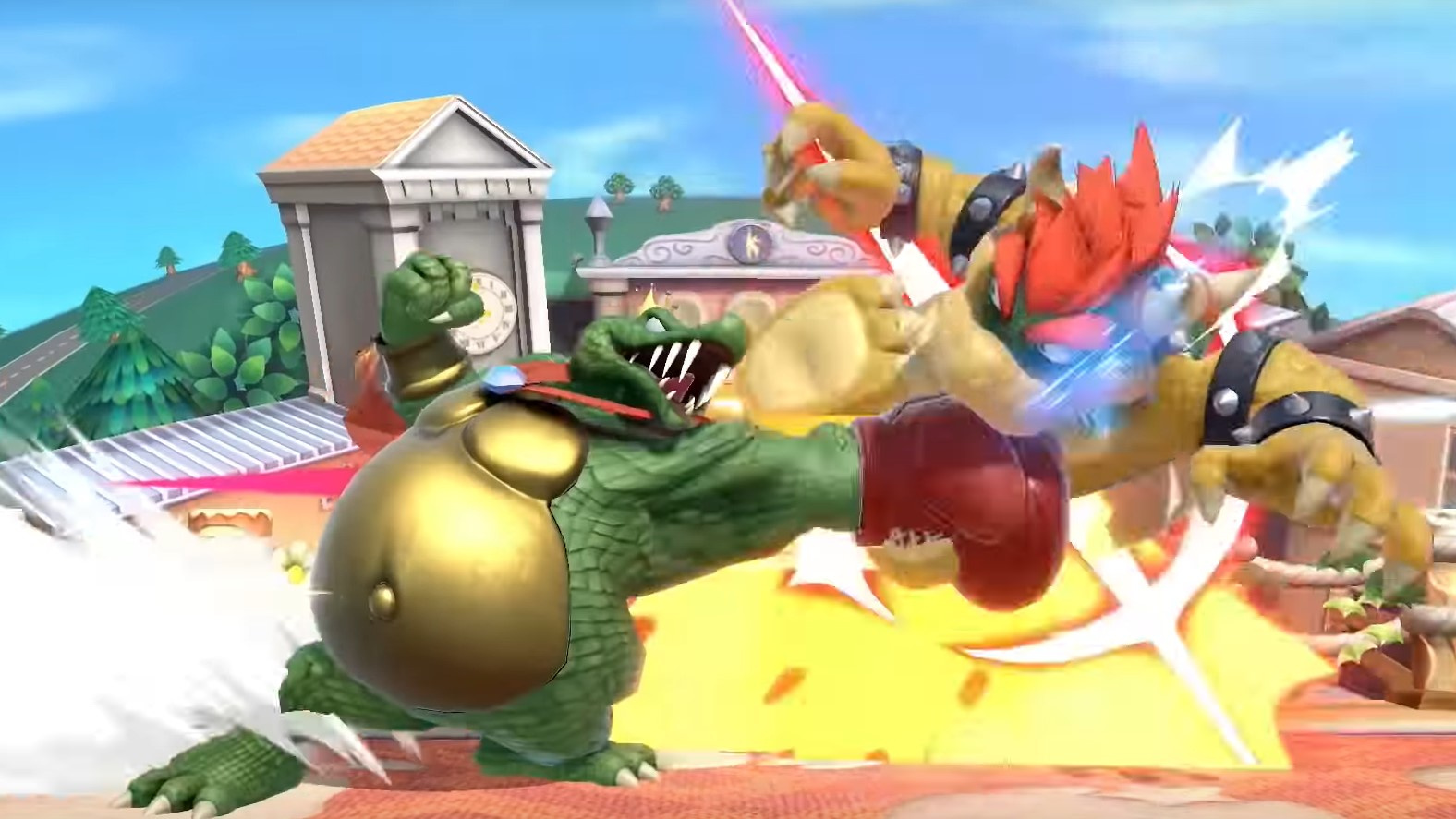
The volume of work created meant staff from outside teams were drafted in to help get the game finished in time for its November release date. Gregg Mayles, Rare veteran still with the company as Creative Director and director/designer on Banjo, was called upon for support towards the end. “I helped out the team by ‘guest designing’ the final boss encounter, as they were so busy with their deadline approaching,” Mayles tells us. He is, of course, referencing the iconic boxing match between the DK crew and King ‘Krusha’ K.Rool, chief Kong nemesis and recent Smash Bros. inductee.
“There were two objectives I set myself – I wanted K.Rool to have yet another new identity (it was his trademark) and I wanted to ensure it felt like all the Kongs were teaming up to beat their nemesis. The boxing idea came from wanting a way for each Kong to have their own dedicated fight with K.Rool, and the round-based nature of boxing was ideal to achieve this. It was also a theme I thought we could have a lot of fun with, parodying the over the top, glitzy world heavyweight boxing that used to regularly come from Las Vegas in the ’90s. I think Tiny Kong fighting K.Rool’s toes inside his boot is one of the oddest gameplay experiences I have ever come up with!”
King K.Rool’s ‘Krusha’ past gets referenced in Smash Bros. Ultimate.
DK64 features several memorable sequences (the most famous of which we’ll discuss in due course), but this fitting bookend to the game wasn’t originally in the design doc. “The boxing theme certainly wasn’t planned until the very end. In fact, K.Rool is wearing a crown in the opening story and acts more like Blofeld from the James Bond movies. I didn’t think fighting K.Rool as Blofeld would be much fun, hence him changing his persona to a champion boxer at the end.” While the game might suffer from a little bloat in parts, it’s certainly a strong finisher.
When DK64 crops up in conversation these days it’s often in relation to how its excesses may have caused the popularity of 3D platformers to wane, but it has its fans and also its fair share of rumours and hearsay – the mark of any Rareware title of that era, from Banjo’s abandoned Stop ‘n’ Swop feature to the mysteries of Connery Bond in GoldenEye 007.
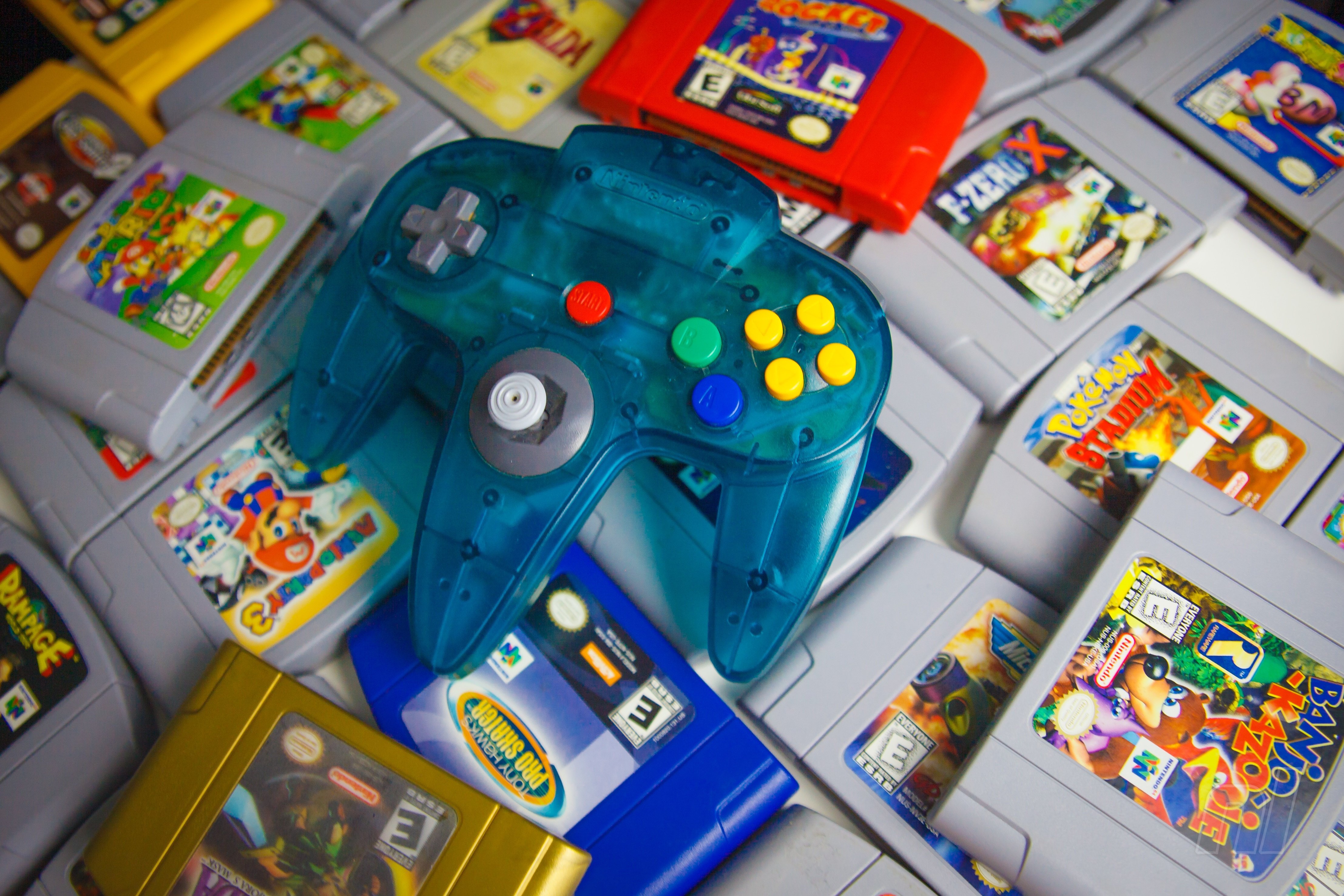
One such story involves the N64’s Expansion Pak, a little device used to double the console’s RAM from 4MB to 8MB. The tale goes that a game-breaking, memory-related bug occurred in the 4MB version and forced Nintendo to ship the game bundled with the Expansion Pak. That’s a costly bug, and we certainly wouldn’t have wanted to be the one to deliver the news to notoriously fiery then-President of Nintendo, Hiroshi Yamauchi back at Nintendo HQ.
That story has become more-or-less accepted fact, although Stevenson believes the truth is more complicated. “This one’s a myth. The decision to use the Expansion Pak happened a long time before the game shipped, in fact we were called in by management and told that we were going to use the Expansion Pak and that we needed to do find ways to do stuff in the game that justified its use and made it a selling point. I think the bug story somehow got amalgamated into the Expansion Pak use and became urban myth.”
“There was a game-breaking bug right at the end of development that we were struggling with,” he clarifies, “but the Expansion Pak wasn’t introduced to deal with this and wasn’t the solution to the problem. My memory is that, like all consoles, the hardware is constantly revised over its lifetime to take advantage of ongoing improvements in technology and manufacture methods to essentially make the manufacture more cost effective and eventually profitable. I think there we’re something like 3 different revisions of the internal hardware by this point and the bug was unique to only one of these versions. We did eventually find it and fix it, but very late in the day.”
The things I think most stand the test of time are the characters and the humour
However, the most legendary part of the game is arguably its introduction. Say the words ‘Donkey Kong 64’ to almost any gamer these days and invariably the first thing to spring to mind is Grant Kirkhope’s unforgettable DK Rap. These days the game’s lighthearted opener rolls ’90s nostalgia, irony and sheer lyrical genius into something that players the world over love to hate to love.
“I think the resurgence in popularity is because a lot of people were introduced to that song when they were kids, so there is more of an affection for it than there was during the game’s release,” says Sutherland, who performed vocals on the song. At the time, there was backlash from a contingent of players who saw the intro movie as a serious attempt at spitting rhymes rather than an intentionally goofy introduction to a clan of apes, the leader of which wears nothing but a red tie sporting his initials. “I don’t think we anticipated any backlash specifically, we just thought we were creating something fun and different, to make the game stand out… I do remember that recording took a while as Grant would have to repeatedly stop the recording to try to get us to understand our rapping was drifting way out of time to the beat! I lost count of the number of times he told us to stop and try again. I’m sure he must have employed a lot of digital trickery to make it all work in the end!”
From its huge number of collectable doohickeys to its timeless rhymes, Donkey Kong 64 stands as a monument to a different age of gaming. The way games are made and played has changed a great deal in the last two decades, and it’s only in the last few years that nostalgia has vined its way over and around the game. Its reputation in some circles as the ‘nadir’ of collectathon 3D platforming may be merited, but given the sheer quantity of game on offer, there’s still much to like about DK64 and its mention evokes many happy memories. The success of Playtonic’s own Yooka-Laylee series is proof that an appetite for the genre remains. Donkey Kong’s Super NES debut might get the ape’s share of the anniversary attention, but we’d argue that DK64 is well worth revisiting, too.
“I honestly haven’t played it since around the time it was released,” says Stevenson, “but I would like to play it again to see what it’s like after all these years. Game design has moved on and evolved so much since then, so I think the game could definitely be streamlined a lot more [if it were remade today], certainly around all the collecting and backtracking.”
Despite its reputation for those things, there are many elements which hold up today. “The things I think most stand the test of time are the characters and the humour with all the wacky animations and crazy moves, I think you’d have a lot of fun developing a modern day sequel.”
Is it time for DK and co. to make a 3D platforming return?
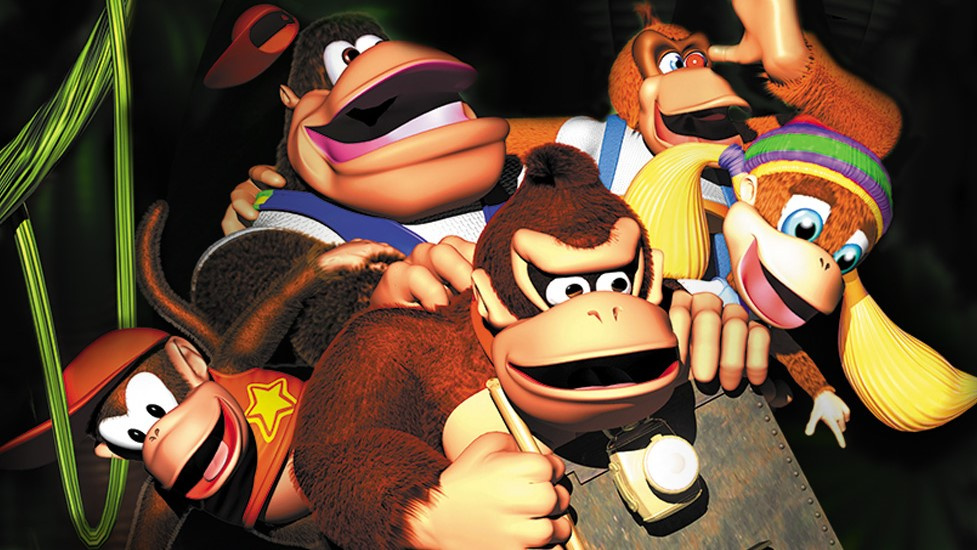
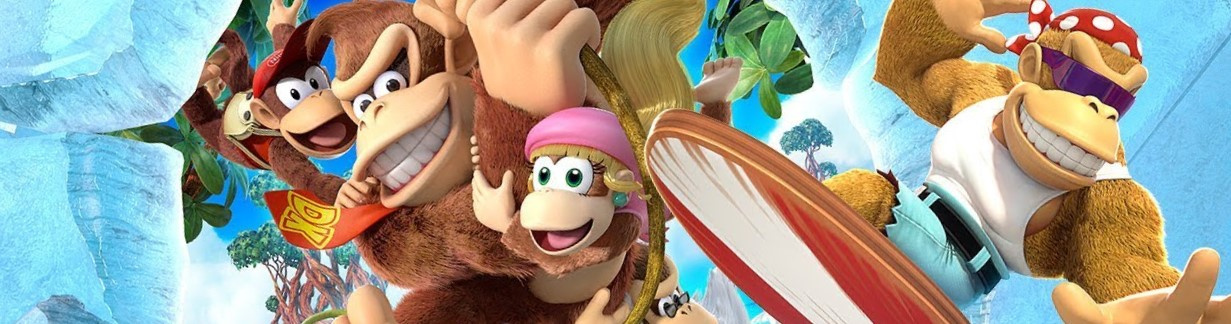
The idea of a sequel might strike fear into the hearts of some gamers, but surely Donkey Kong deserves another 3D platforming outing to accompany the 2D triumphs of Retro Studios’ Donkey Kong Country Returns and Tropical Freeze? The iconic lineup of Donkey, Chunky, Lanky, Tiny and Diddy – as canonised in the DK Rap – are a force to be reckoned with; a quirky yet entertaining bunch. Which one would you like to be stuck on a desert island with?
“Lanky,” says Stevenson. “Because he’d be the most fun. Plus in the game he has a boat that he uses in a boss battle, so hopefully he’d have that with him and we could escape.”
Many thanks to Mark, Chris and Gregg for their time. Feel free to share your Desert Island Kong below. C’mon Cranky, take it to the fridge.
New WWE 2K20 Patch Address Crashes And Community Concerns
WWE 2K20 has received a new update on PC, PlayStation 4, and Xbox One targeting several "significant community reported concerns," publisher 2K Sports said in a blog post. The patch takes aim at addressing crashes, improving stability, adjusting sweat, fixing missing hair and cloth, and more.
In addition to addressing community concerns, 2K Sports said the latest WWE 2K20 patch zeroes-in on "general stability and polish improvements." These include correcting missing and/or invisible images, refining strike aiming and dash attacks, fixing issues surrounding six-man matches, addressing crashes when simulating Wrestlemania, and more.
In our WWE 2K20 review, we said, "WWE 2K's annual release schedule has felt superfluous for a number of years now. This has never been more apparent than with WWE 2K20, a game that's not only riddled with frequent technical issues, but one that's notably worse than its predecessor in almost every area--whether it's the dull and unenjoyable combat, the fact half the roster look like terrifying goblin facsimiles of themselves, or MyCareer's obnoxious and tedious story. This is the moment the WWE 2K series hit Rock Bottom."
WWE 2K20 Full Patch Notes
General
Addresses reported crashes throughout the game
Addresses reported opacity issue causing invisible CAS parts
Addresses reported crashes in custom arenas using imported images
Improvements to sweat
Addresses reported input settings not saving (PC only)
Characters
General improvements to hair and cloth behavior
Addresses reported concerns with missing hair and cloth throughout the game
Addresses reported concerns that images may fail to be correctly displayed on the Superstars’ attire
Addresses reported concerns of a crash when using DLC CAS parts for MyPLAYERs
Addresses reported concerns with allowing male face paint color changes to appear correctly in-game
Addresses reported concerns with CAS parts that may cause hair to float with certain Superstars
Addresses reported concerns with assigning locked moves when user previews and selects it inside of Move-Set for MyPLAYER
Addresses reported concerns that CAS T-shirt logos may appear incorrectly in-game
Universe Mode
Addresses reported concerns that a crash may occur when selecting a save slot
Enabled importing Roster and other settings when creating a new Universe save
Addresses reported concerns that a crash may occur when loading into a match for the first time with several creations
Addresses reported concerns with six-man tag match
Addresses reported concerns that a crash may occur when simulating to WrestleMania
Gameplay
Improvements to strike aiming and dash strikes
Addresses reported concerns with soft lock-in pin mini-game after performing certain moves
Online
Addresses reported concerns that a crash may occur in Road to Glory when using DLC CAS parts
Addresses reported concerns that a crash may occur when downloading Superstars with custom images
Community Creations: Addresses reported concerns that images may fail to display correctly in Custom Arenas
Community Creations: Addresses reported concerns of a white texture issue that may occur in downloaded arenas
Community Creations: Addresses reported concerns that may occur when downloading custom shows with custom arenas and logos
Say what you will about Apple Arcade, one of its definite drawbacks is the difficulty in navigating the home page and simply locating the good games on the platform. Cursed with low discoverability and a burgeoning catalogue that everyone (including us) says you can traipse through at random and find great games, Apple Arcade is being continually subjected to Pocket Tactics’ cruel whims. This is Apple Arcade Roulette #3, because jamais deux sans trois. ‘Never twice without a third’. If there’s a consistent trend with these games it is that they easily fit themselves into genre conventions but then proceed to tweak or even subvert expectations.
A girl wanders through her cursed and scattered memories, scavenging apples and other supplies to farm her way into a charmed life. It’s leisurely-paced with the ‘farming’ scheme playing out like something halfway between Stardew Valley and Cookie Clicker. Plenty of timers, conversation rates and production chains. Apples become coins which are tendered for building materials, giving further gizmos and whatsits to prolong the cycle.
The proper chain of unlocks and actions is a little obscure, unfortunately. The creepy-cute aesthetic and silent movie storytelling set it apart from other genre entries. The emotional content is confusing and ambiguous, but the gameplay is linear and purely points-driven. The tone is silent but gothic: not morbid or scary but treading the fine line between melancholy and debilitating sorrow. It’s a very good game to play whilst alone because to explore another’s solitude is a mind-expanding endeavour, and it is this slow-burning curiosity which makes Nightmare Farm a rewarding, if weird, play.
Guildlings (Adventure) (4-Stars)
Guildlings is a rad game positioned somewhat at odds with the Arcade model. It’s billed as an episodic adventure and is quite promising but still just getting started. Right now it’s a slickly rendered, sweetly told game about youths getting up to magical mischief. Levity, insight and a low-key vibe of deep emotional support make this a wholesome game. I can’t stress enough how impressive it is that Guildlings instantly evokes long-standing relationships and nails a fresh tone without being too trying.
Managing your party members’ moods to solve puzzles and clear battles is a unique way to blend visual novel and RPG elements. Right now the storytelling and art direction are stronger pluses than the RPG and turn-based battles, but hopefully the later stages will grow more complex. The first episode is a decent chunk of content and will take you a handful of hours to complete. Unfortunately, with something this promising it would be nice to play it semi-regularly. I hope it updates soon.
Spelldrifter (Card Battler) (2-Stars)
Theoretically this should have been most up my alley, given it’s a story-based tactical card-battler. I love this type of game and will champion any and all worthy entries, but this one is just a little weird. It has grid-based combat, a dynamic action-point turn system, and a mixture of equipment- and deck-building aspects. Stack the laudable goals of fleshing out four different main characters, an original fantasy setting and full campaign and you have an insanely ambitious game.
It rips itself apart trying to excel on too many fronts, unfortunately. The writing is a strange mixture of styles and tones, the art has more attention paid to gear and weaponry than the oddly proportioned faces, and the actual gameplay is too muddled. The card design is decent and the party system has distinct class roles for each character, but strangely enough this beast of a game is less than the sum of its parts.
Dead-End Job (Shooter) (4-Stars)
Twin-stick shooter about a gig sucking up ghosts to escape a truly ghoulish fate. (Obligatory Ghostbusters and Luigi’s Mansion nods). Management-mission schtick mixes well with the short missions, which are almost like action set pieces, what with the various character, item and level quirks. The game rewards reflexes, sure, but also some planning. A little kitchen-sink in terms of the appeal. The art and sound design feel like misplaced cartoons. It has really clean storytelling and the action bits are pure adrenaline, so if you even have the slightest interest I would say jump right in. Effortless control scheme, level design and laid-back lore-dumps mean this is a no-brainer recommendations.
Dear Reader (???) (4-Stars)
A dearie and rather inventive title, but its intended audience is rather narrow. Still, it manages to turn the quirks and conventions of that supreme omnishambles, the English language, into decent entertainment. The raw material is drawn from classic lit in the public domain a little too faithfully, so the game can be ‘spoilt’ by over-reliance on familiarity with the source texts. Correct answers and patterns can be deduced from a limited context or logical rules, of course, but also by invoking memory of the plot or big picture. By gamifying the act of reading, it layers a sort of self-consciousness about an activity that is traditionally more free-form and undirected.
To max out a score, one must attend to theme. This mixed approach is actually rather nifty because it’s how learning and language acquisition work in other cases. As a grammar and reverse-mad libs type puzzle it’s quite good but leans a little too heavily on nostalgia. It is clearly a labor of love, and rather a fine one at that. The score and persistent in-game currency are both measured in ink, which is later used to unlock other books.
So, based on these latest five games, I would say the general quality of Apple Arcade still holds. The safest bet for anyone wandering into the service is to just try whatever types of games are usually their favorites. These releases are clearly striving to cater to as wide an audience as possible while still somehow satisfying the more discerning hobbyist. It’s an impossible, paradoxical goal. Nevertheless the effort and results thus far have been a pleasant surprise. We’ll see what the next spin of the wheel brings.
Physical Copies Of Ikaruga For Nintendo Switch Are Now In “Active” Production
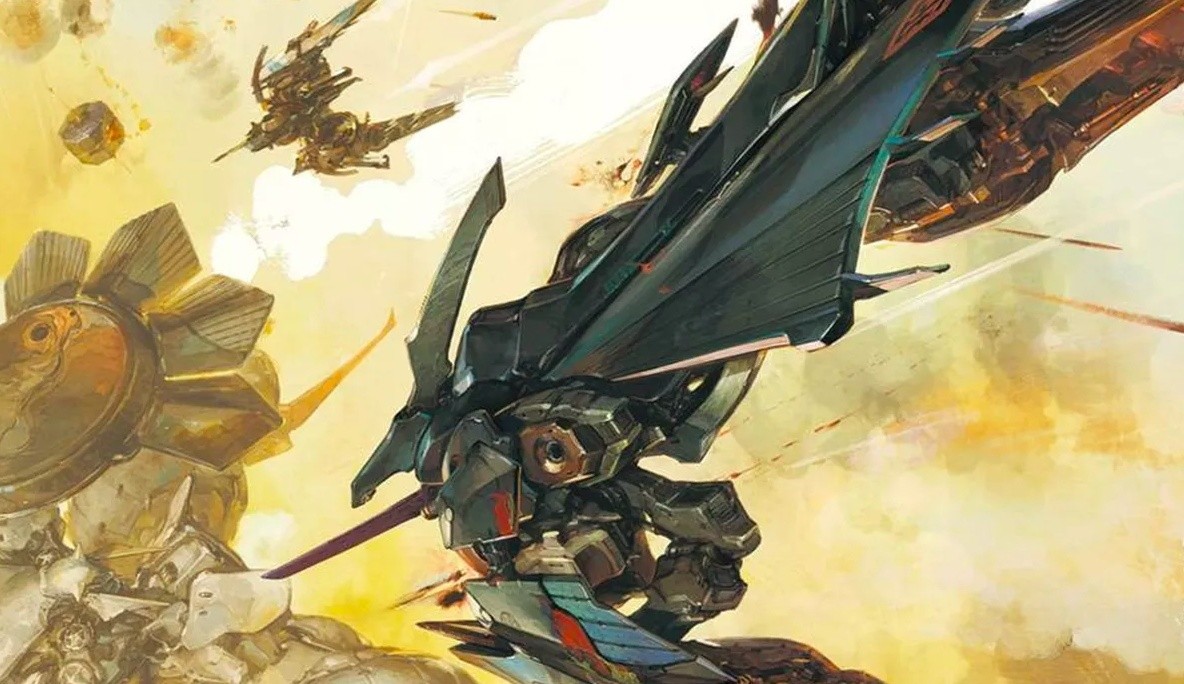
Publisher Nicalis has been teasing a hard copy of Treasure’s sublime shmup Ikaruga for Switch since it showed off a gigantic Switch game case at PAX West 2018. It sent fans of this iconic game – first published as an arcade title in 2001 – into an absolute frenzy.
Roughly a year later, Nicalis officiallyrevealed the physical release of the game for Nintendo Switch and PlayStation 4. Now, in the latest update, the American publisher has confirmed physical copies are in “active” production.
The news was once again delivered via Twitter:
As noted, a release date for this physical version will be announced when “all the details” are finalised. We’re guessing the next status update will also include a price. If you want to be notified about this particular game when it goes on sale, you can sign up to the company’s mail service.
While you wait for the physical version to be dated, why not read our review. We said it was the “perfect shmup on the perfect system” and awarded it nine out of ten stars.
Star Wars Baby Yoda Merchandise Coming To Your Home Very Soon
Baby Yoda may have only just stepped onto our TVs and into our hearts three weeks ago, but it feels like he's been in our hearts and minds forever. So, naturally, it's been a struggle, given the secrecy that surrounded him prior to The Mandalorian's premiere, that there's been no official merchandise for him available. Three weeks was just three too many. But thankfully, that's all about to change and just in time for the holiday season. Baby Yoda merchandise is on its way.
So far, the selection is still pretty limited. T-shirts are available--and extremely cute--but CNBC reports that merch of Baby Yoda, or "The Child" as he's currently officially known, will be coming to outlets like Amazon, Target, Macys, Hot Topic, Box Lunch, and Zazzle. There will also be official apparel and merch at the Disney Store, shopDisney, and Disney Parks Resorts. And yes, don't worry, a plush toy is in the works and will be up for pre-order soon.
Hopefully at least one of these future products will include a floating bassinette so we can tote our adorable green children around whenever we go.
While you're waiting for the official merch lists and pre-orders to go live, check out our breakdowns of The Mandalorian's many Star Wars Easter Eggs and catch yourself up on the latest news about Star Wars: The Rise Of Skywalker, which hits theaters on December 20.
Permadeath Comes to Remnant: From the Ashes with Hardcore More
Summary
A new game mode where death is truly the end
Defeating a Hardcore World Boss will drop new rings with powerful effects
Hardcore mode is only a small slice compared to the variety of additions and quality of life improvements
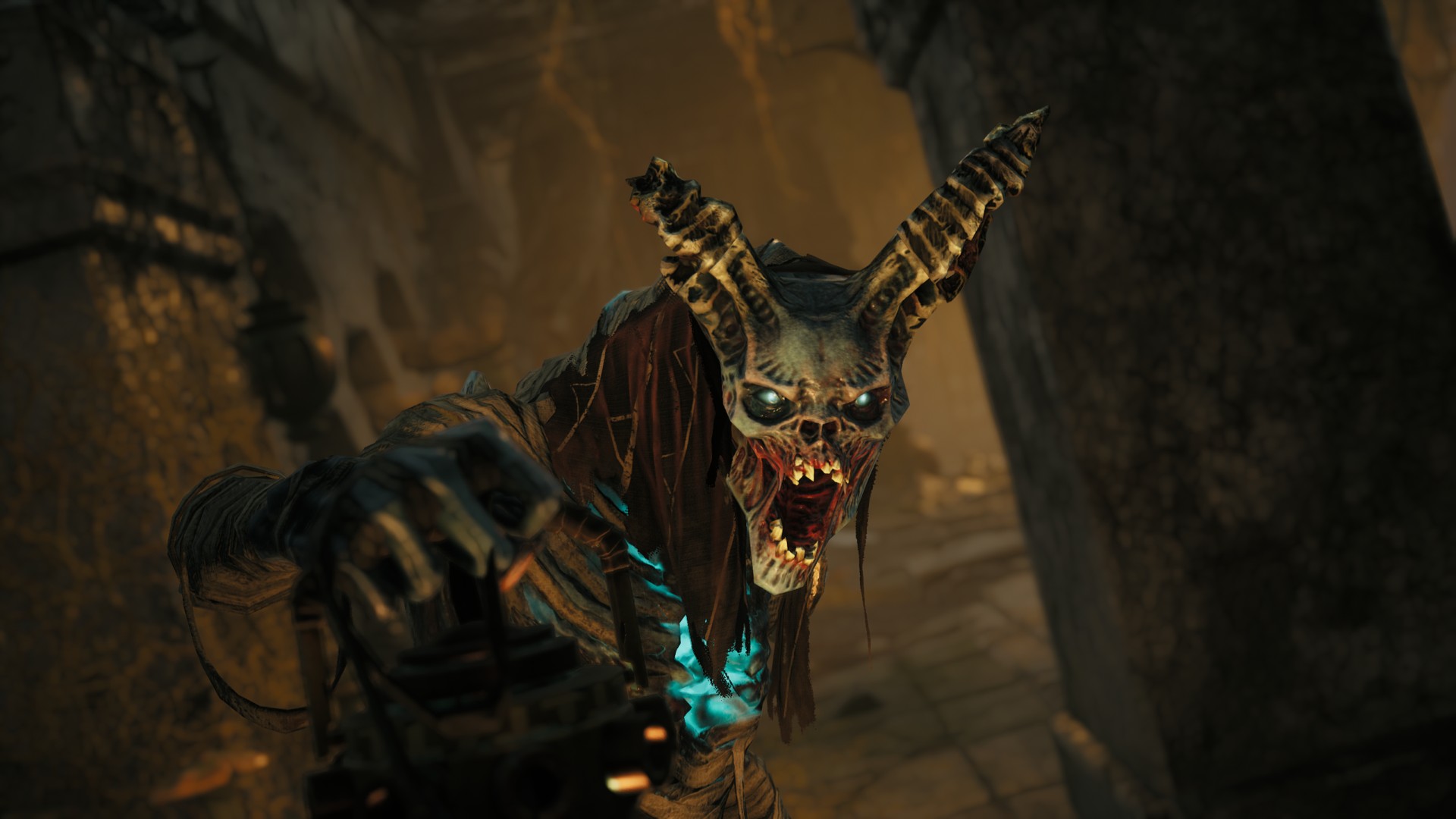
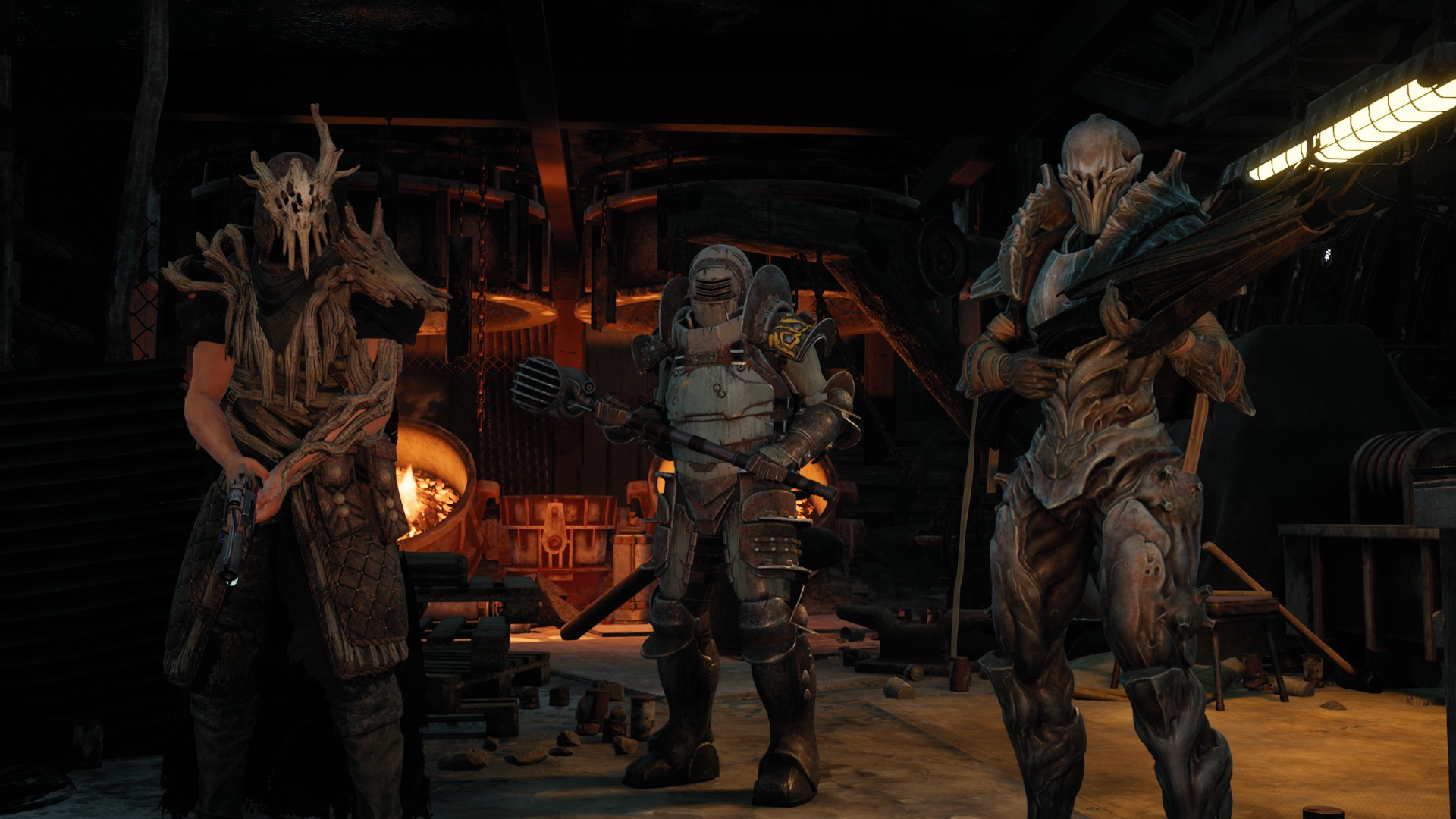
If you thought your first playthrough of Remnant: From the Asheswas too easy, boy do we have a treat for you. Introducing, Hardcore mode – a new game mode released today on Xbox One where death is truly the end. It’s going to take everything you’ve got to make it out of this one alive.
When creating a new character you’ll have the option to make them a Hardcore character – the true test of skill in Remnant. Hardcore characters will only be playable until their first death, after which they are permanently lost. One mistake could mean curtains for your entire party. To maintain a level playing field, Hardcore characters can only play online with other Hardcore characters and will not be able to random matchmake. Feel free to manually invite your friends or other stalwart World Walkers.
Those who are brave enough to face the most dangerous challenges will also receive the greatest rewards. Defeating a Hardcore World Boss will drop new rings with powerful effects. These items will be available to all of the characters on your account (old and new, Standard and Hardcore) after you’ve obtained them. This means future Hardcore characters will begin their journey with greater potential. Time to git gud, kid.
Hardcore mode is a major new feature, but only a small slice compared to the larger list of additions and quality of life improvements! Thanks to your feedback, we’re implementing some of the most frequently requested systems with this update. Some of these include a Comms wheel with pings and emotes, the ability to hide helmets, disable tutorial prompts toggle, and more balance changes.
Posted by: xSicKxBot - 11-24-2019, 03:30 AM - Forum: Lounge
- No Replies
Now Available on Steam – LOST EMBER, 10% off!
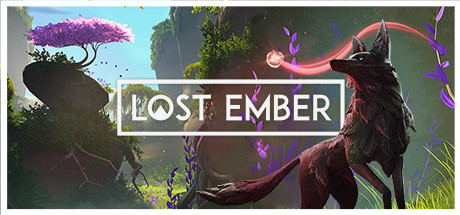
LOST EMBER is Now Available on Steam and is 10% off!*
Explore the remains of a fallen world from fascinating perspectives! Slip into the role of different animals to uncover the fate of an ancient world. Dive into deep waters, fly at lofty heights, dig underground as a mole or even climb steep cliffs with a mountain goat, there are lots of ways of getting around.
Simutronics is expanding its awesome team and we are looking for a Technical Artist with experience in 3D art pipelines for games. We need someone who can help the art team keep everything running smoothly. If this sounds like you, then we want to talk.
What you’ll do:
Help establish content creation guidelines and procedures.
Clean up art assets and evaluate them for technical issues before implementing them in-game.
Import art assets and ensure proper import settings, naming conventions, and other technical requirements.
Organize 2D and 3D source art files to ensure they are always easily accessible.
Optimize, correct, and enhance 3D models for rendering efficiency.
Evaluate scenes in Unity and address technical issues involving 2D or 3D art.
What we’re looking for:
3ds Max experience (basic modeling, texturing, rigging, animation, etc.)
Working knowledge of Unity or other 3d game engines.
Whether you’re just starting out, looking for something new, or just seeing what’s out there, the Gamasutra Job Board is the place where game developers move ahead in their careers.
Gamasutra’s Job Board is the most diverse, most active, and most established board of its kind in the video game industry, serving companies of all sizes, from indie to triple-A.