Pokémon The Movie: The Power Of Us Arrives On Netflix On New Year’s Day
If you didn’t get around to seeing Pokémon The Movie: The Power of Us when it was released last year, on New Year’s Day, you’ll be able to settle in on the couch with some snacks and enjoy this anime adventure film starring Ash, Pikachu, and friends on Netflix.
Here’s the official announcement from The Pokémon Company:
Ash and Pikachu’s 21st big-screen adventure, Pokémon the Movie: The Power of Us, will be available to stream on Netflix starting January 1, 2020.
This particular adventure follows the iconic duo as they travel to Fula City during its annual Wind Festival, which celebrates the Legendary Pokémon Lugia.
Here, they meet a wide variety of characters including a young athlete, compulsive liar, shy researcher, bitter old woman and a little girl with a big secret. A series of threats then endangers the festival and it’s up to the odd bunch to save the day. The mythical Pokémon Zeraora also makes an appearance.
Will you be booting up Netflix to watch this movie on New Year’s Day? Have you already seen it? Tell us down below.
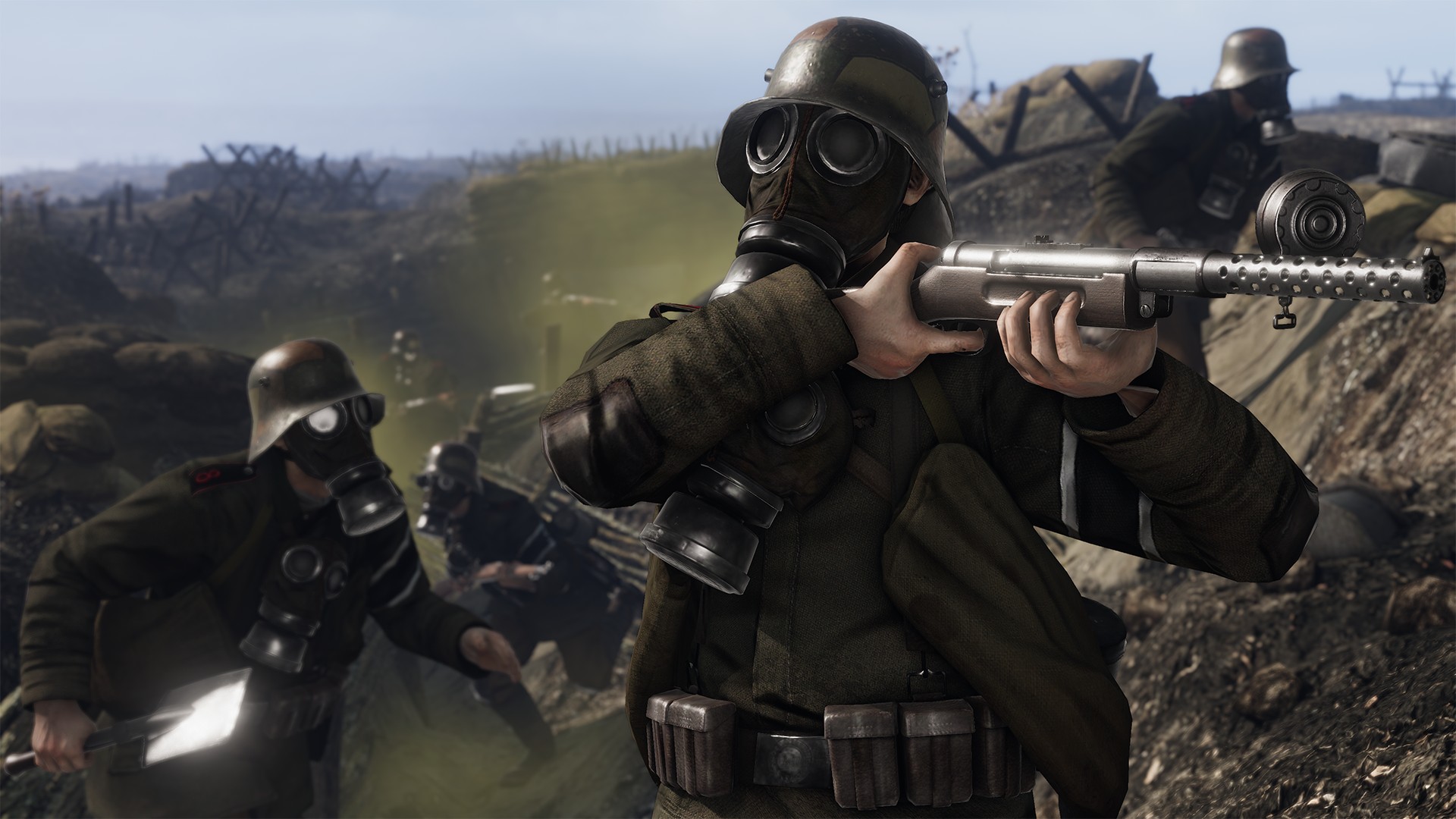
Revamped graphics, a new audio system and sound effects, AI opponents, and much more.
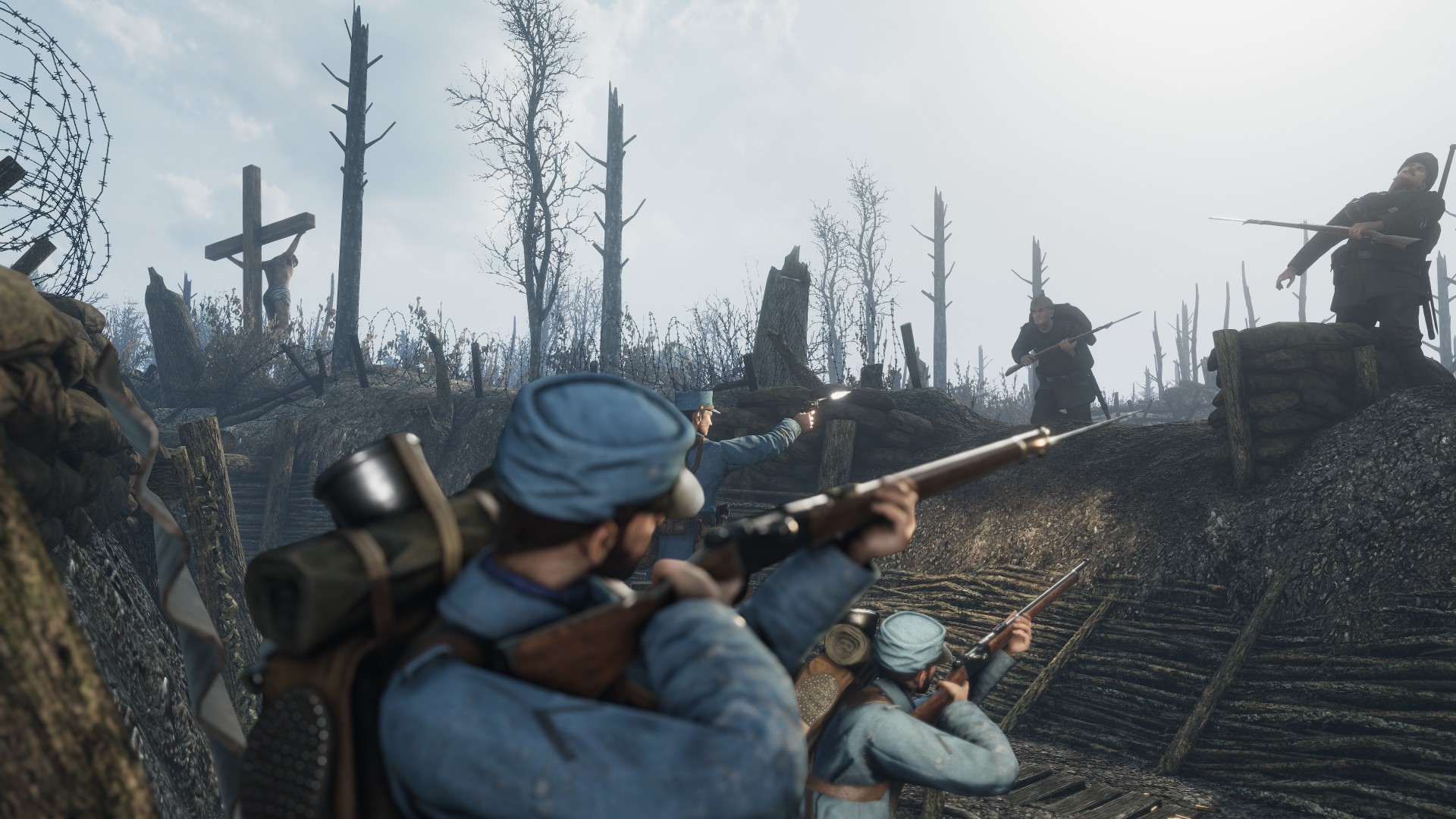
The remaster includes a new map and two new squads with new weapons.
The console release of Tannenberg is making good progress and we can’t wait to share more news as soon as we have it.
This is a hugely exciting day for all of us on theVerdun dev team. Anyone who has worked on a game will know that it never feels quite finished because there’s always more you could add, but we feel this remastered version of Verdun for Xbox One has been greatly improved, from the control schemes to a new user interface… and that’s far from all this remaster brings to the table. You also get revamped graphics, a new audio system and sound effects, AI opponents, a new map, new squads, and much more. The remaster is part of a whole new look and feel for the entire WW1 Game Series: everything from logos to the in-game artwork.
New Look and Feel
The first thing you will notice on starting the game is that there has been a complete overhaul of the user interface! The menus are now more atmospheric and visually appealing, and we’ve added localizations for Simplified Chinese, Japanese, Brazilian Portuguese, Turkish, and Polish. The new game logo better reflects the nature of Verdun and our WW1 Game Series. We have also gone over our control system with a fine-tooth comb to make it as user friendly and natural as possible, both in the menus and in the heat of battle!
There have also been several graphical improvements to the game and existing content. Character models have been improved, along with a ton of other little upgrades. We’re also proud of our revamped and improved sound effects in-game. The audio has been reworked with more satisfying and accurate sound effects, plus an updated soundscape for even more immersion when you’re fighting in the trenches. Where possible we worked with reenactors and collectors who own genuine WWI weapons to get the most authentic sounds possible!
Polish has been applied liberally throughout the game – for instance, there is an expanded gore system to better capture the sometimes shocking brutality of WWI battles, along with a bullet penetration system and tweaked barbed wire. Instead of getting caught up and dying, barbed wire will now only slow and injure you – so you still want to avoid wire, but you can force your way through in a pinch without worrying about abrupt death. There is also quality of life improvements like tutorial hints for new players, an improved spawning system, an enhanced deathcam, and more…
New Map, Squads, and Weapons
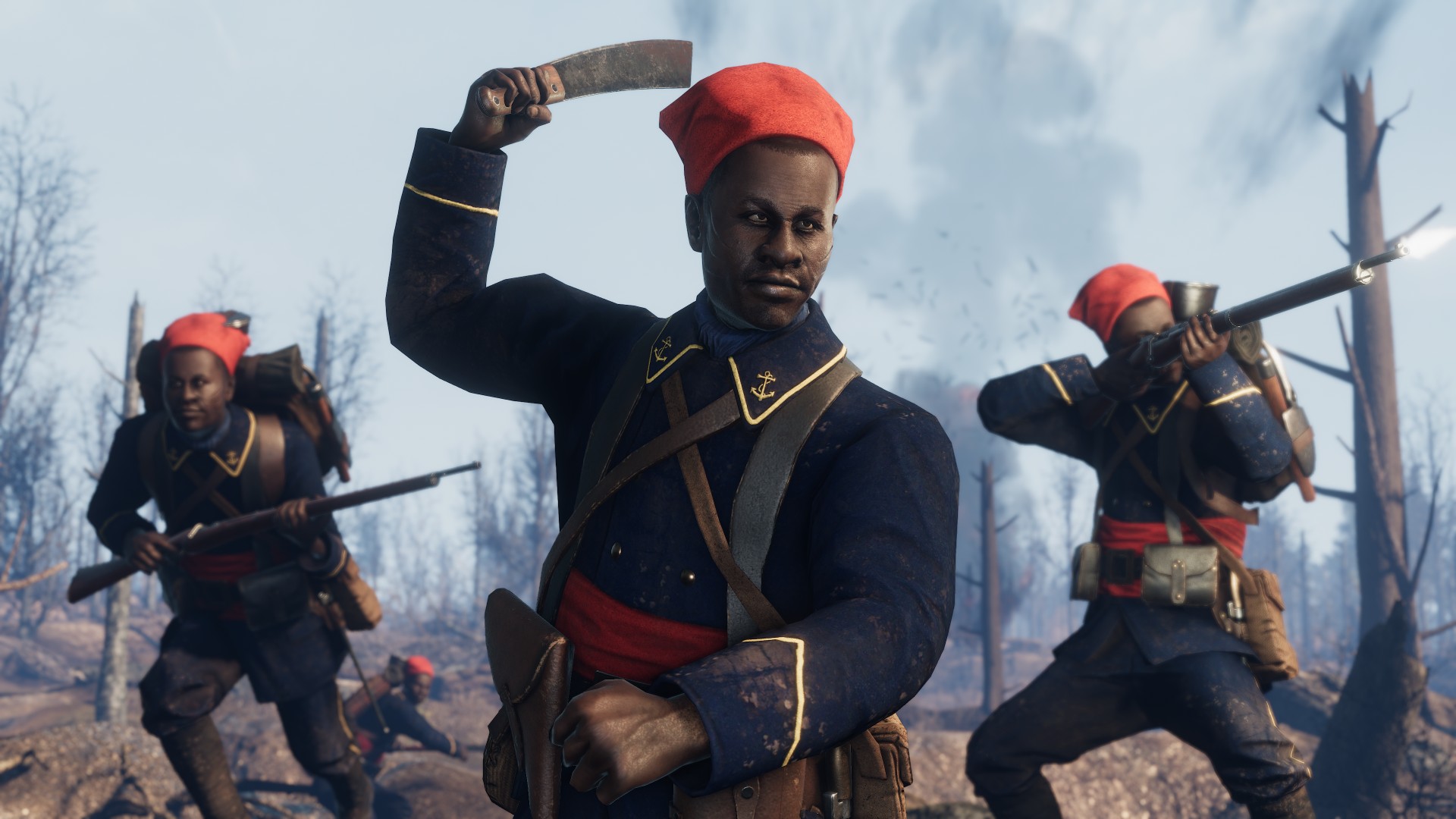
The remaster includes a new map and two new squads with new weapons! The new map is set on the St. Mihiel salient which saw heavy fighting during the Battle of St. Mihiel, when American Expeditionary Forces with French support attacked and defeated the German 5th Army. The French troops involved in the battle were from II Colonial Corps, which leads us neatly to the first of the two(!) new squads which are part of this remaster. The Senegalese Tirailleurs are a new French assault squad. Their distinctive machetes make them fearsome opponents in close quarters, and they’re no slouches at range when using their colonial variants of the Berthier rifle either.
The second new squad are the ANZACs – brought from the other side of the world to fight in the trenches of the Western Front. While Gallipoli is perhaps the most well-known battle involving ANZACs, they also fought with distinction in France. In-game the ANZACs are an engineering squad, representing troops like the 1st Australian Tunnelling Company who were engaged with digging two large mineshafts under Hill 60 in November 1916. They are well equipped with SMLE rifles and the Lewis Gun for fire support, but also include the unusual Webley-Fosbery – a recoil operated automatic revolver.
AI Allies and Opponents
Last but not least, we have added bot support to the game! You can have up to 24 AI bots join your battles. They will happily battle using any squad on any map in the Frontlines game mode. AI NCOs will call in fire support, and they can be tenacious opponents on the defense. You can even start your own custom offline battles and choose which squads you want the AI to use!
Looking to the future, the console release of Tannenberg is making good progress and we can’t wait to share more news as soon as we have it. Until then…
Happy holidays from all of us on the WW1Game Series team!
Posted by: xSicKxBot - 12-22-2019, 10:06 AM - Forum: Lounge
- No Replies
Qodot–Quake Maps For Godot
Qodot is an open source add-on for the Godot game engine that enables you to export .MAP files created using traditional CSG authoring tools. Qodot is available under the MIT license on GitHub or can be added via the Godot addon market.
Features of Qodot include:
Natively import .map files into Godot
Supports
Brush geometry
Per-face textures and customized UVs
Precise trimesh collision
Entities with arbitrary collections of parameters
Extensible tree population
Leverages the .map format’s simple key/value property system
Simple, intuitive map editor with a strong feature set
Includes a simple Qodot game preset
Can be built upon with game-specific entities and brush properties
Qodot also includes configurations to make getting up and running with TrenchBroom, however any Quake level editor should work. You can learn more about Qodot on their wiki or by watching the video below.
Posted by: xSicKxBot - 12-22-2019, 10:06 AM - Forum: Lounge
- No Replies
Blog: Procedural texturing for hand-painted stylized character pipelines
The following blog post, unless otherwise noted, was written by a member of Gamasutras community. The thoughts and opinions expressed are those of the writer and not Gamasutra or its parent company.
This article is about my research into procedural texturing pipelines that can achieve a hand-painted look, compared to the typical application of proceduralism for texturing that focuses on creating realistic effects. Is it even a good idea yet to use procedural effects when seeking a hand-painted finish? If it is a good idea, what is preventing this being the common approach across our industry?
The use of procedural texturing has become more popular for characters in recent years, and this is most apparent for realistic characters. It’s still not so common for hand-painted stylized characters. As I really like the benefits of procedural texturing, I kept wondering if it could be translated properly to a more hand-painted look. As such I decided to focus my thesis on procedural tools for hand-painted stylized character pipelines. My research question ended up being: “What barriers prevent the common adoption of procedural tools in hand-painted stylized character texture pipelines?”
During my literature review it became apparent that there is not a lot of academic writing on the subject and I had to rely on non-academic writing. Existing academic writing is often focused on computer sciences, not so much 3D game art. Game art also has very poor terminology, so even if the academic writing exists, it’s incredibly hard to find, as art styles rarely have well known, established, and specific names. The closest definition I came to the art-style used by games such as World of Warcraft, League of Legends, Battlerite, Darksiders, Torchlight, Heroes of the Storm and to a lesser degree Dota 2, Smite, Warhammer 40k and Diablo 3 was ‘hand-painted stylized’. The style is commonly used with albedo/diffuse maps only, often lacking specular maps, normal maps or PBR shaders, however it is not impossible to use these maps within this style.
Style example from World of Warcraft – Art by Cody Harder
The benefits
One of the major benefits of procedural texturing is that it’s driven by mathematical equations or algorithms. This means that the image can be of infinite resolution while being minimal in file size. Unfortunately this benefit is nullified for games, as game engines generally only accept bitmap images as textures.
However there are more benefits to procedural texturing. Because the formula is a ‘record’ of the process or procedure, significant changes can easily be made and immediately updated. Adjusting the formula is also non-destructive, as you are not un-doing or erasing hours of manual painting, you simply change parameters for different results.
Finally, once a formula has been made it can be easily reused for different assets, significantly speeding up the texturing process. Particularly the last benefit is why I’m interested in using procedural texturing for non-realistic characters. The term ‘hand-painted stylized’ may imply that it must always be painted by hand, but an alternative method may emulate the look and feel of hand-painted while offering different benefits. These benefits may be ideal for different projects.
How much is procedural texturing being used?
Procedural texturing software is currently primarily being used for realistic characters and rarely for hand-painted stylized characters. In October 2018, I searched through Substance Share, which is the user-submitted library of the industry standard procedural texturing software ‘Substance Designer’. I used the search term ‘stylized’, and only 78 files showed up out of several thousand.
While ‘realism’ only results in 18 files, it is important to note that under the category ‘materials’ and ‘smart materials’ the majority were visually aiming for realism. It appeared that ‘realism’ was the implied purpose of using procedural techniques in the first place.
Secondly, when searching for “substance designer texture” on the Google search engine, most of the results aim for realism, despite the key words not implying a bias to either realism or stylisation. Additionally, among the list of clients of Allegorithmic, Blizzard Entertainment (developers of World of Warcraft), Riot Games (developers of League of Legends), Valve (developers of DOTA 2) and Stunlock Studios (developers of Battlerite) were all absent. Three of these companies (Blizzard Entertainment, Riot Games & Stunlock Studios) are listed as clients for the 3DCoat software instead. While 3DCoat does have increasing support for Smart Materials, its workflow is ideally suited to creating hand-painted effects.
‘Substance designer texture’ search results example
Research methods
After I gathered the previous information, I established my research methods and I settled on 3 research methods: using procedural texturing, an online survey, and interviews. The creation of an artefact was required for my degree, and so I decided to texture one character using procedural tools. This practical test served multiple purposes: it verified the available information from others regarding the use of procedural texturing for hand-painted stylized characters, and information acquired from the texturing process was used to ask more in-depth questions during interviews. If the process was successful, the documentation could be used by the industry as a step by step guide to create more assets using procedural texturing in the future. The documentation of an unsuccessful result could be used as evidence where the method possibly lacks or is too difficult to use for character artists.
As there is a distinct lack of academic research on this topic, it seems necessary to confirm the available data. Therefore, an online survey was used to acquire quantitative data. Additionally this data could help further improve the interviews by providing results that may be of interest and require further investigation. The primary question of this survey was to ask participants what software they have used to create characters with realistic textures, stylized textures and hand-painted textures respectively. Having a separate question for each art style showed whether the participants use different software depending on the art style.
To help find out why they use certain software and who was using it, additional questions were asked to establish their background. They were asked their age bracket, what game development roles they have fulfilled, whether they are a student or work for a company and what size company, how many years of experience they have creating textures for characters and how many years of experience they have in the game development industry.
I found that there is also a distinct lack of in-depth information available on workflows. Only character artists from Riot Games and Stunlock have shared their workflow, I was not able to find workflows from companies such as Blizzard, though these workflows were mostly shared for a practical purpose. There is no explanation as to why they have chosen their specific workflows or if they have tested procedural alternatives. Interviews were used to fill this gap and find out the reasons why. The interview consisted of several questions divided into several sections. The first section established the perspective of the participant, the next section focused on the preferred workflow of the participant and their reasoning, and the final section focused on the use of procedural tools. The resulting answers were then analysed and compared to each other.
The results
Using procedural tools for hand-painted stylized character textures is in many cases not the optimal method of texturing, but can be used in different situations.
There currently is no good method to generate a proper flow map which stores directional information in a texture, so creating custom brushstrokes that follow the shape of the mesh is difficult. If in the future proper flow maps can be generated based on the geometry, then faking the brushstroke effect would be significantly easier. Another problem is that some materials must be painted physically incorrectly to enhance the overall look and feel of the texture, which is currently not possible to generate. Lastly, complex things such as faces are difficult to texture procedurally, although may be possible with complex ID maps. However these ID maps would have to be painted by hand.
Artefact final result – Substance Designer only – Art by me
With the current method of the online survey there is an indication that artists are less likely to use procedural tools for hand-painted stylized character textures. However Substance Painter can be used either procedurally or manually, so further studies could provide a more accurate, in-depth look at the use of procedural tools for texturing. The number of responses was also quite low, so a bigger study may be necessary to either confirm or contest the results.
Technical art roles were uncommon among the respondents to the survey, which might explain why proceduralism, a comparatively technical texturing method, is used less than manual approaches. The current number of respondents was not enough to sufficiently test if age, company size, years of experience in the industry, or years of experience texturing characters has any influence on the use of procedural tools. Future studies with a larger number of respondents could provide better and more in-depth insight regarding the effect of these variables.
What emerged from the results of the online survey was further reinforced by the responses during the interviews, as many interviewees did not have much experience with technical art roles. They also had a variety of years of experience which seems to suggest it does not have an influence on whether they use procedural tools or not.
Interviewees’ preferred workflows were extremely similar and, with the exception of one interviewee, none of them used procedural texturing. They learn these workflows and software from those around them and because they are industry standard, which could create a negative vicious circle. If they were creating characters for a significant amount of time, all interviewees except for one changed their workflow over time, based on the proven efficiency of other software. They also don’t create many realistic characters, where procedural tools would be more common, further indicating a lack of interest in procedural texturing for people working with hand-painted stylized effects.
One interviewee mentioned that procedural tools speed up parts of their pipeline. This speed may not be a concern for hand-painted stylized characters, where artists may instead prefer to focus on quality first and foremost. Many interviewees also did not think that procedural tools produce textures with the required personal, handcrafted look and feel. Procedural tools may therefore not be optimal for primary characters, but may still have a place for minor characters.
Interviewees argued that story-telling, immersion, and personality created through deliberate, context-aware detailing is currently not possible with procedural texturing, which may look dull and repetitive due to the random nature. Since only hand-painted stylized character artists were interviewed, it may be worth investigating and interviewing those who are more accustomed to procedural texturing and gather their views on the usefulness of the tools for this specific artstyle.
Final texturing result lacking context aware manual detailing – Art by me
Conclusion
So, to answer my research question “What barriers prevent the common adoption of procedural tools in hand-painted stylized character texture pipelines?”:
The tools are currently not able to generate textures that are of a similar quality as manually painting the textures by hand. These tools are therefore not preferred when quality is more important than quantity.
It was not conclusively proven that procedural tools could not generate hand-painted styles, although some challenges have not yet been tackled, but industry artists appear to only slowly change their production pipeline. This means that adoption of new techniques may be hindered by a lack of inertia rather than only the lack of potential. Procedural hand-painted stylization is not currently reaching the level of quality that manual labour produces, in terms of storytelling and context-sensitivity, but this does not mean that procedural tools are irrelevant. As new developers experiment with the techniques, proceduralism may form the basis of hand-painted work in the future, taking the repetitive tasks away from artists so that they can focus on bringing the human touch of life to their worlds.
Posted by: xSicKxBot - 12-22-2019, 10:06 AM - Forum: Lounge
- No Replies
Xbox One X And More Discounted In Microsoft's Last-Minute Holiday Deals
The holidays are nearly upon us, and Microsoft has revealed a slate of last-minute deals, in addition to the Xbox One's winter sale. Many of these discounts closely mirror what the Xbox One company had during Black Friday, so if you missed out, Microsoft is giving you a second chance.
That means Xbox One X and S bundles are discounted by $150 and $100 respectively. However, now the Xbox One X bundles include a second controller at no additional charge. You can also grab an extra Xbox One controller for $10 off or get free engraving for a custom Xbox One Design Lab controller. Microsoft is also still offering its awesome Xbox Game Pass Ultimate deal, where new subscribers can get their first three months for $1. The subscription also includes one month of EA Access, three months of Discord Nitro, and six months of Spotify Premium--however, you do need to be a new Spotify subscriber to take advantage of that bonus.
Xbox One X bundles with free second controller | $350 ($500)
The Xbox One X bundle deals are exactly the same as they were during Black Friday. However, these deals are slightly better, as they include a second free controller. You can grab any Xbox One X bundle for $350 from Microsoft, including the limited edition Gears 5 console, the special edition Hyperspace Xbox One X, and more.
Unfortunately, the Xbox One S bundles do not include a second controller, but at $100 off, they're still a great deal. This includes both the All-Digital edition and Xbox One S consoles with disc drives.
The Xbox One wireless controllers deal isn't quite as good as the Black Friday $20 off, but it's still a solid discount that's worth taking advantage of if you need an extra pad before the holidays. This deal applies to every single first-party controller available on Microsoft's website, except the Xbox One Elite options. Unfortunately, stock is limited, so the controller you're looking for may be sold out.
The Xbox One Design Lab lets you customize a controller by changing its color and adding rubber grips for an additional fee.
Get free engraving with your Xbox One Design Lab controller
There's currently no discount on Xbox One Design Lab controllers, but Microsoft is offering free engraving with every purchase--a $10 value. Xbox One Design Lab lets you customize the colour of every single part of the controller, and the engraving option lets you adorn it with any message you like.
Review: Demon’s Tilt – A Worthy Successor To Devil’s Crush
Pinball games have been a part of video gaming practically since the beginning, and many consider mechanical pinball machines to be the precursor to the immersive interactive entertainment we enjoy today. Despite the sheer volume of digital pinball titles, it’s striking that one name crops up with surprising regularity whenever you discuss the genre with serious flipper addicts: Devil’s Crush. Alternatively known as Devil Crash and Dragon’s Fury depending on where in the world you happen to reside, this Compile-developed PC Engine / TG-16 title served as the sequel to the equally weird Alien Crush, and would perhaps find the most fame via Technosoft’s sublime Genesis / Mega Drive port. A slightly underwhelming Super Famicom sequel followed shortly afterwards in the form of Jaki Crush, but Devil’s Crush remains the undisputed pinnacle of the series – which goes some way to explaining why it continues to be so well-respected today.
The enduring popularity of Devil’s Crush makes you ponder why we haven’t seen similar titles over the decades – granted, Alien Crush got a WiiWare reboot, but its sequel has remained steadfastly stuck in the ’90s. While Compile no longer exists and IP owner Konami has no apparent interest in reviving the franchise, it falls to fans like Adam Ferrando (also known as Wiznwar) to give us the next best thing: a spiritual successor made by people who have lived and breathed Devil’s Crush for the past 30 years. The result? Demon’s Tilt, which has to rank as one of the coolest simulations of pinball we’ve played since, well, Devil’s Crush.
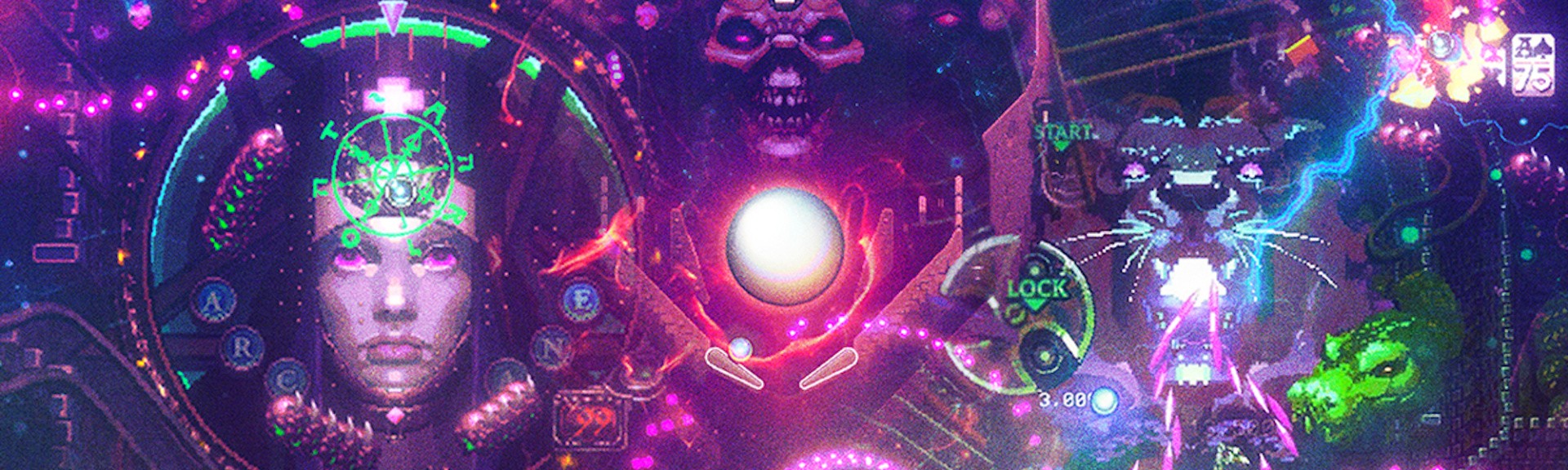
Like Compile’s 1990 classic, Demon’s Tilt takes place on a single massive, three-screen table which is packed with satanic imagery and monsters – many of which fire projectiles which collide with your ball and cause it to change direction. You’ve got a set of flippers at the bottom of each of the table’s three ‘screens’ (as well as a few mini-flippers elsewhere) and the aim – as you might expect – is to gain as many points as possible using your allocated trio of balls. The ball physics are spot-on, which is perhaps the most pressing consideration with this kind of game – but it’s the visuals which really grab your attention the moment you switch it on.
While the table is rendered in 2D, it’s one of the most active and dynamic we’ve seen in a pinball game for a long time. Hitting various sections on the table causes events and transitions to occur that would be otherwise impossible on a real-world pinball machine; you might unleash a circle of monsters (which you can then hit for additional points) or awaken Lilith – the satanic nun in the middle of the table – from her slumber, complete with bloody tears and (eventually) a rather shocking transformation. At the top, there’s a lion shackled behind an iron mask (which you can remove by smashing it, obviously) as well as a hungry snake. Pretty much everything on the table is interactive, and knowing which bits to hit to obtain a score boost or activate the all-important multiplier is all part of the learning process.
Demon’s Tilt, like the game which inspired it, doesn’t help newcomers a great deal. Sure, there’s a page of ‘quick tips’ accessible from the main menu and during play a summary of goals (or ‘rituals’ and ‘seances’ as the game calls them) appears on the right-hand side of the screen, but outside of that, you’re largely left to your own devices and expected to figure out how each element on the table can be activated. The controls are basic; the A button holds down the plunger so you can launch your ball, while the shoulder buttons control all of the flippers on the table. The analogue sticks allow you to physically ‘nudge’ the table and impact the movement of the ball – something which seems hard to employ effectively at first, but soon becomes a vital means of keeping your beloved metal sphere out of the drain at the bottom of each screen. You can also use this feature to keep your ball in certain point-giving elements of the table for longer periods, cunningly boosting your points haul with minimal effort. Nudging is, therefore, part and parcel of the whole experience, but beware; too much tilting and you’ll come unstuck, just as you would with a real pinball machine.
While the fact that Demon’s Tilt only has a single table does count against it – especially as rival pinball games come with several options – it does mean you have to dedicate yourself absolutely to learning every inch of the play area, and this is key to grabbing the best possible scores. After an hour or so with the game, you might consider a score in the region of 5 or 6 million to be a hard-won achievement until you realise that expert players are getting scores a hundred times larger than that by maximising score multipliers, defeating the bosses and methodically completing each ritual.
Attention to detail is everything; while keeping your ball in play is of course of paramount importance, you need to gain an intimate knowledge of the table’s inner workings to get your scores out of the tens of millions and into the hundreds of millions. Even little details – like the seemingly innocuous dice which sit below the lion’s mouth – can be instrumental when it comes to unlocking truly monstrous scores; it’s possible to get a tally in the billions when you’re eventually good enough. While it wasn’t active in the pre-release copy we reviewed, there’s the promise a global leaderboard built into the game to encourage (or should that be discourage?) your high score runs.
The game’s normal mode is where you’ll learn the ropes and familiarise yourself with the table’s many secrets, but it’s the EX and Hardcore modes which really test your mettle. EX introduces weird and wonderful single-screen ‘bonus’ rooms which, like Devil’s Crush, transport you away from the main table for brief periods as you battle all kinds of beasts to push your score even higher. The Hardcore mode makes things even more difficult by only giving you a single ball to play with. It might seem like an odd move to divide the game up in this way, especially when Normal mode is challenging enough to test the patience of even the most placid pinball newcomer, but it does allow novices to find their feet with a less-demanding version of the table before taking their game to the next level.
We’ve already touched upon the game’s 2D visuals, but it’s worth doubling back to cover them a little more comprehensively. Simply put, Demon’s Tilt is a gorgeous-looking game and about as close as you could possibly get to what Devil’s Crush would look like if it were made with modern tools. The table is presented like a massive gothic cathedral which has had its roof removed so you can peer within, and the various particle effects really make things come life. Granted, when things are in full swing it can be hard to keep track of what’s going on, but there’s an option to add a trail on the ball so you can at least spot where it is amongst all the chaos. The only real downer is that the gorgeous ‘bloom’ lighting effects that looked so great in the original Steam version have been removed on Switch in order to maintain performance, but even so, this remains a handsome game.
The audio is just as impressive, thanks to a perfectly-pitched chiptune soundtrack by Charlie “ec2151” Heinrich which sounds like it stepped straight out of a Mega Drive title from the early ’90s. This complemented by some brilliant sound effects and the distorted voice of Lilith, who offers advice like “Fortune favours the brave” and “Stay focused”, as well as telling you the rank you’ve achieved at the end of each run before laughing cruelly at your misfortune. In terms of presentation, it’s a near-perfect package; the only complaint we have is that the menu design looks a little bit like an afterthought, but that’s certainly not a deal-breaker.
It’s also worth noting that the Switch version offers the ability to play the game in portrait mode, giving you a better view of the table. It’s possible to do this holding your Switch vertically, but if you have the Flip Grip accessory you can use that as well. Demon’s Tilt also offers a scaling option so, if you’re playing on a large-format TV and want as full a view of the table as possible, you can zoom the camera right out if you so desire.
Conclusion
With its single table, often obtuse mechanics and sometimes brutal difficulty, Demon’s Tilt isn’t going to be to everybody’s tastes, but if you have even the slightest interest in pinball games then you really should check this out. While more tables would have been welcome and it’s a shame that some of the visual effects have been toned down on Switch, what we have here is a game of stunning depth and complexity which rewards methodical players who aren’t afraid to invest a lot of time learning all of the secrets and hidden tactics. The ability to play the game in portrait mode makes this Switch port even more appealing.
Random: Chinese Retailer Tries To Blame Switch Joy-Con Drift On Foreign Games
Well, here’s something to brighten up your chilly Friday. Remember Joy-Con drift, the manufacturing issue which has plagued countless Nintendo Switch consoles all around the world and has been heavily documented within the gaming press? Yeah, this Chinese store’s having none of it.
As you may know, the Switch has very recently launched in China, with stores stocking Nintendo’s latest console for the very first time. One new Switch owner noticed that they were having trouble with Joy-Con drift while playing an imported copy of The Legend of Zelda: Breath of the Wild, and got in touch with the customer service team at JD, one of the country’s largest retailers who presumably sold them the console.
The customer service representative on the other end either decided to dismiss the common knowledge surrounding Joy-Con drift issues, or hadn’t ever heard about it before, going on to suggest that the problem could be down to the user playing an imported game. Here’s what the frustrated player shared on social media site, Weibo (translation provided by Chinese Nintendo):
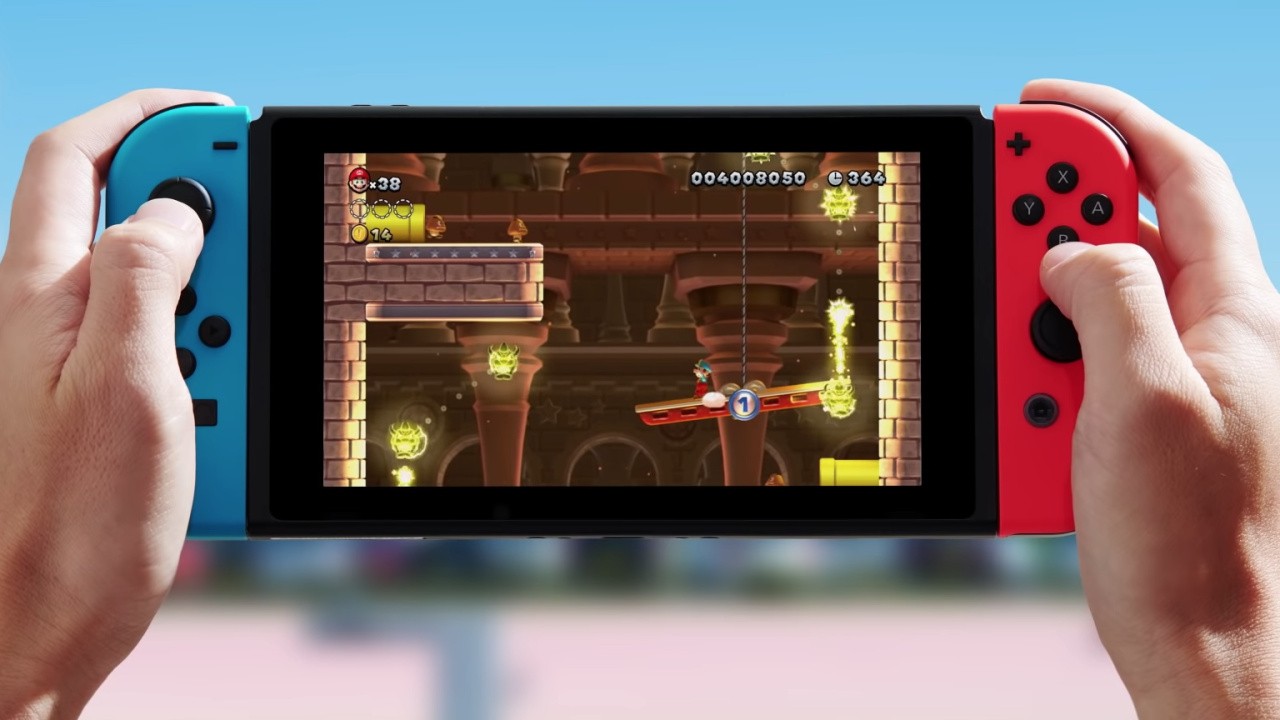
“Is my Joy-Con not drifting? I talked to customer service and they told me the behaviour of Joy-Cons are not guaranteed on import games and that I should test with New Super Mario Bros. U Deluxe. Utter nonsense.”
Of course, we all know that response to be “utter nonsense”, too, as Joy-Con drift can be experienced on any game regardless of its origins and instead comes from a hardware fault. Whether this poor player will be able to resolve the issue remains to be seen, but you can be sure that playing a Chinese copy of Mario won’t fix anything.
Get Up To 90% Off Select Nintendo Switch Games With Merge Games’ Festive Sale
Neat of them to run the sale tangibly into early January, but that payday is already marked as the deadline for Pokemon Sword purchase in my book, and I doubt I’ll be able to allocate much beyond that. Granted, I already own almost half of the list anyway.
@The-Chosen-one I haven’t played Cast of the Seven Godsends or HoPiKo substantially yet, but tried some Unboxed and it feels like it’ll be a promising journey when I get to it. Also, got a good taste of The Count Lucanor – an apparently intriguing and unnerving thriller adventure that gives me the vibe of the darker Grimm brothers fare. The Long Reach I’ve already beaten – it’s quite short but impressive enough that I could barely put it down, a truly chilling and tragic horror with a slightly Michael Crichton-esque plot.
Oh, and The Walking Vegetables, too – quirky, fun and reminiscent of Zombies Ate My Neighbours to some extent.
Assassin's Creed, Far Cry Director's New Studio Sold To Google Stadia
Google Stadia, the nascent streaming service, is bulking up its game development pipeline. The company has announced it's acquired Typhoon Studios, the independent game studio founded by Assassin's Creed III and Far Cry 4 director Alex Hutchinson.
Google's gaming executive Jade Raymond--who herself was instrumental in the creation of the Assassin's Creed franchise--announced the acquisition on Google's blog. "Typhoon Studios has built an incredible team of industry veterans who are committed to the player experience," she said.
Typhoon will become part of the Stadia Games and Entertainment studio located in Montreal. Sebastien Puel, who also formerly worked at Ubisoft on the Assassin's Creed series, heads up the Stadia team in Montreal. Terms of the acquisition were not disclosed.
Typhoon is currently working on Journey to the Savage Planet for release on January 28, 2020, and Raymond said the team will continue development as they become part of the Stadia team. The game was already announced for PS4, Xbox One, and PC with 505 Games as the publisher.
Google Stadia launched in November with one exclusive game, Gylt. In addition to additional exclusives from Typhoon, Google is making more exclusives from its own internal game development teams.
Krita, the open source drawing/painting/animation package just received a MegaGrant from Epic Games, the makers of Unreal Engine and Fortnite. The MegaGrant program was announced at GDC 2019 and is a $100M giveaway to game developers, educators, technology companies and perhaps most importantly open source tool makers such as Krita (and Dust3D, Blender and Lutris so far).
Epic, the makers of the Unreal game engine, have supported Krita with a $25,000 MegaGrant!
Epic has supported other free software projects, such as Blender and Lutris before, and now supports Krita. The purpose of this grant is to fund improvements to our development process so Krita’s development gets more sustainable. This is something we have already started on, and which want to accelerate. With an estimated five million users, making sure that we can release as stable a version of Krita as possible in as dependable a way as possible is pretty important!
The grant represents about 10 months of funding that Krita currently receives, so it should make a tangible impact. You can learn more about Krita and the Epic MegaGrant program in the video below.