Review: SEGA AGES Puyo Puyo 2 – A Fun But Ultimately Forgettable Puzzler
When we reviewed the Sega Ages version of Puyo Puyo, we wondered why Sega had decided to go with the very first game in the series, and not one of the numerous better sequels. Seven months later, Sega has responded – not to us, we’re not that big-headed – by going back to the Puyo Puyo well and this time giving us a Sega Ages port of the second game, Puyo Puyo 2. So now we find ourselves in an awkward, almost entitled position where our response is: “Well, yes, that’s what we meant… but maybe not this one.”
Known in its native Japan as Puyo Puyo Tsu – because ‘tsu’ both sounds like ‘two’ and also means ‘expert’ – this sequel is mostly similar to its predecessor but it does throw in some new gameplay features that improve things a little. Nothing too revolutionary, mind you, but enough to reduce frustration during head-to-head play (which is actually all you can do in this game).
As in the first game, the aim in Puyo Puyo 2 is to drop little coloured blobs called Puyo and try to match up four of the same colour while an opponent – be it AI-controlled or another person – tries to do the same. By lining up your Puyo in certain ways, you can set up chain reactions, creating large combos. This, in turn, sends ‘garbage Puyo’ over to your opponent’s screen, making it harder for them to clear Puyo. The main difference that’s been added to this game is the ‘offset rule’, which wasn’t present in the first game but appears in this one. Previously, if an opponent cleared a huge combo, you could do pretty much nothing about it; even if you created a similarly large combo of your own in your current turn, you wouldn’t be able to prevent the onslaught of garbage Puyo that followed.
This time, when an opponent clears a huge combo and the garbage Puyo loom ominously over your screen, ready to drop, you have the opportunity to counter. Whereas in the first game clearing your own combo would just send garbage Puyo over to your opponent, this time it reduces the number of garbage Puyo you’re set to receive; for example, if you’re about to get 15 garbage Puyo, you can create 10 in a combo and only receive 5 (or maybe even create 20 in a combo and send 5 to them).
This may all sound very confusing on paper, but it makes sense in practice. Essentially, the point is that in the first game you were more or less doomed when an opponent hit you with a load of garbage Puyo, and now you have a chance to cancel some of them out before they drop. Which makes for longer matches, happier people and a generally nicer planet to live on. Or something. So, now that you’ve got a better way of defending yourself in an intense Puyo Puyo match, what can you do with your newfound abilities? Not a hell of a lot, truth be told; because this is based on the arcade version of the game and not the home ports you only really have the main arcade mode and a couple of minor variations on that.
The main mode has you working your way up a pyramid-shaped tower by taking on a series of randomised opponents on each floor. The aim is to gain a certain number of points while defeating these opponents in order to climb to the next floor, until you reach the top and face off against Satan, of all people. As well as this standard arcade mode, the Sega Ages version of the game also includes an optional Endurance mode. This is more or less the same thing, except you have to play against every opponent in a fixed sequence instead of having them randomised on each floor. Other than this, it’s more or less the same thing, though, meaning it isn’t going to revolutionise the Puyo Puyo experience for you.
The only other option is a VS mode for two players, either locally or online. Much like the original Sega Ages Puyo Puyo, though, we couldn’t find an online match for love nor money (and we’ve got plenty of at least one of those to give). Given that it’s only been out for a week, that really doesn’t bode well for its longevity; essentially, if you’re thinking of buying this game purely for online competition, you may want to reconsider.
As for extra bonuses, there’s also a new Helper feature, which can be used in either the Arcade or Endurance modes. At any time during play you can hit a shoulder button and enter the Helper screen, which lets you manually step backwards (up to 60 steps) and forwards through your moves. This means if you mess up or see a better combo you could have set up, you can flip back and redo it a different way. One thing that isn’t in here, however – despite previous claims from Sega’s press releases – is a full English localisation. Puyo Puyo 2 was only released in Japanese arcades, and this is the untouched Japanese version. All the character descriptions that appear before each battle are still in Japanese, and while the game’s perfectly playable without knowing the language, it’s still a shame to see that M2 didn’t go the extra mile and give us an optional translated version.
It does make up for this a little, though, by including a separate ‘Characters’ screen that’s selectable from the main menu; this gives you English descriptions for each character, which means even although the game itself is unchanged this extra little feature goes some way to making up for it. Ultimately, though, the reality is that this still isn’t the definitive Puyo Puyo game. While it’s certainly an improvement over the first entry in the series, later versions added a bunch of extra modes that would have given players a bit more variety. This, meanwhile, remains limited to one-on-one battles only, meaning if those aren’t your cup of tea then you aren’t going to get much out of this one.
Conclusion
Of the 16 Sega Ages games released to date, this sits nearer the bottom end of the scale. While it isn’t quite as limited as the first Puyo Puyo, it’s still very much a one-trick pony, and while it’s entertaining enough for fans of the series, when you’ve got the far more feature-heavy Puyo Puyo Champions on Switch for only a couple of pounds or dollars more, this one is entirely unnecessary.
Welcome to Box Art Brawl, the weekly battle between box art variants to find out which lucky region got the best artwork with their retro games. Ready for a change of pace this week? That’s right, we’re getting an attitude, sticking it to the man and throwing out the rule book that’s governed the previous thirty-one brawls. Yes, we’re opening Box Art Brawl up to retro games that didn’t originally launch on Nintendo systems. More on that in a moment.
But let’s not get ahead of ourselves! First a recap of last week’s bout between three groups of Ghosts ‘n Goblins across NES and Famicom. Japan managed to mop up 20% of the vote while Europe bagged 32%, but North America was the clear winner. It’s probably down to the plural spectres in its title compared to the singular European Ghost ‘n Goblins. Congratulations to NA, commiserations to the rest.
So then! As you can see, our inaugural non-Nintendo entry brings Mario’s erstwhile platforming rival to the brawl. With the hedgehog currently cleaning up in cinemas around the globe and with Sonic the Hedgehog 2 getting re-released on Switch, he seemed like the perfect choice to take us into the next phase of the series.
Don’t worry, we’re not going all SEGA Life on you! Our new rule is that eligible games must have appeared on a Nintendo platform at some point. So, 1991’s Sonic the Hedgehog is safe territory seeing as Sonic’s 16-bit debut has graced virtually every known platform since the millennium. 2006’s Sonic the Hedgehog, on the other hand, would not be valid. In any way, ever.
Enough talk. Gotta go fast, and all that.
Japan
Before we begin, let’s take a moment to digest these words of wisdom:
Don’t just sit there and waste your precious time. When you want to do something, do it right away. Do it when you can. It’s the only way to live a life without regrets.
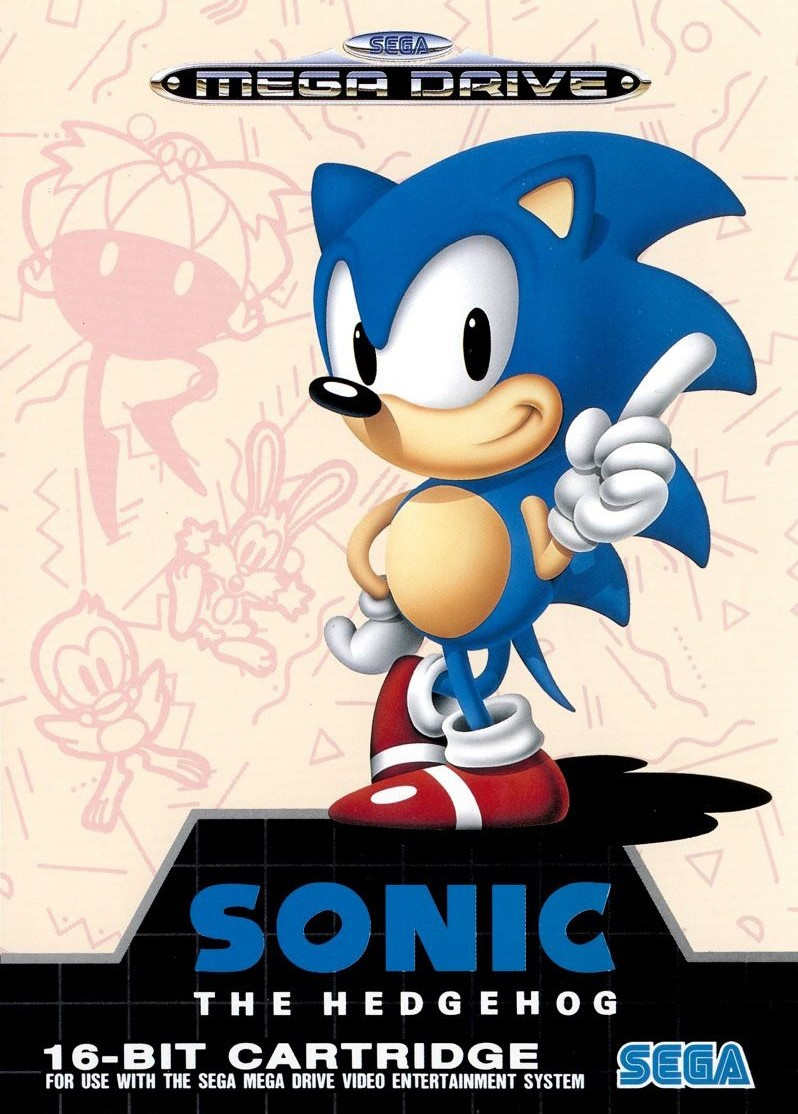
Words to live by indeed, and it wasn’t until looking closely at the front cover of Japanese Sonic 1 that we realised the small print at the bottom wasn’t legalese or technical info. Nope, it’s a philosophy that focuses less on going fast and more on seizing the day; not letting opportunities slip through your fingers. It’s a shame the cute little guy was forced to switch gears and turn bratty, but we’ve always preferred silent Sonic. Suppose we’re what you might call… wait for it… Sonic Boom-ers.
Eh?! EH?! Thanks very much, we’re here all week – don’t forget to tip your waitress.
Ahem. Back to the cover, it may have been cheeky for SEGA to claim he was ‘THE MOST FAMOUS HEDGEHOG IN THE WORLD’, but even before his popularity hit the stratosphere, we weren’t exactly overrun with other well-known ‘hogs. As for the rest of the cover, it’s colourful, ’90s and charming. It arguably lacks focus, but it’s hard to divorce nostalgia and familiarity from iconic covers like this. It’s Sonic!
North America
Ah, here we see where the rebellious personality started to develop. While proportionally he’s still very much the recognisable blue hedgehog from the Japanese cover, the North American version for the Genesis adds more ‘tude’ with his raised eyebrow and slightly tapered ear tips. His entire body is more aggressively shaded and he’s got a glint in his eye. Gone is the odd inspirational message, replaced with a simple logo and the shiny gold SEGA Seal of Quality.
Again, it’s a classic and we love the faded art of Green Hill Zone in the background, although the black border has always felt a bit empty. Just us?
Europe
The European version is the one we played as kids, but even if we remove our nostalgia hats for a moment, we personally still think this one is best. The Japanese key art sits slightly off-centre with the background evoking the shapes and energy of the Japanese version, but it also throws in a couple of Sonic’s animal buddies fleeing from Robotnik on the left. It’s subtle, though, and you could easily miss it just by glancing at the game on a store shelf. The star of the game is never in question, but the abstract shapes of the Japanese version is made more interesting here. There’s a bit more context for the eye to explore, though it stops well short of trees and loops.
At the risk of irritating North American readers, the shiny PAL Mega Drive logo is so much sexier than the Genesis equivalent. It looks like it should adorn a beautiful car grille or something. Put it on the Out Run Ferrari in place of the prancing horse! The standard black-grey grid lines occupy the bottom of the box but don’t overwhelm the main image up the sides like the North American variant.
It’s tough! We’re obviously biased, but the list of things we like about this one is simply longer than the others. It’s not up to us, though, is it!
Three quite different yet equally iconic covers to pick from, then. Give your favourite one a click below and then hit the ‘Vote’ button to register your vote. You haven’t got to go fast, although we encourage you not to waste your precious time. It’s the only way to live a life without regrets, you know.
It’s okay, you can slow down now. That’s all for this week, but we’ll be back for another Box Art Brawl; same time, same place.
Last Chance To Snag The Division 2 For $3 Before Warlords Of New York Arrives
Tom Clancy's The Division 2 features a ton of content, both story-related and endgame, and it was a good value at its full $60 launch price. Until tomorrow, however, you can get the game for a ridiculous $3.
The deal is available across the PlayStation Store and Xbox Live, as well as on PC through both Uplay and the Epic Games Store. It will remain live until March 3 at 8 AM PT / 11 AM ET, at which point the game will jump back up to its standard price. Physical copies can also be found at retailers at huge discounts, though not as low as $3.
The Division 2's low price is even more impressive because the game's post-launch DLC has been free for all players. The game has been continuously updated with more story content and missions, and ditched the season pass model used by the original game.
Gearbox, Amazon Join List Of GDC Drop Outs Amid Coronavirus Concerns
The Games Developer Conference (GDC) is in a bit of an unprecedented situation this year, as a growing list of companies announce that they won't be attending amidst coronavirus concerns. A majority of the list is composed of large tech companies or triple-A game developers and publishers, which has left indie devs and journalists wondering if GDC is even still happening this year.
For now, GDC has been delayed to Summer 2020 and organizers are working to implement precautionary measures in order to hopefully diminish the chances of attendees getting sick. In a blog post, organizers have said that GDC details will be finalized "in the coming weeks" so we may not have to wait very long to get new event dates.
Ultimately, time will tell. It remains to be seen whether all the companies that dropped out of GDC will return or how organizers will handle developers and publishers that have already purchased GDC passes but can't attend on the new dates. Look below for GameSpot's coverage of the major tech and game companies that have chosen to drop out of GDC this year--which are part of a list that includes Amazon, Microsoft, Blizzard Entertainment, Unity, Facebook, Epic Games, Electronic Arts, Sony, and Gearbox.
Posted by: xSicKxBot - 03-02-2020, 11:43 AM - Forum: Python
- No Replies
Python Regex Multiple Repeat Error
Just like me an hour ago, you’re probably sitting in front of your regular expression code, puzzled by a strange error message:
re.error: multiple repeat at position x
How does it arise? Where does it come from? And, most importantly, how can you get rid of it?
This article gives you answers to all of those questions. Alternatively, you can also watch my short explainer video that shows you real quick how to resolve this error:
How Does the Multiple Repeat Error Arise in Python Re?
Python’s regex library re throws the multiple repeat error when you try to stack two regex quantifiers on top of each other. For example, the regex 'a++' will cause the multiple repeat error. You can get rid of this error by avoiding to stack quantifiers on top of each other.
Here’s an example:
>>> import re

>>> re.findall('a++', 'aaaa')

Traceback (most recent call last): File "<pyshell#29>", line 1, in <module> re.findall('a++', 'aaaa') File "C:\Users\xcent\AppData\Local\Programs\Python\Python37\lib\re.py", line 223, in findall ...

re.error: multiple repeat at position 2
I have shortened the error message to focus on the relevant parts. In the code, you first import the regex library re. You then use the re.findall(pattern, string) function (see this blog tutorial) to find the pattern 'a++' in the string 'aaaa'.
However, this doesn’t make a lot of sense: what’s the meaning of the pattern a++ anyway?
[Tips] What’s the Source of the Multiple Repeat Error and How to Avoid It?
The error happens if you use the Python regex package re. There are many different reasons for it but all of them have the same source: you stack quantifiers on top of each other.
If you don’t know what a quantifier is, scroll down and read the following subsection where I show you exactly what it is.
Here’s a list of reasons for the error message. Maybe your reason is among them?
You use the regex pattern 'X++' for any regex expression X. To avoid this error, get rid of one quantifier.
You use the regex pattern 'X+*' for any regex expression X. To avoid this error, get rid of one quantifier.
You use the regex pattern 'X**' for any regex expression X. To avoid this error, get rid of one quantifier.
You use the regex pattern 'X{m,n}*' for any regex expression X and number of repetitions m and n. To avoid this error, get rid of one quantifier.
You try to match a number of characters '+' and use a second quantifier on top of it such as '+?'. In this case, you should escape the first quantifier symbol '\+'.
You try to match a number of characters '*' and use a second quantifier on top of it such as '*+'. Avoid this error by escaping the first quantifier symbol '\*'.
Oftentimes, the error appears if you don’t properly escape the special quantifier metacharacters in your regex pattern.
Here’s a StackOverflow post that shows some code where this happened:
...

term = 'lg incite" OR author:"http++www.dealitem.com" OR "for sale'

p = re.compile(term, re.IGNORECASE) ...
I edited the given code snippet to show the important part. The code fails because of a multiple repeat error. Can you see why?
The reason is that the regex 'lg incite" OR author:"http++www.dealitem.com" OR "for sale' contains two plus quantifiers stacked on top of each other in the substring 'http++'. Get rid of those and the code will run again!
Python Regex Quantifiers
The word “quantifier” originates from latin: it’s meaning is quantus = how much / how often.
This is precisely what a regular expression quantifier means: you tell the regex engine how often you want to match a given pattern.
If you think you don’t define any quantifier, you do it implicitly: no quantifier means to match the regular expression exactly once.
So what are the regex quantifiers in Python?
Quantifier
Meaning
A?
Match regular expression A zero or one times
A*
Match regular expression A zero or more times
A+
Match regular expression A one or more times
A{m}
Match regular expression A exactly m times
A{m,n}
Match regular expression A between m and n times (included)
Note that in this tutorial, I assume you have at least a remote idea of what regular expressions actually are. If you haven’t, no problem, check out my detailed regex tutorial on this blog.
You see in the table that the quantifiers ?, *, +, {m}, and {m,n} define how often you repeat the matching of regex A.
Let’s have a look at some examples—one for each quantifier:
In each line, you try a different quantifier on the same text 'aaaa'. And, interestingly, each line leads to a different output:
The zero-or-one regex 'a?' matches four times one 'a'. Note that it doesn’t match zero characters if it can avoid doing so.
The zero-or-more regex 'a*' matches once four 'a's and consumes them. At the end of the string, it can still match the empty string.
The one-or-more regex 'a+' matches once four 'a's. In contrast to the previous quantifier, it cannot match an empty string.
The repeating regex 'a{3}' matches up to three 'a's in a single run. It can do so only once.
The repeating regex 'a{1,2}' matches one or two 'a's. It tries to match as many as possible.
You’ve learned the basic quantifiers of Python regular expressions.
Where to Go From Here?
To summarize, you’ve learned that the multiple repeat error appears whenever you try to stack multiple quantifiers on top of each other. Avoid this and the error message will disappear.
Posted by: xSicKxBot - 03-02-2020, 11:43 AM - Forum: Lounge
- No Replies
This Week At Bungie – 2/27/2020
This week at Bungie, Trials is back on the menu.
It’s been an exciting week. You all came together and donated your stockpiles of Fractaline to the ongoing effort to build the new Lighthouse and usher in the return of Trials of Osiris next Season. As soon as the final stage was complete, you were invited to survey the completion of the project and light the beacon. We saw your signal as our cue to release this developer insight video confirming what many have been speculating for a while now.
To follow the video, Luke Smith wrote another Director’s Cut that covered a few topics, including our philosophy on Seasons and some challenges in sustaining a game with weapons that last forever. Similar to the three–part epic he put out last year, it contains a lot of important info you won’t want to miss.
Subclass Changes
With the return of Trials and a new Season on the way, we’re planning to shake things up with some changes to your Guardian abilities. The Dev team has the details, so I’ll let them do the talking.
Dev Team: Hey, Guardians. Trials is coming back, and the Combat Systems team has been hard at work preparing Destiny 2 for its arrival. We’ve made a number of big changes to the abilities sandbox, and instead of simply dropping them all in the patch notes, we wanted to take this opportunity to offer some transparency for our decision-making process.
Before we begin, we want to give a big shout out to the data scientists here at Bungie. They provide us with mountains of valuable data to sift through—from the win rates of each subclass in each Crucible game mode to the kills-per-minute of each weapon on each platform in each PvE activity. This data allows us to make sure we’re making informed decisions when balancing the game. It allows us to separate the perceived power of abilities, weapons, and armor, from their true, objective power. But The data doesn’t always tell the whole story, and we believe strongly that perceived power and community sentiment are just as important as cold, hard data. Even as Trials returns, we’re committed to maintaining a fun and fair sandbox for both PvP and PvE, and we considered data for all game modes when making adjustments.
Warlock Melee
Warlocks have long been at a disadvantage in melee fights because it takes them slightly longer than Titans and Hunters to recover from making a melee attack. So, next Season, we’re extending the Warlock’s basic melee range by one meter to a total of 5.5 meters. Warlocks will still melee slightly slower than the other classes, but they’ll now have a one-meter advantage. If you can use this window to land the first melee attack in a slap fight, you’ll likely emerge victorious. We feel this is a more interesting solution to melee disparity than homogenizing all of the melee attacks, and we’ll be studying the data as it rolls in to make sure it’s balanced.
Titan Barricades
A Titan’s barricade is incredibly powerful in Trials because you can use it to safely resurrect your fallen teammates. Next Season, we’re creating counters to the barricade while also raising its health from 500hp to 600hp. Barricades will now take extra damage from Special-ammo weapons, anti-barrier weapons, and certain Heavy weapons. This change makes barricades sturdier while giving opposing players the option to use their Special ammo to bring down the barricade more quickly.
The following weapons now do 30% extra damage to Barricades:
Sniper Rifles
Grenade Launchers
Linear Fusion Rifles
Machine Guns
Trace Rifles
Anti-Barrier Weapons
The following weapons now do 60% extra damage to Barricades:
Shotguns
Fusion Rifles
You’ll see yellow damage numbers when hitting a barricade with a counter weapon, which always feels good.
One-Shot Abilities
With the introduction of the Hunter’s Weighted Knife in Season of Dawn, each class now has a neutral-game ability that can kill PvP opponents in one hit. We’ve taken a pass at all of the one-shot abilities to tune their risk/reward factor. We’ll warn you that some these changes look extreme on paper, but we made a point to make sure these abilities retained their overall feel.
For the Titan’s three Shoulder Charge abilities, we reduced the auto-targeting angle by 50%. That might sound like a lot, but acrobatic Titans could previously auto-target to make an instant 90-degree turn. We also adjusted the lunge distance to 5.5m for both targeted and untargeted lunges. Targeted lunges were previously 6m, while untargeted lunges were previously 4.5m. These changes make for a more consistent experience while lunging.
For the Hunter’s Weighted Knife, we’ve reduced its tracking significantly and created new tracking tech that will make the knife more faithful to its initial throw trajectory.
As for the Warlock’s Handheld Supernova, we’ve made a number of changes to bring this ability in line with the other one-shot abilities. While part of HHSN’s strength lies in its pairing with the Contraverse Hold Exotic gauntlets (which are also being tuned this Season), our data indicated that even without Contraverse Hold, Handheld Supernova needed to be adjusted. Here are the changes:
Increased activation time by 0.6 seconds
Reduced hold time from 3.5 seconds to 2.5 seconds
Reduced range by 20%
Tightened horizontal spread of bolts by 25%
Bolt explosion now does self-damage
Reduced bolt explosion radius from 3m to 2.5m
In our playtesting, we’ve found that the product of these changes is an ability that is still incredibly strong but now has a risk/reward ratio commensurate with its power. (After all, this thing can vaporize multiple PvP opponents instantly.) There’s even a bit of silver lining here —the tightening of the bolts leads to more concentrated damage at range, improving its viability against Supers. To compensate for this change, other elements of the middle Voidwalker path are being buffed, including the Nova Warp Super, which now has increased damage resistance, a longer duration, and a reduced blink cost.
General Subclass Tuning
We’ve made changes to a number of subclass paths in an effort to tighten the gameplay balance. For example, Stormcaller top, Striker bottom, and Arcstrider bottom have remained dominant in PvP for multiple Seasons now, consistently beating out all other paths in both win-rate and average efficiency. These paths have also ranked among the top PvE paths in terms of kills-per-minute. We’ve adjusted these paths (and others) to bring them closer to the middle of the pack. On the other end of the spectrum, paths such as Voidwalker bottom, Nightstalker bottom, and Striker middle needed some love, so we’ve taken steps to lift them up.
In the spirit of transparency, we take no joy in nerfing the abilities, weapons, and armor that we all love to use. We wish the answer to keeping the game balanced and fresh was always to buff the underperforming elements. But such an approach leads to power creep—the slow and steady increase of the average power of everything in the game—which trivializes the incredible game modes and encounters that the other teams at Bungie work hard to create. After all, as Destiny players ourselves, we go home and play the game too, and we want the game to be as fun and as healthy as possible.
That’s it from us today. You’ll find more details about these changes and more when the patch notes drop in early March.
Oh yeah . . . and Hunter Tripmines are sticky again. Stay sharp, Guardians.
As promised, in addition to these explanations, there will be patch notes when the new Season begins. Those should give you the full illustration of how the game is changing. Until they arrive, we hope you enjoyed this preview.
Twitch Prime Rewards
More Twitch Prime Rewards go live this week. If you’ve already signed up, Amanda Holliday has your new items waiting. Everyone else can sign up now by linking your Bungie.net account. Here’s a look at what rewards Amanda will have for you this month:
Poultry Petting – Exotic Emote
Praxic Finery – Exotic Sparrow
Age of Tomorrow Shell – Legendary Ghost
Sails of Osiris – Exotic Ship
Pick up a hot ride or the ability to pet a fine feathered friend. Don’t forget, there will be a new set of Twitch Prime Rewards coming up next month too!
STONKS ARE UP
END OF THE SEASON
With the Empyrean Foundation restored, the last Triumph to acquire the Savior Seal has been unlocked. Players completing this Seal should claim and equip it to ensure it isn’t removed when Season of Dawn ends on March 10.
Additionally, players have until 9:59 AM PST on March 13 to claim their Season of Dawn rewards on their Bungie Rewards page, with a deadline to purchase being 11:59 PM PST on March 31.
Finally, the Player Support team is working on an End of Season article highlighting quests, items, and Triumphs leaving with the transition to Season of the Worthy.
STONK MARKET CLOSING SOON
The community has been questioning if they can continue donating to the Empyrean Foundation. Players will be able to donate their Polarized Fractaline until the Season ends on March 10.
UPCOMING RESOLVED ISSUES
Below is a list of issues that will be resolved when Season of the Worthy and Update 2.8.0 becomes available on March 10:
Tower travel loading times will be returned to normal.
The Prime Attunement buff will once again show up on new characters after previous character deletion.
The Pigeon and the Phoenix lore will become available again to those who earned the lore. Players who acquire Bastion in later Seasons will be granted all Pigeon and Pheonix lore.
The empty Solstice of Heroes gift message from Tess will no longer show up.
For a full list of emergent issues in Destiny 2, players can review our Known Issues article. Players who observe other issues should report them to our #Help forum.
Put Your Phone Away
It’s about time for another Movie of the Week. The community is always creating cool stuff, and this is the place we highlight the coolest stuff made in video form. Everyone who earns Movie of the Week or an Honorable Mention is taking home a snazzy emblem to show off to all their friends. Let’s get to it.
Movie of the Week: Kitsune!
Honorable Mention: Star Crossed Players
Wow. It’s been an eventful week and we’ve shared a lot—but we aren’t done yet. All of this Trials of Osiris talk may have some of you wondering if there’s going to be PVE content coming next Season. Luke mentioned we have more info coming and shared a cool picture of next seasons artifact, which you can now download in 4K here. There will be plenty to do for players who prefer to take on the minions of the darkness.
Next week, we’ll share more on what to expect in Season of the Worthy. Only one more TWAB left to go before the new Season!
Posted by: xSicKxBot - 03-02-2020, 11:43 AM - Forum: Minecraft
- No Replies
BETA: BEDROCK 1.15.0.54 (XBOX ONE / WINDOWS 10 / ANDROID)
Today Mojang brings another round of fixes for Beta players on Bedrock.
Remember that only those on Xbox One / Windows 10 / and Android may participate in the Beta builds. You will not be able to join Realms or non-beta players worlds and you will not be able to open worlds opened in the Beta in earlier/current stable builds of Bedrock.
Crashes/Performance
Fixed several crashes that could occur during gameplay
Fixed a crash that could sometimes occur when travelling towards -z coordinates
Fixed a crash that could occur when adjusting certain JSON strings in behaviour packs
Fixed a crash that could sometimes occur after resuming the game on Xbox One
Fixed a crash that could occur when using the Character Creator
Fixed a crash that could happen if a slime targeted something and lost sight of it
General
Fixed an issue that prevented players from being teleported to a nearby chunk that the game thought was too far away
Fixed an issue that was preventing chunks from loading in correctly when traveling between dimensions (MCPE-63268)
Fixed an issue that prevented Strongholds from generating with libraries and portal rooms (MCPE-63713)
Ocean Monuments once again generate with the correct interior structures (MCPE-63523)
Gameplay
Players will no longer be teleported underneath the main island when using an End Gateway (MCPE-63284)
Fixed an issue that meant Pillager Patrols could spawn in unexpected places (MCPE-58285)
Fixed an issue that prevented inventories from being opened after riding a mount (MCPE-63196)
Mobs
Tweaked the Iron Golem strolling animation (MCPE-63151)
Fixed an issue that prevented Polar Bears, Parrots, Ocelots, and Dolphins from being leashed (MCPE-63095)
User Interface
The “Require players to accept resource packs to join” checkbox is now visible again
Fixed the ‘Take a tour’ navigation arrows in the Marketplace
Add-Ons and Scripting
Entities no longer freeze when a component group containing a navigation component is removed
The Inspiration Behind Thief Simulator, Available Now on Xbox One
In contrast to reality, you can be whoever you want
and do whatever you want in a video game — even in a case, when it’s not necessarily socially accepted or
even legal to perform a given action.
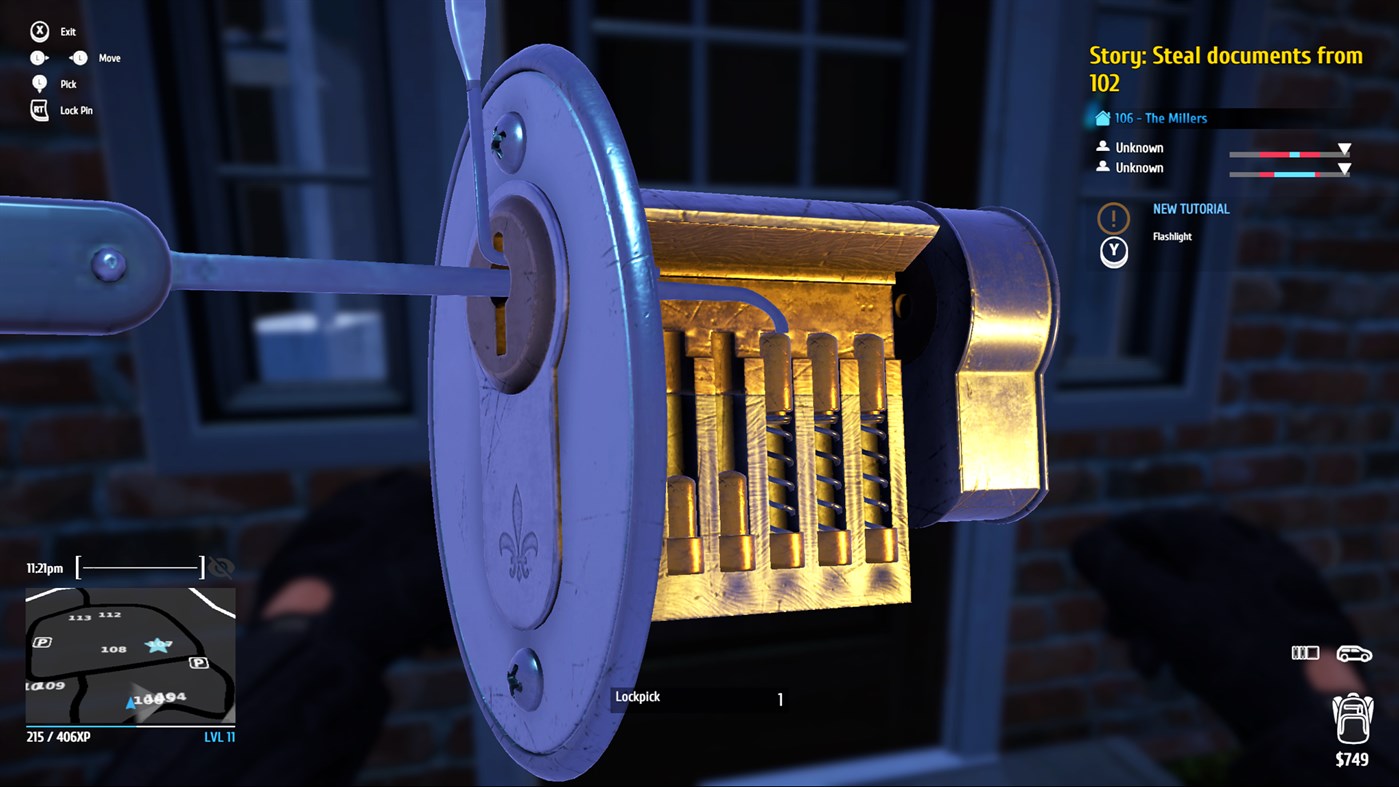
Keeping that thought deep in our minds, we wanted to make a game where player can get a feeling of doing precisely that. We strived to create an experience, that players could relate to. Not as a thief, of course, or even worse a victim of a theft. Our goal was to render the feeling of participation in an incredibly common, yet terrifying every-day situation.
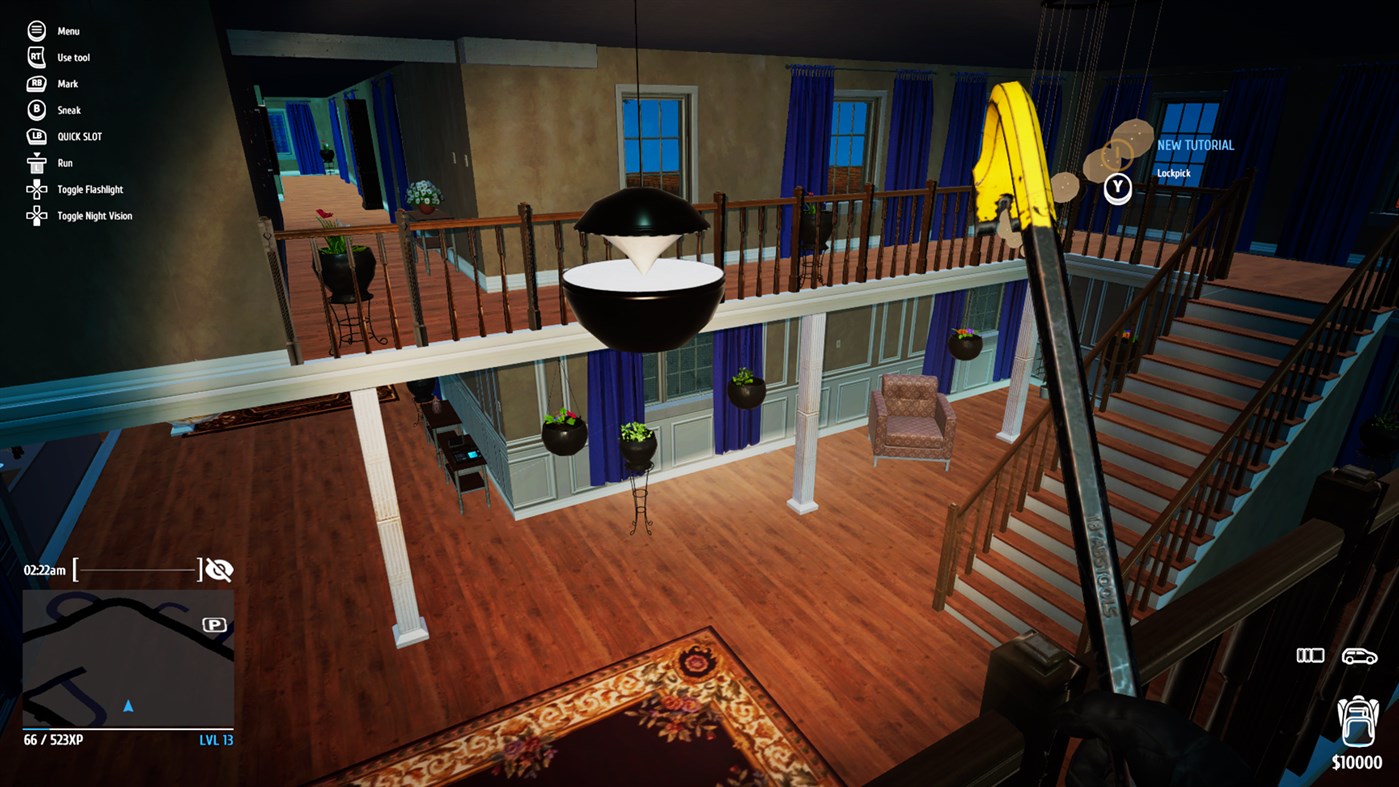
Players need to remember that in our game, like in reality, various houses possess their security systems like cameras, alarms, glass break sensors, etc., so they will need to gather some intel in order to know how to break through them. For us, the most crucial part of the “thief” experience was to accurately reflect that the experience of sneaking around a house — sometimes when the tenants are on-site.
There’s one more thing that players must
remember, while sneaking around the house:
Every pocket and every bag, no matter how big, doesn’t have infinite capacity. So, as a thief, a player cannot
simply rush and grab everything that is lying around in a
given location. Only the most valuable things can be
taken, as it comes as a natural matter for a thief, to make
the biggest profit possible out of the performed score.
We hope you’ll enjoy roaming around and lurking for the biggest loot in Thief Simulator as much as we have enjoyed making the game in the first place. We hope so especially now, since our title was made available on
Xbox One.
Thief Simulator
PlayWay S.A.
☆☆☆☆☆15
★★★★★
Become the real thief. Steal in free roam sandbox neighborhoods. Observe your target and gather information that will help you with the burglary. Take the challenge and rob the best secured houses. Buy some hi-tech burglar equipment and learn new thief tricks. Sell stolen goods to the passers. Do anything that a real thief does! A good thief always observes his target. What’s inside? Who lives there? What’s your target day schedule? Find out when the house is empty and does it have nosy neighbours. Choose from lots of possible approaches to prepare the best plan. Many modern devices available in Thief Simulator might come in handy with gathering intel about your target and it’s neighbourhood. The faster, the better. Find and steal as many valuables as possible in the shortest time possible. Remember that infinite backpacks don’t exist. When it’s about time you have to maintain cold blood. In every house you’ll find tons of useless stuff, which can really slow you down. If you’re not sure that you can take some serious money for it, maybe a good idea would be to leave it behind and save space for some expensive goods. If you fill your backpack with worthless items, you may have to waste your time to throw stuff out just to make space for other things. Be careful, cause some things can draw police attention to you! A real, experienced thief can spot places where there’s most probability of finding some valuables on the fly. Use the flashlight at night to highlight all the valuables in sight and places where you can expect them to be. Disassemble a stolen car and sell parts on the internet. Prepare phones and tablets before selling them in a pawn shop by removing their security. Be careful! In some houses you can meet unexpected guests. If they catch you in the act, they will call the police. In this case hide and wait till they stop looking for you or you can always leave the loot and run away as fast as possible.








 in GalaCredit!