Ring Fit Adventure Is So Popular It Keeps Selling Out
Ring Fit Adventure for the Nintendo Switch is in-demand big time. In an update earlier this week, a Nintendo spokesperson told Polygon the company’s latest fitness video game was “selling out” across North America.
the Ring Fit Adventure game is selling out at various retail locations in the Americas. We are working to provide more units as soon as possible and apologize for any inconvenience.
This small update for this region follows on from the news last month that sales for the exercise game had rapidly increased in China due to the coronavirus outbreak. At the time, Chinese resellers were buying out any stock they could get their hands on in huge quantities and then selling it well above the retail price. It probably didn’t help that it wasn’t officially available in the country at the time, either.
Ring Fit Adventure stock shortages have also been reported elsewhere since COVID-19 has swept the globe. At the company’s most recent financial results briefing in January, president Shuntaro Furukawa formally apologised for the worldwide shortages and inconvenience. As of 31st January 2020, Ring Fit Adventure’s cumulative sellthrough has exceeded 1.7 million units.
Have you had any luck purchasing this game in recent times? Tell us below.
Posted by: xSicKxBot - 03-17-2020, 02:29 AM - Forum: Lounge
- No Replies
How To Clean Your Phone, Controllers, Keyboards, And Other Tech
The recent events around the world have caused a lot of people to be more diligent in washing their hands, but it's also paramount that you keep all of your most-used devices clean as well. That means our phones, keyboards, and controllers among other things. Of course, one of the scariest things can be not knowing what is safe to use and how exactly to clean each gadget. There are a lot of different cleaning and sanitizing products out there, each of which is good at a specific thing--and some products aren't safe for cleaning fragile devices at all.
To demystify the process, we've put together this quick-and-easy guide to how to sanitize your phone, keyboard, and other common tech, including the best cleaning products we've tried and recommend.
How to clean your cell phone
In the age of smartphones basically just being big screens, it's easier than ever to keep your iPhone or Android device clean. However, it's also very easy to damage your phone if you don't choose the right products or methods to clean it with. And since it's likely the device that comes with you everywhere you go, it's important to sanitize your phone regularly.
Posted by: xSicKxBot - 03-16-2020, 07:59 PM - Forum: Windows
- No Replies
Educators: Our team is here to help you and your students
As we continue to see educators around the world transition to distance learning our team is here to help, listen, and support you and your students.
To make it easier to connect with each other, and to answer your questions, we’ve created a new remote learning community. It’s a great resource for best practices, tips & tricks, and sharing personal experiences about how to enable distance learning for schools. We are inspired by the way this community has come together to support each other and share ideas, during this challenging time.
To join this team, get help and share ideas with other educators and our experts, please fill out this form. We’ll add you to the Remote Learning Team after we’ve received your submission.
Building community
In addition, we are in awe of all the incredible resources and ideas our community is sharing, like the tweet and ideas for remote learning from the eTwinz here.
#RemoteLearning | We just want to use this last tweet to tell everyone who is transitioning to this new model due the #coronavirus that you are not alone. This community got your back!
We’ve also set up a new support site to help you get started launching remote learning that includes training resources, practical guides on how to get up and running on Teams, and tools and programs to keep your students engaged.
And, listed below, are additional Microsoft Education resources we have compiled so far to support remote learning.
Guidance on remote learning with Office 365 can be found here. This is a great source of information for using Microsoft Word, Excel, PowerPoint, OneNote and Teams – all rich resources for successfully navigating remote learning.
Get ideas for using Flipgrid, a powerful video-based discussion tool, here. You’ll find webinars, resources for getting started with Flipgrid, and be able to connect with our team through Flipgrid here.
We’re making Minecraft: Education Edition available for free to teachers and students with O365 Education accounts to support remote learning during school closures. Please fill out this form to request access. And download a remote learning toolkit for Minecraft: Education Edition here. Minecraft: Education Edition is a great tool to explore coding, social emotional learning skills development, and more, so if you haven’t tried it yet, now might be the time.
The Microsoft Educator Center is home to a wealth of educator-created professional development resources, and we’ve made new remote learning materials available right on the MEC site, so be sure to check those out.
And we’ve put together a Wakelet that curates all of the current Microsoft Education resources and stories on Remote Learning here. We’ll have more resources there in the coming days too, so please keep an eye on that site.
We’re here to support you
Teaching is among the most challenging professions in ordinary times, and these are anything but ordinary times. Thank you for the work you do on behalf of students each day, and especially now.
You’re not alone in this. Our team is here to help. We’ll continue to share updates, resources and information as those become available here on the Microsoft Education blog. So, stay tuned and keep in touch. One way to send feedback is through Twitter by tagging @MicrosoftEDU.
Welcome back to Box Art Brawl, the weekly vote where you decide which retro regional box art variant wins in the beauty stakes according to sophisticated modern tastes. Oh yes.
Last week Castlevania for the N64 entered the ring in a third appearance for the series and one of the closest fought brawls to date. In the end Europe just edged a victory over Japan by a mere 3% while North America trailed far behind with just a tenth of the overall vote. We guess you weren’t fans of Reinhardt’s bushy eyebrows. Congratulations to Europe, but we’re certain we haven’t seen the last of Castlevania round these parts.
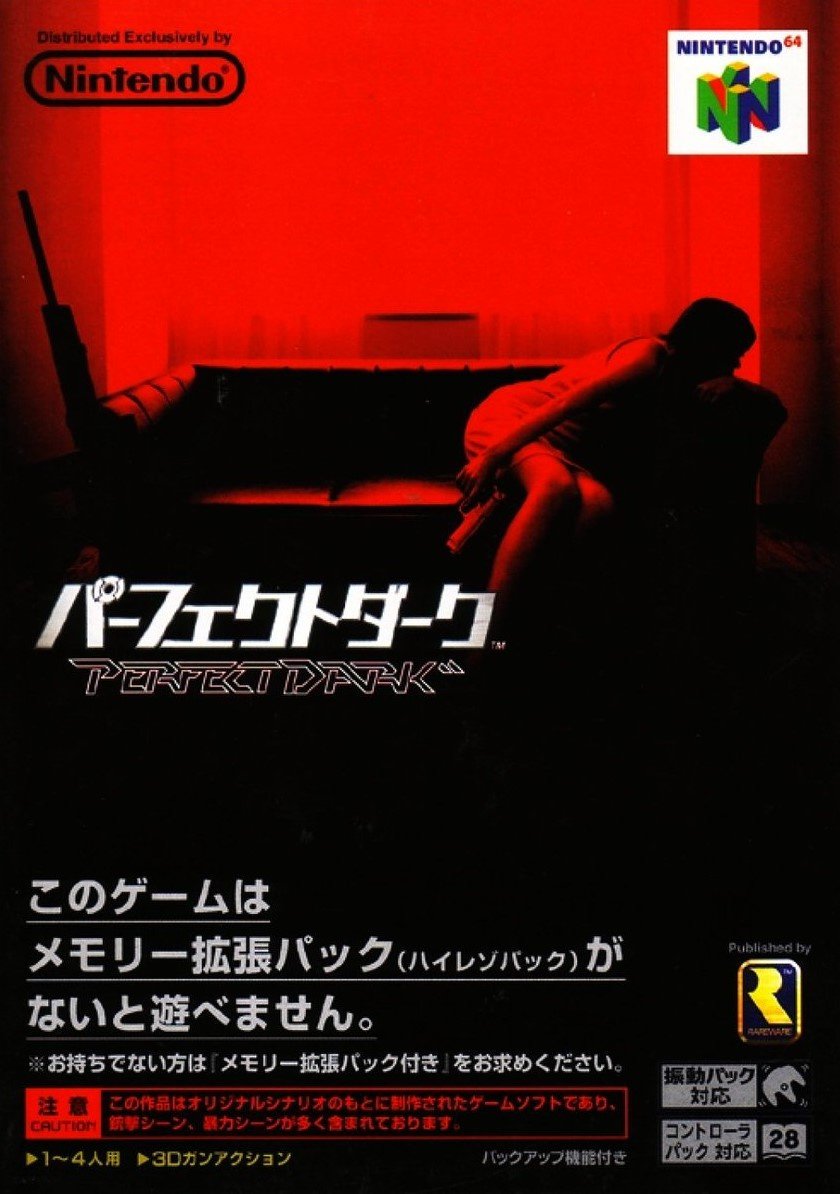
This week is a real gimme; possibly the biggest foregone conclusion in the history of democracy, but we’ve delayed it long enough. Perfect Dark for the Nintendo 64 was given a different cover in each region, an interesting story in itself which we delved into last year by talking to former Rare Art Director Kev Bayliss. However, today ours is not to reason why. Today, we’re just voting for our favourite.
C’mon then. Let’s get on with it.
North America
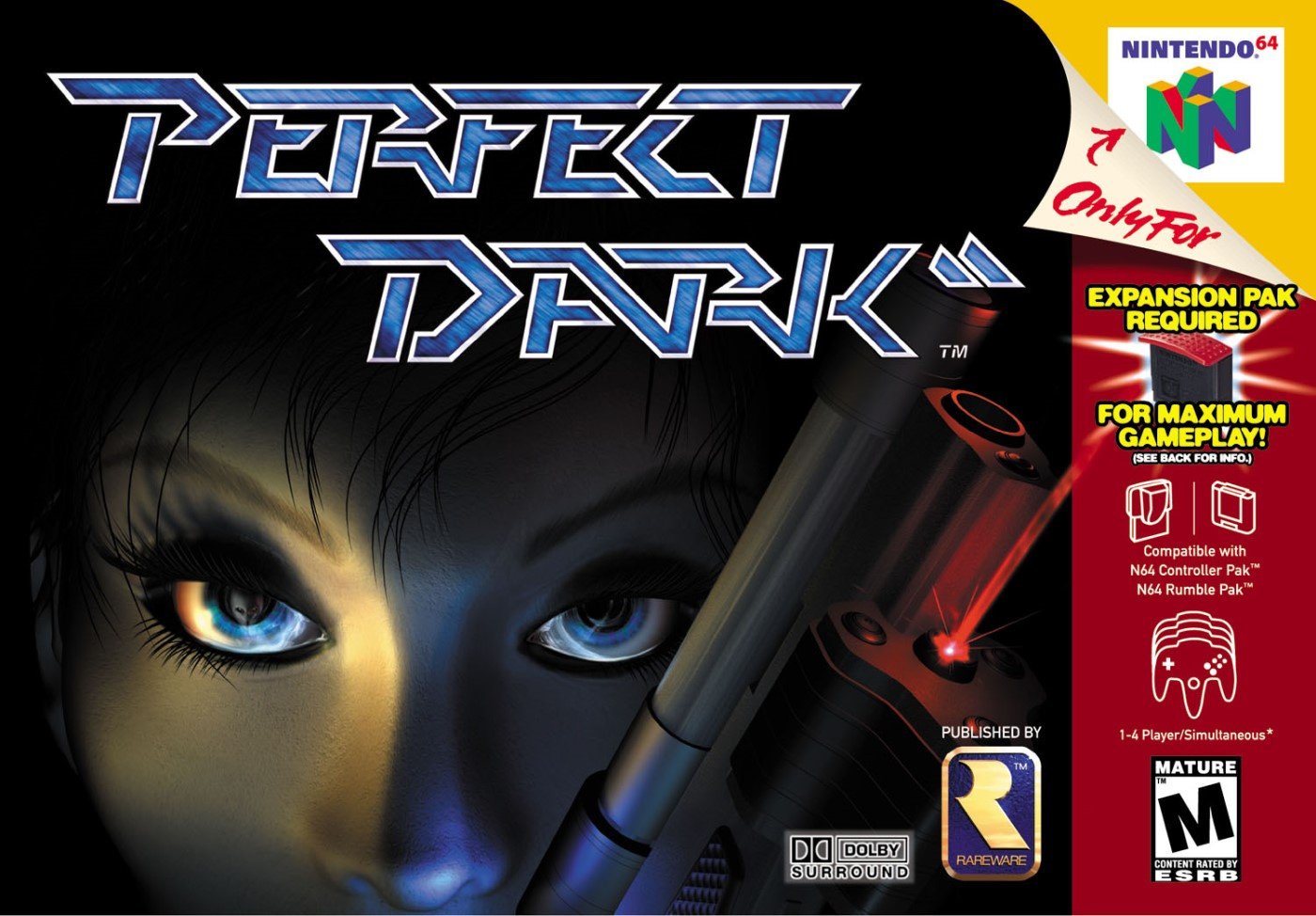
North America got a close-up of Joanna Dark’s CG face with Elvis, her alien chum, reflected in her right eye. Strands of hair flick down over her brow and we like the lighting that suggests she’s hidden in the shadows, waiting to strike. The gun barrel looks particularly clean as it breaks into the frame and who doesn’t love a sexy red laser beam? It makes us think of Arnie’s gun in the first Terminator movie. That’s a good in our books.
The game was compatible with most every ‘Pak’ made for the N64, as you can see from the red strip down the right side. The slick logo sits prominently against the darkness at the top and that little gold Rareware logo gives us the feels, too. It’s dark but still colourful. Not bad, not bad.
Europe
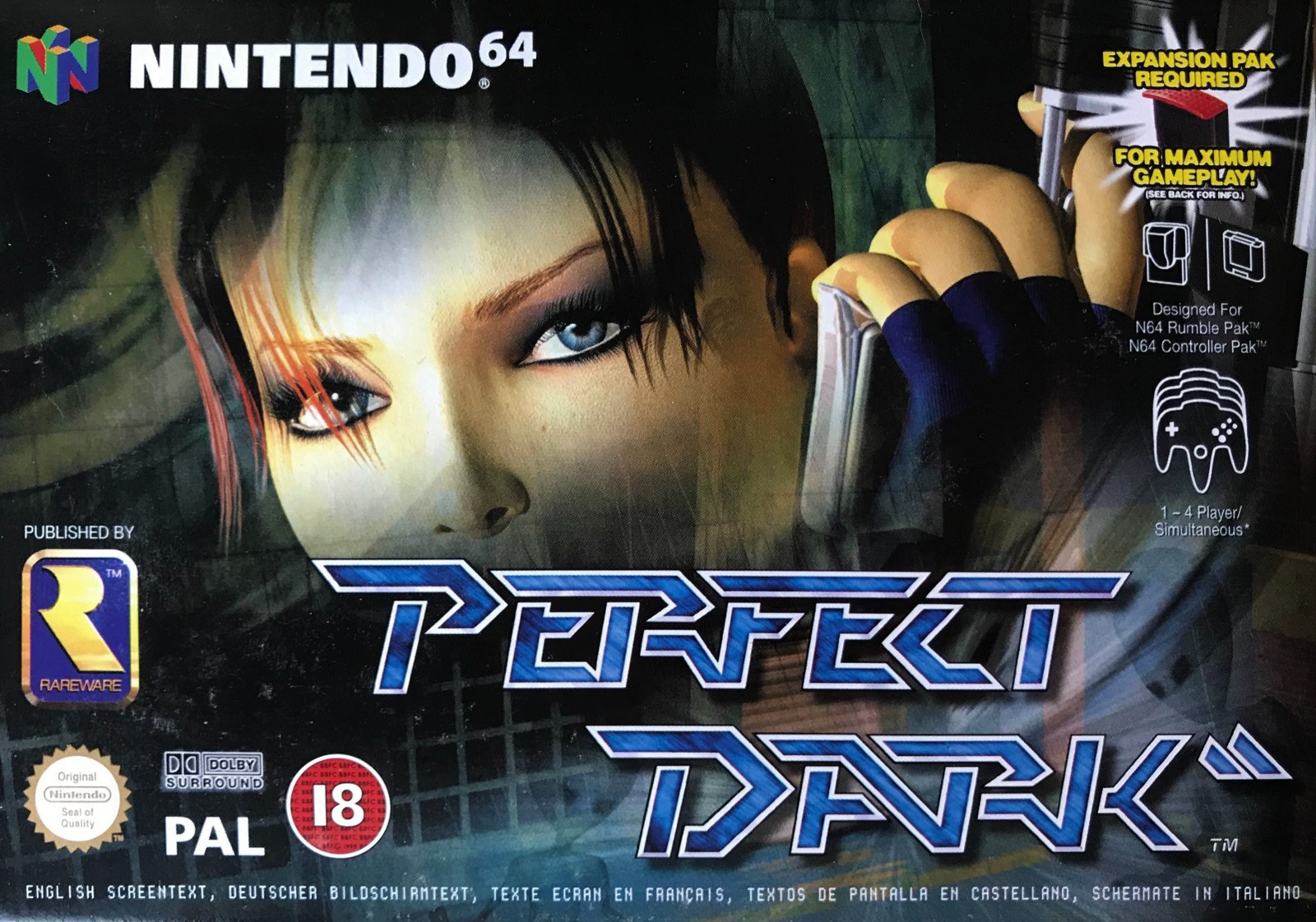
Looking absolutely nothing like the in-game model for the character, here we get the more sultry CG version of Joanna Dark (essentially Lara Croft moonlighting as a secret agent) and the bottom half of the gun we saw on the North American cover. It’s still dark, but the face fades as several images are layered behind ol’ Jo showing various structures and what looks like level geometry. None of it is particularly easy to make out, although you can see Elvis and one of his Maian mates.
The usual black border common to Nintendo’s N64 output in Europe is gone here with the info displayed over the main image. Same logo as the North American variant. Again, it sets the scene nicely. Not bad, but it’s all a bit immaterial, isn’t it…
Japan
Game over, man. Where’s a gif of Homer Simpson dribbling when you need one?
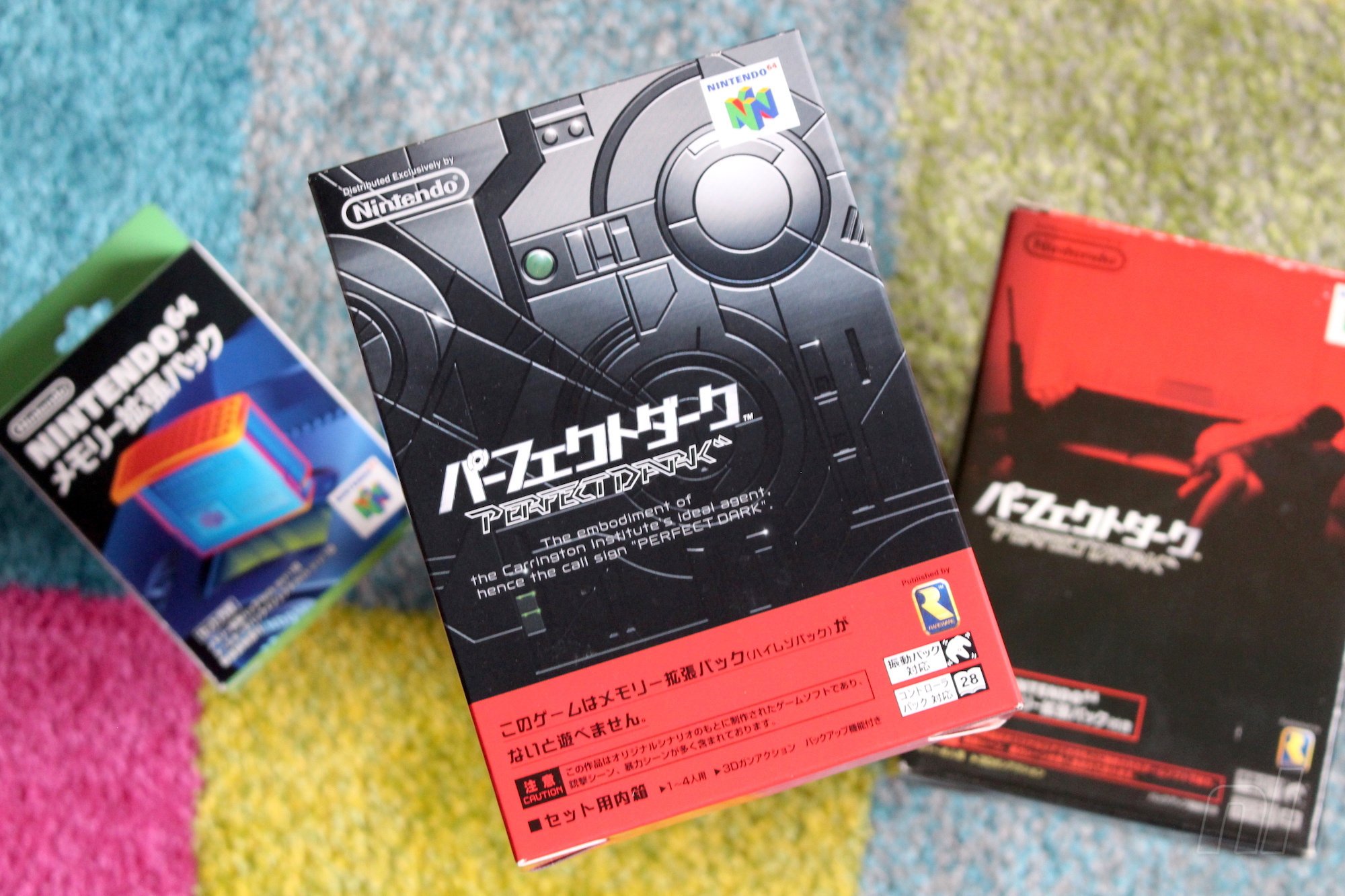
If you really wanted to nitpick you could argue that the game cover inside the big box which contains the game and Expansion Pak is rubbish, but in our experience gamers don’t like to be pedantic like that. Here it is all the same, though:
Ah, there you are Agent Dark! Just in time to click ‘Japan’ below and hit the vote button:
There will be people who don’t like the Japanese one – that’s absolutely fine! Everyone is entitled to their opinion and we welcome all to Box Art Brawl! There’s only one right answer, though…We joke! Ha!
So, tell us why you voted for Japan below and we’ll see you next time. Stay safe, lovely people!
Nintendo Places Third In Metacritic’s 2019 Game Publisher Rankings
Earlier this week, we heard about a Reddit user who had been busy compiling a lot of data from the review aggregate site Metacritic to illustrate the best and worst reviewed Nintendo Switch games since the system was launched.
Now, Metacritic has put together a list to determine “the best and worst game publishers” of 2019, according to 12 months of data. Nintendo placed third (boosting its average score by nearly four points compared to the previous year), and was one below Activision-Blizzard. Some of its highest-rated games last year included Fire Emblem: Three Houses and Super Mario Maker 2. In top spot was 505 Games, best known within the Nintendo community as the team that worked on Bloodstained: Ritual of the Night.
Which game publishers released the best games last year? For the 10th consecutive year, we sifted through 12 months of data to determine the best and worst game publishers of the year, based solely on the quality of their 2019 releases. Sales and user reviews do not factor into these rankings; only critic reviews (as captured by each game’s Metascore) are used to evaluate performance.
Publishers with 4 or fewer distinct titles* released last year are excluded.
We have ranked these publishers in order from best overall game quality to worst, using a points-based system based on four factors: 1. Average Metascore for all games released in 2019 150 possible points (awarded at 1.5 x the average Metascore) 2. % of scored products with good reviews (Metascore of at least 75) 100 possible points (ex: 80% good = 80 points) 3. % of scored products with bad reviews (49 or lower; in this case, a lower % is better) 100 possible points (ex: 20% bad = 80 points) 4. Number of “great” titles (Metascore of 90 or higher, min. 7 reviews) Awarded as 5 bonus points for each distinct title with a 90+ score
Note that the Metascore average (the first factor) counts slightly more than the other factors. In addition, note that iOS games are not included in the figures below.
As explained, this list is based “sorely on the quality” of publisher’s releases last year according to each game’s critic Metascore and does not factor in overall sales or user reviews. Below is the full list:
1. 505 Games 2. Activision Blizzard 3. Nintendo 4. Paradox Interactive 5. Capcom 6. Annapurna Interactive 7. Xbox Game Studios 8. Humble Bundle 9. Square Enix 10. Devolver Digital 11. Focus Home Interactive 12. Take-Two Interactive 13. Electronic Arts 14. Ubisoft 15. Team17 16. Spike Chunsoft 17. Koei Tecmo 18. SEGA 19. Bandai Namco 20. Konami 21. Idea Factory 22. Sony 23. PQube 24. XSEED/Marvelous 25. tinyBuild 26. Iceberg Interactive 27. Koch Media 28. Digerati 29. THQ Nordic 30. Bethesda 31. NIS America 32. Daedlic Entertainment 33. QubicGames 34. Curve Digital 35. Plug In Digital 36. Ratalakia Games 37. Bigben 38. 1C Company 39. Headup Games 40. Merge Games
Here’s what Metacritic had to say about Nintendo’s placement:
Nintendo boosted its average Metascore by nearly four points compared to last year’s mark despite 2019 being one of the company’s rare years without any releases scoring 90 or higher. However, a few Nintendo games narrowly missed that distinction, led by Switch titles Fire Emblem: Three Houses and Super Mario Maker 2. In all, 79% of Nintendo’s 2019 releases scored positive reviews, up from 65% the prior year.
And here’s what it said about the winner, 505 Games:
The Italian game company, which publishes third-party titles for every platform, had a strong 2019 thanks to a steady stream of positively reviewed games and few misfires. Though no 505 title scored higher than 85 last year, 87% (or all but two) of its products received positive reviews overall—tops among all publishers—led by the Remedy-developed award-winner Control and ArtPlay’s Castlevania homage Bloodstained: Ritual of the Night. Upcoming 505 releases include the PC port of Death Stranding (due in June).
What are your thoughts about the ordering of this list? Share your thoughts below.
Gears 5 Is Coming to Xbox Series X With Improvements, Possible 120 FPS Support
Gears 5 is a very impressive game on the Xbox One and Xbox One X as is, but the game is getting a makeover for Xbox Series X that comes with higher framerate and resolution.
Announced by Microsoft on March 16, Gears 5 on Xbox Series X will make use of the Smart Delivery system, meaning players who already own the Xbox One version will get it on the new console for free. The Xbox Series X will automatically know to download the improved version, while any Xbox One consoles will still download the old one.
Improvements on Xbox Series X include better textures and volumetric fog, higher particle count, and 60 frames per second during cutscenes for a smoother transition to gameplay. Shadows and lighting have also been improved, and the game is currently running at 100 frames per second with potential to hit 120 frames per second in multiplayer.
Posted by: xSicKxBot - 03-16-2020, 11:28 AM - Forum: Python
- No Replies
How to Check Your Python Version?
Simple Answer: To check your Python version, run python --version in your command line or shell.
This general method works across all major operating systems (Windows, Linux, and macOS).
Do you need to google important Python keywords again and again? Simply download this popular Python cheat sheet, print the high-resolution PDF, and pin it to your office wall:
In the following video, I’ll show you how to check your Python version for each operating system (Windows, macOS, Linux, Ubuntu) and programming framework (Jupyter). Or scroll down to read the step-by-step instructions on how to check your Python version.
The Python version output consists of three numbers major:minor:micro. For example, version 3.7.2 means that
the major version is 3,
the minor version is 7, and
the micro version is 2.
[ATTENTION] Different major versions are NOT fully compatible. Different minor versions are compatible.
For example, you can execute code written in Python 3.6.4 in Python 3.7.2 because they are the same major version — Python 3. But you cannot execute code written in Python 2.7.4 in Python 3.7.2 because they are different major versions.
Note that new minor versions can add changes to the language. For example, in Python 3.8 they introduced the reversed() function with dictionaries. You cannot use the reversed() function in older versions of Python. But the vast majority of the language is the same.
Check Python Version Windows 10 (Exact Steps)
Three steps to check the Python version on your Win 10 operating system:
Open the Powershell application: Press the Windows key to open the start screen. In the search box, type “powershell”. Press enter.
Execute command: type python --version and press enter.
The Python version appears in the next line below your command.
Check Python Version Windows 7 (Exact Steps)
Three steps to check the Python version on your Win 7 operating system.
Open the command prompt application: Press the Windows key to open the start screen. In the search box type “command”. Click on the command prompt application.
Execute command: type python --version and press enter.
The Python version appears in the next line right below your command.
Check Python Version Mac (Exact Steps)
Four steps to check the Python version on your Mac operating system.
Press CMD + Space to open Spotlight.
Type “terminal” and press enter.
Execute command: type python --version or python -V and press enter.
The Python version appears in the next line below your command.
Check Python Version Linux (Exact Steps)
Three steps to check the Python version on your Linux operating system.
Open the terminal application (for example, bash).
Execute command: type in python --version or python -V and press enter.
The Python version appears in the next line below your command.
Check Python Version Ubuntu (Exact Steps)
Four steps to check the Python version on your Ubuntu operating system.
Open Dash: click the upper left symbol.
Open terminal: type “terminal”, click on the terminal app.
Execute command: type python --version or python -V and press enter.
The Python version appears in the next line right below your command.
Check Python Version Jupyter (Exact Steps)
Three steps to check the Python version in a Jupyter notebook.
Open the Jupyter notebook: type jupyter notebook in your terminal/console.
Write the following Python code snippet in a code cell:
from platform import python_version

print(python_version())
3. Execute the script.
As an alternative, you can also use the following Python code snippet to check your Python version in a Jupyter notebook:
>>> import sys

>>> sys.version
Here is a screenshot on my computer:
How to Check Which Python Version Runs Your Script?
Sometimes, you want to check Python’s version in your Python program.
To achieve this, simply import the sys module and print the sys.version attribute to your Python shell:
>>> import sys

>>> print(sys.version)

3.7.2 (tags/v3.7.2:9a3ffc0492, Dec 23 2018, 23:09:28) [MSC v.1916 64 bit (AMD64)]
Import the built-in sys module and print sys.version for human-readable output.
What are the Different Python Versions?
Python has three main versions: version 1, version 2, and version 3. Version 4 is currently (2019) under development.
As there are some significant differences in syntax, you should always install the latest version in Python. Keep yourself updated on the official Python website here.
How to Upgrade to a Newer Version?
If you are not using a virtual environment, go to python.org/downloads to download and install whatever version you need. It’s the easiest way to upgrade Python.
But now you’ll run into the following problem: how do I run a specific Python version? Check out this StackOverflow answer to learn the exact steps.
Or you can make your life easier by using virtual environments. These let you have multiple versions of Python installed on your system. Plus, you can switch between them instantaneously. One option is to use the built-in module venv. If you’re a Data Scientist, the industry standard is Anaconda.
If you’ve installed multiple installations of Python, running python --version may give you only the version of Python 2. To check which version of Python 3 is installed on your computer, simply run the command python3 --version instead of python --version.
How to Check Python Version – Detailed
Not only does Python have major, minor and micro versions. Each of those versions has further versions, namely the release level and serial.
Most of the time, you will only care about the major, minor and micro releases. Release level and serial are usually for the core Python Dev team to work on changes to the language.
The possible release levels are ‘alpha’, ‘beta’, ‘candidate’, or ‘final’. Alpha contains the first updates made to the language. Beta means the language can be tested with some users but still won’t work perfectly. This is where the phrase ‘beta testers’ comes from. A ‘candidate’ has only a few small bugs left to fix. Final is the last version and the one released to the general public. If you want to try out new features before anyone else, you can download these release levels. However, if you just want a version of Python that works, you should choose ‘final’. When you download any version of Python, it will be a ‘final’ release unless stated otherwise.
Serial is for the smallest changes. The Python Dev team increments it as they make changes to the alpha, beta and candidate versions. All final versions have serial=0. They add future changes to the next major/minor/micro releases.
How to Make Sure My Script Runs a Specific Python Version?
Let’s say you’ve just installed Python 3.8. Your script, my_file.py, uses a brand new feature: reversed() when iterating over a dictionary. For other people to run this script, they must also run Python 3.8. So you should put a check at the start to let other users know this.
We do this by adding an assert statement at the top of my_file.py
# my_file.py

import sys

assert sys.version_info >= (3, 8) my_dict = dict(a=1, b=2, c=3)

for key in reversed(my_dict): print(key)
The assert statement raises an AssertionError if the statement is False. If the statement is True, the script continues to run.
For example, if I am running Python 3.7 and execute my_file.py from the terminal, this happens
But if I am running Python 3.8, the assert statement does not raise an error, and it executes the rest of the script.
# Running Python 3.8

$ python my_file.py

c

b

a
Note: I have used the Anaconda virtual environment to install and quickly switch between multiple Python versions.
Where to Go From Here?
In summary, you can check the Python version by typing python --version in your operating system shell or command line.
Do you struggle with Python? And Python source code sometimes feels like a closed book to you?
If this applies to you, check out my free email course! The course guides you step-by-step to a deeper and deeper Python level of code understanding. Here is what my readers say:
Thank you for your newsletter. I find these newsletters highly informative.
Collen
As a fellow educator and fellow (former) Ph.D. student, I just wanted to let you know that I’m really impressed with your teaching materials. You’re doing a really good job!
Sadly due to Corona Virus/ COVID-19 concerns, this years GDC 2020 had to be postponed and most likely cancelled. Fortunately however, not everything is lost! The GDC have announced they will be streaming a number of talks scheduled for GDC 2020 completely free this year. Details from gdconf.com:
Just a quick reminder that while the Game Developers Conference is no longer happening next week in San Francisco, organizers invite you to watch livestreams of the awards and some of the talks planned for GDC 2020!
For the most up-to-date details on what’s streaming when, check out the new GDC 2020 Virtual Talks hub and be sure to follow the official GDC Twitch channel. That’s where organizers will be streaming speaker-recorded versions of the talks they’d planned for GDC 2020, for free, from 9am to 5pm PT Monday through Friday.
Expect to enjoy some expert talks from studios like 343 Industries, Playground Games, BioWare, Gearbox and more, as well as insightful behind-the-scenes explorations of notable indie games like Baba Is You, A Short Hike, and Kine.
Plus, there will be an assortment of talks offering new and useful advice on how to tackle the core challenges of game development. You’ll have the opportunity to practice new ways of planning, developing, and marketing your game, and get up-to-date insights on everything from UI design to scaling your online infrastructure.
The Independent Games Festival and Game Developers Choice Awards ceremonies will also be free to stream virtually starting at 5pm PT (8pm ET) next Wednesday, March 18th on GDC’s Twitch channel.
The virtual awards ceremony will feature the same hosts (Trent Kusters for the IGF and Kim Swift for the Game Developers Choice Awards) and identical awards categories planned for the original physical event — with the exception of the alt.ctrl.GDC award, which will not be awarded this year.
Directly before the awards at 4pm PT (7pm ET) on March 18th, Double Fine & iam8bit will debut a virtualized 2020 edition of its Day of the Devs showcase that promises to bring “visual beauty, charming design, poignant voices, and just plain cool games” to the official GDC Twitch stream.
As mentioned above, the schedule of talks is available here with times listed in Pacific Time. The talks are available on Twitch but will eventually make it to the GDC YouTube channel as well as the GDC Vault. Be sure to keep an eye on the GDC official Twitter channel too for updates through the week. Or of course just tune in here at GameFromScratch for the top announcements and reveals at virtual GDC 2020! You can learn more in the video below.
Apple A14 in ‘iPhone 12’ said to be as fast as the iPad Pro
By Wesley Hilliard Sunday, March 15, 2020, 12:19 pm PT (03:19 pm ET)
Geekbench scores that may be for the next iPhone processor, the “A14,” have surfaced online, and show massive jumps in multi-core performance and speed.
The iPad Pro has an A12X chipset with improved graphics performance and more cores
Apple improves on their A-series processors every year for each new iPhone release, so a successor to the current iPhone 11 A13 chipset is expected in the fall of 2020. Each year as the iPhone flagship release approaches, benchmark scores for said to be from the new processor in the device start to populate popular benchmark tools, like Geekbench.
The A12X (left) vs the supposed “A14” (right)
It is expected that the “iPhone 12” will have improved performance, and these scores show massive gains year-over-year. Apple has been seeing huge gains in their chipsets despite the rest of the industry hitting a bit of a performance wall.
New Geekbench testing, purporting to be from the A14 processor shows the first A-series processor to cross the 3.0 GHz mark.
The 12.9-inch iPad Pro has an A12X chipset with 8 cores and scores 1110 on a single core, and 4568 on the multi-core. The scores for the alleged A14 go beyond even that.
Single core performance of the device shows a 1658 score, with a 4612 multi-core score. This indicates a huge gain in its overall performance and will make multitasking and navigating apps smoother than ever.
Apple is also rumored to be developing an ARM Mac that could debut as early as this winter. A chip derived from the A14 would make for a good base laptop processor as well, but performance this high would also be beneficial for complex tasks like AR rendering or better image processing in a phone.