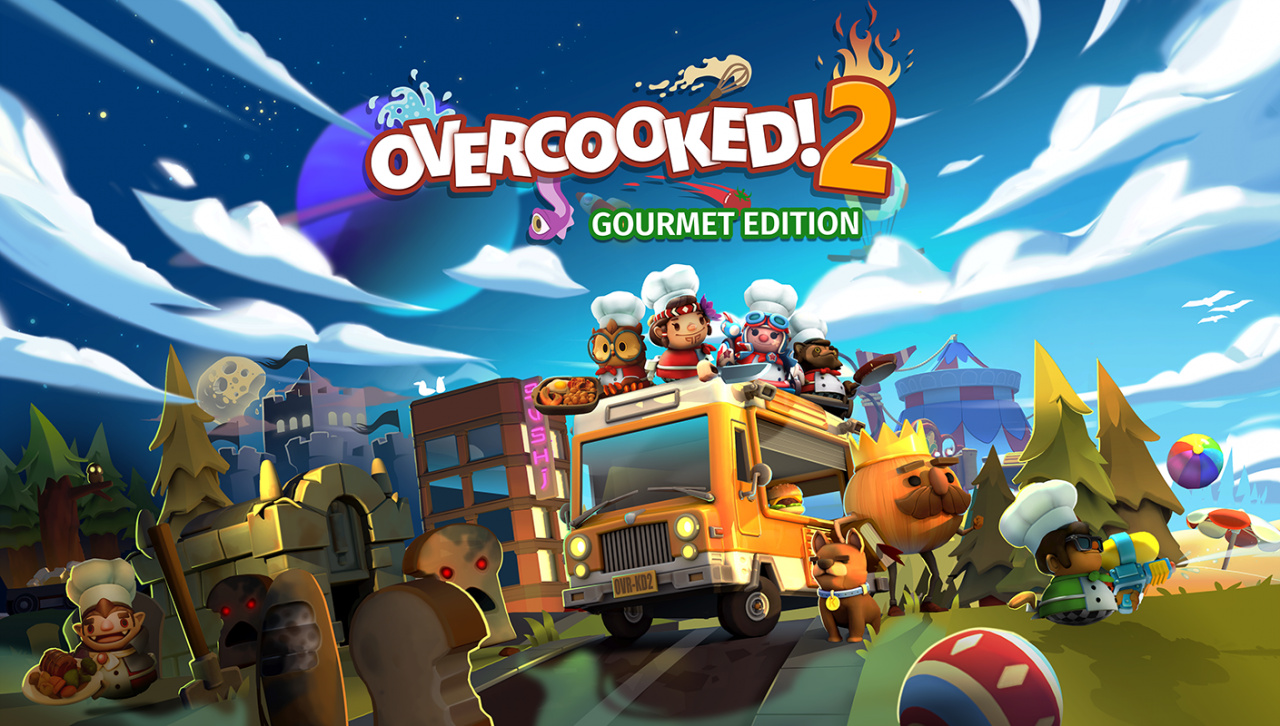
Overcooked 2 Has Just Received A New ‘Gourmet Edition’ Release On Switch
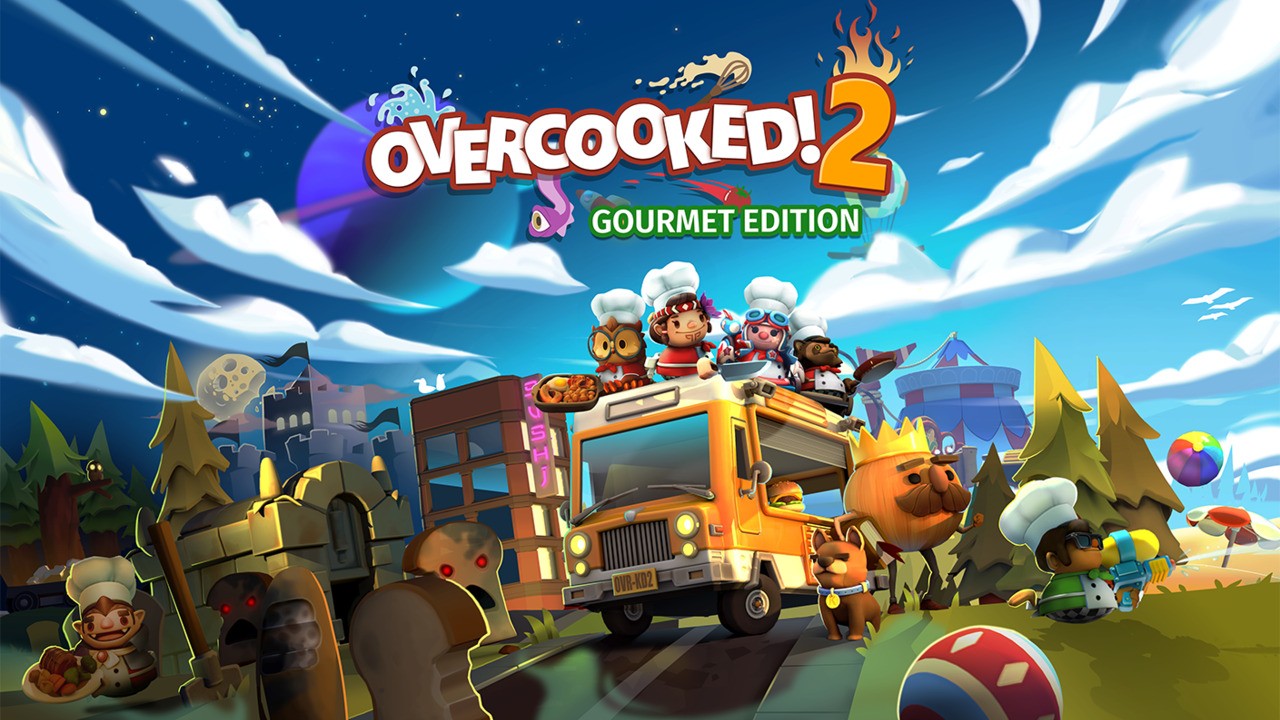
One of Switch’s top multiplayer co-op games, Overcooked 2 has just received a brand new release on the Nintendo eShop. The ‘Gourmet Edition’ will include all pieces of DLC on top of the base game.
The game has been receiving regular DLC updates ever since it launched on Nintendo’s platform, and piecing it all together makes for one hefty full product. If you’re yet to experience Overcooked 2, now is absolutely the time to get stuck in.
Key Features: –Every mouthful:Overcooked! 2:Gourmet Edition features Overcooked! 2 and every piece of previously-released DLC for the game, including Surf ‘n’ Turf; Campfire Cook Off; Night of the Hangry Horde; and Carnival of Chaos –A banquet of chefs: 58 chefs are ready to cook up a storm, including those featured in the Too Many Chefs pack – Dozens of kitchens: The base game and the DLC takes players on a journey through 130 weird and wonderful levels with equally bizarre kitchens! – A smorgasbord of dishes: From s’mores to sushi, there is a delicious selection of 26 recipes to serve up – Co-op multiplayer: Up to four players can aim for high scores either online or couch co-op through local multiplayer
Overcooked! 2: Gourmet Edition is available to buy right now on the eShop. Usually, the bundle would be priced at £37.49 / $48.49 / €42.49, but a launch discount taking the game down to £28.12 / $36.37 / €31.87 is active for a limited time.
The standalone game is usually £20 / $25 without any DLC included, so this early discount is really good value.
Will you be buying this bundle? Already own the game on Switch? Let us know with a comment.
Posted by: xSicKxBot - 04-08-2020, 05:40 AM - Forum: Lounge
- No Replies
All The Xbox Game Pass Titles Coming Soon And Leaving
As part of the April Inside Xbox briefing, Microsoft announced the next batch of titles coming to Xbox Game Pass and also confirmed which games are headed out of the subscription service.
Xbox Game Pass for PC is also getting new titles, including Football Manager 2020, Alvastia Chronicles, and Mistover on April 9. Additionally, the program is adding the officially licensed Stranger Things 3: The Game on that day for subscribers.
Shiro Games, the developers behind such games as Evoland, Northgard and Darksburg, just posted a blog post on the technology they use to develop their game.
The primary parts of the development stack include:
Haxe is a cross platform open source programming language with a high-level strictly typed language capable of being compatible to multiple languages or runtimes.
A game focused game engine with a built in tilemap editor. You can learn more about the CastleDB here.
Combined together you get a complete, battletested and production ready game engine with several high quality shipped titles under it’s belt. You can learn more about the entire technology stack in the video below.
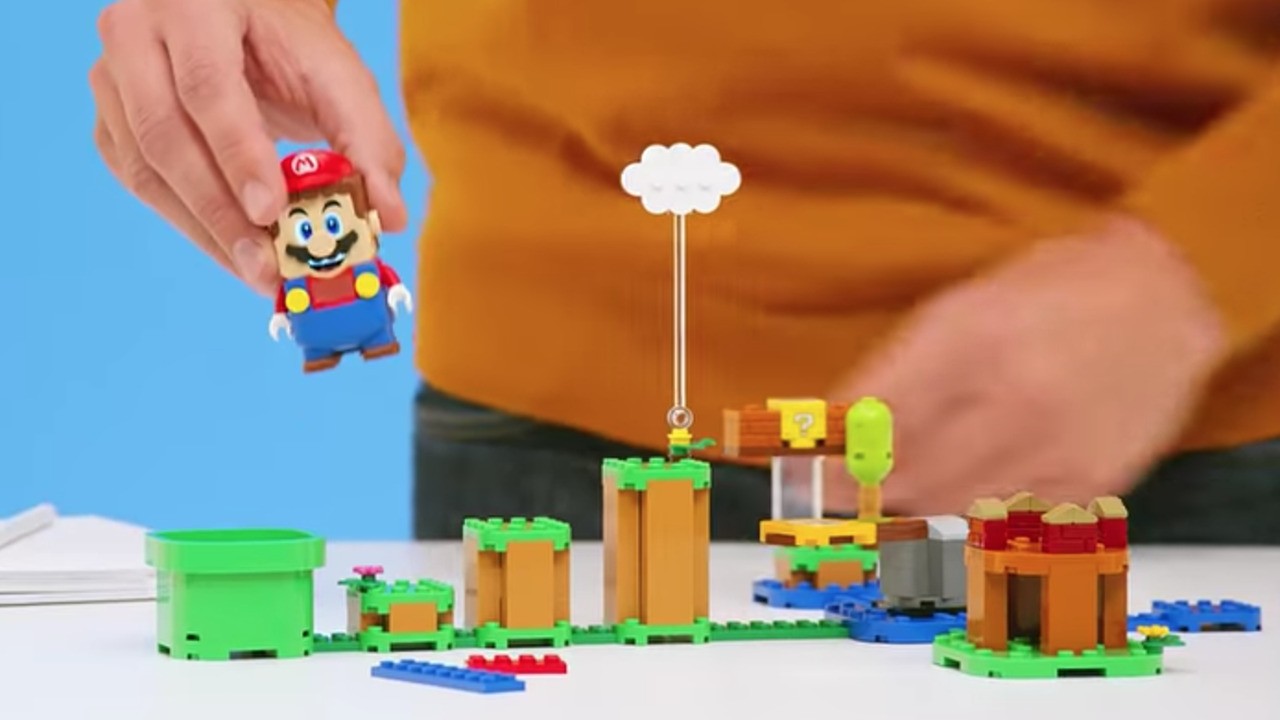
Video: See The LEGO Mario Starter Course In Action
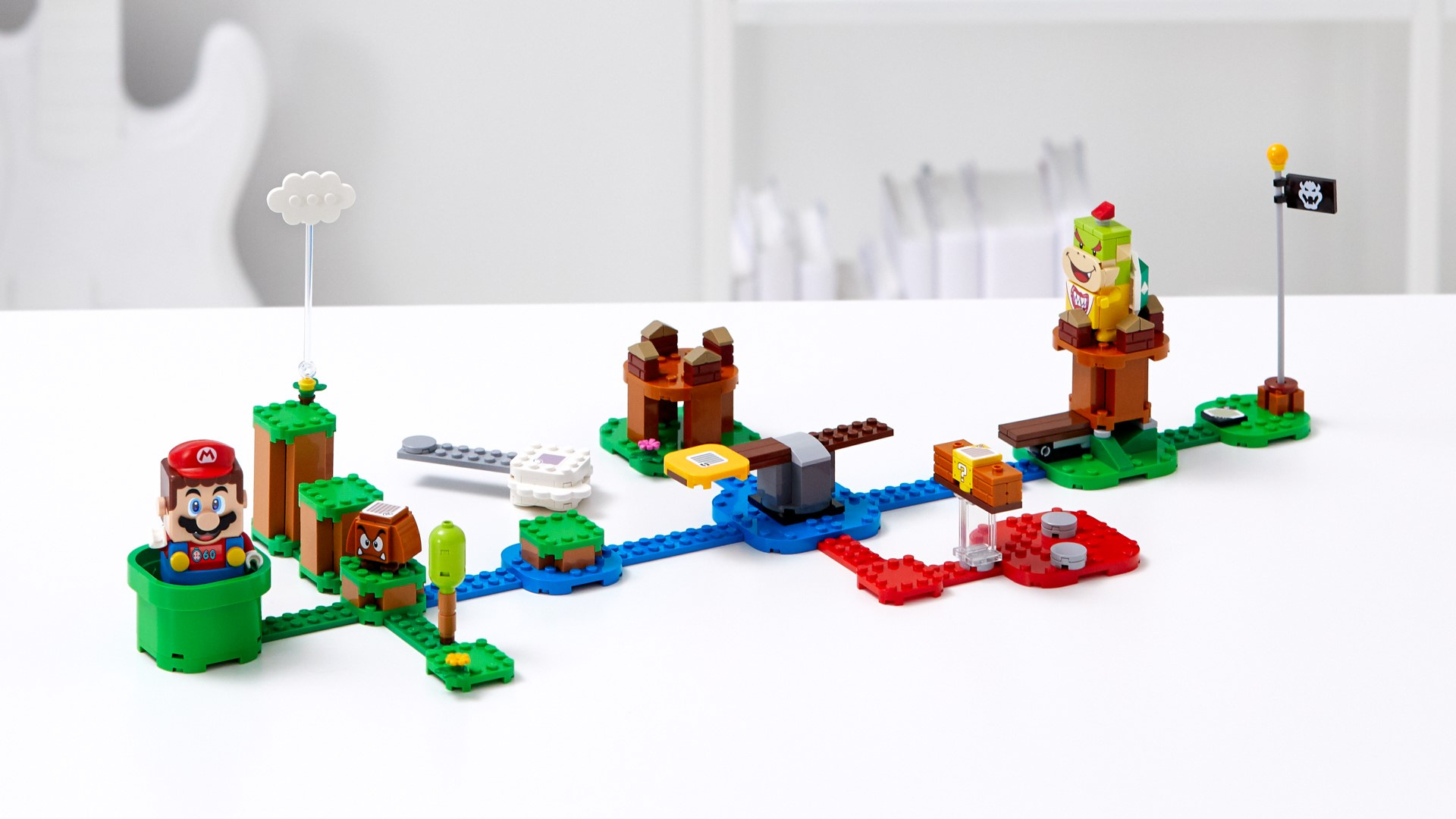
If you’re wanting to get a proper look at what you can get up to with the new Super Mario LEGO set, this new video from LEGO itself should do the trick.
The project’s lead designer Jonathan Bennink talks us through how the Starter Course brings Mario to life and also shows off two expansion sets that will soon be on the way. In a press release accompanying the video, Bennink has shared the following:
“We were thrilled to see the global reaction to news of LEGO Super Mario. Fans have been keen to learn more, so I am pleased that today we were able to reveal more details about this exciting new collaboration that has led to a reimagination of the LEGO building experience and an entirely new way to play inspired by the beloved video game icon, Super Mario. We can’t wait to see fans get creative and challenge each other with this highly engaging and social play experience.”
Pre-orders have already started to go live, so you can go ahead and grab a Starter Course as we speak. The expansion sets aren’t available just yet, but we’ll make sure to update you as soon as any pre-orders appear.
Are you excited to get your hands on this Mario x LEGO collaboration? Tell us below.
Guide: Where To Preorder The Totally Adorable LEGO Super Mario Sets
It’s finally happened: the union that kids (and big kids) have wanted for so long has come to pass with Super Mario finally available in LEGO form. Typically for Nintendo, the LEGO Super Mario sets are more than just standard LEGO sets – they are connected via a neat touch of technology that enables you to build Mario courses and ‘run’ them like you do in the plumber’s video games.
The first wave of sets is set to release on 1st August 2020, and pre-orders are live for the (rather cumbersomely-named) LEGO Super Mario Adventures with Mario Starter Course. The LEGO Mario figure has little LCD screens powered by two AAA batteries that react to movement, colour and certain special bricks. His eyes, mouth and belly react to these inputs and a little speaker in the figure adds trademark sounds and musical phrases from the series, too.
We’ve scoured the web and tracked down the best pre-orders for the Starter Set and announced Expansion Sets in the UK and US. We’ll update this article with more pre-orders as we find them, so be sure to check back.
Please note that some links on this page are affiliate links, which means if you click them and make a purchase we may receive a small percentage of the sale. Please read our FTC Disclosure for more information.
Preorder LEGO Super Mario in North America:
Right now the only place we could find to pre-order the LEGO Super Mario Starter Course is from LEGO itself, Target is another option:
Preorder LEGO Super Mario in the UK:
In the UK you can currently pre-order the LEGO Super Mario Starter Course Set direct from LEGO, GAME, Smyths or Zavvi:
What LEGO Super Mario sets are available?
The base set – the Starter Course – can be combined with a number of Expansion Sets that the LEGO Group announced alongside pre-orders for the Starter Set (see above). Each one will “unlock unique challenges and characters to play with and against friends”, according to the official PR. All sets are modular and give the builder the opportunity to mix and match to create whatever Mario course they wish to.
The 231-piece Starter Course Set will retail for $59.99 / 59,99 € / £49.99, and pre-orders will come with a free (and much smaller) Super Mushroom Surprise Expansion Set gift. Pre-orders from LEGO will also include a Monty Mole Expansion Set as an additional pre-order bonus.
The first round of announced Expansion Sets include the following (pictured above):
Piranha Plant Power Slide Expansion Set
Bowser’s Castle Boss Battle Expansion Set
We’ll add pre-order info for these Expansion sets when we get it. The Piranha Plant Power Slide Expansion Set is set to retail for $29.99 / 29.99€ / £24.99, while Bowser’s Castle Boss Battle Expansion Set has an RRP of $99.99 / 99.99€ / £89.99.
There is also a LEGO Super Mario app that works in conjunction with the Mario figure and special bricks to track scores and provide digital instructions.
Can you resist these super (Mario) sets? Let us know below which ones take your fancy, and don’t forget to check back as we add the best offers when they pop up.
Best Budget Monitors For Under $200 - Cheap Monitors For Working From Home
More people are working from home every day, but it can be difficult transitioning into working within your home, especially if your office has a lot of the tools you need for your daily duties. One of them might even be a monitor, and while you may not need to plug your laptop into one to get your work done, they're a handy tool to have that increases your screen space and makes doing your work easier. To help make the transition easier, we've collected an assortment of the best budget monitors under $200, all of which feature free Amazon Prime shipping, so you don't have to leave the house to get your cheap display.
Of course, while we're focusing on cheap monitors that are good for your daily work routine, many of these computer monitors are also great for gaming. Just keep in mind that they won't stack up against their more expensive counterparts--these are still budget PC monitors, after all.
Quick look: Best cheap monitors for working from home
Python List Length – What’s the Runtime Complexity of len()?
The runtime complexity of the len() function on your Python list is O(1). It takes constant runtime no matter how many elements are in the list. Why? Because the list object maintains an integer counter that increases and decreases as you add and remove list elements. Looking up the value of this counter takes constant time.
Python list objects keep track of their own length. When you call the function len(...) on a list object, here’s what happens (roughly):
The Python virtual machine looks up the len(...) function in a dictionary to find the associated implementation.
You pass a list object as an argument to the len() function so the Python virtual machine checks the __len__ method of the list object.
The method is implemented in C++ and it’s just a counter that’s increased each time you add an element to the list and decreased if you remove an element from the list. For example, say, the variable length stores the current length of the list. The method then returns the value self.length.
The Python list is implemented using a C++ array. This means that it’s generally slow to modify elements at the beginning of each list because all elements have to be shifted to the right. If you add an element to the end of a list, it’s usually fast. However, resizing an array can become slow from time to time if more memory has to be allocated for the array.
Where to Go From Here
If you keep struggling with those basic Python commands and you feel stuck in your learning progress, I’ve got something for you: Python One-Liners (Amazon Link).
In the book, I’ll give you a thorough overview of critical computer science topics such as machine learning, regular expression, data science, NumPy, and Python basics—all in a single line of Python code!
OFFICIAL BOOK DESCRIPTION:Python One-Liners will show readers how to perform useful tasks with one line of Python code. Following a brief Python refresher, the book covers essential advanced topics like slicing, list comprehension, broadcasting, lambda functions, algorithms, regular expressions, neural networks, logistic regression and more. Each of the 50 book sections introduces a problem to solve, walks the reader through the skills necessary to solve that problem, then provides a concise one-liner Python solution with a detailed explanation.
FREE Ring Runner: Flight of the Sages & SUPERHOT VR Crackerjack Deal
FREE Ring Runner: Flight of the Sages
[freebies.indiegala.com] Ring Runner combines the fast-paced action of space combat with the rich story and skill variety of an RPG.
SUPERHOT VR HALF OFF SUPER HOT VR HALF OFF
[www.indiegala.com] Blurring the lines between cautious strategy and unbridled mayhem, SUPERHOT VR is the definitive VR FPS in which time moves only when you move.
Adventures in “Minecraft Earth” now playable from home!
While some of you might be too young to remember (in which case get off my lawn, you whippersnappers!), Minecraft used to be pretty different from the game we know and love today. Even though it’s hard to imagine an Overworld without llamas or turtles, they haven’t always been there (yes, I’ve checked). That’s one of the things that makes it so great – and now, Minecraft Earth is following in its footsteps.
Exciting changes are coming, and that’s all thanks to you! Yes, you! At Mojang, we love player feedback, and we’ve read all of your suggestions on how we can improve the Minecraft Earth experience. I’ve also emailed Saxs some fun changes like making the interface completely gesture-based and featuring full TikTok integration. We’ve been working hard to prepare some new features that will make Minecraft Earth even more fun to play. Without further ado…
Adventure Crystals
You know what’s better than heading out in search of adventures? Staying in and adventuring on your terms. Previously, these life-sized slices of Minecraft were scattered across the map and you had to walk a fair bit to get to them. That’s usually fine, but during these strange and scary times, going outside may not be the best idea. And even in normal circumstances, sometimes you just don’t feel like leaving the house – and that’s okay. Thanks to these new Adventure Crystals, you can now mine, fight, and loot wherever and whenever you want.
Blog: Best virtual development practices for a COVID-19 world
The following blog post, unless otherwise noted, was written by a member of Gamasutras community. The thoughts and opinions expressed are those of the writer and not Gamasutra or its parent company.
As game dev teams around the world figure out how to work remotely in a pandemic, I thought I would share a few best practices we’ve discovered in the past two weeks in the hope that it helps other teams out there.
If you just need the TL;DR, jump down to Learned Best Practices below.
Like everyone around the world, we at SMU Guildhall have been forced to learn how to team in a virtual world. When the Covid-19 pandemic hit, we were roughly half-way through our “Middle TGP” course in which our 2nd semester students are making an arcade racing game on a single, cohort-wide team.
For those not familiar with our Team Game Production (TGP) curriculum, “Middle TGP” means the training wheels are still very much on. For the vast majority of our student developers, this is their first time working on a big team. All of our Agile practices are still analog and in-person as we work through all the communication and fundamental development challenges you’d expect from working on one big team. This is to say, we transitioned from a world where every wall and whiteboard in Studio 134 and the GameLab was filled with sticky notes and kanban boards to a completely virtual studio in a matter of days. This was no small feat, and the students did a truly amazing job of adapting.
We got official word that we were going to go virtual on a Friday. By the following Wednesday, our group of 6 very talented producers had converted the analog boards scrum boards to Monday.com. Two days later, we were doing dry-runs of our daily scrums on Zoom and moving tasks on virtual boards. By the following Monday, we were meeting in Zoom’s Gallery View.
In those first few days, production expectedly slowed to a crawl as we tripped over communication issues. However, by applying Agile on a daily retro scale, we quickly figured out what worked and what didn’t rapidly. This post isn’t meant as a post mortem since we’ve only been doing this for two weeks, but we learned some lessons that may be useful to your teams out there.
What Went Right:
Zoom and Slack: Our first day back, we had a 60-person meeting (that remarkable moment is captured in the picture above). You would think it would be utter chaos, but it actually worked.
Daily production retros, a global embrace of experimentation, and an open sharing of best practices led to incredibly agile improvement on a hourly basis. I can’t say we’re at 100% velocity, but we got up to speed within a week. The team was able to hit their 1stP/VS milestone today, and lost only 1 week to getting up to speed in virtual.
A deep bench of support and a whatever-it-takes attitude by our technical team meant we could shift the entirety of SMU–not just Guildhall–to virtual within days. I can’t thank our tech team enough for their support, flexibility, and patience.
In TGP, we preach Patience and Grace: have patience and grace with each other as we make mistakes and continually improve. The students have exercised this philosophy more than I could have imagined in this past month. I can’t think of a single time someone has lost their cool or gotten mad since we’ve gone virtual. This is remarkable, considering the stress and chaos this pandemic has caused.
What Went Wrong:
For me, my co-faculty, and the project leadership team, situational awareness was completely cut off. We went from gathering a ton of signals from the room simply by listening and observing to seeing the project through a single straw. In the Before Times, we could listen to multiple conversations, pick up on emotional flareups, and generally read body language around the room to maintain an innate understanding of how the team was doing. In a Zoomed-out world, all of those signals are cut off. It’s getting better, but it’s still a big problem.
What was implied and understood is now missed. By now, we’re all familiar with Zoom’s gallery view. In our first days working remotely, there were a lot of open-ended questions (“What do y’all think?”) that were met with crickets. People didn’t realize you were talking to them. Misunderstandings abounded.
Be wary of accidental Zoom meeting attendees. There’s a middle school teacher out there somewhere that has mistyped my personal Zoom link for their class in their syllabus. So several times this week, we’ve had very confused kids pop into our meetings. It hasn’t been a problem and we just laugh, but be aware this might happen to you. The alternative is to password protect your Zoom meetings which introduces some overhead. Your mileage may vary.
Learned Best Practices:
Here’s the good stuff. We’ve collected a set of best practices we learned in the past two weeks. Hopefully this helps you, too:
Call and Response: Our 6 producers have their sub-teams check in two or three times a day, depending. Each person Slacks what they’re working on and sends a screenshot of their work. This keeps folks accountable, and it also lets those of us at the exec level graze the information passively to keep up on what’s going on.
Assume nothing. Be explicit in your Zoom meetings. If you’re talking to/or about someone, use their name. Over-use reflective listening to ensure you understood what people are saying. Also be explicit about action items: Who is responsible? Who is following up? What are the deliverables? How will we know it’s done?
Be super-, extra-, triple-explicit about your Definitions of Done. It is almost a given that two people to have a conversation in Zoom or Slack and be coming from two completely different sets of understanding without realizing it. Again, reflective listening and explicit coverage of action plans helps.
It’s a requirement that all cameras are on in Zoom meetings. This keeps people accountable and present. We also require they wear pants. Really. This helps maintain a sense of professionalism and literal hygiene on the team.
Pin daily schedules in your team’s Slack channel with embedded links. Giving everyone on the team an idea of the times and virtual places they needed to be in is critical.
Get in the habit of providing links to zoom meetings frequently and redundantly. In other words, don’t make people dig. Instead of “Meeting’s starting, y’all” (we’re in Texas), be explicit: “Team Meeting now: https://smu.zoom.us/j/1234512356”
Record and share everything. Relevant to not having situational awareness and not being able to attend multiple meetings at once, reviewing recorded meetings is the next best thing we found. Zoom’s cloud recording feature is a godsend here.
Check in often. This isn’t on the team level (though we check in often there too). I’m talking about personal wellness checks for everyone. We’re in this together, and it’s a scary time for many. The power of simply checking in and letting people vent goes a long way to keeping overall morale up and staying positive as a team.
Provide a way for teammates to commune and just “be” together. To facilitate this, we encourage team members who aren’t bouncing from meeting to meeting to host a Zoom meeting of their own where their coworkers can join. This approximates what it was like to work together at a table or in a workgroup. It’s not perfect, but it provides a little bit of a psychological safety net, especially for those who are living alone.
Still to be Sorted Out:
We still haven’t found a good way to do multiplayer testing or playtest sessions. We’re exploring Zoom’s shared screens, but it’s hard to talk and play and control the game volume in Zoom. Introducing Twitch and Discord might seem like a natural solution, but then you get away from the group aspect afforded by Zoom. We’re figuring it out still.
So there you go. I hope this helps. Share your best practices in the comments below.
Stay safe, and be well. We’ll see you when this is all over.