


5 hours ago
Building modern AI supercomputing clusters, deploying 5G telecommunications networks, or operating High Performance Computing (HPC) data centers requires significant capital investment (CapEx). These investments are planned with a long-term horizon in mind, and the infrastructure management platforms supporting them often need to operate across multiple hardware generations.
However, the software used to provision and manage physical servers often follows much shorter support cycles. This creates a mismatch between long-term infrastructure investments and the software platforms responsible for operating them.
For infrastructure teams, this translates into additional operational costs and risks. Upgrading or replacing infrastructure management platforms requires careful planning, compatibility testing, and coordination with other infrastructure components. This challenge is particularly relevant for bare metal automation, which provides the foundation for discovering, provisioning, and managing physical servers. In large-scale environments, where reliability and availability are critical, these activities can consume considerable engineering resources.
MAAS introduces 15 years of long-term support
Canonical MAAS (Metal as a Service) is an open source platform that brings cloud-like automation to physical infrastructure. It provides centralized management of bare metal servers, automating their lifecycle from hardware discovery and commissioning to operating system (OS) deployment and repurposing. Through its APIs and integration with infrastructure-as-code (IaC) tools, MAAS enables organizations to manage large fleets of physical servers using consistent and repeatable processes.
With MAAS 3.8, Canonical introduces the first Long Term Supported (LTS) release of MAAS, offering up to 15 years of security maintenance, predictable operational stability, and enterprise support for its bare metal automation platform, following Ubuntu LTS commitment.
This extended support lifecycle allows organizations to maintain a stable bare metal management platform over a much longer period, reducing the frequency of major upgrades which are driven primarily by end-of-support deadlines. Infrastructure teams can continue refreshing hardware, expanding capacity, and adapting their environments without having to replace the underlying management platform at the same pace.
This gives organizations more flexibility to schedule infrastructure upgrades according to their operational needs, while reducing maintenance overhead and maintaining access to security updates throughout the applicable support period.
Long-term support across the Canonical infrastructure stack
Bare metal automation does not operate in isolation. It provides the foundation for higher-level infrastructure platforms, including OSs, virtualization, storage, and container orchestration. Each of these layers has its own software lifecycle, and differences in their support periods can introduce additional complexity for infrastructure teams.
The introduction of 15 years of support for MAAS marks an important milestone for Canonical’s broader infrastructure portfolio. With MAAS now joining the LTS offering, all the major components of Canonical’s infrastructure stack have LTS releases. This enables organizations to align support lifecycles across the entire stack, from bare metal to applications, simplifying long-term infrastructure planning and maintenance.
This includes MAAS for bare metal provisioning, Ubuntuas the base OS,OpenStack andMicroCloud for cloud infrastructure,Ceph for storage,Canonical Kubernetes for container orchestration, andJuju for application deployment and lifecycle management.
Having long-term support across these platforms simplifies infrastructure lifecycle planning. Instead of managing completely separate support strategies for each component, organizations can work with a single vendor and better coordinate maintenance, security updates, and platform upgrades across their infrastructure stack.
Why long-term support matters for enterprise infrastructure
Long-term software support is particularly valuable in environments where infrastructure investments are substantial and availability is critical.
In AI and HPC, infrastructure platforms often manage multiple generations of servers and accelerators. A bare metal control plane with long-term support allows teams to refresh and expand their computing capacity while maintaining consistent provisioning and management processes.
For telecommunications and 5G providers, infrastructure changes typically require extensive validation and coordination. Longer support cycles help reduce the frequency of support-driven upgrades and make it easier to align software maintenance with network modernization plans.
For critical infrastructure, such as power distribution networks and financial institutions, availability, security, and operational resilience are essential. Changes to infrastructure management platforms often require extensive testing, formal approval, and careful coordination to avoid disrupting critical services. By reducing the need for frequent, support-driven upgrades, organizations providing critical services can maintain stable operations more easily, while supporting their security and regulatory requirements.
What else is new in MAAS 3.8?
Beyond the introduction of LTS, MAAS 3.8 brings several improvements focused on security, access management, and deployment customization.
OpenID Connect (OIDC) integration
MAAS now supports integration with external OIDC identity providers, enabling Single Sign-On (SSO) and simplifying centralized user authentication.
Learn more in theMAAS SSO guide.
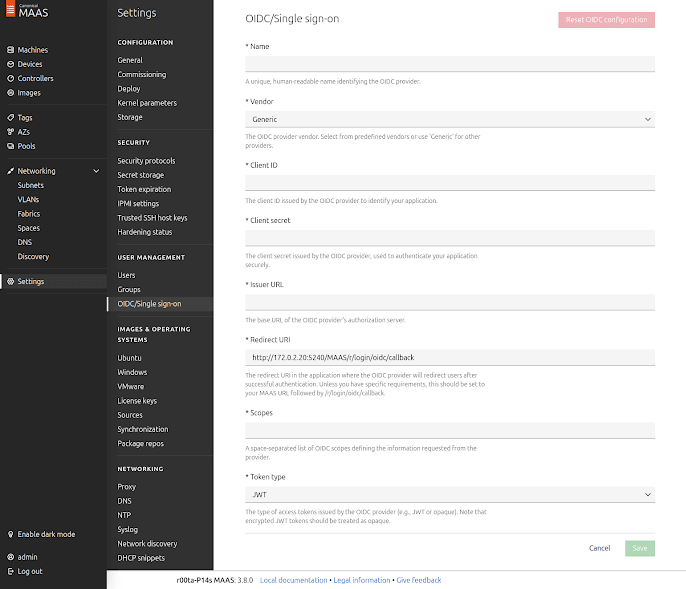
Figure 1 MAAS UI: showing how to set an OIDC compliant provider
Relationship-Based Access Control (ReBAC)
A new authorization framework introduces more granular permissions through users, groups, and resource entitlements. This provides greater flexibility when managing access to MAAS resources.
Read theuser groups and entitlements guide.
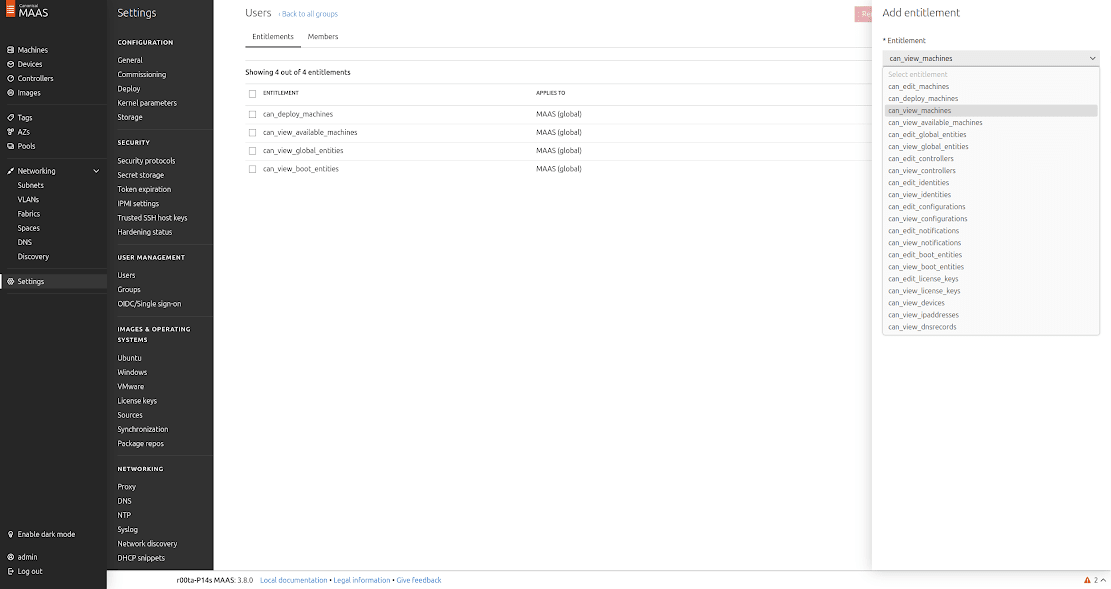
Figure 2 MAAS UI: configuration of ReBAC entitlements
Deployment scripts
Administrators can now execute custom scripts before or after OS installation, allowing additional hardware checks and deployment-specific tasks to be integrated into the provisioning workflow.
While commissioning gathers hardware information, deployment turns a machine into a running system, and some tasks only make sense at deployment time, for example:
Deployment scripts provide a single, repeatable place to put that logic. Every machine being deployed runs the uploaded deployment scripts, so behaviour is consistent across the whole fleet.
See thedeployment scripts documentation.
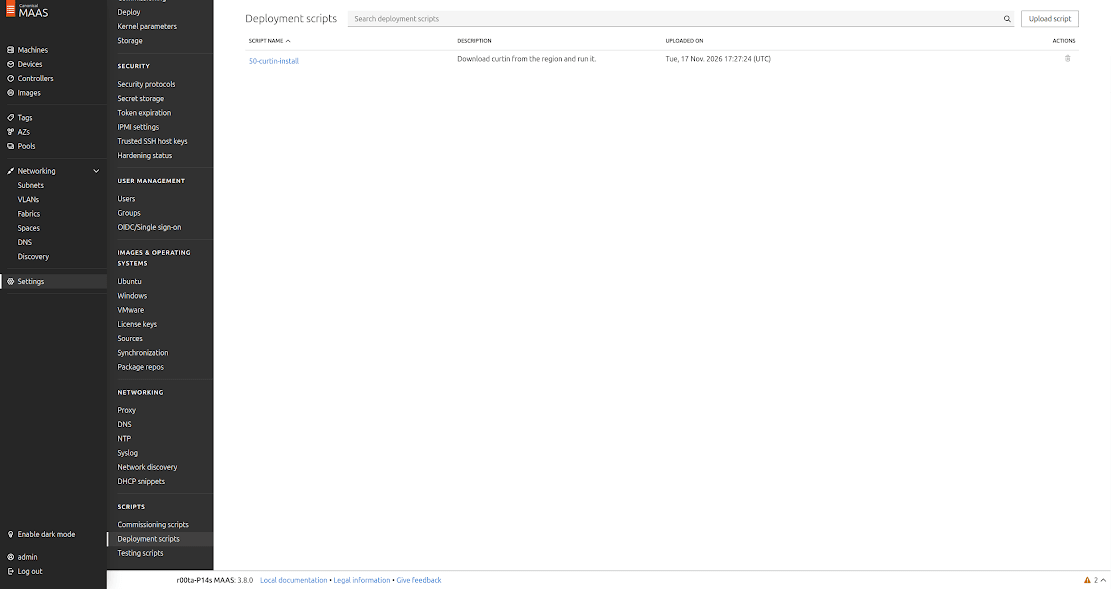
Figure 3 MAAS UI: configuration of deployment scripts
FIPS readiness and security improvements
MAAS 3.8 incorporates the FIPS-related enhancements introduced in MAAS 3.7.4, preparing the platform for FIPS-compliant operation once a FIPS-compliant kernel becomes available for Ubuntu 26.04 LTS. The release also expands security audit logging, providing better visibility into authentication and authorization events. Learn more about FIPS compliance for MAAS in our blog post.
Long-term infrastructure needs long-term software
As hardware and workloads evolve, infrastructure teams need management platforms that provide continuity and reliability. With up to 15 years of support, MAAS allows organizations to maintain a supported bare metal control plane across multiple hardware generations, reducing the pressure to upgrade solely because of software end-of-support deadlines.
Explore theMAAS release notes to learn more about MAAS 3.8, orcontact Canonical to discuss long-term support for your infrastructure.
However, the software used to provision and manage physical servers often follows much shorter support cycles. This creates a mismatch between long-term infrastructure investments and the software platforms responsible for operating them.
For infrastructure teams, this translates into additional operational costs and risks. Upgrading or replacing infrastructure management platforms requires careful planning, compatibility testing, and coordination with other infrastructure components. This challenge is particularly relevant for bare metal automation, which provides the foundation for discovering, provisioning, and managing physical servers. In large-scale environments, where reliability and availability are critical, these activities can consume considerable engineering resources.
MAAS introduces 15 years of long-term support
Canonical MAAS (Metal as a Service) is an open source platform that brings cloud-like automation to physical infrastructure. It provides centralized management of bare metal servers, automating their lifecycle from hardware discovery and commissioning to operating system (OS) deployment and repurposing. Through its APIs and integration with infrastructure-as-code (IaC) tools, MAAS enables organizations to manage large fleets of physical servers using consistent and repeatable processes.
With MAAS 3.8, Canonical introduces the first Long Term Supported (LTS) release of MAAS, offering up to 15 years of security maintenance, predictable operational stability, and enterprise support for its bare metal automation platform, following Ubuntu LTS commitment.
This extended support lifecycle allows organizations to maintain a stable bare metal management platform over a much longer period, reducing the frequency of major upgrades which are driven primarily by end-of-support deadlines. Infrastructure teams can continue refreshing hardware, expanding capacity, and adapting their environments without having to replace the underlying management platform at the same pace.
This gives organizations more flexibility to schedule infrastructure upgrades according to their operational needs, while reducing maintenance overhead and maintaining access to security updates throughout the applicable support period.
Long-term support across the Canonical infrastructure stack
Bare metal automation does not operate in isolation. It provides the foundation for higher-level infrastructure platforms, including OSs, virtualization, storage, and container orchestration. Each of these layers has its own software lifecycle, and differences in their support periods can introduce additional complexity for infrastructure teams.
The introduction of 15 years of support for MAAS marks an important milestone for Canonical’s broader infrastructure portfolio. With MAAS now joining the LTS offering, all the major components of Canonical’s infrastructure stack have LTS releases. This enables organizations to align support lifecycles across the entire stack, from bare metal to applications, simplifying long-term infrastructure planning and maintenance.
This includes MAAS for bare metal provisioning, Ubuntuas the base OS,OpenStack andMicroCloud for cloud infrastructure,Ceph for storage,Canonical Kubernetes for container orchestration, andJuju for application deployment and lifecycle management.
Having long-term support across these platforms simplifies infrastructure lifecycle planning. Instead of managing completely separate support strategies for each component, organizations can work with a single vendor and better coordinate maintenance, security updates, and platform upgrades across their infrastructure stack.
Why long-term support matters for enterprise infrastructure
Long-term software support is particularly valuable in environments where infrastructure investments are substantial and availability is critical.
In AI and HPC, infrastructure platforms often manage multiple generations of servers and accelerators. A bare metal control plane with long-term support allows teams to refresh and expand their computing capacity while maintaining consistent provisioning and management processes.
For telecommunications and 5G providers, infrastructure changes typically require extensive validation and coordination. Longer support cycles help reduce the frequency of support-driven upgrades and make it easier to align software maintenance with network modernization plans.
For critical infrastructure, such as power distribution networks and financial institutions, availability, security, and operational resilience are essential. Changes to infrastructure management platforms often require extensive testing, formal approval, and careful coordination to avoid disrupting critical services. By reducing the need for frequent, support-driven upgrades, organizations providing critical services can maintain stable operations more easily, while supporting their security and regulatory requirements.
What else is new in MAAS 3.8?
Beyond the introduction of LTS, MAAS 3.8 brings several improvements focused on security, access management, and deployment customization.
OpenID Connect (OIDC) integration
MAAS now supports integration with external OIDC identity providers, enabling Single Sign-On (SSO) and simplifying centralized user authentication.
Learn more in theMAAS SSO guide.
Figure 1 MAAS UI: showing how to set an OIDC compliant provider
Relationship-Based Access Control (ReBAC)
A new authorization framework introduces more granular permissions through users, groups, and resource entitlements. This provides greater flexibility when managing access to MAAS resources.
Read theuser groups and entitlements guide.
Figure 2 MAAS UI: configuration of ReBAC entitlements
Deployment scripts
Administrators can now execute custom scripts before or after OS installation, allowing additional hardware checks and deployment-specific tasks to be integrated into the provisioning workflow.
While commissioning gathers hardware information, deployment turns a machine into a running system, and some tasks only make sense at deployment time, for example:
- Applying firmware or BIOS settings that must be in place before the OS is installed
- Preparing attached hardware (such as flashing a Data Processing Unit (DPU)) as part of every deployment
- Running site-specific setup that has to happen on every machine, without baking it into a custom image with specific pre-seeds
Deployment scripts provide a single, repeatable place to put that logic. Every machine being deployed runs the uploaded deployment scripts, so behaviour is consistent across the whole fleet.
See thedeployment scripts documentation.
Figure 3 MAAS UI: configuration of deployment scripts
FIPS readiness and security improvements
MAAS 3.8 incorporates the FIPS-related enhancements introduced in MAAS 3.7.4, preparing the platform for FIPS-compliant operation once a FIPS-compliant kernel becomes available for Ubuntu 26.04 LTS. The release also expands security audit logging, providing better visibility into authentication and authorization events. Learn more about FIPS compliance for MAAS in our blog post.
Long-term infrastructure needs long-term software
As hardware and workloads evolve, infrastructure teams need management platforms that provide continuity and reliability. With up to 15 years of support, MAAS allows organizations to maintain a supported bare metal control plane across multiple hardware generations, reducing the pressure to upgrade solely because of software end-of-support deadlines.
Explore theMAAS release notes to learn more about MAAS 3.8, orcontact Canonical to discuss long-term support for your infrastructure.