
+- Sick Gaming (https://sickgaming.net)
+-- Forum: Programming (https://sickgaming.net/forum-76.html)
+--- Forum: Python (https://sickgaming.net/forum-83.html)
+--- Thread: [Tut] How to Increment a Dictionary Value (/thread-99731.html)
[Tut] How to Increment a Dictionary Value - xSicKxBot - 07-22-2022
How to Increment a Dictionary Value
5/5 – (1 vote)
Problem Formulation and Solution Overview
In this article, you’ll learn how to increment a dictionary value in Python.
To make it more fun, we have the following running scenario:
Trinity Bank keeps track of its latest mortgage rates in a Dictionary format. Recently there has been a steady increase in rates. How would Trinity Bank increment/increase the Dictionary value of a selected rate?
Code:
mtg_rates = {'30-Year-Fixed': 5.625, '20-Year-Fixed': 5.250, '10-Year-Variable': 5.125, '7-Year-Variable': 5.011, '5-Year-Variable': 4.625} Question: How would we write code to increment a Dictionary value in Python?
We can accomplish this task by one of the following options:
- Method 1: Use Dictionary Key Name
- Method 2: Use Code:
Dictionary.get()
- Method 3: Use Code:
Dictionary.update()
- Method 4: Use Code:
Unpacking using the * Operator
- Method 5: Use Code:
Dictionary Comprehension
Method 1: Use Dictionary Key Name
This method passes an existing Dictionary Key Name to access and increment the appropriate Value.
Code:
mtg_rates['30-Year-Fixed'] += 1
print(mtg_rates['30-Year-Fixed'])
In this example, the 30-Year-Fixed mortgage rate is referenced by name
Code:
(mtg_rates['30-Year-Fixed'Then, this updated value is saved back to
Code:
mtg_rates['30-Year-Fixed']Code:
6.625Method 2: Use Dictionary.get()
This method uses the
Code:
Dictionary.get()Code:
mtg_rates['20-Year-Fixed'] = mtg_rates.get('20-Year-Fixed') + 2
print(mtg_rates['20-Year-Fixed'])
In this example, the 20 Year Fixed mortgage rate is referenced and accessed using
Code:
(mtg_rates.get('20-Year-Fixed')Then, this updated value is saved back to
Code:
mtg_rates['20-Year-Fixed']Code:
7.25Method 3: Use Dictionary.update()
This method uses
Code:
Dictionary.update()Code:
new_rate = mtg_rates['10-Year-Variable'] + 3
mtg_rates.update({'10-Year-Variable': new_rate})
print(mtg_rates['10-Year-Variable'])
In this example, the current value of a 10 Year Variable mortgage rate is retrieved, incremented by three (3) and saved to
Code:
new_rateNext, the appropriate Key for the key:value pair is accessed, and the Value is updated to reflect the contents of
Code:
new_rateCode:
8.125Method 4: Use Unpacking
This method uses
Code:
UnpackingCode:
mtg_rates = {**mtg_rates, '7-Year-Variable': 9.011}
print(mtg_rates)
Above, accesses the 7 Year Variable mortgage rate, increments the rate to the amount indicated (
Code:
9.011Code:
9.011Method 5: Use Dictionary Comprehension
This method increments all Mortgage Rates in one fell swoop using
Code:
Dictionary ComprehensionCode:
new_rates = dict(((key, round(value*1.10, 3)) for key, value in mtg_rates.items()))
print(new_rates)
Above, accesses each mortgage rate in the
Code:
mtg_ratesCode:
round()Code:
new_ratesCode:
{'30-Year-Fixed': 6.188, '20-Year-Fixed': 5.775, '10-Year-Variable': 5.638, '7-Year-Variable': 5.512, '5-Year-Variable': 5.088}Summary
These methods of incrementing a Dictionary Value should give you enough information to select the best one for your coding requirements.
Good Luck & Happy Coding!
Regex Humor
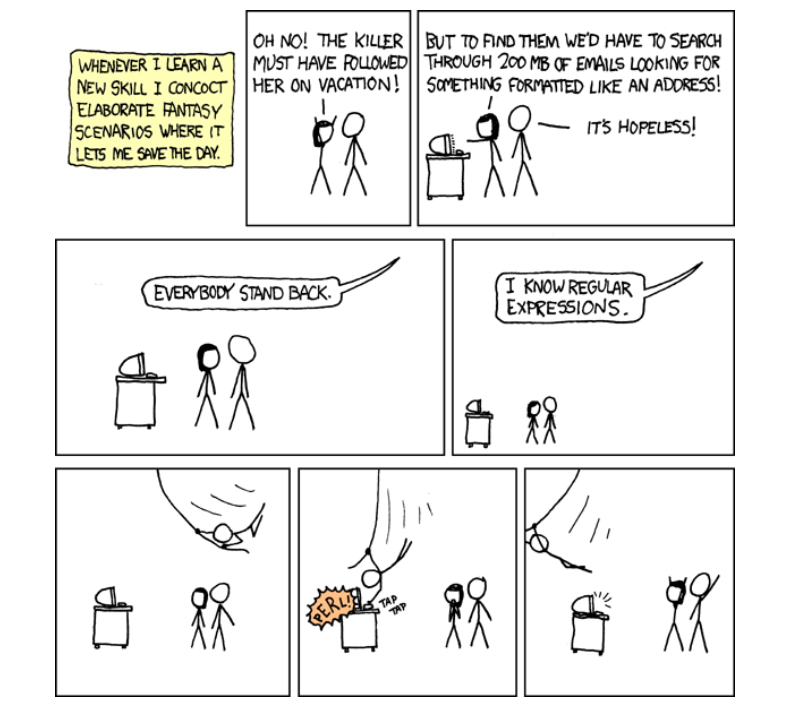 [i]Wait, forgot to escape a space. Wheeeeee[taptaptap]eeeeee. (source)[/i]