HBO's hit sci-fi series Westworld is about to return to television for Season 3. The new season consists of eight episodes, and Episode 1 begins airing on March 15. Now, critic reviews are rolling in, but what do they think of the brand-new season?
Much like previous seasons, Season 3 of Westworld is shrouded in a bit of mystery, and the majority of the reviews that are available online are currently spoiler-free. Currently, the Metacritic score for the new season is "to be determined" as the site collects the reviews. Over on Rotten Tomatoes, the third season is rated at 77% based on 13 reviews.
Below, you'll find a few of the reviews floating around the internet for Season 3 of the show. These reviews are not for the full season, though. It's only for the first four episodes or the first half of the new season. Check them out below.
It’s been a while since we’ve fired up the spotlight and focused its bright gaze on an outstanding member of our community. We’re ready to get back into the habit of sharing cool people who you should you keep an eye on, so here’s a fresh Community Focus hot off the presses.
Our focus this week is a detail-oriented master of the Crucible. You may have seen him breaking down weapons and abilities and offering his analysis on better understanding the intricacies of the Destiny combat sandbox. Please meet Drewsky.
Welcome to the show. OK, it’s not really a show … anyways—tell us a little bit about yourself and what your role is in the Destiny community.
Drew: Hey all, I’m Drew. I started playing FPS games back during some of the early Halo titles, and since then been in love with Bungie FPS games. I’ve attended a few MLG events and made some great friends through competitive Halo, and that trend continued into Destiny where I’ve had the pleasure of attending some great community gatherings and made some lifelong friends. In my personal life, I’m a musician, and enjoy other hobbies like playing soccer and the Yu-Gi-Oh! TCG.
I suppose that I’m best known in the Destiny community for making opinion and review videos where I try and include a high degree of depth and analysis. Second to that, I guess most people would identify me for being a controller player, sniping, and having 42,069 kills on my Twilight Oath kill counter—oh, also jamming to Taylor Swift while sniping.
That is a lot of Twilight Oath kills! Where all can we find you on the internet?
A Guardian has many paths to choose from. What has been your favorite Subclass and which are your favorite weapons to wield?
Drew: My favorite Subclass is definitely Spectral Blades, I think both the neutral game and Super are incredibly powerful and rewarding. Second to that, I really love the new changes to the Attunement of Sky Dawnblade. The dodge handles momentum much better now and allows for some incredible movement and plays. Both Supers remind me of some characters I like in my favorite anime, Sword Art Online, so I love the fantasy behind them.
I’m not sure I could name my absolute favorite weapons in the game, there are too many I love because of either aesthetics, functionality, or memories I have associated with them—and occasionally for all of the above. If I had to include some names that would probably find themselves in my top-ten list, they would be (in no particular order):
Izanagi’s Burden
Suros Regime
The Chaperone
Not Forgotten
Twilight Oath
Mida Multi-Tool
Redrix’s Claymore
Outbreak Perfected
That’s a fine list. Tell us about your channels—what kind of Destiny content do you like to create?
Drew: My YouTube Channel is home to many hot takes, thoughts, and opinion videos. These are my best attempts to break down different elements of the sandbox and show how they work, for the purpose of better understanding the game and creating the most effective and fun loadouts possible. I do reviews on specific weapons and armor pieces (as well as comparisons between them), and sometimes show off synergistic loadouts including different weapons and armor that I find to be very effective, fun, or both. My Twitch channel is where I like to relax and be a bit more candid—usually sniping, trying out different weapons, going for cool clips, and talking with chat.
I’m sure you’ve seen the Dev Insight. Are you excited that Trials of Osiris is returning to Destiny 2?
Drew: I’m certainly excited for the return of Trials of Osiris. Like many, I have lots of fond memories and moments of Trials of Osiris in Destiny 1, and even Trials of the Nine in Destiny 2, and I’m excited to have that available again—especially since I believe I’ve gotten much better at the game since then. I’m most excited to have a true endgame PvP focused activity again, and I’m very excited to see the new weapons and what potential they have.
Opening day is coming up next Friday. Do you have your Trials dream team picked out? Who’s on it?
Drew: I’ve most certainly picked out my Trials dream team, and of course it includes CammyCakes and Sidezz. We’ve played together since the beginning of Destiny 2, and I can confidently say that they are incredibly talented players and two of my best friends. We may not be the best in the game, but I feel we have great synergy together—we complement each other’s gameplay and are also very like-minded so we’re able to discuss our mishaps/losses to focus on improving.
Anything else you’d like to add?
Drew: Only last thing I’d like to add is that I think the Destiny community is fantastic, and I’m so thankful for meeting some great individuals (many I can call friends) and creating lifelong memories with them. I hope we—as players, content creators, and developers—continue to lift each other up and spread kindness to keep making great memories and grow the community.
We’d like to thank Drewsky for taking the time to chat with us. Make sure you give his channel a visit, you might learn something that will help you on your way to the Lighthouse.
We’ll be doing more Community Focus write-ups in the future. If you have anyone you think we should feature, let us know on Twitter or our forums.
New blocks, new sounds, more changes for the Nether! I mean, what did we expect? This is building towards the Nether Update after all.
Added crimson and warped hyphae – all-sided “stem” blocks including stripped variations
Use a smithing table to fuse the Netherite ingot with your diamond weapon/tool/armor
New ambient sounds for the Nether biomes
Fish now despawn when further than 64 blocks away from the closest player
Hoes are now more like other tools used to break blocks
Updated the Netherite item textures
Bartering loot has been tweaked once again to bring back Soul Sand, make Netherite Hoes less common, and remove/add items to better fit survival players
HOE CHANGES
We’ve made some changes to Hoes to make them more useful in the Nether.
Each tier has different speed at which Hoes mine blocks they are effective against
Hoes can now be enchanted with the following enchantments: Efficiency, Fortune, Silk Touch
Those enchantments can now be provided through the enchanting table.
BARTERING LOOT
Soul Sand is back!
Netherite Hoe much less common
Shroomlight removed
Warped Fungus removed
Iron Nuggets added
ENTITY UUIDS
UUIDs of the owners of projectiles, such as arrows or snowballs, are now stored as an array of four integers. All UUIDs will be stored in this format in the future
In this update we are introducing a new system for gathering data on the type of changes that are harder to evaluate or predict without very large number of games, such as gold bounty formula changes.
We expect the number of times that we actually do this during the year to be very low, however when we do it it’ll be during weekdays only at the lowest point of user activity, between 4 and 6PM Seattle time. In addition, we are adding a convar “dota_disable_experimental_gameplay” that can be used by players to disable it. Any gameplay changes will only be active in matchmaking games where no players have the convar set. The changes will never be active in lobby and league games.
We recognize that in some cases players will back solve what changes were done, however we won’t announce changes ourselves in part because we don’t want players to overcompensate with knowledge of them and because generally we prefer to not reveal potential upcoming changes.
Although the type of changes we are thinking about, like gold distribution, take much more than a game or two to show their full impact, we will still be able to get meaningful data and analysis on the direction and scale of changes.
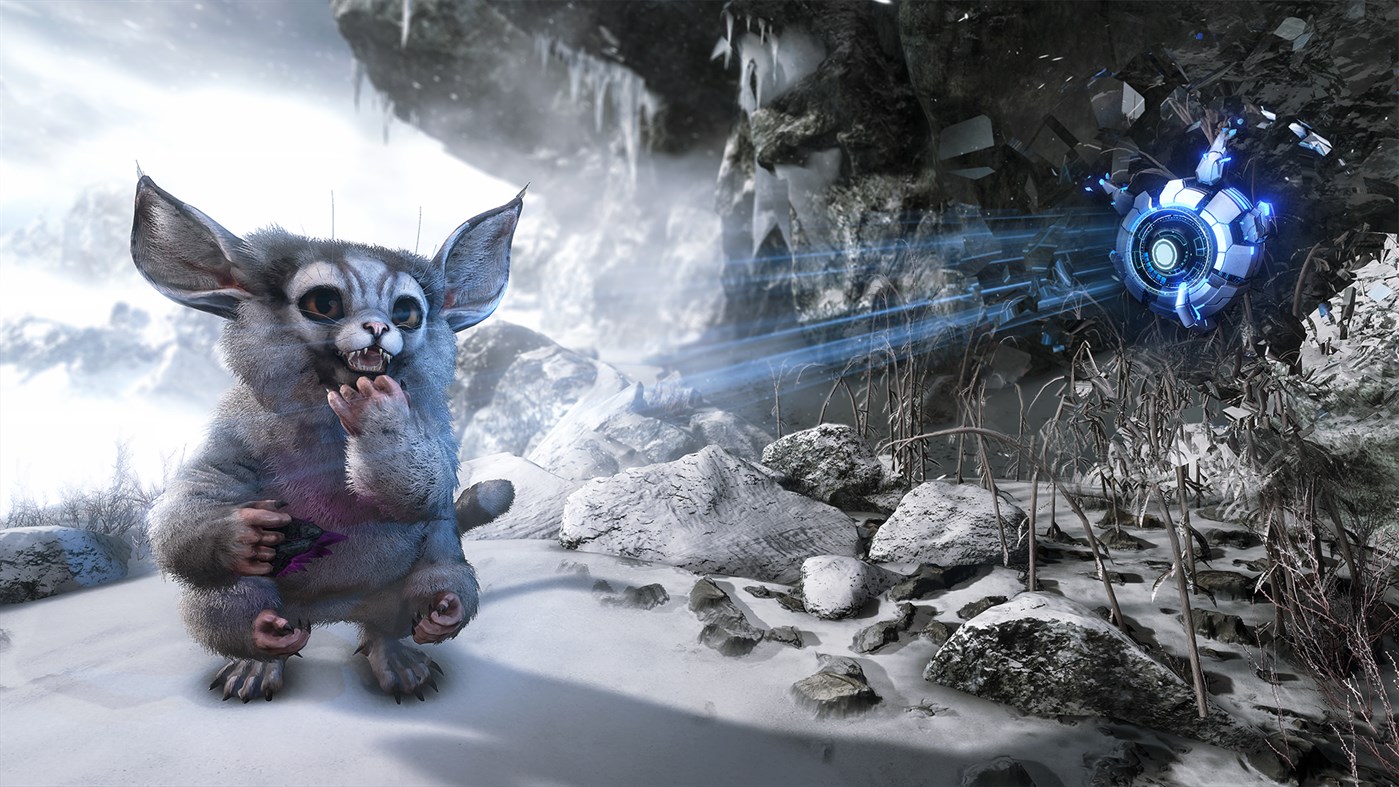
Craig from Studio Wildcard here, and I’m super excited to be talking about Ark: Genesis Part 1, our newest expansion to Ark: Survival Evolved. We’re adding a whole bunch of new gameplay elements, and giving each survivor their own personal companion: AI construct HLN-A.
We’re always exploring different ways to convey the story of the Ark universe and we think HLN-A is a great step in a new direction. The fantastically talented Amber Lee Connors reprises her role (sort of) as Helena and brings her wonderful charisma and snark to the role. She acts as a vessel for us to deliver story more directly to the player and as the catalyst for the all-new mission system. HLN-A stays with survivors every step of the way, helping them explore the new biomes and guiding them through missions with cheeky hints.
Speaking of missions, these are new ways for survivors to experience the Ark universe. In addition to the traditional Ark gameplay, missions give players a way to experience Ark in a more directed and objective-focused way. No spoilers on what those missions are, though. You’ll find them in the Genesis simulation.
Ok, one spoiler… my personal favorites are probably the races. They may not be the truest test of a survivor’s Ark skills, but the dev team’s races got pretty heated whenever we played them, and there were more than a few rematches demanded.
It’s not just the
gameplay that we’re pushing the boundaries on. The creatures found in the
Genesis simulation are like nothing survivors have seen before. I have a soft
spot for the Spooder, I mean BogStrider… I mean Bloodstalker. We have like 30
names for it (good luck finding out how to unlock them!). Most of the new
creatures bring something crazy and new to the game, from the Bloodstalker’s
ability to webswing across terrain to the Space Whale’s warp jump.
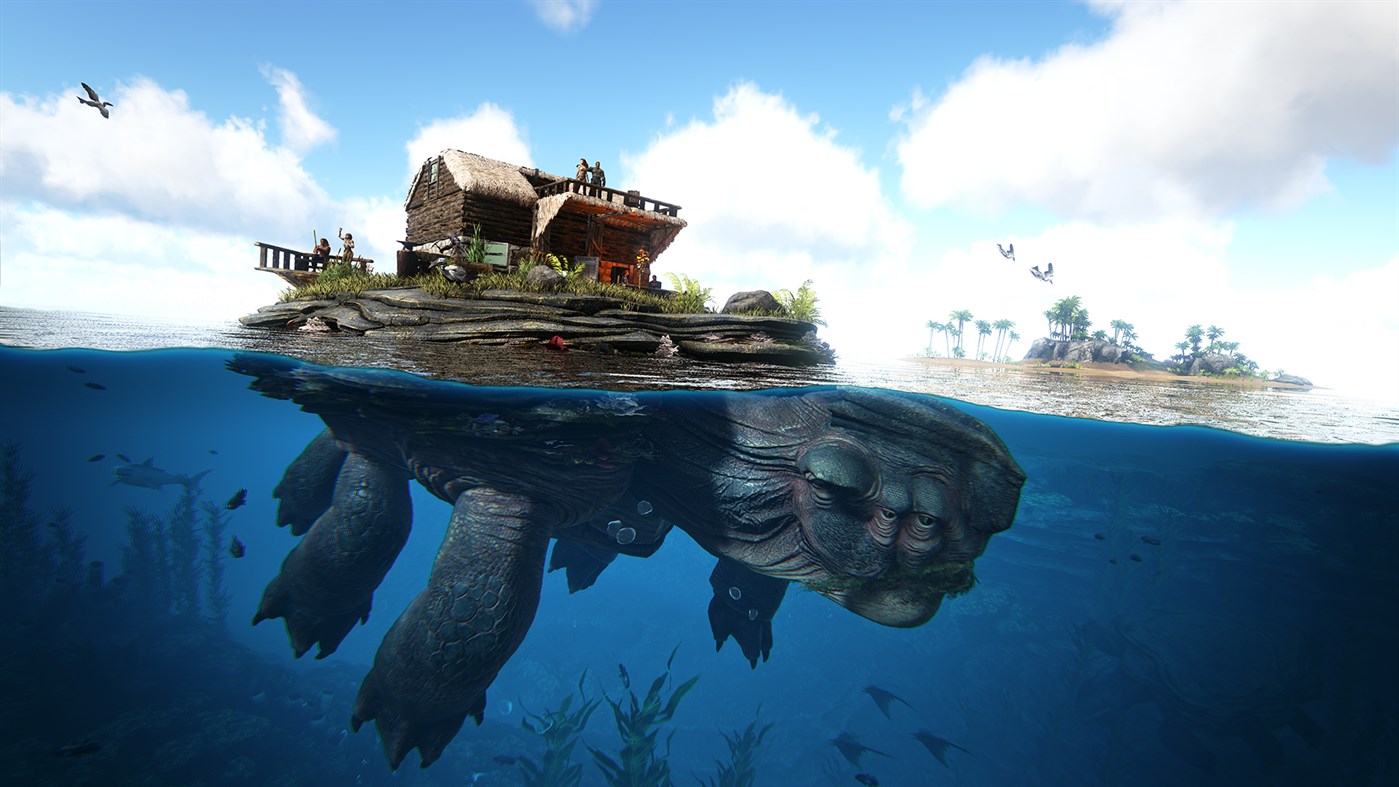
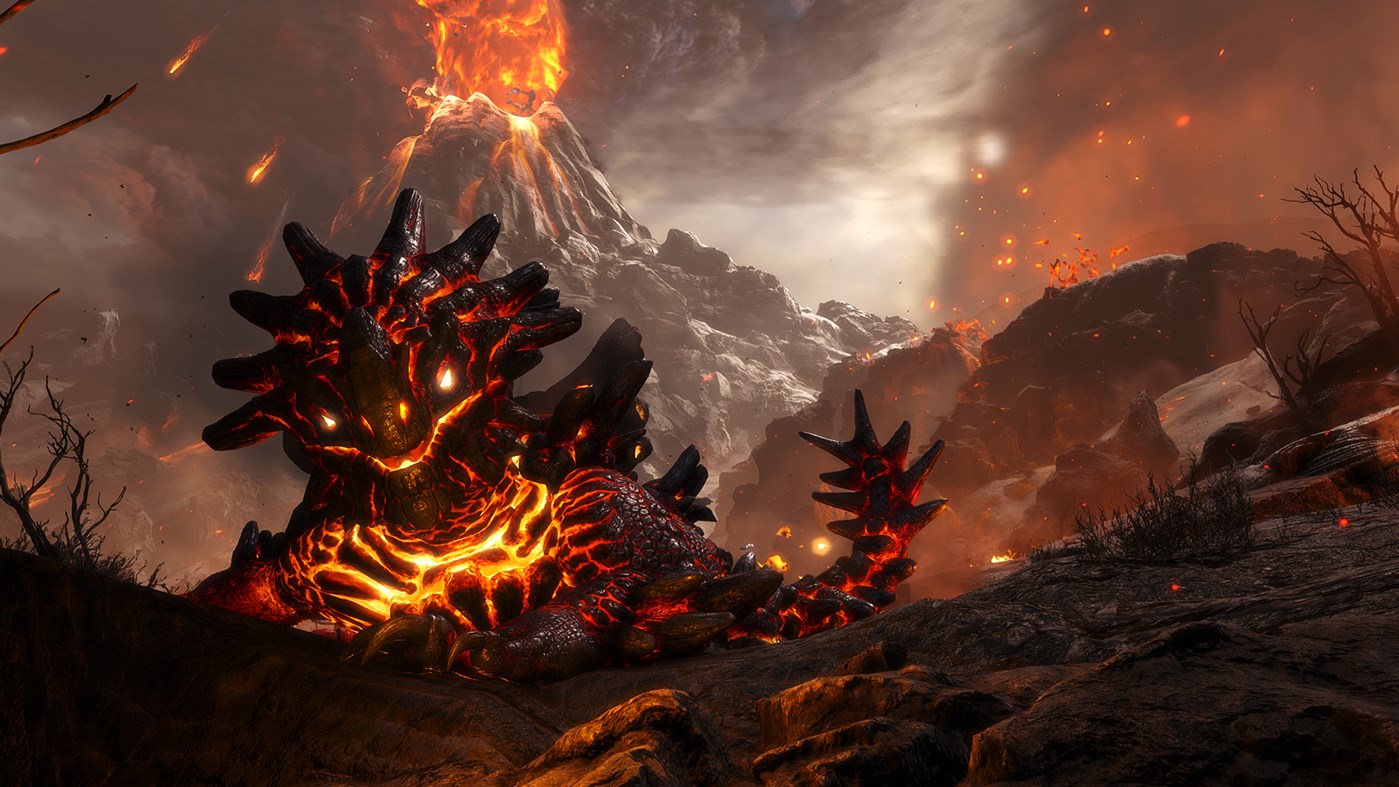
All these abilities will help survivors explore the crazy new environments in Ark: Genesis Part 1. Because the Genesis simulation is supposed to prepare survivors for the most extreme possibilities, each biome is incredibly different from the others, and requires considerable preparation. The Arctic and Swamp biomes ease players into this, and the Volcanic and Ocean biomes really start testing survivors. By the time survivors make it to the Lunar environment, they must deal with radiation, lower gravity, and an almost complete lack of food and water!
As much as I’d love to talk about where the Ark story is going, I have a bad habit of dropping spoilers. Nobody wants that, but what I can say is that once you finally get to the end of ARK: Genesis – Part 1, you won’t be able to wait for the next chapter!
ARK: Genesis Season Pass
Studio Wildcard
☆☆☆☆☆152
★★★★★
Continue your quest for ultimate survival and unlock a whole new chapter in the saga of ARK: Survival Evolved with the ARK: Genesis Season Pass! This Season Pass gives you access to two new huge expansion packs, and one exclusive in-game robotic AI companion called ‘HLN-A’. In ARK: Genesis, further the ARK storyline while adventuring through exotic new worlds with all-new mission-based gameplay. Discover, utilize and master new creatures, new craftable items, weapons, and structures unlike anything you have seen yet! The Genesis Season Pass includes: – ARK: Genesis Part 1 (available February 2020) – ARK: Genesis Part 2 (available Winter 2020) – Exclusive HLN-A cosmetic pet (available right now!) The massive “ARK: Genesis Part 1” expansion includes: Waking up within a virtual simulation, you must survive in a world unlike anything you’ve seen before! ARK: Genesis represents a new, story-oriented beginning in ARK’s epic saga of survival. With a strangely familiar companion, you must overcome the simulation’s rigorous tests. Only by fighting, building, taming, and exploring will you uncover the secrets behind this forbidding place. CONQUER EVERY MISSION A holographic guide to the simulation, HLN-A, offers a wide array of missions at varying difficulty levels, for you to tackle at your own pace — everything from gunning down waves of enemies with the aid of power-ups, escorting vulnerable baby creatures to their parents, tracking and hunting down powerful bosses, competing in Dino Races, even playing a round of Dodo-Basketball, and much more. The simulation itself isn’t perfect, so you can earn extra credit (and experience) by fixing the glitches scattered all throughout the world. Completing missions earns you Hexagons, which you can spend for extra resources, TEK items, travel between environments, and more. EXPLORE LETHAL LANDSCAPES ARK: Genesis features beautiful biomes ripe for exploration — but they all want you dead. The simulator tests your mettle across fetid alien bogs, deep undersea trenches, frigid mountain peaks, dangerous volcanic hellscapes… and even the wild low-gravity surface of an alien moon. Conquering each area requires preparation, smarts, and the ability to improvise so that when a volcano rains fire from the sky, an avalanche buries you, or a whirlpool pulls you into the briny deep, you’re ready to meet the challenge! HUNT AND TAME NEW CREATURES The environments may be dangerous, but they’re nothing compared to the new creatures who call ARK: Genesis home: web-spinning spiderlike beasts, cute-but-deadly shapeshifters, sea turtles the size of islands, and lava lizards that act as living forges. Plus, who doesn’t want to fly around on an immense hyperspace-capable space whale? Master the simulation, and you can test yourself against a mysterious new boss… the likes of which ARK has never seen before. GEAR UP AND BUILD UP As you brave the many dangers of ARK: Genesis, take some time to craft new gear. Wield weapons like combo-capable plasma claws and remote-guided cruise missiles. Make tools from fishing nets to mining drills, or new vehicles such as hover-skiffs. Build interactive structural elements such as pressure plates, alarm systems, jump pads, ocean platforms and more. Whether you’re a go-it-alone survivalist, a weapon-making warmonger, or a base-building architect, this expansion has a crafting project suited for you. WILL YOU PASS THE TEST? ARK: Genesis takes your story in an all-new direction — and your skill determines your success. Everything is turned up to the highest setting: the challenges, the dangers…and the vast rewards. Only the toughest and smartest survivors will pass all of the simulation’s many tests. Will you be one of them?
Disbelief is a game development studio focusing on contracting and consulting services. We’ve worked with both AAA and independent studios to help their projects ship. Notable projects we’ve worked on include Gears 5, Borderlands 3, Gears of War 4, and Torn.
At Disbelief we value work-life balance, and want to create an alternative to the crunch-culture prevalent in game development. We also believe strongly in investing in our talent and our team. Disbelief is a place to puzzle out the solutions to cutting-edge problems in graphics and engine programming, but also a place where people can grow their careers and skill sets as valued members of a stable and close knit team.
Currently, we’re looking for a programmer. This opportunity is for a full-time position in Cambridge, MA or Chicago, IL. Programmers at Disbelief are called on to develop and debug in a variety of areas from game play to core engine programming. You are expected to learn new systems and projects as you grow as a developer. You are also expected to use your knowledge to solve problems both you and others in your team have
Key Responsibilities
Clearly communicate your work to others
Debug code
Estimate task work
Assess impact of issues on schedule
Write performant code and specialized systems
Document your code
Study version histories to guide current problems
Implement new system features
Skills and Requirements
BA/BS in Computer Science, or equivalent experience
Excellent communication skills, both verbal and written
1+ years of experience in writing software in C++
1+ years in game development, or 3+ in a related industry
Experience with version control with P4, git, or equivalent
Understanding of multi-threaded systems
Remote: No, but we do enjoy working from home up to two days a week, when project constraints allow.
Visa Sponsorship: No
Technologies: Most of our work is C++ of varying standards with a sprinkling of other languages as needed for tooling. We do a lot of graphics programming work, using shader languages and platform graphics APIs. Since we often are debugging the lower levels of systems, being able to read x64 or ARM assembly is useful. Primarily we work with Unreal Engine 4, but we also work with Unity and custom game engines. Our work uses rendering, physics, audio, VR, AR, and other APIs frequently. Our primary platforms are PC, Xbox One, PS4, Switch, and VR/AR devices.
Whether you’re just starting out, looking for something new, or just seeing what’s out there, the Gamasutra Job Board is the place where game developers move ahead in their careers.
Gamasutra’s Job Board is the most diverse, most active, and most established board of its kind in the video game industry, serving companies of all sizes, from indie to triple-A.
Writing, directing, and designing FMV censorship simulator Not for Broadcast
The ultra-niche “propaganda simulator” genre has a new entry with Steam Early Access game Not for Broadcast, the latest satire from Britain’s NotGames.
Not for Broadcast puts the player in the role of a censor in charge a radical government’s media operations, making “live” TV decisions about what to air and as the title suggests, what’s not for broadcast.
We spoke with the game’s creator, director, writer, and artist Alex Paterson about Not for Broadcast, who explained the non-traditional background of the dev team and how Sam Barlow’s Her Story informed the game’s design.
Who are you, and what is Not For Broadcast?
I’m Alex Paterson, creator, director, writer and artist of Not for Broadcast.
NotGames is a British game studio that opened its doors in 2013 to attempt to save the charity that brought us all together. Coming from a bizarre background of film, TV, theatre and comedy, NotGames aren’t your usual game developers. If you’re asking, we’d like to call ourselves ‘multi-talented all-rounders’, while our former employers would probably say we’re ‘unfocused and easily distracted.’
Not For Broadcast is an immersive, narrative-driven TV station sim set in an alternate 1980s as the nation stumbles towards dystopia.
An FMV game in 2020 is a rather bold choice. Why’d you do it? Would you say the play inspired by older FMV games like Dragon’s Lair or Night Trap?
At NotGames we’re not your usual game devs. We come from backgrounds in film, TV, theatre and comedy (it’s actually how we all met) so film, comedy, and story were always going to take their place in the forefront of our games.
While I have fond memories of playing my uncle’s copy of Tex Murphy adventure Under a Killing Moon as a child in the late 90s, I’d say as inspiration for NFB goes, we were much more influenced by Sam Barlow’s Her Story and his innovative approach to FMV.
How much footage did you end up producing?
Hmm. Excellent question. Short answer: loads. We shot most scenes on four cameras simultaneously so that makes the total amount of footage just sky rocket. In Episode 1 alone, we’ve got over four hours of FMV. And that’s only the stuff that made it into the game. One sequence, the Sportsboard Championship (super prestigious), is about an 11 minute sequence which we shot eight times.
Video production is not a skill in most game developers’ toolbox. How’d you manage to create and maintain all those video clips? Do you have any tips for people making their own FMV games?
The honest answer is get people with the right skills. Our crew include directors, camera ops, booms, sound recordists, autocue operators, runners, make up artists, lighting, armorers, choreographers. And that’s just the folks behind the cameras. We would not have been able to produce the content that we did without all of those people. Which is simultaneously what makes Not For Broadcast so interesting and unique and also just such a bad idea…
A tip for people making their own FMV games I’d say–don’t feel limited to how other games have done it before you. We were adamant that our FMV wasn’t going to be shot in the office with Gary from finance in a silly hat. Even though, on paper, shooting four-camera, 10 minute long sequences without any mistakes or cuts including music, dance and camera moves is a terrible idea, we meticulously worked out a way to make it work and then did it anyway.
The obvious comparison for Not For Broadcast is to Papers Please, which was released in 2013. Have you played it? How would you say NFB is differentiated from it?
Of course we’ve played it! It’s similar in the sort of ‘dystopian work simulator’ angle but apart from that I’d say it differs quite heavily.
The main difference is of course the central mechanic of cutting together a live TV broadcast, censoring language and choosing ads. Lots of dystopias, including Papers, Please begin with their oppressive states already established. In NFB we wanted to explore ways these kinds of states can start and make people question the steps along the way almost more than the end result itself. We also try to leave the political morality quite open. There’s no bad guys in our dystopia. The government certainly aren’t evil. In Episode 1 they’re actually fairly nice…
Although the point of the game is serious, a lot of the individual clips are comic. How did you balance the tone between the dystopian elements of the story and the humor?
We had our scripts read aloud as much as possible. We treat the writing process very much like writing a play (stick to what you know, right?), and gathered all the actors around a table to read the script. It’s a sure fire way to judge the tone in a way that you never can while writing.
The atmosphere in the room does the job for you. The joke you’re proudest of could get the least laughs or what you thought was a shocking revelation can fall flat. We’d then slink back to our keyboards and rewrite the script again.
The simulation element is interesting. Some parts (like switching feeds and playing ads) are similar to how a real station technician would work, while other parts (avoiding “interference”) seem more fanciful. About what percent of the game is realistic? Did you feel like the play should simulate how someone would actually do this job, or did you make it more game-like as a nod to playability?
We always wanted to strike a balance between immersion and fun. We wanted the choices in the game to feel like they mattered, so it was important for the player to really feel in the shoes of the character.
But simultaneously it is a game and to make the mechanic as fun as possible we removed lots of the dull realism. We initially had a much more realistic sound desk with different mute buttons for different feeds but players found it way too overwhelming so we decided that, for now at least, giving too much control might actually negatively impact the experience of the game. People could accidentally mute the important bits and not know what they’d done for example.
And at a certain point if your goal is realism, the game stops becoming a game or a work simulator and just becomes work. Of course the player is actually taking on the jobs of many people in reality but by gamifying them down to their basic functions we managed to create that sense of one person having to constantly firefight and spin plates.
Playing multiple videos at once and quickly switching between them is something that’s technically impressive even now, reminding me of demos for the old BeOS. Did you have technical trouble with playing multiple videos simultaneously? Any trouble with streaming bandwidth that you had to solve?
Yes! The biggest problem we had was getting videos to play ball across different platforms. Because of the way videos are decoded, it’s not always simple to identify what the problem is, as you can’t know what media packs or codecs a system has. We had issues where the game ran great on Windows 10 machines but just lagged unbearably on Windows 7 which turned out to be something solved by a Unity video hardware loading fix.
I personally have trouble with games with a plethora of controls, especially when they expect me to make quick decisions between many controls while under sensory assault. It’s possible to make things arbitrarily difficult for a player in this way, by throwing them more balls to juggle. Where do you draw the line in terms of the number of plates the player is expected to keep spinning at once, so to speak?
Playtest, playtest, and playtest again. We regularly brought in fresh players and watched them play the game, watched carefully how quickly they learned the mechanics and what levels of multitasking were fun and what was too much.
Early on we actually overestimated how much the players actually wanted to do and discovered that just letting them focus on editing the show and paying attention to the FMV sequences was already pretty engaging alone. We found that as people mastered mechanics, it was good to slowly introduce more and the pacing is what actually mattered more than number of plates.
Once your ears are tuned to censoring it actually takes no time at all to slam the space bar when you hear an “F” or a “Geoff,” but at the beginning, getting your brain around the concept takes a lot of your focus. So we’ve tried to keep that level of focus constant by forcing players to do new things at about an equal rate to them getting the hang of the old mechanics. It keeps the pressure and tension steady and stops you getting bored. Though of course every now and then it’s important to ease up slightly and let the player feel cool for mastering something.
The most important collection data type in Python is the list data type. You’ll use lists basically in all your future projects so take 3-5 minutes and study this short guide carefully.
You can also play my short video tutorial as you read over the methods:
Method
Description
lst.append(x)
Appends element x to the list lst.
lst.clear()
Removes all elements from the list lst–which becomes empty.
lst.copy()
Returns a copy of the list lst. Copies only the list, not the elements in the list (shallow copy).
lst.count(x)
Counts the number of occurrences of element x in the list lst.
lst.extend(iter)
Adds all elements of an iterable iter(e.g. another list) to the list lst.
lst.index(x)
Returns the position (index) of the first occurrence of value x in the list lst.
lst.insert(i, x)
Inserts element x at position (index) i in the list lst.
lst.pop()
Removes and returns the final element of the list lst.
lst.remove(x)
Removes and returns the first occurrence of element x in the list lst.
lst.reverse()
Reverses the order of elements in the list lst.
lst.sort()
Sorts the elements in the list lst in ascending order.
If you’ve studied the table carefully, you’ll know the most important list methods in Python. Let’s have a look at some examples of above methods:
>>> l = []

>>> l.append(2)

>>> l

[2]

>>> l.clear()

>>> l

[]

>>> l.append(2)

>>> l

[2]

>>> l.copy()

[2]

>>> l.count(2)

1

>>> l.extend([2,3,4])

>>> l

[2, 2, 3, 4]

>>> l.index(3)

2

>>> l.insert(2, 99)

>>> l

[2, 2, 99, 3, 4]

>>> l.pop()

4

>>> l.remove(2)

>>> l

[2, 99, 3]

>>> l.reverse()

>>> l

[3, 99, 2]

>>> l.sort()

>>> l

[2, 3, 99]
It’s not been a terribly interesting week, but I’ve made do the best I can – lots of behind the scenes changes going on at the moment, which I’ll be talking more about next week hopefully. We’ve got a few reviews in the pipeline but as we head towards the end of the month don’t expect much in the way of new features. I’ll be ticking things over with news in the interim.
Meanwhile, in mobile gaming…
New App Releases
Castlevania: Symphony of the Night (iOS & Android)
Castlevania is back in vogue at the moment thanks to the Netflix show, but we were genuinely surprised when we’d heard that one of the best entries of the series, Symphony of the Night, had dropped on mobile as a premium port – with controller support, no less!
It’s dirt cheap as well at $2.99, and the game is pretty much as it was back in the PS1 days, with a new ‘Continue’ feature being added by Konami, as well as Game Center achievements on iOS. There hasn’t been a new mobile trailer released as far as we’ve seen, so the below is from when the game was ported to the PS4.
[embedded content]
Other new releases today include War Tortoise 2, which is exactly what it sounds like (an on-rails Idle Shooter where you’re on a tortoise. Free to Play). Interestingly, Motorsport Manager has returned, only this time as online free-to-play game Motorsport Manager Online. I was thinking the other day we were overdue for a new entry in the series and it seems like rather than going down the annual release of other sports franchises, they’d try their hand at the free-to-play MMO world instead.
We’re not sure how it stacks up vs. the premium games, but we’ll try and find out. If you want to try it for yourself it’s available on both iOS and Android.
App Updates & News
Star Traders: Frontiers got some new updates over the past couple of weeks – a new crew class was added called the Blade Dancer, and this week a new blade weapon type was also added. ‘Straight Blades’ use quickness instead of strength as the primary stat, and have a higher piercing chance. This week’s update also closed the loop-hole where you could get a negative jump-cost stat and generate fuel by hyper jumping between systems. Crafty.
Mario Kart Tour has also received a few quality of life improvements ahead of the official release of multiplayer early next week.
App Sales
Football Manager Mobile & Football Manager Touch are at least 25% off on both iOS and Android.
It’s not much, but Bad North is also discounted by $1, which is still the cheapest it’s gone since launch. Kingdom: New Lands is 50% off, as is Star Traders: Frontiers.
Seen anything else you liked? Played any of the above? Let us know in the comments.
The TurboGrafx-16 Mini has been pushed back due to production delays in China. This is the latest piece of the games industry to be impacted by the outbreak of COVID-19, also known as coronavirus. Konami, which is distributing the mini-console, said that it is delayed "until further notice." It had been slated for March 19.
A new release date has not been announced. You can read the statement from Konami below, via Kotaku.
"Regarding the TurboGrafx-16 mini console and its peripheral accessories, the manufacturing and shipping facilities in China have encountered an unavoidable suspension due to the current Coronavirus (COVID-19) outbreak. As a result, the delivery of all TurboGrafx-16 mini products, which was originally scheduled for March 19th, 2020, will be delayed until further notice.