Guide: Where To Preorder The Totally Adorable LEGO Super Mario Sets
It’s finally happened: the union that kids (and big kids) have wanted for so long has come to pass with Super Mario finally available in LEGO form. Typically for Nintendo, the LEGO Super Mario sets are more than just standard LEGO sets – they are connected via a neat touch of technology that enables you to build Mario courses and ‘run’ them like you do in the plumber’s video games.
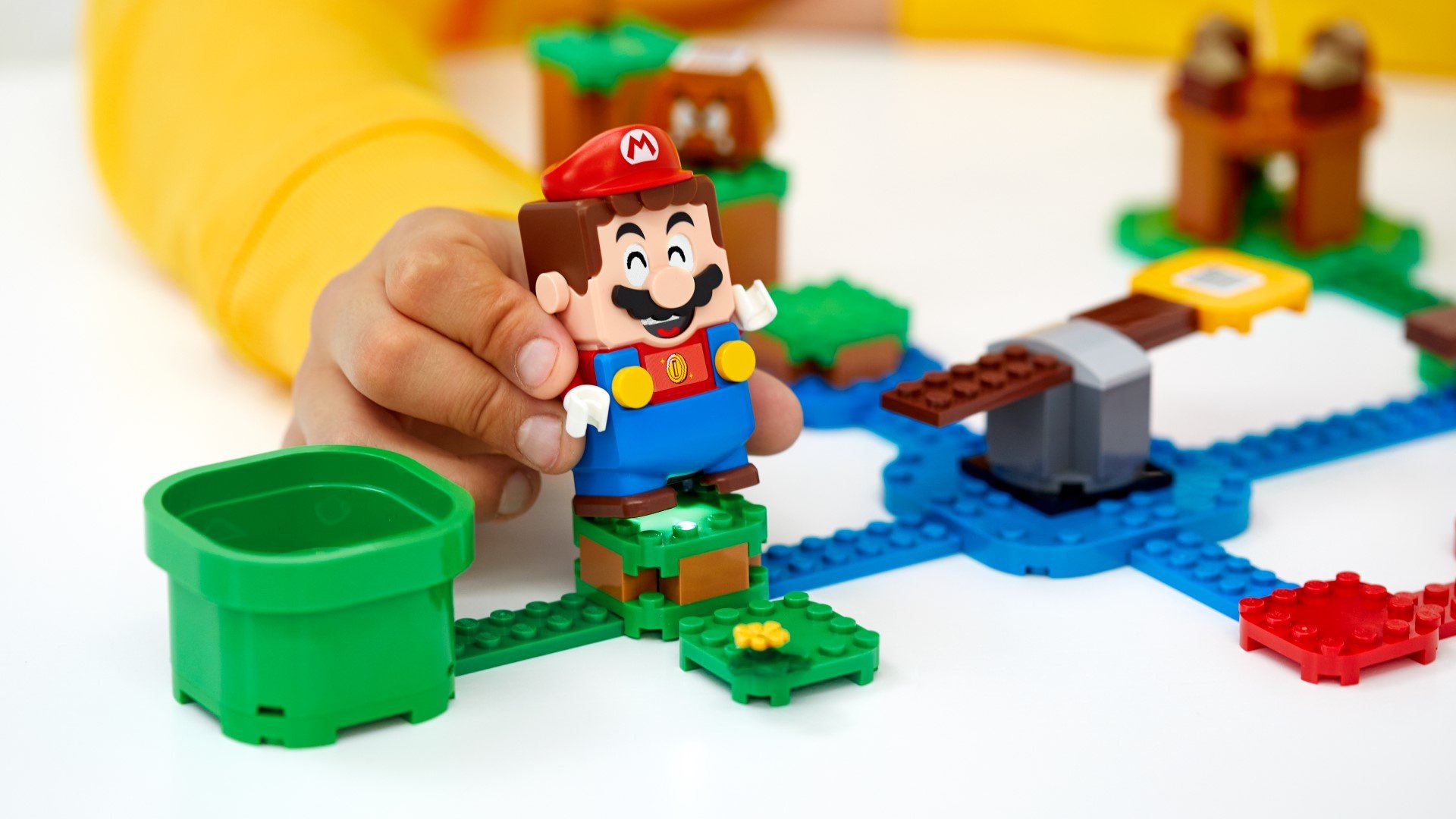
The first wave of sets is set to release on 1st August 2020, and pre-orders are live for the (rather cumbersomely-named) LEGO Super Mario Adventures with Mario Starter Course. The LEGO Mario figure has little LCD screens powered by two AAA batteries that react to movement, colour and certain special bricks. His eyes, mouth and belly react to these inputs and a little speaker in the figure adds trademark sounds and musical phrases from the series, too.
We’ve scoured the web and tracked down the best pre-orders for the Starter Set and announced Expansion Sets in the UK and US. We’ll update this article with more pre-orders as we find them, so be sure to check back.
Please note that some links on this page are affiliate links, which means if you click them and make a purchase we may receive a small percentage of the sale. Please read our FTC Disclosure for more information.
Preorder LEGO Super Mario in North America:
Right now the only place we could find to pre-order the LEGO Super Mario Starter Course is from LEGO itself, Target is another option:
Preorder LEGO Super Mario in the UK:
In the UK you can currently pre-order the LEGO Super Mario Starter Course Set direct from LEGO, GAME, Smyths or Zavvi:
What LEGO Super Mario sets are available?
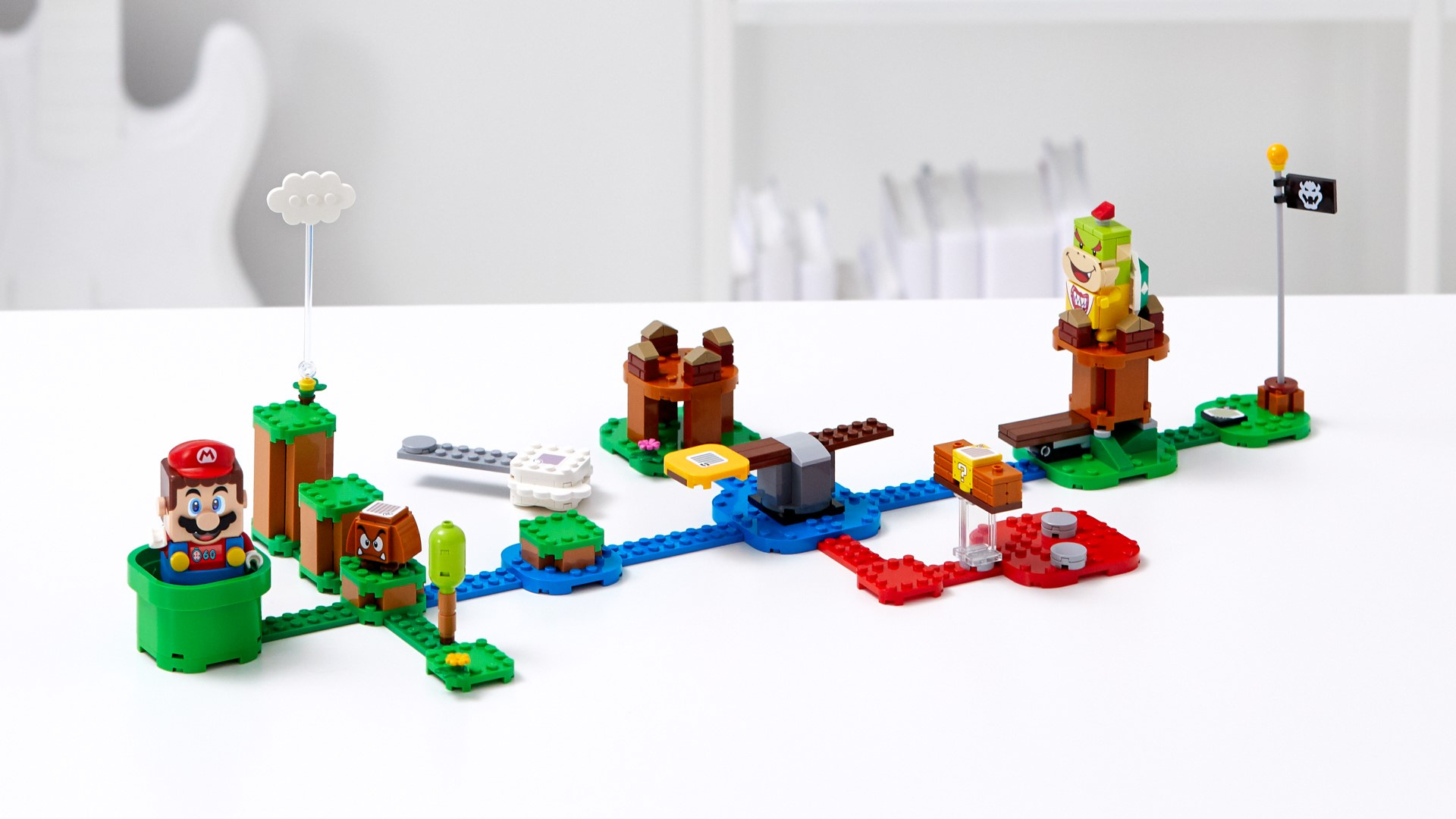
The base set – the Starter Course – can be combined with a number of Expansion Sets that the LEGO Group announced alongside pre-orders for the Starter Set (see above). Each one will “unlock unique challenges and characters to play with and against friends”, according to the official PR. All sets are modular and give the builder the opportunity to mix and match to create whatever Mario course they wish to.
The 231-piece Starter Course Set will retail for $59.99 / 59,99 € / £49.99, and pre-orders will come with a free (and much smaller) Super Mushroom Surprise Expansion Set gift. Pre-orders from LEGO will also include a Monty Mole Expansion Set as an additional pre-order bonus.
The first round of announced Expansion Sets include the following (pictured above):
Piranha Plant Power Slide Expansion Set
Bowser’s Castle Boss Battle Expansion Set
We’ll add pre-order info for these Expansion sets when we get it. The Piranha Plant Power Slide Expansion Set is set to retail for $29.99 / 29.99€ / £24.99, while Bowser’s Castle Boss Battle Expansion Set has an RRP of $99.99 / 99.99€ / £89.99.
There is also a LEGO Super Mario app that works in conjunction with the Mario figure and special bricks to track scores and provide digital instructions.
Can you resist these super (Mario) sets? Let us know below which ones take your fancy, and don’t forget to check back as we add the best offers when they pop up.
Best Budget Monitors For Under $200 - Cheap Monitors For Working From Home
More people are working from home every day, but it can be difficult transitioning into working within your home, especially if your office has a lot of the tools you need for your daily duties. One of them might even be a monitor, and while you may not need to plug your laptop into one to get your work done, they're a handy tool to have that increases your screen space and makes doing your work easier. To help make the transition easier, we've collected an assortment of the best budget monitors under $200, all of which feature free Amazon Prime shipping, so you don't have to leave the house to get your cheap display.
Of course, while we're focusing on cheap monitors that are good for your daily work routine, many of these computer monitors are also great for gaming. Just keep in mind that they won't stack up against their more expensive counterparts--these are still budget PC monitors, after all.
Quick look: Best cheap monitors for working from home
Python List Length – What’s the Runtime Complexity of len()?
The runtime complexity of the len() function on your Python list is O(1). It takes constant runtime no matter how many elements are in the list. Why? Because the list object maintains an integer counter that increases and decreases as you add and remove list elements. Looking up the value of this counter takes constant time.
Python list objects keep track of their own length. When you call the function len(...) on a list object, here’s what happens (roughly):
The Python virtual machine looks up the len(...) function in a dictionary to find the associated implementation.
You pass a list object as an argument to the len() function so the Python virtual machine checks the __len__ method of the list object.
The method is implemented in C++ and it’s just a counter that’s increased each time you add an element to the list and decreased if you remove an element from the list. For example, say, the variable length stores the current length of the list. The method then returns the value self.length.
The Python list is implemented using a C++ array. This means that it’s generally slow to modify elements at the beginning of each list because all elements have to be shifted to the right. If you add an element to the end of a list, it’s usually fast. However, resizing an array can become slow from time to time if more memory has to be allocated for the array.
Where to Go From Here
If you keep struggling with those basic Python commands and you feel stuck in your learning progress, I’ve got something for you: Python One-Liners (Amazon Link).
In the book, I’ll give you a thorough overview of critical computer science topics such as machine learning, regular expression, data science, NumPy, and Python basics—all in a single line of Python code!
OFFICIAL BOOK DESCRIPTION:Python One-Liners will show readers how to perform useful tasks with one line of Python code. Following a brief Python refresher, the book covers essential advanced topics like slicing, list comprehension, broadcasting, lambda functions, algorithms, regular expressions, neural networks, logistic regression and more. Each of the 50 book sections introduces a problem to solve, walks the reader through the skills necessary to solve that problem, then provides a concise one-liner Python solution with a detailed explanation.
FREE Ring Runner: Flight of the Sages & SUPERHOT VR Crackerjack Deal
FREE Ring Runner: Flight of the Sages
[freebies.indiegala.com] Ring Runner combines the fast-paced action of space combat with the rich story and skill variety of an RPG.
SUPERHOT VR HALF OFF SUPER HOT VR HALF OFF
[www.indiegala.com] Blurring the lines between cautious strategy and unbridled mayhem, SUPERHOT VR is the definitive VR FPS in which time moves only when you move.
Adventures in “Minecraft Earth” now playable from home!
While some of you might be too young to remember (in which case get off my lawn, you whippersnappers!), Minecraft used to be pretty different from the game we know and love today. Even though it’s hard to imagine an Overworld without llamas or turtles, they haven’t always been there (yes, I’ve checked). That’s one of the things that makes it so great – and now, Minecraft Earth is following in its footsteps.
Exciting changes are coming, and that’s all thanks to you! Yes, you! At Mojang, we love player feedback, and we’ve read all of your suggestions on how we can improve the Minecraft Earth experience. I’ve also emailed Saxs some fun changes like making the interface completely gesture-based and featuring full TikTok integration. We’ve been working hard to prepare some new features that will make Minecraft Earth even more fun to play. Without further ado…
Adventure Crystals
You know what’s better than heading out in search of adventures? Staying in and adventuring on your terms. Previously, these life-sized slices of Minecraft were scattered across the map and you had to walk a fair bit to get to them. That’s usually fine, but during these strange and scary times, going outside may not be the best idea. And even in normal circumstances, sometimes you just don’t feel like leaving the house – and that’s okay. Thanks to these new Adventure Crystals, you can now mine, fight, and loot wherever and whenever you want.
Blog: Best virtual development practices for a COVID-19 world
The following blog post, unless otherwise noted, was written by a member of Gamasutras community. The thoughts and opinions expressed are those of the writer and not Gamasutra or its parent company.
As game dev teams around the world figure out how to work remotely in a pandemic, I thought I would share a few best practices we’ve discovered in the past two weeks in the hope that it helps other teams out there.
If you just need the TL;DR, jump down to Learned Best Practices below.
Like everyone around the world, we at SMU Guildhall have been forced to learn how to team in a virtual world. When the Covid-19 pandemic hit, we were roughly half-way through our “Middle TGP” course in which our 2nd semester students are making an arcade racing game on a single, cohort-wide team.
For those not familiar with our Team Game Production (TGP) curriculum, “Middle TGP” means the training wheels are still very much on. For the vast majority of our student developers, this is their first time working on a big team. All of our Agile practices are still analog and in-person as we work through all the communication and fundamental development challenges you’d expect from working on one big team. This is to say, we transitioned from a world where every wall and whiteboard in Studio 134 and the GameLab was filled with sticky notes and kanban boards to a completely virtual studio in a matter of days. This was no small feat, and the students did a truly amazing job of adapting.
We got official word that we were going to go virtual on a Friday. By the following Wednesday, our group of 6 very talented producers had converted the analog boards scrum boards to Monday.com. Two days later, we were doing dry-runs of our daily scrums on Zoom and moving tasks on virtual boards. By the following Monday, we were meeting in Zoom’s Gallery View.
In those first few days, production expectedly slowed to a crawl as we tripped over communication issues. However, by applying Agile on a daily retro scale, we quickly figured out what worked and what didn’t rapidly. This post isn’t meant as a post mortem since we’ve only been doing this for two weeks, but we learned some lessons that may be useful to your teams out there.
What Went Right:
Zoom and Slack: Our first day back, we had a 60-person meeting (that remarkable moment is captured in the picture above). You would think it would be utter chaos, but it actually worked.
Daily production retros, a global embrace of experimentation, and an open sharing of best practices led to incredibly agile improvement on a hourly basis. I can’t say we’re at 100% velocity, but we got up to speed within a week. The team was able to hit their 1stP/VS milestone today, and lost only 1 week to getting up to speed in virtual.
A deep bench of support and a whatever-it-takes attitude by our technical team meant we could shift the entirety of SMU–not just Guildhall–to virtual within days. I can’t thank our tech team enough for their support, flexibility, and patience.
In TGP, we preach Patience and Grace: have patience and grace with each other as we make mistakes and continually improve. The students have exercised this philosophy more than I could have imagined in this past month. I can’t think of a single time someone has lost their cool or gotten mad since we’ve gone virtual. This is remarkable, considering the stress and chaos this pandemic has caused.
What Went Wrong:
For me, my co-faculty, and the project leadership team, situational awareness was completely cut off. We went from gathering a ton of signals from the room simply by listening and observing to seeing the project through a single straw. In the Before Times, we could listen to multiple conversations, pick up on emotional flareups, and generally read body language around the room to maintain an innate understanding of how the team was doing. In a Zoomed-out world, all of those signals are cut off. It’s getting better, but it’s still a big problem.
What was implied and understood is now missed. By now, we’re all familiar with Zoom’s gallery view. In our first days working remotely, there were a lot of open-ended questions (“What do y’all think?”) that were met with crickets. People didn’t realize you were talking to them. Misunderstandings abounded.
Be wary of accidental Zoom meeting attendees. There’s a middle school teacher out there somewhere that has mistyped my personal Zoom link for their class in their syllabus. So several times this week, we’ve had very confused kids pop into our meetings. It hasn’t been a problem and we just laugh, but be aware this might happen to you. The alternative is to password protect your Zoom meetings which introduces some overhead. Your mileage may vary.
Learned Best Practices:
Here’s the good stuff. We’ve collected a set of best practices we learned in the past two weeks. Hopefully this helps you, too:
Call and Response: Our 6 producers have their sub-teams check in two or three times a day, depending. Each person Slacks what they’re working on and sends a screenshot of their work. This keeps folks accountable, and it also lets those of us at the exec level graze the information passively to keep up on what’s going on.
Assume nothing. Be explicit in your Zoom meetings. If you’re talking to/or about someone, use their name. Over-use reflective listening to ensure you understood what people are saying. Also be explicit about action items: Who is responsible? Who is following up? What are the deliverables? How will we know it’s done?
Be super-, extra-, triple-explicit about your Definitions of Done. It is almost a given that two people to have a conversation in Zoom or Slack and be coming from two completely different sets of understanding without realizing it. Again, reflective listening and explicit coverage of action plans helps.
It’s a requirement that all cameras are on in Zoom meetings. This keeps people accountable and present. We also require they wear pants. Really. This helps maintain a sense of professionalism and literal hygiene on the team.
Pin daily schedules in your team’s Slack channel with embedded links. Giving everyone on the team an idea of the times and virtual places they needed to be in is critical.
Get in the habit of providing links to zoom meetings frequently and redundantly. In other words, don’t make people dig. Instead of “Meeting’s starting, y’all” (we’re in Texas), be explicit: “Team Meeting now: https://smu.zoom.us/j/1234512356”
Record and share everything. Relevant to not having situational awareness and not being able to attend multiple meetings at once, reviewing recorded meetings is the next best thing we found. Zoom’s cloud recording feature is a godsend here.
Check in often. This isn’t on the team level (though we check in often there too). I’m talking about personal wellness checks for everyone. We’re in this together, and it’s a scary time for many. The power of simply checking in and letting people vent goes a long way to keeping overall morale up and staying positive as a team.
Provide a way for teammates to commune and just “be” together. To facilitate this, we encourage team members who aren’t bouncing from meeting to meeting to host a Zoom meeting of their own where their coworkers can join. This approximates what it was like to work together at a table or in a workgroup. It’s not perfect, but it provides a little bit of a psychological safety net, especially for those who are living alone.
Still to be Sorted Out:
We still haven’t found a good way to do multiplayer testing or playtest sessions. We’re exploring Zoom’s shared screens, but it’s hard to talk and play and control the game volume in Zoom. Introducing Twitch and Discord might seem like a natural solution, but then you get away from the group aspect afforded by Zoom. We’re figuring it out still.
So there you go. I hope this helps. Share your best practices in the comments below.
Stay safe, and be well. We’ll see you when this is all over.
Journey to the Savage Planet a reaction to a past life of AAA development
Alex Hutchinson started Typhoon Studios to make more lighthearted, hopeful games that were different than the ones he creative directed at Ubisoft, such as Assassin’s Creed III and Far Cry 4.
He didn’t get to finish his final project at Ubisoft, a lighthearted sci-fi game codenamed Pioneer after a disagreement with higher-ups at the Montreal branch of the publisher and he subsequently left in 2017. Hutchinson wanted to do something in a similar vein for his Typhoon’s first project, Journey to the Savage Planet, an irreverent exploration game inspired by science fiction comics of the 1950s.
“I’m a fan of golden age science fiction,” Hutchinson tells me as he sits in a room decorated with comic books. “I was excited by the idea that people had only kept the dystopian angle of science fiction. They had forgotten there was this big arc of hopeful, ‘we can go anywhere’ sort of fiction. That strangely feels more valuable right now.”
Hutchinson’s time at Ubisoft greatly influenced his view on and approach to game development. It led to Typhoon Studios applying lessons they learned working on major franchises to their work on Journey to the Savage Planet. They didn’t want to crunch and they wanted to build off the skills they developed while working on games like Far Cry 4.
The combination of Hutchinson’s fondness for science fiction and the team’s eagerness to build on their past experience let them “set a box around what we wanted to make,” he said. “Then we just iterated and iterated for a few months. Then we found the team was in love with humor, so those three things came together to create Savage Planet.”
Hutchinson had serious burnout from crunch at Ubisoft, working long hours to make sure the massive worlds of both Far Cry and Assassin’s Creed were full of things to do. He, and many members of his team that jumped ship from Ubisoft, didn’t want to go through that again.
“It’s half inspiration and half practical,” he said. “It’s a new team with new technology so we didn’t know what we could achieve. We wanted to be both practical and reasonable and keep it as a focused experience.” The team knew their game would be “feature-lite,” as Hutchinson put it. It was the first project they were working on as a small studio, so they wanted to refine a single idea rather than spend more development time trying to make a bigger game.
Journey to the Savage Planet is a first-person survival adventure game whose setting is established by purposely corny live-action videos about how megacorporations have endangered humanity. You explore an open area of an alien planet that is gated off metroidvania-style, fight aliens with different weapons, and solve various environmental puzzles. The game incorporates systemic, sandbox gameplay elements along with handcrafted components.
“You can have thousands of hours of gameplay if it’s purely systemic,” Hutchinson said. “You can do that, but if you want to have any sense of narrative you’ll need to do it by hand. If you want that you need to tailor your ambitions.”
Far Cry 4, as well as other Far Cry and Assassin’s Creed games, is also a mixture of handcrafted narrative and systemic content. Handcrafted missions take much longer to develop than systemic combat scenarios and puzzles that players naturally run into while exploring the worlds of those games. Hutchinson was interested in the idea that Far Cry 4‘s systemic content took “a tenth of the time to build” than story missions but took up just as much of the player’s time.
“People were laughing, we put the cooperative mode in and people were really enjoying [Far Cry 4],” he said. “Their friend was being eaten by a bear on fire, that’s the example that always comes up. I thought there was something to mine there. This is an unexplored space, we could take out the narrative and add our own systemic parts.”
Journey to the Savage Planet came from Typhoon Studios’ urge to expand on those elements of Far Cry. Savage Planet is similar to Far Cry gameplay but only 10-15 hours long. It’s narrative light (it was originally going to have even less narrative), letting the player explore the world at their own place while encountering different creatures and puzzles. “We just needed to put the narrative into it to add a framework,” he said.
Hutchinson emphasized that this is what he and the rest of his team felt they could do between 2017 and when the game launched earlier this year.
It has light difficulty as Hutchinson wanted players to be able to cruise through it and have fun. They also wanted to create everything themselves, so they knew it would be smaller. “Our level designers and artists were excited to build everything by hand,” he said. “Not a tiny part of a game. Not a texture for something but a whole, smaller game.” The entire in-game world was built by five artists and Hutchinson wrote the game himself, so a lot of the design process came down to time.
Most of your time in Savage Planet will be spent exploring the planet freely while hunting collectibles, cataloging all alien life, and fighting different enemies as you encounter them. Even with a list of tasks that need doing, most players will still spend far less time in Savage Planet than Far Cry 4.
“We didn’t want people to see it as a liability,” Hutchinson said of the game’s lighter difficulty and shorter length. Running a studio with fairer labor practices had an impact on the actual game they released. Hutchinson knew that, saying that’s why they didn’t release it at full price. “We’re also asking people to take a risk with a new IP,” he said.
Reception for Journey to the Savage Planet was mixed when it launched in January. Some reviews, including Eurogamer and GameSpot, applauded the shorter length, lighter difficulties but still found an issue with the game’s reliance on repetitive combat–something that critics have blamed on the studio’s history with Far Cry.
“We were satisfied with the results. It felt like the emotion of the reviews were positive,” Hutchinson said. “We were not being aggressive with the scope, we knew it wasn’t going to be an A+. We made a piece with that idea. We wanted people to be happy. We wanted people to enjoy the process of playing.”
Hutchinson and many members of his team are experienced developers, so after a certain point in development, they knew they wouldn’t have time to fix certain shortcomings. “The reviewers and players would be surprised how often the teams know where their game is during development, especially closer to the end,” Hutchinson said. “You can make big changes at the start but once your two-thirds of the way through you become aware of the problems that will ship with the game. You know what doesn’t work and what’s great.”
Typhoon Studios, which was purchased by Google to be part of its Stadia Games and Entertainment division at the end of 2019 right before Savage Planet launched, is happy with the final version of Journey to the Savage Planet. The team managed to ship the game with no overtime and only one few-month extension that their publisher 505 Games agreed on.
“We’re all a bit older now, and many of us have small children, so nobody wanted to do crazy hours. We all wanted to make a great game, stay small and enjoy the experience, which meant still seeing our families,” Hutchinson said. “So we just kept making steady progress, trying to scope continually and not changing our minds too much on what we’d decided to achieve. We just wanted to keep it under control to make it polished and tight.”
Poll: Which ARMS Fighter Should Join Super Smash Bros. Ultimate?
Nintendo recently confirmed that the next fighter joining Super Smash Bros. Ultimate will be from the company’s other colourful Switch fighting game ARMS. The IP may not have taken off quite like, say, Splatoon, but we’ve got a soft spot for the limb-y scrapper’s energy and sense of humour, and in all honesty we’re just relived we’re not getting another sword fighter.
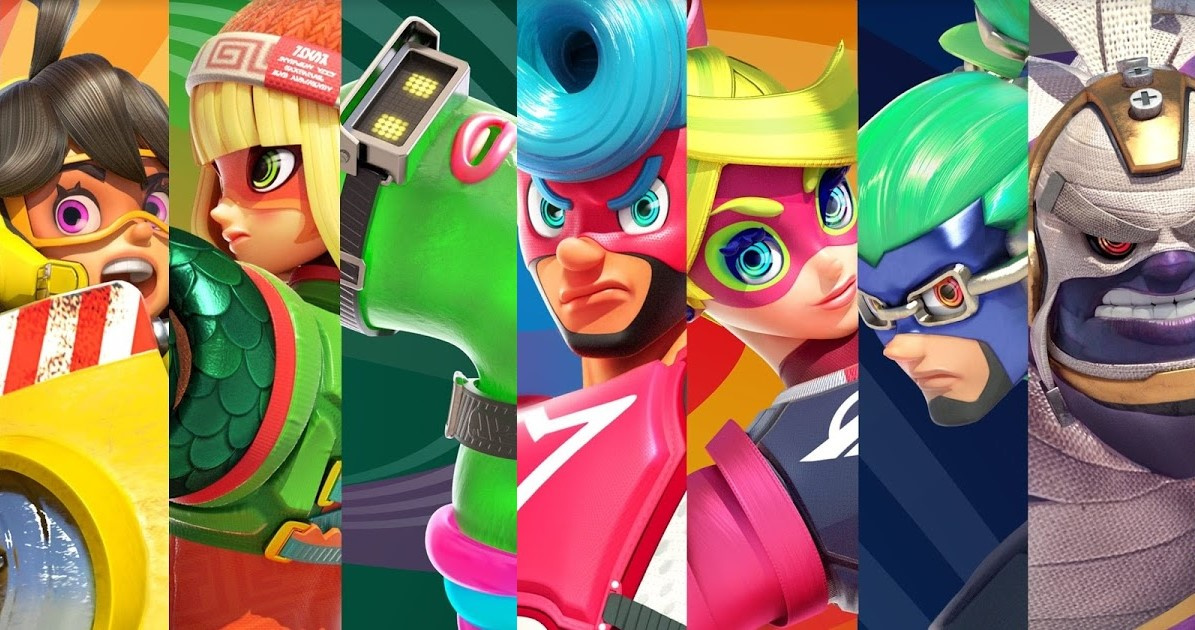
ARMS launched back in 2017 with 10 playable fighters and that roster grew to 15 over time. Below we’ve listed them all followed by a brief bio from the (now-defunct) official ARMS website to give your memory a jolt if it’s been a while since you brawled with Spring Man, Ribbon Girl and company. At the bottom of the page you’ll find a poll to vote for the fighter you think should be the first to come in Smash Bros.’ Fighters Pass Vol. 2.
ARMS was free to play for Nintendo Switch Online subscribers from 26th March to 6th April, so even if you didn’t catch it at launch, many of you will likely be more familiar with the faces below than you were before the Nintendo Direct Mini. The announcement and release is scheduled for June, but in the meantime take a look at the roster and tell us which one you’d most like to see get that prestigious Smash invitation.
Spring Man
With arms made of springs, no wonder they call him “the bouncer”! At first glance it’s hard to take this guy seriously, but in the ARMS game, he always takes center stage. He can perma-charge in a pinch, and that indomitable spirit is gonna take him right to the top!
Ribbon Girl
Hailing from Ribbonics Records, it’s ‘the airess’! She can jump over and over without touching the ground, like she’s dancing on air! If she wins the Grand Prix, she’s promised her fans a championship concert in the ring!
Ninjara
Currently training at Ninja College, or as it’s officially named, Rasen Ninjutsu University. The ninjutsu techniques of this ‘student of stealth’ allow him to disappear into thin air and make fools of his opponents! The ARMS Grand Prix doubles as his senior project, and that challenge is the one thing he won’t hide from.
Master Mummy
Wrapped up in mystery and bandages, it’s ‘the grim creeper’! With an uncharacteristically buff body for a mummy, this heavyweight shrugs off punches like nothing. All we know about this guy is that one day he woke up at the Mausoleum and now he’s entering the Grand Prix! There’s a story there…
Min Min
A member of ramen royalty, she hails from the famed Mintendo Noodle House! Her spicy kicks are known to knock down her opponents’ attacks. Can her fiery personality bring the championship belt home to her family’s restaurant?!
Mechanica
This youthful ARMS superfan honed her engineering genius working at the local scrapyard. She wasn’t born with stretchy ARMS, so what choice did she have but to build a fighting suit herself? When she rides it into battle, she can even hover in midair! Can she soar to the top of the ARMS Grand Prix she’s always loved?!
Twintelle
The mega celeb, star of the silver screen tries her hand…er, hair at the ARMS Grand Prix. Not content with her acting awards and accolades, she’s gonna use those stretchy silver locks to take the ARMS title! Oh, and while she’s charging up, her actress aura can slow down incoming ARMS!
Byte & Barq
The duo of police-robot Byte and dog-robot Barq makes for an intimidating beach-patrol team. In the heat of battle, Byte is known to take a big leap off Barq and rain down punches on opponents! But if they win the ARMS Grand Prix, who’s gonna patrol Buster Beach?!
Kid Cobra
A top snakeboarder turned ARMS fighter, this kid lives for the streets! All that boarding has really strengthened his legs, giving him a super-quick dash after charging up. He entered the Grand Prix to get more hits on his snakeboarding vids, but his natural instincts might just carry him all the way to the top!
Helix
An experiment by ARMS Laboratories, the leaders in ARMS research! In addition to his arms, his whole body is stretchy—and his signature ARMS are just as weird. He’s secretly entered the Grand Prix to prove the merit of the lab’s latest research!
Max Brass
Head of the ARMS League, the organizing body of the ARMS Grand Prix! You’d never guess his age once he charges and pumps up that beefy body to maximum buffness. As reigning champ, he awaits new challengers in the championship round of the Grand Prix!
Lola Pop
This sweet-dreamin’ clown has traveled the world as a street performer. With her well-honed clowning skills, she’s developed crowd-pleasing maneuvers that confuse and confound opponents! She hopes to one day open a circus of her very own, and the prize money from winning the Grand Prix could make those dreams come true!
Misango
Misango is a skilled fighter who is fiercely devoted to his homeland, and the power of the Misanga. During a fight, he channels that power with the help of the little woven sprite that hovers at his side. His reasons for competing in the Grand Prix are simple—to prove that the Misangan fighting technique is superior to all others…and to win!
Springtron
A lean, mean fighting machine designed and built by ARMS Labs! His metal body is inspired by the popular fighter Spring Man, and he’s packed with the latest advances in fighting technology. With the goal of improving ARMS Labs’s image by flexing their scientific muscle, he’s finally been allowed to step out of the shadows and officially enter the Grand Prix!
Dr. Coyle
She’s the director of ARMS Laboratories, and a certified genius. Fascinated with ARMS since she was a young girl, Dr. Coyle decided early on to devote her entire life to ARMS research. Her plans for this research are not necessarily nefarious… She simply wants to be the most powerful ARMS fighter of all time…even if that means subjecting herself to her own experiments. But all her pain and hard work will be worth it if she wins the ARMS Grand Prix!
If your preferred ARMS fighter is different from the one you think Nintendo will pick, go out on a limb and let us know your prediction below.
Writing on Twitter, the studio said it's keeping the double XP promotion available until Tuesday, April 7 at 11 PM PT. This double XP applies to standard progression, weapon progression, and battle pass tiers.
Over the weekend we experienced a few XP and progression issues. To thank you for your patience while we got everything back up and running, we'll be leaving the 2XP, 2XP Weapon and 2XP Tiers event on until Tuesday, April 7th at 11PM PST.
Modern Warfare and Warzone struggled with XP and progression issues this weekend that prevented some accounts from seeing their stats and rank grow as they should have. According to Infinity Ward, these problems have now been fixed, and the extension of the double XP period is a "thank you for your patience."
Posted by: xSicKxBot - 04-07-2020, 06:49 AM - Forum: Windows
- No Replies
‘Inside Xbox’ returns with its first new episode for 2020
Inside Xbox returns with its first new episode for 2020 tomorrow, Tuesday, April 7, at 2 p.m. PT / 5 p.m. ET.
As with most of the world, we’re working from home at the moment, but we have old and new friends alike who will bring you the latest news on Grounded, Gears Tactics, Sea of Thieves, Xbox Game Pass, some surprises from our ID@Xbox team and more. While we won’t have any new details to share for Xbox Series X, we are excited to sit down with Director of Program Management for Xbox Series X Jason Ronald, to discuss the recently revealed technical specifications and what they mean for gamers.
Following the episode, at approximately 2:40 p.m. PT / 5:40 p.m. ET, Inside Xbox will host a live, first-look at the single-player experience in Grounded. This gameplay stream will broadcast live on Mixer and Twitch directly from the homes of Obsidian’s developers and include a Q&A with their team.
Watch Inside Xbox live Tuesday via Mixer, Twitch, YouTube, Facebook, and Twitter, or check out highlights and the full show on-demand after it airs. Due to the unique circumstances of broadcasting from home, captions, audio descriptions, and localized subtitles will be available later this week.