The Fedora Silverblue project takes Fedora workstation, libostree and podman, puts them in a blender, and creates a new Immutable Fedora Workstation. Fedora Silverblue is an OS that stops you from changing the core system files arbitrarily, and readily allows you to change the environment system files. The article What is Silverblue describes the big picture, and this article drills down into details for the developer.
Fedora Silverblue ties together a few different projects to make a system that is a git-like object, capable of layering packages, and has a container focused work flow. Silverblue is not the only distribution going down this road. It is the desktop equivalent of CoreOS, the server OS used by Red Hat Openshift.
Silverblue’s idea of ‘immutable’ has nothing to do with immutable layers in a container. Silverblue keeps system files immutable by making them read-only.
Why immutable?
Has an upgrade left your system in an unusable state? Have you wondered why one server in a pool of identical machines is being weird? These problems can happen when one system library – one tiny little file out of hundreds – is corrupted, badly configured or the wrong version. Or maybe your upgrade works fine but it’s not what you’d hoped for, and you want to roll back to the previous state.
An immutable OS is intended to stop problems like these biting you. This is not an easy thing to achieve – simple changes, like flipping the file system between read-write and read-only, may only change a fault-finding headache to a maintenance headache.
Freezing the system is good news for sysadmins, but what about developers? Setting up a development environment means heavily customizing the system, and filling it with living code that changes over time. The answer is partly a case of combining components, and partly the ability to swap between OS versions.
How it works
So how do you get the benefits of immutability without losing the ability to do your work? If you’re thinking ‘containers’, good guess – part of the solution uses podman. But much of the work happens underneath the container layer, at the OS level.
Fedora Silverblue ties together a few different projects to turn an immutable OS into a usable workstation. Silverblue uses libostree to provide the base system, lets you edit config files in /etc/, and provides three different ways to install packages.
rpm-ostree installs RPM packages, similar to DNF in the traditional Fedora workstation. Use this for things that shouldn’t go in containers, like KVM/libvirt.
flatpak installs packages from a central flathub repo. This is the one-stop shop for graphical desktop apps like LibreOffice.
The traditional dnf install still works, but only inside a toolbox (a Fedora container). A developer’s workbench goes in a toolbox.
If you want to know more about these components, check out Pieces of Silverblue.
Rolling back and pinning upgrades
All operating systems need upgrades. Features are added, security holes are plugged and bugs are squashed. But sometimes an upgrade is not a developer’s friend.
A developer depends on many things to get the job done. A good development environment is stuffed with libraries, editors, toolchains and apps that are controlled by the OS, not the developer. An upgrade may cause trouble. Have any of these situations happened to you?
A new encryption library is too strict, and an upgrade stopped an API working.
Code works well, but has deprecated syntax. An upgrade brought error-throwing misery.
The development environment is lovingly hand-crafted. An upgrade broke dependencies and added conflicts.
In a traditional environment, unpicking a troublesome upgrade is hard. In Silverblue, it’s easy. Silverblue keeps two copies of the OS – your current upgrade and your previous version. Point the OS at the previous version, reboot, and you’ve got your old system files back.
You aren’t limited to two copies of your file system – you can keep more by pinning your favorite versions. Dusty Mabe, one of the engineers who has been working on the system since the Project Atomic days, describes how to pin extra copies of the OS in his article Pinning Deployments in OSTree Based Systems.
Your home directory is not affected by rolling back. Rpm-ostree does not touch /etc/ and /var/.
System updates and package installs
Silverblue’s rpm-ostree treats all the files as one object, stored in a repository. The working file system is a checked-out copy of this object. After a system update, you get two objects in that repository – one current object and one updated object. The updated object is checked out and becomes the new file system.
You install your workhorse applications in toolboxes, which provide container isolation. And you install your desktop applications using Flatpak.
This new OS requires a shift in approach. For instance, you don’t have to keep only one copy of your system files – you can store a few and select which one you use. That means you can swap back and forth between an old Fedora release and the rawhide (development) version in a matter of minutes.
Build your own Silverblue VM
You can safely install Fedora Silverblue in a VM on your workstation. If you’ve got a hypervisor and half an hour to spare (10 minutes for ISO download, and 20 minutes for the build), you can see for yourself.
Boot a VM with the Fedora Silverblue ISO. You can squeeze Fedora into compute resources of 1 CPU, 1024MiB of memory and 12GiB of storage, but bigger is better.
If you’re looking for ideas about how to use Silverblue, read articles in the magazine.
Is Silverblue for you?
Silverblue is full of shiny new tech. That in itself is enough to attract the cool kids, like moths to a flame. But this OS is not for everyone. It’s a young system, so some bugs will still be lurking in there. And pioneering tech requires a change of habit – that’s extra cognitive load that the new user may not want to take on.
The OS brings immutable benefits, like keeping your system files safe. It also brings some drawbacks, like the need to reboot after adding system packages. Silverblue also enables new ways of working. If you want to explore new directions in the OS, find out if Silverblue brings benefits to your work.
Review: Shmup Collection – A Solid Collection Of Modern 2D Shooters
It’s one of gaming’s greatest myths that graphics aren’t as important as gameplay. Without the right kind of graphics, it’s possible to depth-charge the potential of an otherwise enjoyable experience. Visuals are a crucial part of a game’s feel, and a mismatch between what you’re doing and how it all looks is a major factor in whether a title hangs together as a cohesive experience.
Naturally, it’s relevant to Shmup Collection, a rather banal title for a compilation that’s stated to contain three games from doujin developers Astro Port, but technically features five – Satazius and update Satazius Next, Armed 7 and update Armed 7 DX, and finally Wolflame – sans update. These are games that each take inspiration from one classic shmup in the main, and these influences are very much worn on their sleeves.
Horizontal shooter Satazius, to begin with, is effectively Konami’s Gradius with the serial numbers filed off. Of course, that’s no bad thing, given that Gradius is one of the best shmup series ever, but we digress. It’s so indebted to that flagship franchise that it’s almost cheeky – the first stage culminates in your ship being chased through a cavern by a much larger craft, which ploughs throw the walls as it goes, collapsing rocks down from above while launching volleys of missiles your way. Sounds familiar? It should, as it’s almost directly lifted from the opening set-piece of Game Boy classic Nemesis II / Gradius: The Interstellar Assault.
The trademark Gradius power-up system is absent, replaced by a selection of weapons and sub-weapons you level up as you play. They’re all rather familiar – directional missiles, anyone? – but there’s a nice twist in that your accrued weapon power can be unloaded into a single powerful onslaught that’s capable of wiping out most foes in one hit.
Strong stage design that’s clever and tricky without resorting to “bullet hell” style projectile spam makes Satazius possibly the standout game in Shmup Collection, though kicking you back to a checkpoint on death may be a Gradius feature they could have left in the host series. Nonetheless, it’s brilliant fun, but definitely don’t ignore the rest of the package.
Next up is Armed 7, another horizontal scroller that’s clearly inspired by the likes of Technosoft’s Hyper Duel with its multi-directional shooting mech action; again you pick your weapons then head out into battle, aiming and locking your guns as you attempt to tackle the overwhelming odds. As in Satazius, you power up your chosen weaponry rather than collecting new guns, and also have a powerful super-weapon at your disposal you can use it as many times as you please, but it takes a fair while to charge up.
It’s a little samier than Satazius, but Armed 7 is no slouch – the action is challenging and compelling, with the larger size of your mech making everything just that little bit more dangerous. Thankfully this time, you have a refillable shield rather than a traditional “lives” system, which means taking a hit won’t rob you of your weapons or progress, and your shield can be refilled with collectables. It’s still rough going but eminently friendly.
Lastly there’s Wolflame, and the roots of this one seem to be the stone-cold classic Raiden. It’s a vertical shooter this time, with a focus on precision and a slightly more realistic, grounded feel. That is until the skyscraper-sized tanks show up, but realism is relative.
It’s the purest game on the set, the most akin to a straight-up traditional shmup, and as a result, it feels the least interesting. By no means is it bad, or even substandard, but compared with the level design and set-pieces of Satazius and Armed 7 it doesn’t quite measure up. It’s fun, but unremarkable, and a bit of an odd choice for inclusion when Astro Port’s other games include better fits like the ingenious Zangeki Warp and the delightful Supercharged Robot Vulkaiser.
You may be wondering why we mentioned the importance of graphics at the start of this review. The “enhanced” versions of Satazius and Armed 7 (Next and DX) have arranged soundtracks, some changes to bullet patterns and level design and, crucially, brighter and more colourful graphics. Unfortunately, this leads the games to look garish and detracts from the original versions’ atmospheres; coupled with the less-than-impressive animation (mostly rotating sprites), these “improved” versions actually feel worse than the originals. They’re fine, and entirely playable, but we found ourselves wondering why they felt the need to mess with elements that worked. Yes, the graphics in Satazius are a little grungy, but they fit the game feel. It was a case of less meaning more, and resulted in a coherent, logical progression from the game’s look to its mechanics. The deluxe versions sacrifice this for unnecessarily flashier visuals. It’s a small complaint, though, as the games on offer here range from good to great.
Conclusion
Satazius is the pick of the pack and almost worth the asking price in itself, but if you enjoy the shmup genre then Shmup Collection is a package that will keep on giving. There’s nothing in the way of extras outside of each game’s respective practice/stage select mode (and a “Tate” mode for Wolflame, for those with a Flip Grip), but you won’t find yourself wanting. This is an impressive bundle of joy at a very competitive price. We just hope it’ll be followed by a second instalment; Astro Port has a lot of awesome games in its catalogue and we’d love to see them find a second home on Switch.
Posted by: xSicKxBot - 05-21-2020, 12:26 AM - Forum: Lounge
- No Replies
Xenoblade Chronicles Director Reveals Epilogue Story Length
The biggest addition in Xenoblade Chronicles: Definitive Edition is a new epilogue story called Future Connected, which is set one year after the events of the base game and follows Shulk and Melia on a quest to the Bionis' shoulder. Now we have an idea of how long this epilogue story is.
In an interview with Weekly Famitsu (as translated by Gematsu), Monolith Soft head and Xenoblade director Tetsuya Takahashi estimates that Future Connected takes 10-12 hours to clear if you focus strictly on the story, and about 20 hours to complete if you factor in all of the side content.
[www.indiegala.com] Reckless driving has never been this much fun and affordable! Feel the adrenaline pulse through your veins as you barrel through insane race tracks in 5 different FlatOut games!
Stay Safe Sale Day 12: Paradox Fantasy Weekend, up to -80%
[www.indiegala.com] The Stay Safe Sale has brought some fantastic deals. Get a BONUS Steam copy of Men of War: Assault Squad when spending a minimum of $8/€7/£6 in the IndieGala Store per basket (while stocks last).
NetEase announces RPG Harry Potter: Magic Awakened during its 520 conference
Netease has just announced Harry Potter: Magic Awakened during its 520 conference, happening today. It’s an upcoming RPG currently in development at Portkey Games, that sees you play as a brand new student at Hogwarts School of Witchcraft and Wizardry. You get sorted into a house by that dusty old hat, study in various different classes, and head off on adventures with your classmates.
Thought we can’t confirm right now, it appears that multiplayer plays a big part. We witnessed what appears to be other players wandering around your house dorm, and the few battle sequences, which take place during adventures, involve working with your friends (and, presumably, strangers) to battle off a wide variety of fantastic creatures.
You do so by playing cards, which represent various different spells, onto the battlefield. It’s kind of like Clash Royale in that respect. It also appears that there are a wide variety of spells to unlock, and you can check the details of any spells in your arsenal at any point by rifling through your spellbook.
When not studying or making a general nuisance of yourself, you can wander around popular wizarding world locations. We got a good look at Hogwarts, naturally, as well as the Forbidden Forest and Diagon Alley.
Harry Potter: Magic Awakened enters open beta on May 29 across iOS and Android, though only for users in China. There is no word about a western release yet, but given the sheer amount of spoken and written English on display in the trailer, we’d be very surprised if this didn’t launch across the world.
We’ll keep you posted as we learn more. In the meantime, go ahead and check out the official site to grab as much information as you can.
Posted by: xSicKxBot - 05-20-2020, 07:39 PM - Forum: Windows
- No Replies
New supercomputer, vision for future AI work announced
“As we’ve learned more and more about what we need and the different limits of all the components that make up a supercomputer, we were really able to say, ‘If we could design our dream system, what would it look like?’” said OpenAI CEO Sam Altman. “And then Microsoft was able to build it.”
OpenAI’s goal is not just to pursue research breakthroughs but also to engineer and develop powerful AI technologies that other people can use, Altman said. The supercomputer developed in partnership with Microsoft was designed to accelerate that cycle.
“We are seeing that larger-scale systems are an important component in training more powerful models,” Altman said.
For customers who want to push their AI ambitions but who don’t require a dedicated supercomputer, Azure AI provides access to powerful compute with the same set of AI accelerators and networks that also power the supercomputer. Microsoft is also making available the tools to train large AI models on these clusters in a distributed and optimized way.
At its Build conference, Microsoft announced that it would soon begin open sourcing its Microsoft Turing models, as well as recipes for training them in Azure Machine Learning. This will give developers access to the same family of powerful language models that the company has used to improve language understanding across its products.
It also unveiled a new version of DeepSpeed, an open source deep learning library for PyTorch that reduces the amount of computing power needed for large distributed model training. The update is significantly more efficient than the version released just three months ago and now allows people to train models more than 15 times larger and 10 times faster than they could without DeepSpeed on the same infrastructure.
Along with the DeepSpeed announcement, Microsoft announced it has added support for distributed training to the ONNX Runtime. The ONNX Runtime is an open source library designed to enable models to be portable across hardware and operating systems. To date, the ONNX Runtime has focused on high-performance inferencing; today’s update adds support for model training, as well as adding the optimizations from the DeepSpeed library, which enable performance improvements of up to 17 times over the current ONNX Runtime.
“We want to be able to build these very advanced AI technologies that ultimately can be easily used by people to help them get their work done and accomplish their goals more quickly,” said Microsoft principal program manager Phil Waymouth. “These large models are going to be an enormous accelerant.”
In “self-supervised” learning, AI models can learn from large amounts of unlabeled data. For example, models can learn deep nuances of language by absorbing large volumes of text and predicting missing words and sentences. Art by Craighton Berman.
Learning the nuances of language
Designing AI models that might one day understand the world more like people do starts with language, a critical component to understanding human intent, making sense of the vast amount of written knowledge in the world and communicating more effortlessly.
Neural network models that can process language, which are roughly inspired by our understanding of the human brain, aren’t new. But these deep learning models are now far more sophisticated than earlier versions and are rapidly escalating in size.
A year ago, the largest models had 1 billion parameters, each loosely equivalent to a synaptic connection in the brain. The Microsoft Turing model for natural language generation now stands as the world’s largest publicly available language AI model with 17 billion parameters.
This new class of models learns differently than supervised learning models that rely on meticulously labeled human-generated data to teach an AI system to recognize a cat or determine whether the answer to a question makes sense.
In what’s known as “self-supervised” learning, these AI models can learn about language by examining billions of pages of publicly available documents on the internet — Wikipedia entries, self-published books, instruction manuals, history lessons, human resources guidelines. In something like a giant game of Mad Libs, words or sentences are removed, and the model has to predict the missing pieces based on the words around it.
As the model does this billions of times, it gets very good at perceiving how words relate to each other. This results in a rich understanding of grammar, concepts, contextual relationships and other building blocks of language. It also allows the same model to transfer lessons learned across many different language tasks, from document understanding to answering questions to creating conversational bots.
“This has enabled things that were seemingly impossible with smaller models,” said Luis Vargas, a Microsoft partner technical advisor who is spearheading the company’s AI at Scale initiative.
The improvements are somewhat like jumping from an elementary reading level to a more sophisticated and nuanced understanding of language. But it’s possible to improve accuracy even further by fine tuning these large AI models on a more specific language task or exposing them to material that’s specific to a particular industry or company.
“Because every organization is going to have its own vocabulary, people can now easily fine tune that model to give it a graduate degree in understanding business, healthcare or legal domains,” he said.
Switch Exclusive Ninjala Will Hold A Second Beta Before The End Of May
Ninjala will receive another free beta ahead of release, developer GungHo Online has announced. The game had its first beta back in April, and afterwards was delayed from its original May release date until June 25. A new beta will now happen before the end of May.
The game, which is a multiplayer brawler with an art style similar to Splatoon, is exclusive to Nintendo Switch.
Here are the dates and times for the beta sessions in each region, as announced on the game's official site.
Fixed an issue with Titan exotic Wormgod Caress which was allowing for upkeep of the Burning Fists stacking melee buff far beyond it’s intended duration.
Fixed an issue with Warlock exotic Winter’s Guile which was allowing for upkeep of the Warlord’s Sigil stacking melee buff far beyond it’s intended duration.
Fixed an issue where players could earn a Sentinel Super within 10 seconds using the Grasp of the Warmind carry object.
Players can no longer melee while holding on to the Grasp of the Warmind carry object.
Clans
Fixed an issue where the additional Clan Bounty unlocked from reaching Clan rank 6 was not being made available from Hawthorne
Progression
Fixed an issue where it was possible for the Small Fireteam XP Boost from the Season Pass to apply the wrong XP Boost.
Disrespect/Hate Speech
Disrespect/Hate Speech
Harassment/Personal Attacks/Bullying
Name and Shame/Privacy Violation
Gory Violence/Explicit Sexuality
Threats of Violence/Illegal Activity
Political/Religious Discussion
Cheating/Hacking
Spoilers/Distributing Stolen Content
Soliciting/Plagiarism/Phishing/Impersonation
Disruption/Evasion
This site uses cookies to provide you with the best possible user experience. By clicking ‘Accept’, you agree to the policies documented at Cookie Policy and Privacy Policy.
Accept
This site uses cookies to provide you with the best possible user experience. By continuing to use this site, you agree to the policies documented at Cookie Policy and Privacy Policy.
close
Our policies have recently changed. By clicking ‘Accept’, you agree to the updated policies documented at Cookie Policy and Privacy Policy.
Accept
Our policies have recently changed. By continuing to use this site, you agree to the updated policies documented at Cookie Policy and Privacy Policy.
We know you’re busy and might miss out on all the exciting things we’re talking about on Xbox Wire every week. If you’ve got a few minutes, we can help remedy that. We’ve pared down the past week’s news into one easy-to-digest article for all things Xbox! Or, if you’d rather watch than read, you can feast your eyes on our weekly video show above. Be sure to come back every Friday to find out what’s happening This Week on Xbox!
Inside Xbox May 2020 Episode Recap Everyone here at Xbox is excited to share more about the games and experiences coming in the next generation. Earlier this week, we shared our plans for Xbox 20/20, our new… Read more
Forza Street Now Available on iOS and Android! Forza Street is now available globally to download on your iOS and Android devices! This all-new Forza experience lets you jump into the game for quick, under-a-minute races… Read more
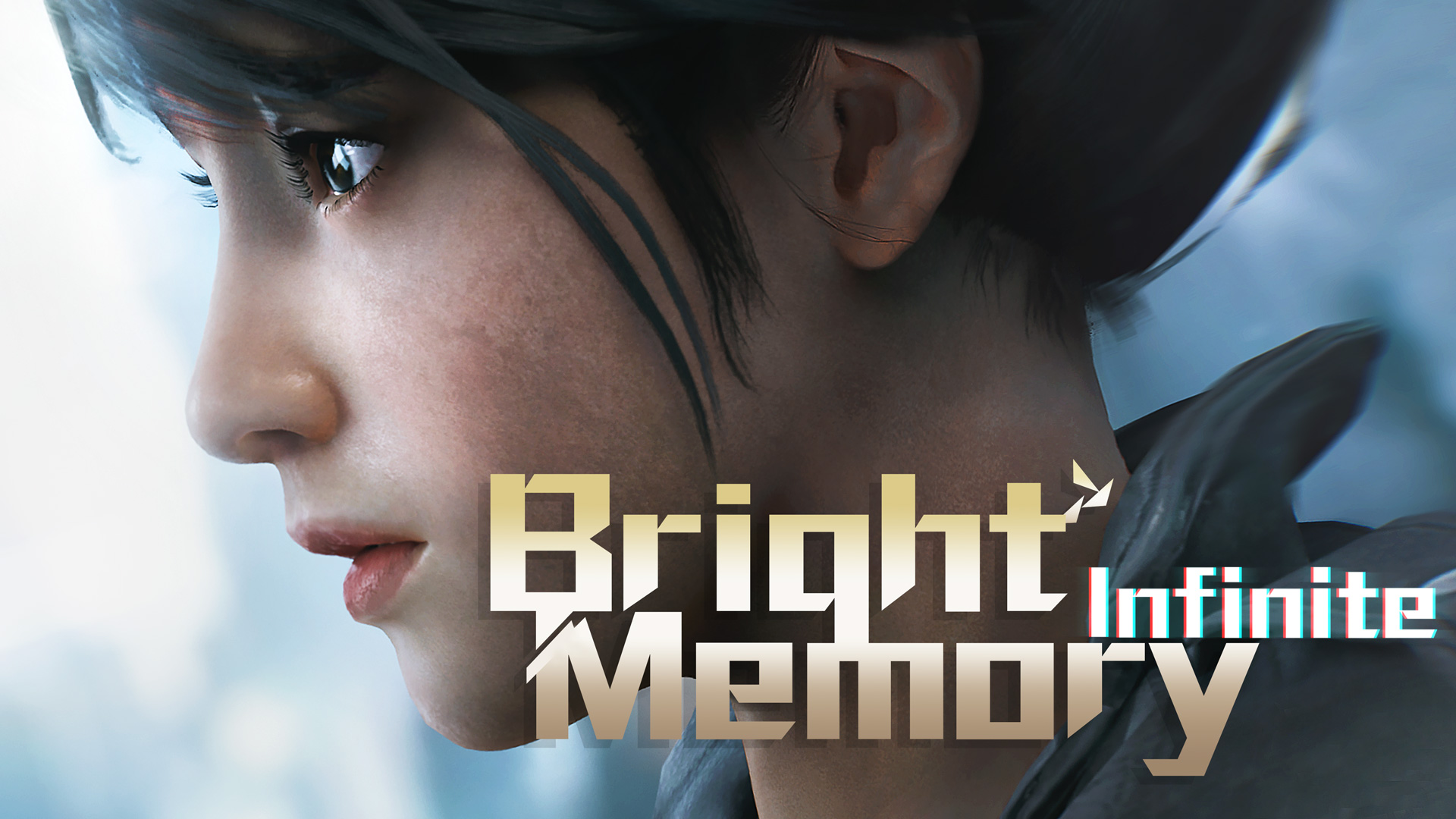
Bringing Bright Memory: Infinite to Xbox Series X I am so excited to have the chance to announce to the world that my indie game Bright Memory: Infinite will officially be released on the Xbox Series X once development is complete… Read more
Next Week on Xbox: May 12 to 15 Welcome to Next Week on Xbox, where we cover all the new games coming soon to Xbox One and Windows 10 PC! Every week the team at Xbox aims to deliver quality gaming… Read more
You connect people. Your tech helps them find their friends or make new ones – investing in a sense of presence and identity in a world that could last for years. You take on the challenges of online play that are unique and constantly evolving – a beast with many heads – and you have the sort of mind that craves the chance to slay it.
Question is seeking a network engineer with Unreal Engine multiplayer experience for a full time position to round out our team with ownership over matchmaking, session flow, and/or dedicated servers. Our last game was a multiplayer peer-to-peer game, and we wish to scale the team up to take this further using PlayFab’s matchmaking, crossplay, and dedicated server offerings. Your expertise in this field would grant you agency within the studio to define your role as well as the shape of the company as it enters its next phase of existence.
You would be working remotely from home with competitive salaries and benefits for U.S. residents with a distributed team made up of ex-AAA developers whose past team credits include: Thief: Deadly Shadows, BioShock, BioShock 2, BioShock Infinite, Dishonored, South Park: The Stick of Truth, and South Park: Fractured But Whole. We draw on a long history of games with strong central narratives & diverse player-enabling systems with the goal of attempting to create new experiences in the same vein, but on a smaller scale.
Responsibilities
Provide both, high level and low level, direction for the client and backend server architecture
Implement client travel flow through various session patterns
Write documentation for the maintenance and upkeep of your systems
Provide technical insight regarding multiplayer gameplay design
Lead and discuss networked game system architectural decisions and best practices
Requirements
GEOGRAPHY
Must live within U.S. time zones from Pacific to Eastern time – We want office hours to overlap from West to East coast
Due to logistics issues, we can only offer benefits to U.S. residents.
NETWORKING EXPERIENCE
Required: Familiarity with Unreal Engine 4’s online subsystems and session APi
Required: Must have shipped a multiplayer game on consoles (PS4 and/or XboxOne)
Familiarity with online gaming backend services such as PlayFab, Azure, or AWS
Familarity with cyber security methods and practices
Knowledgeable about network protocols
Keen to understand each millisecond of network exchanges, knowing where the time goes and how to reduce waste
Nice to have: Experience with implementing network topography as it relates to dedicated servers A) running Unreal Engine in headless mode B) using third party online services
COLLABORATOR
A mind for good architecture that caters to human factors and minimizes technical debt… specifically in the context of Unreal Engine 4
Able to use or modify existing code instead of writing redundant new systems
Understands gameplay
Self driven quality standards:
Proactive about tackling new problems instead of waiting to be told
Able to write bug reports and feature requests for yourself
Reaching out to team members as needed
Be the first to test your own output
COMPUTER SCIENTIST
Computer Science degree or equivalent experience
Expertise in C++
Ability to learn server-side programming languages as needed
Memory management – References and pointers vs. copy
Data structures, design patterns, and algorithms
Mastery of replication tactics and multiplayer development patterns
ALGORITHMIST
Systems design: Able to synthesize algorithms based on feature specifications AND teach that algorithm through writing and verbal discussions
Able to speak in terms of Big O notation and algorithmic complexity
Nice to Have: Understand common uses of dot product, cross product, normalized vectors, sine, and cosine in the context of gameplay programming
Optimizations: Able to learn and employ optimization techniques as needed
Whether you’re just starting out, looking for something new, or just seeing what’s out there, the Gamasutra Job Board is the place where game developers move ahead in their careers.
Gamasutra’s Job Board is the most diverse, most active, and most established board of its kind in the video game industry, serving companies of all sizes, from indie to triple-A.