| |
| News - Now Available on Steam – Lost Dimension, 40% off! |
|
Posted by: xSicKxBot - 11-01-2017, 07:23 AM - Forum: Lounge
- No Replies
|
 |
Now Available on Steam – Lost Dimension, 40% off!
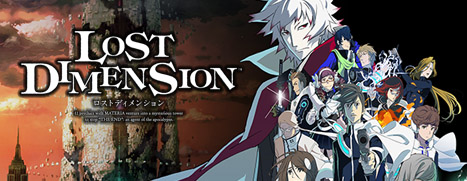
Lost Dimension is Now Available on Steam and is 40% off!*
In the near future a terrorist mastermind, known only as ‘The End’, threatens humanity with nuclear armageddon. A special task force, the S.E.A.L.E.D team, are the only ones who can stop him: a group of young combatants with incredible abilities and each with a mysterious past. Together, they must climb The End’s formidable tower one floor at a time and bring him to justice. Each of the S.E.A.L.E.D. members’ psychic powers will be put to the test against the sinister occupants of each floor as they race against the clock – and the traitors hidden within their ranks – to save the planet.
*Offer ends November 6 at 10AM Pacific Time
|

|
|
| Xbox Wire - This Week on Xbox: October 27, 2017 |
|
Posted by: xSicKxBot - 11-01-2017, 07:23 AM - Forum: Xbox Discussion
- No Replies
|
|
This Week on Xbox: October 27, 2017
We know you’re busy and might miss out on all the exciting things we’re talking about on Xbox Wire every week. If you’ve got a few minutes, we can help remedy that. We’ve pared down the past week’s news into one easy-to-digest article for all things Xbox! Or, if you’d rather watch than read, you can feast your eyes on our weekly video show above. Be sure to come back every Friday to find out what’s happening This Week on Xbox!
November’s Games with Gold Are Full of Action and Adventure
Welcome to another month of Games with Gold! With a mix of racing, adventure, and platforming challenges, Xbox Live Gold members are sure to have a blast via November’s Games with Gold on Xbox One and Xbox 360. Available starting on November 1, the arcade racer Trackmania Turbo comes to Xbox One followed by the fantastic adventure game… Read more
Play XCOM 2 for Free This Weekend Only with Xbox Live Gold
Ignite a global resistance to reclaim our world and save humanity! This weekend only, all Xbox Live Gold members can enjoy 2K’s turn-based strategy hit, XCOM 2 for free as part of Xbox Live Gold’s Free Play Days. Beginning at 9:00 a.m. PT on Thursday, October 26 and running through to 11:59 p.m. PT on Sunday, October 29, Xbox Live Gold members… Read more

Join Us for the Launch of the World’s Most Powerful Console, Xbox One X
Xbox One X launches in less than two weeks and we’re gearing up for the biggest global launch in Xbox history on November 7. We’re thrilled to get Xbox One X, the world’s most powerful console, into the hands of our fans, so we wanted to share some early details about how you can participate in the Xbox One X launch no matter your location… Read more
Play Three Generations of Games – Better – on Xbox One
Starting tomorrow, for the first time, you’ll be able to play three generations of games on one console – a curated list of Original Xbox classics like Crimson Skies: High Road to Revenge, Star Wars: Knights of the Old Republic and more will be available across the entire Xbox One family of devices. And when Xbox One X launches on November 7… Read more

Xbox Game Pass: Metal Gear Solid V: The Phantom Pain, Halo Wars DE, Resident Evil HD and More Available November 1
Hello, fellow gamers! Welcome to your November Xbox Game Pass update. We’re adding seven more games to the Xbox Game Pass catalog! In addition to over 100 great games already included in your membership, Metal Gear Solid V: The Phantom Pain, Halo Wars: Definitive Edition, Resident Evil HD and more will be ready to play starting November 1… Read more
A Gift to Insiders: More New Features
Last week, we delivered an upgraded console experience to Xbox One owners that focused on personalization and speed. It was a massive update, but we aren’t done just yet. Over the next few weeks, we’ll be addressing customer feedback and adding even more great new features that gamers have been asking for… Read more

Gears of War 4 Xbox One X Enhancements In-Depth
We’re excited to share how Gears of War 4 has been enhanced for the Xbox One X. Our new trailer showcases the wealth of graphical and gameplay enhancements that are only possible with the world’s most powerful console. We’re also excited to finally reveal the Preferred Rendering mode so you can play Gears of War 4 how you want… Read more
Save America in Wolfenstein II: The New Colossus, Available Now on Xbox One
Your mission, should you choose to accept it, is to liberate the United States from Nazi rule by kickstarting an American Revolution in Wolfenstein II: The New Colossus. Jump back into the boots of BJ Blazkowicz, scourge of the Nazi empire, and humanity’s last hope for liberty. Armed with guns and gumption… Read more

Journey to Ancient Egypt in Assassin’s Creed Origins, Available Now on Xbox One
The mysteries of Cleopatra’s Egypt are yours to uncover in Assassin’s Creed Origins, out now on Xbox One and will be Xbox One X Enhanced for Xbox One X on November 7. As Bayek, a protector of Egypt, you are thrust into a tumultuous time in Ancient Egypt’s history. The struggle for power between Cleopatra and her brother Ptolemy… Read more
Saturday Night Live’s Michael Che and Colin Jost to Join Xbox Live Sessions
Hello Xbox gamers! We’re excited to announce another episode of Xbox Live Sessions, this one taking place this upcoming Monday night, October 30 at 5 p.m. PT. “Saturday Night Live” cast members Colin Jost and Michael Che will take a break from their hectic schedules to join Xbox Live Sessions, an interactive livestream hosted on the Mixer Xbox Channel… Read more

Free-to-Play Action MMO Skyforge Coming to Xbox One in November
Welcome, Recruits! I’m thrilled to give you the opportunity to become part of an elite group of immortals and discover what it means to fight ‘till the very end, again, and again (and again)! In Skyforge, our free-to-play action MMO, you become one of the chosen and receive the gift of immortality, tasked with the protection of your home planet of Aelion… Read more
Tips for Fallout 4: Game of the Year Edition
Hey, Xbox gamers! The Tips & Tricks team is here with tips for Fallout 4: Game of the Year Edition (click on the video player above). By now, most of us have logged quite a few hours into the base game, but for those who haven’t gotten their fill yet, Fallout 4’s Game of the Year Edition is here. This version of the game comes with all six of the DLCs… Read more

Building the 1980s VHS Horror Vibe of Slayaway Camp
When we decided to create “The Most Violentest Puzzle Game of All Time” we knew we had to go big (or go home). Slayaway Camp is a sliding block puzzle game, like Sokoban and many, many other logic games, yes… but it’s also a gore-encrusted love letter to the sleaziest horror films of the 1980s. While the actual puzzle mechanics will be familiar to many players… Read more
Xbox Live Sessions: Ronda Rousey to Play Assassin’s Creed Origins on Xbox One X
Ronda Rousey, American mixed martial artist, model and actress, will feel true power when she joins the first-ever Xbox Live Sessions to be played on the new Xbox One X console. The interactive livestream hosted on the Mixer Xbox Channel will have Rousey playing the new Assassin’s Creed Origins on Thursday, October 26 at 6 p.m. PT… Read more
|
|
|
|
| News - Super Mario Run Passes 200 Million Downloads as Nintendo Seeks Mobile Success |
|
Posted by: xSicKxBot - 11-01-2017, 07:23 AM - Forum: Nintendo Discussion
- No Replies
|
|
Super Mario Run Passes 200 Million Downloads as Nintendo Seeks Mobile Success
Nintendo’s quest for mobile success has had its ups and downs to date. It’s enjoyed a modest share of (pocket) monster profits from Pokémon GO, while it has released three main games / apps of its own. The two most recent have had varied success, but Nintendo has confirmed a notable landmark for one in particular.
It’s confirmed that Super Mario Run has passed 200 million downloads, with over 90% of those outside of Japan. It’s also highlighted an increase in players following the recent major update (and discount). Nintendo does admit, however, that monetising the game (through its one-off purchase) is still an issue, as the game has “not yet reached an acceptable profit point”.
Nintendo states that it is, however, “on track” with its profit targets for Fire Emblem Heroes, with promotions and updates also leading to an increase in active users. The company is also keen to point out that sales (through microtransactions) are gradually improving outside of Japan.
Animal Crossing: Pocket Camp seems to be off to a strong start in Australia, too, and that’s an IP with undoubted potential for success on Mobile ahead of its late November global release. Overall, driven by Super Mario Run and Fire Emblem Heroes, Nintendo reported revenue of 17.9 billion Yen (approx $158 million) from mobile in its Q2 financial report.
It’s interesting to see the steady evolution of Nintendo’s efforts on Mobile; it still has the target of releasing 2-3 titles each year.
For now we await the global release of Pocket Camp – do you think it’ll be a success?
|
|
|
|
| News - Out Today: Five New Switch eShop Games to Spice Up Halloween |
|
Posted by: xSicKxBot - 11-01-2017, 07:23 AM - Forum: Nintendo Discussion
- No Replies
|
|
Out Today: Five New Switch eShop Games to Spice Up Halloween
In what is now likely to be a regular update, we’ve been checking out which games are out early in this download week. With solid support for the Switch eShop we have release dates planned to tie-in with retail arrivals or multi-platform downloads; in crowded weekly release schedules ‘early’ arrivals can therefore fall through the cracks. We don’t want that to happen, do we?
Last week’s equivalent brought us four early games in the week, but this week we’re up to five. They’ll all be live through the course of the day (likely morning in North America, afternoon in Europe) – let’s get to it.
Perception (Deep End Games) – $14.99USD / £12.99
A definite win for marketing and savvy timing. This only arrived on other platforms earlier this year and was received quite positively; as you can see in the trailer above it takes the first-person scary house trope and adds a twist. The protagonist is blind, so you can only see the surroundings in limited details and outlines, effectively using sound as your guide. This is an enhanced edition that includes three options for playing the campaign and various adjustments designed to improve on the original.
King Oddball – (10tons) – $4.99USD – £3.99
This actually arrived on 30th October. You take control of a boulder (the King of boulders it would seem) with the aim of using your ridiculously long tongue to lick up other, smaller boulders, before launching them at tanks and helicopters. Despite sounding like something we’ve made up for the world’s earliest (or latest) April Fools article, the game is very much real and actually looks like a whole lot of fun.
One of the first games Ubisoft actually announced for the Switch, it’s now finally ready to make its entrance. Yep, it’s virtual Monopoly, though you can also customise rules and play shortened Special Goals games if you or the system’s battery are running out of time.
Based on the PS4 and Xbox One title from 2016, this chaotic racer features more than 30 maps covering forest, desert, winter and farm environments. You’ll also find 84 skill challenges and 12 “authentic” events. There are also 6 officially licensed Monster Jam stadiums included, if you’re keen on that kind of thing.
Previously on 3DS, this beat ’em up-style title takes various IPs from the famous network and mashes them up into one adventure; it can be tackled solo or in local co-op.
Those are your fresh eShop arrivals – will you pick any of these up?
|
|
|
|
| PS4 - Summon Night 6: Lost Borders |
|
Posted by: xSicKxBot - 11-01-2017, 03:51 AM - Forum: New Game Releases
- No Replies
|
|
Summon Night 6: Lost Borders
Summon Night 6: Lost Borders weaves an emotional tale of friendship and discovery that begins in the sparsely populated ?cocoon world? of Fillujah, where the three main characters (Raj, Amu and Ist) live in virtual isolation. Publisher: GAIJINWORKS Release Date: Oct 31, 2017
|
|
|
|
| PC - Field of Glory II |
|
Posted by: xSicKxBot - 11-01-2017, 03:51 AM - Forum: New Game Releases
- No Replies
|
|
Field of Glory II
Field of Glory II is a turn-based tactical game set during the Rise of Rome from 280 BC to 25 BC. Publisher: Slitherine Release Date: Oct 12, 2017
|
|
|
|
| PC - Zwei: The Ilvard Insurrection |
|
Posted by: xSicKxBot - 11-01-2017, 03:51 AM - Forum: New Game Releases
- No Replies
|
|
Zwei: The Ilvard Insurrection
In a world where magic and technology exist side by side, vampire princess Alwen must reclaim her ancestral castle and her magic alongside her unlikely ally, treasure hunter Ragna Valentine. They may make for an odd pair, but when they combine their talents, the sky?s the limit!
Publisher: XSEED Games Release Date: Oct 31, 2017
|
|
|
|
| News - Get a job: ZeniMax Online Studios is hiring a Lead Console Programmer |
|
Posted by: xSicKxBot - 10-31-2017, 05:18 AM - Forum: Lounge
- No Replies
|
|
Get a job: ZeniMax Online Studios is hiring a Lead Console Programmer
 The Gamasutra Job Board is the most diverse, active and established board of its kind for the video game industry!
Here is just one of the many, many positions being advertised right now.
Location: Hunt Valley, Maryland
ZeniMax Online is searching for an enthusiastic Lead Console Programmer to lead a team of engineers to bring a constantly-evolving AAA MMO client to next-generation consoles.
Responsibilities:
- Develop and expand the ESO client on consoles
- Lead the development and software engineering of next-generation platform support
- Work with cross-team producers, engineers, and operations departments to bring together a complete next-generation console experience for players
Requirements:
- 5+ years of game industry software development experience
- History of leading high-quality engineering teams
- Profound technical knowledge of Xbox 360/One and PlayStation 3/4
- Robust programming skills/experience in C/C++, Java, JavaScript, HTML, Python and ActionScript
- Credited on at least one published video game in a programmer role
- Strong architecture and low-level performance programming skills
- Strong communication skills
- Experience with network game client/server architecture
Desired:
- Next-gen console experience
- Previous MMO development experience
Interested? Apply now.
Whether you’re just starting out, looking for something new, or just seeing what’s out there, the Gamasutra Job Board is the place where game developers move ahead in their careers.
Gamasutra’s Job Board is the most diverse, most active, and most established board of its kind in the video game industry, serving companies of all sizes, from indie to triple-A.
Looking for a new job? Get started here. Are you a recruiter looking for talent? Post jobs here.
|
|
|
|
| News - Video: Applying entrepreneurial skills to be a better game dev |
|
Posted by: xSicKxBot - 10-31-2017, 05:18 AM - Forum: Lounge
- No Replies
|
|
Video: Applying entrepreneurial skills to be a better game dev
 What does “entrepreneurship” mean in the context of the business of games and running a studio?
At GDC 2017, game industry vet Jason Della Rocca took the stage to try and shed light on that question, and in the process he made an important point: in games, being an entrepreneur means way more than just being willing to do the “business stuff.”
According to Della Rocca, taking entrepreneurship more seriously and adopting advanced techniques can give devs a leg up on the competition.
Citing examples and lessons learned from his time investing in over 20 studios, Della Rocca offered devs advice on everything from leading a team to securing funding to marketing your game and keeping your head straight throughout the whole process.
It was a very practical, useful talk that you can now watch for free on the official GDC YouTube channel!
In addition to this presentation, the GDC Vault and its accompanying YouTube channel offers numerous other free videos, audio recordings, and slides from many of the recent Game Developers Conference events, and the service offers even more members-only content for GDC Vault subscribers.
Those who purchased All Access passes to recent events like GDC or VRDC already have full access to GDC Vault, and interested parties can apply for the individual subscription via a GDC Vault subscription page. Group subscriptions are also available: game-related schools and development studios who sign up for GDC Vault Studio Subscriptions can receive access for their entire office or company by contacting staff via the GDC Vault group subscription page. Finally, current subscribers with access issues can contact GDC Vault technical support.
Gamasutra and GDC are sibling organizations under parent UBM Americas
|
|
|
|
|