Charles Martinet Receives Guinness World Record For Voicing Mario 100 Times
Charles Martinet is best known for voicing Nintendo’s iconic character Mario. Since 1990, Martinet has been providing the voice for this character and nearly three decades later he’s still doing it. Thanks to the recent release of Super Smash Bros. Ultimate on the Switch, Martinet was able to reach a very special milestone.
According to the Guinness World Records – the global authority on record-breaking achievements since 1955 – Charles now officially holds the world record for the most video game voiceover performances as the same character. To be precise, that’s exactly 100 performances as Mario, as of 7th December 2018. Here’s a look at the voice of Mario receiving the certificate for his achievement:
Once again, it’s thanks to the recent release of Super Smash Bros. Ultimate. We think it’s rather fitting he’s been able to reach this milestone with a game that is arguably one of the greatest Nintendo titles to ever be released and one that is already breaking existing sales records on all fronts.
On behalf of the community here at Nintendo Life, we would like to congratulate Charles on this epic milestone.
2 hours left: 10% off tech or 15% off everything else at eBay
By Christine McKee Saturday, December 15, 2018, 03:01 pm PT (06:01 pm ET)
For two hours only, eBay is knocking 10% off already reduced prices on tech or 15% off everything else. With a max discount of $75 off, it’s a great time to snap up the lowest prices available on Apple’s latest iPhone XS, XS Max, XR and Apple Watch Series 4 right before Christmas.
10% off tech or 15% off everything else
With just two hours remaining before the deal expires, now is the time to take advantage of eBay’s latest coupon, which knocks 10% off tech and 15% off everything else. This offer includes Apple’s latest products, such as the iPhone XS and iPhone XS Max, HomePod, MacBook Pro, Beats headphones and even 2018 iPad Pros, with no minimum spend and a max discount of $75 off.
To snap up the deals, apply coupon code PICKUPSALE during checkout. The 10% discount is valid in the following categories: Cameras & Photo, Cell Phones & Accessories, Computers/Tablets & Networking, Consumer Electronics, Video Games & Consoles, while the 15% discount works in all other categories with the exception of warranties and protection plans, gift cards, coins, paper money, coupons and real estate. The offer is open to eBay members with a registered address in the United States, Canada, Latin America or the Caribbean. Coupon can be used once within a single transaction (or cart), while supplies last. Offer expires at 11:59 p.m. Pacific on Dec. 15.
Up to $75 off the following:
Additional Apple Deals
AppleInsider and Apple authorized resellers are also running a handful of additional exclusive promotions this month on Apple hardware that will not only deliver the lowest prices on many of the items, but also throw in discounts on AppleCare, software and accessories. These deals are as follows:
If you already have Steam installed, click here to install or play THE KING OF FIGHTERS XIV STEAM EDITION. If you don’t have Steam, you can download it here.
7.20e: == * Wraith Band: Bonus agility reduced from +8 to +6 (cost reduced by 25) * Bracer: Bonus strength reduced from +8 to +6 (cost reduced by 25) * Null Talisman: Bonus intelligence reduced from +8 to +6 (cost reduced by 25) * Power Treads: Bonus damage reduced from 16 to 12
* Anti-Mage: Counterspell duration reduced from 1.4 to 1.2 * Anti-Mage: Counterspell manacost increased from 40 to 45/50/55/60 * Beastmaster: Level 25 Talent reduced from +40 Inner Beast Attack Speed to +30 * Brewmaster: Drunken Brawler critical damage reduced from 200/220/240/260% to 170/200/230/260% * Brewmaster: Drunken Brawler cooldown increased from 20/19/18/17 to 23/21/19/17 * Bristleback: Strength gain increased from 2.2 to 2.5 * Bristleback: Bristleback now considers damage from towers as valid * Chaos Knight: Chaos Strike lifesteal increased from 35/45/55/65% to 50/55/60/65% * Dark Seer: Surge speed reduced from 36/54/72/90% to 30/45/60/75% * Dazzle: Poison Touch cast range reduced from 600/700/800/900 to 500/600/700/800 * Dazzle: Poison Touch manacost increased from 80/100/120/140 to 95/110/125/140 * Dazzle: Shallow Grave cooldown increased from 60/45/30/15 to 60/46/32/18 * Death Prophet: Spirit Siphon charge replenish time reduced from 60/55/50/45 to 60/52/44/36 * Death Prophet: Exorcism damage increased from 56-61 to 59-64 * Ember Spirit: Strength increased from 20 + 2.4 to 21 + 2.6 * Grimstroke: Ink Swell max stun duration reduced from 1.7/2.4/3.1/3.8 to 1.4/2.2/3/3.8 * Grimstroke: Soulbind cooldown increased from 90/70/50 to 100/75/50 * Gyrocopter: Agility gain increased from 2.8 to 3.1 * Huskar: Level 10 Talent reduced from +20 Damage to +15 * Juggernaut: Omnislash bonus damage from 30/45/60 to 30/40/50 * Keeper of the Light: Will-O-Wisp off period increased from 1.75 to 1.85 * Keeper of the Light: Will-O-Wisp AoE increased from 650 to 675 * Lifestealer: Agility gain increased from 1.9 to 2.4 * Lina: Base armor increased by 1 * Lone Druid: Base movement speed reduced from 340 to 330 * Lone Druid: Spirit Bear movement speed increased from 340/350/360/370 to 340/355/370/385 * Lone Druid: Level 10 Talent reduced from +150 Attack Range to +125 * Lone Druid: Level 20 Talent improved from -0.2 Spirit Bear Base Attack Time to -0.3 * Magnus: Empower bonus damage reduced from 20/30/40/50 to 10/20/30/40% * Magnus: Empower cleave reduced from 20/38/56/74% to 14/34/54/74% * Magnus: Reverse Polarity cooldown increased from 120 to 130 * Night Stalker: Dark Ascension cooldown reduced from 160/140/120 to 140/130/120 * Outworld Devourer: Equilibrium mana restore from 80/100/120/140% to 65/90/115/140% * Phantom Assassin: Phantom Strike duration reduced from 2.25 to 2 * Phantom Assassin: Stifling Dagger manacost increased from 30/25/20/15 to 30 * Phantom Assassin: Coup de Grace critical damage reduced from 210/330/450% to 200/325/450% * Phantom Assassin: Blur manacost increased from 30 to 50 * Puck: Base armor increased by 1 * Puck: Illusory Orb cooldown reduced from 14/13/12/11 to 13/12/11/10 * Queen of Pain: Agility increased from 18 + 2 to 22 + 2.2 * Queen of Pain: Scream of Pain manacost reduced from 110/120/130/140 to 95/110/125/140 * Riki: Base damage increased by 3 * Sand King: Sand Storm damage reduced from 25/50/75/100 to 20/40/60/80 * Shadow Fiend: Base armor increased by 1 * Slark: Level 20 talent reduced from +1.5s Pounce Leash to +1.25s * Spectre: Haunt illusion damage increased from 40/55/70% to 40/60/80% * Storm Spirit: Base damage increased by 2 * Sven: Base movement speed increased from 290 to 295 * Sven: Warcry shield health is 25% stronger on your hero * Terrorblade: Metamorphosis movement speed loss increased from 25 to 30 * Undying: Flesh Golem cooldown increased from 110 to 125 * Undying: Level 10 Talent reduced from +10 Health Regen to +8 * Ursa: Base movement speed increased from 305 to 315 * Venomancer: Poison Nova damage increased from 30/55/80 to 40/65/90
Posted by: xSicKx - 12-15-2018, 11:49 PM - Forum: PC Discussion
- No Replies
Subnautica FREE LIMITED Time
Prepare to dive
Descend into the depths of an alien underwater world filled with wonder and peril. Craft equipment, pilot submarines and out-smart wildlife to explore lush coral reefs, volcanoes, cave systems, and more - all while trying to survive.Created by Unknown Worlds Entertainment
Subnautica is an open world survival adventure game developed and published by Unknown Worlds Entertainment. It allows the player to freely explore the ocean on an alien planet, known as planet 4546B, collecting unique resources to survive. Subnautica was first released in early access for Microsoft Windows in December 2014, Mac OS X in June 2015, and for Xbox One in May 2016. The full release out of early access was in January 2018, exclusively for PC on Steam, with the versions for the Xbox One and PlayStation 4 on December 4, 2018. Subnautica has a confirmed standalone expansion called Subnautica: Below Zero planned to be released into early access in late 2018.
Gameplay
Subnautica is a survival, adventure game set in an open world environment and played from a first-person perspective. The player controls the lone survivor of a crashed space ship, called the Aurora, on the fictional ocean planet 4546B. The ship's wreckage explodes shortly after starting the game, from which point onward it can be explored. The main objective of the player is to explore the game's world and survive the dangers of the planet while at the same time following the story of the game. Subnautica allows the player to collect resources, construct tools, bases, and submersibles, and interact with the planet's wildlife. In the basic difficulty "Survival", the player will have to maintain nutrition, hydration, and oxygen. The game includes a day and night cycle which affects the gameplay and surroundings. The game includes three other modes: "Freedom mode", in which hunger and thirst are disabled; "Hardcore mode", which is the same as Survival, except that if the player dies, the player will no longer be able to respawn; and "Creative Mode", in which the hunger, thirst, health, and oxygen features are all disabled, all the crafting blueprints are acquired, where no resources are needed to craft and the submersibles do not need energy and cannot be damaged. The game is mainly set underwater, with two explorable islands.
The game officially supports VR headsets such as the HTC Vive and the Oculus Rift with the additional input of a keyboard and mouse or game controller according to the Steam sale page of the game.
Plot
This section's plot summary may be too long or excessively detailed. Please help improve it by removing unnecessary details and making it more concise. (December 2018) (Learn how and when to remove this template message)
Subnautica takes place in the late 22nd century, when humanity begins to colonize planets in space. A vessel constructed by the trans-gov Alterra, known as the "Aurora", has been sent to the outer reaches of controlled space on its maiden voyage with the main goal of constructing a form of high speed space travel structure known as a Phasegate. The Aurora also had a secondary mission which was to scan the Planet 4546B, which they would pass by on their journey, for signs of a ship that had gone missing around a decade prior, known as the "Degasi". The Aurora was chosen for this mission due to its new, advanced scanners. Upon coming close to the planet a strange signature is picked up by the scanner and the Aurora is struck by an energy pulse of unknown origin, and shortly after, crash lands onto the planet. While the player crashing is still part of the plot, the Aurora's nature has changed several times throughout the game's development. For a period of time, it was instead a terraforming ship sent to harvest resources from the planet when it got shot down, while in the launch version of the game, the Aurora has been built for the sole purpose of constructing a Phase Gate in 4546B's system.
As time passes, a series of radio messages from other survivors begins to stream in, sending the player to other crashed escape pods containing information about some of the Aurora's passengers, but no people. A few signals appear to be sent by unknown creatures, which are planning on hunting down the survivors of the crash. Eventually, a passing trade ship called the "Sunbeam" picks up the Aurora's distress signal and comes to help. However, upon attempting landing to pick up the player, the Sunbeam is destroyed, along with its entire crew, by the Quarantine Enforcement Platform, a huge weapon system built into the side of a mountain island by an unknown alien race around one thousand years ago. Soon afterwards the Alterra Corporation - the Aurora's owner - manages to send through schematics of a rocket ship called the "Neptune Escape Rocket" that will allow the player to escape the planet. However, it will not be possible for the rocket to take off while the Quarantine Enforcement Platform is still active.
As the player discovers later in the game, 4546B was host to an ancient alien race around one thousand years ago. They are referred to only as the "Precursor Race". The Precursors were not natives of the planet, they were there searching for a cure to a highly infectious bacterium known as "Kharaa" that they had become infected with on an unknown planet, and in their time had killed over 143 billion of their kind. After many experiments were conducted on the native fauna species, the Precursors discovered one species known as the Sea Emperor Leviathan - the game's largest creature and the being that has been telepathically communicating with the player throughout the game, whose stomach enzyme known as "Enzyme 42" is capable of causing remission of Kharaa's symptoms.
A purpose built facility known as the "Primary Containment Facility" was constructed in a remote location at a depth of 1400 meters where the Sea Emperor, along with the eggs it was found with, were contained. Due to the Sea Emperor’s old age, around 1600 years, the potency of its Enzyme 42 had declined, meaning it was not capable of killing the Kharaa bacteria, only causing temporary remission. After discovering this the Precursors shifted their attention from the adult, to the eggs. Despite their best efforts the Precursors were unable to trigger the eggs to hatch and they were left in a state of indefinite stasis.
Unbeknownst to the Precursors. who for reasons unknown were unable to hear the Sea Emperor's telepathic voice, the Sea
Emperor Leviathan was trying to tell them that the only way to hatch the eggs was to place them in their natural conditions, where enzymes produced by local flora would trigger full maturity and the hatching process to begin. After several attempts they took two of the seven Emperor eggs that had been collected and placed one in a laboratory dedicated to the research of eggs, and dissected the other. The egg dissection was a failure as the embryo was incapable of producing potent Enzmye 42. Desperate, the Precursors stole an egg from another native species, the "Sea Dragon Leviathan", a species related to the Sea Emperor Leviathan species that shares many features with it, albeit smaller and far less intelligent. These eggs were taken to research the hatching conditions of the Sea Emperor, as the Emperor's eggs were too precious to lose more of. The Precursors underestimated the Sea Dragon Leviathan, and it pursued them to another of their bases, the "Disease Research Facility". One of the two Dragon eggs had been contained here and the Sea Dragon Leviathan launched an assault on the base, ending with it ramming headfirst into one of the support cables keeping the facility suspended above the ground, a feat that - according to the player's PDA - would have required a ramming force of three hundred tons, and resulted in the death of the creature due to massive head trauma. The cable was ripped from the cave wall and the facility dropped, causing other cables to detach also and the facility to fall to the cave floor. This facility was the site in which Kharaa's effects were tested on the local fauna, and its destruction caused Kharaa to break out into the ecosystem. Upon outbreak, several automated quarantine procedures were put into place:
The Quarantine Enforcement Platform, a huge atmospheric weapon system was activated. The system prevents any unauthorised spacecraft from entering or leaving the planet. Clearance to leave can only be acquired by entering and having a blood sample taken by an automated device. If Kharaa, active or not, was present in the bloodstream, leaving would be made impossible as the spacecraft would be destroyed upon reaching a sufficient height. Despite only one such platform existing on the planet, it seems to have a scanning range covering the entire planet and the energy pulse fired by it can bend around the planet's gravitational field, allowing coverage over the entire planet.
The remaining Precursors were automatically evacuated to small, hidden bases known as sanctuaries. Here, their corporeal bodies were destroyed and their minds digitally stored, awaiting retrieval.
Bio-mechanical constructs referred to as "Self-Warping Quarantine Enforcer Units", or "Warpers" were activated. Their sole purpose is to track and destroy any infected organism, a purpose for which they are aptly equipped. Warpers were constructed from the body parts and DNA of dozens of different organisms, the vast majority of which are completely alien; taken from other planets. In place of a digestive system they have an internal battery that is wirelessly charged by means unknown. They have no pulmonary system and a digitally augmented brain and nervous system; a radio device was implanted into the brain, allowing contact with other units, and miniaturised "phase technology" was implanted beneath the skin which allows them to teleport themselves and others when triggered by the central nervous system.
In the story, the player must locate and explore four bases constructed on the planet by the Precursors. These are the Quarantine Enforcement Platform, the Disease Research Facility, the Alien Thermal Plant (a huge thermal power generator that supplies energy to all of the Precursor technology on the planet), and the Primary Containment Facility, where the now 2600 year old Sea Emperor Leviathan still resides with its eggs. The Sea Emperor Leviathan explains to the player that forcing the babies out of their eggs as the Precursors tried to will kill them, that they need a hatching enzyme to wake them from the eggs.
The player then gathers local flora to make the Hatching Enzyme and hatches the eggs. After brief contact with its children, the ancient Sea Emperor's strength finally fails, one of its arm on which it was supported giving out, leaving it crumpled and breathing heavily. After hatching the Sea Emperor's eggs the player can leave the Primary Containment Facility's aquarium through a "Warp Gate" through which the Sea Emperor's babies also traveled into the shallow waters.
The player can now disable the Quarantine Enforcement Platform. Once this is accomplished, they can launch the Neptune Escape Rocket to leave the planet. After leaving the atmosphere the rocket enters warp speed, made possible by the addition of Precursor technology to the engine. During this sequence the Sea Emperor Leviathan, a deeply philosophical being, makes telepathic contact one last time, saying "What is a wave without the ocean? A beginning without an end? They are different, but they go together. Now you go among the stars, and I fall among the sand. We are different, but we go together". After which the credits will play.
In a scene after the credits the computer confirms you have arrived back in Alterra space, but permission to land will only be granted after you pay your outstanding balance of one trillion credits, for the value of the planet's natural resources used by the player during the game. It reads: Welcome home to Alterra. Permission to land will be granted once you have settled your outstanding balance of one trillion credits.
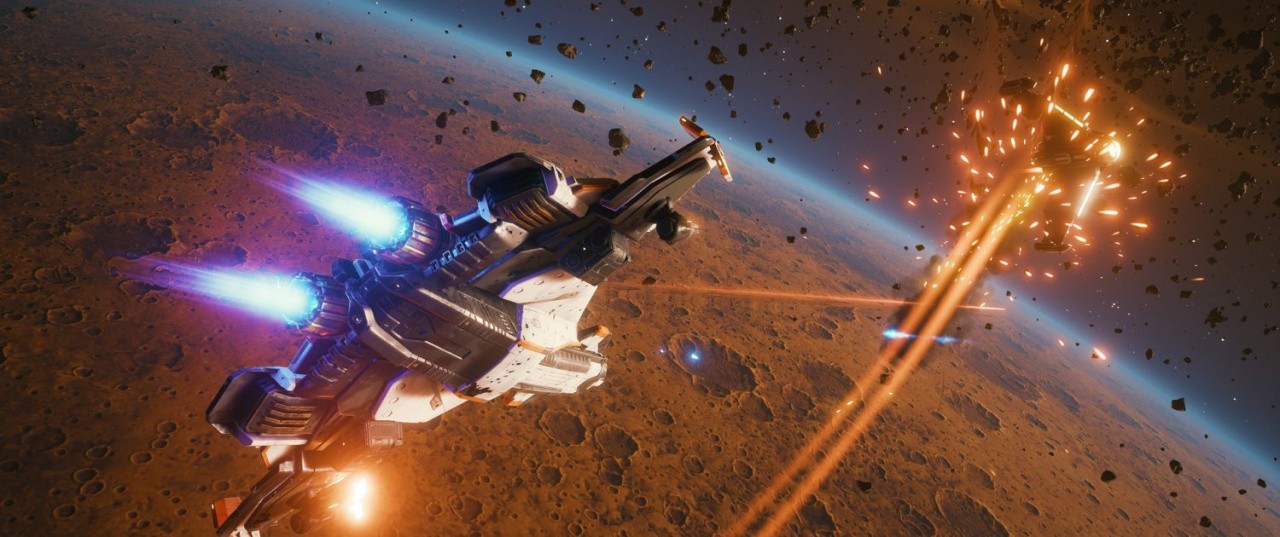
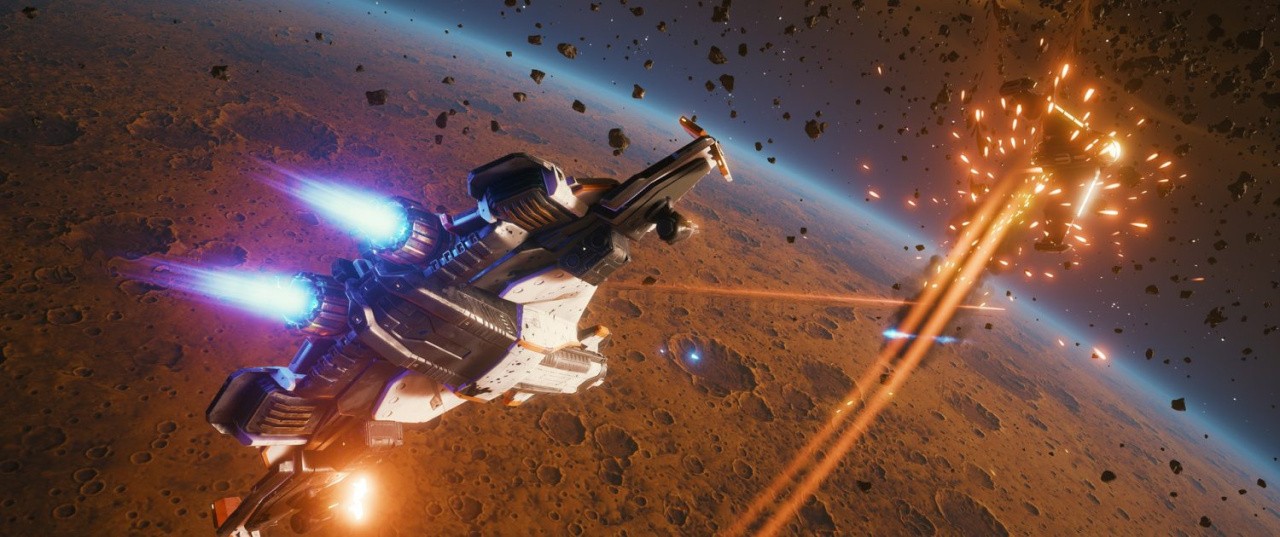
It’s been a while since we’ve done a lovely livestream, so come join Alex as he plays through the epic space shooter Everspace – Stellar Edition on the Nintendo Switch.
In our Everspace review, we felt it was an entertaining roguelike which fuses FTL with Rogue Squadron. We awarded it a mighty 8/10.
The livestream starts at 5pm UK time, so don’t miss out. Of course we’ll be archiving it for your future viewing pleasure, so no worries if you can’t join us live.
Destiny 2's Next Update Makes Prime Engrams Better On The Way To 600
The launch of Destiny 2's new expansion, The Black Armory, was a bit rocky. After players complained, Bungie dropped the character Power level requirements on its new Forge activities, but with the unlocking of the second of four forges, players discovered another bug where Black Armory weapon quests disappeared. And then there was the start of The Dawning, Destiny 2's holiday event, where server issues made it so players couldn't access the game for its first couple of hours.
As Bungie noted in its latest blog post, it's working on fixes for some of its most recent bugs. Developers have figured out why having two weapon frames from Ada-1 at the same time can delete one, for instance, and they're dealing with that issue. Other troubles it's aware of include Dawning Triumphs not triggering correctly, new cosmetic items showing up as already claimed even though players haven't found them yet, and the One Thousand Voices Exotic weapon not dealing the correct amount of damage. We'll likely see fixes for those issues and more coming pretty soon.
There's also a small update coming with the December 18 weekly reset that's going to fix a few other problems. The big change is the amping up of Prime Engrams for characters under Power level 600, to help speed up the grind for players trying to catch up to the new Black Armory endgame content. The update includes a few little fixes, too, like one that deals with an issue in which the forges don't drop rewards if you join them midway through a run.
The post also notes that the next round of Iron Banner multiplayer matches starts on December 25 and runs until January 1, which is also the end of the Dawning event.
Check out Bungie's blog for a full list of everything the developers are currently investigating in Destiny 2.
Reminder: Atari Flashback Classics Is Out Now On Switch, 150 Games Included
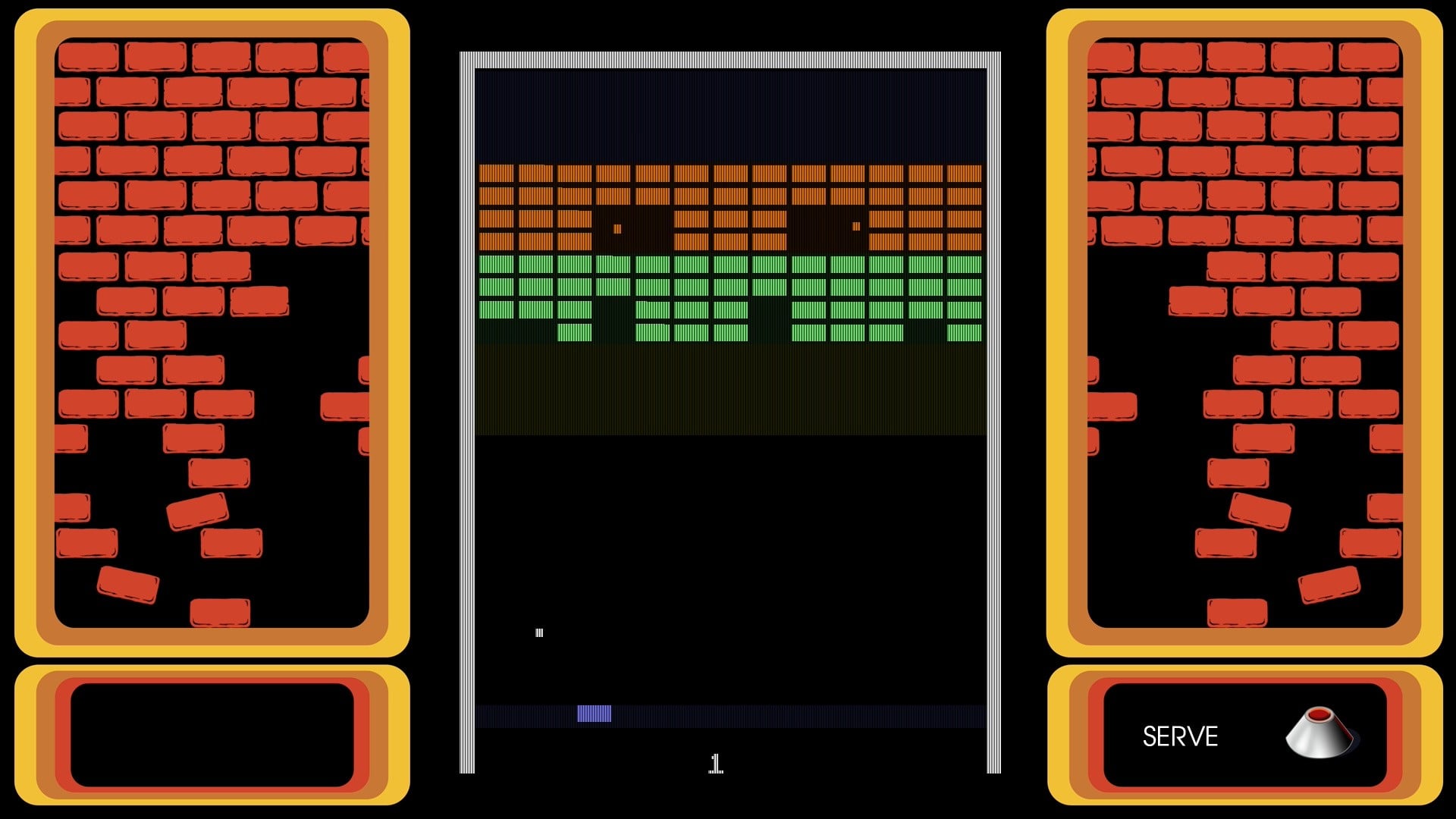
Sneaking onto the Nintendo Switch this week is Atari Flashback Classics, a collection of 150 Atari favourites all in one handy bundle.
Atari Flashback Classics includes a whole range of titles from the Atari 2600 and Atari 5200 home consoles, as well as some former arcade exclusives. We’re talking games like Asteroids, Centipede, Missile Command, and Pong to name a few, with in-game achievements, leaderboards, and other social features supported, too. There’s even an archive full of classic artwork to round things off nicely.
We’ve got a feature list and a collection of screenshots for you to check out below.
Key Features Include: –150 Classic Atari 2600, 5200 and Arcade Games: Play seminal Atari titles including Asteroids®, Centipede®, Missile Command®, Pong®, Tempest®, Warlords®, and many more. – Online and Local Multiplayer: Battle for arcade supremacy against friends online or at home. – Online Leaderboards: Compare your high scores with players from around the world. – Nintendo Switch Functionality: Designed to take advantage of the Nintendo Switch’s greatest features. – Brand New User-Interface: New User-Interface designed to re-create the greatest classic arcade experience.
The game is available directly from the North American eShop for $39.99. A European release date is still to be confirmed, so you might have to set up a North American account if you’re hoping to get your hands on it immediately.
Do you plan on jumping into this Atari collection? Let us know with a comment.
Posted by: xSicKxBot - 12-15-2018, 09:35 AM - Forum: Lounge
- No Replies
Sean Bean May Be Gone, But More Free Hitman 2 Content Is Coming This Month
The holidays are just around the corner, and in keeping with the spirit of giving, developer IO Interactive has a lot of free content in store for Hitman 2 this month. Every week in December, the studio will roll out something new to do in the game, from another Escalation Contract to a new Elusive Target and more.
Beginning today, December 13, players can take on The Aelwin Augment, the second Escalation Contract to hit the game thus far. This one takes Agent 47 to the Isle of Sgail and "is sure to be a memorable visit," IO teases. You can watch us try out hand at the Contract in the video above.
Following that, IO will release a "holiday surprise" in Hitman 2 next week, on December 18. The developer didn't share any further details about what the "surprise" will entail, but it notes the event will only be available for a limited time.
Later that same week will see the arrival of the game's second Elusive Target, after Sean Bean: The Revolutionary. He'll be available in Santa Fortuna for 10 days beginning December 21. Finally, rounding out the month is another new Escalation Contract, The Turms Infatuation, which is scheduled to arrive on December 27. You can read more about this month's free Hitman 2 content on IO's website.
Hitman 2 is available for PS4, Xbox One, and PC. GameSpot awarded it an 8/10 in our Hitman 2 review. Critic Edmond Tran wrote, "The addition of other minor mechanical changes--like concussive weapons, a picture-in-picture enemy activity alert, and visible security camera sightlines--help to improve Hitman 2 overall as a dense and accessible stealth assassination game. But the new locations are the real stars, impressive and inventive sandboxes ripe for picking apart with exciting experiments."











![[Image: Diesel%2Fproduct%2Fsubnautica%2F20181120...39ce76.png]](https://cdn2.unrealengine.com/Diesel%2Fproduct%2Fsubnautica%2F20181120_SN_Epic_6_About_Image-1000x840-77177ad6e0c070dfaf9829b24df6b2f07339ce76.png)
![[Image: Diesel%2Fproduct%2Fsubnautica%2Fgallery%...6709f6.jpg]](https://cdn2.unrealengine.com/Diesel%2Fproduct%2Fsubnautica%2Fgallery%2FSubnautica_MushroomForestReaper_1920x1080-1920x1080-f6a7bc0926ffcaac499eeff7f888447e316709f6.jpg)
![[Image: Diesel%2Fproduct%2Fsubnautica%2Fgallery%...1c9dcf.jpg]](https://cdn2.unrealengine.com/Diesel%2Fproduct%2Fsubnautica%2Fgallery%2FSubnautica_SeaglidingInGrassyPlats__1920x1080-1920x1080-c89a83dfc6b4f808a8d98e22d97adbed3c1c9dcf.jpg)
![[Image: Diesel%2Fproduct%2Fsubnautica%2Fgallery%...bc5eda.jpg]](https://cdn2.unrealengine.com/Diesel%2Fproduct%2Fsubnautica%2Fgallery%2FSubnautica_Lifepod__1920x1080-1920x1080-0546ca091b05c3da38f9840390a55ce17dbc5eda.jpg)
![[Image: Diesel%2Fproduct%2Fsubnautica%2Fgallery%...13cd45.jpg]](https://cdn2.unrealengine.com/Diesel%2Fproduct%2Fsubnautica%2Fgallery%2FSubnautica_KelpForest_1920x1080-1920x1080-078dbbec6550dc5fda06acf7f0ce96f87313cd45.jpg)
![[Image: Diesel%2Fproduct%2Fsubnautica%2Fgallery%...7dcddd.jpg]](https://cdn2.unrealengine.com/Diesel%2Fproduct%2Fsubnautica%2Fgallery%2FSubnautica_BulbZoneBase_1920x1080-1920x1080-fda9ab7fab592e3ff02620bf10ae80eaa47dcddd.jpg)