Welcome, Guest
You have to register before you can post on our site.

Username
  

Password


Search Forums

(Advanced Search)

Forum Statistics
» Members: 20,946
» Latest member: blackopsdlc
» Forum threads: 22,120
» Forum posts: 23,087

Full Statistics

Online Users
There are currently 980 online users.
» 0 Member(s) | 975 Guest(s)
Applebot, Baidu, Bing, Facebook, Google

Latest Threads
[Ubuntu News] Upgrade you...
Forum: Linux, FreeBSD, and Unix types
Last Post: xSicKxBot

» Replies: 0
» Views: 7
[Realm of the Mad God] Sh...
Forum: PC Mods
Last Post: xSicKxBot

» Replies: 0
» Views: 8
[Realm of the Mad God] No...
Forum: PC Mods
Last Post: xSicKxBot

» Replies: 0
» Views: 11
[Realm of the Mad God] /f...
Forum: PC Mods
Last Post: xSicKxBot

» Replies: 0
» Views: 14
[Minecraft] Thicc Industr...
Forum: PC Mods
Last Post: xSicKxBot

» Replies: 0
» Views: 16
[WoW Retail News] Boat an...
Forum: World of Warcraft
Last Post: xSicKxBot

» Replies: 0
» Views: 15
[League of Legends] Leagu...
Forum: PC Mods
Last Post: xSicKxBot

» Replies: 0
» Views: 15
[MS Blog] New Microsoft d...
Forum: Windows
Last Post: xSicKxBot

» Replies: 0
» Views: 11
[League of Legends] Auto ...
Forum: PC Mods
Last Post: xSicKxBot

» Replies: 0
» Views: 19
[League of Legends] Skin ...
Forum: PC Mods
Last Post: xSicKxBot

» Replies: 0
» Views: 15

 
  News - Blaster Master Zero 2 Patch Resolves Multiple Issues And Enhances Stability
Posted by: xSicKxBot - 04-29-2019, 03:11 PM - Forum: Nintendo Discussion - No Replies

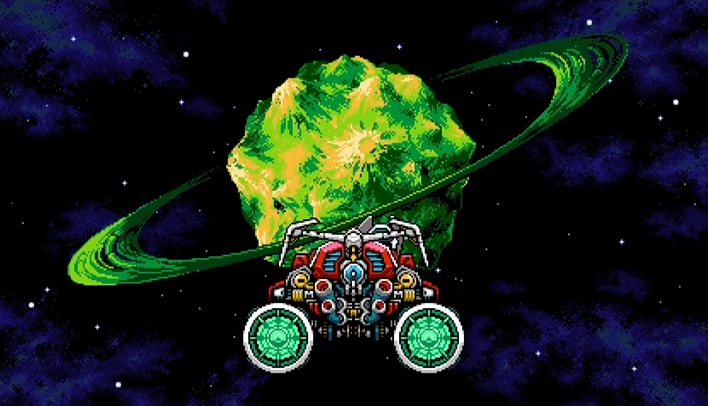
Blaster Master Zero 2 Patch Resolves Multiple Issues And Enhances Stability


Master your blast


Blaster Master Zero 2

One of the highlights of last month’s Nindies Showcase was the Blaster Master Zero 2 announcement. Right after the presentation, the game was released on the Switch eShop.

If you had somehow forgotten about this follow-up to the 2017 title, now might be the time to check it out. It’s a bigger and better adventure for Jason and his buggy, featuring all-new weapons and boss battles.

The latest update (Version 1.2.2) makes the following improvements and fixes:


A sequence that makes it easier for players to understand how to use the Blast Counter and how to return to GAIA SOPHIA when outside the tank has been added to the starting area of the game.

In addition to fixing the following issues, a bunch of small fixes and stability improvements have been implemented:

  • An issue that caused the game to crash when the weapon select menu is opened at the exact moment the player dies has been fixed.
  • An issue that caused the game to crash when “EXIT GAME” is selected from the pause menu after starting the battle against Gathervira has been fixed.
  • An issue that allowed the player to jump during a cutscene has been fixed.
  • An issue that allowed the player to return to SOPHIA in side-view mode when the player dies or has a screen transition has been fixed.
  • An issue that was fixed in Ver.1.2.0 that was supposed to fix an issue with the control settings was insufficient, so additional adjustments have been made for this patch.
    We apologize for an inconveniences this may have caused.
  • Various other small fixes have been implemented.

Have you tried out this game yet? Did you play the previous release? Tell us down below.


[via blastermaster-zero.com]


Print this item

  News - Layton’s Mystery Journey For Nintendo Switch Rated By The ESRB
Posted by: xSicKxBot - 04-29-2019, 03:11 PM - Forum: Nintendo Discussion - No Replies

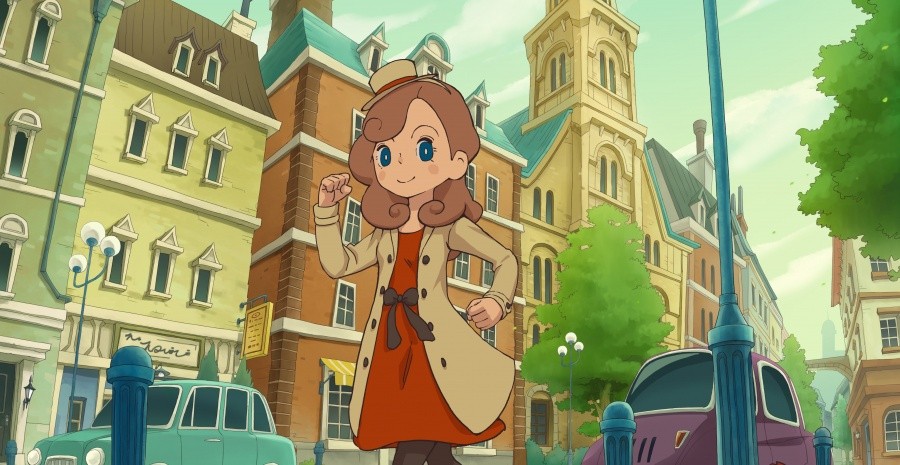
Layton’s Mystery Journey For Nintendo Switch Rated By The ESRB


Another sign it’s on the way


Following a rating by the Australian Classification Board in February and a listing on the G4F Localisation website in March, Layton’s Mystery Journey: Katrielle and the Millionaires’ Conspiracy – Deluxe Edition has now been spotted on the Entertainment Software Rating Board.

The classification means a North American release shouldn’t be too far off. The game started out life on the 3DS and the deluxe edition for Switch arrived in Japan last year. Take a look at the descriptive rating below:


Last month, G4F also listed the original outing Professor Layton and the Curious Village for Nintendo Switch. The last time we heard about this classic story-driven puzzle game was when Level-5 ported it cross to Android and iOS devices.

Have you been waiting for Layton’s previous releases to arrive on the Switch? Did you play Mystery Journey on the 3DS? Tell us in the comments.


[via nintendoenthusiast.com]


Print this item

  PS4 - Days Gone
Posted by: xSicKxBot - 04-29-2019, 02:30 PM - Forum: New Game Releases - No Replies

Days Gone


Set in the beautiful, volcanic scarred high-desert of the Pacific Northwest, Days Gone is an open-world action-adventure game in which you assume the role of Deacon St. John, a Drifter and bounty hunter who would rather risk the dangers of the broken road than live in one of the ?safe? wilderness encampments. The game takes place two years following a global pandemic which has wiped out just about everyone, but transformed millions of others into what survivors call Freakers ? mindless, feral creatures, more animal than human but very much alive and rapidly evolving. Made up of hundreds of individual Freakers, Hordes eat, move and attack together, seemingly as one. Some Hordes roam the highways at night, while others, like the one in the demo, have found a food source that keeps it in a single location. Skills learned in his prior life as an outlaw biker have given Deacon a slight edge in the seemingly never-ending fight to stay alive. But will it be enough? [Bend Studios]

Publisher: Sony Interactive Entertainment

Release Date: Apr 26, 2019

Print this item

  PC - Whispers of a Machine
Posted by: xSicKxBot - 04-29-2019, 02:30 PM - Forum: New Game Releases - No Replies

Whispers of a Machine


Whispers of a Machine is a Sci-Fi Nordic Noir that tells the story of Vera, a cybernetically augmented detective in a post-AI world, who investigates a string of murders and unravels a dark conflict over forbidden technology.

Publisher: Raw Fury

Release Date: Apr 17, 2019

Print this item

  PC - Yuppie Psycho
Posted by: xSicKxBot - 04-29-2019, 02:30 PM - Forum: New Game Releases - No Replies

Yuppie Psycho


Publisher: Another Indie

Release Date: Apr 25, 2019

Print this item

  News - Avengers Endgame: Captain America's Ending Ruins The Movie
Posted by: xSicKxBot - 04-29-2019, 08:40 AM - Forum: Lounge - No Replies

Avengers Endgame: Captain America's Ending Ruins The Movie

It's opening day for Avengers: Endgame, and the latest Marvel movie made good on its name, and it delivered plenty of resolution and closure for the MCU characters, and most of them were actually great. However, one of these endings did not work, and it nearly ruined the entire movie.

Consider this your spoiler warning.

Steve Rogers finished out his tenure as a main line MCU hero by not only wielding Mjolnir and surviving a truly brutal beating by Thanos, he also (apparently) volunteered to be the person to deliver the Infinity Stones back to their respective points in the timeline. You know, to avoid all the branched timelines that the Ancient One warned Bruce Banner about with the help of their handy cosmic infographic. Steve does this completely alone for some reason, which also doesn't make a lot of sense, but we'll let that slide for right now.

The real problem is that Steve doesn't actually succeed at his mission. He gives the Stones back, sure, and returns the Mjolnir he's been using to Asgard, apparently, but then he decides to take a detour and go live a full life with Peggy Carter somewhere in the past. This results in him showing back up in the present not by taking the quantum portal, but by walking (or maybe he took an Uber? Who knows) to a bench about 50 feet to the left of the portal, returning as an old man who has lived an entire life in the blink of the audience's eye.

We even get a little flashback of Steve finally sharing his dance with Peggy back in the '40s (or maybe the '50s, after the war) in what is obviously intended to be a very romantic, fulfilling coda to his story.

Or, maybe it would be, if it worked at all either in terms of Steve's thematic arc throughout his MCU tenure or by the rules that Endgame itself established.

Getting Technical With Time Travel

Let's take a look at Endgame's time travel logic first. As explicitly stated, by Endgame's own rules, you cannot change the present, you can only create new timelines--i.e. If the Infinity Stones weren't placed back in the exact places in the exact moments they were taken from, the MCU would be dealing with a bunch of branching timelines where various characters and entire movies either couldn't exist or would be completely doomed. A few of those branched timelines definitely still exist--an alternate 2014 where Thanos brought his forces to Earth years earlier than he originally did, an alternate 2011 where Loki escaped with the Tesseract after the end of Avengers 1, and so on--but the ones that were taken care of, were handled by Steve. That was his mission.

But in the process of closing off all the potential branches, Steve apparently made a new one. Or, rather, he should have made a new one, but somehow didn't. Steve changed his own past, and the past of Peggy Carter, by being present for those 70 years he originally spent frozen and marrying her--which, for whatever reason, allowed him to still exist as an old man in the main timeline he left--our present.

If Steve had actually created a branched timeline, he wouldn't have been an old man in our present. His reformed existence in the past should have changed events to the point that the movie’s present day would be different not only for Steve but for everyone. We'd be seeing a different timeline all together.

In the interest of mitigating the confusion here (and make no mistake--this is confusing as hell) let's break it down. There are two potential possibilities.

Possibility 1 is that Steve did create an alternate timeline that we just never got to see where he and Peggy were married, possibly went off and were superheroes together, stopped HYDRA from infiltrating SHIELD, rescued Bucky, prevented Howard Stark's assassination, and negated the need for the Avengers entirely. In the process, he erased the entire life that he knew Peggy had without him, including her husband and the kids she had while he was in the ice. Poof, gone.

Then, happy and old, Steve miraculously jumped back to our timeline unassisted, which ought to be impossible, and for no real reason, just in time to pass the shield on to Sam. Seriously, why would he bother coming back at all if he was so confident that the present day world didn't need him anymore? Why leave the timeline he made, especially if it really were so much better? What incentive does he have to go through the trouble?

What About Option 2?

Possibility 2 is that Steve did not create a branched timeline by going back, just lived his life as quietly as possible through the post-war years. That would make him complicit in the knowledge of all the horrific things happening to the people he loves during those years. This would also mean, in order for the timeline not to be fundamentally broken, that our version of Steve would have always been married to Peggy, even if he didn't know it until this exact moment. This not only contradicts the entirety of the Agent Carter TV show and various parts of the MCU up to now (like Steve's meeting with dying Peggy after he dethaws), it also means that Steve would be Sharon Carter's uncle--and, uh, that's pretty gross, even if he didn't know it at the time.

Even discounting the potential for unwitting incest, there are some other major problems here. Remember when Steve said when he sees a situation headed south, he can't turn his back? Remember how Steve's entire origin story revolves around his inability to sit back and let a conflict run its course without him? How he doesn't like bullies no matter where they're from? How he literally submitted himself to a potentially lethal science experiment rather than not fight in a war? How he jumped into German occupied territory without an army backing him up just on the off chance that there was something he could do to help his friend? How he can "do this all day?" Started a war to clear the name of his ex-assassin bestie? Still acted as a hero even while he was an international fugitive?

In what world does Steve Rogers, even a beaten down and jaded Steve Rogers, just sit on his hands and let the future deal with its own problems?

The answer should be none of them.

This doesn't even begin to broach yet another uncomfortable topic. The people who returned from the Snap were very literally dropped into a future when no time had passed for them at all--the miniature version of Steve's experience waking up from the ice back in 2011. But apparently he's totally fine with just bailing on a world experiencing a level of trauma that he is uniquely qualified to help them through.

"He's earned the right to be selfish!" You say? Sure. If anyone deserves a vacation, it's Steve--but that doesn't mean he's going to take one. We've spent the last 8 years learning the ins and outs of this character in the movies, and the last 7 decades learning about him in the comics. Letting things just happen is fundamentally not something he'd do. It's just not. He could retire, pass the shield over to Sam, and take a major step back, but there's no way Steve is ever just going to give up the fight altogether--and this has literally happened in the comics. Steve's even been an old man, but he still doesn't stop participating in superheroic world. It's simply not in his nature to quit--that would be like Tony suddenly deciding not to be an engineer just for the hell of it.

But say the goofy, esoteric time travel logic doesn't matter to you either way--there's still an issue. It has less to do with the mechanics and more to do with Steve's place within the MCU's meta-narrative.

Let's Ignore The Time Travel All Together

For a second, let's just pretend that we don't have almost 100 years of comics to look at and focus exclusively on the 60-some hours of film we've been given. Thematically, Steve is a guy who has lost a lot in these movies. Arguably, that's his most defining quality--he went into the ice 70 years ago, and he thinks a different guy came out--his words, not mine. The motif of being unable to go home again is repeated poignantly again and again and again--and through all of that, through everything, Steve has learned how to keep going. And that's a good thing--or at least, it was a good thing. By moving on, Steve was actually doing exactly what Peggy Carter had hoped for him ("the world has changed, and none of us can go back. All we can do is our best, and sometimes, the best that we can do, is to start over.")

Sure, there are a few beats in Endgame specifically where it looks like he's finally hit his breaking point ("some people move on, but not us"), but that only means he's been beaten down, not taken out. Hell, he even manages to summon up the force of will in the 11th hour to be worthy of wielding Mjolnir, making him only the third character and only mortal in the MCU to do so. That's nothing to scoff at.

Steve may be defined by loss, but the power of his character comes from turning that loss into strength. Sure, he's a super soldier, he's fast and strong and can take a major beating, but his actual superpower is his indomitable will. If there's one thing you can count on in the world, it's that Captain America is not going to give up, even when things are at their absolute worst.

Except for when he does, apparently. Giving Steve a temporal get-out-of-jail-free card may seem like a good idea on the surface, but at the end of the day all it does is recant his entire journey. What's the point of emphasizing the perpetual motion machine that is Steve Rogers--the constant assurance that no matter how dark things get, no matter how much you lose, you can still move forward--if the ultimate reward is getting to do the exact thing he was told he couldn't do; that he spent his life and five movies moving beyond?

Which is to say nothing about the completely squandered pay off for every moment of his solo trilogy. Remember how important his "I'm with you till the end of the line" refrain was with Bucky Barnes? Hopefully you do--there's officially licensed merch with that line printed on it. Fans got it tattooed on their bodies. It comes up a lot, and for good reason. It wasn't exactly subtle as far as big symbolic gestures are concerned and it was a major part of not one, not two, but three individual movies. Funny how now it's more like "I'm with you until the exact moment I decide I don't want to stick around anymore." Funnier still how that line, maybe the most memorable Captain America line of the entire MCU next to "I can do this all day"--another thing that was, apparently, not true--doesn't get a single shout out or call back in a movie that is about 90% shout outs and call backs to memorable MCU moments.

It's cheap, not romantic, and a needlessly dull edge to an otherwise powerful arc. The lesson that ought to be about processing grief and turning toward the future became a carelessly handwaved wink-nod at returning to the past, at which point Steve's journey is no longer about the process of recovery, it's a message about working really hard until you're miraculously presented with a magic bullet to make all your hard work and effort no longer matter.

Which, frankly, sucks.

And, really, none of this is even touching on the fact that Steve and Peggy's soul mate level connection was fostered over the course of, what, like a week back in 1945? Maybe he should have gotten over it. She definitely did. There was a whole TV show about it.

They both deserved so much better.

Print this item

  PC - Dark Devotion
Posted by: xSicKxBot - 04-29-2019, 02:23 AM - Forum: New Game Releases - No Replies

Dark Devotion


Explore the secrets of a mysterious fallen temple and put your Templar faith to the test in Dark Devotion, where no sacrifice is too great in praise of your God.

Publisher: Hibernian Workshop

Release Date: Apr 25, 2019

Print this item

  News - Pokemon Go Adding More Legendaries Through May And June's Field Research
Posted by: xSicKxBot - 04-29-2019, 02:23 AM - Forum: Lounge - No Replies

Pokemon Go Adding More Legendaries Through May And June's Field Research

A new month is just around the corner, which means Niantic will soon be rolling out a new set of Field Research tasks for Pokemon Go. The tasks are scheduled to begin appearing next Wednesday, May 1, at 1 PM PT / 4 PM ET, and they'll be available through the end of June. What's more, they'll give you another chance to catch a couple of fan-favorite Legendary Pokemon.

Each time you achieve a Research Breakthrough during the next two months, you'll be rewarded with an encounter with one of four possible Legendaries: Ho-Oh, Lugia, Latios, or Latias. Both Ho-Oh and Lugia were previously available through Research Breakthroughs, but this marks the first time you'll be able to encounter the Eon Pokemon this way, which is helpful if you missed out on their recent Raid events.

As usual, you'll be able to receive the new Field Research tasks by spinning the Photo Disc at Poke Stops. You can complete as many Field Research tasks as you'd like daily, but you'll only earn a stamp for the first one you finish per day. You'll need to collect a total of seven stamps to achieve a Research Breakthrough and encounter the Legendaries.

Additionally, you'll be able to hatch new Pokemon from Eggs beginning this week. The Gen 4 Pokemon Turtwig, Chimchar, Piplup, and Bonsly may appear from 2 km Eggs, while Cubone, Combee, Buizel, Glameow, Bronzor, Skorupi, and Croagunk may hatch from 5 km Eggs. Finally, 10 km Eggs may produce Mawile, Absol, Shinx, Cranidos, Shieldon, and Riolu. You can read more details on the Pokemon Go website.

Also on the way in May is a new Pokemon Go Community Day. This time, the event will take place on Sunday, May 19, and the featured Pokemon will be Torchic, one of the three starters from the series' Gen 3 games, Ruby and Sapphire. You'll also be able to earn triple the usual amount of Stardust for every Pokemon you catch during the event.

In the meantime, you have another opportunity to catch Shiny Meltan, as the special Mythical Pokemon is appearing again from now until May 5. If you're unsure of how to find one, check out our guide on how to catch Meltan. This is also your last chance to capture Origin Forme Giratina; the Legendary is scheduled to leave Raid Battles on April 29.

Print this item

  News - Random: Experience The Legend Of Zelda: Breath Of The Wild With PlayStation VR
Posted by: xSicKxBot - 04-29-2019, 02:23 AM - Forum: Nintendo Discussion - No Replies

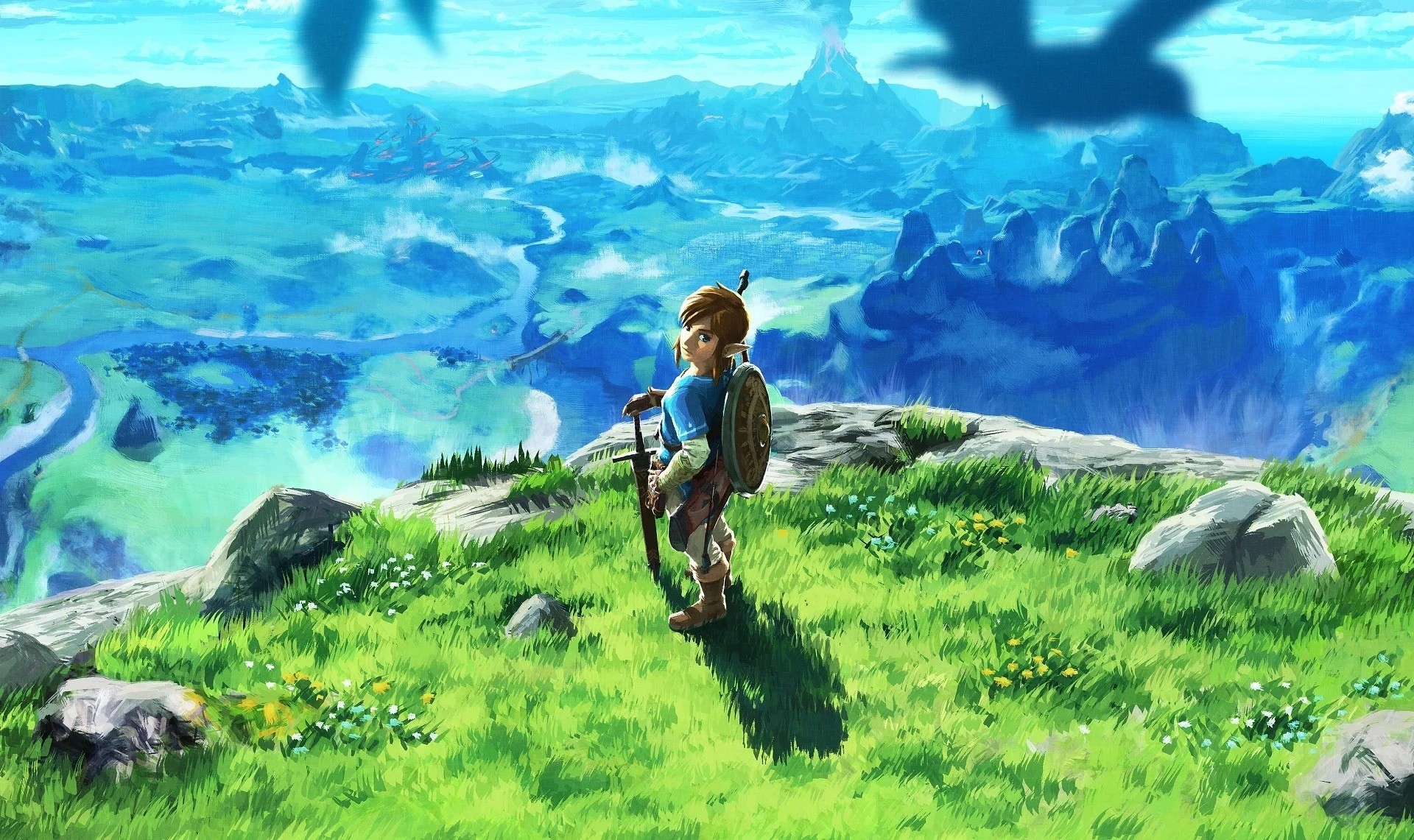
Random: Experience The Legend Of Zelda: Breath Of The Wild With PlayStation VR

Breath Of The Wild

The Legend of Zelda: Breath of the Wild might have only received its Nintendo Labo VR compatibility update yesterday, but virtual reality enthusiasts have already discovered how to get it working with the PlayStation VR headset.

This method means you don’t need to own Labo VR and you won’t need to use Nintendo’s cardboard setup to try out the new update for Zelda on Switch. The more expensive headset pays off as well – with the image quality slightly sharper on the device’s OLED display. It’s all thanks to the HDMI ports and PSVR Cinema Mode. ResetEra user PopsMaellard explained it in the following post:

One “HDMI TV” should still output from the PSVR box to the TV. The “HDMI PS4” input on the breakout box should be empty/unplugged. USB still plugged into the PS4, PS4 turned on.

On the front of the breakout box, the PSVR proprietary cable should be plugged in. The HDMI part of this split cable should be plugged into the switch.

Finally, still on the front of the breakout box, the HDMI Out (that was previously for the headset) should be plugged into the TV.

If you’re still a bit confused, below is GameXplain’s step-by-step video guide:


Do you happen to own all of the necessary equipment to try this out? How has your Zelda VR experience been so far? Tell us below.

Print this item

  AppleInsider - Editorial: Will Apple’s 1990’s ‘Golden Age’ collapse repeat itself?
Posted by: xSicKxBot - 04-29-2019, 02:23 AM - Forum: Apples Mac and OS X - No Replies

Editorial: Will Apple’s 1990’s ‘Golden Age’ collapse repeat itself?

Once, long ago, Apple Computer, Inc. commissioned a new headquarters in Northern California just as it began losing its position as a leader in personal computing tech in the early ’90s. Could history repeat itself in our modern era?

1 Infinite Loop (top) was the first of Apple’s three largest California campuses

History repeats, always with a twist


As Apple more recently embarked upon its massive second modern expansion at Apple Park, pundits crafted a narrative claiming the company was fated to suffer from an ‘arrogant construction hubris’ and ultimately fail.

There’s certainly no sign of that supposed “Curse of the Edifice Complex” today, a few years later as Apple expands even further beyond Apple Park with surrounding buildings–including its monumentally lavish Visitors Center in Cupertino–and the nearby third facility known as Wolfe Campus.

The tech media’s future outlook for Apple appears to have always been pretty wrong. The same kind of handwringing that hung over Apple Park during its construction did not occur over thirty years ago when the company was completing its first major campus back in 1993, just prior to a period of actual uncertainty and upheaval that really did result in a dour Beleaguerment Era for the Mac maker.

To better understand some of the reasons why pundit advice and prognostication are so frequently misguided, take a look at the Old Apple during its first major campus project–in the context of what was happening at the company in contrast to what outsiders imagined was occurring based on a superficial understanding of the market–and consider what’s different this time around.

Apple’s 1990s “Golden Age” campus


Apple’s first major campus project in Northern California, known as 1 Infinite Loop, had just finishing completion in 1993 at the tail end of what at the time had been commonly called Apple’s Golden Age: the pinnacle of its then highly-regarded Macintosh business that was just approaching its ten year anniversary–not unlike today’s iPhone.

The Macintosh-centric Apple had pioneered the development of advanced concepts including QuickTime digital video editing, voice synthesis and recognition, ultra-fast desktop computer hardware, new hyperlinked worlds with explorable nodes of virtual reality, and the promise of a new generation of mobile Newton personal digital assistant tablets.

Across the ’80s, Apple had achieved a pattern of distantly outperforming the collective mainstream of commodity copycat cloners in the industry by seeking to achieve something much greater than just incremental hardware advancement. While almost entirely forgotten after its fall in the mid-’90s, Apple was commonly described at the time as having entered a Golden Age, a period of time where everything it delivered was impressive and exciting and desirable.

The new headquarters of 1 Infinite Loop reflected that Golden Age optimism while figuratively planting a nostalgic homage to representations of how it got there in its campus Sculpture Garden, a feature depicting cartoonish, low-resolution Mac icons sprouting from the lawn. The Apple of the early 90s could easily be mistaken for today’s Google.

Apple’s Golden Age meltdown


Anyone who lived through the 1990s, however, will no doubt recall a different descriptive phrase attached to the company. By the mid- to late-’90s it was virtually impossible to read anything about “Apple Computer, Inc.” without a specific introductory adjective that was, at the same time, wistful, disparaging, infantilizing and dismissive. The company was, and always was, referred to as the beleaguered Apple Computer.

Despite suffering the consequences of both internal issues of its own making and outside problems beyond its control, Apple wasn’t so much branded as being incompetent or victimized as it was just Beleaguered, as if it were inherently fated to always be chained to a hopeless dream and unachievable utopia that the company could envision and articulate but not instantiate in a viable, sustainable, commercially significant form.

But Apple’s problems weren’t really a romantic curse. There were solid, rational reasons why the company began drifting sideways, even if much of the media lacked any understanding of this–or even knew that things were headed in a bad direction at all.

Across the ’90s, Apple had defined airy visions of the future. Those included its Knowledge Navigator demonstration of a voice-based assistant concept and the nearly magical Newton Message Pad tablet, both championed by Apple’s late-80s CEO John Sculley.

The company actually defined the outer realms of possibility in computers by developing software powerful enough to anticipate the needs of non-technical artists with its intuitive Mac user interface. It then promised to allow them to author multimedia with QuickTime, the first non-linear digital video editing platform for personal computers. That futurist technology appeared for Macs at a time when commodity PCs were still struggling to play back simple audio.

QuickTime

Apple developed non-linear video editing for Macs before PCs could reliably play back audio

Apple promised to usher in the same kind of future-forward upgrades for advanced page layout and printing with QuickDraw GX; for 3D graphics with QuickDraw 3D; for sophisticated local document search with V-Twin; for advanced OS and User Interface development with Copland and Gershwin; for non-proprietary files with the document-based OpenDoc, and for tools to create and explore virtual reality worlds with QuickTime VR.

The company also delivered major hardware-based Mac upgrades enabling advanced AudioVisual capabilities using Digital Signal Processors from AT&T and later RISC-based PowerPC chips in its partnerships with IBM and Motorola. This allowed Apple’s computers to digitally ingest, edit and output video from a camcorder and to play or record CD quality audio right out of the box long before PCs could do either.

However, as the ’90s dragged on Apple’s consistent inability to actually deliver upon what it was promising at a price mainstream users would pay set it up for real-world failure. At the same time, the Mac maker began running into intense competition from generic DOS PCs.

Apple had been struggling with its own development plans for Copland, its modern new Mac operating system. It was still fighting to finish its Newton OS tablet software. And it had grown increasingly distracted with a series of other moonshots and side projects–including the Mac-based Pippin games console–that various teams of engineers were inventing within their personal fiefdoms inside Apple’s Advanced Technology Group and other think-tank silos funded by the revenues from the Mac’s Golden Age.

Newton and Pippin, harbingers of today’s side-project moonshots

Apple wasn’t just fudging things internally. It had also embarked upon three large-scale, ultimately ill-fated joint efforts with Motorola and IBM to design PowerPC chips, to develop a new next-generation cross-platform OS known as Taligent, and to build multimedia tools development tools at Kaleida Labs.

It had also launched a separate new mobile processor architecture for its Newton Message Pad, known as ARM, with partners Acorn and VLSI. There was a lot going on outside of Apple’s core Mac business, but none of it was making enough money to sustain itself.

Across the company’s first five years at 1 Infinite Loop, Apple appeared to be caught in the vortex of a swirling drain, losing its customers and market share to cheaper commodity PC makers while being forced to frantically delay and ultimately cancel failed initiatives such as QuickDraw GX and OpenDoc after they had wasted the time and resources of its third-party developers.

After a period of constant beleaguerment that seemed to last for a generation (but really only stretched from 1994 to 1998, shorter than either Microsoft’s Windows-Zune mobile meltdown a decade later, or Google’s increasingly bleak implosion of hardware attempts from Motorola to Nest to Nexus and Pixel today, two decades later), Apple began to emerge anew under the returned leadership of Steve Jobs, who slashed away failed experiments and underperforming business segments to focus on ones that customers would want and could afford and which could sustain Apple itself.

Could an Apple again fumble its Golden Age?


Today’s Apple under Tim Cook is wildly different from the Apple of the early ’90s. In part, that’s because much of the executive team —including Cook–experienced first hand the results of the lack of curation and focus that nearly doomed Apple in the mid-’90s as they began working to salvage the company under Jobs in the late ’90s. Jobs recruited Cook to Apple in 1998, at a time when many still dismissed the company as an unredeemable failure.

Other companies, including Microsoft, had only watched from afar as the Old Apple began rolling on its side. That allowed Microsoft’s executives to blissfully preside over a series of ill-considered and poorly planned and managed projects like the Zune music player, the KIN initiative aimed at building a new kind of phone from scratch targeting the youth demographic, and the ambitious but poorly conceived and implemented Surface RT project to make PCs lighter, thinner and more mobile using ARM chips that couldn’t run existing Windows software.

Microsoft’s Newton

Beyond those internal failings–which included Microsoft’s own Copland-like struggles with Vista, Windows 8, Windows Mobile and Windows 10–the company also engaged in dramatically bad partnerships and acquisitions. It spent $15 billion buying Nokia and aQuantive, with nothing remaining to show for either one apart from layoffs and losses.

Everyone one of those missteps was worse than Apple’s fall in the mid-’90s. Microsoft had enjoyed a much more resplendent Golden Age than the Old Apple had, but then lost its key market position and relevance as the world shifted to mobile devices. For Microsoft, there was no return of its founder Bill Gates to put the company’s old business back together again.

Following Microsoft, another Golden Age meltdown in tech


Microsoft wasn’t the only company to fail to learn anything from Apple’s mid-’90s brush with death: Google today has similarly spent billions on far-off ideas that failed to materialize as real businesses. Like Microsoft, Google also spent $15 billion to acquire two massive businesses, Motorola and Nest, then failed to do anything very productive with them as it fired thousands of workers and eventually sold off much of the remaining assets to China at a massive discount.

Google similarly had grandiose ideas about the future of computing but failed to deliver much more than a copy of Apple’s original work. Many of the novel parts of Android were removed and replaced with ideas taken from iOS. Chrome OS was initially envisioned as a PC web-based netbook but is now trying to morph into an iPad-like touchscreen tablet.

Even Google’s far off future “Fuchsia” OS strategy is abstractly named after a color, which not so subtly calls to mind the Blue and Pink cards Apple used while trying to lay out some deliverables for its Copland releases. Google has now been struggling to find a significant customer for Chrome OS a decade after it was outlined as a strategy in 2009. That’s reminiscent of Apple’s nebulous Newton strategy under early ’90s CEO John Sculley and Microsoft’s Tablet PC initiatives under Gates in the 2000s.

Rather than describing the failure of Chrome OS to find any traction anywhere apart from the very small, very unprofitable K-12 as being a Newton or Tablet PC type failure, today’s tech journalists have portraying Google’s struggling netbook as a problem for Apple, even though shipments of Chromebooks have had a minor impact on Apple’s U.S. sales in K12 and no real impact at all on iPads among consumers, the enterprise, and in massive new emerging markets including China.

In parallel, Google’s self-branded hardware efforts have been a mess despite double-digit billions in acquisitions and investment. Google’s Nexus offered low-priced devices that sold in disappointing quantities, much like Apple’s own ill-fated attempt at low-end Performa Macs from 1992-1997. Google’s subsequent Pixel products offered premium-priced devices that sold in disappointing quantities, much like Apple’s Newton and fancy vanity projects like the company’s Twentieth Anniversary Mac.

Google’s Newton

Google is also today pursuing a dual OS strategy involving two entirely different architectures (JavaVM-based Android and its web-based ChromeOS), not dissimilar to Apple’s Mac-Newton rift, or the problems Microsoft slogged through with DOS/Win95 vs NT, and again with the kernel disparity of Windows for PCs and Windows Mobile.

Three samples of failure exposed to varying amounts of criticism


For Apple, Microsoft and Google, launching a series of wild, unrestrained moonshots while having multiple, competing platforms all vying for attention in the same space while not actually selling much of anything turned out to be a really bad strategy with terrible results. But our science experiment subjects here also show the effects of outside stimulus.

The tech media initially cheered all on three because they didn’t seem to realize that making news is not the same as making money. Once reporters discovered that a decade of moonshots and wild, unrestrained spending without sustainable sales was actually a big problem, they turned on Apple and reviled it.

There has been less criticism of Microsoft despite its massive loss of control over the future of technology, and very little of Google at all. A lack of criticism results in a lack of course-correction. Relentless criticism of Apple has greatly improved the trajectory of the company, as demonstrated by its fixes for iCloud, Maps, and the App Store in response to media castigation. Apple has also materially changed the direction of Siri.

Tepid assurances by the media that Microsoft could reassume its monopoly control over mobile devices and take back tablets by simply copying elements of Apple’s strategy cooed the company to sleep. Today Microsoft has zero phone business and its tablet and PC sales are a low-profit busywork distraction that haven’t grown across many years of trying, not unlike Performa Macs of the 90s or Google’s more recent Nexus and Pixels.

Apple’s non-golden age


Today, Apple is focused on fewer products that sell in massive quantities at sustainable profits. The company’s software updates have achievable, short-term goals, rather than charting out far out future dreams or trying to deliver grandiose notions such as a voice-first ambient computing or an advertising-based social surveillance network that people may not even want once they see what it really means.

Apple’s modern developer APIs are generally stable enough to rely upon, rather than being promises that don’t ever fully materialize that are then thrown out once the focus changes. Yet Apple isn’t praised as sitting on a Golden Age today. It’s generally ridiculed by the media for not pursuing ambitiously entertaining public stories and moonshot ideas.

Apple Carrousel du Louvre

Apple today is defined by solid products customers can buy, not grandiouse vaporware the media can write about

Rather than declaring Apple’s wildly successful recent history as a Golden Age, pundits have been giving their lethal applause to Microsoft and Google. But those fun moonshots to nowhere–including blood sugar monitoring contacts that don’t actually exist, its Andy Rubin robot initiatives that had little real commercial value, its stabs at social networking that nobody cared about and its radical efforts to shift society and industry–from Wallet to Glass to Project ARA to Tango–have been an unbroken series of expensive projects that never went anywhere.

Across the 2000s and early 2010s, Apple far exceeded the accomplishments of its previous Golden Age of the late 80s and early 90s. And did so while being severely constrained operationally in its corporate office space.

The new Millennium Apple, under Jobs, focused on a flexible, new eye-catching material he made more valuable than gold as he and his hand-selected team turned Apple around, as the next segment will examine tomorrow.

Print this item