Apple Card is the subscription that pays you to use it
Apple Card works just like any other Apple Pay account, but the software experience Apple is creating around it to enhance digital banking represents both a new Services venture and also an additional reason for users to keep buying hardware. That’s why Apple is paying its customers to use it.
Apple Card and the reverse subscription
Compared to the other new Services Apple announced in March — Apple Arcade video games, News+ periodicals and TV+ original content — Apple Card isn’t a subscription. Apple Card is actually the opposite of a subscription: using it pays you back via Daily Cash rebates.
This “free money” comes from the merchants who accept credit cards. Whenever you pay with any card, the merchant accepting your payment pays the card-issuing bank a fee. It’s common for card issuers to offer buyers “cash back,” which returns part of the fee collected to the buyer.
The cash back idea — along with no annual fee — was devised by Sears in the mid 80s when it introduced Discover in an attempt to break into the card business. By offering users cash back, it could attract customers otherwise happy with their existing cards. Additionally, the cash back promotion served as an incentive to spend more.
The idea of using credit to not just finance but incentivize consumer behavior was also explored by Apple. A 1984 Byte advertisement outlined “Apple Card,” a credit card exclusively for buying “Apple Computers, peripherals and software.” Twenty years later, Steve Jobs proposed a vanity credit card that paid out points for use in buying iTunes songs. Today a variety of cards offer some system of rewards in the form of points, airline miles, cash back or other incentives.
A less advanced Apple Card, 35 years ago, also sought to influence buyer behavior.
Apple’s original spin on the idea of cash back is to make rebates immediate and obvious, so you are aware that you are “getting money” every time you use it. But it also has a second component: rather than simply applying your cash back to your account, the Daily Cash credits are loaded onto your separate Apple Pay Cash account. That’s the personal spending account Apple earlier set up with Discover to enable free person-to-person Apple Pay transactions similar to PayPal or Venmo.
Offering its vast installed base of the world’s most affluent buyers a new Apple Card account is therefore a two-pronged strategy to induce Apple Pay transactions: when you make a purchase, a small rebate is applied to Apple Pay Cash, encouraging you to use that money to pay a friend or split a tab using a second Apple Pay transaction.
Apple wants to encourage NFC Apple Pay transactions, but more importantly it wants to make using Apple Pay routine. The company has previously noted that in countries where there’s an NFC transit system driving a critical mass of transactions, Apple Pay is more rapidly adopted as a payment system for other purchases, too.
Apple Card’s “Daily Cash” feature also promotes the use of Apple Pay Cash
Apple Pay and NFC vs the Mag Stripes
Apple Pay has been working to push the world toward more secure NFC transactions, which never expose your account number and protect the near field wireless transaction with an encrypted conversation between the terminal reader and a device’s silicon “secure element.”
However, much of the world — including a lot of the United States — is still stuck in the really old world of 1960s-era magnetic stripe transactions, which requires a physical card with a stretch of old cassette tape stuck on the back that can be read by a magnetic head in a credit card swipe machine.
That status quo at the launch of Apple Pay in 2014 informed Samsung’s plans to acquire LoopPay, a company that had developed a way to fake a magnetic swipe by generating an encoded magnetic field conveying the same data recorded on physical credit cards.
Apple — like Google — focused entirely on NFC, meaning that if you have a card enrolled in Apple Pay and a vendor doesn’t accept NFC payments, you have to pull out your physical card to either swipe it or insert it to use the card’s EMV chip.
Rather than try to retain compatibility with old mag stripe readers, Apple built an NFC-only system for iOS with an archaic card to serve as a legacy shim
Apple wasn’t simply trying to move all transactions to its devices; it was purely interested in promoting NFC as the payment solution. One of the benefits of only supporting NFC is that unlike Samsung, Apple doesn’t have to include and support a second mag stripe reader system on its devices, now and into the future.
Apple is notorious for killing legacy and aggressively dragging its users kicking and screaming into the future. If the world were being lead by Samsung, we would never need to phase out mag stripes, and probably wouldn’t. But by shifting its large, affluent base of users exclusively to NFC payments, Apple can make the future happen sooner, just as it did back in 1998 with USB, and now with USB-C.
Many pundits found it very convincing that Samsung would outperform Apple in mobile payments by offering legacy support for the once-ubiquitous old mag swipe readers. Three years after it adopted LoopPay’s technology on its Samsung Pay enabled phones, however, Samsung’s share of mobile wallet transactions was at 17% compared to 77% for Apple Pay.
In 2014, it looked like LoopPay was going to help Samsung Pay beat Apple Pay.
Certainly part of that disparity is due to Apple’s much larger installed base of premium users. Virtually all modern iPhones in use support Apple Pay; Samsung Pay is limited to the company’s higher-end Galaxy S and Note flagships, a much smaller base of users that’s only about a sixth of all Samsung phone buyers. That’s another example of how Samsung’s impact on the future of tech is far lower than its shipments would suggest.
However, NFC use isn’t simply a matter of technology availability. Google pioneered NFC support for Android long before Apple Pay was introduced, and yet despite broad support for NFC on various Androids, the same report noted that Google Pay adoption was only at 6%.
The real challenge for inducing NFC adoption wasn’t merely rolling out technology. It was changing behavior, both in convincing buyers to use it and in convincing banks and merchants to support it. That’s been the task of Apple VP Jennifer Bailey, the executive in charge of Apple Pay.
It certainly helped Apple that Google had spent years and tons of money trying to promote NFC. However, Bailey’s group has also worked to promote Apple Pay to users. Most recently it has worked to link Apple Pay to common transactions, notably transit fares and the area of “access,” which uses NFC to enable campus, hospitality and enterprise Wallet app ID cards to open doors as well as make payments.
NFC is used at Apple Park to control access. Apple has also issued NFC badges to attendees at its Worldwide Developer Conference, but these aren’t loaded into Wallet because it appears there’s currently no way to install a globally unique, non-transferable pass to a specific device. We will likely hear more about Apple Pay and NFC at WWDC19, which is now just over a week away.
Another PC Game Is Free At Humble, And It's A Strange One
Humble Bundle has been on a roll with its free game giveaways recently, and the latest limited-time freebie is Jalopy, a simulation game about a man and his uncle on a road trip through Eastern Europe. To claim the game for free, all you have to do is sign up for Humble's newsletter, and you'll receive a DRM-free version of the game for Windows PC via email. If you'd prefer a Steam key, you'll also receive a coupon to buy it for $1 between May 25 and June 1. The offer is only available to redeem for a short time, so claim it soon if you're interested.
In Jalopy, the player character and his uncle are driving to Turkey, where his uncle needs to be dropped off in Istanbul. A "jalopy" refers to a car that's old and barely functional, so it's fitting the game revolves around your car, a Laika 601 Deluxe that frequently breaks down and requires constant monitoring. From the amount of weight in your trunk to the state of the car's engine, every factor affects how well your car will fare against the difficulties of the road. You can upgrade your car's parts, but you'll have to find the money for it first.
"It's a very good sign for a game when even losing is fun. Even when you find yourself on the wrong side of a bad decision, staring at a broken bridge miles from anywhere with no fuel, in the rain while the sun is setting, you can't help but laugh," said Danny O'Dwyer in GameSpot's video review of Jalopy. "Like a banged-up car, [the game] is challenging, but Jalopy has a wonderful sense of charm."
There is a story underlining the bizarre road trip taken by your character and his uncle, but it's best to just dive in and experience what Jalopy is all about for yourself--especially since it'll cost you nothing to do so for the next couple of days.
Slay The Spire Brings Single-Player Deck Building To The Switch This June
In August last year, Mega Crit and Humble Bundle announced the hit “card/roguelike” title Slay the Spire was coming to the Switch in 2019. Almost a year later, the developer has now revealed the game will become playable “on-the-go” on 6th June for $24.99.
Here’s what Mega Crit had to say about the announcement over on the game’s official Steam page:
It’s been a while, but we finally have a 100% locked-in date for the release date of Slay the Spire on Switch! We know this has been pretty heavily anticipated, so we can’t wait to get this thing out the door for you all.
If you’re not familiar with Slay the Spire, it was released at the start of this year on Steam and has been positively received so far with plenty of overwhelming reviews. The title is described as a fusion of card games and roguelikes, creating a single-player deck builder game with procedurally generated levels and enemies. Players will spend their time crafting decks, encountering bizarre creatures and discovering relics of immense power – with the ultimate aim being to Slay the Spire!
As we previously explained, there are hundreds of cards to discover and add to your deck. The game environment will also change every time you play and you can choose to take a safer or riskier pathway. Each run is different, featuring different relics and bosses to encounter. Here are some more details, courtesy of the Nintendo website:
Dynamic Deck Building: Choose your cards wisely! Discover hundreds of cards to add to your deck with each attempt at climbing the Spire. Select cards that work together to efficiently dispatch foes and reach the top
– An Ever-changing Spire: Whenever you embark on a journey up the Spire, the layout differs each time. Choose a risky or safe path, face different enemies, choose different cards, discover different relics, and even fight different bosses!
– Powerful Relics to Discover: Powerful items known as relics can be found throughout the Spire. The effects of these relics can greatly enhance your deck through powerful interactions. But beware, obtaining a relic may cost you more than just gold…
Have you been looking forward to this release on the Switch? Tell us below.
Darkwood is a game about survival, exploration and fear, set in mysterious woods somewhere in the territory of the Soviet Bloc. It is a top-down, free-roam, surreal horror experience with a randomized world, taking cues from classic games, where oftentimes you had to figure things out for yourself. By blending RPG, roguelike and adventure elements together with a challenging difficulty, Darkwood aims to please players craving for a deep and rewarding experience.
The fear of unknown is powerful and the unknown will try to remain unseen, forcing you to watch your back. Your senses will be deceived, your sight fooled, your smell tricked by Darkwood's surreal terrors. No answer will be given to you for free, yet somewhere in the woods lies the truth, an explanation to what has happened in this godforsaken place.
Looking for your weakness, your inner demons, only to devour you. Welcome to Darkwood.
Layers of Fear 2 is a first-person psychological horror game with an emphasis on exploration and story. Players control a Hollywood actor who heeds the call of an enigmatic director to take on the lead role in a film shot aboard an ocean liner. Beware, for all may not truly be what it seems.
Layers of Fear 2 is a first-person psychological horror game with an emphasis on exploration and story. Players control a Hollywood actor who heeds the call of an enigmatic director to take on the lead role in a film shot aboard an ocean liner. Beware, for all may not truly be what it seems.
Dauntless launches on consoles with full, day-one crossplay
Phoenix Labs’ free-to-play game Dauntless has launched on the Epic Games Store, PlayStation 4 and Xbox One, a launch that includes cross-platform play and progression on both consoles and PC.
According to the game’s developer, Dauntless is also the first game to launch on console with full crossplay support, something that bodes well for other devs hoping to offer console crossplay in their own upcoming titles.
Crossplay has typically been a hard get for online multi-platform games due to, in the cases of early Minecraft and Fortnite attempts, Sony’s reluctance to support the feature across console lines.
The company has since changed its stance, though crossplay is still something offered on more of a case-by-case basis for PlayStation titles. Games like Fortnite, Rocket League, and now Dauntless have been granted the go-ahead to allow cross-console play since that policy shift last September, though as of a few months ago some developers still said Sony was reluctant to give them the green light.
“When we first started talking about ‘One Dauntless,’ we knew it was a truly audacious goal,” stated Pheonix Labs’ CEO Jesse Houston in a press release. “No one has ever launched on console with full cross-play support from the start, but we believed in our vision and, thankfully, our friends at Epic Games, Sony, and Microsoft did too.”
The game is also due to launch on Switch and mobile with the same crossplay compatibility in the future.
CCP Reykjavik are looking for a world-class Production Director to lead production efforts on EVE Online.
Reporting into the Executive Producer, the ideal candidate will have a background running production efforts on large, multi-disciplined teams, experience over-seeing the development of live games, and a passion for the MMO genre.
Your tasks
As head of the Production team, take ultimate responsibility for the on-time delivery of high quality features into EVE Online.
Transform product strategy defined by EVE Online’s Executive Producer and Strategy Team into execution.
Lead the production function in driving project scheduling, resource allocation, budgeting, prioritisation, task tracking, and problem solving to achieve results.
Run the Product Backlog for EVE Online, driving a clear prioritisation process for all product features.
Work with cross-discipline teams to scope, plan, and deliver game features.
Co-ordinate with other departments (e.g. Security, Payments & Purchases) on the delivery of cross-team product features.
Own the studios’ production methodology, ensuring consistency, efficiency and the timely delivery of quality features.
Manage day-to-day development issues, effectively managing risk, and troubleshooting development challenges as they arise.
Maintain a transparent reporting process, providing project and company leadership with a clear overview of development progress and risk.
Coach and mentor the production team, with the goal of building a world-class production function.
Your profile
At least 5 years’ experience directing video game projects in a production capacity.
Experience running live game projects, requiring high frequency feature and content updates.
Demonstrable experience of formal project management methodologies, and a solid understanding of how best to tailor methodologies to specific circumstances.
Proven track record of building and maintaining complex project schedules for large teams across all disciplines.
Solid understanding of AAA game production process and methodology.
Hands-on experience managing large outsourcing engagements across multiple vendors.
Comfortable with JIRA or other similar project tracker.
Effective communication skills across all levels of an organisation.
Strong negotiation, mediation and conflict resolution skills.
Unrelenting self-motivation and initiative – comfortable with ambiguity but driven to create structure and order.
Highly flexible and able to adapt to rapidly changing conditions.
Knowledge of localisation, QA, submission, and build processes.
Proven ability to coach employees at all levels of an organisation.
What we can offer you
The inspiring challenge of working on pioneering ambitious projects with great coworkers
An opportunity to learn and grow within an international company
A multicultural work environment that encourages growth, creativity and innovation
An active fun division that hosts regular events
An excellent canteen that offers a weekly breakfast and lunch menu as well as drinks and snacks
On-site fitness facility and showers
Annual sports grant
A family friendly work environment with flexible work hours
On-site doctor, free of charge as well as other on-site services at a discounted price such as hairdresser, massage therapist and beauty technician
Whether you’re just starting out, looking for something new, or just seeing what’s out there, the Gamasutra Job Board is the place where game developers move ahead in their careers.
Gamasutra’s Job Board is the most diverse, most active, and most established board of its kind in the video game industry, serving companies of all sizes, from indie to triple-A.
Stay on Target with These Sniper Elite V2 Remastered Tips and Tricks
Sniper Elite V2 Remastered is out today on Xbox One, and we’re delighted to be bringing a classic back on Xbox.
Its combination of stealth gameplay, sniping simulation, and advanced bullet ballistics is still a joy seven years on from its release on Xbox 360. Now you can enjoy it on Xbox One with substantial graphical improvements, and numerous refinements and tweaks.
We’ve also added a photo mode that lets you pause and advance the action frame-by-frame for that epic X-Ray Kill Cam shot, and all the playable characters from Zombie Army Trilogy. And we’ve expanded the multiplayer for up to 16 players to make it online play even more intense. If you really want to the visuals to the next level, we’ve also got HDR support on Xbox One X and Xbox One S, and 4K support on Xbox One X.
Before you voyage back to 1945, we’ve put together six tips and tricks to help you negotiate the war-torn streets of Berlin.
Customize Your Loadout: Sniper Elite V2 Remastered includes all the content ever released for the game – so you’ve got plenty of guns to choose from. Experiment with what’s available to suit each mission.
Tag, You’re It: Use your binoculars to tag enemies. You can keep one eye on their movements while you use the other to line up your targets.
Loot FTW: Resources are scarce in Sniper Elite V2 Remastered, and you need every bullet – especially on harder difficulties. Keep an eye on your ammo and be sure to search your victims for any extra ammo.
Silent Killer: Your sniper rifle is powerful but it will often draw attention. The Welrod pistol is a powerful silenced pistol that won’t alert your foes.
Rock on: They may seem superfluous in your arsenal of fatal weaponry, but using rocks to manipulate the battlefield is vital. Throwing them can distract enemies and draw them away and into danger.
Survey the landscape: Strategy is vital to making your way through the ruins of Berlin. Get to higher ground to get a better perspective and take out enemies from long-range. Understand your enemy, what weapons they carry and exploit their weaknesses. You may be one man versus an army, but you have lots of ways to turn the tide in your favour.
Whichever way you play, we hope you have a fantastic time with Sniper Elite V2 Remastered on Xbox One.
This week at Bungie, we’re setting the stage for Season of Opulence.
The next season begins in less than two weeks. On June 4, we’ll deliver the full and final patch notes. Before that happens, though, we’d like to share with you some more of the key changes you’ll be seeing in Season of Opulence.
From One Season to the Next
As Season of the Drifter comes to a close, a new source for powerful rewards will emerge. The Drifter will return to his role as your Gambit hype man, and Benedict 99-40 is about to become your source for brand new secrets and rewards. Let’s take a look at how this new perspective will be making some sweeping changes to your weekly routine…
Power Surge
Instead of a set of bounties, a new Power Surge quest will be your jumping off point for Season of Opulence
You will need to complete this quest to access the new Raid!
Learning from Season of the Forge, this quest must be completed only once per account
After one character completes the quest, alternate characters will be rewarded with Surge gear at Power Level 690
Gambit Bounties
We didn’t want rewards from The Drifter to be one of the primary sources of power following his run as the central character for Season of the Drifter
As a result, Power boosts received from Gambit Bounties will decrease once you’ve achieved 700 Power
They will decrease even further once you reached 720 Power
Prime Attunements
On day one, prime attunements will be reset to two charges for each player
You’ll receive two new prime attunements, even if you were playing right up to the reset
We want you to be able to play your favorite character without it impacting your power leveling strategy. We talked about this in a previous TWAB
Crown of Sorrow Raid
The Crown of Sorrow raid begins on day one of Season of Opulence at 4 PM PDT
Players who want to compete will need to complete the Power Surge Quest
We’ve taken additional steps to level the playing field for World First status
While Contest is active, players will face an enforced challenge throughout the Raid. This means, Power beyond certain levels will provide no advantage for a given fight (e.g., for the first fight all Power above 700 won’t provide an advantage, and for the final fight Power above 720 will not provide an advantage).
We are going to deploy the update at 8AM Pacific and the game will be down until 10AM Pacific, so that as many players as possible can get through the download and verification step and be ready for Opulence launch.
Our goals for this cap:
Progression that challenges raiders to climb to compete for World First
A World First race that tests your skill, communication, and strategy
A World First raid that is fair
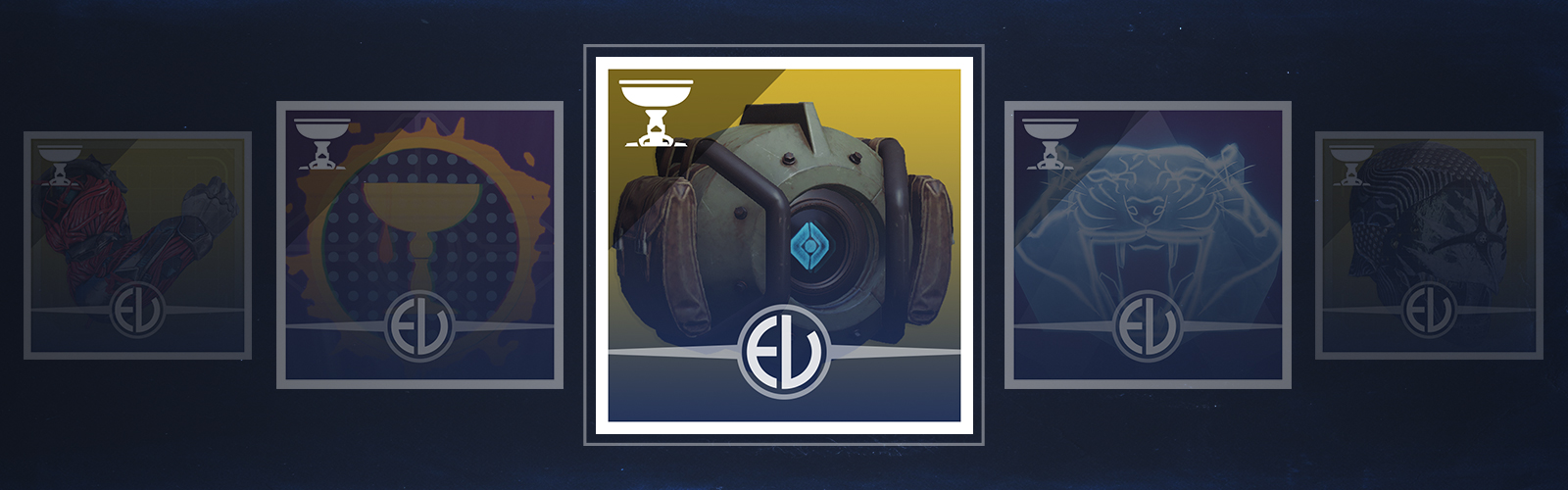
Eververse Updates
With Season of Opulence, we’re making some changes to the Eververse store.
We had two main goals for the changes we’re making to Eververse in Season of Opulence:
Direct Pick:
Every new Eververse item in Season of Opulence will be available for direct purchase via Silver or Bright Dust
Most of these offers will be time limited, with new items available weekly
Greatest Hits:
Season of Opulence’s Bright Engram will contain a collection of community favorite legacy items, with a focus on the “Best of Year One.”
If you missed out on Spicy Ramen or the Selfie Emote, Season of Opulence is your chance
Some additional details:
Armor:
Full armor sets will be made available as a single, per class bundle, as opposed to being offered only via Bright Engrams
Individual Armor pieces can also be purchased for Bright Dust whenever they appear on the storefront
These Armor pieces feature fixed perk rolls that are not randomized across duplicates
A Simpler Interface
Specific items are now featured on the front page and will be cycled with each weekly reset
Most offers will be time-limited to make way for rotating inventory, with some coming back into rotation at a later date
Players can access this new interface by visiting Tess in her usual Tower location
Wrapped Items and Refunds
Individual items purchased for Silver will now go to the relevant character inventory location in a “wrapped” state
Example: A sparrow purchased directly for Silver will arrive “wrapped” in the Sparrow inventory
To use an item, it must be “opened” just like a bundle
Once opened, the item functions and can be accessed normally
If you wish to refund an item, you will have seven days from purchase to do so
Items that have been opened cannot be refunded
All of these changes go live on day one of Season of Opulence. As always, we’ll be monitoring how this all works, and are eager to hear what you do and don’t like about the new storefront.
At Your Service
Batman had Alfred. Iron Man had Jarvis. You have our Player Support Team.
This is their report.
Crown of Sorrow Raid: Day One Preparations
As soon as Season of Opulence kicks off on June 4, the World first race for the Crown of Sorrow raid will begin. To help illustrate a more definitive starting line, we’ve provided vital information below that Day One contenders should be aware of.
Players will not be able to access the Crown of Sorrow raid if they have not yet completed the Season of Opulence Power Surge quest, even after this raid unlocks at 4 PM PDT. This will apply to all members in a Fireteam. We’ll have more information on this experience as we get closer to June 4.
Players who join in progress during the Crown of Sorrow raid’s first encounter will spawn in dead outside of the encounter space. To mitigate this issue, all Fireteam members must join up in Orbit prior to launching the Crown of Sorrow raid activity.
Look forward to reading more information as we get closer to the Season of Opulence launch.
Seasonal Weapon Drops
After Season of the Drifter concludes on June 4, the following weapons will be unavailable to unlock at their respective vendors for a limited time. An issue was discovered late in development, and we are working on a fix for a future patch.
Players who have already unlocked these Year 2 variants will continue to receive them as random drops from rank up packages. Players who do not unlock these weapons by the June 4 deadline will be able to acquire the weapons once they are addressed in a future update.
Movie of the Week
We’re always watching. Here is the stuff we saw that made us smile. To the filmmakers go a precious emblem as evidence of their skills.
Movie of the Week: Toland’s Warning
Honorable Mention: The Beauty of Destiny 2
These are some of the game changers you’ll discover when Season of Opulence begins, but we have even more to show next week. We’re already working on a preview of new Pinnacle Weapons. We’ve also seen a preview of the new Raid jacket that is totally awesome. With the finer points for the systemic changes on the table, we can next turn our attention to revealing the places you’ll go and the reasons you’ll fight.
Right now, our focus is on Opulence. But after the Season has launched and Raid belts have been awarded, we’ll be looking deeper into the future, and sharing with you more about a new era for Bungie and Destiny 2.