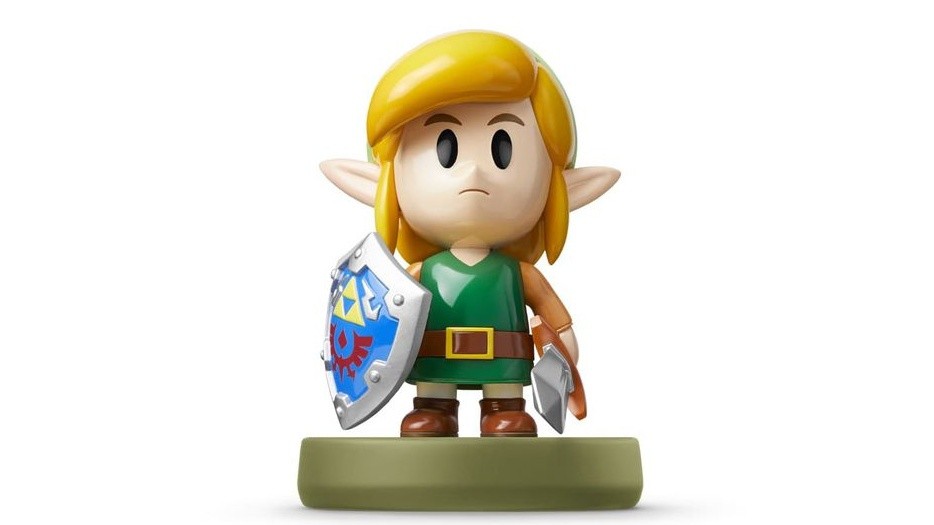
You’ll find several different options depending on your location below. We’ll be updating this page with other options, too – expect to find sites like the official Nintendo Store and more appearing as they go live – so make sure to bookmark this page and keep checking back if you’re hoping to pick it up elsewhere.
Please note that some of the links on this page are affiliate links. If you click them and make a purchase we may receive a small percentage of the sale which helps support the site. Please read our FTC Disclosure for more information.
As a reminder, the game is also being treated to a lovely limited edition release with slight variations across Europe and North America.
Are you planning on buying this amiibo? Is this the cutest amiibo to ever grace our presence? Let your thoughts be heard in the comments below.
Perhaps the best known way the Fedora community pursues its mission of promoting free and open source software and content is by developing the Fedora software distribution. So it’s not a surprise at all that a very large proportion of our community resources are spent on this task. This post summarizes how this software is “packaged” and the underlying tools such as rpm that make it all possible.
RPM: the smallest unit of software
The editions and flavors (spins/labs/silverblue) that users get to choose from are all very similar. They’re all composed of various software that is mixed and matched to work well together. What differs between them is the exact list of tools that goes into each. That choice depends on the use case that they target. The basic unit of all of these is an RPM package file.
RPM files are archives that are similar to ZIP files or tarballs. In fact, they uses compression to reduce the size of the archive. However, along with files, RPM archives also contain metadata about the package. This can be queried using the rpm tool:
$ rpm -q fpaste
fpaste-0.3.9.2-2.fc30.noarch
$ rpm -qi fpaste
Name : fpaste
Version : 0.3.9.2
Release : 2.fc30
Architecture: noarch
Install Date: Tue 26 Mar 2019 08:49:10 GMT
Group : Unspecified
Size : 64144
License : GPLv3+
Signature : RSA/SHA256, Thu 07 Feb 2019 15:46:11 GMT, Key ID ef3c111fcfc659b9
Source RPM : fpaste-0.3.9.2-2.fc30.src.rpm
Build Date : Thu 31 Jan 2019 20:06:01 GMT
Build Host : buildhw-07.phx2.fedoraproject.org
Relocations : (not relocatable)
Packager : Fedora Project
Vendor : Fedora Project
URL : https://pagure.io/fpaste
Bug URL : https://bugz.fedoraproject.org/fpaste
Summary : A simple tool for pasting info onto sticky notes instances
Description :
It is often useful to be able to easily paste text to the Fedora
Pastebin at http://paste.fedoraproject.org and this simple script
will do that and return the resulting URL so that people may
examine the output. This can hopefully help folks who are for
some reason stuck without X, working remotely, or any other
reason they may be unable to paste something into the pastebin
When an RPM package is installed, the rpm tools know exactly what files were added to the system. So, removing a package also removes these files, and leaves the system in a consistent state. This is why installing software using rpm is preferred over installing software from source whenever possible.
Dependencies
Nowadays, it is quite rare for software to be completely self-contained. Even fpaste, a simple one file Python script, requires that the Python interpreter be installed. So, if the system does not have Python installed (highly unlikely, but possible), fpaste cannot be used. In packager jargon, we say that “Python is a run-time dependency of fpaste“.
When RPM packages are built (the process of building RPMs is not discussed in this post), the generated archive includes all of this metadata. That way, the tools interacting with the RPM package archive know what else must must be installed so that fpaste works correctly:
$ rpm -qi python3
Name : python3
Version : 3.7.3
Release : 3.fc30
Architecture: x86_64
Install Date: Thu 16 May 2019 18:51:41 BST
Group : Unspecified
Size : 46139
License : Python
Signature : RSA/SHA256, Sat 11 May 2019 17:02:44 BST, Key ID ef3c111fcfc659b9
Source RPM : python3-3.7.3-3.fc30.src.rpm
Build Date : Sat 11 May 2019 01:47:35 BST
Build Host : buildhw-05.phx2.fedoraproject.org
Relocations : (not relocatable)
Packager : Fedora Project
Vendor : Fedora Project
URL : https://www.python.org/
Bug URL : https://bugz.fedoraproject.org/python3
Summary : Interpreter of the Python programming language
Description :
Python is an accessible, high-level, dynamically typed, interpreted programming
language, designed with an emphasis on code readability.
It includes an extensive standard library, and has a vast ecosystem of
third-party libraries.
The python3 package provides the "python3" executable: the reference
interpreter for the Python language, version 3.
The majority of its standard library is provided in the python3-libs package,
which should be installed automatically along with python3.
The remaining parts of the Python standard library are broken out into the
python3-tkinter and python3-test packages, which may need to be installed
separately.
Documentation for Python is provided in the python3-docs package.
Packages containing additional libraries for Python are generally named with
the "python3-" prefix.
While rpm knows the required dependencies for each archive, it does not know where to find them. This is by design: rpm only works on local files and must be told exactly where they are. So, if you try to install a single RPM package, you get an error if rpm cannot find the package’s run-time dependencies. This example tries to install a package downloaded from the Fedora package set:
$ ls
python3-elephant-0.6.2-3.fc30.noarch.rpm
$ rpm -qpi python3-elephant-0.6.2-3.fc30.noarch.rpm
Name : python3-elephant
Version : 0.6.2
Release : 3.fc30
Architecture: noarch
Install Date: (not installed)
Group : Unspecified
Size : 2574456
License : BSD
Signature : (none)
Source RPM : python-elephant-0.6.2-3.fc30.src.rpm
Build Date : Fri 14 Jun 2019 17:23:48 BST
Build Host : buildhw-02.phx2.fedoraproject.org
Relocations : (not relocatable)
Packager : Fedora Project
Vendor : Fedora Project
URL : http://neuralensemble.org/elephant
Bug URL : https://bugz.fedoraproject.org/python-elephant
Summary : Elephant is a package for analysis of electrophysiology data in Python
Description :
Elephant - Electrophysiology Analysis Toolkit Elephant is a package for the
analysis of neurophysiology data, based on Neo.
$ sudo rpm -i ./python3-elephant-0.6.2-3.fc30.noarch.rpm
error: Failed dependencies:
python3.7dist(neo) >= 0.7.1 is needed by python3-elephant-0.6.2-3.fc30.noarch
python3.7dist(quantities) >= 0.10.1 is needed by python3-elephant-0.6.2-3.fc30.noarch
In theory, one could download all the packages that are required for python3-elephant, and tell rpm where they all are, but that isn’t convenient. What if python3-neo and python3-quantities have other run-time requirements and so on? Very quickly, the dependency chain can get quite complicated.
Repositories
Luckily, dnf and friends exist to help with this issue. Unlike rpm, dnf is aware of repositories. Repositories are collections of packages, with metadata that tells dnf what these repositories contain. All Fedora systems come with the default Fedora repositories enabled by default:
dnf can be used to query repositories for information on the packages they contain. It can also search them for software, or install/uninstall/upgrade packages from them:
 $ sudo dnf search elephant

Last metadata expiration check: 0:05:21 ago on Sun 23 Jun 2019 14:33:38 BST.

============================================================================== Name & Summary Matched: elephant ==============================================================================

python3-elephant.noarch : Elephant is a package for analysis of electrophysiology data in Python

python3-elephant.noarch : Elephant is a package for analysis of electrophysiology data in Python


$ sudo dnf list \*elephant\*

Last metadata expiration check: 0:05:26 ago on Sun 23 Jun 2019 14:33:38 BST.

Available Packages

python3-elephant.noarch      0.6.2-3.fc30      updates-testing

python3-elephant.noarch      0.6.2-3.fc30              updates
Installing dependencies
When installing the package using dnf now, it resolves all the required dependencies, then calls rpm to carry out the transaction:
$ sudo dnf install python3-elephant
Last metadata expiration check: 0:06:17 ago on Sun 23 Jun 2019 14:33:38 BST.
Dependencies resolved.
==============================================================================================================================================================================================
Package Architecture Version Repository Size
==============================================================================================================================================================================================
Installing:
python3-elephant noarch 0.6.2-3.fc30 updates-testing 456 k
Installing dependencies:
python3-neo noarch 0.8.0-0.1.20190215git49b6041.fc30 fedora 753 k
python3-quantities noarch 0.12.2-4.fc30 fedora 163 k
Installing weak dependencies:
python3-igor noarch 0.3-5.20150408git2c2a79d.fc30 fedora 63 k
Notice how dnf even installed python3-igor, which isn’t a direct dependency of python3-elephant.
DnfDragora: a graphical interface to DNF
While technical users may find dnf straightforward to use, it isn’t for everyone. Dnfdragora addresses this issue by providing a graphical front end to dnf.
dnfdragora (version 1.1.1-2 on Fedora 30) listing all the packages installed on a system.
From a quick look, dnfdragora appears to provide all of dnf‘s main functions.
There are other tools in Fedora that also manage packages. GNOME Software, and Discover are two examples. GNOME Software is focused on graphical applications only. You can’t use the graphical front end to install command line or terminal tools such as htop or weechat. However, GNOME Software does support the installation of Flatpaks and Snap applications which dnf does not. So, they are different tools with different target audiences, and so provide different functions.
This post only touches the tip of the iceberg that is the life cycle of software in Fedora. This article explained what RPM packages are, and the main differences between using rpm and using dnf.
In future posts, we’ll speak more about:
The processes that are needed to create these packages
How the community tests them to ensure that they are built correctly
The infrastructure that the community uses to get them to community users in future posts.
Apple to reportedly invest $100M in struggling supplier Japan Display
By Mikey Campbell Wednesday, June 26, 2019, 06:15 pm PT (09:15 pm ET)
Apple has agreed to invest $100 million in Japan Display Inc., better known as JDI, as the struggling LCD manufacturer continues efforts to restructure its business in a bid to stay afloat, according to a local report Thursday.
Apple’s iPhone XR is expected to be one of the last to use LCD screen technology.
Citing sources familiar with the matter, the Asahi Shimbun reports Apple intends to increase aid to JDI through Chinese investment company Harvest Group which, along with Hong Kong fund Oasis Management, is negotiating a 58.2 billion yen (about $540 million) infusion into the Japanese display maker.
Apple initially planned to throw in with TPK Holding, a Taiwan-based electronics supplier that was part of a consortium negotiating a bailout of the embattled screen maker. TPK opted to walk away earlier in June, taking with it a planned $230 million contribution.
Apple’s $100 million sum is much lower than JDI’s original request of $185 million, which came with contingencies for waiving money owed and guaranteeing LCD orders. At the time, a Wall Street Journal source claimed Apple was willing to consider JDI’s ask, but warned the tech giant might not be willing to pay the full amount.
“We are not sure yet if we would really need to tap Apple to chip in, and the amount could be lower…, but they are at least showing willingness,” the person said. “You’d be surprised to see how supportive Apple is to us.”
Whether Apple is also considering to waive JDI’s debt as part of the continuing bailout talks is unknown.
A major Apple supplier, JDI has furnished LCD displays for iPhone for years. In a crucial misstep, however, the Japanese company continued to invest heavily in LCD technology while largely ignoring a wider industry trend toward OLED panels.
Apple, which accounts for some 60% of JDI’s sales, launched its first OLED handset with iPhone X in 2017, and last year debuted two OLED smartphones in iPhone XS and XS Max. The company is expected to field an all-OLED iPhone lineup in 2020.
JDI is working to build out its OLED production capabilities and is reportedly slated to supply a portion of OLED panels for a next-generation Apple Watch. While steps are being taken to reduce risk, including a split of JDI’s LCD business, the Japanese firm faces an uphill battle in a competitive field dominated by Korean companies like Samsung and LG Display.
Luigi’s Mansion 3 And Link’s Awakening Nominated For ‘Best Console Game’ Of E3
Now that E3 2019 has wrapped up, 64 judging publications for the Game Critics Awards have selected this year’s ‘best of E3’ nominees. The winners will be announced on 27th June.
First party Nintendo titles are featured across multiple categories. Luigi’s Mansion 3 is up for best console game, best action/adventure and best family/social game. The Legend of Zelda: Link’s Awakening is also nominated for best console game and best action/adventure.
BEST OF SHOW Borderlands 3 (Gearbox/2K for PC, PS4, Stadia, Xbox) Doom Eternal (id/Bethesda for PC, PS4, Stadia, Switch, Xbox) Final Fantasy VII Remake (Square Enix/Square Enix for PS4) Star Wars Jedi: Fallen Order (Respawn/EA for PC, PS4, Xbox) The Outer Worlds (Obsidian/Private Division for PC, PS4, Xbox) Watch Dogs: Legion (Ubisoft Toronto/Ubisoft for PC, PS4, Stadia, Xbox)
BEST ORIGINAL GAME 12 Minutes (Luis Antonio/Annapurna for PC, Xbox) Bleeding Edge (Ninja Theory/Xbox Game Studios for PC, Xbox) Control (Remedy/505 Games for PC, PS4, Xbox) John Wick Hex (Bithell Games/Good Shepherd for Mac, PC) The Outer Worlds (Obsidian/Private Division for PC, PS4, Xbox)
BEST CONSOLE GAME Final Fantasy VII Remake (Square Enix/Square Enix for PS4) Luigi’s Mansion 3 (Next Level Games/Nintendo for Switch) The Legend of Zelda: Link’s Awakening (Grezzo/Nintendo EPD/Nintendo for Switch) Star Wars Jedi: Fallen Order (Respawn/EA for PS4, Xbox) Watch Dogs: Legion (Ubisoft Toronto/Ubisoft for PS4, Xbox)
BEST PC GAME Borderlands 3 (Gearbox/2K for PC, PS4, Stadia, Xbox) Control (Remedy/505 Games for PC, PS4, Xbox) Doom Eternal (id/Bethesda for PC, PS4, Stadia, Switch, Xbox) The Outer Worlds (Obsidian/Private Division for PC, PS4, Xbox) Wolfenstein: Youngblood (MachineGames/Arkane/Bethesda for PC, PS4, Stadia, Switch, Xbox)
BEST VR/AR GAME Asgard’s Wrath (Sanzaru/Oculus Studios for PC) Lone Echo II (Ready at Dawn/Oculus Studios for PC) Minecraft Earth (Mojang/Xbox Game Studios for Android, iOS) Phantom: Covert Ops (nDreams/Oculus Studios for Oculus Quest, PC) Sniper Elite VR (Just Add Water/Rebellion for PC, PS4)
BEST HARDWARE/PERIPHERAL Sega Genesis Mini (Sega) Smach Z (Smach) Xbox Elite Wireless Controller Series 2 (Microsoft)
BEST ACTION GAME Borderlands 3 (Gearbox/2K for PC, PS4, Stadia, Xbox) Call of Duty Modern Warfare (Infinity Ward/Activision for PC, PS4, Xbox) Doom Eternal (id/Bethesda for PC, PS4, Stadia, Switch, Xbox) Gears 5 (The Coalition/Xbox Game Studios for PC, Xbox) Wolfenstein: Youngblood (MachineGames/Arkane/Bethesda for PC, PS4, Stadia, Switch, Xbox)
BEST ACTION/ADVENTURE GAME Control (Remedy/505 Games for PC, PS4, Xbox) Luigi’s Mansion 3 (Next Level Games/Nintendo for Switch) Star Wars Jedi: Fallen Order (Respawn/EA for PC, PS4, Xbox) The Legend of Zelda: Link’s Awakening (Grezzo/Nintendo EPD/Nintendo for Switch) Watch Dogs: Legion (Ubisoft Toronto/Ubisoft for PC, PS4, Stadia, Xbox)
BEST ROLE PLAYING GAME Dragon Ball Z: Kakarot (CyberConnect2/Bandai Namco for PC, PS4, Xbox) Final Fantasy VII Remake (Square Enix/Square Enix for PS4) Monster Hunter: World Iceborne (Capcom for PC, PS4, Xbox) Pokemon Sword and Shield (Game Freak/The Pokemon Co. for Switch) The Outer Worlds (Obsidian/Private Division for PC, PS4, Xbox)
BEST RACING GAME Crash Team Racing Nitro-Fueled (Beenox/Activision for PC, PS4, Xbox) F1 2019 (Codemasters for PC, PS4, Xbox) Forza Horizon 4: LEGO Speed Champions (Playground Games/Xbox Game Studios for PC, Xbox) GRID (Codemasters for PC, PS4, Xbox)
BEST SPORTS GAME EFootball Pro Evolution Soccer 2020 (Konami for PS4, Xbox) Mario & Sonic at the Olympic Games Tokyo 2020 (Sega for Switch) Madden NFL 20 (EA Tiburon/EA for PC, PS4, Xbox) Roller Champions (Ubisoft Montreal/Ubisoft for PC)
BEST STRATEGY GAME Age of Empires II: Definitive Edition (Wicked Witch/Forgotten Empires/Tantalus/Xbox Game Studios for PC) Desperados III (Mimimi Games/THQN for PC, PS4, Xbox) Fire Emblem: Three Houses (Intelligent Systems/Koei Tecmo/Nintendo for Switch) John Wick Hex (Bithell Games/Good Shepherd for Mac, PC) Phoenix Point (Snapshot Games for Mac, PC, Xbox)
BEST FAMILY/SOCIAL GAME Fall Guys (Mediatonic/Devolver for PC, PS4) Luigi’s Mansion 3 (Next Level Games/Nintendo for Switch) Mario & Sonic at the Olympic Games Tokyo 2020 (Sega for Switch) Minecraft Dungeons (Mojang/Xbox Game Studios for PC, PS4, Switch, Xbox) Pokemon Sword and Shield (Game Freak/The Pokemon Co. for Switch)
BEST ONLINE MULTIPLAYER Bleeding Edge (Ninja Theory/Xbox Game Studios for PC, Xbox) Call of Duty Modern Warfare (Infinity Ward/Activision for PC, PS4, Xbox) Gears 5 (The Coalition/Xbox Game Studios for PC, Xbox) Tom Clancy’s Ghost Recon Breakpoint (Ubisoft Paris/Ubisoft for PC, PS4, Stadia, Xbox) Wolfenstein: Youngblood (MachineGames/Arkane/Bethesda for PC, PS4, Stadia, Switch Xbox)
BEST INDEPENDENT GAME 12 Minutes (Luis Antonio/Annapurna for PC, Xbox) Carrion (Phobia Game Studio/Devolver for Linux, Mac, PC) FALL GUYS (Mediatonic/Devolver for PC, PS4) John Wick Hex (Bithell Games/Good Shepherd for Mac, PC) Sayonara Wild Hearts (Simogo/Annapurna for Switch)
BEST ONGOING GAME Destiny 2 (Bungie for PC, PS4, Stadia, Xbox) Final Fantasy XIV (Square Enix for Mac, PC, PS4) Fortnite (Epic for Android, iOS, Mac, PC, PS4, Switch, Xbox) Monster Hunter: World (Capcom for PC, PS4, Xbox) Tom Clancy’s The Division 2 (Massive Entertainment/Ubisoft for PC, PS4, Stadia, Xbox)
If you’re wondering why certain titles such as Animal Crossing: New Horizons didn’t get nominated, here’s the reason:
To be eligible for nomination, games must be “hands-on playable” to voting publications for at least 5 minutes of gameplay at E3 2019.
Due to this rule, the following projects were ineligible for nomination by the jury: Cyberpunk 2077 (CD PROJEKT RED), Dying Light 2 (Techland), Marvel’s Avengers (Square Enix), Ghostwire: Tokyo (Bethesda), Deathloop (Bethesda), Elden Ring (Bandai Namco), Halo Infinite (Xbox), Animal Crossing: New Horizons (Nintendo), FIFA 20 (EA), Sea of Solitude (EA), The Sequel to The Legend of Zelda: Breath of the Wild (Nintendo), Gods & Monsters (Ubisoft), Tom Clancy’s Rainbow Six: Quarantine (Ubisoft), LEGO Star Wars: The Skywalker Saga (WBIE), Tales of Arise (Bandai Namco), Google Stadia, Outriders (Square Enix).
What are your thoughts about these nominated games? Do you expect Nintendo win any of these categories? Tell us below.
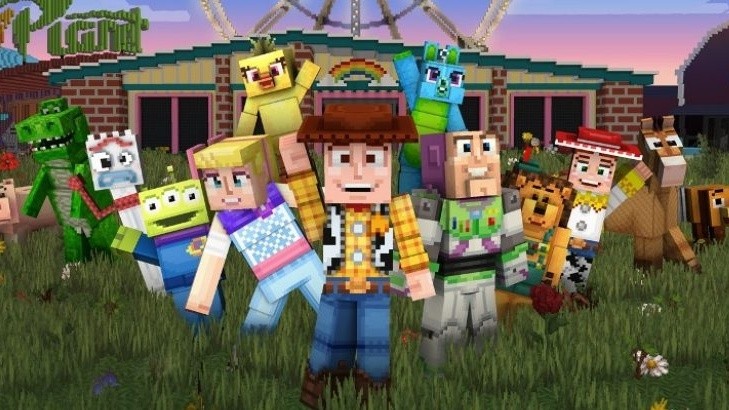
To promote the arrival of Toy Story 4 in cinemas, Disney has teamed up with Mojang to release a special Toy Story themed mash-up pack in Minecraft. Here are the details from the Minecraft blog:
Woody, Bo Peep, Buzz Lightyear, and some of the other charismatic characters you know and love have taken a detour to the world of Minecraft! All-new characters from Disney and Pixar’s Toy Story 4, Duke Caboom and Ducky & Bunny are also joining the adventure!
In addition to playing as all of these characters, you’ll be able to explore Andy’s bedroom, Sid’s bedroom and various other Toy Story-themed locations:
Explore some of the places you love (Andy’s bedroom!) and maybe are a little afraid of (I still have nightmares about Sid’s bedroom), from the teeny perspective of the toys. Yes, you are indeed tiny, which means you’ll have to climb, jump, and solve puzzles to find your way through an enormous, yet familiar world!
Is this a mash-up pack you’ll be purchasing for Minecraft? Leave a comment below.
Posted by: xSicKxBot - 06-27-2019, 12:29 AM - Forum: Windows
- No Replies
Azure premium files now generally available
Highly performant, fully managed file service in the cloud!
Today, we are excited to announce the general availability of Azure premium files for customers optimizing their cloud-based file shares on Azure. Premium files offers a higher level of performance built on solid-state drives (SSD) for fully managed file services in Azure.
Premium tier is optimized to deliver consistent performance for IO-intensive workloads that require high-throughput and low latency. Premium file shares store data on the latest SSDs, making them suitable for a wide variety of workloads like databases, persistent volumes for containers, home directories, content and collaboration repositories, media and analytics, high variable and batch workloads, and enterprise applications that are performance sensitive. Our existing standard tier continues to provide reliable performance at a low cost for workloads less sensitive to performance variability, and is well-suited for general purpose file storage, development/test, backups, and applications that do not require low latency.
Through our initial introduction and preview journey, we’ve heard from hundreds of our customers from different industries about their unique experiences. They’ve shared their learnings and success stories with us and have helped make premium file shares even better.
“Working with clients that have large amounts of data that is under FDA or HIPAA regulations, we always struggled in locating a good cloud storage solution that provided SMB access and high bandwidth… until Azure Files premium tier. When it comes to a secure cloud-based storage that offers high upload and download speeds for cloud and on-premises VM clients, Azure premium files definitely stands out.”
– Christian Manasseh, Chief Executive Officer, Mobius Logic
“The speeds are excellent. The I/O intensive actuarial CloudMaster software tasks ran more than 10 times faster in the Azure Batch solution using Azure Files premium tier. Our application has been run by our clients using 1000’s of cores and the Azure premium files has greatly decreased our run times.”
– Scott Bright, Manager Client Data Services, PolySystems
With premium tier, performance is what you define. Premium file shares’ performance can instantly scale up and down to fit your workload performance characteristics. Premium file shares can massively scale up to 100 TiB capacity and 100K IOPS with a target total throughput of 10 GiB/s. Not only do premium shares include the ability to dynamically tune performance, but also offer bursting capability to meet highly variable workload requirements with short peak periods of intense IOPS.
“We recently migrated our retail POS microservices to Azure Kubernetes Service with premium files. Our experience has been simply amazing – premium files permitted us to securely deploy our 1.2K performant Firebird databases. No problem with size or performance, just adapt the size of the premium file share to instantly scale. It improved our business agility, much needed to serve our rapidly growing customer base across multiple retail chains in France.”
– Arnaud Le Roy, Chief Technology Officer, Menlog
We partnered with our internal Azure SQL and Microsoft Power BI teams to build solutions on premium files. As a result, Azure Database for PostgreSQL and Azure Database for MySQL recently opened a preview of increased scale of 16 TiB databases with 20,000 IOPS powered by premium files. Microsoft Power BI announced a powerful 20 times faster enhanced dataflows compute engine preview built upon Azure Files premium tier.
Global availability with predictable cost
Azure Files premium tier is currently available in 19 Azure regions globally. We are continually expanding regional coverage. You can check the Azure region availability page for the latest information.
Premium tier provides the most cost-effective way to create highly-performant and highly-available file shares in Azure. Pricing is simple and cost is predictable–you only pay a single price per provisioned GiB. Refer to the pricing page for additional details.
Seamless Azure experience
Customers receive all features of Azure Files in this new offering, including snapshot/restore, Azure Kubernetes Service and Azure Backup integration, monitoring, hybrid support via Azure File Sync, Azure portal, PowerShell/CLI/Cloud Shell, AzCopy, Azure Storage Explorer support, and the list goes on. Developers can leverage their existing code and skills to migrate applications using familiar Azure Storage client libraries or Azure Files REST APIs. The opportunities for future integration are limitless. Reach out to us if you would like to see more.
With the availability of premium tier, we’re also enhancing the standard tier. To learn more, visit the onboarding instructions for the standard files 100 TiB preview.
Get started and share your experiences
It is simple and takes two minutes to get started with premium file shares. Please see detailed steps for how to create a premium file share.
Minecraft Adds Toy Story DLC, Including Skin Of Keanu Reeves' Character
The latest mashup pack for Minecraft is out now, and it brings Toy Story to the popular sandbox game.
The Toy Story Mash-Up pack adds a number of character skins from the Pixar franchise, including classics like Woody, Buzz, and Bo Peep, as well as new ones from Toy Story 4 such as Keanu Reeves' Duke Caboom and Ducky & Bunny.
Some of the new locations in the Toy Story Mash-Up Pack include Andy's bright and colorful bedroom and Sid's spooky bedroom of horrors. Everything is scaled down to be seen from the perspective of a toy. That puts a new spin on Minecraft as you'll need to jump and climb around.
The Toy Story Mash-Up Pack is available now on Xbox and PC for $8 USD. Click through the images in the gallery above to get a closer look at the new character skins.
Toy Story is just the latest mega-franchise to come to Minecraft with a Mash-Up Pack. Some of the other notable ones include The Simpsons, Pirates of the Caribbean, Nightmare Before Christmas, and Solo: A Star Wars Story.
Minecraft remains immensely popular, and Microsoft continues to expand the franchise with new extensions. While Minecraft 2 may not be happening, a new game called Minecraft Dungeons is on the way. Additionally, a Pokemon Go-style AR game called Minecraft Earth is in development as well.
If you haven’t been to see Pokémon Detective Pikachu in-cinema yet, you might want to hold out for the digital release arriving next month, on 23rd July. Following this is the release of the Blu-ray version, on 6th August. Here’s the official announcement from the Detective Pikachu Twitter account:
It’s twisty. It’s electrifying. It’s #DetectivePikachu. Available on Digital 7/23 & Blu-ray™ 8/6!