Terry Cavanagh, the author of VVVVVV, Super Hexagon and Dicey Dungeons, just released the source code for VVVVVV to celebrate it’s 10th anniversary. Released on GitHub under a custom license, the repository includes both the Mobile (Flash/ActionScript) and Desktop (C++) versions. It does not include the binary data however, although you can use the free version or you can currently buy VVVVVV for 73% Off On Humble right now.
Or possibly tomorrow is, depending on who you ask – technically, the game first went live at 3am GMT on the 11th January 2010, after a very, very long day of fixing every last bug I could, making last minute builds, and trying to slowly upload everything on an extremely unreliable internet connection that kept cutting out. But I’ve always gone by “it’s not tomorrow until you wake up” rules, so I still think of January the 10th as the real launch day <3
Gosh, ten years.
VVVVVV is such an important game to me, I barely even know where to start. I wanted to do something special to mark the occasion: so, as of today, I’m releasing the game’s source code!
I wanna give a big big thank you to Ethan Lee, who helped a lot to prepare for this, including getting the repo ready for the public, and organising the reveal on AGDQ (hi speedrunners!)! Thanks Ethan!
You can learn more about the release in the video below.
Apple seems very pleased with themselves right now
It’s easy to speculate and talk about the App store as an outside observer, but I always find it more interesting to look at how companies like Apple talk about themselves in official press blasts. Granted, it’s PR and must always be taken with a grain a salt, but it’s still interesting nonetheless.
One such press release has just come through from Apple, talking about how the company has done over the past year (with a few insights of the past decade or so as well). They talk about everything from the App store to Apple Music & Apple Pay, but naturally only a couple of things are relevant to us here.
As far as the App Store is concerned, it seems that since the launch of the store in 2008 developers have earned over $155 Billion USD. A further note claims that a quarter of that ($39-ish Billion) was earned in 2019 alone. Other numbers being shared:
$1.42 billion was spent between Christmas Eve and New Years Eve 2019 (up 16% on the previous year).
$386 million was spent New Year’s Day 2020, which is a 20 percent increase over last year and a new single-day record.
There’s no information as to how these numbers are split – as we’ve seen in terms of evolving trends the past couple of years, it’s easy to imagine most of this money is going to free-to-play titles. Probably Fortnite.
Apple Arcade is mentioned as well, but there’s nothing worthwhile to be shared. No numbers in terms of subscribers or anything like that, which is a shame. There was a commitment to adding “new games and expansions every month,” though.
So, Apple’s doing well then. Yay? I guess? It’s hard to know how to really feel about this information as an outlet that focuses primarily on a subset of games that many say is on the decline. Numbers like this probably won’t help matters if you’re a company looking at that number and worrying your share is too small.
If any developers fancy sharing some of their profit numbers for 2019, even if it’s just in terms of how it relates to that total figure, you know where to find me!
What are your thoughts on the App Store right now? What did you buy during the holiday period (or on New Years Day, if that was you?). Let us know in the comments!
Apple marks Chinese New Year with ‘Shot on iPhone’ film ‘Daughter’
By Malcolm Owen Saturday, January 11, 2020, 03:48 pm PT (06:48 pm ET)
Apple has marked the Chinese New Year with its latest “Shot on iPhone” video, a short film recorded on the iPhone 11 Pro featuring three generations of Chinese women gathering together for the annual event.
The eight-minute video titled “Chinese New Year – Daughter” start off with a mother being troubled by criticism that she took her daughter to work as a taxi driver. Throughout the film, scenes switch between older conversations and the present day, showing other conversations in the mother’s life.
Towards the end of the film, a family reunion of the three generations takes place in the back of the taxi. It is then revealed to the child the older lady is her grandmother, who made dumplings each year while searching for her lost family.
The film is directed by Theodore Melfi, who directed the Best Picture Oscar-nominated “Hidden Figures.” Cinematography is by Lawrence Sher, who filled the role for “Joker,” identified as a “2020 Golden Globe Awards nominated film.” Star Zhou Xun is also given a promotional introduction in the opening credits, described as “China’s leading actress.”
A companion making-of video shows how the film was captured on an iPhone 11 Pro. While sometimes extra equipment is used to mount the iPhone and to move it around, as with other Shot on iPhone video productions, some scenes are filmed using just the iPhone without any additional hardware.
Praise is given to the iPhone by Sher for its ability to handle low light, its stabilization capabilities, and the triple camera setup on the back of the device.
The impressive production for the film is similar to that of the Shot on iPhone video for the 2019 Chinese New Year, which was created on the iPhone XS by director and screenwriter Jia Zhangke.
Welcome to Next Week on Xbox, where we cover all the new games coming soon to Xbox One! Every week the team at Xbox aims to deliver quality gaming content for you to enjoy on your favorite gaming console. To find out what’s coming soon to Xbox One, read on below and click on each of the game profiles for pre-order details (dates are subject to change).
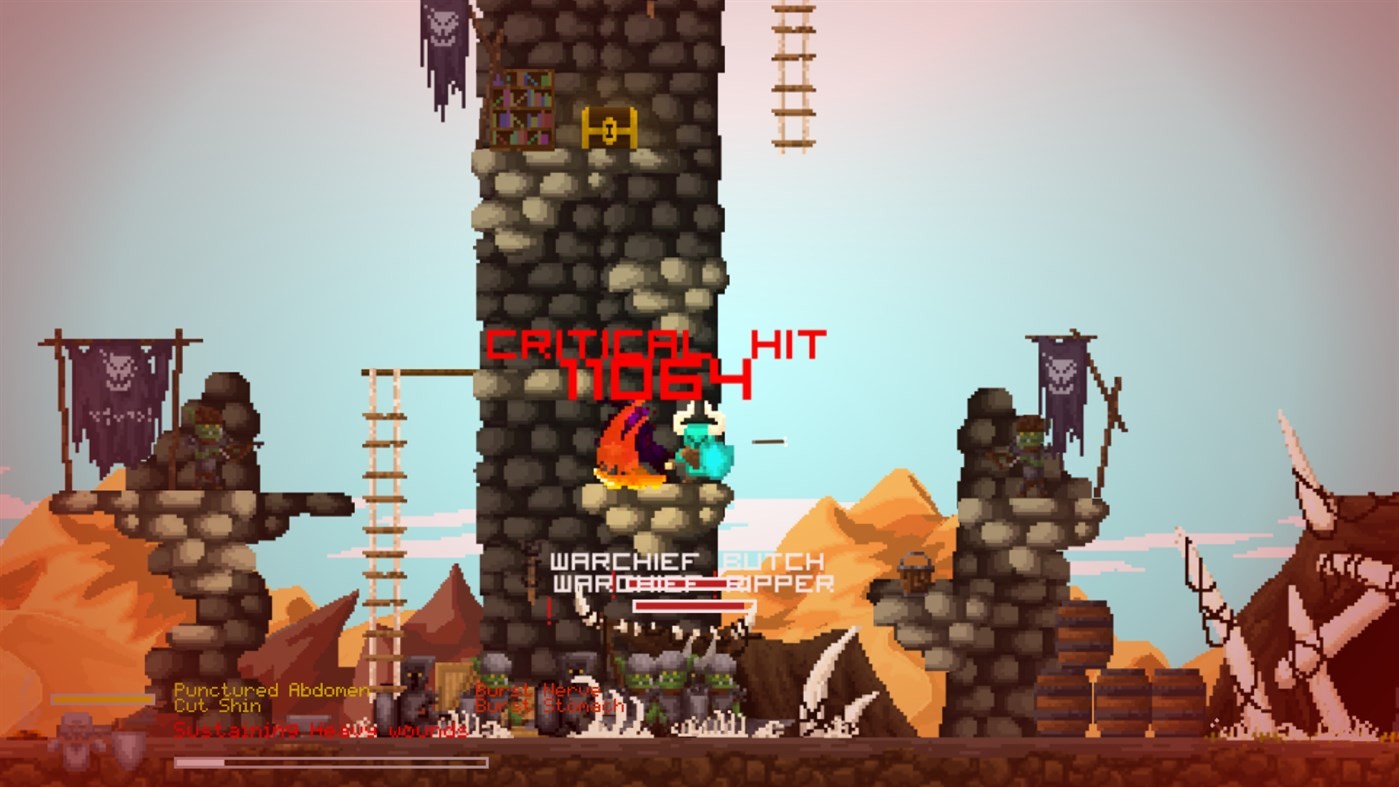
A 2D side-scrolling RPG with town-building where you are
introduced to an open world that progressively challenges your hero and
settlement the further you delve into the vast continent where kingdoms have
risen and fallen, settlements have been laid to waste and overrun by warring
groups, and great mysteries lay hidden and waiting to be unearthed – assuming
you can defeat their jealous guardians.
Xbox One X Enhanced – Something terrible has occurred in Panda Land. Mysterious disappearances are happening. Mystical beasts and strange creatures are appearing. Trouble is brewing in every corne. Super Panda must once again go and rescue his beloved lands from the ancient nemesis once thought defeated. This time, he brought his crew to help.
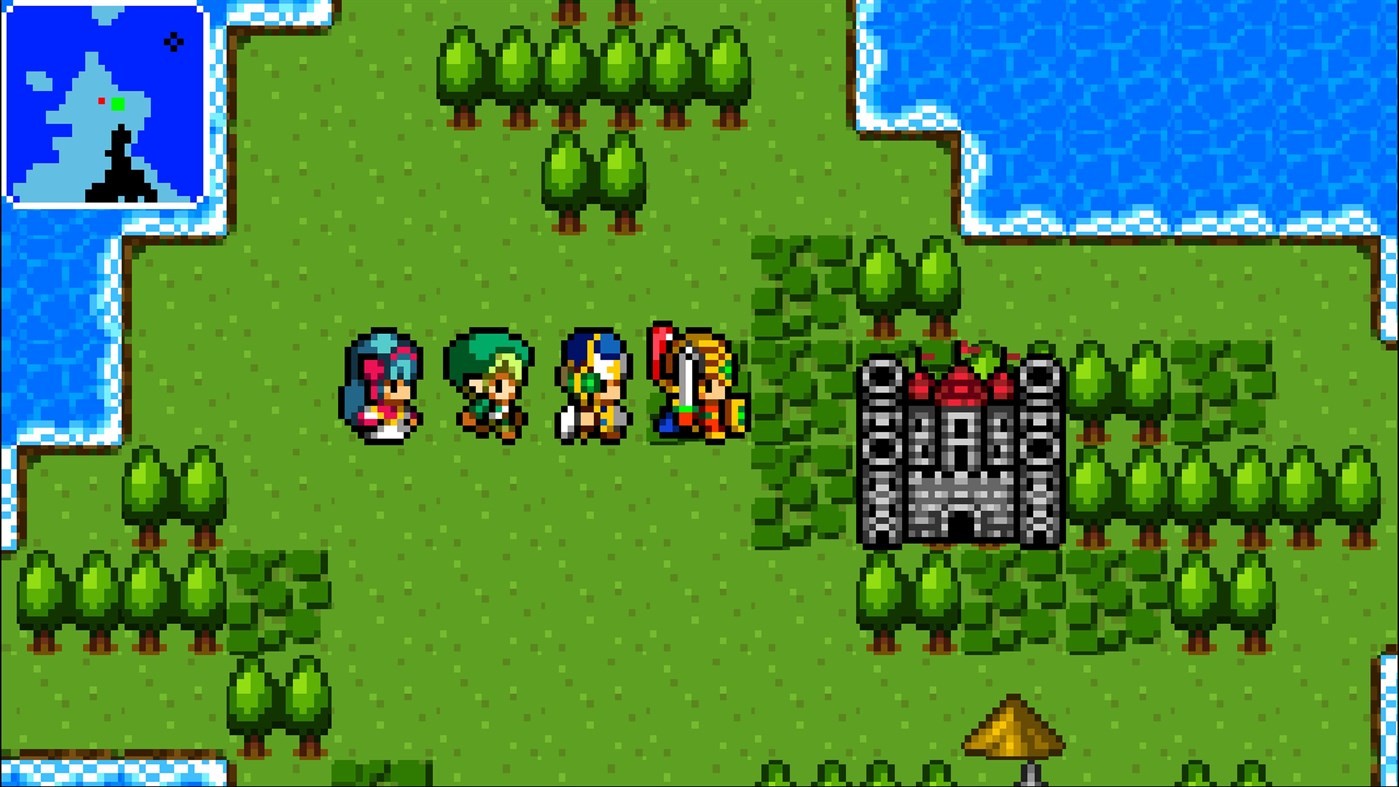
Xbox Play Anywhere – Set out in search of the legendary weapons to free the world from the rule of Wyrmvarg! Employing 8-bit graphics and sound, Dragon Sinker brings a visual and audio feast to the table of hungry gamers starving for the nostalgia of RPG classics with plenty of subquests for the hero to tackle and secret dungeons to explore.
In his quest to find a long-lost friend, our hero has to
conquer two universes at once, relentlessly switching between two dimensions.
Be prepared for some tough puzzles, jumping sequences and retro graphics like
you’ve never seen before in this hardcore platformer.
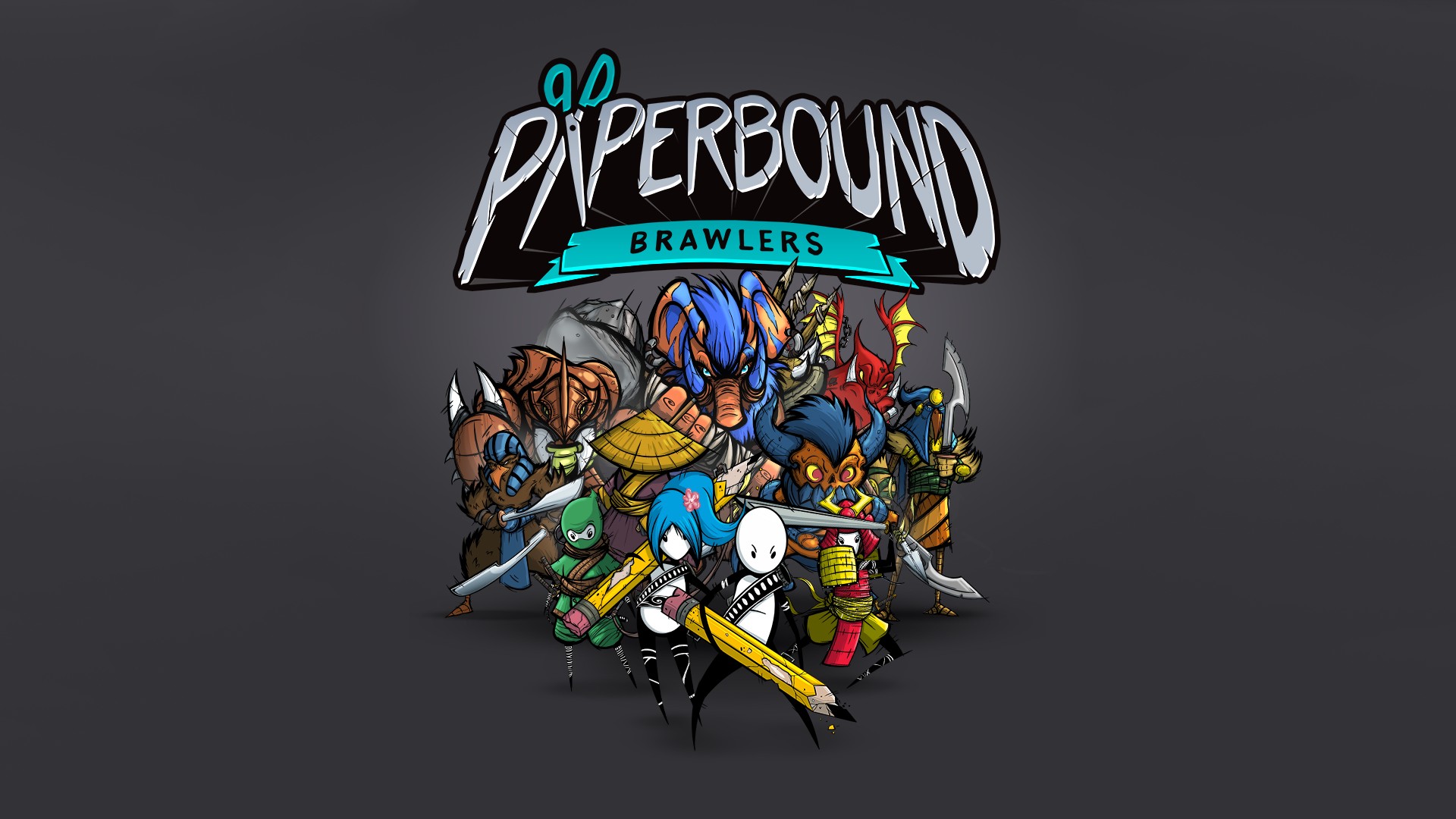
Paperbound Brawlers – January 10
Mind-bending gravity mechanics in a platforming brawler for
up to four local players. Featuring characters and arenas from classic books, Paperbound
Brawlers combines platforming, twitchy combat, and gravity control in a
competitive couch multiplayer environment. This is an enhanced version of the fan
favorite multiplayer party game Paperbound.
Posted by: xSicKxBot - 01-12-2020, 09:10 AM - Forum: Lounge
- No Replies
Writers share tips for overcoming common hurdles of mobile game projects
“Any plan you have that relies on saying, like, ‘Oh, well the voice actor will sell this,’ or, ‘Oh, there will be a sound in the background,’ that’s already a losing plan from the get go.”
– Eric Stirpe, recently a writer on Frozen Adventures, talks about working through the fact that most players are likely playing your game on silent mode.
The folks over at EGM have published an insightful chat with a number of game writers, exploring the tips and pain points uncovered by each while working on different varieties and genres of mobile games.
As with the above quote from writer Eric Stirpe, those speaking to EGM note that a large part of writing for mobile is coming to terms with some of the limitations an inherently casual platform puts into place. Those can include unique challenges with audio, an expectation that a player’s attention will be often divided, or pacing complications that arise from different playstyles.
The full story over on EGM collects more stories from Stirpe and other game writers, including comments from King narrative director Zack Keller on the Candy Crush studio’s bite sized narrative hooks, along with a discussion with a former Episode writer on both the structural and ethical complications of free to play narratives.
Posted by: xSicKxBot - 01-12-2020, 09:10 AM - Forum: Lounge
- No Replies
Birds Of Prey Movie Is Nothing Like Joker, Margot Robbie Says
One of DC's next big movies is Birds of Prey, which stars Margot Robbie as Harley Quinn. Given the massive success of DC's latest movie, Joker, some might be wondering if Birds of Prey might be similar in any way. It won't be, according to Robbie.
Speaking to Variety, Robbie said the world of Birds of Prey is "very different" in that it is not as grounded in reality as Joker starring Joaquin Phoenix.
"The aesthetic, the tone. Very, very different," Robbie said. "Ours is certainly a heightened reality. There's a clear distinction between real life and what you're experiencing on the screen. I feel like the Joker film was much more grounded. Ours is different."
It's also worth mentioning here that Joker will not appear in Birds of Prey. The newest trailer does mention Joker, however, as Harley recalls how her breakup with Joker led to the events of Birds of Prey.
Robbie also confirmed in the interview that Birds of Prey will tell its story in a non-linear fashion, at least partially. "It's nonlinear. It jumps around. And then it becomes linear for the third act. You go on a ride, and it's all pretty chronological from there," she said.
The movie is told from Harley's point of view, and she is an "unreliable narrator giving terrible advice," Robbie said. Harley is not necessarily to be believed, and this sounds like it may make for a unique setup.
"So you’ve got a very unreliable narrator giving terrible advice, and an inaccurate account of events, quite often contradicting what you're seeing on screen," she said.
Warner Bros. took some convincing for this approach, Robbie said. "It took a while to get it together, and get it approved by the studio. And then finally we got it greenlit. And we were off to the races," she said.
Robbie, who is also producing Birds of Prey, said in the interview that she wanted to make the movie in part because she noticed a lack of ensemble action movies starring women. In addition to Robbie, Birds of Prey features Mary Elizabeth Winstead as Huntress, Jurnee Smollet-Bell as Black Canary, and Rosie Perez as Renee Montoya.
"I love action films, and I think there's a misconception perhaps subconsciously for people: action films are for dudes, girls don’t really like them," Robbie said. "Which is just not true. I love them! I know heaps of other women who love them. I loved movies like the Cameron Diaz, Drew Barrymore, Lucy Liu Charlie's Angels growing up. So I knew I wanted to find that, and help put that on screen somewhere."
Ewan McGregor plays the villain, Black Mask, in the film that's directed by Cathy Yan. Check out the newest trailer in the video embedded above. Birds of Prey opens in theatres on February 7.
Ninterview: Super Mario Faker – The Man Behind An Unobtainable Dream Factory
It’s been a little while since our last Ninterview, but we’re bringing back our series of articles which see us interviewing people with unique and shining a spotlight on their interesting roles within the gaming community.
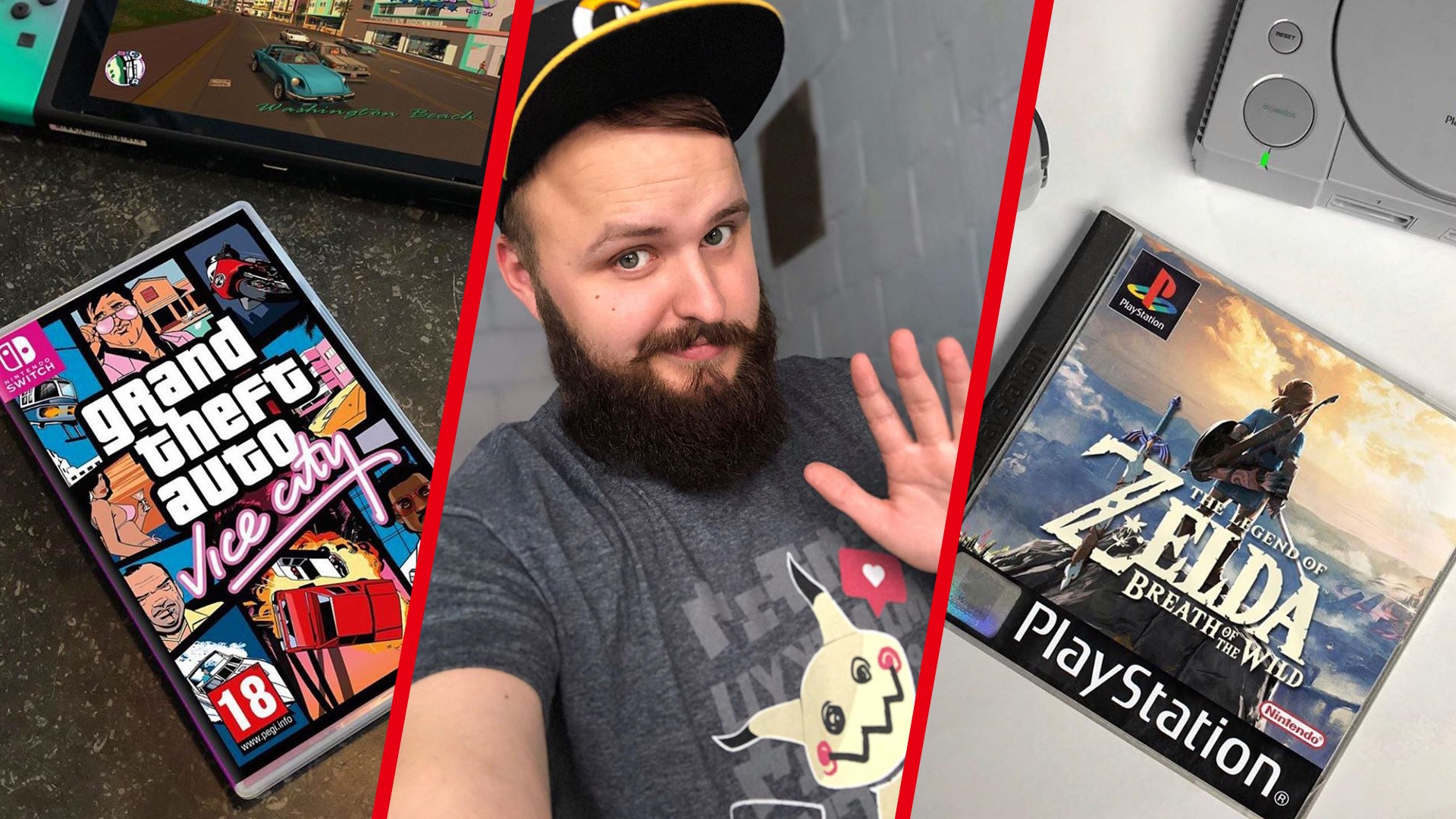
This time, we meet Tim aka Super Mario Faker from Instagram, a graphic design artist who does a fantastic job of visualising some dream physical games both recent and historic.
Nintendo Life: So, how did the “Super Mario Faker” account get started?
Tim aka “Super Mario Faker”: So, 4 years ago I started an Instagram page documenting my game collection. But because I always worked until 7pm, I didn’t have the chance to take decent pictures in the evening because of the bad lighting. So I started editing the covers and the screens to make it look decent. After a while, I did it with real games that weren’t out yet and I noticed people going crazy and asking how I already got them so early. That’s what gave me the idea to start making totally unrealistic things like Super Mario on PS4. Instagram then shadowbanned my other page for no reason and I decided to give my fakes a page of their own. And that’s how Super Mario Faker was born.
I studied Graphic Design so making them is a piece of cake for me. A couple of years ago, I lost my job as a designer. I was one of the designers for Official PlayStation Magazine here in Belgium, so it was nice for me to have a creative outlet again.
How do you decide which games/systems to work with?
Well at first I was like, the Nintendo Switch is a very cool device, but it lacks the games I really want. So I started thinking what I’d really wanna play on it. Or I’d go like… “damn, I really wanna play the Mass Effect Trilogy on PS4″. Every generation I’m kinda sad to leave certain games behind, you know? And I know there are a lot of people who feel the same way. Every month I also ask people to send in requests, as crazy as possible. It’s a fun way to interact with my followers.
Can you tell us a little bit about your creative process?
Sure, usually I get started by just taking a normal photo of a game and a platform. Then I design the cover for the fake game and I edit it on the picture I took before. Sometimes I totally transform the platform; I sometimes Photoshop an amiibo to go with it. I’ve designed a fake package of a Switch, a Game Boy, a Nintendo DS. It depends on how much time I have at the moment. I try to not spend more than 45 minutes on one fully-realised fake.
You must have quite a big collection of your own games and amiibo, do you consider yourself an avid collector?
Oh yes, I have a couple of thousand games and I think between 60-80 boxed consoles and handhelds. I started collecting games about 15 years ago so my apartment is basically a little museum. It goes from every Nintendo, PlayStation and Xbox platform to smaller things like the Nokia N-gage and SEGA Game Gear.
I also collect statues, figurines, art books, goodies and Funko Pops. On the amiibo front, I think I own every amiibo that was released in Europe and the US. The only ones missing are the Monster Hunter ones that only came out in Japan.
What has the reception been like to your work?
For the most part, it has been amazing. I received 1.7 million likes in my first year, gained 45,000 followers so people are really loving it. But yeah, I get my fair share of hate and negative comments too. I think some people are p*ssed off that they just spent an hour Googling where to buy a copy of Fallout 3 for their Nintendo Switch. Or people don’t read the caption and assume I’m just lying. But other followers are just waiting for it when someone tries to call me out in the comments. “You know this is fake right?”
It looks like you have a lot of fun, which project(s) stick out that you have enjoyed the most?
I just did a Game of the Decade countdown, which was a lot of fun but also very challenging because I was forced to fake two games each day. My Overwatch Switch Lite was a lot of fun to make; it was watched almost 300,000 times, which is mindblowing. I’m also having a lot of fun creating the amiibo. Recently I did a Skyrim Ring Fit Adventure, which I also loved a lot. It’s a challenge to keep it fresh and new, so it’s very rewarding when I find a new type of game to fake.
If you had to choose just one of your fakes to be real, which would it be and why?
That’s a very difficult one. I’m gonna have to go with the Metal Gear Solid remake. I just have such fond memories of the first Metal Gear Solid and it breaks my heart that it’s unplayable for me after so many years. Even the Twin Snakes remake on GameCube just doesn’t do it for me anymore. The controls are too clunky and the graphics are too blurry and ugly for me to enjoy it. So if Konami could just do with Metal Gear Solid what Capcom is doing with Resident Evil right now, I’d be so happy. And while they’re at it, they could give Silent Hill the same treatment.
What are your future plans for the account?
I’m hoping to hit the 100k mark on Instagram this year and I want to focus more on the things I love to do. People were begging me to make YouTube vids, to go on Twitter and Facebook, to stream on Twitch. And it has been very stressful juggling all these platforms, working full-time and getting a degree in 3D animation in the evening. So 2020 is more gonna be about having fun with it for me.
So there you have it. We’d like to thank Tim for his time and encourage you all to follow Super Mario Faker on Instagram if you like his work. However, if you don’t like seeing these ‘unicorn’ releases we’d recommend you steer clear.
What do you make of Tim’s work? Let us know as always in the comments below.
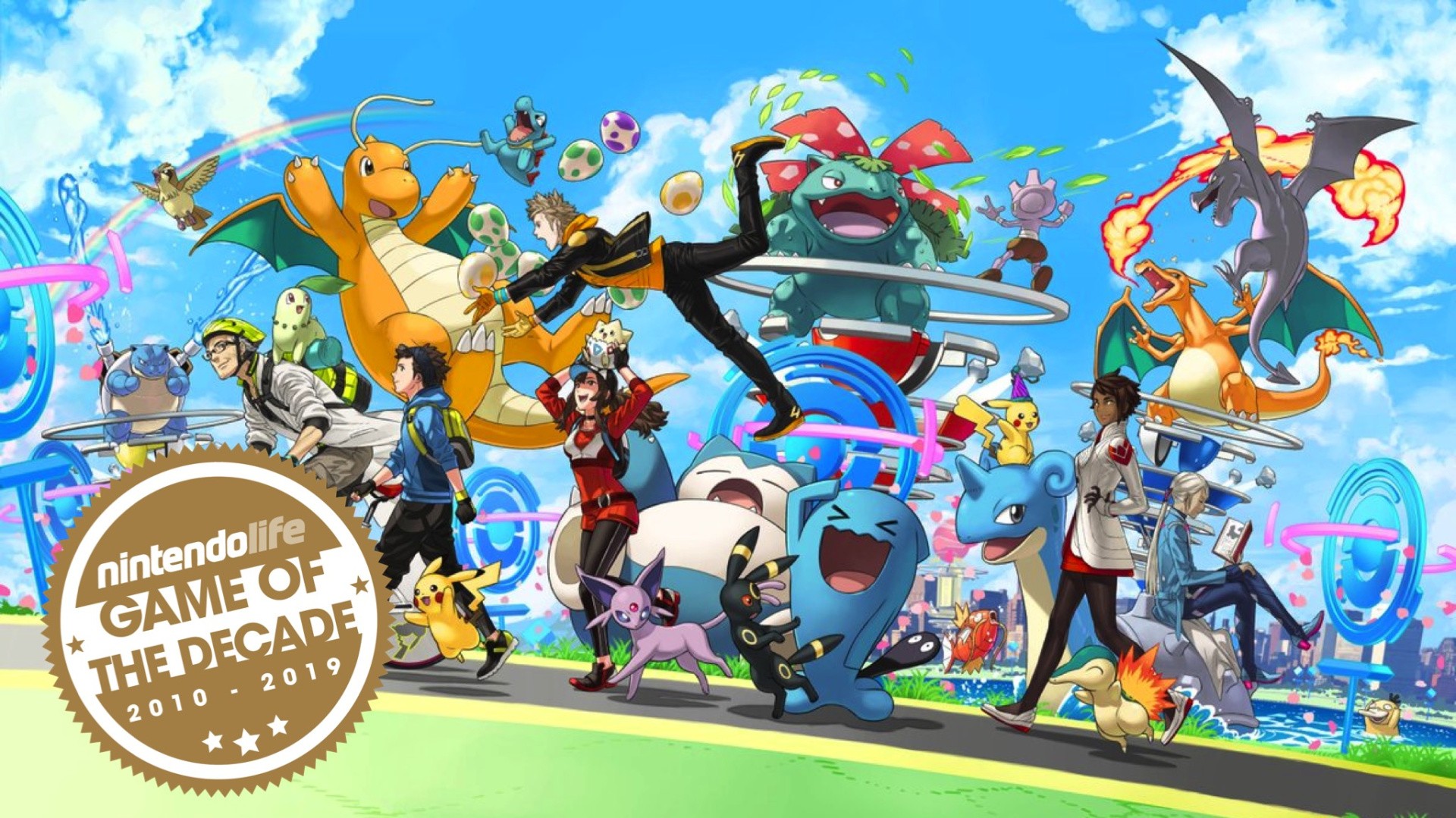
Feature: Game Of The Decade Staff Picks – Pokémon GO
Following on from our reader-voted Top 50 Games of the Decade, Nintendo Life staff members will be picking their personal favourite Nintendo games between the years 2010-2019. Today, Ryan looks back at how a smartphone title took the world by storm and proved him completely wrong – in a good way…
Hold it, let me stop you right there. I know exactly what you’re thinking: “Pokémon GO can’t even hold a Litwick to something like Breath of the Wild, you absolute numpty”. Well, I completely agree with you (apart from that last bit, maybe) but love it or hate it, Niantic’s monster-catching mobile hit was – and remains – something very special.
As you’d probably expect from someone who writes about gaming for a living, I’ve spent pretty much my entire life up until this point spending unhealthy amounts of time playing ‘classic’ games. Whether it was the very best Mario platformers and Zelda epics, or the wonder of isolated Metroid adventures and pretty much every single Pokémon game under the sun, I’ve always been someone who prefers a traditional, single-player experience over anything else, ever since I was about six years old.
Coming from that background, the very idea of free-to-play games and their fun-restricting paywall setups have always grinded my gears. When Pokémon GO was first announced, I had absolutely no interest in playing it and even made a point to ignore it. “It’s the principle”, I would say, naively depriving myself of any enjoyment it might provide because my precious Pokémon shouldn’t be subjected to such treason.
But then Pokémania happened. When GO launched in 2016, it was everywhere – and I mean everywhere. Suddenly, everyone who would laugh at me for liking Pokémon at school was playing. Suddenly the entire world was playing. It was just like how I remember Pokémon as a kid, with talk of the franchise being everywhere you go, and I just couldn’t resist jumping in and downloading it for the first time. I’m glad I did.
The game actually gets that horrid free-to-play system completely right in my opinion – I still haven’t spent a penny despite clocking hundreds of hours in it – but as is the case with most mobile titles, the gameplay itself will never pull me in as much as a new single-player epic on Switch ever could. Instead, my reasoning for voting this as my Game of the Decade is down to the pure spectacle of its release and something much more personal.
Now, I’ll be brave here and share the fact that I’ve struggled with anxiety issues which centre around getting out and leaving the house, as well as an ever-present case of depression which has plagued my life for the last four or five years. I’m sure some of you reading this might have experienced similar, and will therefore know that a single little app could never eradicate such problems, but Pokémon GO has genuinely had a hugely positive impact on my health that I’ll be forever grateful for. I’m not alone, either.
I’ve been playing it on and off since – *checks app* – September 2016, and while I’ll sometimes ignore it for a few months at a time, it tends to serve as a form of relief when I’m at my worst. I vividly remember going through a period where my chest would tighten just from being five minutes or so from my home; GO somehow managed to distract me enough to beat that, with the idea of adding a rare Dratini to my collection being exciting enough to push past whatever was going on in my head. Similarly, on days where I’d usually wake up and be unable to get out of bed, here I was getting up nice and early to go on a walk. I know it doesn’t make sense, but it’s true.
Perhaps ‘a distraction’ is the perfect way to describe it. These days, no matter where you are or what you’re doing, you tend to have your mobile on you and that means GO is only a loading screen away. Need an excuse to do some exercise? Go and play Pokémon GO. Need to have something to do while you’re standing waiting for transport? Organise your Pokémon in Pokémon GO. Feeling awkward in the presence of someone you’re not comfortable with? Whip out and talk about Pokémon GO – you know they’re playing it, too. Importantly, the gameplay itself is good enough to make you want to keep on top of it, so loading it up so often never feels like a chore.
Fans enjoying Pikachu Outbreak, a Pokémon GO event hosted in Yokohama, Japan in 2017…
Different people may, of course, find entirely different things to help with their motivation, but there’s one final part of this story that really is unique to Niantic’s world-dominating release and wraps things up nicely. We’re pretty used to the MMORPG format these days, or ‘massively multiplayer online role-playing games’, where players from all over the world interact with each other and share the same gaming experience. With GO’s Raid Battles and Community Days, I’ve found myself chatting to complete strangers who share the same passion as me in a real-life setting, giving little knowing nods to each other as we walk around the same stretch of park for three hours trying to find a shiny Chikorita.
Never has a game so wonderfully connected a community on a global scale, and I never thought I’d see such a wide range of people, from toddlers to grandparents, all getting out and playing Pokémon together. From the perspective of someone who has adored Pokémon for 20 years, seeing masses of people roam around my local city, catching everything in sight, has been very strange but beautiful to behold. In the years to come, when we look back upon the key gaming moments of the 2010s, Pokémon GO will undoubtedly be right up there – and rightly so.
Ahead Of PS5 Launch, Sony Hires Former Microsoft Executive
In the lead-up to the PlayStation 5's release this year, Sony has announced a new executive hiring for the company's gaming division. The company has brought over Veronica Rogers from Microsoft as senior vice president, business operations for Sony Interactive Entertainment, which is the company that runs the PlayStation brand.
Rogers previously worked at Sony rival Microsoft for more than 13 years. Her most recent position at Microsoft was vice president sales and marketing, device partner sales, though it's unclear if she worked with the Xbox team within Microsoft. Before Microsoft, Rogers was a category sales lead at computing giant Dell.
In her new role, Rogers will "lead Sony Interactive Entertainment's go-to-market organization globally." A news release announcing the hiring also states that "Rogers will help drive business growth, lead strategic initiatives, and evolve the culture of SIE's Business Operations from its previously regionalized structure into a single global system." More specifically, Sony said Rogers will oversee the PlayStation brand's sales operations business across physical and digital, while she will also take the lead on PlayStation subscription offerings.
In a statement, Ryan said Rogers "brings a wealth of experience leading global sales organizations, managing strategic partnerships, developing innovative business models, and building world class teams.
Ryan added that Rogers will play a "crucial role" in Sony's ambitions to scale up the PlayStation business. The news release never mentions the PlayStation 5, but Rogers will undoubtedly play a significant role in the launch of the console later this year.
While the next-generation system has technically been announced, Sony has yet to share all the key launch info regarding specs, the title slate, and other key particulars. Jim Ryan recently said that the console's most intriguing features have yet to be announced.
Rogers is not the only high-profile gaming executive to move between Microsoft and Sony. Phil Harrison spent numerous years at Sony before moving to Microsoft, before moving again to Google to work on Stadia.
Posted by: xSicKxBot - 01-11-2020, 03:24 PM - Forum: Windows
- No Replies
Gears 5 featured in Evanescence new music video ‘The Chain’
Last fall, we celebrated early access for Gears 5 Ultimate Edition with the television debut of “The Chain” during the NFL Season Opener. Today, transcendent, two-time Grammy Award winning rock band, Evanescence, has released the full official music video “The Chain,” their first new rock recording in eight years. Directed by frequent collaborator, P.R. Brown (My Chemical Romance, John Mayer, Green Day), the piece blends powerful, epic performance visuals with footage from Gears 5. Watch it above, and listen to the song on all digital streaming platforms here.
Kait Diaz’s journey to discover herself in Gears 5 is brought to life by Evanescence’s haunting rendition of “The Chain,” one that evokes the feeling of standing together in solidarity against adverse and unknown forces, even those coming from within. The partnership with Gears 5 also begins a new journey in what is expected to be a very active period for the band as they get set to tour on the international stage.
On March 29, Evanescence’s spring tour dates commence with a performance at Download Festival in Tokyo, Japan. Shortly thereafter, the group will embark on a massive co-headline tour of Europe and the U.K. with Within Temptation that runs from April 4 to May 1. You can check out all of the band’s tour dates and purchase tickets at Evanescence’s website here, and fans can also keep up with what the band is working on by following them on Facebook, Twitter, Instagram, and YouTube. Evanescence is currently working on new original music, which will start rolling out in 2020 in advance of their highly anticipated fifth full-length studio album.
If you haven’t experienced Gears 5’s five thrilling modes and deepest campaign ever, jump in on both Xbox One and Windows 10 PC with Xbox Game Pass Ultimate. For the latest on Gears 5 and the Gears franchise, stay tuned to Xbox Wire and follow Gears on Twitter @gearsofwar.