
+- Sick Gaming (https://sickgaming.net)
+-- Forum: Programming (https://sickgaming.net/forum-76.html)
+--- Forum: Python (https://sickgaming.net/forum-83.html)
+--- Thread: [Tut] Measure Execution Time with timeit() in Python (/thread-101271.html)
[Tut] Measure Execution Time with timeit() in Python - xSicKxBot - 08-20-2023
[Tut] Measure Execution Time with timeit() in Python
5/5 – (1 vote)
Understanding Timeit in Python
The
Code:
timeit The
Code:
timeitTo get started using
Code:
timeitCode:
timeit()Code:
numberHere’s a quick example:
Code:
import timeit code_snippet = '''
def example_function(): return sum(range(10)) example_function() ''' execution_time = timeit.timeit(code_snippet, number=1000)
print(f"Execution time: {execution_time:.6f} seconds")
Sometimes, you might want to evaluate a code snippet that requires additional imports or setup code. For this purpose, the
Code:
timeit()Code:
setupFor instance, if we adjust the previous example to include a required import:
Code:
import timeit code_snippet = '''
def example_function(): return sum(range(10)) example_function() ''' setup_code = "import math" execution_time = timeit.timeit(code_snippet, setup=setup_code, number=1000)
print(f"Execution time: {execution_time:.6f} seconds")
Keep in mind that
Code:
timeitMeasuring Execution Time

The primary method of measuring execution time with
Code:
timeitCode:
timeit()Code:
import timeit code_to_test = '''
example_function() ''' elapsed_time = timeit.timeit(code_to_test, number=1000)
print(f'Elapsed time: {elapsed_time} seconds')
When using the
Code:
timeit()Another useful method in the
Code:
timeitCode:
repeat()Code:
timeit()Code:
results = timeit.repeat(code_to_test, repeat=3, number=1000)
averaged_result = sum(results) / len(results)
print(f'Average elapsed time: {averaged_result} seconds')
Sometimes it’s necessary to compare the execution speeds of different code snippets to identify the most efficient implementation. With the
Code:
time.time()Code:
import time start_time = time.time()
first_example_function()
end_time = time.time() elapsed_time_1 = end_time - start_time start_time = time.time()
second_example_function()
end_time = time.time() elapsed_time_2 = end_time - start_time print(f'First function elapsed time: {elapsed_time_1} seconds')
print(f'Second function elapsed time: {elapsed_time_2} seconds')
In conclusion, using the
Code:
timeitCode:
time.time()The Timeit Module

To start using the
Code:
timeitCode:
import timeitThe core method in the
Code:
timeitCode:
timeit()For example, suppose we want to measure the time it takes to square a list of numbers using a list comprehension:
Code:
import timeit code_to_test = """
squared_numbers = [x**2 for x in range(10)] """ elapsed_time = timeit.timeit(code_to_test, number=1000)
print("Time taken:", elapsed_time)
If you are using Jupyter Notebook, you can take advantage of the
Code:
%timeitCode:
%timeit squared_numbers = [x**2 for x in range(10)]In addition to the
Code:
timeit()Code:
timeitCode:
repeat()Code:
autorange()- The method allows you to run theCode:
repeat()method multiple times and returns a list of execution times, whileCode:timeit()
- the method automatically determines the number of loops needed for a stable measurement.Code:
autorange()
Here’s an example using the
Code:
repeat()Code:
import timeit code_to_test = """
squared_numbers = [x**2 for x in range(10)] """ elapsed_times = timeit.repeat(code_to_test, number=1000, repeat=5)
print("Time taken for each run:", elapsed_times)
Using Timeit Function

To measure the execution time of a function, you can use the
Code:
timeit.timeit()Code:
stmtCode:
setupCode:
stmtCode:
setupCode:
'pass'Let’s say you have a function called
Code:
square()Code:
def square(x): return x ** 2To measure the execution time of
Code:
square()Code:
timeitCode:
results = timeit.timeit('square(10)', 'from __main__ import square', number=1000)Here, we’re asking
Code:
timeitCode:
square(10)Code:
numberAnother way to use
Code:
timeitCode:
timeit.TimerCode:
stmtCode:
timer = timeit.Timer(square, args=(10,))
results = timer.timeit(number=1000)
Now you have your execution time in the
Code:
resultsExamples and Snippets

The simplest way to use
Code:
timeit.timeit()Here’s an example:
Code:
import timeit code_snippet = "sum(range(100))"
elapsed_time = timeit.timeit(code_snippet, number=1000)
print(f"Execution time: {elapsed_time:.6f} seconds")
In the example above, we measure the time it takes to execute
Code:
sum(range(100))Code:
numberCode:
number=1000000For more complex code snippets with multiple lines, we can use triple quotes to define a multiline string:
Python Timeit Functions
The
Code:
timeitCode:
timeit.timeit()Code:
timeit.repeat() The Code:
timeit.timeit()Code:
stmtCode:
timeit.timeit()However, you can adjust the
Code:
numberFor example:
Code:
import timeit code_to_test = "sum(range(100))" execution_time = timeit.timeit(code_to_test, number=10000)
print(execution_time)
The Code:
timeit.repeat()Code:
timeit.timeit()Code:
repeatHere’s an example:
Code:
import timeit code_to_test = "sum(range(100))" execution_times = timeit.repeat(code_to_test, number=10000, repeat=5)
print(execution_times)
In some cases, you might need to include additional setup code to prepare your test environment. You can do this using the
Code:
setupCode:
import timeit my_code = '''
def example_function(): return sum(range(100)) example_function() ''' setup_code = "from __main__ import example_function" result = timeit.timeit(my_code, setup=setup_code, number=1000)
print(result)
Measuring Execution Time of Code Blocks

The
Code:
timeitHere’s a brief example:
Code:
import timeit def some_function(): # Your code block here time_taken = timeit.timeit(some_function, number=1)
print(f"Time taken: {time_taken} seconds")
In this example, the
Code:
timeit.timeit()Code:
some_functionCode:
numberFor more accurate results, you can use the
Code:
timeit.repeat()Here’s an example:
Code:
import timeit def some_function(): # Your code block here repeat_count = 5
time_taken = timeit.repeat(some_function, number=1, repeat=repeat_count)
average_time = sum(time_taken) / repeat_count
print(f"Average time taken: {average_time} seconds")
In this example, the
Code:
some_functionBesides measuring time for standalone functions, you can also measure the time taken by individual code blocks inside a function. Here’s an example:
Code:
import timeit def some_function(): # Some code here start_time = timeit.default_timer() # Code block to be measured end_time = timeit.default_timer() print(f"Time taken for code block: {end_time - start_time} seconds")In this example, the
Code:
timeit.default_timer()Using Timeit with Jupyter Notebook
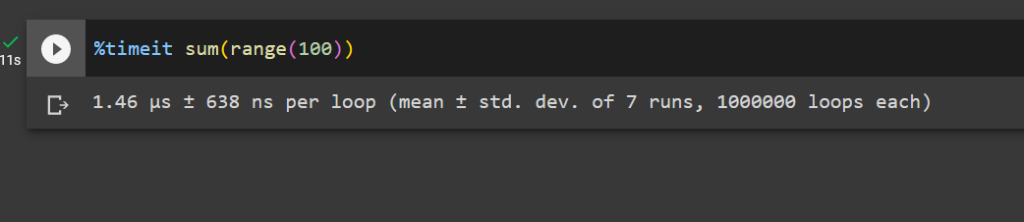
Jupyter Notebook provides an excellent environment for running and testing Python code. To measure the execution time of your code snippets in Jupyter Notebook, you can use the
Code:
%timeitCode:
%%timeit The Code:
%timeitCode:
%timeitFor example:
Code:
%timeit sum(range(100))This command will run the code multiple times and provide you with detailed statistics like the average time and standard deviation.
To measure the execution time of a code block spanning multiple lines, you can use the Code:
%%timeitFor example:
Code:
%%timeit
total = 0
for i in range(100): total += i
Managing Garbage Collection and Overhead
When using
Code:
timeit Garbage collection is the process of automatically freeing up memory occupied by objects that are no longer in use. This can potentially impact the accuracy of
Code:
timeitBy default,
Code:
timeitTo include garbage collection in
Code:
timeitCode:
gc.enable()Code:
gcCode:
timeitHere’s an example:
Code:
import timeit
import gc mysetup = "import gc; gc.enable()"
mycode = """
def my_function(): # Your code here pass
my_function() """ elapsed_time = timeit.timeit(setup=mysetup, stmt=mycode, number=1000)
print(elapsed_time)
Keep in mind that including garbage collection will likely increase the measured execution time. Manage this overhead by balancing the need for accurate measurements with the need to see the impact of garbage collection on your code.
Additionally, you can use the
Code:
timeit.repeat()Code:
timeit.autorange()Choosing the Best Timer for Performance Measurements

Measuring the execution time of your Python code is essential for optimization, and the
Code:
timeitWhen using the
Code:
timeitCode:
time.process_time()Code:
time.perf_counter()Code:
time.process_time()Here is an example code snippet:
Code:
import time
import timeit start = time.process_time() # Your code here end = time.process_time()
elapsed = end - start
print(f"Execution time: {elapsed} seconds")
On the other hand,
Code:
time.perf_counter()Here’s an example using
Code:
time.perf_counter()Code:
import time
import timeit start = time.perf_counter() # Your code here end = time.perf_counter()
elapsed = end - start
print(f"Execution time: {elapsed} seconds")
In addition to measuring execution time directly, you can also calculate the time difference using the
Code:
datetimeHere’s an example code snippet that calculates the time difference using
Code:
datetimeCode:
from datetime import datetime start = datetime.now() # Your code here end = datetime.now()
elapsed = end - start
print(f"Execution time: {elapsed}")
Frequently Asked Questions

How to measure function execution time using timeit?
To measure the execution time of a function using the
Code:
timeitCode:
timeit.timeit()Code:
timeitCode:
timeit.timeit()For example:
Code:
import timeit def my_function(): # Your code here execution_time = timeit.timeit(my_function, number=1000)
print("Execution time:", execution_time)The proper way to use the
Code:
timeit- Import the module.Code:
timeit
- Define the code or function to be timed.
- Use the method to measure the execution time, and optionally specify the number of times the code should be executed.Code:
timeit.timeit()
- Print or store the results for further analysis.
How to time Python functions with arguments using timeit?
To time a Python function that takes arguments using
Code:
timeitCode:
functools.partial()Code:
import timeit
from functools import partial def my_function(arg1, arg2): # Your code here # Using a lambda function
time_with_lambda = timeit.timeit(lambda: my_function("arg1", "arg2"), number=1000) # Using functools.partial()
my_function_partial = partial(my_function, "arg1", "arg2")
time_with_partial = timeit.timeit(my_function_partial, number=1000)The
Code:
timeitCode:
timeCode:
timeitHow to use timeit in a Jupyter Notebook?
In a Jupyter Notebook, use the
Code:
%%timeitCode:
%%timeit
# Your code here
This will run the code multiple times and provide the average execution time and standard deviation.
What is the best practice for measuring execution time with timeit.repeat()?
The
Code:
timeit.repeat()Code:
import timeit def my_function(): # Your code here repeat_results = timeit.repeat(my_function, number=1000, repeat=5)
fastest_time = min(repeat_results)
slowest_time = max(repeat_results)
average_time = sum(repeat_results) / len(repeat_results)
Using
Code:
timeit.repeat() Recommended: How to Determine Script Execution Time in Python?
The post Measure Execution Time with timeit() in Python appeared first on Be on the Right Side of Change.