
+- Sick Gaming (https://sickgaming.net)
+-- Forum: Programming (https://sickgaming.net/forum-76.html)
+--- Forum: Python (https://sickgaming.net/forum-83.html)
+--- Thread: [Tut] Python | Split String into List of Substrings (/thread-100384.html)
[Tut] Python | Split String into List of Substrings - xSicKxBot - 12-11-2022
Python | Split String into List of Substrings
Rate this post
 Summary: Use Python’s built-in split function to
Code:
splitCode:
regexCode:
map[b]Minimal Example[/b]
Code:
text = "Python Java Golang" # Method 1
print(text.split()) # Method 2
import re
print(re.split('\s+',text)) # Method 2.1
print(re.findall('\S+', text)) # Method 3
li = list(map(str.strip, text.split()))
res = []
for i in li: for j in i.split(): res.append(j)
print(res) # OUTPUTS: ['Python', 'Java', 'Golang'] Problem: Given a string containing numerous substrings. How will you split the string into a list of substrings?
Let’s understand the problem with the help of an example.
[b]Example[/b]
Code:
# Input
text = "word1 word2 word3 word4 word5" # Output
['word1', 'word2', 'word3', 'word4', 'word5']Approach: Use the
Code:
split("sep")Code:
splitCode:
Code:
text = "word1 word2 word3 word4 word5"
print(text.split()) # ['word1', 'word2', 'word3', 'word4', 'word5']The
Code:
re.split(pattern, string)Code:
patternCode:
stringCode:
re.split('a', 'bbabbbab')Code:
['bb', 'bbb', 'b']Approach: Use thr
Code:
re.split('\s+',text)Code:
textCode:
\s+Code:
Code:
import re text = "word1 word2 word3 word4 word5"
print(re.split('\s+',text)) # ['word1', 'word2', 'word3', 'word4', 'word5'] Related Read: Python Regex Split
[b]Method 3: Using re.findall[/b]
The
Code:
re.findall(pattern, string)Code:
stringCode:
patternRelated Read: Python re.findall() – Everything You Need to KnowApproach: Use thr
Code:
re.findall('\S+',text)Code:
textCode:
\S+Code:
Code:
import re text = "word1 word2 word3 word4 word5"
print(re.findall('\S+', text)) # ['word1', 'word2', 'word3', 'word4', 'word5']
Do you want to master the regex superpower? Check out my new book The Smartest Way to Learn Regular Expressions in Python with the innovative 3-step approach for active learning: (1) study a book chapter, (2) solve a code puzzle, and (3) watch an educational chapter video.
[b]Method 4: Using map[/b]
Prerequisite: The
Code:
map()Related Read: Python map() — Finally Mastering the Python Map Function [+Video]Approach: Use the
Code:
mapCode:
stripCode:
Code:
text = "word1 word2 word3 word4 word5"
li = list(map(str.strip, text.split()))
res = []
for i in li: for j in i.split(): res.append(j)
print(res) # ['word1', 'word2', 'word3', 'word4', 'word5']Problem: Given a string containing numerous substrings separated by commas and spaces. How will you extract the substrings and store them in a list? Note that you have to eliminate the whitespaces as well as the commas.
Code:
# Input
text = "One, Two, Three"
# Output
['One', 'Two', 'Three'] Hint: Python | Split String by Comma and Whitespace
Solution:
Code:
text = "One, Two, Three"
print([x.strip() for x in text.split(',')])
# ['One', 'Two', 'Three']With that, we come to the end of this tutorial. I hope the methods discussed in this article have helped you and answered your queries. Please stay tuned and subscribe for more solutions and discussions in the future.
Happy learning!

But before we move on, I’m excited to present you my new Python book Python One-Liners (Amazon Link).
If you like one-liners, you’ll LOVE the book. It’ll teach you everything there is to know about a single line of Python code. But it’s also an introduction to computer science, data science, machine learning, and algorithms. The universe in a single line of Python!
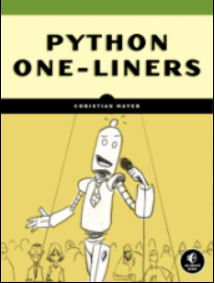
The book was released in 2020 with the world-class programming book publisher NoStarch Press (San Francisco).
Link: https://nostarch.com/pythononeliners